Hong Kong Family (過時·過節, Eric Tsang Hing-Weng, 2022)

“It doesn’t matter how the food is cooked. Let’s just enjoy it in the presence of each other and not think too much” a regretful grandmother advises giving perhaps the best advice for how to survive an awkward family gathering in Eric Tsang Hing-Weng’s autobiographically inspired familial melodrama Hong Kong Family (過時·過節). Coloured with the shades of exile, Tsang’s melancholy exploration of a fragmenting family unit ponders the limits of communication between those who should be closest along with the lingering resentments and toxic legacies that poison otherwise loving relationships. 

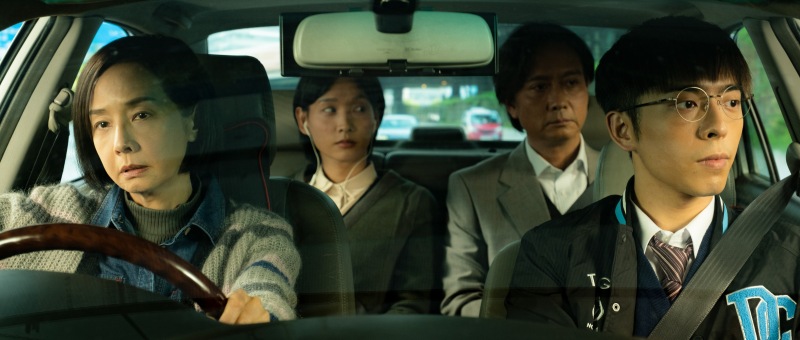
An opening sequence set eight years before the main action lays bare the tension between middle-aged housewife Ling (Teresa Mo Sun-Kwan) and her mild-mannered husband Chun (Tse Kwan-Ho) who sits silently in the back of the family car as she berates him for having recently lost his job and been unable to find another which is particularly inconvenient as they’ve just taken out a mortgage and bought a flat. 17-year-old Yeung (Edan Lui) sitting in the front passenger seat tries to keep the peace but refers to his parents as Mr & Mrs Chan, while his older sister, 20-year-old Ki (Hedwig Tam Sin-Yin), pretends not to hear escaping from reality by listening to music on her headphones. When they finally arrive at her mother’s home, a well appointed detached house out in the country, they are greeted by Ling’s brother Ming who has already fallen out with his mother (Alice Fung So-Po) in part because it seems she doesn’t like his wife who has declined to attend this Winter Solstice dinner. When his mother suspects him of stealing money, Ming angrily storms out vowing never to contact her again and provoking a similar row between Ling and Chun in which she asks for a divorce. Pushed past his limit, Chun starts hacking at a chair with a meat cleaver and eventually strikes peacemaker Yeung who then abruptly severs ties with his dad and moves out on his own. 

Yet eight years later it’s Yeung who seems to be looking for a way back to his family only he doesn’t know how to find it. He’s been working on a virtual reality “game” that would allow users to interact with AI versions of absent friends and relatives, helping them to communicate rather than offering an escape from reality though that may be in a sense what Yeung is doing in interacting with a simulacrum of his father rather than facing him directly. His parents did not divorce, but are clearly unhappy. Ling has found another simulacrum for familial life working as a housekeeper for a wealthy single father, while Chun is driving a taxi and secretly planning to start again by leaving for Mainland China and a job in a company set up by an old friend. According to grandma it seems their marriage may have been semi-arranged (by her) and years of trying have seemingly not improved their inability to communicate with each other. 

Ki, meanwhile, has been married and divorced since the fateful Winter Solstice dinner over which grandma kept trying to marry her off explaining that she married a random man to escape her family only to boomerang back two years later when it didn’t work out. She too is lying to her parents, pretending to go to work every day despite having lost her job and later drifting into an unexpected romance with a free spirited nomad from Malaysia who jolts her out of her sense of inertia in telling her to try to be true to herself. The return of Ming’s now teenage daughter Joy (Angela Yuen Lai-Lam) from exile in England offers the opportunity to repair their fragmenting bonds, but it seems some wounds run too deep to ever be fully healed. Chun is pulled towards the Mainland just as Uncle Ming had been pulled towards England, while Yeung just wants to go “home” but doesn’t know how and Ling frantically tries to preserve a sense of family just as Ki seems to have made her peace to go wherever her heart takes her.

That might be one reason that there are only women around the dinner table at another Winter Solstice, for some the first, each trying to salvage something and try to get along if only in a superficial show of togetherness while the men attempt to talk through their troubles agreeing to head towards the dinner table but in the end walking in circles. The elegantly lensed final scene may suggest that the family is in someways trapped by its history yet destined to scatter but echoes in its ambiguity offering the distant hope of a far off reconciliation but little promise of its arrival. 


Hong Kong Family is in UK cinemas now courtesy of Haven Productions.

Original trailer (Traditional Chinese / English subtitles)

A Hundred Flowers (百花, Genki Kawamura, 2022)

An expectant father finds himself confronted with paternal anxiety and past trauma on learning that his mother has been diagnosed with Alzheimer’s in Genki Kawamura’s adaptation of his own novel, A Hundred Flowers (百花, Hyakka). A prolific film producer behind such hits as Lee Sang-il’s Rage and Tetsuya Nakashima’s Confessions, Kawamura also penned the international bestseller If Cats Disappeared from the World which was later adapted into a film starring Takeru Satoh and here makes his directorial debut with a semi-autobiographical exploration of memory and forgetting. 

Kawamura neatly signals his central concern in the opening scenes as Yuriko (Mieko Harada) seems to become unstuck in time, a withered dandelion on her kitchen table as she flits between swapping it for a new one and playing the piano eventually watching herself from an alternate temporal space. Her grown-up son Izumi (Masaki Suda) seems surprised to witness her decline on a visit home, running panicked through the streets looking for her only to find his mother sitting on the swings at the park muttering about “half fireworks”. When he approaches her she seems to mistake him for someone else, Izumi rejecting her too intimate hug and later making his exit earlier than expected, leaving the New Year food Yuriko has prepared uneaten and making an excuse about an emergency at work. 

The chase through the streets may have awakened traumatic memories in Izumi too, forcing him to remember another time as a child he came home and found his mother gone. Disappearing again, Yuriko is found at his old school, guided by a memory of a parents day at which Izumi read out sections of Osamu Dazai’s Run, Melos!, a story of a man running back to the city to save his friend before he is executed in his place. Thrown back into the past, Yuriko later berates the grown Izumi for his habit of wandering off, suggesting that he gets lost on purpose so that she’ll look for him which is perhaps what Yuriko is doing longing for her son to understand and forgive her for an act of childhood betrayal. Kawamura often places the camera directly behind Izumi’s head, following him as he chases the mother who he fears has forgotten him while he feels foolish in his inability to forget her despite the depth of his resentment. 

Ironically enough, Izumi and his heavily pregnant wife Kaori (Masami Nagasawa) both work at a music company developing a virtual idol whom they explain has been fed thousands of memories as data in order to improve her AI but ends up oddly soulless as if these fragments of moments in time are meaningless in isolation. His friend quips that maybe they should have given the AI the ability to forget, as if that would make it more “human” and relatable. Izumi is pretty sure he hasn’t forgotten anything important, but memory remakes itself every day and is in some ways selective. Though he holds his mother at arm’s length, he begins to put the past behind him in learning to forgive her and in the process regaining the happy memories of his earlier childhood that his trauma had taken from him. 

The flowers so closely associated with Yuriko who is often dressed in a bright yellow are perhaps another allusion to Dazai and his insistance on embracing the gift of a single dandelion as a kind of metaphor for the frustrated love between mother and son, while the half fireworks they later see also resemble a dandelion dispersing mimicking the continual scattering of Yuriko’s memories. Izumi remarks that it’s like her memories are being stolen while charting her decline as a depletion of her identity until there is nothing left of her at all, the various boxes in her apartment standing in for blocks of data slowly being shed. Shifting between the perspectives of mother and son who are each in some way blind to the other, Kawamura touches on the tactile quality of memory as one moment sparks another while for Yuriko time proceeds on a maddening loop of overlapping incidents that robs of her present, past, and future in equal measure. The irony may be that only in losing his mother does Izumi begin to find her again, searching for her within the halls of his own memory and rediscovering a sense of himself as a child that he had long forgotten. 


A Hundred Flowers screened as part of this year’s London East Asia Film Festival 

International trailer (English subtitles)

Intolerance (空白, Keisuke Yoshida, 2021)

At times of tragedy it may be natural to look for someone to blame, as if being able to pin all of this pain and anger on a single source would somehow help you to accept it. But in other ways tragedy is just a confluence of circumstances that are either everyone’s fault or no one’s. How far back can you really trace the blame? There would be no end it. That’s perhaps the conclusion that the protagonists of Keisuke Yoshida’s Intolerance (空白, Kuhaku) eventually come to, realising that their attempts to blame others are often born of a desire to deny their own responsibility or else to protect something else they fear losing. 

At least that’s how it is for grizzled fisherman Mitsuru (Arata Furuta), a man well liked by no one. A rude and violent bully, he terrorises all around him not least his teenage daughter Kanon (Aoi Ito) who is meek and passive with a slightly ethereal quality as if she’s learned that blending into the background is the best way to protect herself. Stopping in to a local convenience store on her way home from school, she’s accosted by resentful store manager Naoto (Tori Matsuzaka) who grabs her by the arm and accuses her of shoplifting nail polish. At some point, Kanon panics and bolts out of the store. Naoto chases her along a busy highway until she suddenly darts out into the road trying to get away from him and is hit first by a car driven by a young woman and then by a truck travelling in the opposite direction. Despite his gruff exterior, Mitsuru is quite clearly destroyed by his daughter’s death but becomes fixated on clearing her name of the shoplifting, insisting that he never saw her wear any makeup and that Naoto is to blame for her death in acting with such a heavy hand. 

Of course, it doesn’t occur to Mitsuru that Kanon may have worn makeup in secret and made sure to keep it from him knowing how he’d likely react. Likewise, perhaps she ran from the store because Naoto would have called her father and she was frightened of what he’d do if he found out she was caught pilfering, and pilfering nail polish at that. He remembers that she wanted to talk to him about something to do with school the night before she died but he didn’t listen, assuming she must have been being bullied and was forced to steal the nail polish only to hear that no one at school really even remembers her. She was a just a vague presence they can’t even quite identify. Her teacher meanwhile begins to reproach herself, realising that she failed in her duty of care repeatedly shouting at Kanon that she had “no motivation” rather than trying to help her find some or to get along in her own way, let alone figuring out what caused her to behave the way she did or if there were problems at home. Sick of Mitsuru’s belligerence the school finally set him on the new target of Naoto who was once accused of molesting a teenage girl he accused of shoplifting. 

Like Kanon, Naoto is a slightly hollow presence who also had a strained relationship with his father. As he lay dying, Naoto failed to answer his calls because he was playing pachinko and felt ashamed, afraid of another lecture from his dad about wasting his life on gambling. He struggles with his role in Kanon’s death, on the one hand guilty feeling he overreacted and inadvertently caused her to stray into harm’s way while otherwise resentful, justifying himself that it’s only natural for a storeowner to chase a shoplifter down the street. Both he and Mitsuru soon fall foul of a media culture that likes sympathetic victims and heartless villains, the media shocked by Mitsuru’s boorish behaviour but more so by Naoto’s callous indifference trimming an otherwise nuanced statement to imply that he feels his supermarket is the real victim as customers stay away or else issue complaints about their obviously heavy-handed shoplifter policy. 

“Imposing your own views on others is nothing more than torture” Naoto tells a well-meaning middle aged woman whose narcissistic cheerfulness is a neat mirror of Mitsuru’s intimidating aggression. Aggressively mothered by Kusakabe (Shinobu Terajima), Naoto carries an additional burden of guilt in realising he’s lost the store his father left to him, but she embarks on a tasteless “real victim” campaign insisting they did nothing wrong and it’s all Kanon’s fault for stealing in the first place. Kusakabe can’t bear to lose the store because it seems there’s not much else in her life. The film’s Japanese title translates as “blank” or “void” and it is indeed a void that Kusakabe is trying to fill in needing to feel needed by centring herself in her various volunteer activities such as working at a soup kitchen in addition to her crusade to save the store. 

It’s this giant abyss of grief and guilt which pulls each of them towards the edge, but in the end there’s really no way to apportion blame. The poor woman who first knocked Kanon down is completely undone by the experience though it really wasn’t her fault, repeatedly approaching Mitsuru asking for his forgiveness only to be cruelly rebuffed. It’s her mother’s (Reiko Kataoka) quiet show of dignity which stands in such stark contrast to his own white hot rage that finally forces him to realise the destructive quality of his intimidating behaviour, accepting his responsibility in his daughter’s death while understanding that in his fierce desire to control he robbed himself of the ability to know her. Really you can’t say whose fault it was, Mitsuru’s for the fear he instilled into his daughter, Naoto’s for his insecurity and misplaced zeal in hunting down a thief, the drivers’ for failing to brake, Kanon’s mother’s (Tomoko Tabata) for remarrying and having another child, the teacher’s for making Kanon feel useless, the other kids’ for rejecting her, or Kanon’s own for darting out into the road. For each of those there are a hundred other branches. There would be no end to it. But then, the strange thing is that Kanon shares her name with Buddhist deity of mercy, Mitsuru beginning to soften now willing to offer an apology where it’s due and to bear his own degree of guilt if not yet entirely able to forgive. In any case, ending in bright sunshine, Yoshida concludes with a return of the gaze between father and daughter that suggests forgiveness may indeed have arrived. 


Intolerance screened as part of this year’s Camera Japan. 

Original trailer (English subtitles)

Eternally Younger Than Those Idiots (君は永遠にそいつらより若い, Ryuhei Yoshino, 2021)

An insecure young woman struggles to assume her place in the world while preparing to leave the aimless security of college life for an uncertain adulthood in Ryuhei Yoshino’s empathetic social drama, Eternally Younger Than Those Idiots (君は永遠にそいつらより若い, Kimi wa Eien ni Soitsura yori Wakai). Adapted from the novel by Kikuko Tsumura, Yoshino’s film has its share of quirky humour but seems to be overshadowed by a lingering darkness in which there is only constant suffering tempered by a longing for recognition which often goes unanswered.

Horigai (Yui Sakuma) is one of the lucky ones in that she’s already locked in a job for after graduation as a children’s social worker back in her hometown. After making a speech at a uni party, however, she’s challenged by a rude fellow student who calls her out for her arrogance in thinking she has the right to interfere in people’s lives. He has perhaps touched a nerve. Though it’s a job she’s always wanted, Horigai is worried that she isn’t up to it and won’t be able to help anyone in part because she feels herself to be somehow different from those around her and lacking the skills to see what everybody else just naturally sees. 

Her sense of inadequacy is thrown into relief by a chance meeting at a party with a soulful fellow student who has just been released after getting arrested for suspected kidnapping having allowed a little boy neglected by his parents to stay in his apartment. Though she bonds with him, he soon leaves her life in unexpected fashion leaving her with an unspoken story hanging in the air. At her part-time job doing quality control at a factory she befriends another young man, Yasuda (Yo Aoi), who eventually confides in her about a very personal problem which she had originally not taken very seriously only to feel bad that she didn’t notice how much pain it was causing and had in a sense even made it a little worse by unwittingly teasing him. She didn’t see it because, in this case understandably, she did not want to look but without fully realising did perhaps make a difference a life just by listening. 

Most of all, she berates herself for picking up on her new friend Inogi’s (Nao) buried trauma as manifested in a physical wound to her body. Horigai’s uni thesis is on the link between childhood environment and visions of success, exploring whether or not there’s a difference in the way people dream based on the way they were raised. Some of the answers are, if taken at face value, a little surprising, Inogi wishing for a beautiful daughter-in-law to take care of her in her old age perhaps hinting at her desire for the security of a conventional family, but also somewhat poignant in their seeming simplicity. When Horigai relates a traumatic childhood memory Inogai is brought nearly to tears, despite having just met her, in guilt and sorrow that she wasn’t there to help, a sentiment which is later returned when Horigai learns of her trauma while also reflecting on the fact that she survived it if only by force of will and the gentle kindness of someone who was simply there. 

Simply being there is as Horigai learns a big part of it, finally stepping into herself by daring to look at the things she didn’t want see and making a difference in someone’s life who might not have survived if she had simply gone about her business. Having believed herself a “defect”, unfit for human society and unable to make lasting connections with others she gains strength through mutual acceptance that gives her the confidence to be there for those who need her still uncertain if she is really up to the job but doing her best anyway. Death seems to overshadow her, haunted as she is by missing children and the spectres of those whose suffering she could not see, but she is finally able to rise above it in overcoming some of her own childhood trauma. Almost everyone is burdened with something be it guilt, loss, or the legacy of pain and abuse but it helps to have someone to help carry the load. “The world is full of scary shit. Want to try Mario Kart?” Inogai asks, and it might be as good a suggestion as any. 


Eternally Younger Than Those Idiots screened as part of this year’s Camera Japan. 

Original trailer (no subtitles)

Terrorizers (青春弒戀, Ho Wi Ding, 2021)

A collection of youngsters is drawn into a dangerous web of simmering violence in Ho Wi Ding’s Taipei-set drama, Terrorizers (青春弒戀, qīngchūn shì liàn). The film may share its name with an Edward Yang classic, but it is very clearly society that is the terroriser in this instance from toxic masculinity and social conservatism to youthful isolation, video games, and pornography. The film seems to ask if it’s ever really possible to move on from the past and discovers that it may not be though some may be prepared to help carry your baggage as they travel towards the future so long as they know what’s in it. 

The youngsters are brought together by the ominous presence of Ming Liang (Austin Lin Bo-Hong), an isolated young man who barely speaks and spends all his time playing video games. It’s him we see dressed in full ninja garb attacking a young woman, Yu Fang (Moon Lee), with a katana at the train station only for her boyfriend Xiao Zhang (J.C. Lin Cheng-Hsi) to heroically throw himself in front of her to fight Ming Liang off. 

Later a dejected middle-aged woman Ming Liang befriends ironically tells him that guy who protects his girlfriend is a real man, working the wound of Ming Liang’s bruised masculinity and causing him to double down on his frequent insistence that he can protect women, though later he indeed does on separating precocious teen Kiki (Yao Ai-Ning) from the previously diffident best friend who tried to assault her. Having given up on Yu Fang he begins stalking a woman from her acting class, Monica (Annie Chen Ting-Ni), whose admittedly no good ex boyfriend he later beats up assuming it will buy him white knight credits as a protector in the shadows when in reality he’s a total creep who cloned the key to her apartment and has been hiding in her wardrobe later driven into a frenzy by the irony of watching Yu Fang and Monica, the two women he wanted, deciding they’d rather be with each other. 

Part of Ming Liang’s problem is a sense of parental abandonment, something he shares with Yu Fang whose mother abandoned her when young while her relationship with her father, who has recently remarried, has always been strained. After his parents’ divorce, Ming Liang moved in with Yu Fang’s politician father after being palmed off off by his own, the implication being that he has never really been shown parental love or given any guidance about how to live in the world save that he gleaned from the violent video games he constantly plays along with voyeuristic pornography. 

Yu Fang and Ming Liang are attempting to escape the legacy of parental failure, but Monica is left with a much more recent dilemma in her history as an early cam girl named Missy, a character created by her ex, David, who has since moved on. The more Monica tries to chase her dreams, the more her past comes out to haunt her with creepy men for some reason making a point of telling her they saw her sex tape while on some occasions actually playing it for her on their phone. Hoping to crush her spirit, David tells her that she’ll always be Missy, unable to escape the social stigma of having participated in a pornographic video, while she and Yu Fang are subject to a public shaming when a tape of them goes viral allowing the authorities to all but justify Ming Liang’s attack on Yu Fang on the grounds that she stole his girlfriend and therefore was in the wrong as if such feudalistic behaviour could ever be permissible. 

Yu Fang finds herself terrorised by the media storm of the 24hr news cycle, her new life with Xiao Zhang in jeopardy while she feels ever more isolated realising that her father cares less for her wellbeing than the optics in the light of his ongoing political campaign. Ming Liang meanwhile is forever reminding people that his father is rich and influential as if his misuse of his status is a direct rebellion against it and the parents he feels abandoned him. The fact that the news essentially reframes the slashing incident as a defence of heterosexual love, demonising same sex relationships, only emphasises the tyranny of outdated social prejudice and misogyny as Yu Fang becomes the villain and Ming Liang the victim entirely ignoring his predatory stalking of Monica and otherwise disturbing behaviour. It may not be possible to effectively move on from the past, overcome the legacy of parental abandonment and develop the ability to trust in others, but there may be less destructive ways to take the past with you if only in finding someone willing to share your burden. 


Terrorizers screened as part of this year’s New York Asian Film Festival.

Festival trailer (English subtitles)

Images: © changheFilms 2021

Hostage: Missing Celebrity (인질, Pil Gam-seong, 2021)

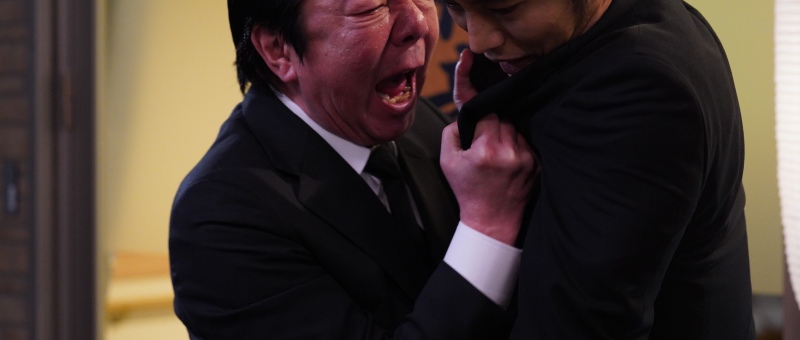
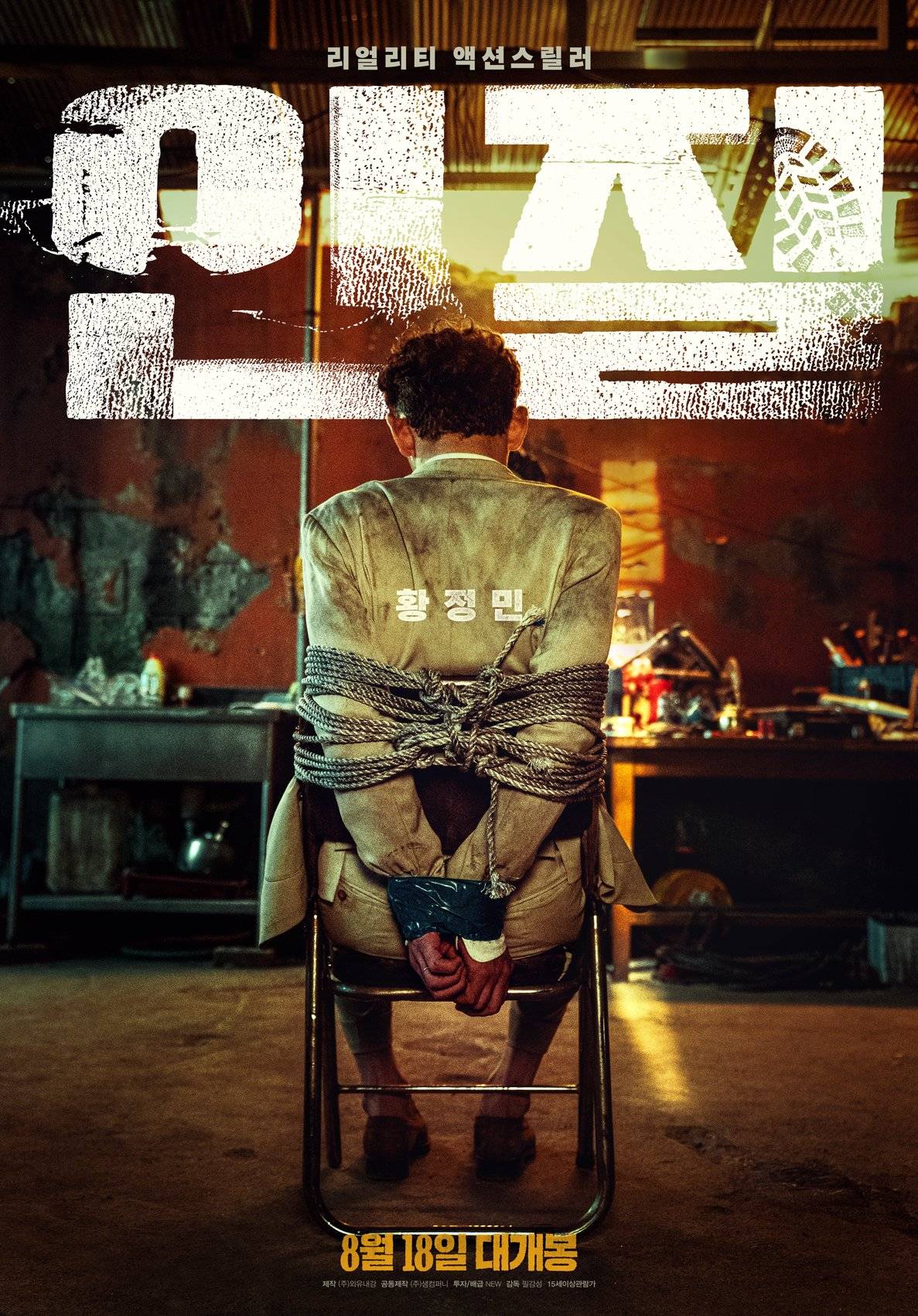
“This is real, birdbrain”. If you’re a famous actor, it might take a while to dawn on you that you’re in real trouble rather than the subject of an admittedly dark candid camera skit or variety show stunt. Real life and the movies begin to blur for top Korean actor Hwang Jung-min playing a fictionalised version of himself when he’s kidnapped by a gang of ruthless petty criminals in Pil Gam-seong’s meta take on Chinese thriller Saving Mr Wu, Hostage: Missing Celebrity (인질, Injil). 

Indeed the film opens with a montage of Hwang’s career to date including a degree of self-deprecation in which he describes himself as “just a petty actor” reminding the journalist interviewing him that film is a collaborative medium of which he is only a part. This version of himself that we see is modest and wholesome, going home early after an afterparty while his wife and son are away planning to relax alone. He seems to live a very lowkey life living in a fairly ordinary suburban house without domestic help or other signs of obvious wealth aside perhaps from an expensive car. Hwang is also on fairly friendly terms with the clerk at the local convenience store which he evidently visits frequently just like any other ordinary person rather than sending an underling to fetch him things or walking around with a massive entourage to remind people that he’s a movie star. Even while trying to escape his kidnappers he takes his shoes off before entering an old man’s home to use his landline telephone. 

Yet one can’t escape the fact that he is fantastically rich and perhaps out of touch with “real” life, his kidnappers targeting him mainly on a whim born of chance coincidence but also in resentment for everything he represents. The leader of the gang, Choi Ki-wan (Kim Jae-beom), is a crazed psychopath whose primary motivations are most likely sadistic rather than purely financial even if his targets are those with fancy cars but those of his underlings are perhaps more prosaic. When one of the gang members is captured, it emerges that he had massive debts to a casino loanshark while the most sympathetic of the kidnappers appears to have learning difficulties and later explains that he’s only doing this to pay for medical treatment to remove a prominent facial birthmark and scarring so he could live a more normal life. Because of his naivety he remains strangely loyal to Ki-wan believing that he’s looking after him while refusing any responsibility for his crimes. The gang’s only female member (Lee Ho-jung), by contrast, seems to be a North Korean refugee in a romantic relationship with Ki-wan’s less psychotic but no less cruel partner Dong-hoon (Ryu Kyung-soo) who just wants the money. 

Having literally played through scenarios just like these in his films, Hwang Jung-min the actor has perhaps gained a degree of experience that allows him to process his situation with a surprising degree of rationality quickly realising that as the kidnappers have made no attempt to hide their identities they most likely plan to kill him, and a young woman, So-yeon (Lee Yoo-mi), abducted alongside a wealthy cafe owner they killed when he couldn’t come up with the cash fast enough, after they’ve got the ransom payments. It isn’t that Hwang’s stingy, it’s that he knows there’s no point giving them the money but his only chance for survival lies in making them think he might. Even so, he gets to literally play the hero engaging in a battle of wits with the kidnappers before attempting to make a dashing escape while the on the outside the a dogged policewoman and her partner do their best to track them down despite the unhelpful interventions of their more conservative boss. 

Ki-wan might well have a point in admitting he’s overreached by going for such a high profile target. The police probably wouldn’t be investigating so heavily if the victim weren’t a famous movie star whose face is splashed across the papers. After all, they hadn’t done much for So-yeon whose sister had had to go to social media to raise awareness about her kidnapping fearing the police weren’t doing enough to help. Bearing out the underlying economic anxiety, So-yeon had only got the cafe job a few days previously after 37 failed interviews. Hwang’s response that he failed a hundred auditions before getting a break, people laughing at his acting dreams because he was a guy with curly hair and red skin who spoke with a strong southern accent, is intended to be reassuring in implying that even if it takes time you get there in the end but is also a little insensitive in the circumstances in downplaying So-yeon’s struggles in the contemporary economy having gone from elation in finally finding employment to being locked in a shed by a gang of psychos because of her boss’ personal greed which seems like quite the metaphor for the inequalities of the modern society. In any case, Pil crafts an intense kidnap thriller given an additional layer of absurdity in its meta dimensions but ends on a note of poignancy which suggests that Hwang himself is also and perhaps always will be hostage to his own image. 


Hostage: Missing Celebrity screened as part of this year’s Udine Far East Film Festival.

International trailer (English subtitles)

Straying (猫は逃げた, Rikiya Imaizumi, 2021)

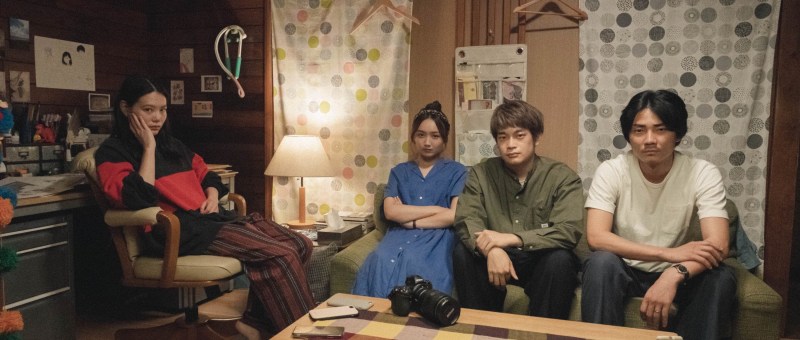
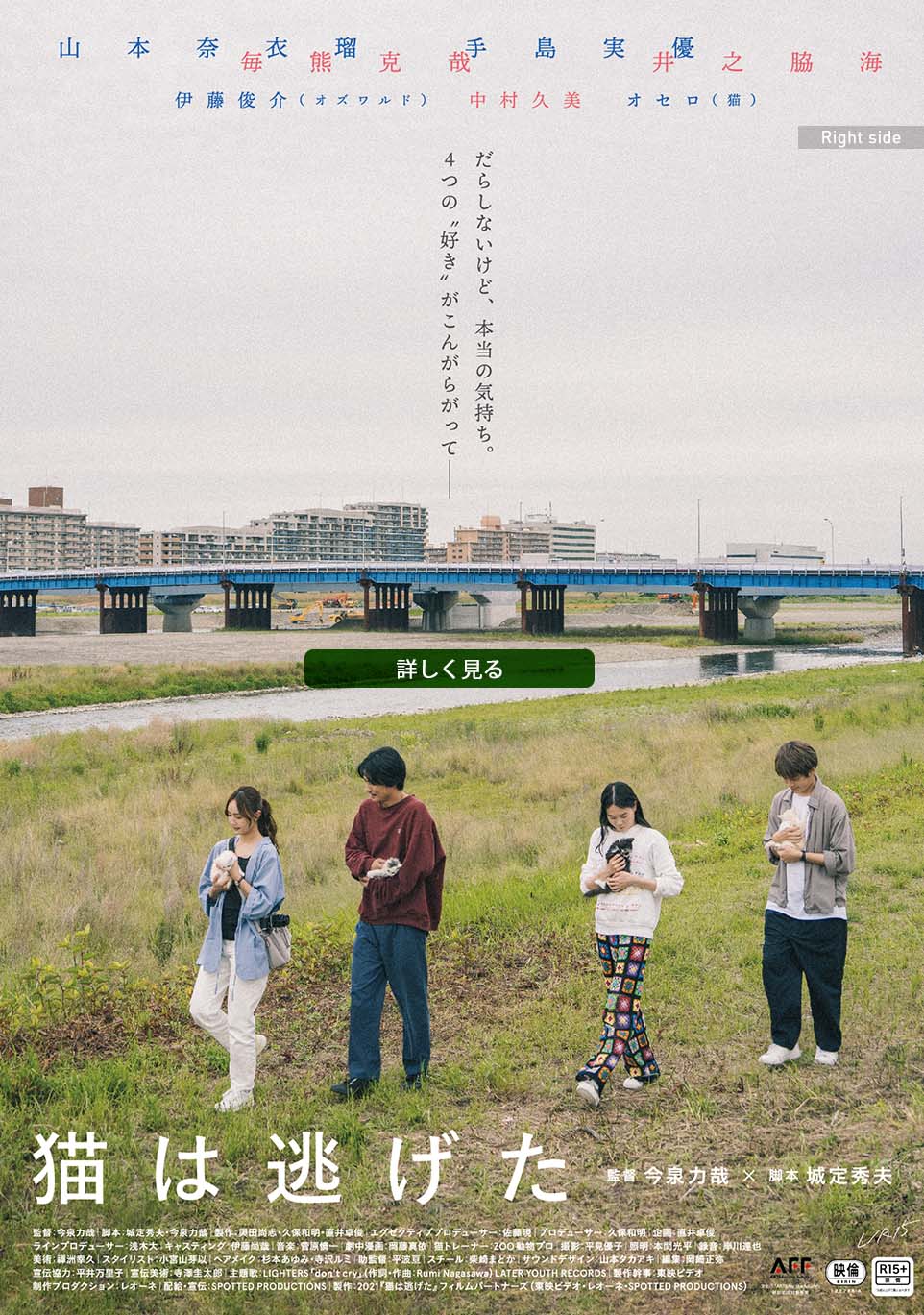
Part way through Rikiya Imaizumi’s Straying (猫は逃げた, Neko wa Nigeta), a tabloid reporter and the photographer with whom he’s been having an affair attend a screening of a pretentious film made by a hypocritical director exploring why a once loving relationship between husband and wife broke down. His reasoning may not be all that sound in the end, but does perhaps hint at something of the malaise which has invaded the relationship between Hiro (Katsuya Maiguma) and his wife of five years Ako (Nairu Yamamoto). Now on the brink of divorce, the couple have hit a stumbling block in the inability to agree who gets custody of their beloved cat, Kenta. 

Kenta may not be all that happy about the separation either, peeing all over the divorce papers which only Ako has so far stamped. Hiro suggests that they’re going about it in the wrong order, that the papers should have been the final step once they’d sorted out dividing their property and finding alternative living spaces but he is perhaps a little reluctant as his determination to hang on to Kanta implies. A kitten they found together in the street in the midst of a pregnancy scare, Kanta is a symbol of their love and the hopes they had for it in the beginning. When he suddenly disappears, it sends each of the couple into a tailspin trying to find him which is also an attempt to recapture their lost love. 

Yet we can see that the marriage has failed in part because of dissatisfaction in either on side. As he later admits, Hiro was always insecure in the relationship and had been planning to run out on Ako after hearing about the possible pregnancy while overcome with paternal anxiety. He once dreamed of being a novelist and hates himself for his morally dubious job as a tabloid journalist exposing the sordid secrets of the rich and famous, yet he does the job in part because he feels emasculated by Ako’s success as a manga artist and cannot bear the idea of being supported by his wife. For her part, Ako declares that she’s bored with eroticism while working on an erotic manga for a publishing company specialising in sexually explicit series aimed at a female audience. When she says she’s thinking of writing a cat manga, like the much loved Gugu the Cat, it suggests that what she wants is love rather than sex but she’s also begun a revenge affair with her besotted editor Matsuyama (Kai Inowaki) little realising that she’s toying with his feelings. 

Like Matsuyama, Hiro’s girlfriend Mamiko (Miyuu Teshima) is more emotionally involved in the relationship than Hiro is though he sadly tells her he loves her and has superficially committed to leaving his wife. Mamiko also has a habit of eating Haribo at every opportunity which hints at her childish nature, though as is later revealed she’s surprisingly conservative for her age coldly telling Ako in a final confrontation that wives are responsible for their husband’s affairs while insisting Ako let Hiro go because she wants to become a traditional homemaker cooking and cleaning for him. She was also offended by the film because of its anti-marriage stance all which fuels her desire to unmask the “devoted familyman” director as just another industry sleazeball. Yet evidently the last thing Hiro wants is marriage because if that’s what he wanted he wouldn’t be getting a divorce. It’s no surprise that he put his foot down over getting Kanta neutered, insisting he be free to sow wild oats wherever he sees fit which is apparently with next-door’s cat Mimi who becomes an accidental victim of his sudden disappearance. 

Yet sometimes straying only shows you the way home as the central couple awkwardly discover, brought closer together by the search for Kanta while forced to face the realities of their frustrated desires each emerging on a more authentic note and resolving to chase their individual dreams. The second film in the L/R15 project of contemporary sex comedies, Straying is scripted by Hideo Jojo who directed Imaizumi’s script for Love Nonetheless and in its ironic conclusion is perhaps less cynical than it might seem in hinting at new beginnings founded less on forgiveness than acceptance of life’s imperfections. 


Straying screened as part of this year’s Camera Japan. 

Original trailer (no subtitles)

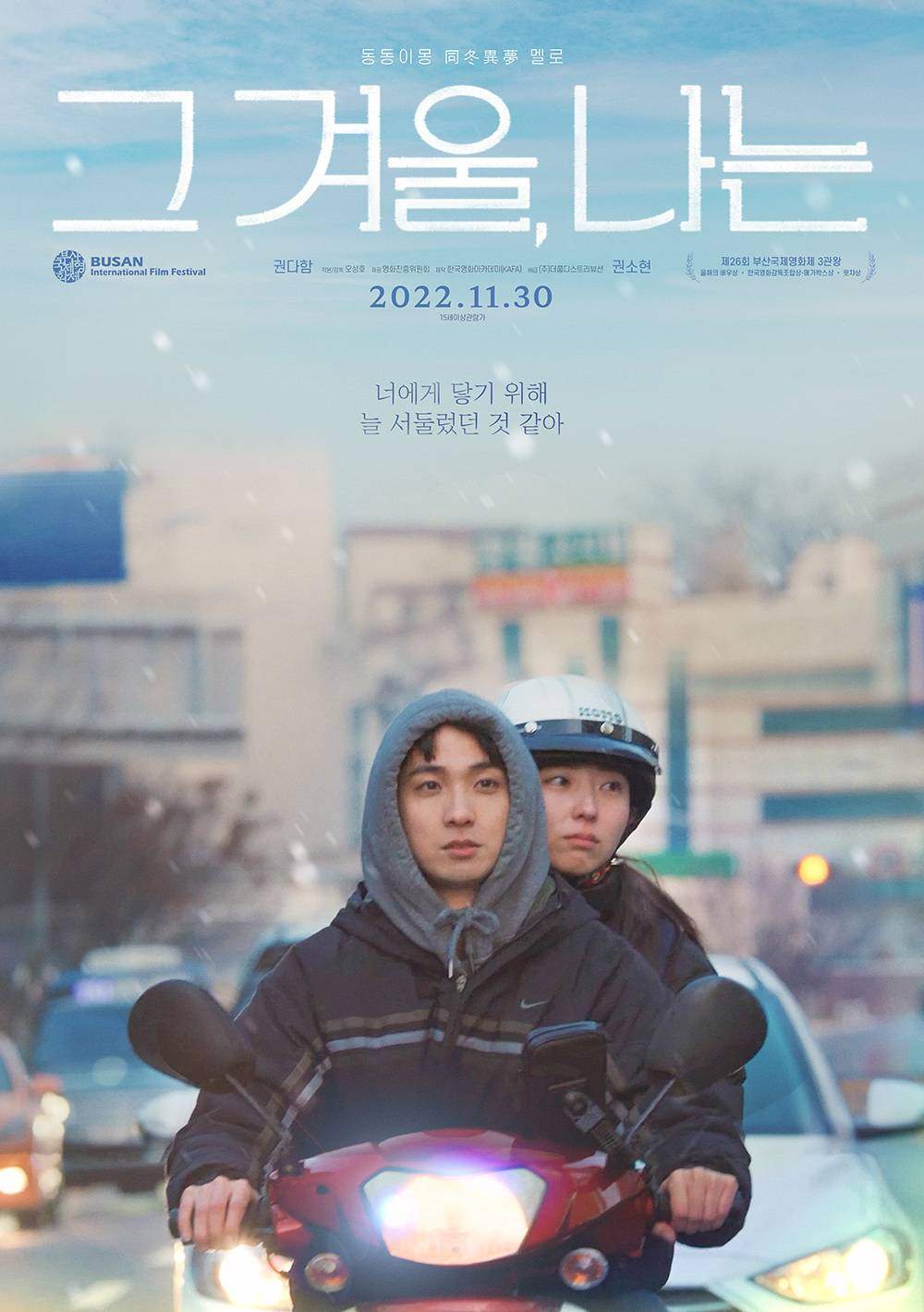
Through My Midwinter (그 겨울, 나는, Oh Seong-ho, 2021)

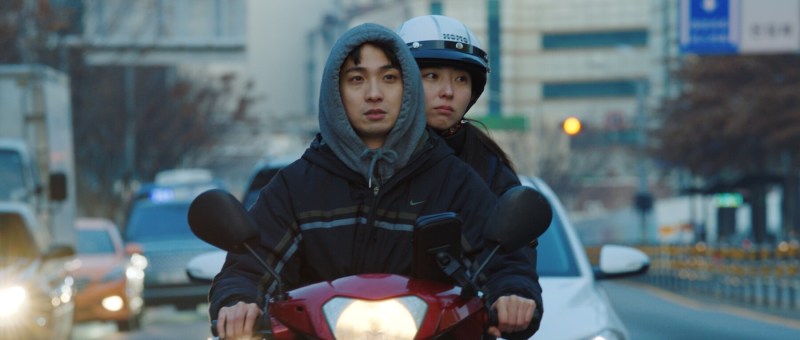
The previously close relationship between a young couple hoping to win steady government jobs is gradually eroded by the strain of living in a hyper-capitalist society in Oh Seong-ho’s empathetic indie drama Through My Midwinter (그 겨울, 나는, Geu Gyeoul, Naneun). Another in a series of recent films exploring the pitfalls of living on the margins of an otherwise prosperous society, Oh’s debut feature explores the ways in which money, employment, security, and the changing natures of classism and patriarchy continue to disrupt human relationships in the simple desire to live in relative comfort or else just survive in one of the wealthiest cities in the world. 

Both approaching 30, Kyung-hak (Kwon Da-ham) and his girlfriend Hye-jin (Kwon So-hyun) are each studying for civil service exams he in the police force and she hoping for a job at the tourist board though it seems like even that wasn’t her first choice. Though they are each worried that their time is running out and they’ve left it too late to get settled, they appear to have a good relationship and are happy muddling through together. The crisis comes when Kyung-hak receives a call from a bank and discovers his mother has taken out a sizeable loan in his name on which she has defaulted and apparently disappeared leaving him liable for the entire amount plus interest. As a student it is not an expense he can afford, leaving him with no other option than to look for part-time work which disrupts his ability to study and further decreases the chances of his passing the upcoming police force exam.

Kyung-hak’s naivety is obvious when it’s clear he’s being ripped off by a friend who sells him a motorcycle for cheap claiming that he recently had it serviced though it sounds and looks like it’s seen better days. Accepting a job as a delivery driver he is resigned to taking the jobs no one else wants as the rookie new recruit, but is quickly frustrated by the way in which he is treated by his customers. The guard at one swanky building won’t let him use the lift in case the take away he’s carrying leaves a smell, forcing him to walk up 19 floors and possibly incur a customer complaint when the food is cold or damaged from its journey up the stairs. He is encouraged to be reckless in order to earn more money, putting his life and those of others in danger while his lack of sleep also makes him irritable and difficult to be around especially with Hye-jin who is experiencing problems of her own after deciding to give up on the government exam and take a job at a tech company. 

Mirroring the final scenes of Kyung-hak operating a machine at a factory, the work Hye-jin is originally assigned is on a production line assembling USB sticks which is most likely not the kind of job she envisioned for herself as someone with a post-graduate degree. A further strain is placed on their relationship by the obvious disapproval of Hye-jin’s mother who thinks Hye-jin is wasting her time with a man like Kyung-hak who is “just” a delivery driver at age 30 and most likely is never going to pass the police exam. “Who marries for love these days” she exclaims in exasperation, simultaneously admitting that it was different for her generation who could make a lot of money together while young and save for the future, and resenting her daughter for not being smart and looking to hook up with someone “on her level”. Hye-jin appears to resent this, but deep down perhaps feels something similar, drawn to her boss at her new job who seems nice enough and like her speaks Japanese having spent some time living in Kyoto. When her new coworkers ask about her boyfriend she’s evasive, finally conceding that he’s studying for the police exam but clearly uncomfortable when they ask if they’ll be getting married once he finally passes.

The cracks may have already been there, Hye-jin accusing Kyung-hak of only using her for sex rather than committing to the relationship, while he is increasingly sullen and uncommunicative unwilling to accept help financial or otherwise humiliated in having his masculinity undermined by not being able to support himself independently. Eventually he’s forced to compromise himself morally, behaving like the colleague he resented in picking up the better jobs first and then resorting to criminality in agreeing to drive sex workers around for the money to fix his bike after an accident. When he realises the girl he’s driving is probably underage he tries to do something about it, but she needs the money as much as he does and asks him what “responsibility” he’s going to take. Will he give her the money so she can go home tonight? Even if he does, what about tomorrow and all the nights after that? She’s just as powerless as he is and at even more risk.  

The film’s English-language tagline presumably referring to Hye-jin as “a woman who falls prey to money” may have its share of misogyny in suggesting that Hye-jin has somehow sold out in choosing to pursue a more middle-class life at the expense of her relationship with Kyung-hak, as if Kyung-hak has not also fallen prey to money in that it is the force which has destroyed his life and hopes for the future as it has for pretty much everyone. When he almost loses a hand at his factory job, his boss just asks if the machine’s alright not really caring that it’s Kyung-hak who might be broken by the inhumanity of rampant capitalism. It’s difficult to tell if the closing scenes are intended as hopeful or otherwise as Kyung-hak once again studies for the police exam hoping to escape his life of crushing poverty but also perhaps complying with the system that sent him there and may never grant him the right the better life he dreams of. Oftentimes bleak, depicting a society in which all relationships are transactional and friendship or romance luxuries most are unable to afford, Oh does at least suggest that this is only an extended midwinter and spring will eventually come for Kyung-hak even if he has to wait until he’s 49.


Through My Midwinter screened as part of this year’s London Korean Film Festival.

Original trailer (Korean subtitles only)

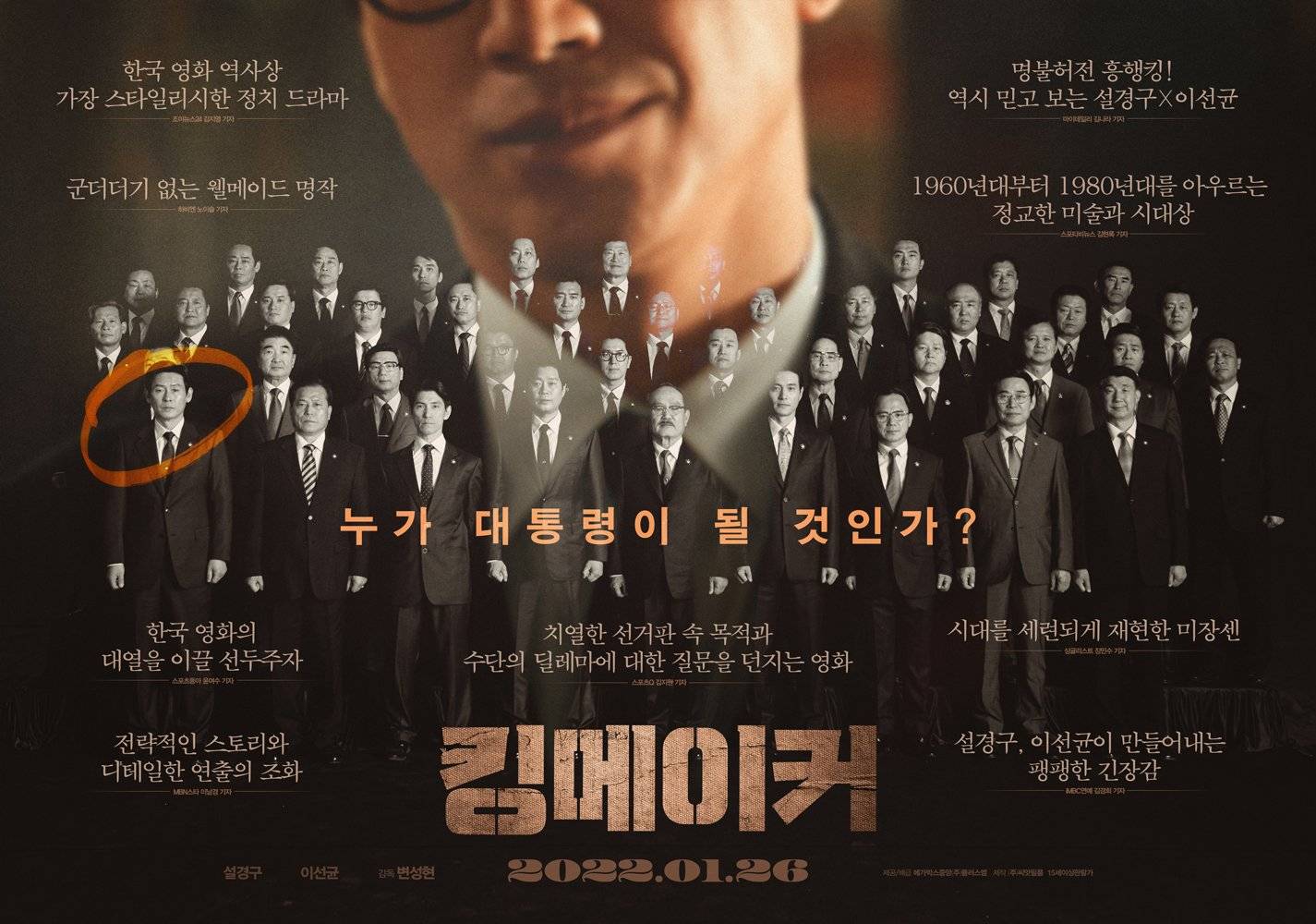
Kingmaker (킹메이커, Byun Sung-hyun, 2022)

It’s the political paradox. You can’t do anything without getting elected but to get elected you might have to abandon whatever it was you wanted to do in the first place. Loosely based on the real life figures of Kim Dae-jung and his political strategist Eom Chang-rok, the heroes of Byun Sung-hyun’s Kingmaker (킹메이커) are obsessed with the question of whether the ends justify the means and if it’s possible to maintain integrity in politics when the game itself is crooked while the film suggests that in the end you will have to live with your choices and your compromises either way and if it’s a better world you want to build perhaps you can’t get there by cheating your way to paradise.

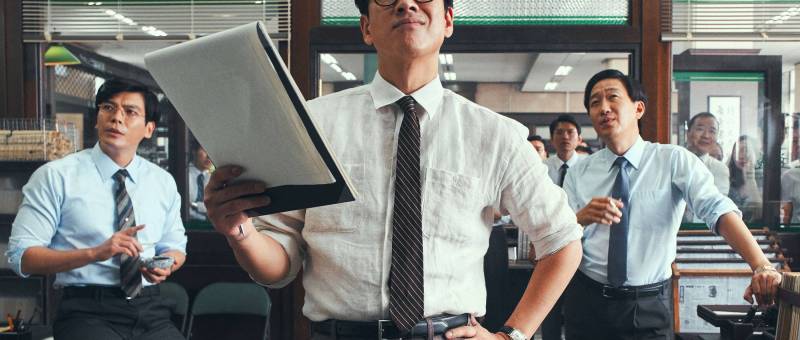
The son of a North Korean migrant, Seo Chang-dae (Lee Sun-kyun) is an embittered and frustrated pharmacist with a talent for spin. When his friend complains about a neighbour stealing his eggs from his chicken coop and denying all knowledge because he’s well connected and knows he can get away with it, Chang-dae’s advice is to plant one of his own chickens in the other guy’s coop and catch him red handed. Impressed by the impassioned political speechmaking of labour activist Kim Woon-bum (Sol Kyung-gu), he writes him a letter offering his services and then marches down to his office to convince him that he is the guy to break his losing streak and finally get him elected so they can “change the damned world”. 

The problem is that all of Chang-dae’s ideas are like the chicken scam, built on the manipulation of the truth, but you can’t deny that they work. He plays the other side, the increasingly authoritarian regime of Park Chung-hee, at their own game, getting some of their guys to dress up as the opposing party and then set about offending a bunch of farmers by being generally condescending and entitled. They stage fights and perform thuggish violence to leave the impression that Park’s guys are oppressive fascists while asking for the “gifts” the Park regime had given out to curry favour back to further infuriate potential voters. Later some of their own guys turn up with the same gifts to send the message that they’re making up for all Park’s mistakes. At one point, Chang-dae even suggests staging an attack on Woon-bum’s person to gain voter sympathy, an idea which is met with total disdain by Woon-bum and his team many of whom are at least conflicted with Chang-dae’s underhanded tactics. 

But then as he points out, if they want to create a better, freer Korea in which people can speak their minds without fear then they have to get elected first. It may be naive to assume that you can behave like this and then give it all up when finally in office, but Chang-dae at least is committed to the idea that the ends justify the means. Woon-bum meanwhile is worried that Chang-dae has lost sight of what the ends are and is solely focussed on winning at any cost. He has an opposing number in slimy intelligence agent Lee (Jo Woo-Jin) who serves Park in much the same way Chang-dae serves Woon-bum, but Chang-dae fatally misunderstands him, failing to appreciate that for Lee Park’s “revolution” is also a just cause for which he is fighting just as Chang-dae is fighting for freedom and democracy. In an uncomfortable touch, Lee seems to be coded as gay with his slightly effeminate manner and tendency towards intimate physical contact adding an additional layer to his gradual seduction of Chang-dae whose friendship with Woon-bum also has its homoerotoic qualities in its quiet intensity. 

The final dilemma lies in asking whether or not Woon-bum could have won the pivotal election of 1971, preventing Park from further altering the constitution to cement his dictatorship and eventually declaring himself president for life, if he had not parted ways with Chang-dae and tried to win more “honestly”. If so, would they have set Korea on a path towards the better world they envisaged or would they have proved little different, their integrity already compromised by everything they did to get there poisoning their vision for the future? The fact that history repeats itself, Woon-bum and his former rival Young-ho (Yoo Jae-myung) splitting the vote during the first “democratic” presidential election and allowing Chun Doo-hwan’s chosen successor to win, perhaps suggests the latter. In any case, it’s Chang-dae who has to live with his choices in having betrayed himself, as Woon-bum had feared too obsessed with winning to remember why he was playing in the first place. “All my ideas about justice were brought down by my own hand” he’s forced to admit, left only with self-loathing defeat in his supposed victory. Some things don’t change, there is intrigue in the court, but “putting ambition before integrity will get you nowhere” as Chang-dae learns to his cost. 


Kingmaker screened as part of this year’s London Korean Film Festival.

International trailer (English subtitles)

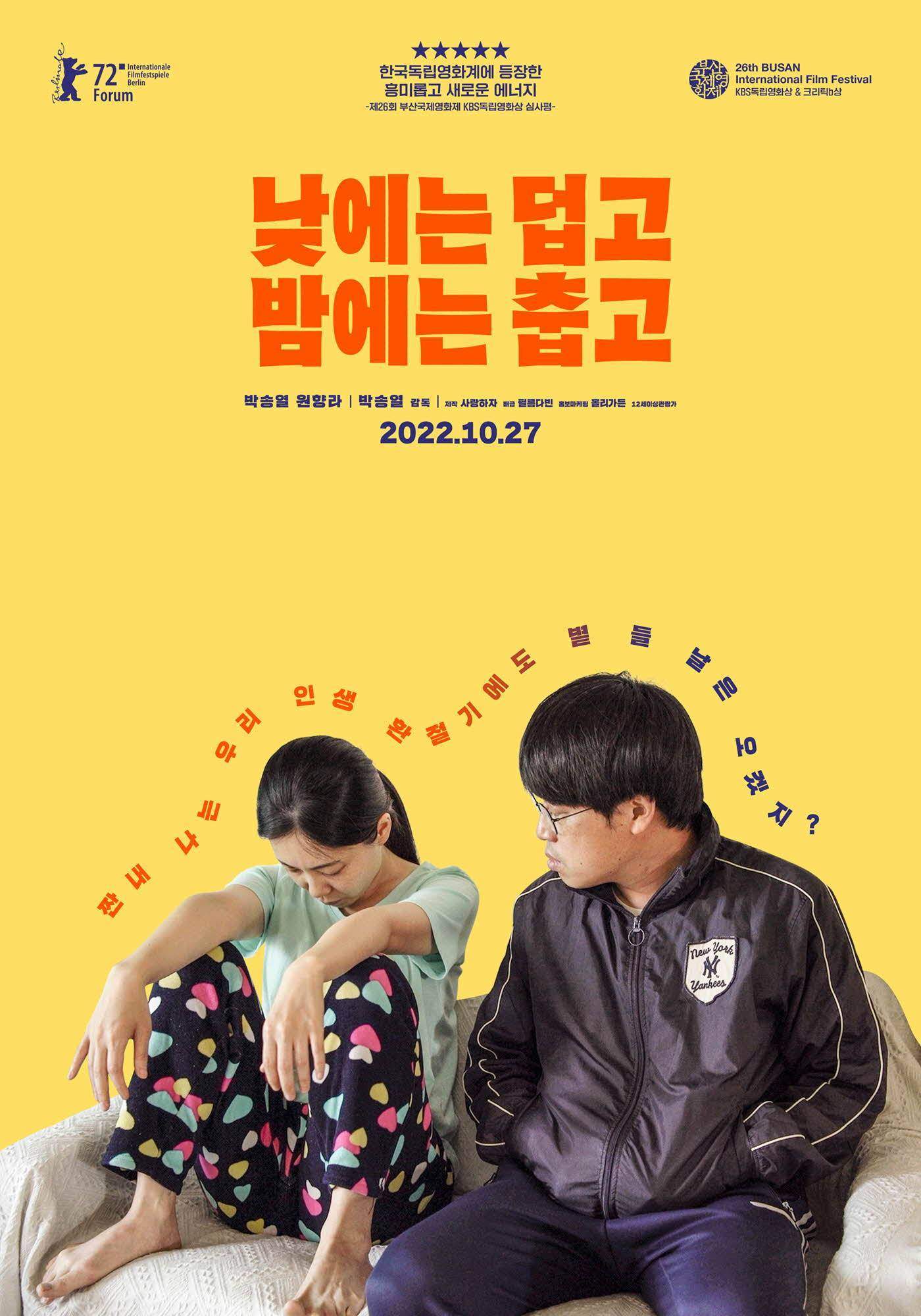
Hot in Day, Cold at Night (낮에는 덥고 밤에는 춥고, Park Song-yeol, 2021)

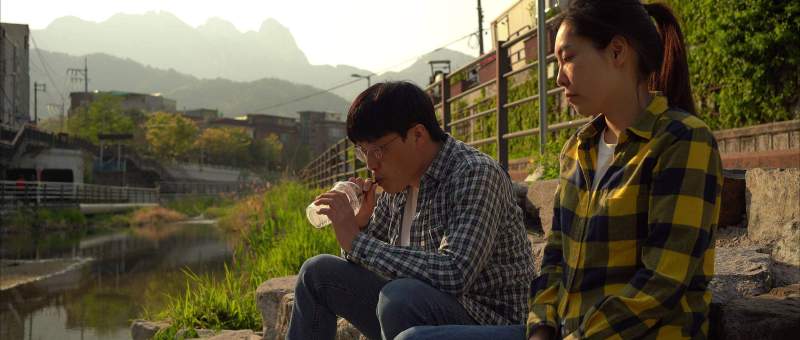
Anyone can have a run of bad luck, but when it’s happening to everyone at the same time perhaps it’s time to admit that something isn’t working. The latest film to tackle life on the margins of an increasingly unequal society, Park Song-yeol’s scrappy indie drama Hot in Day, Cold at Night (낮에는 덥고 밤에는 춥고, Naj-eneun deobgo bam-eneun chubgo) follows one ordinary couple who’ve found themselves jobless and are just trying to keep their heads above the water without losing either their dignity or humanity. 

Young-tae (Park Song-yeol) was working as a delivery driver until an accident with his bike left out him out of work and now he can’t seem to find anything else. His wife Jeong-hee (Won Hyangra), formerly a teacher, is also unemployed and in the process of applying for new positions which seem to be thin on the ground. They aren’t proud and are willing to do whatever is available, each of them reeling off a list of all the casual jobs they’ve done including those that are dangerous or exploitative, but they just can’t seem to catch a break. Mainly, they’re on the same page though differ slightly in their approaches to life, Jeong-hee feeling that her softhearted husband is too much of a pushover and shouldn’t always be so understanding when comes to getting what’s he’s owed. 

A case in point being his decision to lend their professional camera to a friend, Myung-su, who pays them a token rental fee and swears to return it in two weeks when he’s made enough money to buy his own but soon stops returning Young-tae’s calls. Unreturned calls become a repeated motif emphasising how money and the shame associated with not having it can disrupt even close and longstanding relationships. Jeong-hee experiences something similar with school friend Mi-sun who calls in a loan but abruptly stops talking to her after what appears to be a slightly dodgy arrangement getting Jeong-hee to sub for her at a school which goes south over a misunderstanding with the address causing Jeong-hee to ruin a good opportunity (and possibly Mi-sun’s reputation) by arriving late. 

Young-tae has his own series of interview disappointments, Myung-su getting him an opportunity through the “relative of an acquaintance’s friend” which takes a turn for the strange when the interviewer starts asking awkward questions such as whether Young-tae has any sick relatives at home because people apparently take too much time off claiming they have to take care of someone who’s ill. Another possibility sees a friend call out of the blue after 20 years which predictably turns out to be linked to a pyramid scheme.  “My identity just vanishes” Young-tae exclaims of all his soulless causal jobs, “your self-esteem just gets destroyed”. He takes a job as a proxy driver but is faced either with the tedious talk of much wealthier customers throwing their money around in the back or else harangued by drunken fares who don’t agree with this driving practice or the route he’s chosen. 

There is only so much anyone can take though Young-tae’s threshold is higher than most, keeping his cool and trying to get on with his work in the hope that happier days are coming. “There’s no such thing as easy money” he concedes, even as Jeong-hee goes behind his back to take out an ill-advised loan from loansharks who send passive aggressive messages wishing her “peace and wellbeing” while breathing down her neck for the repayments before going so far as to turn up at her mother’s door looking for money. The fact that Jeong-hee didn’t just ask her mother for help in the first place hints the secondary effects of their poverty in their intense embarrassment which further isolates them from wider society even if they hadn’t fallen out with most of their friends over money. A primary motivator for Jeong-hee getting the loan is seeing all her siblings, who each have several children, preparing gifts and money for her mother’s birthday which is something they as a couple were unable to do though it’s Young-tae who appears to feel the most awkward, guilty to be eating food at the party while bringing no gift even if that shouldn’t really be the way it works. 

Young-tae is the sort of person who likes to do things properly and sees the best in people but even he starts to feel like a mug on realising that Myung-su sold his camera ages ago, insisting he pay him back fairly and a little more for the betrayal only to feel guilty and give him back some of the money. Myung-su just accepts it without even offering an apology for acting in such a reprehensible manner but is later seen to have bought a new car which doesn’t tally with his claims of absolute desperation. It’s enough to drive anybody crazy, but really what can you do? Young-tae meditates on petty revenge, but eventually thinks better of it. It wouldn’t make any difference anyway. Quite obviously made for a shoestring and imperfect in execution, the film’s scrappiness perfectly matches that of its heroes who find themselves just muddling along trying live comfortable lives in one the world’s richest cities but discovering little more than loneliness and disappointment. 


Hot in Day, Cold at Night screened as part of this year’s London Korean Film Festival.

Original trailer (English subtitles)