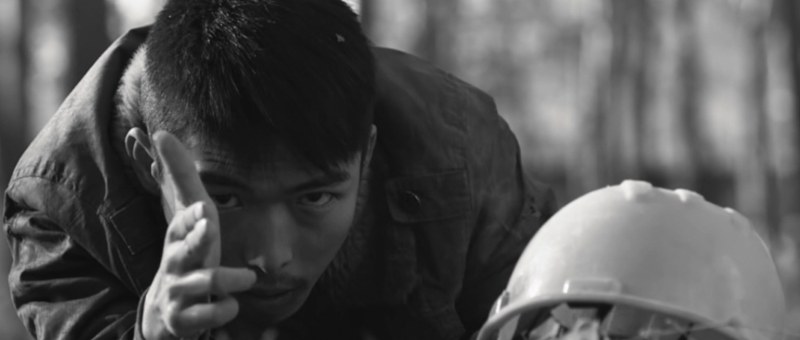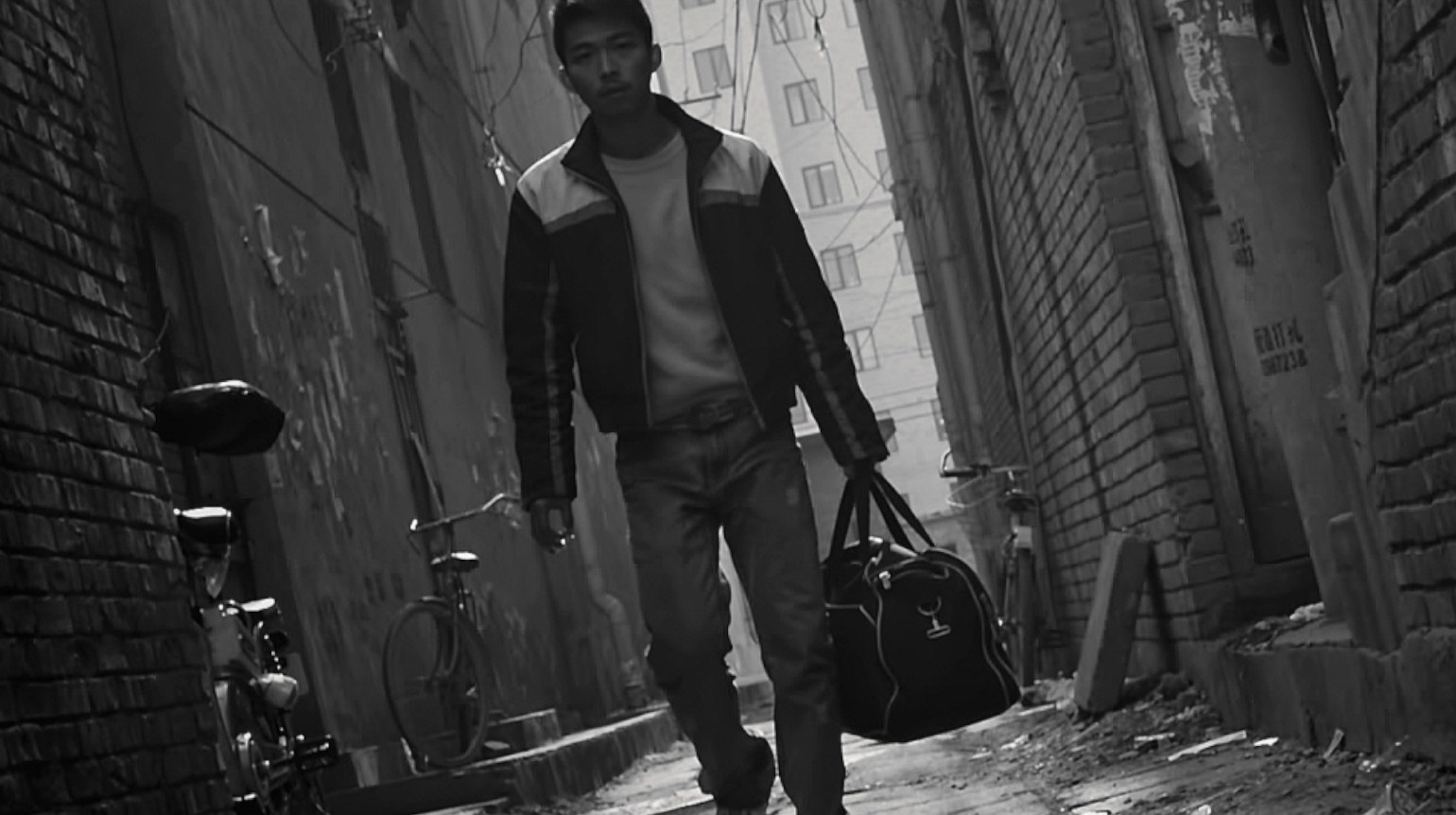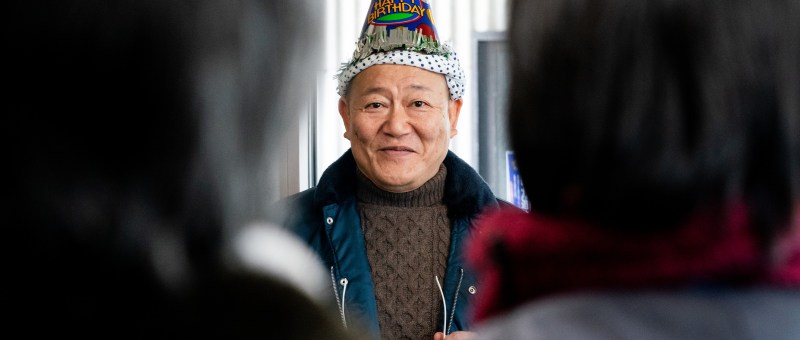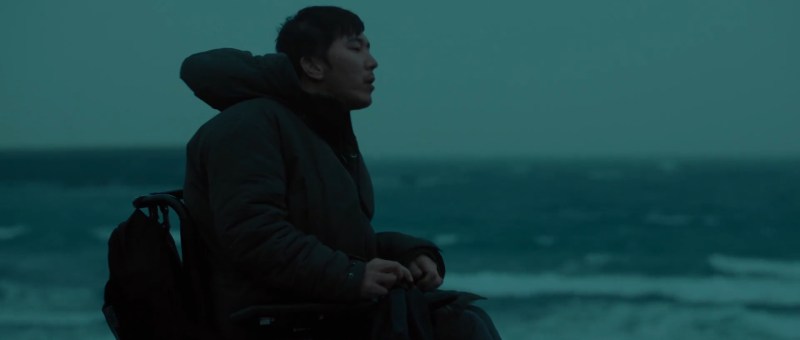
Awoke (복지식당, Jung Jae-ik & Seo Tae-soo, 2020)

“Please let me live with dignity” the hero of Jung Jae-ik & Seo Tae-soo’s Awoke (복지식당, Bogji Sigdang) eventually pleads as a sole judge looks down on him from on high, advocating for himself but seemingly finding little support. Co-directed by Jung who is disabled himself and employing a mixed ability crew, Jung & Seo’s kafkaesque drama explores the vagaries of disabled life in the contemporary society in which there is still a degree of stigmatisation towards those with differing needs while the expanding welfare system also presents its own barriers preventing those with disabilities from leading full and fulfilling lives. 

This 34-year-old Jae-gi (Jo Min-sang) discovers when he suddenly becomes disabled after a traffic accident. As his mother died while he was in the hospital, he has only his cousin Eun-ji, who is a single mother to a teenage son, and an elderly landlord to look after him while it seems no one has fully explained the options he now has. His hospital roommate, Bong-su, seems to be an old hand, visited by a man in wheelchair, Byeong-ho whom he calls brother, who has evidently explained to him how to game the system which is why he is later rated level 2, the second most severe category of disability, despite being fully able to walk and perform everyday tasks with relative ease. Being an honest person, Jae-gi fully co-operates with the civil servant sent to assess his level of disability and as he is able to stand and make a few steps to transfer into a wheelchair independently he is put down as able to walk, and as the assessor is able to move his left arm which constantly tremors and has low functionality he is graded level 5 or “mildly disabled”. 

To anyone’s eyes, this is plainly ridiculous. Jae-gi needs an electric wheelchair in order to get around and can only manage basic every day tasks such as housework and laundry with assistance. He is also forced to move out of the flat his mother left him because it’s a walkup, meaning he has to rent an accessible room. He tries to apply for various schemes intended to help people like him so that he’d be able to use subsidised accessible taxi services and have access to a personal carer but is repeatedly told he doesn’t “qualify” because of his level five designation. Unable to claim for disability living allowance, Jae-gil wants to get a job but again on visiting a specialist service designed to help those with disabilities get into work finds himself falling between two stools. The first interviewer simply looks at him and explains he wants someone who can walk and lift heavy objects, which is incongruous with advertising jobs to people with physical disabilities. The second wanted to hire him right away only to rescind the offer on looking at his welfare card explaining her company only hires levels one to three. Byeong-ho, who happens to work there too, explains that’s because companies are given subsidies for hiring the “severely” disabled which on paper Jae-gil is not. 

Time and again, Jae-gil becomes the victim of officious bureaucracy. The services needed to help him exist, but he is prevented from using them because an over officious assessor was too literal with his form. He’s told that it’s difficult, perhaps impossible, to get one’s level changed, a claim which seems doubly unfair given that disability can of course change over time. Intensely vulnerable, he comes to over rely on Byeong-ho’s advice, little knowing that Byeong-ho is also exploiting him despite being aware that he has no money and is in danger of being evicted from his flat if he is not able to get his level changed to enable him to work, claim the assistance he is entitled to, and live a fulfilling independent life. 

Encouraged by Byeong-ho, Jae-gil is certain that he’s going to get his rating overturned, assuring his cousin there’s no need to sell his mother’s flat in which she is currently living after losing her house when her husband passed away from cancer because he’ll soon have a job and can pay the rent. Perhaps to a certain extent you can’t blame Byeong-ho for being the way he is given the way he has also experienced exploitation and discrimination not to mention violence at the hands of a father who couldn’t accept having a disabled son, but his almost sadistic glee in fleecing Jae-gil of the little he has is plainly unforgivable, reaching out in solidarity as one disabled person to another only to pass on his sense of oppression to someone even more vulnerable. Forced into a kafkaesque bureaucratic nightmare, all Jae-gil can do is repeatedly state his case only for those in positions of power to claim they are prevented from helping him because his card says level five despite the obvious evidence of their eyes. Nevertheless, through his traumatic experiences of betrayal and exploitation, he perhaps awakens to the injustice inherent in the contemporary society and is resolved to advocate for himself though the jury is it seems out on whether anyone is finally going to listen. 


Awoke screens 9th November as part of this year’s London Korean Film Festival.

Original trailer (English subtitles)
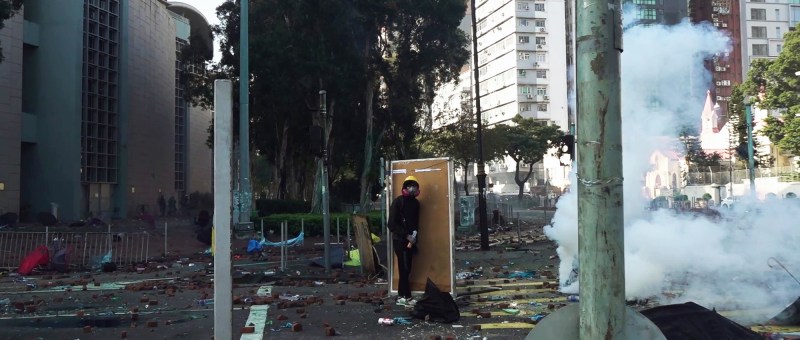
Inside the Red Brick Wall (理大圍城, Hong Kong Documentary Filmmakers, 2020)

“We can’t afford to be afraid” insists a protestor trapped inside the siege of Hong Kong Polytechnic University during the 2019 protests sparked by opposition to the Extradition Law Amendment Bill. Credited only to the Hong Kong Documentary Filmmakers collective, its directors for obvious reasons choosing to remain anonymous, Inside the Red Brick Wall (理大圍城) is a visceral exploration of life behind the barricades as the trapped youngsters, some of whom are under the age of 18, grow increasingly frustrated and afraid, desperate for escape but fearful of police violence. 

The police, it has to be said, do not come out of this well. While the protestors blast local hip hop highly critical of law enforcement, the officers negotiating via loud speaker repeatedly troll them with ironic pop songs with titles such as “Surrounded” or “Ambush From Ten Sides” while otherwise taunting them with ridiculous insults and talking about going out to kill cockroaches. Such deliberate provocation at least giving the impression that they are merely looking for an excuse to storm the university does not endear them to the protestors trapped inside most of whom already want to leave but not if it means walking out into the arms of the police. With the mounting hysteria, it isn’t even the immediacy of the threat that causes the most anxiety but the possibilities of its aftermath, many fearing not just police brutality but sexual violence and that their mistreatment will not end with their arrest. This is one reason that many struggle to trust a cohort of high school principals who are permitted to enter the university in order to lead out some of the school-aged protestors, promising to protect them from the police batons in order to deliver them to their homes safely and directly. In return the protestors are asked to provide their IDs, leading many to fear they will simply be arrested the following morning. 

Nevertheless, as the situation inside begins to decline it becomes clear to many that they must leave by whatever means possible, some engaging in potentially dangerous escape attempts such as abseiling from a bridge to be met by friends on motorbikes, or exiting through the sewers. Others debate the wisdom of leaving at all, correctly as it turns out surmising that the police will eventually be forced to end the siege because allowing it to continue is simply far too expensive. Even so, these are extremely young people under intense strain, mentally and physically exhausted while also fearing for their lives. Remarking that many have made their wills, one young man insists it’s not death he fears, he’s prepared for that, but that he may die in here and no one would know.  

The necessity of hiding their faces, the documentarians are scrupulous in blurring even the faintest trace of identifiable features, adds to the sense of the collective which becomes in the eyes of some at least their best weapon of defence. Yet through repeated attempts to break through the blockade and the gradual shedding of those who cannot endure any longer deciding to accept the threat of arrest and surrender, the group necessarily weakened causing many to fear their reduced numbers leave them increasingly vulnerable. Some protestors loudly harangue their friends for leaving, while others offer only comfort as their fellow protestors tearfully apologise but can clearly remain no longer. A few pledge to wait it out while debating the ethical dimensions of leaving if it means abandoning those who are already too injured to make their own way out. 

In the midst of the action, the documentarians hover over blood-stained helmets and the aftermath of violence but are also relatively free to record police brutality seemingly ignored by officers otherwise pinning protestors to the floor and in some cases recklessly firing rubber bullets in close proximity even at one point appearing to fire directly at the back of a fleeing protestor’s head. Interrupting these scenes with shots of empty corridors – discarded clothing, a lone shoe inches away from the fire, all those battered umbrellas – the filmmakers evoke an almost apocalyptic atmosphere of total desolation offering little hope for the future in a society dominated by fear and authoritarianism. 


Inside the Red Brick Wall screened as part of this year’s San Diego Asian Film Festival

Trailer (dialogue free)

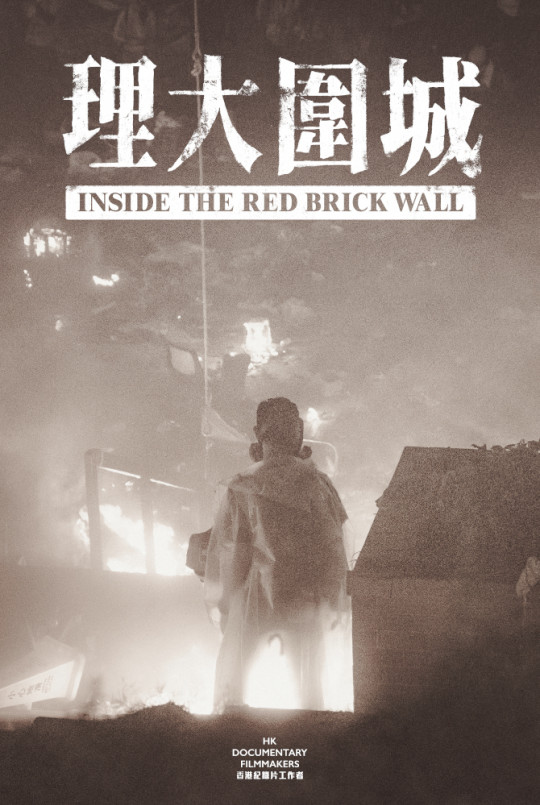
The Emperor’s Sword (乱世之定秦剑, Chen Hao-nan & Zhang Ying-li, 2020)

Can you ever truly preserve peace peacefully or will human greed and envy always triumph over a simple desire for comfort and safety? Chen Hao-nan and Zhang Ying-li’s wuxia drama The Emperor’s Sword (乱世之定秦剑, Luànshì zhī Dìng Qín Jiàn) situates itself at a moment of historical chaos in which the Qin Emperor, having ended the Warring States period through universal unity ten years previously, has died. In order to ensure peace throughout the land, his sword was melted down and recast as two with one residing in a palace and the other with trusty general Meng. Ambitious courtier Zhao Gao, however, has his mind set on usurpation having wiped out most of the previous regime hellbent on retrieving both of the swords in order to secure his grip on power. 

Unfortunately for him, Meng managed to send his daughter Xue away from the falling castle with the sword in hand instructing her to take it to the Tomb Keepers of Qin. Luckily for her, she runs into Jilian, one of the famed “Seven Gentlemen” who were once students of her father’s most of whom retreated to the Red Valley once the wars ended hoping to live lives of peace. Xue’s father brought her up to be kind and considerate, always thinking of others first, but she wonders if there’ll ever be a day with no more war when everyone is free to live happily together. The remainders of the Seven Gentlemen find themselves conflicted, some wanting to help Xue while others are reluctant to involve themselves in worldly conflict having had enough of war, but their belief that they could isolate themselves from external chaos turns out to be an illusion even if it were not also a contravention of their moral code not to stand for justice when the kingdom is threatened. 

A secondary dilemma is that the man hunting them down is in fact one of their former brethren who entered the service of usurping lord Zhao. Conflicted himself, Tian meets with Jilian each essentially asking the other to back off, not get involved in this particular fight, but that’s not something either of them can do leading to a series of emotional showdowns filled with tragic romance, betrayed brotherhood, and divided loyalties. In an echo of Xue’s advocation for a kinder world if one informed by the values of jianghu, Jilian claims he serves the Meng because they really care about the people, unlike Zhao it’s implied with his authoritarian lust for power. Yet in essence the two men have the same mission, not wanting anyone else’s life to be ruined by the chaos of war, only Tian has chosen the iron fist as a means of preserving peace while Jilian has opted for a less oppressive vision of a settled future. 

Still our heroes find themselves in a precarious position as they attempt to stop Zhao Gao completing his evil mission by getting his hands on both the swords. Making the most of their meagre budget, Chen and Zhang choreograph some impressive action sequences as Jilian becomes a veritable one man army taking on hordes of Zhao’s minions while making his way towards the man himself. Xue meanwhile does perhaps become something of a damsel in distress, largely unable to defend herself and reliant on the assistance of Seven Gentlemen foster son Han Jue, appointed to protect in a compromise measure though the expected romance never quite materialises even as she begins to push him towards a more mature contemplation of a better world of peace and justice. She is however pursued by a dogged female assassin with brotherhood issues of her own who remains hot on her trail despite the fecklessness of her evil middle manager boss Lord Wei who is every inch the cowardly wuxia villain. In true jianghu fashion, the good guys don’t always win and are heavily punished for the contraventions of their codes but eventually permit good to triumph over evil in successfully conveying the sword to a more just custodian. 


The Emperor’s Sword is released in the US on Nov. 9 on digital, blu-ray, and DVD courtesy of Well Go USA.

US release Trailer (English subtitles)

All About My Sisters (家庭錄像, Wang Qiong, 2021)

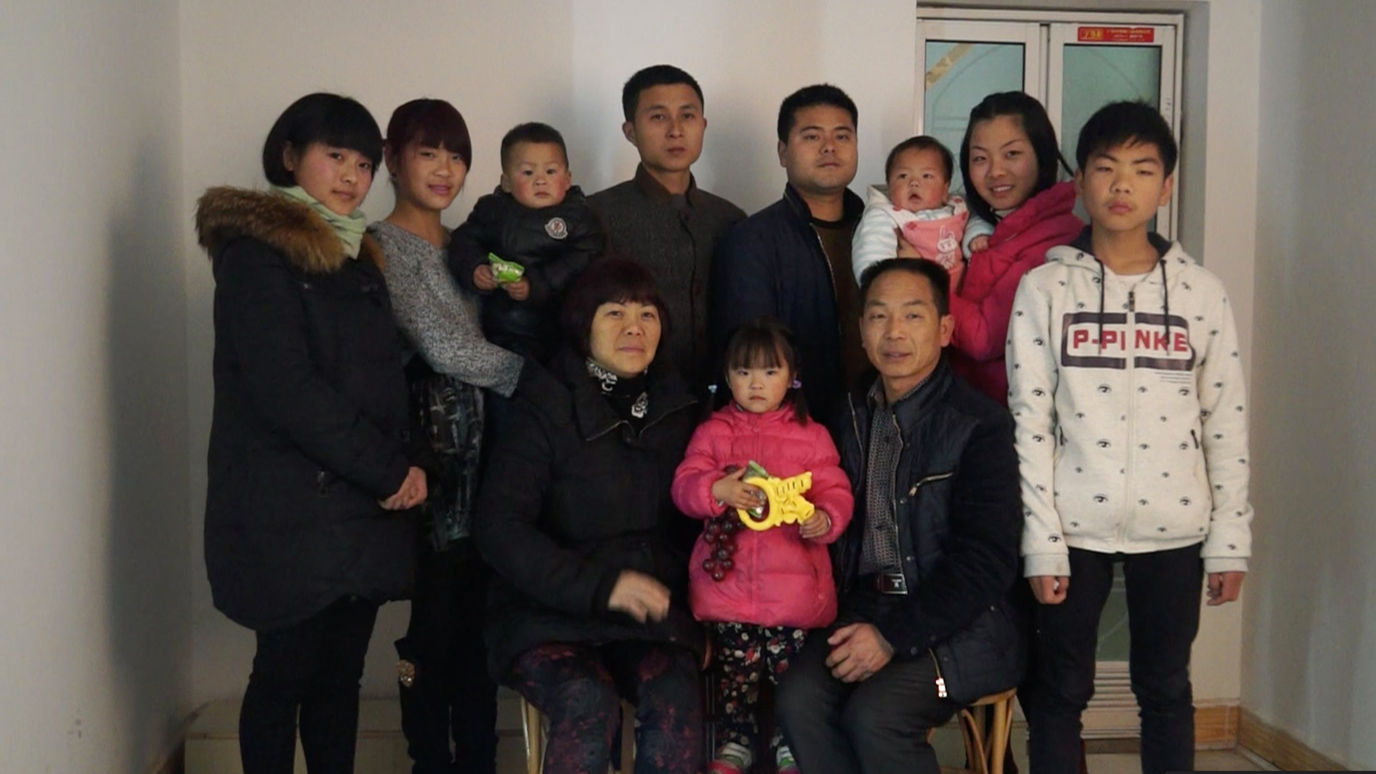
Following a series of demographic fluctuations including decreased infant mortality and increased life expectancy, the Chinese state began to impose population controls in the early 1970s finally introducing the infamous One Child Policy in 1980. Though the name is perhaps a misnomer given that numerous exceptions existed permitting certain families such as those in rural areas to have two children, the effects of the policy’s often violent and inhuman enforcement continue to linger despite its vast relaxation with most now permitted to have up to three children in an effort to combat the ironic side effect of China’s rapidly ageing society. Wang Qiong’s All About My Sisters (家庭錄像, Jiātíng Lùxiàng) is, quite literally, about her sisters but also all of the women of China past and present whose lives continue to be defined by cruel and thoughtless authoritarian government along with outdated patriarchal social codes. 

The sadness in her own family, however, locates itself in the liminal figure of her younger sister Jin, the family’s third child born at the height of the One Child Policy and therefore in some senses illegal. As Qiong’s mother Xiaoqing later recounts, she became pregnant seven times and each time a girl. She had four abortions, but was still determined to conceive a son in order to perform what she saw as her filial duty. Despite undergoing partial sterilisation in 1992, a country doctor helped her to maintain one functioning ovary expressly because she had not yet had a male child, Xiaoqing eventually had a son, Sifan, in 2002, but prior to that had already made the difficult decision to opt for a late term abortion when pregnant with Jin in the conviction the baby would be another girl. Ambivalent in her decision she also took herbs which she believes were responsible for counteracting the effects of the injections she was given to induce abortion allowing Jin to survive, but because of their poverty and the stringency of the One Child Policy Xiaoqing and her husband Jianhua decided to abandon the baby hoping someone who had a son already would take her in. Having left her outside an orangery, the couple were distraught to learn that Jin had only been moved to a better location outside a school where she apparently lay for several days. Eventually the decision was taken to retrieve her, Jianhua’s mother persuading his sister Jinlian and her husband Zhenggen to raise the child alongside their son Jun. 

This awkward situation has continued to present a fault line in the organisation of both families, Jin a member of both and neither at the same time. Having been lovingly raised by Jinlian and Zhenggen as their own until her early teenage years, it was impossible for Jin to avoid the reality of her abandonment and the knowledge that it would not have happened if she had been male. Though she lived in a different village, most seemed to be aware of the circumstances of her birth with local children mocking her for having been “picked out of the trash can”, a cruelty even more chilling on hearing the accounts of Qiong’s parents who recall being told by a doctor that if they did not want the baby who had been born healthy they should throw her in the bin then and there. Qiong herself recalls seeing the corpses of other late term abortions in a gutter on her way to school almost all of them female. The One Child Policy may not be so draconian as it once was, but the patriarchal mindset is still very much in place. Qiong’s older sister Li is currently pregnant with her third child and shocks her sister by revealing that she plans to have an abortion should the baby be another girl in order to avoid displeasing her husband. 

Li already had a son from a previous marriage who is, perhaps tellingly, not seen here and does not seem to be living with her presumably having remained with the father’s family in order to carry on their name. Asking her mother why everyone continues to value male children over female, Xiaoqing reflects that daughters become a part of someone else’s family when they marry and thereafter are responsible for looking after their in-laws. Only by having sons and gaining daughter-in-laws can you expect someone to be around to care for you in your old age.

It’s this rigid definition of family units which has caused so many problems for Jin who continues to refer to the uncle aunt who raised her as her parents while careful to refer to Xiaoqing and Jinhua as “your mother and father” when talking to Qiong, yet also encouraged to participate in filial rituals presenting gifts to her birth parents. The same problem occurs at her wedding when deciding which set of uncles should sit at the top table given her peculiar situation of having two sets of parents, worrying if her young son Chengxi will later be confused and wonder why it is he has three grandmas and grandads. For her part, she often loses her temper with him telling him that he’s a “useless baby” and “anyone is better than you”, a particularly heartbreaking moment occurring some years later while she berates him for having apparently bitten another child at school as he sadly removes a little paper heart from his forehead as if agreeing with her that he doesn’t really deserve it. Having married young trying to forge her own family while unable to repair the rifts with her parents and siblings, she contemplates leaving her husband who struggles with employment and has a gambling problem but ultimately decides not to because she doesn’t want her son to “live in a broken family” as she has done while simultaneously making him a “left behind child” as they head to the city in search of work and a little space from Jin’s overly complicated family situation. 

Even as she describes her father as “abusive”, and depicts her mother as a difficult person, Qiong is also careful to frame their actions within the confines of their times, the ultimate villain the cruel inhumanity of the One Child Policy. Xiaoqing’s brother was a local official in charge of the policy’s enforcement and tearfully declares himself haunted by the memory of exposing two of his own children in a forest behind the hospital in which they were born, preferring to regard it as water under the bridge and simply a consequence of the political reality he would have been unable to resist even had he chosen to. Meanwhile, Qiong’s elder sister remains somewhat complicit equally unwilling to confront a reality she sees as unchangeable while irritated by Jin’s attitude describing her as “childish” seeing as she is already a mother herself and should therefore “understand” the circumstances of her birth. We see countless signs in doctors’ offices reminding patients that “sex selective testing and abortion are prohibited”, but they only serve to remind that this is obviously something many people still consider when faced with the nation’s ever increasing wealth inequality and persistent patriarchal social codes which value sons over daughters. A complex examination of the ramifications of the One Child Policy through the prism of one particular family, Wang’s raw, personal documentary is an unflinching condemnation of repressive authoritarianism but also of continuing female subjugation in an unequal society. 


All About My Sisters screens in San Diego on Nov. 3 as part of this year’s San Diego Asian Film Festival

Trailer (English subtitles)

In Front of Your Face (당신얼굴 앞에서, Hong Sang-soo, 2021)

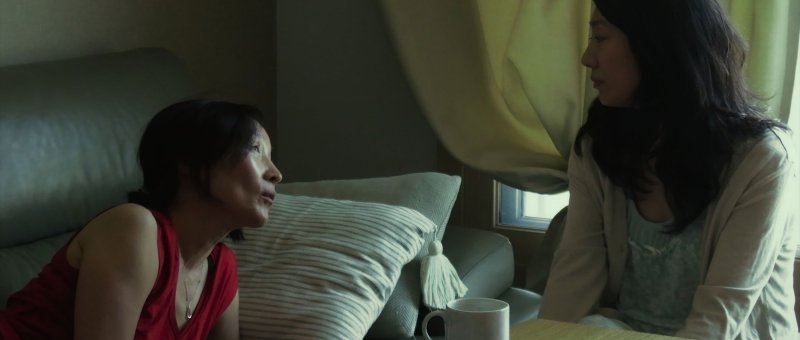
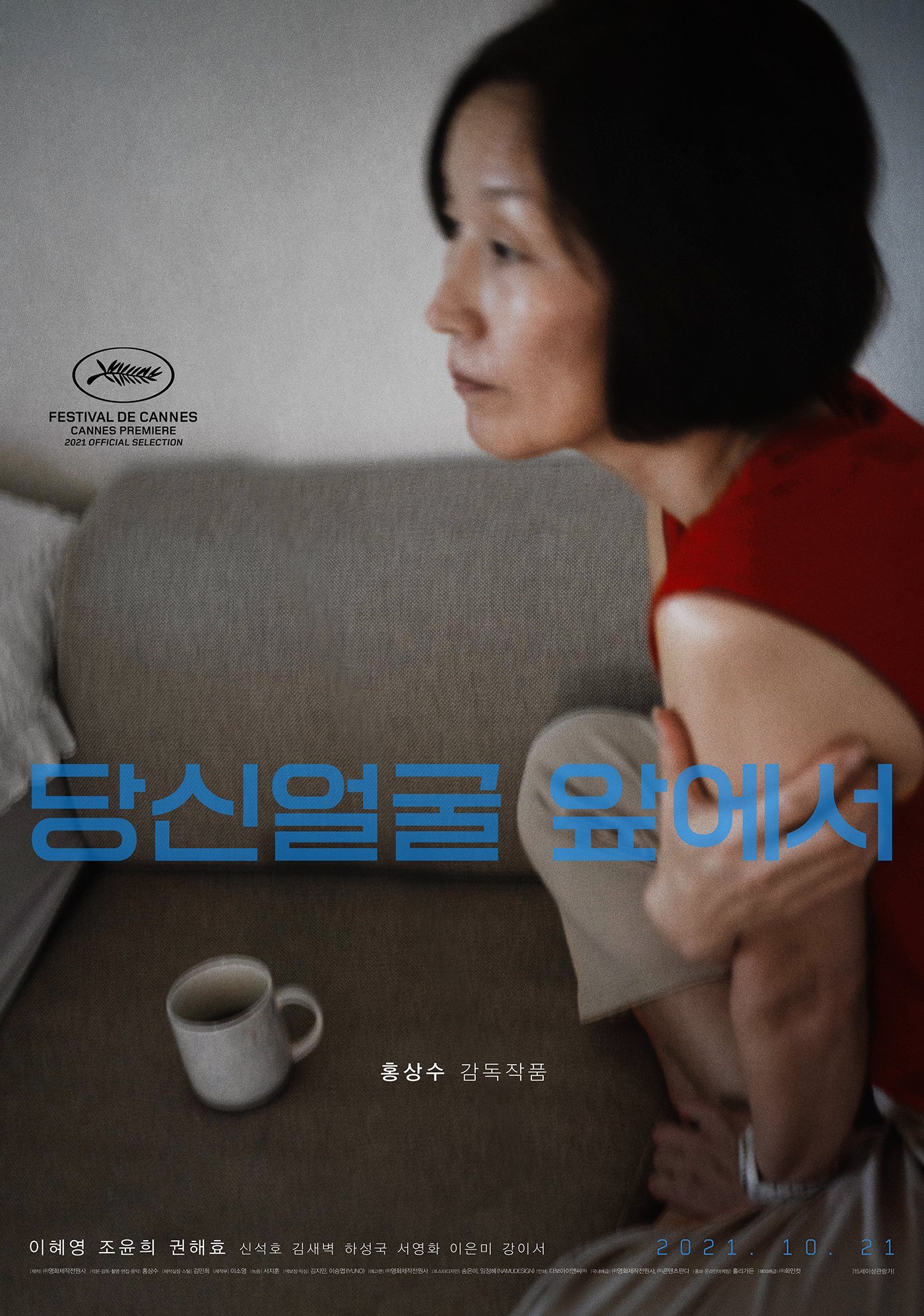
“There’s so much we don’t know about each other” a sister exclaims as if only just realising precisely how estranged they may have become this current visit home itself overshadowed by a kind of awkwardness that she doesn’t yet quite understand. Sangok (Lee Hye-young), the heroine of Hong Sang-soo’s latest meditation on existential dread In Front of Your Face (당신얼굴 앞에서, Dangsineolgul apeseo), is determined to live defiantly in the moment, shedding both past and future for the intensity of the now while learning to rejoice in the beauty of life if perhaps also burdened by ancient regrets, broken connections, and the ironic promise of an unobtainable future. 

After many years living alone in the US, former actress Sangok has returned to stay with her sister Jeongok (Jo Yoon-hee) and meet with a director who is interested in casting her in his latest film. According to her sister, Sangok ran off with a man she barely knew and followed him to America where she worked as a travel agent though more lately it seems barely getting by with a job in a liquor store. Jeongok waxes on about a swanky new apartment complex in a tranquil area of natural beauty, suggesting her sister move back to Korea but surprised and alarmed when she confesses she has no savings or property. “That’s how everyone lives there” she explains, “but it seems a lot of people here have money” noticing perhaps how much the city has changed since she’s been away while hinting that her life in America may have been in its own way disappointing. 

Sangok seems lonely, tired, a little distracted and perhaps anxious in the way she ties and reties the belt on her mac often placing a hand on her stomach for comfort. The sisters teeter on the brink of an argument about distance, unreturned letters, and whose fault it is they aren’t as close as they might have been but pull back from it wisely avoiding unnecessary confrontation in favour of maintaining the pleasant atmosphere. Yet there are also parts of Sangok’s story that don’t quite add up. A pair of women (Seo Young-hwa & Lee Eun-mi), appearing eerily like the cottage core cat-lovers from The Woman Who Ran, stop the sisters in a park recognising Sangok from her previous life as an actress decades ago. Jeongok is puzzled, sure that Sangok only appeared on TV once though the director, Song Jaewon (Kwon Hae-hyo), later descends into a reverie recalling the effect her early performances had on him as a young student in the early ‘90s. 

Hong pulls one of his usual tricks on us, repeating his opening scene with Sangok dressed in an identical outfit on her sister’s sofa if this time covered with a blanket leading us to wonder if everything we’ve just seen is only a dream. As it happens she soon gets a phone call to let us know it’s not, one which elicits from her an ironic laugh as the new hope she might have been given is suddenly crushed by another Hongian unreliable man talking too big a game even if this time the culprit is baiju rather than the familiar little green bottles of despair. Taking advantage of his selfishly postponing their lunch date, Sangok pays a visit back to her childhood home which has since become a boutique only the garden remaining the same if now dwarfed by the surrounding buildings of an ever developing city. “The memories in my heart are so heavy” she sighs, “I don’t know why I came here”, later embracing a little girl who may or may not live there now as if embracing the ghost of her childhood self. 

The meeting with the director turns out to be depressingly predictable, he having “borrowed” a cafe named “novel” from female “friend” while sending his assistant away periodically Sangok assumes because he wants to get her alone. Ironically enough she describes his films as like short stories, bemused as to why he’s so keen to hire a middle-aged former actress but finally bares her soul explaining what it is that she carries around with her on this rare trip to Seoul. Reciting small mantras to herself in the form of tiny prayers she tries to stay in the moment, reminded that every day is “grace” and that life itself is beautiful, claiming that as long as she can see whatever’s in front of her face then she’s not scared of anything. Reminders of the pandemic hover in the background with vague references to the way things are “especially now”, the atmosphere of dread and anxiety throwing Sangok’s philosophy into stark relief as she vows to live defiantly in the moment, rejoicing in life’s absurdities but also in its small comforts as she wonders what her sleeping sister dreams, shaking off her her existential vertigo to gaze out of a high-rise window.  


In Front of Your Face screens in San Diego on Oct. 30 & Nov. 1 as part of this year’s San Diego Asian Film Festival. Readers in London will also have the opportunity to see the film as part of this year’s London Korean Film Festival at Picturehouse Central on 13th November.

Original trailer (English subtitles)
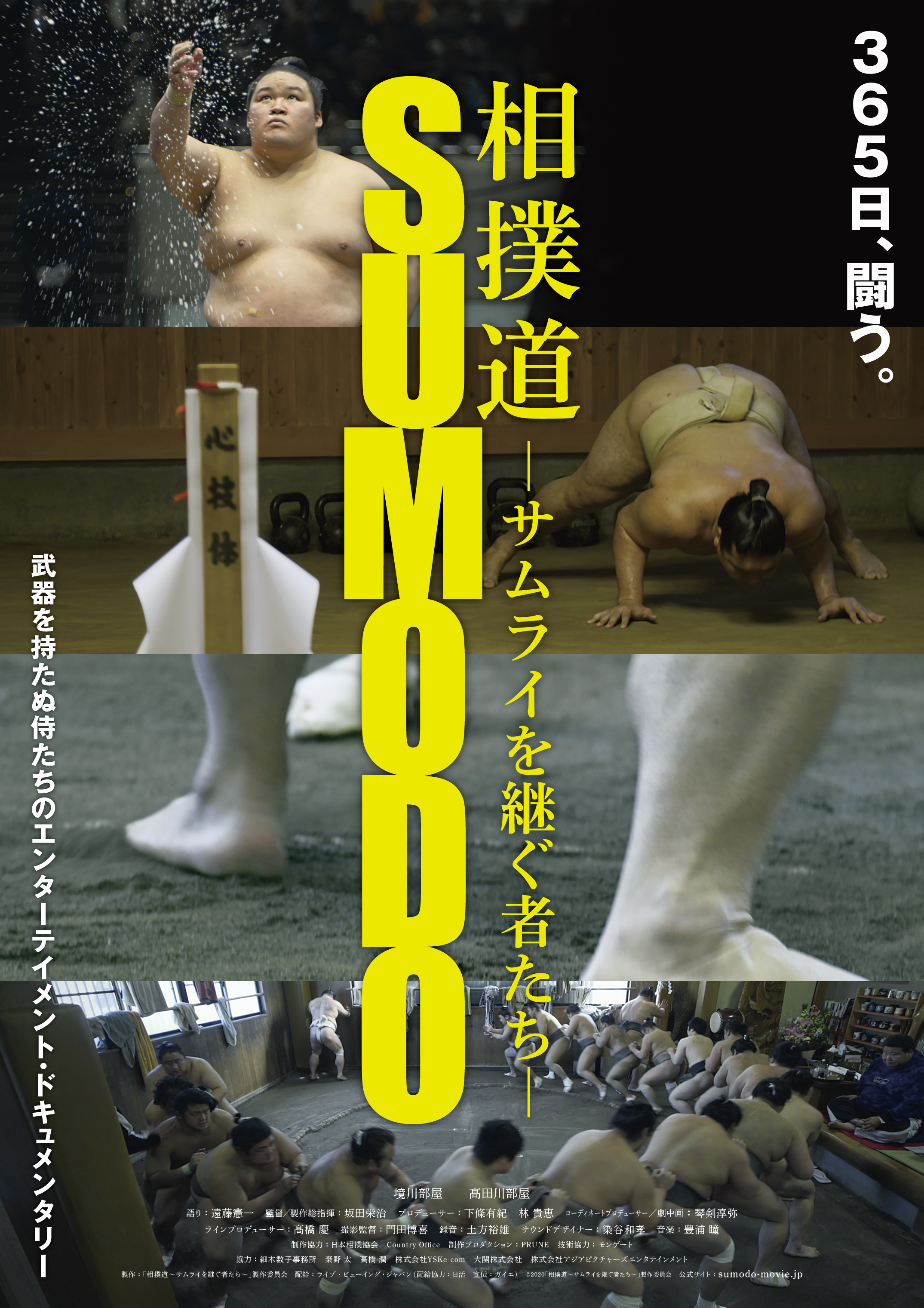
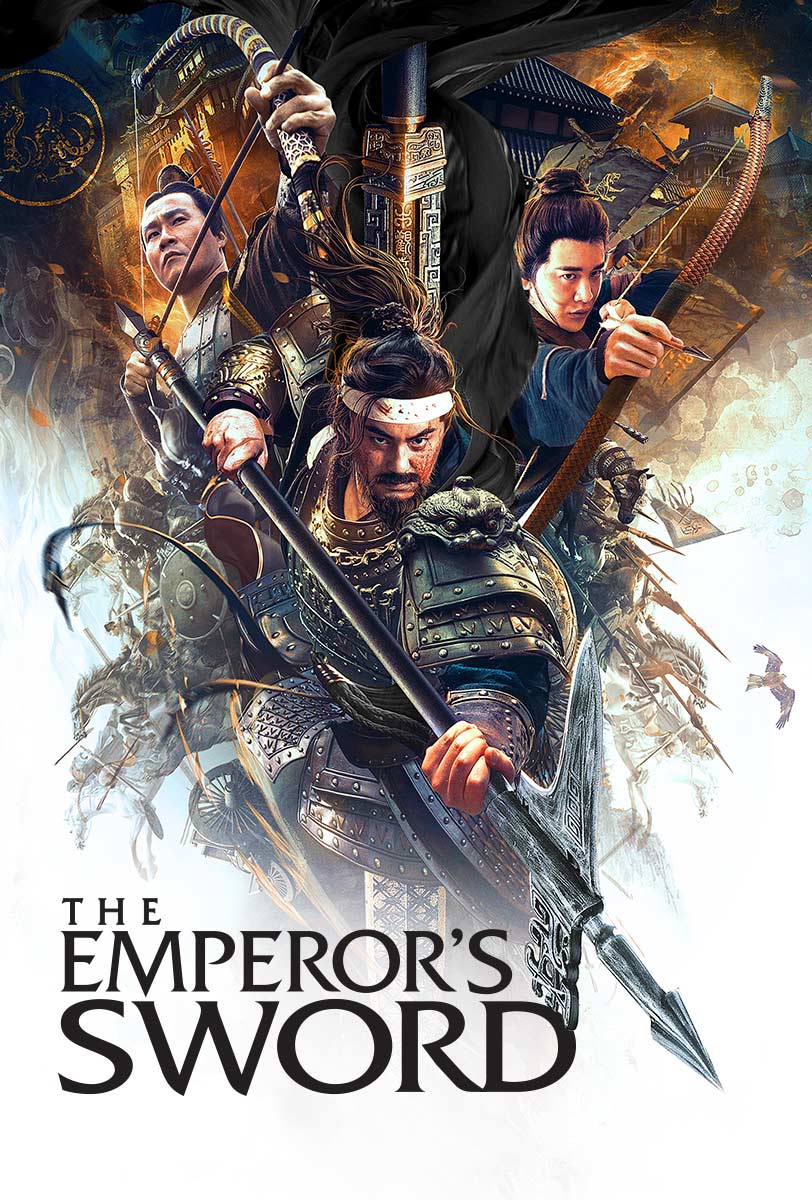
SUMODO ~The Successors Of Samurai~ (相撲道~サムライを継ぐ者たち~, Eiji Sakata, 2020)

“Every day is a traffic accident” according to a sumo wrestler describing the motion of two men colliding each trying to shove the other out of a protected area. Often regarded as a quintessentially Japanese combat sport, sumo has also come in for its share of misconceptions sometimes mocked or dismissed as a pastime popular mainly among the elderly or else a source of comedy in which in two large men clumsily grapple with each other. It’s precisely these unfair stereotypes that Eiji Sakata’s documentary SUMODO ~The Successors Of Samurai~ (相撲道~サムライを継ぐ者たち~, Sumodo ~Samurai o tsugu monotachi~) hopes to correct in gaining unprecedented access to the usually secretive world of professional sumo. 

He does this largely through focussing on two very different sumo stables and two key tournaments, one at New Year and the other in May. Though he interviews several of the rikishi at each, he adopts two main subjects who eventually clash in the ring but otherwise avoids clear narrative for an overview of what it’s like to live as a professional sumo wrestler in the present day which is to say a lifestyle that is largely unchanged over hundreds of years. Perhaps surprisingly, he even stops to appreciate the way in which a sumo tournament has also become something of a fashion show in which an audience comes expressly to appreciate the traditional kimono modelled by the rikishi as they make their way towards the auditorium. Living communally at the stable where they train, sumo wrestlers are expected to dress in traditional clothing at all times and wear their hair in a traditional style. 

Their diet is of course strictly monitored in order to help them maintain their weight. At the second of the stables, Takadagawa, food is a particular issue one rikishi stating that the high quality of the cuisine is one reason he chose to train there and while the chef explains that he keeps the vegetable content high and is keen to encourage healthy, nutritious eating the stable master is also determined that the meals be tasty rather than an austere exercise in body building. Sumo wrestlers do nevertheless eat quite a lot, the director perhaps regretting his decision to take the rikishi from the first stable Sakaigawa out for Korean barbecue when they literally eat the place out of its entire stock of meat generating a bill for US$8000 for under 50 people. 

Even so, despite their size the sumo wrestlers are necessarily extremely fit and spend much of their time deliberately building muscle. Whereas Sakaigawa is more traditional in its rather austere outlook, the master at Takadagawa, a former rikishi himself, explains that the sport has in a sense changed in keeping with the modern society in that he’s moved away from an aggressive coaching style that some might regard as bullying or harassment towards something kinder that values endurance and perseverance. The contrast is also visible in the choice of the two protagonists, Goeido being much more the traditional image of a sumo wrestler with his rather intense demeanour and emphasis on manly stoicism, whereas Ryuden is a surprisingly cheerful man with a joyful laugh and aura of serenity. 

Yet even Goeido describes the tournament process as mentally and physically exhausting despite fighting only one bout a day. At one particular tournament he tears a muscle in his upper arm but refuses to have it strapped unwilling to expose his area of weakness to an opponent later criticising younger wrestlers for making too much fuss over injury advising them that they should remain stoical without complaint like “true men”. Despite his more progressive coaching style, the master of Takadagawa says something similar in regarding injuries as tests from god or else a clear sign that more training is necessary. Ryuden himself suffered recurrent problems from a broken pelvis that saw him temporarily demoted but worked his way back to health by concentrating on “the basics”, later advising younger rikishi that there’s no hurry what’s important is to keep pushing through and avoid giving up too easily. The spirit of sumo, however, never changes at least according to the closing text. Illuminating the sport’s ancient history and ties to shinto ritual through a brief animated sequence, Sakata is most interested in the everyday lives of sumo wrestlers and the physical, emotional toll the sport can take on their lives as they push their bodies to the absolute limit of their capabilities. 


SUMODO ~The Successors Of Samurai~ screens in Canberra (Oct. 31), Perth (Nov. 7), Brisbane (Nov. 14), Melbourne (Nov. 20/23) and Sydney (Nov. 26/28) as part of this year’s Japanese Film Festival Australia.

Original trailer (English subtitles)

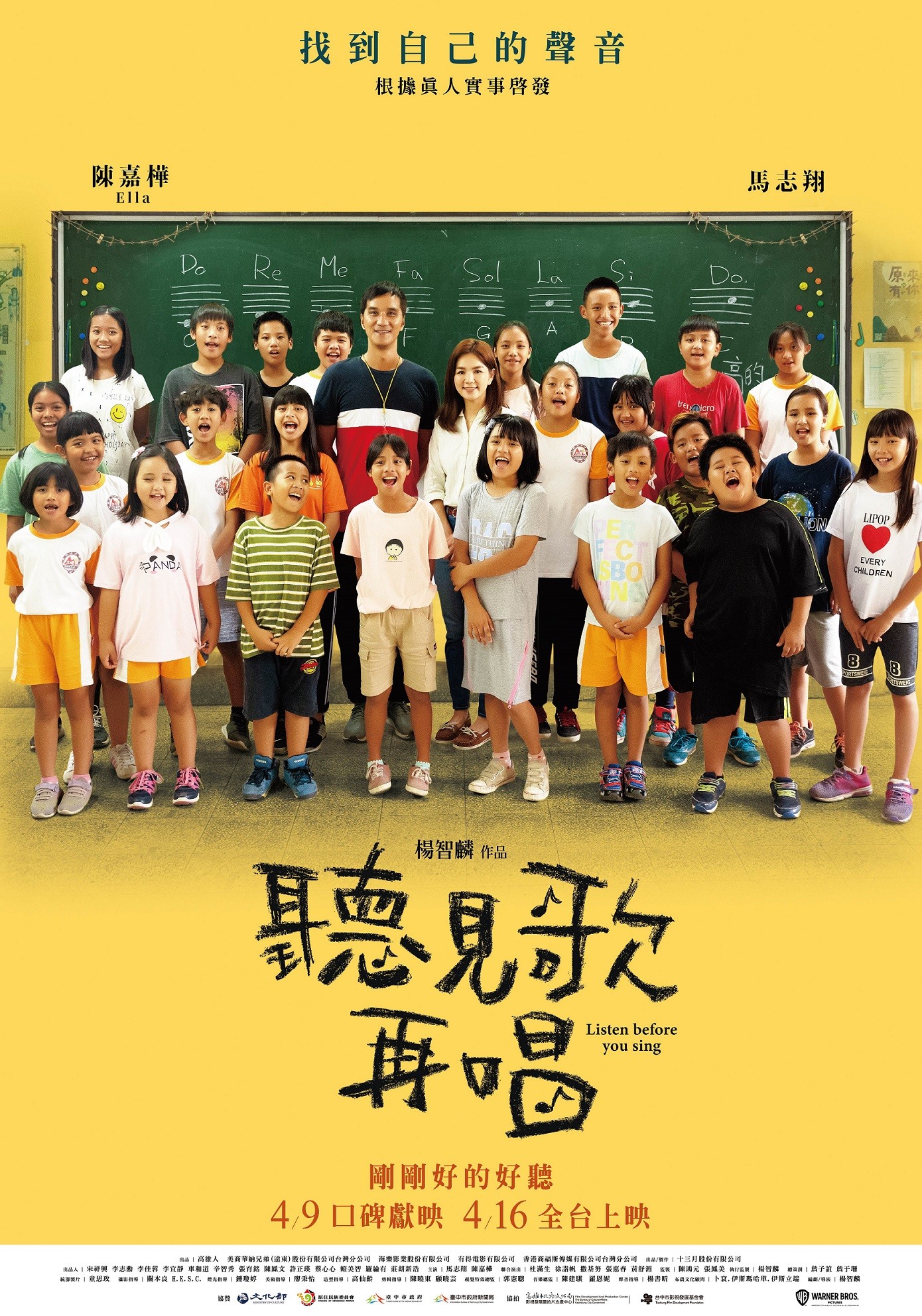
Listen Before You Sing (聽見歌 再唱, Yang Chih-lin, 2021)

A remote mountain school facing closure pins its hopes on showcasing the singing ability of the local indigenous community in Yang Chih-lin’s gentle social drama Listen Before You Sing (聽見歌 再唱, Tīngjiàn Gē Zài Chàng). Set almost entirely within its mountain village, Yang’s cheerful tale is as much about embracing an indigenous identity as it is about the consequences of rural depopulation, economic inequality, and the importance of community while also prioritising the necessity of giving children the confidence of external approval as they learn to discover their own voices. 

There are however only about 50 children left in the small rural village inhabited by the Bunun indigenous community which is why the local school is under threat of closure even though the nearest alternative is over two hours away. The headmaster laments that the reason this school in particular will be merged with another is that they have “nothing special” to offer as reason to save it. Where other schools boast professional sports players among their alumni, the best they can do is that their volleyball team is considered above average for the area. Seeing as the indigenous community is famed for its beautiful polyphonic singing, someone suggests starting a choir hoping that they may be able to gain a reprieve if they demonstrate some kind of success on a national level. Luckily, they’ve just been sent a new substitute music teacher, Yunfan (Ella Chen Chia-hwa), who agrees to provide accompaniment but they also need a conductor and no one it seems is very keen to take on the role until PE teacher Bukut (Umin Boya) reveals an unexpected musical talent. 

Just arrived from the city for a new job at a school which may be about to close, Yunfan is less than impressed with the early preparations for the choir fearing first of all they don’t have enough kids and that there aren’t enough strong singers in the group. Bukut even ropes in his volleyball team to bulk out the numbers but tells them to remain quiet and just mime rather than actually sing lest they disrupt the harmony. The other problem they face is that each of these children has their own particular circumstances with many needing to return home after school either to help with farm work or to care for elderly relatives. Many of them are living either with grandparents or more or less alone while their parents are in the city for work. Of the ones that remain, the father of two boys from the volleyball team is unhappy with them participating in the choir in the first place, viewing it as a waste of time and possibly not as a suitable activity for his sons. 

Even so, the reason for their failure in an early concert is attributed to their attempt to conform to the standard singing style of the other schools rather than embracing the uniqueness of their traditional culture leaving them as the judge puts it failing to stand out from the city kids. Though the indigenous community maintains its traditions, many of the children do not really speak Bunun, communicating with each other in Mandarin if understanding when the elders talk to them in the indigenous language, and perhaps feel insecure in their cultural identity. Only by embracing their Bunun heritage does the choir start come together, reminded that it’s important sing with your ears, picking up the harmony from those around you rather than each singing independently as a collection of individuals. 

While Bukut deals with some personal trauma concerning his musical ability and a bullying teacher, and Yunfan does her best to integrate into the indigenous community which is extremely warm and welcoming eager to share their culture with her, they eventually learn to put themselves and their fears over their job insecurity to one side while doing their best to help the children shine as they learn to find their voices through reconnecting with their indigenous roots. The school may still have to close, there may be no real answer as to how to mitigate the effects of rural depopulation or as to how to preserve traditional culture in an increasingly capitalistic society, but rather than simply giving up the children learn to embrace and be proud of their difference while learning to sing in harmony as part of a community founded on love and mutual respect.


Listen Before You Sing screens in San Diego on Oct. 29 as part of this year’s San Diego Asian Film Festival.

Original trailer (English subtitles)
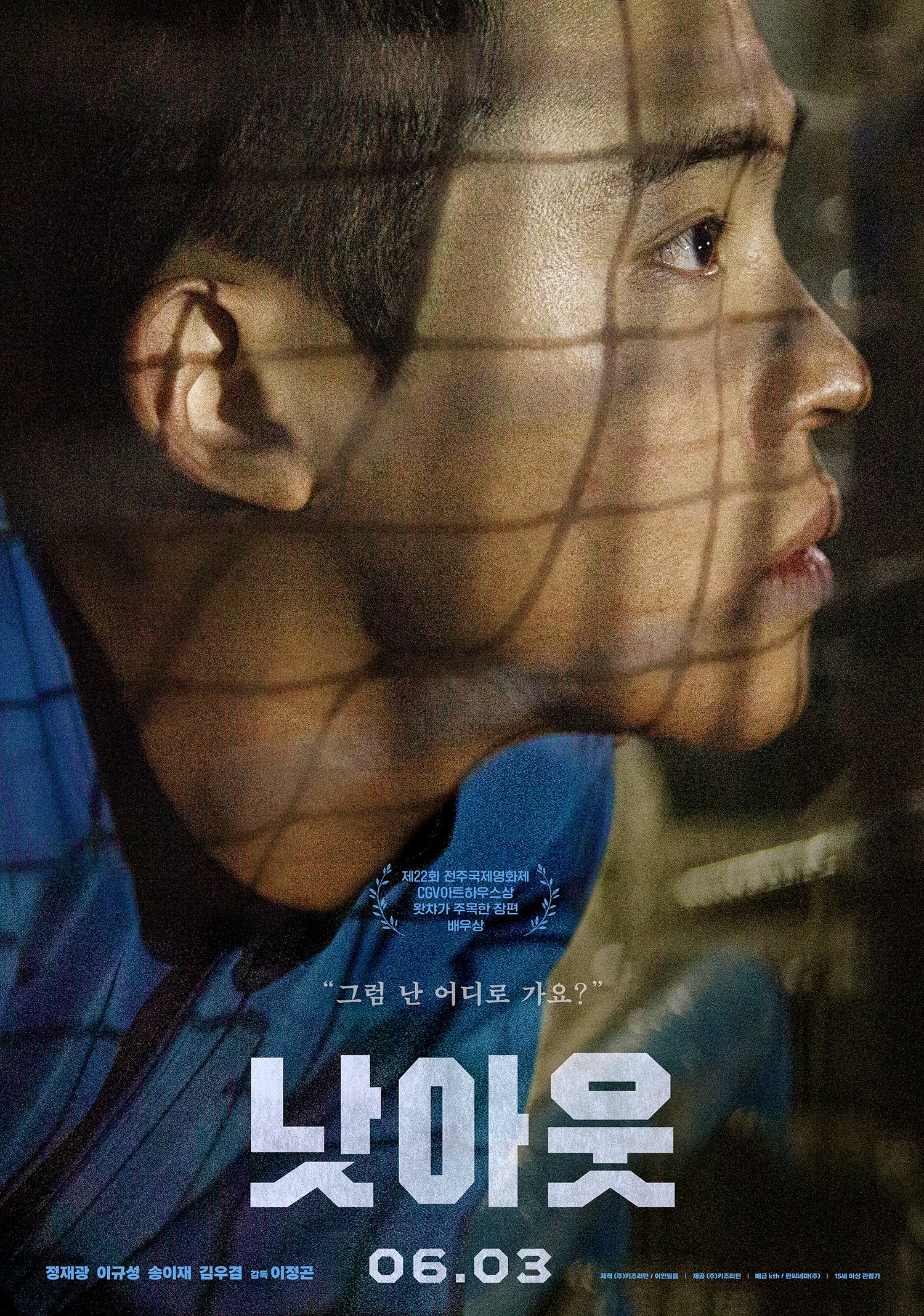
Not Out (낫아웃, Lee Jung-gon, 2021)

“I just wanted to keep playing baseball” the hero of Lee Jung-gon’s Not Out (낫아웃) eventually wails on finally being confronted with the consequences of his actions. Not so much a baseball movie as a gentle character study Lee’s unexpectedly dark drama sees its singleminded hero descending to depths of sociopathic manipulation in his determination to make his sporting dreams come true but less perhaps out of pure hearted yearning than a sense of embarrassment and fragile masculinity. 

“You won, then it’s over isn’t it?” someone asks Shin Gwang-ho (Jeong Jae-Kwang), the hero of his high school baseball team having just carried them to a miraculous victory. No, he corrects them, it’s only just beginning. Approaching graduation, all Gwang-ho’s ever wanted to do is play baseball, and everyone’s always telling him how good he is at it so much so that he’s internalised a puffed-up sense of himself as a sporting prodigy. That’s one reason why when his coach (Kim Hee-chang) tells him he’s been offered a trainee position with a professional team he arrogantly turns it down, sure that he’s going to be drafted. But his decision backfires, he’s not picked while another boy is leaving him confused, somewhat humiliated, and completely lost as to what to do now. Regretting having thrown away the trainee opportunity he makes the knee-jerk decision to apply to colleges to play in the uni leagues and get another shot at being drafted by the pros, but his decision negatively impacts the life plan of another player whose request not to apply to the same uni falls on deaf ears. Gwang-ho doesn’t really get why it’s a big deal, surely he has the right to try out and let the best player win but his friend, knowing he isn’t talented as Gwang-ho, doesn’t see it that way and intensely resents his insensitivity. 

There is a peculiarly childish component to Gwang-ho’s unthinking determination as he makes a series of increasingly bad decisions in order to pursue his goal little caring who might get hurt in the process. His problem is compounded by the fact that his family is poor, resenting his friend for being wealthy enough to make uni his main plan as if he thinks he can simply do without baseball while to Gwang-ho it’s the only thing that matters. “You think you can play baseball all on your own?” his exasperated coach asks him, fed up with his tendency to alienate his teammates but himself exploiting him in asking for money from his father to improve his chances of being able to continue playing. Gwang-ho, meanwhile, also resents his dad, going so far as to try to guilt him into selling his restaurant to get him the money to go to college.

Gwang-ho continues to do whatever he wants without really thinking about the consequences which is how he ends up trading stolen/illegal homemade petrol with old middle school friend Min-chul (Lee Kyu-Sung). Min-chul and the teenage girl working with him So-hyun (Song Yi-jae) seem to be more aware of the implications of their life of crime while Gwang-ho resolutely refuses to realise that this all very likely to blow up in his face, which it eventually does and quite literally. Pushed to breaking point he hatches a plan to rob the old man running the petrol racket even though despite his obvious criminality he’s actually been quite good to this gang of troubled teens. Min-chul used to play baseball himself but gave up because of an injury, telling Gwang-ho that he thought it would hurt more than it did finally realising “you can just give up if it’s shitty” but Gwang-ho can’t let go of his baseball dreams and is prepared to do pretty much anything to prove he’s “not out” of the game. 

Earlier, the other players had lamented that for them there are no second chances. They’ve invested all their hopes in baseball without studying for the college entrance exams, if they fail to get drafted there’s no obvious way forward. For Gwang-ho who cannot rely on family money, has no connections, other skills or talents, baseball really is all he has which might be why he can’t admit the thought that it’s just not meant to be while his initial failure proves such a huge humiliation that it shatters his sense of self. Only through finally accepting responsibility for his actions, realising the way he’s treated those around him, does he begin move forward apparently getting another shot, still in the game, but perhaps humbled. 


Not Out screened as part of this year’s London East Asia Film Festival.

International trailer (English subtitles)

Pistol (手枪, Lv Huizhou, 2020)

The contradictions of the modern China drive one young man clear out of his mind in Lv Huizhou’s elliptical street punk noir, Pistol (手枪, Shǒuqiāng). Shot in a washed out monochrome and seemingly set some time after the Beijing Olympics, Lv’s anarchic drama sees its hero develop unexpected superpowers as if to combat his sense of impotence and impossibility while constantly uncertain whether his newfound abilities are “real” or merely a figment of his declining mental state as he chases lost love through the rundown backstreets of a Beijing slum.  

Construction worker Mengzi (Zhang Yu) claims he likes Beijing, after all it’s an “international city” always busy with crowds. Many people long to come here, as perhaps he once did, though you can’t say the city has served him particularly well. He lives in a tiny room with a bunk bed and no functioning bathroom which is why he pees in a bottle into which he’s already discarded his cigarette and digs a hole in the woods every time he needs to do a number two. The only thing keeping him going is his doomed relationship with sex worker Yaoyao (Wang Zhener) who just wants to make as much money as she can while she’s young. Mengzi may have stolen the “international city” line from her, he often seems to repeat things said to him when he speaks at all, but Yaoyao also claims to like Beijing because of the opportunities it offers her, citing the story of a woman she knew who quit sex work after only three years with enough money to buy house in her home town, now walking around dripping with jewellery like the queen of all the land. When Yaoyao goes missing, Mengzi fetches up at the salon where she worked that’s really a front for a brothel run by a local gangster and raises hell, picking a fight with the gangster’s wife and in the first of many flashes of spontaneous violence smashing her mirror. 

The ill-advised rescue mission gets him nowhere, the gangster turning up at the restaurant where he’s once again adding to his tab to tell him she’s been sold on to a club before teaching him a lesson. This is where we came in, or it might as well be, with Mengzi chased through the narrow city alleyways until finally cornered and beaten. Mengzi is in many ways a man on the run from himself. His room is papered with posters for macho crime dramas such as Dirty Harry, The Man With No Name Trilogy, and A Better Tomorrow 2, Taxi Driver pinned incongruously between boy band Super Junior and a girl group in air hostess outfits. He is God’s lonely man, obsessing over misplacing his high school graduation certificate while failing to convince his boss to give him a better job. At his lowest point, he digs a hole and crouches down pointing his fingers at gaggle of chickens and pretending to shoot only to hear a gunshot and on closer inspection discover a very dead hen. 

In the days since losing Yaoyao, Mengzi hadn’t done much of anything save mope around, having a tourist day with streetwise kid Laizi (Hou Xiang) visiting Tiananmen Square and the Olympic stadium, both places Yaoyao lied to her mother about visiting trying to make her think her Beijing life was better than it was. His strange visions and violent meditations are often intercut with comforting memories of his time with Yaoyao alone in her bohemian flat, a poster of Chicken Run ironically hanging on her wall. Flashing into colour, the billboards around the stadium are filled with pretty pink flowers and play the Olympic song about being one big family, red solarised footage of the opening ceremony later filling Mengzi’s mind. Family seems to be something Mengzi doesn’t really have, a perpetual orphan wandering around unanchored and resentful of the society that won’t let him prosper. Losing Yaoyao he vows revenge with his new weapon, which for some reason only works with his rear end partially exposed, literally taking aim at social inequality in the midst of a trendy club from which he concludes he may never be able to retrieve his lost love. 

Shot in a washed out black and white reflecting Mengzi’s sense of despair, Lv’s frantic handheld photography mimics his paranoid psychology with its noirish canted angles and extreme sense of claustrophobia while introducing a note of psychedelic uncertainty as even Mengzi himself cannot be sure if his fingers really shoot bullets or he’s in the midst of a psychotic break possibility connected to the traumatic event that opened the film reflected in his own eventual solarisation. An elliptical, ethereal journey through the backstreets of Beijing as they exist in the mind of a crazed young man denied a future and the home he’s so desperate find, Pistol has few kind words for the modern China but perhaps sympathy for its frustrated hero. 


Pistol screened as part of this year’s London East Asia Film Festival.

Zokki (ゾッキ, Naoto Takenaka, Takayuki Yamada, & Takumi Saitoh, 2020)

“Thanks to secrets carefully kept by people the world keeps turning” according to one of the many heroes of Zokki (ゾッキ), a series of intersecting vignettes adapted from the cult manga by Yoshiharu Tsuge and directed by three of Japan’s most prominent actor-directors, Naoto Takenaka (whose Nowhere Man also adapted Tsuge), Takayuki Yamada and Takumi Saitoh. According to the philosophical grandpa who opens the series of elliptical tales everyone has their secrets and without them you may die though each of the protagonists will in fact share their secrets with us if by accident or design. 

Seamlessly blended, the various segments slide into and around each other each taking place in a small rural town and primarily it seems around 2001 though as we’ll discover the timelines seem curiously out of joint as motifs from one story, a broken school window, an awkward moment in a convenience store, the retirement of a popular gravure model/AV actress etc, randomly appear in another. This is however all part of the overarching thesis that life is an endless cycle of joy and despair in which the intervals between the two gradually shrink as you age before ceasing to exist entirely. 

Or so says our first protagonist, Fujimura (Ryuhei Matsuda), a socially awkward man heading off on a random bicycling road trip in which he has no particular destination other than “south” or maybe “west” as he later tells a potential friend he accidentally alienates. Fujimura’s unspoken secret seems to link back to a moment of high school trauma in which he betrayed one burgeoning friendship in order to forge another by joining in with bullying gossip and eventually got his comeuppance. Meanwhile the reverse is almost true for Makita (Yusaku Mori) who relates another high school tale in which he overcame his loneliness by befriending Ban (Joe Kujo), another odd young man rejected by teachers and the other pupils for his often strange behaviour such as his tendency to shout “I want to die”. Ban claims to have heard a rumour that Makita has a pretty sister and Makita goes along with it, eventually having to fake his sister’s death in order to seal the lie only for Ban to find happiness in his adult life largely thanks to Makita’s act of deception. 

The broken window which brought them together turns up in another tale, that of Masaru (Yunho) whose adulterous father Kouta (Takehara Pistol) took him on a midnight mission to steal a punching bag (and some adult DVDs) from the local high school only to encounter a sentient mannequin/ghost who is later likened to the young woman from Fujimura’s past. Bar some minor embarrassment there’s no real reason the ghost sighting would need to be kept secret, the deception in this case more to do with Kouta’s affair and his subsequent departure from his son’s life only to make an unexpected return a decade later. The affair also makes him a target for fisherman Tsunehiko, the betrayed husband and one of the fisherman celebrating the birthday of a colleague along with an existentially confused Fujimura. Meanwhile, Fujimura’s fed up neighbour secretly writes a rude word on a note to himself instead of the usual “good morning” only to realise it’s been moved when he opens the local video store the next morning. 

Eventually coming full circle, Zokki insists what goes around comes around, everything really is “an endless cycle”, and that in the grand scheme of things secrets aren’t always such a bad thing. They keep the world turning and perhaps give the individual a sense of control in the necessity of keeping them if running with a concurrent sense of anxiety. The criss-crossing of various stories sometimes defying temporal logic hints at the mutability of memory while allowing the creation of a zany Zokki universe set in this infinitely ordinary small town in rural northern Japan. As the various protagonists each look for an escape from their loneliness, unwittingly spilling their secrets to an unseen audience, the endless cycle continues bringing with it both joy and sorrow in equal measure but also a kind of warmth in resignation. Beautifully brought together by its three directors working in tandem towards a single unified aesthetic, Zokki defies definition but rejoices in the strange wonder of the everyday in this “obscure corner of the world”.


Zokki streamed as part of this year’s New York Asian Film Festival. It will also screen in London on 24th October as part of this year’s London East Asia Film Festival.

Original trailer (no subtitles)

NYAFF intro