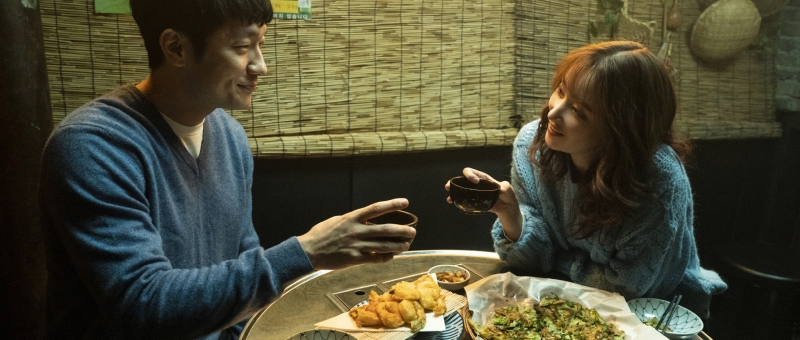

Nothing Serious (연애 빠진 로맨스, Jeong Ga-young, 2021)

Through her first three features in which she also played the lead, Jeong Ga-young had established herself as a provocative indie voice casting herself as an often unsympathetic if transgressively frank heroine contending with the vagaries of the modern society. Nothing Serious (연애 빠진 로맨스, Yeonae Bbajin Romance), by contrast, marks her debut as a commercial film director and perhaps softens some of her harsher edges but nevertheless maintains her characteristic saltiness and often witty dialogue in what is otherwise closer to Nora Ephron than Hong Sang-soo. 

Though played by Jeon Jong-seo rather than the director herself, 29-year-old Ja-young is a classic Jeong heroine transgressively frank in terms of her sexuality and finding herself in something of a tailspin as she approaches her 30th birthday as a single young woman drowning in debt with neither career nor relationship success to boast of. Meanwhile across town nerdy magazine staff writer Woo-ri (Son Suk-ku) finds himself having to write almost all of the magazine himself in part he suspects as punishment for having helped a friend leave to start up their own online publication. His particular problem is that his boss has asked him to take over his friend’s sex column which is really not his thing especially as he’s in an on again off again non-relationship with colleague Yeon-hee (Lim Sun-woo) who has just informed him she’s getting engaged to her old boyfriend. 

Inevitably the pair end up meeting through dating app Love Bridge to begin with just for a no strings New Year one night stand only to inconveniently realise they quite like each. Even so, their personal issues continue to overshadow the relationship, those being Ja-young’s hurt and anxiety on hearing that an old boyfriend who treated her badly and broke her heart is getting married, and the fact Woori signed up to Love Bridge mainly to find inspiration for his column which becomes an unexpected hit with readers who prefer the slow-burn tease of their romance to the X-rated content of Woo-ri’s predecessor. 

While not really “dating” the couple continue to share their relationship woes with each other, Ja-young continually fed up with her attempts to meet “normal” men who don’t invite their mother on dates, turn out to be married, or are just plain odd. Her previous boyfriend branded her an insanely jealous “alcoholic nymphomaniac” while she simply tells it like it is as a sexually liberated young woman who refuses to feel ashamed for feeling desire but is also in her own way lonely and looking for companionship as perhaps is Woo-ri while conflicted in his betrayal of her even if he is careful not to use any identifying details in his column. 

Along with their romantic woes, the pair also share a sense of hopelessness about the future, Woo-ri disappointed in himself for his lack of success as a serious writer and Ja-young staking her hopes on a career in podcasting after being forced to leave a job at a radio station because of the awkwardness between herself and a colleague she’d previously dated. Interviewing her grandmother and a series of other women she fears were denied the right to become the protagonist of their own lives, always someone’s wife or mother looking after children or in-laws, she wonders if she’s managed it herself or if things are really as different now as she had thought them to be while she continues to struggle drowning in debt and loneliness with very little hope for the future. 

Jeong’s prognosis is, however, a little more hopeful than in her previous films Ja-young and Woo-ri each flawed but basically good falling in love despite themselves only to see their connection undermined by its superficial inauthenticity. If nowhere near as caustic, she retains her sense of playfulness, even throwing in a reference to her first film Bitch on the Beach not to mention the tiny animated heads emerging from the pair’s phones, through sophisticated dialogue instantly capturing a sense of the everyday life of the average 20-something in the contemporary society longing to overcome their sense of cynicism and believe in a genuine romantic connection. Strangely charming in its breeziness, Jeong’s commercial debut loses none of her wit but gains a little in warmth as these crazy kids learn to put their anxieties aside and give love a chance even if it turns out to be nothing serious after all. 


Nothing Serious screens at UltraStar Cinemas Mission Valley, San Diego April 23 as part of this year’s SDAFF Spring Showcase.

International trailer (English subtitles)

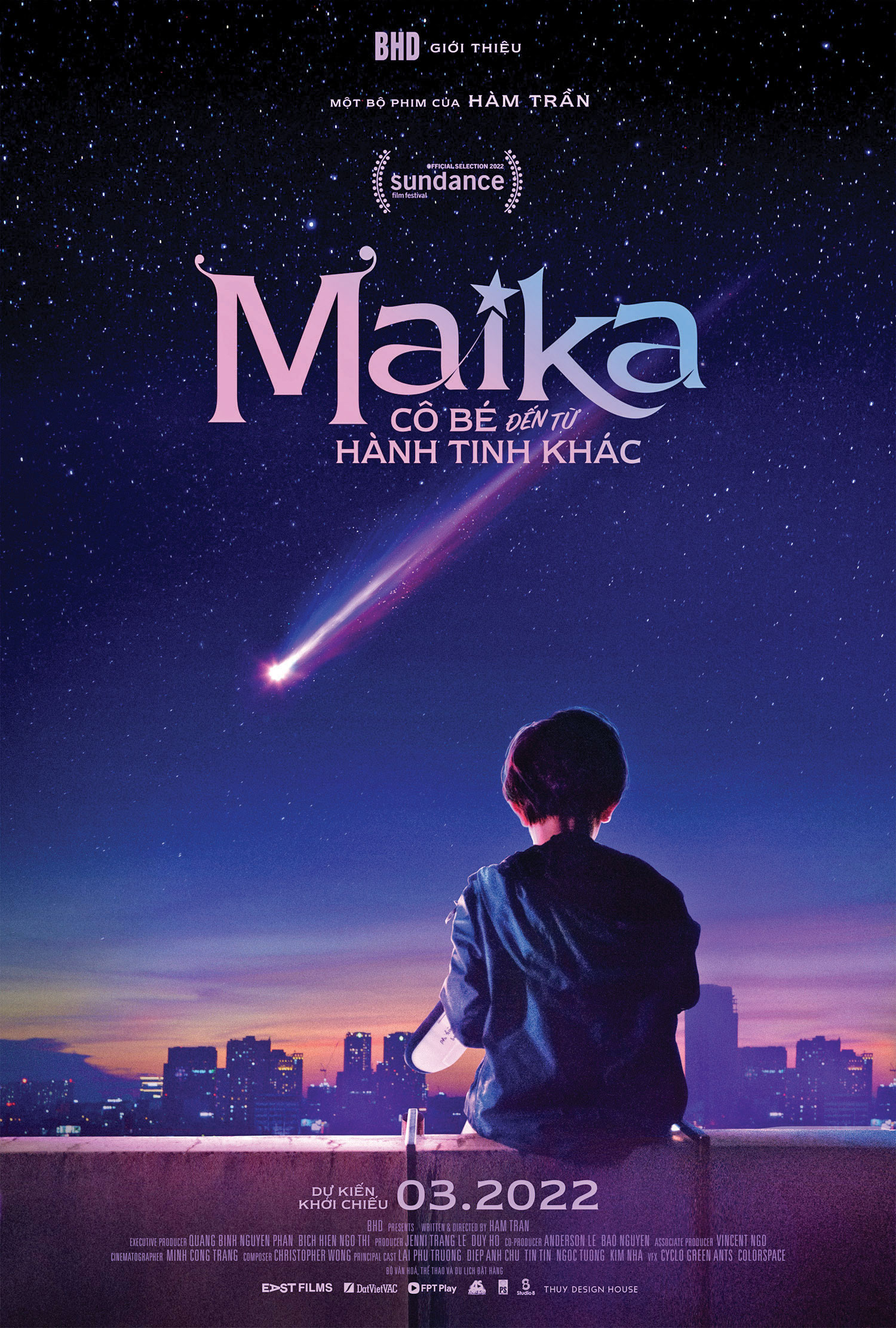
Maika: The Girl From Another Galaxy (Cô Bé Đến Từ Hành Tinh Khác, Ham Tran, 2022)

A small boy struggling to come to terms with loss learns to find accommodation with grief while helping a marooned extraterrestrial get back to her people in the delightful Vietnamese family film, Maika: The Girl From Another Galaxy (Cô Bé Đến Từ Hành Tinh Khác). A classic kids’ adventure movie, Ham Tran’s zany tale finds its young hero not only trying to reorient himself in a world of constant change but also attempting to process the wider sources of societal destabilisation such as rapid gentrification and shady billionaire scientists with dubious ambitions. 

Eight-year-old Hung lost his mother to illness a year or so ago and is now living alone with his father Thanh who is forced to work long hours in his shop fixing mobile phones in order to clear the family’s mounting debts. Not only are they being constantly hounded by a pair of thugs working for a local gangster with a thing for Japan who wants to evict all the tenants so he can sell their building to developers to build more luxury apartments, but his best friend is moving to Saigon and his already busy dad seems to have become awfully friendly with pretty neighbour Miss Trang. When his father breaks a promise to watch a meteor storm with him, Hung goes out on his own and witnesses a strange sight which he later learns to be a UFO crashing to Earth subsequently discovering a young girl, Maika, who has been marooned and is looking for her comrade so she can contact the mothership and get a ride home. 

“Even fishes need friends” Hung’s friend had told him on leaving her fish with him so it could be close to his, and that’s true enough for Hung himself now left largely alone and looking for both companionship and adventure. Besides bonding with Maika, he also has a frenemy in a boy who lives in the upscale apartments whose drone keeps chasing his remote control aeroplane. CuBeo is a somewhat awkward boy who just wants to be friends with Hung but admittedly has a funny way of showing it, largely because he has asthma and his overprotective family don’t let him out to play with the other kids so he’s incredibly bored and intensely lonely despite all the high tech toys he has at home. Like Hung, he also seems to have lost his mother and has a workaholic father who rarely visits having left him and his older brother Bin largely in the care of a live-in tutor. 

Eventually any sense of class conflict between the two boys disappears as they gradually become friends while bonding over their shared quest to help Maika get back to her family battling the gangster thugs and shady billionaire Nghia who seems to have bought up half the area for his special space project and intends to exploit Maika’s advanced scientific knowledge after having impounded her spaceship. Of course, Nghia and the local gang boss turn out to be little different, in it for personal gain rather than any real interest in the evolution of mankind, while the kids just want to protect their friends and the world in which they live. Making full use of their shared skills, Hung and Beo have immense fun crafting their own weapons, modifying NERF guns to shoot silly putty or slapping their enemies in the face with kimchi, determined to save Maika from Earthly greed. 

Through this transitory friendship, Hung begins to come to terms with the loss of his mother while repairing his relationship with his dad and preparing to move on in making friends with Miss Trang no longer seeing her as a threat to his mother’s memory in learning that she’ll always be in his heart as will Maika. Boasting some impressive effects visualising Maika’s various powers and alien technology, Ham Tran’s retro world building otherwise has a defiantly down to Earth sensibility contrasting the inherent warmth of Hung’s cluttered home and friendly neighbourhood with Beo’s obvious loneliness in the emptiness of his white box high rise flat. Child-friendly humour and a healthy dose of silliness add to the whimsical charm, yet the central messages of learning to live with grief and loss even at such a young age are sure to touch the hearts of children and adults alike. 


Maika: The Girl From Another Galaxy screens at UltraStar Cinemas Mission Valley, San Diego April 23 as part of this year’s SDAFF Spring Showcase.

Original trailer (no subtitles)

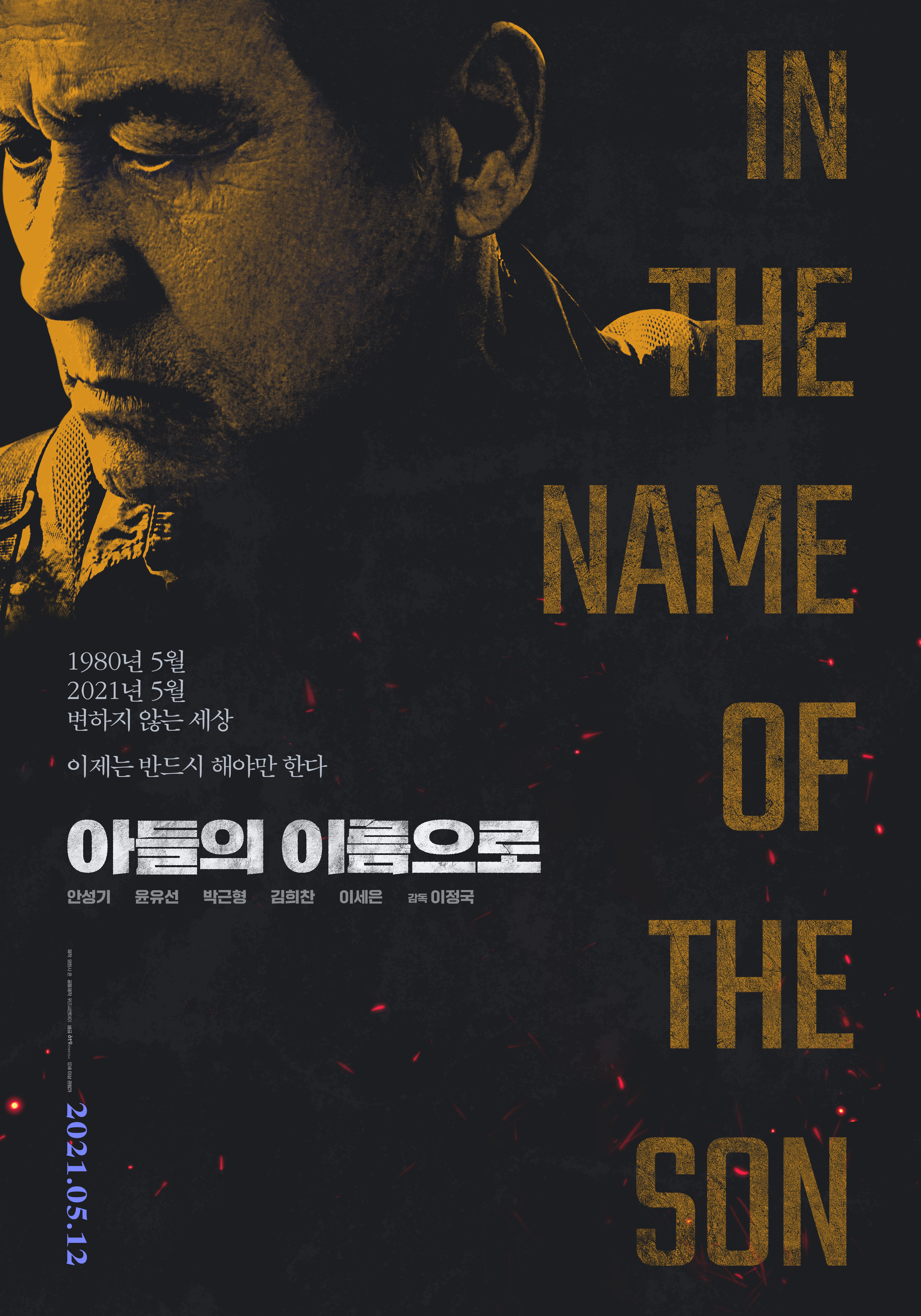
In the Name of the Son (아들의 이름으로, Lee Jung-gook, 2021)

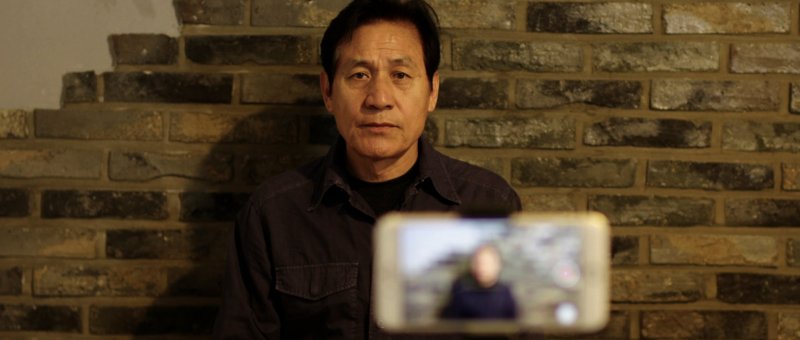
Partway through Lee Jung-gook’s raw exploration of the radiating effects of historical trauma In the Name of the Son (아들의 이름으로, Adeurui ireumeuro), the conflicted hero quotes a line from In Search of Lost Time which his son had recommended to him, “pain is only healed by thoroughly experiencing it”. The quote in itself reflects the hero’s wounded state in having failed to reckon with the sins of the past, a failing which has cost him dearly on a personal level, while simultaneously hinting at a national trauma which has never been fully addressed by the contemporary society. 

When we first meet ageing designated driver Chae-gun (Ahn Sung-ki) he’s preparing to hang himself in a forest before noticing a stray parakeet, presumably an escaped family pet, chirping nearby in desperation. Taking pity on the bird knowing it cannot survive on its own he gives up on his plans and takes it home. We can see that Chae-gun is a compassionate man, softly spoken, perhaps a little shy and distant yet caring deeply for those around him such as the ladies from Gwangju who run a cafe where he is a regular, while he’s frequently seen making phone calls to his son in America. Yet as we later discover he is also a man of violence with an old-fashioned, authoritarian mindset, ominously sliding off his belt to beat up a gang of kids who tried to dine and dash before making them come back to apologise and pay their bill and later doing the same to bullying classmates of the cafe owner’s son, Min-woo (Kim Hee-chan). 

He does these things less out of an old man’s disapproval of the younger generation’s lack of moral fibre than a genuine desire to help and most particularly the ladies at the cafe, but simultaneously takes Min-woo to task for a lack of manliness berating him in front of his bullies for not standing up for himself. These flashes of violence hark back to the hyper-masculine patriarchal attitudes that defined the years of dictatorship while also hinting at the buried self Chae-gun struggles to accept which so contrasts with his innate kindness and sense of justice. He too is angry and confused that those who ordered acts of atrocity such as the 1980 Gwangju Massacre have never been brought to justice and are living comfortable lives often still ensconced in country’s ruling elite such as former general Chairman Park whom he often drives home from a local Japanese restaurant to his mansion in a traditional village in the middle of Seoul. 

As we discover, Chae-gun has his own reasons for being preoccupied with Gwangju in particular, yet it’s the failure to reckon with the buried past that he fears erodes future possibility. In a metaphor that in truth is a little overworked, one of the new assistants at the cafe, also from Gwangju, is mute, literally without a voice until the buried truths of the massacre are symbolically unearthed allowing her to speak. Meanwhile, many of Chae-gun’s generation are succumbing to dementia, an elderly man constantly escaping from his nursing home to wander a local park looking for his teenage son who went missing during the uprising and was never seen again. Chairman Park remains unrepentant, blaming everything then and now on “commies” while explaining to Chae-gun that they were “patriots” not “murderers” bravely defending the Korean state and in any case God forgives all so they’ve no need to blame themselves. 

Park may feel no remorse but the unresolved trauma of Gwangju continues to echo not only through Chae-gun’s wounded soul but through society, a heated debate breaking out between a group young people of critical of the authoritarian past and a collection of older conservative nationalists who object to their criticism of President Park Chung-hee arguing that he rebuilt the economy and gave them the comfortable lives they live today. Yet what Chae-gun feels he owes to his son and implicitly to the younger generation is an honest reckoning with the past and his part in it while those who live with no remorse should not be allowed to prosper, guilt-free, as victims continue to suffer. What he’d say to those who thought that they bore no responsibility is that the greatest sin of all may have been in blindly following orders. Only by fully experiencing the pain of the national trauma can society hope to heal itself from the weeping wounds of the unresolved past.


In the Name of the Son streamed as part of the 14th season of Asian Pop-Up Cinema.

Original trailer (English subtitles)

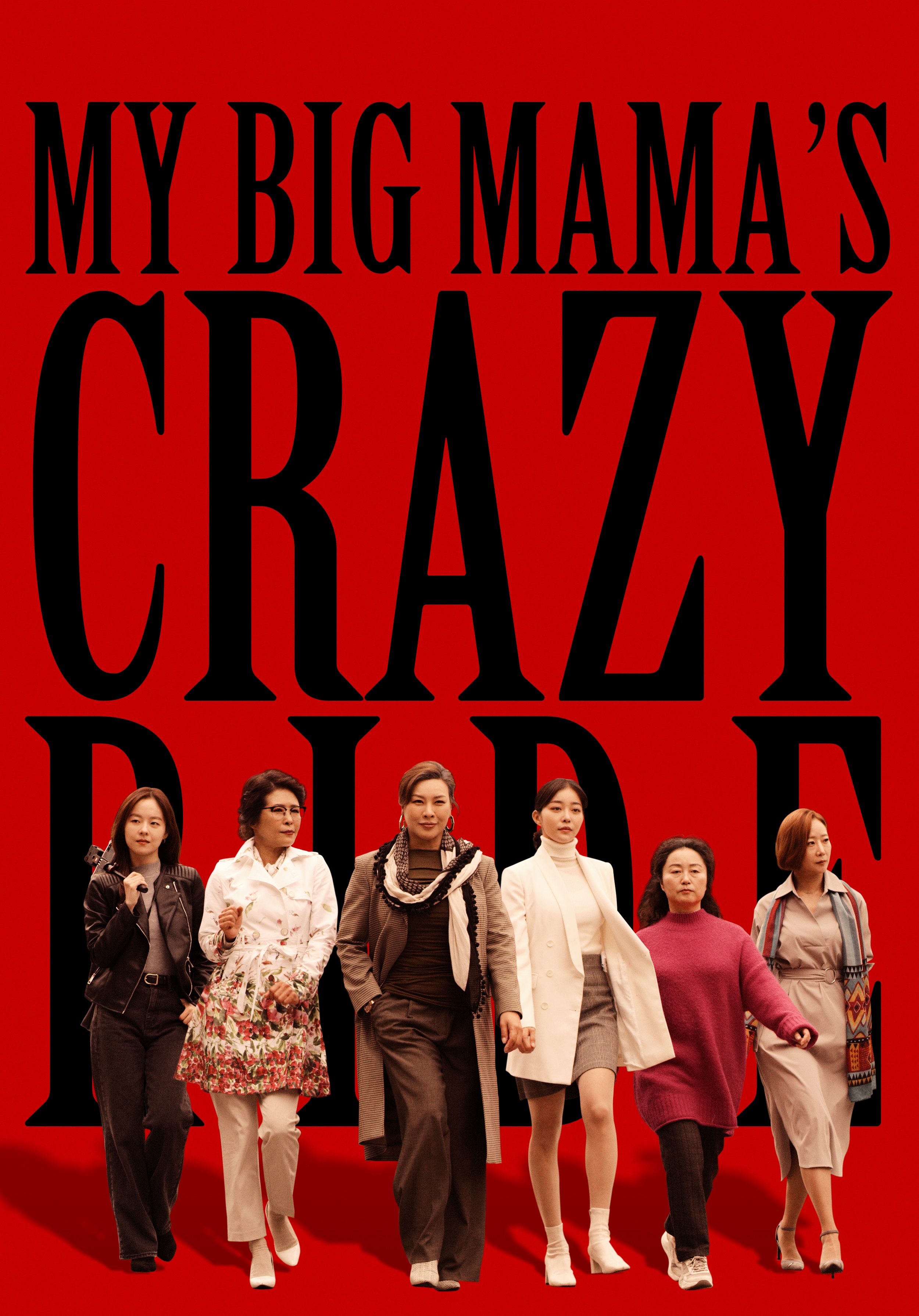
My Big Mama’s Crazy Ride (큰엄마의 미친봉고, Paek Seung-hwan, 2021)

A veteran matriarch suddenly decides she’s had enough in Paek Seung-hwan’s indie comedy, My Big Mama’s Crazy Ride (큰엄마의 미친봉고, Keuneommaui michinbonggo). Taking aim not only at the deeply ingrained and hopelessly outdated patriarchal social codes of contemporary society, Paek also asks a series of questions about the concept of family with the wives and daughters-in-law repeatedly finding themselves described as “outsiders” yet expected to sacrifice their hopes and aspirations in dedicating themselves entirely to the “family” which more often than not treats them as unremunerated housekeepers. 

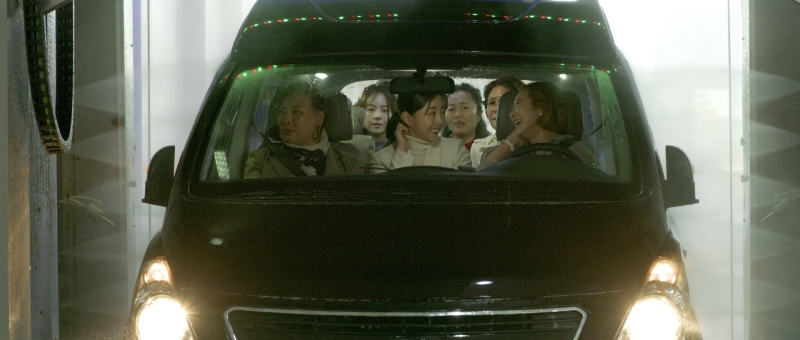
It’s easy enough to see why “Big Mama” Yeong-hui (Jung Young-joo) is fed up as her husband Han-il (Yu Seong-ju) barks orders from upstairs while she tries to sort out the food for the ancestral rites knowing the men are up there lounging around drinking just expecting everything to be done for them without needing to lift a finger to help. This year she’s choosing chaos, rounding up all of the other women in the family including Eun-seo (Kim Ga-eun) her nephew’s fiancée meeting the family for the first time and packing them into her minivan leaving the men to fend for themselves.  

This is a problem for them for several reasons the biggest being that it soon becomes clear they have no idea how to do anything for themselves, drill sergeant Han-il ordering his brother and sons to finish all the food prep within the hour while they search for YouTube videos to teach them basic cooking. They can barely even figure out how to make themselves some instant noodles while they wait, becoming progressively drunker to avoid facing the reality of their situation or accept that perhaps their treatment of their wives has been unfair or that they’ve taken all of their labour for granted. Old-fashioned authoritarian Han-il even approves of Yeong-hui’s flight in the beginning in the belief that she’s taken the other women out to teach them some discipline despite her having brought up the subject of divorce because of his own treatment of her. He doesn’t see his behaviour as essentially abusive because of the patriarchal social codes in which he operates believing this is simply the way that husbands are supposed to boss their wives. His brother and sons are little different though subordinate to him as head of the family, oldest song Hwang-sang (Song Dong-hwan) eventually kicking back but only after realising his mother may really leave profoundly shaking his foundations even as a grown man with a son of his own. 

Then again, aside from a potential divorce Yeong-hui is otherwise described as an “outsider” having married into the family most particularly when it comes to light that Han-il has sold some ancestral land and intended to keep the money for himself rather than share it amongst the other family members. When he sends the proceeds to Yeong-hui in a last ditch effort to get her to come home, it causes division on both sides with his brother Han-san (Yoo Byung-hoon) in particular objecting to the money leaving the family as Yeong-hui is technically a Lee and not a Yu while the women also think she should share the money with them rather than keep it for herself little knowing she was already planning to do so. Having serious doubts about marrying into this crazy family, Eun-seo, who is in any case Christian, isn’t sure why she was attending their ancestral rites anyway but if none of these women are actually “family” why is it they’re the ones expected to prepare the rites for the Yu ancestors? Yeong-hui sees the money in part as compensation for the unpaid labour she’s performed over the last 40 years while being shouted at and ordered around by her overbearing authoritarian husband. 

Thanks to YouTuber niece Hyo-jeong (Ha Jung-min) and sleazy tabloid journalist nephew Jae-sang (Cho Dal-hwan) the women’s flight ends up going viral and even making the evening news where they find mass support from other women in similar situations along with unexpected male solidarity though a big thumbs up from a series of male policemen seems a little unlikely given the threat they present to the entrenched social order in rebelling against the same kind of patriarchal male authority the police force itself represents. In any case, it becomes clear that Yeong-hui has simply chosen to celebrate her own ancestral rights in paying tribute to another woman whose name she only belatedly found out, the other women also revealing that they don’t even quite know each other’s given names because they’re so used to addressing each other only as daughter/sister-in-law or else as X’s mum to the extent that they’ve been robbed of an individual identity. Nevertheless through their transgressive road trip the women rediscover a sense of female solidarity while the men are forced to reckon with the way they treat their wives realising that if they want to keep their family together they’ll have to move with the times. 


My Big Mama’s Crazy Ride streamed as part of the 14th season of Asian Pop-Up Cinema.

Original trailer (English subtitles)

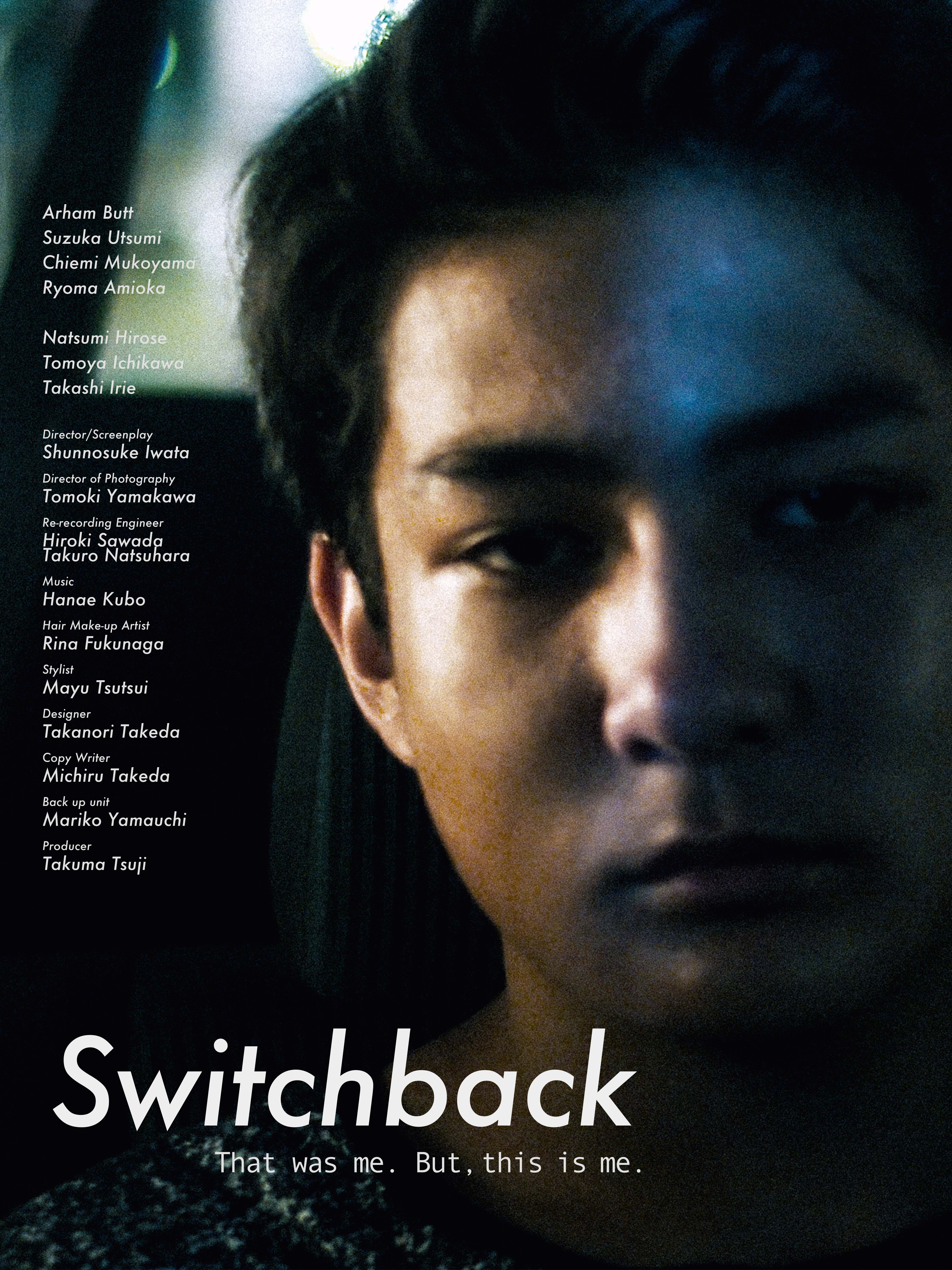
Switchback (スイッチバック, Shunnosuke Iwata, 2022)

Really, everything in life is a learning experience but how should you feel if something that you thought was quite profound and serendipitous was actually engineered even if the way you reacted to it wasn’t? The young heroes of Shunnosuke Iwata’s Switchback (スイッチバック) find themselves caught in a moment of confusion uncertain how far they should trust the adult world while equally at odds with each other and trying to figure out what it is they may want out of life. 

Brazilian-Japanese teenagers Arham and Chiemi are attending a summer workshop project along with basketball enthusiast Suzuka while her childhood friend Eiichiro never actually shows up. Led by Tokyo influencer Rei, the kids will be working together in order to produce a video of a ball bouncing through the countryside. By reversing the footage to make it seem as if the ball is on its own little adventure she hopes to create a sense of the uncanny and with it a new perspective. Arham doesn’t quite get the point of it, but participates anyway and ends up forming a special bond with an old man in a wheelchair they encounter who has a hobby of flying drones. Yet when he finally arrives, Eiichiro claims to have seen the old man walking around and accepting something from Rei assuming he must be some kind of stooge and the children’s adventure they’ve all been on since has been a setup. 

Arham is very invested in the old man’s story and outright rejects Eiichiro’s suggestions that he isn’t “real”, carrying out an investigation into everything he told them about a former airfield that had been built in their town during the war and was later bought by a media company for recording aerial footage. What he discovers is that all of that seems to be true save for one crucial personal detail the old man had mentioned, leaving a grain of doubt in his mind while he continues to resent Eiichiro despite being unable to come up with a reason as to why he would lie. Eiichiro is in fact not quite telling the whole truth though he’s right about the old man, engaging in a kind of engineered adventure of his own but later offers the explanation that adults too are often frustrated and they may have tried to “destroy” Arham because they’re jealous of his cheerful and openhearted nature. 

Even though he concedes that he still experienced what he experienced for himself after meeting the old man, developing an interest in drones and learning a lot of local and aviation history, Arham is uncertain how he should feel about being manipulated, disappointed on trying to confront Rei and hearing exactly the same speech as she’d used in her influencer videos explaining her approach to life and art aiming to give young people a head start in gaining new experiences without them realising that they’re being taught something even if she doesn’t otherwise attempt to push them in a particular direction simply provide the catalyst for growth. Chiemi experiences something similar when she’s offered the opportunity to become a model, a skeevy older man repeatedly telling her she is suited to the work and may have a promising future, adding that she has a quality of ferocity that “Japanese” kids don’t while she complains that she dislikes being told what does and doesn’t suit her preferring to do as she pleases whether other people think it suits her or not. 

Suzuka meanwhile quietly struggles to fit in on her own having come to the town only eight years previously hinting that she and her family may have moved in the wake of the 2011 earthquake but stating only that she doesn’t like to talk of it either traumatised or fearing stigmatisation. Unity came first security second she claims of her basketball team reflecting on the positivity she experienced as they came together before a match in the face of their opponents. The kids perhaps do something similar as they each in their own way react to adult duplicity while deciding to take it in their stride embracing the experiences they’ve had as their own. Rei’s social experiment could easily have backfired leaving them cynical and indifferent, unwilling to believe in or pursue anything fearing that there is no objective truth only manipulation but in they end they run the other way, deciding to trust each other and themselves while creating new experiences of their own. Produced in celebration of the 50th anniversary of the town of Obu in rural Aichi Prefecture, Iwata captures the beauty of the local landscape along with the natural openness it engenders in allowing the children to become fully themselves as they ride their own individual switchbacks to adulthood.   


Switchback screened as part of Osaka Asian Film Festival 2022

Original trailer (no subtitles)

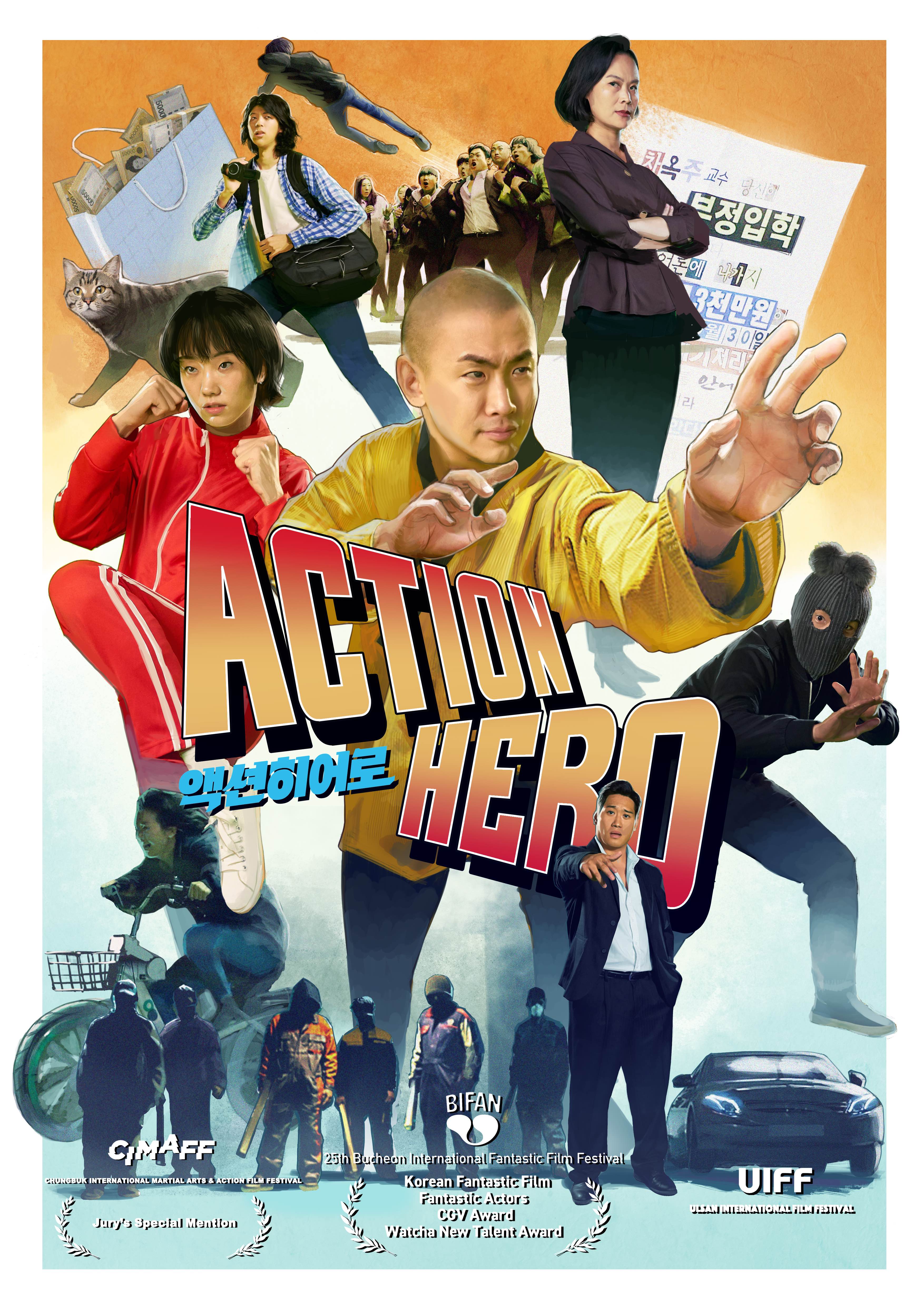
Action Hero (액션히어로, Lee Jin-ho, 2021)

What better way to add a little authenticity to your movie than to unmask injustice live on camera? Lee Jin-ho’s indie action drama Action Hero (액션히어로) is a loving tribute to classic Shaw Brothers but also takes aim at the inequality at the heart of the contemporary society as the virtuous hero who says he just wants to be Jackie Chan starts a mini revolution in the student body after exposing the corrupt practices of their institution. 

Signalling his intentions early on, Lee opens with the “GB” “Golden Brothers” logo and a lengthy martial arts sequence spoken entirely in Cantonese with a classic Shaw Brothers-esque titles card, but as it turns out this is all an anxiety dream as the fearless hero finds himself unable to save a hostage because he cannot answer a question from the upcoming civil service exam. Dreaming of becoming an action star, Joosung (Lee Seok-hyung) decides to sit in on a film class which is where he meets Chanyeol (Lee Se-joon) who shows him a copy of an action movie shot by a former student, Sunna (Lee Joo-young), 10 years previously. Joosung decides to make his own film too and when he and Chanyeol accidentally come across a blackmail letter threatening to expose their professor’s falsification of records in order to admit the sons of wealthy men decide to stakeout the drop location hoping to apprehend the professor and the blackmailer and make it a part of their movie. 

Ironically enough, the previous Action Hero film had been about a culture of sexual harassment as Sunna herself starred as a martial arts avenger saving a young student from a lecherous teacher. 10 years on however Sunna still hasn’t finished her postgrad programme and is stuck as a teaching assistant working part-time at the campus coffee shop. Her colleague Jae-woo (Jang In-sub) is desperate for cash because he’s sick of this life and wants to open a friend chicken restaurant. Even Joosung is filled with despair for the future, working hard to pass the civil service exam even though it’s not something he actually wants to do. Meanwhile, the professor has been taking kickbacks so that chaebol sons with no talent can attend the university while their parents “support” from the sidelines. Perhaps conflicted in her actions, the offer of a promotion to department chair is enough to silence any qualms she might have hand while she’s eventually forced to confess all to the dean who is about to celebrate his 23rd re-inauguration which doesn’t exactly scream a commitment to democratic values. 

Yet through their “investigations” Joosung and Chanyeol discover that the institutional corruption in play was largely an open secret, so commonplace as to be dismissed as just the way things work. The justice-minded Joosung wonders why no one does anything, hoping that the students will eventually wake up to what’s going on and begin asking questions while wondering if they simply lack the “passion” to become their own kind of action heroes and demand integrity from their governmental body. Sunna, meanwhile, fed up with her impossible circumstances feeling as if she’s wasted too much time on Hong Kong cinema picks a different, not quite altogether altruistic path but later recommits herself to exposing the admissions fraud and corruption which go right to the heart of their institution. 

Lee continues to pay homage to the classic kung-fu movie with old school martial arts and use of freeze frame, Joosung wearing his Shaolin-style yellow top and Chanyeol at one point dressed as a classic kung fu master complete with long white beard only to discover themselves swept into a conspiracy deciding to unmask the injustice at the school. Then again, perhaps one action hero isn’t really enough to counter such ingrained corruption or the idea that this kind of impropriety has essentially become normalised and should just be accepted. Thanks to their adventures, each of the avengers is jolted out of their sense of inertia and powerlessness, Sunna realising she doesn’t need to let herself be exploited by her boss and can take control of her own future while Joosung and Chanyeol derive new hope for the future in squaring off against injustice. “The future is unclear, let’s persevere because we have each other” Joosung reflects in Cantonese on seeing the beginnings of a revolution on campus vowing to complete Action Hero 2 in the hope of a better tomorrow. 


Action Hero streamed as part of the 14th season of Asian Pop-Up Cinema.

International trailer (English subtitles)
Onoda: 10,000 Nights in the Jungle (Onoda, 10 000 nuits dans la jungle, Arthur Harari, 2021)

For most people, the Pacific War ended in 1945. For Hiroo Onoda it may in a sense never have ended though he laid down his arms in 1974, 30 years after his initial dispatch, having spent the intervening three decades pursuing guerrilla warfare in the Philippine jungle the last two of them entirely alone. Arthur Harari’s three-hour existential epic, Onoda: 10,000 Nights in the Jungle (Onoda, 10 000 nuits dans la jungle), explores the psychological dimensions of his quasi-religious conviction in the righteousness of a mission which is in one sense no more than to survive along with his refusal to accept that the war is over and his personal struggle has been pointless. 

Immediately in opening the film in 1974 with a young man identified only as a “tourist” (Taiga Nakano) arriving on the island in search of Onoda (Kanji Tsuda), Harari draws a direct contrast between these two arrivals and subsequent departures. As he says, the Tourist is just that in town for a specific purpose after which he will leave and though you might be able to say the same of Onoda who came to the island of Lubang in late 1944 his reality was very different. On luring him out of the jungle by playing the patriotic war song he had sung with the other soldiers who unlike him accepted the surrender, the Tourist poignantly tells Onoda that he has travelled to over 50 countries whereas Onoda in a certain sense has never left Japan. “This island belongs to us” he’s fond of insisting seeing it as a piece of the Japanese empire which others are trying to take from him but he alone must defend. 

As we discover, the young Onoda (Yuya Endo) had wanted to become a pilot but washed out of the training program because of a fear of heights and was subsequently put forward for a kamikaze squadron. The irony of his life is that he is a man who refused to die for the emperor, his will to survive bringing him to the attention of Major Taniguchi (Issey Ogata) of the notorious Nakano spy school who sells his students a line that they are the good guys helping to liberate East Asia from Western imperialism. Trained in guerrilla warfare part of Onoda’s mission is to foster an uprising in the local population whom he assumes will also oppose American influence never realising that he is in fact a part of a destructive colonising force they will also seek to repel not least because of the way they have been treated by Japanese forces. 

Onoda’s first meeting with his captain on arriving on Lubang is interrupted by the arrival of the mayor of a nearby town who has come to complain that Japanese soldiers have been stealing food supplies from local farmers. This comes as a surprise to Onoda who is obviously not fully aware of the reality on the ground. His initial orders are largely ignored by the remaining NCOs who get up and leave during his briefing knowing that what he’s proposing is impossible. These men are already battle weary, many of them are sick, and they are running low on supplies. Onoda is 22 and fresh faced, arriving full of energy and patriotic zeal assuming these men are simply lazy or lack ideological commitment. He has no grounds to wield authority and no combat experience that would permit him to understand the circumstances in which he finds himself. In an especial irony, his first kill occurs after the war has (for everyone else) ended and he will himself go on to commit acts of atrocity against the local population which he justifies as acts of war. 

The military song which he is fond of singing celebrates there being no more bandits, yet banditry is essentially what he has been reduced to calling into question any idea of heroism which might be attributed to his refusal to accept the wartime defeat. In his Nakano spy school training, Onoda had been encouraged to ignore the accepted rules of war, that all is permissible in the pursuit of victory. He is also told that the prize for the “secret war” he is conducting will be a “secret glory” that goes unrecognised by others while he alone will possess true integrity in knowing that he never wavered in his mission. Yet there is something in him which weakens when he encounters the Tourist and is told that most of Japan believes him to be dead, rendering his struggle an irrelevance. 

He begins to admit the concept of surrender but only if given new orders from Taniguchi whose contradictory teachings have informed the course of his life, yet Taniguchi like many of his generation in the Japan of 1974 does not want to face his wartime past. The bookshop he now runs sells no military books and he claims not to remember Onoda or Lubang refusing his responsibility for his role in the conflict now filled with shame and regret. Yet it’s also possible that Onoda misunderstood the nature of the mission he’d been assigned, that in saving him from the kamikaze squadron because he did not want to die, Taniguchi gave him only one order – to survive. “You do not have the right to die” he reminds the recruits while giving them the ultra-individualist mantra that they must be their own officers which is in essence the paradoxical instruction to obey no orders but their own meaning that Onoda was always free to accept defeat. 

The psychological consequences of doing so, however, may have been too great. Coming of age in a militarised society, he already feels himself emasculated and embarrassed by his failure to become a pilot essentially because he is afraid to die. An awkward meeting with his father (played by film director Nobuhiro Suwa) resembles that of a Spartan woman sending her son to war with the instruction to return with his shield or on it. To return in defeat is psychologically impossible and suicide forbidden and so the only choice is inertia. In this Onoda may be hiding in the jungle unable to face a post-war future, descending into delusional conspiracy when presented with evidence that the war is over choosing to see the attempts of others to discourage him from his mission as proof of its importance, as if he and the remaining soldier sticking with him are key players in geopolitical manoeuvring worthy of such an elaborate plot. To believe the world is wrong is easier than to accept that he’s wasted his life in service of a mistaken ideal while failing to prove himself a man by the standards of a heavily militarised society. 

He’s tempted out of his delusion only by the Tourist who confronts him with the face of a new Japan entirely unknown to him, a Japan of economic prosperity, of the Shinkansen, of democracy. Being taken off the island means he must finally leave his dreams and delusions behind to enter a new post-war reality. Harari frames the island of Lubang as a psychological realm, the topography of Onoda’s delusion, but is also mindful of the islanders living outside it whom Onoda terrorises under the justification of war no better than a bandit in his quest for survival. In Harari’s oneiric landscapes, Onoda’s vistas are forever haunted by the spectres of his latent regret in the reflections of the boy he once was who came to Lubang to prove himself a man only to leave it a ghost. 


Onoda: 10,000 Nights in the Jungle opens in UK cinemas April 15 courtesy of Third Window Films. It will also be released on blu-ray May 16 in a set which also features an interview with actor Kanji Tsuda plus an interview with director Arthur Harari, DOP Tom Harari and assistant director Benjamin Papin.

Original trailer (English subtitles)

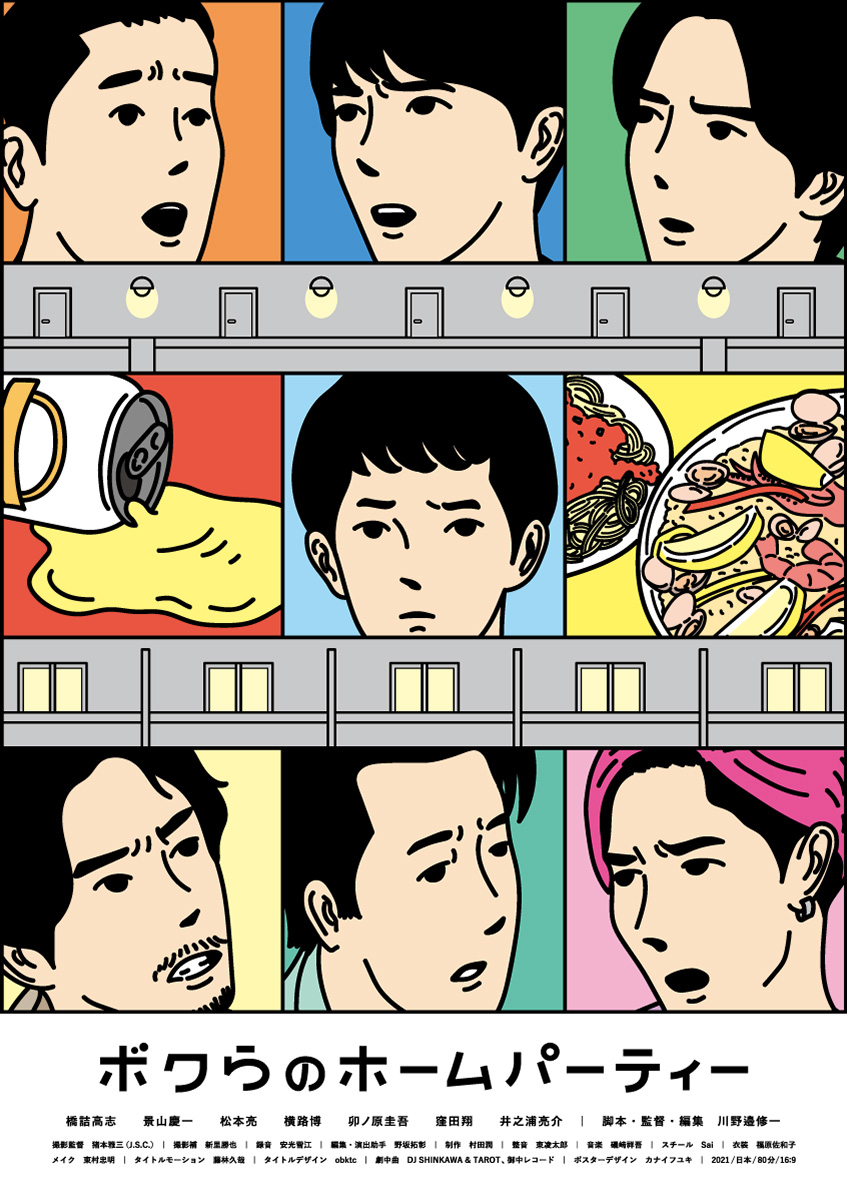
Our House Party (ボクらのホームパーティー, Shuichi Kawanobe, 2022)

The pressures of living in a still conservative society quietly build towards a small explosion provoking a moment of catharsis among a series of gay men some of whom are lovers or long term friends while others are meeting for the first time each bringing with them their own particular fears and anxieties. Inspired by his own life experiences, Shuichi Kawanobe’s Our House Party (ボクらのホームパーティー, Bokura no Home Party) presents a naturalistic view of gay life in contemporary Tokyo in which the six men find solace in their friendship while outside battling a sometimes unsympathetic society. 

The slow burn drama waiting to tank the party revolves around the relationship between hosts Akito and Yashushi who have been together for seven years, Akito having accidentally overhead his boyfriend with another man, Kenichi, through a phone call Yasushi presumably didn’t mean to answer. Despite living together so long, Akito is not out at work and finds himself deflecting potentially invasive comments from his boss about his plans for marriage while he and a recently engaged colleague not so subtly attempt to set him up with a female co-worker who has romantic issues of her own, all of them oblivious to Akito throwing longing looks at their handsome waiter in the local izakaya. When the party begins to get out of hand and provokes a complaint from the couple’s neighbours, Akito’s hostile response implies that they have faced similar complaints before which he believes to be rooted in homophobia, that they simply object to him living there. “All our lives we’ve been trying not to cause trouble” he adds, “where do you expect us to go? Why do we have to apologise?” pushed into a moment of rebellion by the emotional intensity of the present situation that is later unexpectedly echoed by Kenichi who reminds them that they’ve suffered enough, insulted and looked down on, unable to voice their feelings freely and seeing their relationships crumble under the constant pressures of a sometimes hostile society all of which leads them to hurt each other without really meaning to. 

Yet the catalyst for all this is a naive and idealistic college student hopelessly in love with his straight best friend invited to the party after being taken under the wing of kindly bar owner Sho who introduces him to the scene and tries to help him loosen up while accepting his sexuality. Tomoya acts as a kind of judge or arbiter, only just learning the rules of this society but somehow feeling betrayed by its contradictions and hypocrisies. Only he can see that Akito is not really enjoying the party and makes several attempts to check in with him only to see something he shouldn’t have and partially misunderstand it, his illusions a little shattered as he recalibrates his internal sense of morality. Meanwhile he’s both matched and challenged by the lovelorn Masashi who has come in the company of recent hook up Naoki but dreaming of a stable relationship disappointed by Naoki’s assertion that he doesn’t do commitment while picking a fight with Sho over a disagreement about the importance of physical intimacy in romantic relationships. 

Nevertheless through all of these heated debates and fraught emotional crises the men achieve a kind of catharsis in having cleared the air and agreed to return to the sense of solidarity they had felt before only with a little more clarity. “Don’t lie to yourself about how you feel, you’ll only make yourself miserable” Sho had advised the conflicted Tomoya convincing him to join the fun by pointing out that if you don’t like it you can always go back to where you were, advice that might go as well for all as they begin to interrogate how they really feel along with the fears and anxieties that cause them to behave the way they do until approaching a moment of calm after the storm cleared with all truths aired and seemingly at least forgiven. Taking place largely within the claustrophobic and intense environment of the apartment, Kawanobe captures a naturalistic vision of contemporary gay life through the eyes of a series of jaded not-quite-middle-aged men and a naive youngster discovering both himself and a new community only to be confronted by the difficulties and contradictions of life in a society he believed to be better than it is. 


Our House Party screened as part of Osaka Asian Film Festival 2022

Original trailer (no subtitles)

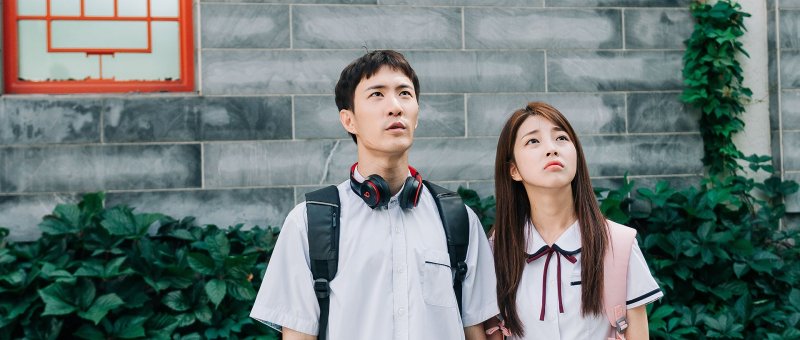
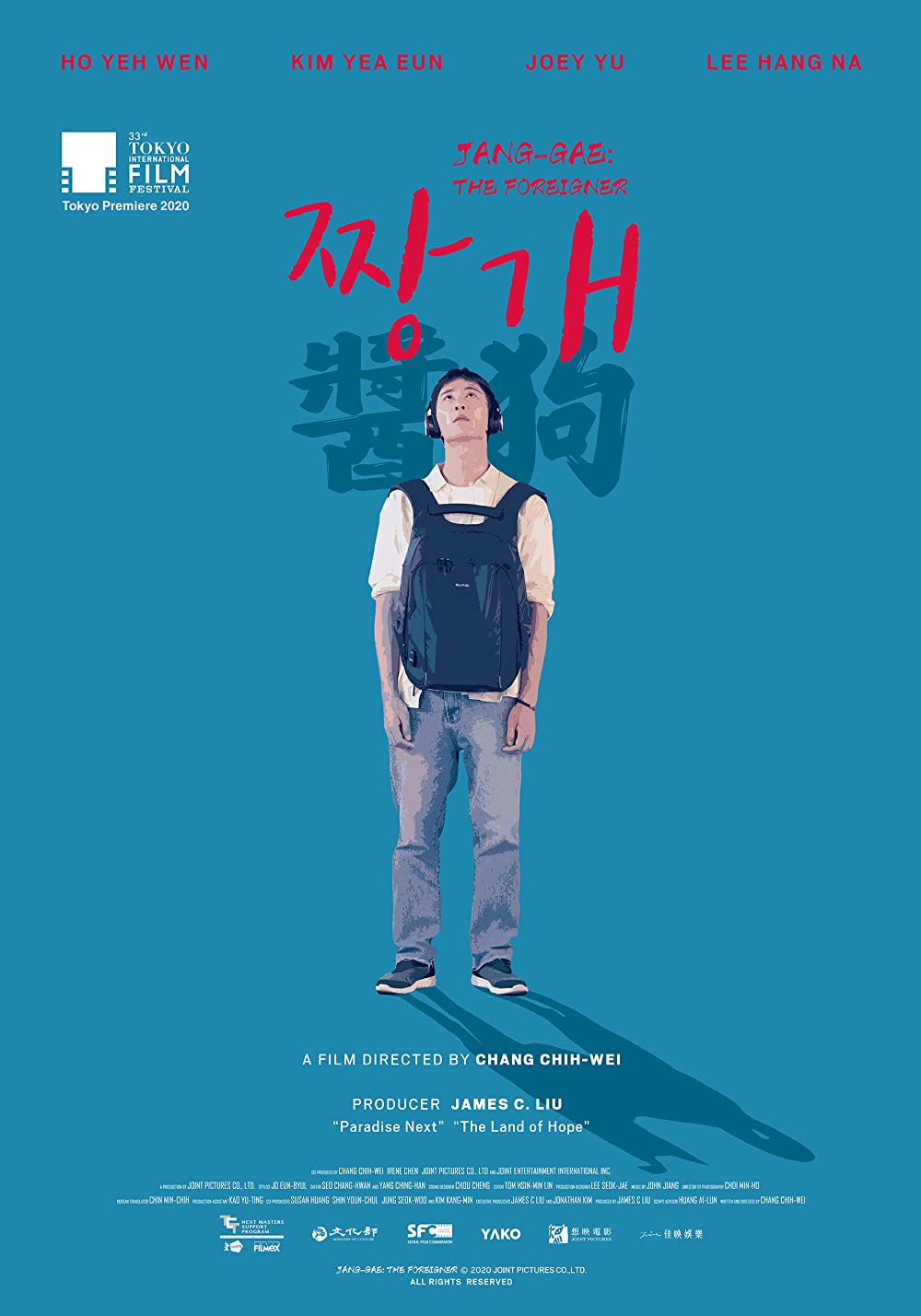
Jang-Gae: The Foreigner (醬狗, Chang Chih-Wei, 2020)

An angry young man struggles to repair his fracturing sense of identity in Chang Chih-Wei’s provocatively titled Jang-gae: The Foreigner (醬狗, jiàng gǒu). “Jang-gae” is in itself a derogatory term for Korean-Chinese translated literally as “sauce dog”, while the film’s hero Gwang-yong (Ho Yeh-wen) feels himself to be a perpetual outsider continually othered in Korea but having little affinity for his Chinese roots and dreaming of a future in the US having been short-listed for a scholarship programme only to be confronted with the contradictions of his identity when his father is taken ill and having the wrong kind of passport may jeopardise his dreams of going abroad. 

For reasons unknown to him, Gwang-yong’s father Seo-sang (Joey Yu) pulled him out of the Chinese-medium school he’d been studying at and moved him to a regular Korean high school instead. Although a straight-A student and in fact the class monitor, Gwang-yong experiences constant xenophobic microaggressions from his classmates who sarcastically repeat the common Chinese greeting “Have you eaten yet?” and refer to him as “sauce dog” while the teacher expresses surprise that “even a foreigner like Gwang-yong” has mastered Korean history. The teacher’s remark is quite ironic in that Gwang-yong may have a Taiwanese passport but he was born and raised in Korea, as, it happens, was his father. In fact, his family has no real connection with Taiwan, his grandfather fled Mainland China during the civil war and presumably applied for a Republic of China passport as a supporter of the Nationalist Party. In any case, his passport is also a non-citizen one which grants no right of abode because his family has no household registration in Taiwan meaning in essence that Gwang-yong is stateless and has no citizenship of any sort. 

For obvious practical reasons, he wants to apply for a Korean passport which he’s entitled to by right of birth as his mother is a Korean citizen but his father won’t have it. Meanwhile, despite bullying him the other boys all complain that foreigners have it easy believing that he got a leg up in the scholarship scheme for being non-Korean while he’ll also be exempt from the National Exam and military service (which as he points out he’d have to do in Taiwan if he were a full citizen there), but being exempt from each of these requirements for Korean citizens leaves him feeling even more excluded reinforcing the sense that he’s not really a part of the culture in which he has grown up in the only country he’s ever known. He tells his mother that he just wants to live a dignified life in Korea, but is ruffed up by a trio of thuggish men later claiming to be police immigration officers accusing him of overstaying on his visa not so much as even apologising after forcibly pulling his wallet out of his pocket and seeing his birthplace listed as Korea on his ID. 

Most of his animosity is directed at his father who speaks to him only in Mandarin and is in general authoritarian and unsupportive, yet his father’s illness also causes him to lash out at his mother laying bare his own internalised shame in berating her for having married someone who was Korean-Chinese as if all his problems would have been solved if she’d only married somebody Korean, blaming her rather than standing up against the xenophobia and prejudice which pervade his society. Meanwhile the girl he has a crush on at school, Ji-eun (Kim Yea-eun) who is also an outcast having moved schools after the grandmother who was raising her passed away, just wants to get out of “Hell Joseon” and doesn’t much care where to. He points out swapping Hell Joseon for Taiwan’s “Ghost Island” might not make much difference, but discovers that his accidental statelessness leaves him doubly disadvantaged denied his full rights in either place while equally unable to escape. 

Even so his father’s illness forces him to reconsider not only his relationship to him but to his Chinese heritage along with the Korean, Ji-eun also reminding him that the people who make it in Korean society are the ones who learn to stand up for themselves which perhaps informs his final act of rebellion against the bullies no longer willing to be meek or apologetic but directly challenging their attempts to intimidate him having gained a new confidence. A gentle coming-of-age tale in which a young man comes to understand both his father and his heritage Jang-Gae: The Foreigner never shies away from the problems faced by ethnic minorities in contemporary Korea nor the inequalities of the non-citizen passport but does allow its conflicted hero to find a degree of equilibrium in himself secure in his own identity. 


Jang-Gae: The Foreigner streamed as part of the 14th season of Asian Pop-Up Cinema.

Original trailer (English subtitles)
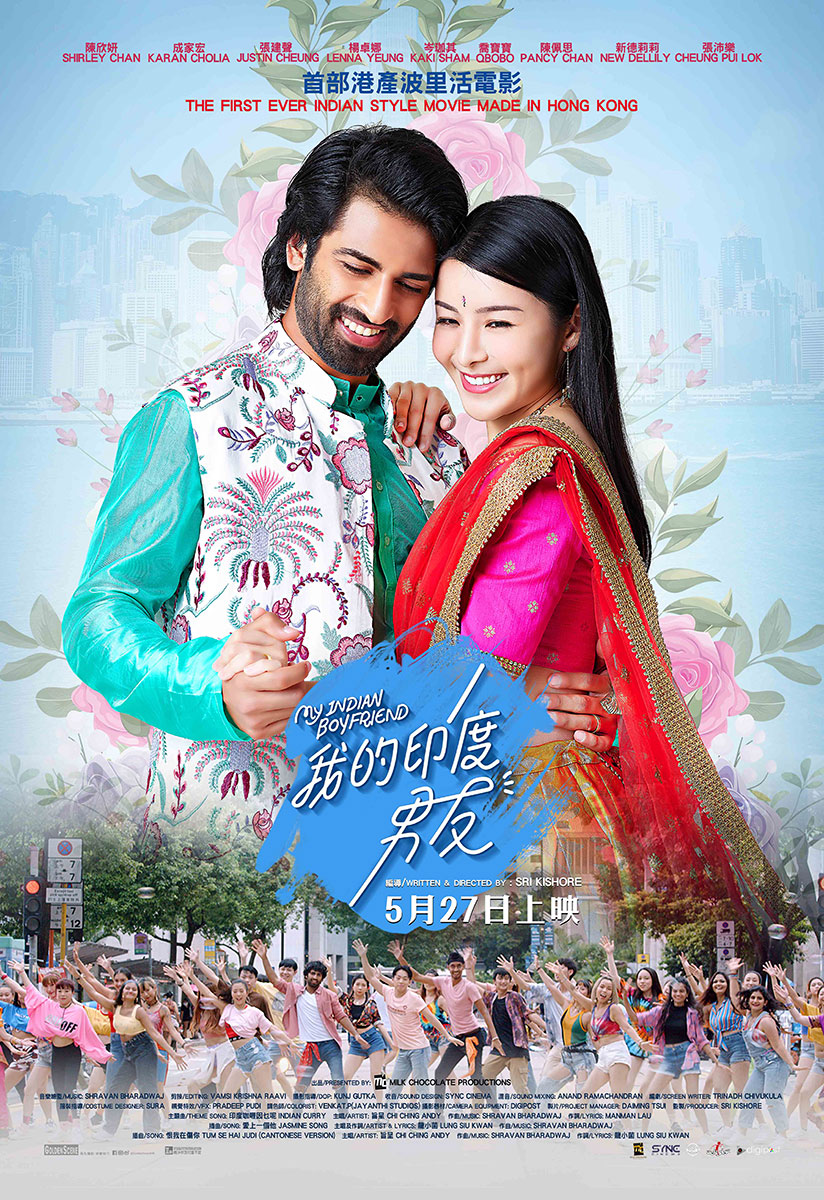
My Indian Boyfriend (我的印度男友, Sri Kishore, 2021)

An awkward young man from India begins to see new possibilities in life after falling for his beautiful neighbour in Sri Kishore’s comic melodrama My Indian Boyfriend (我的印度男友). Billed as the first ever Indian-style film made in Hong Kong, Kishore’s musical romance has already come in for a degree of criticism with some objecting to what they see as a pun on a racial slur in the film’s original Cantonese title (which has since been changed) though the cross-cultural love at the film’s centre does perhaps attempt to overcome a sense of division even if cultural differences are not in the end what keeps the couple apart so much as their individual circumstances. 

The hero, Krishna (Karan Cholia), is the youngest of three siblings and moved to Hong Kong with his family as a child but has been unable to settle, finding it difficult to get a job and repeatedly stating a desire to return to India. Jasmine (Shirley Chan Yan-Yin), meanwhile, is a model and dance instructor technically engaged to sleazy businessman Richard (Justin Cheung Kin Sing) to whom she feels indebted because he took care of her family when her father died but otherwise appears not to like very much possibly because of his worryingly controlling, possessive personality. In fact, the pair’s first meeting is brokered by Richard’s unsolicited racist provocation on spotting Krishna and his Chinese friend Kong (Kaki Sham) outside the building into which Jasmine is about to move generating a sense of animosity that proves difficult to dissipate until Krishna discovers that Jasmine is actually a friend of his sister’s and thereafter falls in love with her. 

It has to be said that Krishna’s obsessive courtship crosses the line of what is considered appropriate, quite clearly making Jasmine uncomfortable and leaving her in a difficult position because of her friendship with the rest of the family. We can see that Richard is definitely bad for her (and every other woman on the planet), but to begin with it’s not clear Krishna is much better save for the fairly low bar that when he realises his behaviour is problematic he does agree to back off if occasionally trying to badger Jasmine into a platonic friendship while warning her against marrying Richard whom she already agrees is likely to make her extremely unhappy. 

Richard meanwhile is continually spitting chips, both incredibly jealous and intensely racist throwing racial slurs around at random and later sending in some of his hired thugs to have Krishna beaten up though it’s unclear why he thought doing either of these things would help to endear him to Jasmine even as he continues to leverage the financial assistance he’s given her family to imply she has no other choice but to become his wife in recompense. In fact neither of the men really give much thought to what Jasmine might want, nor does her mother (Griselda Yeung) take her feelings into consideration coming from an earlier time in which financial stability was the only concern either oblivious to Richard’s many red flags or thinking they’re worth putting up with so long he continues to provide a comfortable life. Even so Richard’s obvious racism does not seem to be so far out of line with society around him, Krishna finding himself constantly facing xenophobic microaggressions with even a prospective employer taking one look at him and openly remarking that they don’t hire South Asians followed by a justification based on a series of offensive racial stereotypes. 

The constant xenophobia along with his father’s incessant criticism fuels Krishna’s sense of futility along with his half-hearted desire to return to India where he perhaps feels he might do better free from the twin pressures of unfair parental expectation and societal prejudice. Nevertheless, his love for Jasmine forces him to confront himself and turn his life around now given a reason to start making a concrete life for himself in Hong Kong while her love for him strays a little into the uncomfortable as she’s won over by the force of his feelings and thereafter turns him into a kind of project, a fixer upper boyfriend, restoring his sense of confidence by embracing his talent for dancing so that he can begin to make something of himself while she continues to struggle with her mother’s disapproval not only because of her prejudice towards Krishna on the grounds of his ethnicity but her insistence on the debt they owe to Richard. But then as Krishna says love is love whether it’s in India or Hong Kong, and will eventually conquer all. Featuring several Bollywood-style musical sequences and some fairly questionable twists typical of romantic melodrama, Kishore’s light hearted love story does at least embody a sense of cross-cultural flow as the lovers (and their families) overcome their various prejudices to embrace the love they have for each other. 


My Indian Boyfriend screened as part of Osaka Asian Film Festival 2022

Original trailer (Traditional Chinese/English subtitles)