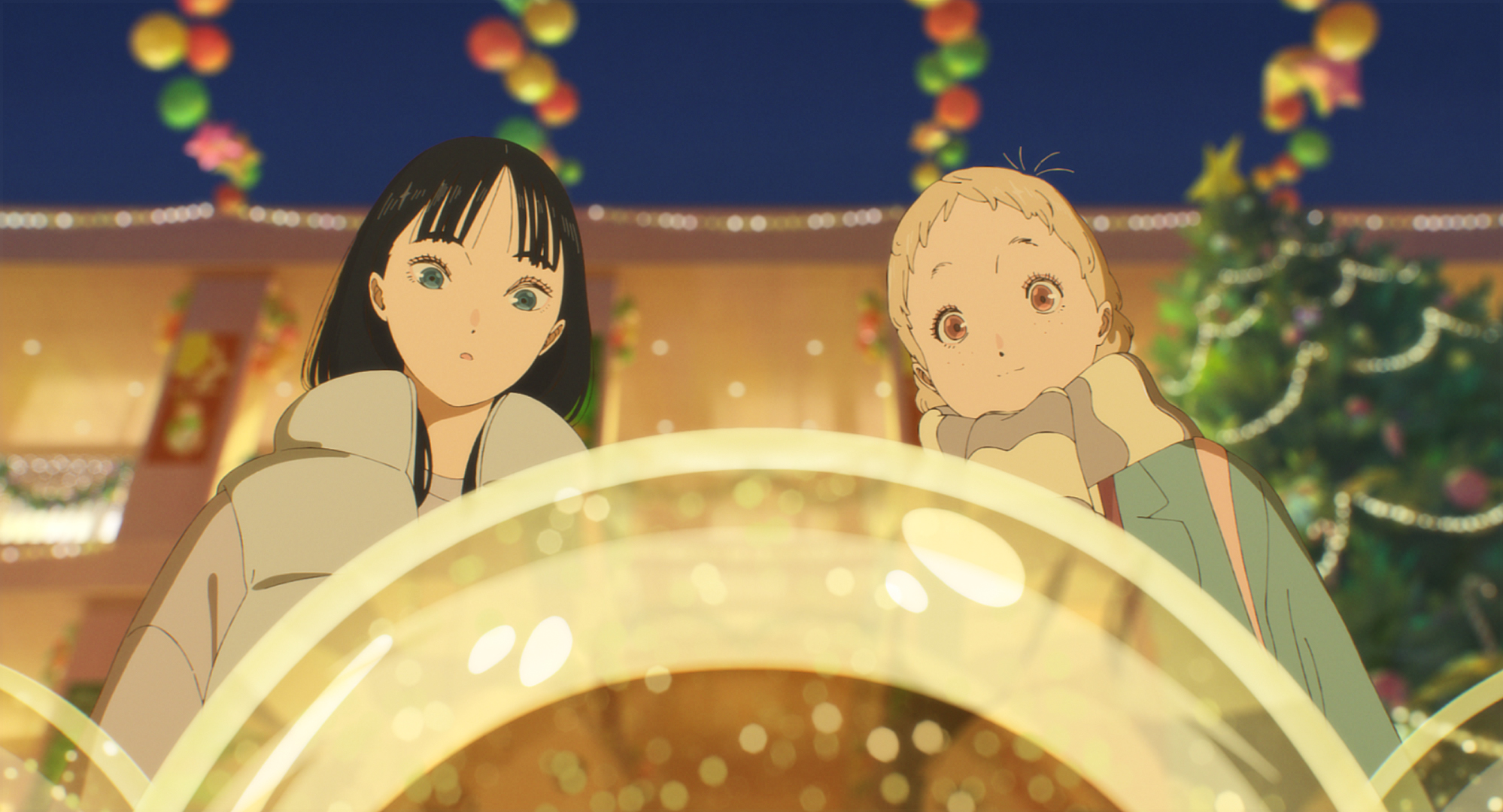
Drawing Closer (余命一年の僕が、余命半年の君と出会った話。, Takahiro Miki, 2024)

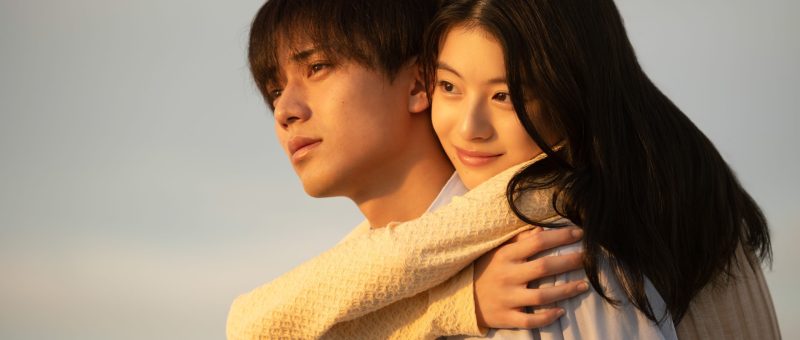
Takahiro Miki has made a name for himself as a purveyor of sad romances. Often his protagonists are divided by conflicting timelines, social taboos, or some other fantastical circumstance, though Drawing Closer (余命一年の僕が、余命半年の君と出会った話。, Yomei Ichinen no Boku ga, Yomei Hantoshi no Kimi to Deatta Hanashi) quite clearly harks back to the jun-ai or “pure love” boom in its focus on young love and terminal illness. Based on the novel by Ao Morita, the film nevertheless succumbs to some of genres most problematic tendencies as the heroine essentially becomes little more than a means for the hero’s path towards finding purpose in life.

17-year-old Akito (Ren Nagase) is told that he has a tumour on his heart and only a year at most to live. Though he begins to feel as if his life is pointless, he finds new strength after running into Haruna (Natsuki Deguchi) who has only six months yet to him seems full of life. Later, Haruna says he was actually wrong and she felt completely hopeless too so actually she really wanted to die right away rather than pointlessly hang round for another six months with nothing to do and no one to talk to. But in any case, Akito decides that he’s going to make his remaining life’s purpose making Haruna happy which admittedly he does actually do by visiting her every day and bringing flowers once a week.

But outside of that, we never really hear that much from Haruna other than when she’s telling Akito something inspirational and he seems to more or less fill in the blanks on his own. Thus he makes what could have been a fairly rash and disastrous decision to bring a former friend, Ayaka (Mayuu Yokota), with whom Haruna had fallen out after the middle-school graduation ceremony that she was unable to go to because of her illness. Luckily he had correctly deduced that Haruna pushed her friend away because she thought their friendship was holding her back and Ayaka should be free to embrace her high school life making new friends who can do all the regular teenage things like going to karaoke or hanging out at the mall. Akito is doing something similar by not telling his other friends that he’s ill while also keeping it from Haruna in the hope that they can just be normal teens without the baggage of their illnesses. 

The film never shies away from the isolating qualities of what it’s like to live with a serious health condition. Both teens just want to be treated normally while others often pull away from them or are overly solicitous after finding out that they’re ill but at the same time, it’s all life lessons for Akito rather a genuine expression of Haruna’s feelings. We only experience them as he experiences them and so really she’s denied any opportunity to express herself authentically. Rather tritely, it’s she who teaches Akito how to live again in urging him that he should hang in there and continue to pursue his artistic dreams on behalf of them both. Meanwhile, she encourages him to pursue a romantic relationship with Ayaka, in that way ensuring that neither of them will be lonely when she’s gone and pushing them towards enjoying life to its fullest.

Nevertheless, due to its unbalanced quality and general earnestness the film never really achieves the kind of emotional impact that it’s aiming for nor the sense of poignancy familiar from Miki’s other work. Perhaps taking its cues from similarly themed television drama, the production values are on the lower side and Miki’s visual flair is largely absent though this perhaps helps to express a sense of hopelessness only broken by beautiful colours of Haruna’s artwork. Haruna had used drawing as means of escaping from the reality of her condition, but in the end even this becomes about Akito with her mother declaring that in the end she drew for him rather than for herself. Even so, there is something uplifting in Akito’s rediscovery of art as a purpose for life that convinces him that his remaining time isn’t meaningless while also allowing him to discover the desire to live even if his time is running out.


Trailer (English subtitles)

A Legend (传说, Stanley Tong, 2024)

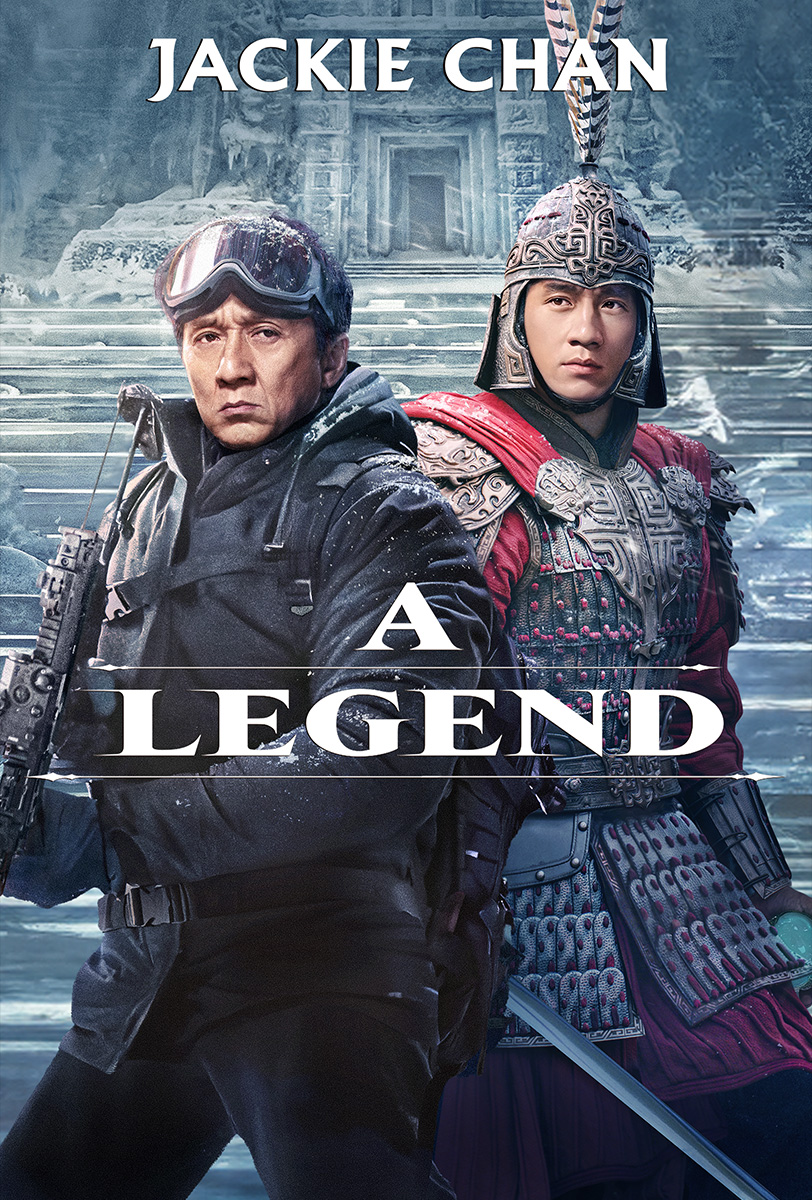
The funny thing about the strangely generic title of Stanley Tong’s latest Jackie Chan vehicle A Legend (传说, chuánshuō) is that it’s at least partly in reference to its now ageing star rather than the tragic love story at the film’s centre which at least tries to echo the epic romances of historical fiction. That might in part explain the rather dubious decision to use AI de-aging technology to cast Chan as the tragic lover in addition to his role as a veteran archeologist researching the gravesite of a Han general’s horse. 

While de-aging Chan robs an age-appropriate actor of the opportunity, it’s equally true that it adds another note of uncanniness to the historical scenes contributing to their rather lifeless quality and otherwise becoming a frustrating distraction given that more often than not the actor’s face simply appears odd and doesn’t particularly look like a young Chan anyway any more than casting a younger actor with a physical resemblance might have done. In any case, despite the frequent discussions of history among Chan’s team, the historical scenes have a fantastical quality that’s much more like contemporary video games than classic wuxia. This may be deliberate given that a new addition to Professor Fang’s team is a video game developer who wants to create a game set in this era and is keen to get Fang on board as a consultant, though the aesthetic mostly detracts from the setting in the jarring use of CGI. Heroine Mengyun (Gülnezer Bextiyar) performs what is intended to be an impressive Hun sword dance, but as the sword is CGI it has no sense of skill or danger. It aligns clumsily with her physical movements like that in a video game cutscene and has a disturbingly weightless quality. The same phenomenon also mars the film’s action scenes which sometimes have an odd quality as if CGI has also been used to impose an actor’s face on that of a stunt double or somehow alter their movements. 

Aside from that, there is some nice cinematography that captures the majesty of the Chinese landscape though even this is sometimes drowned out by the syrupy score which is again quite reminiscent of a video game. Supposedly a spiritual sequel to The Myth and Kung Fu Yoga, the central conceit of the film is that through a jade pendant found in the grave, Fang and his assistants become part of a collective dream which is a flashback to the distant past while it later transpires that they’re being manipulated by a malevolent force in the present who wants to rob China of its historical treasures by finding a secret sanctuary built by the Huns to store the gold statues they stole from the Hans to use as objects of worship. Accordingly, there’s some pointed commentary about how it’s illegal to steal or traffic historical artefacts which should be protected as symbols of China’s essential culture. It’s no coincidence that the villains have Western accents and begin speaking to each other in English as they wilfully blow up a newly discovered historical site.

The modern scenes do, however, have an awkward kind of comedy going on in the form of in jokes between Fang’s team such as the non-love story between assistants Xinran (Xiao Ran Peng) and the clueless Wang Jing (Lay Zhang Yixing) who completely misses all of her hints and seems to be unaware of the subtext of phrases such as “come in for coffee” or that “incredibly expensive bracelet would really suit me.” Chan also gets rescued from drowning by a family inexplicably ice fishing in this really remote place who take quite a long time to realise he’s not some kind of weird talking fish. Though Chan does get his own action sequence at the film’s conclusion, it’s fairly incongruous for a professor of archeology to possess these kinds of skills which are otherwise out of keeping with the fatherly, professorial character Chan plays up to that point even if there is a distinct hint of Indiana Jones in the instance that all of this should be a museum. The little boy who found the pendant even gets a pat on the head for reporting it to the authorities rather than trying to sell it or keep it for himself. Nevertheless, it speaks of something that the digressions into historical legend are often more interesting than the retelling of the legend itself which never really takes flight despite the flying arrows and charging horses of world in which the heroes can only dream of the supposedly peaceful and harmonious society that exists far in the future.


A Legend is released in the US on Digital, blu-ray, and DVD 21st January courtesy of Well Go USA.

Trailer (English subtitles)

Octopus with Broken Arms (误杀3, Jacky Gan Jianyu, 2024)

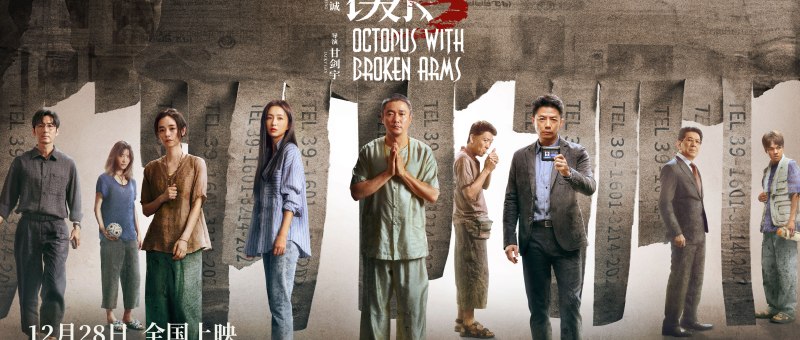
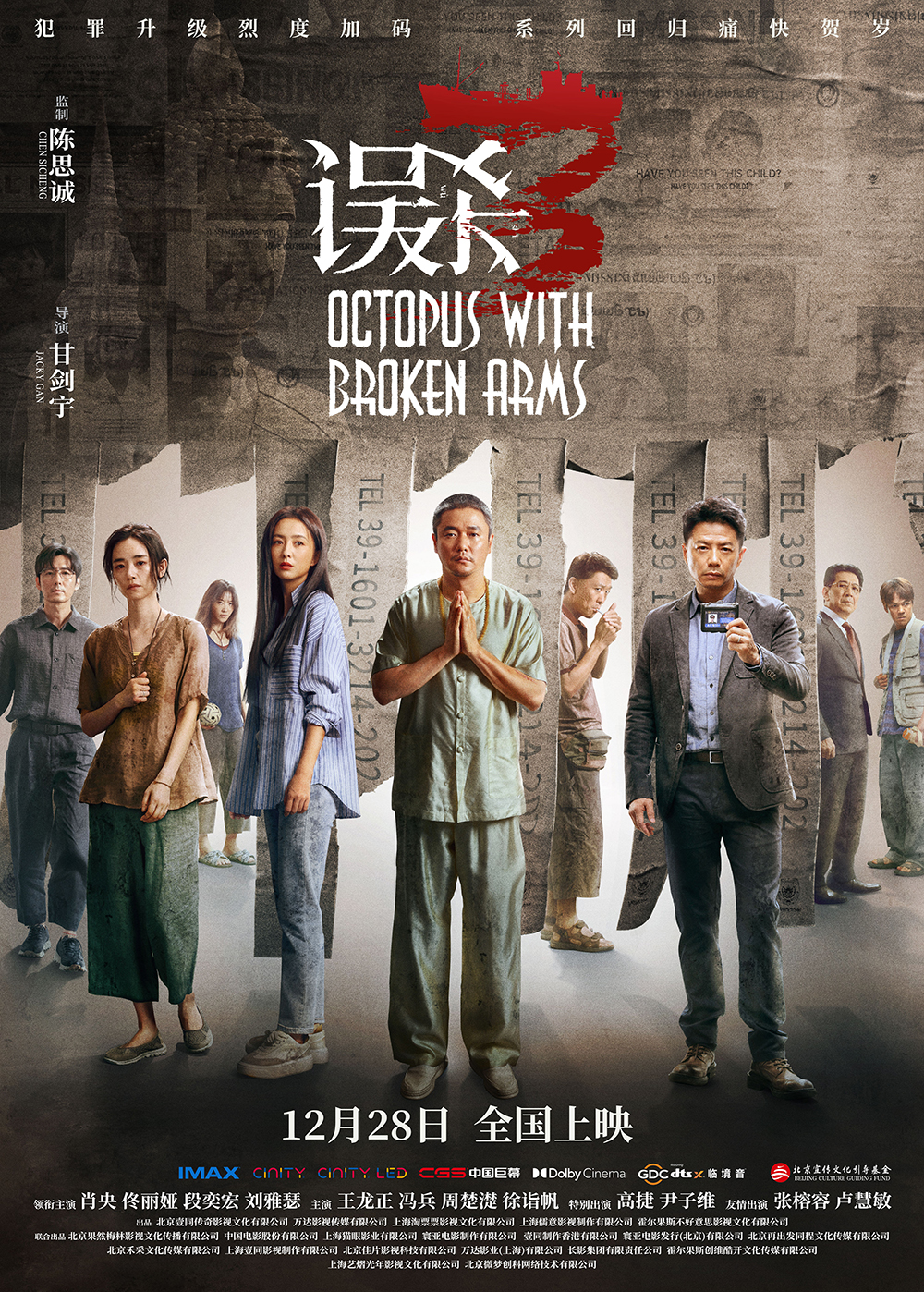
It’s quite surprising, somehow, that Octopus with Broken Arms (误杀3, wùshā 3) gets away with as much as it does simply being another recent mainstream movie set in an unidentified South East Asian nation where, conveniently enough, almost everyone speaks Mandarin. The third in the Sheep Without a Shepherd series, it quite clearly takes aim at the tendency of authoritarian governments to cover things up and deny the public the truth in any situation. Ordinarily, the censor’s board wouldn’t like that pointed out, nor would it like implications of police violence and corruption though as this is all taking place in “Not Mainland China”, it seems to have passed them by.

Then again, by setting itself overseas the film also deflects the implications of its focus on child trafficking which is a huge and well documented problem on the Mainland though here it becomes something that only happens overseas. The closing title cards in English offer a series of statistics about missing children worldwide, but avoid mentioning the statistics in China where the One Child Policy contributed to a phenomenon of children being kidnapped from the cities to be raised on rural farms while the preference of sons often saw daughters otherwise sold off.

In any case, Bingrui (Xiao Yang) is an ethnic Chinese refugee raised in an orphanage who got a huge capital injection from a gangster after finding his missing child and turned it into an internationally successful cosmetics corporation. When his own daughter Tingting is kidnapped, he seems to know immediately that he’s not been targeted simply because he’s a wealthy man and suspects the involvement of Fu-an (Feng Bing), an old “friend” with whom he’d had “a few issues” who had approached him for money for his son’s heart transplant which he had given him. 

It doesn’t take long to figure out that Bingrui must have been involved in something untoward even if he’s now a devout Buddhist who’s just trying to be a good father having lost his wife in childbirth. Fed a series of clues to find his daughter, it’s clear he’s being led towards a kind of confrontation with his past along with a test of character. He may be able to say that he did the things he did because he had no other choice. If he had not joined the side of those acting against all common notions of humanity, he would simply have become one of their victims. But there is a choice involved all the same, and Bingrui chose survival through the sacrifice of other lives. 

The fact that the kidnapper lives streams much of the chase suggests they’re less interested in the money than truth and ultimately want Bingrui to blow the whistle on a vast conspiracy which otherwise can’t be investigated because it’s burrowed deep into the police force and perhaps beyond. As one of those working against him later says, there are too many secrets destined to remain so that should be brought out into the light. A newsreader, however, remarks on hearing about a possible cover up of the deliberate murder of a number of trafficked children passed off as “refugees”, that what he most fears is that the people have lost faith in their government. Nevertheless, there might be something quite subversive about the lengthy scenes of citizens expressing discontent with blatant lies from the authorities and openly begging for the truth given the famously tightlipped CCP’s usual approach to public information.

In any case, the more we learn about Bingrui the harder it is for us to sympathise with him and the film then becomes more about proper paternity and the willingness of a parent to surrender their own life for that of their child. The film takes its English title from an incredibly elaborate school play little Tingting is involved in at the beginning of the film about how Octopuses are all orphans because their parents abandon them soon after birth and then pass away. Bingrui wasn’t exactly an orphan, like many of the children he was kidnapped from a loving family, but became one and lost his sense of humanity in the process. The question is whether he will be able to abandon his instincts for self-preservation to save his daughter or if, in the end, he will choose to save himself just as he did when chose to join those who kidnapped him rather than become a victim. Like many similarly themed thrillers of recent years, the film is built around a series of outrageous twists many of which are startlingly obvious but in their way serve the shocking quality of those that aren’t. What’s truly shocking is the depth of this conspiracy which hints not just at children being stolen and sold to overseas adopters, but trafficked into sexual exploitation or for illegal organ harvesting. The barbarity knows no bounds, and while the actions of Tingting’s kidnappers are in themselves brutal it’s clear they have no other way to ensure the injustice they face will be addressed. Indignant but avoiding sentimentality, Jacky Gan Jianyu’s slickly designed B-movie thriller nevertheless ends on a note of karmic retribution that the “hero” may not have earned but does at least allow him to make good on his promise and symbolically atone for the all the pain and suffering his callousness self-interest has caused. 


Trailer (English subtitles)

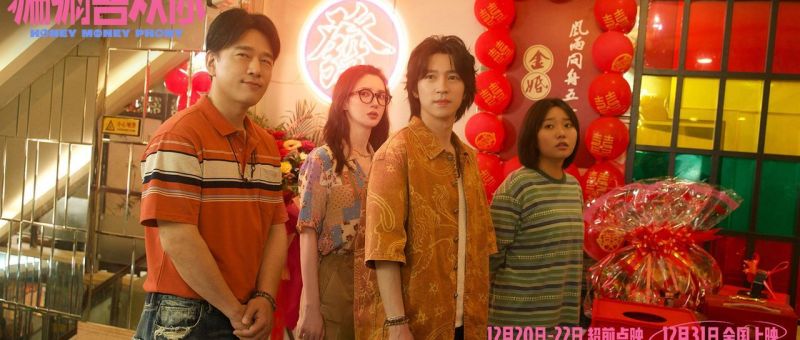
Honey Money Phony (“骗骗”喜欢你, Su Biao, 2024)

Can you really say a scammer who just takes people’s money without messing with their feelings is any better than one who just robs them? That’s a justification put forward by fraudster Ouyang (Sunny Sun) in Su Biao’s remake of Thai rom-com The Con-Heartist, but it’s a difficult one to swallow. After all, even if you just trick someone out of a small amount of cash,the psychological effects can be devastating though the pain may not be quite the same as getting your heart broken in a love scam.

Qinglang (Jin Chen) has indeed had her heart broken by the lothario Zijun (Wang Hao) whom she met at a tennis class she started going to after moving to the fictional city of Aoo Kang. Later it’s revealed that the cause of her move was getting fired from her company for reporting her boss for sexual harassment while she was also in a bit of debt from breaking a non-compete clause by getting another job, something which Zijun apparently sorted out for her. But not long after she took out a loan to give him money supposedly for his university tuition, Zijun ghosted her and she realised she’d been the victim of a romance scam. Now she’s on the hook for that too, working a series of part-time jobs in fast food restaurants and walking dogs as well as an unsuccessful gig as a vlogger in addition to her regular job in insurance. 

Experience is maybe why she suddenly thinks twice after being contacted by someone purporting to be from the vlogging site telling her she’s been suspended and needs to pay a fine. After getting Ouyang’s info from the bank she threatens to expose him but then makes a deal, if he helps her scam Zijun into giving back the money she gave him she won’t take this any further. Of course, there’s no guarantee Ouyang hasn’t just switched to a different con while Qinglang remains quite naive and despite herself trusting him. Then again, he’s the exact opposite of Zijun who took advantage of her despair and offered himself as a source of constant support. His aloofness and apparent honesty about what he is may in their way reassure her. 

There is something that might be comforting in Ouyan’s unflashiness. Though he drives a convertible, it’s not a particularly glamorous sort and has a busted taillight and in any case, he also lives in it. According to him, that’s so he can get away quickly if he needs to, but also suggests that it’s not really all about the money. Zijun, meanwhile, is greedy and materialistic, hopping from one wealthy woman to the next while hoping to join the social elite and live a high life of fast cars and wild parties. A justification for Ouyang’s scamming is given in a tragic backstory which may or may not be true suggesting that he was born out of wedlock and his mother died in childbirth. He was raised by his grandmother and uncle while his birth father entered his life at one point and tried to connect with him but it turned out it was all because his other son from a different relationship needed a bone marrow transplant. As soon as he found out Ouyang wasn’t a match, he disappeared from his life. 

The implication is that Ouyang scams as a kind of revenge because he doesn’t trust people and therefore is unable to live an ordinary, honest, life but through connecting with Qinglan and falling in love he develops the desire to live with more compassion and stability. Qinglang, meanwhile, gains confidence in herself and realises that her low self-esteem left her vulnerable to manipulation. Her friend, Xiaohui (Li Xueqin), who was also in massive debt and ended up posing as a blind person to carry out accident scams, also puts the skills she’s learned to good use to progress her acting career which might all be a very contradictory message even if there’s something satisfying about scamming a scammer and especially one as full of himself as Zijun. Released for Western New Year, the film has a zany wholesomeness despite its bleak subject matter and hints at a sense of despair in contemporary life in China but does indeed suggest that cheaters don’t necessarily need to prosper and you do have a degree of control over your life even if it’s just deciding to choose love and move on rather than wallow in a sense of futility. 


International trailer (English subtitles)

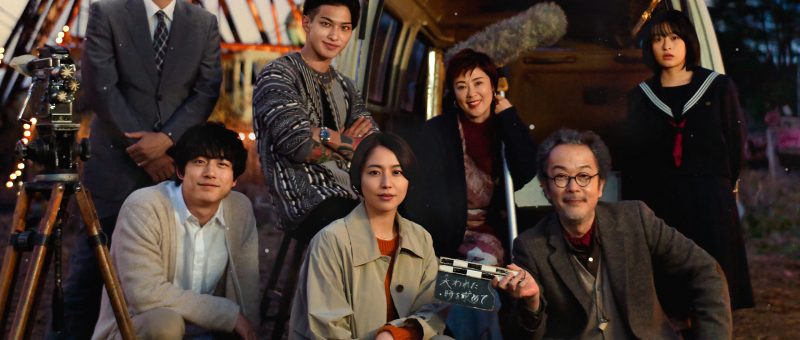
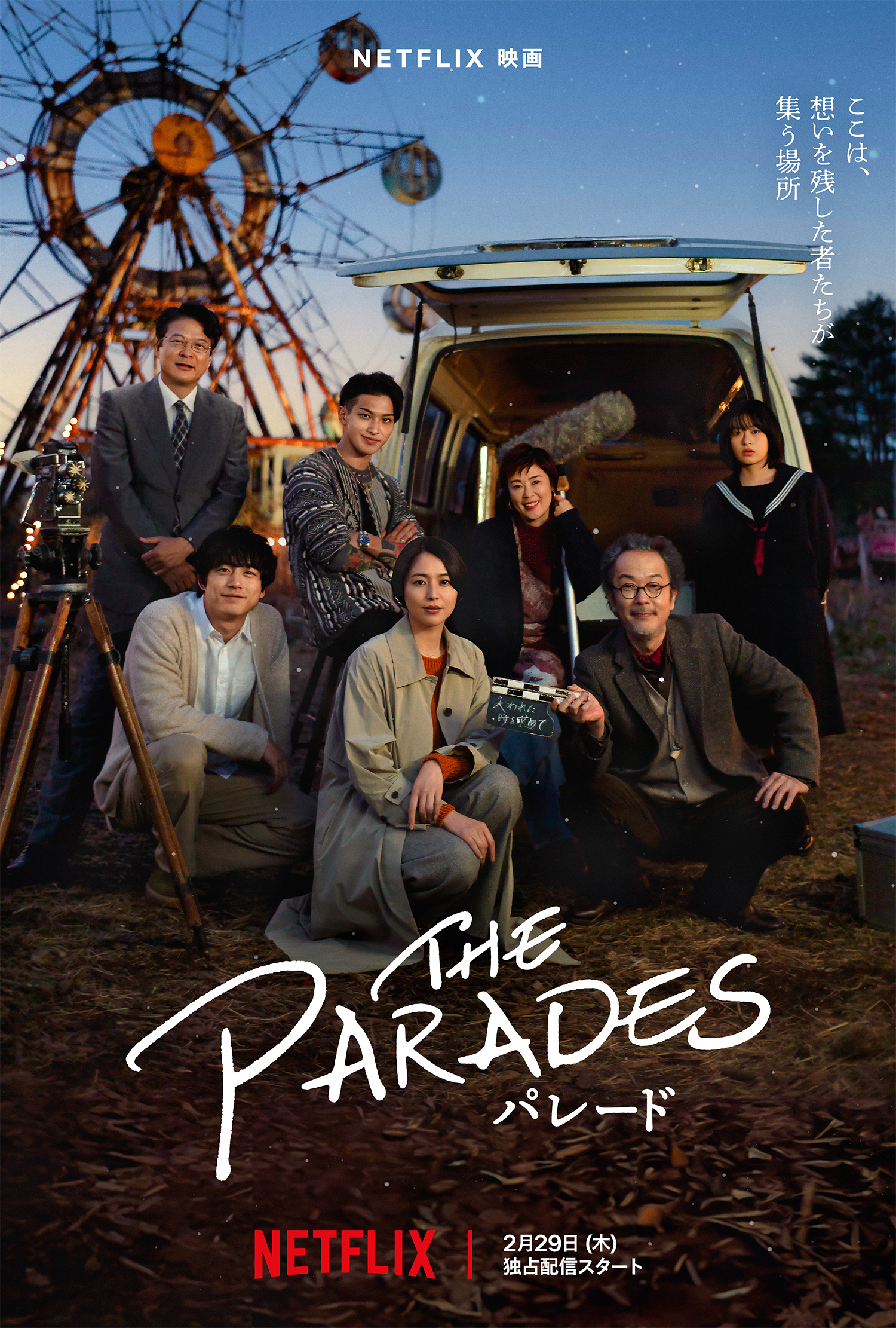
The Parades (パレード, Michihito Fujii, 2024)

Living a life without regrets is easier said than done. The protagonists of Michihito Fujii’s The Parades (パレード, Parade) each have unfinished business that prevents them moving on from this world, but what they discover is an unexpected sense of solidarity among similarly lost souls as they try to lay themselves to rest. After all, all they can do now is observe and reflect while helping others like them with their own lingering doubts and regrets.

Drawing inspiration from the 2011 earthquake and tsunami, Fujii first introduces us to Minako (Masami Nagasawa). A 35-year-old single mother, she wakes up on a beach and frantically looks for her seven-year-old son Ryo (Haru Iwakawa) little realising that the reason no one seems to be able to hear or react to her is because she’s already dead. Picked up by fellow ghost Akira (Kentaro Sakaguchi), she’s taken to a disused fairground that doubles as a hub for wandering souls. Though it takes her a while to accept her new situation, she gradually bonds with others at the camp each of whom have their own unfinished business which isn’t all that different from her own in that they mostly want to be sure the people they left behind will be alright.

The film takes its name from the monthly processions in which wandering souls meet by lantern light to look for their missing people together. This sense of solidarity and empathy seems to echo the best of humanity along with a melancholy longing. There appears to be little rancour in this afterlife, a yakuza who was killed in a gang war simply feels sorry for his father and so guilty about the girlfriend he left behind that he’s been afraid to face her for the last seven years, and a high school girl who took her own life because of bullying first thinks her unfinished business is vengeance on the bullies but later accepts is actually a desire to apologise to her best friend who then had to take the brunt of the bullies’ cruelty on her own.

What the film seems to say is that we should have more of this fellow feeling in life. Former film producer Michael (Lily Franky) constantly references his days as a student protestor remarking that they might not have amounted to very much but at least they had unity. His regret is less his failed revolution than a moment of emotional cowardice that saw the woman he loved marry someone else instead. Constant references to the end of Casablanca echo their plight as if Maiko (Yuina Kuroshima / Hana Kino) married Sasaki (Ayumu Nakajima / Hiroshi Tachi) for the good of the revolution though she really loved Michael who unlike Rick just walked out on it because in the end he wasn’t brave enough to risk the consequences of its success or failure. 

The world building may not always be consistent and the rules of this universe appear unclear. It seems that in general the ghosts don’t linger long. Even the heavenly liaison Tanaka (Tetsushi Tanaka) appears to have been dead not longer than 40 years with Michael seemingly the only other long-stayer with the others’ deaths fairly recent. In general they are only really waiting for themselves or others, wanting to make sure that their loved ones will be alright in their absence even though there’s nothing more they can do for them now other than observe. Though they can walk through this world and interact with physical objects, their presence is otherwise invisible unless the person they wish to contact happens to be in an altered state. To this extent, the resolution may seem like a bit of a cop-out but does lend an additional poignancy and imply that these lessons learned in limbo can still be taken into the mortal realm creating additional empathy and solidarity among the living so that they may be able to live their lives freely and fully perhaps not entirely without regrets but at least with fewer of those that would prevent them from moving on when their time comes. But even if they find themselves trapped in limbo, they’ll hopefully find others like themselves and a gentle sense of hopefulness about what’s to come even as they prepare to leave this world.


Trailer (English subtitles)

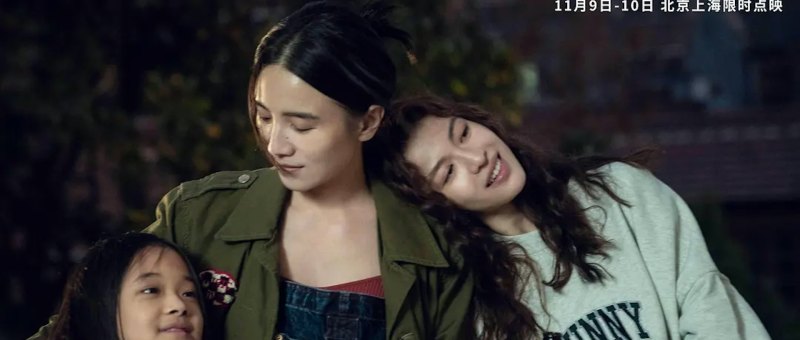
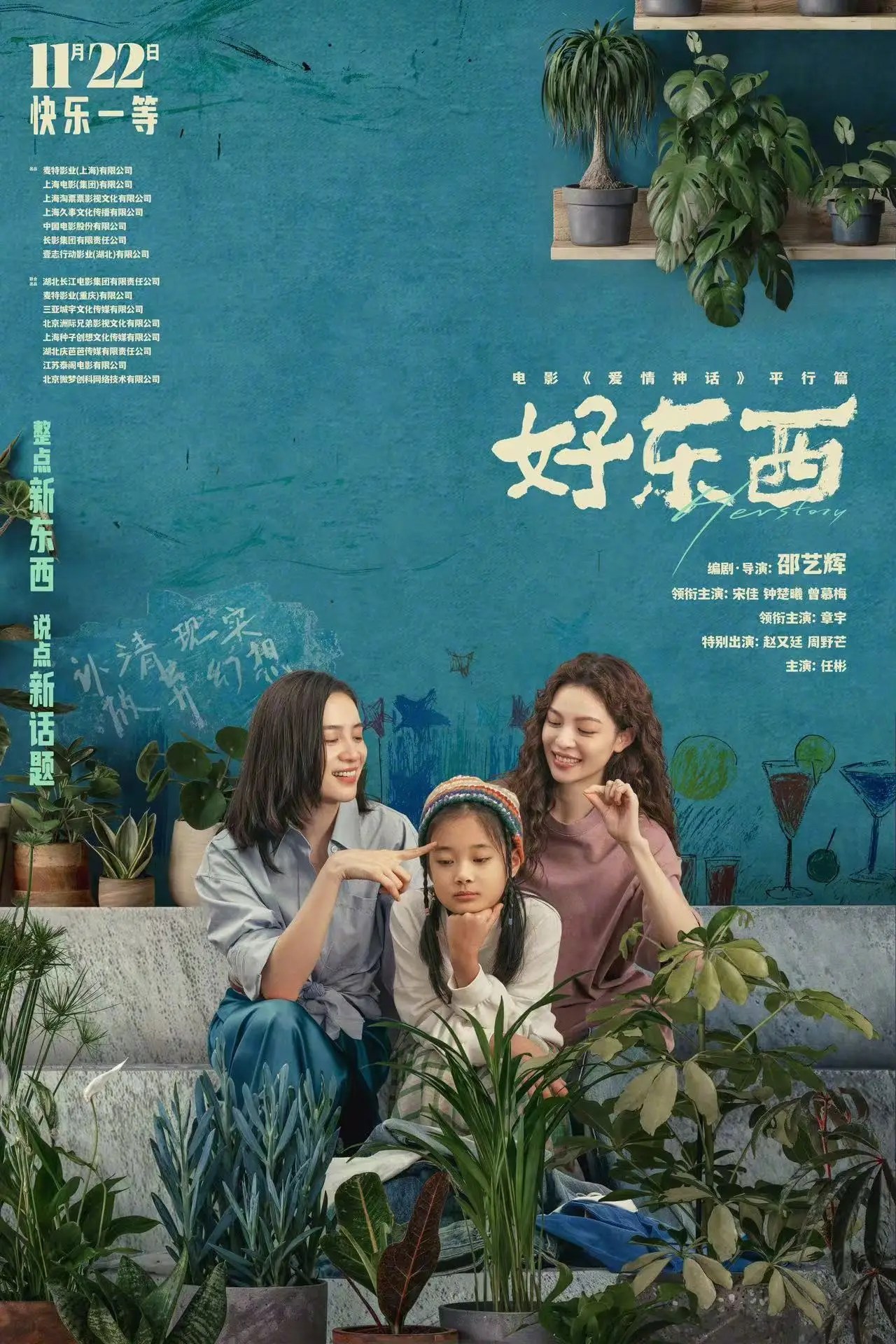
Her Story (好东西, Shao Yihui, 2024)

Nine-year-old Molly (Zeng Mumei) says she doesn’t have any dreams anymore and is content to remain a member of the audience which is the role she’s been assigned as part of orchestra class. In truth, that might be something she’s picked up from her mother, Tiemei (Song Jia), who also says that she no longer has dreams because she’s seen the reality. Shao Yihui’s Her Story (好东西, is being hailed as something of a landmark film given that mainstream Chinese cinema does not often engage with feminist issues or at least not quite so directly as in this strangely joyful celebration of female solidarity and found family.

Indeed, the Chinese title of the film is “good things” which Tiemei and Molly begin to find after being forced to move to a cheaper apartment in an old-fashioned walk-up building because Tiemei is struggling to find work in a shrinking journalism industry. She later tells a colleague at her new job working for a friend’s online news outlet that she took a break from her career as an investigative reporter not because she had her daughter but because she realised she didn’t have the strength to go on fighting the system. 

Yet in a way she’s fighting the system solely in the way she lives as a divorced woman raising her daughter alone. It later transpires that it was her husband who wanted the divorce because he got fed up with living with as househusband even though that was his choice, though he seems to regret the decision and randomly tells Tiemei that he’s getting a vasectomy as some kind of strange proof of loyalty in insisting Molly will be his only child. Since they’ve split up, he’s apparently come to a feminist awakening and is cognisant of his male privilege thanks to actually reading Tiemei’s articles but ironically still feels the need to insert himself into conversation. 

In any case, after moving into the apartment, Tiemei and Molly become friends with the bohemian woman who lives upstairs and is the singer of a rock band. Ye (Zhong Chuxi) is a very chaotic presence and the total opposite of Tiemei’s defiant practicality, but despite herself Tiemei becomes a kind of maternal figure to her after scaring off a creepy guy who was following her late at night. But equally Ye becomes a kind of big sister or secondary maternal figure to Molly, offering her a more relaxed vision of womanhood along with a creative space to express herself. 

Perhaps surprisingly for a mainstream Chinese film in which LGBTQ+ themes, the two women effectively end up raising this child together almost as if they were a couple in a happy familial environment. They often share a bed and at one point are actually mistaken for lesbians by Ye’s sometime optometrist boyfriend Hu to whom she lied about having a child so that he wouldn’t see her as clingy, effectively adopting Tiemei’s persona. Tiemei even helps Ye sort of break up with him by posing as the scorned lesbian partner, hilariously laying it on thick to get Hu to trip himself up and admit to being a playboy womaniser. Though it’s obviously true that they are not in fact romantically involved, the film nevertheless does not only acknowledge the existence of lesbian women and even lesbian women raising children but tacitly approves and accepts them as part of its broader feminist themes. It even opens on a shot of what appears to be queer longing in lingering on a very striking Ye leaning out of her window drinking in the daytime as Molly looks up from below in wonder. 

It is in fact Molly who becomes the centre of the film as she regains the ability to have dreams again while discovering herself and gaining the courage to take risks in search of happiness in a society all too keen to slap women down. Tiemei writes an article about what it’s really like to be a working single mother but is quickly attacked by internet trolls causing Molly to retreat into herself, realising that if her mother hadn’t written the article she wouldn’t be getting trolled. But thanks to the supportive environment around her and the relationship between Teimei and Ye, Molly resolves not to let the world beat her into submission. The scenes of her rocking out on her drums while the drippy boy who keeps “denouncing” her at school flounders at the dull music club concert speaks volumes. She may realise that she prefers being in the audience anyway, but that’s alright. Writing is her outlet, something else she may have have picked up from her mother, and she’s less of a bystander than observer humorously recording the compromises and contradictions of the world around her while bolstered by her found family and a gentle sense of female solidarity.


Original trailer (English subtitles)

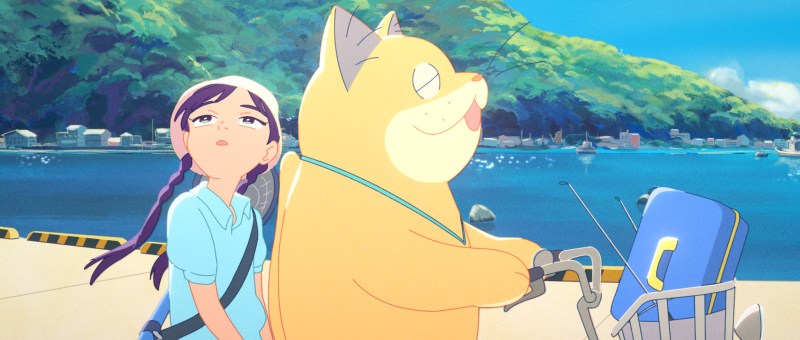
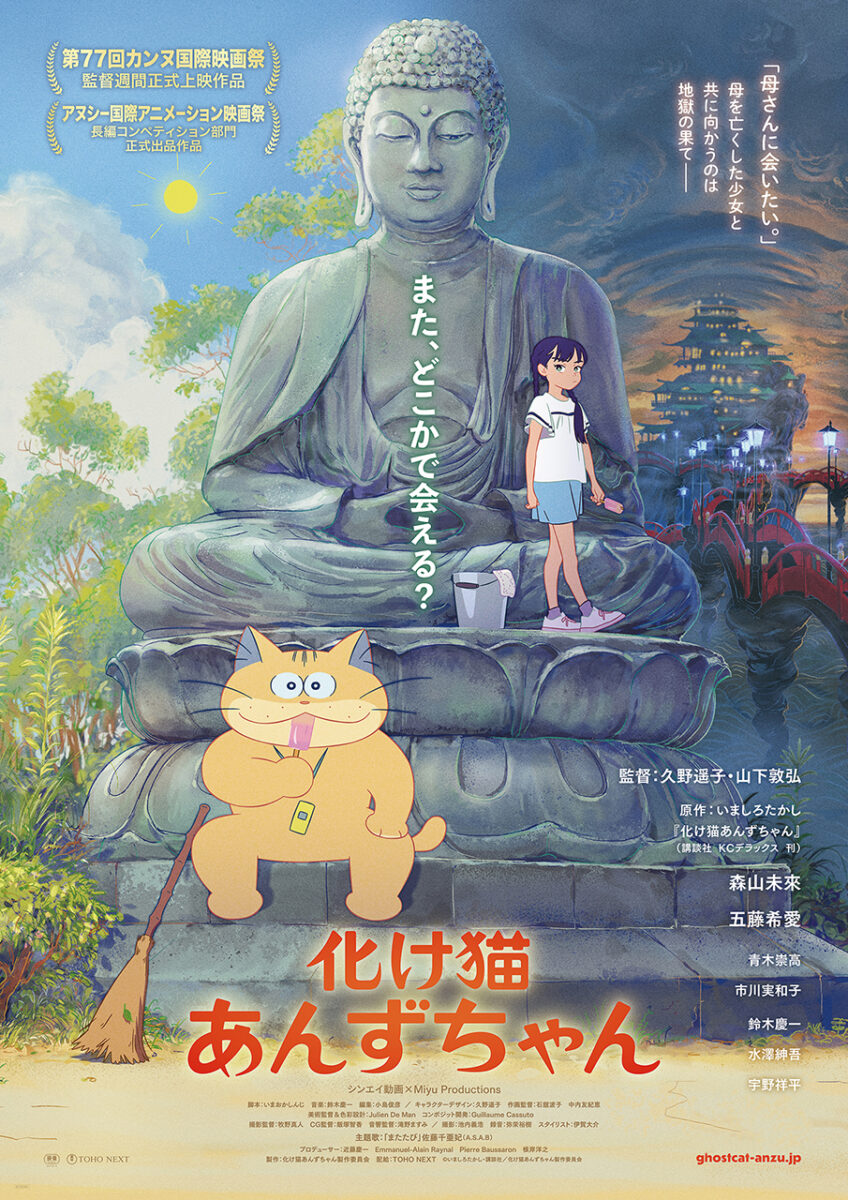
Ghost Cat Anzu (化け猫あんずちゃん, Yoko Kuno & Nobuhiro Yamashita, 2024)

It can be comforting, in a way, to think that this world is deeper than we often think it is and that we live surrounded by ancient spirits who touch our lives in ways we never suspect. All of this is, however, a little more palpable in Iketeru, the town of eternal summer, where the heroine of Yoko Kuno and Nobuhiro Yamashita’s animation Ghost Cat Anzu (化け猫あんずちゃん, Bakemono Anzu-chan) is unceremoniously dumped by her feckless father as he attempts to sort out some persistent trouble with loan sharks. 

Of course, to a girl from Tokyo who hoped to spend the summer break with her cram school crush, being sent to a temple to stay with an estranged grandfather it’s not even clear she has ever met before is not a whole lot of fun. But then as Karin (Noa Goto) says, she’s used to being alone, which might be why she takes against the giant ghost cat, Anzu (Mirai Moriyama), who lives like a human but obviously isn’t one. The funny thing about Iketeru is that no one finds Anzu’s existence odd, if at times troublesome. He’s even patiently arrested by a pair of policemen for not having a proper license for his moped which he didn’t think he needed because, after all, he’s a ghost and also a cat. A pair of little boys who’ve formed their own gang called “The Contrarians” to “defy society” call him “aniki” like some kind of yakuza boss and try to recruit him though being in a gang seems like too much bother for Anzu, which is something he has in common in Karin. 

But the funny thing is, Anzu isn’t really so different from her father in that he too can be somewhat irresponsible. Though he knows he shouldn’t, he spends the money he was keeping for her on pachinko hoping to win big but predictably loses it all. He gets over excited about jobs that pay 3000 yen (£15) a day and overcooks food he’s dropped on the floor because it’ll burn off all the dirt. But like Karin, Anzu can be a little standoffish and it isn’t even until her arrival that he starts to interact with some of the other supernatural creatures in the area who appear to have already set up some kind of club. Having invited them over, Anzu complains they didn’t pay him enough attention and he won’t invite them again while Karin asserts that they seemed “nice”. Though Anzu himself has not yet quite taken to her, the yokai are touched by her tragic circumstances and feelings of abandonment so decide to do what they can to help her. 

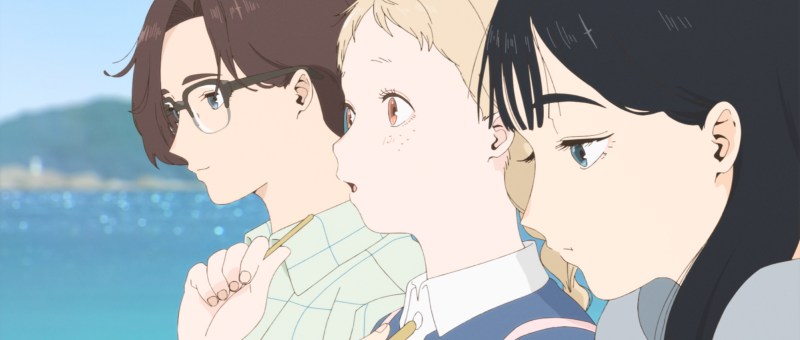
Part of Karin’s problem is that she’s still struggling to come to terms with her mother’s death three years previously. Iketeiru calls itself the town of eternal summer, but the summer in Japan is synonymous with the Bon festival during which this world and the other are at their closest and the spirits of the departed may temporarily return. Thus the town itself is a liminal space caught between the living and the dead which the mortal and supernatural co-exist in a very tangible way even if Karin’s eventual descent into hell involves jumping into a broken toilet in a Tokyo columbarium. Even so, she eventually finds herself squaring off against the King of Hell himself in the middle of the Bon festival while straddling the worlds of the living and dead and discovering the will to go on living which is perhaps what the town’s name may actually mean. 

In that sense, it’s a place Karin discovers as much as it’s home to cure her sense of rootless abandonment. The rotoscoped animation and live-recorded dialogue lend a sense of uncanniness to the beautifully animated backgrounds which effortlessly evoke a sense of serenity in the timelessness of a summer in small-town Japan. The juxtaposition of the ancient and the modern, Jizo playing Nintendo Switch, yokai working at the golf course which is perhaps a manifestation of the disruption wrought on the natural world by human endeavour, echo a kind of cosmic irony but also an odd kind of warmth in the strangeness of the world around us with its immortal cat spirits and friendly supernatural creatures that seems a far cry from the sterility of the city with its violent loan sharks and indifferent friends. 


Trailer (English subtitles)

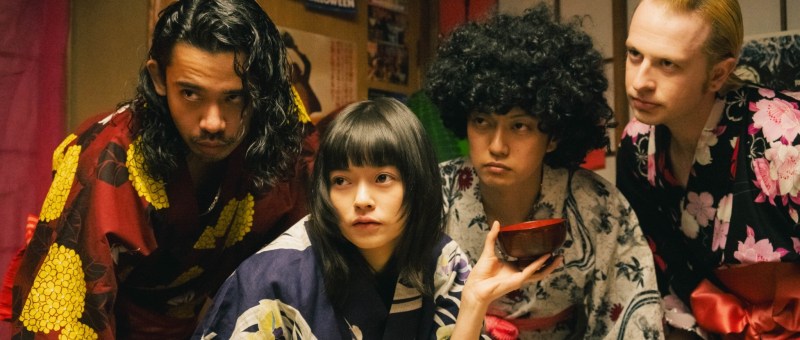
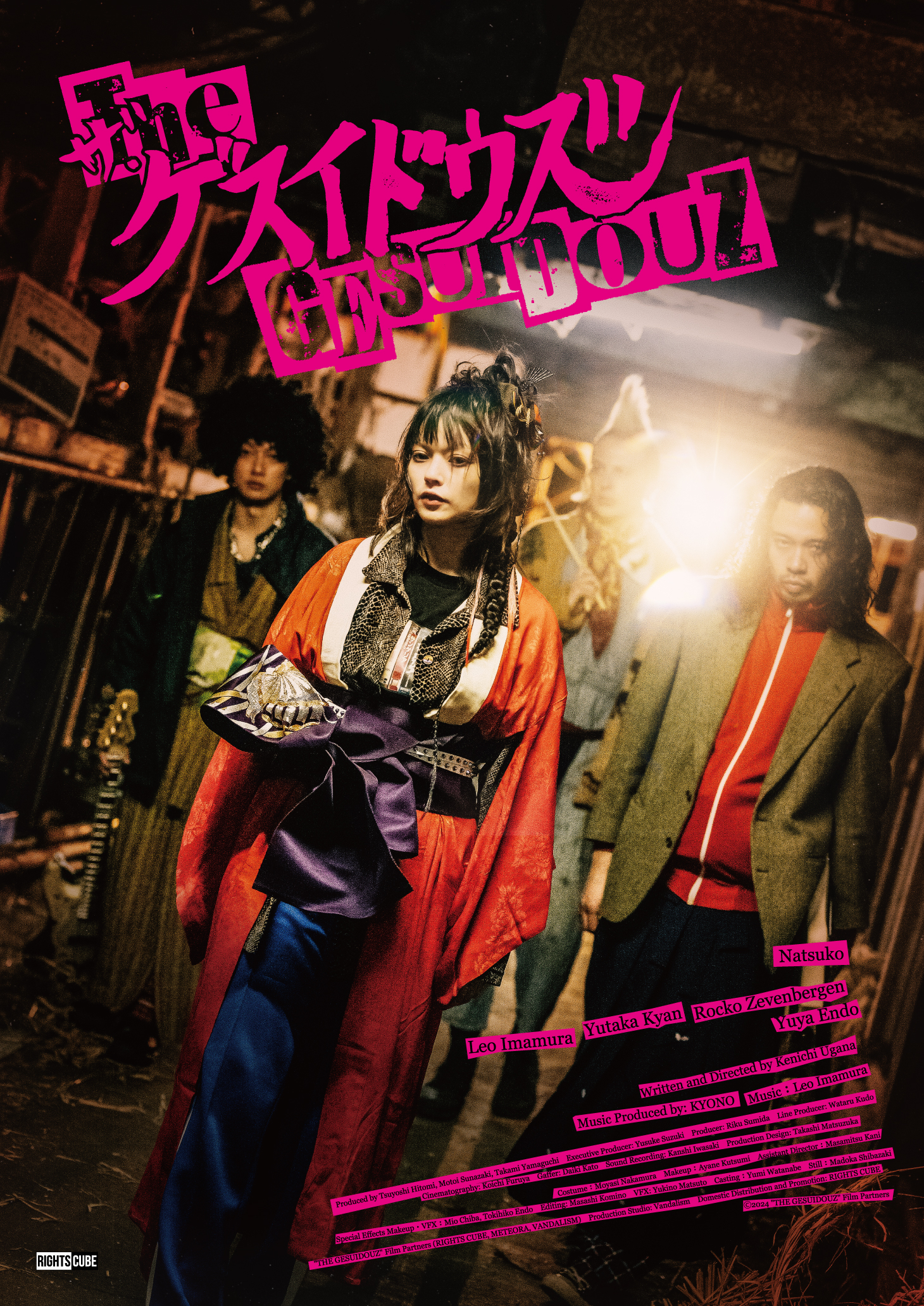
The Gesuidouz (ザ・ゲスイドウズ, Kenichi Ugana, 2024)

According to Hanako, vocalist of the band The Gesuidouz (ザ・ゲスイドウズ), punk is “like this miso soup”. She later describes the soup as soothing, made by her bandmate Santaro who turns out to be an unexpectedly dab hand in the kitchen, though in many ways the band’s selling point is that they aren’t very good at anything, least of all music. Even so, and quite crucially, they have one devoted, though otherwise anonymous fan who comes to all their gigs and dances wildly which just goes to prove that the old lady who becomes a kind of muse to them was right when she said there was probably someone out there to whom their music meant more than anything. 

But Hanako is writing under the shadow of death because she’s just turned 26 and is convinced she’s going to join the 27 club which means she has a very limited window to achieve her musical destiny. Perhaps in a way it’s a kind of quarter life crisis, or the sense of desperation that can be felt while young that time is already running out and you still haven’t made anything of your life. You still don’t know who you are or what you want to be and in Hanako’s case, no one has much faith her except her bandmates who stoically excuse their lack of audience under the rationale that everyone’s very busy these days and they should make sure to consult the calendar when they’re booking gigs. 

In fact, her manager’s the least supportive of all. He calls the band “rubbish” though casually admitting the may have forgotten to even release their album though it’s true that no one’s buying it. He’s the one that talks them into taking part in a government-backed scheme to encourage young people to move to the country in exchange for a stipend and place to live. But the weird thing is, unlike the indifference they felt in the city, the local community embrace their eccentricity and support their music even if they find it difficult to see what’s good about it. Despite describing the place where she lives as a “shithole”, the old lady listens patiently to Hanako’s tall tales about headlining Glastonbury while arranging gigs for them to play for such esteemed audiences as the local cows while bemused elderly resents look on stony faced but ultimately supportive. After all, as the old lady says, it’s a rare gift to create something so amazing that other people don’t understand it.

Though obsessed with horror films, darkness, and death, Hanako is strangely touched by country warmth and almost seems to tear up on the simple gift of a bunch of leeks after working in the fields. In a funny way, this village is actually quite like Glastonbury, a small rural settlement with a down-to-earth new age sensibility that suddenly erupts with music even if in this case on a much smaller scale. The old lady who becomes in a way a future echo of Hanako might be the most punk of all, joyfully living her little life in the shithole she’s never been outside of but welcoming these weird youngsters with patience, warmth, and acceptance which eventually allows Hanako to find a way back to herself and to art leading to a kind of rebirth in contrast to the death she was convinced was waiting for her. 

Of course, that all comes from a talking dog giving life advice through he medium of pithy quotes and song lyrics divined through automatic writing while practicing calligraphy. With frequent references to classic horror films, the film is an ode to the strangeness of country life but also its borderless horizons and sense of community solidarity alien to Hanako’s lonely life in Tokyo. But tellingly this is a paradise destined to be lost as the band finds success separating them from the environment that made them successful, fostering their art but also their souls with its gentle sense of acceptance. Often hilarious in its matter of factness, Kenichi Ugana’s anarchic dramedy has true punk spirit which is to say there’s nothing more punk rock than a good bowl of miso soup crafted with wholesome practicality and an altruistic desire for mutual happiness.


The Gesuidouz screens 30th November as part of this year’s London International Fantastic Film Festival (LIFFF)

Original trailer (English subtitles)

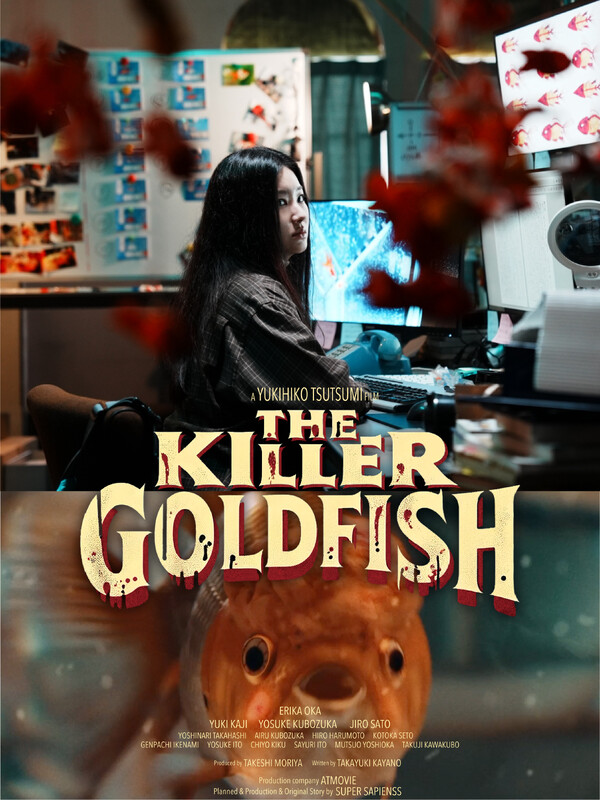
THE KILLER GOLDFISH (Yukihiko Tsutsumi, 2024)

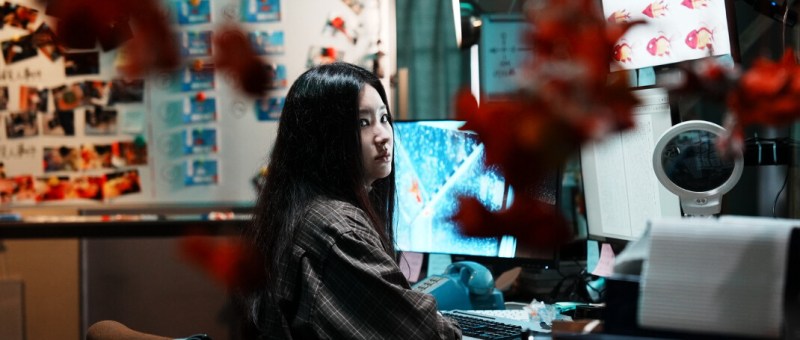
“Did the goldfish have a grudge against your husband?” It is a very strange question, but the policeman admits he has to ask it because he knows his contact at Public Security’s Extraordinary Unit will ask him if he asked. Goldfish aren’t something you’d ordinarily think of as dangerous, but perhaps they’re sick of being cooped up in tiny bowls, denied the whole ocean, so they’ve decided to fight back against humanity? Either that or, as Public Security agent Erika (Eriko Oka) suspects, someone is using them to exact a very particular kind of revenge.

Helmed by one of the premier directors of mainstream contemporary Japanese film, Yukihiko Tsutusmi’s The Killer Goldfish is not the schlockfest its name may suggest but a hark back to the anarchic conspiracy thrillers of the 90s. In fact, it’s produced by a director collective, Super Sapienss, of which Tsutsumi is a member alongside Katsuyuki Motohiro, best known for the Bayside Shakedown series, and Yuichi Sato (Kisaragi) which aims to shake off the inertia of the contemporary Japanese film industry by taking charge of the entire process so they can make the kind of films they want. 

You have to admit, it might be difficult to get a production committee to sign off on a such an outlandish series of events that only begins with murderous goldfish and eventually spins off into a far reaching conspiracy involving superhumans, psychic powers, neanderthal migration, missing high school students, a young woman who is somehow connected psychically with goldfishkind, and long-haired jizo that can stir up human appetites to the point of mass destruction. Erika has a feeling all of this is connected, but she doesn’t quite yet know how save that this world is apparently full of strange crimes to the extent that the powers that be are well aware of them but they prefer to keep quiet and let the Extraordinary Unit handle them.

In any case, the action proceeds X-Files style as Erika teams up with sceptical cop Yukine to try to solve the mystery and avoid any more fishy crimes in the future. This conspiracy is it seems located at the nexus of the primaeval and sophisticated, neanderthal rage delivered into the contemporary society in the opening scenes via our ubiquitous technology with a secret symbol broadcasting into the minds of those born to receive it. A professor digs up evidence that suggests early man arrived in Japan earlier than previously thought and is invited on a daytime talk show only to cause consternation with the obscene quality of his find, while further clues are bizarrely delivered through a love island-style reality dating show and its caddish heartthrob contestant. Making contact with the suspect eventually entails solving a riddle, messaging them on social media, and then completing an online questionnaire.

Nevertheless, these superhumans are apparently so because of their primaeval genetic makeup that places them outside of contemporary notions of civility. Their atavistic qualities render them, like the goldfish, constrained by the limitations of contemporary society from which they long to break free. Even so, their sensibilities seem to align with a problematic seem of historical nationalism that lends them an edge of danger aside from their potential connection to the unexplained goldfish murders which in themselves may indicate a rebellion against entrenched patriarchy given that they seem to target only middle-aged men. 

These ideas may be fleshed out more fully in the accompanying manga, also produced by Super Sapienss, or explained in the Chapter Two alluded to in the title card following the post-credit sequence but otherwise have an unconstrained, freewheeling quality rocketing between the primaeval past and the ultra modernity of reality television and social media conspiracy. The film makes frequent use of animation to express transformation or transportation between these worlds along with another that may exist in a less visible dimension, and has an unexpected freshness that belies Tsutsumi’s long career in the industry. The script by Hoarder on the Border director Takayuki Kayano similarly has an anarchic sensibility which is both retro and ultra-contemporary blending buddy cop procedural with zany horror comedy and an unfolding sense of unease in modern society. It’s fair to say that with The Killer Goldfish Super Sapienss has made good on its mission statement to disrupt the status quo of mainstream Japanese cinema with hopefully more to come in Chapter 2.


THE KILLER GOLDFISH screens 26th November as part of this year’s London International Fantastic Film Festival (LIFFF)

Original trailer (English subtitles)

Love in the Big City (대도시의 사랑법, E.oni, 2024)

“How can being yourself be your weakness?” asks a young woman who, more than anything else, is defiantly herself, to a young man who indeed is anything but. The heroes of E.oni’s Love in the Big City (대도시의 사랑법, Daedosiui sarangbeop), adapted from the acclaimed novel by Park Sang-young, are in some ways on parallel journeys that somehow weave through and around each other as they each try to navigate an often hostile society that has no place either of them.

For aspiring writer and in the film’s early stretches student of French literature Heung-soo (Noh Sang-hyun), his “weakness” is that he’s gay and though he seems to have accepted this about himself is firmly in the closet. Free spirited Jae-hee (Kim Go-eun) who spent her teenage years abroad in France catches him making out with their professor but couldn’t care less though Heung-soo rebuffs her attempts at friendship fearing they’re akin to a kind of blackmail or that she plans to out him to their fellow students. It’s not until Jae-hee is publicly shamed when it’s rumoured a topless photo being shared online is of her that the pair finally become friends. Sick of the curious stares and covert giggles, she lifts her shirt in front of the class to prove it isn’t her, earning the nickname “crazy bitch”.

Her response is the exact opposite of Heung-soo. She claims her freedom by baring all, being defiantly herself and outwardly at least little caring for what others think of her while Heung-soo makes himself invisible and says nothing harbouring intense fear of being exposed. They are each in their way pariahs. Heung-soo because of his sexuality which is still unacceptable to many in the fiercely conformist society of South Korea in which Christian religious bodies still have huge influence and loudly oppose LGBTQ+ rights and freedoms. Heung-soo’s widowed mother is also intensely religious and having stumbled on one of his stories about a crush on a classmate is aware that he is gay but does not speak of it and continues to believe he will be “cured”. This is perhaps why she keeps urging him to do his military service believing it will make a man out of him.

For all of these reasons, it’s not surprising that Heung-soo is unwilling to live his life openly as a gay man because of the prejudice he knows he will face from those around him. Jae-hee, by contrast, refuses to hide and lives the way she wants to but is shamed by those who feel a woman should live in a certain way which is to say quietly, politely, and obediently. A man she thought was a boyfriend while he thought of her as a bit on the side publicly slut shames her and asks what sort of idiot would want to date a woman like her. Though we first meet her as a confident, rebellious student we see her gradually beaten down by the world around her and the demands of corporate culture. Considering marrying a man she may not actually like because it’s what you do, she stares sadly at a middle-aged woman opposite her on the train dressed in a near identical outfit and the comfortable shoes that are psychologically at least uncomfortable for Jae-hee in representing her capitulation to the properness of mainstream society. 

Her degradation continues to the extent that she finds herself in a relationship with a domineering, intensely patriarchal man who later turns violent when she tries to leave him. E often cross cuts and juxtaposes Heung-soo’s and Jae-hee’s experiences as they each suffer similar blows and indeed violence from a macho society if in different ways and for different reasons while having only their intense bond as fellow outsiders to rely on. This really is the love in the big city, a deeply felt platonic and unconditional love between two people who essentially have no one else. It’s through this love that each comes to love and accept themselves, Heung-soo eventually gaining the courage to fully embrace his authentic self while Jae-hee finally regains her independent spirit and refuses to let others shame her while standing up both for the LGBTQ+ community and the young woman she once was at the mercy of a male-dominated corporate culture. Warm and often funny, the film paints contemporary Seoul as an outwardly oppressive city of enforced conformity but equally discovers small pockets of freedom and joy along with the wholesome comfort of true friendship and self-acceptance.


Love in the Big City screened as part of this year’s London Korean Film Festival.

International trailer (English subtitles)