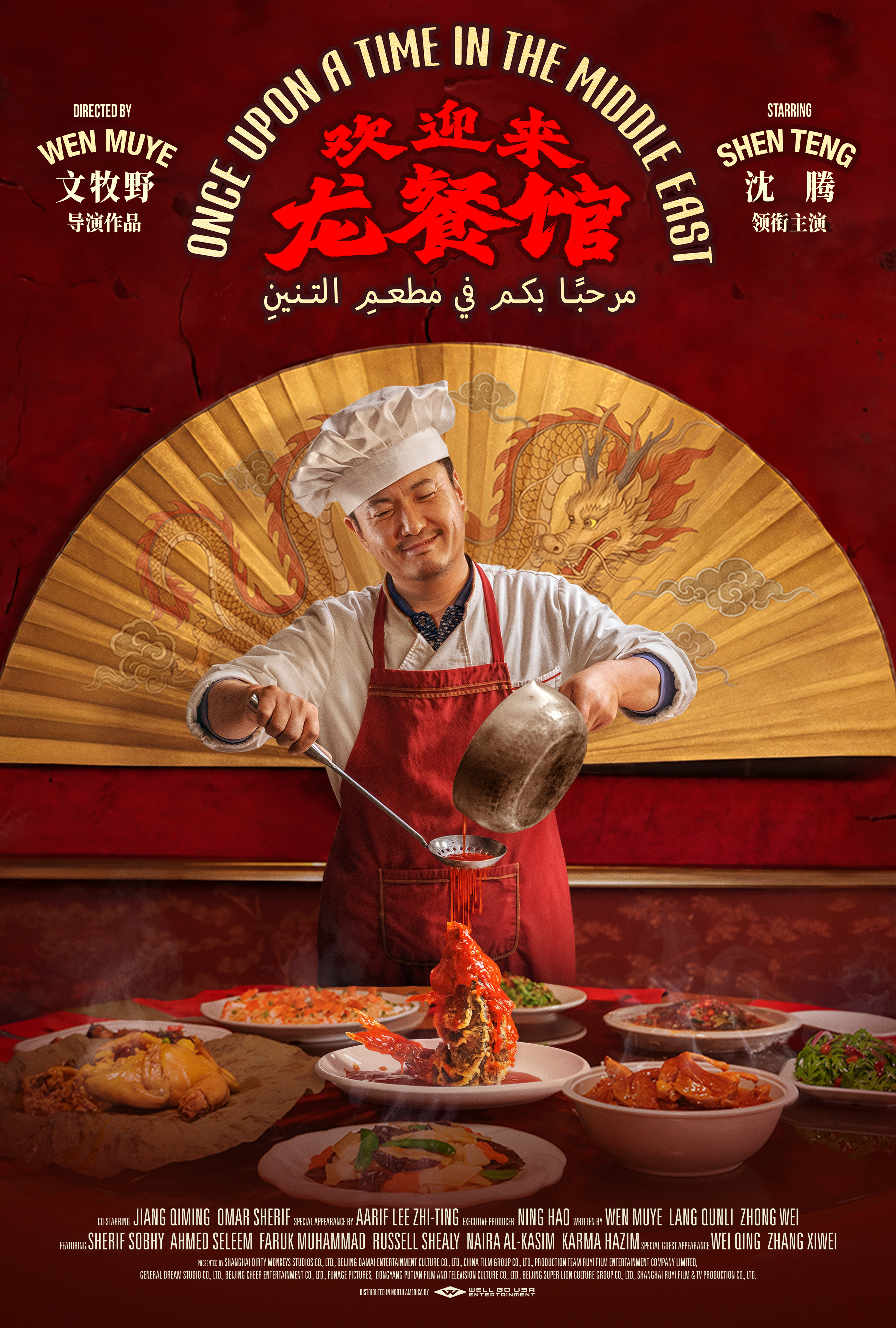
Once Upon a Time in the Middle East (欢迎来龙餐馆, Wen Muye, 2026)

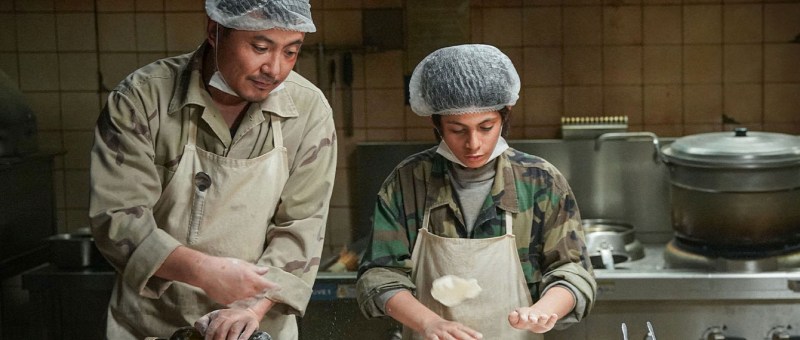
Culinary comedies are a staple of the Chinese holiday movie which often revolve around the importance of family and the bonds that can be generated through the sharing of a meal. FunAge is similarly known for zany comedies, though their output has become a little more serious of late. In Once Upon a Time in the Middle East (欢迎来龙餐馆, Huānyíng lái Lóng Cānguǎn), Wen Muye subverts many of these conventions in marketing the movie as a fish-out-of-water comedy starring comic actor Shen Teng as a debt-ridden chef who takes a job in the Middle East in the early 2000s for the high pay, only to suddenly plunge him into a war zone.

One can open a mouth with a spoon as well a gun, Xu Fu (Shen Teng) later reflects having reaffirmed for himself that the most important things in life are good food and raising children well. The irony is that on being introduced to Zaid (Sherif Sobhy), a civil servant and owner of Loong Restaurant where Xu is to be employed, Xu is told that his food does suit the local tastes, but he insists on cooking authentic Chinese cuisine rather Chinese-American fusion food. He says he’ll walk if he’s asked to cook bowdlerised dishes like General Tso’s Chicken, but is later forced to do so to curry favour with an American officer, having been incarcerated in a military prison after being accused of being party to an act of terrorism.

The early part of the film is indeed fiercely critical of the Americans whose involvement in the Middle East is depicted as a thinly veiled war of aggression for imperial conquest mitigated as an act of revenge. Political figures are seen on television making ultimatums about regime change before the tanks start rolling in, while the American soldiers act with undue brutality and entitlement. They insist that the children Xu takes in after their orphanage is bombed are all terrorists or soon will be, and therefore fair game targets that should be neutralised to stop the spread of violence. But it’s clear that the War on Terror is simply breeding more “terrorists” as orphaned children are radicalised and exploited by extremists who recruit them as child soldiers and later force them to become suicide bombers without their knowledge or consent.

Xu, by contrast, takes a local boy under his wing and attempts to train him as a chef as a means of pulling him away from the destructive desire for vengeance. The ideological conflict plays out in the heart of Saif (Omar Sherif) as he’s pulled between the fatherly influence of Xu and that of the extremists who sell stories of glorious battles, but in reality send children out to die. Xu hopes that by training Saif as a chef, he can prevent him from becoming radicalised and prepare him for the world to come after the war, but finds himself frustrated by the circumstances that surround him. Meanwhile, he too is corrupted by the promise of wealth that can come with war by setting up a side business smuggling alcohol into this country where drinking is forbidden in order to sell to American servicemen and later turning the restaurant into a kind of speak easy for foreigners remaining in the war-torn city.

After challenging an American soldier who complained about his circumstances that it is largely their own fault for waging this war, Xu has to admit that he has profited from it and is only able to make this kind of money because of the conflict. As an older man, he admits he stayed too long because he got greedy, preferring to stay and make more money long after paying off his debts. He often says that this war is nothing to do with him, though as he’s later questioned, if his partner was involved in terrorism and his friend was the victim, he can’t really claim not to be involved which seems like a fairly subversive comment on China’s business and foreign policy. Nevertheless, the film ends with a reminder that China is working with other nations to enact the UN Convention on the Human Rights of the Child, while it is children who are the primary victims of war. 

Xu becomes friends with a Chinese-American soldier of Malaysian-Chinese heritage (Aarif Rahman) who is conflicted about the war which is not really anything to do with him personally, just as it’s nothing to with Xu, the children, or even really Zaid who is forced to buy cancer drugs from an American serviceman who is exploiting him financially while claiming that he just wants to help him save his little girl. They’re all at the mercy of wider geopolitical machinations that set people who once got along peacefully against each other. Though the film may in some senses have a strong “we were never friends” mentality echoing that of Dead to Rights and suggesting once again that Chinese citizens are only safe in China, it does also make the case for a more positive path to better global relations through friendly cultural exchange as evidenced by the fusion food that Xu creates in the most difficult of circumstances which seems to have sustained those he left behind to make better futures for themselves away from hate and violence.


Once Upon a Time in the Middle East is in US and Canadian cinemas now courtesy of Well Go USA.

Trailer (English subtitles)
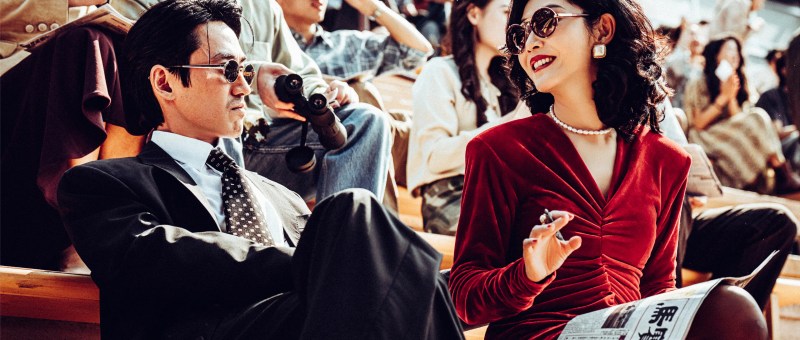
V (空枪, Han Yan, 2026)

Mainland director Han Yan is the latest to tackle the story of notorious Hong Kong gangster Cheung Tze-keung, though unexpectedly his take on the Handover has a more cynical edge than typically seen in this kind of film even if once again branding the mid-90s as a lawless era in which order had all but collapsed as the colonial authorities prepared to withdraw. With his frantic editing and production design, Han does his best to echo the Hong Kong action cinema of the era while characterising the hero as a kind of revolutionary, a Robin Hood figure kicking back against the rise of billionaires amid rampant social inequality. 

Man Tze-keung (Zhu Yilong) describes himself as a farm boy who’s come to Hong Kong in search of a better life following the death of his father. Whatever the truth of that might be, he starts out as a petty crook robbing jewellery shops as a henchmen for corrupt Anti-Triad Squad inspector Wing (Ben Yuen) and his right-hand woman Lady Yu (Kara Wai Ying-hung). When Wing gets pissed off with them over a job and kills one of the guys as a lesson to the others, Keung decides to shoot his shot. Wing makes him an offer he can’t refuse by getting him to play Russian Roulette with his service weapon. Keung pulls the trigger five times and survives, leading to him developing an invincibility complex and believing that he is uniquely blessed by the heavens. The film’s Chinese title “Empty Gun”, however, signals both Keung’s powerlessness and his delusion. Wing always left one chamber empty, meaning that he tricked Keung knowing that the gun wasn’t loaded in the first place.

Nevertheless, it’s the faith in his immortality and a kind of god complex that give Keung the chutzpah he needs to pull off Hong Kong’s biggest ever heist with the help of cardsharp and air stewardess Yuen (Michelle Wai Sze-Nga). The pair marry, but after they’re targeted by the police Yuen seems perpetually terrified, unsure of what her husband is going to do next. Eventually she figures out that Keung is out of his mind. He’ll never be satisfied and will likely continue to do ever more reckless and increasingly public things. After managing to get himself acquitted for the heist, he sues the Hong Kong Police department for wrongful arrest and mistreatment while in custody earning a record payout. His real target, however, is Hong Kong’s richest man, Chan Fai-Yi (Tony Leung Ka-fai), whom he once idolised but then takes against after he runs into him in a men’s bathroom where Chan assumes he was the attendant and didn’t even look at him.

Though it may have started with a desire to be rich, in some ways the money doesn’t seem to matter to Keung. He throws out gold jewellery to the well-wishers at his wedding in his hometown, and after getting the payout for kidnapping Chan’s son, throws the money out in the streets from a helicopter. All of which makes him a kind of folk hero to some, including the triads who eventually come over to his side after he promises them a new revolutionary future in which they can be the ones with money and power rather than men like Chan. Chan makes a point of wearing a cheap wristwatch to make him seem more like an everyman, but secretly has a room full of expensive designer watches in his home as if to signal the vacuity of his wealth. 

The film is rather coy on this front, but Keung’s habit of sniffing with one nostril coupled with his increasing sweatiness seem to hint at a serious cocaine problem which in part explains his mania and delusional sense of invincibility that sees him taunt the police and engage in a homoerotically charged cat and mouse game with Mainland cop Qi (Tan Jianci). Han has an obvious problem in that he will need to end the film in a way that suits the censors, while Cheung Tze-keung’s own end was rather unheroic. Keung tells his wife that he knows there’s a bullet coming for him someday, but he’s confident that he will be able to dodge it when it comes. Nevertheless, it’s like he’s pursued by the missing bullet from Wing’s gun, propelled by a sense of greed and aspiration while gazing at one of the many posters of Chan that line the city. Played out with a grim sense of absurd humour in its continued product placement for pineapple butter buns, Han’s anarchic drama echoes a contemporary, or perhaps timeless, sense of resentment towards those who hoard their ill-gotten gains while simultaneously suggesting all rebellions are doomed to fail as Keung finally begins to realise that his luck may be running out.


Trailer (Simplified Chinese / English subtitles)

A Legend (传说, Stanley Tong, 2024)

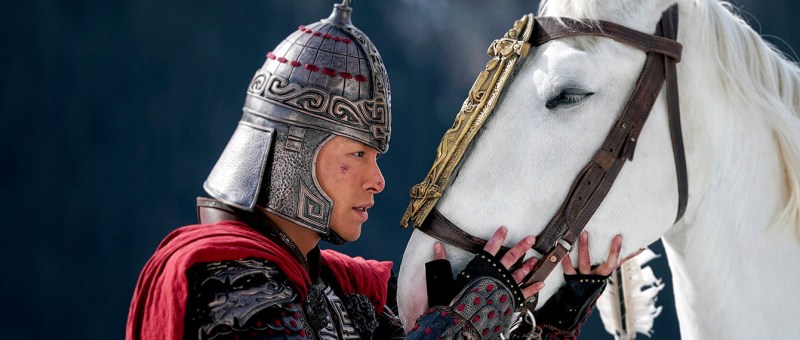
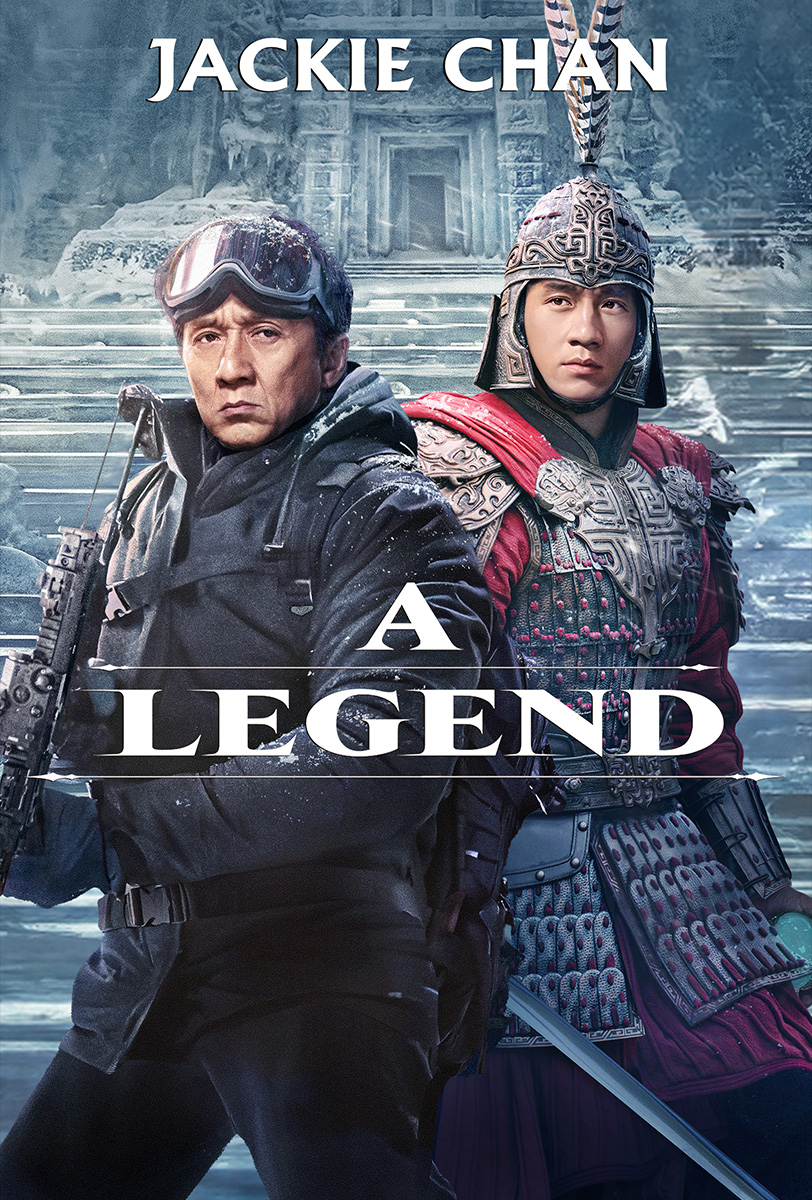
The funny thing about the strangely generic title of Stanley Tong’s latest Jackie Chan vehicle A Legend (传说, chuánshuō) is that it’s at least partly in reference to its now ageing star rather than the tragic love story at the film’s centre which at least tries to echo the epic romances of historical fiction. That might in part explain the rather dubious decision to use AI de-aging technology to cast Chan as the tragic lover in addition to his role as a veteran archeologist researching the gravesite of a Han general’s horse. 

While de-aging Chan robs an age-appropriate actor of the opportunity, it’s equally true that it adds another note of uncanniness to the historical scenes contributing to their rather lifeless quality and otherwise becoming a frustrating distraction given that more often than not the actor’s face simply appears odd and doesn’t particularly look like a young Chan anyway any more than casting a younger actor with a physical resemblance might have done. In any case, despite the frequent discussions of history among Chan’s team, the historical scenes have a fantastical quality that’s much more like contemporary video games than classic wuxia. This may be deliberate given that a new addition to Professor Fang’s team is a video game developer who wants to create a game set in this era and is keen to get Fang on board as a consultant, though the aesthetic mostly detracts from the setting in the jarring use of CGI. Heroine Mengyun (Gülnezer Bextiyar) performs what is intended to be an impressive Hun sword dance, but as the sword is CGI it has no sense of skill or danger. It aligns clumsily with her physical movements like that in a video game cutscene and has a disturbingly weightless quality. The same phenomenon also mars the film’s action scenes which sometimes have an odd quality as if CGI has also been used to impose an actor’s face on that of a stunt double or somehow alter their movements. 

Aside from that, there is some nice cinematography that captures the majesty of the Chinese landscape though even this is sometimes drowned out by the syrupy score which is again quite reminiscent of a video game. Supposedly a spiritual sequel to The Myth and Kung Fu Yoga, the central conceit of the film is that through a jade pendant found in the grave, Fang and his assistants become part of a collective dream which is a flashback to the distant past while it later transpires that they’re being manipulated by a malevolent force in the present who wants to rob China of its historical treasures by finding a secret sanctuary built by the Huns to store the gold statues they stole from the Hans to use as objects of worship. Accordingly, there’s some pointed commentary about how it’s illegal to steal or traffic historical artefacts which should be protected as symbols of China’s essential culture. It’s no coincidence that the villains have Western accents and begin speaking to each other in English as they wilfully blow up a newly discovered historical site.

The modern scenes do, however, have an awkward kind of comedy going on in the form of in jokes between Fang’s team such as the non-love story between assistants Xinran (Xiao Ran Peng) and the clueless Wang Jing (Lay Zhang Yixing) who completely misses all of her hints and seems to be unaware of the subtext of phrases such as “come in for coffee” or that “incredibly expensive bracelet would really suit me.” Chan also gets rescued from drowning by a family inexplicably ice fishing in this really remote place who take quite a long time to realise he’s not some kind of weird talking fish. Though Chan does get his own action sequence at the film’s conclusion, it’s fairly incongruous for a professor of archeology to possess these kinds of skills which are otherwise out of keeping with the fatherly, professorial character Chan plays up to that point even if there is a distinct hint of Indiana Jones in the instance that all of this should be a museum. The little boy who found the pendant even gets a pat on the head for reporting it to the authorities rather than trying to sell it or keep it for himself. Nevertheless, it speaks of something that the digressions into historical legend are often more interesting than the retelling of the legend itself which never really takes flight despite the flying arrows and charging horses of world in which the heroes can only dream of the supposedly peaceful and harmonious society that exists far in the future.


A Legend is released in the US on Digital, blu-ray, and DVD 21st January courtesy of Well Go USA.

Trailer (English subtitles)
Cold War 2 (寒戰II, Longman Leung & Sunny Luk, 2016)

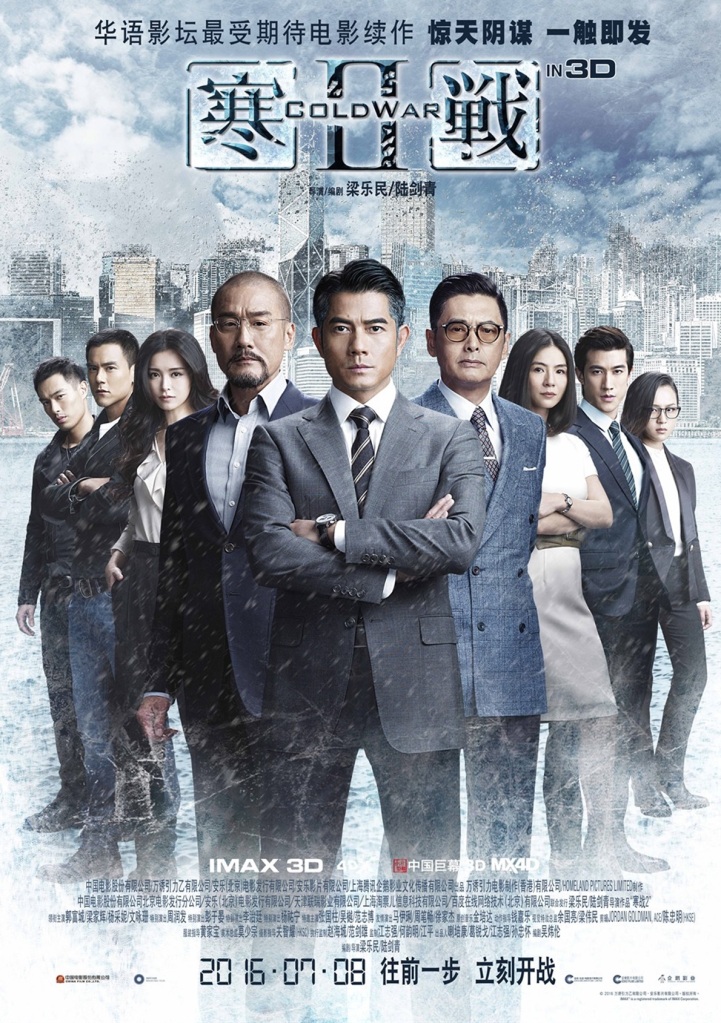
coldwar 2Cold War 2 (寒戰II) arrives a whole four years after the original Cold War rocked Hong Kong with police corruption scandals and fantastically convoluted internal plotting. Heroic policeman Sean Lau (Aaron Kwok) may have won the day, even if he ultimately had to compromise himself to do it, but the police van is still missing and MB Lee (Tony Leung Ka-fei) is still lurking in the background. As is his son, Joe (Eddie Peng) – languishing in prison but apparently still with the resources to cause trouble whilst behind bars.

Joe Lee has Lau’s wife kidnapped, forcing Lau to compromise himself by giving in to his demands all of which culminates in an intense subway set piece in which Lau inadvertently ends up handcuffed to an exploding smoke bomb while Joe Lee escapes. Embarrassing is not the word. Lau now looks bad, and old rivals have their eyes on the police chief’s chair. An enquiry is currently underway into goings on at police HQ lead by top lawyer Oswald Kan (Chow Yun-fat) but his impartiality is severely damaged when one of his own is caught in the crossfire whilst investigating Joe Lee’s nefarious activities.

Like the first film, Cold War 2 is an intense interpersonal thriller though this time the enemies are even closer as the old boys network becomes the means by which commissioners are unseated and installed. Service records are everything – Lau is unpopular with his colleagues because he started out at ICAC and has never served as a rank and file policemen. From one point of view, this makes him an ideal candidate because he has no personal ties to the body of serving officers but his rivals despise him for this very reason. He isn’t one of them, does not have first hand understanding of front line policing, and most importantly is not a part of their interconnected layers of military style brother-in-arms loyalties.

Lau’s predictable miscalculation regarding Joe Lee creates an opportunity to get rid of him and take back the force. “Save the police” is a message which is repeated over and over as the plotters attempt to win others over to their cause, insisting that Lau has lost the media battle for the hearts and minds of a public now trained to be afraid of their police force. Lau is the continuity candidate – mistakes have been made, but his stately manner and apparently steady hands may yet win the day. Those same hands are getting dirtier by the second, but they’ve been brushing the morally grey, not (yet, at least) immersed in the red of innocent blood like those of the corrupt top brass at police HQ.

If the plotting is intricate and filled with double crosses and betrayals, directors Luk and Leung have ensured a steady stream of explosive action sequences to accompany the ongoing cerebral games. Cold War also had its share of action packed spectacular set pieces but Cold War 2 may surpass them with the surprise factor alone including one shocking multi-car pileup inside a tunnel in which cars, buses and bikes go flying before an all out fire fight ensues. Lau’s constant gazing at the “Asia’s Safest City” signs which adorn police headquarters (right next to the metal detectors you need to pass through to get in) has never looked so melancholic and drenched in irony.

It’s a battle for the soul of the police service, but it’s being fought as a dirty war. Lau is the decent and honest man forced to behave in a slightly less honest and decent way, even if for the best of reasons. His rivals are running on pure ambition and pettiness. Despite their claims they do not have the interests of the people of Hong Kong as their foremost concern. The corruption stems far further back than anyone might have previously guessed and is more or less coded into the system. The police van and equipment are still missing and the central plotters are still in place. This is a partial victory at best but then what kind of action fest wouldn’t leave a door open for a sequel. The cold war maybe about to turn hot, but you can rely on the steely eyed Police Commissioner Sean Lau to be there, ready and waiting, when the first shots are fired.


Original trailer (English Subtitles)

Cold War (寒戰, Longman Leung & Sunny Luk, 2012)

cold war

Reworked from a review first published by UK Anime Network in June 2013.


Listen up!  You’re going to have to pay attention to this review because there’s an awful lot going on this film. If there were a prize for most subplots squeezed into 102 minutes there wouldn’t even be room for any other candidates on the nominations list. If you like your HK action thrillers super complicated (if a little on the ridiculous side) and filled with some truly explosive (!) action sequences Cold War (寒戰) is definitely up your street.

Whilst a major explosion rocks a busy public area in Hong Kong, a crazed drunk hurtles through the streets before crashing his car into the central reservation in a quite spectacular manner. Apparently unharmed, he then rants at the traffic police that his uncle is a judge so they can’t touch him – a quick phone call seems to indicate he might be mistaken in his uncle’s feelings towards him but in any case the situation changes dramatically as the police are suddenly ambushed and kidnapped. The kidnappers then attempt to ransom the officers and equipment to the HK police authorities who are already a source of some press interest regarding possible corruption and general incompetence. It is imperative that they regain their men and capture the culprits as quickly as possible to avoid their reputation being even further damaged.

However, there is also considerable friction between the leading players at HQ and some uncertainty over who is favoured to become the new police chief – the young bureaucrat or the grizzled street veteran. This situation is further complicated by the fact that one of the missing patrolmen is the son of current section chief MB Lee (Tony Leung Ka-Fei). His subordinate, Sean Lau (Aaron Kwok), feels this makes him unsuitable to lead the current investigation and so seeks to have Lee removed from his post and take over the position himself. The pair also attract the attention of an officer at ICAC who’s convinced one or both of them must have more to do with the case than it seems, meaning each is effectively fighting a war on three fronts – firstly trying to rescue the police officers, then unmasking the perpetrators and finding out what they want with the HK Police force, and finally sorting out who’s up for the top job at police HQ whilst also keeping Internal Affairs off their backs.

No matter which way you put it Cold War is still extremely convoluted and fails to make all of its various plot elements hang together in a coherent way. It’s also unfortunate that the culprit is a little predictable (largely thanks to the actor’s mustache twirling performance) but when the final reveal does come it’s baffling in its pettiness, not to mention the total implausibility of such a complicated plan. Perhaps its unfair to criticise a film like this for having a problematic plot structure, perhaps fans of the action genre don’t look for finely crafted plotting as much as they look thrills and technically impressive action sequences – after all, we can’t all be Infernal Affairs.

It has to be said that Cold War does deliver in the action stakes with some extremely high production values which surpass even the heights of previous HK action films. From the opening car crash to the motorway car chase and explosive finale there are several simply jaw dropping moments throughout. When it comes to the big and brassy set pieces, Cold War is pretty much unrivaled but perhaps lacks the personal, intimate touch of other genre favourites. Tonally it walks a fine line between a sort of quirky humour and slightly absurd feeling where you can’t be sure whether you’re actually watching a comedy or not – some viewers may find all this a little too silly but others may revel in its ironic tone.

Cold War is certainly a flawed film, a little ridiculous but nevertheless enjoyable. It seems as if it also wants to make serious points about the justice system, media and police force but ends up pulling all its punches. If you stop to think about any of the plot, it makes very little sense but if you can let that go and just enjoy the superb action sequences and great performances from the leads Cold War is definitely one of the more impressive action thrillers to come out of HK in recent years.


 Original trailer (Cantonese with English subtitles)