The Noisy Mansion (백수아파트, Lee Lu-da, 2024)

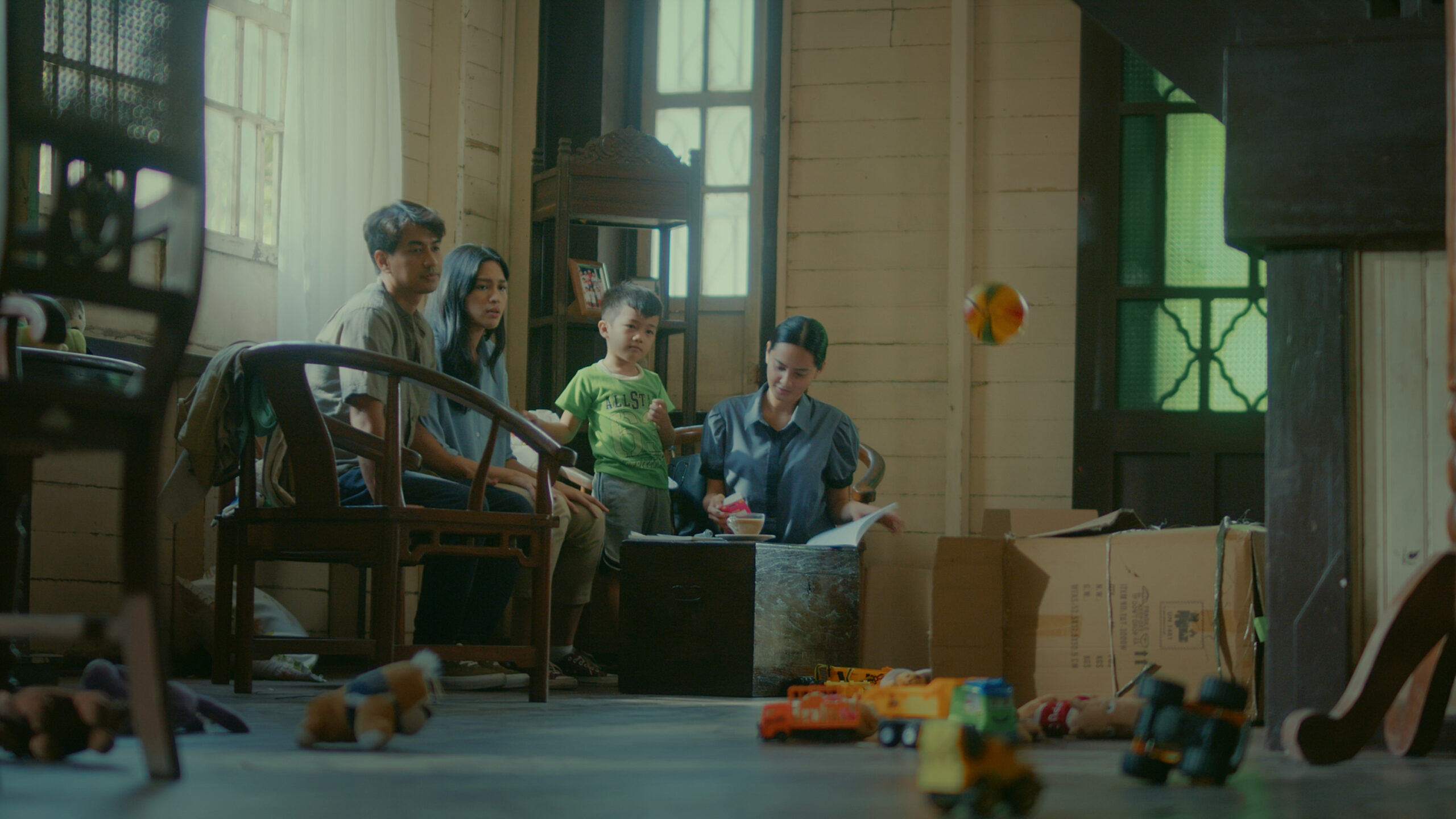
Could the neighbourhood busybody actually be a force for good? The Noisy Mansion (백수아파트, Baeksu Apateu) at the centre of Lee Lu-da’s goodhearted comedy is a metaphor for the nation itself and also a kind of purgatorial space inhabited by the heroine as she attempts to repair herself by enforcing justice and improving the lives of others though it brings her no other real benefits. Some may brand her an inconvenient troublemaker, a nosy parker poking her nose where it doesn’t belong, but Geo-ul is really trying to do good if in an unconventional way.

It’s this tendency to rock the boat that’s finally started to annoy her brother Duon who fears her problematic do-gooding is going to have an adverse effect on his children while he is also fed up with fending off animosity from the neighbours regarding Geo-ul’s frequent attempts to police them. In many ways, this is a society in which minding your own business is considered a virtue and speaking up is a breach of social etiquette but then if nobody says anything, then nothing will ever change and those who abuse their power will be able to go on doing so unchallanged. 

Of course, Geo-ul’s determination to enforce justice it also her way of overcoming her sense of guilt and resentment towards a world in which a small mistake, the overlooking of something that should have been important, can have tragic consequences. She is quite literally haunted by what she feels was a lapse of responsibility, something she will never allow to happen again. Yet the apartment complex she moves into after her brother kicks her out assuming it will only be a matter of days before he asks her back is also a haunted space inhabited by lonely souls like herself who are being driven slowly mad by ominous banging noises at 4am. Geo-ul becomes determined to discover the culprit behind the maddening noise if only to vindicate herself in the eyes of her brother that she really can accomplish something through her busy-bodying.

But she finds herself at the nexus of the nation’s problematic capitalism as it becomes clear the banging is likely a tactic employed by gangsters trying to get people to move out so the building can be demolished. In fact, most of the units are empty and the building itself is in a possibly wilful state of disrepair which is why Geo-ul was able to move in so easily despite the discouragement of the estate agent who introduced her to it. The people she meets there are also all struggling with their own problems aside from those exacerbated by their exhaustion and while previous attempts to unite to oppose the plans for redevelopment had largely failed, her quest to unmask the noisy neighbour does indeed provoke a sense of solidarity in the community and the conviction that they really could change their circumstances if they work together.

As some say, the most dangerous person is one with too much time on their hands. What some might call nosy, Geo-ul might term taking an interest in her community. Though some may originally be irritated by her desire to root out injustice, they later come to respect her when she starts getting results. Aside from a sense of vindication, her actions have a positive effect on the community liberating the apartment block from the oppressive shadows haunting it which in this case would be corruption, organised crime, violence, and ultimately hopelessness. Above all else, Geo-ul’s dedication proves that it is possible to change the world, to restore peace, order and self-respect by exorcising the evil spirits of contemporary capitalism. The residents even get over Geo-ul’s status as a “renter” who has no place in their struggle as homeowners and affectionally refer to her as “captain” as she leads their accidental revolution. Filled with a cast zany characters and undercut with a sense of tragic melancholy, the film is an advocation for the power of community but also for the concerned citizen standing up for fairness and justice even when it has no real relevance or benefit to them personally and may actually do them harm but less so than living in an unfair society which allows tragedy to occur simply through indifference.


The Noisy Mansion screened as part of this year’s London Korean Film Festival.

Güle-Güle (귤레귤레, Ko Bong-soo, 2024)

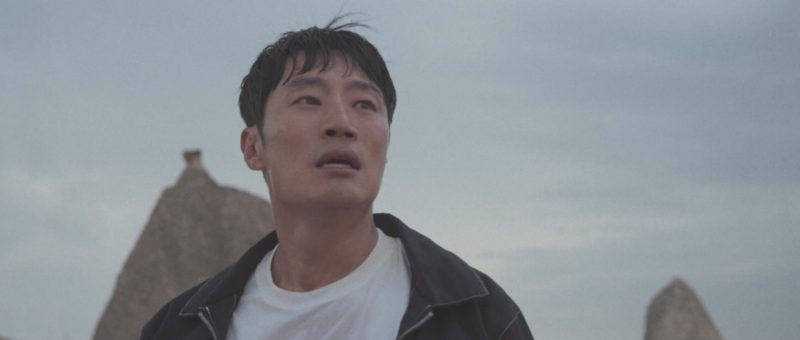
A man and woman saddled with problematic companions find themselves pushed into a space of introspection while on an inescapable Turkish holiday in Ko Bong-soo’s sophisticated comedy, Güle-Güle (귤레귤레). Each of them is perhaps burdened with regrets and wistful for what might have been but for opposing reasons, he facing the realisation that he often runs away from his problems and she that despite her sharp tongue and haughty attitude she lacks the courage to break with a situation that obviously isn’t working and become fully independent.

Dae-sik is there with his bumbling middle-manger boss Won-chang, a nepotism hire who repeatedly calls him a moron and blames him for his mistakes. Jung-hwa, meanwhile, is with her (ex?) husband Byung-sun who continually embarrasses her with his crass attempts to haggle the price down for anything and everything as means of asserting his masculinity through winning a price war. Byung-sun’s drinking and the problematic behaviour that arises from it had evidently strained their relationship with Byung-sun pledging to abstain from alcohol only to immediately break that promise claiming that he assumed drinking with Jung-hwa wouldn’t count. The issues Dae-sik and Jung-hwa face are in some ways the same in dealing with partners that attempt to dominate and overrule them without ever considering what they might actually want. Dae-sik hadn’t even planned on taking a holiday but assumed they’d be heading back to Korea right after closing the deal only to be browbeaten by Won-chang into extending their stay.

Jung-hwa isn’t sure why they’re in Turkey either, while the middle-aged woman and her daughters who are also on their tour drink in all the drama alternately fascinated and irritated that Byung-sun in particular is messing up their holiday. From the way he skirts around her, it seems that Dae-sik and Jung-hwa may have met before or have some unspoken history with each other. They are each dealing with past regrets and the frustrated dreams of the youth even if in differing ways. Dae-sik once had a promising future as a champion snowboarder but gave it up because he needed a paying job to contribute to his father’s medical fees. After a heart-to-heart with Jung-hwa he’s forced to ask himself if in reality he gave up in fear of it not working out and his father’s illness was just a convenient excuse not to have to risk failure. 

Jung-hwa, meanwhile, is irritated to learn that in college her fellow students nicknamed her “the viper” because of her sharp tongue and poisonous looks. She admits that she often says things thoughtlessly and hurts people by accident, pushing them away when she doesn’t mean to though this doesn’t seem to be the case with Byung-sun who she otherwise seems incapable of shaking off despite his treatment of her and repeated broken promises. Unlike Dae-sik who admits that he suppresses everything and approaches life with a fear of failure, Jung-hwa charged ahead doing what she thought she wanted and ended up divorced though with a husband that won’t leave her alone.

The holiday with its myriad challenges both interpersonal and physical, along with their impromptu meeting, affords each of them a new perspective and the clarity they each may be looking for to move on from their dissatisfying circumstances in search of greater personal happiness. Meanwhile, the other guests seem to carry on obliviously, Won-chang otherwise continuing to railroad Dae-sik into dangerous situations he feels unable to resist though perhaps he too is only reacting against his own sense of inadequacy as a nepotism hire promoted well beyond his abilities. Byung-sun’s problems seem less easy to solve and his selfish obnoxiousness is annoying not only to Jung-hwa who may finally be losing patience with him, but the entire group.

Like many similarly themed films from Korea, Ko structures the drama around a series of conversations many of which take place on a rooftop bar or walking through the streets of the city which as Dae-sik remarks become brighter and less intimidating thanks to his interactions with Jung-hwa as if his horizons were literally expanding. Yet what each of them is here to do is in a sense to say “gule gule” or goodbye to their old selves and old lives by gaining the courage to risk failure in breaking with the dissatisfying present for a hopefully more fulfilling future.


Güle-Güle screened as part of this year’s San Diego Asian Film Festival.

Trailer (English subtitles)

The Last Dance (破·地獄, Anselm Chan, 2024)

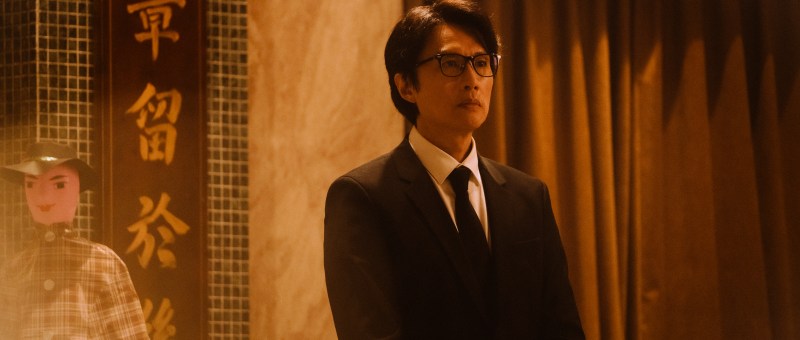
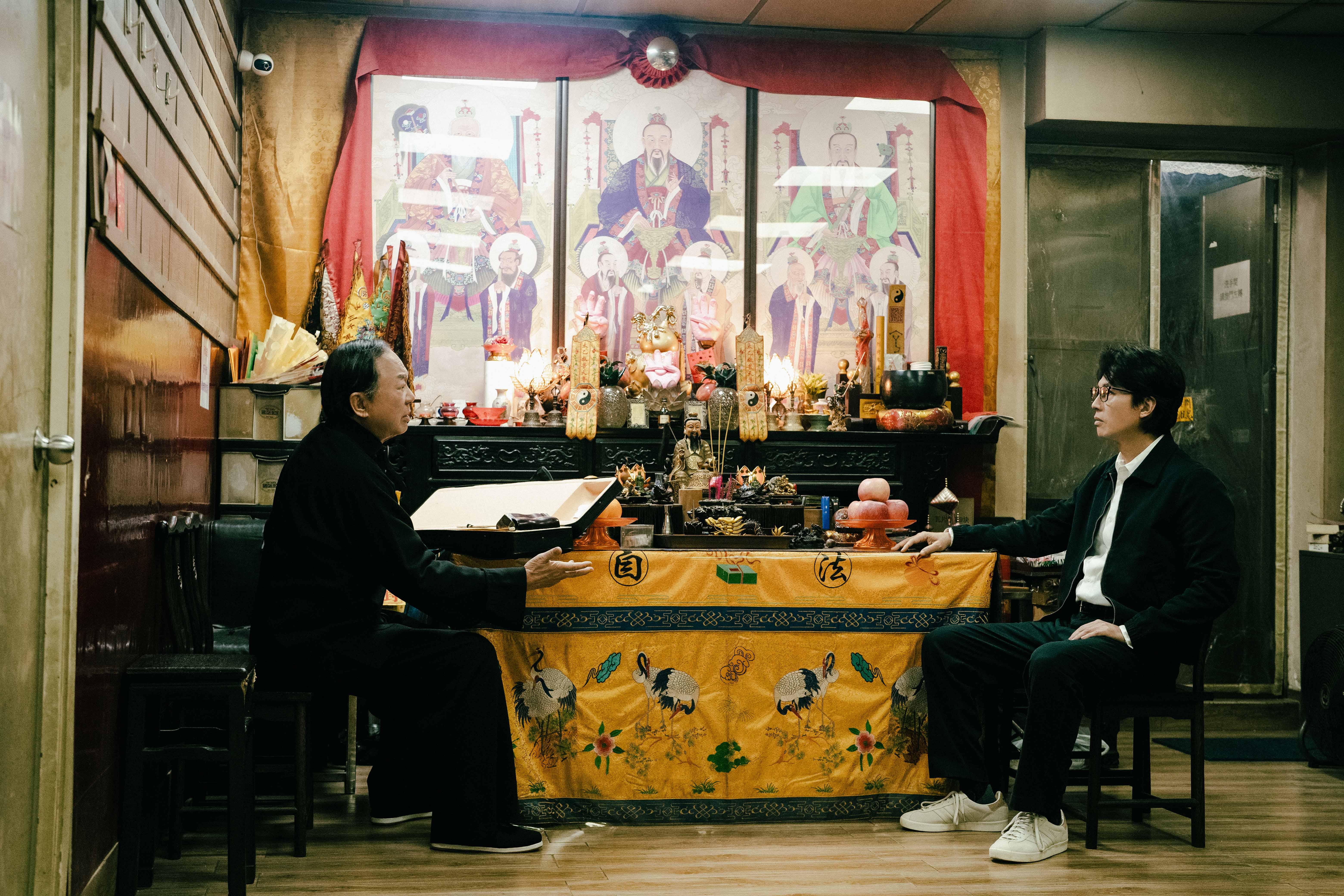
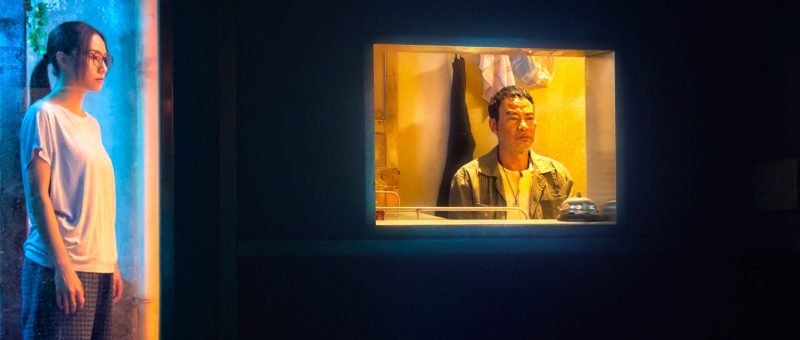
When serving the living doesn’t pay, why not make money from the dead? That’s the advice that’s given to former wedding-planner Dominic (Dayo Wong) in Anselm Chan’s touching spiritual drama The Last Dance (破·地獄), but after pivoting towards organising death rituals it’s the living he continues to serve. In many ways, Dominic stands at the borders of life and death, but he’s also an onlooker in a wider debate about tradition and modernity, what we inherit and what we choose to pass on, along with the departing soul of an older Hong Kong as the young flee abroad leaving those who stay behind to carry what may seem to them a burden too heavy to bear alone.

The irony is that though Dominic had been a wedding planner until the economic effects of the coronavirus pandemic killed his business, he is not in fact himself married and according to his long-term girlfriend Jade (Catherine Chau) did not see the point in a marriage certificate. One might infer that if he thought weddings were essentially meaningless exercises in vanity then he might feel the same way about funerals and his initial behaviour after taking over the funeral parlour run by Jade’s ageing Uncle Ming (Paul Chun) might confirm that suspicion. Not only does he start selling tacky trinkets as some kind of funeral favours, but makes a huge faux pas with an ostentatious stunt at his first funeral that causes upset and offence to the family. At the very least, it would have been useful to confirm how the deceased passed away before trawling their instagram account in an attempt to reconstruct their personality.

It’s this kind of insensitivity that irritates intensely grumpy Taoist priest “Hello” Man (Michael Hui) who brands Dominic an “amateur” believing that he’s only obsessed with money and intent on exploiting the grief of bereaved families. But on the other hand, Man is only really interested in the sanctity of ritual and doesn’t get involved with the living nor is he very sensitive to the emotional needs of those in the process of sending off a loved one. His entire life has been in service of the ancestors to the point that it’s soured his relationships with his two children. He has no faith in his son Ben (Chu Pak Hong) to inherit his position as a Taoist priest, while Ben resents being forced to inherit a burden he has no desire to carry. Daughter Yuet (Michelle Wai), perhaps ironically a paramedic, would have happily have carried it, but has endured years of being told that “women are filthy” and is prevented from inheriting these traditions because there is a taboo against women undertaking the role of a Taoist priest. The continual sense of rejection has left her with huge resentment towards her father and resulting low self-esteem that sees her engage in a no strings relationship with a married doctor.

Ultimately the film suggests that these traditions themselves are too large to bear, at least in their entirety, and do nothing more than crush and oppress the young. In part, they embody the spirit of an older Hong Kong which is itself in danger of fading away as seen in Dominic’s innovative new bespoke funeral planning services which to traditionalists might seem like they play fast and loose with ancient ritual, but the resolution that each Dominic and Man come to is that funerals are for those who remain behind and while Man liberates the souls of the dead Dominic does the same for the living in taking a more compassionate approach to dealing with those grieving a loss. Not only does his acceptance of the strange requests of a heartbroken mother (Rosa Maria Velasco) branded a “nutcase” and rejected by the local area bring her a degree of comfort, but his decision to allow what seems to be the same sex partner (Rachel Leung) barred from a funeral service the right to say goodbye albeit in secret demonstrates the necessity of doing right by both the living and dead.

As Man later says, in some ways he’s shown him how to do funerals and awakened him to the ways his oppressiveness in his adherence to tradition has prevented him from being a better father. His decision to wear a western suit for his own funeral might indicate a desire not to take this rigidity into the next world while hoping to liberate his children from the burden of tradition and show them that they were each loved and accepted even if it did not always seem that way. Which is not to say that the tradition should not be saved or that this is itself a funeral for the soul of an older Hong Kong, but only that if you let some of it, such as its inherent sexism, go it will be easier to carry when everyone carries it together. “Living can be hell,” Dominic admits and the funeral is a liberation both for the living and the dead. A touching yet surprisingly lighthearted meditation on life and death, what it comes down to really is that death is coming to us all but there’s no point spending your life worrying about it when you should just try to enjoy the dance until the music stops.


The Last Dance is in UK cinemas from 15th November courtesy of CineAsia.

UK trailer (Traditional Chinese / English subtitles)

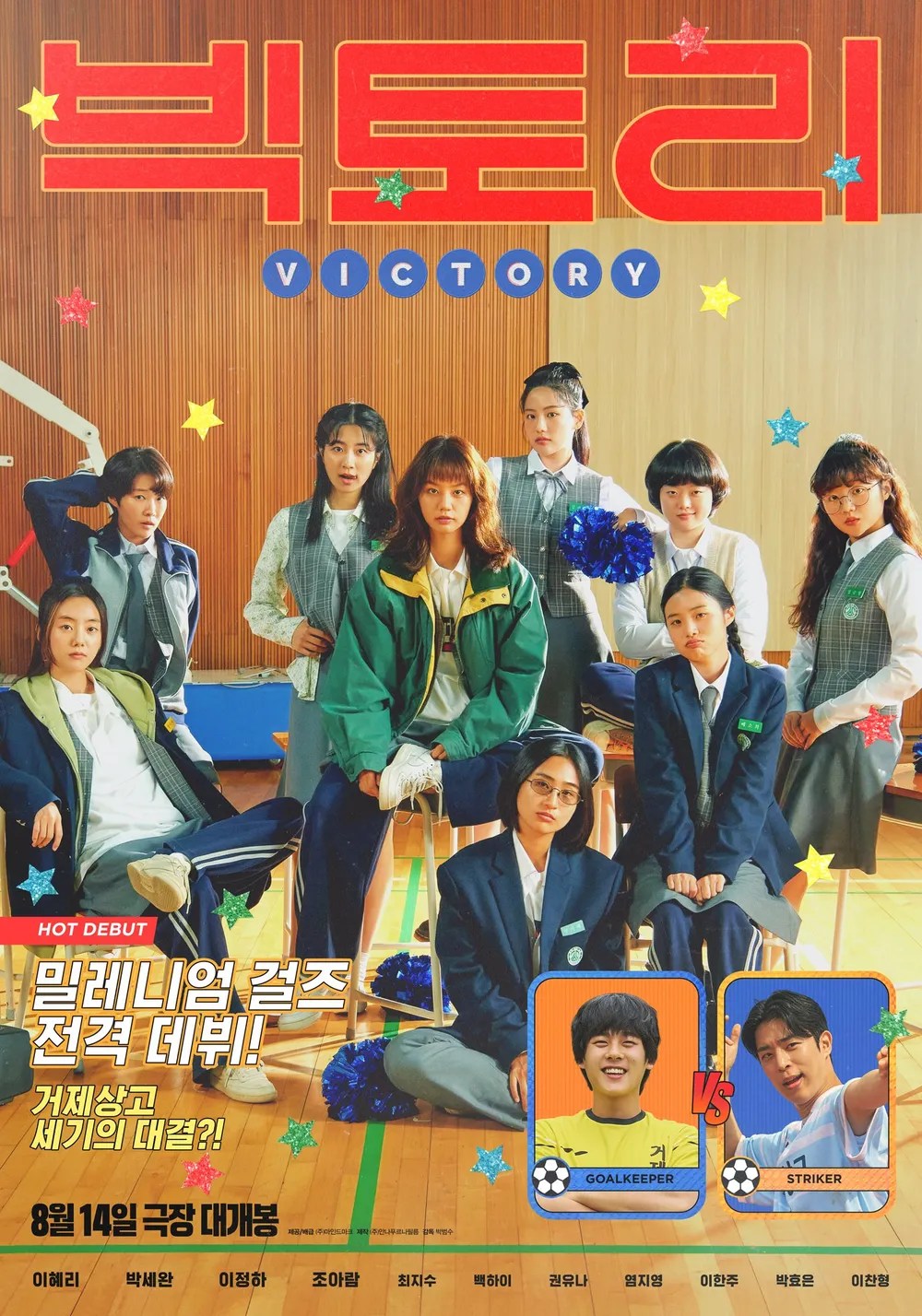
Victory (빅토리, Park Beom-su, 2024)

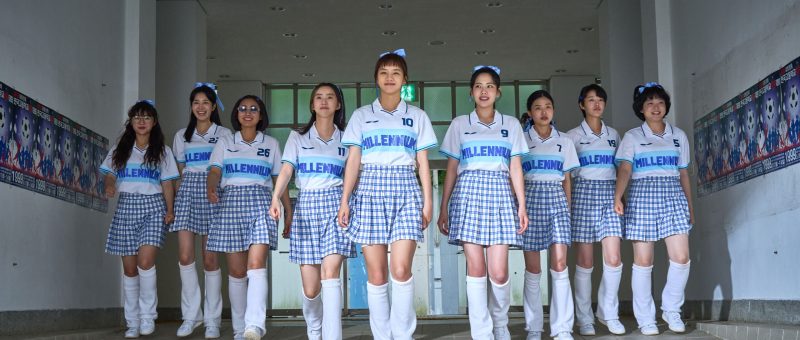
At the end of Park Beom-su’s millennial coming-of-age drama Victory (빅토리) there’s a title card quoting scientific data that people perform better with encouragement. In order to get the headmaster to agree to their starting a cheerleading squad so they can use the clubroom for dance practice, the heroine comes up with a ruse that the moribund football team will play 50% better with the cheerleaders encouraging the crowd to shout their support. But of course it’s really the girls who prosper through a process of mutual encouragement and solidarity.

Set in a small town in 1999, the film’s heroines dream of becoming K-pop dancers in glamorous Seoul. Feisty Pin-sun (Lee Hye-ri) doesn’t see much of a future for herself in Geoje much to her father’s consternation and is forever asking to transfer to a high school in the capital though in truth all she wants to do is dance. The deputy-head seems to have it in for her, taking the clubroom away from them and belittling their dancing while Pil-sun and her best friend Mi-na (Park Se-wan) are older than the other kids having been forced to repeat a year after getting into a fight with a rival school at a disco. Cheerleading’s not something they had much interest in until meeting snooty new student Se-hyun (Jo Ah-ram) who’s moved to their rural backwater with her brother who has been lured their as a top scorer for the school’s football team by the football-crazy headmaster. 

The fortunes of the makeshift team are directly contrasted with the protestors at the shipyard where Pil-sun’s father works. Pil-sun’s father seems to be a man beaten down by life. He’s taken a managerial position but finds himself conflicted in the midst of a labour dispute with his bosses pressuring him to name the ringleaders of the strike so they can shut the protests down. Faced with unfair and exploitative conditions, the men are protesting for basic rights such as not being forced to work overtime  and weekends and having a right to time off. Pil-sun’s father may agree with them, but doesn’t want to risk his job and tries to placate both sides with a spinelessness that later appears cowardly to his daughter Pil-sun. Perhaps as a single-father, he’s mindful of the necessity of keeping his job but otherwise appears obsequious and willing to debase himself in the service of a quiet life. When Pil-sun is once again in trouble in school, her father drops to his knees and apologises much to Pil-sun’s embarrassment.

Yet like the shipyard workers, the girls fight in unity if in this case for cheerleading success. This is after all a synchronised sport that requires the team to act as one. Though they may not universally get on initially, interactions with the team help each to realise their special talents and give them additional confidence to dance their way into a future of their choosing. Meanwhile, they’re each faced with a millennial dread that now seems nostalgic in its references to Y2K and the end of the world. There may not be very much for them in this small town, but there is at least each other along with their burning desire to succeed. 

It’s this  infectious sense of determination that really does seem to improve the atmosphere in this gloomy environment, the protestors also joining in their routine while Pil-sun’s father eventually gains the courage to reassess his loyalties. They are each sustained by the community around them, supported and encouraged by their friends and comrades. The point is rammed home by the fact that Se-hyun’s striker brother Dong-hyun (Lee Chan-hyeong) turns out to be something of a disappointment, while goofy goalie Chi-hyung (Lee Jung-ha) proves unexpectedly reliable telling Pil-sun that he prefers to be the last line of defence rather than the pre-emptive strike as he proves by defending her when the gang is hassled by older kids from another school. With a series of knowing meta jokes (“Girls’ Generation.” “That sounds so dumb.”), Park piles on the sense of nostalgia for a perhaps more innocent turn-of-the century world but equally for the gentle days of youth as the teens dance their way through hardship and heartbreak bolstered by their unbreakable bonds and sense of hopeful determination for brighter futures that are theirs for the taking.


Victory screens Nov. 12 as part of this year’s San Diego Asian Film Festival.

Original trailer (English subtitles)

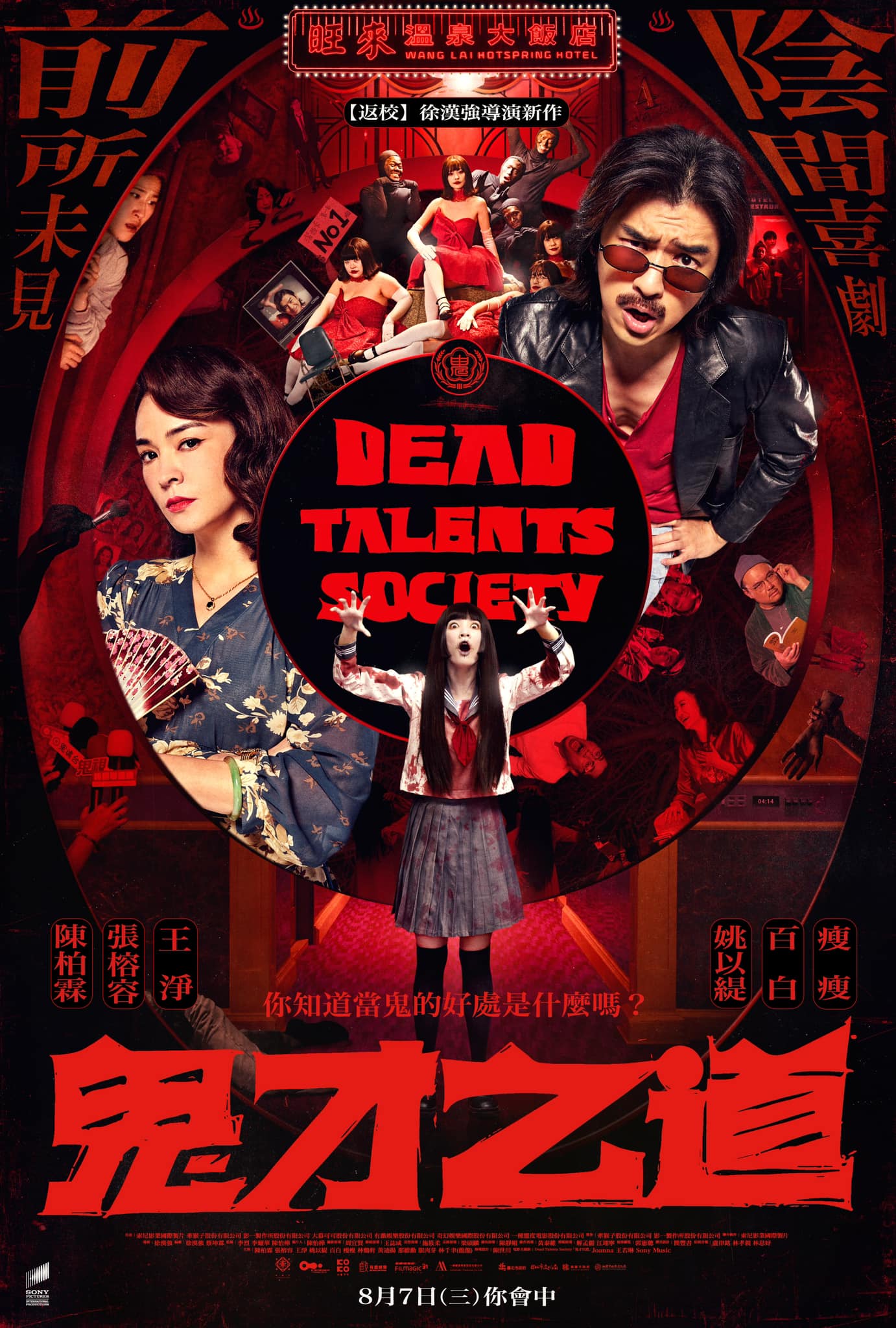
Dead Talents Society (鬼才之道, John Hsu, 2024)

“Why is it more tiring to be dead than alive?” A fed up ghost asks themselves and with good reason. If you thought you’d be able to rest easy in the afterlife, you’ve got another thing coming because it’s just as much of a capitalist hellscape on the other side as it is here. The central conceit of John Hsu’s Dead Talents Society (鬼才之道, guǐcái zhī dào) is that a ghost must must earn their keep by haunting the living in order to provoke large-scale appeasement rituals and the burning of vast amounts of ghost money or risk disintegration and finally disappearing from this world.

In a certain way, this is the paradox of the ghost. They fear being forgotten and only want to be seen mostly by the living but also by the dead in order to feel the validation that they exist and are appreciated. For Rookie (Gingle Wang) , a teenage girl who it later turns out was almost literally crushed by the weight of parental expectation, this was something she was never able to feel in life partly because of her father’s well-meaning attempts to boost her confidence by telling her she was “special”.  He even went so far as to mock up a fake certificate for her while leaving her to feel inadequate that her sister’s trophy shelves were full while hers were empty. It’s this certificate that’s gone missing during her family’s literal attempt to move on from her death and start again leaving her behind. With no place to return to, Rookie will disintegrate in 30 days if she can’t win a haunting licence which is a problem given her mousey personality and the lack of talent that left her feeling so inadequate in life.

Yet many of the pro ghosts are in the same position. Cathy (Sandrine Pinna) used to be the reigning queen, but her thunder was stolen by a former prodigy, Jessica (Eleven Yao), a very modern ghost who’s figured out how to haunt the internet and go viral for scaring influencers to death. In some ways, the living too are ghosts online haunting an alternate plane of reality while it’s through these online personas that we make ourselves seen. After all, in the modern world, there’s no better way to be “remembered” than by achieving internet fame. By contrast, all Cathy has is her decades old trick of backflipping on guests staying in the hotel room where she died in a lover’s suicide over a man who cared little for her. In a hilarious twist, the gang set up the trick on a harried businessman but he’s so busy he doesn’t even really notice any of their ghost stuff and remains entirely focussed on his work. 

Taken in by the gang, the realisation that rookie begins to come to is that she never really needed to be “special” but only herself and for someone to see her as she really was. Her anxieties are those of contemporary youth burdened by the weight of parental expectation and fearing they can’t live up to it. Manager Makoto (Chen Bolin) experienced something similar in life, struck by anxiety while struggling to make it as a early ‘90s popstar while unable to make his mark in the ghost world by virtue of being unable to scare anyone because he’s too good looking. As he tells it, the best thing about being dead is that you no longer need to worry about what other people think and Rookie is therefore free to become herself or else disappear forever. 

Even so, the irony is that the finale sees the central gangs take on unified appearances as if becoming one with one side doing better than the other in their genuine sense of mutual solidarity as a ghost world family. They watch J-horror-esque movies for tips and muse of the contradictions of fame that perhaps we accord those talented that are merely the most visible while these ghosts struggle to be seen in an increasingly haunted world of hollow influencers and illusionary online avatars. Rookie still doesn’t know what being seen means but has perhaps learned to see and accept herself thanks to her experiences in the afterlife. Charming and somehow warm in its lived-in universe of celebrity ghosts and professional hauntings, Hsu’s zany horror comedy may suggest there’s no escape from the living hell of capitalism but that dead or alive you might as well enjoy the ride as best you can before it all suddenly blinks out.


Dead Talents Society screens Nov. 9/10 as part of this year’s San Diego Asian Film Festival.

Original trailer (English subtitles)

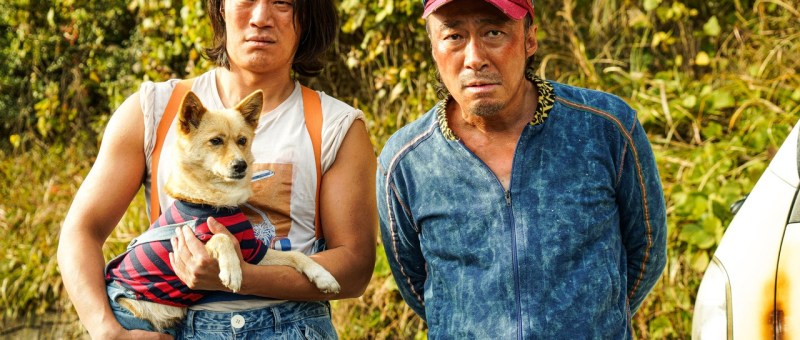
Handsome Guys (핸섬가이즈, Nam Dong-hyub, 2024)

The malicious inequalities of the contemporary society are manifested in an angry goat demon who wants to burn the world in Nam Dong-Hyub’s zany horror comedy, Handsome Guys (핸섬가이즈). Adapted from the American film Tucker & Dale vs. Evil, the film plays with prejudice and superficiality along with the pernicious snobbishness of a society founded on status in which, as a would-be-exorcist later says, some have lost the ability to distinguish good from evil.

Step-brothers Sanggu (Lee Hee-joon) and Jaepil (Lee Sung-min) often suffer precisely because of this inability. They are actually nice, sweet guys who are always trying to do the right thing but somehow their behaviour always comes off as creepy giving rise to a series of misunderstandings. That might be why they’ve decided to buy a cottage in the woods in order to live a rustic life, only the house they’ve purchased is a little more rundown than the estate agent implied and was previously home to a Catholic priest which doesn’t altogether explain the goat-themed pentagram in the basement. 

Like the brothers, Mina (Gong Seung-yeon) is also a nice person as we can tell because she’s the only one of her friends who wanted to give the goat they hit with their car a proper burial while the others decide to just leave it in the road and drive off. She too thought the brothers were creepy, but is also awakening to the fact that Sungbin (Jang Dong-joo), a rising star of the golf world, is a bit of a twit who wields his privilege like a weapon and has essentially invited her on this country weekend as entertainment. He also bullies his friend/minion Byung-jo (Kang Ki-doong) whom they regard as a loser and is evidently willing to bear humiliation merely to be in the same orbit as a man like Sungbin who with his good looks, refined manners and modern manliness projects an idealised image of contemporary masculinity that is the exact opposite of the brothers. 

In many ways, he is the demonic presence of privileged youth damaging the hopes and prospects of ordinary youngsters like Mina. Believing that she has been kidnapped by the brothers, the three guys set out to “rescue” her but Sungbin doesn’t care about Mina at all and in fact only wants to retrieve his phone which contains evidence of his sordid lifestyle which would destroy his prospects of becoming a celebrity through achieving success in his golfing career. Nevertheless, they decide to attack the brothers with mostly disastrous results believing them to be nothing other than idiotic hillbillies if also depraved backwoods serial killers living an animalistic, uncivilised existence that is far too close to the land for city slickers like Sungbin. 

Once again, the brothers are plagued by a series of bizarre misunderstandings based on the perception of their “ugliness” which aligns them with “evil” and demands they be exiled from a society that equates physical “beauty” with moral goodness. To that extent, having been rescued from falling in a pond, Mina becomes a kind of Snow White ensconced in the home of the brothers and coming to understand that they are actually nice, if a bit strange, and merely have difficulty expressing themselves while their down-to-earth homeliness only seems suspicious to those who are a little less honest with emotions.

Their niceness, however, seems to be perfectly primed to face off against the Goat Demon as they become determined to protect their homestead from the likes of Sungbin who has only contempt for them and thinks they’re merely fodder for his heroic fantasy of retrieving his phone and proving his manliness at the same time. In essence, it’s Sungbin who embodies the ugliness of the contemporary society with its hypocrisy and superficiality, its casual misogyny and petty prejudice, while the brothers later vindicated as angelic presences of altruistic goodness. Slapstick humour mingles with a sense of malevolence and an inescapable cosmic irony that plagues the brother’s with misunderstandings and has kept them isolated, “handsome guys” too beautiful for a profane world and attempting to find refuge in their remote homestead and homoerotic relationship but eventually discovering unexpected solidarity with the equally exiled Mina as she delivers a silver bullet to privilege and patriarchy, sending ancient evil back to whence it came.


Handsome Guys screened as part of this year’s London Korean Film Festival.

International trailer (English subtitles)
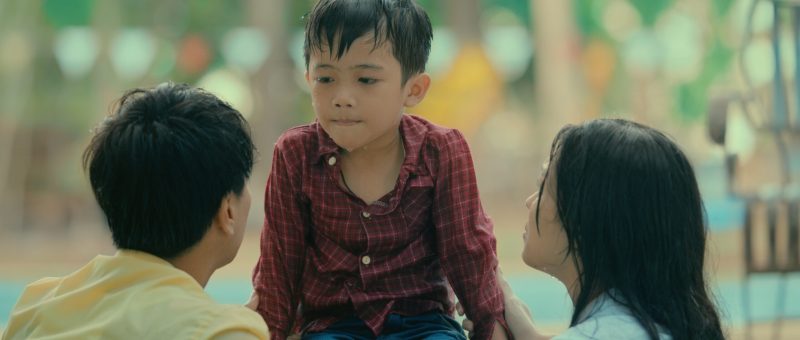
Love Child (Jonathan Jurilla, 2024)

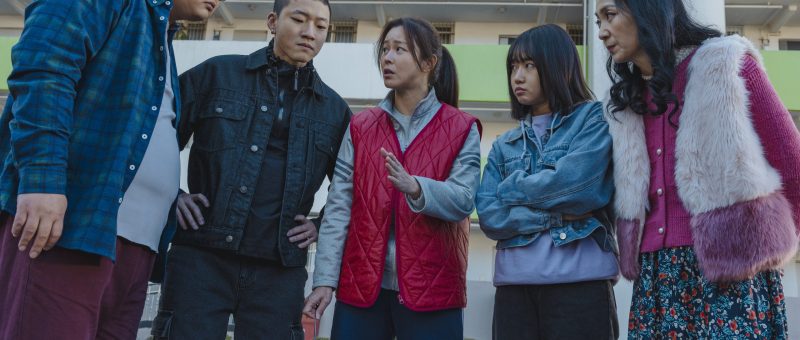
A young couple find themselves struggling in an uncompromising society while trying to raise their young autistic son who has complex needs in Jonathan Jurilla’s semi-autobiographical drama, Love Child. Inspired by the director’s own experiences of raising an autistic son, the film never shies away from the inherent difficulties involved but is as interested in the wider social context that makes life particularly hard for parents Ayla (Jane Oineza) and Pao (RK Bagatsing).

The first issue they face is their youth which though termed a “superpower” by a well-meaning older woman makes it difficult for them to raise a child without having had time to generate a financial buffer. Meanwhile, they also face a mild degree of prejudice because they are not actually married nor do they have a religion in a fiercely Catholic culture. The pair were still in university when Kali (John Tyrron Ramos) was conceived and subsequently had to break off their studies meaning not only that they’ve had to change course in life but that they’re locked out of the better paying jobs their degrees would have led to. Ayla was studying to become a lawyer but now has a part-time remote office job that is increasingly incompatible with raising Kali. Her unsympathetic boss complains about the noise and later lays into her about her priorities, claiming that she’s a mother too and she manages so Ayla’s on notice for the next time she infringes on workplace mores. 

Though Kali is now old enough to be enrolled in school, they struggle to find a place for him and are at a loss when he suffers bullying from one of the neighbourhood children after they send him to a government-run special school. It seems their only option is an expensive private institution, but it’s obviously a struggle for them on their already compromised incomes. Meanwhile, they’re constantly recommended other treatments and services that might help Kali’s development and made to feel like bad parents for not being able to afford them. Neither of them can rely on family support as Ayla’s mother disapproved of them having Kali in the first place and is hostile towards him because of his disability while Pao carries a degree of resentment towards his estranged father who abandoned the family and now lives in Australia. 

Pao’s relationship with his father informs the kind of father he’d like to be in his desire to protect his family, but the solutions that present themselves are those familiar to other struggling youngsters and would result in splitting the family up with one or both parents living abroad to earn higher salaries so they can afford the best education and treatment for Kali. Meanwhile, Ayla looks around her former friendship groups and realises that most people her age have either rejected or postponed the idea of starting a family and are instead spending their money on things like travel and entertainment or patiently saving to achieve financial stability. She wonders if they did the right thing or were naive to believe in love and that everything would somehow work out because they were a family. 

Though raising a child is hard enough on its own, the additional financial strain placed on them along with the impossibility of both looking after Kali and trying to earn a living is something exacerbated by the lack of provision for families like theirs especially those without the support of friends or relatives. Sacrificing their dreams to look after their son, the couple do everything they can to ensure he has the best future possible but are often frustrated by those around them who maybe prejudiced or lack understanding of kids of like Kali and the additional care he sometimes needs especially as his developmental process is obviously slower than average and he may never achieve independence. Though some of the meta commentary and references to tropes of a stereotypical Philippine rom-coms are a little on the nose, Jurilla focuses on the love the parents have for their child and their earnest attempts to do the best for him even at the cost of their own health and wellbeing while also hinting at the unfairness of the society around them in which there is little help available to those who do not have the resources to pay for that which should be provided for all.


Love Child screens Nov. 8/9 as part of this year’s San Diego Asian Film Festival.

Original trailer (English subtitles)
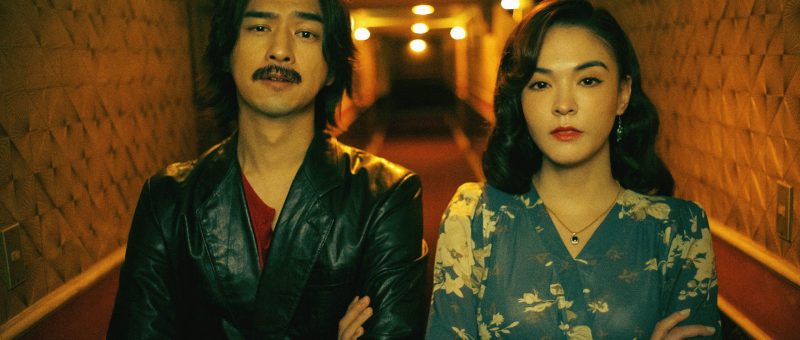
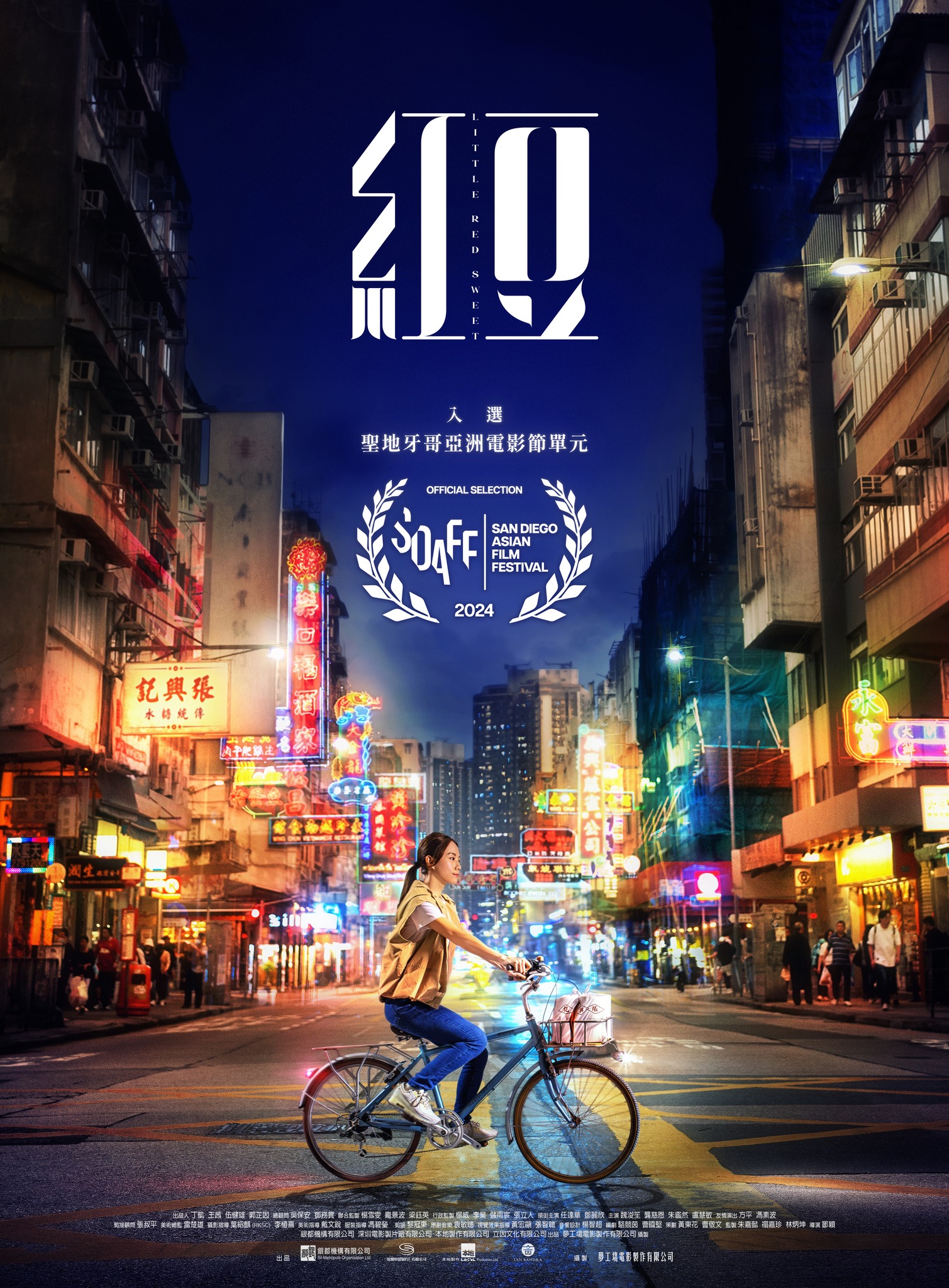
Little Red Sweet (紅豆, Vincent Chow, 2024)

Towards the conclusion of Vincent Chow’s poignant drama Little Red Sweet (紅豆), the heroine says she thinks her family’s sweet soup shop is important because it helps people hang on to memories through food. Like many, May (Stephy Tang) seems to be displaced in a Hong Kong that’s changing all around her while other things stay frustratingly the same from her father’s (Simon Yam) refusal to teach her the family recipe because he wanted to pass the shop onto his son to her brother’s sexist assumptions that the housework is her responsibility while staying home playing games rather than helping in the shop.

Indeed, it’s not until matriarch Lin (Mimi Kung) suffers a stroke that everything she did for the family is thrown into stark relief. It’s clear she did most of the heavy lifting at the shop, especially when it comes to customer interactions which are not May’s father’s forte. He doesn’t speak English and has to fetch Lin when a pair of tourists want to pay. Unable to run the shop alone, he asks his son Boyo (Jeffrey Ngai) to help, but he refuses despite having no other obligations as a cram school student who mainly stays home and plays games. Boyo doesn’t help with the housework either, simply expecting that May will take care of it and him despite his ongoing obnoxiousness. 

Because of his refusal, May finds herself giving up her dream job as an air stewardess to help out in the shop though her father won’t let her near the kitchen and seems as if he’d still ideally like to hand the shop down to his son or perhaps close it for good to free both children from the burden of caring for its legacy. May’s job as an air stewardess may have symbolised her desire for escape but also reflects her rootlessness and sense of displacement. Before her mother was taken ill, she’d suggested using her staff discount to go on a family holiday which would have been their first because her father never wanted to close the shop though it was obviously not to be nor could she repair their familial bonds through her work. Both she and her tentative love interest (Kevin Chu) recall how low the planes seemed to fly when they were children and how distant they seem now reflecting not a broadening of their horizons but the impossibility of escape along with a loss of intimacy and the widening spaces between people.

But as Canadian-Hong Kong travel writer Soar says, it’s the people not the place and it’s the sense of community that May values in the old-fashioned shopping arcade that is inevitably targeted for redevelopment threatening the future of the shop. First trying to resist the march of progress, May eventually starts looking at new spaces but the ones she sees are slick, modern, and devoid of both warmth and character. A journalist who comes to interview May asks her why she wants to carry on a shop selling traditional desserts that might not be so popular among the younger generation but May says that it’s important as they help people hang on to their memories as if she were also talking about an older Hong Kong that is fast disappearing the soul of which lies in the sense of comfort this sweet bean soup provides. Eventually she’s presented with a choice, like many of her generation wondering whether to take her memories somewhere else or stay and try to salvage something from rapidly receding past. 

Her father’s eventual capitulation in agreeing to teach her how to make the family’s iconic sweet red bean soup is akin to a baton being passed, but also a sign of progress in accepting her as his heir rather than insisting on the feckless Boyo whom he also takes to task for his reluctance to look after himself and assumption that it’s his sister’s job to cook and clean for him. Though perhaps bittersweet, there is indeed something poignant in May’s determination to remake a home in a shrinking Hong Kong where community matters and kindnesses are repaid with interest years after they’d seemingly been forgotten. As Soar had said, it’s the people not the place or in another sense perhaps it amounts to the same thing and the taste of home you only find in the warming sweetness of red bean soup.


Little Red Sweet screens Nov. 8/11 as part of this year’s San Diego Asian Film Festival.

Original trailer (no subtitles)

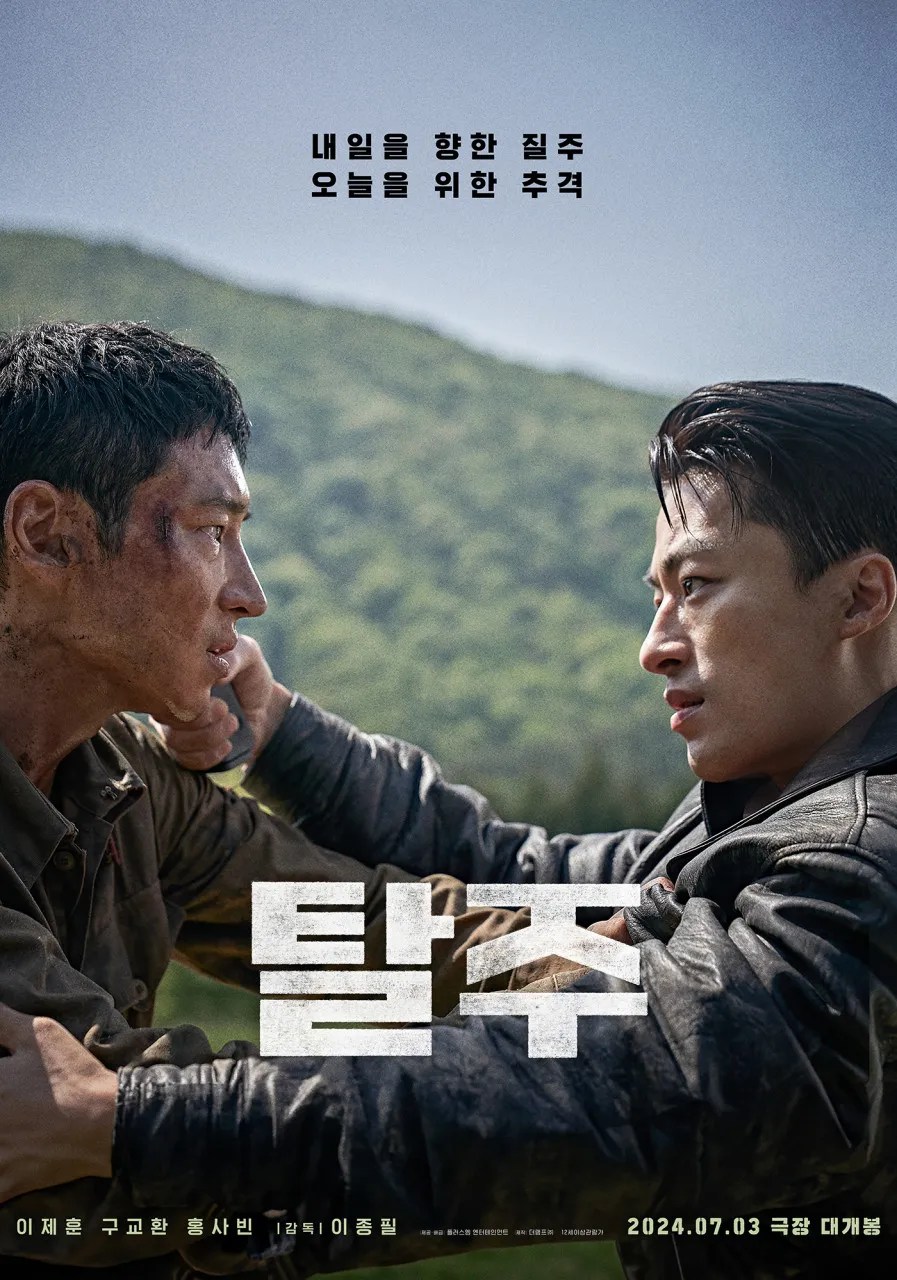
Escape (탈주, Lee Jong-pil, 2024)

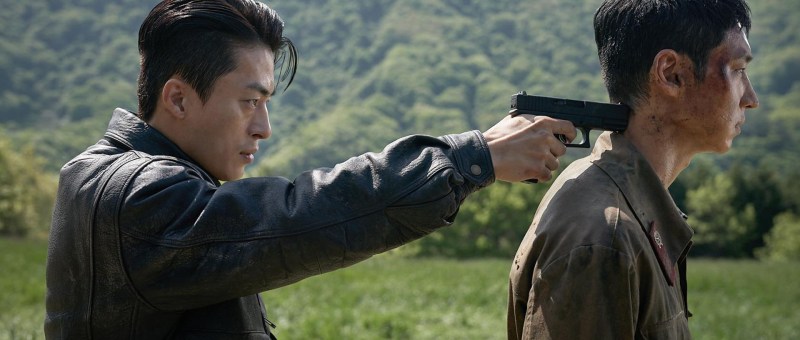
Lee Jong-pil’s existential action drama Escape (탈주, Talju) opens with scenes of a man running. He runs his way through the rest of the film, continually on the move and chasing a dream of freedom outside of the oppressive society in which he is otherwise trapped. The man who chases him, meanwhile, is himself running away. His movements are slow, calculated, and cold but also somehow tender and almost it seems an act of self harm. 

The fact that the oppressive regime is North Korea is almost irrelevant and the film is less about Communism than it is lack of autonomy that may be found in any other democratic or developed nation in which people are driven to erase a part of themselves in order to fit in or to prosper amid rigidly defined social codes. Nevertheless, there is a direct criticism of the Democratic People’s Republic in the ironic signage, a car ploughing straight through a sign that reads “for freedom and happiness of people”. But then, even if deserter Kyu-nam (Lee Je-hoon) finds happiness in the South we can’t be sure it’s really any better. The welcome message blasted through loudspeakers over the wall that marks the border doesn’t sound all that different from the propaganda messages on Kyu-nam’s radio, while the deserter’s phone positioned to appeal to men like him appears to be out of order. 

But to Kyu-nam, “the South” is only really an idea and it’s clear he intends to transcend those borders too, venturing on to the wider world and wherever it pleases him to go. What he rails against is fate, that his life is dictated by forces outside of his control or more accurately by Field Officer Hyun-sang (Koo Kyo-hwan) from State Security who takes him under his wing and tries to make something of him as a loyal soldier of the North. What becomes clear is that Hyun-sang is a man who fears freedom and that the presence of a man like Kyu-nam is a threat to him because he awakens his own deeply buried desire for liberation. 

From the longing looks he directs at a man with whom he studied abroad in Russia we infer that Hyun-sang is gay and the suppression of his authentic self in order to keep himself safe in a repressive culture has made him cruel and vindictive. Unfortunately, this presumably unintentionally plays into a homophobic trope which aligns queerness with sadistic villainy, but does nevertheless lend a kind of poignancy to Hyun-sang’s otherwise vindictive quest to prevent Kyu-nam’s escape precisely because he himself desires to be free but is too afraid to free himself. From a wealthy and prominent family and with an important position within the regime, this system otherwise works out well for Hyun-sang but he is also imprisoned by it and will forever be prevented from becoming his authentic self or gaining what he truly wants so long as he remains within North Korea. 

A homoerotic charge exists between the two men though what Hyun-sang may really be chasing is himself and half-hoping he’ll be caught. Kyu-nam meanwhile has a single-minded desire for autonomy and individuality, to live and die on his own terms rather than live with no right or power to decide his future. There are those who’ve found other ways to reject the system, a group of mostly female nomads seeking a new place to belong after being kicked out of their village but seemingly with no intention of leaving the country, but for Kyu-nam there is no freedom inside the walls and his determination to find it is what makes him so dangerous to Hyun-sang for whom the very idea of freedom is so painful he’s sublimated himself entirely into an oppressive regime.

With pulsing synth scores, Lee keeps the tension high as Kyu-nam runs and runs through minefields and bullets while pursued by the full force of the North Korean army and the steely Hyun-sang who always seems to be one step ahead. His passage takes on an existential quality, risking death rather than continue to live a “meaningless life” in which he has no power to decide his own fate. His escape is finally self-liberation, taking the decision to free himself because no one else is going to, while Hyun-sang remains a prisoner too afraid of freedom to actively pursue it though perhaps tempted by his encounter with Kyun-nam, a man free in his mind if nowhere else.


Escape screened as part of this year’s London East Asia Film Festival.

US trailer (English subtitles)

High Forces (危机航线, Oxide Pang Chun, 2024)

It’s always a worrying sign when the guy in front of you at check-in has brought a parachute. Shot back in 2021 and finally hitting screens three years later, Oxide Pang’s airborne hijack thriller High Forces (危机航线, wēijī hángxiàn), pits veteran star Andy Lau against a gang of crooks who’ve taken his plane hostage in order to convince the CEO of the airline to reveal the password to his accounts so his wife can send them a large amount of money.

Perhaps surprisingly given recent Chinese cinema’s attitudes to wealth, the film remains uncritical of the existence of a luxury airliner with a top deck hotel complete with duty free. The CEO in fact later becomes a hero, fighting alongside Lau’s Haojun in order to save the lives of the passengers, while it’s revealed that it’s his wife’s family who founded the airline he took over that may have been conducting some very shady business dealings. Nevertheless, it’s the economy class passengers the amoral Mike (Qu Chuxiao) starts bumping off before planning to vacate the plane via parachute along with the pilots leaving it to plunge to the ground.

Yet, the hijacking is also Haojun’s chance for redemption seeing as his estranged wife (Liu Tao) and daughter are coincidentally on the same plane while travelling to seek medical treatment for daughter Xiaojun’s (Zhang Zifeng) eyes. Haojun was driving recklessly and got into an accident after which Xiaojun lost her sight and gained a deep-seated resentment towards her father. This reckless streak is attributed to anger issues stemming from untreated bipolar disorder which Hao now believes he now has under control. Mike is also taking the same medication and the two men are presented as reflections of each other. Haojun’s flashes of rage are expressed through the colour red flooding the screen, while Mike’s greed and envy seem to be reflected in green. Whether this is a helpful framing of bipolar disorder or not is up for debate, but the implication is that through defeating Mike Haojun can overcome himself, triumph over his anger issues, and regain his rightful place as a husband and a father.

Ironically he first tries to do this by using a toy walkie-talkie dropped by a little boy whose father seems to have a lot of issues of his own to communicate with Xiaojun who is trapped in first class with the kidnappers. Using his special forces and security skills, Haojun crawls all over the plane trying to pick the kidnappers off one by one until being left with the core group led by Mike. A slightly bum note is struck when one of the stewardess’ suddenly overcomes her aversion to a sleazy colleague who was harassing her after he takes a bullet on her behalf, but she too rises to the occasion helping Haojun fight back against the kidnappers as do several of the passengers who set on the last of Mike’s men making sure he can’t leave the plane. 

Of course, the film ends with the usual set of title cards explaining that all the wrongdoers were caught and punished while Haojun was rewarded for his heroic actions in saving the lives of the passengers and crew. Nevertheless, in the grand tradition of overblown action dramas it also has its share of silliness such as the obvious set up of one of the stewardesses showing off her new skydiving certification. This particular airline should also probably have another look at its hiring procedures and employee vetting. The real enemy is perhaps corporate corruption and shadiness in business though these leads are never really followed in much more than a cursory fashion with the action remaining mainly on the plane even as Mike seems content to simply shoot people just to make a point. Like The Captain, the film’s conclusion is basically a celebration of the nation’s emergency services who all come together to help the plane land safely through a rather improbable solution to its myriad problems. Nevertheless, for much of its runtime it’s a very effective, if occasionally absurd, action drama in which a lone vigilante takes on a plane full of crooks with sometimes surprising violence while trying to fight his way back to his family and restore his image of himself as father if only in his daughter’s eyes.


Original trailer (Simplified Chinese / English subtitles)