Cloud (Cloud クラウド, Kiyoshi Kurosawa, 2024)

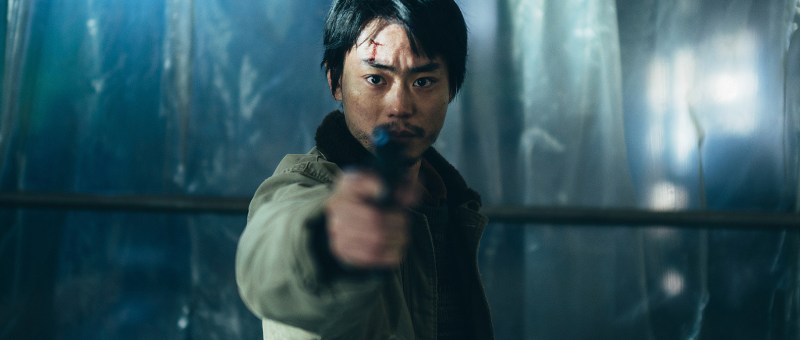
“We wanted to make easy money,” a down-on-his luck reseller admits, “is life easy now?” Factory worker Ryosuke (Masaki Suda) rebels against capitalism by subverting it through buying low and selling high while repeatedly refusing promotions at his job in a textiles factory. Though it might seem that reselling is just a way to earn an income that seems almost passive but is actually fairly labour-intensive, it’s clear that Ryosuke is a young man dissatisfied with capitalistic realities and lacking direction in his life. 

Reselling has become a kind of game to him and like a gambler who plays to lose he’s hooked on the thrill of making a killing exploiting other people’s misery. He’s at once filled with pride and smugness over his apparent triumph over his society and consumed by self-loathing. His friend and fellow reseller Muraoka (Masataka Kubota) tells him that another acquaintance has been arrested for scalping concert tickets with both of them lamenting his foolishness in getting involved with something so risky. The implication is that their friend, Goto, must have been in real desperation to lower himself to such levels and they each fear they may someday end up in the same position. Muraoka laments that that kind of selling is a young man’s game and neither of them have the time or energy to spend all day queuing to buy stuff just to sell it on cheap. They are each, it seems, beginning to feel the increasing desperation of their age that they are running out of time and have little to show for their efforts nor any prospects for the future. 

But on the other hand, neither of them want to be locked into the grind or join the oppressive but secure world of the salaryman. In many ways, Ryosuke’s factory boss Takimoto (Yoshiyoshi Arakawa) represents the “correct” path of hard and honest work, though his own paternalistic conviction in meritocracy seems outdated in a man of his age whose formative years occurred during an era of economic stagnation. He talks to Ryosuke as if he’s a young man who wants to get on but lacks confidence, telling him that he has leadership potential and is wasted on the shop floor, but his language also has an edge of the uncanny as if he were trying to recruit Ryosuke into his own worker drone revolution. In any case, even if it might be true that Ryosuke lacks confidence and ambition, that isn’t the reason he refuses promotions, which seems to be another way of rebelling against capitalism. When he eventually quits, he suggests it’s because he’s sick of being told what to do and wants more autonomy over his life and finances.

He tells his girlfriend Akiko (Kotone Furukawa) that she should quit her job too, which she’s only too happy to do because, unlike him, she actively doesn’t want to work and only wants to spend money. When she said she was thinking of giving up her apartment, Ryosuke naturally asked her to officially move in but she refused because his place is too small and she has too much stuff. Akiko has already been corrupted by the same consumerist bug that’s driving Ryosuke’s reselling business, but neither of them can really afford this lifestyle in the city. Ryosuke’s bright idea is to move to the remote countryside where he’s able to rent a huge, though ominous-looking, property for a fraction of the price with the idea of also economically supporting Akiko who will revert to traditional gender roles as a housewife in charge of the domestic space and most especially the kitchen.

But freedom cannot be found simply by retreating from urbanity and the couple soon find themselves plagued by a pervasive sense of resentment. The locals are not particularly accepting of people from Tokyo and are also needled by their success which is something they feel they’ve been unfairly denied. When Ryosuke tries to report a smashed window, even the policeman hassles him and says he’s received a tip-off that Ryosuke is breaking trading standards regulations by selling counterfeit goods as the real thing. Reselling in itself is not illegal, if definitely dubious morally and incredibly cynical. Ryosuke doesn’t seem to like to think about that and tells his new assistant, Sano (Daiken Okudaira), that he tries to sell all the items as quickly as possible so he doesn’t have to worry too much about their authenticity. If they’re wanted they’ll sell, Ryosuke justifies but he might as well be talking about himself.

“Being real or fake doesn’t matter?” Sano asks him, just as Ryosuke’s online and offline personas start to blur. He’s unaware that there are people actively hunting him for selling them substandard goods and is later pursued by real life vigilantes acting like online trolls and planning to torture him to death during a livestream. Like many of Kurosawa’s heroes, Ryosuke is completely convinced that he’s the benchmark for normal and it’s everything around him that’s strange or unfair. As the internet once again invades the “real” world, or perhaps it’s more that Ryosuke’s living his online life offline, the increasing unreality of the situation makes us wonder if any of this is “really” happening or product of Ryosuke’s fractured identity as it finally collapses under the twin corruptions of capitalism and social media. “Please keep focusing only on making money,” his new guardian angel Sano tells him, “everything will be obtainable. Whatever you want. Even things that can end the world.” Flying through ironically heavenly clouds, Ryosuke reflects that the path to hell really is paved with gold and his Mephistophelian pact with hyper-capitalism may have damned him beyond all repair.  


Cloud is in cinemas from 25th April courtesy of Blue Finch Film Releasing 

UK trailer (English subtitles)
Striking Rescue (惊天大营救, Cheng Siyi, 2024)

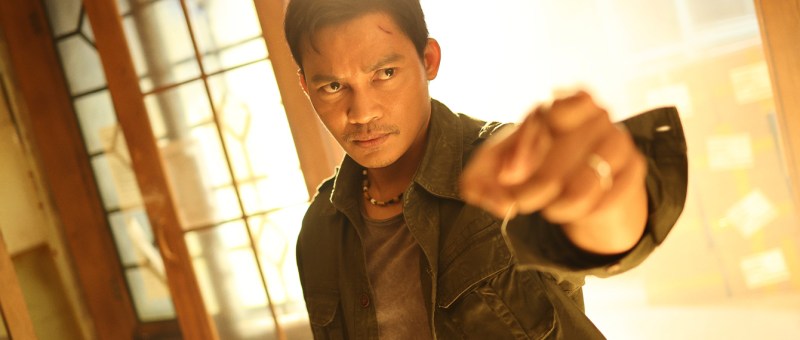
Once again set in a fictional South Eastern Asian nation largely inhabited by Mandarin speakers, Cheng Siyi’s action drama Striking Rescue (惊天大营救, jīng tiāndà yíngjiù) is a comeback vehicle for action star Tony Jaa who has mostly been relegated to cameos and supporting roles for the last decade or so. It’s also one of a string of recent films with a bee in its bonnet about the drugs trade, and a less obvious one about the powers of large corporations though in this case the fat cat turns out to be a good guy.

To begin with, we can’t be so sure about Bai An. A flashback reveals that his wife and daughter were just murdered in an apparent gangland killing, and now he wants revenge. After targeting a petty drug dealer, Bai An is told the man he’s looking for is He Yinghao (Philip Keung), the CEO of a phenomenally successful logistics business which has nevertheless been implicated for the smuggling of drugs. Something like this happened once before, but Yinghao is well connected and was able to make it go away just as he apparently has this time. Later he also reveals that his company is the only one that is exempt from customs checks, presumably because he’s bribed someone to make that happen.

We can’t really be sure about Yinghao, either. He doesn’t seem to know about the drugs but could be bluffing or attempting to shift the blame. His spiky teenage daughter Ting seemingly resents him for his authoritarian parenting and blames him for her mother’s death. She fires back at him that he behaves as if all problems can be solved with money, and she may have a point. After their convoy is attacked by drug gangs, Ting has no idea who to trust but continues to believe in her father’s innocence while unexpectedly teaming up with Bai, who wants to kill him, and trying to figure out what’s going on. The one thing she’s sure of is that she and her father really hate drugs because they caused her mother’s death, so if it really is him behind the local drugs trade then it’s even worse that she thought it would be. 

As the truth is gradually revealed, it allows both men to reclaim their paternity as Jaa becomes a kind of surrogate father to Ting. He attempts to protect her from this very dangerous world of drug dealers and criminals, though it may not have been all that far from the otherwise life of luxury she was used to leading. Her driver, Wu, had already taught her some martial arts skills for protection while she’s bullied by the thuggish boys at school who pick on her for being Yinghao’s daughter and a foreigner. But it’s Bai An who seemingly shows her what real fatherhood is like, which ironically causes her to reevaluate her relationship with Yinghao. He in turn is somewhat redeemed by his righteousness in the face of the gangsters as opposed to a snivelling new reporter picked up by Clay and forced to choose which son to kill before being killed himself.

Making Yinghao the hero may be a slightly awkward fit given that his business interests do not appear to be all above board which is one reason why he relocated here rather than stay in China where, the implication is, he wouldn’t have gotten away with it for so long. Indeed, the film ends with a series of title cards explaining that all of the wrongdoers, including Bai, were caught and punished. Nevertheless, as Bai later reminds us, it’s every man’s dream to be a hero to his daughter and both men have now a claim on “heroism”, at least in the eyes of the idealistic Ting. Though he could not save his own daughter, Bai steps in to protect Ting on several occasions. Fighting off hordes of thugs and one very weird female assassin, Jaa gets the opportunity to show off his martial arts skills once again while relentlessly pursuing his revenge and quest for answers about the death of his wife and child. But it’s also this defence of her that allows him to reconnect with his humanity and reclaim his image of himself as a father even while mired in his grief and anger towards a world full of corruption and betrayal.


Striking Rescue is available digitally in the US from April and on blu-ray from May 15 courtesy of Well Go USA.

US release trailer (English subtitles)
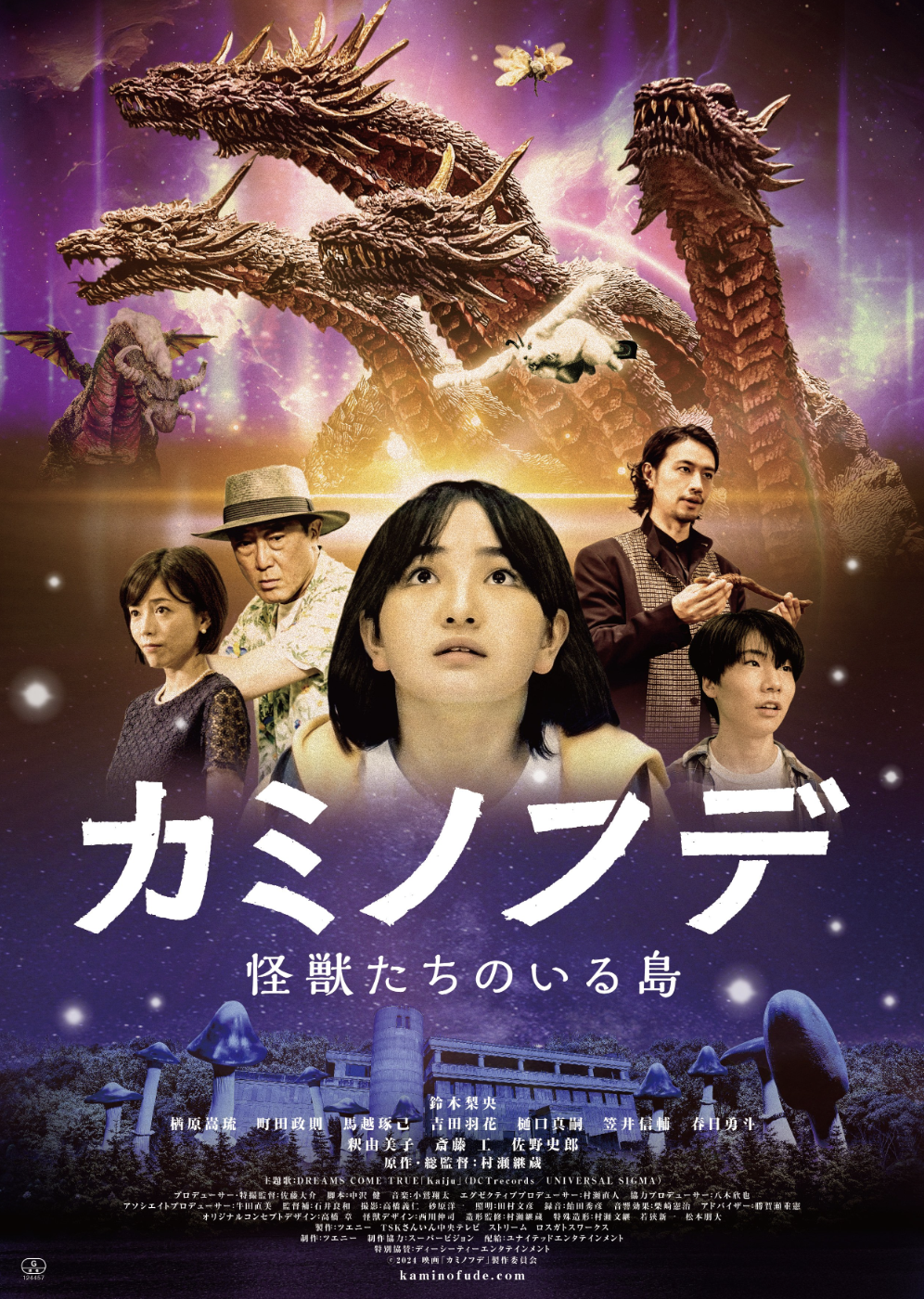
Brush of the God (カミノフデ ~怪獣たちのいる島~, Keizo Murase, 2024)

High schooler Akari (Rio Suzuki) couldn’t care less about something as “uncool” as tokusatsu movies and the fact her recently deceased grandfather once made them makes it even worse. Though they had once been close, Akari harbours a degree of resentment towards her grandfather, Kenzo (Shiro Sano), whose behaviour even in earlier years could be somewhat intimidating. Holding Kenzo responsible for the scar on her mother’s arm, Akari wonders out loud why a public memorial event is even necessary when they’ve already had a funeral, and why her mother isn’t just throwing all this useless rubbish out rather than hold an exhibition honouring a man she believes harmed her.

“Useless rubbish” is largely what Akari thinks of Kenzo’s legacy, embarrassed by his connection to otaku culture which has a social stigma attached to it that a teenage girl in particular would find embarrassing. Sullen and grumpy, she looks on with sadness mixed with irritation when some of her classmates charge off without her to go look at make-up and is rude to a young man from her class who’s come to attend her grandfather’s memorial event because she wouldn’t be caught dead talking to a nerd. In a way, it’s some of these social attitudes that Keizo Murase’s Brush of the God (カミノフデ ~怪獣たちのいる島~, Kami no Fude ~Kaijutachi no iru Shima) wants to deconstruct, recovering a memory of the classics of the genre as a world of boundless creativity and goodness that was as much about overcoming obstacles as it was creating visions of marauding dragons wreaking havoc on the modern world. 

This is Murase’s first, and sadly only film as he passed away at the age of 89 in 2024 and was already in his late 80s when the film was made. Prior to that, he’d been a legendary figure in the tokusatsu industry working as a suit sculptor, prop maker, and stunt man. His self-cameo laying flowers at his own stand-in’s memorial service echoes the meta-quality of the film which he’d first come up with while working on Mighty Peking Man (in the movie Revenge of the Might Primate) in Hong Kong and subsequently reworked to take place in Japan just as Kenzo does in the film. At heart, it’s a tribute to classic kids special effects adventure movies in which Akari must reclaim the fond memories of her grandfather in order to save his interior universe and legacy which is now in danger of being forgotten while even she herself wanted to junk the whole thing. 

She does so in the company of Takuya (Takeru Narahara), the classmate she’d hardly even noticed because of his nerdiness but is also primed to be another kind of inheritor of Kenzo’s mantle as represented by the Brush of the God, a magical paintbrush that allows the wielder to create in reality anything that they can imagine much as Kenzo and Murase had done when they created their monsters and the means to beat them. Reminiscent of that of Nobuhiko Obayashi, Keizo’s world has a retro aesthetic that is at once both artificial and fantastical making it clear that the children have been sucked into a world of imagination on the invitation of the mysterious Mr Hozumi (Takumi Saito) who offers them a copy of Keizo’s unproduced script and asks them to save his universe from destruction at the jaws of a mystical dragon. 

There is real love and affection for this era which has now all but passed that valued practical effects and rejoiced in finding unexpected solutions to practical problems and creating a world which was often simpler than expected in which there were monsters who were bad but could be beaten or otherwise were good and could never be vanquished. Along with recovering more positive memories of her grandfather whom she realises to have misunderstood, a tortured artist who loved them in his own way, she regains a sense joy and creativity that had otherwise been lost to her with Takuya remarking that she seems much more lively in the midst of their adventure than she ever had at school. He meanwhile is very much in his element, but though he’d dreamed of becoming a tokusatu hero is effectively reduced to a damsel in distress whom Akari must then save by reawakening her imagination. Warmhearted and wholesome, the film is an advocation for this world of lost charm and childhood adventures powered by egg boxes, garden hoses, and the boundless potential of creativity. 


Brush of the God screens in Chicago 13th April as part of the 19th edition of Asian Pop-Up Cinema.

Trailer (English subtitles)

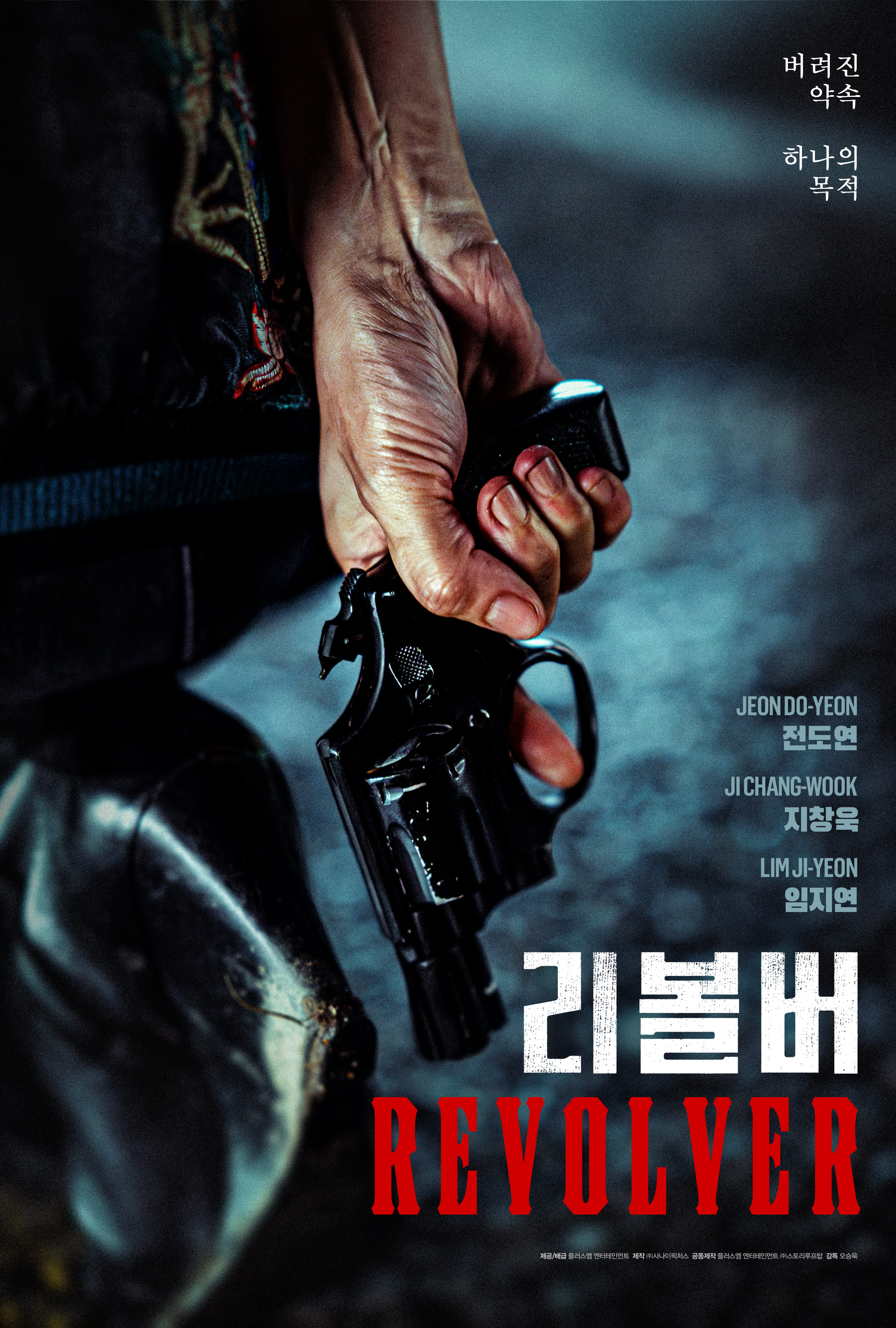
Revolver (리볼버, Oh Seung-uk, 2024)

Everyone is always making promises to Su-yeong, but promises don’t count for very much in this world of infinite duplicity. Reuniting director Oh Seung-uk with The Shameless star Jeon Do-yeon, Revolver (리볼버) takes place in a world of corrupt cops and criminal gangs where no one can be trusted and every relationship is transactional. Like the barrel of a revolver, allegiances shift and rotate as Su-yeong attempts to navigate these turbulent waters while well aware that she is completely alone and has only her quest for vengeance and justice to sustain.

It’s by a broken promise that’s she’s been betrayed. After having become lowkey involved in police corruption to help her lover Captain Lim (Lee Jung-jae), former policewoman Su-yeong agreed to take the fall for the squad. They promised her that she’d only lose her job rather than go to prison and that she’d be allowed to keep the apartment she’d just bought, get a 700,000-dollar payout, and a new job working for Eastern Promises security division. Only in the police station does she realise she’s been tricked as they slap a drug trafficking charge on her and hand down a two-year sentence. Predictably, once she gets out, no one’s there to meet her except a gloating prosecutor and a random woman she’s never met before, Yoon-sun (Lim Ji-yeon), who says she was a friend of Lim’s. He’s since been found dead in a suspected suicide, though that matters less to Su-yeong than the fact he gifted her apartment to someone else and has since died in mysterious circumstances. 

The funny thing is that Yoon-sun, who is working both with corrupt cop Dong-ho (Kim Jun-han) and the gang led by Grace (Jeon Hye-jin), actually has some sympathy with Su-yeong and disproves of the way she’s been treated. After all, they could have just paid her her money like they said they would. Well used to navigating these waters, Yoon-sun appears to be playing her own game and keeping her options open yet it seems genuine when she tries to help Su-yeong which isn’t to say she wouldn’t betray her if she absolutely had to but right now she doesn’t. There is something quite poignant about the sense of female solidarity that arises between them, even though they are romantic rivals, as women who’ve both been let down by this patriarchal society. Su-yeong is rightly fed up with it and she’s going to get her money and her apartment no matter what if only to make sure they don’t win. Yoon-sun has chosen complicity as her chosen means of survival, but may be silently rooting for Su-yeon to break the both of them out of this repressive system.

To that extent it’s ironic that the former detective’s main weapon is a retractable baton, as if she were trying to enact justice though she herself is a compromised figure having at least been on the fringes of the corruption if perhaps not at the heart of it. Then again, all of the police appear to be corrupt so perhaps it’s more that she’s no better than the world that surrounds her and well aware that promises mean nothing and no one can be trusted. Lim seemingly broke a number of promises to her but may have tried to make it right in the end, while she’s also the victim of a vendetta by grudge-bearing cop Dong-ho (Kim Jun-han) whose romantic overtures she once turned down leaving him with a desire to destroy her completely. Top bad guy Andy (Andy) also appears to be a figure of compromised masculinity, playing the rabid dog but having no other backing than his ambiguous relationship with Grace who may have offed a female rival to solidify her grasp over the criminal enterprise. Violently beaten by Su-yeong, he too vows revenge to reclaim his masculinity but is ill equipped to achieve it. 

Despite being disregarded as not a proper detective, Su-yeong patiently follows all the clues and plays a long game to track down the source of all her misery while really her dreams had been small, owning a nice apartment and sharing it with Lim. On her release from prison, she tells the guard that her parents are dead and she has no friends or relatives signalling her aloneness in a vast world of betrayal but also her resilience and refusal to back down in her ironic fight for “justice” which is simply making sure those who’ve wronged her honour their promises and she gets what she’s owed. The occasional bouts of dark humour such as the absurdity of the final confrontation scene lend a touch of surreality to Oh’s purgatorial world of constant mistrust. “Live as if you were already dead,” a defeated Andy ineffectually screams as he vows vengeance and insists Su-yeong hasn’t heard the last of this. But Su-yeong has been living like she’s dead all along and now, finally, might be alive once again. 


Revolver is available digitally in the US courtesy of Well Go USA.

International trailer (English subtitles)
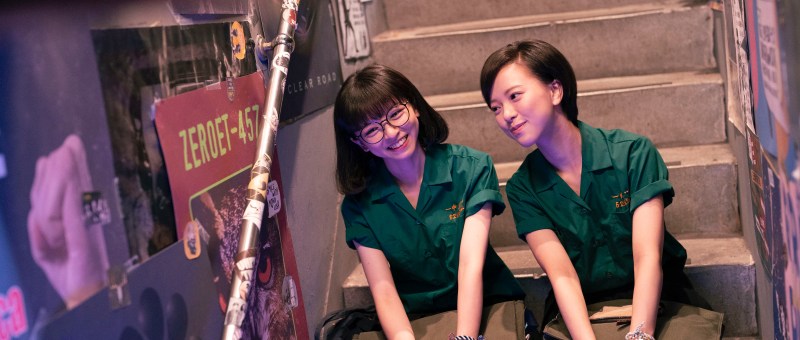
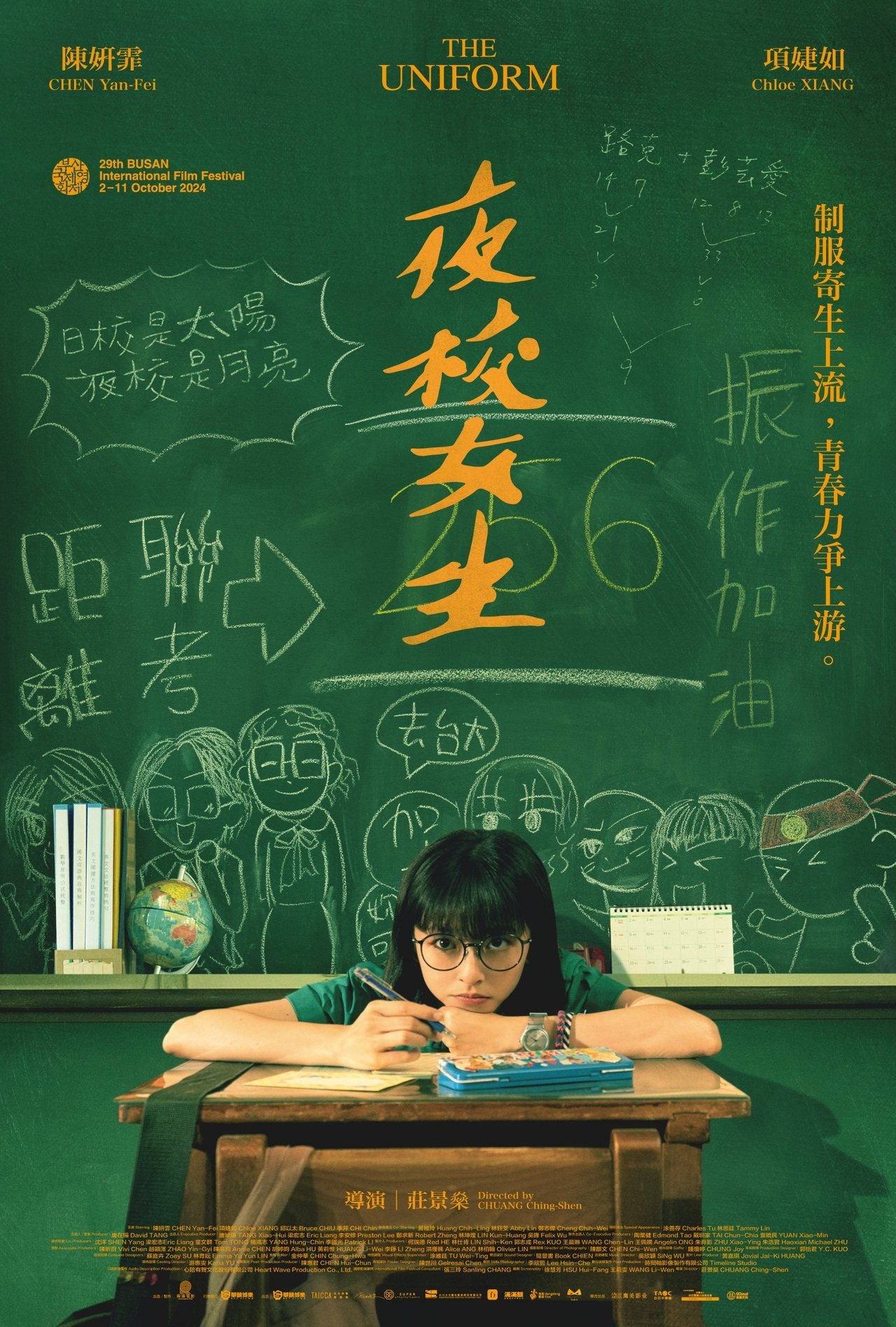
The Uniform (夜校女生, Chuang Ching-Shen, 2024)

The problem for Ai (Buffy Chen Yan-fei) is that a minor difference in her uniform causes her to be treated differently. Set in the late ‘90s, Chuang Ching-Shen’s The Uniform (夜校女生, yèxiào nǚshēng) uses the school to examine the stratified nature of the contemporary Taiwanese society and the elitism that governs it. Having failed the main exam, Ai has won a place at a prestigious girls academy but been relegated to the “night school”. To maximise its efficiency, the school operates on a shift system with day pupils attending classes until 4.30pm and the night students taking over until 9. Though there isn’t supposed to be any difference between the two, the night students are treated as a kind of overflow intake and looked down on by the day pupils while some complain that they’re unfairly using up resources which should be theirs by right. 

Despite the differences between them, Ai strikes up an unexpected friendship with a day student with whom she shares a desk, Min (Chloe Xiang Jie-ru). Shy and somewhat timid, Ai is taken by Min’s free spiritedness and often skips out on her classes to do fun things with her like going to a club to see Mayday before they were famous. Min, obviously, never misses out on her education and though she later reveals her own sense of insecurity in not feeling that she fits in at the school nor really deserves to be there, does not really understand Ai’s situation nor her own feelings of frustration and futility. Ai, meanwhile, is attracted by the upper-middle class atmosphere of the day pupils and increasingly embarrassed by her own more humble home life.

Ai’s father died in an accident and her mother runs a cram school out of their home. Ai’s mother (Chi Chin) is always trying to save money and picking up mismatched furniture for free, much to Ai’s annoyance, while Ai also does a series of part-time jobs including working at a ping pong club at the weekend though her mother doesn’t really want her doing sports because they’re unladylike and not all that useful for landing a place at a top university. The reason she sent her to the academy was to give her a leg up into what she sees as a conventionally successful life by getting a degree and finding a man with a professional job to marry. Ai’s resentment is partly provoked by this sense of being railroaded towards a future she might not want while at the same time facing tremendous pressure and afraid that in the end she won’t be able to measure up to her mother’s expectations. 

It’s at the ping pong club that she first meets Luke (Chiu Yi-tai), a handsome student from the elite boys’ school, and begins to strike up a relationship with him before Min tells her she likes him too. This ordinary teenage love triangle is coloured be class conflict in which Ai doubts she has the right to go after Luke because he is from a wealthy family, lying to him to cover up the fact that she and Min skip school by swapping their shirts which are embroidered in different colours for day and night students by claiming to be a pupil in the elite advanced class while hiding from him that she’s actually a night pupil. After beginning to suspect that Luke might actually like Ai, Min too begins to look down on her as if she thought that Ai were forgetting her place and has no right to date him because, unlike her, she is not his social equal. 

As for Luke himself, he’s actually rather bland and in part because his own life seems so easy because of his family’s wealth though he too later lets slip that he feels embarrassed by his parent’s apparently secret divorce and has only just begun to let go of the idea of them getting back together. For much of the film, it seems like he’s merely in the way of the relationship between the two girls which more successfully overcomes the barrier of class. After vicariously enjoying living Min’s lifestyle, Ai eventually comes to realisation that she and Luke are “not the same” and come from different worlds. He doesn’t really care about that, and seems to have become aware of his privilege abandoning a plan to get into university by competing in the maths olympiad and take the exam instead in the interests of “equality,” which is a well-meaning gesture but not really the bold act of egalitarianism he thinks it is even if also emphases his commitment to Ai in his willingness to break down class barriers that might otherwise work to his advantage.

As a means of denying her reality, Ai escapes through writing letters to Nicole Kidman with the help of a young man who speaks English and works in her aunt’s video store but is eventually jolted into adulthood by a more literal earthquake that reminds her how precious each of her relationships is and fragile the world around her. Through her various friendships, Ai comes to understand that almost everyone she knows also suffers with feelings of inferiority or a lack of confidence, weighed down by the pressure to achieve social success which might not be what they want anyway, but that they can overcome them together through understanding and mutual support that crosses class boundaries. Charmingly nostalgic, the film has a sense of hope for the future that it is indeed possible to achieve success on your own terms while prioritising your friendships and taking care of those around you.


The Uniform screens in Chicago 12th April as part of the 19th edition of Asian Pop-Up Cinema.

Trailer (English subtitles)
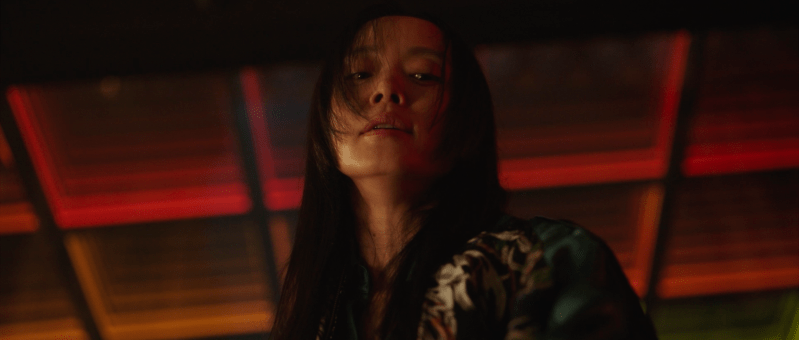
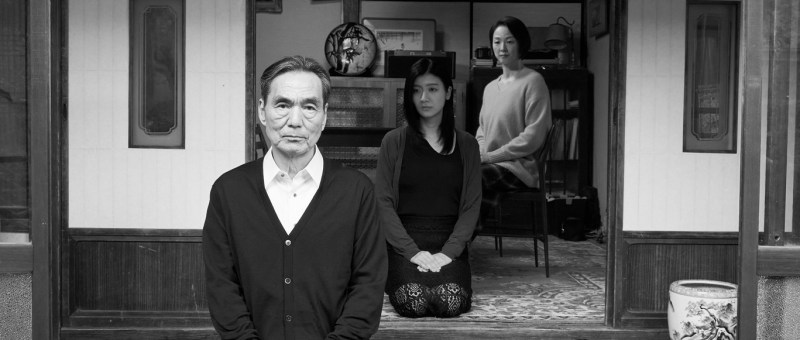
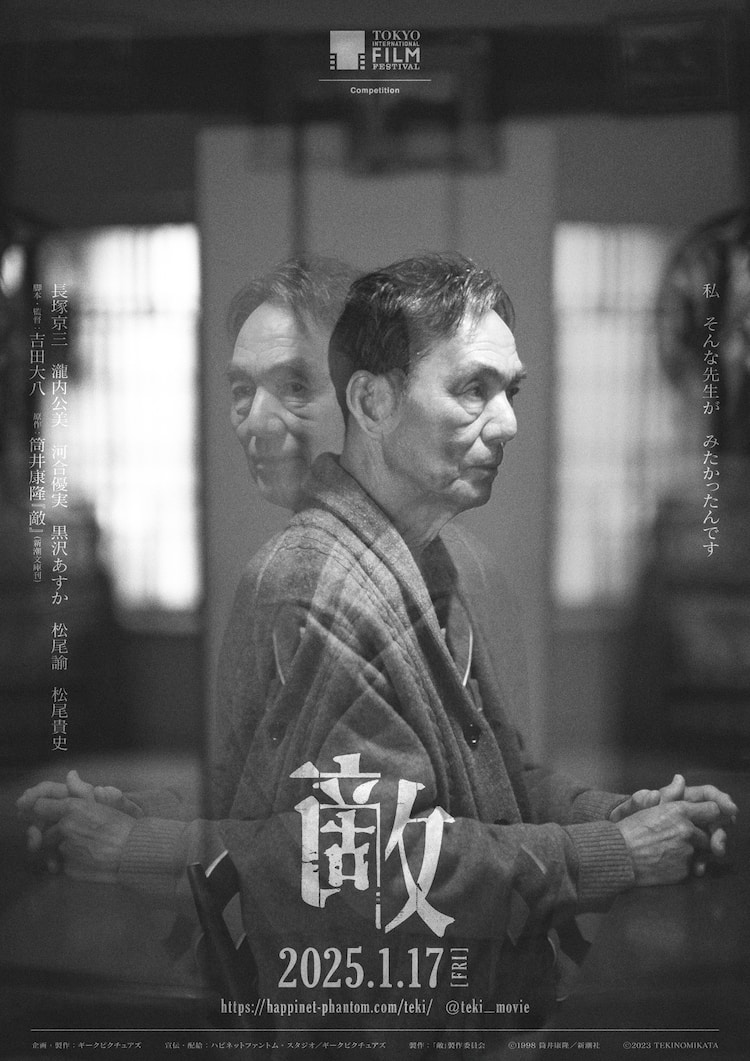
Teki Cometh (敵, Daihachi Yoshida, 2024)

“So, reality or literature, which is more important?” an unexpected guest asks a retired professor in Daihachi Yoshida’s Teki Cometh (敵, Teki). Adapted from the novel by Yasutaka Tsutsui, the film is not exactly about encroaching dementia but rather the gradual embrace of fantasy as the hero finds himself inhabiting the shifting realities of age in which his carefully curated persona of the refined professor begins to crack under the weight of its impending end.

Then again, objective “reality” is clearly a strain for Gisuke Watanabe (Kyozo Nagatsuka). It’s probably not a coincidence that Gisuke shares his surname with the hero of Kurosawa’s Ikiru as he too begins to ponder the meaning of his life along with the apparently meaninglessness of his twilight years. He reveals to his friend that he’s well aware his pension won’t cover his expenses for the rest of his projected lifespan and that he’s already calculated what he calls “X-Day” which will be the day the money (and implicitly his life) will simply run out. This day is continually postponed as Gisuke acquires extra money through giving lectures on French literature or writing articles for magazines, but the early part of the film at least is all about money and its relative values. Gisuke says that he does not really contemplate the price of the newspaper because the newspaper is something he wants so he simply buys it while taking out half the amount he’d usually charge for a lecture from an ATM machine. His friend advises him to drop his fees and get more work, but Gisuke explains that his 100,000 yen boundary is carefully maintained as a kind of bulwark against a sense of obsolescence as in he thinks they’ll keep haggling him down until he’s grateful just to get anything at all.

But obsolescence is clearly something he already feels given that interest in his chosen field has already declined and perhaps there no longer is much of an audience for his views on Racine and the development of the French language. Like the professor at the centre of Kurosawa’s Madadayo, Gisuke is surrounded by former students most of whom do not work in fields related to their studies but continue to hold him up as great scholar and influential figure in their lives. Yet as the film goes on and realities begin to blur, we might begin to wonder if any of these visitors are actually real or merely spectres leaking out from Gisuke’s fracturing memory to express his own anxieties about past and present. Former student Yasuko (Kumi Takiuchi) appears to be flirting with him, but on the other perhaps she’s merely reflecting the buried desires for which he continues to feel guilt and shame. He recalls times in which they attended the theatre together and then went for meals and drinks as if they were quasi-paternal or at least platonic, but Yasuko asks him if it wasn’t sexual harassment while at the same time directly stating that the desire is mutual (and there’s 15 minutes left before her train leaves). 

From this point on, Gisuke begins having strange dreams perhaps inspired by weird messages he’s receiving about an “enemy” that’s “coming from the north”. The “north” in a Japanese context would most likely be Russia and the messages reflecting a fear of invasion but also perhaps implying that in Gisuke’s case, the enemy lies within and it’s his own brain that is attacking itself. The illicit desires that he hints at to another former student while discussing his brief foray into and eventual boredom with voyeurism begin to come to the fore in his surreal dreams including one where he is subjected to a colonoscopy that is heavily influenced by BDSM imagery. His surprise visitor asks him if he remembers the war and Gisuke says that he’s told he experienced it in the womb, implying that he carries a degree of trauma from a time before he was even born. The ghost of the grandfather he never met haunts his well-appointed Japanese-style home that speaks of his traditionalism, while Gisuke himself tenderly takes out his late wife’s old coat and deeply breathes in her scent before hanging the coat up in his office so that it too floats like a ghost.

Yoshida structures the film through a series of vignettes ordered by season, yet there’s nothing necessarily to say that the seasons are consecutive or occur within the same year. Time is becoming abstract to Gisuke, even as he’s pursued by his invisible “enemy” that attacks his respectable facade and the very image of himself as he too embraces fantasy as a means of liberation from an otherwise monotonous if also serene life of awaiting the inevitable. The monochrome photography and static composition add to the air of deadpan humour in Gisuke’s increasingly surreal world. Teki cometh for us all, but in the end teki is us and we are teki. Our own fears, regrets, and insecurities will indeed return to torment us and show us who we are. Likely as not will not like what we see.


Teki Cometh screens in Chicago 11th April as part of the 19th edition of Asian Pop-Up Cinema.

Original trailer (English subtitles)
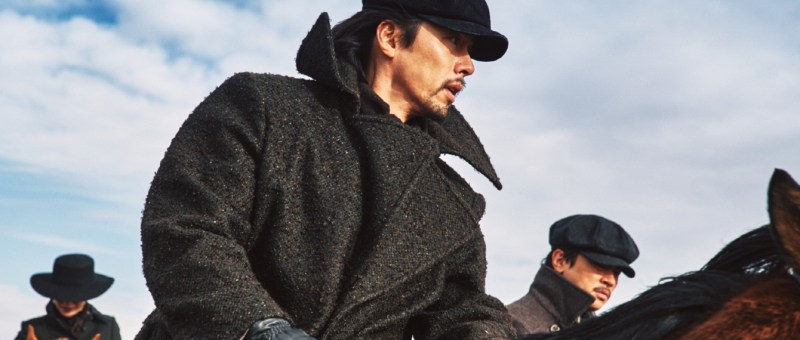
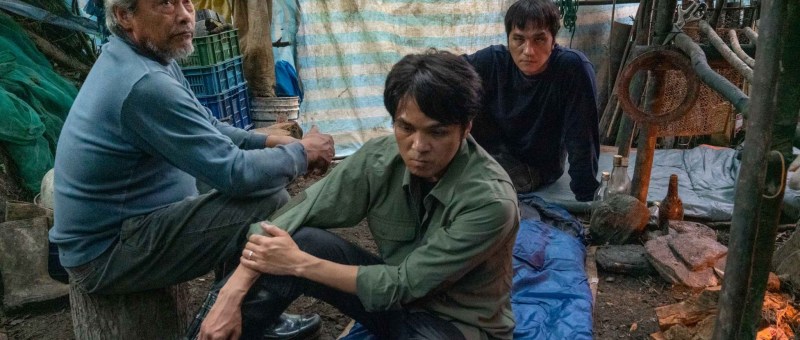
Harbin (하얼빈, Woo Min-ho, 2024)

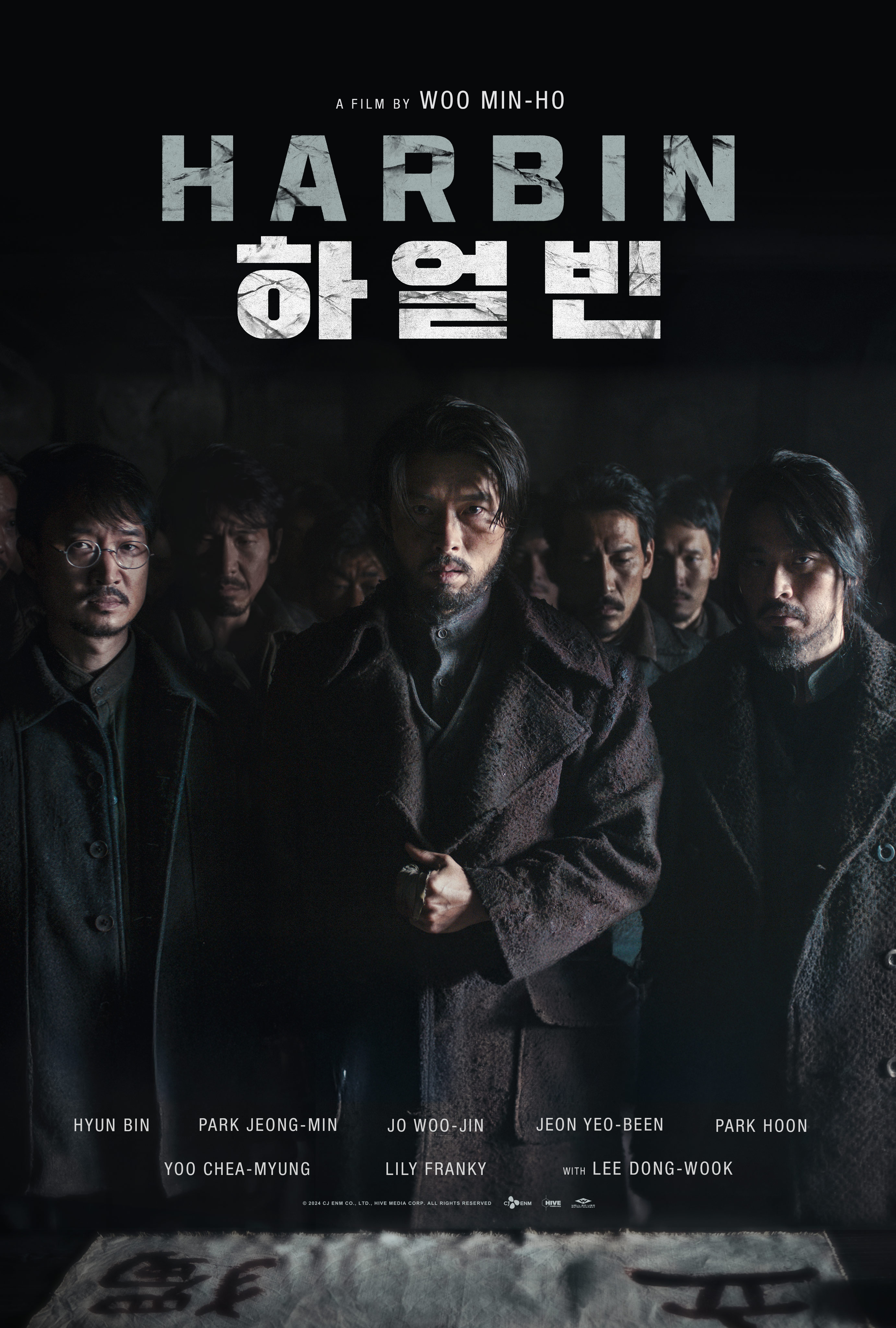
Ahn Jung-geun is one of the most well-known figures of modern Korean history and his story has indeed been dramatised several times before, but what’s unusual about Woo Min-ho’s espionage thriller Harbin (하얼빈) is the way it tries to sublimate Jung-geun the individual in favour of making him an emblem of the common man. As such, the film is more egalitarian than might be assumed and ultimately praises the integrity and resilience of the Korean people who save their country and their culture in a more spiritual than literal sense.

Indeed, Ito Hirobumi (played by Japanese actor Lily Franky), former prime minister of Japan and the first Resident General of Korea after it became a Japanese protectorate, remarks that he has always been sceptical of the annexation because though they have been ruled by “foolish kings and corrupt officials” the Korean people will continue to be a thorn in his side. Toyotomi Hideyoshi’s attempt to invade Korea was defeated by a volunteer army and a charismatic admiral, Yi Sun-sin. Then again, a Japanese soldier remarks that it will be difficult to find such a hero in the Korea of today, a pointed comment that implies Ahn Jung-geun is just such a hero through the film skirts around the fact his assassination of Ito did not in the end prevent Korea’s annexation which was completed in 1910, while the Independence Movement did not succeed in liberating in Korea which regained its independence when the Japanese Empire collapsed at the end of the war and even then was subjected to a period of occupation by US forces before its sovereignty was restored. 

What Jung-geun becomes is a kind of torch bearer for another Korea serving as a moral compass and preventing those around him from becoming just as bad as the Japanese whose cruelty they resist. As the film opens, Jung-geun’s comrades are awaiting his return after going missing following a disastrous encounter with Japanese forces. Despite having won the initial battle while heavily outnumbered, Jung-geun’s decision to release the Japanese commander, Mori (Park Hoon), as a prisoner of war results in a counterstrike in which his forces are all but wiped out. His comrades had been against the decision and now doubt his abilities and judgement along with a new suspicion that should he return he may have been captured and turned by the Japanese to spy on them. But Jung-geun’s decision signals his righteousness and refusal to give in to the cruelties of war. He releases Mori because it is the right thing to do. Executing prisoners of war is immoral by commonly held standards of war, and he pities Mori as a husband and father. He perhaps also hopes that it is a gesture of good will that shows him the Independence fighters are just and reasonable. 

But just and reasonable the Japanese are not, and so Mori betrays his trust. Deluded by the death cult of militarism, Mori is humiliated by Jung-geun’s magnanimity which is after all a show of power and that he has overturned the dynamics by granting Mori his life. Mori asks to die as as loyal soldier of Japan by committing ritual suicide but is denied in this both by Jung-geun who tells him he must live and by Chang-sup (Lee Dong-wook) who wants to execute him. This deep sense of humiliation and shame in remaining alive after defeat spurs Mori into a personal vendetta against Jung-geun to reclaim his honour and that of Japan which leaves him almost indifferent to Ito’s fate though nominally in charge of preventing his assassination at the hands of Jung-geun. Jung-geun is also trying to redeem himself for the loss of his men’s lives and has in a sense declared himself already dead in that he lives only for the souls of dead men and has embarked on what is in effect a suicide mission to kill “the old wolf” as a means of atonement and the eventual liberation of his country. 

But then his comrades are already weary and some are already beginning to ask themselves if it’s really worth it. How many more men will have to die before they win their freedom? Sang-hyun (Lee Dong-wook) laments that if the Japanese write their history, his name will be forgotten and he will have left no mark upon the world. They are grieving what they’ve lost in more personal terms aside from their lost nation. In order to get the dynamite to blow up Ito as a backup plan, the gang have to make contact with a former comrade who has since abandoned the cause to become a bandit (Jung Woo-sung). Having lost his eye and his brother, who was also the husband of another committed revolutionary Ms. Gong (Jeon Yeo-been), he decided it wasn’t worth it anymore and chose a different kind of freedom. “If we all die like dogs, no one will remember us,” Sang-hyun later laments. But Jung-geun, who will be remembered, is less concerned with his legacy insisting that even those who may have betrayed them should be given a second chance for they will eventually see the light. Like Ito, he believes in the Korean people and that they will come together to carry the light into the darkness. 

What he does is light the way, and as the closing scenes imply pass the torch to others who will each keep it alight until the dawn of liberation. Nevertheless, Jung-geun does have an unfortunate habit of getting those around him killed while the horror of the battle scenes, the grimness of decapitated and limbless bodies along with the constant sense of loss and defeat seem to imply that perhaps it isn’t worth fighting in this way lending further justification to Jung-geun’s conviction that taking out the leadership is the only way to turn the tide of this war of attrition. In sacrificing his own life, he becomes a kind of martyr, wearing traditional Korean white clothing as he goes to his death knowing that others will come after him. Rich with period detail and tense in its sense of intrigue, the film ultimately argues for a more compassionate sense of revolution governed by righteousness in opposition to the rather cynical justifications made by Ito for the cruelties of Japanese imperialism.


Harbin is released in the US on on 4K Ultra HD, Blu-ray™ and DVD courtesy of Well Go USA.

International trailer (English subtitles)
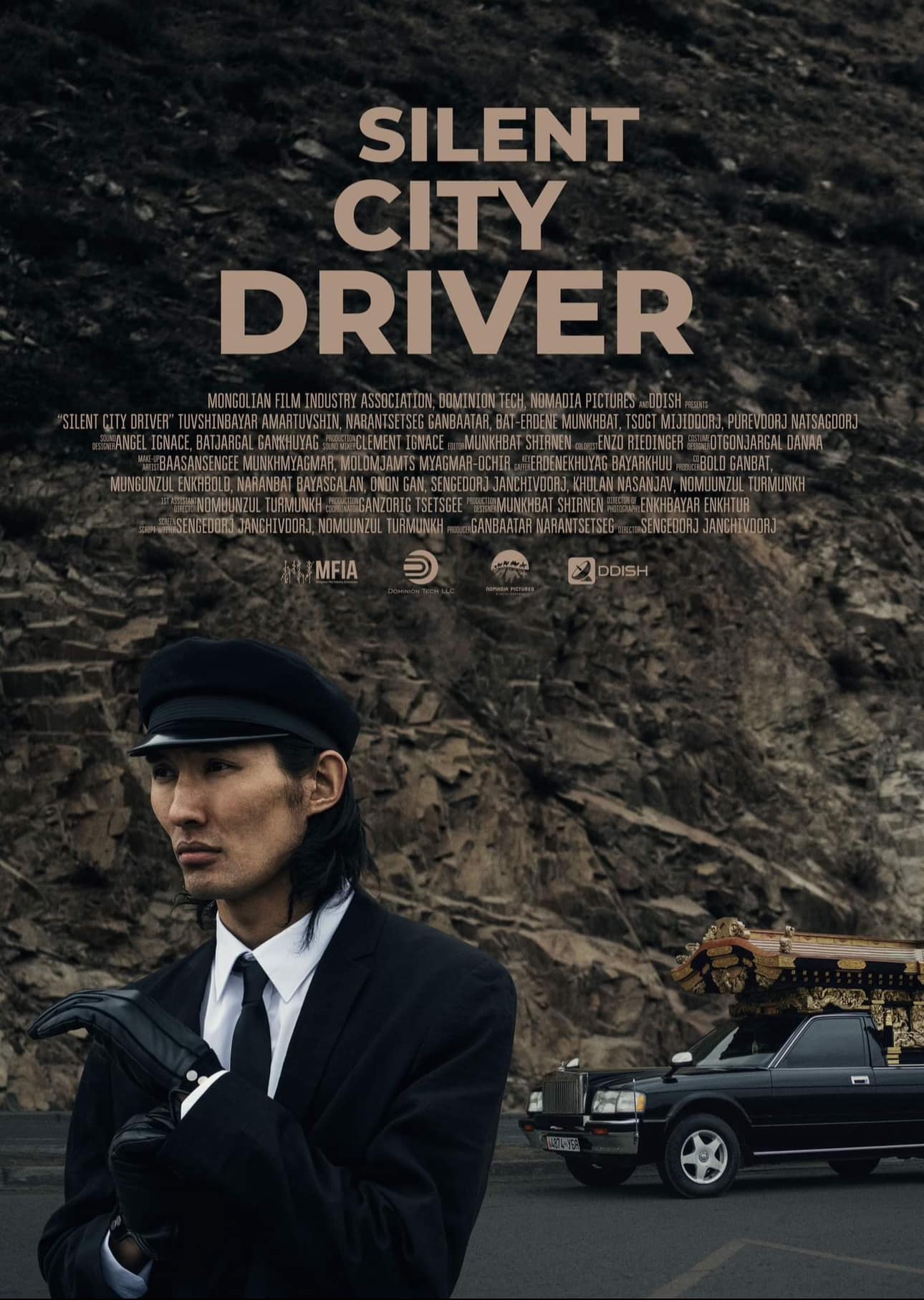
Silent City Driver (Чимээгүй хотын жолооч, Sengedorj Janchivdorj, 2024)

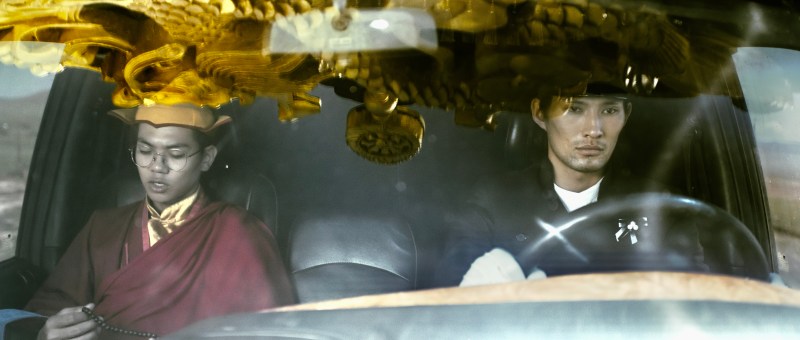
Myagmar (Tuvshinbayar Amartuvshin) asks a teenage monk if he thinks atonement is possible. The monk, Sodoo, tells him that he thinks it is, but that it’s difficult and not many people can achieve it. The irony of Myagmar’s life is that he becomes a kind of ferryman, delivering the deceased to a kind of liberation he will never find while trapped in the eternal hell of Ulaanbaatar. Much less upbeat than his previous film, The Sales Girl, Sengedorj Janchivdorj’s melancholy character study finds its solitary hero consumed alternately by guilt and rage while trapped within a world of constant unfairness and inequality.

As Myagmar tries to explain, he’s not disabled, merely nervous though his stammer turns out to stem from extensive beatings during the 14 years he spent in “Dad’s house”, or prison, that have left him with brain damage and the melancholy stillness of one already dead. As he tells the friendly coffin maker at the funeral home where he is eventually employed as a hearse driver, he applied for countless other jobs but no one would give him one because of his criminal record and outsider status. Having lost his only living relative in his mother who died while he was inside, Myagmar lives alone with a pack of stray dogs that he’s taken in and cares for. He explains to the coffin maker’s daughter Saruul (Narantsetseg Ganbaatar) that some of them probably had families, but were abandoned because they got old or they were sick and it costs too much to care for a sick dog. Mostly though, they’re strays, like him, with no home or place to belong.

Myagmar extends this same kindness to Saruul having become captivated by her on seeing her come to collect her father from work. Coffin maker Sodnom thinks she’s a medical student, but Myagmar soon discovers that she works in the seedy underbelly of Ulaanbataar’s sex industry and is also at the centre of a political scandal involving a leaked tape of a politician said to have been uploaded by the woman herself as a last resort and means of revenge with a personal rather than political motivation. Myagmar follows Saruul around in a way which might seem creepy, but is emblematic of his shyness and lack of confidence in himself. Though Saruul eventually responds to his kindness and begins to return some of his affection, it’s largely because they recognise each other as two people who are trapped in this unending hell, he in his sense of futility and the trauma of his incarceration, and she within sex work and abuse. 

At a particularly low point, Saruul tells Myagmar that she wants to go to “that place”, the hell that haunts him though he no longer dreams. He tells her that it is not somewhere she wants to go, that there is no light there, no day and no night. It is a living death in which even his name was taken from him and replaced by a number, as Suruul’s will also be in a moment of grim irony. But all it seems to do is reinforce the fact that this is not so different from the life Saruul lives now. They already live in hell and there is only one means of escape. The monk, Sodoo, tells Myagmar that the best revenge is forgiveness and seeking vengeance won’t change anything, but he cannot overcome his sense of rage towards an unjust society. Still, Sodoo tells him that he did the right thing even if offers little sense of comfort to the melancholy hearse driver charged with transporting souls from this world to the next.

Sengedorj Janchivdorj lends the contemporary city a melancholy quality, a dark and lonely place peopled by the abandoned and downtrodden. Even Sodoo doesn’t quite know how old he is and marks his years by the day in which he was found. The more Myagmar begins to rebuild his life, the more he has to lose and the less it looks like he will be allowed to find happiness or the atonement he seeks for his crime. A gentle soul consumed by rage, he nevertheless has “capable hands” to which to entrust this justice and is capable of creating great beauty such as the stone lions he begins carving for the funeral home, but otherwise maintains a purgatorial existence unable to make a home for himself in a world of such constant cruelties.


Silent City Driver screens in Chicago 6th April as part of the 19th edition of Asian Pop-Up Cinema.

Trailer (English subtitles)
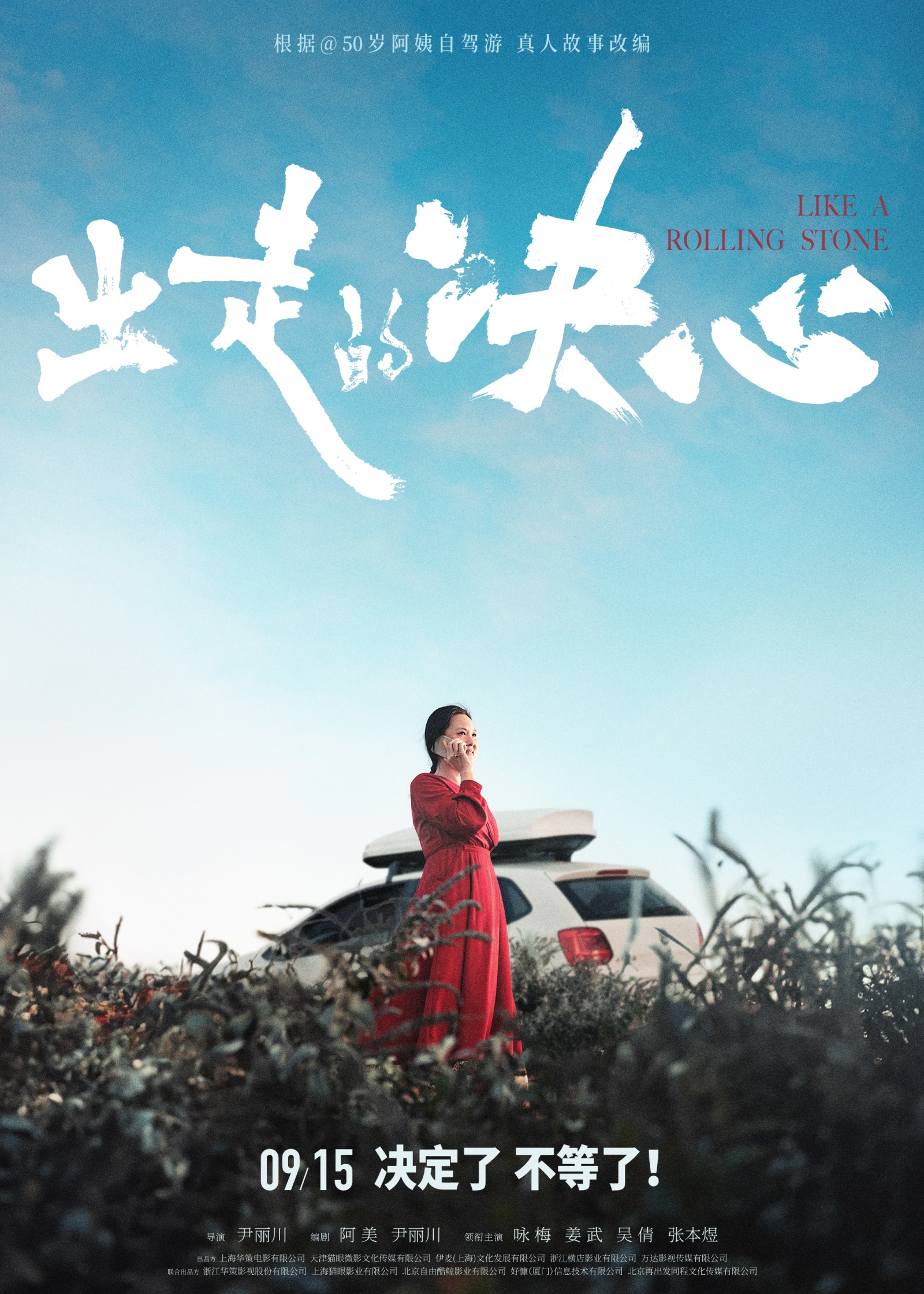
Like A Rolling Stone (出走的决心, Yin Lichuan, 2024)

A middle-aged woman’s decision to walk out on her abusive marriage and pursue a life of ultimate freedom on the road went viral in 2022 making her an accidental feminist icon in an overwhelmingly traditionalist and patriarchal culture. Yin Lichuan’s dramatisation of Su Min’s life, Like a Rolling Stone (出走的决心, chūzǒu de juéxīn), makes plain the various ways in which her life has been shaped by patriarchal forces that also continue to shape that of her daughter who is sympathetic to her mother’s plight but also perhaps still feeling herself entitled to her mother’s sacrifice while wary of making such a sacrifice herself.

As she says, Hong (Yong Mei) has been waiting a long time. A flashback to 1982 finds her as a fresh-faced teenager with hopes and dreams who wanted to go to university and travel the world. But her father pulls her out of school and forces her to work in a factory to support the family while devoting all their resources to her brother. She marries Dayong (Jiang Wu) to get away from her father’s oppression, chasing another kind of freedom but soon finding herself disappointed. In the present day we can see that Dayong is cruel and abusive. He continually runs Hong down, calls her stupid and lazy, and becomes violent when challenged. 

Hong has long wanted to leave but is prevented firstly by a sense of shame in going against conventional wisdom. When she’d tried to leave him before, her family refused to help her and in fact encouraged her to return to Dayong and put up with her mistreatment. Dayong had also frustrated her attempts to work so that she would have nowhere to go and no way of supporting herself if she left him while simultaneously taking advantage of her financially. The couple had separate finances since early in their marriage, but while Dayong doesn’t like Hong spending on things that make her happy, he often helps himself to her possessions declaring that everything belongs to the family. 

But Hong bites her tongue and does as she’s told because that’s what she’s been taught she’s supposed to do. She’s sacrificed all of herself for her family and has even been working unpaid for her brother for over three years only to see him become surly when she eventually asks for her backpay. Her daughter, Xiaoxue (Wu Qian) resents her father for the way he’s treated Hong and is supportive of her liberation but at the same time she also over relies on her asking her to cancel a trip to see her old friends to be around during her pregnancy and then again when first loses and then gains a better job but is afraid to ask for time off in case it ruins her chances of being kept on.

Hong asks her own mother why she treats her the way she does and continues to prioritise her brother while telling her must allow herself to be exploited to serve the family but she doesn’t have an answer for her. There’s certainly a greater understanding between Hong and Xiaoxue about the patriarchal structures in which they are both trapped. When she loses her job, Xiaoxue’s husband encourages her to stay home with the children just as Dayong had discouraged Hong from looking for work. Xiaoxue wants a job to avoid her mother’s fate of becoming trapped within the domestic environment with no time for herself. While her husband seems nicer and treats her better than Dayong has treated Hong, he is not necessarily that much better and still operates on a patriarchal mindset. He praises women for being superhuman, but in doing so suggests that the domestic sphere is a woman’s concern alone. It does not seem to occur to him that he could do his fair share or that the division of their labour could be more equal. 

Things may be better for Xiaoxue which was all that Hong wanted, but they are far from perfect and when push comes to shove she too just expects that her mother will sacrifice her own desires to suit Xiaoxue’s needs. Everyone keeps telling her to wait, but Hong waited to escape her father, to meet a “decent” man, for Xiaoxue to grow up, get married, and have children of her own, then for the children to start kindergarten. If she doesn’t leave now, there’ll be another reason why shouldn’t. There is something quite empowering about Hong’s gentle progression towards achieving her freedom beginning with getting her driving license in her 50s despite the misogynistic banter of the instructors. When she gets her car, Dayong immediately gets into the driver’s seat and it takes a little longer for her to assume her space, but as she says no one can stop her now. She won’t be bullied or belittled anymore, nor will she allow herself to be taken for granted or guilted into sacrificing herself for others who rarely sacrifice anything for her. One of a recent series of films addressing ongoing patriarchal oppression, Lin’s film is itself a way of fighting back against the idea that unhappiness is something you just have to accept as a woman as Hong begins living her best life out on the road, finally free and very much in the driving seat of her own life.


Like A Rolling Stone screened as part of the 19th edition of Asian Pop-Up Cinema.

Trailer (English subtitles)
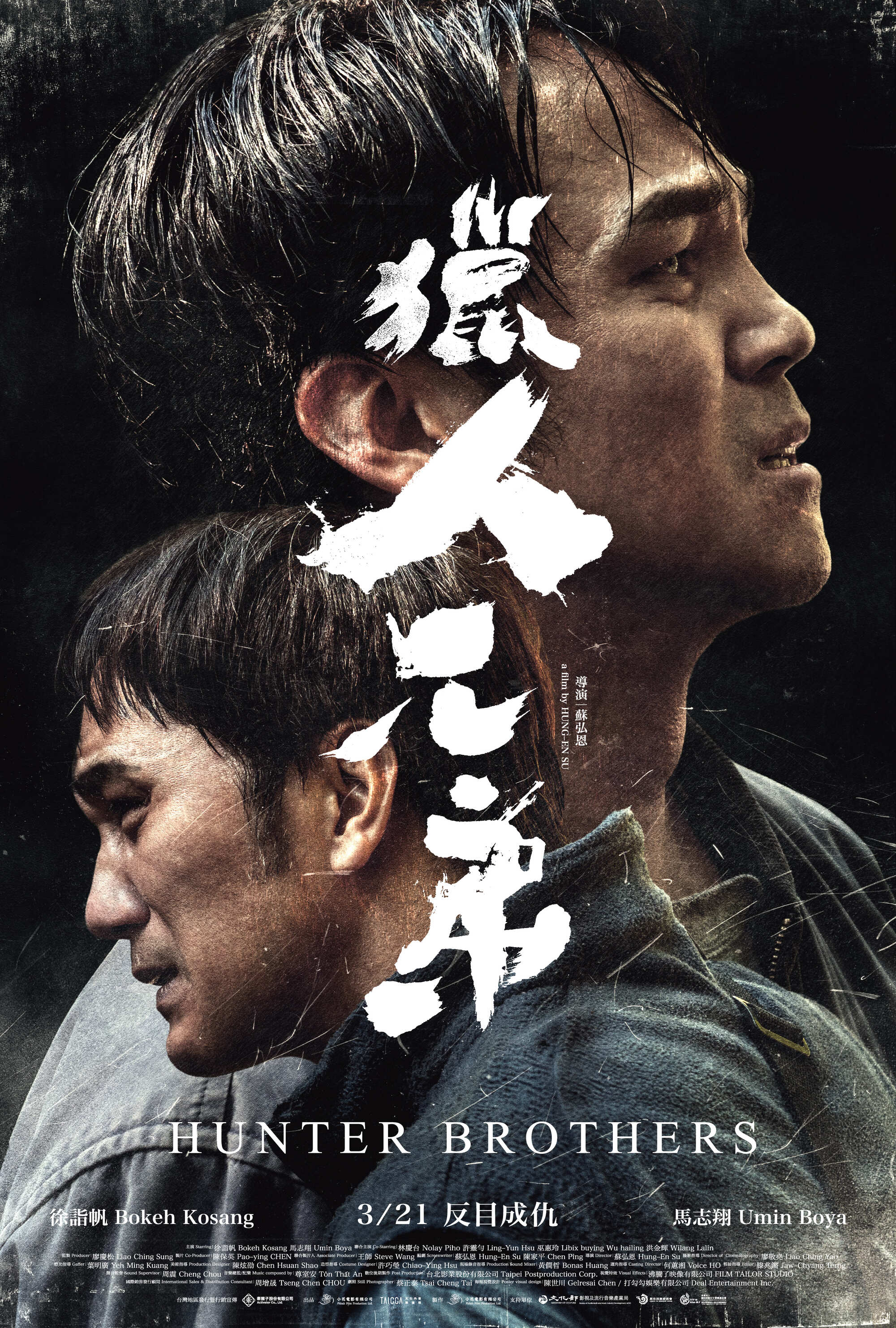
Hunter Brothers (獵人兄弟, Su Hung-en, 2024)

Two brothers find themselves on opposite sides of tradition and modernity as they descend into a state of warfare over the future of the ancestral hunting grounds in Su Hung-en’s familial drama, Hunter Brothers (獵人兄弟). Exploring the complicated position of the indigenous community marginalised by an increasingly capitalistic urbanity the film also critiques contemporary visions of masculinity in the wider society as the brothers each try to find new ways of defining themselves amid changing notions of manly success.

In the opening scenes of the film, Teymu celebrates the fact that his son, Yuci, has become a doctor because now he will never have to do manual labour and will have a more comfortable standard of living. But in private, Teymu seems upset. He feels as if he has failed the ancestors because in the eyes of their community, Yuci is not a proper man. Many people tell him that he is “not cut out to be a hunter,” and he has no desire to be one anyway, but still suffers from a serious inferiority complex and wounded male pride. To find some kind of answer, Teymu forces Yuci against the wishes of his mother to accompany him to the mountains for one last hunting trip to prove himself by killing a wild boar and finally validating Teymu’s own fractured sense of masculinity that his son is indeed a “proper man.”

It’s during this trip that Teymu is killed in mysterious circumstances. Yuci’s brother Siring ends up going to prison for the crime, but unlike him had been more of the son his father wanted. Yuci had been clever and studious, but Siring is more of a traditional mountain man who lives for the hunt and has a very unreconstructed sense of masculinity. But he also loved and understood his brother, knowing this life wasn’t for him and trying to protect him from their father who was in other ways a failure. Teymu drank and was violent, objecting to his wife’s attempts to stop him taking Yuci to the mountain by threatening her and using incredibly offensive language. Yuci’s reaction against this traditional society is also towards his father and everything he represented. But this traditional world is the only one a man like Siring can live in. He has no real qualifications or other skills and cannot survive outside of their community. On his release from prison, Yuci is keen for him to get a job and against his return to hunting, but it soon becomes clear that isn’t a way that Siring can live.

In that respect, they represent opposing polls. Yuci is the modern man of science, a doctor, while Siring is a man of the forests and mountains, Then again, Yuci is a devout Christian and his religion also seemingly a challenge to traditional indigenous practices though also alien to the mainstream society. The boys’ mother is living with dementia and those around them tell Siring that she has most likely been cursed by the ancestors who are angry with them for doing something “dishonest” which might be why she starts insisting Yuci go to the police and that they made a bad decision that should be put right. Yuci, for his part, does not appear to feel guilt for the role he may have played but is anxious that the life he’s built for himself in which is accorded a man by his career success, marriage, and fathering a son, may now crumble if Siring will not fall into line.

Tensions come to a head when Yuci decides to sell their ancestral hunting grounds which are earmarked for a development that would destroy the mountain altogether. Siring obviously objects, this world is the only one he can live in, but can do little about it. He resists his brother’s modernity and becomes estranged from him, but they are both in their way exiles and neither of them can fully live in this society. The natural affection they hold for each other as brothers is not enough to bridge this divide and merely leaves each of them lonely and alone, mired in futility and unable to move forward in any meaningful way. The ebb and flow of their lives is reflected in the way they are alternately called by their indigenous names and Mandarin equivalents, each of them living in two worlds but never really at home in either while fever divided from themselves.


Hunter Brothers screens in Chicago 29th March as part of the 19th edition of Asian Pop-Up Cinema.

Trailer (Traditional Chinese / English subtitles)