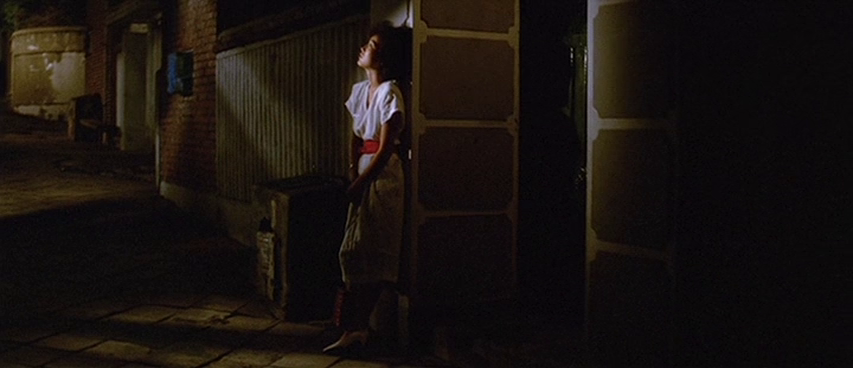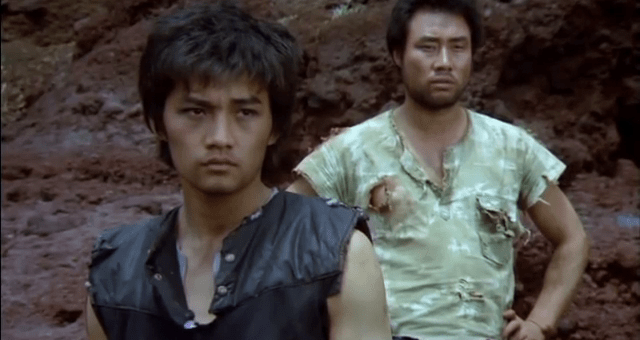
May 18 (화려한 휴가, Kim Ji-hoon, 2007)

Following the assassination of president Park Chung-hee in 1979, many assumed that democracy would return and that the society would be liberated from its authoritarian past. That did not, however, come to pass. While the government floundered, general Chun Doo-hwan launched a coup that led to nothing other than a second military dictatorship. Citizens continued to press for democratisation and the lifting of the martial law that had been declared in the wake of Park’s death. In order to cement his authoritarian rule, Chun embarked on an oppressive crackdown of resistance activity, actually expanding martial law and sending troops to monitor universities where the majority of protests were taking place.  

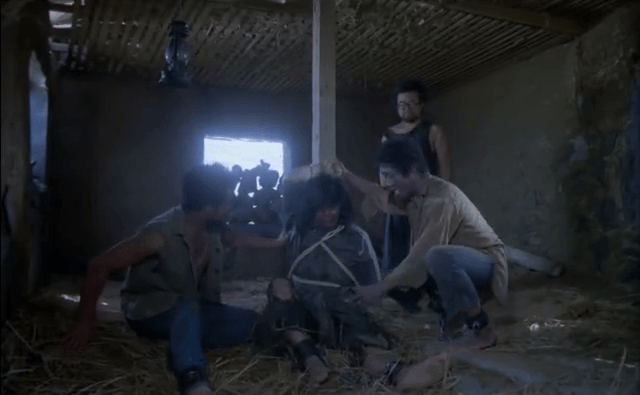
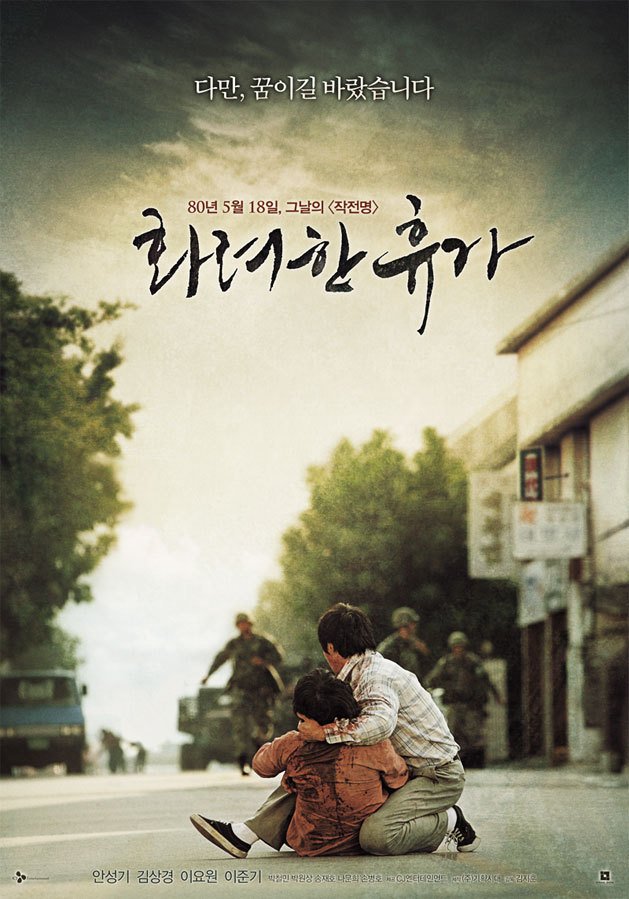
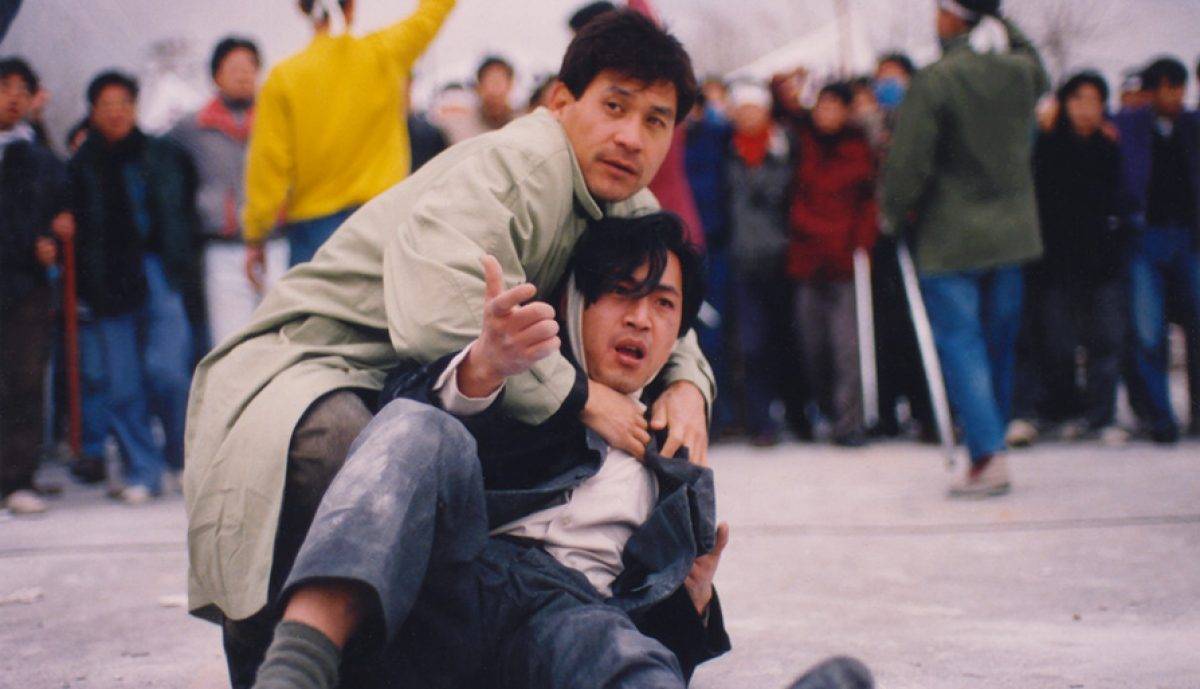
It’s against this backdrop that Kim Ji-hoon’s May 18 (화려한 휴가, Hwaryeohan hyuga) unfolds, so named for the first day of Gwangju Uprising in which citizens of the small provincial city were subject to beatings, torture, rape and murder at the hands of military forces. He opens however with pleasant scenes of the local countryside as taxi driver Min-woo (Kim Sang-kyung) heads back into the city eventually arriving to pick up his younger brother Jin-woo (Lee Joon-gi) from high school and deliver him to the local church. Min-woo also has a crush on mutual friend and fellow attendee, Shin-ae (Lee Yo-won), who works as a nurse at the local hospital. For some reason even though this is a fairly small place, Min-woo also seems to be unaware that Shin-ae is the daughter of his boss Heung-su (Ahn Sung-ki ), a former army captain now retired and running a taxi firm. 

In an attempt to make the political personal, Kim spends the first hour on Min-woo’s awkward romance which by modern standards is quite problematic in that he basically ends up following Shin-ae around and offering to give her free lifts even though she seems annoyed to see him and isn’t keen on him effectively deciding where she doesn’t and doesn’t go. Meanwhile, as he and his brother are orphaned he’s adopted a paternal role towards Jin-woo who is bright and studying hard with the aim of getting into Seoul University to study law while Min-woo most likely had to give up school to drive the taxi so he could support them both. This is also in its way a little uncomfortable in its emphasis on Jin-woo’s bright future which is about to be destroyed by the uprising as if his life is worth more because of all the ruined potential rather than just because he was an ordinary human betrayed by his government and trapped by hellish atrocity. Even so, it hints at a conflict within Min-woo as he wants to keep his brother safe but also has a natural desire to resist injustice and is moved when Jin-woo explains that one of his best friends has been murdered by state violence. 

Then again, the film’s framing is also in a sense reactionary in Jin-woo’s intense offence against being branded as a “rebel” or a “communist” rather refocusing on the fact the military’s actions are inhuman and the their attempt to slur the local people only a means of justification. As the local priest accurately suggests, the military provokes them in order to have an excuse to crack down with extreme prejudice ensuring that there will be no further resistance to increasing authoritarianism. Some army officers begin to ask questions but are quickly shut down by their overzealous commander who claims the North may be on its way to link up with these “communists” and is quite clearly prepared to wipe out the entire town rather than back down and risk a further escalation of their resistance. 

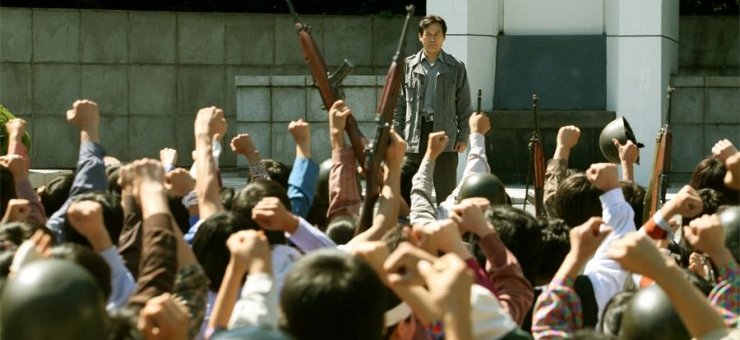
While the soldiers are faceless and implacable, the townspeople are sometimes depicted as naive bumblers with significant time spent on a “loudmouth” comic relief character who is nevertheless one of the first to pick up a gun and join the town’s civilian army led by Heung-su who like the priest is under no illusions and assumes troops will soon storm the town. The comedic tone and melodramatic undercurrent often undercut Kim’s attempts to depict the horror of the massacre even in the irony of their juxtaposition as bullets suddenly rip into a cheerful crowd which had been laughing and joking only seconds before. The closing scenes in which a man refuses to surrender and is killed are framed as heroic but in the end seem futile, as if he’s thrown his life away for no reason. Even so there is something Shin-ae’s loudspeaker pleas to remember the citizens of Gwangju who stayed strong and resisted to the last rather than consent to their oppression even if she is in a sense condemned to be the storyteller bearing the horror of it all alone along with the loss of her own happy future crushed under the boots of violent authoritarianism.


International trailer (English subtitles)
Between the Knees (무릎과 무릎 사이, Lee Jang-ho, 1984)

“We are all suffering from this Westernised lifestyle and way of thinking. They are not really meant for us,” according to a sympathetic doctor, played by the director himself, at the end of Lee Jang-ho’s erotic melodrama, Between the Knees (무릎과 무릎 사이, Muleupgwa muleupsai). The heroine does indeed find herself trapped between the Korea of the past and the modern society, but the film often seems confused in its central messages in its own use of the woman’s body as metaphor for that of the nation despoiled by foreign influence. 

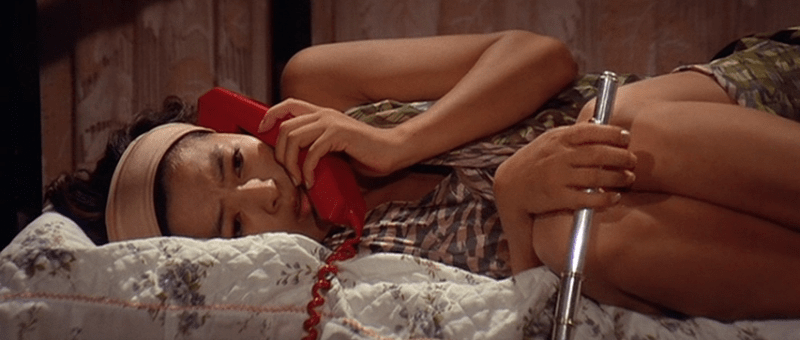
This is most obviously the implication of Ja-young’s (Lee Bo-hee) flashbacks in which she is quite clearly molested by her flute teacher who is a bearded white man. When her mother walks in on the abuse, she blames Ja-young beating her and shouting what we would assume to be unpleasant words branding her as a seductress though she is a clearly a child. As is later explained, Ja-young’s mother is carrying her own baggage in that her own mother was the mistress of a married man and fearful of the same fate befalling her daughter, she has brought her up with problematic notions of bodily purity that have caused Ja-young to develop a complex surrounding her sexuality in which she is unable to process her desires as a young woman. 

She later says that through her “immoral behaviour and desire to sin” she has found “freedom” as if sexuality was her way of rebelling not only against her mother’s tyranny but social conservatism in general. However, she also characterises it as the extreme opposite, blaming her mother in insisting that her treatment of her has left her with no control at all over her sexuality. In the film’s problematic framing, she essentially allows herself to be raped by a series of men partly as an act of self-harm, partly as rebellion, and partly because she has no other way of permitting herself to satisfy her sexual desires. This is of course dangerous, portraying a woman who says no as one who is really saying yes but resisting out of shame, but there is also a completely paradoxical criticism of Korean men all of whom are rapists except for Ja-young’s sort of boyfriend Jo-bin (Ahn Sung-ki) who is so obsessed with traditional Korean culture that he has earned the nickname “antique”.

Jo-bin lives in a Korean-style home and spends his time playing the flute, training in traditional martial arts, and watching pansori in comparison to the pursuits of other young people such as Ja-young’s brother Ji-cheol who mimics Michael Jackson and spends all his time in discos. Towards the beginning of the film is seems that Ja-young will be torn between Jo-bin to whom she originally says “if you’re so old-fashioned I may have to run away with you” and an incredibly unpleasant fellow student who refuses to take no for an answer and in fact eventually rapes her during an expressionist rainstorm that violently awakens her sexuality. The battle then really becomes whether or not Ja-young will be able to accept it, despite the realisation that she is “no longer the kind of virtuous bride that Korean men expect.”

This hints at the pernicious double standard of the contemporary society in which men largely behave like animals, treating women like trophies to be conquered and then discarded while insisting on a “pure woman” for a wife. The discord in Ja-young’s home stems from patriarchal failure, not only that of the man that made her grandmother a mistress and not a wife, but her father’s in having fathered a child with a 17-year-old Korean War orphan he took into his home. Resentment over his betrayal has further embittered Ja-young’s mother and caused her to double down on her sexual conservatism while fiercely resenting her husband’s other daughter. Yet in the film’s final stretches, a degree of female solidarity arises between the women that largely excludes the father with Ja-young’s mother accepting Bo-young as another daughter and inviting her to live in their home now her still young mother has remarried. 

Violent male sexuality also rears its head in a subplot in which a mute man who had developed feelings for Bo-young’s mother while they were being raised in the same orphanage attacks Ja-young’s father for ruining her life, as he undoubtedly did even if he tried to take at least some responsibility for his transgression. Bo-young later says that her mother hated the mute man and did not want to be in a relationship with him anyway, though he too it seems could not take no for an answer. In any case, it is only the traditionalist, Jo-bin, who is willing to accept Ja-young for who she is. He knows all of her ordeal and does not reject her for her sexually active past, rather scoffing when she had described sex as being a sin with the perhaps mistaken implication that such things were not regarded as taboo in the Korea of the past even as, paradoxically, it appears that Jo-bin is drawn to Ja-young’s old-fashioned modernity in rejecting his mother’s constant attempts to set him up with an arranged marriage. 

Of course, all of this is also very much informed by the climate of contemporary Korean cinema which had descended into an era of softcore pornography deliberately supported by the Chun regime as part of a bread and circuses social policy designed to distract the people from their democratic desires. Lee opens with sexually charged closeup of Ja-young’s lips on her flute, a phallic symbol also present in Ja-young’s forbidden fantasises as she idly fondles it after hearing heavy breathing on the telephone and experiences another moment of sexual crisis. Perhaps that’s paradoxical itself in that it’s learning to play this Western instrument that has led to her corruption in an allegory for a nation’s pollution by Western culture. In any case, Lee seems to imply that sexuality can be an act of resistance towards oppressive social codes but is otherwise unsure if that represents liberation or merely another form of oppressing one’s self.


A Fine, Windy Day (바람 불어 좋은 날, Lee Jang-ho, 1980)

Lee Jang-ho returned to filmmaking after a short hiatus having been temporarily banned for the possession of marijuana in 1980 with a fresh new approach focussing on the social issues of the day as Korea found itself in the midst of confusion following the assassination of president Park Chung-hee. Though many hoped for a new era of long-awaited democratisation, those hopes were soon dashed by another military coup and the continuation of oppressive dictatorship under Chun Doo-hwan. During his time away from the film industry, Lee had run a bar with his mother and it was there that he became more acquainted with the struggles of ordinary people.

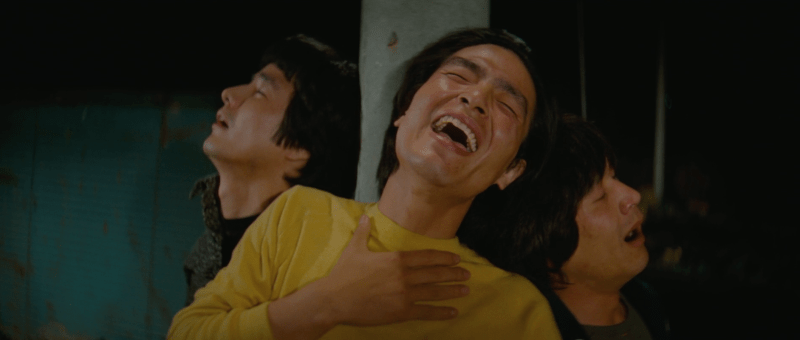
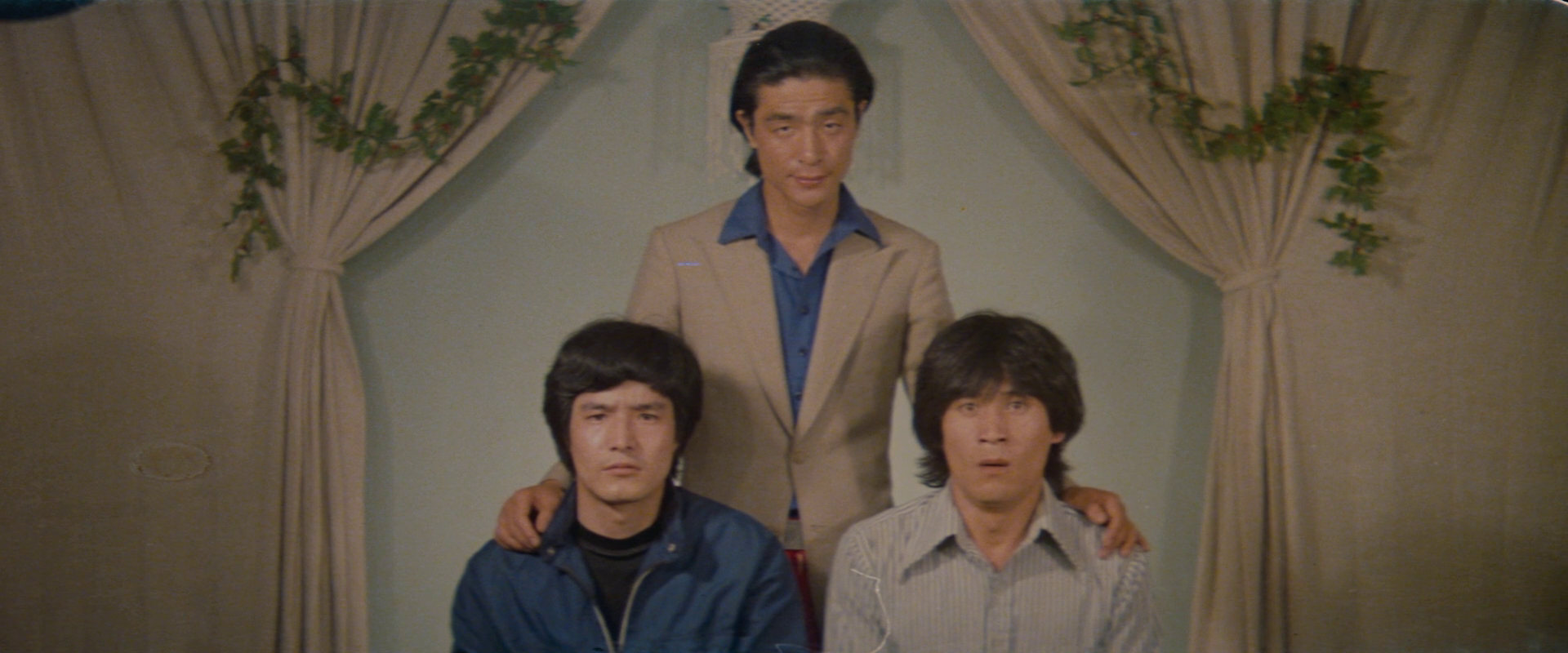
Adapted from a novel by Choi In-name, A Fine, Windy Day (바람 불어 좋은 날, Barambuleo Joheun Nal) follows three young men who have migrated from the countryside to Seoul in wider movement of urban migration. The sister of one of the men who later joins them remarks that there are no young people left in the countryside and her brother agrees that there is no longer any future in farming. Yet as the opening of the film makes clear in its idealised vision of pastoral life, it is really the expansion of the cities which has displaced the men and destroyed the natural habitats they once inhabited. The film often aligns the three with stray dogs who’ve come scavenging in the city because they can no longer survive in their rural hometowns. 

“It’s as if I’ve been taking a beating for two years straight from some invisible person” delivery boy Deokbae (Ahn Sung-ki) remarks during the film’s conclusion of his life in Seoul which does indeed seem to have been one long and bloody battle that had forced him into submission. As he tells equally naive country boy Suntae, he never stuttered before he came to the city but is now cowed and anxious all too aware of how the native Seoulites treat men like him. Daughter of a wealthy family, Myung-hee (Yu Ji-in) drives her own car around town, knocking over school children and not even bothering to stop until challenged by Deokbae for ruining the food he was currently in the middle of delivering. He later gets a telling off from his boss and his pay docked while she wraps her expensive scarf around his neck and promises to send compensation money to the restaurant where he works. 

Deokbae knows that Myung-hee is merely playing with him, her strangely childish glee like a little boy pulling the wings off a fly, yet he continues to associate with her. She laughs at him when he sits on the floor instead of the sofa after she ordered from the restaurant to get him to come to her house, and then tries to kiss him before becoming angry and pushing him away. Her posh friends later invade the restaurant and are drunk and rowdy, refusing to leave until a fight develops and they’re all carted off to the police.

But it’s only one of several degradations the men suffer at the hands of a new aristocracy not so different from the feudal elite. Chunsik (Lee Yeong-ho) works at a hairdresser’s where he is smitten with the pretty stylish Miss Yu (Kim Bo-yeon) who is being more or less sold by her ambitious boss and thereafter coerced into a compensated relationship with a sleazy businessman, Mr Kim, who was himself once a country boy but got rich quick through property speculation having cheated the old man who appeared in the film’s opening out of his ancestral land which has since been turned into the half-built slum inhabited by the three men. He is about to open a new shopping centre where the barber hopes to gain a prime position thanks to providing access to Miss Yu. The old man rails around the town demanding the return of his land, decrying that heaven will punish Mr Kim for what he’s done, and finally commits suicide in the newly completed building almost as it he were cursing it. 

The old man’s body is laid out on the last remaining stretched field where a shamanistic funeral song plays as a lament for the now ruined pastoral idyll which has been taken from each of the men and replaced with internecine capitalism in which wealth comes at the exchange of humanity. At the Chinese restaurant where Deokbae works, the wife of the dying boss had been carrying on an affair with the manager whom she hopes to marry once her husband has gone, while he expects to take over the shop though as is later revealed he is already married with children and technically performing a long con on her. The third man, Gilnam (Kim Seong-chan), works in a motel while saving money to open a hotel of his own but unwisely gives his savings to his girlfriend who runs off with them leaving him with nothing. He is then drafted for military service, receiving another blow from the contemporary Korea.

The man who spars with Deokbae who takes up boxing after his altercation with the rich kids is also wearing a shirt that reads “Korea” on the back and we watch as he is mercilessly beaten but this time refusing to give up reflecting only that he’s learned how to take a hit which is it seems the only way to survive in the Seoul of the early 1980s. The tone that Lee lands on is however one of playful irony, particularly in the meta-quality of the closing narration along with its victory in defeat motif as Deokbae acknowledges the need to roll with the punches which is also a subversive admission of the futility of his situation in which it is simply impossible to resist the system. A lighthearted but also melancholy chronicle of the feudal legacy repurposed for a capitalist era the film encapsulates itself in its bizarre disco scene as a confused Deokbae dances like a shaman, forever a country boy lost in an increasingly soulless and capitalistic society.


Lee Jang-ho’s Baseball Team (이장호의 외인구단, Lee Jang-ho, 1986)

After finding huge success with his debut film, Lee Jang-ho soon became disillusioned with the film industry and was in fact temporarily banned after being found in possession of marijuana. After the assassination of Park Chung-hee in 1979, Lee returned with a new focus on socially conscious filmmaking only to be blindsided by the advent of an entirely new age of oppression following the coup of general Chun Doo-hwan in 1980. In contrast to Park’s regime, Chun’s embarked on a deliberate bread and circuses policy pushing sports, sex, and screen in which social commentary was out and softcore very much in. 

Lee had opened his nonsense film Declaration of an Idiot with a scene of himself committing suicide because no one cares about movies anymore, they only like sports which lends a note of irony to his incredibly strange and very of its time baseball film, Lee Jang-ho’s Baseball Team (이장호의 외인구단, Lee Chang-houi wingudan). Adapted from a popular sports manhwa, the film is ostensibly a much more commercial affair yet in its way is attempting to subtly attack the growing inequalities of the Chun era as its poor mountain boy hero, Hye-seong (Choi Jae-sung), squares off against posh boy rival Dong-tak (Maeng Sang-hoon) not only for sporting glory but the hand of his innocent first love Um-ji (Lee Bo-hee). 

As Dong-tak joins a top-rated team and is interviewed on television, Hye-seong returns to the mountains to train and is trying to dodge the train fare while travelling with his father to discuss joining a team. He eventually strikes a blow against Dong-tak by striking him out during a perfect game, but ruins his shoulder in the process with his baseball dreams then behind him, which is a problem because he’s devoted his entire life to fulfilling the promise he made to Um-ji when they were children to become a great baseball player. Hye-song repeatedly promises to do anything he can to make Um-ji happy even if it means accepting her relationship with Dong-tak, but Dong-tak openly laughs at him for being a nobody though there is something worryingly intense in his suddenly throwing all his letters from Um-ji, which he had in his bag, on the table describing them as written by a “goddess” and his “sacred place.”

As for Um-ji herself, she seemingly has little control over her life as the daughter of an upperclass family. She began dating Dong-tak before reconnecting with Hye-seong in Seoul and originally sticks to her class-appropriate match before being tempted by her innocent childhood connection and realising Dong-tak is an arrogant arsehole who didn’t show up to her birthday dinner because he forgot and went on a date with another girl. Even so, her family continue to pressure her into marrying Dong-tak despite his manly decision to ignore her until he’s accomplished his mission of achieving 100 consecutive hits at which point he’ll propose. Hye-song ironically makes a similar decision, taking off for a training session on a remote island which ends up lasting a whole year during which his completely insane mentor Coach Byeon-ho (Ahn Sung-ki) denies him permission to write to her. When he returns, Um-ji has ended up married to Dong-tak and is in a depressive state wandering through life in a daze of guilt and disappointment that she betrayed both herself and Hye-seong because of social pressure to conform and is now stuck in this emotionally unsatisfying relationship. Hye-seong rejects her on the grounds that the spark has gone from her eyes and she’s no longer the Um-ji of his youth though also accepting some responsibility for that. At the end of the film, Hye-song loses his sight which allows him to reunite with a changed Um-ji who has separated from the now loser Dong-tak, no longer able to see the change in her remembering only the Um-ji he fell in love with. 

The men who were with him on the island where they underwent bizarre martial-arts style training regimes, were whipped and shackled, and almost killed their one-armed teammate have similar problems returning to situations that are less satisfying than they hoped. A wimpy pitcher despised by his son returns to find him unimpressed, while another discovers his wife had temporarily left him, and an incredibly short man, Kyeong-do, who’d been bothering a bank employee so much she switched branches to avoid him discovers she’s engaged to another man. Kyeong-do refuses to give up, arrogantly telling her that he’ll be replacing her groom on the big day while continuing to behave like a massive creep but actually successful in the end because of his sporting and financial success though it looks more like a case of her giving in than actually falling for him and sends some very mixed messages about a woman’s agency in this still conservative age. 

The players brand themselves losers and outsiders, each of them in some way compromised and locked out of pro-baseball from Kyeong-do’s short stature to Hye-seong’s poverty though the decision to include a mixed race man which may have been intended as a progressive gesture seriously backfires by having a Korean actor perform in blackface while insensitively mimicking racial stereotypes. The coach, Byeong-ho is also an outsider by virtue of walking with a cane and purposefully creates a team of others like himself he can train with his cruel and bizarre methods to take on the Dong-taks of the world. Even so, others brand them “inhuman”, “beasts trained with whips”, and continue to resent their attempt to subvert the contemporary class order. 

On the surface, however, Lee has simply made a baseball film about a group of outsiders who triumph over adversity. He fills it with the spirit of the times, throwing in several sequences accompanied by contemporary pop songs along with an atmosphere of ridiculous excess not to mention inconsequentiality as if he were actively mocking the current direction of Korean cinema despite the occasional moment of artistry such as the gothic scene in which Um-ji realises Hye-seong has returned but the pair are separated by a billowing white curtain. An oddity, but perhaps one that speaks of the oddity of its times. 


Er Woo Dong: The Entertainer (어우동, Lee Jang-ho, 1985)

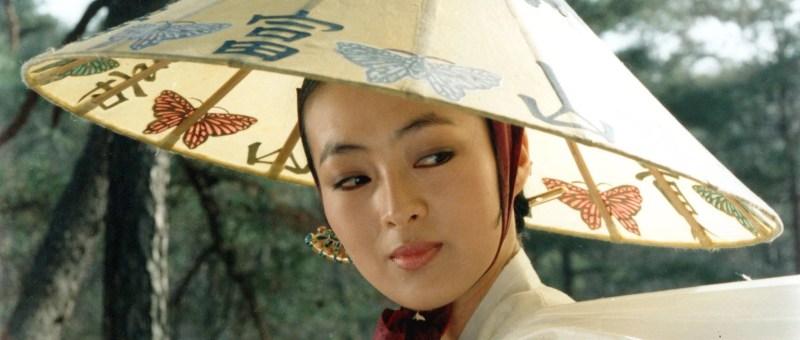
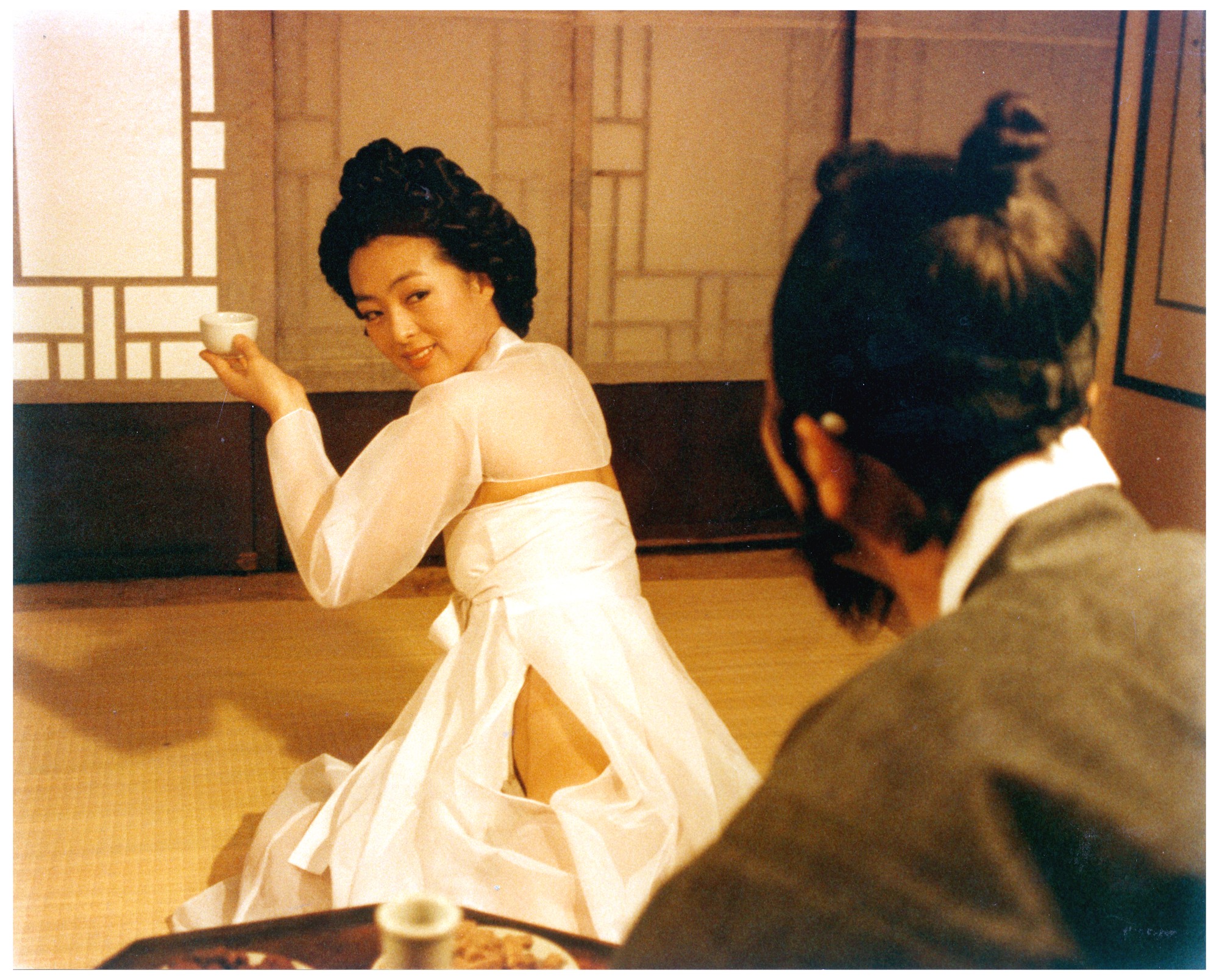
“The commoners get to have all the fun” a lady in waiting laments to her mistress in Lee Jang-ho’s historical drama set in the reign of good king Sejeong, Er Woo Dong: The Entertainer (어우동, Eo Udong). It is however the titular heroine Eoudong’s (Lee Bo-hee) determination to enjoy herself that becomes a threat to the social order, not only in her ability to subvert the Confucianist philosophies of the era by making men her playthings but doing so with those not of noble birth. 

Legends seem to surround Euodong, a little more of her history revealed with each step in the investigation into the murder of a man she had slept with at a festival. The man had attempted to rape her, but Eoudong was soon able to gain the upper hand in the situation, realising that he is a servant boy who often visited her home. She sleeps with him willingly, dominating him by getting on top and making it about her pleasure and agency rather than his. Soon after she leaves, however, the boy is killed by an assassin apparently hired by her cruel and perverse husband, who is technically the king’s uncle, to tidy up after her. 

Set in 1479, the film is clear in its criticism of the feudal order while insisting that it is the nobles who are the most constrained because they must act by these arcane codes to which the commoners are not subject. The commoners revel at their festival, something more or less forbidden in the revered word of the court and most particularly for a woman like Euodong who craves freedom and excitement, longing to fly like a bird. People of often say of her that should have been born a commoner where her behaviour would not be regarded as so deeply problematic to the social order in its direct attack on notions of class and gender. Though she herself is niece to the prime minister, an assassin (Ahn Sung-ki) is later hired to neuter the threat she poses though there is a kind of care in the unusual request, instructing that death should come suddenly and without pain. Afterwards, the assassin should be sure to bury her in her beautiful place. 

The assassin, however also has a painful past in which in which he was quite literally castrated for a similar kind of transgression of class boundaries having become friends with a young noblewoman. While he lost his penis, his friend lost his tongue so that he would never speak of what happened rendering them both outcasts left with no option but to serve the system that had harmed them by becoming spies and assassins. Eoudong’s rebellion is towards this same system, a system in which women are regarded as worthless if they do not serve their proper function. Married at an early age, some recount that Eoudong was once cheerful but less so after her marriage. Her husband rarely visited her and in fact took a concubine but she was still blamed for the “failure” to conceive a child and threatened with the shame of being sent back to her birth family. In this era, a woman was forbidden from remarrying even in widowhood while it was relatively easy for a man to divorce his wife. Simply “talking back” was enough grounds to send a woman packing. 

The opening and closing text reminds us that the feudal era was “the hardest time for Korean women” if also perhaps inviting us to consider what our times are like too, insisting that Eoudong lives on in the hearts of oppressed women as one who fiercely resisted the constraints of her era. Lee roots the corruption firmly in the king, who is indeed the patriarch of a nation and presider over an oppressive social order founded on shame and misogyny as a means of maintaining male power. Coloured with the softcore excesses of ‘80s Korean cinema, Lee nevertheless signals the crushing austerity of noble life which slowly erodes the soul in robbing it of emotional fulfilment or individuality saving the artiest of his sex scenes for that between the liberated woman and an emasculated man each betrayed by the society in which they live and seeking the only escape that it presents itself to them. 

White Badge (하얀 전쟁, Chung Ji-young, 1992)

Change was in the air in the Korea of 1979. Park Chung-hee, who had seized power in 1962 by means of military coup and thereafter ruled as a repressive dictator, was assassinated by the head of the KCIA for reasons which remain unclear. A brief window of possible democratic reform presented itself but was quickly shutdown by a second military coup by general Chun Doo-hwan who doubled down on Park’s repression until finally forced out of office in the late ‘80s. It’s into brief moment that Chung Ji-young’s White Badge (하얀 전쟁, Hayan Jeonjaeng) drops us as a traumatised reporter finds he is being given permission revisit the painful past now that they are finally “free” to speak their minds, but remains personally reluctant to open old wounds. 

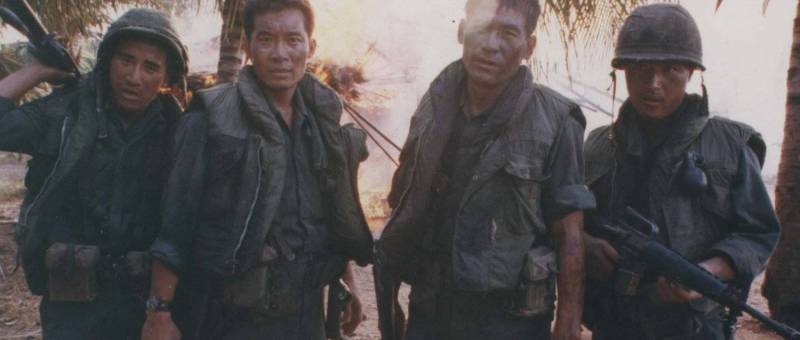
Han Gi-ju (Ahn Sung-ki) is a functioning alcoholic whose wife has left him and remarried though he still spends time with his small son who appears to adore his dad. In the wake of Park’s assassination, his boss wants him to write the true story of his experiences as a soldier in Vietnam, but Gi-ju is not convinced. He’s still haunted by nightmares of his time in the army and has no desire to go delving into his own painful memories even if it is perhaps the right time to let the people know how it really was. A little while later, however, he starts getting nuisance phone calls which turn out to be from an old war buddy, Byeon Jin-su (Lee Geung-young), who remains too shy to get in touch but later sends him a collection of photos and, somewhat worryingly, a pistol taken as a war trophy from the Viet Cong. 

We only come to realise the significance of the pistol’s passing at the film’s conclusion, but the fact remains that both men have been permanently changed, perhaps damaged, by their experiences in Vietnam only in different ways. Displaying obvious symptoms of PTSD, Jin-su has reverted to a childlike state, somewhat unsteady in his mind, and quickly flying into a panic on hearing loud noises such as helicopters or fireworks which return him to the battlefields and the terrible things he saw there. Gi-ju, meanwhile, is brooding and introverted. He drinks himself to sleep but is woken by nightmares. His marriage has failed and his only friendship seems to be with his editor who drags him to a karaoke box to schmooze a wealthy friend from school who, somewhat ironically, made most of his money manufacturing weapons used in Vietnam while never having to serve himself. “What’s wrong with that?” he asks, “We made money thanks to President Park. When President Park died, my dad cried.” unwittingly outlining the entire problem and in fact embodying it as he continues throwing his money about with the excuse that the only thing to do with dirty money is spend it dirtily. 

Prior to that, he’d criticised Gi-ju’s manhood by betting that he’d never actually killed a Viet Cong soldier. Gi-ju laments that all anyone ever wanted to know about Vietnam was how much money he made and whether he bedded any Viet Cong women. They never wanted to know the reality of it, that he found himself increasingly disillusioned not just with his country and the war but with “human values and history”. While in Vietnam he witnesses street children chasing soldiers for candy and flashes back to his own days as a street orphan after the Korean War tugging on the sleeves on American GIs who crudely threw him only empty packets of cigarettes. The colonised is now a coloniser and it’s an uncomfortable feeling. On a long march, Gi-ju and another soldier pass an old man along the wayside who keeps shouting “pointless” and explains to them that in his 70 years he’s seen many people walk along this road. First it was the Chinese, and then the French, the Japanese, the Americans, and now the Koreans. If you truly want to help, he says, go home and leave us in peace. “We don’t care who wins, we just want to farm and nothing else. So please leave us alone”. 

The utter senselessness of their presence is further brought home to Gi-ju when his unit panics and fires on what it thinks is a huge unit of Viet Cong soldiers, but actually turns out to be a field full of cows. The locals are obviously upset, demanding compensation, but his Staff Sergeant is unrepentant, little caring that they’ve just destroyed the local economy and the ability of these ordinary people to feed themselves in their panic and incompetence. Yet in his first few pieces for the paper, Gi-jun recounts that the first six months were ones of ambivalent tedium in which they mostly dug ditches and bonded over beer. They were torn, hoping it might stay this way but also embarrassed by the thought of going home with no combat experience. 

As time goes on, however, they find themselves on ever more dangerous missions only to discover that they have been used as decoys, their heavy casualties dismissed as “small sacrifices of war”. Betrayed by their country, these men were also forced to betray themselves. After firing on civilians in panic, the Staff Sargeant orders his men to kill the survivors to cover up his mistake, threatening them at gun point. One is never quite the same again, and the other finally kills his superior to avenge his transgression. Gi-ju is not witness to these events, only to their effects, but is obviously aware of the cruelty that his service entails. 

Dissatisfied with his first manuscript recounting a humorous episode from the early days, Gi-ju’s boss tries to curate his memories, asking him for a cliched anti-war tract about how combat turns intellectuals into cowards while the ignorant are reborn as heroes. Something much the same happens with a documentary crew on the ground who actively ask the soldiers to re-stage the action for the camera. Everyone has their Vietnam narrative, and no one is quite interested in the full horror or the present pain of these wounded men. Reuniting with Jin-su whose mental state is rapidly declining, the pair are caught up in a democracy protest by students who actively resist the draft and the militarisation of education, ironically on the other side, targeted by men like they once were. Abandoned by a country which essentially sold them as mercenaries to curry favour with the Americans, Jin-su and Gi-ju struggle to gain a foothold in this strange moment of hope in which martial law, the force which dictated the course of their lives, may be about to fall. That was not to be, but for the two men at least, something has perhaps been put to rest if only with the terrible inevitability of a bullet finally hitting its target.


White Badge screens 22nd October as part of this year’s London East Asia Film Festival

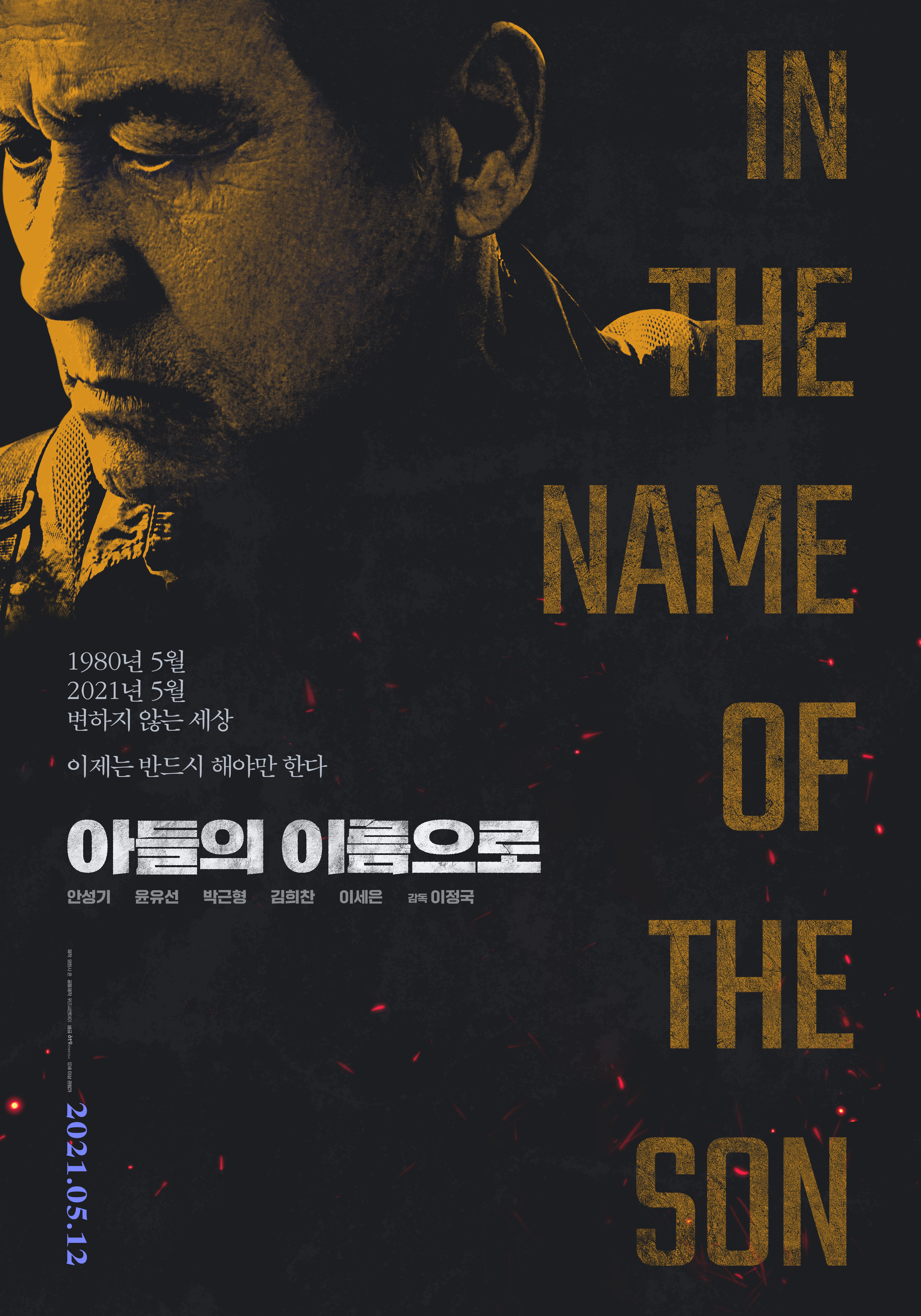
In the Name of the Son (아들의 이름으로, Lee Jung-gook, 2021)

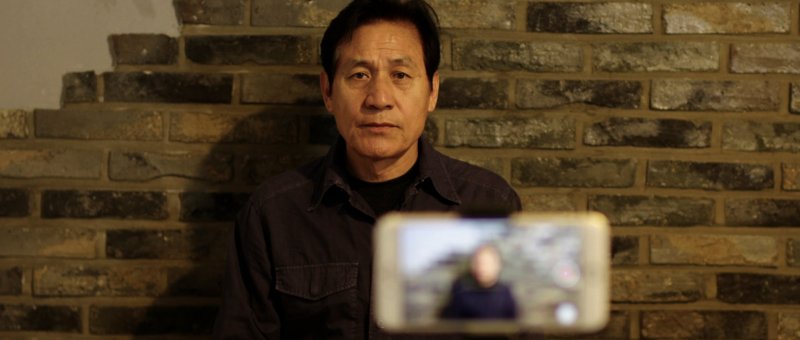
Partway through Lee Jung-gook’s raw exploration of the radiating effects of historical trauma In the Name of the Son (아들의 이름으로, Adeurui ireumeuro), the conflicted hero quotes a line from In Search of Lost Time which his son had recommended to him, “pain is only healed by thoroughly experiencing it”. The quote in itself reflects the hero’s wounded state in having failed to reckon with the sins of the past, a failing which has cost him dearly on a personal level, while simultaneously hinting at a national trauma which has never been fully addressed by the contemporary society. 

When we first meet ageing designated driver Chae-gun (Ahn Sung-ki) he’s preparing to hang himself in a forest before noticing a stray parakeet, presumably an escaped family pet, chirping nearby in desperation. Taking pity on the bird knowing it cannot survive on its own he gives up on his plans and takes it home. We can see that Chae-gun is a compassionate man, softly spoken, perhaps a little shy and distant yet caring deeply for those around him such as the ladies from Gwangju who run a cafe where he is a regular, while he’s frequently seen making phone calls to his son in America. Yet as we later discover he is also a man of violence with an old-fashioned, authoritarian mindset, ominously sliding off his belt to beat up a gang of kids who tried to dine and dash before making them come back to apologise and pay their bill and later doing the same to bullying classmates of the cafe owner’s son, Min-woo (Kim Hee-chan). 

He does these things less out of an old man’s disapproval of the younger generation’s lack of moral fibre than a genuine desire to help and most particularly the ladies at the cafe, but simultaneously takes Min-woo to task for a lack of manliness berating him in front of his bullies for not standing up for himself. These flashes of violence hark back to the hyper-masculine patriarchal attitudes that defined the years of dictatorship while also hinting at the buried self Chae-gun struggles to accept which so contrasts with his innate kindness and sense of justice. He too is angry and confused that those who ordered acts of atrocity such as the 1980 Gwangju Massacre have never been brought to justice and are living comfortable lives often still ensconced in country’s ruling elite such as former general Chairman Park whom he often drives home from a local Japanese restaurant to his mansion in a traditional village in the middle of Seoul. 

As we discover, Chae-gun has his own reasons for being preoccupied with Gwangju in particular, yet it’s the failure to reckon with the buried past that he fears erodes future possibility. In a metaphor that in truth is a little overworked, one of the new assistants at the cafe, also from Gwangju, is mute, literally without a voice until the buried truths of the massacre are symbolically unearthed allowing her to speak. Meanwhile, many of Chae-gun’s generation are succumbing to dementia, an elderly man constantly escaping from his nursing home to wander a local park looking for his teenage son who went missing during the uprising and was never seen again. Chairman Park remains unrepentant, blaming everything then and now on “commies” while explaining to Chae-gun that they were “patriots” not “murderers” bravely defending the Korean state and in any case God forgives all so they’ve no need to blame themselves. 

Park may feel no remorse but the unresolved trauma of Gwangju continues to echo not only through Chae-gun’s wounded soul but through society, a heated debate breaking out between a group young people of critical of the authoritarian past and a collection of older conservative nationalists who object to their criticism of President Park Chung-hee arguing that he rebuilt the economy and gave them the comfortable lives they live today. Yet what Chae-gun feels he owes to his son and implicitly to the younger generation is an honest reckoning with the past and his part in it while those who live with no remorse should not be allowed to prosper, guilt-free, as victims continue to suffer. What he’d say to those who thought that they bore no responsibility is that the greatest sin of all may have been in blindly following orders. Only by fully experiencing the pain of the national trauma can society hope to heal itself from the weeping wounds of the unresolved past.


In the Name of the Son streamed as part of the 14th season of Asian Pop-Up Cinema.

Original trailer (English subtitles)
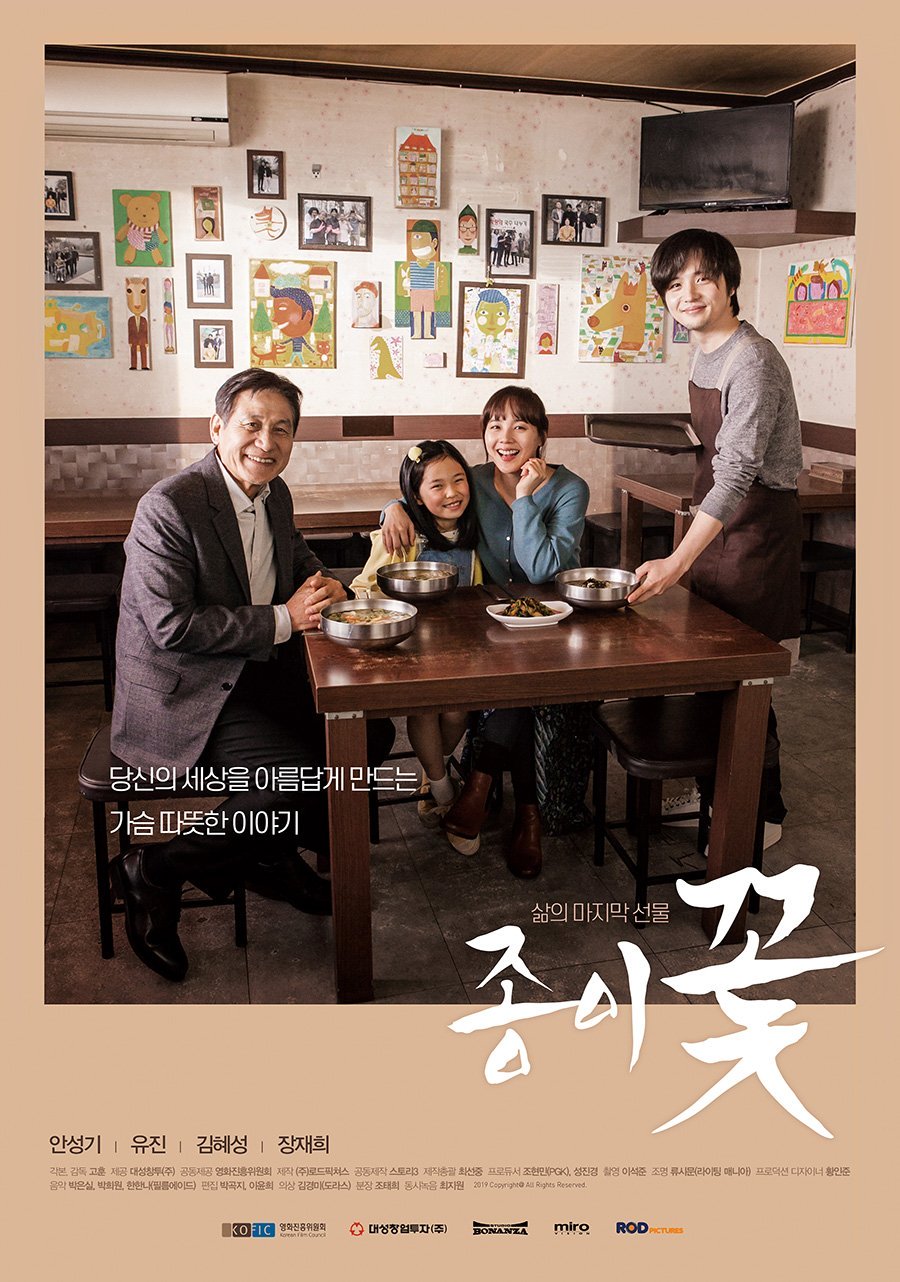
Paper Flower (종이꽃, Koh Hoon, 2019)

Rich or poor, we’re all the same when we die, according to dejected funeral director Sung-gil (Ahn Sung-ki). A mild rebuke on the heartless corporatism dominating contemporary Korean society, Paper Flower (종이꽃, Jongikkot) looks for beauty even in the depths of despair, but is unafraid to admit that the world has its ugliness too as its twin protagonists practice entirely contrary reactions to the traumatic past. While a single mother on the run fills her life with joy and light, Sung-gil struggles to hold on to his principles while never quite as cynical as the years have conspired to make him seem. 

Sung-gil’s problem is that his funeral business has run into trouble now that a conglomerate has entered the marketplace providing a more convenient, modern service which vastly undercuts his own. He’s been stubbornly holding out, but his rent is long overdue and his landlord’s getting antsy, meanwhile he’s also responsible for the care of his paralysed son Ji-hyuk (Kim Hye-seong) whose carers keep quitting because he keeps attempting suicide and generally makes their job as difficult as possible. All things considered, Sung-gil has no option other than to become a franchisee of the enemy conglomerate, Happy Endings. 

Across town, single mother Eun-sook (Kim Yoo-jin AKA Eugene) is facing a similar problem in that she’s just been unceremoniously let go from her cleaning job despite being promised a year’s contract because the company decided to outsource to a conglomerate who didn’t want to keep her on. Meanwhile, she’s also being pursued by men in suits handing her court orders which say that she has to go into “rehabilitation” as soon as possible or the order will be forcibly enforced. Overdue on her rent, she hopes to evade them by doing a flit, moving into the vacant apartment opposite Sung-gil’s with her small daughter No-eul. The pair are warned about the bad tempered old man next-door and quickly find out for themselves when he grumpily complains about their moving boxes cluttering the hallway but Sung-gil still needs someone to look after his son, and Eun-sook needs a job, so the obvious solution presents itself. 

What Sung-gil couldn’t have expected, however, is the light that Eun-sook brings into his home. We can infer that she’s had a difficult life, the prominent scar along her jaw proving a cause for concern at the job centre, but unlike Sung-gil and his son she remains unrelentingly cheerful, determined to find the tiny moments of joy in the everyday precisely because she’s known what it is to be without them. Her daughter No-eul is much the same, hilariously unfiltered and prone to asking the most inappropriate of questions with childlike innocence, but eventually bonding with the gruff Sung-gil after she pays his bus fare when he comes up short and he teaches her a few lessons about the funeral business. 

Sung-gil’s greatest crisis, however, arrives when a local man who’d been a hero to the homeless in operating a restaurant which became a point of refuge offering free noodles to anyone who needed them no questions asked, suddenly dies. Like Eun-sook and Sung-gil, Jang (Jung Chan-woo) also suffered at the hands of an increasingly capitalistic society, dropping dead while being pressed by a greedy landlord. Because Jang had no family and no named next of kin, no one is permitted to claim his body. The authorities send him to Happy Endings, which is where Sung-gil comes in, but the company resent having to deal with a case of death by poverty, instructing him to dispose of the body as quickly as possible. Even if Jang had no legal “family” he had a community who loved him and wanted to say goodbye even if they didn’t have the money to reclaim the body or give him the proper send off. Sung-gil remains conflicted. He believes Jang should be treated with dignity in death and that his friends should have the right to pay their respects, but he’s already in trouble for working with too much care and needs to make sure his contract is extended so he can pay his rent and look after Eun-sook. 

Jang’s friends want to have a public funeral in the local square where many of them first met him at his noodle stand, but that presents a problem for the local council who are in the middle of a clean streets campaign and trying to win the right to host Miss World in the hope of boosting the local economy. The authorities are very interested in “dealing” with “the homeless” but not at all with the issue of homelessness which is only exacerbated by their increasingly heartless social policies. Of course, they make a good point, somebody somewhere has to pay, but Sung-gil remains conflicted, originally opting for a kind of compromise but finally pushed towards reconsidering the source of his own trauma which turns out to have a curiously symbolic, national quality that encourages him to think that perhaps it is time to take a stand against this worryingly inhuman obsession with margins and conviction that nothing is worth anything if it can’t be monetised. Moved by Eun-sook’s sunniness which eventually gives new hope to the dejected Ji-hyuk, he begins to find the strength to fight back, masking the darkness with paper flowers in defiance of those who would say that some lives aren’t even worth that.


Paper Flower screens at Chicago’s Davis Drive-In on Sept. 10 as the opening night presentation of the 11th season of Asian Pop-Up Cinema.

Original trailer (English subtitles)
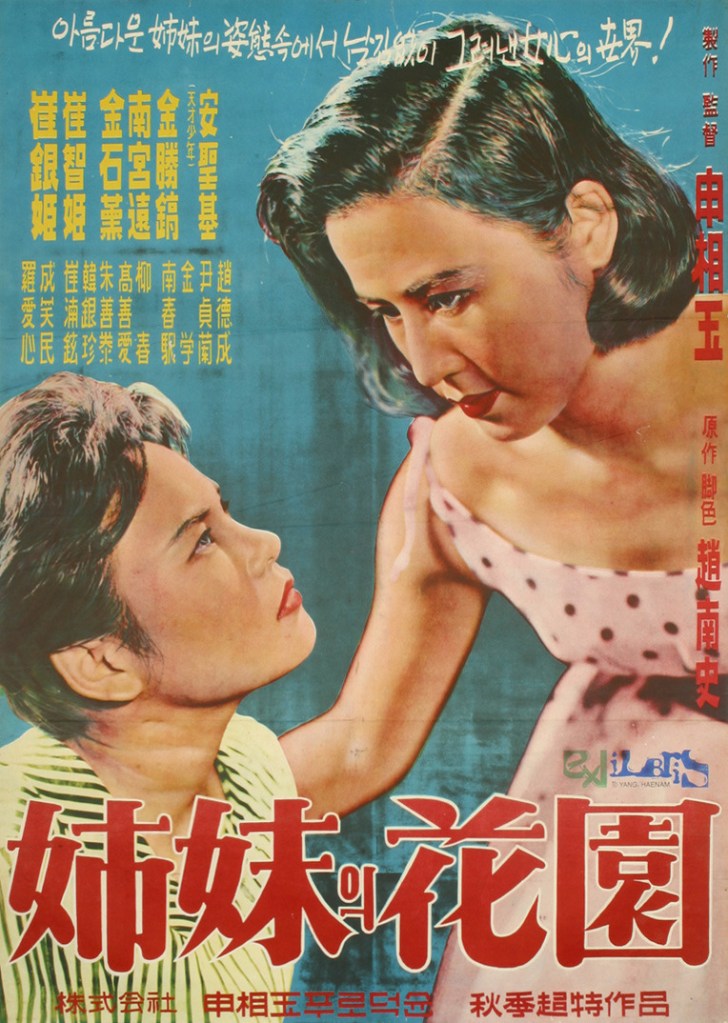
A Sister’s Garden (姉妹의 花園 / 자매의 화원, Shin Sang-ok, 1959)

In melodramas of the post-war era, the good suffer nobly but often find their goodness ill rewarded by an increasingly amoral society. Shin Sang-ok’s A Sister’s Garden (姉妹의 花園 / 자매의 화원, Jamaeui Hwawon) is, perhaps, a little different despite its rather mild critique of a society preparing to head into rampant capitalism, allowing a magnanimous entrepreneur to become the pure hearted saviour of an equally pure woman while her weak willed lover remains petulantly on the sidelines unable to defy outdated social codes to claim his right to happiness. 

In fact, this is in many ways Mr. Bang’s (Kim Seung-ho) story. It’s him we first meet getting off a swanky Korean Air plane signalling his position as a member of a new class of jet-setting elitists. He is, however, kindhearted which is why his first thought is to pay a visit to Dr. Nam (You Chun) who cured him of a serious illness. Unfortunately, Dr. Nam has now been laid low by the same illness himself. His business has suffered, he’s sold his clinic, taken a job at the hospital, and even mortgaged his house to a persistent loanshark. Unfortunately, all the stress has got to him and soon after Bang is able to meet with Dr. Nam he collapses and dies, breathing his last words to his assistant, Sun-cheol (Kim Seok-hun) who had been like a son to him, to the the effect that he has already arranged a marriage for eldest daughter Jeong-hui (Choi Eun-hee) to an artist named Dong-su (Nam Gung-won) and hopes that Sun-cheol will watch over his younger daughter Myeong-hui (Choe Ji-hui) and much younger son Chang-sik (Ahn Sung-ki). 

This last request will cause a series of problems among the young, the first of them being that it’s extraordinarily insensitive because Sun-cheol is himself in love with Jeong-hui who is also in love with him. Both of them are, however, good people which is why Sun-cheol wastes no time telling Jeong-hui about her father’s last words while she is minded to obey them even if her primary concern is the family finances seeing as she is now the sole provider for her siblings and there will be no more money coming in. With the loanshark still breathing down their necks, Jeong-hui is in danger of losing the family home. 

The other major problem is Myeong-hui who unlike her sister is a thoroughly modern woman, thoughtless and selfish in a childish sort of way. Unaware of the family’s financial situation, she hoped to use some of the money from selling the clinic to open a dress shop and is put out to realise there isn’t any because the clinic was only sold to pay off debts. Meanwhile, it’s also quite obvious that Dong-su, an equally naive son of a wealthy family, prefers Myeong-hui and almost certainly intends to marry her not her sister. Dong-su thinks he’s hot stuff in the art world and is going to make a lot of money selling paintings, which is optimistic whichever way you look at it. 

This awkward love square creates a series of problems of its own as Myeong-hui convinces herself that her sister is jealous of her relationship with Dong-su while also knowing that she has been silently in love with Sun-cheol for many years. Sun-cheol, for his part, feels himself indebted to the Nams and allows the debt to come between himself and true entrance to the family through marrying Jeong-hui. He saves their house through selling his own, but times being as they are Jeong-hui still needs to find a job which is another problem because she is an upper middle-class woman raised for marriage. She gave up school to keep house after her mother died and has no qualifications, even if qualifications could help a woman in need find a good job in 1950s Seoul. She asks Bang for help, and he offers her a frankly insulting opportunity as the head hostess at a sleazy bar he owns where businessmen go to have discreet fun without their wives. 

Jeong-hui wasn’t going to take it, but in the end she has little choice, allowing the married Myeong-hui and Dong-su to move into the house to look after Chang-sik while she lives at the bar. Sun-cheol, still afraid to speak his heart, is judgemental and filled with resentment, entirely unsupportive of Jeong-hui’s position or her proactive decision to try and change it even if changing it means hovering on the fringes of the sex trade. Myeong-hui also, perhaps because of her selfishness and naivety, fails to understand the sacrifices her sister has made on her behalf. Worried that Myeong-hui and Dong-su may have re-mortgaged the family home that she is actively debasing herself to save, Jeong-hui asks her sister to reassure her that the deed to the house is safe. Myeong-hui had been thinking of doing just that so she fires back cruelly that Jeong-hui has everything “easy” and can’t understand how hard it is for her, which is a strange thing to say given that Jeong-hui has become a bar girl solely to keep a roof over her sister’s head. 

Myeong-hui and Dong-su continue to make mistakes, Dong-su convincing his friend to embezzle money from his company to plough into the dress shop even though it’s a loan they can’t repay and threatens to get them all in hot water. Jeong-hui has to sort everything out again, but that puts her in further debt to Bang to whom she is already substantially indebted because he convinced her to take a loan to pay back Sun-cheol who didn’t even really want paying back. Uncharitably, Bang’s behaviour looks suspect. He makes a prim upperclass woman degrade herself by plunging her into the sleazy underbelly of a burgeoning economy and then burdens her with debt to be able to manipulate her better. Perhaps he gets a kick out of that, but soon feels guilty seeing someone who so obviously does not belong in one of his bars forced to drink with clients and play nice with the customers. On the other hand, perhaps there really were no better jobs available for a woman without qualifications and he only wanted to help. 

Ultimately, Bang turns out to be the good guy, falling in altruistic, selfless love with the innocent Jeong-hui who always does the right thing and acts with absolute integrity. Debt, once again messes everything up. Bang decides to propose to Jeong-hui, which practically speaking is a good option in the situation, but makes it clear that he is not forcing her and will continue to help and support her whatever she decides. But how is Jeong-hui to refuse someone who has been so “kind” to her without a sense of betrayal? Sun-cheol, meanwhile, is prevented from declaring his feelings because of the “debt” he feels he owes to the Nam family, not quite good enough for Jeong-hui but also the custodian of her father’s last words which were that she should marry Dong-su. Myeong-hui and Dong-su meanwhile think only of themselves, acting with selfish recklessness. Only when Jeong-hui comes through for Myeong-hui and tells her of Bang’s proposal does she begin to grow up and realise that her sister may throw away her own happiness for the sake of her family’s in marrying a rich old man out of a sense of hopelessness and obligation. 

Contrary to other melodramas, the solution is Bang’s and Bang’s alone. He makes the decision to release the youngsters from patriarchal control by essentially canceling out Dr. Nam’s last wishes by telling Jeong-hui that she should try to be happy with Sun-cheol while giving her the financial means to do so by gifting her the bar to run as her own, making her both business owner and career woman as well as wife. He absents himself in recognition that age has to give way to youth, pushing the youngsters to pursue personal happiness rather than serve outdated ideas of duty or filial obligation. Jeong-hui’s goodness wins out, but only because it was recognised by Bang who decides to set her free by cancelling not only her literal debt, but the entire idea of indebtedness in giving her permission to seek her own happiness rather than feeling obliged to prioritise that of others. 


A Sister’s Garden is the third of three films included in the Korean Film Archive’s Shin Sang-ok’s Melodramas from the 1950s box set. It is also available to stream via the Korean Film Archive’s YouTube Channel.

The Age of Success (성공시대, Jang Sun-woo, 1988)

Age of Success still 3“Love only matters when you can sell it” in the nihilistic world of Jang Sun-woo’s The Age of Success (성공시대, Seonggong shidae). The Korea of 1988 was one of increasingly prosperity in which the recently democratised nation looked forward to a new era of freedom, hosting the Olympic Games as a calling card to the world stage. Like everywhere else in the ‘80s however it was also a time in which greed was good, time was money, and compassion was for suckers. Jang’s narcissistic hero worships Hitler and offers a nazi salute to a mockup of a high value note with his own face on it as he leaves for work every morning, but his relentless pursuit of “success” is destined to leave him empty handed when he realises the only commodity he can’t sell is sincerity.

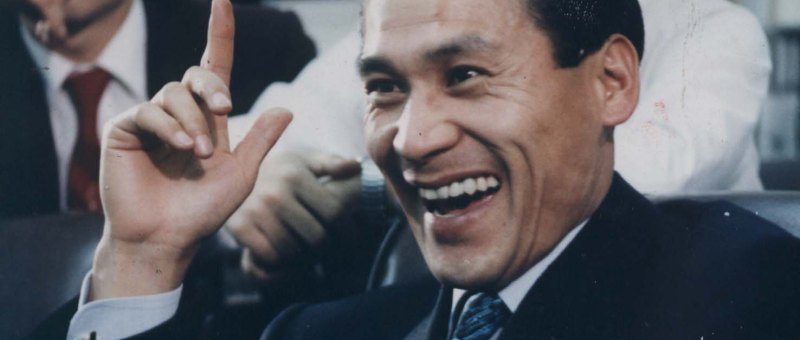
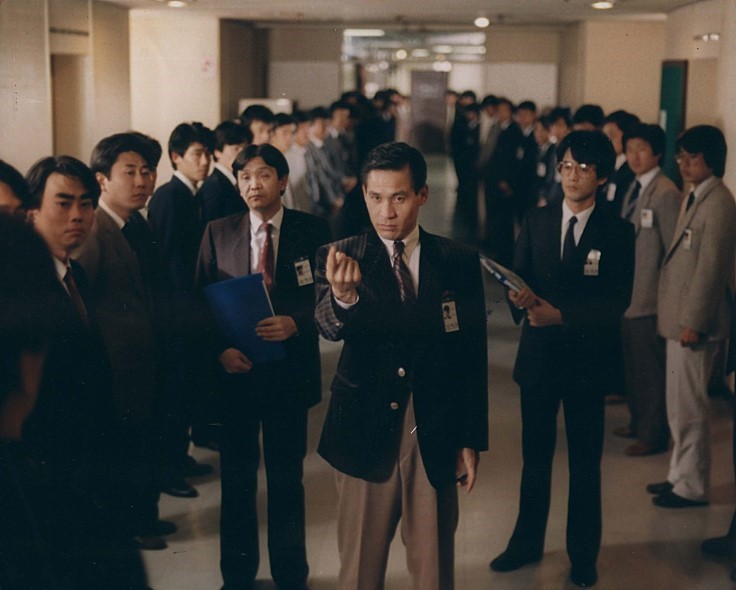
The executives of Yumi Foods, a subsidiary of Mack Gang (Mighty) corporation, are looking for a bright new face through a series of individual interviews. The panel asks each of the prospective new hires to prove their sales ability by convincing them to buy something inconsequential they happen to have in their pockets. Each of the young men fails, until the sharply suited Kim Pan-chok (Ahn Sung-ki), whose name literally means “sales promotion”, dazzles them with a show of intense charisma. He simply offers to sell them whatever is inside his clenched fist. Such is his conviction, the CEO finds himself emptying his wallet, pouring out his credit cards, and eventually borrowing from his friends until Pan-chok is satisfied he’s getting all he could possibly get at point which he opens his fingers and reveals his empty palm. The bosses are annoyed, but quickly convinced by Pan-chok’s explanation that what he’s sold them is “sales spirit” which is, after all, the most valuable thing of all (not to mention exactly what they were looking for). Pan-chok is hired.

Later, we find out that Pan-chok’s routine is an ironic inversion of his childhood trauma. A poor boy abandoned by a mother who became fed up with his father’s fecklessness, he waited alone every day for his dad to come home with something to eat. But his dad was an irresponsible drunkard who could never hold down a job. Like Pan-chok, he held out his fist and told the boy to open his fingers but he was always empty-handed. Hating his father’s incompetence, laziness, alcoholism, and violence, Pan-chok decided that he had to be strong. “Poverty makes you low and pathetic”, he insists. Love, pity, and mercy are for people with no power. “The important thing is to be strong, to win, succeed, possess, and to dominate. Only then will I be happy”.

Pan-chok is a corporate fascist wedded to ultra capitalist ideology in which the only thing that matters is strength and the ability to dominate. He lies, and cheats, and misrepresents himself to pull every underhanded trick in the book to try and get ahead. He goes to war, quite literally, with industry rival Gammi, intent on completely destroying them in order to dominate the market by whatever means possible. Coming up with signature product Agma, he irritably tells his development team that none of their work really matters because the quality of the product is largely irrelevant. Just as in his interview, all Pan-chok is selling is false promise wrapped up in marketing spin. His rival goes on TV to talk the value of tradition to defend himself against a smear campaign Pan-chok has engineered to suggest his products are a health risk, but eventually gets the better of him by playing him at his own game and making a late swing towards ultra modernity.

Pan-chok’s main gambit is seducing a local bar hostess, Song Sobi (Lee Hye-young), lit. “sexual consumption”, and using her as a spy to get info on Gammi’s latest products, but Sobi falls in love with him only to have her heart broken when she realises Pan-chok will discard her when he decides she is no longer useful. He tells her that love is only worth something when you can sell it, but is confounded when she later turns the same logic back on him after selling her charm to seduce the son and heir of the Gammi corporation as a kind of revenge.

Proving that he never learns, Pan-chok’s last big idea is that the only way to beat Gammi’s technological solution is to commodify nature, to repackage and sell back to the people the very things he previously rejected in human sensation. By this point, however, he is so thoroughly discredited that few will listen. His new boss has an MBA from an American university and no time for Pan-chok’s scrappy post-war snake oil salesman tactics. “Only success can set you free”, Pan-chok was fond of saying, but it belied a desperation to escape post-war penury. What he wanted was freedom from hunger, anxiety, and subjugation. He wanted to be a big man, not a small one like his father who always came home empty-handed, so that no one could push him around. What he became was a man without a soul, empty-hearted, consuming himself in pursuit of the consumerist dream. Korea, Jang seems to say, should take note of his lesson.


The Age of Success was screened as part of the 2019 London Korean Film Festival.