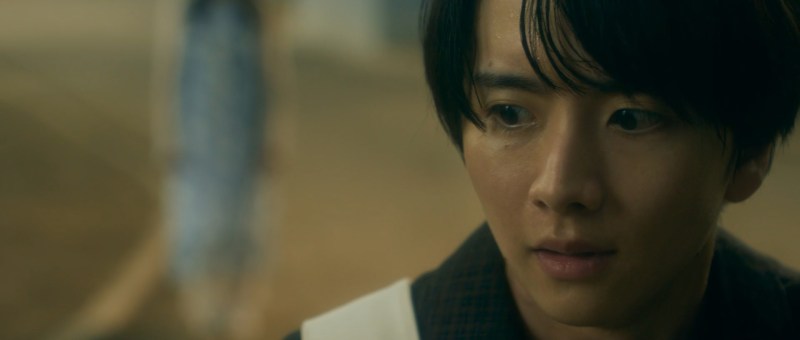
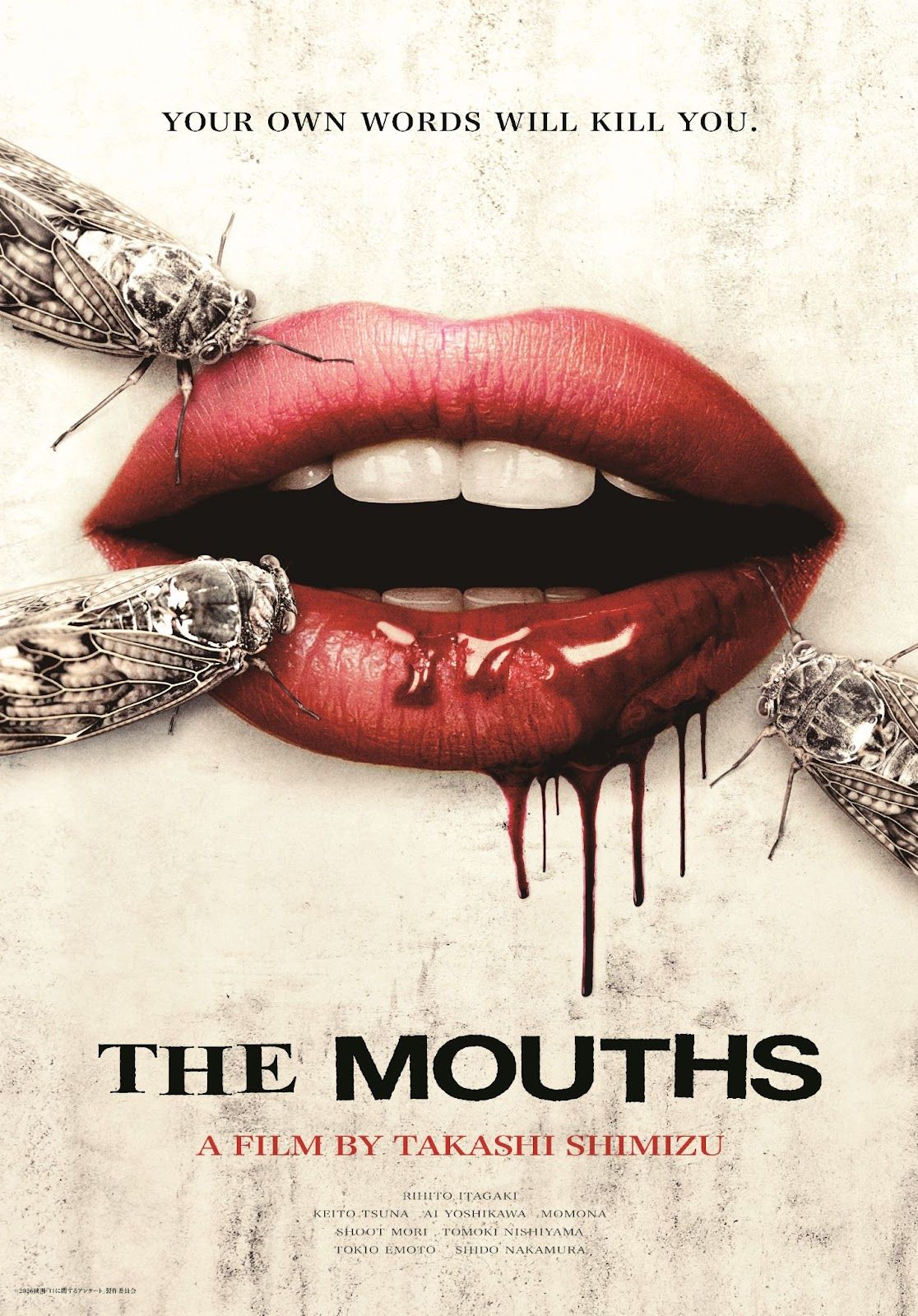
“Do you think the mouth is the source of the trouble?” A survey asks at the end of Takashi Shimizu’s haunting horror, The Mouths (口に関するアンケート, Kuchi ni Kansuru Anketo). Assuming for the moment that we’re talking about the human mouth, they can indeed get you into a lot of trouble, but at the same time that trouble starts somewhere much deeper down, so perhaps it isn’t really the mouth that’s to blame either, rather its owner who unwisely chose to make their unspoken thoughts spoken.
According to the editor of a mystery magazine (Tokio Emoto), that really might be the curse. We project our negative emotions onto an object and grant it a kind of supernatural power that might in other ways be entirely manmade. People have decided a creepy old tree in a cemetery is “cursed”, but it’s become fashionable among young people to challenge themselves by walking up to it. Though the tree once signalled good fortune, people soon started using it to curse others by voicing their petty resentments, but perhaps it’s putting all these dark thoughts into the tree that’s made it a kind of repository for human fear and loathing. All those we meet who went to see the tree took someone with them that they wanted to suffer, though they also of course ended up suffering themselves.
A group of students sets out to see it full of bravado expecting a spooky night where nothing will actually happen, or at least nothing that they don’t make happen for themselves. But beneath the camaraderie, there are cracks in their relationship with what amounts to a complicated love square in which Tatsuya (Keito Tsuna) has started dating Shota’s (Rihito Itagaki) ex An (Ai Yoshikawa), but Shota wants her back. Mirei (MOMONA), meanwhile, whose name contains a sound that is associated with the supernatural, resents An mostly for disrupting the dynamics of the group and her relationships with both men though without really declaring any kind of romantic allegiance. An is not altogether a sympathetic presence and brands Mirei’s potentially psychic abilities as “lame”, but nevertheless falls victim to the tree, loses her mind, and then eventually disappears.
The left-behind trio do their best to find her, but are really searching themselves questioning their relationships, desires, and what they really wanted out of visiting in the tree. Shota first heard about it from his colleague, Kawase (Tomoki Nishiyama). Who visited with a “friend” (Shoot Mori) who appears to be bullying him in the hope that he would get his comeuppance only for both of them to be left haunted, constantly fearing the reappearance of the tree’s animalistic woman who threatens to devour them. In some ways, the monstrous woman stands in for the dark heart of nature, seemingly in tune with cicadas and their strange humming, not different from An’s, which characterises a Japanese summer. The summer is also, of course, when this world and the other are at their closest.
Another question the survey asks is if you would share this story with a friend. Kawase, after all, shared it with Shota almost as if tempting him toward the tree, prodding him to act on his basest emotions. As the magazine editor says, perhaps the real villains are people like him who irresponsibly spread this kind of information and help to create urban legends that unwittingly draw people towards the darkness in their own hearts. He and a police detective (Shido Nakamura) nominally looking into An’s disappearance search for more concrete answers, but in the end come to no real conclusions wondering what it was these people saw in the tree that eventually took them to such a dark place.
Shimizu maintains the episodic structure of the source novel with several different chapters recounting the events from one person’s point of view in a theatrical monologue that at first seems as if it must be testimony for the detective, but later turns out not to be even if the detective listens to the stories they’ve recorded on his dictaphone. The survey also asks us why we think they recorded them themselves on their phones, which is a question often left unasked in genre films in which we gloss over these kinds of practical questions knowing that they do so as a storytelling device. Sooner or later they all declare that they have said all that they had to say, if as they were a kind of ghost in the machine about to dissipate as soon as the tale is told. But really, it’s the same question as why they talked to the tree. They needed some means of releasing all these dark thoughts, but releasing them didn’t really help. In fact, it seems to have made things quite a lot worse. Perhaps if they’d been able to talk to each other in a healthier way, there’d no be no need for cursed trees or the supernatural dread that comes with having transgressed on something no human is supposed to see. But then again, this darkness is a part of human nature as much as its part of a strange and arcane world. Perhaps it is your own mouth that will damn you in the end.
The Mouths screened as part of this year’s Fantasia International Film Festival.

