Stranger (夜のストレンジャー 恐怖, Shunichi Nagasaki, 1991)

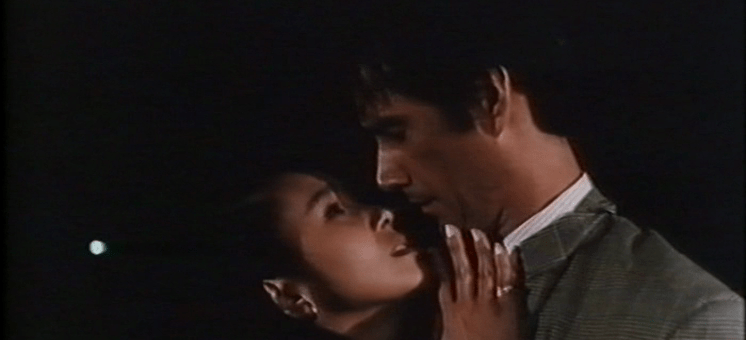
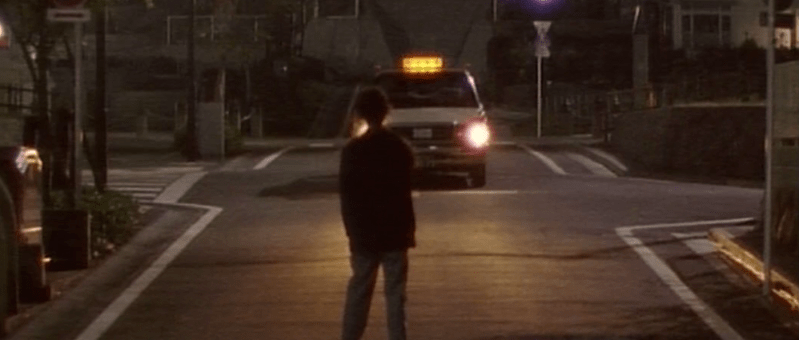
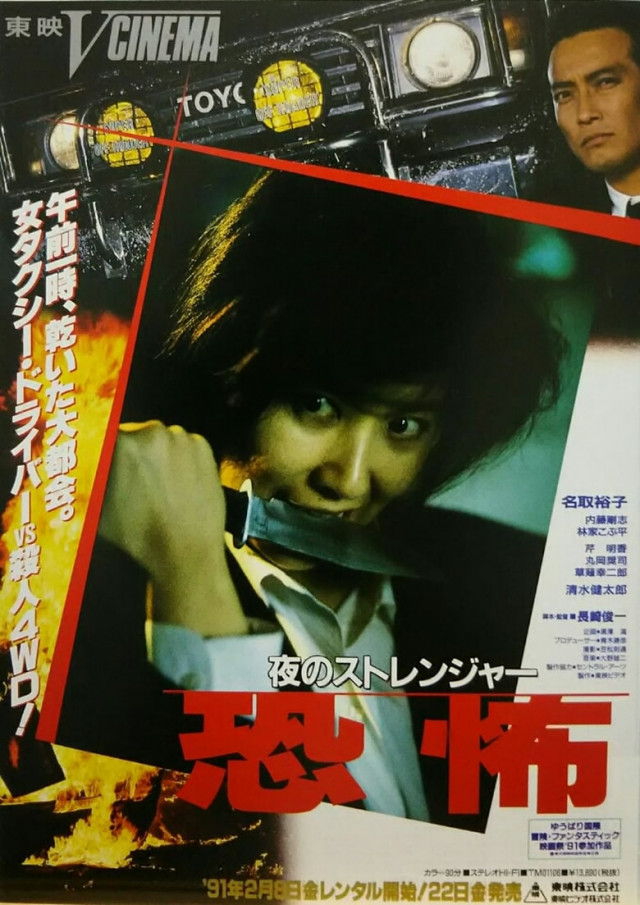
Driving through the city by night, a young woman finds herself plagued by a mysterious force while struggling to break out of her self-imposed inertia in Shunichi Nagasaki’s moody thriller, Stranger (夜のストレンジャー 恐怖). The film’s Japanese title, “night stranger terror”, perhaps more clearly hints at a sense of urban threat while surrounded by so many unfamiliar people, yet it is in many ways Kiriko’s (Yuko Natori) mistrust and suspicion that isolates her from the surrounding society and keeps her trapped in a kind of limbo unable to escape her past.

It might be tempting to read her aloofness as a direct consequence of her experiences, but in an early scene when she was still a bank employee we hear a colleague criticise her for being “anti-social” while Kiriko’s rejection of her seems born more of contempt than shyness or a preference for solitude. Working as a cashier at the bank at the tail end of the bubble is a pretty good job, especially given the still prevailing sexism of the working environment, that positions Kiriko firmly within an aspirant middle-class. She still lives at home surrounded by her family, but is in a relationship with a man who pressures her for money to invest in the stock market. She begins embezzling and lives as if there’s no tomorrow, splashing out on fancy sunglasses before meeting her boyfriend having left work early feigning illness. Unfortunately for her, she gets caught and her boyfriend predictably abandons her.

Just like the asset bubble, her life implodes and plunges her into a lower social stratum as a woman with a criminal conviction for financial impropriety and a hefty debt in needing to pay back the money she stole from the bank for her ex’s harebrained stock speculation schemes. All in all, you could say she’s been betrayed by economic forces, but also as she later admits, but her own uncertain desires in being wilfully deceived by Akiyama (Takashi Naito) and making a clear choice to defraud the bank. She realises that it might not have been a desire to please Akiyama that led her to do it, but the illicit thrill she felt in tapping away on her keyboard stealing the money and otherwise being in a position of economic power over a man, buying him things and taking him out for fancy food. Her sense of malaise is only deepened when she meets Akiyama by chance and tries to tell him all this, but he isn’t really interested. He seems to have moved on and planning to marry another woman. 

Kiriko tries to look at his hands to see if he has burn scars like the man who attacked her in her taxi, but he doesn’t. Perhaps there was a small part of her that wanted it to be him. At least if it was, it would mean he still felt something for her, which would also prove that he ever did. And it would make sense, which is less frightening than her stalker just being a nutty fare, another irate man with a nondescript grudge wandering the city. Taxi driver is one of the few jobs open to her with a criminal record, but it’s also an unusual profession for a woman which further isolates her in her working environment. Her boss keeps calling her “little lady,” while patronisingly offering to put her on the day shift because it’s less dangerous. Kijima (Kentaro Shimizu), an obnoxious colleague, picks at Kiriko for thinking everyone who strikes up a conversation must be sexually interested in her. But the truth is that they are and like Kijima demand her attention. When they don’t get it they’re pissed off. The cab is perhaps the place she feels the most safe, though she faces her fair share of weird fares from drunk men trying to flirt to religious maniacs proselytising from the back seat. 

Now living alone in an apartment, her aloofness is both a personal preference and means of punishing herself. When her brother calls, he encourages her to come home but she says she can’t even though she wants to because she hasn’t yet dealt with her past or taken steps towards being able to forgive herself. She tells Kijima, who in truth behaves in an incredibly creepy way that suggests she’s right to avoid him, that she wonders if she isn’t the only one who can see the mysterious Land Cruiser, as if she were really imagining it. The Land Cruiser does indeed come to stand in for the buried past by which Kiriko is haunted and her eventual besting of it is a symbolic act that suggests she’s finally managed to overcome her guilt and shame to be able to leave the past behind.

As she told Kijima, this was something only she could do by her own hand or none. Akiyama’s dismissiveness of her reflects the fact that he couldn’t give her this absolution either, she needed to find it for herself. Kijima accused her of still being hung up on the guy that scammed her, but that wasn’t quite it. The resolution might hint at his being right when he told her that she needed to learn to trust people more in that it seems to lead to a greater willingness to open herself up to the world. Once again, her sunglasses get broken as a new truth becomes visible to her. A lonely little boy she meets who, like her, enjoys driving in circles and going nowhere, probes her lack of human connection by suggesting that she doesn’t know what it’s like to love someone which is why she can’t understand his obviously inappropriate love for her, though it’s a fact that Kiriko has to acknowledge is truth in interrogating the reality of her relationship with Akiyama.

Nevertheless, in the end, she saves herself and embraces her solitude and independence looking out at the peaceful bay in a city that no longer seems so threatening even if the unseen threat in this case did turn out to be random and have no rational explanation. Nagasaki never again worked in the realms of V-Cinema and his entry is fairly atypical in starring an older, established actress as an action lead while requiring no nudity or sexual content, instead quite literally allowing her to grab the wheel and take control of her life to claim freedom and independence rather than solely romantic fulfilment.

All Under the Moon (月はどっちに出ている, Yoichi Sai, 1993)

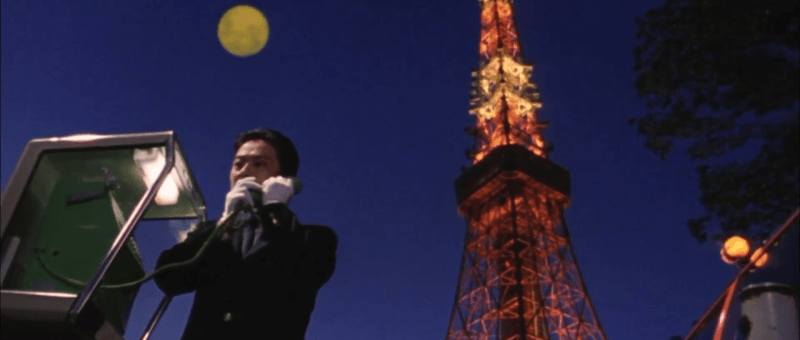
Throughout Yoichi Sai’s All Under the Moon (月はどっちに出ている, Tsuki wa Dotchi ni Dete iru), an earnest taxi driver, Anbo (Akio Kaneda), repeatedly calls in to despatch to inform them that he’s become lost and has no idea where he is despite rocking up next to such prominent landmarks as Tokyo Tower and Mount Fuji. His confusion reflects that of the changing post-Bubble society in which those like him struggle to reorient themselves and find new direction just as the nation appears slow to recognise itself and adjust to a new reality. 

It does seem that many of the drivers at Kaneda Taxi have themselves lost direction in their lives and are living very much on their margins while their rather deluded boss Sell is behaving like it’s still the Bubble dreaming of building a golf course and then a hotel to accommodate 2000 people. The Korean loan shark working with him alternately tells fellow Zainichi taxi driver Chun (Goro Kishitani) that he’s acquiring wealth to use for the reunification of Korea, and Sell that they are all children of capitalism, “Damn Reunification!”. At the wedding Chun attends, the guests take phone calls to deal with business and each remark on the precarious economic situation while one suggests that the North Korean association he represents is probably on the brink of failure joking that he fears they may sell their school and pocket the money. 

Yet despite the economic turbulence, the country has been slow to accept the presence of workers from outside Japan and many, including those at the taxi firm, still face discrimination as does Chun himself by virtue of his Korean heritage. One Japanese employee also seems to face a good deal of stigmatisation simply because he has a speech impediment, while an older mechanic with a limp insists on calling an Iranian colleague by a similar sounding Japanese name while baselessly accusing him of theft. Hoso (Yoshiki Arizono), a man with mental health issues provoked by his previous career as a professional boxer in which he accidentally killed an opponent during a bout, is fond of saying “I hate Koreans, but I like you” while otherwise fixating on Chun as a dependable big brother figure and resentful enough when he starts dating a Filipina hostess, Connie (Ruby Moreno), who works at his mother’s bar to pound down the door of her flat and demand to be let in. 

Chun himself is at least problematic and especially by the standards of today as he tries a series of crass pickup lines on Korean women at the wedding and then eventually forces a kiss on Connie not to mention physically striking her during a heated argument. He also insensitively tells her about his family’s tragic history in the war emphasising that citizens of Korea were abused for slave labour while seemingly unaware of the history of the Japanese occupation of the Philippines. Meanwhile, he also lies that his father was killed by the Japanese and that all his brothers died of malnutrition whereas they are (presumably) alive if possibly not so well in North Korea. His hard as nails mother (Moeko Ezawa) points out that she came to Japan at 10, while Connie counters that she came at 15, though their experiences have perhaps been very different leaving them somewhat at odds rather than sharing a kind of solidarity as otherwise echoed in the marginal status of each of the migrants who are similarly othered as merely not Japanese yet largely left to fend for themselves while facing possible exploitation and deportation. 

Divisions exist even within the Korean population with guests at the wedding complaining that there have been too many long and boring speeches along with North Korean propaganda songs, claiming that it is discriminatory against South Koreans and finally being allowed to sing a South Korean folksong instead which is at least a good deal more lively. The gangsters leverage the idea of reuinifaction to carry out their scams while later claiming that they have been scammed by their Japanese backer who turned out to be more racist than they had first assumed. Yet as Chun says during one of his cheesy pickup attempts, what really has reunification got to do with them, the younger post-war generation who know no other homeland than Japan? He too flounders, caught between a series of names from “Tadao Kanda” to “Chun”, to the name which appears on his taxi license “Kang” the Korean pronunciation of character read “ga” Japanese which is only otherwise used in the word for ginger as pointed out by a slightly racist fare who goes on to remark that he doesn’t see the point of the “comfort women issue”. Chun has to grin and bear it while technically powerless despite being in the driver’s seat. Predictably, the prejudiced passenger also attempted to make a run for it rather than actually pay Chun his money. “I was born after the war too” Chun reminds him, “but we say after the liberation.”

Sai introduces us to the world of Kanda Taxis through a roving long shot around the carpark travelling from one employee to another before drifting up to management on the second floor. He returns to a similar scene near the film’s conclusion as the remaining workers playfully hose each other with water while literally watching their world burn. Yet for some at least it may be liberating experience, Chun finally gaining the courage to choose his own destination and go after something that he wants, even if it he does it in a characteristically problematic way, seemingly no longer worrying about where it might be taking him but content to simply drive in the direction of the moon. 


Original trailer (no subtitles)

Hand (手, Daigo Matsui, 2022)

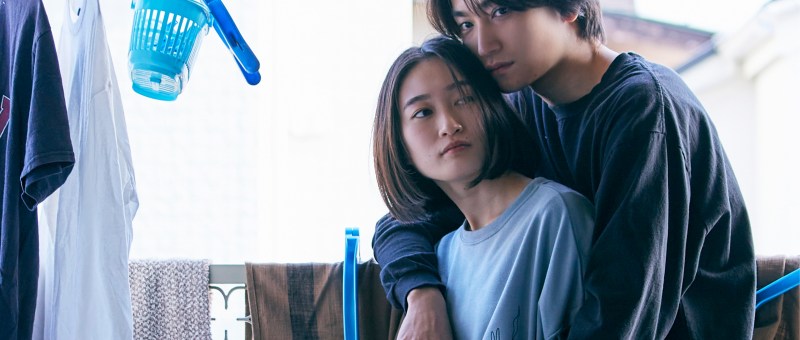
A young woman unwittingly meditates on emotional distance and the impossibility of intimacy while fixating on older men in an attempt to overcome her loneliness in feeling rejected by her father in Daigo Matsui’s contemporary Roman Porno, Hand (手, Te). Partly a critique of a misogynistic society, the film is as much interested in why old men like young girls as it is why Sawako (Akari Fukunaga) likes old men along with her general disdain for the various roles she’s expected to play. 

Sawako largely describes these as “life skills”, a brief flashback to the 20-year-old her wondering why weird old men suddenly took an interest in her when she left high school. The old guys make inappropriate banter with the woman behind bar that shocks Sawako in its crassness and leaves her wondering if she’ll be expected to “eco-exist” with men like these for the rest of her life. She decides if that’s the way it is she’ll need to equip herself which at 25 mainly involves adopting an ultra feminine persona, pretending to be stupid laughing at men’s rubbish jokes and giggling sweetly at every opportunity. Co-worker Mori (Daichi Kaneko) has, however, seen through her act especially as she doesn’t bother to put it on for him and is rather frank in her cynicism which gives her an air of authenticity that might in other ways be misleading. 

Meanwhile, she spends her time taking photos of middle-aged men and putting them in her scrapbook while sometimes going on “dates” with older guys. What soon becomes apparent is that she resents her family, with whom she still lives, and feels a little pushed out as if no one really cared about her only her younger sister Rika who in stark contrast to her is cheerful and outgoing. When she offers to make her father dinner, he doesn’t respond but apparently does when her sister asks. Sawako feels like her father thinks of her as “dark and boring” and assumes that he ignores her deliberately because he has no interest in her yet she ironically also ignores him, refusing her mother’s request that she accompany him to a hospital appointment petulantly suggesting he’d probably prefer it if Rika went. The truth is that they simply don’t know how to talk to each other, sitting far apart at the back of a bus like a couple that’s had an argument. 

A more age appropriate relationship with co-worker Mori seems as if it’s breaking down some barriers towards intimacy but finally leaves her additionally vulnerable as he too turns out to be a fairly weak, emotionally dishonest man despite his outward consideration for her. In contrast with the older men, his courtship had been coy, shyly asking to hold her hand and for permission before he kissed her while otherwise leaving her to take the lead though in the end he may not have been much different. One of the older gentlemen ironically describes her as “insecure” yet misreads her insecurity as sexual rather than emotional only for her to let the mask slip and bite back, frankly telling him that it can be “rude” to treat a woman like a girl and that his dismissiveness is offensive. If all he sees in her is “youth” then he should just date a naive teenager instead.

“Youth” may be the answer to her question about why old men like young women, something confirmed by her date’s sighing that he finds dating her “nostalgic” as if he were young again too. But what she was looking for was warmth, the closing of an emotional gap of the kind that Mori proposed when he asked to hold her hand but never really followed through on. Then again, as another said she does indeed have a habit of running away, rolling her eyes at the idea of seriousness in an attempt to mask her fear of intimacy and treating everything as a cynical joke to avoid facing reality. “Whatever you do you have to engage with people” her similarly reticent father tells while beginning to break the ice, slowly closing the gap in extending a hand across it that provokes an emotional breakthrough. Quietly poignant in the slow motion of its heroine’s gradual liberation, Matsui’s otherwise biting take on contemporary patriarchy and follies of old men nevertheless allows her to reclaim herself in opening up to others.


Hand screened as part of this year’s JAPAN CUTS.

International trailer (English subtitles)

A Day-Off of Kasumi Arimura Ep. 1 (有村架純の撮休 第1話, Hirokazu Koreeda, 2020)

As has sadly become all too clear recently, the Japanese entertainment industry can be a brutal place rife with exploitation in which performers are often expected to push themselves well beyond the limit or risk offending their agencies and thereby disrupting their careers. That is perhaps why a “day off” for a headline actress seems like a concept incongruous enough to spawn an eight-part, late night TV drama aired on premium channel WOWWOW. Often around half an hour in length (though this one is a little longer), drama series running after midnight have the freedom to embrace darker themes and can sometimes be risqué, but more often than not cater to those looking for easy comfort watching often revolving around food and/or local culture such as in the phenomenally popular Midnight Diner which was later picked up by Netflix, or the much loved Solitary Gourmet.  

The chief draw for international viewers, however, is that the first and third episodes of A Day Off of Kasumi Arimura (有村架純の撮休 第1話, Arimura Kasumi no Satsukyu) are directed by Hirokazu Koreeda, with Rikiya Imaizumi (Their Distance; Little Nights, Little Love) and Santa Yamagishi also doing double duty, while Satoko Yokohama (Bare Essence of Life, The Actor) and Megumi Tsuno (Ten Years Japan “Data”) fill the remaining slots. Each of the eight self-contained stories features lead actress Kasumi Arimura (Sekigahara, Narratage, Flying Colors) playing a fictionalised version of herself enjoying a surprise “day off” when, for one reason or another, shooting is cancelled at short notice. In the first episode under review here penned by Sakura Higa, Kasumi is currently filming a TV drama playing a top prosecutor but is given the day off after a member of the creative team calls in sick with flu. As a producer points out, flu isn’t the sort of thing that would have held up filming in the old days but what can you do?

Accordingly, Kasumi decides to take a bullet train to her hometown in southern Japan to visit her mother, Yumiko (Jun Fubuki). Having not returned for New Year, Kasumi is perhaps slightly put out to realise that her mother seems to lead a very active life and though she is obviously happy to see her it’s clear that she doesn’t just sit around wishing her daughter would call. On their way home from the station, Yumiko takes Kasumi by the supermarket to pick up supplies for a home cooked dinner where she shows her off to the cashier with whom she seems to be on extremely friendly terms. Kasumi smells romance in air, and even if a little surprised is not unsupportive but unwittingly puts her foot in it by bringing up the fact that Mr. Onishi (Akio Kaneda) is divorced and has a son from his previous marriage. 

It’s not Mr. Onishi that Kasumi ends up worrying about, however, so much as a mysterious young man, Makoto (Shinnosuke Mitsushima), who calls in to see her mother. While Yumiko has her signing autographs for all her friends and posters of her hit movies Flying Colors and Cafe Funiculi Funicula standing in the living room, Kasumi can’t help but feel put out having come all this way only to see her mum much more interested in this random man even if she seems to have come more out of duty than of love, disappointing Yumiko by declaring she won’t be staying overnight but heading back to Tokyo to go over her lines. Out of jealousy and a slight awkwardness, she worries as to what Makoto’s true motives are, especially after hearing her mother hint that she’s been giving him money, though it’s perhaps also true enough that she is simply grateful to have someone close by to help out with small but irritating tasks like changing the chain on a bicycle or getting rid of unneeded appliances. What Kasumi realises, however, is that her mother is harbouring a sense of guilt that relates to their perhaps atypical family history, something which she herself is forced to process through her surprise journey home which finds another echo in her relationship with her sickly, or not as it turns out, colleague. 

More or less a three hander, the episode is like much of Koreeda’s work replete with the detail of everyday life and the slight awkwardness of familial reunion. On stepping into her childhood home, Kasumi is chided by her mother for behaving like a guest, signalling that she no longer views herself as someone who belongs there or has the right to simply walk in. Kasumi never gets round to talking to her mother about whatever it was she might have wanted to talk about, but through their encounter with Makoto the two women begin to repair their relationship, meditating on the things which have changed while they were apart and those which haven’t. A beautifully gentle tale of familial reconnection, Kasumi Arimura’s first day off is another slice heartwarming drama from the empathetic director in which an actress takes the day to play herself and learns to make peace with the past by accepting the present.


A Day-Off of Kasumi Arimura Ep. 1 streams in the UK 10th October 1pm to 1pm 13th October as part of this year’s BFI London Film Festival.

Series trailer (no subtitles)

Fukushima 50 (フクシマ50, Setsuro Wakamatsu, 2020)

The “Fukushima 50” (フクシマ50), as the film points out, was a term coined by the international media to refer to the men and women who stayed behind to deal with the unfolding nuclear crisis at the Fukushima Daiichi Nuclear Power Plant. Loosely inspired by Ryusho Kadota’s non-fiction book On the Brink: The Inside Story of Fukushima Daiichi which featured extensive interviews with those connected to the incident, Setsuro Wakamatsu’s high production value film adaptation arrived to mark the ninth anniversary of the devastating earthquake and tsunami which occurred on 11th March, 2011 and closes with a poignant callback to the plant’s role in Japan’s post-war reconstruction as the nation once again prepares to host the (now postponed) Olympics with a torch relay beginning at Fukushima as a beacon of hope as the country continues to rebuild in the wake of the disaster. 

Though inspired by real events Wakamatsu’s dramatisation is heavily fictionalised and while surprisingly frank for a mainstream film in its criticism of the official reaction to the disaster, is also quietly nationalistic while doing its best to pay tribute to the selfless sacrifice of the plant workers who stayed behind to do what they could many of whom had little expectation of surviving. Chief among them would be Izaki (Koichi Sato), an imperfect family man and veteran section chief, and the plant’s superintendent Yoshida (Ken Watanabe) who are both local men and old friends. Local, it seems, is later key with multiple appeals to the furusato spirit as each is at pains to point out that they stay not only to prevent a catastrophic meltdown that would leave most of central Honshu including Tokyo uninhabitable, but because they feel a greater duty to protect their hometown and the people in it. 

Meanwhile, they find themselves burdened rather than assisted by official support as government bodies’ political decision making undermines their attempts to avert disaster while the boardroom of TEPCO who operate the plant reacts with business concerns in mind. A few hours in the prime minister (Shiro Sano) decides to make a visit, in political terms he can’t not national leaders who don’t visit sites of crisis are never forgiven, but his presence actively hinders the recovery efforts. Referred to only as the PM, Wakamatsu’s film presents the man leading the nation as an ignorant bully overly obsessed with his personal image. He has little understanding of nuclear matters or the implications of the disaster, refuses to abide by the regular safety procedures required at the plant, and mostly governs through shouting. Beginning to lose his temper, Yoshida does his best to remain calm but resents the constant interference from those sitting in their offices far away from immediate danger while he does his best to contend with the increasingly adverse conditions on the ground, mindful of his responsibilities firstly to his employees and secondly to those living in the immediate vicinity of the plant who will be most at risk when measures taken to prevent meltdown will lead to an inevitable radiation leak. 

Yoshida’s hero moment comes when he ignores a direct order from the government to stop using seawater to cool the reactors, knowing that he has no other remaining options. Meanwhile, the government refuse offers of help from the Americans, who eventually make a strangely heroic arrival with Operation Tomodachi, discussing plans to move their families to safety while their commander reflects on his post-war childhood on a military base near the site of the nuclear plant. Japan’s SDF also gets an especial nod, granted permission to leave by Yoshida who is beginning to think he’s running out of time but vowing to stay and do their duty in protecting civilians in need. 

In essence, the drama lies in how they coped rather than the various ways in which they didn’t. The conclusion is that the existence of the plant was in itself hubristic, they are paying the price for “underestimating the power of nature” in failing to calculate that such a devastating tsunami was possible. They thought they were safe, but they weren’t. Perhaps uncomfortably, Wakamatsu mimics the imagery of the atomic bomb to imagine a nuclear fallout in Tokyo, harking back to ironic signage which simultaneously declares that the energy of the future is atomic while the plant workers reflect on the sense of wonder they felt as young people blinded by science back in the more hopeful ‘70s as the nation pushed its way towards economic prosperity. Frank for a mainstream film but then again perhaps not frank enough, Fukushima 50 is both an urgent anti-nuclear plea and an earnest thank you letter to those who stayed when all looked hopeless, suggesting that if the sakura still bloom in Fukushima it is because of the sacrifices they made.


Fukushima 50 is available to stream in the US until July 30 as part of this year’s Japan Cuts.

International trailer (English subtitles)

The Enchantment (誘惑者, Shunichi Nagasaki, 1989)

“A broken romance affects everybody” a sympathetic psychiatrist tries to reassure a patient suffering a dangerous romantic obsession with a possibly imaginary woman. Like so much of his work, they’re soft words offered casually as a path towards something deeper but in this case it’s not the patient we need to worry about but the doctor. The aptly named The Enchantment (誘惑者, Yuwakusha), somewhat less subtly titled “Temptress” in Japanese, takes its “hero” on a dark journey into fascination, the male need for domination, and the self delusions of irresolvable disappointment.   

The film opens with genial psychiatrist talking to a patient, Hirayama (Tsutomu Isobe), who proclaims himself more or less cured from a nervous breakdown born of a broken heart. Hirayama’s love affair may be largely imaginary, and he seems far from “cured”, but Doctor Sotomura’s (Masao Kusakari) failure to challenge him on his new affirmation that he’s over her because he’s realised she was “just a bitch” who treated him “like trash” might be a worrying oversight. Hirayama was supposed to be his last patient of the day, but a last minute walk-in, Miyako (Kumiko Akiyoshi), piques his interest enough to keep him in the office rather than on a planned date with his receptionist fiancée and surgeon best friend.

Miyako, nervous and reticent, tells him the appointment is “about a friend” and takes some coaxing before beginning to explain that she has been physically assaulted by her female roommate apparently jealous over the unwanted attentions of a man who developed an attraction for her at her job as a tour guide. Miyako does not spell it out, but somewhat implies that her relationship with her roommate Kimie is romantic while Sotomura has the good sense not to push the issue, only to urge her that perhaps she should think about staying with a friend a while if she doesn’t feel safe at home. Miyako, however, doesn’t want to do that and is only worried about what might have provoked this sudden and unexpected change, fearing most of all that she herself will fall out of love with Kimie if her moodiness continues to intensify.

Overstepping the mark, Sotomura is fascinated with his mysterious new patient, particularly after he becomes a kind of white night rescuing Miyako from a dangerous encounter with Hirayama who is under the delusion that she is the embodiment of his romantic obsession “Junko”. The fascination only intensifies after he makes a surprising discovery – Kimie is not “real” but a secondary personality inside Miyako. Infuriated by Sotomura’s romantic overtures, Kimie takes control and stabs him in the leg while Miyako continues to visit him in the hospital, unable to remember what exactly happened between them.

Sotomura’s obsession is both sexual and professional, after all how many sufferers of MPD is he going to meet in the course of his career? He is indeed ambitious, casually dating his receptionist Harumi (Kiwako Harada) mostly because she’s the daughter of his former professor. Though the couple live together, Harumi is constantly frustrated by his indifference to their relationship and foot dragging over making it official. Sotomura’s best friend, Shinbori (Takashi Naito), is facing much the same dilemma but has resigned himself to an arranged marriage to further his career and keep his family happy. Sotomura instinctively thinks he ought to do the same and tells Harumi that he’ll sort things out with her father, but remains fixated on the mysterious Miyako and her unconventional love life. 

A more cynical friend warns him that sex is the only thing that matters and it’s essential to avoid emotional entanglements. Nevertheless, Sotomura finds himself desperate to unlock the mystery of Miyako, but it remains open to debate which part of her he wants to “fix” – her MPD, or her sexual orientation. As we find out, Sotomura might assume that Miyako’s love for another woman has driven her “mad”, but in reality it’s more that a sense of impossibility led her to believe that there was no solution to her suffering other than death. Faced with unreconcilable loss, she internalised the figure of her fixation, literally becoming one with her lost lover in order to avoid facing that she was alone once again. Uninterested in Sotomura, Miyako/Kimie becomes fascinated with Harumi who eventually becomes so intensely obsessed with Miyako that she is willing to erase her own identity and become “Kimie” for her in order to support her sense of reality and protect the integrity of the Miyako personality.

Again, Sotomura has a few issues. The first is multi-layered sexual jealousy. Now that Harumi has moved on, found someone who “needs” her, and seems to be happier he is instantly irritated that she left him (for a woman) and desperate to win her back (along with the career boost he romanced her for in the first place). He resents Harumi’s differing vision of medical care, that she is willing to embrace Miyako’s delusion in order to keep her stable while wilfully abnegating her sense of self in a profound act of love. Sotomura the clinician wants to “cure” Miyako of her delusion, but his intervention is brutal, intruding on the mental space of her traumatic memory with physical violence designed to rip her from her safety of her artificial reality. He tries to insert himself between the two women, asserting his masculine “right” to dominate, but is eventually ejected by another knife blow to the thigh as the women assert their right to their own reality in the absence of men.

A strange psychosexual odyssey, The Enchantment spins a dark tale of obsession, delusion, and jealousy but ends on a broadly positive, if perhaps uncomfortable, note, in which the dominant psychiatrist is forced to recognise his irrelevance and the legitimacy of realities outside of his own. Broken romance affects everyone, as Sotomura said, but perhaps he doesn’t have the right to intrude on the broken hearts of others or judge the various ways in which they attempt to patch them back together again. A chronicle of bubble era Tokyo bathed in garish neon and a sense of infinite possibility, Shunichi Nagasaki’s heady feature is a surprisingly subversive affair in which trauma cannot be overcome but can perhaps become integrated in a mutually beneficial whole.


His Bad Blood (いつくしみふかき, Koichiro Oyama, 2019) [Fantasia 2019]

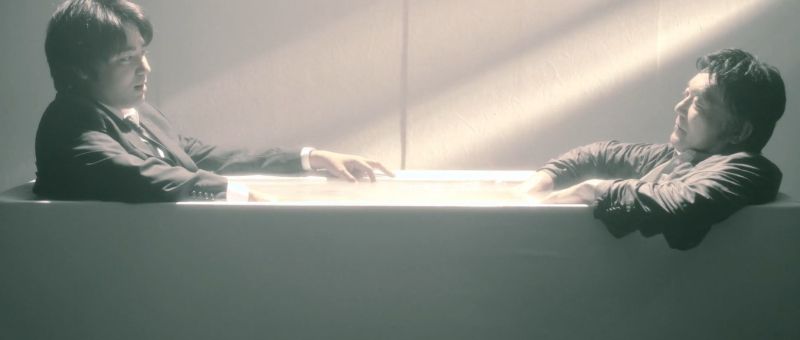
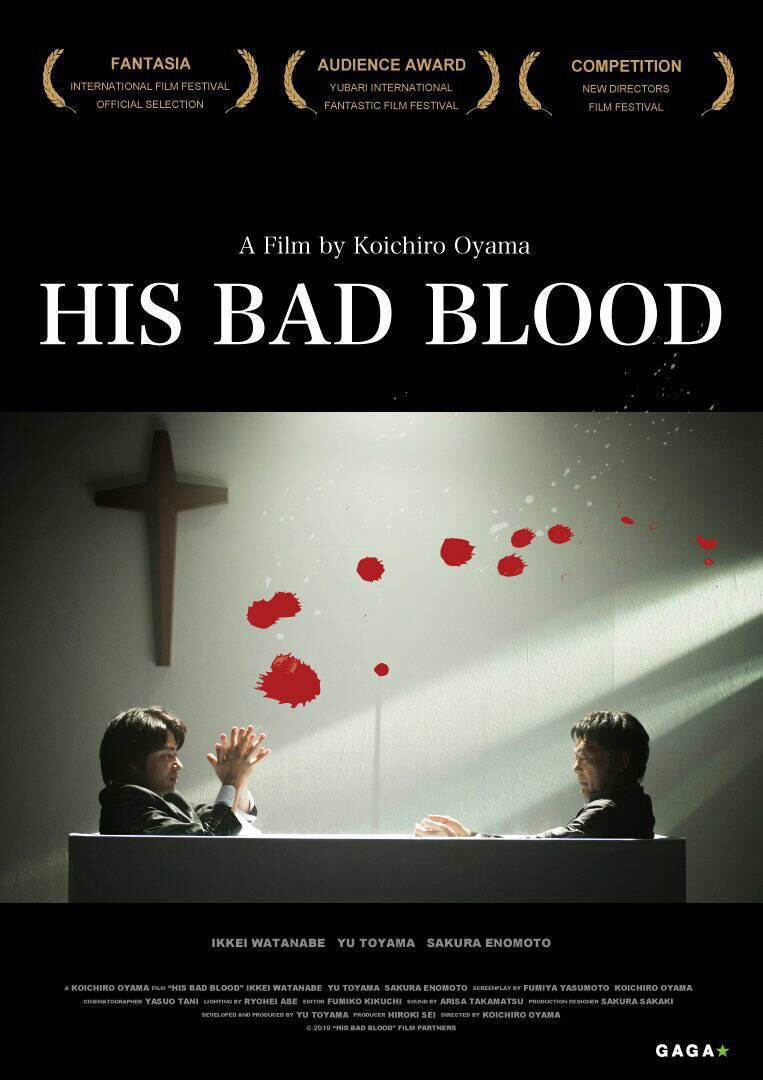
His Bad Blood PosterThe sins of the father are visited on the son. Rural superstitions run deep, but is it really fair to condemn a child for having “bad blood” or will the prejudice itself become a self-fulfilling prophecy? The young man at the centre of Koichiro Oyama’s debut feature His Bad Blood (いつくしみふかき, Itsukushimi Fukaki) struggles to assert himself in a small community where his father’s (minor) crimes are still painfully present, but then perhaps like any other young man he himself needs to lay his father’s ghost to rest in order to find his own path.

Decades ago, no good drifter Hiroshi (Ikkei Watanabe) drifted into a small-town in search of a place to die after his latest business venture collapsed, but there found the kindly Kayoko who gave him a home and a chance to start again. Unfortunately, however, Hiroshi reverted to type and after being sent home to get the baby clothes while his wife was in labour, decided to run off with the family’s savings instead only to be caught in the act by Kayoko’s brother Yoshitaka whom he wounded in a fight that eventually saw him beaten by a mob and hounded out of town.

In the present day, Shinichi (Yu Toyama), the son, is a strange, shy young man who has been unable to hold down a job and is widely disliked by the community and especially by his resentful uncle. When the area is plagued by a spate of burglaries, Yoshitaka jumps to the “obvious” conclusion and attempts to have Shinichi hounded out of town the same way he got rid of his father. Hurt that not even his mother believes he is innocent of the crimes of which he is accused, Shinichi takes refuge with the local preacher (Akio Kaneda) where, unbeknownst to him, his estranged father has also decamped to hide out after a life of petty crime finally catches up to him.

Though set firmly in the present day, Oyama’s debut has a distinctly depression-era dustbowl feel with its rural backwater suddenly stirred up by rumours of the railroad’s eventual arrival while the non-conformist Christian church hands down messages of love and compassion in trying times. Hiroshi, possibly unreformable, even puts on a show of getting religion only to go full snake oil salesman in staging a revival inside the Reverend’s church in which his personal prophet, Tanaka Xavier XVI, makes a “disabled” woman walk and successfully stimulates the record crowd to hand over their cash in hope of salvation while Shinichi and the Reverend look on in confused horror.

To engineer some kind of forward motion, the Reverend pushes the two men together but keeps their connection a secret until finally revealing it in the hope that the pair might finally be able to put some kind of lid on the past. Looking for his father, Shinichi avows he’d like to mess up his life just like his father has done to his, but discovers that Hiroshi’s life is pretty messed up already and likely always has been. His fate was pretty much sealed the day pushed the baby clothes out of the way and opened the family safe instead. Shinichi’s job isn’t to save his dad, no one can, but try and accept him so that he can, a sense, reject his “bad blood” and those who condemn him for it to claim his own identity and walk his own path.

Before he can do all of that, however, he’ll have to escape the secondary curse of the unfair prejudice he faces from his home community as a supposed carrier of “bad blood”, destined for criminality and inherently untrustworthy. Despite all he suffers, Shinichi valiantly refuses to become what everyone says he is while deeply resenting his absent father for saddling him with this unhappy destiny. It is, however, Hiroshi who accidentally gives him forward motion through the unlikely shared dream of making an honest killing in the shortly to boom real estate business when the railroad comes to town. An equally unlikely love affair with a similarly strange young woman (Keiko Koike) provides additional possibilities, but still leaves Shinichi feeling trapped by his past despite her urgings to “just be yourself and live in the future with me”. A melancholy tale of freeing oneself from the judgement of others and learning to step out of a father’s shadow, His Bad Blood is a promising debut from Oyama who addresses a difficult subject with compassionate humanism as his melancholy hero finds the courage to walk away from a toxic past towards a more promising future.


His Bad Blood was screened as part of the 2019 Fantasia International Film Festival.

International trailer (English subtitles)

Death Note: Light Up The NEW World (デスノート Light up the NEW World, Shinsuke Sato, 2016)

Death Note- Light up the NEW WorldTsugumi Ohba and Takashi Obata’s Death Note manga has already spawned three live action films, an acclaimed TV anime, live action TV drama, musical, and various other forms of media becoming a worldwide phenomenon in the process. A return to cinema screens was therefore inevitable – Death Note: Light up the NEW World (デスノート Light up the NEW World) positions itself as the first in a possible new strand of the ongoing franchise, casting its net wider to embrace a new, global world. Directed by Shinsuke Sato – one of the foremost blockbuster directors in Japan responsible for Gantz, Library Wars, and the zombie comedy I am a Hero, Light up the NEW World is a new kind of Death Note movie which moves away from the adversarial nature of the series for a more traditional kind of existential procedural which takes its cues from noir rather the eccentric detectives the franchise is known for.

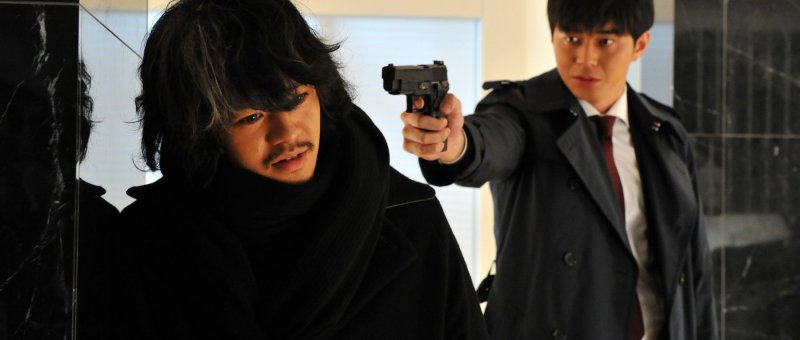
Ten years after Kira, the Shinigami are bored out of their minds and hoping to find themselves a new puppet to play with and so they drop six notebooks at different places across the world and wait to see who picks them up. The first is a Russian doctor who uses it out of curiosity and compassion when faced with the desperate pleas of a suffering, terminally ill man. Others are not so altruistic, as a young girl with reaper eyes goes on a mass random killing spree in the busy Shibuya streets while the police attempt to cover their faces so they can’t fall victim to her relentless writing. Mishima (Masahiro Higashide) of the special Death Note task force hesitates, uncertain whether he should disobey orders and shoot the girl to end her killing spree, but his dilemma is solved when a strangely dressed masked man appears and shoots her for him. He is special detective Ryuzaki (Sosuke Ikematsu) – L’s successor, and a crucial ally in discovering the Shinigami’s intentions as well as the counter plan to obtain the six books and lock them away to permanently disable the Death Note threat.

As in the original series, Kira has his devotees including the cybercriminal Shien (Masaki Suda) who is intent on frustrating the police’s plan by getting his hands on the books and using them to complete Kira’s grand design. This time around, there’s less questioning of the nature of justice or of the police but at least that means there’s little respect given to Kira’s cryptofascist ideas about crime and punishment. At one point a very wealthy woman begins to voice her support of Kira because something needs to be done about “the poor” and all their “crimes” but she is quickly cut down herself as her well dressed friends attempt to rally around her.

The focus is the police, or more specifically their internal political disputes and divisions. Mishima, described as a Kira geek, heads a special squad dedicated to Death Note related crimes, where he is asssited by the flamboyant private detective Ryuzaki who is apparently the last remaining inheritor of L’s DNA. Mishima remains distrustful of his colleague but the bond between the rest of the team is a tight one. In order to frustrate possible Death Note users, none of the squad is using their real names which places a barrier between comrades in arms when it comes to building trust and solidarity in addition to leaving a backdoor open for unexpected secrets.

Sato’s focus, as it has been in the majority of his career, is genre rather than character or exploring the wider themes of the Death Note franchise from the corrupting influence of absolute power to vigilante justice and the failings of the judicial system. The new Death Note world is a more conventional one loyal to the police procedural in which dogged detectives chase mad killers through whatever means necessary whether on foot or online.

The action, however, is generally exciting as the police engage in a cat and mouse game with Shien even if not as complex as that between Kira and L. The Death Notes are an unstoppable force, corrupting otherwise fair-minded people and turning them into vengeful killing machines acting like gods in deciding who should live and who die. Moving away from the series trademark, Light up the NEW World is, essentially, the generic thriller spin-off to the main franchise but is no less fun for it even if it necessarily loses a little of itself in the process.


Death Note: Light up the NEW World was screened at the 17th Nippon Connection Japanese Film Festival.

Original trailer (English subtitles)

A Bride for Rip Van Winkle (リップヴァンウィンクルの花嫁, Shunji Iwai, 2016)

the_bride_of_rip_van_winkle“Being naked in front of people is embarrassing” says the drunken mother of a recently deceased major character in a bizarre yet pivotal scene towards the end of Shunji Iwai’s aptly titled A Bride for Rip Van Winkle (リップヴァンウィンクルの花嫁, Rip Van Winkle no Hanayome) in which the director himself wakes up from an extended cinematic slumber to discover that much is changed. This sequence, in a sense, makes plain one of the film’s essential themes – truth, and the appearance of truth, as mediated by human connection. The film’s timid heroine, Nanami (Haru Kuroki), bares all of herself online, recording each ugly thought and despairing notion before an audience of anonymous strangers, yet can barely look even those she knows well in the eye. Though Namami’s fear and insecurity are painfully obvious to all, not least to herself, she’s not alone in her fear of emotional nakedness as she discovers throughout her strange odyssey in which nothing is quite as it seems.

We first meet Nanami on an internet blind date with the man who will later become her husband. Looking lost and alone, she passively waits for her online suitor to find her in the busy city streets. Tetsuya (Go Jibiki) does indeed turn up and assume control of the situation, to which Nanami submits just as she has to everything else. Bonding over little more than their shared vocation of teaching the pair drift into a relationship and then later into a marriage, as is the natural order of things.

Though she seems happy enough, Nanami vents her frustrations in her caustic online blog. Isn’t this all just too easy? She asks herself. It’s almost like online shopping, she simply added a boyfriend to her basket and now she’s about to check out. A failure to win over Tetsuya’s mother adds to her sense of unease as does the fact she has no close friends or relatives (aside from her soon to be divorced parents) to invite to the wedding. Her decision to take the advice of an online friend and employ the shady fixer Amuro (Go Ayano) to hire a selection of professional party goers to bulk out her side of the hall will prove to be a disastrous one (though perhaps more in the short term), turning her entire life inside out.

Nanami’s essential personality trait is her passivity. Like Rip Van Winkle, she is largely asleep while things happen all around her. Though she dreamed of being a teacher, Nanami has only been able to find temporary supply roles with an agency but even this seems unlikely to last thanks to her softly spoken nature which makes classroom teaching a poor fit for her shy, attention avoidant personality. Discovered at her part time combini job by an old university friend, Nanami is embarrassed and has even been wearing a (useless but endearing) disguise in case any of her students come by despite the fact she chose a store far away from the school. Her friend now works at a hostess bar which Nanami finds a little bit shocking. That kind of unconventional way of living is not something she would contemplate, and so when offered the extremely dull but comfortable life alongside the dull but comforting Tetsuya, Nanami settles.

After Amuro spectacularly derails her non-happiness, Nanami is cast adrift which eventually leads her straight back into Amuro’s web of morally dubious activities. Taking a job as a maid at the cheap hotel she ends up in after leaving Tetsuya, Nanami also works part time as another of Amuro’s professional guests which is where she meets motivator no. 2 – Mashiro (Cocco), “actress” and all round live wire. Bonding over sad karaoke, Nanami and Mashiro later wind up working together as live in maids in a creepy, isolated mansion filled with poisonous animals. Enforced proximity leads to genuine friendship and then to more than that, but, ironically enough, Mashiro has not been entirely honest about her intentions and Nanami is soon adrift once again.

Undergoing a “fake” wedding that’s sort of real (in contrast with the “real” wedding which was sort of “fake”), at least in sentiment, Nanami looks much happier than in the extremely bizarre ceremony which bound her to Tetsuya. Nanami and Mashiro’s union was “engineered” yet mutually beneficial and ultimately genuine despite its artificial genesis. Making a last, heartbreaking speech, Mashiro attempts to explain herself and her life philosophy in a final act of nakedness. She prefers to pay for connection because, she says, the world is too full of kindness. There is so much happiness out there that it’s completely overwhelming. Sometimes there’s more truth in the lie than there is in the reality.

The resurfaced Iwai is both more cynical and more romantic than he has ever been before. He has serious things to say about constructed identities and disconnectedness, that the increasingly open nature of the anonymous online world only makes the real one seem less reliable and harder to navigate. We’ve all been wearing masks but we turned them round when we went online, and now perhaps we’re forgetting that we made them in the first place. Nanami may be adrift again at the film’s conclusion but she finds herself in a world of infinite possibilities. Emerging with more certainty and firmer sense of self, Nanami has retaken control and even if she doesn’t know where she’s going, the choice is entirely her own. Another beautifully nuanced, endlessly affecting character study from Iwai, A Bride for Rip van Winkle is a gloriously rich experience, filled with both hope and despair, but told with all the ethereal warmth and strangeness of the best of dreams.


This review refers to the 180 minute director’s cut, rather than the shorter international or four hour TV version.

Original trailer (English subtitles)