Three Days of a Blind Girl (盲女72小時, Chan Wing-Chiu, 1993)

An oblivious housewife undergoes a kind of awakening while confronted with her husband’s transgressions by a vengeful intruder in Chan Wing-Chiu’s home invasion horror, Three Days of a Blind Girl (盲女72小時). Rendered temporarily sightless after an operation designed to save her sight, the implication is that the heroine, referred to only as Mrs Ng (Veronica Yip Yuk Hing), has been living in a fantasy of aspirational domestic success largely dependent on her heart surgeon husband Jack (Anthony Chan Yau) and devoid of her own identity while blind to the patriarchal forces which oppress her. 

Having returned from surgery in the US, Mrs Ng is assured her sight will gradually return in around 72 hours though until then she will be entirely blind. The doctors give her no special instructions, and she and her husband return to their country home where they are cared for by a maid, May (Chan Yuet-Yue). Somewhat insensitively, Jack has to leave for an important heart attack conference in Macao leaving Mrs Ng solely in the custody of May only May has other plans. Her policeman boyfriend has got them concert tickets while she also needs to go out to refill her asthma medication meaning that Ms Ng will be entirely alone at home while attempting to adjust to her sightless existence. 

Mrs Ng is rendered vulnerable in what should be a safe space. The sanctity of the domestic is disrupted firstly by Jack’s absence and then by an uncanny lack of familiarity introduced by her blindness. Though she has a stick, she soon finds herself bumping into things or encountering unexpected obstacles while the design of the home’s staircase appears dangerous even to the sighted and a definite health hazard to anyone else. In a moment of foreshadowing, Jack warns the maid that there’s a problem with the phone while the mobile he left is also low on battery meaning that Mrs Ng could not even call for help if she needed it. 

Unsolicited help is however something she’s offered by an unexpected visitor, Sam (Anthony Wong Chau-sang), who claims to be an old school friend of Jack’s who also treated his wife for her heart condition. Mrs Ng can’t see it, but Sam is dressed in a rather unique outfit of lederhosen and a check shirt appearing something like malicious garden gnome. In an odd moment of comedy, Sam, who soon begins stalking Mrs Ng around the house, pretends to chase off an intruder by running up and down the stairs swapping characters as he goes but otherwise skews increasingly sinister while discussing his relationship with his wife who he claims has rejected him on the grounds of the printer’s ink that stains his hands. 

Sam is Jack’s inversion, an overly solicitous husband now hellbent on avenging his masculinity by raping Mrs Ng to get back at Jack whom he blames for his wife’s death claiming he treated her heart condition with vitamins while abusing his position to take advantage of her sexually. At first, Mrs Ng doesn’t believe him and trusts her husband but her literal awakening occurs in line with the return of her sight. She begins to see the light and the reality of her life with Jack, ironically thanking him for this experience because it’s taught her how to fight back and protect herself in the face of his male failure. “Don’t think women are easily bullied” she claps back after finally taking charge of her life and knocking the forces of patriarchy firmly on the head.

Nevertheless, she begins to resist with regular household items such as using the serrated edge on a box of clingfilm to try and saw through the ropes binding her hands. Despite her blindness, she uses her knowledge of the domestic space against the intruder Sam and tries to frustrate his plans for her through strategy and forward thinking even while beginning to discern the danger which has always surrounded her as evidenced by the unexpected appearance of an entirely different assailant wandering in by chance in the temporary absence of Sam. “Never fight with women,” a much more confident, fully sighted, Mrs Ng later exclaims finally awakened to the realities of the world around her and unafraid to confront its ever present dangers now armed with the stylish briefcase of an independent woman. Surprisingly feminist in its overtones, Chan turns the home invasion thriller inside out as Mrs Ng mounts a successful jailbreak from the confines of a stereotypical housewife life.


Three Days of a Blind Girl screens at the Prince Charles Cinema, London on 19th October as part of Silk and Bullets: The Sisterhoods of Revenge where it will feature a video introduction by producer Alfred Cheung and pre-recorded Q&A with Director Chan Wing-Chiu.

Original trailer (no subtitles)
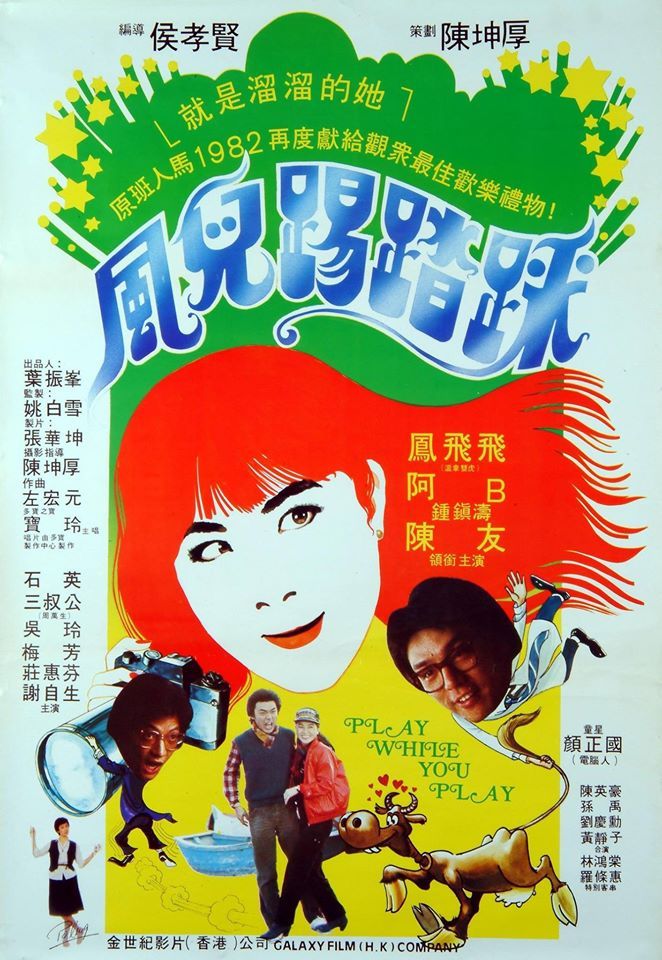
Cheerful Wind (風兒踢踏踩, Hou Hsiao-Hsien, 1982)

A leading figure of the New Taiwan Cinema movement, Hou Hsiao-Hsien has sometimes been regarded as difficult or inaccessible but there has always been a kind of playfulness in his wistful romanticism and it is not perhaps as surprising as it might first seem to realise that like many directors of his generation he began his career with a series of idol movies starring top Hong Kong star Kenny Bee. Cheerful Wind (風兒踢踏踩, Fēng Ér Tī Tà Cǎi, AKA Play While You Play) reunites him with Cute Girl co-star and Taiwanese chart topper Fong Fei-fei* who, in true idol movie fashion, sings the title tune the refrain of which is heard frequently throughout. For all that, however, it’s a surprisingly subversive effort in what is often regarded as a conservative genre, painting its heroine as a free spirited modern woman and refusing to punish her either for her breezy approach to romance or for rejecting marriage in favour of individual fulfilment. 

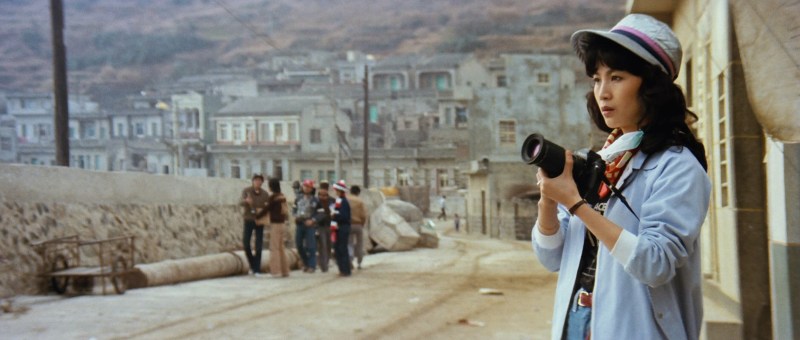
The heroine, Hsiao Hsing-Hui (Fong Fei-Fei), is a keen photographer working for an ad company currently shooting a commercial for detergent in a traditional seaside village. Whilst there she catches sight of Chin-tai (Kenny Bee), a musician she later discovers to be blind and, therefore, not catching sight of her as she had first assumed. Somewhat problematically, Hsing-hui decides to use Chin-tai in the commercial, an essentially exploitative action that plays into various unhelpful stereotypes about the blind as they hope to show that “even” those who cannot see are aware of their brand despite being unaware of the branding. She does something similar after unexpectedly running into him back in Taipei and “helping” him to cross a road he had no intention of crossing, but this does at least provide the opportunity of a second meet cute which kick starts their relationship. 

Hsing-hui, however, is technically already attached to nerdy colleague Lo Zai (Anthony Chan Yau) with whom she is living though apparently in separate rooms. He is keen to move things forward and has already quit his job with the intention of taking Hsing-hui to meet his mother in Hong Kong who has apparently been nagging, but she is in no particular hurry and has in fact already agreed to fill in for her brother teaching at the primary school in her home town while he goes to Australia for a tennis competition. 

This new focus on international travel perhaps symbolises the growing ambitions of a newly prosperous, globalising society. Hsing-hui’s dream is not marriage but to see the world, which is one reason she’s staying with Lo Zai in that they plan to tour Europe together and she fears she may never have another opportunity. Back in Taipei, meanwhile, when Hsing-hui’s country bumpkin father (Chou Wan-sheng) arrives to take a look at Lo Zai, they take him to eat pizza and drink Coca-Cola in a trendy restaurant but he finds himself doubly displaced. He speaks mainly Taiwanese dialect and struggles to understand the capital’s preferred Mandarin, quickly lost after failing to understand directions while trying to find the bathrooms at the station and enduring a series of comic misunderstandings while trying to converse with Lo Zai who hails from Hong Kong. In fact, the family aren’t really that keen on the idea of her marrying a Hong Konger, but in a pleasantly modern touch Hsing-hui’s father is quick to tell her that it’s her own decision and as long she’s sure he’ll support it. 

Chin-tai meanwhile jokes about a wife needing good teeth as if she were a goat or a horse being sold at auction and as sympathetic as her father is, he also brings up dowries while attempting to negotiate with Lo Zai who goes along with it but isn’t actually that invested in the “hassle” of marriage anyway. “I prefer the old ways, they were more romantic then” Chin-tai confesses, and to an extent Hsing-hui does too, a hippieish free spirit even in the country where she’s taken to task by her new boss for getting the kids to paint an undersea mural on the playground wall rather than the government approved slogans they were supposed to be reinforcing. For all of this drive and positivity, this is still a nation trapped under martial law and would be for the next five years which makes the tacit approval of Hsing-hui’s desire to seize her own destiny romantic and otherwise all the more subversive. What she gets is a universal happy ending with a man who has no desire to trap her and vows to wait while she achieves her dreams in the hope that she will then return to him. Hou’s second feature sees him flirt with youthful post-modernist aesthetics and is so absolutely of its time that it almost hurts, but for all of its essential fluffiness is also an infinitely breezy affirmation of a woman being absolutely herself and the men just dealing with it as she steps bravely into a freer future entirely of her own choosing. 


Cheerful Wind streamed in its new restoration as part of this year’s Udine Far East Film Festival.

Festival teaser trailer (dialogue free)

Title song performed by Fong Fei-fei

*The standard pinyin romanisation of 鳳飛飛’s name is Feng Fei-Fei, but she is usually credited as Fong Fei-fei.

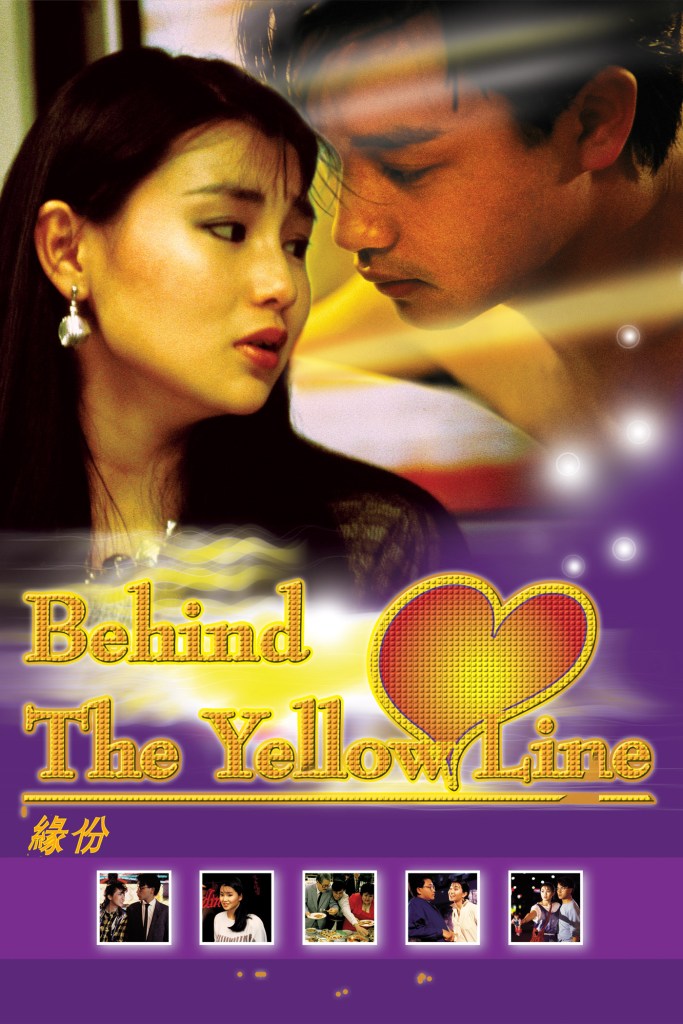
Behind the Yellow Line (緣份, Taylor Wong, 1984)

behind-yellow-lineBack in the 1980s, you could make a film that’s actually no good at all but because of its fluffy, non-sensical cheesiness still manages to salvage something and capture the viewer’s good will in the process. In the intervening thirty years, this is a skill that seems to have been lost but at least we have films like Taylor Wong’s Behind the Yellow Line (緣份, Yuan Fen) to remind us this kind of disposable mainstream youth comedy was once possible. Starring three youngsters who would go on to become some of Hong Kong’s biggest stars over the next two decades, Behind the Yellow Line is no lost classic but is an enjoyable time capsule of its mid-80s setting.

Paul (Leslie Cheung) is a mild mannered guy trying to get to work on time and make a good impression on his first day on the job but after having a taxi stolen out from under him and having to run some of the way, he rushes onto the underground where he has a meet cute with Monica (Maggie Cheung) – a sad looking lady who barely notices his presence. Paul is smitten and follows her onto the train where she continues to ignore him. Despite his best efforts he makes more of an impression on Anita (Anita Mui) – a wealthy and extremely fashionably dressed woman with giant 80s hair! Anita makes a play for Paul but he only has eyes for Monica. Monica is just getting over a failed affair with a married man and isn’t really sure of anything anymore. It’s all in the hands of fate and the mass transit authority but will true love really run its course?

Behind the Yellow Line (presumably so named for its train station setting, the chinese title is simply “fate”) is meandering mess of a picture though very much typical of its time. Paul and Monica get together but she’s still torn over her married lover who resurfaces at the most inconvenient moment whilst also fighting off the attentions of her flirtatious boss causing Paul to overreact in fit of jealously and almost ruin everything in the process. Eventually they decide to sort things out with a game of fate as Monica hides on the MTR expecting Paul to successfully pin point her location before the last train rolls so that she knows they are truly destined to be together.

This central spine of the film works well enough as Paul and Monica tempt fate with their true love romance but where does Anita fit into all this? Popping up now and then almost at random, Anita seems like a strange after thought or a refugee from another film. A stock ‘80s style kooky character, she’s all big hair and bold makeup but she’s also a wealthy woman trying to buy Paul (or more particularly his parents) with the promise of material security. ‘80s setting aside, consumerism is only a mild bi-product and neither Paul nor Monica is particularly pressed over material concerns – all that matters here is true love destiny and the successful resolution of their romantic difficulties. Anita becomes a kind of cupid, forsaking her own feelings in order to satisfy Paul’s in gesture of true love that also recognises having lost out in the great game of fate as her feelings are not returned. Or, there are things money cannot fix (at least, not in the way you want it to).

In this way Behind the Yellow line becomes more interesting as it’s Anita and Monica who begin to move the plot. Monica is quick to remind us that she’s a single woman and she has the right to choose – in this case, she feels sorry for both of her potential partners (whilst completely disinterested in her boss) and so is inclined to decide to remain alone. The film obviously doesn’t go this way, but it does present her choice as a perfectly valid one whilst also affording her the agency to choose her own destiny right the way through. Anita largely wields her power through her money (which appears to be inherited, the gang of other young people she hangs round with seem to be wealthy too making her choice of Paul a relatively strange one), but she exercises her individuality through her unconventional behaviour and bold fashion choices, refusing to give in to social norms but submitting to “destiny” in acknowledging that her feelings are unrequited.

Very much of its time, Behind the Yellow Line is an obvious piece of disposable entertainment designed to appeal to a very specific audience. Filled with cheerful ‘80s cantopop and bright neon lighting there’s relatively little angst in this tale of youthful romance. Everything bounces along much as one would expect with no melodramatic intrusions save Monica’s sometimes melancholy indecisiveness and Paul’s diffidence. Structurally the film is riddled with problems not least with its use of Anita who seems to appear and disappear as needed with no clear indication of her precise function yet it provides enough silly humour and good natured drama to coast though without too many problems. No great lost classic but enjoyable enough, Behind the Yellow is worth seeking out if only to witness the genesis of these three soon to be giants of the entertainment world whose careers became curiously intertwined before ending much too soon in the early years of the following century.


2003 Celestial Pictures trailer (English subtitles)

Original 1984 Cantonese trailer (English subtitles for onscreen text only, no subtitles for dialogue)

https://www.youtube.com/watch?v=jYrjpTHtXCE