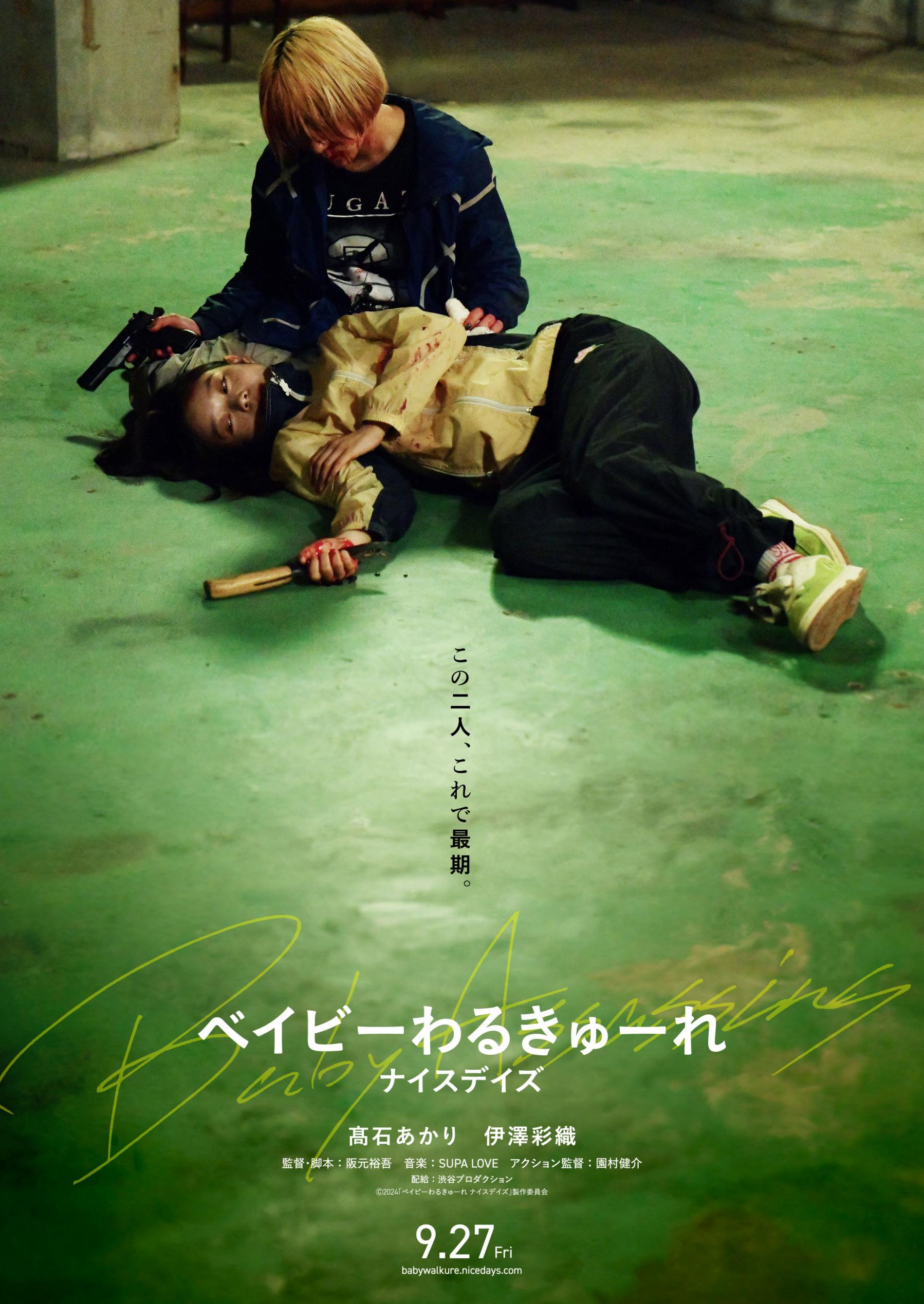
Baby Assassins: Nice Days (ベイビーわるきゅーれ ナイスデイズ, Yugo Sakamoto, 2024) [Fantasia 2024]

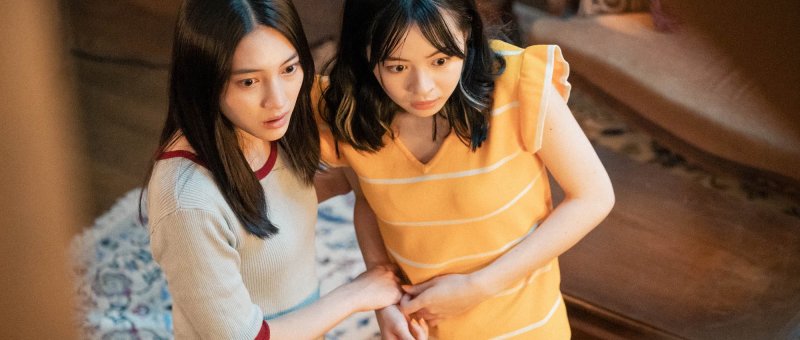
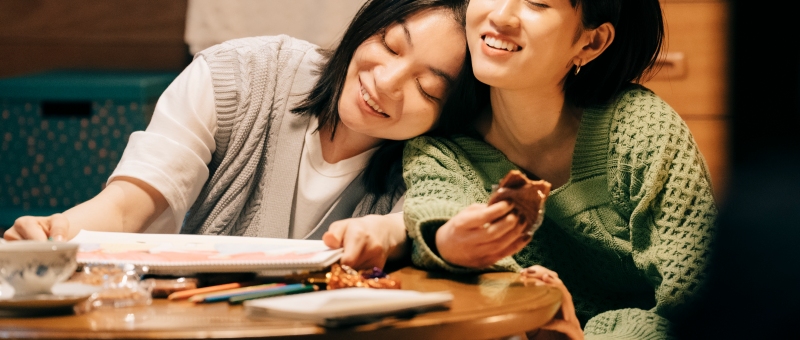
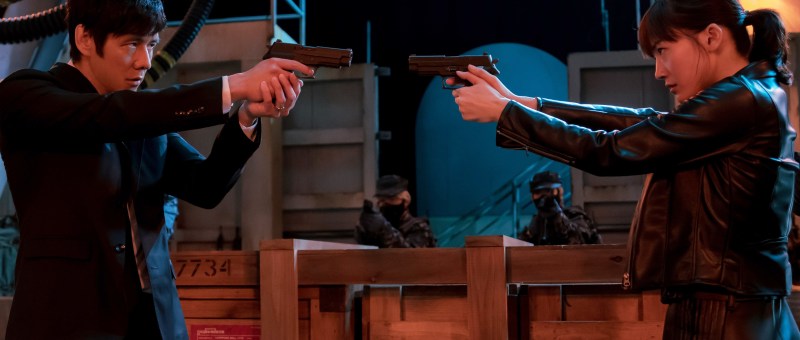
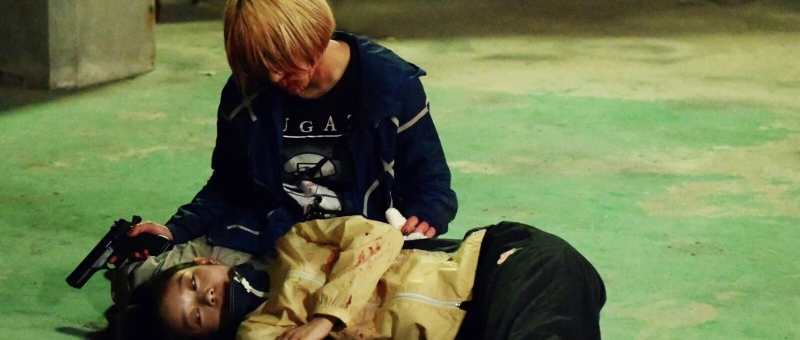
After beginning to conquer the demands of adulthood, Mahiro (Saori Izawa) and Chisato (Akari Takaishi) are taking a well-deserved break, or more like a working holiday to be precise, but soon find themselves with another unexpected mission to clean up a messy situation on behalf of the Guild. Baby Assassins: Nice Days (ベイビーわるきゅーれ ナイスデイズ, Baby Valkyrie​: Nice Days), the third in series of deadpan slacker action movies from Yugo Sakamoto, adjusts the balance of the previous two films shifting more towards action than the girls’ aimless lives while setting them against an opponent who is anything but aimless.

In fact with the girls find their way to the home of Kaede Fuyumura (Sosuke Ikematsu), is plastered in ironic motivational slogans that seem to be a kind of parody of salaryman’s kaizen obsession. Fuyumura likes to rank things and wants to make sure he’s at the top, but also wants out of the game because he’s bored with it and also fed up with difficult clients frustrated when one takes ages to decide whether or not he should kill the target resulting unnecessary stress for them and an unsatisfying kill for Fuyumura. That’s largely why he’s agreed to this one last job of killing 150 people who took part in cancelling a university student online. The problem is that Fuyumura is a freelancer which presents a problem for the Guild which has decided he must die for violating their rules and bringing the profession into disrepute. Thus Mahiro and Chisato find themselves in an awkward position when they turn up to kill their latest target and realise they’ve been double booked to take out Fuyumura ’s kill.

The admin mixup, though it isn’t one really, rams home the series’ persistent absurdity that this weird world of assassins isn’t so different from contemporary corporate culture while the girls are still subject to the same problems as any other 20-something. This time around, we’re introduced to another prominent agency which is run out of a farmer’s agricultural co-op and hides weapons inside boxes of vegetables, while Mahiro and Chisato get a pair of supervisors with the de facto team leader Iruka (Atsuko Maeda) going off on lengthy rants about why it’s impossible to work with Gen Z while the girls struggle with her uptight dismissiveness. Yet even when there’s tension or discord, the fact remains that the Chisato and Mahiro are also part of a team and have a vast network of support to rely on including their cleanup squad while Fuyumura is a lone wolf who’s driven himself half out of his mind with his quest to be the best, a message is brought home to him when he approaches the farmer’s union to ask for “a replacement” after getting one of their guys killed only to be told off and reminded the farmers work as one big family rather than a series of disposable minions. 

There is something a little poignant about Fuyumura’s wondering when his birthday is as if this small forgotten detail represented his missing humanity. The only time he feels like a human being is doing something mundane like cleaning his microwave and brushing his teeth. As she had the brothers in the previous film, Mahiro finds a kind connection with Fuyumura as they each discover a worthy match but knowing only one of them can survive. In an introspective movement, Mahiro asks Chisato if they can still hang out together on the other side if the worst happens, but she shuts the question down perhaps more in an attempt to shift Mahiro’s mindset but also berating herself for forgetting her birthday and making hurried plans to coverup her crime against friendship.

For all the absurdity about hitman union rules and rights of employment in an illegal profession, the films has a genuine affection for the relationship between the two girls as well as that between the wider team who are always around to have their back while they also take care to protect each other. Perhaps having to field a work crisis during their “holiday” is their final test of adulthood, and one they largely pass in enforcing their boundaries and defiantly having a good time anyway even if they did have to cancel their reservation at local barbecue restaurant to stakeout the home of a crazed killer. Once again featuring a series of well choreographed and innovative action sequences, the series’ third instalment seems to come into its own expanding the world of the Baby Assassins but setting them free inside it evidently a lot more at home with the concept of adulting.


Original trailer (no subtitles)
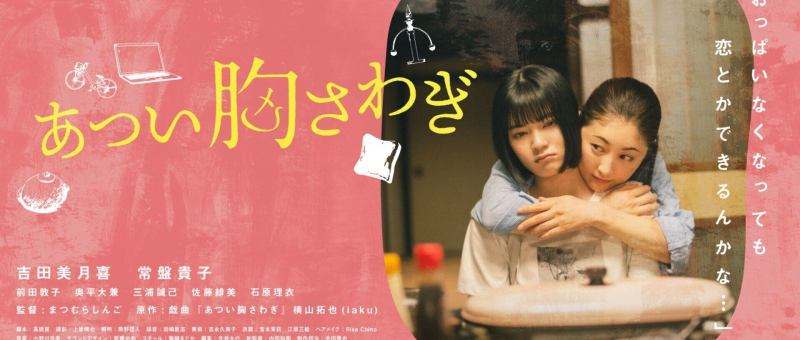
The Lump in My Heart (あつい胸さわぎ, Shingo Matsumura, 2022)

A young woman with a growing desire for independence is thrown into turmoil by a totally unexpected diagnosis of cancer in Shingo Matsumura’s gentle coming-of-age tale and maternal drama, The Lump in My Heart (あつい胸さわぎ, Atsui Munasawagi). Perhaps because of her youth, the heroine finds herself struggling not with a fear of pain or death but of being unsexed while preoccupied with what it might mean for the rest of her life if she were to lose her breasts at such an early age.

It seems that Chinatsu (Mizuki Yoshida) has had a particular hangup about her chest size since the onset of puberty when her mother, Akiko (Tokiko Tokiwa), first refused to buy her a bra, making her wait a year longer than the other girls and leaving her with a sense of embarrassment that might be out of keeping with her age. One of the things that most bothered her about the doctors visits is that she was treated by a middle-aged man who was then the first person ever to touch her breasts which is something she’s unhappy about while also feeling insecure that she’s never had a proper boyfriend and might never get one if it turns out she needs a mastectomy. As it turns out, she’s carrying a torch for childhood friend Ko (Daiken Okudaira), an aspiring actor, but is too shy to say anything especially with this threat to her sense of femininity hanging over her. Of course, it doesn’t help that the doctors are asking her to make advance decisions about things an 18-year-old wouldn’t usually consider such as if and when she might want children because her feelings about her fertility might affect her treatment options. 

Then again, it’s also true that she remains trapped in adolescence resentful when her mother tells her not to worry she’ll make all the decisions but also perhaps relieved. A little sick of their co-dependency she’d been thinking of moving out though it seems difficult to believe she’d be able to afford rent with just her part-time job while studying full-time at university. But when her mother shows a little interest in an incredibly awkward man at work it sends her in the other direction, now feeling resentful and rejected while fearing the loss of their familial intimacy given it had just been the two of them for so long after her father’s death when she was four.

Motoharu (Masaki Miura) accidentally demonstrates the entrenched sexism of the world around them when he makes a misogynistic joke as an attempt at an icebreaker when introduced as the boss at the factory where Akiko works. It later comes to light that he left his last job due to an accusation of sexual assault, and though it turns out to have been a misunderstanding highlights a lack of awareness in the working environment that feeds in to Chinatsu’s ongoing preoccupation with her femininity and the elusiveness of romance. Her homework assignment over the summer holidays is to write a story about her first love, a topic which might be seen as bordering on inappropriate, perhaps discriminatory against those who do not feel romantic desire not to mention that Chinatsu is only 18 so it is only natural that she is still in the process of figuring things out and cannot be expected to have much of a perspective on what is to her still a fairly recent (in fact ongoing) event. 

Meanwhile, her mother and Motoharu are each feeling a pang of regret that they always let things pass them by like the arrival of the circus, destined to be in town for a limited time only so it’s best to catch it while you can. Unfortunately that’s easier said than done especially when not everyone’s on the same page. The lump in Chinatsu’s heart is her yearning for romantic love, though she still lacks the courage to be honest with her feelings even if it’s helped her repair her relationship with her mother. An unexpected piece of compassionate advice also helps her begin to re-imagine her femininity in accepting that the loss of her breasts might not mean that she’s destined to be alone forever nor undeserving of romantic love symbolically dissolving the lump in her heart in allowing her to move forward with her life no matter what the future might hold.


The Lump in My Heart screened as part of this year’s Japan Foundation Touring Film Programme.

Original trailer (English subtitles

Love Will Tear Us Apart (ラヴ・ウィル・テア・アス・アパート, Kenichi Ugana, 2023)

“This film depicts a pure and genuine love between an awkward boy and a girl with a pure heart,” according to a pop idol starring in a film called “garbage love”, but it’s a true enough description of Kenichi Ugana’s genre-crossing slasher romance, Love Will Tear Us Apart (ラヴ・ウィル・テア・アス・アパート). Co-scripted by Hirobumi Watanabe, the film has a deadpan, surreal sensibility but has a lot to say about entrenched patriarchy and a bullying culture. 

As the film begins, Wakaba is a cheerful little girl who has an all encompassing obsession with a handsome pop idol, but is secretly enduring an oppressive atmosphere of domestic violence in her family home at the hands of her cruel and violent father. In this she might have found a kindred spirit in classmate Koki who is enduring physical abuse at the hands of his mother who openly tells him how much happier she’d be if only he’d never been born. Koki is also being bullied by a pair of mean kids at school and meekly takes it, unable to stand up for himself. When Wakaba steps up and tries to help him, the bullies turn on her too and their teacher (Atsuko Maeda) seemingly does nothing. After the pair bond through a screaming session at a local river, the bullies mysteriously fall out of a window which Koki is then seen ominously staring out of. 

The film jumps on seven years to a teenage Wakaba (Sayu Kubota) who discovers the world is not a safe place for women, repeatedly encountering a series of skeevy guys beginning with her favourite pop band who lure her to a cabin in the woods where they openly talk about getting her drunk to take advantage of her or spiking her drinks. One of the chief victimisers is another woman, Moeka, whose apparent “job” it is to recruit girls for the guys to have fun with. Wakaba’s friend Kanna (Riko) wants to leave, sensing that there’s something not quite right but Wakaba is naive and unable to see the danger. A similar thing happens when she visits Tokyo alone and has a meet cute with a guy who spills coffee on her shirt and offers to buy her a new one, then to show her around, takes her for sushi, declares his love and makes a proposal of marriage. 

As might be expected, many of these men end up dead at the hands of a vicious, chainsaw-wielding serial killer in a white hazmat suit, gas mask, and goggles. You can’t quite blame him for his crimes because everyone he kills is so irrediambly awful while it really does seem that he might be trying to protect Wakaba in some way from the hidden dangers she remains unable to see because of her pure heartedness. While her own father had been cruel and violent, she discovers that Moeka’s, police detective Kamiyama (Mitsuru Fukikoshi), is the opposite but worse in his unsettling obsession with his daughter, whom he believed to “pure and earnest” little knowing that she had been procuring young girls to serve up to the sleazy band members.

In a strange way, the serial killer turns out to be Wakaba’s healthiest relationship even if he’s basically stalking her not to mention murdering people with chainsaws because they threatened her happiness. The film runs through a series of genres from the cute childhood romance that soon turns ominous and the cabin in the woods slasher movie complete with creepy monkey and trainset, to martial arts epic as Wakaba abandons her life to train with a YouTube serial killer catching guru in a tropical resort town but retains its sense of anarchic innocence and internal integrity. As the pop star had implied, it really is a tale of genuine love between an awkward boy and a pure hearted girl in which they gradually realise that they each have a right to be happy and can be so together despite all violence and mayhem around them which includes killing a guy by shoving a grapefruit blender on his head. Strange and absurd the film nevertheless has a heartwarming romantic sensibility along with a desire for a less destructive world defined more by kindness and compassion than bullying and violence. 


Love Will Tear Us Apart screened as part of this year’s Camera Japan.

International trailer (English subtitles)

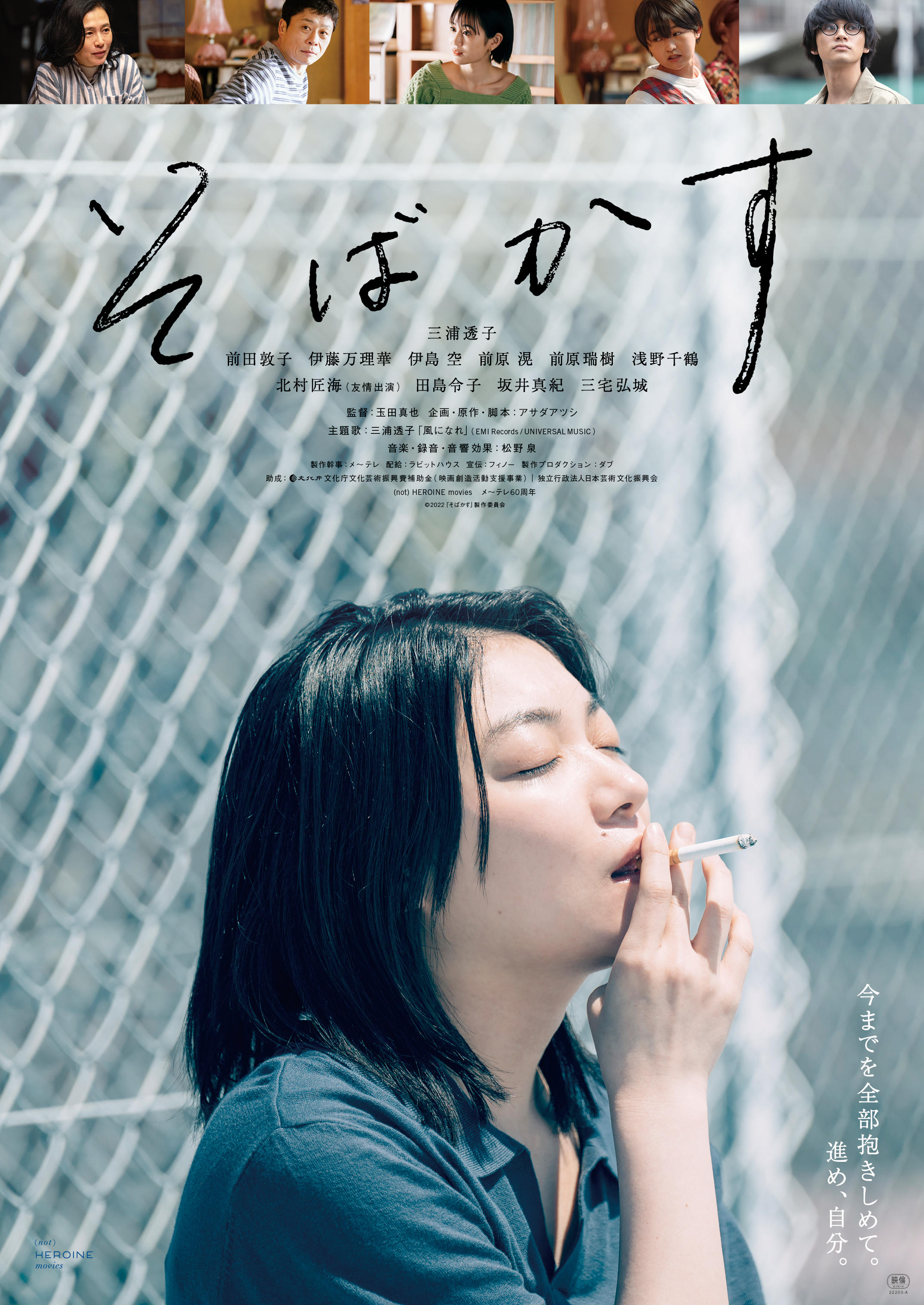
I Am What I Am (そばかす, Shinya Tamada, 2022)

Part way through Shinya Tamada’s empathetic social drama I Am What I Am (そばかす, Sobakasu), the heroine’s sister remarks that she wishes she could live as if the world did not concern her as she assumes her sister does. In many ways, it’s an incredibly ironic statement because Kasumi (Toko Miura) finds herself constantly at the mercy of a world which refuses to acknowledge her, certain that the truth she offers freely of herself must be a lie or at least a cover for some other kind of shame. 

The fact is that Kasumi is asexual and has no interest in love or dating. As the film opens, she appears to be on some kind of awkward double date but seems isolated and aloof, as if deliberately left out of a conversation as she will be several times throughout the course of the film because of the centrality of “romance” in most people’s lives. She’s constantly asked about her “type”, or what she finds attractive in a man with a clear presumption of heteronormativity in also in play. Not wanting to get into it, Kasumi finds herself just nodding along offering some vague, stereotypical comment to smooth things over. When one of the men does strike up a more interesting conversation to which Kasumi can enthusiastically contribute, he doesn’t even listen to her but abruptly gets up to chase her friend. She ends up going to ramen bar on her own to decompress before running the gauntlet at home between mum, sister, and grandma who are all very confused by her lack of interest in marriage. 

Kasumi’s mother tells her that she has to get married someday, unable to accept that not to do so is also valid choice. Whether she does this because she feels embarrassed to have a 30-year-old unmarried daughter fearing that it reflects negatively on her parenting, is genuinely worried that Kasumi is lonely and unable to progress romantically because of shyness, or has a practical concern that she’ll be alone when she’s old, remains unclear though it does seem that her quest to marry Kasumi off is more to do with herself than her daughter. But with grandma apparently having had three divorces of her own, Kasumi’s sister Natsumi (Marika Ito) paranoid her husband’s cheating on her while she’s pregnant, and the parents’ marriage strained by her father’s depression it’s only natural she may wonder what’s so great about marriage anyway. 

In any case, though Kasumi constantly tells people quite directly that the issue is she has never experienced romantic desire and is fine the way she is they refuse to believe her assuming either that she is shy, stubbornly rebellious, or as her sister later suggests, gay. “No one would judge you for that,” she spits out less than sympathetically even while quite clearly judging her for this, as if it denies a basic fact of biology as unthinkable as someone claiming not to breathe the air. Her friend, Yashiro, who introduces her to a new job at a kindergarten, reveals that people did indeed judge him for being gay which is why he’s returned to his hometown. Not even he really believes Kasumi though eventually develops a sense of solidarity with her when her attempt to update Cinderella for a new, more inclusive generation leaves her both exposed and humiliated with a conservative politician visiting the school remarking that he thinks “diversity” is all very well but it only confuses the children and perhaps they should learn about it after developing “solid values”. 

The irony is that Kasumi is remarkably unjudgemental and accepting of all those around her, Yashiro remarking that he just knew she would be a safe person to disclose his sexuality to while she also bats nary an eyelid on reconnecting with a middle school friend (Atsuko Maeda) who turns out to have become a famous porn star in Tokyo only keen to protect her from the unwanted attention of star struck teenage boys and the accusatory eyes of those around them. Each of her attempts to find platonic friendship also fails because sooner or later romance gets in the way. She hits it off with the guy at the omiai marriage meeting her mother tricked her into attending because he also reveals that he has no desire to date or get married, but as much as she thinks she’s found a kindred spirit it turns out that his issue was a more conventional reluctance to enter a serious relationship. When he develops feelings and she has explain again that she meant it when she said she had no interest in romance he takes it personally, insisting that she’s lying and resentful that she doesn’t find him attractive. An attempt to get flat with a female friend also hits the rocks when she decides to get back together with an ex instead. 

When questioned about dating activities and giving the unoriginal answer of the cinema, Kasumi had mentioned a fondness for Hollywood remake of the War of the Worlds starring Tom Cruise. She later elaborates on her statement that she likes the way he runs to explain that in most of his other films, Tom Cruise is usually running towards something but in this one he’s just a regular guy running from trouble which something she can relate to because she’s been running away all of her life too. Yet the unexpected discovery that her mini stand over Cinderella might have done some good after all along with encountering someone who might indeed be a kindred spirit gives her the courage to start moving forward, less concerned by the world and more confident in herself. An empathetic tale of one woman’s attempt to live her life the way she wants frustrated by a conformist society, Tamada’s gentle slice of life drama is a refreshingly empathetic in its fierce defence of its heroine’s right to chase happiness in the way that best suits her.


I Am What I Am screened as part of this year’s Nippon Connection.

Original trailer (English subtitles)

Images: ©2022 “I am what I am” film partners

To The Supreme! (もっと超越した所へ。, Santa Yamagishi, 2022)

Is it worth staying in a dissatisfying relationship just so that you’ll have someone to carry your rice? The idealist in all of us might want to say no, but it’s undeniably a strong argument. The four heroines of Santa Yamagishi’s To the Supreme! (もっと超越した所へ。, Motto Chouetsushita Tokoro e), adapted from the stage play by Shuko Nemoto, find themselves asking just this question as their relationships with a series of narcissistic, selfish men reach a crisis point on the eve of the coronavirus pandemic. 

Opening in early 2020, the film finds costume designer Machiko (Atsuko Maeda) reconnecting with middle school friend Reito (Fuma Kikuchi) who abruptly announces he’s moving in because he’s worried about her given the tone of her late night tweets. Former actress turned variety star Suzu (Shuri) lives with her gay best friend, Tommy (Yudai Chiba), after ending a 10-year relationship with petulant former child star Shintaro (Takahiro Miura) who is now seeing sex worker Nanase (Mei Kurokawa). Miwa (Marika Ito), meanwhile, is in a relationship with vacuous hipster Taizo (Reiji Okamoto) who spent an exorbitant amount of money on gold grills as a present and seems to be very concerned about this new virus going around. 

None of these men have a full-time job and all are (or were at one time or another) supported by their partner who is shouldering the responsibility for rent and domestic bills singlehandedly, not that there’s anything wrong with that in itself if were not such a blatant attempt to take advantage of the women they claim to love. In a flashback to 2018, we discover that Miwa was previously in a relationship with Reito and she’s carried on giving him pocket money every month for the last two years despite having moved on romantically. In his sudden announcement to Machiko that he’ll be stying by her side for the foreseeable future, it’s difficult not to wonder if he’s simply looking for a free place to stay especially as he largely continues to mooch off her while doing so claiming his live streaming channel is sure to take off soon. 

Shintaro had similarly been supported by Suzu during the time they lived together and put on a big show of letting her kept the apartment when he left even though the apartment was hers anyway because it was her name on the lease and she paid the rent while he wasn’t working. More practically minded, Suzu had been taking jobs that paid in light entertainment and variety only to be branded a sellout by Shintaro who was nevertheless jealous of her success. A former child star, he feels humiliated taking bit parts and even working as an extra but talks a big game to Nanase whom he often brands “stupid” and looks down on for being a sex worker. He makes her shout out that he’s the best actor as she climaxes and quizzes her about foreign directors when she says she struggles to watch the films of Shunji Iwai because they make her wonder if there’s something wrong with her eyesight. When she genuinely tells him that she enjoyed his “performance” after spotting him as an extra in a movie, he tells her that a sex worker’s opinion doesn’t count despite having been paying for just that kind of validation the entire time. 

Suzu runs into a similar problem in developing feelings for Tommy who rejects her in an incredibly insensitive way when she tries to make a move on him. During a heated argument, Tommy yells at Suzu for ruining all his plans because he wants to start a family and was intending to marry a woman Suzu being a prime candidate. The film flirts with but does not really get into Tommy’s internalised homophobia in which he seems to regard his sexuality as a barrier to achieving the life he wants given the still conservative culture has not yet legalised same sex marriage and makes life difficult for same sex partners who want to raise children together. He lets himself off the hook suggesting that his sexuality permits him to be “selfish” while admitting that he too has taken advantage of women’s feelings for him without really giving much thought to their own. 

Taizo is much the same. On the surface, it looks like he is genuinely solicitous of Miwa though it’s really more that he doesn’t want to get sick himself or be responsible for looking after someone who is ill. When Miwa goes to the hospital thinking she may be pregnant, she gets some other distressing news but all Taizo can do is focus on himself not wanting to accept the responsibility of becoming a father. When she looks to him for comfort, he fixates on his own relief. These men are selfish, self-involved, proud and fragile in their masculinity requiring the women in their lives to take care of all their basic needs without lifting a finger to help. But the film doesn’t quite let the women off the hook either, a sudden coup de théâtre bringing them together to reconsider making clear that they themselves enable the men’s behaviour by forgiving them if in part because they expect little better and having someone around who could theoretically help out, for example by carrying heavy bags of rice home from the store, might make life easier even if they never actually do it. Witty and slickly edited, Yamagishi ends with a sudden intrusion of eijanaika dancers as if literally to say “what’s wrong with that?”, which might present a rather cynical view of contemporary romantic relationships but one that is also admittedly difficult to argue with. 


To The Supreme! screened as part of this year’s Nippon Connection.

Original trailer (English subtitles)

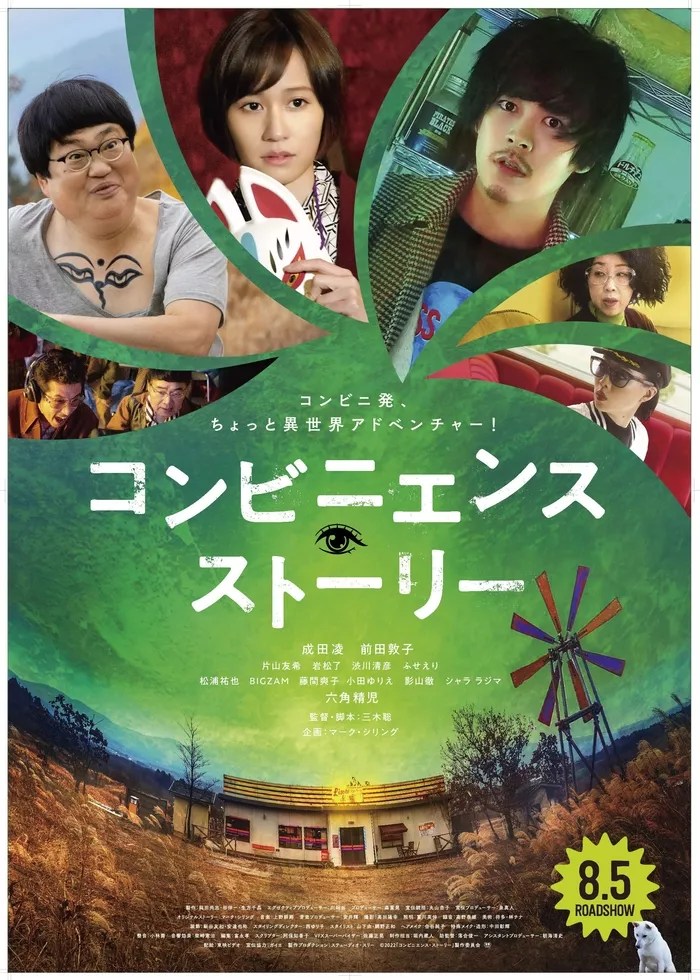
Convenience Story (コンビニエンス・ストーリー, Satoshi Miki, 2022) [Fantasia 2022]

“This is unreal, but it’s real” a blocked screenwriter exclaims in finding himself in an uncanny world only slightly divorced from his previous reality but perhaps excellent fodder for his art. Quite clearly influenced by David Lynch in its Twin Peaks-esque setting, jaunty jazz score, and overt references to Mulholland Drive, Fire Walk with Me, and Blue Velvet, Convenience Story draws inspiration from a short story by veteran Japan Times critic Mark Schilling to spin an elliptical tale of otherworldly adventure and inexorable fate. 

Down on his luck screenwriter Kato (Ryo Narita) can’t seem to get an idea off the ground and is in an increasingly volatile relationship with aspiring actress Zigag (Yuki Katayama) whose dog Cerberus he barely tolerates. When he has to venture out in search of Cerberus’ favourite brand of dog food, Weredog, the adorable pooch accidentally deletes the screenplay Kato has been working on leading him to decide to abandon him in the remote countryside. However, after damaging a Buddhist statue, he stops at a random petrol station convenience store which looks like it hasn’t been touched since the 1980s. Sucked through some kind of portal, he finds himself in an alternate combini reality in the company of pretty damsel in distress Keiko (Atsuko Maeda) and her decidedly weird husband Nagumo (Seiji Rokkaku). 

As the film begins to head into The Postman Always Rings Twice territory, Kato begins to rejuvenate his creative mojo while Zigzag, who is about to get her big break working with an incredibly insecure director (Kiyohiko Shibukawa) and sleazy producer, wonders what’s happened to her dog and takes drastic steps to find out. “Life’s big chances come in an instant” the director insists, though for Kato time seems to have stopped while he contemplates the combini existence. After all, it’s called a convenience store for a reason. They have everything you’ll ever need so there’s no real reason to leave. Smarting from his creative block, Kato asks if convenience stores sell interesting stories and in a way they do, or at least this one and the one in his neighbourhood which may or may not be connected by some kind of cosmic combini network, conspire to feed his imagination so he can deliver a promising script to his eccentric editor (Eri Fuse). 

Then again, Keiko asks him if he writes about an ideal world or his personal reality and it’s a question that he can’t quite answer hinting that this strange alternate universe may be some kind of fever dream conjured up by his latent imagination. “A screenwriter’s job is to fantasise”, Keiko seductively tells him, though his editor and a producer with whom he had also exchanged a flirtatious email had previously giggled over his non-starter of a screenplay which they described as an embarrassingly chauvinistic male fantasy. That’s certainly one way you could describe his otherworldly combini adventure in the foxy damsel in distress characterisation of Keiko who quite obviously just wants him to take her away from all this, sick of the oppressive convenience of the combini life and of her incredibly strange, seemingly controlling husband. 

Then again on their attempt to escape, the couple end up in an endless three-day ceremony of eternity during which the souls of the dead are supposed to journey to the afterlife. Everyone is keen on travelling to another world, except perhaps for Kato who is already in one, yet struggles to escape the uncanny uniformity of the combini society. “Another world exists in here” Kato is creepily told on a visit to his local, much more contemporary though not all that different, convenience store beginning to realise that perhaps there is no real escape from this maddening world of convenience at least not for him. Shades of Orpheus and Eurydice guide him out of his purgatorial existence yet ironically only into more of the same until the inevitable, karmic conclusion. Fantastic production design adds to the sense of retro absurdity strongly recalling Twin Peaks in its use of ‘50s-style diners and the frozen in time petrol station road stop existing for some reason the middle of nowhere with no road in sight, while casting a note of fatalistic dread over the life of a blocked screenwriter who eventually comes to realise that convenience isn’t always quite what it’s cracked up to be.


Convenience Story screened as part of this year’s Fantasia International Film Festival.

Original trailer (English subtitles)

Caution, Hazardous Wife: The Movie (奥様は、取り扱い注意, Toya Sato, 2021) [Fantasia 2021]

Perhaps in some ways out of step with the times, the 2017 Nippon TV drama Caution, Hazardous Wife (奥様は、取り扱い注意, Okusama wa, Toriatsukai Chui), like the earlier Secret Agent Erika, saw top assassin Nami (Haruka Ayase) fake her own death in order to live a “normal” life as an “ordinary housewife” married to “boring salaryman” Yuki (Hidetoshi Nishijima). Nami could not however resist using her skills for good and bravely took on a local yakuza gang who’d been running a suburban prostitution ring through employing handsome gigolos to seduce emotionally neglected housewives and thereafter blackmailing them into sex work. The series ended on a cliffhanger in which, spoiler alert, Nami was confronted by her husband who turned out to be a Public Security Bureau officer originally tasked with monitoring her before genuinely falling in love.

This brief background recap is useful but not strictly necessary in approaching the series’ big screen incarnation, Caution, Hazardous Wife: The Movie, which ironically assumes the audience knows Nami’s secret backstory but also obfuscates it in picking up 18 months after the cliffhanger to find her now living as “Kumi” in a tranquil seaside town having apparently lost her memory. The town will not remain tranquil for long, however, as a mayoral race is about to bring tensions to the fore in the polarising issue of a prospective methane hydrate plant the authorities insist is necessary to revive the area’s moribund economy while others worry about industrial pollution and its effects on the local sea life. Unsurprisingly, the events will turn out to have a connection to Nami’s past while she struggles to regain her lost memories and preserve the peaceful, ordinary life with her husband which is all she’s ever really wanted. 

Though some might find it somewhat conservative that what Nami wants is to become a conventional housewife, what she’s looking for is the stability of the “normal” life she’s never known. As such, she may not actually want to regain her memories, preferring to go on living as Kumi who has perfected the housewife skills which so eluded Nami including becoming a top cook, for as long as possible. Yuki, meanwhile, now living as high school teacher Yuji, feels something similar having been ordered to “deal with” his wife if she remembers who she is but refuses to become a PSB asset. 

Upping production values from the TV drama, Sato keeps Nami in the dark for as long as possible though her sense of social responsibility remains just as strong as she bravely intervenes when coming across a gang of teens taunting a boy with homophobic slurs for having a pink coin curse, later becoming concerned on witnessing the leader of the opposition to the plant being attacked by thugs in an attempt to intimidate him out of his decision to stand as a rival candidate to the incumbent mayor. Nevertheless, he allows space for plenty of dramatic action scenes including flashbacks to Nami’s career as an international assassin while the final set piece also throws in some bickering marital comedy before turning unexpectedly dark.  

Regaining her memories, Nami’s inner conflict is in her complicated relationship with Yuki wondering if he ever really loved the “real” her or if he perhaps preferred Kumi the docile Stepford wife, which is ironically the cover identity she’d longed to construct. Conflicted and suspecting his wife may have remembered who she really is, Yuki tells her to forget about the past but also that his feelings won’t change and she should be free to be herself but as Nami later realises the past won’t let her go and the peaceful life she’d dreamed of might be harder to preserve than she’d previously thought even as she commits herself to embracing the life she has now because her relationship with Yuki is the most important thing to her despite her lingering doubt. 

Touching on a few hot button issues from industrial pollution and environmental concerns to economic decline and rural depopulation, Sato nevertheless returns to the outlandish absurdity of the TV drama as Nami finds herself facing off against Russian gangsters while exposing a plot by shady conglomerates to exploit a small-town desire for better access to jobs and infrastructure, along with judicial corruption and electoral interference. Nevertheless, the hometown spirit eventually wins out even if Nami finds herself on the run once again though having gained a little more emotional clarity. 


Caution, Hazardous Wife: The Movie streamed as part of this year’s Fantasia International Film Festival. The original TV series is also available to stream with English subtitles (along with those in several other languages) in many territories via Viki.

International trailer (English subtitles)

Remain In Twilight (くれなずめ, Daigo Matsui, 2021) [Fantasia 2021]

“So what? We just live on.” remarks a bereaved young man learning to let go of his grief in Daigo Matsui’s melancholy ensemble drama Remain in Twilight (くれなずめ, Kurenazume). Matsui sets the scene at a wedding which is also in some ways a funeral during which the ghost at the feast will eventually be laid to rest but his study in loss is also a reflection of its eternal arrest as a group of high school friends learn to accept a sense of absence where their friend used to stand while processing the various ways their lives have and will continue to diverge where as his obviously will not. 

As the film opens a group of six men is surveying a wedding hall where they intend to recreate a dance they first performed at a high school culture festival. The wedding co-ordinator comes out to confirm that everything is in order and seating has been arranged for the five of them only to be reminded that actually they are six. Factory worker Nej (Rikki Metsugi) wants to hang out longer, but most of the other guys have other commitments from work to family but at a rambunctious karaoke session the next day during which they regress to their high school selves it becomes clear that one of their number, Yoshio (Ryo Narita), passed away five years previously but is quite literally there in spirit. 

In addition to Yoshio’s absence, it’s clear that the group has become distant since their high school days the wedding reunion highlighting the class differences between them with some going on to regular salaryman jobs, others working in fringe theatre, and Nej at the factory the uniform of which he is ubiquitously wearing at every occasion other than the wedding during which the guys’ black suits are identical to those they wore for the funeral save the substitution of a jauntier bow tie. The previously nicknamed “Sauce” is now Mr. Sogawa (Kenta Hamano) and a married father of one. They aren’t 17 anymore. 

Nevertheless, the guys can’t let go of the memory of Yoshio who remains among them as if he were still alive. Triggered by a seemingly trivial act such as eating a biscuit or hearing a particular turn of phrase each of the men is called back into the past towards a private memory of Yoshio some directly related to the performance at the cultural festival which seems to have marked their lives and others from later. They collectively meditate on the last time they saw each other, reliving the event, trying to prevent Yoshio from leaving but of course failing. Actor Akashi (Ryuya Wakaba) regrets not picking up his phone, little knowing it would be the last time he would see his friend because you can’t get away from the fact every time might be the last you just can’t know. 

“You’re only dead when it’s convenient” Yoshio’s high school crush Mikie (Atsuko Maeda) barks, seemingly unperturbed to see him in the flesh but also angry and resentful asking him to finally cancel his social media accounts so she won’t keep getting birthday reminders or see something about him popup on her feed, remember, and be sad. But softening she shows him a picture of her daughter, signalling that she’s moved on while he obviously cannot though he wishes her only happiness glad perhaps to have shared something he lacked the courage to confess while alive. 

So corporeal does Yoshio seem to be that he even receives a goodie bag from the wedding, again signalling his absence as the guys find themselves literally carrying extra baggage which they eventually decide to try burying leading to a rather surreal incident which confronts them directly with Yoshio’s liminal status and survival in their hearts. Travelling to the other side they begin to learn to let him go, poignantly once again considering calling a taxi though this time for five. Adapting stage play, Matsui’s sweeping handheld camera shifts effortlessly from one time period to another and finally into another realm with a giddy ethereality as the men, now approaching middle-age, meditate on the sense of loss in grieving teenage friendship along with its unlived future. It’s less the ghost than those who are left behind who must finally learn to “move on”, rewriting the past as they see fit in order to walk into a freer future. 


Remain In Twilight streams in Canada until Aug. 25 as part of this year’s Fantasia International Film Festival.

International trailer (English subtitles)

Masquerade Hotel (マスカレード・ホテル, Masayuki Suzuki, 2019)

The thing about hotels is, people often go to them when they want to be someone else, so how can you be on the look out for suspicious behaviour when everyone is to some degree acting out of character? Keigo Higashino is one of Japan’s best known authors particularly praised for his elaborately plotted mysteries. In contrast to some of his famous detective novels, Masquerade Hotel (マスカレード・ホテル) leans into his softer side, taking its cues from Agatha Christie in its ultimately cheerful exploration of the strange world of hotels while praising the detective acumen both of cynical policemen and eager to please hoteliers. 

The police are hot on the trail of a serial killer and, due to clues found at the previous crime scenes, have concluded the next killing will take place at the Hotel Cotesia Tokyo. To scout out the potential crime scene, the detectives have co-opted the hotel’s basement as an incident room and are preparing to go undercover to keep an eye on things upstairs. Dishevelled detective Nitta (Takuya Kimura) has been assigned to the front desk because of his English skills apparently honed while living abroad in his youth, and is to be paired with earnest hotelier Naomi Yamagishi (Masami Nagasawa) who will do her best to turn him into a first rate hotelman. 

As might be expected, Nitta and Naomi do not exactly hit it off. Gruff and given to giving everyone in 50m radius the hard stare, Nitta is a shaggy haired middle-aged man in creased suits and shiny shoes. The first thing Naomi makes him do is get a haircut which does wonders for his image, but also plays into the peculiar art of masquerade which defines hotel life. Nitta is in the habit of calling the guests “customers” which instantly irritates Naomi who has spent the entirety of her professional life learning to be deferent. She reminds him that in here the guests are in charge, they make the rules and therefore can never break them. Her job is to provide the best service, which means she often has to set her personal pride aside and allow the sometimes unpleasant clientele, the ones who like to come to posh hotels to throw their weight around and abuse the staff, to get away with being obtuse because that’s just part of her job. 

That’s a big ask from Nitta who is both a proud man and a justice loving policeman to whom the idea of letting people act badly is almost anathema. To do his job, however, he’ll have to learn to bear it or risk letting a potential serial killer slip through his fingers. What Naomi realises is that they’re more alike than they first seemed. Both of their jobs rely on an astute assessment of their targets, even if they come at it from opposite ends. Naomi knows that each of her guests is wearing a kind of mask, taking on a slightly different persona when they enter her hotel, but her job is to see past it without ever letting on. A good hotelier knows what the guest wants before they do and is always ready to provide it, that’s the nature of service. So Naomi trusts her guests and is careful not to judge them. Nitta, meanwhile, is a policeman so he’s trained to question everything and suspect everyone. His job is to unmask and confront his suspects with who they really are. 

They both, however got into this game essentially because they want to protect people even if she wants to protect them inside and he out. Which means of course that they can work together after all, learning a little something from each other along the way. Naomi, well versed in the liberties often taken by her guests, is nearly taken in by an obvious scam that only Nitta is quick enough to catch thanks to his cynical policeman’s logic. He’s also first to suspect that there’s something not quite right with a harmless little old lady, and though Naomi senses it too she’s minded to let it go and doubles down on being the perfect servant thanks to her animosity towards Nitta. That “not quite right”, however, proves to be a slight misreading of the guest who, like many Nitta encounters, is pretending to be something they’re not for reasons that prove perfectly understandable once revealed. 

But then, Higashino characteristically pulls the rug out from under us and asks if we haven’t been suckered in buying all those reasonable excuses. Thanks to his conversations with Naomi, Nitta begins to get a grip on the crime, while she struggles with her conscience after learning that her guests may be in much more danger than she thought. Staking all on justice, the pair of them vow to abandon their respective professions if a guest gets hurt, but fail to realise that the crime may hit far closer to home than they’d anticipated. Nevertheless, what we’re left with is a strangely whimsical admiration for the weird world of hotels where no one is quite the same person they were before they walked through the revolving doors.


Original trailer (no subtitles)

Eating Women (食べる女, Jiro Shono, 2018)

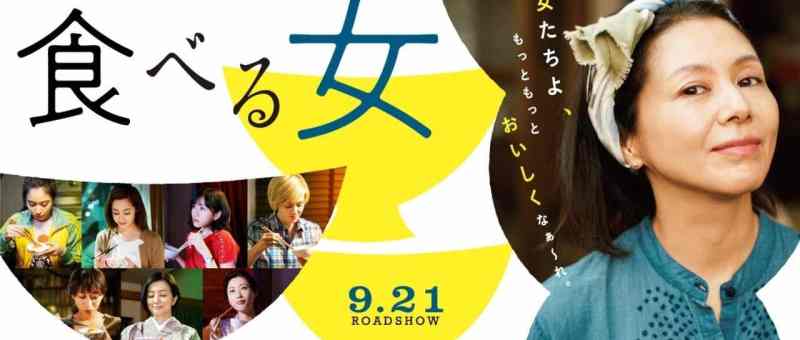
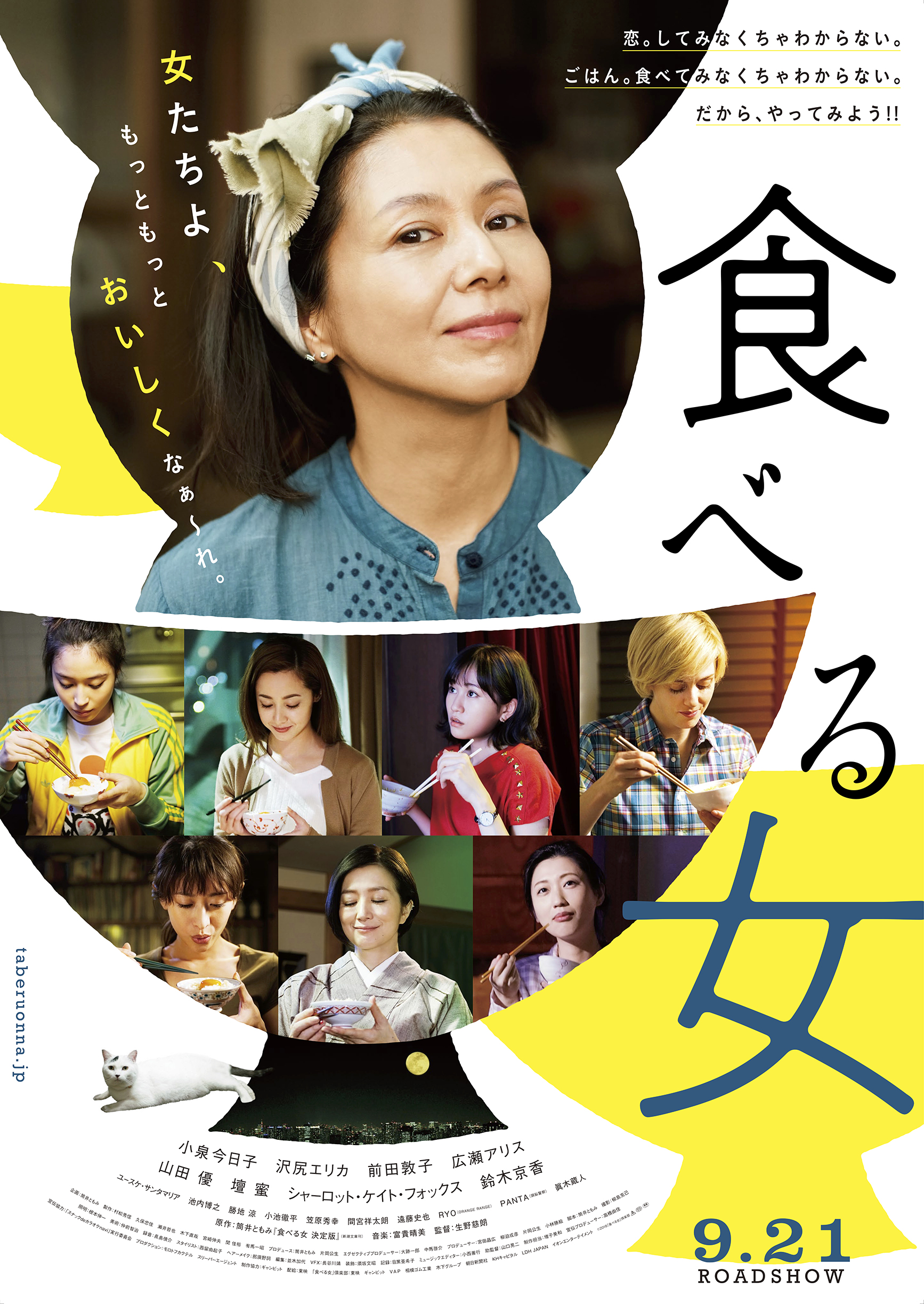
Eating Women poster 2“Comfort cinema” may be a slightly maligned genre, disregarded for its throwaway pleasures, but it can often be much more subversive than it’s given credit for. Jiro Shono’s adaptation of Tomomi Tsutsui’s novel Eating Women (食べる女, Taberu Onna), refusing to unambiguously reinforce contemporary social norms, it actively undercuts them as it pushes its lonely heroines towards more positive paths of self-fulfilment while remaining unafraid to embrace the sometimes taboo idea of female desire as something entirely normal.

The heroine, however, is someone who’s decided to live without it. Food writer and bookstore owner Atsuko (Kyoko Koizumi) lost the love of her life at 29 and has lived alone ever since. She does, however, have a very committed group of female friends who get together once a month to enjoy a tasty dinner she and her friend Mifuyu (Kyoka Suzuki), who runs the local restaurant, cook for them. Unlike Atsuko, Mifuyu is a sexually liberated older woman, complaining once again that both of her (young, male) apprentices have quit after she seduced them. Keiko (Erika Sawajiri), Atsuko’s editor, has hatched on a different solution in affirming that she has already achieved financial independence and has no real desire for male companionship, preferring to embrace her freedom to live as she chooses while Tamiko (Atsuko Maeda), an assistant TV producer and the youngest of the group, is facing the opposite dilemma – her boyfriend has proposed to her, but she’s unconvinced because he’s just too “nice” to make her heart beat faster.

Though at different points of their lives, the women are always there to support each other while permitting themselves the indulgence of fully enjoying beautifully cooked meals taken with good company. Meanwhile, across town, an American woman, Machi (Charlotte Kate Fox), seems to be content to play the role of a 50s housewife to a grumpy salaryman husband (Hiroyuki Ikeuchi) who barges in through the front door and roughly forces himself on her before retreating to the bedroom. The problem in their marriage is, apparently, that Machi can’t cook, providing mostly Western-style microwavable dinners which fail to excite her husband who tells her he’s been having an affair with someone who can make good food. Heartbroken, Machi runs into Mifuyu and eventually ends up living in one of Atsuko’s spare rooms where she slots right in with the other gourmet women as she begins to learn to cook under Mifuyu’s gentle guidance.

It is not, however, a pathway towards regaining her husband or “fixing” a perceived fault so that she can be a “proper” wife, but a way for Machi to rediscover life’s small pleasures along with a sense of independence, rejoicing in her own success as she enjoys a meal she cooked herself made with ingredients that she earned the money to pay for. Tamiko’s barfly friend Akari (Alice Hirose) begins to discover something similar on her own, repeatedly dumped by snooty salarymen boyfriends who objected to her preference for minced meat over whole steak. Akari had a habit of thinking of herself in terms of the meat – quick, cheap, and simple, but finally finds love with a gentlemanly colleague after she gains the confidence to share with him her real self by embracing her love of mince without embarrassment.

The only “misstep” is perhaps in Keiko’s tale in which her bid for solo independence is eventually negated by her loneliness, implying that in the end she did need male companionship after all. Indeed, only Atsuko who rejects sex in favour of vicarious maternity is allowed to live life alone, though conversely Mifuyu’s free spirited pursuit of younger men is never judged negatively nor is she encouraged to settle down even while she ironically advises Tamiko to do just that, and pointedly tells Keiko that she’s running out time to find anyone halfway decent. Yet all of that aside, the ladies are an accepting bunch, emphasising that love is love and refusing to judge others, making sure to offer support to all who need it. We’re never the same people as yesterday, Atsuko writes in her book, we just need to be ourselves. Above all, however, she seems to say you have to be kind to yourself, embracing life’s small pleasures such as the simple joy of well cooked food made with love, and the rest you can figure out later.


Original trailer (no subtitles)