
 Generally speaking, murder mysteries progress along a clearly defined path at the end of which stands the killer. The path to reach him is his motive, a rational explanation for an irrational act. Yet, looking deeper there’s usually something else going on. It’s easy to blame society, or politics, or the economy but all of these things can be mitigating factors when it comes to considering the motives for a crime. Gukoroku – Traces of Sin (愚行録), the debut feature from Kei Ishikawa and an adaptation of a novel by Tokuro Nukui, shows us a world defined by unfairness and injustice, in which there are no good people, only the embittered, the jealous, and the hopelessly broken. Less about the murder of a family than the murder of the family, Gukoroku’s social prognosis is a bleak one which leaves little room for hope in an increasingly unfair society.
When we first meet Tanaka (Satoshi Tsumabuki) he’s riding a bus. Ominous music plays as a happy family gets off but the real drama starts when another passenger irritatedly instructs Tanaka to give up his seat so an elderly lady can sit down. He snorts a little but gets up only to fall down next to the steps to the doors and subsequently walk off with a heavy limp. The man who told him to move looks sheepish and embarrassed, but as soon as the bus passes from view Tanaka starts walking normally, an odd kind of smirk on his face in thought of his petty revenge.
In one sense the fact that Tanaka faked a disability is irrelevant, the man did not consider that Tanaka may himself have needed a seat despite looking like a healthy man approaching early middle age. Perhaps, he’ll think twice about making such assumptions next time – then again appearances and assumptions are the lifeblood of this mysteriously complicated case.
Tanaka has a lot on his plate – his younger sister, Mitsuko (Hikari Mitsushima), has been arrested for neglecting her daughter who remains in intensive care dangerously underweight from starvation. In between meeting with her lawyer and checking on his niece, he’s also working on an in-depth piece of investigative reporting centring on a year old still unsolved case of a brutal family murder. Tanaka begins by interviewing friends of the husband before moving onto the wife who proves much more interesting. Made for each other in many ways, this husband and wife duo had made their share of enemies any of whom might have had good reason for taking bloody vengeance.
The killer’s identity, however, is less important than the light the crime shines on pervasive social inequality. As one character points out, Japan is a hierarchical society, not necessarily a class based one, meaning it is possible to climb the ladder. This proves true in some senses as each of our protagonists manipulates the others, trying to get the best possible outcome for themselves. These are cold and calculating people, always keeping one eye on the way they present themselves and the other on their next move – genuine emotion is a weakness or worse still, a tool to be exploited.
The key lies all the way back in university where rich kids rule the roost and poor ones work themselves to the bone just trying to keep up. There are “insiders” and “outsiders” and whatever anyone might say about it, they all secretly want in to the elite group. Here is where class comes in, no matter how hard you try for acceptance, the snobby rich kids will always look down on those they feel justified in regarding as inferior. They may let you come to their parties, take you out for fancy meals, or invite you to stay over but you’ll never be friends. The irony is that the system only endures because everyone permits it, the elites keep themselves on top by dangling the empty promise that someday you could be an elite too safe in the knowledge that they only hire in-house candidates.
Gradually Tanaka’s twin concerns begin to overlap. The traces of sin extend to his own door as he’s forced to examine the legacy of his own traumatic childhood and fractured family background. The reason the killer targeted the “happy” family is partly vengeance for a series of life ruining wrongs, but also a symbolic gesture stabbing right at the heart of society itself which repeatedly failed to protect them from harm. Betrayed at every turn, there’s only so much someone can take before their rage, pain, and disillusionment send them over the edge.
Despite the predictability of the film’s final twist, Ishikawa maintains tension and intrigue, drip feeding information as Tanaka obtains it though that early bus incident reminds us that even he is not a particularly reliable narrator. Ishikawa breaks with his grim naturalism for a series of expressionistic dream sequences in which hands paw over a woman’s body until they entirely eclipse her, a manifestation of her lifelong misuse which has all but erased her sense of self-worth. There are no good people here, only users and manipulators – even the abused eventually pass their torment on to the next victim whether they mean to or not. Later, Tanaka gets on another bus and gives up his seat willingly in what seems to be the film’s first and only instance of altruism but even this small gesture of resistance can’t shake the all-pervading sense of hopeless loneliness.
Gukoroku – Traces of Sin was screened at the 17th Nippon Connection Japanese film Festival.
Original trailer (no subtitles)
 Feng Xiaogang, often likened to the “Chinese Spielberg”, has spent much of his career creating giant box office hits and crowd pleasing pop culture phenomenons from World Without Thieves to Cell Phone and You Are the One. Looking at his later career which includes such “patriotic” fare as Aftershock, Assembly, and
 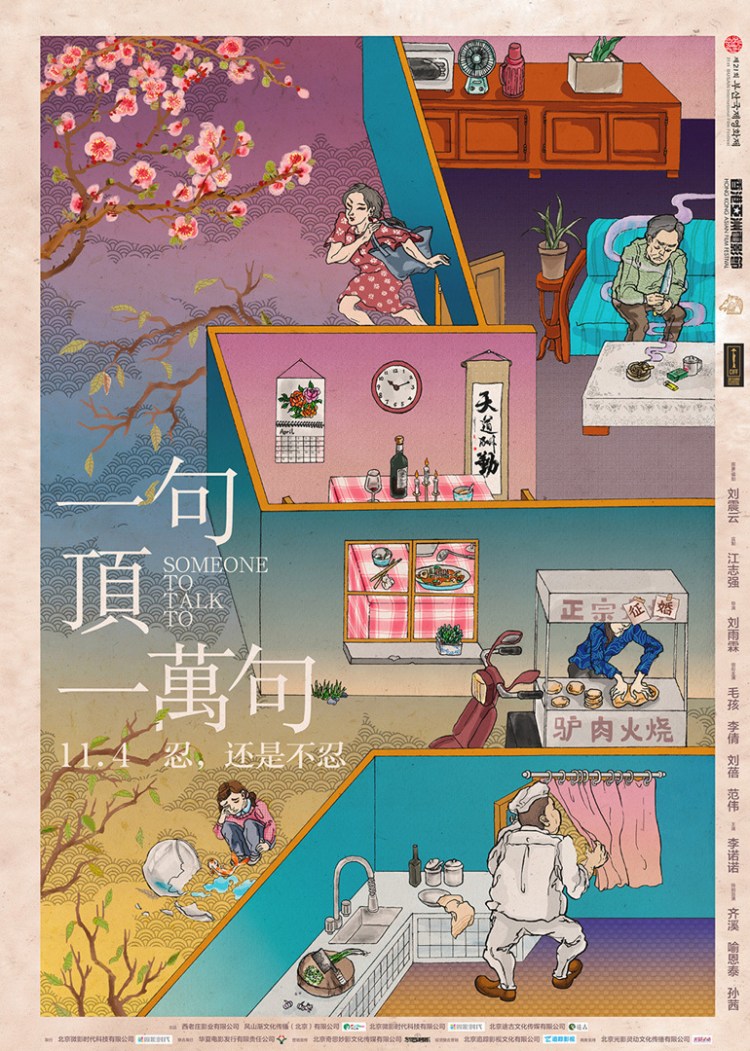 Youth looks ahead to age with eyes full of hope and expectation, but age looks back with pity and disappointment. Adapting her father’s novel, Liu Yulin joins the recent movement of disillusionment epics coming out of China with Someone to Talk to (一句頂一萬句, Yī Jù Dǐng Yīwàn Jù). Arriving at the same time as another adaptation of a Liu Zhenyun novel, I am Not Madame Bovary, Someone to Talk to takes a less comical look at the modern Chinese marriage with all of its attendant sorrows and ironies, a necessity and yet the force which both defines and ruins lives. Communism believes love is a bourgeois distraction and the enemy of the common good (it may have a point), but each of these lonely souls craves romantic fulfilment, a soulmate with whom they might not need to talk. The desire for someone they can connect with an elemental level becomes the one thing they cannot live without.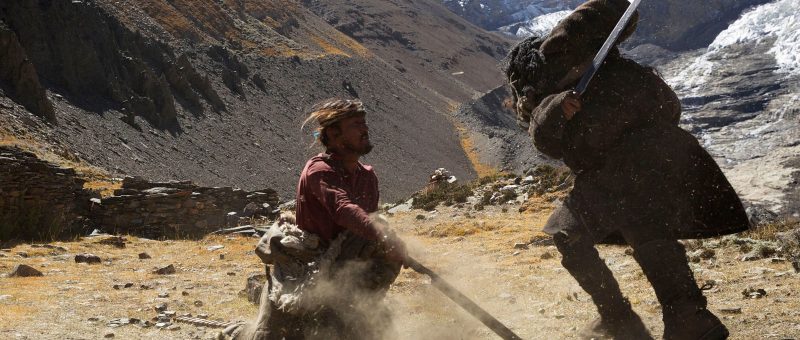
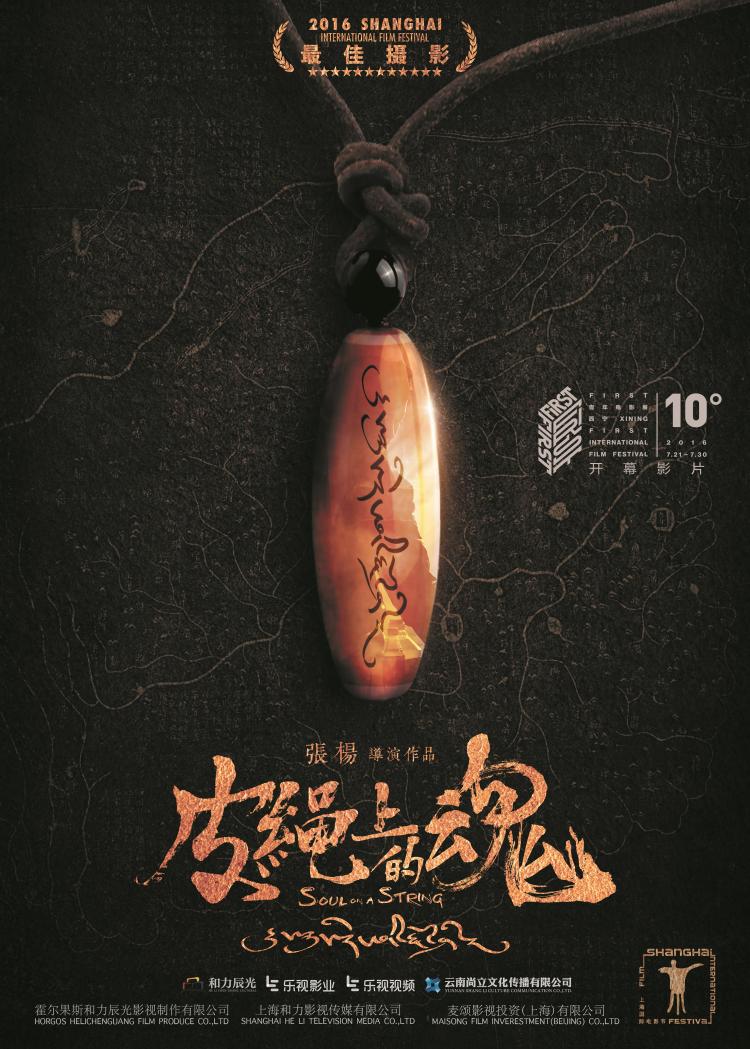 At the end of Zhang Yang’s
  Conventional wisdom states it’s better not to get involved with the yakuza. According to Hamon: Yakuza Boogie (破門 ふたりのヤクビョーガミ Hamon: Futari no Yakubyogami), the same goes for sleazy film execs who can prove surprisingly slippery when the occasion calls. Based on Hiroyuki Kurokawa’s Naoki Prize winning novel and directed by Shotaro Kobayashi who also adapted the same author’s Gold Rush into a successful WOWWOW TV Series, Hamon: Yakuza Boogie is a classic buddy movie in which a down at heels slacker forms an unlikely, grudging yet mutually dependent relationship with a low-level gangster.
 Nobuhiro Yamashita may be best known for his laid-back slacker comedies, but he’s no stranger to the darker sides of humanity as evidenced in the oddly hopeful Drudgery Train or the heartbreaking exploration of misplaced trust and disillusionment of My Back Page. One of three films inspired by Hakodate native novelist Yasushi Sato (the other two being Kazuyoshi Kumakiri’s Sketches of Kaitan City and Mipo O’s The Light Shines Only There), Over the Fence (オーバー・フェンス) may be among the less pessimistic adaptations of the author’s work though its cast of lonely lost souls is certainly worthy both of Yamashita’s more melancholy aspects and Sato’s deeply felt despair.
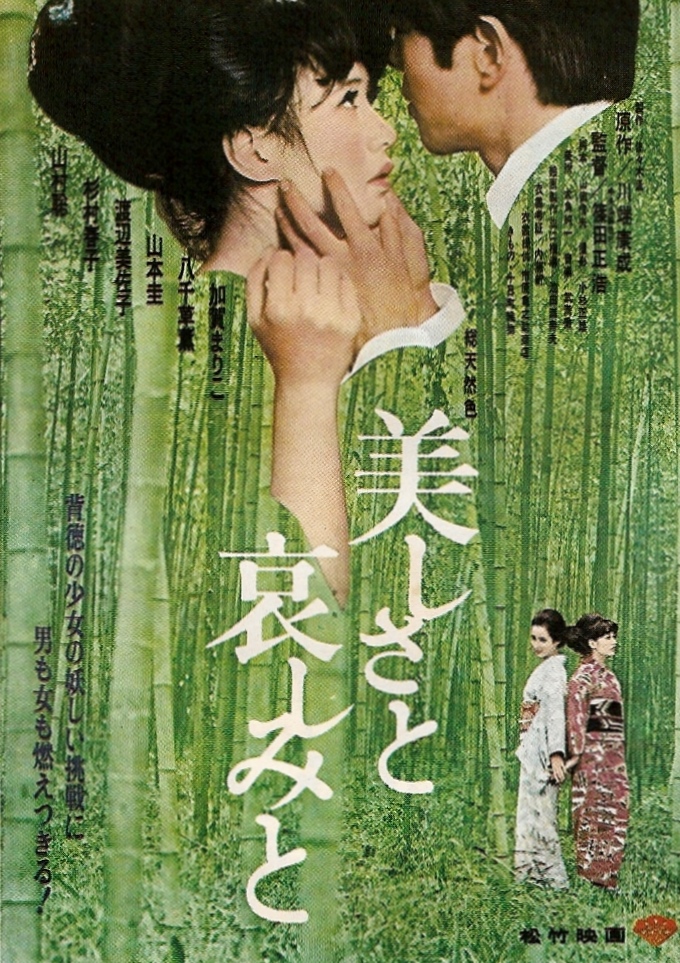 Masahiro Shinoda, a consumate stylist, allies himself to Japan’s premier literary impressionist Yasunari Kawabata in an adaptation that the author felt among the best of his works. With Beauty and Sorrow (美しさと哀しみと, Utsukushisa to Kanashimi to), as its title perhaps implies, examines painful stories of love as they become ever more complicated and intertwined throughout the course of a life. The sins of the father are eventually visited on his son, but the interest here is less the fatalism of retribution as the author protagonist might frame it than the power of jealousy and its fiery determination to destroy all in a quest for self possession.
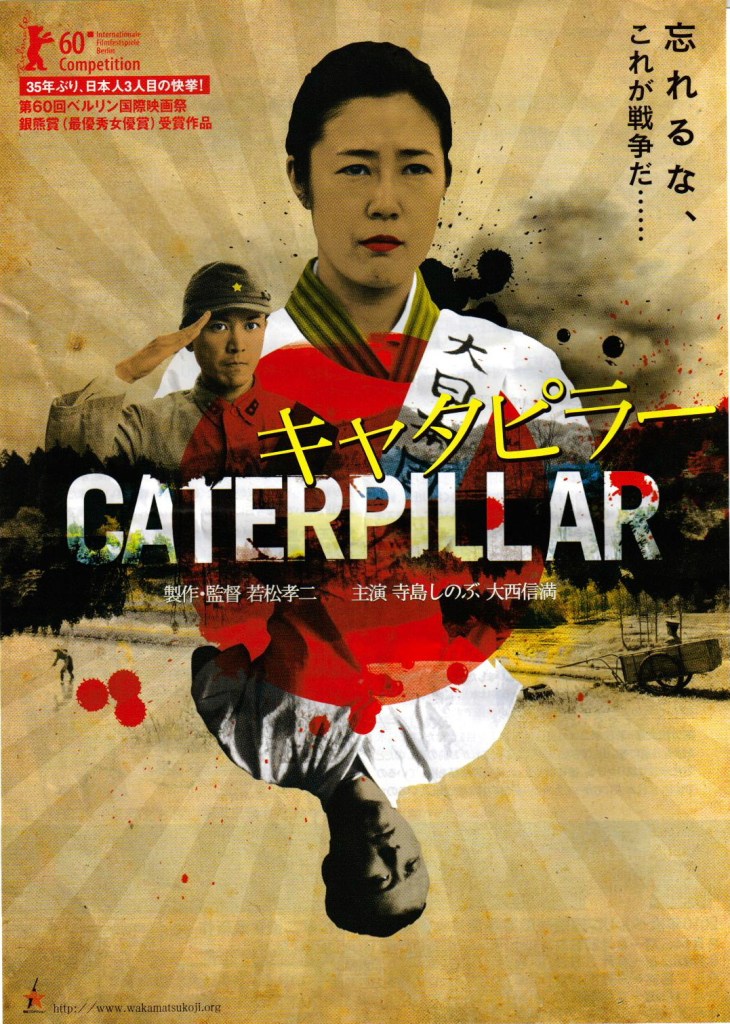 Koji Wakamatsu made his name in the pink genre where artistic flair and political messages mingled with softcore pornography and the rigorous formula of the genre. Wakamatsu rarely abandoned this aspect of his work but in adapting a well known story by Japan’s master of the grotesque Edogawa Rampo, Wakamatsu redefines his key concern as sex becomes currency, a kind of trade and power game between husband and wife. Caterpillar (キャタピラー), aside from its psychological questioning of marital relations, is a clear anti-war rallying call as a small Japanese village finds itself brainwashed into sacrificing its sons for the Emperor, never suspecting all their sacrifices will have been in vain when the war is lost and wounded men only a painful reminder of wartime folly.
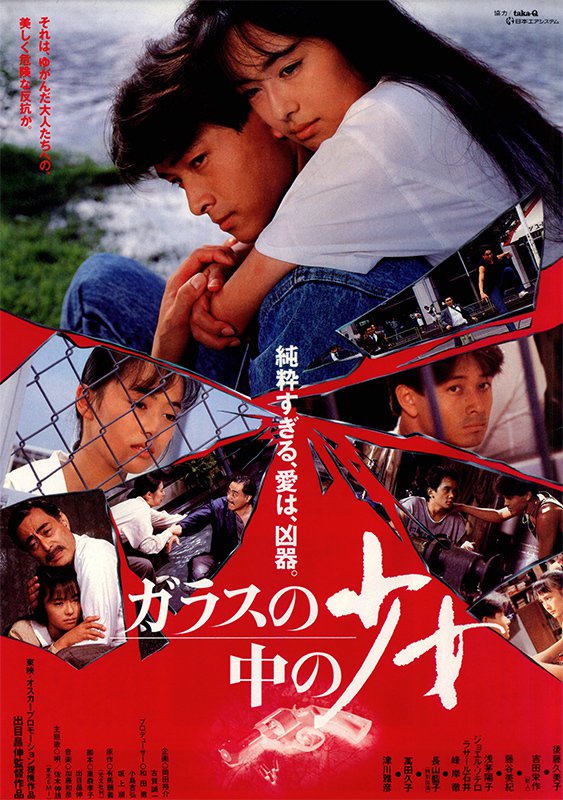 The popularity of idol movies had started to wane by the late ‘80s and if this 1988 effort from Masanobu Deme is anything to go by, some of their youthful innocence had also started to depart. Starring Kumiko Goto, only 14 at the time, The Girl in the Glass (ガラスの中の少女, Glass no Naka no Shojo) is an adaptation of a novel by Yorichika Arima which had previously been filmed all the way back in
  Japan was a strange place in the early ‘90s. The bubble burst and everything changed leaving nothing but confusion and uncertainty in its place. Tokyo, like many cities, however, also had a fairly active indie music scene in part driven by the stringency of the times and representing the last vestiges of an underground art world about to be eclipsed by the resurgence of studio driven idol pop. Bandage (Bandage バンデイジ) is the story of one ordinary girl and her journey of self discovery among the struggling artists and the corporate suits desperate to exploit them. One of the many projects scripted and produced by Shunji Iwai during his lengthy break from the director’s chair, Bandage is also the only film to date directed by well known musician and Iwai collaborator Takeshi Kobayashi who evidently draws inspiration from his mentor but adds his own particular touches to the material.
 Windows on Worlds