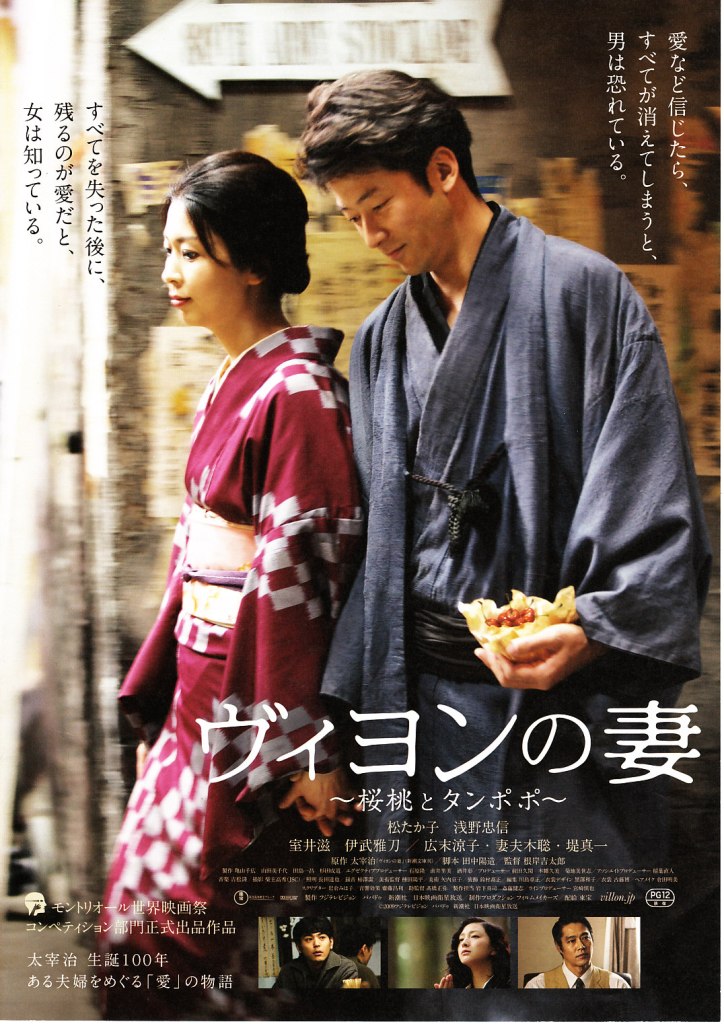
 2009 marked the centenary year of Osamu Dazai, a hugely important figure in the history of Japanese literature who is known for his melancholic stories of depressed, suicidal and drunken young men in contemporary post-war Japan. Villon’s Wife (ヴィヨンの妻 〜桜桃とタンポポ, Villon no Tsuma: Oto to Tampopo) is a semi-autobiographical look at a wife’s devotion to her husband who causes her nothing but suffering thanks to his intense insecurity and seeming desire for death coupled with an inability to successfully commit suicide.
Beginning in the immediate post-war period of 1946, Sachiko (Takako Matsu) is a fairly ordinary housewife with a young son who generally waits around the house for her husband’s return. Only, she’s married to one of the most brilliant writers of the age, Joji Otani (Tadanobu Asano), whose book on the French poet François Villon is currently a best seller. Despite his obvious literary talents, Otani is a drunkard who spends most of his time (and money) in bars and with other women. When he crashes home one night only to be pursued by two bar owners who reveal that he ran off with their takings (around 5000 yen), Sachiko is not exactly surprised but still embarrassed and eventually takes matters into her own hands by volunteering to offer herself as a “hostage” by working at the bar until the debt is repaid.
“Men and women are equal now, even dogs and horses” says one customer, impressed with this sudden arrival of a beautiful woman in a low life drinking spot. To her own surprise, Sachiko actually enjoys working at the bar, it gives her purpose and proves more interesting than being stuck at home waiting to see what her drunken fool of a husband has got up to next. She’s good at it too – Sachiko is a beautiful and a fundamentally decent and kind person, in short the sort of woman that everyone falls a little bit in love with. That said, she isn’t a saint. She’s perfectly aware of the power she is able to wield over men and is unafraid to make use of it, though only when absolutely necessary.
Otani himself is a fairly pathetic figure. He may be a great artist but he’s a hollow human being. He admits the reason for all of his vices is fear – he’s a afraid to live but he’s also afraid to die. He seems to love his wife, though he’s insecure about losing her and dreads the embarrassment involved in becoming a cuckold. So afraid to face the possibility of failure, Otani satisfies himself in an underground world of drunks and easy women rather than facing his own self loathing as reflected in the faces of his unconditionally loving family.
Perhaps because Villon’s Wife is a commemorative project, the film has been given the prestige picture treatment meaning the darker sides of Dazai’s original novella have been largely excised. The chaos of the post-war city with its starving population, soldiers on the streets and generalised anxiety is all but hidden and some of the more serious travails Sachiko undergoes in devotion to her husband as well as Otani’s tuberculosis (from which Dazai also suffered in real life) have also largely been removed. What remains is the central picture of a self destructive husband and the goodly wife who’s trying to save him from himself but risks her own soul in the process.
The one spot of unseemliness of post-war life that the film lets through is in a brief scene which features a group of pan pan girls hanging around ready to try and snag some passing GIs. Sachiko buys some lipstick from them to use in attempt to convince an ex who is also a top lawyer to try and help her husband after his latest escapade lands him in jail on a possible murder charge. After visiting him, Sachiko wanders out slightly dazed to see the pan pans atop a military jeep cheerfully waving and shouting “goodbye” in English. Sachiko is confused at first but eventually shouts “goodbye” back in a way which is both excited and a little bit sad, perhaps realising she is not so different from them after all. Finally she wipes the lipstick from her face and leaves the small silver tube behind where the pan pans were sitting, hoping to bury this particular incident far in the past.
In actuality the pan pan girls are depicted in a fairly matter of fact way rather than in the negative light in which they are usually shown, just another phenomenon of occupation. At the end of the film Otani calls himself a monster whilst acknowledging that he’s a terrible father who would steal the cherries from his own son’s mouth. Sachiko replies that it’s OK to be a monster – as long as we’re alive, it’ll be alright. Oddly for someone so suicidal, this fits in quite well with Dazai’s tenet of embracing the simple gift of a dandelion. The film ends on an ambiguous note in which there seems to have been some kind of restoration but it’s far from a happy one as the couple remain locked in a perpetual battle between light and darkness albeit with the balance a little more equalised than it perhaps was before.
The R3 Hong Kong DVD release of Villon’s Wife includes English subtitles.
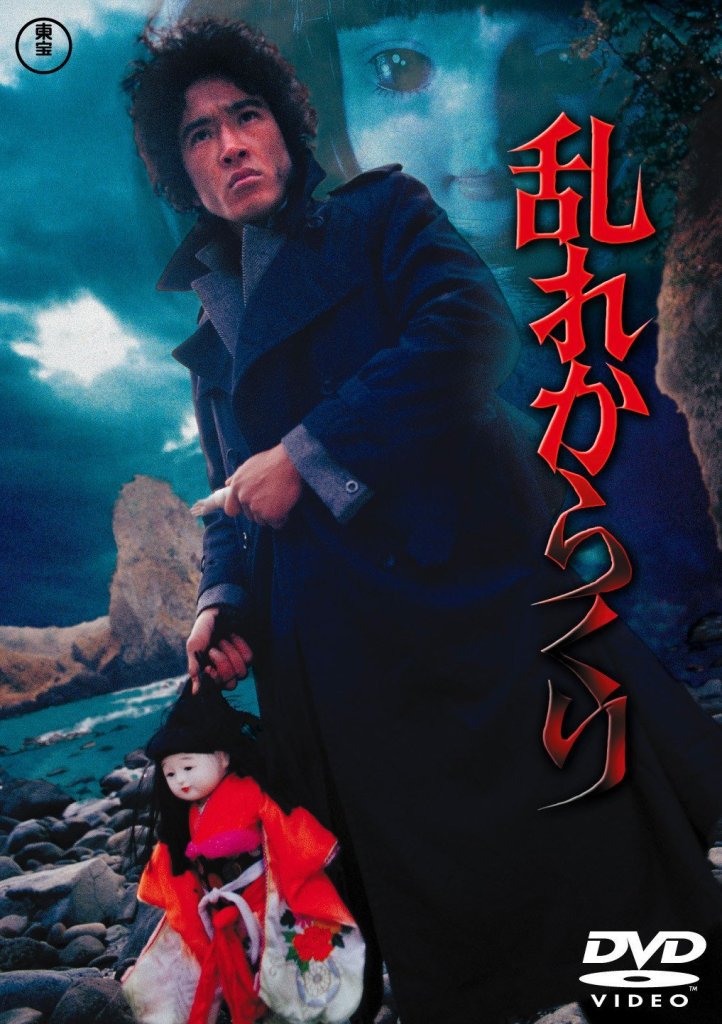 Yusaku Matsuda was to adopt arguably his most famous role in 1979 – that of the unconventional private detective Shunsaku Kudo in the iconic television series Detective Story (unconnected with the film of the same name he made in 1983), but Murder in the Doll House (乱れからくり, Midare Karakuri) made the same year also sees him stepping into the shoes of a more conventional, literature inspired P.I.
 SABU might have gained a reputation for his early work which often featured scenes of characters in rapid flight from one thing or another but Dead Run both embraces and rejects this aspect of his filmmaking as it presents the idea of running and its associated freedom as an unattainable dream. Based on the novel by Kiyoshi Shigematsu, Dead Run (疾走, Shisso) is the tragic story of its innocent hero, Shuji, who sees his world crumble before him only to become the sacrifice which redeems it.
 After Japan was defeated and later occupied by the Americans, there came the painstaking exercise of examining what exactly had happened during the conflict and assessing is who, if anyone, could be held accountable for any wrongdoing. The so called “war criminals” were divided into classes according to the severity of their crimes with Tojo himself at the top who eventually paid with his life. However, many of the men who were given the same Class A rating were just rank and file soldiers who had been “following orders”, often because they feared for their own lives if they refused. The debut directorial effort from writer Shinobu Hashimoto who provided scripts for some of Akira Kurosawa’s most famous works, I Want to be a Shellfish (私は貝になりたい, Watashi wa Kai ni Naritai), examines just one of these tragically absurd cases.
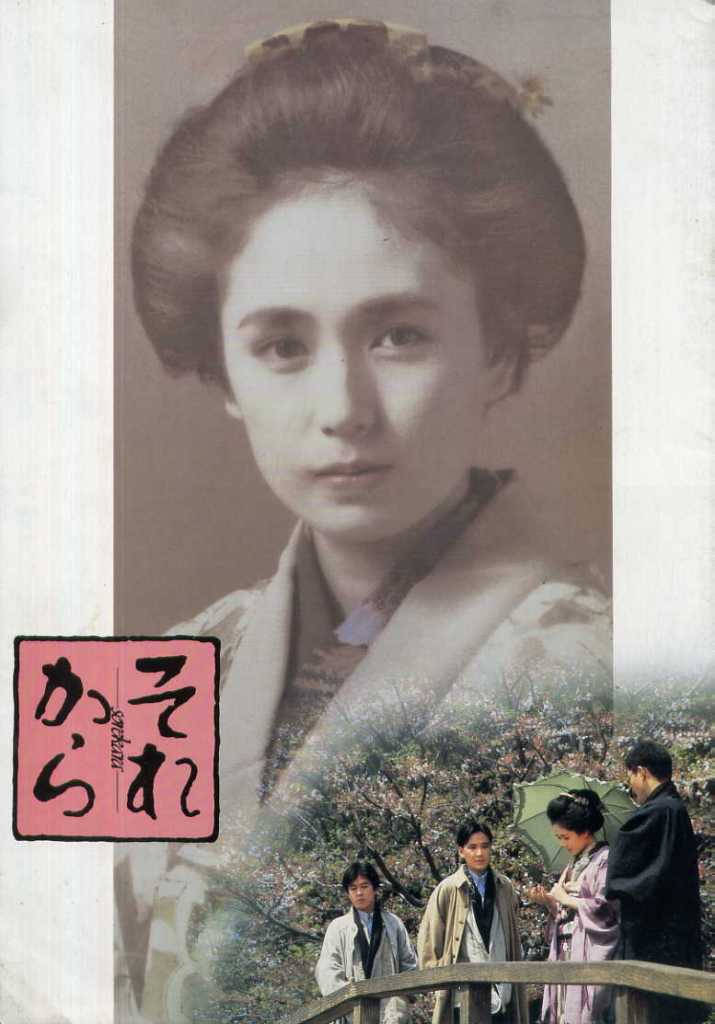 Yoshimitsu Morita had a long and varied career (even if it was packed into a relatively short time) which encompassed throwaway teen idol dramas and award winning art house movies but even so tackling one of the great novels by one of Japan’s most highly regarded authors might be thought an unusual move. Like a lot of his work, Natsume Soseki’s Sorekara (And Then…) deals with the massive culture clash which reverberated through Japan during the late Meiji era and, once again, he uses the idea of frustrated romance to explore the way in which the past and future often work against each other.
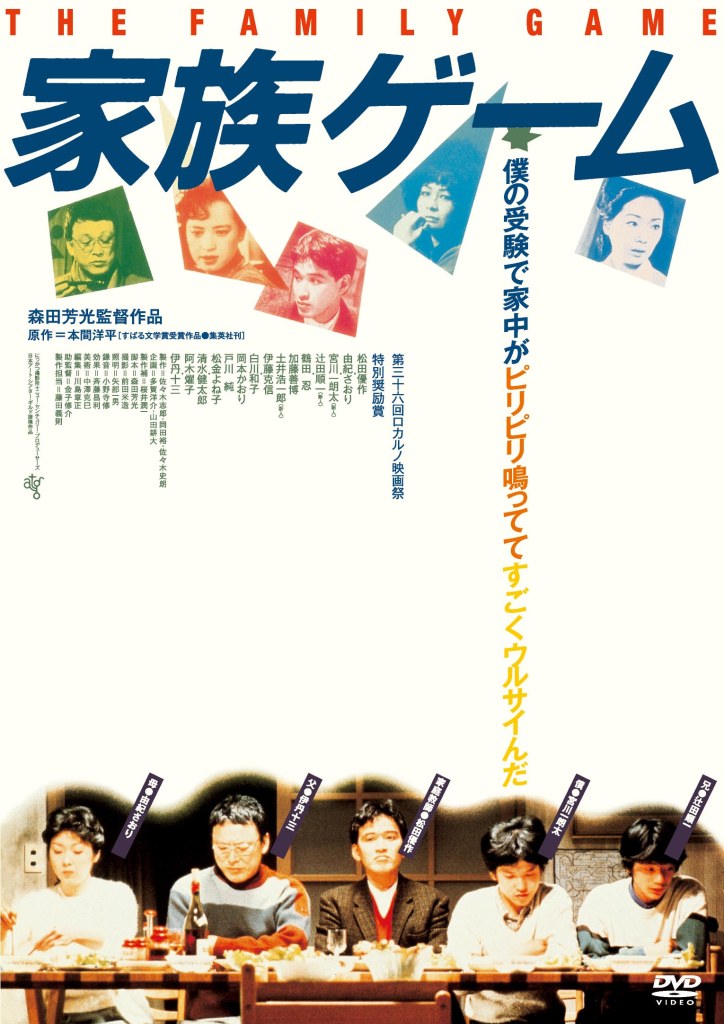 “Why do we have to make such sacrifices for our children?”. It sounds a little cold, doesn’t it, but none the less true. Yoshimitsu Morita’s 1983 social satire The Family Game (家族ゲーム, Kazoku Game) takes that most Japanese of genres, the family drama, and turns it inside out whilst vigorously shaking it to see what else falls from the pockets.
 In late June of 1945, one woman is escorting another through a US checkpoint in Berlin. The young American soldier is somewhat cocky and feigns an officious sort of suspicion that causes him to demand the bandaged woman reveal her face – just to be sure. The obvious agony she feels just beginning to unwind the various layers which hide her identity is enough to convince him that he’s made a cruel mistake and he lets the pair pass.
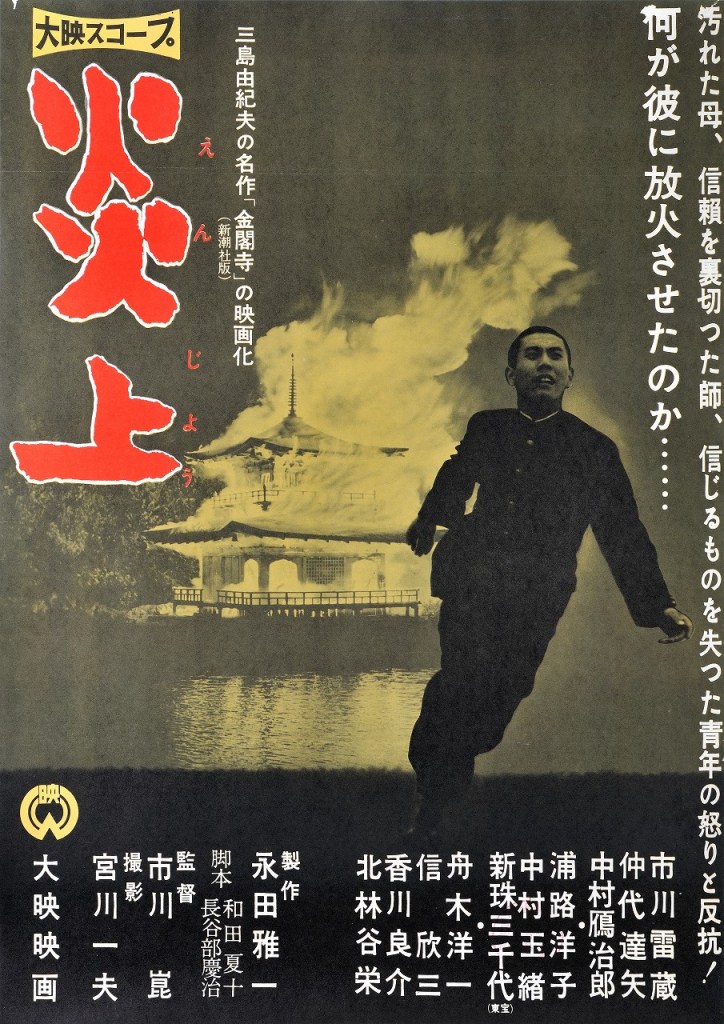 Kon Ichikawa turns his unflinching eyes to the hypocrisy of the post-war world and its tormented youth in adapting one of Yukio Mishima’s most acclaimed works, The Temple of the Golden Pavilion. Inspired by the real life burning of the Kinkaku-ji temple in 1950 by a “disturbed” monk, Enjo (炎上, AKA Conflagration / Flame of Torment) examines the spiritual and moral disintegration of a young man obsessed with beauty but shunned by society because of a disability.
 Windows on Worlds