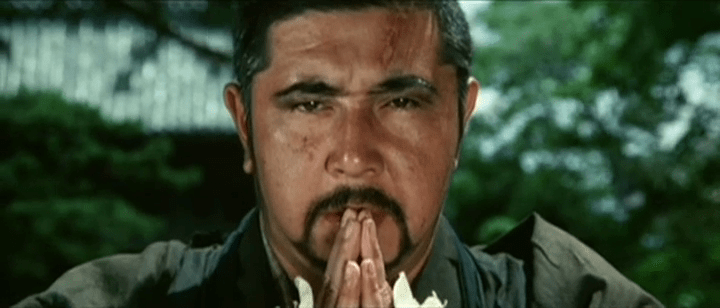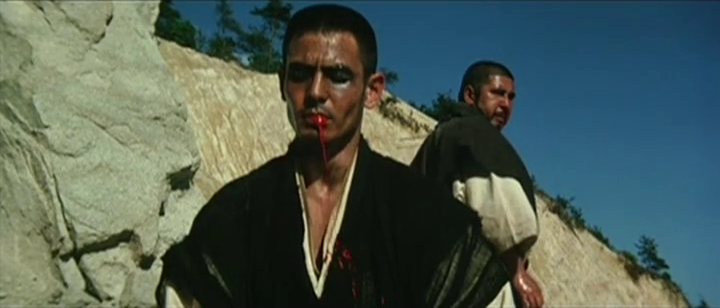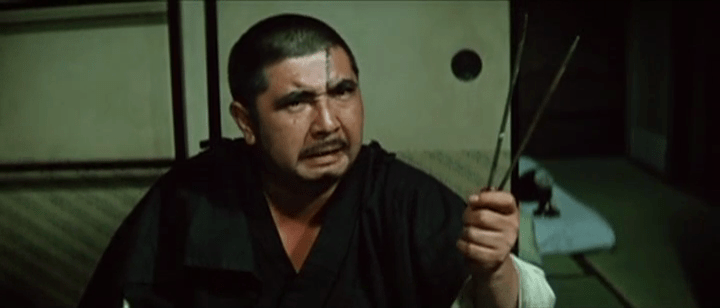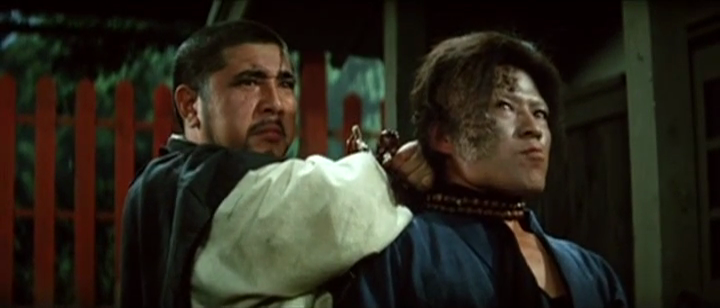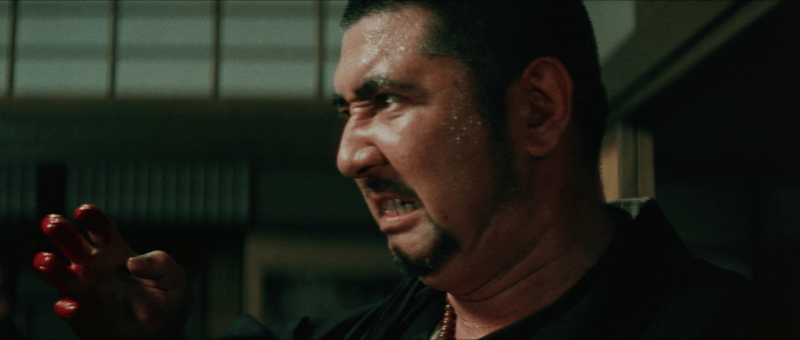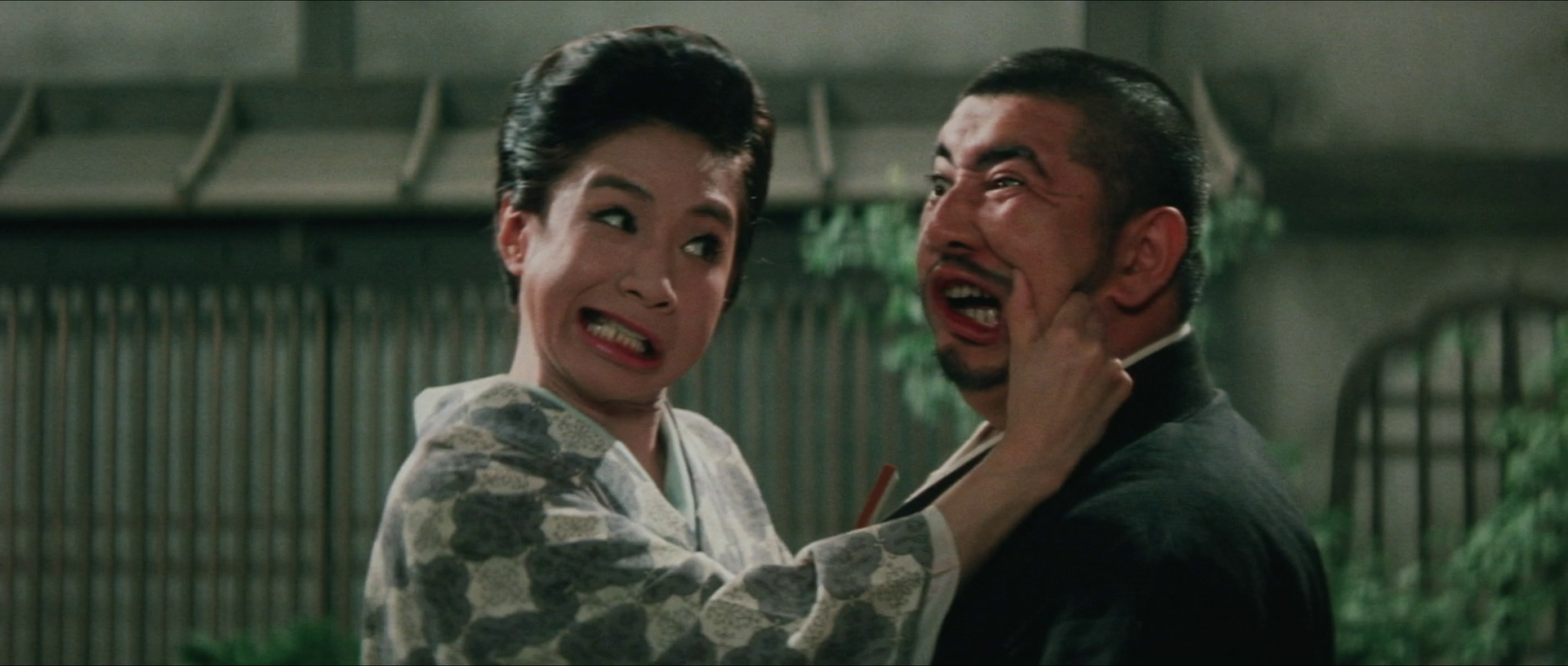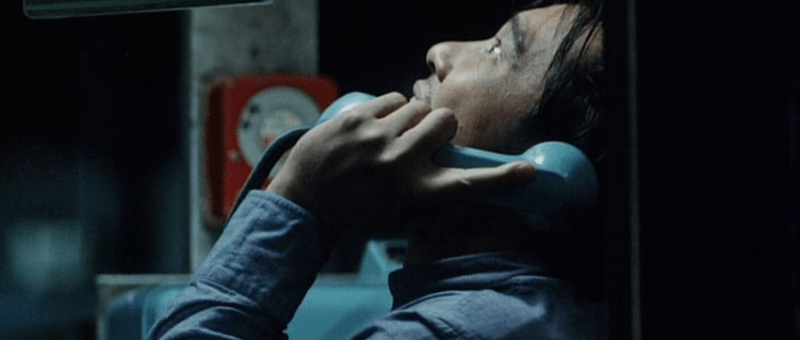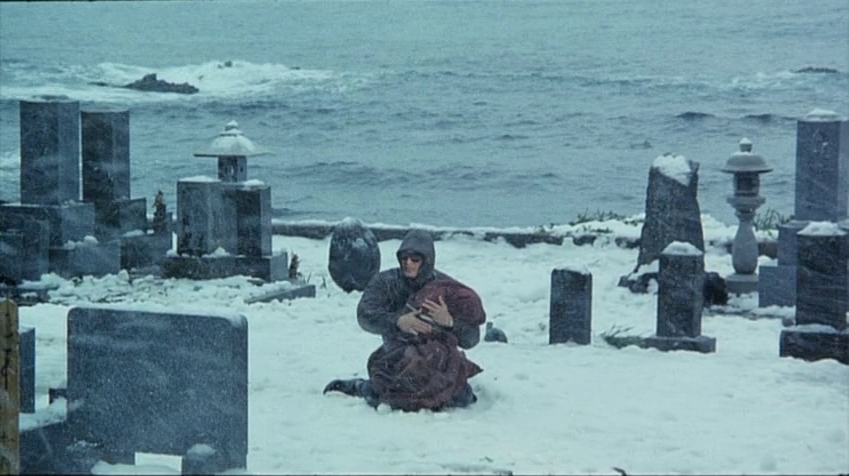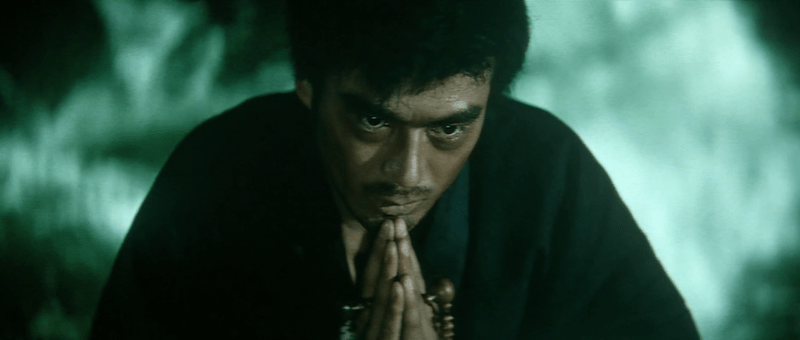
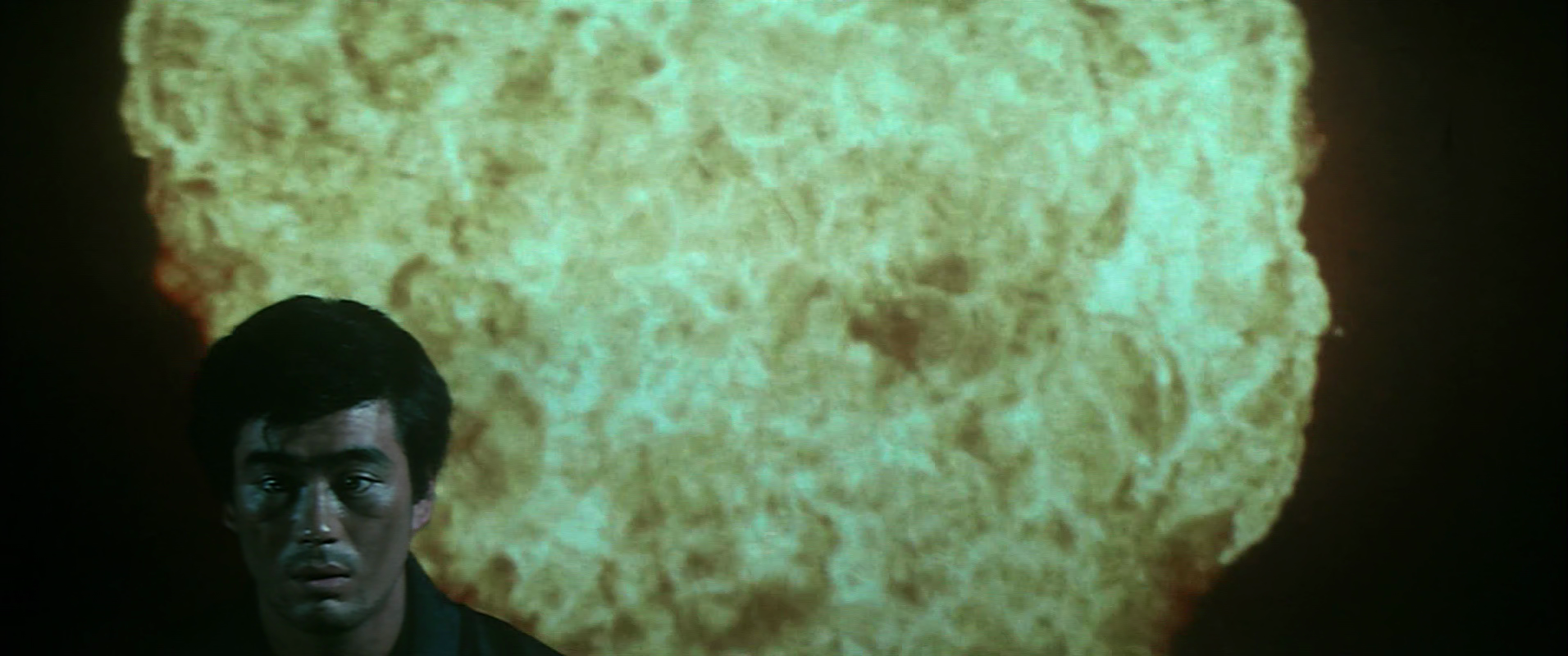
Memoir of Japanese Assassinations (日本暗殺秘録, Sadao Nakajima, 1969)

According to the narrator of Sadao Nakajima’s artistically daring Memoir of Japanese Assassins (日本暗殺秘録, Nihon ansatsu hiroku) the practice of assassination had got so out of hand in the early years of Meiji that the emperor was forced to institute a law banning it while accepting responsibility for the lawlessness his imperfect governance had produced. But by opening with the Sakurada Gate Indecent from 1860, the film seems to be asking what went wrong in Meiji and why the assassinations have still not stopped with the implication that more may be on their way in rather febrile political atmosphere of the late 1960s in the run up to the renewal of the Anpo security treaty with Asama Sanso still a few years away.

The answer to the question that it presents, is that oppression has still not ended in Japan and that most of these assassinations took place because people had enough of difficult social conditions those in power little did to address. However, the first few pre-20th century  assassinations which are presented in the form of short vignettes, are largely a product of the confusion of the bakumatsu era as reactionaries attempt to halt Japan’s increasing openness to the wider world and what they see as a loss of national identity and sovereignty. The implication is that this sense of ideological conflict is a direct cause of the nationalism that defined the first half of the 20th century. 

It’s not until we reach the early 1920s that the secondary cause of Japan’s dire economic situation rears its head as the right-wing nationalist leader of Righteousness Corps of the Divine Land (Bunta Sugawara), a society dedicated to workers’ rights, assassinates the head of a family-run conglomerate he accuses of feeding on the blood on the common man. From this incident we can see that it is not as easy to draw a line between left and right in terms of political ideology as it might be at other times or in other nations as otherwise nationalist forces share ideas that might lean more towards socialist ideals. Ikki Kita whose philosophy informed the February 26th Incident that ends the film described himself as socialist, but is also regarded by some as the architect of Japanese fascism. With the so-called “Showa Restoration”, he advocated for the elimination of private property and a doctrine of socialism from above in which the emperor would assist in the reorganisation of society. Which is to say, the clarification of the Meiji Restoration actually meant.

In any case, it’s easy to see the reasons that these ideas caught hold and that concepts such as “revolution” were a counter to the persistent hopelessness of the depression and the extreme poverty of Japanese society while the large conglomerates prospered through trading with the United States. The bulk of the film focuses on Onuma who assassinated Junnosuke Inoue in 1932 as part of an intended reign of terror known as the League of Blood instituted by the far right Nichizen Buddhism cult led by Nissho Inoue (Chiezo Kataoka),. Onuma was still alive at the time the film was made and apparently acted as a consultant. Played by a fresh-faced Shinichi Chiba, he’s depicted as an earnest young man who is driven into the ground by the increasingly capitalist mentality of the 1920s, a time of high unemployment and frequent labour disputes only exacerbated by the Great Depression. 

Though he had been a bright and attentive student, Onuma was forced to leave education because of his father’s early death and thereafter worked a series of causal jobs before leaving a position at a kimono dyers because of their callous treatment of another employee who was forced to embezzle money because his mother was ill and he was denied a loan by the boss who justifies his position by stating that he’s already given the man several advances on his salary. Onuma’s brother also resigned from his job to take responsibility for failing to spot someone else’s embezzlement, leading Onuma to conclude that being honest gets you nowhere in this morally corrupt society. This is rammed home for him at his next job at a cake baker’s where he becomes almost part of the family and draws closer to the maid, Takako (Junko Fuji). The boss intends to rapidly expand the business by building a bigger factory hoping to capitalise on the coronation of the new emperor. Staking everything on the factory, he takes out loans from loan sharks but fails to get a business permit from the police later remarking that he was naive thinking he could do business honestly not realising that the police expected a bribe.

Tuberculosis and the death of a girl who like him could not afford medical treatment further leave Onuma feeling resentful and hopeless leading to a suicide attempt after which he is born again in Nichiren Buddhism and becomes a servant to Nissho. It’s easy to see how Nichiren could offer an escape to young men like him who burn with rage and a desire to change society, though in essence it’s no different from the militarism that was growing in parallel being rooted in nationalist ideology and for the early part at least centred in the military. The May 15 Incident saw the military and members of the League of Blood assassinate the prime minister to enact the Showa Restoration and reorganise society. The revolution failed, but the 11 young officers who took part in received little punishment, furthering cause of the militarism, while directly contributing to the February 26th Incident which though it also achieved little further cemented the power of the military over the government. 

Though imperialism is subtly presented as another form of injustice as the nation spends money on warmongering while the people starve, the film straddles an awkward line in struggling to avoid glorifying the actions of the far right in painting Onuma and leader of the February 26th Incident Isobe (Koji Tsuruta) as dashing, idealistic heroes whose only wish was to save Japan and remake it in a way they believed to be better. This was pretty much the antithesis of what Nakajima intended, though it was picked up by some as a piece of right-wing propaganda. The film courted controversy both with Toei studio bosses and the government who ordered Nakajima to soften the excerpts from Isobe’s diary fearing they were too incendiary, though Nakajima had already shot the footage and was forced to find a compromise. Toei as a studio did rather lean towards the conservative and especially in its yakuza films which is perhaps unavoidable given that yakuza organisation did often have strongly nationalistic sensibilities. Accordingly, the film stars almost their entire roster of Toei’s yakuza and ninkyo eiga stars from Tomisaburo Wakayama to Ken Takakura and Koji Tsuruta along with Junko Fuji as as Onuma’s love interest who is eventually forced into sex work because of the economic conditions of the 1920s, and perhaps comes with some of that baggage. Its closing question, however, given the fact that all these assignations achieved almost nothing of what they were intended to, seems to be posited at the current society mired in the Anpo protests and the declining student movement to ask how else society might be changed and revolution enacted to create a fairer society for all through an ideology that could end this cycle of political violence.

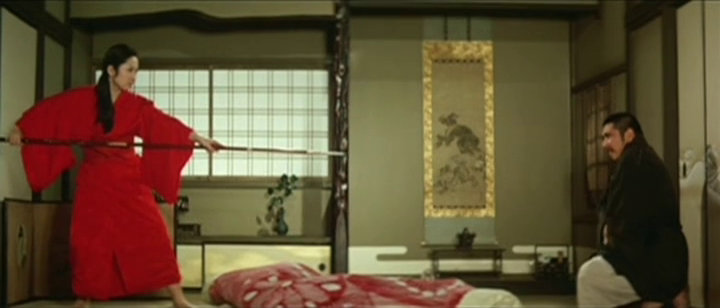
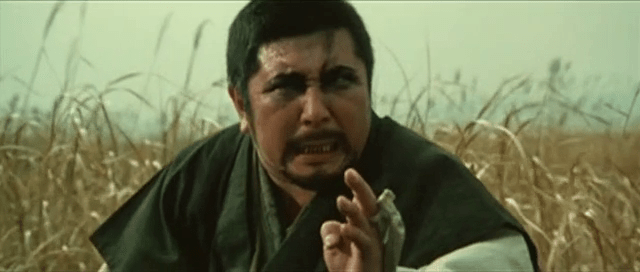
Wicked Priest 5: Breaking The Commandments (極悪坊主 飲む打つ買う, Buichi Saito, 1971)

The Wicked Priest returns for his final adventure and once again finds himself tackling the corruptions of the mid-Meiji society. Titled in English “Breaking the Commandments” (極悪坊主 飲む打つ買う, Gokuaku Bozu – Nomu Utsu Kau), the Japanese title refers to something Shinkai (Tomisaburo Wakayama) admits part way through, that his ironically non-buddhistic life revolves around drinking, gambling, and women all vices he seems unable to give up even as he continues to fight justice for the oppressed little guy amid the burgeoning capitalist society of the new Japan.

Indeed the film opens with him in a brothel where he’s exhausting one woman after another and demanding she be replaced with a fresh model while simultaneously covering for petty crook Hideji (Teruo Ishiyama) who is hiding his sex worker girlfriend in the cupboard to save her from a local gangster. In the first few instalment, Shinkai is a lecherous yet lovable rogue who in his own way respects women but in these last two instalments is certainly less kind, treating these sex workers more or less as disposable while later threatening to rape a lady gambler who tried to trick him. In any case, after realising that even Hideji who he went out of his way to help is trying to deceive him, Shinkai ends up getting involved with a local dispute over transportation licences and a nefarious land-sharking plan run by thuggish gangsters with the collusion of the police chief.

The land sharks want to take over the abandoned mansion where Hideji and his family of crooks are currently living in the company of a former samurai lord who seems to be suffering with some kind of delusion that it’s still the Sengoku era. The police chief isn’t up for the idea at first but the gangsters falsely imply that those living in this area of town are merely “jobless people and criminals” that they don’t need to worry about. But their plan depends on bringing on board Wajima who holds the license for running freight carts but Wajima is an honest man who isn’t interested in bribes and has no respect for those who exploit others. He refuses to participate in the project.

Shinkai too refuses to let the gangsters get away with mowing over Hideji and the others and is once again saved by Ryotatsu (Bunta Sugawara) who agrees to put off their final fight until Shinkai is finished cleaning up this dirty little town. He largely does this by donning an elaborate disguise and teaming up with lady gambler Gin to trick conspirator Kawashima into giving back Wajima’s (Takashi Shimura) license after setting him up so he’d lose it. Meanwhile he also tries to repair another broken father-son relationship between Wajima and his errant boy Ryutaro (Kyosuke Machida) whom he’d kicked out some years previously after he became a yakuza and got into trouble with the law. 

What seems clear is that the chaos of Meiji has allowed the greedy to profit over the changing orders of the hierarchical society, no longer bound by traditional notions of good conduct or basic humanity. The police chief first objects to the plan, stating that many people living in the area the gangsters have earmarked for their docks are honest and hardworking and shouldn’t be lumped in with “criminals”, but is soon won over by a bribe and is also supporting a mistress in a separate household. Yet even so, Shinkai turns this same weapon back on Kawashima (Fumio Watanabe) in pretending to be a general from Tokyo who will soon be his father-in-law, leveraging his social advancement to bring him back into line in appealing to his greed and ambition while hinting at a militarist future in reminding him that Wajima’s carts were essential during the Satsuma Rebellion and may be so again should the occasion call.

After seeing off a series of bounty hunters, one sent in via a honey trap that suggests the gangsters really know their enemy, Shinkai has no option but to clear out the corruption himself at the point of a sword culminating in another bloody showdown which is also in its own way a means of protecting Ryutaro from a pointless revenge. “If I die the devil in hell will be in for a big surprise!” Shinkai cooly remarks as he marches off to fight for justice, but then there’s another battle waiting for him in the postponed grudge match with Ryotatsu as the two men tussle atop a sand dune ironically trapped in a co-dependent cycle of vengeance and salvation while Shinkai’s wandering most likely will never end.


Wicked Priest 4: The Killer Priest Comes Back (極悪坊主 念仏三段斬り, Takashi Harada, 1970)

At the heart of the Wicked Priest series is an idea of rootlessness, the wandering monk Shinkai (Tomisaburo Wakayama), an orphan, often finding himself dragged into familial disputes between fathers and sons for one reason or another often estranged from each other. The aptly named Wicked Priest 4: The Killer Priest Comes Back (極悪坊主 念仏三段斬り, Gokuaku Bozu: Nenbutsu Sandangiri) finds Shinkai returning to his hometown after reencountering a childhood friend who’s found himself on the wrong side of a historical divide.

When Shinkai and Takegoro (Ichiro Nakatani) left their childhood village, they swore to become the best priest and mountain owner in Japan respectively but that obviously hasn’t worked too well for either of them. Takegoro evidently joined the wrong side during Bakumatsu chaos, a fact rammed home when his attempt to use currency issued by a feudal lord is rebuffed in a gambling den whose owner reminds him that it is now worthless. Only official currency issued by the central government is considered legal tender. On top of all that, it seems Takegoro might also have been cheating which signals just how far he has fallen. Running into him by chance, Shinkai ends up saving the day while accidentally humiliating a chastened Takegoro who is given a further dressing down by the old school lady yakuza boss Kuroda (Chieko Naniwa), also known as “the Thunder Woman”, who appears to be in charge, shooting off his little finger as an attempt to save face. 

In any case, the encounter has Shinkai feeling nostalgic and he decides to return to his hometown to hold a proper memorial service for his late mother. Only once there he ends up being drawn into another cycle of local corruption on discovering that the river workers are being exploited by rival yakuza groups who are working them to exhaustion and paying almost nothing. The leader of the Gondawara is quite obviously up to no good as he wears a western suit and has a handlebar moustache, quite clearly an amoral capitalist while his rival Ryuo (Eizo Kitamura) is a violent thug in ominous sunshades. In actuality, however, they are both branches of the yakuza syndicate led by Kuroda who is of the old school and doesn’t approve of their exploitative mindset. Just as she had Takegoro, she gives both men a good telling off reminding them that the river workers are essential for providing a steady supply of coal without which the new industrial economy will flounder. 

It’s also true that this same industry is fuelling militarisation and an eventual eye towards expanding imperialism, but Kuroda does seem to be mainly mindful of the workers welfare immediately insisting they should be paid a fair wage which is five times more than they’re currently getting. Ryuo and Godawara superficially agree but intend on simply exploiting their workers differently by demanding five times as much work for five times as much pay in a fifth of the time. Shinkai does his best to defend the rights of the local people, but is faced with a dilemma on realising that Takegoro is member of Godawara and hellbent on killing him having become cynical and desperate, willing to sell out a childhood friend for a few pennies. 

Part of Shinkai’s mission is winning Takegoro back over the side of right while reuniting him with his mother whom he’d been too ashamed to visit. On the other hand, this is perhaps the first time Shinkai shows a darker side to himself on threatening to rape a lascivious nun who tricked him into a martial arts contest while rebuffing his amorous intentions. He’s also still being pursued by Ryotatsu (Bunta Sugawara) and ironically ends up temporarily losing his sight himself but just as always Ryotatsu decides to come to his rescue mostly because it would be very annoying if someone else killed him first before he’s got his revenge. He also agrees to wait for Shinkai to finish his mother’s memorial service before scheduling their death match, the most patient revenger in jidaigeki history. In any case, it all ends with another massive showdown as a wounded Shinkai purifies the town of corrupt yakuza and liberates the river workers while finally getting to honour his late mother’s memory leaving Ryotatsu to make his exit deciding that vengeance can wait until the mourning’s over.


Wicked Priest 3: A Killer’s Pilgrimage (極悪坊主 念仏人斬り旅, Takashi Harada, 1969)

Three years on from his arrest at the end of the previous film, Shinkai (Tomisaburo Wakayama) returns for more lecherous adventures across Japan in Wicked Priest 3: Killer’s Pilgrimage (極悪坊主 念仏人斬り旅, Gokuaku Bozu: Nenbutsu Hitokiri Tabi). This time he finds himself mixed up with revolutionary pirates planning to overthrow the government with weapons smuggled in from Singapore, but it isn’t so much politics that bothers Shinkai as injustice as he tries to help the townspeople defend themselves against politicised bandits and a weird new religion while dealing with the fallout from the last time he found himself enacting justice. 

As usual however the film opens with an odd prologue in which a randy Shinkai is invited to the home of a man who tells him there’s a strange local custom in which women soon to be married think it good luck to be deflowered by a passing stranger and even better if he’s a monk. Of course, Shinkai nearly gets a little more than he bargained for before heading off towards the central fishing village which is at this time of the year home to only women and old men with all the husbands and sons off chasing tuna for the foreseeable future. Taking a liking to a widow named Omine (Hiroko Sakuramachi), Shinkai’s plans are scuppered when she realises that he’s the man who killed her admittedly no good, violent drunk of a gambling husband. Being the charmer that he is, Shinkai manages to talk her round only her brother-in-law Ryuji (Tatsuo Terashima), who’s supposed to marry her sister Otae (Eiko Ito), is hellbent on revenge. Meanwhile, the town is invaded by cruel pirates who commandeer the local well and keep the villagers prisoner. 

“Helping people is my duty,” Shinkai had told the man who weirdly wanted him to sleep with his daughter and true enough he’s never been one to turn away from those in need even if he’s not all that keen on taking responsibility for them. He feels bad for Omine that he ended up killing her husband even if he thinks her husband brought it on himself because of his behaviour, and even after encountering Ryuji tries to talk him down from his revenge rather than simply fighting him even though Ryuji still refuses to forgive him even after Shinkai is nearly fed to sharks in his place by the cruel leader of the pirates. He is later saved by Yamanami (Minoru Oki), a fugitive on the run for killing a politician in Tokyo presumably as part of his revolutionary activities but has become disillusioned with the gang whom he thinks have lost sight of their cause and are now no better than bandits. Shinkai had claimed he could see Yamanami was a good man because of his all-seeing monk eyes, and later praises him as someone who held fast to his beliefs while bravely standing up to his sociopathic gang boss. It isn’t so much that Shinkai has much opinion on their political stance and desire to overthrow the government, only about the way they conduct themselves, callously throwing dynamite around and hassling the local women. Yamanami asks his boss what the point of winning is if everyone resents you, but his boss simply tells him to think about winning first and ideological purity later. 

In a bizarre subplot, meanwhile, Shinkai also finds himself squaring off against a weird sex cult/fake religion on an island connected with the pirates who are also planning to sell off the village women as payment for their Singaporean weapons. Once again, the randy monk becomes a staunch defender of women, saving Otae from becoming the weird priest’s sex slave and shutting down the trafficking plot by indulging his strange love of eye gouging. Meanwhile he’s still being pursued by Ryotatsu (Bunta Sugawara), the blind monk from the previous two films. Blow for blow, there may not be as much action for the warrior monk despite his heroic attempt to reach the well while under fire and eventual descent on the bandit hideout in a single-handed bid for justice, but there is something in Shinkai’s demands for a just world despite his lasciviousness that overcomes his fixation on women even if this time it seems as if the sun may have set on his travels. 


Wicked Priest 2: Ballad of Murder (極悪坊主 人斬り数え唄, Takashi Harada, 1968)

The Wicked Priest returns for a second instalment but once again finds himself confronted with imperfect paternity in The Wicked Priest 2: Ballad of Murder (極悪坊主 人斬り数え唄, Gokuaku Bozu: Hitokiri Kazoe Uta). This time directed by Takashi Harada, the series begins to embrace its anarchic nature in the sometimes cartoonish exploits of its hero who largely just wants to have a good time but is inconveniently called to missions of justice while silently stalked by ghosts of the past in the form of spooky monk Ryutatsu (Bunta Sugawara) whom he blinded in a fight at the end of the previous film. 

Now a lonely wanderer, Shinkai (Tomisaburo Wakayama) comes across a fleeing yakuza with a small boy in tow and steps in to help. As he discovers, the man, Rentaro (Asao Koike), is a former gangster whose wife has passed away leaving him the sole parent to Seiichi, a little boy of around six. Rentaro wants to turn himself in to the police so he can fully sever his ties to the underworld and start again along a more honest path to raise his son right, but needs to deliver him to his father, a jujitsu instructor, before he can. Somewhat surprisingly, Rentaro suddenly asks Shinkai, a man he’s never met before, to take Seiichi to his grandfather before rushing off supposedly to give himself over to justice. When Shinkai arrives, however, Iwai (Hideto Kagawa), the grandfather, refuses to let them in having disowned his son over a local scandal some years previously. 


As in the first film the major theme is paternal disconnection, Rentaro caught between wanting to be a good father to his son and seeking his own father’s approval. Fatherless himself, Shinkai cannot understand nor condone Iwai’s stubbornness in refusing even to look at his small grandson but resolves to care for him himself until his grandfather changes his mind or for as long as he is needed. Meanwhile it turns out that Rentaro was once involved with the evil gang, Godo, who have been causing trouble in the town by trying to muscle on the local cockfighting scene. 

Godo have also been force recruiting some of the local men to increase their dominance while schmoozing with a corrupt politician, Kadowaki (Hosei Komatsu), hoping to make cockfighting a local speciality, even going so far as to kidnap a young woman known to Shinkai and gift her to him. Shinkai manages to rescue her after dressing up as a head priest and subtly suggesting to Kadowaki that his election prospects might suffer if any rumours were to get out about untoward goings on in his household. Iwai explains that jujitsu is not meant to be a violent art used to tackle evil gangsters but is anyway posited as a kind of local resistance leader standing up to Godo but with little effect other than making himself a target for their ire while left vulnerable in their ability to use Rentaro against him. 

While getting mixed up in a local dispute trying to stand on the side of the little guy while looking after Seiichi, Shinkai’s exploits are often comedic in nature as he continues to play the part of the ironic monk though with real sincerity. Sneaking into a temple and belatedly discovering it to be a convent he becomes captivated by a Buddhist nun who appears to experience some kind of sexual awakening but then becomes fixated on him, insisting on becoming his wife and causing him to hide in a chicken coop to avoid her. On the other hand, his stalking by Ryutatsu takes on an almost spiritual quality as the near silent monk, now even more gaunt than before, shuffles his way towards him. Yet this Ryutatsu is a little more spiritual than before, agreeing to postpone his quest for vengeance unwilling to fight Shinkai with little Seiichi looking on and even at one point stepping in to protect him himself because all children are Buddha. Nevertheless, the film ends with another bloody battle surprising in its intensity with severed limbs and sudden violence as Shinkai ensures that those in the wrong get what’s coming to them, speeding up the wheel of karma by a turn or two to make sure they face justice, of one sort of another, in this world if not the next.  


Wicked Priest (極悪坊主, Kiyoshi Saeki, 1968)

A bunch of corrupt monks get a lesson in business ethics from one of their own in the aptly titled Wicked Priest (極悪坊主, Gokuaku Bozu). The first in a series of five films starring Tomisaburo Wakayama as a rogue Buddhist monk who enjoys fighting, drinking, and women but deep down has a powerful sense of moral righteousness, Wicked Priest is in its own way another take on classic ninkyo only this time it’s temples acting like yakuza clans rather than actual gangsters with “wicked priest” Shinkai the ironic symbol of nobility. 

Set in early Taisho, the film opens with a prologue set five years before the main action in which Shinkai breaks up a fight between another violent monk, Ryotatsu (an incredibly gaunt Bunta Sugawara), and some yakuza he challenged while they were hassling a young man for supposedly messing with the wrong girl. Predictably, it’s Shinkai who ends up in trouble. Relieved of his duties, he’s exiled to another temple and sentenced to spend a whole year in isolation thinking about what he’s done. Five years later we can see that the conclusion he’s mostly come to is that the religious world is full of hypocrisy anyway and he might as well live his life to the full while he can.

Indeed, the opening scene sees him ironically reciting a sutra with his head between a woman’s legs and preparing to drink holy water from her belly button. The problem here seems to be one of inter-temple politics that sees Shinkai hassled by officious monk Gyotoku (Hosei Komatsu) who objects to Shinkai’s behaviour and to the leniency which is shown to him by head priest Donen (Kenjiro Ishiyama). Of course Gyotoku is later discovered to be the source of corruption, wanting to depose Donen and take control of the temple in part to facilitate a sex ring he’s running that involves live peep shows literally on temple grounds. Shinkai, meanwhile, has a particular dislike for abusers of women and especially for pimps eventually rescuing some of the women indentured by a local brothel and unfairly kept on after redeeming their contracts with bogus loans, and starting a women’s refuge in the temple where they can find “honest” work and eventually lead “normal lives” as farmers or waitresses free of the abuse and oppression they faced in the “hell” of indentured sex work.

Wandering around the town, he saves one young woman newly arrived in Tokyo from falling victim to a scam and being forced into sex work by getting her a waitressing job at a local restaurant. To keep her safe, he jokes with the cafe owner that he’s already slept with her which in the bro codes of the time makes her his woman and owing to his famously violent nature no one else is going to bother her. For what it’s worth, women young and old come to admire him greatly for his gallantry though he never abuses his position. All of his sex partners are at least of his own age and fully consenting even if he is not exactly faithful in love. 

Meanwhile there’s some minor commentary more familiar from post-war gangster films that sees the temple as a refuge for orphaned men. The fatherless Shinkai finds a beneficent paternal authority in Donen and is, he says, “reformed”, if living to a code that seems to be mostly his own but informed by a kind of moral righteousness not found in others at the temple. Having discovered that a wayward young man Shinkai is attempting to save from his life of petty crime exploiting women for his own gain is a son he never knew existed, Donen would have left the temple to fulfil his familial role but is prevented from doing so by the intrusion of temple politics. Unless undertaking specific vows, Buddhist priests are not necessarily expected to practice celibacy and are permitted to marry yet Donen’s father objected to his choice of bride and she left not wanting to disrupt his temple career. Shinkai entrusts the boy to Donen, talking him into accepting a new paternal authority as a means of returning him to the “proper” path while himself swearing that he will leave the temple in order to ensure justice is served against the true “wicked priest” Gyotoku. Directed by ninkyo specialist Kiyoshi Saeki, the film ends in an outburst of bloody violence as Shinkai takes revenge on institutional corruption but once again leaves its hero a lonely wanderer in an unjust world.


Original trailer (no subtitles)

The Tattooed Hitman (山口組外伝 九州進攻作戦, Kosaku Yamashita, 1974)

The close brotherhood between two men is disrupted by changing times in a more contemporary gangster drama from Kosaku Yamashita, Tattooed Hitman (山口組外伝 九州進攻作戦, Yamaguchi-gumi gaiden: Kyushu shinko-sakusen). As many are fond of saying, times have changed and the yakuza must try to change with them or else meet a melancholy end. But as the hero admits, change is something he has no intention of doing even as his old school gangsterism leaves him increasingly at odds with the corporatising ways of the contemporary yakuza. 

The change in the times is obvious from the film’s opening sequence set in 1957 in which an attempt is made on the life of petty boss Ishino (Tatsuo Umemiya) by a gunman who shouts “die, for the good of the world” before firing a pistol and running away. Ishino has been targeted in a dispute over construction rights connected with the regeneration of hot springs resort, Beppu. The hit seems to have been ordered by rival gang, Sakaguchi (Eizo Kitamura), the leader of which is also a prominent local politician who is content to abuse his power for his own financial gain. So confident is he in his safety, that Sakaguchi even gets the police involved rather than deal with it himself. 

Ginji (Bunta Sugawara) has been Ishino’s sworn brother since their teenage delinquent days and determines to get revenge by raiding the Sakaguchi offices and killing one of their high ranking officers. Seeing as he’s already wanted by the police for a previous murder, Ishino sends Ginji to Osaka to lay low while working for an associate, Daito, mainly as a debt collector. It’s this act of separation which introduces a rift between the two men. While Ginji waits patiently to be recalled, Ishino climbs the ranks of corporatised gangsterism by learning to play by the new rules. 

To fill the void, Ginji takes on a new “brother” or perhaps surrogate son in the wayward Ken (Tsunehiko Watase) whom he first meets cheating at pachinko at a parlour where his pregnant wife Fusako (Mayumi Nagisa) is working. It’s Ken who first drags him into a brewing turf war as Korean gang Soryu threaten to disrupt the local equilibrium not least by selling drugs of which Ginji does not approve. Ginji “saves” Ken from joining Soryu by essentially making him his one of his guys though he doesn’t really have much of a position in Daito’s gang, offering him a sense of grown-up responsibility by handing him a pistol with the only the instruction to make sure he shoots with two hands. Unfortunately, Ken will follow his advice but otherwise ends up almost causing an incident with another gang by shooting a man who disrespected him in the street. Ginji marches straight down there to sort things out, but on arrival discovers an arrangement has already been made with his boss which further strains his sense of pride and confidence in his position as a yakuza.

Ginji feels something similar on being invited to a party to celebrate Ishino’s promotion only to be seated with the lowly footsoldiers and ignored by Ishino all night. Ishino rejects him still further in agreeing to plan to send him back to Kyushu out of the way hoping that his old school hotheadedness can finally be tempered. Others meanwhile voice concern that Ginji may have forged a relationship with rival Kobe gangs during the 18 months he abruptly disappeared from Osaka and has only come back to cause trouble. Ginji perhaps knows that he has no more future in the contemporary society, others remarking that seems like someone who is in a sense already dead for having accepted that he will die and most likely in Hakata, the town he had wanted to conquer with Ishino who had crushed his dreams in his newfound pragmatism by calmly explaining that they would never have the power to take it. 

Koji Takada’s screenplay positions Ginji’s gradual decline as an allegory for the yakuza himself while citing the new legislation that this particular series of incidents made necessary creating the new offence of assembly with dangerous weapons as a decisive moment in weakening the yakuza as an institution. Ginji remains a man displaced by his times unable to move forward into a new society in the way that Ishino has but stuck in a permanently post-war mentality despite the constant reminders that “times have changed”. Yamashita adopts the trappings of the jisturoku drama with frequent references to real life events and narrative voiceover but otherwise maintains his classicist formalism while ending on a note of ambivalence that tells us a certain kind of justice may have been served but the cycle of violence may not yet be completed.


Original trailer (no subtitles)

Female Slave Ship (女奴隷船, Yoshiki Onoda, 1960)

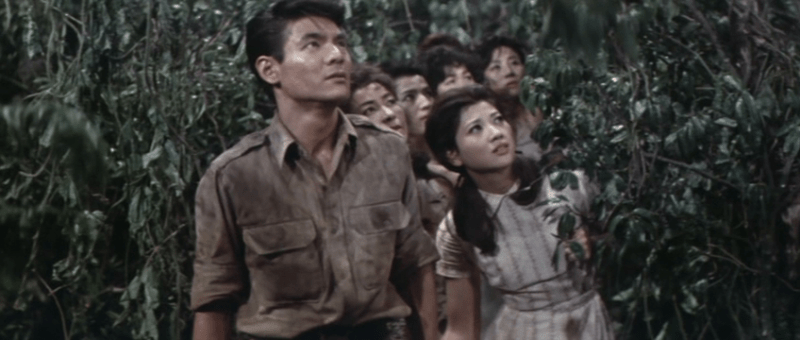
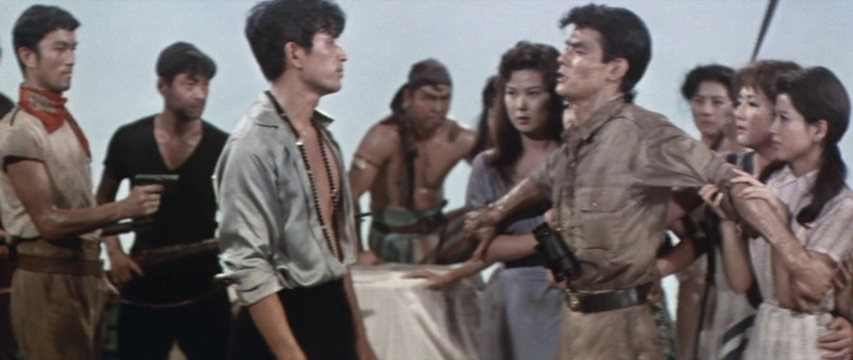
Playing out much more like a classic serial than war movie, Yoshiki Onoda’s Female Slave Ship (女奴隷船Onna dorei-sen) takes a curiously flippant approach to the conflict along with a moral perhaps a little at odds with similar films of the time. Adapted from a novel by Jun Funazaki, the film begins as spy thriller but ends up drifting into pirate territory as a Japanese solider with an incredibly important mission is shot down on his way to Tokyo, rescued by a freighter carrying women en route to being sex trafficked in Shanghai, and then captured by pirates who want to sell him to a Chinese spy working for the Americans. 

It’s right at the end of the war and Japan is losing quite badly they think because of advancements made in radar by the Allied forces. They’ve been passed blueprints for a better radar system by a German contact and so Lt. Sugawa (Bunta Sugawara), stationed in Malaya, has been charged with bringing them back to Tokyo disguised as a photo of a pretty young woman they’re going to say is his sister. Perhaps the most surprising thing about the film is that Sugawa abandons his mission quite quickly and instead devotes himself to rescuing the women, vowing not to return to Tokyo without them despite the fact that this vital information he’s carrying could supposedly turn the tide of the war.

Even so, this manly chivalry defines his code of heroism. He is constantly trying to escape and defiantly stands up both to the captain of the tugboat, who is not actually in charge, but also to the pirate captain (Tetsuro Tanba) who doesn’t really seem to be doing much of anything. Among the crew of pirates is a Japanese man who later confirms that he’s a deserter but alternately switches sides, first offering to team up with Sugawa because he’s fed up with the discrimination he faces from the other pirates, and then betraying him before doing the same thing again but claiming that he feels bad about deserting and wants to do something for Japan now that his Japaneseness has been truly awoken.

It was indeed other Japanese people who were operating the slave ship, chief of them being the Queen (Yoko Mihara) who rules the boat with an iron hand but then uses her sex appeal to curry favour with the pirate captain while simultaneously developing feelings for Sugawa who is equally drawn to a meek young woman, Rumi (Utako Mitsuya), who was tricked onto the boat on the promise of a nursing job in Manchuria. Most of the other women, few of whom are actually given any characterisation, are established sex workers and resolved to their fates but all feel bad for and protective of Rumi. Though she’s the one Sugawa is closest to, it’s quite refreshing that the women are otherwise treated as equals rather than looked down on because of their occupation with Sugawa insistent on rescuing them all before they can be sold in Shanghai. 

As is usual for these kinds of films, the chief villain is Chin (Shuji Kawabe), a Chinese man apparently with ties to the Americans who has somehow found out about the radar plans, even knowing that they’re presented on a photo of a woman, and wants to capture Sugawa to get his hands on them. The bounty causes a rift between the pirate captain and Chin with the pirate captain wanting in on the deal and Chin not really willing to share, though there is a clear implication that these mercenary pirates are on the wrong the side in working with the Chinese and Americans while the slave ship was more on the level of not being okay but definitely not as bad. 

In any case, it comes down to a battle of masculinity between the monkey-loving pirate captain and his trusty whip, and Sugawa’s good old-fashioned chivalry. Surprisingly chaste given its racy title, even the pirates are more of the drunken and lascivious type than violent and rapacious, the film has a rather odd sensibility landing somewhere between jungle adventure and wartime escapade in which an earnest young man bravely carries the weight of the nation on his shoulders while doing his best to address a more immediate threat and rescue 12 captive women from the evils of Japan’s imperialist expansion. 


Original trailer (no subtitiles)

To Trap a Kidnapper (誘拐報道, Shunya Ito, 1982)

One of a number of films released in the early ’80s critical of the police force, To Trap a Kidnapper (誘拐報道, Yukai Hodo) draws inspiration from a real life case of child abduction but suggests that the police largely just get in the way and are only interested in apprehending the culprit rather than ensuring the boy’s safety. In any case, unlike the similarly themed High and Low, the film devotes most of its focus to the kidnapper’s desperation as a man apparently left behind by the rapidly rising tides of prosperity. 

Yet somewhat perversely the film opens with a scene of children playing and seven-year-old Hideyuki (Motoyoshi Wada) getting into trouble for flicking toy discs at his friend and deskmate Kaori (Kaori Takahashi). Hideyuki is then made to stand on his own in the playground as a punishment, though quickly makes things up to Kaori by gifting her the plastic discs he was playing with. Neither of them know it, but the children share a grim connection for it’s Kaori’s father Kazuo (Kenichi Hagiwara) who is responsible for kidnapping Hideyuki on his way home from school in the next town over.

Both Hideyuki and Kaori attend a prestigious private institution but are being raised in very different circumstances. Kazuo was once a successful cafe owner but was swindled out of his business and is now in massive debt to a shady loanshark named Moriyasu who’s sold his promissory note on to a third party debt collector. Hideyuki’s father, Noboru Mitamura (Fujita Okamoto), is a doctor though there’s nothing that suggests the family is anything more than financially comfortable and they aren’t immediately able to get the money together for the ransom. Noboru has to ring round all his friends, family, and random acquaintances begging for emergency loans but without really being able to explain why he needs the money. Just having seen it noted on a school register that Hideyuki’s dad was medical professional Kazuo assumed they’d be a good target for a kidnapping and is in any case resentful of their nice middle class life. 

His wife, Yoshie (Rumiko Koyanagi), is in turn resentful of Kazuo for their reduced circumstances later lamenting that they moved house, swapped their big car for a smaller one and are even going to rehome their dog but if Kazuo is really so deeply in debt, something he had kept from her, then nothing they do really matters because their lives will never improve. What she can’t understand is why Kazuo was so keen on keeping Kaori in a private school that he’d get himself into financial hell rather than make a more pragmatic decision to let her go somewhere else. The obsession perhaps hints at his class anxiety, wanting his daughter to stay in a more resolutely middle class environment otherwise in strong contrast to the hometown he later visits where his elderly mother operates a loom in a moribund fishing village which the youngsters are slowly leaving for jobs in factories in neighbouring towns. 

Perhaps in over his head, it at one point looks like Kazuo is about to dump Hideyuki’s body in the sea only to realise police divers are already searching the area. Despite himself, he begins to care for the boy though doesn’t really know what to do with him. He feeds him bread from convenience stores and keeps him tied up in the boot of his car wrapped in several blankets without really considering the possibility that he may die of cold or hypothermia left outside in the freezing winter. Realising the distraught parents have called in the police despite his warnings not to, he is too afraid to accept the ransom and is therefore at something of an impasse given he can’t very well give up the boy without getting the money.

Meanwhile, as the Japanese title implies the tale is alternately told from the perspective of the reporters at Yomiuri Shinbun who are originally quite annoyed by the police’s request for a news blackout to avoid panicking the kidnapper, suggesting it’s an infringement on their free speech if coming around in the acceptance that a child’s life is at stake. A rookie reporter, Kotaro (Shin Takuma) is involved in a dispute with his fiancée Tomo (Miwako Fujitani) who is having second thoughts because he’s always working while her parents are pressuring her to consider an arranged marriage. Kotaro refuses to write one of the dummy articles they’re putting together in the event that Hideyuki is killed describing it as morbid and irresponsible, but is very involved with the ongoing press investigation which simultaneously seems more rigorous than that of the police and accidentally gets in its way. A “suspicious car” that’s noticed outside a drop sport turns out to belong not to the kidnapper but a reporter on a stakeout wasting the police’s time.

Even they are eventually conflicted, the officer in charge on the ground later letting the Mitamuras leave on their own for the final drop empathising with them as a fellow parent and acknowledging the reason everything keeps going wrong is because the police got involved. Yet his boss orders him to follow them anyway, reminding him that the only job of the police is to catch the culprit seemingly indifferent to whether or not they rescue the hostage unharmed. Their tactics are quite naive, not considering that Kazuo will obviously realise that the Mitamuras are surrounded by undercover officers because they keep using the same ones and it’s odd to keep seeing that couple from the coffee shop everywhere they go. The big break in the case happens by accident just because a couple of traffic cops decide to ask a random car a few questions.

In any case, it’s Kaori who ends up suffering. She and her mother are also victims, unfairly hounded by the press and left with nowhere to go and no-one to turn to having had their lives turned upside down by her father’s desperate decision. He didn’t even know the kids were friends or the effect his actions would have on his daughter. Kazuo hadn’t really thought any of this through but acted only in jealousy and resentment, wanting payback against the Mitamuras for their nice middle class life and his own slice of the pie that he felt had been denied to him. In the end, the only winners are the press who can rejoice in selling their newspapers even if a remorseful Kotaro resents himself for taking a paparazzo photo of Yoshie and Kaori trying to leave town quietly. On seeing his article pasted on pillars at the station, even Tomo starts to change her mind reflecting that if he’s working on a story like this then perhaps working too much isn’t such a dealbreaker after all even if everyone seems to have forgotten about little Hideyuki in the headlong rush to dominate the newsstands by trying to lure a kidnapper into their trap.


Original trailer (no subtitles)

Father of the Kamikaze (ゝ決戦航空隊, Kosaku Yamashita, 1974)

By the mid-1970s, Japanese cinema at least had become much more comfortable with critiquing the wartime past, considering it from a greater distance than the often raw depictions of war in the films from the previous two decades. 1974’s Father of the Kamikaze (ゝ決戦航空隊, A Kessen Kokutai), however, is among the few to skew towards the nationalist rather than the ambivalence or simple anti-war messages of other similarly themed films of its era. 

Starring ninkyo icon Koji Tsuruta who served in the air force himself, the film is a kind of biopic dedicated to Admiral Onishi who oversaw the kamikaze operations at the end of the war. As is pointed out, Onishi had been against the war in general terms even before its inception and is originally against the philosophy behind the kamikaze squadrons but as Japan’s fortunes continue to decline he becomes its biggest advocate citing a kind of sunk cost fallacy that it would be in someway unfair to the men that have already died to surrender while insisting that suicide missions are the only feasible way to turn the tide because one kamikaze could take out a hundred men by destroying battleships singlehandedly. 

The film in part attributes this extreme solution to the prevailing with your shield or on it philosophy of the contemporary society which placed extreme shame on the act of being taken prisoner. In the prologue that opens the film, a squadron of downed pilots whose heroic deaths have already been recorded is discovered alive in an American prisoner of war camp but as being a prisoner of war is so shameful and would reflect badly on the military, the decision is taken to fix the books by sending the men on a mission from which they are not intended to return. Onishi is opposed to the plan, he asks why they can’t find a way for the men to live, but the decision is already made. In any case, he describes the action of a suicide mission as a “beautiful ideal” even when insisting that a war cannot be fought in that way not least for purely practical reasons in that they do not have the resources to be wilfully sacrificing skilled pilots and their planes. 

Having come round to the idea, however, Onishi is a crazed zealot who cannot accept the idea of surrender and even goes so far as to barge into a cabinet meeting to urge ministers against a truce even though the war is clearly lost. To his mind, the only way to honour the sacrifices of those who’ve died is to fight to the last man. Kozono (Bunta Sugawara), another officer opposed to the kamikaze, eventually meets a similar fate in refusing to obey the order to lay down his arms and ending up in a psychiatric hospital. His objection had partly been that it’s wrong to turn men into ammunition, but also that the kamikaze project is itself defeatist and self-defeating when there are men such as himself who are committed to fighting on.  

In this the film leans into the image of militarism as a death cult in which dying for the emperor is the only noble goal of the whole imperial expansion. In its eventual lionising of Onishi’s image, his bloody suicide atop a white cloth resembling the flag of Japan while his parting words scroll across the screen in text, it does not shy away from his more problematic aspects in which he fails to object to a request from a junior officer that soldiers should be allowed to test their swords on American prisoners of war, roundly telling a subordinate who breaks protocol to insist that such a thing is not only morally wrong but will ruin their international reputation that he has no need to think of consequences because Japan will win this war. He claims to want to find a way of defeat that will satisfy the living and the dead, but in reality cannot accept it not least in that it would entail admitting that he sent 2600 young men to their deaths for nothing. 

Tsuruta brings the same level of pathos to his performance as he did in playing conflicted yakuza stoically committed to a destructive code, but there’s no getting away from the fact that the film focuses mainly on Onishi’s personal suffering as a man who sent other men to die for a mistaken ideal and then could not admit his mistake offering an apology only in his death in which he urged the young people of Japan to work to rebuild the nation in the name of peace. In switching to the present day and showing us Onishi’s dilapidated former residence and in fact the room in which he died with its tattered shoji and peeling paintwork, he veers towards the nationalistic in uncomfortably reinforcing the nobility of his death rather than the folly of war or absurdist tragedy of the kamikaze programme. Adopting a quasi-jitsuroku approach with frequent use of onscreen text, a narratorial voiceover, and stock footage of kamikaze in action Yamashita may portray war as madness in Onishi’s crazed devotion but cannot help depicting it as a “beautiful ideal” even in the undignified violence of Onishi’s ritual suicide.