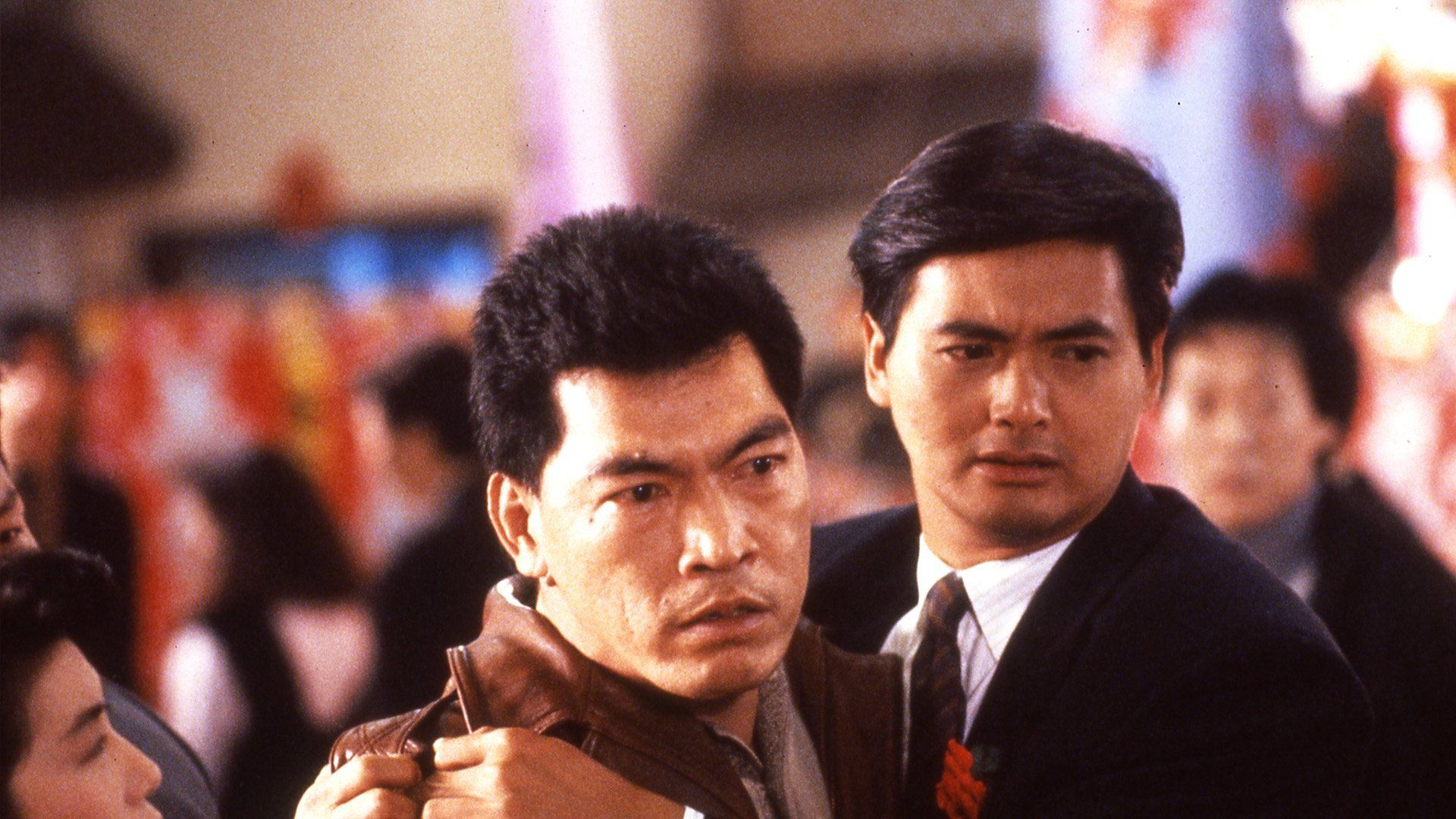
Triads: The Inside Story (我在黑社會的日子, Taylor Wong Tai-Loi, 1989)

“Brother Ho, you’re a kind leader, but not a good triad member,” a underling remarks of his rival, the biological son exiled from the world of crime now returned but struggling to accept his triad inheritance. Though Taylor Wong Tai-Loi’s Triads: The Inside Story (我在黑社會的日子) is said to have been intended to depict the life inside the triads in a more realistic way, the Chinese title, which translates as something more like “my time in organised crime,” more closely implies that this is a personal story of one man’s attempt to reconcile the two sides of himself.

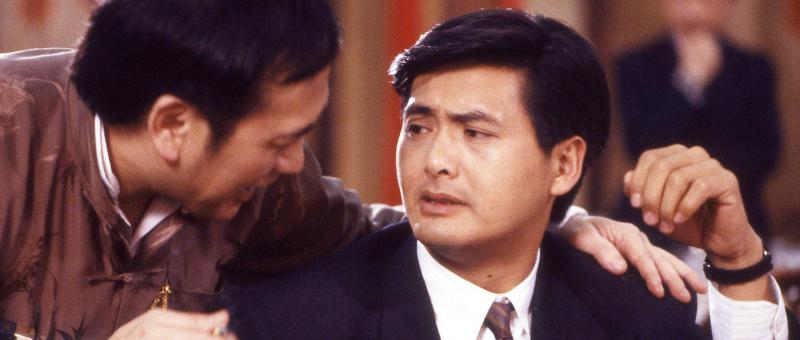
Aging boss Uncle Kwan (Tien Feng) is challenged by a young upstart and killed during an ambush. With his dying breath, he instructs his right-hand men Shing (Michael Chan Wai-man) and Keung (Shing Fui-On) to tell his son, Ho (Chow Yun-fat), not to join their gang or seek revenge but to continue living his life in America. Kwan evidently sent Ho there with the intention of keeping him out of the world of organised crime, making sure he got an education and can live a nice, middle-class life. Ho indeed seems to have done quite well in the US. He has a large suburban house he lives in with his wife and young son, and has recently got into the real estate business. Nevertheless, he has a close relationship with his father even if he never approved of his triad activities.

Despite Kwan’s request, when Ho and his family return to hold the funeral, Shing and Keung press him to take over as head of the gang. Ho is understandably reluctant and insists he’ll be returning to America when all the formalities have been completed. Nevertheless, he ends up becoming somewhat involved in the gang’s business, using his corporate knowledge from America to suggest they simply sublet some of their territory to other gangs to stave off conflict and turf war, little realising that will lead to just that. Not knowing how the triad world works, he makes some catastrophic mistakes that lead to some of his father’s men being killed or injured.

In many ways Kong (Roy Cheung Yiu-Yeung), one of Kwan’s protégés, is his mirror image. Taken in by Uncle Ping (Lam Kau) and raised in triad society, he is in some ways Kwan’s natural heir but resents both still being treated as a petty foot soldier and that Ho has had all the opportunities not afforded to someone like him. Ho tells him that he’s still young, and could get a “proper job,” but Kong is illiterate and has been in triad society for most of his life. There are no other jobs he could go to, while Ho was sent abroad to study. Ho does not really belong in this society, but is respected as the biological son, while Kong, who cannot live anywhere else, is shunned and ignored.

Ho takes him to task for recruiting other young men to act as foot soldiers and scapegoats, but as Kong points out, this is how his father recruited him and triad society does at least provide a family for those who have no other. In going to America, Ho has lost touch with his culture and become somewhat exiled from his family, but also feels responsible for the empire his father built and the men who followed him. In some ways, his internal conflict may reflect a sense of anxiety that those who go abroad with the Handover looming will lose both their cultural identity and any possibility of influencing the future of the place they’ve left behind.

Yet, on the other hand, there is perhaps the idea that Ho survives abroad, while Kong sacrifices himself to save him in recognition of the fact that Ho has tried to do the same. In torching the Taoist altar along with his father’s photo, Ho sets fire to triad society itself along with the world his father left behind, asking for his father’s forgiveness while leaving to return to his new life in America without looking back. One of the first films to be awarded a Cat III certificate for its depiction of triad ritual which upset the colonial authorities, the film plays out more like a yakuza drama of fragmented paternal legacy and compromised brotherhood while exposing the inherent corruption of a gangster society before reaching a sense of catharsis as Ho prepares to burn it all down.


Trailer (Traditional Chinese / English subtitles)
Mercenaries from Hong Kong (獵魔者, Wong Jing, 1982) [Fantasia 2022]

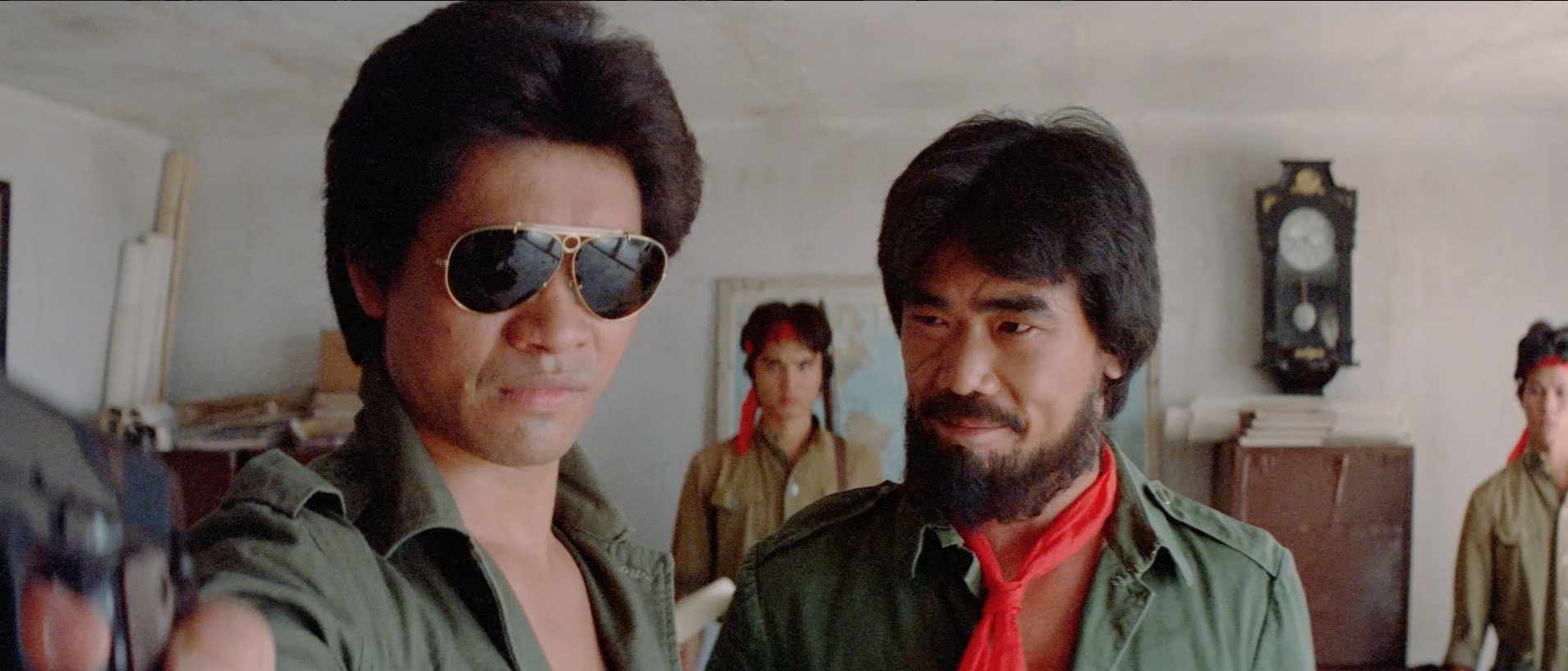
A former mercenary’s bid for revenge having failed in his responsibilities soon goes awry in Wong Jing’s third directorial feature Mercenaries from Hong Kong (獵魔者). As is constantly pointed out to the hero, perhaps he’s not so different from his target with his very selective brand of justice and morality. After all maybe the difference between medicine smuggler and drug trafficker is largely semantic and taking revenge after the fact hardly makes up for the failure to protect the innocent from a world you’ve helped create. 

Li Lok (Ti Lung) is a pretty big figure on the underworld scene and as the ultra macho title sequence reveals a former mercenary who served in Vietnam. In the daring opening scene he sneaks into a gang hideout disguised as a telephone repairman and takes out a gangster in the middle of drugging a young woman whom he and his friend intend to rape and then murder. But Li Lok isn’t here to save the girl and in fact he doesn’t. He’s there because the gangster has done this kind of thing before and the previous victim was his 15-year-old niece whose care he had been entrusted with by his late brother before he passed away. Later one of his comrades will make a similar request of him and he will fail again apparently taking little stock of his responsibilities. 

Nevertheless, having knocked off the gangster annoys local big boss Shen who intends to have Li Lok eliminated but Hong Kong’s richest woman Ho Ying (Candice Yu On-On) convinces him not to because she has a job for Lok assassinating a top Thai assassin who killed her father and is now apparently blackmailing her with a cassette tape full of corporate secrets. All Lok needs to do is round up a posse and head to Cambodia where “the devil” Naiman (Ching Miao) is hiding out, kidnap him, and retrieve the tape to receive a massive life-changing payout while permanently getting Shen off his back. It all sounds like a pretty good deal to Lok along with the former buddies he recruits to join him who are all trapped in desperate poverty one with a sick little girl who desperately needs a kidney transplant. 

This is a Wong Jing film and perhaps there’s no need to dig too deeply into it, but there is something in the power Ying wields over Lok and his team by virtue of her wealth and privilege that speaks to the city’s growing inequality though it’s also true that perhaps the guys have all fallen low through their mercenary choices and are now unable to get a foothold in the contemporary society without resorting to crime. Yet perversely, Ying leverages Lok’s chivalrous sense of honour as part of her plan playing damsel in distress rather than dangerous femme fatale while he assumes he’s on a righteous mission planning to turn Naiman over to the authorities rather than just killing him while little caring that his actions threaten to destabilise an already chaotic situation in Cambodia. 

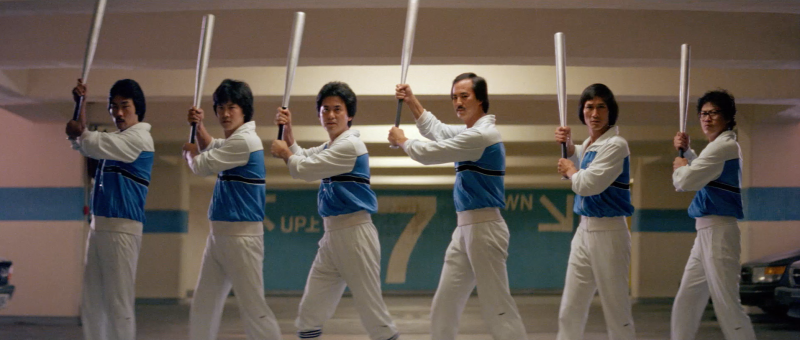
When one of the sworn brothers of the gangster that Lok killed in revenge is killed coming after him even after the truce, Lok is irritated that he died unnecessarily as if it offends his sense of justice that this man was not protected better by Shen. Yet as Naiman keeps pointing out to him, he’s no saint and perhaps no different. He could have saved the girl in the gang hideout but chose not to, escaping by jumping out of a window onto a van waiting below and riding off on a motorcycle (which is admittedly impressive). He claims to hate drug dealers but profited off war and misery in smuggling medicines across the border from Thailand into Cambodia even if he could tell himself he was running a kind of humanitarian service. Meanwhile Ying who is obviously involved in something shady if she’s dealing with people like Lok and his team, paying for their weapons and equipment which presumably includes the series of identical outfits the guys sport like some violent middle-aged boy band, wins an Outstanding Woman award and ironically pledges to use some of her wealth to fund community-based anti-drug programs. 

Li Lok may in a sense emerge victorious but also exactly where he started in failing to protect an innocent girl from a mercenary world. The Cantonese title might more literally be something like Devil Hunters, but Lok and his guys are certainly a mercenary bunch desperate to escape their poverty and hopelessness even if they may stand for a kind of justice and honour in brotherhood. This being a Wong Jing film there is plenty of crass humour including some that is very of its time along with gratuitous sex and female nudity but also a series of incredibly impressive action scenes and a bleaker than bleak conclusion which may suggest that the Loks of the world will be unable to protect the next generation from the violence they themselves have unleashed. 


Mercenaries from Hong Kong screened as part of this year’s Fantasia International Film Festival.

Original trailer (English subtitles)

My Heart Is That Eternal Rose (殺手蝴蝶夢, Patrick Tam Kar-Ming, 1989)

“Now no one owes anything to anyone” a petty gangster ironically states on completing an errand for a friend in Patrick Tam’s heroic bloodshed off-shoot My Heart is that Eternal Rose (殺手蝴蝶夢). As the name perhaps implies, Tam’s film is less brotherhood than tragic romance as the fatalism of the noirish gangster world ruled by debt if not by honour conspires against love, not only romantic but filial and brotherly, in its infinite web of violence and futility.

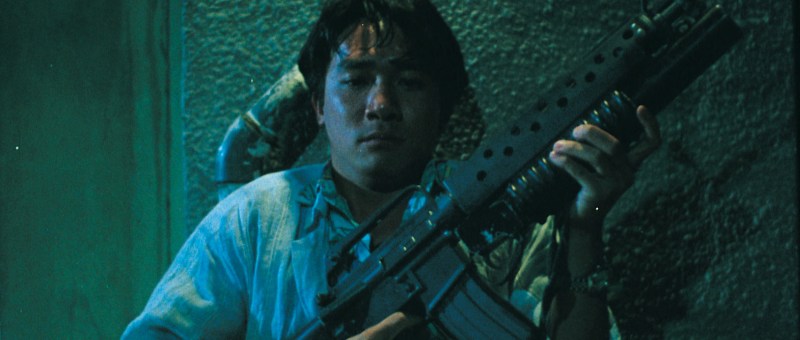
Pinching a classic noir narrative, the picture opens in a cheerful waterside tavern run by former gangster Uncle Cheung (Kwan Hoi-Shan) where carefree gambler Rick (Kenny Bee) is in love with the old man’s daughter Lap (Joey Wong Cho-Yee) who works behind the bar. Uncle Cheung thinks he’s escaped the triad world, but the past is not done with him. Approached by local tough guy Law (Gam Lui), Uncle Cheung is made an offer he can’t refuse to help smuggle Law’s son (Cheung Tat-ming) to Hong Kong from the mainland. He asks Rick to pitch in as the driver and recruits corrupt cop Tang (Ng Man-tat) to help him get past the checkpoints. But Law’s kid is a chatterbox, excited to be in Hong Kong and eagerly boring everyone with his future plans to become a famous singer. Unwisely he drops his father’s name and rouses Tang’s interest. Tang makes the gang pull off at a rest stop so he can strong arm Uncle Cheung into ringing Law to up his pay, but the loudmouth kid jumps the gun, literally, and gets himself killed. Tang turns on Rick and Uncle Cheung to clear up loose ends but Rick kills him, escaping with Uncle Cheung and leaving the old lady at the rest stop to clean up the mess. Left with no choice but to flee, the trio arrange passage to the Philippines but Uncle Cheung is snatched by Law before they can leave. Lap is forced to make a deal with rival kingpin Godfather Shen (Michael Chan Wai-man) to save her dad, putting Rick on the boat with a promise to meet him later but knowing that she will likely never escape Shen’s grasp.

Six years pass, during which Lap becomes Shen’s right-hand woman entertaining wealthy Japanese businessmen in his swanky club as a singer and hostess. Consumed by guilt and remorse in knowing his daughter continues to pay the price for his mistake, Uncle Cheung has become a drunken liability while Lap is lost in romantic melancholy, mooning over the ruined love of her youth and dreaming that some day Rick may return and take her away from all this. Meanwhile, innocent rookie (confusingly also named) Cheung (Tony Leung Chiu-Wai) has fallen in love with her, captivated by her sadness and the futility of her life with Shen. Of course, Rick, having become a hit man, eventually returns leading to a confrontation not just with Shen but with the triad world itself. 

In the gangster universe, everyone owes something to someone. Debt is a kind of currency, and every bargain accrues its particular kind of interest. Lap is forced to sacrifice herself to save the men she loves by trading the only currency she has, her body, knowing that in doing so she destroys the possibility of a happy romantic future with Rick in order to keep him safe. Six years later she thinks she’s paid her debt to Shen, he has plenty of other women what difference can keeping her captive make? But that’s not the way the gangster world works. Shen merely gifts her to the psychotic underling who propositioned her on their first meeting and moments earlier had tried to betray his boss by raping her. Only Cheung, pure hearted and naive, is uncorrupted by the venal cruelty of the triad world, consumed by a truly selfless love that sees him determined to help Lap escape and save her future with Rick. 

This selfless love, however, eventually creates another debt in the moral dilemma faced by the lovers who know that if they escape alone they leave Cheung at the mercy of Shen while to return spells certain death. Co-shot by Christopher Doyle, Tam’s moral universe is lit by the red-tinted glow of the neo-noir, a dizzying yet melancholy world of violence and futility in which freeze frames and ethereal dissolves hint at the transient meaninglessness of the triad life where love and death go hand in hand while betrayal is an ever present companion. Only those sufficiently uncorrupted by the moral duplicities of an increasingly bankrupt existence are permitted to survive, but even so emerge beaten, wounded, and pale with loss literally at sea perpetual exiles without home or harbour.


Original trailer (Dialogue free, contains major spoilers)

Prince Charming (青蛙王子, Wong Jing, 1984)

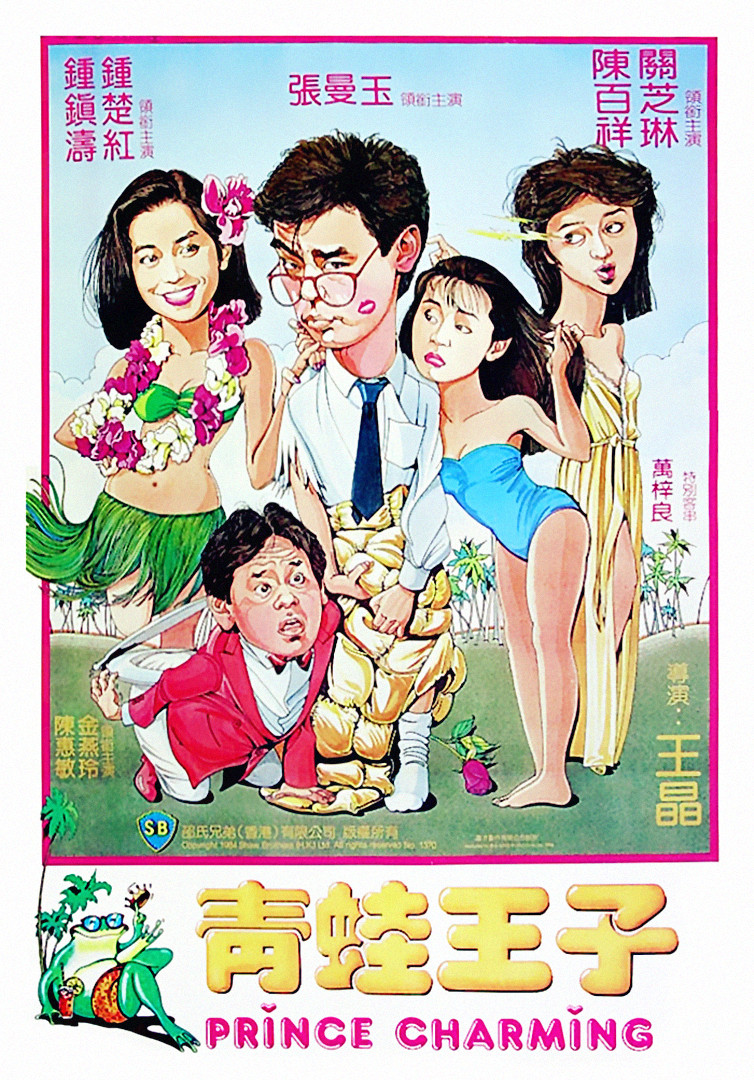
Prince charming 84 poster“This isn’t a film from the 1930s!” a confused sidekick exclaims part way through Wong Jing’s zany ‘80s comedy Prince Charming (青蛙王子). He’s right, it isn’t, but it might as well be for all the farcical goings on in Wong’s hugely populist, unabashedly zeitgeisty romp through a rapidly modernising society. Starring popstar Kenny Bee, Prince Charming also marks the feature film debut of the later legendary Maggie Cheung who would find herself making a fair few disposable comedies in the early part of her career. All the Wong trademarks are very much in evidence from the sometimes crude humour to the random narrative developments and deliberate theatricality but it has its charms, even if perhaps despite itself.

Signalling the “aspirational” atmosphere right away, Wong opens in “Hawaii” with Kenny Bee performing one of the many musical numbers which will be heard throughout the film (which is also a kind of idol movie as well as a populist Shaw Brothers Comedy). Chen Li Pen (Kenny Bee) is the son of an oil magnate and hotel chain manager but unlike his father, is a sensitive, nerdy young man who gets the hiccups around attractive women and has never had any luck with the opposite sex. Nevertheless, his mother wants to set him up with an arranged marriage – something which he vehemently opposes but understands will become harder for him fend off if he can’t find himself a love match in good time. Enter his old friend Lolanto (Nat Chan Pak-Cheung) who is a self-styled ladies man if a bit “common”. Lolanto has come to Hawaii on holiday and to hang out with Li Pen, but like any young guy he also wants to meet some girls.

The guys end up in a kind of sparring match with the two ladies staying in an adjacent room at the hotel, May (Cherie Chung Cho-Hung) and Kitty, (Maggie Cheung Man-Yuk) following a series of misunderstandings. When the girls drug them and then somehow leave them on a rock in the middle of the ocean, the boys are humiliated but don’t have too long to nurse their wounds because Li Pen’s dad sends them back to Hong Kong to investigate suspected embezzlement at head office. As luck would have it, both May and Kitty work for Li Pen’s family firm (which was perhaps why they were staying in the hotel). Another misunderstanding sees May assume Li Pen is a former triad looking for a new start, so she “bribes” the hiring department to get him a job as a chauffeur, while Lolanto ends up in the boss’ office posing as Li Pen. Hilarity ensues.

Aiming a squarely for the populist, Wong’s defiantly aspirational vision revolves around the fabulously wealthy and internationalised Li Pen who went to college in the US and lives most of his life in Hawaii, perhaps not quite understanding Hong Kong in the same way Lolanto does, both because of his outsider status and because of the freedom his wealth gives him. When the two swap roles they each get a kind of education, but their real quest (while halfheartedly investigating the embezzlement scandal) is winning over Kitty and May who think they’re dating a CEO and a chauffeur respectively. Despite their irritation when they realise their mistake, both May and Kitty perhaps come to realise that the deception is a part of what eventually drew them to the guys and they’re a better match than they might otherwise have imagined.

Meanwhile, Wong finally remembers the embezzlement plot and introduces a third woman, Puipui (Rosamund Kwan Chi-Lam), who is secretly a plant set up to seduce the pure hearted Li Pen and marry him because this will in some way prevent the embezzlement scam from coming to light. Puipui’s scheme eventually kicks off the ridiculous finale in which the gang find themselves chased by goons and having to play pool for their lives with hostages hooked up to electric chairs which will be triggered when a certain number of points are scored. Wong adds a host of cutesy touches from cartoon hearts around our lovelorn heroes and adorable doodles popping up as on screen graphics while Kenny Bee and Cherie Chung also get a completely bizarre musical number at the midway point where they pretend to be happy frogs marooned on a private lily pad. It doesn’t make any sense, but it really doesn’t matter. Completely throw away, but strangely fun.


Currently streaming on Netflix UK (and perhaps other territories)

Celestial Pictures trailer (English subtitles)