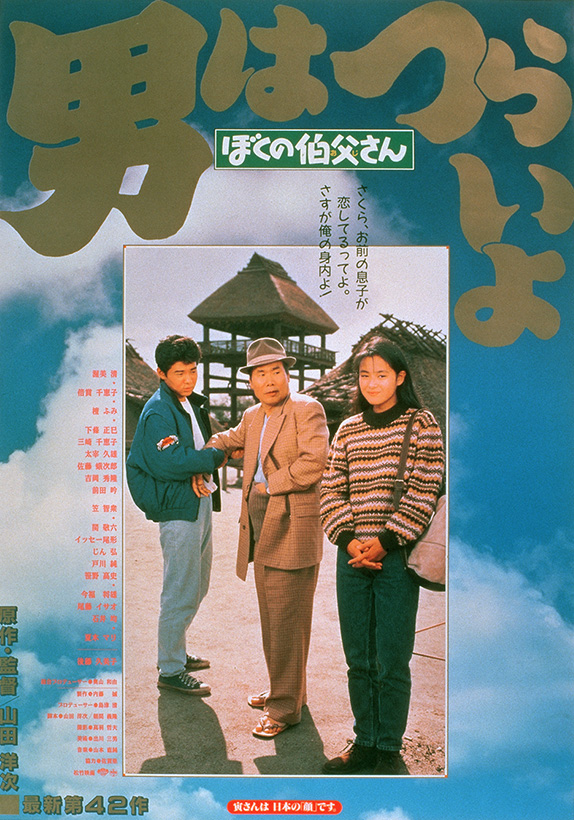
The Greatest Challenge of All (喜劇 一発勝負, Yoji Yamada, 1967)

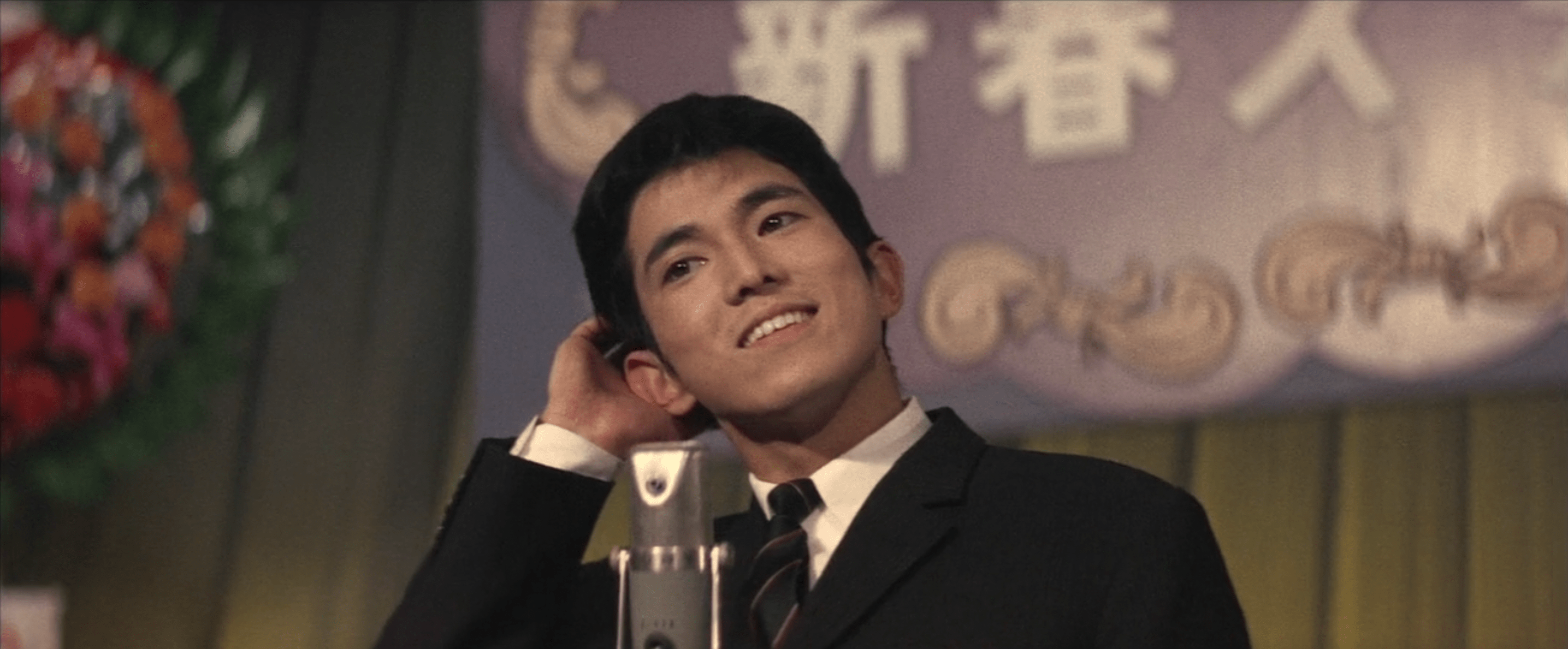
A prodigal son rocks the social order in Yoji Yamada’s anarchic nonsense comedy, The Greatest Challenge of All (喜劇 一発勝負, Kigeki: Ippatsu Shobu). The greatest challenge may be trying to manage Kokichi (Hajime Hana), a roguish Del Boy-like figure with an impossible dream of striking it rich. While in some senses he anticipates the equally  anarchic yet basically goodhearted Tora-san, he also represents a modernising and aspirant Japan determined to leave behind dusty old tradition for a new “deluxe” future.

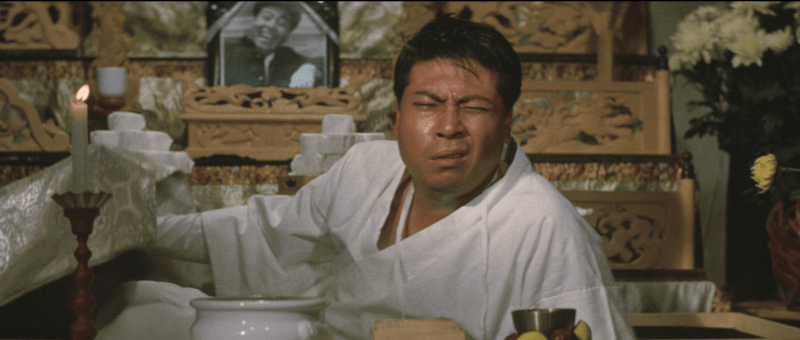
Having taken to the road after being disowned by his conservative father (Daisuke Kato), Kokichi returns 15 years  later a middle-aged man with seemingly nothing to show for his many years of wandering. He has no idea that he has a daughter, Mariko, by a local woman that his parents took in and raised as if she were theirs which was not an especially uncommon solution to the problem of illegitimate birth in the post-war era. Nor did he know his mother had passed away before walking in on her annual memorial service. This sense of parental disconnection one level reflects a lack of filiality that marks him out as a “modern” man uninterested in these familial obligations or a sense of duty towards his family, but it’s also true that it’s to family that he’s returned having mellowed in middle-aged and in a way looking to settle down.

In any case, his life seems to have been a series of crazy episodes from briefly becoming a sumo wrestler to meeting a mysterious woman on a bridge who gets him a job as a snake charmer. When two yakuza types kick up a fuss about not being able to have their usual room at the inn during his mother’s memorial service, Kokichi manages to frighten them off just with bluster, hinting at the way he may have lived for the last 15 years. He also has two friends who turn up to see him, one of whom is a former yakuza who refers to Kokichi as if were his boss and they were a little trio of crime-adjacent buddies.

But it does appear that Kokichi has come with a business plan in mind, convinced that he can find the source of a hot spring in the town and build a resort hotel on top of it. To do this, he tries to convince his father to sell him his land and the inn the family run so he can knock it down and build a “deluxe” modern, Western-style hotel in its place. Kokichi’s father obviously isn’t keen. This inn has been in the family for generations, he really wouldn’t want to ruin that and especially not for one of Kokichi’s harebrained schemes. Yet again this brings us back to the battle between the conservatism of Koikichi’s father, and Kokichi’s own consumerist modernism that is more individualistic and no longer sees beauty in the past, only backwardness and stagnation. When he finally does find his hot spring, he builds a vast modernist complex with a botanical water park housed in a giant Hawaiian-themed conservatory complete with dancing hula girls. 

His corrupting presence is most discernible in the changing role of Fumi (Tanie Kitabayashi), the family’s housekeeper who generally dressed in kimono but on moving to Kokichi’s mansion she begins wearing Western dress. Fumi had at one time left the family because Kokichi had unwittingly forced her to betray it in helping him get his hands on a precious family heirloom to pawn as capital for his new business venture. Having done so brings her to a confrontation with the contradictions of her role within the family, both a surrogate mother to Kokichi and also a servant who is expected to abide by a certain code with not stealing from your employers a key tenet. She feels she can no longer look Kokichi’s father in the eye and must now return to her home in the country even though she has likely not seen it since she was a young woman. Having undergone this change, she can no longer return to the inn but is brought back to Kokichi’s modernist home once he strikes it rich. 

But Kokichi too is later confronted by hypocrisies of his own position as a free-spirited man and finally a father on learning the truth about Mariko. Hanging out at the hot spring, the 16-year-old Mariko has attracted the attentions of a couple of fashionable young men and wants to leave with them to visit Tokyo. Despite the intrusion of the modern in the hot springs resort, Mariko doesn’t want to stay in this “deadbeat” town and longs for the bright lights of the big city. Kokichi’s father understandably says no, but Kokichi is originally all for it, perhaps seeing his own desire to be free of his father’s oppressive authority. However, he soon changes his tune on assuming his paternity. He too tells Mariko she can’t go and strikes her for talking back. But just as he had, she leaves anyway. His modernity is no longer modern enough, and the young will always walk towards the future.

One exception might be Kokichi’s painter sister Nobuko (Chieko Baisho) who appears to be happy enough living at the inn and with seemingly no intention of marrying which might be her own kind of rebellion against traditional mores. While other similarly themed films may have emphasised the importance of hard work and the reality of the salaryman dream, this one suggests that it really is possible to bumble along and then strike it lucky but also that you never really travel as far from home as you might think. The desire for patriarchal control rises in Kokichi, but is now ineffectual. Though he didn’t raise her, Mariko is a child of the world he’s created and simply chooses to leave with a final sock in the eye to traditional filiality. 


Trailer (no subtitles)
Let’s Have A Dream (九ちゃんのでっかい夢, Yoji Yamada, 1967)

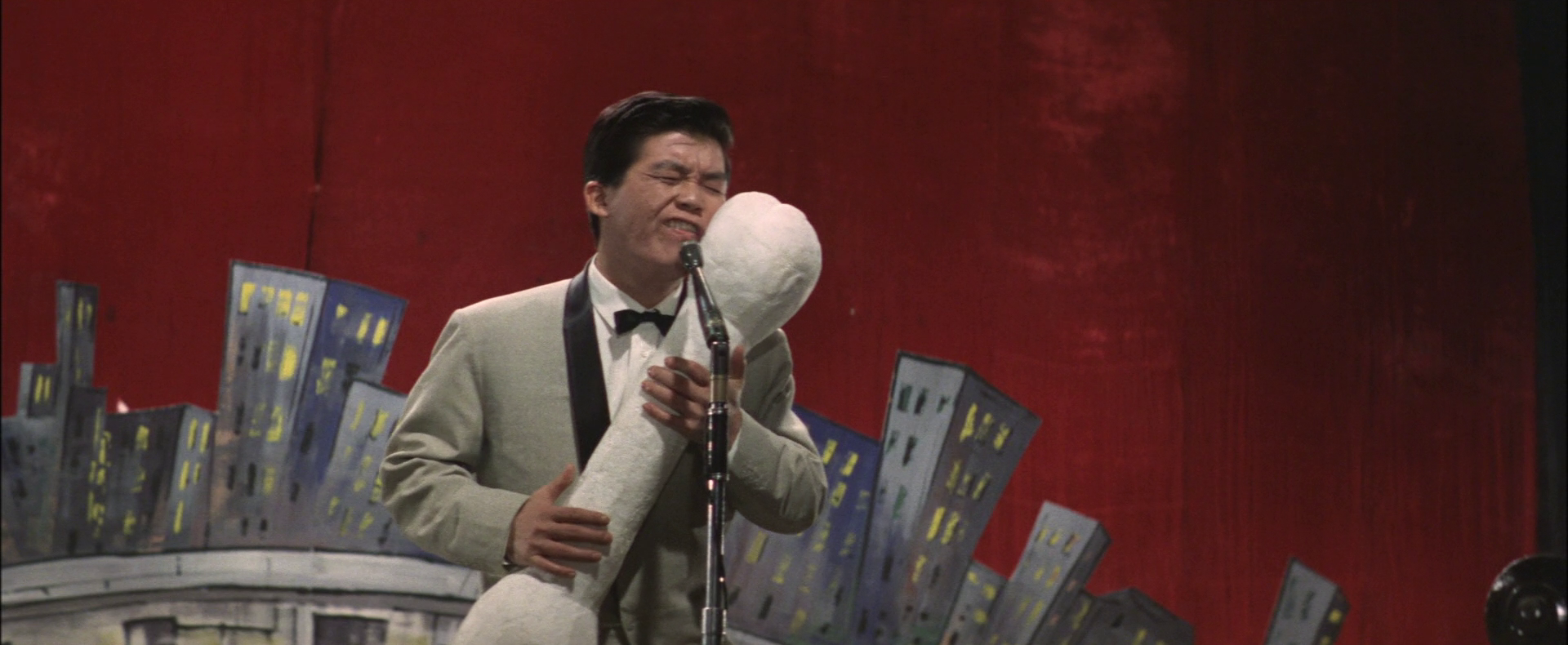
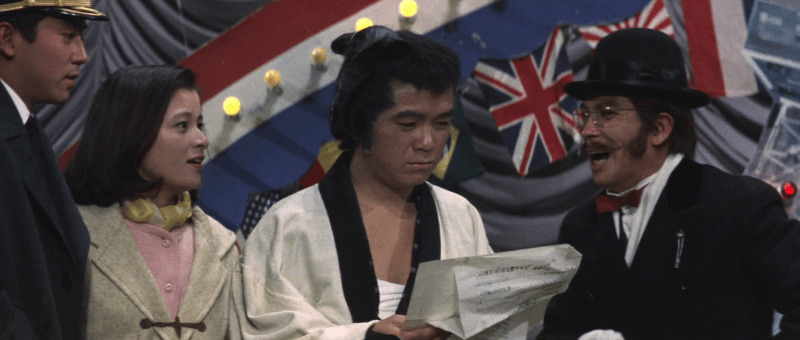
Convinced he’s dying of a terminal illness, a young nightclub singer yearns for death in Yoji Yamada’s romantic farce, Let’s Have a Dream (九ちゃんのでっかい夢, Kyu-chan no Dekkai Yume). In fact, the Japanese title is “Kyu’s Big Dream,” directly putting the name of the star into the name of the picture though he does in fact play a character called “Kyutaro” whose music career is starting to take off just as he convinces himself that his life is hopeless. Best known for “Ue o Muite Aruko”, Kyu Sakamoto was a huge singing star throughout the 1960s until his death in a plane crash at the very young age of 43.

Based on a novel by Nobuhiko Kobayashi who was working with Sakamoto on a television show at the time (and asked for a pseudonym because he wasn’t sure how the movie would turn out), the film is however partly an exploration of the nation’s growing internationalism. Indeed, the film opens with the Pan Am logo and then immediately travels to Switzerland where an elderly lady is dying having apparently never married or had children but still attached to the memory of her first love, a man from Japan. Accordingly, she decides to leave her entire fortune to that man’s grandson, Kyutaro (Kyu Sakamoto), which comes as a total shock to her closest living relative, “The wicked Mr Edward Allan Poe.” Her butler then vows to travel to Japan to tell Kyutaro the good news, but ends up sitting next to the hit man Edward Allan Poe hires on the plane.

But Kyu has already hired a hitman to take himself out because he thinks he’s suffering from a terminal disease and feels nothing other than fear and hopelessness. Though all he wants to do is die, he is unable to take his own life and so has decided this is the best way. He’s also in love with a childhood friend who works in a diner at the docks, but unbeknownst to him Ai (Chieko Baisho) has just got engaged to their other friend Kiyohiko (Muga Takewaki), a sailor. To add to the sense of European romanticism, Kyu writes long notes to himself about his sadness and melancholy all while the countess’ right-hand man continues to refer to him as the luckiest man in the world. 

In a running gag, the hitman speaks mainly in French and the Countess’ butler in cod German hinting at a new kind of internationalism. The hitman Kyu hires through shady local guy Pon (Kanichi Tani) is, however, much less sophisticated. He can’t afford a gun and fails to kill Kyu several times in other ways usually injuring himself in the attempt which again makes Japan look somewhat inferior to the rest of the world just as the opulent vistas of the Countess’ castle contrast so strongely with the down and dirty nature of the docks where Kyu lives and works. 

Despite being so desperate to die, Kyu pulls away when the hitman he hired tries to kill him which along with his inability to take his own life may suggest that he really does want to live after all. Though she evidently does not return his romantic feelings, Ai clearly cares for him deeply describing Kyu as like oxygen for her while trying to get to the bottom of what’s with wrong with him but it takes Kyu a little longer to figure out that people care about him even if not quite in the way he was hoping they would. Even so, there’s no denying the farcical quality of all that’s befallen him as he finds himself “the luckiest man in the world,” caught between two hitmen, and staving off eventual romantic heartbreak.

Still, even this plays into the melancholy sense of romanticism and elliptical ending as Kyu eventually gets to fulfil one of his big dreams by going to Europe and getting to live the life of a heartbroken count from a 19th century romantic novel. As a vehicle for Sakamoto, the film also features several of his songs along with dance routines and some otherwise goofy clowning while Chieko Baisho also performs a short but sweet rendition of My Bonnie Lies Over the Ocean. It’s all undoubtedly very silly but somehow heartfelt and wholesome for all its buried melancholy and deeply felt romanticism. 


Original trailer (no subtitles)

Plan 75 (Chie Hayakawa, 2022)

In 2016, a 26-year-old man went on a violent rampage murdering 19 people at a care home for the disabled claiming that he had done it “for the sake of society”. Prior to his crime, the killer had written an open letter in which he stated that he dreamed of a world in which those with severe disabilities could be peacefully euthanised, while claiming that those with no ability to communicate had no right to life and were nothing more than a drain on society. An expansion of her earlier short featured in the anthology film Ten Years Japan, Chie Hayakawa’s Plan 75 opens with a sequence which appears to directly reference the 2016 mass killing but in place of the widespread outrage and reconsideration of a social stigma towards disability that followed in its wake, the government decides to implement a “voluntary” euthanasia program for those aged 75 and over in response to the “concerns” of the young in an ageing society. 

Intergenerational resentment does indeed seem to be a motivating factory, the killer in this incident feeling himself oppressed by the responsibility of caring for the elderly while simultaneously hemmed in by a stangnant economy and heirarchical society. He points out that Japanese people have always praised self-sacrifice on behalf of the nation and alludes to the archaic tradition of ubasute or throwing out the old in which elderly people were abandoned on mountainsides to die in time of famine. There is no denying that the Plan 75 initiative has its insidious qualities in placing undue pressure on elderly people to give up their lives in order not to “burden” the young, an elderly woman attending a cancer screening remarking that she feels a little awkward as if she’s “clinging on to life”, being somehow greedy in the simple desire to continue living. 

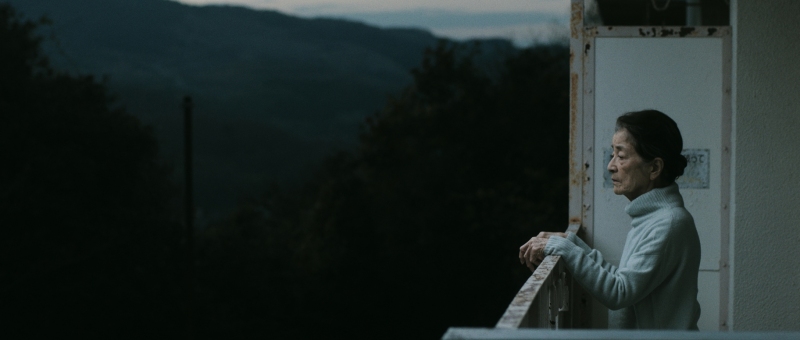
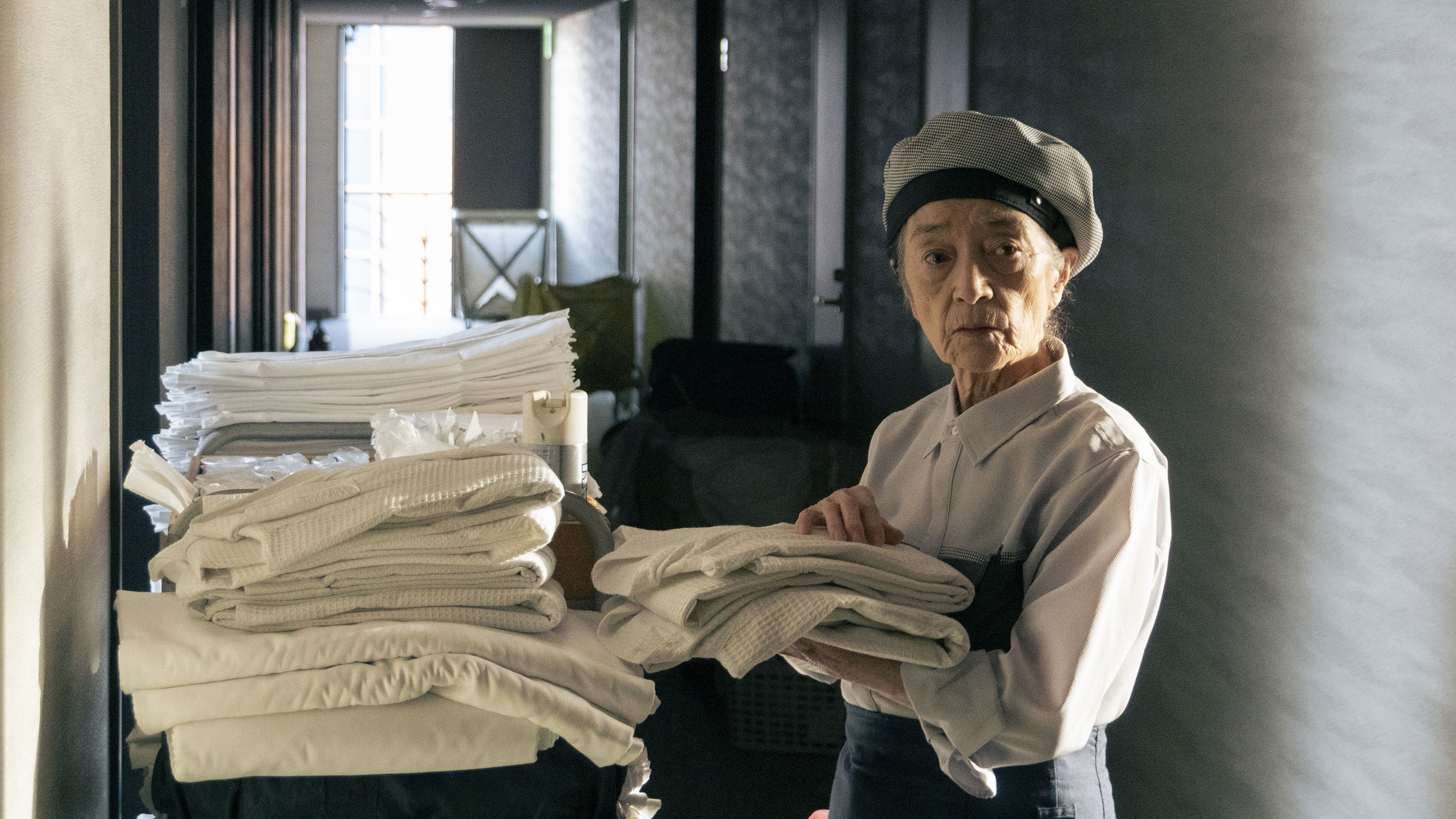
Meanwhile, their society has already abandoned them. 78-year-old Michiko (Chieko Baisho) had no children and lives alone supporting herself with a job as a hotel maid where all of her colleagues are also elderly women. When one of them has a fall at work, they are all laid off. The hotel claims that they’ve received complaints from guests about exploiting elderly people, but Michiko suspects it’s more like they don’t want one of them to drop dead in someone’s room. Not wanting to be a “burden”, Michiko is reluctant to apply for social security but even when she accepts she has few other options the desk at city hall is closed. Her building, like her now old, is set for demolition but no one is willing to rent to an unemployed 78-year-old woman nor is anyone willing to employ one. More and more Michiko is pushed towards Plan 75 if only to escape her loneliness. Being robbed of the opportunity to work also removes the opportunity for socialising especially as the other old ladies decide to move in with family and leave the area. 

This is in fact an integral part of the Plan 75 business plan with case workers specifically instructed to keep the applicants happy through regular phone calls while prohibited from meeting them in person to prevent the older person changing their minds having made new social connections that make their lives more bearable. In the quietly harrowing scenes at the processing centre, for want of a better term, it becomes obvious that the majority of those submitting to Plan 75 are women as staff members empty out their handbags, dumping their possessions into a large bin while setting aside anything of value such as watches or bracelets which are perhaps another valuable revenue stream for a callous government that sees the programme as a cost cutting exercise.  

Case worker Hiromu (Hayato Isomura) only becomes conflicted about Plan 75 after recognising an applicant as his estranged uncle and eventually discovering that despite sales claims of dignified funerals remains are often sent to landfill care of an industrial waste company. His uncle’s plight perhaps highlights the pitfalls of life in post-war Japan. Living hand to mouth working construction jobs all across the country he never had an opportunity to put down roots or save for his old age and is now living a lonely life of desperate poverty. Heartbreakingly he put his application in on his 75th birthday, an act Hiromu’s boss describes as almost heroic as if he couldn’t wait to sacrifice himself for the common good. Later a sign goes up that fixed addresses are no longer needed to apply, while the Plan 75 stand in a local park where they are in the process of putting bars on the benches so that homeless people can’t sleep there doubles as a soup kitchen. 

One has to ask, if there was money available for all of these resources to help people die why is it not available to help them live? A young woman assigned as Michiko’s handler appears to have second thoughts while bonding with her over the phone, tearfully reminding her she still has the right to withdraw (though it’s never mentioned if that means repaying the $1000 signing bonus) while Michiko’s life too has been brightened by this little bit of intergenerational friendship, itself cruelly commodified in the allotted 15-minute sessions included in the plan. Told with quiet restraint, Hayakawa’s vision of an eerily dystopian future in which human life is defined by productivity and all human relationships transactional, where loneliness is the natural condition and society itself has become little more than a death cult, is painfully resonant in our increasingly disconnected world. 


Plan 75 screens at Japan Society New York on Nov. 20 as part of The Female Gaze: Women Filmmakers from JAPAN CUTS and Beyond.

Festival trailer (English subtitles)

Images: © 2022 KimStim

Arc (Arc アーク, Kei Ishikawa, 2021)

Does something have to have an ending to be meaningful or could eternity be the point? Inspired by Ken Liu’s short story, Kei Ishikawa’s near future tale Arc (Arc アーク) envisages a world without death if perhaps not for all in which bodily immortality has been achieved, but what would that mean for humanity no longer faced with mortal anxiety, how should it reorient itself in the absence of sickness or old age while the possibility of endlessness for the self has removed the urge for immortality through childbirth? These are all of course questions which have no one answer, though what the heroine finally discovers is that in the end it may be the choice itself of when to live or when to die that may lend her life at least its meaning. 

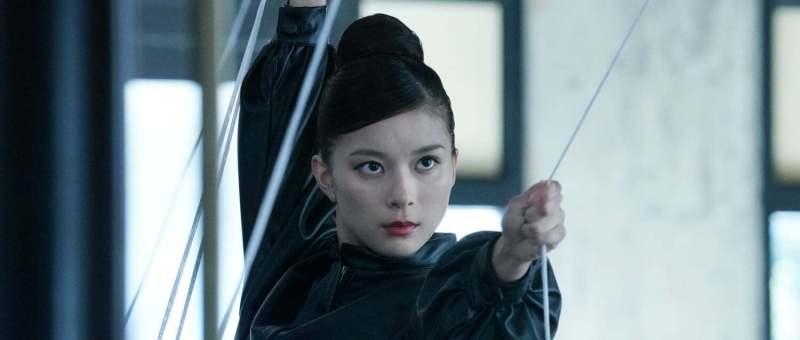
Even so, hers is a particular anxiety bound up with frustrated maternity having abandoned a baby she gave birth to at 17, too afraid of the responsibility to accept it. At 19, Rina (Kyoko Yoshine) is spotted at a club by a mysterious middle-aged woman, Ema (Shinobu Terajima), who runs a revolutionary cosmetics company which has pioneered a new way of preserving the bodies of the dead turning them into uncannily lifelike mannequins with a new process known as plasticisation. To Ema’s mind, true liberation comes from accepting transience, that once life has left it the body is just an object which might be repurposed for her art but then at the same time perhaps she is attempting to hold on to something that should be released, interfering in a natural process and while intending to offer comfort to those bereaved preventing them from letting go or moving on with their lives. Her much younger brother Amane, meanwhile, actively wants to stop time while alive utilising a similar technology to halt the ageing process and overcome the tyranny of death. 

In a strange way, Ema’s desire to restore a body which is no longer alive to ideal condition is also an acknowledgement of death which she believes is not the opposite of life but a necessary part of it. In overcoming the fear of death, she claims, a transcendental beauty will reveal itself. Amane meanwhile seeks to overcome death physically, but as Rina is warned his health revolution may not bring happiness to mankind not least because it exposes a persistent inequality in which eternal youth is available only to those with the means to acquire it, creating a new underclass not only of the poor but those whose bodies are not able to accept the treatment. Amane sees his creation as a dividing line in human history which will necessarily divide humanity into two groups, those who choose to join his revolution and those who do not (though interestingly he does not consider a third group who actively opposite it). Even so he sees it as a choice and accepts the right to reject immortality even going so far as to build a dedicated centre where those who choose to live a “natural” lifespan can do so in dignity and comfort. 

The concept of personal choice appears to be key, Ema too replying that her decision to stick with plasticisation rather than Amane’s treatment is her right though she too eventually hits a wall in the imperfection of her craft and the depths of her grief. She tells Rina to live her life freely encouraging her to live fully in the moment, while she too is quick to remind others that the decisions are theirs to make as regards their life and death. It’s not death nor the fear of it that are the problem, but the inability to choose as Rina finally acknowledges in remarking that the ability to decide its end point gives her the means to carve the arc of her life overcoming death through full existential control having in a sense closed a circle in facing her own sense of maternal failure. Shifting from the warmth and natural beauty of a beach in summer to the dark and brutalist environments of the BodyWerks lab, and from the muted colour of Rina’s youth to the black and white of her youthful old age, Ishikawa’s near future sci-fi-inflected tale suggests it’s not so much death that frightens you but helplessness and as in all things the answer lies in autonomous choice. 


Arc screens in Chicago on April 3 as part of the 14th season of Asian Pop-Up Cinema.

Original trailer (no subtitles)

461 Days of Bento: A Promise Between Father and Son (461個のおべんとう, Atsushi Kaneshige, 2020)

“This is a story about my lunch every day. Nothing more, nothing less” the hero of Atsushi Kaneshige’s slice of comfort cinema, 461 Days of Bento: A Promise Between Father and Son (461個のおべんとう, 461ko no Obento), claims though it is of course something more than that. Based on an essay by musician Toshimi Watanabe who himself starred in Dad’s Lunch Box, Kaneshige’s gentle drama is another in the recent series inspired by the “papaben” phenomenon of fathers suddenly taking an interest in domestic matters by preparing tasty, nutritious and elegantly prepared packed lunches for their school-aged children. 

Obviously inspired by Watanabe’s real life, 461 Bento opens with cheerful home video footage of the early years of hero Kouki (Shunsuke Michieda) before shifting darker as the relationship between his parents begins to sour eventually ending in divorce. Kouki is given a choice whether to live with mum or dad, remaining behind in the family home with musician Kazuki (Yoshihiko Inohara) while his mum Shuko (Emi Kurara) moves out taking the tree they planted together with her. With the stress of the divorce, young Kouki ends up failing his high school entrance exams and is set back a year, eventually getting in the following spring. Hoping to encourage him, Kazuki offers to make a bento lunch every day for the next three years on the condition that Kouki pledges to not to skip school. 

In true papaben tradition, Kazuki ends up getting far too into the art of bento filling the kitchen with new gadgets while sometimes coming into conflict with his bandmates through investing all of his creative energies in innovative lunch recipes. Yet Kouki isn’t quite convinced by his father’s newfound passion, assuming it’s merely a new hobby he’ll soon get tired of rather than something he’s actively doing out of love for his son. Consequently, he’s originally a little embarrassed when his classmates appear unduly impressed by the quality of his dad’s work though it later helps him make a few friends which had otherwise been a little difficult seeing as he is a year older than everyone else. 

Being a year older continually weighs on Kouki’s mind, adding to the already onerous pressures of high school life his sense of anxiety intensifying as graduation nears. He complains he feels creepy hanging out with younger kids, and insists he can’t afford to fail and risk being held back again even older than everyone else at the beginning of college. Meanwhile he’s lowkey resentful towards his father blaming him for the end of his parents’ marriage while also seemingly ambivalent towards his mother for giving him the choice of where to live unfairly blaming her for leaving him even though it was his own choice to stay with his father. He rebels passive aggressively against his parents’ gentle support as they refuse to pressure him insisting he be free to do and be what he wants, while floundering in confusion over the next steps in his life. 

Kazuki is fond of telling him that everything will work out in the end, life’s not a race after all, only for Kouki to fire back that everything always works out for him because he just does whatever he wants and forces everyone else to go along with it which is why his mum left. Harsh words, but not without truth as new girlfriend Maka (Junko Abe) expresses something similar confessing that being with Kazuki makes her feel lonely and as he lives so defiantly in the moment it’s difficult to believe in the future of their relationship. Kouki cruelly tells Shuko he can choose a father for himself suggesting he might move in with his mother and her new boyfriend, but contrary to expectation Kazuki is serious about fatherhood giving his son the space for his adolescent angst while trying to be quietly supportive through his bento endeavours. 

The papaben phenomenon may be in itself a little sexist in exoticising a perfectly ordinary task just because it’s being done by a man thereby ironically reinforcing the idea that children’s lunches are a woman’s responsibility, but it does undoubtedly broker a reconciliation between father and son as the young Kouki begins to come to an understanding of his father’s love for him, overcoming the trauma of his parents’ divorce and gaining the courage to step forward into an independent future. A heartwarming coming-of-age tale, 461 Bento is about more than a boy’s lunch but also of the quiet power of unconditional love as mediated through the most ordinary act of care.


461 Days of Bento: A Promise Between Father and Son screened as part of this year’s Camera Japan

Original trailer (no subtitles)

I, the Executioner (みな殺しの霊歌, Tai Kato, 1968)

Nephew of Sadao Yamanaka, Tai Kato joined Toho as an apprentice in 1937, returning after the war training under Daisuke Ito and Akira Kurosawa, but later moved to Toei where he became closely associated with ninkyo eiga yakuza movies and jidaigeki. From the mid-1960s, however, he made several movies at Shochiku which had, it has to be said, a house style that was almost the polar opposite with a clear focus on polite, family-friendly melodrama. 1968’s I, the Executioner (みな殺しの霊歌, Minagoroshi no Reika) meanwhile is a surprisingly dark affair even among the grittier examples of Shochiku’s similarly themed B-movie thrillers, an avant-garde noir and proto-giallo in which the fugitive, serial killer antihero sees himself as an agent of divine justice in a hellish and immoral post-war landscape. 

Kato opens with a shocking scene of sexualised violence in which a woman is knocked unconscious, stripped, bound with telephone cord, and finally revived, forced to write down the names of four other women before being brutally raped and murdered by a killer whose voice we have not yet heard nor face seen. The police are mystified, attributing the woman’s death to the fact that she had worked as a bar hostess and maybe things like this are an occupational hazard for women who are surrounded by too many men. Her landlord, however, laments that hers is the second death to occur recently after a laundry boy threw himself off the roof. All things considered, he wishes the boy had picked somewhere else. 

The police have no reason to connect the two unfortunate events and so remain largely clueless, but we gradually become aware that the killer, Kawashima (Makoto Sato), is targeting the women because he holds them directly responsible for the boy’s death. He is the inspector that calls, avenging the death of this young man who, he has learned, like him hailed from Hokkaido and had come to the city at only 16 years old to earn money to support his family, saving almost all of his wages in the hope of opening a shop. Kato shows us scenes of a city under construction, a land of girders casting shadows on the ground like prison bars trapping men like these who are building the new Japan but will be discarded as soon the job is done and their labour no longer so much in demand. Kawashima has another reason for living like this, but he perhaps admires something pure and innocent in the desire of a young man leaving home to seek his fortune so that he might take care of those he loves and that this world betrayed that desire is something he finds impossible to forgive.

The five women have apparently done quite well for themselves, despite the fact that more than one of them has worked on the fringes of the sex trade. Their treatment of the boy is attributed to their boredom in the relative ease of their lives as monied women with little to occupy their time other than getting their kicks abusing the less powerful. It’s an uncomfortable role reversal that places women in a position of power and then sees them abuse it in the exact same way that men do, slinging back the same pithy justifications that men offer for sexual violence while the police meditate on the relative connotations of rape when the word is applied to a man at the hands of women rather than the other way around. If it were their sister, they could understand the desire to kill the men who had done it but a part of them struggles to see that a teenage boy may still find unwanted sexual contact a traumatic enough experience to push him towards suicide. 

Yet Kawshima appears to have no real connection to the boy, and his “revenge” is also a product of his misogyny in that as we later learn he also has reason to feel betrayed by womanhood and is already on the run from previous crime. Nevertheless, he is drawn to the innocent Haruko (Chieko Baisho), a girl-next-door type who works in his favourite ramen restaurant, only to discover that she too has a dark and violent past which may be why she seems to be drawn to him. He struggles with himself, but believes that he is taking revenge on a brutalising society defined by violence and abuse while sublimating his sense of emasculation in the face of women’s growing social and sexual freedoms in the post-war era. It is perhaps the post-war era which is cast as the major villain, one of the women later escaping her protective custody to dance furiously a hip nightclub only to return to the scene of her crime while refusing to see that she has done anything so “wrong” as to merit this kind of persecution. 

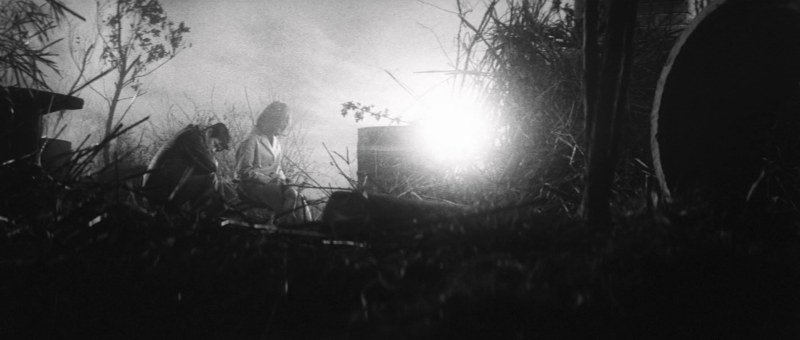
“The cycle of divine punishment must be fulfilled” Kawashima finally laments, acknowledging his grim place within this series of post-war tragedies. Surprisingly avant-garde, Kato experiments with blown out negatives, extreme close up, and deep focus mixed with his characteristic low angle composition to add to the sense of noirish dread which paints the modern city as an inescapable hellscape while even the romantic place of refuge shared by Kawashima and Haruko is a gothic moorland lit by moonlight and filled with eerie mist. Lurid and sweaty, the film has a grim sense of humour even in its oppressive atmosphere with a running gag devoted to the lead investigator’s painful case of piles, but its overriding fatalism nevertheless offers the hero a sense of redemption if only in acceptance of his narrative destiny. 


Our Marriage (私たちの結婚, Masahiro Shinoda, 1962)

Like many directors of his age, Masahiro Shinoda had to serve his apprenticeship at Shochiku contributing to the studio’s particular brand of light and cheerful melodramas though 1962’s Our Marriage (私たちの結婚, Watashitachi no Kekkon) did perhaps allow him to explore some of his persistent themes in its ultimately empathetic exploration of the romantic and existential dilemmas of two sisters who ultimately find themselves taking different paths in the complicated post-war society. Co-scripted by Zenzo Matsuyama, Our Marriage is essentially a chronicle of changing times and the crises of modernity, but it’s also surprisingly even-handed in its refusal to judge or indeed to sugarcoat the “romance” of a working class life. 

Keiko (Noriko Maki) and her younger sister Saeko (Chieko Baisho) both have jobs in the local factory with Keiko working in the accounts department which is where she first meets the brooding and self-righteous Komakura (Shinichiro Mikami) when he marches straight into the office to complain that he’s been shorted on his pay-packet to the tune of 10 yen. The ladies are non-plussed, it’s only 10 yen after all so perhaps there’s no need to be so unpleasant about it, but Komakura insists on having it looked into even after they give him the single coin in an effort to make him go away. Getting so upset about 10 yen is perhaps disproportionate, but then it is Komakura’s 10 yen and he has a point that if a mistake has been made it needs to be acknowledged and corrected especially when you’re dealing with people’s livelihoods to ensure that everyone is being paid fairly. On the other hand, marching in and shouting at people is unlikely to help the situation. 

It just so happens that Komakura is a good friend of Saeko’s who perhaps reads more into the mild embarrassment he and her sister each experience on meeting in another context to assume that they are romantically involved, immediately swinging into action to get them together. Meanwhile, another potential suitor has turned up at home in the form of Matsumoto (Isao Kimura), apparently an old friend dropping in on their parents out of courtesy. Matsumoto is very good looking and apparently now has a well paying job in the textiles trade, but despite their politeness to him the parents later have their doubts because it turns out that he was their blackmarket dealer during the dark days of the immediate post-war era. 

The Hibino family make their living as seaweed farmers and live in a small two-story home in a fishing village. Times are hard because the sea is dying. Increased industrial pollution, land reclamation, and the new airport have reduced the harvest to almost nothing and the girls’ father (Eijiro Tono) can no longer make ends meet. The union hasn’t paid him and he can’t ask about it because he’s still in debt from a previous loan, which is why Keiko’s mother (Sadako Sawamura) is always asking her for extra money to help with household expenses. Keiko intensely resents this, especially as her father’s irresponsible drinking habits continue to adversely affect the family’s finances. They haven’t really been thinking about her marriage perhaps partly because they need her salary but are now forced to because of all the sudden and unexpected interest. On top of Matsumoto and Komakura, it seems that the union leader’s widowed son is also interested which would, admittedly, be quite beneficial to the family. 

Keiko, however, is insistent that her husband must have a decent salary and that her married home must have a refrigerator and a washing machine. Quite the consumerist, Keiko has had enough of poverty and of feckless men like her authoritarian father who waste all their money on drink while relying on female labour to keep them out of trouble. When Matsumoto writes a formal letter proposing marriage, the parents decide to push the union leader’s son instead hoping to avoid embarrassment all round. Keiko immediately assumes the worst, that her father is trying to sell her to the union leader in exchange for the cancelation of his debts. She insists that she will decide her own future, leading Saeko to make a disastrous intervention revealing Keiko’s relationship with Komakura which only has the effect of enraging her father who brands her an ungrateful “whore” while shouting that a mere workman is not good enough for his daughter despite having previously stated that the union leader’s son was really “too good” and they were only in the running because it’s a second marriage. 

Both women still implicitly feel that marriage will define their futures, they do not have an expectation of living independently. Nevertheless, marriage itself may not be an answer. Everyone keeps talking about how happy Miyoko (Fumiko Hirayama) is with her new husband and she herself is forever extolling the joys of married life even in poverty, insisting to Saeko that “a woman’s happiness lies in marrying and having babies”. It’s a cruel irony then that we later see her arguing with her husband who is trying to force her to have an abortion against her will because they cannot afford to raise a child. Keiko has had enough of poverty, she wants to be more than comfortable, enjoying the new consumerist age. Re-encountering an old schoolfriend who has become a glamorous social butterfly she is mildly scandalised when she tells her that she obtained all her treasures through a complex network of compensated dating arrangements with foreigners, but later decides to check it out for herself when directly faced with the hopelessness of her situation. 

The fact remains, however, that no matter the initial attraction and her sister’s earnest attempts to make it work, Keiko and Komakura are fundamentally unsuited. They have entirely different ways of thinking about the world and want completely different things. Komakura is an angry young man but committed to his working class roots. He isn’t trying to get on, he’s happy with working in the factory for the rest of his life and just wants a quiet, honest existence. Keiko wants more, she thinks that people who say they’re poor but happy have merely given up on life. Revealing himself, Matsumoto says that he was struck by Keiko’s harsh words to him when she was a child, her calling him a blackmarketeer to his face apparently showing him what he was. He claims to have reformed and now fears the various ways that poverty can corrupt, something Keiko feels herself after her brief brush with the shady world of compensated dating. They are very much on the same page, both intent on seizing the benefits of the consumerist age but hoping they won’t have to stoop too low to get them. 

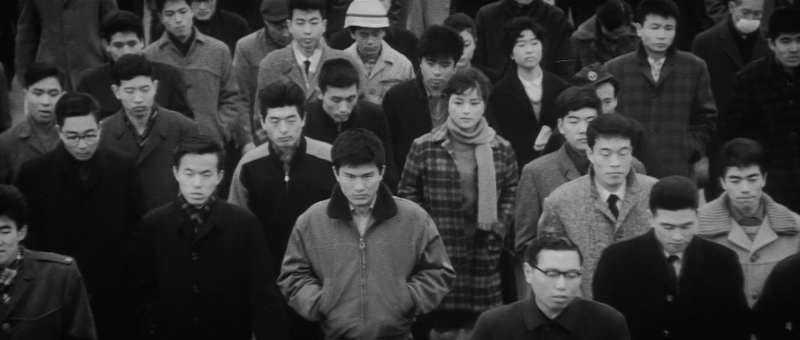
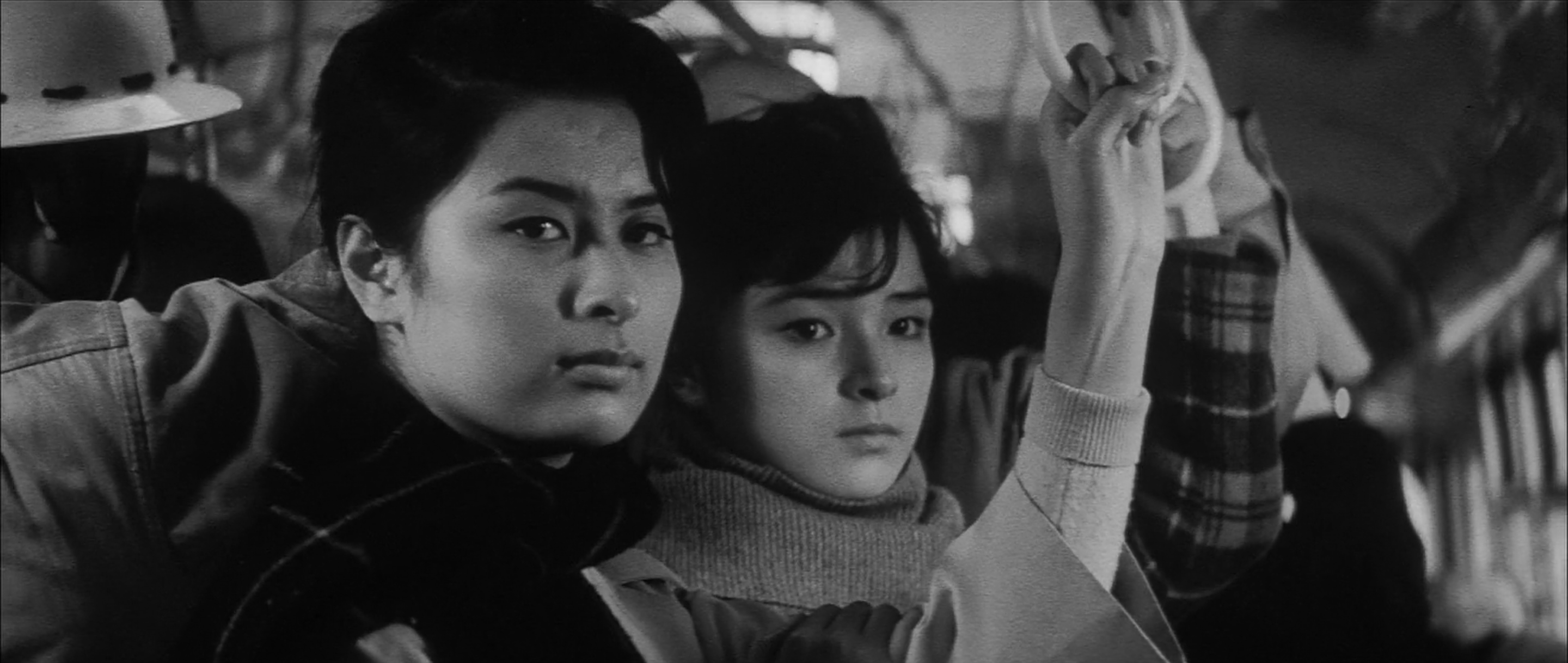
Saeko meanwhile is a little younger, still naive, and unlike her sister completely resistant to the corruptions of consumerism. Part of that might be because Keiko has shielded her from some of the harsh consequences of the way their family lives such as the financial burden of her father’s drinking, leaving her with a rosier view of poor but honest life which has her taking notes from Miyoko on how it’s easy to be happy even when you don’t have enough to eat. She and Komakura are in fact perfectly suited and perhaps she is already in love with him but either afraid of her feelings or unable to recognise them, pushing him towards her “prettier” sister instead. Then again, is there anything to say that Komakura will not turn into another man like her father, embittered and old, trying to drown his disappointment in sake? There’s no guarantee Keiko will be happy with Matsumoto, or perhaps with anyone, but they are at least moving forward in the same direction, as are Saeko and Komakura even as they blend back in with a hundred other cheerful youngsters making their way towards the factory. Our Marriage offers no judgment on its heroines’ choices, merely stating that people make their own paths in life pursuing their particular ideal of happiness and it happens that those paths might necessarily diverge but the people are still the same ones they always were and perhaps you don’t need to reject them for choosing differently than you might have done. Isn’t that what post-war freedom is all about after all?


Sing, Young People (歌え若人達, Keisuke Kinoshita, 1963)

Keisuke Kinoshita has sometimes been dismissed by Western critics for his supposed sentimentality, but his mid-career comedies can be surprisingly cynical. Scripted not by Kinoshita but Taichi Yamada, 1963’s Sing, Young People (歌え若人達, Utae Wakodotachi) is in someways an exception to the rule, a breezy take on the student comedy updated for the present day, but underneath all the absurdist humour and jibs about youthful ennui is a real sense of adolescent hopelessness as these aimless young men ponder their “pitch-black” futures in a rapidly changing Japan where the best they can hope for is fulfilling the salaryman dream.  

Shooting in glorious colour, Kinoshita opens with a lengthly pan over contemporary Tokyo which the jaunty voice over describes as “the number-one city in the world” before homing in on the incongruous figure of a strangely dressed man holding a sign advertising “sensual massage beauties”. A relic of an earlier advertising age, the wandering sign man nevertheless catches sight of someone even “weirder” than he is, a student wearing a student’s cap! Kinoshita then takes us on a brief detour through Japan’s major universities demonstrating that no one is so uncool as to wear a student’s cap in the age of protest, drawing a direct contrast to the student comedies of old while showing us a series of scenes of students “playing” hard with part-time jobs in bands or as models, training hard in preparation for the upcoming Olympics, fomenting the revolution, or fighting in the streets. In the first of many meta touches, our hero, Mori, is eventually woken by the narrator after falling asleep in class, his eyes “gleaming with hopes for the future”. 

Or, perhaps not, he’s just tired. Mori (Tsutomu Matsukawa) is as he describes himself a man without hopes or dreams who believes that the road ahead of him is “pitch black”. Dropping a brush from the window washers’ platform at one of his part-time jobs, he asks himself if there shouldn’t be more to life than this. The only son of his widowed mother, he’s pinned everything on graduating from a top university but feels powerless and empty, adrift in the post-war landscape. Where his calculating friend Miyamoto (Yusuke Kawazu) fills the void with romance and a determination to “get lots of As” and then land a top job, his roommate Okada (Shinichiro Mikami) earnestly studies hard afraid to disappoint his austere family but also quietly resentful in his lack of autonomy, and the dopey Hirao (Kei Yamamoto) simply goes about being nice to people more or less forcing them to eat the traditional treats his loving mother is forever sending. 

Yet for all the bleakness Mori seems to see in his future, he only ever falls up. Luck follows him and he’s presented with ever more fantastic opportunities at every turn. In fact, it’s his slightly grumpy expression as he cleans the windows of an office building that leads to them snapping a picture and making him a cover star without ever bothering to ask his permission though they do eventually pay. Still Mori remains indifferent, telling a reporter who tries to interview him that he had nothing to do with the cover, he has no dreams or aspirations for the future but lives his life day by day. He describes himself only as “nervous”. His words run ironically over the magazine literally becoming tomorrow’s chip paper, used by a stall owner to wrap her croquettes, as a stand for a hot pot, and otherwise bundled up to be pulped. Nevertheless, the cover leads to great opportunities from a TV network looking for a fresh face to front their new youth-orientated drama serial. 

Despite all the promise, Mori remains indifferent, later irritating a new colleague and potential love interest (Shima Iwashita) when he idly suggests he might just give up acting and fall back on the salaryman dream. As she points out, she had to fight all the way to achieve her dreams of becoming an actress so hearing someone say they’re going to throw away a tremendous opportunity that came to them entirely by chance is mildly offensive. Miyamoto meanwhile is growing lowkey resentful, realising that maybe nothing matters after all it’s all just dumb luck. Mori deliberately didn’t do anything because he thought his life was pointless but everything has landed right at his feet while Miyamoto’s life is crumbling. He’s lost all his girlfriends and endured a lonely New Year alone in the dorm, coming to the conclusion that his future really is “pitch black”.

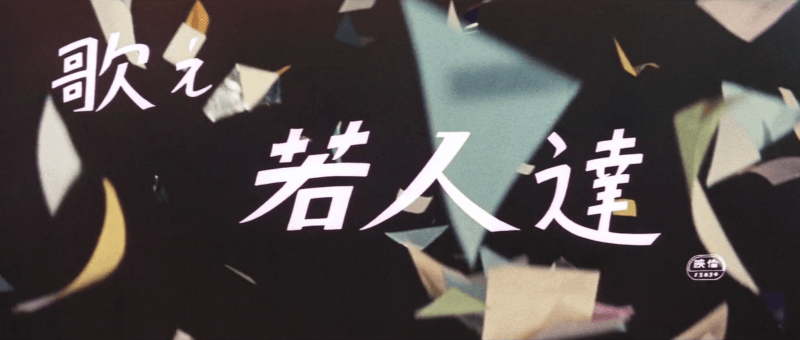
Nevertheless, it’s difficult to remain resentful about a friend’s accidental success and so each of the men eventually finds direction in even in directionlessness. Mori realises that he might as well ride his wave of fame for as long as it lasts, accepting in part at least his sense of powerlessness, while Okada does the reverse in deciding to rebel against his authoritarian family by marrying in secret. Miyamoto resolves to make a success of himself in his own way, and Hirao seemingly accepts the hand fate has dealt him with good humour. Kinoshita ramps up the meta comedy with Mori joining Shochiku, encouraged to try and work for that “excellent” director Keisuke Kinoshita, later referencing Garden of Women, while Mariko Okada and Keiji Sada turn up as onstage guests at an event launching him as a young actor. Playfully using outdated, quirky screen wipes and opening with an artsy title sequence featuring colourful confetti falling up, Kinoshita perhaps adopts a slightly ironic tone in satirising the all pervasive sense of confusion and hopelessness among the younger generation but does so with only sympathy for those coming of age in uncertain times. 


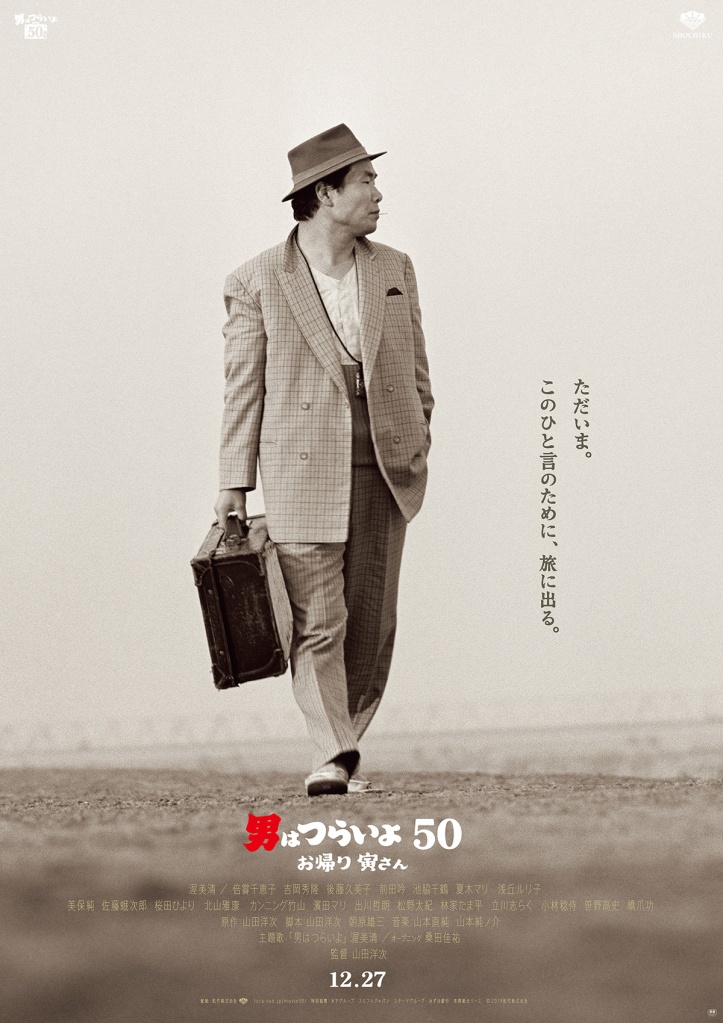
Tora-san, Wish You Were Here (男はつらいよ50 – お帰り 寅さん, Yoji Yamada, 2019)

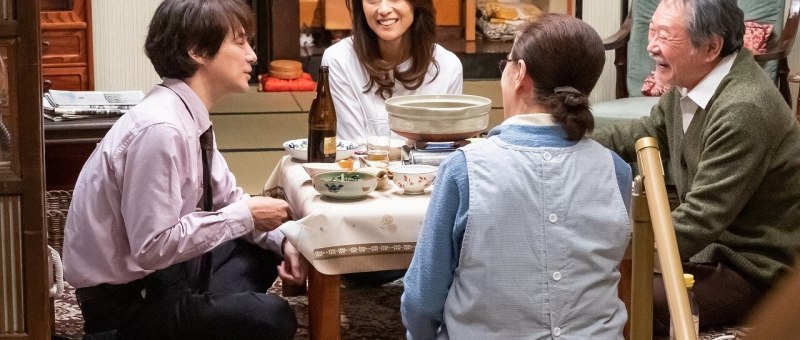
From 1969 to 1996, travelling salesman Tora-san appeared in 48 films, a 49th movie special appearing after star Kiyoshi Atsumi’s death brought an unavoidable end to the series. Tora-san, Wish You Were Here (男はつらいよ50 – お帰り 寅さん, Otoko wa Ysurai yo 50: Okaeri Tora-san) arrives to mark the 50th anniversary of the first film’s release, and as the series had done in its later stages, revolves around Tora’s neurotic nephew, Mitsuo (Hidetaka Yoshioka), who is now a middle-aged widower and father to a teenage daughter. Feeling somewhat wistful, Mitsuo’s thoughts turn to his now absent uncle, wishing he were still around to offer some of his trademark advice along with the gentle warmth and empathy which proved in such stark contrast with his otherwise anarchic and unpredictable personality.  

Yamada, who directed all but two of the series in its entirety, opens with another dream sequence this time of Mitsuo as he finds himself overcome with memories of his first love, Izumi (Kumiko Goto), who is now married with children and living abroad working for the UNCHR. Mitsuo’s wife passed away from an illness six years previously and he’s so far resisted prompts from his relatives to consider remarriage though it seems fairly obvious that his editor, Setsuko (Chizuru Ikewaki), has a bit of a crush on him. Having taken a gamble giving up the secure life of a salaryman to become a novelist, Mitsuo’s first book is about to be published and it’s at a signing that he serendipitously re-encounters Izumi who just happened to be in the store that day on a rare trip to Japan and spotted the poster. 

Like many Tora-san films, Wish You Were Here is about the bittersweet qualities of life, the roads not taken, the misdirections and misconnections, and the romanticisation of a past which can no longer be present. At a crossroads, Mitsuo ponders what might have been recalling the shattered dreams of his first love which seems to have ended without resolution because of the unfairness of life. He wishes that his crazy uncle was still around to make everything better, offering more of his often poetic advice but most of all a shoulder to cry on as he’d been for so many women throughout the series. But Mitsuo himself has always been more like Tora than he’d care to admit, if tempered by his father Hiroshi’s shyness. He too is a kind man whose bighearted gestures could sometimes cause unexpected trouble. What he’s learning is in a sense to find his inner Tora, embracing his free spirit through his art if not the road, but also coming to a poetic understanding that sometimes the moment passes and there’s nothing you can do to take it back, only treasure the memory as you continue moving forward. 

That’s a sentiment echoed by Lily (Ruriko Asaoka), one of Tora’s old flames, who now runs a stylish bar in Tokyo. The beauty of the Tora-san series was that it aged in real time. The actor playing Mitsuo played him as a child and we saw him grow up on screen just as we saw Shibamata change from post-war scrappiness to bubble-era prosperity and beyond. The family’s dango-shop has had an upscale refit and there is now a modern apartment complex behind it where the print shop once stood. Seamlessly splicing in clips from previous instalments as Mitsuo remembers another anecdote about his uncle, Yamada shows us how past and present co-exist in the way memory hangs over a landscape. Once or twice, the ghost of Tora even reappears hovering gently behind Mitsuo only to fade when he turns around to look while there’s an unavoidable sadness as we notice the Suwas’ living room is now much less full than it once was. 

Aside from his uncle, it’s the warm family atmosphere that Mitsuo recalls from his childhood, something which, like Tora, he might not have always fully appreciated. Driving Izumi to a potentially difficult reunion with her terminally ill estranged father (Isao Hashizume), he refers to his own parents as “annoying” in the “pushy” quality of their kindness, something which irritates Izumi who points out that she’d have loved to have such a warm and supportive family and if she had she might never have gone to Europe, implying perhaps that their fated romance would been fulfilled. The Shibamata house was Tora’s port, he could wander freely because he had somewhere to go back to where they’d always let him in no matter what kind of trouble he caused.

A fitting tribute to the Tora-san legacy, Wish You Were Here is also a joyful celebration of the Shitamachi spirit. Tora might be gone, but the anarchic kindness and empathy he embodied lives on, not least in the mild-mannered Mitsuo and his cheerful daughter who seems to be continuing the family tradition of meddling in her loved ones’ love lives as her lovelorn father prepares to move on in memory of Tora, the free spirited fool.


Tora-san, Wish You Were Here streamed as part of this year’s Japan Cuts.

International trailer (English subtitles)

Tora-san, My Uncle (男はつらいよ ぼくの伯父さん, Yoji Yamada, 1989)

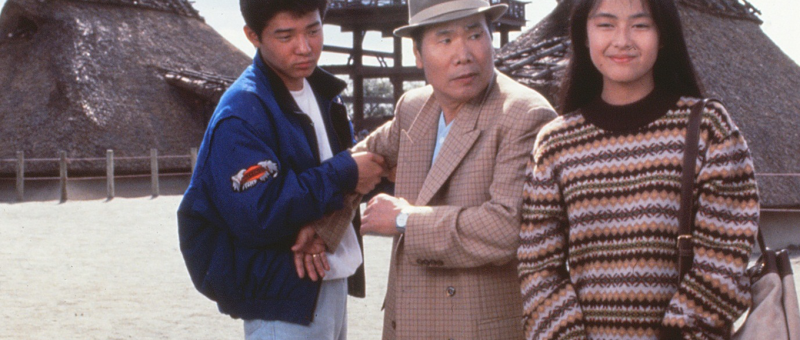
“My uncle was born a kind man, but his kindness is intrusive. He’s short tempered too, so often his kindness ends up causing a fight” according to the introduction given by Mitsuo (Hidetaka Yoshioka), nephew of the titular Tora-san (Kiyoshi Atsumi) in the 42nd instalment in the long running series, Tora-san, My Uncle (男はつらいよ ぼくの伯父さん, Otoko wa Tsurai yo: Boku no Ojisan). People may say he’s “an oddball”, but just recently, Mitsuo claims, he’s learned to appreciate his uncle’s peculiar charms. Up to this point, the series had followed a familiar pattern in which Tora-san has an encounter on the road and returns home to visit his family in Shibamata falling in love with an unattainable woman along the way. My Uncle, as the title perhaps implies, shifts the focus away from Tora directly towards his wayward nephew Mitsuo now a moody teenager studying to retake his university entrance exams. 

The problem is, Mitsuo is having trouble concentrating because he’s fallen in love. Izumi (Kumiko Goto) was a year below him in high school but after her parents got divorced she moved away and is currently living with her mother (Mari Natsuki) who runs a hostess bar in Nagoya. Mitsuo has been wanting to go and visit but his father, Hiroshi (Gin Maeda), has banned travel until after his exams and his authoritarian ruling has placed a strain on their relationship while Sakura (Chieko Baisho), Mitsuo’s mother and Tora’s younger sister, is getting fed up with his moodiness. That might be why she asks Tora to have a word with him on one of his rare visits, hoping Mitsuo will be able to talk frankly to his uncle about things he might not want to discuss with his parents. Only when Tora’s uncle (Masami Shimojo) and aunt (Chieko Misaki) point out the dangers does she realise her mistake. Perhaps you might not want your son to receive the kind of advice a man like Tora might give. Their misgivings are borne out when Tora brings him home a little the worse for wear after teaching him how to drink sake (and flirt with waitresses). 

Rather than Tora it’s Mitsuo we follow as he ignores his parents and goes off to find Izumi on his own. Mitsuo is not Tora, however, and he’s still fairly naive, unaware of the dangers inherent in a life on the road which is how he gets himself into a sticky situation with a man who helped him (Takashi Sasano) after he had a bike accident but turned out to have ulterior motives. After discovering that Izumi has gone to live with her aunt (Fumi Dan) in the country and finally arriving, Mitsuo begins to have his doubts. She wrote to him that she was lonely so he jumped on his bike and came, but now he wonders if that was really an OK thing to do or if she might find it a little excessive, even creepy. Her neighbours may gossip after seeing a (slightly) older boy from Tokyo suddenly turn up on a motorbike, maybe like Tora he’s acted on impulse out of kindness but has accidentally made trouble for her?

Meanwhile, Sakura and Hiroshi are at home worried sick, aware their son has grown up and evidently has some important rite of passage stuff to do, but it would have been nice if he’d called. Everyone’s used to Tora breezing in and out of their lives and it’s not as if they don’t worry, but it’s different with Mitsuo. Luckily and through staggering coincidence Mitsuo ends up running into Tora who, perhaps ironically, gets him to phone home and then starts helping him out with his youthful romantic dilemma. Though some of the advice he gives is a little problematic, there’s a fine line when it comes to being “persistent” in love, he is nevertheless supportive and proves popular with Izumi’s mild-mannered aunt and lonely grandfather-in-law (Masao Imafuku) who subjects him to a day-long lecture about traditional ceramics which he listens to patiently because as he says, old people are happy when someone listens to them. The problems are entirely with Izumi’s extremely conservative school teacher uncle (Isao Bito) who appears to terrorise his wife and objects strongly to Mitsuo’s impulsive gesture of love, bearing out Mitsuo’s concerns in implying that he’s endangering Izumi’s reputation, though apparently more worried about how it looks for him as a school teacher if she’s caught hanging out with a motorcycle-riding “delinquent”. The final straw is his telling Mitsuo off for neglecting his studies, insisting no one so “stupid” could ever hope to go to uni.

Left behind, Tora tries to defend Mitsuo to the snooty uncle, telling him that he’s proud of his nephew for doing something kind even if others don’t see it that way, but the uncle simply replies that they obviously disagree and abruptly walks off. Perhaps there’s no talking to some people, but Tora does what he can anyway. Mitsuo gains a new appreciation for his kindhearted family, not to mention his eccentric uncle. “Trips make everyone wise”, Tora tells Hiroshi, well except for some people, he later adds before once again getting literally cut off from everyone waiting for him back in Shibamata. The signs of bubble-era prosperity are everywhere from Mitsuo’s motorbike and comparatively spacious family home to the increased mobility and the upscale interior of Izumi’s mother’s “snack” bar, but Tora is still a post-war wanderer bound for the road, drifting whichever way the wind blows him.


Tora-san, My Uncle streamed as part of this year’s Japan Cuts.

Original trailer (no subtitles)