Honeko Akabane’s Bodyguards (赤羽骨子のボディガード, Junichi Ishikawa, 2024) [Fantasia 2025]

Unbeknownst to her, a high school girl’s entire class is actually made up of bodyguards hired by her distant father, whom she doesn’t know either, to keep her safe because his work makes her an easy target for international criminals. Adapted from the manga by Masamitsu Nigatsu, Junichi Ishikawa’s Honeko Akabane’s Bodyguards (赤羽骨子のボディガード, Akabane Honeko no Bodyguard) is in some ways fairly typical of the genre in its parade of unrealistic hairstyles and over-the-top humour, but also anchors itself in a genuine sense of friendship and youth solidarity as the class come together under a charismatic leader not only to protect Akabane but each other too.

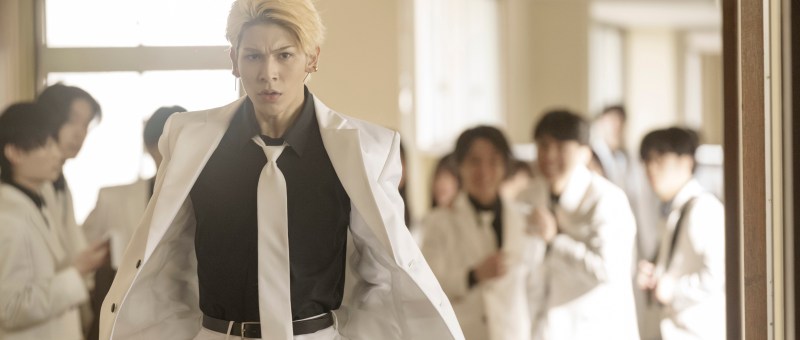
That charismatic leader would be Ibuki, a cocksure delinquent and childhood friend of Akabane’s who’s also been carrying a torch for her all these years. Nevertheless, it comes as quite a surprise when he’s officially hired by Jingu (Kenichi Endo), a man who claims to be the head of Japan’s Security Services. After his wife died, he decided to place Akabane for adoption to keep her safe from the duplicitous world in which he lived. But now there’s a 10 million yen bounty on her head and every criminal enterprise he’s ever been after is desperate to get their hands on her. What Ibuki doesn’t know is that he’s hired the rest of the class too who all have various skills from rhythmic gymnastics to torture. It’s imperative that Akabane never find out that she’s a target, nor that Jingu is her biological father, and continues to live a “normal” carefree life.

She certainly appears to have no skills of her own other than her ability to quote legal infractions in her desire to become a lawyer like her adopted parents. While this may on some level remove her agency in making her dependent on her classmates for protection, it’s also Akabane that takes the initiative in romance by making overtures to the otherwise diffident Ibuki. Other the other hand, she’s painted as the mirror image of her sister, Masachika (Tao Tsuchiya), who has been raised as a boy and taught to be an assassin but craves the kind of love and affection Jingu pours on Akabane. 

This is one reason that she is eventually able to find unexpected common ground as she and Akabane are obviously both firmly on team Ibuki with Akabane thankful that someone else can see Ibuki’s good side even if most people mistake him for being a scary and dangerous person. Like his father, the late policeman, he believes that to protect someone you must protect everything they love which is why he’s desperate to protect the whole of the class too so that Akabane’s world remains consistent. Most of the other students aren’t too invested in their jobs and are only doing this for the paycheque, but eventually end up coming together thanks to Ibuki’s insistence that he won’t leave them behind. Not only does he need their help to protect Akabane, but genuinely respects their friendship and wants to save them too.

Then again, we’re presented with a series of images of paternal and hierarchal failure. Ibuki’s own father was killed in the line of duty and while alive had little time for his son, if like Jingu trying to keep his child out of the dangerous world in which he lives. Jingu gave up one daughter to keep her safe, but has a strained relationship with the second who feels like a failure and is desperate for a chance. Even the head of the class is compromised as he first proves himself willing to sacrifice the lives of his men in achieving their goal of protecting Akabane and then seems to commit several blunders including being unable to unmask a mole. Ibuki becomes a de facto leader, but at the same time what emerges under him is a relationship of equals and solidarity between those in a similar situation. They are no longer working for Jingu or following their leader’s orders but thinking for themselves and actively protecting each other. 

Ishikawa puts together some excellent action sequences that demonstrate what a well-oiled machine the students can be in standing up against criminality while maintaining the zany humour and making Ibuki an oddly pure figure of warmth and integrity as he resolves to protect all of those around him if most especially Akabane to whom he is unable to voice his real feelings. She meanwhile, admittedly a damsel in distress, is at least taking the lead when it comes to their romance even if she continues to needle him about his rough and uncouth behaviour. Honeko Akabane is it seems very well protected from any threats that come her way save perhaps that of her hidden past.                                                                                                                                    


Honeko Akabane’s Bodyguards screened as part of this year’s Fantasia International Film Festival.

Original trailer (no subtitles)
Cloud (Cloud クラウド, Kiyoshi Kurosawa, 2024)

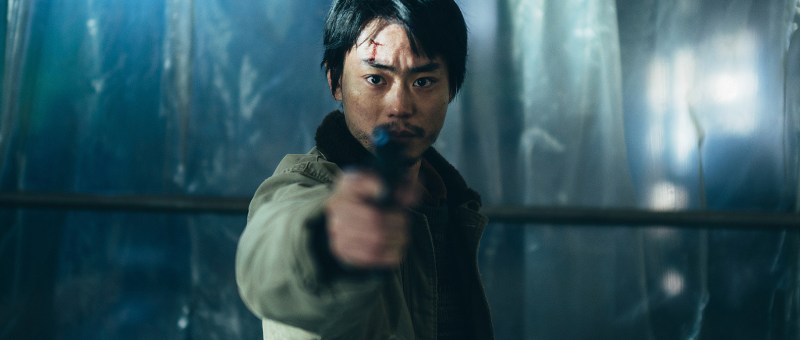
“We wanted to make easy money,” a down-on-his luck reseller admits, “is life easy now?” Factory worker Ryosuke (Masaki Suda) rebels against capitalism by subverting it through buying low and selling high while repeatedly refusing promotions at his job in a textiles factory. Though it might seem that reselling is just a way to earn an income that seems almost passive but is actually fairly labour-intensive, it’s clear that Ryosuke is a young man dissatisfied with capitalistic realities and lacking direction in his life. 

Reselling has become a kind of game to him and like a gambler who plays to lose he’s hooked on the thrill of making a killing exploiting other people’s misery. He’s at once filled with pride and smugness over his apparent triumph over his society and consumed by self-loathing. His friend and fellow reseller Muraoka (Masataka Kubota) tells him that another acquaintance has been arrested for scalping concert tickets with both of them lamenting his foolishness in getting involved with something so risky. The implication is that their friend, Goto, must have been in real desperation to lower himself to such levels and they each fear they may someday end up in the same position. Muraoka laments that that kind of selling is a young man’s game and neither of them have the time or energy to spend all day queuing to buy stuff just to sell it on cheap. They are each, it seems, beginning to feel the increasing desperation of their age that they are running out of time and have little to show for their efforts nor any prospects for the future. 

But on the other hand, neither of them want to be locked into the grind or join the oppressive but secure world of the salaryman. In many ways, Ryosuke’s factory boss Takimoto (Yoshiyoshi Arakawa) represents the “correct” path of hard and honest work, though his own paternalistic conviction in meritocracy seems outdated in a man of his age whose formative years occurred during an era of economic stagnation. He talks to Ryosuke as if he’s a young man who wants to get on but lacks confidence, telling him that he has leadership potential and is wasted on the shop floor, but his language also has an edge of the uncanny as if he were trying to recruit Ryosuke into his own worker drone revolution. In any case, even if it might be true that Ryosuke lacks confidence and ambition, that isn’t the reason he refuses promotions, which seems to be another way of rebelling against capitalism. When he eventually quits, he suggests it’s because he’s sick of being told what to do and wants more autonomy over his life and finances.

He tells his girlfriend Akiko (Kotone Furukawa) that she should quit her job too, which she’s only too happy to do because, unlike him, she actively doesn’t want to work and only wants to spend money. When she said she was thinking of giving up her apartment, Ryosuke naturally asked her to officially move in but she refused because his place is too small and she has too much stuff. Akiko has already been corrupted by the same consumerist bug that’s driving Ryosuke’s reselling business, but neither of them can really afford this lifestyle in the city. Ryosuke’s bright idea is to move to the remote countryside where he’s able to rent a huge, though ominous-looking, property for a fraction of the price with the idea of also economically supporting Akiko who will revert to traditional gender roles as a housewife in charge of the domestic space and most especially the kitchen.

But freedom cannot be found simply by retreating from urbanity and the couple soon find themselves plagued by a pervasive sense of resentment. The locals are not particularly accepting of people from Tokyo and are also needled by their success which is something they feel they’ve been unfairly denied. When Ryosuke tries to report a smashed window, even the policeman hassles him and says he’s received a tip-off that Ryosuke is breaking trading standards regulations by selling counterfeit goods as the real thing. Reselling in itself is not illegal, if definitely dubious morally and incredibly cynical. Ryosuke doesn’t seem to like to think about that and tells his new assistant, Sano (Daiken Okudaira), that he tries to sell all the items as quickly as possible so he doesn’t have to worry too much about their authenticity. If they’re wanted they’ll sell, Ryosuke justifies but he might as well be talking about himself.

“Being real or fake doesn’t matter?” Sano asks him, just as Ryosuke’s online and offline personas start to blur. He’s unaware that there are people actively hunting him for selling them substandard goods and is later pursued by real life vigilantes acting like online trolls and planning to torture him to death during a livestream. Like many of Kurosawa’s heroes, Ryosuke is completely convinced that he’s the benchmark for normal and it’s everything around him that’s strange or unfair. As the internet once again invades the “real” world, or perhaps it’s more that Ryosuke’s living his online life offline, the increasing unreality of the situation makes us wonder if any of this is “really” happening or product of Ryosuke’s fractured identity as it finally collapses under the twin corruptions of capitalism and social media. “Please keep focusing only on making money,” his new guardian angel Sano tells him, “everything will be obtainable. Whatever you want. Even things that can end the world.” Flying through ironically heavenly clouds, Ryosuke reflects that the path to hell really is paved with gold and his Mephistophelian pact with hyper-capitalism may have damned him beyond all repair.  


Cloud is in cinemas from 25th April courtesy of Blue Finch Film Releasing 

UK trailer (English subtitles)

The Village (ヴィレッジ, Michihito Fujii, 2023)

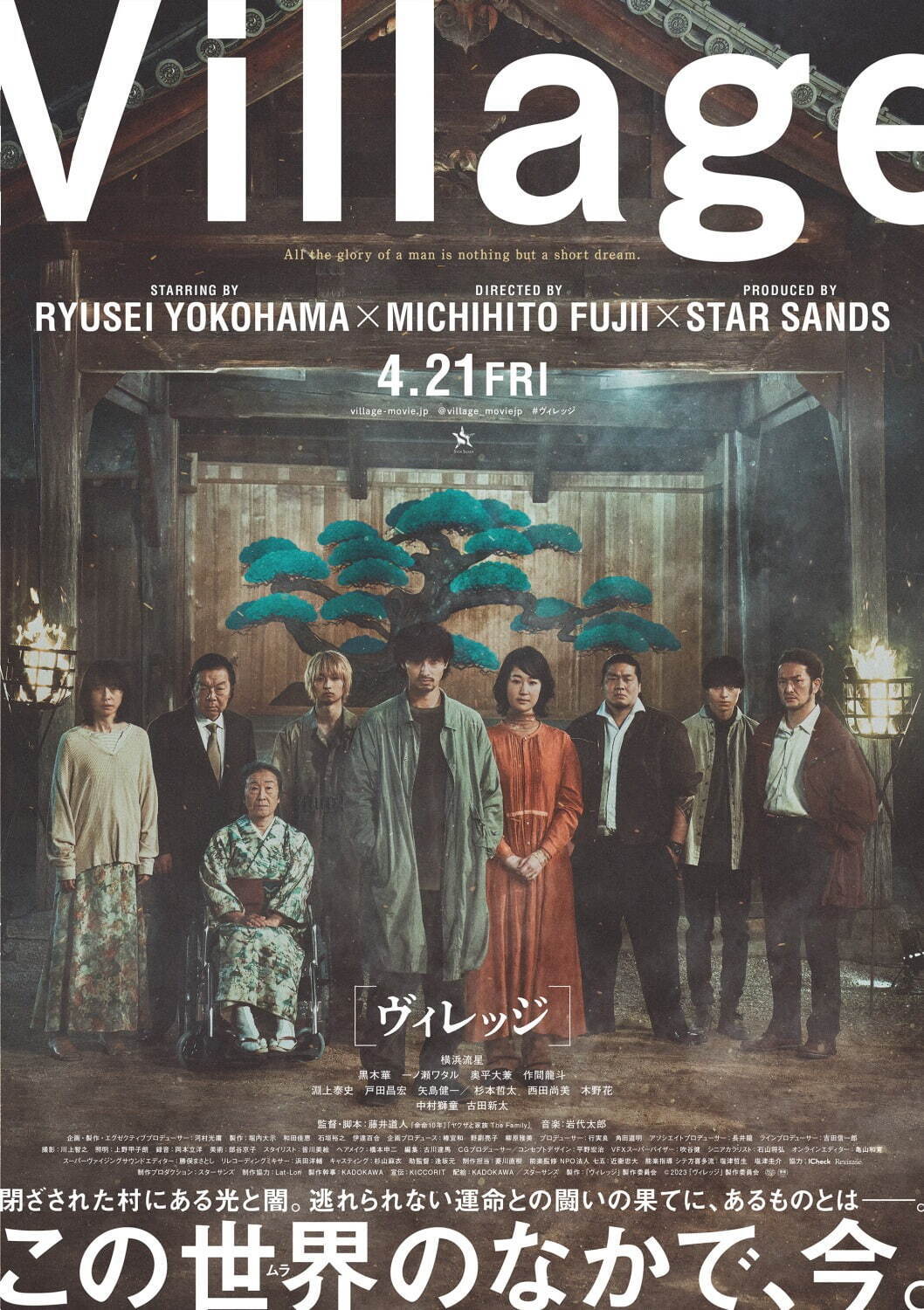
The toxicity of life in small-town Japan is manifested in a giant recycling plant in Michihito Fujii’s poetic drama, The Village (ヴィレッジ). Closely aligned with the noh play quoted in the opening title card, the film charts a young man’s simultaneous blossoming and corruption as he finds himself at the service of a demonic mayor and fighting for his place in a village that doesn’t need him but requires a sacrifice. 

In the opening scenes, mist rises over the mountain accompanied by noh recitation before we eventually arrive at a noh recital. These two images would seem to signal a kind of innate Japaneseness which has been corrupted by the presence of the recycling plant despite the economic benefits it’s brought to the area. The mayor, and boss of the plant, Ohashi (Arata Furuta), wants to extend it out across the other mountains in the region and boasts that though there may have been resistance at first now everyone is grateful to them for everything they’ve done for the village. 

Yu’s (Ryusei Yokohama) father was the last holdout against the plant and apparently ended up killing a man in an altercation thereafter taking his own life and burning down their family home. Because of the stigma surrounding his father’s actions, Yu has been ostracised by his community and is used as a perpetual kicking bag not least by Ohashi’s thuggish son Toru (Wataru Ichinose) at his job at the plant. His mother has also turned to drink and developed a pachinko problem which has resulted in massive debts to yakuza loanshark Maruoka (Tetta Sugimoto) who’s press-ganged Yu into working at the illegal dumpsite which is how the plant really makes its money.

But his life begins to change when childhood friend Misaki (Haru Kuroki) returns to the village having apparently suffered a breakdown in Tokyo. Misaki’s resurfacing reinforces the purgatorial atmosphere as if everyone here were already dead. Having been away so long, only she immediately embraces Yu and simultaneously bonds with him in their outsider status. Encouraging him at work and at home, Yu gradually becomes more confident but equally dependent on the plant for his newfound status. When he’s suggested as the host of a TV documentary some of the locals object given his family background, but in contrast to his father’s opposition Yu is slowly seduced by the plant and the new life it offers him which seems almost too good to be true like a dream he is sure to be awoken from. In this, he mimics the man in the noh play who falls asleep in an inn and is transported to a world in which he is an emperor. He lives there happily for 50 years only to wake up again back in the inn and realise that really life is just a dream. 

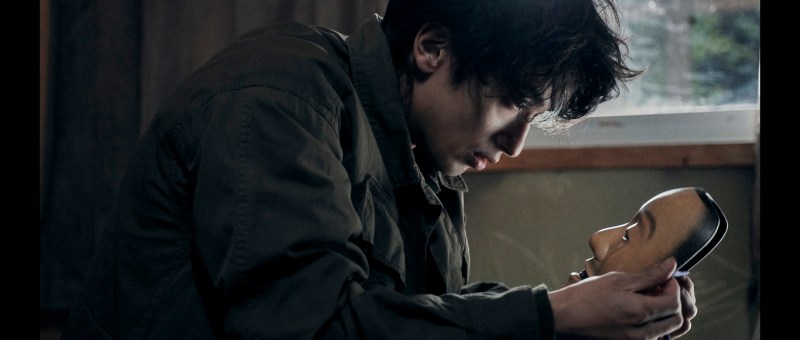
Misaki hands him back his noh mask as means of separating himself from the world around him. She says that it forces you to confront yourself, and also perhaps implies a deeper connection with an idealised vision of pre-modern Japan uncorrupted by the greed and cynicism of a man like Ohashi who claims that “position is all that matters.” Toru had told Yu that the village didn’t need him, Misaki and Ohashi say it does though for different reasons. Yet Ohashi darkly suggests that it also needs a sacrfice, and in an odd way just as his father before him it may be Yu who sacrifices himself even at the cost of his idealised life. His encroaching cynicism is directly contrasted with the idealism of Misaki’s younger brother Keiichi (Ryuto Sakuma) who like he once was is meek and diffident yet certain in his idealism and unwilling to along with the lies and wrongdoing that increasingly define village life. Eventually, he leaves the village altogether.

Yu meanwhile achieves his destiny in bringing things full circle, conducting a kind of purification ritual that aims to rid the village of Ohashi’s corruption as symbolised by the giant rubbish tip which is slowly consuming the landscape. Yu’s problem was that he tried to make his life on top of all this filth and toxicity only to realise what the price of that new life might be. Conjuring the strange and oppressive atmosphere of small-town life where past is always present and petty prejudices die hard, Fujii spins a poetic tale of fatalism and redemption amid the misty mountains and ancient chants of a slowly dying village.


Trailer (English subtitles)

The Parades (パレード, Michihito Fujii, 2024)

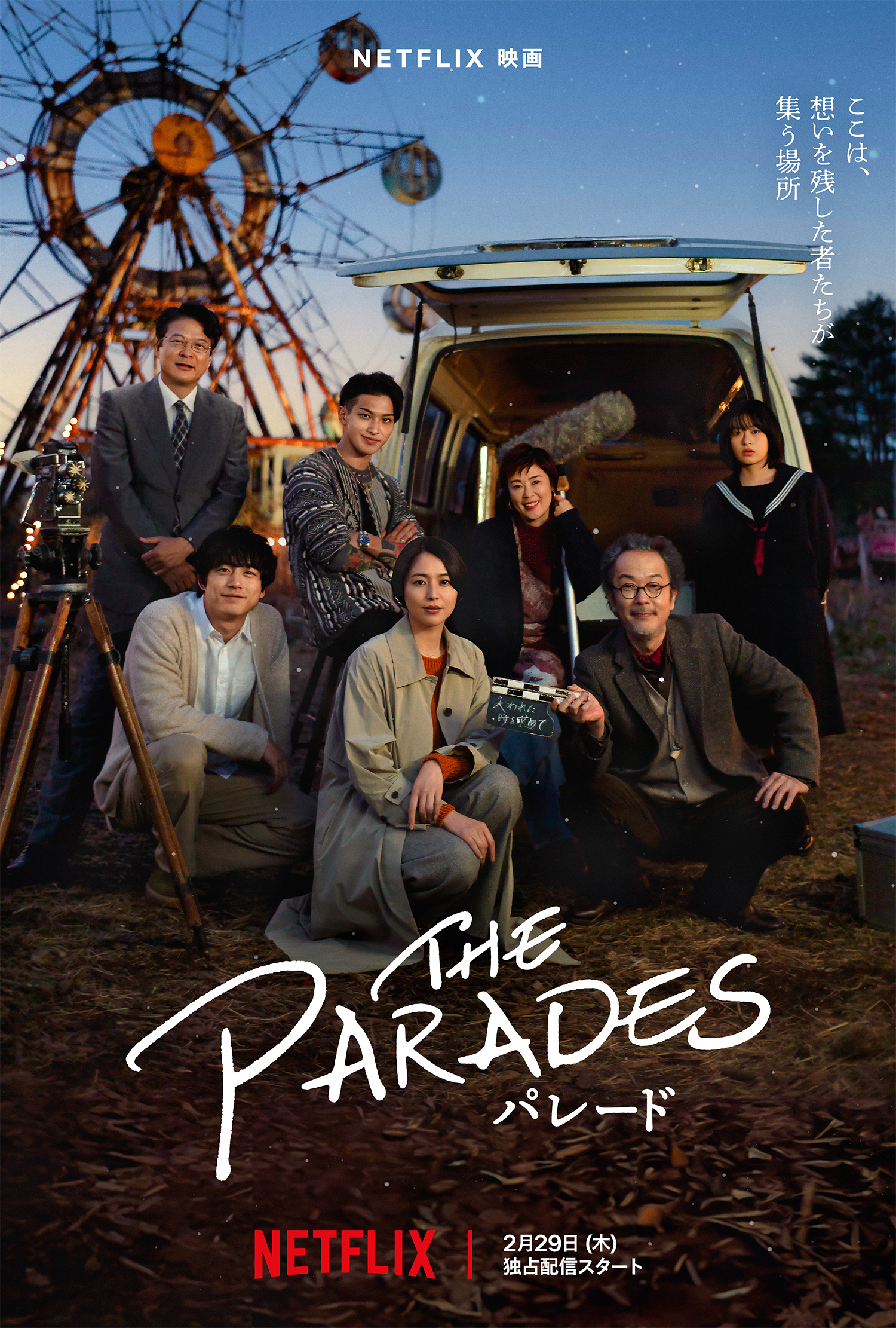
Living a life without regrets is easier said than done. The protagonists of Michihito Fujii’s The Parades (パレード, Parade) each have unfinished business that prevents them moving on from this world, but what they discover is an unexpected sense of solidarity among similarly lost souls as they try to lay themselves to rest. After all, all they can do now is observe and reflect while helping others like them with their own lingering doubts and regrets.

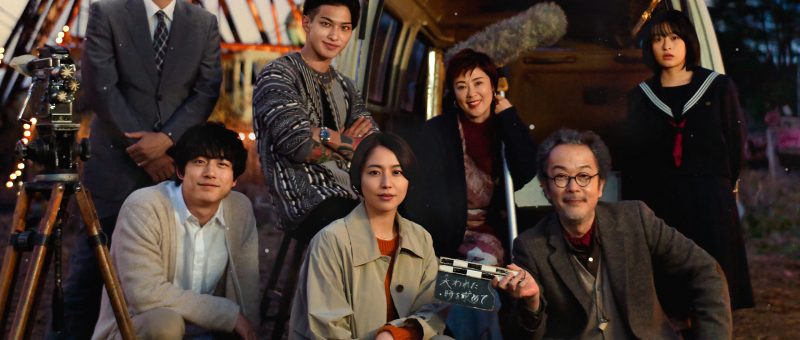
Drawing inspiration from the 2011 earthquake and tsunami, Fujii first introduces us to Minako (Masami Nagasawa). A 35-year-old single mother, she wakes up on a beach and frantically looks for her seven-year-old son Ryo (Haru Iwakawa) little realising that the reason no one seems to be able to hear or react to her is because she’s already dead. Picked up by fellow ghost Akira (Kentaro Sakaguchi), she’s taken to a disused fairground that doubles as a hub for wandering souls. Though it takes her a while to accept her new situation, she gradually bonds with others at the camp each of whom have their own unfinished business which isn’t all that different from her own in that they mostly want to be sure the people they left behind will be alright.

The film takes its name from the monthly processions in which wandering souls meet by lantern light to look for their missing people together. This sense of solidarity and empathy seems to echo the best of humanity along with a melancholy longing. There appears to be little rancour in this afterlife, a yakuza who was killed in a gang war simply feels sorry for his father and so guilty about the girlfriend he left behind that he’s been afraid to face her for the last seven years, and a high school girl who took her own life because of bullying first thinks her unfinished business is vengeance on the bullies but later accepts is actually a desire to apologise to her best friend who then had to take the brunt of the bullies’ cruelty on her own.

What the film seems to say is that we should have more of this fellow feeling in life. Former film producer Michael (Lily Franky) constantly references his days as a student protestor remarking that they might not have amounted to very much but at least they had unity. His regret is less his failed revolution than a moment of emotional cowardice that saw the woman he loved marry someone else instead. Constant references to the end of Casablanca echo their plight as if Maiko (Yuina Kuroshima / Hana Kino) married Sasaki (Ayumu Nakajima / Hiroshi Tachi) for the good of the revolution though she really loved Michael who unlike Rick just walked out on it because in the end he wasn’t brave enough to risk the consequences of its success or failure. 

The world building may not always be consistent and the rules of this universe appear unclear. It seems that in general the ghosts don’t linger long. Even the heavenly liaison Tanaka (Tetsushi Tanaka) appears to have been dead not longer than 40 years with Michael seemingly the only other long-stayer with the others’ deaths fairly recent. In general they are only really waiting for themselves or others, wanting to make sure that their loved ones will be alright in their absence even though there’s nothing more they can do for them now other than observe. Though they can walk through this world and interact with physical objects, their presence is otherwise invisible unless the person they wish to contact happens to be in an altered state. To this extent, the resolution may seem like a bit of a cop-out but does lend an additional poignancy and imply that these lessons learned in limbo can still be taken into the mortal realm creating additional empathy and solidarity among the living so that they may be able to live their lives freely and fully perhaps not entirely without regrets but at least with fewer of those that would prevent them from moving on when their time comes. But even if they find themselves trapped in limbo, they’ll hopefully find others like themselves and a gentle sense of hopefulness about what’s to come even as they prepare to leave this world.


Trailer (English subtitles)

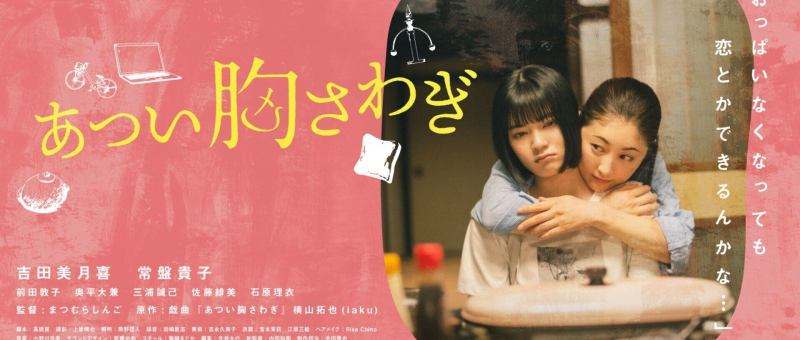
The Lump in My Heart (あつい胸さわぎ, Shingo Matsumura, 2022)

A young woman with a growing desire for independence is thrown into turmoil by a totally unexpected diagnosis of cancer in Shingo Matsumura’s gentle coming-of-age tale and maternal drama, The Lump in My Heart (あつい胸さわぎ, Atsui Munasawagi). Perhaps because of her youth, the heroine finds herself struggling not with a fear of pain or death but of being unsexed while preoccupied with what it might mean for the rest of her life if she were to lose her breasts at such an early age.

It seems that Chinatsu (Mizuki Yoshida) has had a particular hangup about her chest size since the onset of puberty when her mother, Akiko (Tokiko Tokiwa), first refused to buy her a bra, making her wait a year longer than the other girls and leaving her with a sense of embarrassment that might be out of keeping with her age. One of the things that most bothered her about the doctors visits is that she was treated by a middle-aged man who was then the first person ever to touch her breasts which is something she’s unhappy about while also feeling insecure that she’s never had a proper boyfriend and might never get one if it turns out she needs a mastectomy. As it turns out, she’s carrying a torch for childhood friend Ko (Daiken Okudaira), an aspiring actor, but is too shy to say anything especially with this threat to her sense of femininity hanging over her. Of course, it doesn’t help that the doctors are asking her to make advance decisions about things an 18-year-old wouldn’t usually consider such as if and when she might want children because her feelings about her fertility might affect her treatment options. 

Then again, it’s also true that she remains trapped in adolescence resentful when her mother tells her not to worry she’ll make all the decisions but also perhaps relieved. A little sick of their co-dependency she’d been thinking of moving out though it seems difficult to believe she’d be able to afford rent with just her part-time job while studying full-time at university. But when her mother shows a little interest in an incredibly awkward man at work it sends her in the other direction, now feeling resentful and rejected while fearing the loss of their familial intimacy given it had just been the two of them for so long after her father’s death when she was four.

Motoharu (Masaki Miura) accidentally demonstrates the entrenched sexism of the world around them when he makes a misogynistic joke as an attempt at an icebreaker when introduced as the boss at the factory where Akiko works. It later comes to light that he left his last job due to an accusation of sexual assault, and though it turns out to have been a misunderstanding highlights a lack of awareness in the working environment that feeds in to Chinatsu’s ongoing preoccupation with her femininity and the elusiveness of romance. Her homework assignment over the summer holidays is to write a story about her first love, a topic which might be seen as bordering on inappropriate, perhaps discriminatory against those who do not feel romantic desire not to mention that Chinatsu is only 18 so it is only natural that she is still in the process of figuring things out and cannot be expected to have much of a perspective on what is to her still a fairly recent (in fact ongoing) event. 

Meanwhile, her mother and Motoharu are each feeling a pang of regret that they always let things pass them by like the arrival of the circus, destined to be in town for a limited time only so it’s best to catch it while you can. Unfortunately that’s easier said than done especially when not everyone’s on the same page. The lump in Chinatsu’s heart is her yearning for romantic love, though she still lacks the courage to be honest with her feelings even if it’s helped her repair her relationship with her mother. An unexpected piece of compassionate advice also helps her begin to re-imagine her femininity in accepting that the loss of her breasts might not mean that she’s destined to be alone forever nor undeserving of romantic love symbolically dissolving the lump in her heart in allowing her to move forward with her life no matter what the future might hold.


The Lump in My Heart screened as part of this year’s Japan Foundation Touring Film Programme.

Original trailer (English subtitles

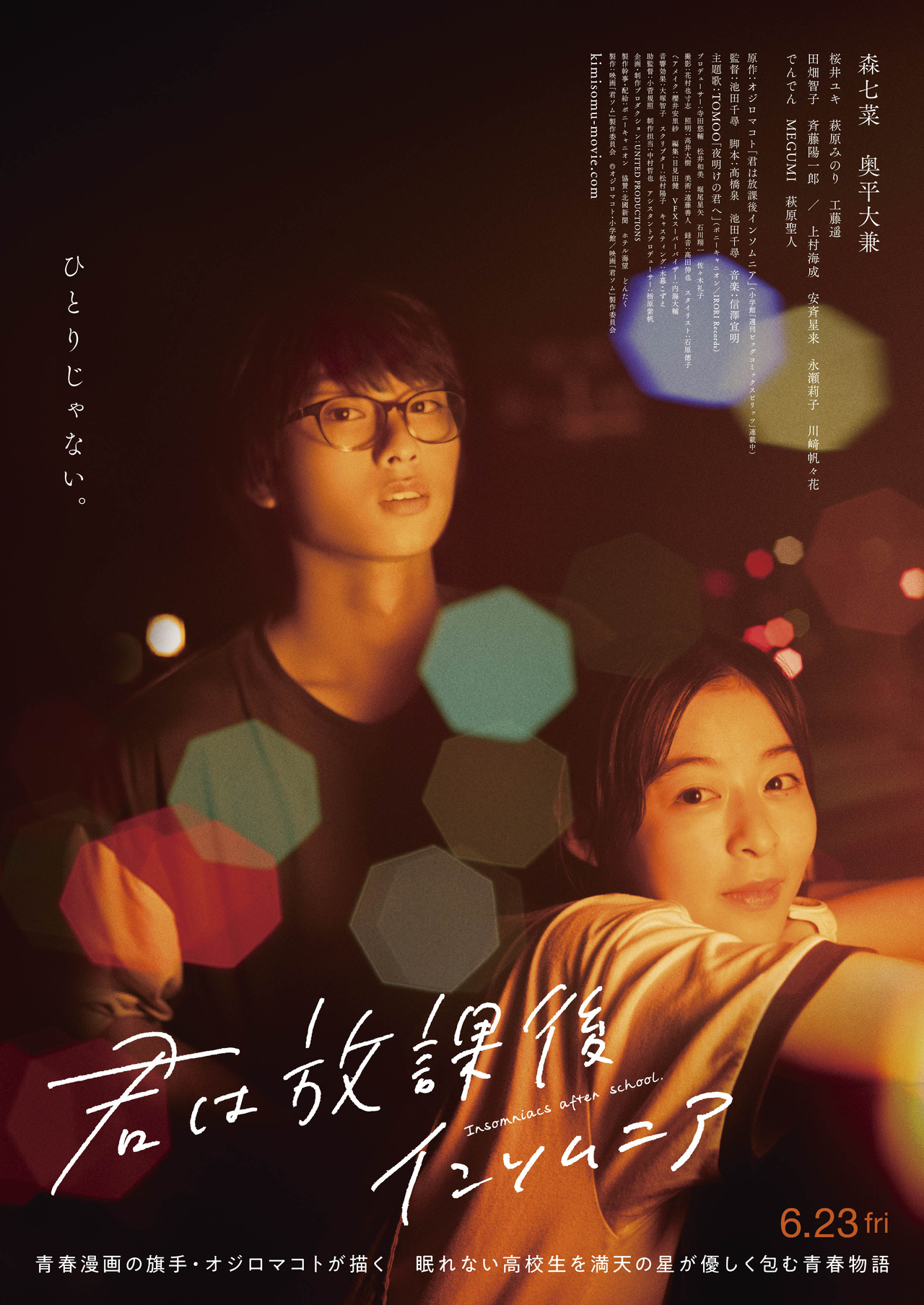
Insomniacs After School (君は放課後インソムニア, Chihiro Ikeda, 2023) [Fantasia 2023]

Two teens begin to overcome their fears and anxieties after bonding over their shared insomnia in Chihiro Ikeda’s adaptation of the Makoto Ojiro manga, Insomniacs After School (君は放課後インソムニア, Kimi wa Hokago Insomnia). It may seem strange in some ways that the pair find their inability to sleep so embarrassing that they keep it a secret from those around them, but then it’s difficult to tell people you’re having trouble sleeping without explaining why which is admittedly to enter the place of emotional vulnerability that each of them is otherwise avoiding. 

Namiki (Daiken Okudaira) describes himself as being overwhelmed by negative thoughts while his days are filled with despair. Unable to sleep at home he struggles to keep his eyes open at school and is otherwise reserved, rejected by many of his peers for being gloomy and aloof with only one real friend to whom he has disclosed his persistent insomnia. When he ventures into a part of the school others avoid thinking it is haunted, he discovers another “ghost” in classmate Isaki (Nana Mori) who also suffers from insomnia and had carved out this small corner of the disused astronomy club as a private lunchtime nap space. Luckily for him, Isaki, who is cheerful and outgoing, is willing to share and soon they become firm friends who decide that their empty nights of dark despair could otherwise be filled with fun and adventure. 

Neither of them really discuss why they aren’t able to sleep until their friendship is more deeply established and the facts emerge somewhat naturally but instead draw strength from their new connection while laying claim to their “sanctuary” in the school’s disused observatory as a place where they can find peace. Discovered by a teacher they have to keep up the pretence of restarting the astronomy club which means deciding on some sort of goal activity as proof that they have a right to the space all of which leads them down a secondary path that distracts them from their sleeplessness as they determine to put on stargazing events and enter a photography competition which requires a short sojourn in the country as well as making entreaties to their classmates for additional help and support. 

Then again, that might be contrary to their original wishes given that what they wanted from the observatory was a private place to sleep free from the stresses of their home lives which are in themselves fairly wholesome problems running from health anxiety to abandonment issues. Parallel scenes remind us that their struggles are largely the same, each has come to blame themselves for things which weren’t their fault and has developed a need to be seen as “good” which has led to chronic people pleasing and low self-esteem. But what their stargazing mission begins to teach them is that some things in life are beyond your control so there’s no point worrying about them, while the sense of eternity they discover watching the movement in the skies helps them overcome an adolescent fear of mortality in realising that “human existence doesn’t disappear so easily” and those who are gone still live on in the hearts of minds of others in the great confluence of humanity. 

Where night had been something to endure, they now find new ways to appreciate their lives in a world that seems more full of possibility than fear. Ikeda’s adaptation revels in its wholesomeness with even its slow-burn romantic subplot relatively innocent in its earnestness as the pair monologue over a voice notes app and quite literally lean on each other for support even if it’s not clear whether their insomnia actually improves or they just find better ways of living with it thanks to the new community they’ve found in the re-formed astronomy club which like most clubs is more about just hanging out than it is about serious study of the stars. Making the most of its picturesque small-town setting, the film discovers a quiet sense of serenity in the beauty of the landscape along with its ever expanding vistas in which the teens learn to overcome their mutual anxieties and embrace the infinite possibilities of life thanks to a true friendship founded on empathy and compassion.


Insomniacs After School screened as part of this year’s Fantasia International Film Festival.

Original trailer (English subtitles)

My Small Land (マイスモールランド, Emma Kawawada, 2022) [Fantasia 2022]

Despite the nation’s relative wealth, Japan’s refugee policy is incredibly strict. In 2021, it approved the claims of just 74 asylum seekers which may seem like a small amount but is actually the highest number of people granted asylum since Japan first began recognising refugees in 1982. In fact, only 915 people (as of May 2022) have been granted refugee status in the 40 years since the policy was put in place. For a nation that prides itself on omotenashi, it’s a curiously hostile stance and one which has increasingly come under the spotlight in contemporary cinema with films such as Thomas Ash’s hard-hitting documentary Ushiku exploring the lives of asylum seekers trapped in indefinite detention, Akio Fujimoto’s Passage of Life, and briefly in Nobuhiro Suwa’s Voices in the Wind in which the heroine encounters a welcoming community of Kurdish refugees. 

Director Emma Kawawada is not from a refugee background herself but the daughter of a British father and Japanese mother and in her first feature My Small Land (マイスモールランド) explores the themes of cultural dislocation through the eyes of a young Kurdish woman who came to Japan at five years old after her father was persecuted and tortured for his political beliefs in Turkey. In the film’s opening sequence, Sarya (Lina Arashi) is visibility distressed at a community wedding when a well-meaning older woman tells her it’ll be her turn next, her father (played by Arashi’s real father) chipping in that they still have her late mother’s dress for her to wear. She looks down at the red paint on her hand which, as she later explains to convenience store workmate Sota (Daiken Okudaira), is worn by relatives at a wedding but also closely resembles the red sun of the Japanese flag. She tries to scrub to it off, but it won’t come clean and she’s eventually warned about it at work making an excuse rather than attempting to explain. 

In fact, Sarya has most been telling people that she’s German following an incident in primary school in which she wanted to say she was supporting Japan in the World Cup like everyone else but felt awkward about it and said Germany instead leading her classmates to assume that’s where she was from. When she tries to explain to Sota that she’s actually Kurdish, he hasn’t even heard of Kurds before and is confused later given a small lecture by Sarya’s father Mazlum explaining that the Kurds are an ethnic group divided by irrational borders and have no country of their own. His explanation echoes Sarya’s sense of rootlessness as a young woman with no clear homeland torn between two competing cultures. Though she has become an unofficial translator for the Kurdish community and her father keeps them immersed in Kurdish traditions she does not feel completely comfortable stating that she is a Kurd while on another level bothered by the community’s constant joking that she will one day wed construction worker Welat.

Sarya is bright and on track for a scholarship to university in Tokyo hoping to become a primary school teacher in tribute to the teacher who helped her when she first arrived in Japan with no language skills, but all that goes out of the window when Mazlum’s asylum claim is refused and the family lose their visas. Given a provisional release, they are not permitted to work and cannot leave Saitama, the prefecture where they are registered, without permission from the authorities. Saitama is directly adjacent to Tokyo, its borders as arbitrary as any other as demonstrated by the sign halfway along a bridge demarcating its boundaries. This is quite inconvenient for Sarya as her secret part-time job is technically in Tokyo, while it also means she has to explain to Sota why she can’t accompany him to Osaka where he hopes to look at art schools and is now technically working illegally. When Mazlum is caught working his construction job, he is put into indefinite detention and advised by the family’s sympathetic lawyer to reapply for asylum. If he is sent back to Turkey, he will be immediately arrested and his life will be in danger. 

The family’s situation lays bare how vulnerable asylum seekers are in the contemporary society. They are told they can’t work and can’t leave yet are provided no financial support leaving them with little option other than to break the rules or appeal to friends and family, if they have them, for immediate help. Left in charge of her two younger siblings who barely remember any Kurdish and know only Japan, Sarya finds herself resorting to compensated dating, pushed into potentially dangerous ways to earn money now that her route to legal employment has been taken away. Meanwhile, as her father is detained in a kind of “prison” and she has lost her visa, she is viewed as an “illegal” immigrant leading even those who had otherwise been sympathetic towards her such as Sota’s warmhearted mother (Chizuru Ikewaki) distancing themselves from the stigma of illegality. Sota wants to help, but he’s just a teenage boy and is unable to offer much beyond his savings which Sarya is understandably reluctant to accept. Even so, despite the bureaucratic cruelty at its centre, My Small Land has an otherwise hopeful outlook as Sarya begins to find the strength to define her own borders and boundaries while taking care of her family in a sometimes hostile society. 


My Small Land screened as part of this year’s Fantasia International Film Festival.

Original trailer (English subtitles)

Mother (MOTHER マザー, Tatsushi Omori, 2020)

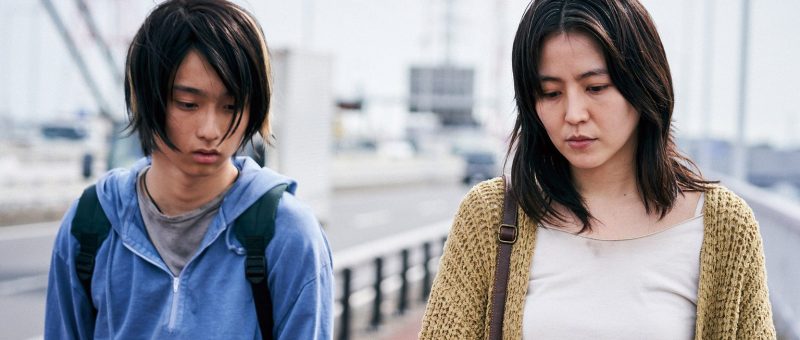
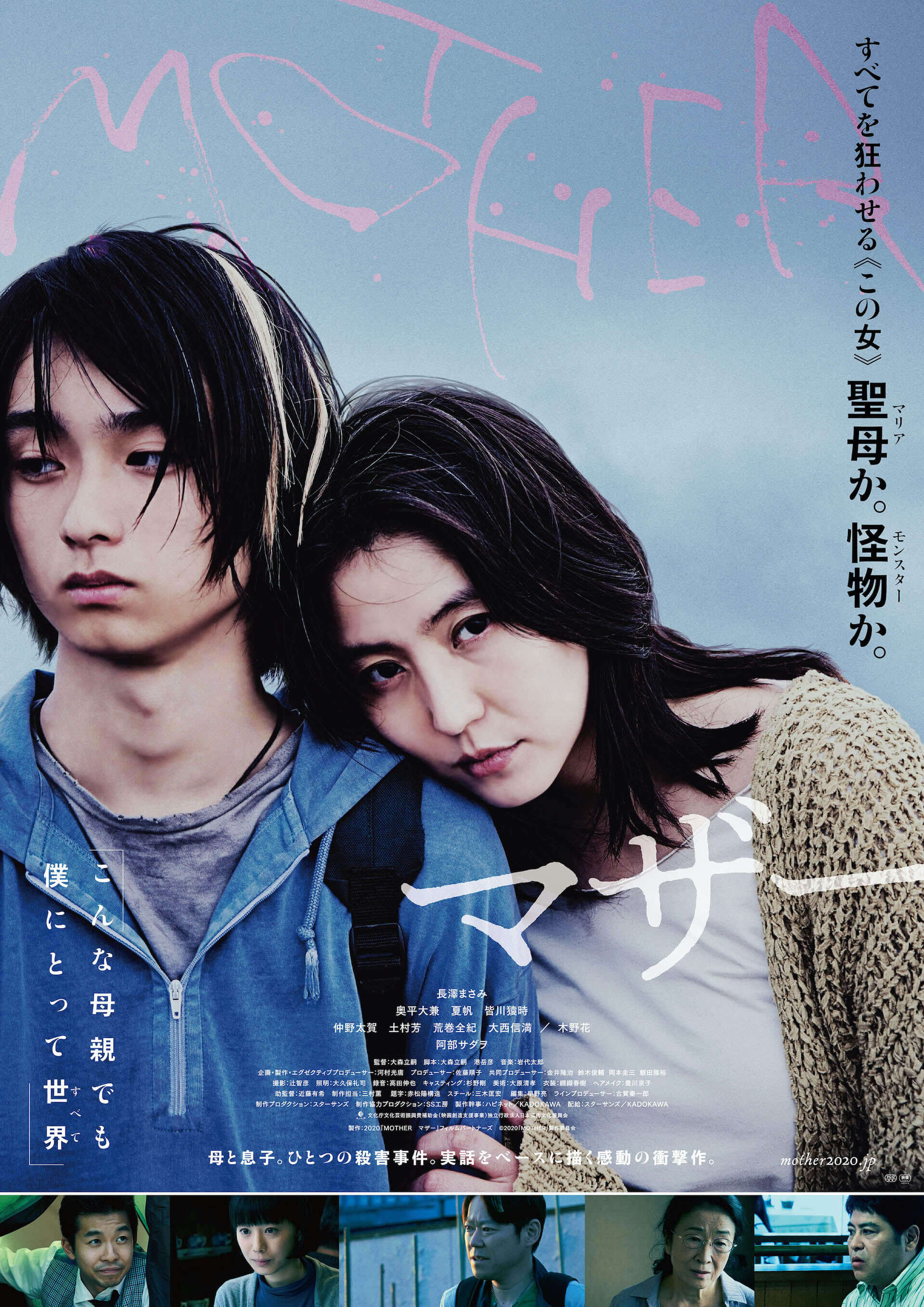
“Everything about my life has been wrong anyway. But is it wrong to love my mother?” the wounded hero of Tatsushi Omori’s gritty drama plaintively asks, and in his case it’s a complicated question. Inspired by a real life case in which a young man murdered his grandparents, Mother (MOTHER マザー) asks how and why such a thing could have happened and points its fingers firmly at corrupted maternity in the form of its extremely toxic matriarch Akiko (Masami Nagasawa) whose twisted, possessive “love” for her children makes them mere victims of her narcissistic emotional abuse and constant need for validation through male attention. 

Our first introduction to Akiko finds her ditching work to meet her young son Shuhei (Sho Gunji) on the way home from school, inappropriately licking the graze on his knee like a grinning mother cat. She then drags him to her parents for an awkward family meeting, her mother refusing to meet her gaze everyone aware she’s there to extort more money from them which, contrary to her promises of having a well paying job lined up, she will almost certainly blow on pachinko. Her father takes pity on them and gives Shuhei a few notes on the sly, but it’s not long before Akiko has decamped to a nearby video arcade which is where she meets Ryo (Sadao Abe), a host from a host club in Nagoya with whom she begins a steamy relationship. Deciding to return with him, Akiko dumps Shuhei with Ujita (Sarutoki Minagawa), a local council worker she’s been flirting with to get her child support benefits sorted out, and takes off. For unclear reasons, however, Ujita declines to let Shuhei stay in his home, leaving him in Akiko’s apartment which has no access to hot water and eventually no electricity seeing as she almost certainly neglected to pay the bill, meaning he can’t even heat up the packets of instant noodles Ujita bought for him either eating them dry or visiting the local combini. 

At this point, Shuhei is a young child who knows no other life and of course loves his mother. Though she emotionally abuses and manipulates him, he has no real choice not do what she says, including agreeing to lie when she and Ryo attempt to blackmail Ujita by threatening to accuse him of molesting Shuhei while they were away. She wilfully uses his cute kid appeal, sending him alone to badger her parents for money (which they refuse), or tap his estranged father for extra cash for a “school trip” even though Akiko hasn’t let him go to school in months and has already blown the child support he sends every month on pachinko. Yet however much he’s beginning to resent the way she uses him, she’s still his mother and there’s a twisted kind of love there along with a toxic co-dependency that locks them into a constant cycle of need and resentment. 

That’s not to say there aren’t ways out. Every time the glimmer of a better life appears, Akiko’s self-destructive impulses kick back in. A teenage Shuhei (Daiken Okudaira) gets a job as a welder with a kind man who can see his family’s struggling and wants to help, but Akiko can’t let go of Ryo who is apparently on the run from debt collectors. The same thing happens again after the family become homeless, a well-meaning social worker, Aya (Kaho), helping to get Shuhei into a catchup education program for others like him who’ve missed out on schooling for one reason or another, but Akiko doesn’t like anything that reduces her influence over her children and fails to understand Shuhei’s desire to at least be as knowledgable as other kids his age. She tells him that no one likes him, that he’ll be bullied wherever it is he goes, that only she will tolerate him and though he can see it isn’t true, no one is mean to him at school and his social worker is actively trying to help him, he can’t help believing her lies. 

They’re my children, I can do with them as I wish Akiko repeatedly snarls at those who attempt to interfere, viewing Shuhei and his younger sister Fuyuka (Halo Asada) more like minions than kids raised to do her bidding as tools or extensions of her own will yet as unable to cope without them as they are without her. Sympathetic social worker Aya, herself a survivor of childhood abuse, reminds Shuhei that he has the option to separate from his mother but he remains unconvinced. Ironically, her mad, cack-handed plan for riches will eventually separate them in her incitement to violence, Shuhei perhaps in a sense relieved knowing the state will take better care of him than his own mother ever had and perhaps he’ll even be allowed time to read, but he loves her all the same and continues to protect her despite himself hopeful only that his younger sister will escape the same fate. Is it wrong to love a mother whose “love” for you is at best toxic? Perhaps not, but it is in its own way a tragedy all the same. 


Mother is currently available to stream via Netflix in the UK (and possibly other territories)

International trailer (English subtitles)