Between the White Key and the Black Key (白鍵と黒鍵の間に, Masanori Tominaga, 2023)

The hero of Masanori Tominaga’s Between the White Key and the Black Key (白鍵と黒鍵の間に, Hakken to Kokken no Aida ni) looks up and declares that it’s not Jazz if you can’t the stars, quoting Charlie Parker but mired in artistic compromise amid the heady air of Bubble-era Ginza. Adapted from the 2008 memoir of jazz pianist Hiroshi Minami, the film’s surrealist conceit sees two eras overlap confronting a jaded bandman with his naive, earnest younger self while looking for a path back towards “real” jazz.

The intentionally confusing opening sequences introduces us to Hiroshi (Sosuke Ikematsu), dressed in white, a young man with romantic jazz dreams slumming it in a moribund cabaret bar, and Minami dressed in a smooth black and wearing sunshades now the top pianist at the area’s most prestigious bar. Chaos ensues when Hiroshi, intimidated by a recently released yakuza, innocently plays his request of the Godfather Waltz without realising that the song is prohibited, only the local yakuza chairman is allowed to request it. Minami is, meanwhile, the only musician apparently allowed to play the boss’ favourite tune, but it’s a double-edged sword. He’s come to hate his life of soulless playing and feels trapped as the chairman’s favourite while secretly plotting his escape to study real jazz in America.

Irritated by the attitude of American guest singer Lisa, Minami explains that the musicians are really just decoration. At the height of the Bubble-era the bars are full of people with too much money looking to show it off. No one really cares about jazz or even about music so no one pays them any attention. Minami has long since got used to this, but is also crushed by his sense of artistic inauthenticity and declares himself sick of making music that doesn’t come from his soul.

Perhaps the rest is mere fever dream, but in the cyclical turn of events Hiroshi’s godfather faux pas comes back to haunt him, stalked by the recently released yakuza who follows him like a ghost while simultaneously dealing with the chairman’s apparent crisis which may send him abroad and change the local hierarchy forever. In the increasing surreality, the two periods overlap and influence each other as Minami is confronted by artistic compromise and forced to quite literally confront himself in a dirty alleyway while his opposite number claims that they already are in America and have been for some time.

To that extent it’s Minami who is caught between the black and white keys, looking for the sweet spot between the ability to play real jazz and the economic and social realities of his life as a Ginza bandman suffering with what he calls “bar musician disease”. His former mentor had told him that he needed to learn to play more “nonchalantly” which is advice somewhat difficult to understand but perhaps implies that Hiroshi Minami needs to learn to let himself go, to struggle less with anxiety and just play as if it were as easy as breathing. To that extent, what Minami has discovered is the wrong kind of nonchalance. Told that his job is only really to sit there and add to the false sense jazzland sophistication, he’s lost himself between the gangsters and the high rollers and is at a crossroads of an artistic crisis that maybe about to fracture his mind.

Tominaga does his best to capture an anarchic sense of a world bent out of shape and filled with surrealistic absurdity as Minami seems to see events replay with different outcomes and encounters various bizarre incidents around the back alleys of Ginza clubland themselves an incongruous mix of high class sophistication and sleaziness in which gangsters still rule the roost. Consequently the other players in Minami’s psycho drama remain largely cyphers, themselves part of the furniture in this weird mental landscape in which violence appears cartoonishly and in silence, never really connecting and irony rules in the petty gangsters who see the the Godfather Waltz as their song. In any case, Minami seems to recover himself, partly thanks to a vision of his oblivious mother retuning to him something that was lost, in the simple act of sitting down to play as if it were the beginning once again, or perhaps it really is, more acquainted with the music of his soul.


Between the White Key and the Black Key screens in New York July 10 as the opening night of this year’s JAPAN CUTS.

Original trailer (no subtitles)
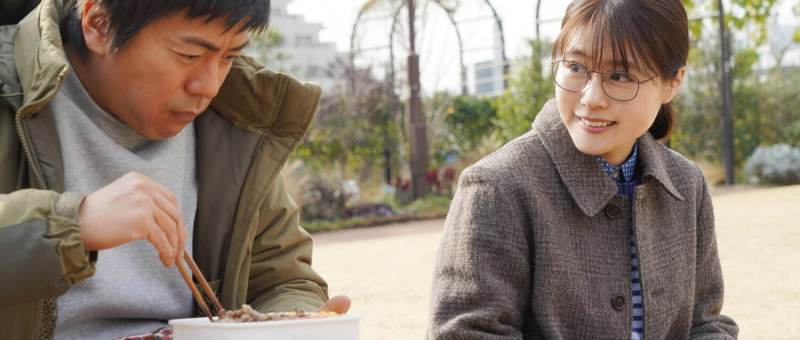
Prior Convictions (前科者, Yoshiyuki Kishi, 2022)

An earnest young woman finds herself questioning her way of life after one of her charges is implicated in a spate of murders in Yoshiyuki Kishi’s social drama Prior Convictions (前科者, Zenkamono). As the double meaning of the English title implies, the issue is as much about preconceived notions and unfair judgements as it is about “crime”, its causes and legacies, while ultimately arguing for a more compassionate approach to law enforcement which prizes healing and rehabilitation over meaningless punishment. 

Kayo (Kasumi Arimura) is what’s known as a volunteer probation officer which is to say that she assists those who’ve recently been released from prison to reintegrate into mainstream society so that they can live comfortable lives within the law. She is not however a civil servant and though making regular reports to an official probation officer has very little power and no pay for her work which can at times be difficult and emotionally draining especially considering that she also needs to work a regular job in a convenience store to support herself. In what seems like a very poor safeguarding decision, she meets most of her clients in her own home where she lives alone one of them even breaking in while she’s not there for an impromptu hotpot party. 

While she is exasperated by some of her charges such as a woman who can’t seem to stick to a regular job no matter how many she finds her, Kayo is incredibly proud of her work with Kudo (Go Morita), a quiet and soulful middle-aged man who was convicted of murder after stabbing a co-worker who had been bullying him so badly that he lost the hearing in one ear. Kudo had been struggling to reconcile himself to his crime, intensely worried that while unable to understand why he did it he might end up doing it again. When Kudo suddenly disappears after being linked to a series of suspicious deaths most assume the worst, but Kayo alone refuses to believe that Kudo could be the killer and is determined to find out what’s really going on if only to vindicate her conviction that her work is good and useful rather than naive and misguided as some including intense police officer Takimoto (Hayato Isomura) seem to see it. 

As Kayo later reveals she’s carrying some baggage herself which contributed to her decision to begin working with those who’ve been convicted of crimes, but is doing it with the aim of reducing suffering and ending the cycle so that there are no more victims or victimisers. Also wounded, Takimoto tells her that murderers aren’t human and can never be rehabilitated, while she’s forced to consider the problem from all angles meeting with a lawyer (Tae Kimura) who defended an abusive husband who murdered his wife and learning that she did so for similar reasons to herself certain that he too deserved a second chance and could perhaps be reformed if given the proper treatment. Kayo sees that many of the people she meets ended up committing crimes because of traumatic personal circumstances and if someone had helped them earlier they may not have offended in the first place. She can’t change the past but at least in helping them now she might prevent further crimes in the future while giving them a source of stability as they attempt to root themselves more firmly in mainstream society. 

Inspired by Masahito Kagawa’s manga, Prior Convictions was previously adapted into six-part WOWWOW TV drama to which the film is technically a sequel though fairly stand alone in its gentle unpacking of Kayo’s own unresolved trauma and subsequent epiphanies as regards her relationships with those she’s trying to help. As one young woman puts it, they find her vulnerability reassuring in contrast to the often authoritarian, didactic approaches taken by law enforcement and social services who only talk down to them from a condescending place of superiority rather than trying to meet them on a more human level. In the end it’s about healing, trying to find an accommodation with the traumatic past and limiting its legacy to break the cycle of pain and violence. The prior convictions which most need addressing are those of a judgemental society that all too often contributes to the mechanisms of violence in seeking to punish rather than to help.


Prior Convictions screened as part of this year’s Camera Japan.

International trailer (English subtitles)

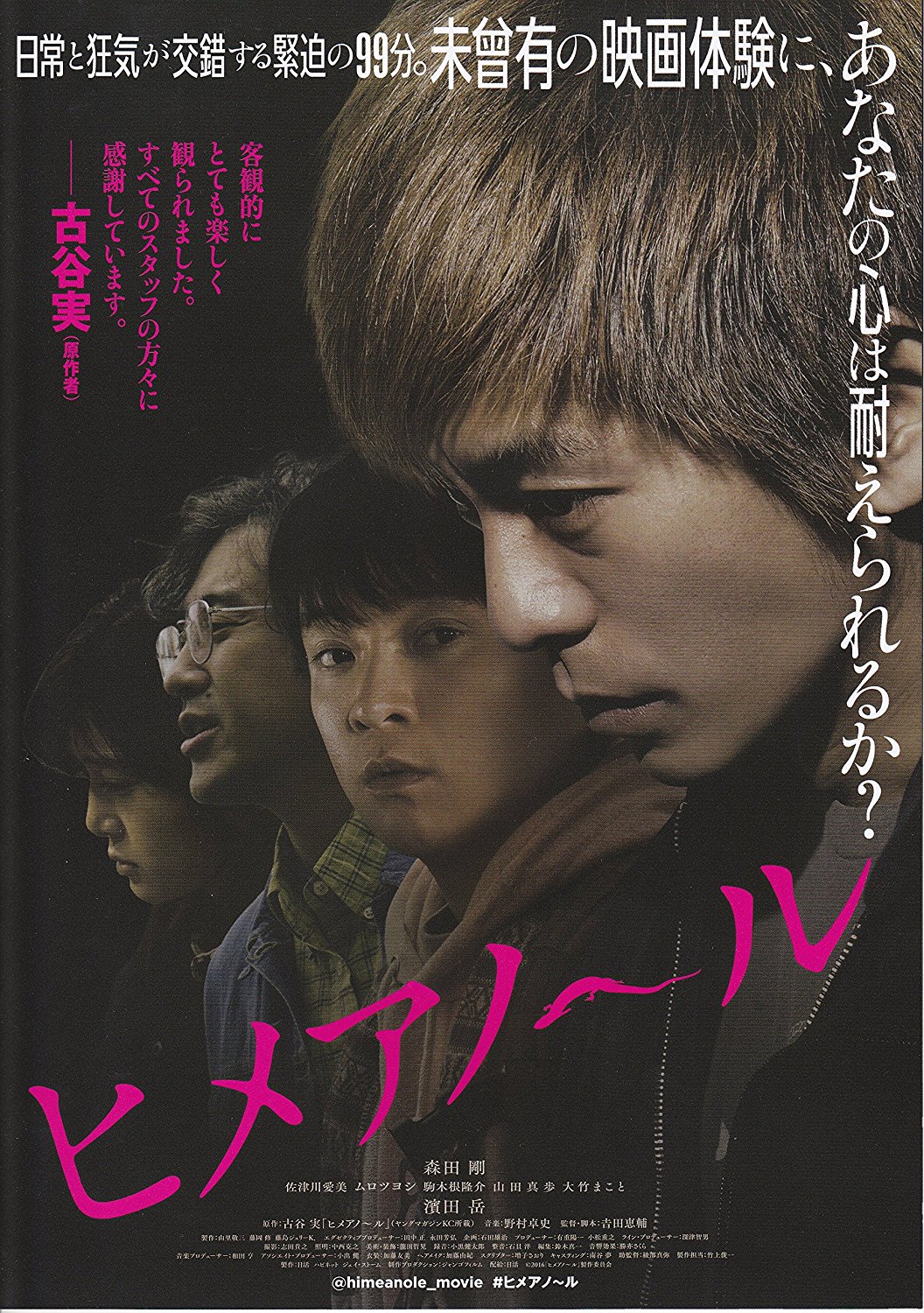
Hime-anole (ヒメアノ~ル, Keisuke Yoshida, 2016)

hime-anole posterSome people are odd, and that’s OK. Then there are the people who are odd, but definitely not OK. Hime-anole (ヒメアノ~ル) introduces us to both of these kinds of outsiders, attempting to draw a line between the merely awkward and the actively dangerous but ultimately finding that there is no line and perhaps simple acts of kindness offered at the right time could have prevented a mind snapping or a person descending into spiralling homicidal delusion. To go any further is to say too much, but Hime-anole revels in its reversals, switching rapidly between quirky romantic comedy, gritty Japanese indie, and finally grim social horror. Yet it plants its seeds early with two young men struggling to express their true emotions, trapped and lonely, leading unfulfilling lives. Their dissatisfaction is ordinary, but these same repressed emotions taken to an extreme can produce much more harmful results than two guys eating stale donuts everyday just to ask a pretty girl for the bill.

Okada (Gaku Hamada) is a young man lost. He has a dead end construction job he doesn’t like and isn’t particularly good at, but treading cement all over the finished floors at least helps him bond with his mentor, Ando (Tsuyoshi Muro), who seems to view him as a friend even if constantly referring to him as “Okamura”. Okada takes the opportunity to explain his malaise to Ando – that he feels his life slipping away from him in its emptiness, going through the motions with no real hobbies or girlfriend to give his existence meaning. Ando does not really understand this, he says dissatisfaction is natural and the driving force of all life but, on the other hand, he is not particularly dissatisfied because he lives for love!

Ando has a crush on a girl at the local cafe, Yuka (Aimi Satsukawa), who actually hasn’t noticed him because she’s pre-occupied with the blond guy who got there before Ando and sits outside everyday just staring at her. Luckily or unluckily, the guy in question, Morita (Go Morita), is an old high school acquaintance of Okada’s and so Ando asks him to find out what’s going on with this scary looking guy and his angelic lady love.

So far, so Japanese indie rom-com, but when the title card flashes up about a third of the way in, we’re in very different territory. Suddenly the colour drains from the screen and Yoshida changes his aesthetic and shooting style almost entirely. Gone is the comforting, slightly washed out colour scheme and the static, middle-distance camera of the opening. Now we are the voyeur, held helpless behind Yoshida’s erratic shaky cam, hiding behind the bins as Morita goes about his bloody business. Morita’s world is dark yet realistic, he’s shot and positioned with the arch naturalism familiar to the Japanese indie and the violence he inflicts is not movie violence, it is shocking, sickening, and visceral.

Hime-anole does not shy away from the consequences of its actions. This is, in a way, its point. At one time or another everyone concludes the increasingly surreal events they become engulfed in must be all their fault because they all have at some point acted in a way they do not quite approve of. Guilt is another of the emotions that is hard to express, especially when it’s mixed with humiliation or fear, but left unaddressed it is these corrosive agonies which develop into deep psychoses. Morita, a violent sociopath, was once (or so it would seem) an ordinary young boy who liked video games and had few friends. Perhaps if he hadn’t been the victim of humiliating, sadistic treatment, or if someone had found the courage to stand up for him, none of this might be happening.

Then again, the world is a strange place filled with people who have trouble deciding where the lines are when it comes to appropriate behaviour. Poor Yuka seems to have become something of a nutter magnet, stalked by two guys at the same time and chatted up in the street by persistent suitors who only leave her alone when they realise she’s waiting for another man. Okada is the only man who’s treated her like a regular human being for a very long time so it’s no surprise that she begins to prefer him to his awkward friend. Ando is, it has to be said, odd. Convinced Yuka is the one for him yet completely uninterested in her feelings, he vows to persevere. Yet for all his talk of chainsaws, Ando is basically harmless (to others at least) and just another lonely guy who doesn’t know how to express himself in way in which he will be understood. Morita, by contrast, is instantly creepy and has no interest in connection, he only wants to take and possess in a kind of ongoing vengeance for truly horrific events in his childhood following which something inside him became very broken.

That Hime-anole ends with a Brazil-style fantasy only adds to its strangely melancholy air as it insists on sympathy for the devil even whilst showing each of his sadistic crimes for the ugly, bloody messes they really are. Maybe the reason everybody feels they’re to blame is that in some way they are yet everyone has done things they regret or aren’t proud of, wishing they’d done things differently or managed to find the courage to do what they thought was right rather than choosing to protect themselves or keep their head down when they could have saved someone else pain. Betrayals can be small things, but they fester – like those unspoken emotions which were making our guys so unhappy in the first place. There are no innocents in Hime-anole save perhaps for the ones pushed further than they could endure, but there are those finally facing up to their own flaws and attempting to do things differently now they know better. If that’s not progress, what is?


Original trailer (no subtitles)

Hold Up Down (ホールドアップダウン, SABU, 2005)

hold-up-downReteaming with popular boy band V6, SABU returns with another madcap caper in the form of surreal farce Hold Up Down (ホールドアップダウン). Holding up is, as usual, not on SABU’s roadmap as he proceeds at a necessarily brisk pace, weaving these disparate plot strands into their inevitable climax. Perhaps a little shallower than the director’s other similarly themed offerings, Hold Up Down mixes everything from reverse Father Christmasing gone wrong, to gun obsessed policemen, train obsessed policewomen, clumsy defrocked priests carrying the cross of frozen Jesus, and a Shining-esque hotel filled with creepy ghosts. Quite a lot to be going on with but if SABU has proved anything it’s that he’s very adept at juggling.

Christmas Eve – two guys hold up a bank whilst cunningly disguised as Santas, but emerging with the money they find their getaway car getting away from them on the back of a tow truck. Still dressed as Father Christmases, the guys head for the subway and decide to stash the cash in a coin locker only neither of them has any change. After robbing a busker at gunpoint for 800 yen, the duo get rid of the loot but the guy chases after them at which point they lose the key which the busker swallows after being hit by a speeding police car. Trying to cover up the crime the two policeman bundle him into the car but crash a short time later at which time the busker gets thrown in a lake and then retrieved by a defrocked priest under the misapprehension that he is Japanese Jesus!

Following SABU’s usual spiralling chase formula, events quickly escalate as one random incident eventually leads to another. Christmas is a time of romance in Japan, though encountering the love of your life during a bank robbery is less than ideal. After a love at first sight moment heralded by a musical cue, the thieves head back on the run with the girl in tow but the course of true love never did run smooth. If romance is one motivator – death is another. On this holiest of days, our defrocked priest is caught in a moment of despair, contemplating the ultimate religious taboo in taking his own life and ending the torment he feels in having failed God so badly. Therefore, when our scruffy hippy busker washes up right nearby he draws the obvious conclusion – Jesus has returned to save him! Attempting to make up for his numerous mistakes, the priest is determined to save and preserve his Lord, but, again, his clumsiness results in more catastrophes.

The situation resolves itself as each of the players winds up at the same abandoned hot springs resort which turns out to be not quite so closed down as everyone thought. Filled with ghostly charm, the gloomy haunted house atmosphere sends everyone over the edge as they thrash out their various issues as if possessed by madness. Culminating in a sequence of extreme slapstick in which everyone fights with everyone else and frozen Jesus plays an unexpectedly active part, Hold Up Down brings all of its surreal goings on to a suitably absurd conclusion in which it seems perfectly reasonable that those wishing to leave limbo land could take a 2.5hr bus trip back to the afterlife.

Pure farce and lacking the heavier themes of other SABU outings, Hold Up Down, can’t help but feel something of a lightweight exercise but that’s not to belittle the extreme intricacy of the plotting or elegance of its resolution. An innovativeIy integrated early fantasy sequence begins the voyage into the surreal which is completed in the strangely spiritual haunted house set piece as the disillusioned priest spends some time with congenial demons before attempting to make his peace with God only for it all to go wrong again. If there is a god here, it’s the Lord of Misrule but thankfully they prove a benevolent one as somehow everything seems to shake itself out with each of our troubled protagonists discovering some kind of inner calm as a result of their strange adventure, as improbable as it seems (in one way or another). Christmas is a time for ghost stories, after all, but you’ll rarely find one as joyful as Hold Up Down.


Scene from the end of the film:

The Fallen Angel (人間失格, Genjiro Arato, 2010)

fallen-angelThe Fallen Angel (人間失格, Ningen Shikkaku), based on one of the best known works of Japanese literary giant Osamu Dazai – No Longer Human, was the last in a series of commemorative film projects marking the 100th anniversary of the author’s birth in 2009. Like much of Dazai’s work, No Longer Human is semi-autobiographical, fixated on the idea of suicide, and charts the course of its protagonist as he becomes hopelessly lost in a life of dissipation, alcohol, drugs, and overwhelming depression.
Even when we meet him as a small child, Yozo Oba (Toma Ikuta), feels himself set apart from his peers. Unable to connect fully with the people around him, Yozo gets through life by playing the clown. As a teenager, he meets another boy, Takeichi, who can see straight through his mask and encourages him in his artistic pursuits. Eventually, Yozo moves to Tokyo where he meets another artist, Horiki (Yusuke Iseya), who introduces him to the seedier pleasures of the city including drinking and hostess bars.

Yozo still feels adrift and is unable to cement his new found friendship with true connection. After asking Horiki to die with him (which he laughingly refuses to do), Yozo begins an ill-starred romance with a melancholy bar hostess with whom he does actually attempt double suicide. She dies, he doesn’t but his life is changed when he loses access to his familial wealth and is kicked out of university because of the scandal. Yozo has another shot at conventional happiness by briefly forming a family with a single mother and her little girl before leaving them because of problems resulting from his alcoholism. Eventually marrying a kind hearted woman, Yozo kicks the booze for a while and builds a career in manga but sure enough Horiki finds him and ruins his marital bliss by setting him back on the road to dissipation.

Arato makes a few changes to Dazai’s novel, mostly streamlining the book’s tripartite structure by eliding two events into one, but perhaps because of the well known nature of the story, he feels comfortable in making abrupt cuts and wide ranging shifts in terms of time. Dazai’s novel is much more focussed on the mental condition of its protagonist, whereas Arato has opted for a more overt display of the increasingly tense political environment with soldiers lurking in the background, later occupying a train shortly before the scene turns into a surreal segment in which Yozo reacquaints himself with all those he’s wronged throughout the course of the film.

Yozo’s tragedy is his inability to connect with other people even though he leads an ostensibly successful social life. Making himself an amiable presence, Yozo keeps people around him by making himself a figure of fun – a mask which gradually becomes far too heavy to wear. This buffoonish aspect of his personality is not very much in evidence in Arato’s film which focusses much more on his underlying depression than the joviality he uses to try and prevent anyone noticing just how broken he is inside. For this reason it becomes harder to see why everybody lets Yozo get away with his extremely bad behaviour for so long. Toma Ikuta captures Yozo’s listlessness and despair but without the necessary intensity to back them up and, ironically, without his sad clown routine Yozo does not always seem like someone anyone would want to hang out with for any great length of time.

Arato has recreated the novel’s pervading sense of numbness and despair to the letter with the consequence that his film remains resolutely cold. As appropriate as that may be, it makes it harder to achieve the kind of connection forged through Yozo’s first person narrative in the book. This approach brings out Yozo’s unpleasant qualities – his selfishness, weakness, cowardice, and propensity to addiction, but fails to display his better ones which lead to him being characterised as the ruined “angel” of the title. In distancing us from Yozo, Arato encourages us to see him either as a metaphor for the political turmoil taking place in his country during his lifetime, or simply as a someone whose intense self loathing eventually destroys his sense of self. What it does not encourage us to do is see that Yozo’s struggle is our own struggle, his despair is our despair felt to a greater or lesser degree. Too obtuse to be affecting, The Fallen Angel fails to capture the overwhelming nihilism of Dazai’s novel and ironically remains far too distant to achieve true connection.


Original trailer (no subtitles)

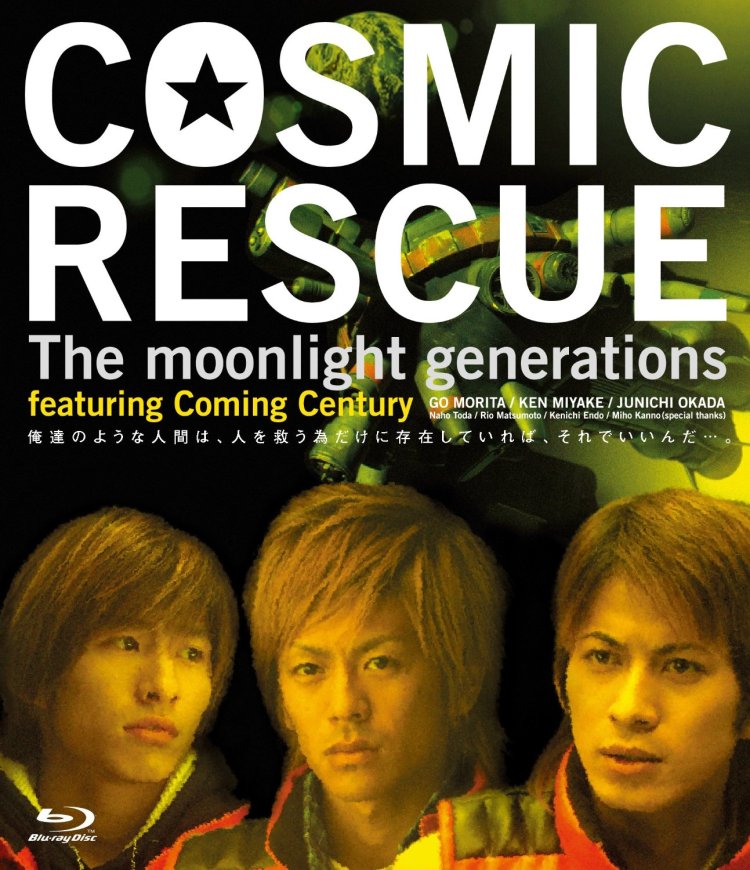
COSMIC RESCUE -The moonlight generations- (コスミック・レスキュー ザ・ムーンライト・ジェネレーションズ, Shinsuke Sato, 2003)

Cosmic RescueIt’s often posited that Japan rarely produces “science fiction” literature or movies and some say that’s because, well, they already live there. However, this isn’t quite true, there are just as many science fiction themed projects to be found in Japan as elsewhere you just have to look a little harder to find them. Depending on your point view, if you succeed in tracking down a copy of Cosmic Rescue -The moonlight generations- (コスミック・レスキュー ザ・ムーンライト・ジェネレーションズ), you may feel the quest was not entirely worth the effort.

Starring the younger half of the Johnny’s idol group V6 (referred to as “coming century”), Cosmic Rescue takes place in 2053 when space travel has become easy and commonplace enough to require the presence of galaxy wide emergency services. Cosmic Rescue is the AA of space travel – they float around waiting for disaster to strike whereupon they will swoop in and rescue those in peril among the stars.

However, the three crew members of the rundown rescue ship from the 89th Division of Japanese CR mostly spend their days clearing crash debris and changing batteries. The rookie of the group Sawada (Junichi Okada) longs for a spot of heroism just like in his favourite manga which inspired him to join the CR in the first place, whereas ship’s engineer Eguchi (Ken Miyake) gets on with the day to day work of maintaining the ship while the captain Nanjo (Go Morita) mopes about slumming it with this lowly crew of cleanup artists despite being a CR legend after he was involved in a heroic rescue which cost the life of his best friend. However, when Sawada receives an emergency distress call from a young woman who claims to the be sole survivor of a space crash, the gang find themselves embroiled in a corporate conspiracy.

Directed by a young Shinsuke Sato who would later go on to become one of the most successful directors of mainstream Japanese blockbusters including Gantz and Library Wars among other smash hit franchises, Cosmic Rescue is a very competently made science fiction adventure given its obvious budgetary constraints. It’s fair to say that it’s largely been created as a vehicle for its three (hugely popular) leading men and so falls back on their charisma to plug any holes in the rather generic script and lack of production values but generally acquits itself pretty well.

That said, there are no shoehorned in singing sections and even if a low budget, televisual atmosphere remains there’s still a fun sci-fi adventure underpinning it all. Sawada is the ostensible lead as he longs to prove himself as a real “hero” by saving lives in space just like his captain had done before yet Nanjo’s story becomes equally important as he battles to overcome the guilt and fear he feels after losing his friend in an earlier mission. Engineer Eguchi gets a little sidelined in a technical role but each of the three guys get fairly equal weighting as members of the maverick, underdog space crew who are going to expose this mass conspiracy and save the damsel in distress no matter what the cost.

There is a (fairly trite) message here spelt out in voice over at the end of the film that it’s easy to forget who you are when you’re used to being “tied down” by gravity but if you can’t learn to save yourself you won’t be able to save anyone else. Cosmic Rescue is what it is – it isn’t really pretending to have any kind of deeper message other than showcasing its leading actors in a fun, slightly retro space adventure. Though a fairly low budget, disposable affair aimed squarely at fans of the band, Sato adds some interesting direction plus a vaguely 1960s inspired production design which help to lift the proceedings above the bonus feature category.


The Japanese release of Cosmic Rescue includes English subtitles!

Unsubbed trailer: