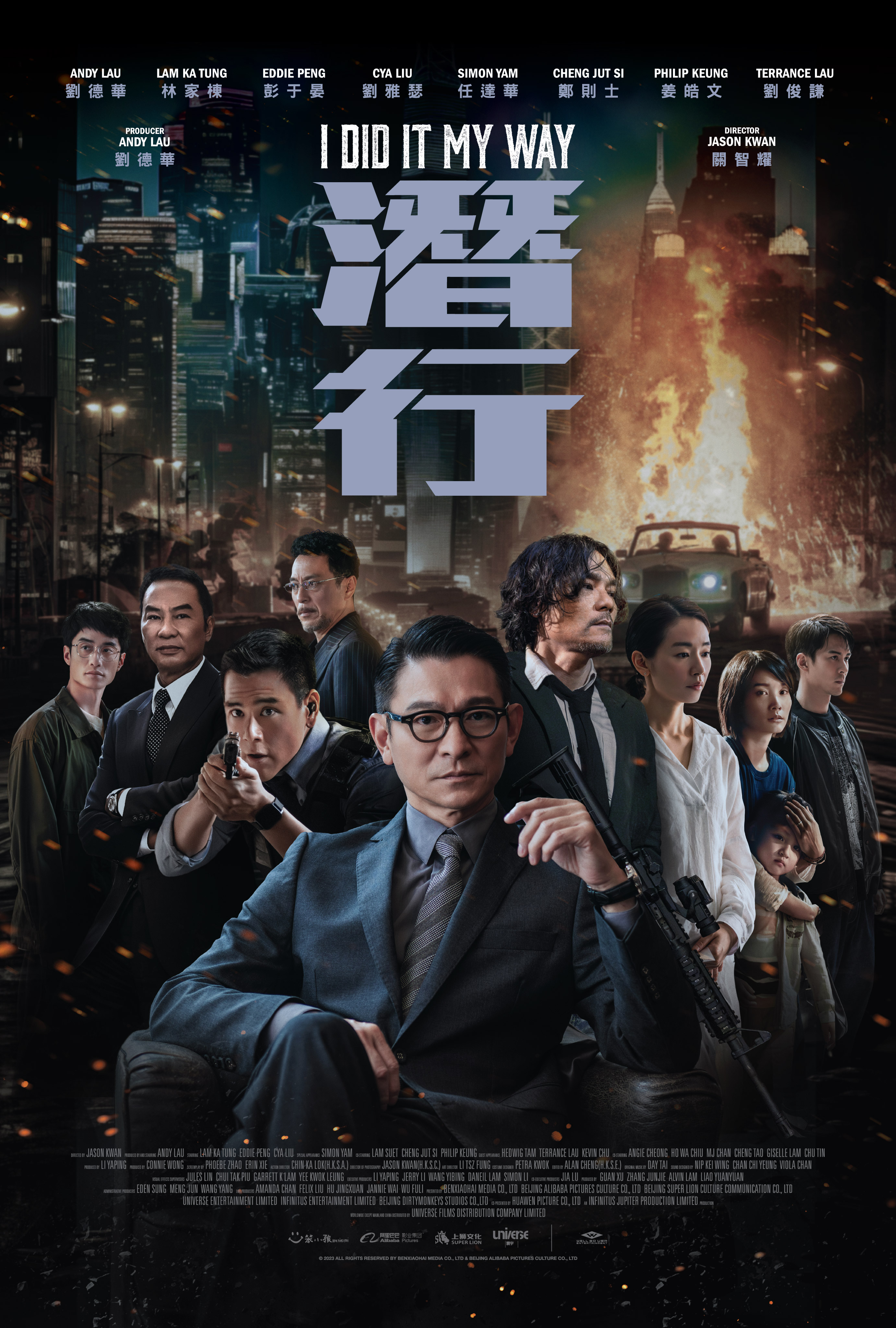
I Did It My Way (潛行, Jason Kwan, 2023)

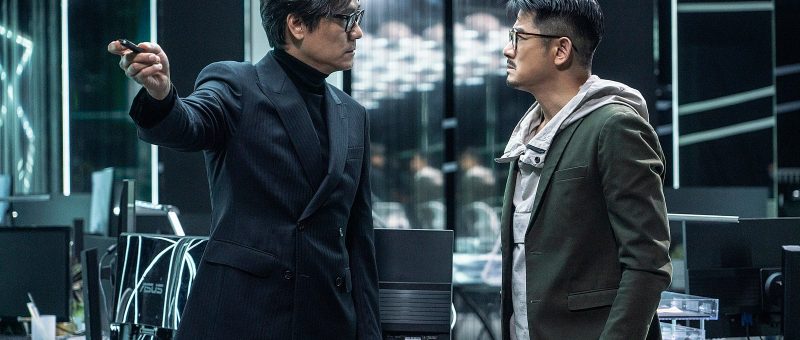
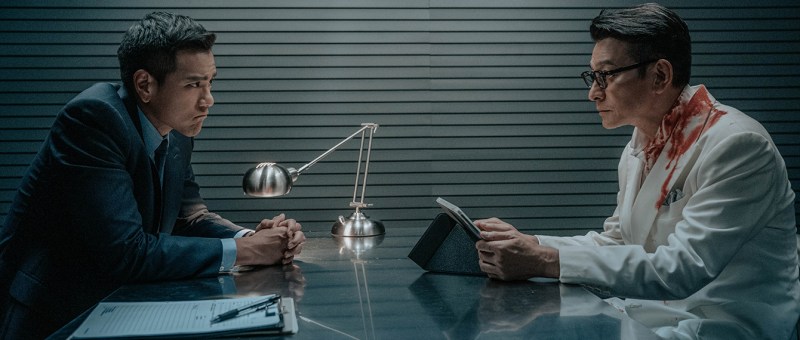
“Oldies are still the best,” one bad guy tells another while listening to a retro pop song about the inability to distinguish good from evil, “life was simpler back then.” Jason Kwon’s I Did it My Way (潛行) is in many ways an attempt to recapture the action classics of the 90s starring many of the same A-listers though they are all 30 years older and in some cases really ageing out of the kinds of roles they’re accustomed to playing in these kinds of films. Nevertheless, the action is updated for the contemporary era in its unsubtle messaging that drugs and cyber crime are bad, while the police are definitely good and will always win.

Indeed, barrister George Lam (Andy Lau Tak-wah) is not a particularly sympathetic villain and is given little justification for his crimes save doing things his way. Cybercrime specialist Eddie Fong (Edward Peng Yu-Yan) isn’t terribly sympathetic either, but mostly because of his bullheaded earnestness. Chung Kam-ming (Simon Yam Tat-wah) asks him to work with regular narcotics cop Yuen (Lam Suet), but Eddie originally refuses, insisting that they formed their new cybercrimes squad because the “old ways” weren’t working, so it’s better that they keep their investigations separate, which is of course quite rude to Yuen especially as he goes on to add that Chung’s only asked him out of politeness and professional deference. Chung, however, reminds them that they’re all part of one big family and should learn to work together. 

One might think that a criminal enterprise is also a kind of family, but it’s shown to be illegitimate in comparison to that of the police. Yuen’s undercover agent, Sau Ho (Gordon Lam Ka-tung), has a family he’s trying to protect, as does Lam who is about to marry his much younger pregnant girlfriend. For them, family is also a weakness because it gives them a reason to be afraid not to mention something to lose. Beginning to suspect him, Lam uses Sau Ho’s wife and son as leverage, symbolically taking them hostage along with Sau Ho’s promised future that would allow him to emigrate for a life of freedom under a new identity. 

Like the song says, Sau Ho is also struggling to define his identity as an undercover cop caught between his original desire to fight crime and the criminal lifestyle he’s been forced to live which leaves him never quite sure what side he’s actually on. Lam claims he only started dealing drugs after his girlfriend was raped and subsequently developed depression but that’s too late for him to turn back and so he’s gone all in. There is a kind of brotherhood that arises between them that’s permanently strained by their positioning on either side of this line and the inevitability of confrontation. Fong promises to save Sau Ho, but he failed to save most of their other undercover officers, while Sau Ho and Lam pledge to save each other, though the act of salvation could mean different things to each of them while both torn between their respective codes and the natural connection that’s been fostered by their long years working together as part of the gang. 

The severing of this connection is again part of the price for their involvement with crime, with Lam led to believe that his choices have ironically robbed him of the pleasant familial future he dreamed of, while Sau Ho is returned to the familial embrace of the police force. Chung is repositioned as a benevolent father who can save his men, while Eddie too is forced to reintegrate by working with the other officers to fight cybercrimes which often intersect with those of other divisions. While the film includes several action sequences, it also insists that the major battle takes place online between hackers and police computer specialists, dramatising these online fights with CGI to slightly better effect than 2023’s Cyber Heist but still struggling to move on from an outdated iconography of the web. Even so, it’s clear that crime never pays even if a policewoman asks herself if it’s really worth it on a trip to the police cemetery. The sun has come out once again, making the dividing line between good and evil clear if also reinforcing the paternalistic authority of law enforcement under which living life “my way” will never be tolerated.


I Did It My Way is available digitally in the US courtesy of Well Go USA.

Trailer (English subtitles)
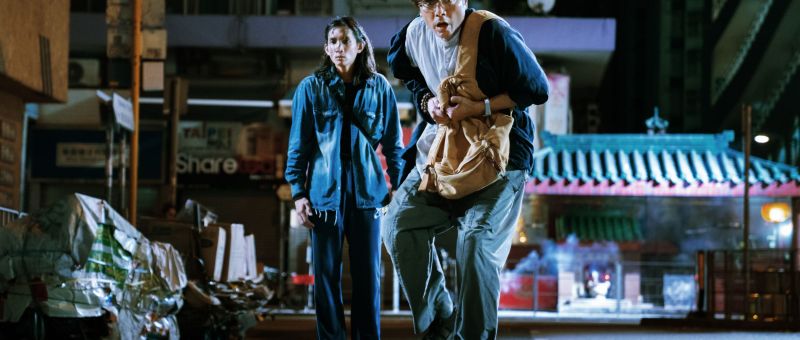
Mad Fate (命案, Soi Cheang, 2023)

“No one can stray from the path paved by fate.” a policewoman gasps while interrogating The Master (Gordon Lam Ka-Tung), a man whose mind was already strained even before he walked in on the murder of a woman he’d been trying to save only to end up losing to destiny. A noticeably lighter affair than his previous film Limbo, Mad Fate (命案) sees Soi Cheang (AKA Cheang Pou-soi) step into the Milky Way orbit directing a screenplay by Yau Nai-hoi produced by Johnnie To and very much bound up with the kinds of cosmic coincidences the studio is known for.

It’s Fate or maybe God that The Master is resisting, though what the difference between the two might be is never quite clear save for the implication that it’s God who is master of Fate which is otherwise without will. The Master insists that “Fate can be changed,” but he resolutely fails to do so. In the opening sequence, he’s in the middle of burying a woman, May, alive as part of a ritual to stave off a forthcoming “calamity” only he’s unable to complete it in part because of the woman’s understandable anxiety that it’s The Master who’s going to end up killing her, and in part because it starts raining which puts out the paper clothing that should have been burnt to change her fate. May runs off and climbs in a taxi home where she is accosted by a serial killer who has been targeting sex workers. The Master follows her but arrives just too late while the police later chase the killer but are unable to catch him. 

The Master sees his attempts frustrated but also does not consider that the rain itself was a manifestation of Fate or sign that in the end nothing can be changed. In an effort to atone for his inability to save May, The Master ends up taking under his wing a strange young man who also stumbled on the murder by coincidence while working as a delivery driver but is fascinated rather than repulsed by the bloody scene. Obsessed with knives and killing, Siu-tung (Lokman Yeung) is already known to the policeman investigating (Berg Ng Ting-Yip) because he arrested him for killing a cat in his teens. According to The Master’s reading of his fate, Siu-tung will eventually kill someone and end up in prison for 20 years. He doesn’t much like the sound of that so he ends up going along with The Master’s zany plans to make him a nicer person and save two lives in the process. 

Ironically most of The Master’s suggestions still involve Siu-tung being imprisoned in some way. To get him out of his “unlucky” flat, he rents him another place that very much feels like a prison cell and later does actually lock him up inside a shed fearing that he’s about to kill. As he explains, it can help to preemptively accept your fate so moving in somewhere that is “like” a prison can stop you going there for real, but it doesn’t do much to alleviate Siu-tung’s desire to kill and most particularly to kill the policeman who has been following him most of his life because he’s “sure” that he’s going to commit a serious crime. Repeatedly describing him as “vermin”, the policeman has no confidence that Siu-tung could “change” and thinks he’s already past redemption while The Master quite reasonably asks if it’s fair to persecute him in this way just because he happened to be born different.

The Master’s question provokes another about free will and responsibility and if anything is really anyone’s fault if it’s all down to Fate in which case the role of the policeman becomes almost moot. He is also resisting his own fate in his intense fear of mental illness which he worries he will inherit from his parents each of whom suffered from some kind of mental distress. This fear has caused him retreat from life and it seems may have contributed another’s suicide while his divination has an otherwise manic quality as he finds himself constantly trying to outwit Fate. The two men soon find themselves in a battle with the skies, remarking that God is striking back every time they make a move to try and change their destiny. 

Eventually The Master rationalises that a plant must wither before it fruits, allowing himself to slip into “madness” as means of rejecting his fate. His strategies become wilder and finally seem as if they might lead him to kill which would certainly be one way of altering Siu-tung’s destiny if ironically, while conversely something does indeed seem to change for Siu-tung who is understandably concerned by The Master’s increasingly erratic behaviour but has escaped his desire to kill. Then again, could this all not be Fate too, how would you know if you’d overcome it? As The Master comes to accept, the path maybe set but the way you walk it is up to you. Only by accepting his Fate can he free himself from it. There may be a more subversive reading to found in Cheang’s depiction of Hong Kong as a rain-soaked prison in which lives are largely defined by forces outside of their control, but he does at least suggest that his heroes have more power than they think even if it relies on a contradiction in the active choice to embrace one’s fate. 


Mad Fate screens July 22 as part of this year’s New York Asian Film Festival.

Original trailer (Traditional Chinese / English subtitles)

Images: © MakerVille Company Limited and Noble Castle Asia Limited

Cyber Heist (斷網, Wong Hing-fan, 2023)

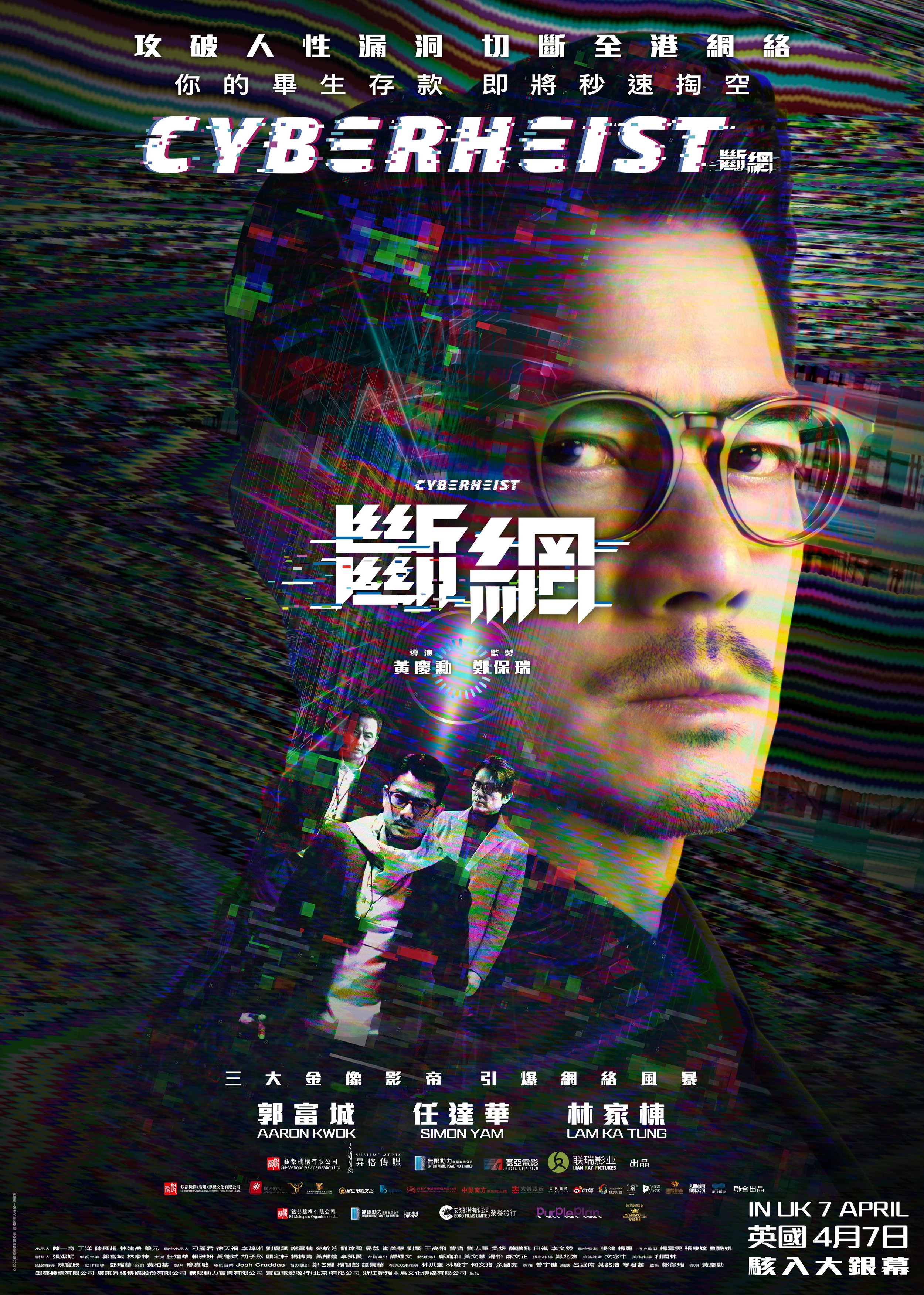
A cyber security expert is forced on the run after being framed for money laundering while trying to engineer a brighter future for his seriously ill little girl in Wong Hing-fan’s high octane techno thriller, Cyber Heist (斷網). In true B-movie fashion, the film’s visualisation of the digital world has a distinctly retro aesthetic while the plot may sometimes lack internal consistency, but what the film does have is a series of tense action sequences many featuring the hero desperately running around carrying the super secret information in a tiny robot doll. 

Chun (Aaron Kwok Fu-shing) is cyber security expert working for a top Hong Kong firm which provides technical services for local banks. The problem is that they keep getting hacked as criminal gangs take down banking services to run a complex money laundering operation. As it turns out, Chun was once a cyber criminal who spent time in prison for selling viruses on the dark web but has since reformed after becoming a father. His little girl, Bowie, is suffering from a serious heart condition and is currently on the transplant list but dreams of one day becoming an astronaut. 

It’s Bowie who provides the moral centre of the film in her constant refrain of “What are you doing, Daddy?” which Chun seems to hear every time he’s thinking of doing something nefarious. Clearly possessed of immense power in his technical knowhow Chun battles with himself as to how to use it responsibily. When Bowie is turned down for a place at an elite school, he considers simply hacking into their database and changing her records but thinks better of it before getting her a place the old fashioned way, by agreeing to make a sizeable “donation”. It doesn’t really seem like that’s a lot better in the grand scheme of things but does perhaps hint at the low level of corruption that has already seeped into everyday life. In any case, it’s Chun’s desperation for the money after being turned down for a loan by his boss, Chan (Gordon Lam Ka-tung ), that makes him vulnerable to intrigue when previous patsy Frankie (Kenny Wong Tak-bun) is killed in a mysterious “accident” after laundering more money than he was supposed to and then depositing the excess in his regular bank account.

Chun agrees to help the authorities in the form of cyber crimes inspector Suen Ban (Simon Yam Tat-wah) but soon finds himself on the run when ultra corrupt boss Chan kidnaps his daughter. Chan is also trying to protect his younger brother who was left with brain damage after being beaten by thugs working for shady gangster Mr Pong (Andy Kwong Ting-Wo) and is clearly not above reprehensible behaviour. It has to be said that the film’s conception of the way online infrastructure works has a distinctly B-movie quality. At one point, Chun’s experimental AI virus ends up accidentally destroying the entirety of the internet yet nothing really happens except for people becoming very confused by their now useless phones, and then Chun is somehow able to make everything OK again by simply rebooting it. 

Likewise, the film’s visualisation of the cyber world is heavily influenced by mid-90s William Gibson as a kind of virtual reality metaverse where hackers walk around in cyberspace while wearing creepy clear plastic masks. The space occupied by the money launderers is verdant and green, a beautiful cyber forest, while that of the dark web is pure grunge, a space of urban decay filled with dank and half finished buildings and peopled by edgy guys in hoodies wearing hacker chic. Even so, there’s a kind of charm in the retro aesthetics of ‘90s futurism along with the concurrent suggestion that the offline world is inescapably duplicitous and true techno guys are the only ones to be trusted. 

In any case, the money laundering scam is a kind of MacGuffin as Chun becomes increasingly irate while squaring off against his opposite number, Chan, and trying to prove himself as a responsible husband and father by saving his little girl and catching the bad guy not to mention clearing his name by helping the police. An old-fashioned man on the run thriller, Wong’s breathless camerawork follows Chun all over Hong Kong as he fights for his life and family against those who value nothing more than money while desperately trying to live up to his daughter’s expectations of what a good man should be in a world that online or off is already far from fair. 


Cyber Heist was released in UK cinemas courtesy of Magnum Films.

Original trailer (Traditional Chinese / English subtitles)

Anita (梅艷芳, Longman Leung Lok-man, 2021)

“I have the spirit of Hong Kong in me, I won’t resign to fate so easily” insists Anita Mui in a television interview following a year-long career break after a slap in a karaoke bar earned by standing up to a drunken gangster sparked a turf war and sent her into a temporary exile in Thailand. Running away wasn’t something Anita Mui was used to, though she had been it seems humbled by the experience and in Longman Leung Lok-man’s perhaps at times overly reverential biopic of the star who passed away of cancer at 40 in 2003, primed to rise stronger than before with greater focus and determination to serve the people of her home nation. 

Leung does indeed paint Anita (Louise Wong) as a daughter of Hong Kong, opening with her childhood as a vaudeville double act with self-sacrificing sister Ann (Fish Lew) in 1969. Jumping forward to 1982, the pair enter a TV talent competition but only Anita makes through to the final and then eventually wins launching herself into superstardom and path to success that later seems to her to have been too easy. Indeed, Leung frequently cuts to montage sequences featuring stock footage of the real Anita Mui receiving a series of awards and eventually moving into a successful film career with her appearance in Stanley Kwan’s Rouge bringing her best friend Leslie Cheung (Terrance Lau Chun-him) with her as she goes. 

If there’s a defining quality beyond her defiance that Leung is keen to capture, it’s Anita’s generosity and kindheartness. In the opening sequence, the 6-year-old Anita goes to great pains to rescue a balloon trapped in a tree for a little boy who then runs off happily forgetting to say thank you. Ann tells her off for going to trouble for someone who couldn’t even be bothered to say thanks but as she said it makes no difference she’d just just have told him it was no bother and the whole thing would be a waste of time. Her path to fame is not one of ruthless, she is keen to pay it forward and to help others where she can. She is obviously pained when her sister is cut from the competition and mindful of her feelings while bonding with life-long friend Leslie Cheung after his performance at a nightclub bombs while hers is a hit thanks in part to her ability to charm her audience in three different languages switching from Cantonese to Mandarin for a contingent of Taiwanese guests and Japanese for a gaggle of businessmen sitting at the back during a rendition of classic unifier Teresa Teng’s Tsugunai. 

Then again, though we see much of Anita Mui’s post-comeback charity work including that to raise money for flood victims in Taiwan, we obviously do not see any of her pro-democracy political activism or role in assisting those fleeing the Mainland after Tiananmen Square. Such controversial aspects of her life may be taboo for the contemporary Hong Kong or indeed Mainland censor, as perhaps are any overt references to Leslie Cheung’s sexuality even if Anita’s other key relationship, her stylist Eddie, is played with a degree of camp by a fatherly Louis Koo. For similar reasons, despite the emphasis on supporting other artists her major protege Denise Ho, who was recently arrested for her support of Hong Kong independence, is also absent. 

Meanwhile, the film is otherwise preoccupied with a more literal kind of maternity in directly contrasting the course of Anita’s life with that of her sister Ann who married and had children but later passed away of the same disease that would claim Anita just a few years later. The film presents her life as one of romantic sacrifice, that she was forced to choose between love and career and never found true romantic fulfilment. The love of her life, according to the film, was Japanese idol Yuki Godo (Ayumu Nakajima) who was more or less ordered to break up with her because the Japanese idol industry is much more controlling of its stars than that of Hong Kong, only his real life counterpart Masahiko Kondo was actually involved in a fair amount of scandal a short time later having become engaged to a Japanese idol who broke into his apartment and attempted to take her own life after he broke up with her and began dating another pop star. Anita is often described as the Hong Kong Momoe Yamaguchi with whom she shares her low and husky voice as well as rebellious energy, though Momoe Yamaguchi in fact retired quite abruptly after marrying her on-screen co-star and devoted herself to becoming the perfect housewife and mother in an echo of the romantic destiny the film implies continually eluded Anita culminating in her decision to marry the stage during her final concert. 

At the end, however, the film returns to her as a daughter of Hong Kong embodying a spirit of rebellion it subversively hints is now in danger of being lost. Yet Anita refused to resign herself to fate, ignoring her doctor’s advice to stop singing after developing polyps in her vocal chords and again when told to stop working during her treatment for cancer. Her defiance and resilience along with the conviction that anything is possible if you want it enough echo the spirit of Hong Kong in 2003 though later wounded by her loss and that of Leslie Cheung who tragically took his own life a few months before Anita too passed away. Featuring a star-making turn from model Louise Wong in her first acting role, Leung’s brassy drama capturing the fervent energy of Hong Kong in its pre-Handover heyday is a fitting tribute to the enduring spirit of its defiant heroine. 


Anita screens at the Soho Hotel, London on 8th July as part of Focus Hong Kong’s Making Waves – Navigators of Hong Kong Cinema.

International trailer (English subtitles)

Teresa Teng’s Tsugunai

Momoe Yamaguchi – 曼珠沙華 (Manjushaka)

Anita Mui – 曼珠沙華

All U Need Is Love (總是有愛在隔離, Vincent Kok Tak-chiu, 2021)

All things considered, there are worse places to quarantine than a five star hotel especially if it’s free but then again forced proximity with those you love, or those you don’t, can prove emotionally difficult. An old school ensemble comedy, Vincent Kok’s All U Need Is Love (總是有愛在隔離) features a host of A-list stars each providing their talent for free in order to support the struggling Hong Kong film industry in the wake of the COVID-19 pandemic but as its name suggests eventually offers a small ray of hope that the enforced period of reflection may have fostered a spirit of mutual solidarity and personal growth. 

Kok opens, however, with a tense chase sequence as a shifty looking man runs from the authorities at the airport only to be picked up by the PPE-clad Epidemic Task Force who whisk him away to a secret location where he’s placed inside a weird bubble and interrogated by Louis Koo. Several more top HK stars including Gordon Lam fetch up in the bubble each implicating the Grande Hotel as the centre of of a coronavirus cluster at which point an order is given to place it under total lockdown requiring everyone inside to remain for a 14-day quarantine. 

Essentially a series of intersecting skits, Kok’s ramshackle drama nevertheless has its moments of satire as the hotel chief takes to the stairs for an inspirational speech in which he frequently slips into English and bizarrely likens himself to the captain of the Titanic because we all know how well that went. He spends the rest of the picture trying to escape without anyone noticing while his dejected security guard/brother tries to bump him off. Meanwhile, two gangsters develop a homoerotic bromance while plotting how best to profiteer off the pandemic through smuggling anti-COVID paraphernalia just as panic buying takes hold on the outside. 

Nevertheless, it can’t be denied that All U Need Is Love is also guilty of some rather old fashioned, sexist humour particularly in the antics of a pair of old men (Tony Leung Ka-Fai and Eric Tsang reprising their roles from Men Suddenly in Black) and their minions who misled their wives in order to embark on a sexual odyssey only to have their plans both improved and then ruined by the quarantine order. Meanwhile, a young couple who were in the hotel preparing for their wedding banquet ironically scheduled for the last day of the quarantine find themselves at loggerheads as the man gets cold feet over his fiancée’s bridezilla micromanaging, and her father undergoes a total makeover while continuously watching Japanese pornography in his room. 

Watching it all, a little girl, Cici, becomes the moral voice of the pandemic innocently hoping that nature will continue to heal itself even after the sickness ends. It’s she who shows the gangsters the error of their ways in pointing out that if they steal all the anti-COVID equipment then they will end up being more at risk because no one else is protected, while she also softens the heart of the hotel’s cynical manager to the point that he too makes a lengthy speech about becoming a better person thanks to his experiences during in the pandemic. 

During their enforced proximity friends and strangers have indeed needed to rediscover their love for their fellow man as they band together in mutual solidarity waiting for their freedom. Culminating in an oddly uplifting wedding decked out with balloons and messages from friends and family played via iPad, Kok’s anarchic ensemble farce does its best to discover a silver lining among the fear and anxiety of the pandemic as it ironically brings people together through driving them apart. Along with his A-list cast, Kok throws in a series of movie parodies and pop culture references from an impromptu rendition of Baby Shark to a surprise appearance from the Landlady from Kung Fu Hustle as well as a suitably random cameo from Jackie Chan. Repurposing the traditional Lunar New Year movie, All U Need is Love is a classic nonsense comedy designed to lighten the mood in these trying times while celebrating the essence of Hong Kong cinema through, arguably, its most idiosyncratic of genres. 


All U Need Is Love streamed as part of this year’s New York Asian Film Festival.

Original trailer (Traditional Chinese/English subtitles)

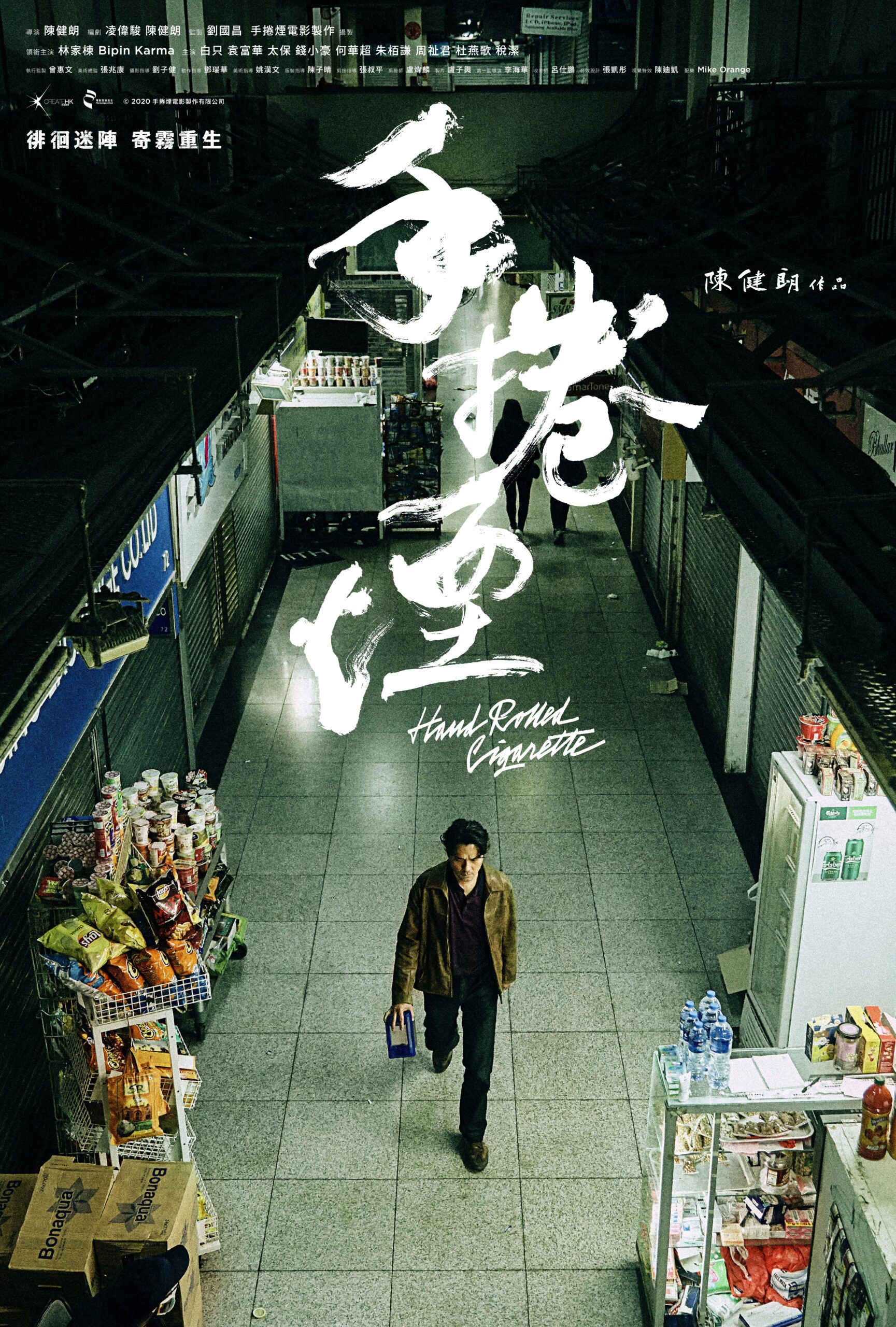
Hand Rolled Cigarette (手捲煙, Chan Kin-long, 2020)

A former serviceman turned triad middleman bonds with a similarly oppressed South Asian petty criminal in Chan Kin-long’s noirish crime drama Hand Rolled Cigarette (手捲煙). An unexpected awards contender, the first directorial effort from actor Chan aligns its disparate heroes as two men in a sense betrayed by the world in which they live, one longing for a way out and the other too convinced he no longer deserves one to continue looking. 

“Let’s start over” Chiu (Gordon Lam Ka-tung) philosophically muses over a cigarette contemplating the coming handover. As a brief title card explains, when the British Army pulled out of Hong Kong, it hung its local recruits out to dry, disbanding their units and leaving them entirely without support. 25 years later, Chiu has become a dejected triad middleman, as we first meet him setting up a dubious deal for smuggled turtles between Taiwanese mobster Pickle (To Yin-gor) and local top dog Boss Tai (Ben Yuen). On his way back to his flat in Chungking Mansions, Chiu literally runs into a South Asian man apparently in the middle of a drug deal. Kapil (Bitto Singh Hartihan) dreams of bigger prizes, listening to the stock market report on the morning news and musing about robbing a bank. His cousin Mani (Bipin Karma), more conflicted in their criminal activities, cautions him against it reminding him that they already face discrimination and don’t need to add to their precarious position by giving their ethnicity a bad name. “If we have money people can’t look down on us” Kapil counters, seemingly desperate to escape his difficult circumstances by any means possible which eventually leads him to make the incredibly bad decision to cheat local triads out of their drug supply. Leaving Mani and his schoolboy brother Mansu (Anees) alone to carry the can (literally), Kapil takes off while Mani finds himself crawling into Chiu’s flat for refuge when chased by Boss Tai’s chief goon Chook (Michael Ning). Unwilling at first, Chiu agrees to let Mani stay, for a price, only to find himself falling ever deeper into a grim nexus of underworld drama. 

Chiu’s plight as a former British serviceman makes him in a sense an exile in his own land, a displaced soul free floating without clear direction unable to move on from the colonial past. We later learn that he is in a sense attempting to atone for a karmic debt relating to the death of a friend during the Asian financial crisis, also beginning in 1997, of which he was a double victim. Most of his old army buddies have moved on and found new ways of living, some of them rejecting him for his role in their friend’s death and tendency to get himself into trouble while Chiu can only descend further into nihilistic self-loathing in his self-destructive triad-adjacent lifestyle. 

Mani, by contrast, did not approve of his cousin’s criminality, particularly resenting him for using Mansu’s schoolbag as a means of shifting drugs. He dreams of a better life but sees few other options for himself, hoping at least to send Mansu to university and ensure he doesn’t share the same fate. Chiu continues to refer to him solely by a racial slur, but simultaneously intervenes in the marketplace when Chook and his guys hassle another South Asian guy insisting that they’re all locals and therefore all his “homies”, despite himself warming to the young man and even going so far as to sort out child care for Mansu otherwise left on his own. “Harmony brings wealth” Boss Tai ironically exclaims, but harmony is it seems hard to come by, Chiu’s sometime Mainland girlfriend expressing a desire to return because the city is not as she assumed it would be while little Mansu is constantly getting in fights because the other kids won’t play with him. 

“There’s always a way out. I’ll start over” Chiu again tells Mani, though he seems unconvinced. Clearing his debts karmic and otherwise, Chiu discovers only more emptiness and futility while perhaps redeeming himself in rebelling against the world of infinite corruption that proved so difficult to escape. A moody social drama with noir flourishes, Chan’s fatalistic crime story is one of national betrayals culminating in a highly stylised, unusually brutal action finale partially set in the green-tinted hellscape of a gangster’s illegal operating theatre. Men like Chiu, it seems, may not be able to survive in the new Hong Kong but then perhaps few can. 


Hand Rolled Cigarette streams in Europe until 2nd July as part of this year’s hybrid edition Udine Far East Film Festival.

Original trailer (English / Traditional Chinese subtitles)

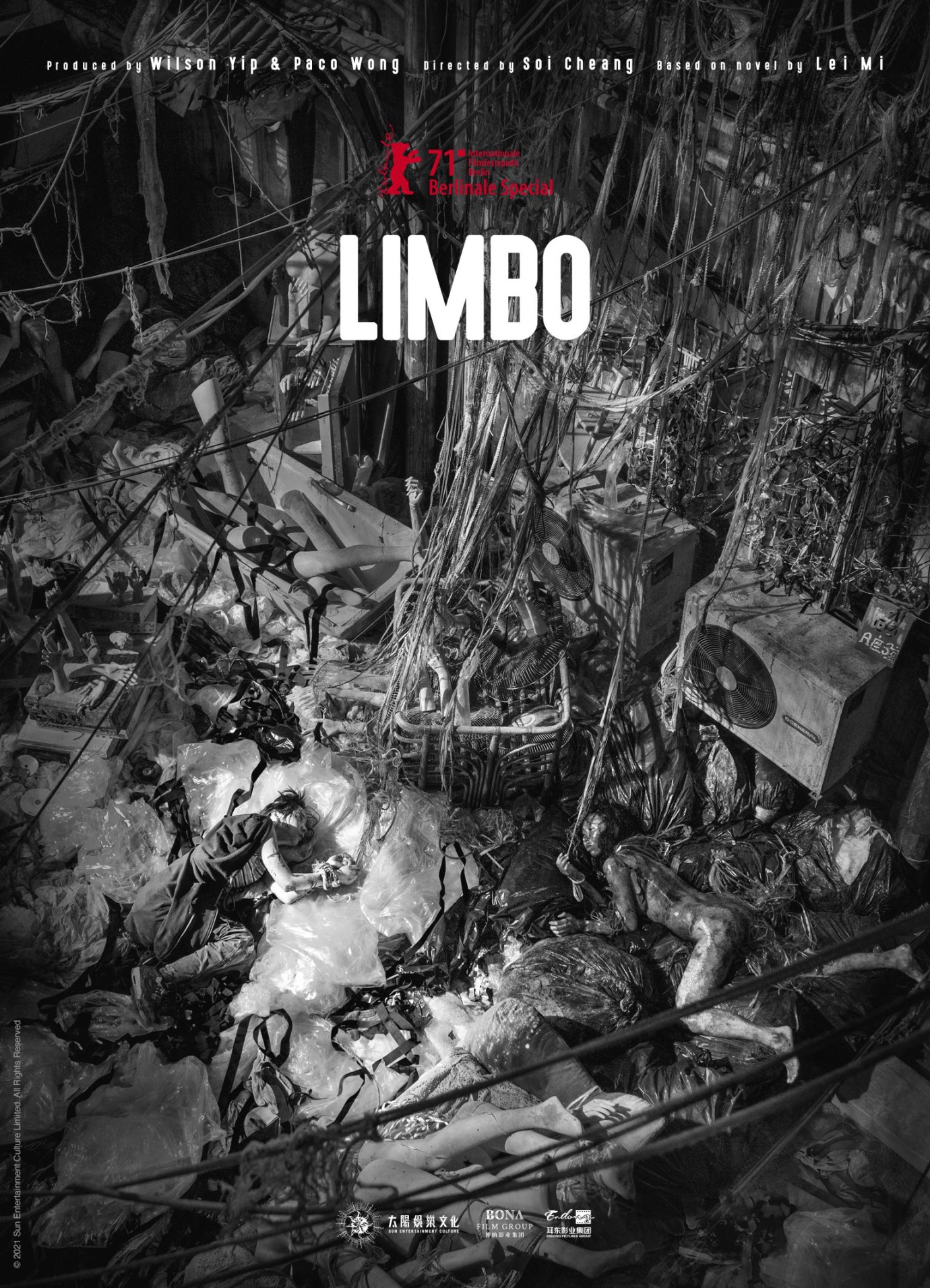
Limbo (智齒, Soi Cheang, 2021)

“I forgive you. Please live well”, a final message from the dying to one attempting to survive the junkyard hellscape of contemporary Hong Kong. Soi Cheang’s stylish thriller Limbo (智齒), shot in a high contrast monochrome lending the city state the rain-soaked aesthetic of cyberpunk noir, is in many senses a purgatorial odyssey as its pregnant title implies sending its duo of morally compromised cops into a world of the dispossessed inhabited by those “thrown away” by their society and thereafter left to rot among the detritus of an uncaring city. 

Hong Kong’s homeless may occupy a liminal space, trapped in an inescapable limbo, but it’s grizzled cop Cham (Gordon Lam Ka-tung) who is the most arrested, unable to move on from the accident which left his pregnant wife suspended in a coma. To escape his own sense of purgatorial inertia, he seeks closure in chasing down petty criminal Wong To (Cya Liu) whom he holds responsible for his fate on discovering she has been granted early parole for good behaviour. As fate would have it, Wong To’s release back into the underworld (after all, where else was she to go?) has unexpected connection to the case Cham is currently investigating in the mysterious appearance of random severed hands each belonging to “social outcasts”, as Cham’s slick rookie partner puts it, they fear may hint at the existence of a serial killer growing in confidence. 

Adapted from a novel by Lei Mi, the film’s Chinese title is simply “Wisdom Tooth”, a tongue in cheek reference to the ongoing toothache which places cop two Will Ren (Mason Lee) in his own kind of purgatorial pain, the offending molar eventually knocked out during his climactic fight with the killer during which he will in a sense transgress, passing from innocence to experience in gaining the wisdom that police work’s not as black and white as he may have believed it to be. “Cops are human too” his boss reminds him as he takes the controversial step of reporting his new partner for inappropriate use of force while pursuing a personal vendetta not exactly connected with his current case. He doesn’t disagree, but points out that police officers have guns and are supposed to uphold the law, not abuse their authority and take it into their own hands. 

But then, who is really responsible for the junkyards of the modern city and their ever increasing denizens abandoned by a society which chooses to discard them along with all their other “rubbish”, little different from the dismembered mannequins which people the killer’s eerie lair. Soi frequently cuts back to scenes of the dispossessed often looking stunned or vacant as they sit on mattresses or abandoned sofas surrounded by the pregnant disrepair of a city in the midst of remaking itself as if they were sitting on skin in the process of being shed by a slow moving snake. It would be tempting to assume the killer has a vendetta against “social outcasts”, his victims sex workers, drug users, and criminals though in truth these people are simply the most vulnerable even if there is no clear motive provided for the crimes save a minor maternal fixation and possible religious mania. A drug dealer ensnared by Cham’s net remains loyal to the killer, “We’re not as crazy as you. We are rubbish, so what? In this world, he’s the only one who cares.” she tells him, unwilling to give up her one source of connection even while aware of her constant proximity to death and violence. 

Cast into this world, Wong To too is trapped in an individual purgatory longing for forgiveness for her role in the death of Cham’s wife, a forgiveness he cruelly denies her even while making use of her desperation to force her to risk her life for him in betraying her underworld contacts to edge towards the killer. “Why are you treating me like this?” she asks, “I don’t want to die”, well aware that denied his direct vengeance by Will Cham is attempting to kill her by proxy. Wong To keeps running, keeps fighting, refuses to give up while seeking atonement and an escape from this broken world of violence and decay. It is she who eventually holds the key to an escape from purgatory, the cycle is ended only in forgiveness. Soi’s stylish drama may paint the modern society as a venal hellscape neglected by corrupt authority, but nevertheless permits a final ray of light in the possibility of liberation through personal redemption. 


Limbo streams in Europe until 2nd July as part of this year’s hybrid edition Udine Far East Film Festival.

Original trailer (English subtitles)
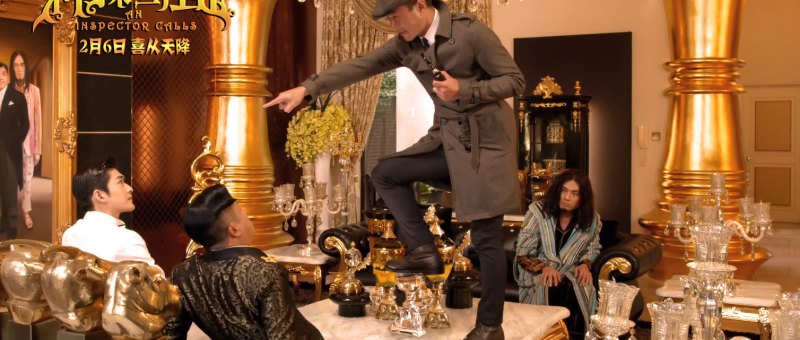
Chasing the Dragon II: Wild Wild Bunch (追龍II:賊王, Wong Jing & Jason Kwan, 2019)

In the grandest tradition of Hong Kong “sequels”, Chasing the Dragon II: Wild Wild Bunch (追龍II:賊王) has almost no connection to 2017’s Chasing the Dragon which starred Donnie Yen and Andy Lau as famed ‘70s gangster Crippled Ho and bent copper Lee Rock respectively. It is however part of a planned trilogy of films directed by Wong Jing and Jason Kwan “celebrating” legendary Hong Kong “heroes”. Abandoning the grand historical sweep of the first film, Wild Wild Bunch situates itself firmly in 1996 on the eve of the handover when, it claims, Hong Kong was close to a lawless state seeing as the colonial British authorities were already in retreat and therefore largely disinterested in governing. 

It’s this laxity, coupled with an age of excess, which has enabled the rise of real life kidnapping kingpin Cheung Tze-keung (Tony Leung Ka-fai) also known as Big Spender and here known as Logan Long. Logan makes his money by ransoming the richest figures not only in Hong Kong but the wealthier stretches of the Sinosphere and the Mainland cops are after him because they see him as an inconvenience from old Hong Kong they’d rather not inherit. Accordingly, they enlist veteran Hong Kong policemen, Inspector Li (Simon Yam Tat-wah) and bomb disposals expert He Sky (Louis Koo Tin-lok), to help them because they’ve heard that Logan is in need of a new explosives guy after the last one blew himself up. Sky is supposed to go deep undercover in Logan’s gang to save his next victim and take him down in the process. 

Though inspired by the real life legend, Sky’s infiltration is obviously fiction and in actuality Cheung Tze-keung was caught before his kidnapping of Macau gambling magnate Stanley Ho, here Standford He (Michael Wong Man-tak), could take place though setting the tale in the former Portuguese colony famous for its casinos (illegal in Mainland China) adds another meta level of colonial critique in situating itself firmly in the world of wealthy elites corrupted by their fabulous wealth. Real life gangster Cheung was apparently a well-liked figure, branding himself as a loveable rogue and less altruistic Robin Hood who liked to spread his wealth around by giving out lavish gifts seemingly at random though also enjoying living the high life himself. Logan is much the same, holing up at his mansion safe house in the rolling hills with his criminal “family”, declaring himself a fair man. If you cross him he’ll be sure to investigate fully but if he finds you betrayed him his revenge will be merciless. He cares deeply about his guys but also, perhaps unwittingly, terrorises them to the extent that they all pretend to enjoy eating durian fruit to please him, while reacting to tragedy with old-fashioned gangster ethics in trading his own girlfriend and a significant amount of cash to a gang member whose pregnant wife ended up dead because of his cowardly brother Farrell (Sherman Ye Xiangming) who is frankly a walking liability. 

Sky too is a family man, constantly worrying about his elderly mother and giving instructions to Li as to how to look after her if anything goes wrong and he doesn’t make it back from Macau. Sky’s mum is also quite concerned that her son has never married, and there is something quite homely in the strangely deep friendship between Li and Sky which has its unavoidably homoerotic context in Li’s cheerfully intimate banter in which it often seems he’s about to kiss his brother-in-arms which might not go down so well with the Mainland censors board who are otherwise so obviously being courted with the heroic presentation of the PRC police force only too eager to clear up the mess the British left behind. 

Then again, Cheung Tze-keung’s case was notable in that is presented an early constitutional conflict to the One Country Two Systems principle seeing as he was a Hong Konger tried (and sentenced to death) on the Mainland for crimes committed outside its jurisdiction, something which had additional resonance in the climate of summer 2019 in which vast proportions of the city came out to protest the hated Extradition Bill. In any case, Wild Wild Bunch owes more to classic ‘90s Hollywood actioners than it perhaps does to local cinema with its frequent bomb disposal set pieces and final climactic car chase which nevertheless literally pushes Logan over the line and into the arms of the PRC, the flamboyant gangster taking a bow as he tears up his ill gotten gains with a rueful grin in acknowledging his loss to a superior power. 


US release trailer (English / Traditional Chinese subtitles)

An Inspector Calls (浮華宴, Raymond Wong & Herman Yau, 2015)

Inspector Calls poster 1J.B. Priestley’s An Inspector Calls found itself out of favour until a phenomenally successful stage production brought it back into the national consciousness in the early ‘90s, but even if some decry its inherent melodrama as a relic of another era the play’s comments on the entrenched classism of British society sadly still ring true. An Inspector Calls is many things, but one thing it defiantly is not is funny – a series of concentric tales of betrayals and oppressions, Priestley’s drama lays bare the callousness with which the privileged bolster their position through the story of one faceless factory girl standing in for an entire social class whose lives are often at the mercy of those “above” them.

In adapting Priestley’s play as a Chinese New Year movie (a strange concept in itself), Herman Yau and Raymond Wong relocate to contemporary Hong Kong, re-conceiving it as a broad comedy of the kind one might expect for the festive period. The setup is however still the same. The Kau family will be receiving a visitation – this time from Inspector Karl (Louis Koo Tin-lok) who has some difficult news for each of them. Three hours previously, a young woman committed suicide in her apartment by drinking bleach, taking the child she was carrying with her. Inspector Karl views this as a double murder and, based on the diary they found at the crime scene, has brought the reckoning over to the Kaus’.

The Kaus, at the present time, are preparing an engagement party for daughter Sherry (Karena Ng) who will be marrying the handsome younger brother of a factory owner, Johnnie (Hans Zhang Han). What no one can know is that the family business is going under, the Kaus are broke, mum and dad don’t get on, and all of this finery is merely rented affectation. The only member of the family who still seems to have something like a social conscience – Tim (Gordon Lam Ka-tung), the 27-year-old younger son, is viewed by all as a feckless and naive hippy, hiding out in his childhood bedroom, still all fluffy cushions and toy soldiers.

As the Inspector explains, he holds Mr Kau (Eric Tsang Chi-wai) responsible because the woman once worked in his factory and he fired her for participating in a strike for better pay and conditions. Sherry got her fired too when she worked in an upscale fashion store. Johnnie knew her during an unfortunate period as a bar hostess, and Tim as a masseuse. Mrs Kau (Teresa Mo Shun-kwan), who heads up a woman’s charity and publicly espouses tolerance while privately judgmental, once turned her down for familial support seeing as the father of her child was still living. She advises holding him to account and if he won’t pay, forcing his family to take responsibility on his behalf. The irony being that the father is likely her own son and that if this poor woman had rocked up at the Kaus’ with a sad story and an infant in her arms, she would have been met with nothing more than contempt save perhaps some hush money to send her on her way.

The Kaus are merely a series of examples of the various ways the wealthy mistreat the poor, wielding their sense of entitlement like a weapon. Yau and Wong adopt an oddly Brechtian approach in their expressionist production design with the faceless masses identified only through titles – the word “labour” on the workers’ caps, “manager” in the fashion store, “secretary” at the foundation. None of these people are really worthy of names because they will always be “less” while the Kaus are “more” in more ways than one. Actions, however, have consequences. The family console themselves that this is all far too coincidental, that they couldn’t all have known the “same” woman in different guises, but that in many ways is the point – she isn’t one woman but all women, used, abused, and discarded not only by heartless men but by jealous and judgemental members of her own sex too. Better than her than me, they might say, but that’s no way to run a healthy society as the sensitive, slightly damaged Tim seems to see.

Like the Birlings, the Kaus attempt to brush the Inspector’s warning off, thinking it’s all been some elaborate prank that can they laugh about and then forget, but there will be a reckoning even if they attempt to gloss over the various revelations regarding their moral failings. Wong and Yau’s vague gesturing towards the outlandish greed of the hypocritical super wealthy is undercut by the ridiculous New Year slapstick of it all despite the Metropolis-like production design and expressionist trappings, giving in to an excess of its own in an extremely unexpected musical cameo from a martial arts star and the decision to end on a social realist photo of an innocent, pigtailed proletarian woman dressed in red. Nevertheless, strange as it all is the bizarre adaptation of Priestley’s play has its own peculiar charm even if it’s outrageousness rather than moral outrage which takes centre stage.


Currently available to stream online via Netflix in the UK and possibly other territories.

Original trailer (English / Traditional Chinese subtitles)

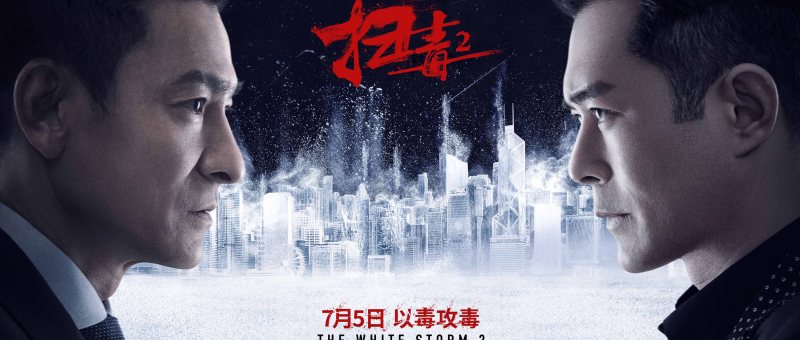
The White Storm 2: Drug Lords (掃毒2天地對決, Herman Yau, 2019)

132134ti38vkkj3p299ni8The war on drugs comes to Hong Kong care of Herman Yau’s latest foray into heroic action, White Storm 2: Drug Lords (掃毒2天地對決). In the grand tradition of Hong Kong movies adding a random prefix to the title, Drug Lords is a “thematic” sequel to Benny Chan’s 2013 hit White Storm, which is to say that it shares nothing at all with Chan’s film save the narcotics theme and the participation of Louis Koo who returns in an entirely different role. What Yau adds to the drama is a possibly irresponsible meditation on vigilante justice and extrajudicial killing which, nevertheless, broadly comes down on the side of the law as its dualist heroes eventually destroy each other in a nihilistic quest for meaningless vengeance.

A brief prologue in 2004 sees depressed Triad Yu Shun-tin (Andy Lau) abandoned by his girlfriend who can no longer put up with his gangster lifestyle and inability to break with his domineering mob boss uncle. Meanwhile, across town, flamboyant foot-soldier Dizang (Louis Koo) scolds one of his guys for supposedly selling drugs in the club, only to be picked up by Shun-tin’s uncle Nam (Kent Cheng) and severely punished for getting involved with the trafficking of narcotics. Nam orders Shun-tin to cut off Dizang’s fingers as punishment, which he does despite Dizang’s reminder that they’ve been friends for over 20 years. Conflicted, Shun-tin makes amends by driving Dizang to the hospital with his fingers in a freezer bag, but by this point Dizang has had enough. To teach him a lesson, the Triads also tip the police off to raid the club, during which the wife of squad leader Lam (Michael Miu) is killed by a drug addled patron.

15 years later, Shun-tin has left the Triads and become a successful businessman married to a beautiful lawyer/financial consultant (Karena Lam) with whom he has started an anti-drugs charity, while Dizang has become Hong Kong’s no. 1 drug dealer, operating out of a slaughterhouse as a cover. The trouble occurs when Shun-tin learns that his former girlfriend was pregnant when she left him and that he has a 15-year-old son in the Philippines who has become addicted to drugs. Drugs have indeed ruined Shun-tin’s life, if indirectly. His grandfather was an opium addict, and his father died of a heroine overdose (which is why his Triad gang swore off the drugs trade). All of which means he has good reason for hating drug dealers like Dizang, but his sudden admiration for Duterte’s famously uncompromising stance on drugs is an extraordinarily irresponsible one, especially when it leads to him embarrassing the HK police force by offering a vast bounty to anyone who can kill Hong Kong’s top drug dealer – a deadly competition that, like extrajudicial killings, seems primed to put ordinary people in the firing line.

As Lam tells him, the situation is absurd. Shun-tin’s bounty means Lam will have to spend more time offering protection to suspected drug dealers than actively trying to catch them while it also leaves Shun-tin in an awkward position as a man inciting murder and attempting to bypass the rule of law through leveraging his wealth. Indeed, as a man from the slums who’s been able to escape his humble origins and criminal family to become an international billionaire philanthropist he shows remarkably little consideration for the situation on the ground or the role the kind of ultra-capitalism he now represents has on perpetuating crime and drug use, preferring to think it’s all as simple as murdering drug lords rather than needing to actively invest in a creating a more equal society.

Meanwhile, Dizang continues to lord it about all over town and Lam finds himself an ineffectual third party caught between summary justice meted out by a man who thinks his wealth places him above the law and a gangster on a self-destructive bid for vengeance against the Triads he feels betrayed him, including his old friend Shun-tin. Truth be told, the “friendship” between Dizang and Shun-tin never rings true enough to provoke the kind of pathos the violent payoff seems to be asking for while the film is at times worryingly uncritical of Shun-tin’s vendetta, suggesting that the police are ill-equipped to deal with the destructive effects of the drug trade. Nevertheless, even if it’s to placate the Mainland censors, Yau ends on a more positive message that reinforces the nihilistic, internecine nature of the conflict while hinting, somewhat tritely, at a better solution in the sunny grasslands of the child drug rehabilitation centre Shun-tin has founded in Manila. That aside, Drug Lords is never less than thrilling in its audacious action set pieces culminating in a jaw dropping car chase through a perfect replica of the Central MTR subway station.


The White Storm 2: Drug Lords is currently on limited release in UK cinemas courtesy of Cine Asia. It will also screen as the closing movie of the 2019 New York Asian Film Festival.

Original trailer (English / Traditional Chinese subtitles)