Sato and Sato (佐藤さんと佐藤さん, Chihiro Amano, 2025)

Aged 37 and recently divorced herself, lawyer Sachi (Yukino Kishii) listens to a man whose wife has evidently left him complain that what really soured him on her was that there was a dead bug in their living room that remained in the same spot for months on end, which indicated to him that his wife only ever swept the room as if it were round, literally cutting corners in their married life. He also complains that she only ever fed the children ready meals for dinner and they only ever had toast for breakfast. “I mean, would anyone call that a woman?” he rolls his eyes and sighs, expecting instant support from his legal team. It doesn’t seem to have occurred to him that he could simply have swept up himself or sorted breakfast and dinner, though he now brands his wife an unfit mother and seeks full custody, perhaps only as a means of hurting her or vindicating himself.

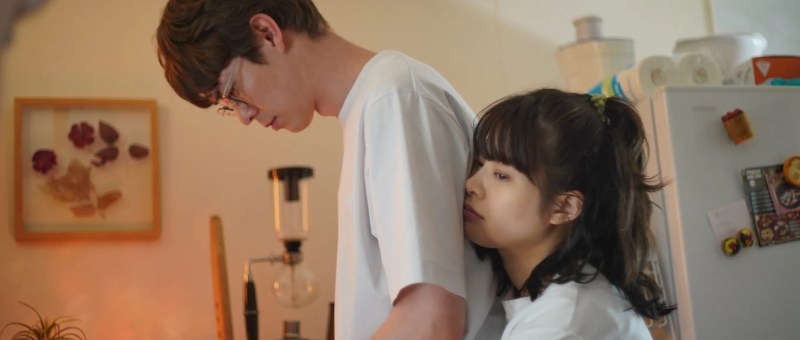
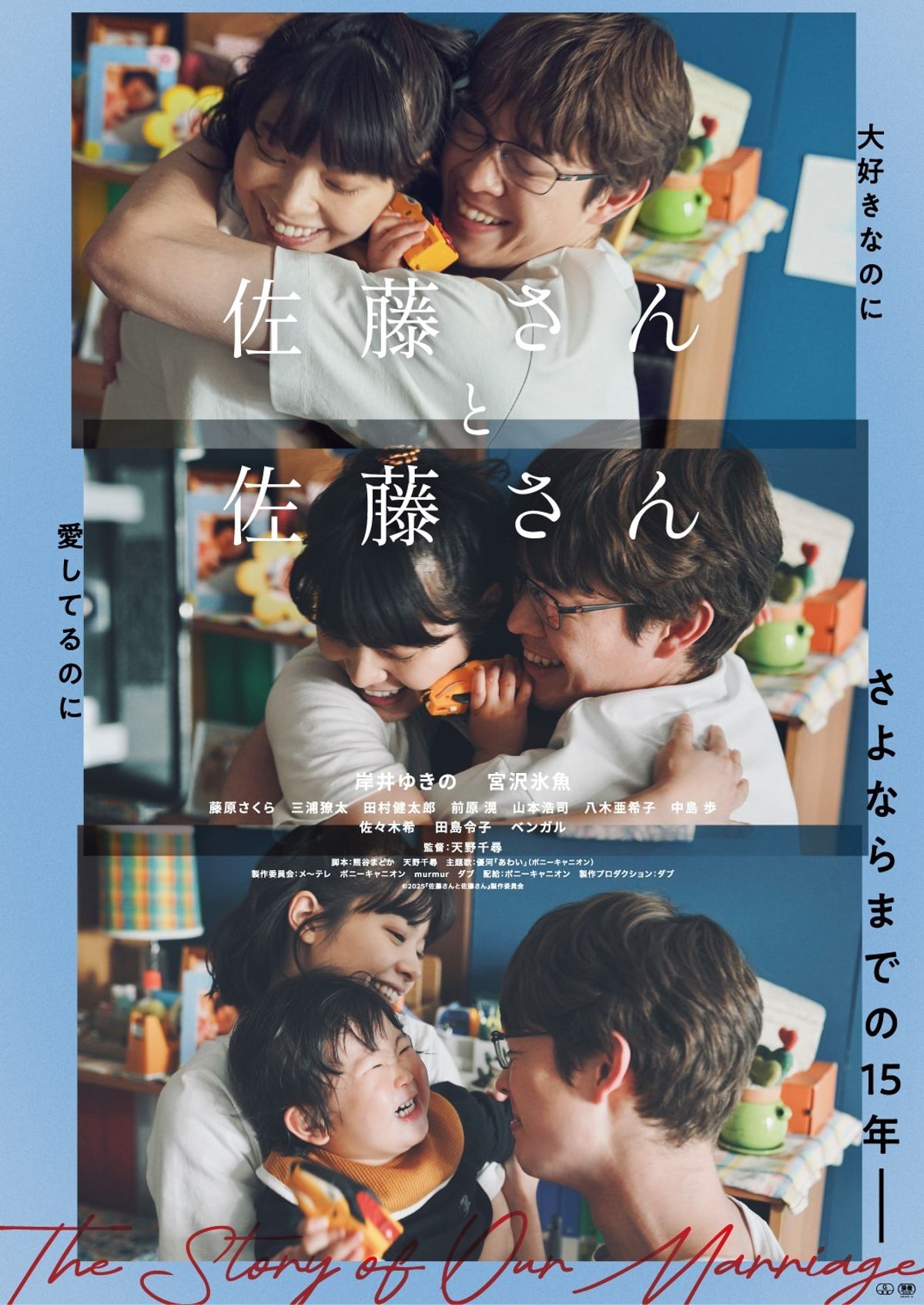
It’s this patriarchal take on the division labour that comes under the microscope in Chihiro Amano’s profoundly moving marital drama, Sato and Sato (佐藤さんと佐藤さん, Sato-san to Santo-san). Following the gradual disintegration of a relationship under the pressures of contemporary married life along with changing notions of gender roles, toxic masculinity, and the ways in which men and women navigate the domestic environment, the film seems to ask why it is that there isn’t more equality across the board, with practical and emotional responsibilities for the home still disproportionately falling on one partner.

This is all is more obvious when Tamotsu (Hio Miyazawa) ends up becoming an accidental househusband after repeated failures to pass the bar exam. He and Sachi, who share a surname which is also the most common in Japan making them a pair of everypersons, met as members of the university coffee club and, in truth, seemed somewhat mismatched from the start. She just bought the deal of the day and had the beans ground there. He’s carefully researched the best on offer and had the beans roasted to perfection with the intention of grading them on the day for the best flavour. Depending on how you see it, perhaps they complement each other and round out the corners to become one whole, but, on the other hand, maybe they aspire to different things. Nevertheless, they become a happy young couple full of hope and expectation for the future. But their relationship is soured by Tamotsu’s failures, and only more so when Sachi says she’ll study for the bar with him only to end up passing herself when he again yet fails.

Of course, it’s embarrassing for Tamotsu on a personal level that he can’t pass the exam, especially when he’s so told so many people that he’s going to be a lawyer. He’s been putting everything else on hold, including his relationship with Sachi having put off meeting her parents until he’s passed out of fear he’ll disappoint them. The sense of inadequacy begins to eat away at him, especially after Sachi begins working as a lawyer and is taking care of most of their bills. The other men we meet in the film, especially Sugai who is being divorced by his wife of 50 years, stress their position as a provider, as if that were all they needed to do in order to fulfil their role and buy their wife’s devotion. But Mrs Sugai, who now refuses to see him, states only in a letter that living with him is unbearable and he all he ever did was shout at her so there’s no prospect of communication. Tamotsu too is further driven into despair by the thought that others see him as “unmanly” because he’s being supported by his partner, though in reality masculinity is a performance for other men and not really something most women care about. What begins to bother Sachi is not his failure, but that she feels as if he’s given up and is not really contributing to their relationship or seriously studying to pass the exam. 

On a visit back to his hometown due his grandmother’s health crisis, starts to bond with a local woman and almost forgotten childhood friend who has herself escaped an abusive marriage but lost her children to her in-laws. He sees in her a more idealised kind of traditional wife, but after conplimenting him that his wife must be very lucky as he helps clear up at the bar where she works while all his friends doze off drunkenly, she gives him a rude awakening. He’s just like the others after all. He wants comfort, which is to say emotional labour from her, a woman he doesn’t really know, and the absolution sought by every man who says his wife doesn’t understand him. He wants to be told that he’s right and good, even while he blames Sachi and his domestic responsibilities for his inability to pass the bar. While talking with his old friends and hearing that his ageing father is planning to close their family farm, he starts to think about moving back and starting some sort of non-profit but as Sachi says when he puts it to her rather abruptly, he’s not really serious. Even if this sort of life might really suit him better, it’s not a decision he’s made after coming to the realisation that the bar exam is beyond him, but an attempt to run away not only from his failure but his domestic responsibilities. 

But by the same token, even while the roles are reversed Sachi falls into many of the same traps as an insensitive husband. So busy with her own working life, she doesn’t really see things from Tamotsu’s perspective and is only irritated by what she sees as his failure to commit to one thing or another. He is annoyed when she does things like point out there’s no toilet paper or contemplates buying a washing machine to make his life easier, because really he doesn’t think these things should be his responsibility and suggesting they are makes him feel like less of a man. They can’t orient themselves around the idea of a marriage as a domestic partnership in which they split both domestic and external labour equally and are each responsible for the whole. 

But then again, perhaps society isn’t ready for that either. Though Tamotsu does actually take care of the home environment and is the main caregiver for their son, Fuku, others still look to Sachi where a child is concerned. When they’re called into school because Fuku has apparently seriously injured another child in a squabble over building blocks, Tamotsu wants to ask more questions about how this happened, but Sachi immediately takes over and reassures the teachers she’ll make the necessary apologies to the other family, whispering in private that they’re all too busy to string this out which may not, of course, be very helpful in terms of Fuku’s further development. Conversely, when the pair are picked up by police after a violent argument in the street, the officer insists he has to write down “unemployed” even if Tamotsu says he’s a househusband, while when Sachi replies “lawyer” he assumes she’s trying to assert her right to legal representation and chuckles that she’s not under arrest so it isn’t necessary. She has to show him her lawyer’s pin to explain, and even then he just stares at them dumbfounded by their usual family setup. 

Sachi’s friend Shino who consults her for divorce advice when her husband cheats on her, reflects that Sachi might have had it easy in one sense because she never needed to change her name and accommodate herself with the loss of identity that comes with being called “Mrs Hasegawa” or “Miki’s mum” rather than by her birth name which admittedly was passed down from a father rather than a husband. For Shino taking back her maiden name was more important than a divorce in allowing her to reclaim herself as an individual who has choices and agency and isn’t someone who exists only in relation to a man in her social role as wife and mother. The film suggests the reason the marriage is unsustainable is precisely because society doesn’t accept it as a partnership of equals, so even when Tamotsu finally passes the bar, they end up with what’s perceived as two husbands and no one taking care of the domestic space to which the only solution is two households. With profound empathy for each, the film takes care not to apportion any blame, except perhaps on the parade of useless husbands being sued for divorce while unable to understand why their wives have left them or accept any responsibility for the failure of the marriage, but sees only the sadness of romantic failure and the impossibility of an uncompromised happiness in an otherwise oppressive society.


Sato and Sato screened as part of this year’s Camera Japan.

Trailer (no subtitles)

The Legend & Butterfly (レジェンド&バタフライ, Keishi Otomo, 2023)

“What was everything for?” an ageing Nobunaga (Takuya Kimura) asks his attendant Ranmaru (Somegoro Ichikawa) towards the conclusion of Keishi Otomo’s historical epic, The Legend & Butterfly (レジェンド&バタフライ, Legend & Butterfly) produced in celebration of Toei’s 70th anniversary. Oda Nobunaga is such a prominent historical figure that his story has been told countless times to the extent that his legend eclipses the reality, but rarely has been he depicted so sympathetically as in Otomo’s history retold as romantic melodrama in which he and his wife, Lady No (Haruka Ayase), are mere puppets of the times in which they live dreaming only of a place beyond the waves where they might be free of name or family. 

Tellingly, Otomo opens in the spring of 1549 in which the dynastic marriage was arranged to broker peace between unstable neighbouring nations Owari and Mino. Nobunaga’s father’s health is failing and he fears in the chaos of his death Mino may attack, while No’s father fears that her brother will soon revolt against him plunging the fiefdom into disarray and therefore vulnerable to an attack by Owari. At this point, Nobunaga is known as “the biggest idiot in Owari,” a foppish dandy who cares only about appearances. As he prepares to meet No, his courtiers apply his makeup and do his hair while dressing him in a rather outlandish outfit No immediately insults as “foolish”. He treats her with chauvinistic disdain, barely speaking save to order her to pour the drinks and give him a massage only for her to point out that she’s been travelling all day and a “thoughtful” considerate husband would be giving her a massage instead. “I detest women who do not know their place,” he snaps. “I detest men who are ignorant,” she counters. The wedding night ends in humiliating failure as No demonstrates her martial arts skills and Nobunaga is forced to call his guards to rescue him. 

Little is known of Lady No in historical record, but here she is bold and defiant, as her father had said too free with her opinions for a woman of the feudal era. She claims to have been married twice before and assassinated both husbands on her father’s orders, implying that she is essentially sleeper agent more than hostage and will kill Nobunaga without a moment’s thought as soon as the word is given. Yet she also begins to guide her husband towards his destiny, mocking him as a fool but giving him useful strategic advice that wins him glory on the battlefield along with the political advancement that led him to become the first great unifier of Japan. For all that they “hate” each other, they are well matched and have a similar sensibility that allows them first to become allies and then friends before frustrated lovers.

But their love is enabled only when they escape the feudal world, shaking off their retainers to go on a “normal” date in Kyoto where they dance to Western musicians and taste foreign candy only to end up accidentally massacring some peasants when No’s martial arts training kicks in trying to stop a man beating his son. Even so, they are forever linked by their time in Kyoto in the romantic talisman’s of a carved wooden frog and a European lute even if the blood-spattered jizo and buddhist statue watching their eventual connection imply there will be a reckoning for all the blood that is spent. Jumping on a few years, the film does not elaborate on what caused Nobunaga to become a man without a heart and lose the love of his most trusted ally but positions his transformation into the “Demon King” as the kernel of his undoing just as his dream of unifying Japan and bringing about an age of peace (if one ruled by fear) is about to become a reality. 

In any case, the one thing that everybody knows about Nobunaga is how he died though then again his remains were never recovered giving rise to a happier ending in which he and Lady No were finally able to escape the feudal world to chase a freer future beyond the sea which is perhaps what they do in the film’s poetic final sequence in which they might in a sense share a dream connected by frog and lute. It might not be very historically accurate, but that is perhaps the point in hinting at the lives they might have led if the world had been different. Otomo films with a painterly eye that lends an air of poignant gravitas to a tale of romantic tragedy in which love is both salvation and destruction amid the flames of a collapsing temple. 


The Legend & Butterfly screened as part of this year’s JAPAN CUTS.

Original trailer (English subtitles)

Spring In Between (はざまに生きる、春, Rika Katsu, 2023)

A struggling editor at a magazine gains a new perspective while falling in love with an autistic artist in Rika Katsu’s romantic drama Spring In Between (はざまに生きる、春, Hazama ni ikiru, haru). Spring is coming in the lives of artist and reporter alike, yet as Haru’s (Sakurako Konishi) professional life begins to come into focus she finds herself romantically confused and ever more obsessed with the mysterious painter while largely unable to ascertain what the extent of his feelings for her may be assuming that he has any at all. 

Haru’s obsession begins when she becomes immersed in one of Tohru’s (Hio Miyazawa) paintings which like much of his work depicts a vast blue sea. Three years on the job, she’s still making rookie mistakes and is constantly berated by her boss who offers little in the way guidance. Nevertheless, she catches a break when he brings her on to assist with an interview of a top artist who is known to be “eccentric”. Never having much exposure to neurodiversity, Haru finds herself captivated but also somehow on the same wavelength while drawn to what she sees as Tohru’s profundity and poeticism. 

The film does at times fall into the trap of fetishising Tohru’s “unique” way of seeing of the world while otherwise keen to lay bare the extent to which neurodiversity continues to be stigmatised. Haru’s partner on the magazine article repeatedly describes Tohru as “odd” in a slightly mocking way, while the journalists assigned to interview him have little patience and do not even bother to hide their exasperation when he flies off on tangents about plastic bottles or tree bark. The magazine is interested in him precisely because of his neurodiversity and learning disability hoping to sell an inspirational story of someone overcoming the odds to find success but in private continue to laugh at him.

Even Haru struggles to comprehend some of the unhelpful information she looks up while researching Asperger’s Syndrome which talks of an inability to empathise leaving her wondering if Tohru has the capacity for romance despite his directly telling her that he has fallen in love before because he is after all human though he never said anything because he did not want to get hurt. A more experienced colleague noticing Haru’s increasingly erratic behaviour tries to give her some advice, but it isn’t to the effect that it might be unethical and irresponsible to fall in love with your subject for a piece but only that she’ll wind up getting hurt because Tohru is autistic and therefore unable to return her feelings, implying that in any case she views a relationship between them as as inappropriate given what she sees as Tohru’s disability. 

In revealing Haru’s own potentially autistic traits, such as her preference to have someone stand on her left and never her right, the film strays into a potentially uncomfortable implication that everyone is a little bit autistic while otherwise trying to eliminate the line has that been placed between Tohru and everyone else. Introducing a romantic rival in the form of an equally eccentric, larger than life photographer who also does not fit into “conventional” society, also implies that neurodiverse people can only date each other while Haru struggles to define her feelings both for Tohru and for uni boyfriend Nao who appears to be both possessive and disinterested telling her that she should get over her left side only thing in the same way some talk about a “cure” for Tohru’s neurodiversity. 

Haru can’t state her feelings any more directly than Tohru can while simultaneously unable to find a way through to him to find out if he likes her at all or is just being friendly and considerate, unlike Nao making a map to figure out the acceptable dimensions of her personal space and promising to always stay at a comfortable angle. Yet in the end it’s curiosity that builds connection, the simple desire to know more about another person and to see the world from another perspective. Promises are kept, and a message delivered if in a roundabout way. As they say, spring will always get there in the end even if summer is right around the corner. A sweet and innocent romance, Spring in Between is as much about self-revelation as it is about mutual understanding and the still currents of a deep blue sea.


Spring in Between screened as part of this year’s Nippon Connection

Original trailer (no subtitles)

Egoist (エゴイスト, Daishi Matsunaga, 2022)

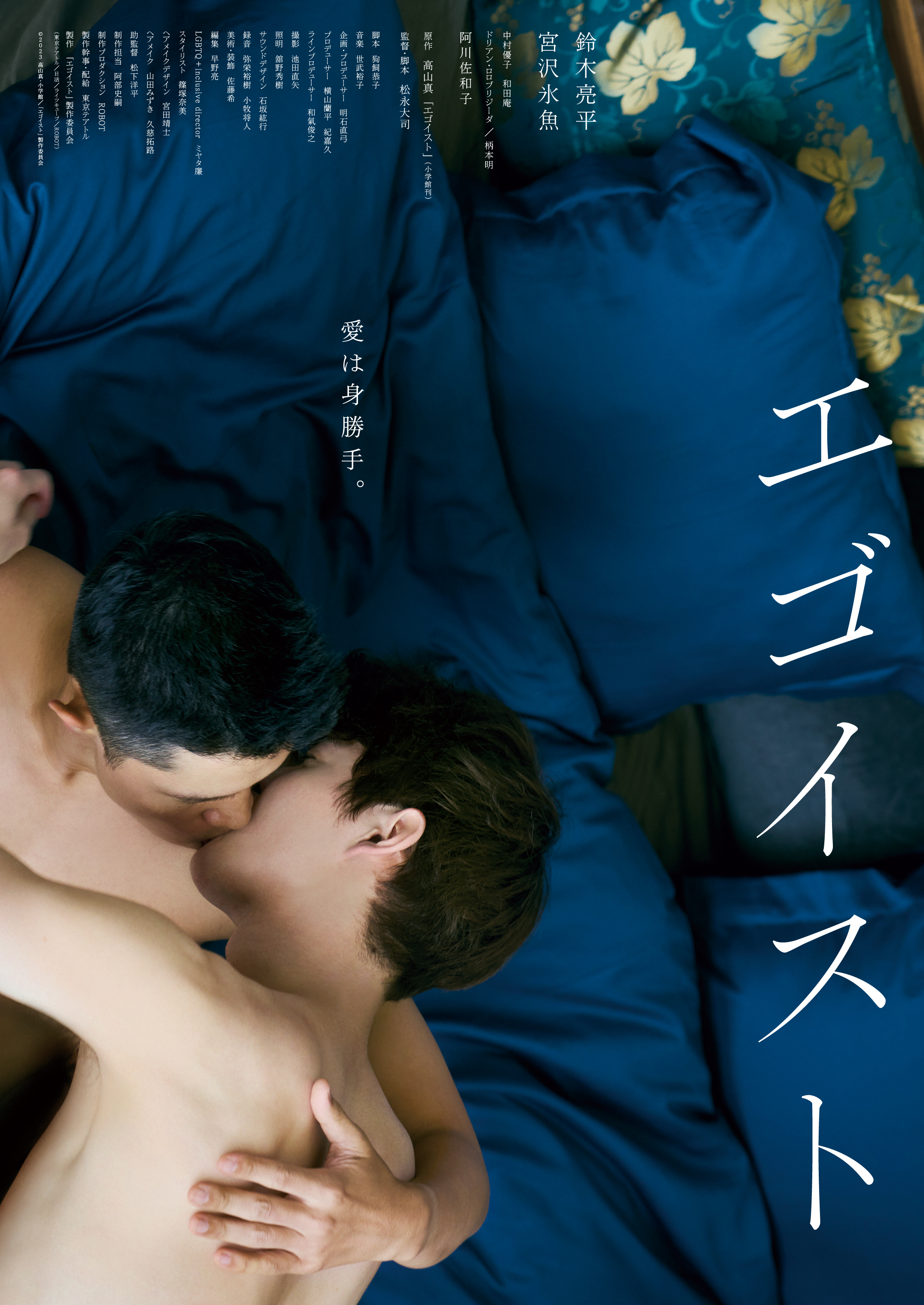
If love is unselfish, is it really love at all? Based on a semi-autobiographical novel by Makoto Takayama, Daishi Matsunaga’s deeply moving romantic drama Egoist (エゴイスト) asks if all love is in the end transactional and if to deny its “selfishness” is akin to denying love itself because it would mean denying a basic human need for connection and reciprocity. In the end, perhaps selfish is what we should be with love because we are always running out of time and if we aren’t careful it will slip away from us unnoticed.

An “extreme realist”, fashion editor Kosuke (Ryohei Suzuki) is already full of regrets and many of them linking back to the early death of his mother from illness when he was only 14. It’s clear that his financial wealth helps to fill an emotional void but also that he’s lonely and longs for a sense of family that’s long been absent from his life. He rarely visits the conservative hometown where he was bullied for being different, and seems to have a strained relationship with his widowed father (Akira Emoto) who doesn’t know that Kosuke is gay and continues to ask him about getting married and settling down. Early on in his courtship with Ryuta (Hio Miyazawa), a personal trainer he met through a friend, Kosuke remarks that he’s never met a lover’s mother before hinting at the landmarks of a relationship such as marriage that LGBTQ+ people often miss out on in a conservative culture in which such things cannot always be discussed openly.

Later, Ryuta’s mother Taeko (Sawako Agawa) tells Kosuke that knew from that first meeting that they were more than just friends and was happy that her son had someone he loved who loved him regardless if they were a man or a woman. But just when the relationship had seemed to be blossoming, Ryuta had abruptly tried to break up with Kosuke explaining that he had been involved in sex work since his early teens in order to support his mother who was unable to work due to illness. Now that he’s experienced real romantic love he finds sex work “painful” but has no other means of supporting himself and so gives up love for economic necessity. “I’ll buy you,” Kosuke unironically counters adding a note of literal transactionality to their relationship which is already fraught with disparity in the respective differences in their ages along with Kosuke’s wealth and Ryuta’s poverty. 

Kosuke later describes his gesture as “pure”, something he’d previously called Ryuta while also remarking that he found him too “polite” in bed and would rather he be a little more “selfish”. In a way it’s altruistic, he isn’t really trying to trap Ryuta into a compensated relationship only to help him while simultaneously ensuring that he stays in his life. His wealth fills a void, but it’s by giving pieces of it away that he feels that void decreasing. Kosuke first gives Ryuta gifts for his mother, knowing that it’s easier for him to accept them because doing so is unselfish when the gift is for someone else. Even so as he later acknowledges sometimes the gift is more for himself than the recipient, a means not of manipulation but of healing. Kosuke claims not to know what love is and largely mediates it through money along with additional acts of care, but as Taeko later tells him it doesn’t really matter if he doesn’t know because they felt his love anyway. 

Matsunaga frequently cuts backs to visual motifs such as door numbers, envelopes, and dropped coins to hint at the transactionality of love but eventually reflects that love is an act of exchange in which the desire to be loved is an essential component. Kosuke eventually asks his father how it was for him when his mother was dying and he recalls a conversation in which she said she wanted to leave him because she couldn’t bear to see him suffering for her, a request which could in itself be read as “selfish” even in its “selflessness” with his reply implying that it’s alright to be selfish in love because in way it might be its ultimate expression. Filming with handheld realism, Matsunaga captures the rhythms of contemporary gay life along with the easy giddiness of burgeoning romance and the poignancy of profound loss tempered only by a fleeting feeling of warmth and the jealous memory of a “selfish” love. 


Egoist screens in Frankfurt 9th June as part of this year’s Nippon Connection.

International trailer (English subtitles)

Goodbye Cruel World (グッバイ・クルエル・ワールド, Tatsushi Omori, 2022)

Tatsushi Omori has had a rather strange career beginning with the incredibly grim Whispering of the Gods which was so controversial that the only way he could screen it was to set up a marquee in a park and put it on himself. Since then he has in recent years softened a bit with the incredibly charming Seto and Utsumi and heartwarming tea ceremony drama Every Day a Good Day. Goodbye Cruel World (グッバイ・クルエル・ワールド) returns to the nihilism of Omori’s earliest work, but with a layer of heavy irony in its self-consciously cool aesthetics. 

This is world is cruel indeed, pulling each of the worldweary protagonists into an inescapable hell of crime and violence. As the film opens, a car of full of criminals drives towards a love hotel where they plan to rob a bunch of yakuza in the middle of a money laundering exchange. If you have to rob someone, perhaps it’s fair enough to rob the yakuza but for obvious reasons it’s not a very good idea. Still, the fact is they accomplish the heist pretty easily not least because the yakuza are lazy and complacent. Not only could they not be bothered to change their meeting place like the boss told them, the lookouts didn’t even put up much of a fight. “Japan’s gone to hell,” “old-leftist gone bad” Hamada (Tomokazu Miura) sighs lamenting that no one does their job properly anymore.

Now in his 70s, Hamada waxes on his days as a student protestor while now a disillusioned old man who was previously dismissed from his position as a political secretary for cooking the books. In a last ditch bid to change the status quo, he later hatches on a plan to rob the secret campaign stashes of the incumbent conservative candidate whom he has also exposed for tax evasion and an affair with a bar hostess not to mention a general air of sleaze and corruption. The robbers’ main competition is a corrupt policeman who’s been working with the yakuza ever since he was foolish enough to accept a tip off from boss Ogata (Shingo Tsurumi) to arrest some of his rivals. 

Like everyone else, what Detective Hachiya (Nao Omori) wants is out but there is no out from this hellish world of crime. Anzai (Hidetoshi Nishijima) tried to go straight in the wake of anti-organised crime legislation but there are no second chances for ex-yakuza. He just wanted a normal life, but it’s hard to leave the yakuza world behind when you can’t even open a bank account and no wants to employ a former thug. Hachiya steals the money to buy himself a new life trying to resurrect his father-in-law’s failed hotel in a moribund seaside town where the other businessmen lament the decline of the local shopping area amid the economic complexities of the contemporary society. But he’s frustrated by the arrival of former associates, Iijima (Eita Okuno), who blackmails him over his yakuza past and poignantly says he’s done for the same reasons Anzai does the robbery, he just wants to be able to live together with his wife and child. 

Miru (Tina Tamashiro) says she came up with the idea of robbing the yakuza to escape sex work and is helped by hotel employee Yano (Hio Miyazawa) who dreams of running away with her. She says all she wants is sleep, while he wants to live comfortably in a quiet seaside town. Like the kids that hang round Hamada, they represent a kind of rebellious youth rejecting the corrupt authority of men like Anzai and Hachiya but are quickly slapped down. As Hachiya points out, the “grown-ups” took all the money and the only reason they’re not dead is that Ogata wants them to clean up their mess before they go by taking out the other gang members. During the robbery, Miru appears an unwilling participant so frightened that she cannot pry her fingers from the pistol when the sociopathic Hagiwara demands it back. But on her eventual murder spree/mission of revenge she’s an ice cold killer with vacant eyes trying to shoot her way out of existential malaise. 

Omori signals the degree to which they are all trapped by the ubiquity of retro nostalgia in the unlikely ‘70s getaway car and the soul music which plays on its sound system. Seeming to directly reference ‘90s Tarantino in musical choices, the film’s self-consciously cool aesthetic sometimes works against it even while hinting at the general sense of emptiness which envelops those caught in this hellish underworld. As Anzai later suggests, they are all the same, covered in blood with nowhere to go for there is no place for any of them in contemporary Japan. A bloody tale of nihilistic futility and self-destructive violence, Goodbye Cruel World suggests that there’s no way back from the purgatorial exile of an underworld existence.


Goodbye Cruel World screened as part of this year’s Japan Foundation Touring Film Programme.

Original trailer (no subtitles)

Kiba: The Fangs of Fiction (騙し絵の牙, Daihachi Yoshida, 2020)

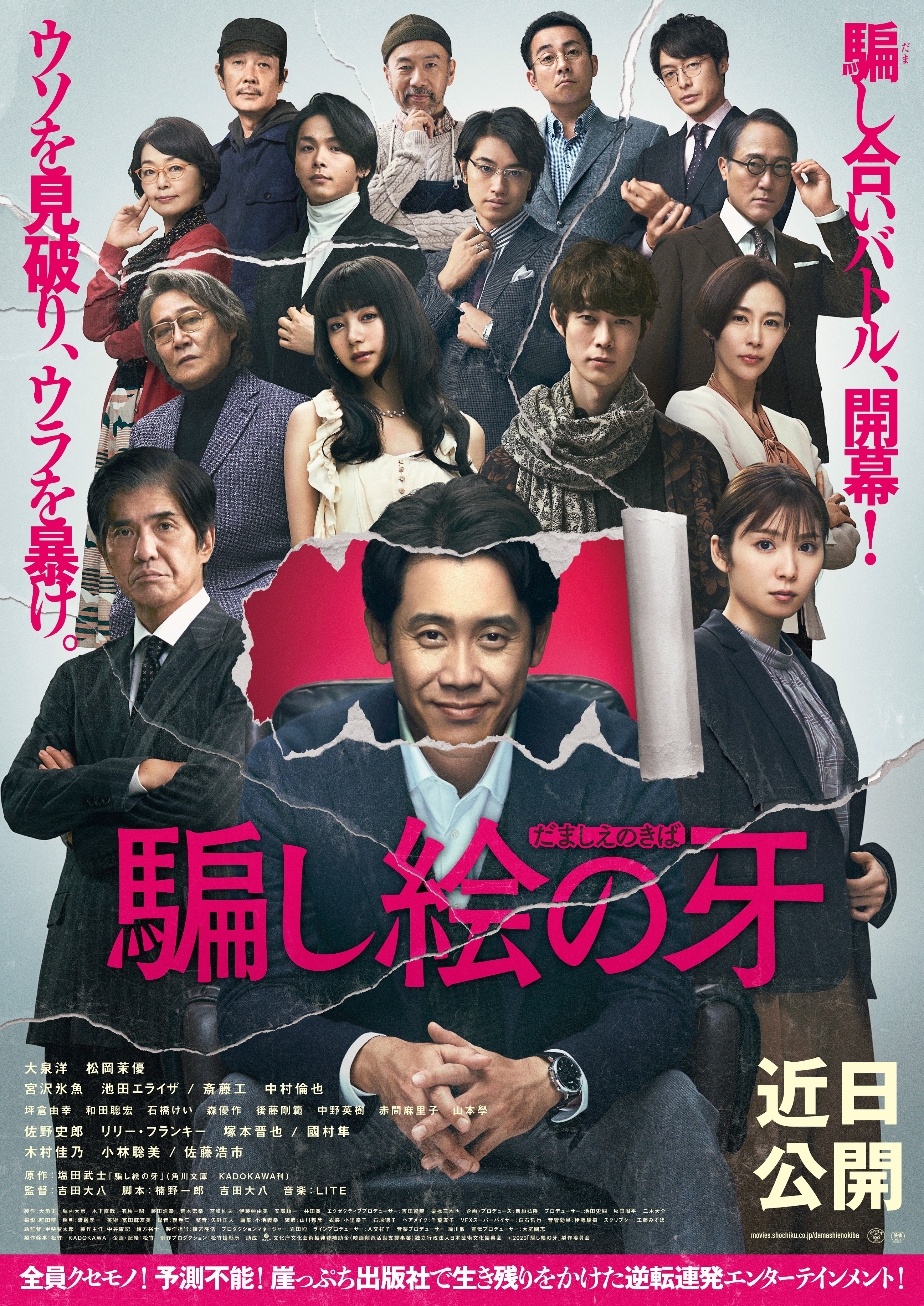
“Landscapes don’t stay the same” laments a young woman in Daihachi Yoshida’s slick corporate drama, Kiba: The Fangs of Fiction (騙し絵の牙, Damashie No Kiba), though the more things change the more they stay the same and the push and pull of traditionalists and modernisers seems set to be an unending battle. If someone were brave enough to think of it, there may be a third way, but one thing is clear – it’s adapt or die for the printed word and the real war is over who makes it onto the page and how they do it. 

When the CEO of a major family-owned publishing house dies of a heart attack while walking his dog, it throws the entire industry into disarray and even makes it onto the national news where pundits discuss who might be most likely to succeed while pointing out that publishing is already in crisis seeing as most novels are serialised in literary journals and magazine readership is on its way out. Earnest editor Megumi (Mayu Matsuoka) is forever told that old and new is a false dichotomy and in some ways it may be, but century-old literary journal Kunpu Review is quite clearly mired in a traditionalist past woefully out of touch with contemporary society. 

This Megumi learns to her cost when pulled straight from the CEO’s funeral to a 40th anniversary event marking the debut of their best-selling author Daisaku Nikaido (Jun Kunimura). Encouraged by rival editor Hayami (Yo Oizumi), she gives her honest opinion on Nikaido’s work pulling him up on the latent sexism in his novels by suggesting his sexual politics are at best old-fashioned. This is of course a huge faux pas and a moment of minor embarrassment for all concerned, though it will also become a repeated motif Megumi again trying to bring up a younger author on his subpar portrayal of women but finding her concerns falling on deaf ears. 

Part of the problem is that authors, and particularly well-established ones, rarely undergo a rigorous editing process such as they might outside of Japan. Kunpu is so desperate to keep Nikaido on side that they treat him as a mini god, wasting vast amounts of their budget expensing him for “research” holidays and a healthy interest in fine wines. They simply wouldn’t have the courage to tell him that his drafts are improvable or that elements of his writing may cause offence. 

Hayami, the tricky editor of rival culture mag Trinity, is by contrast deliberately looking for the modern but in other ways is not so different from Kunpu. Poaching an up and coming author Megumi had pitched but was rejected, Hayami embarks on an elaborate PR campaign casting the young and handsome Yajiro (Hio Miyazawa) as a literary idol star. But Yajiro seems to be uncomfortable with the attention, unprepared to deal with demands of being a prominent writer and resenting Hayami’s attempts to manipulate his image by forcing him into photoshoots dressed in outfits he would never wear. Hayami also engineers a publicity stunt implying Yajiro is in a relationship with his other protege, a young model and unexpected firearms enthusiast (Elaiza Ikeda) who is later arrested after shooting a stalker with a homemade pistol. 

What happens to Saki Jojima is either an unintended consequence or direct result of Hayami’s inability to fully control the situation, but it also creates both crisis and opportunity for Trininty when Hayami breaks protocol and decides to run Saki’s issue rather than pulling it entirely with an apology as is usual in Japan when a celebrity is the subject of scandal. This places him in direct opposition to the traditionalist Kunpu, horrified and insistent that his decision stains the integrity of the publishing house. Like Hayami, however, new CEO Tomatsu (Koichi Sato) is determined to do things differently and prepared to take a gamble, secretly working on his own plan to streamline the business and build their own production/distribution facility in Yokohama. 

Everyone is so absorbed in their own plotting that they fail to notice others plotting around them. Megumi, meanwhile, is preoccupied with the survival of her father’s old-fashioned book shop which itself badly needs another literary hit because half the customers are kids who come in to browse the manga and then download the good ones when they get home. One young woman looking for a particular novel even explains that she only wants to read it because there’s no movie or drama adaptation. With all this finagling, it’s easy to think everyone’s forgotten about the books while Megumi desperately tries to get someone to let her do some actual editing because they’re all too busy mollycoddling their authors. Nevertheless there’s more to the Kunpu vs Trinity battle than it first seems as they vie for the future of Japan’s publishing industry little suspecting that there may be another contender with a less acrimonious solution. “If something could be updated it should be” Megumi insists, a sentiment which apparently goes both for dinosaur writers unwilling to reckon with their latent misogyny and the book business itself. 

Once again adapting a literary source, Yoshida’s gentle farce quietly builds the tension with courtly intrigue as the wider society remains rapt over the succession crisis at a publishing firm while its ambitious courtiers plot amongst themselves in order to steal the throne. Casting Yo Oizumi in the role he apparently inspired in the book is another masterstroke of meta commentary as his thrill-seeking manipulator plays the long game but even if the prognosis for Japan’s publishing industry may be bleak there is unexpected glee to be had in the eventual triumph of a righteous underdog over a thoroughbred plotter. 


Kiba: The Fangs of Fiction screens on Aug. 26 and 28 as part of this year’s Japan Cuts.

Original trailer (English subtitles)

his (Rikiya Imaizumi, 2020)

Though Japanese society is often regarded as comparatively liberal, that liberality can sometimes reflect a superficial politeness and respect of discretion more than true acceptance. Though several prefectures have now made local provision for same sex unions, Japan lacks a basic anti-discrimination law at the national level protecting the rights of LGBTQ+ people and has often been slow to accommodate social change especially when it comes to the organisation of the family unit. The journey of the two men at the centre of Rikiya Imaizumi’s his, a sequel to the TV drama of the same name set some years earlier, perhaps travels at a rapid pace from internalised homophobia to the acceptance of identity and foundation of a home but mirrors the path of society at large as it edges its way towards the truly liberal in which all are free to live in the way they choose. 

Beginning with an ending, Imaizumi opens in the “past” as Shun (Hio Miyazawa), now an isolated young man living alone in the country, dwells on ancient heartbreak as his first love Nagisa (Kisetsu Fujiwara) abruptly breaks up with him as they prepare to graduate from university. We subsequently discover that Shun got a regular salaryman job but remained in the closet only for rumours to circulate around him at work forcing him to endure the casual homophobia of his co-workers at the compulsory nomikai all the while denying his true identity. This seems to be the reason that he’s taken up the offer of cheap rural housing designed to bring the young back to the depopulated countryside and has been largely keeping himself to himself, growing his own produce and deliberately keeping the locals at arms’ length. All that starts to change, however, when Nagisa suddenly turns up on his doorstep with his six-year-old daughter Sora (Sakura Sotomura) in tow. 

Though not exactly overjoyed, Shun allows the pair to stay but remains conflicted unsure what it is Nagisa wants from him and also fearful of his new life being derailed should the local community discover what it is that he’s so obviously in hiding from. Nagisa, meanwhile, apparently broke up with him for the same reasons, afraid to continue into his adult life as an openly gay man eventually travelling to Australia where he drifted into a relationship with a Japanese woman, Rena (Wakana Matsumoto), working as an interpreter with whom he later conceived a child and formed a conventional family. Struggling with himself he tried to maintain the facade through casual relationships with men, but discovered that he couldn’t make it work and unlike Shun decided the only way out of his predicament was to embrace his sexuality and attempt to live a more authentic life with the man he never stopped loving. 

Having pursued contradictory solutions to the same problem, the two men find themselves still in some senses at odds even as they reunite in their obvious love for each other. Nagisa envisages for them a family life raising Sora together and with the help of his sympathetic, supportive lawyer intends to have his conviction vindicated by a verdict in law but his former wife, while not openly hostile if obviously hurt and feeling humiliated in having been deceived, wishes to retain custody of her daughter even though she was not the primary caregiver. The court battle opens a veritable can of worms in a fiercely patriarchal, conformist society, Nagisa’s lawyer reminding him that he has an uphill battle because society inherently believes that women are better suited to childrearing. Rena’s lawyer throws the homophobic book at them, describing the relationship between the two men as “eccentric”, implying it cannot be other than harmful to Sora not least because of the bullying and social stigma she may face as a daughter raised by two fathers. Even the judge agrees that the situation is “not exactly normal”, though in this he may have a point in the fact that Nagisa had been a househusband and his wife the breadwinner, still an extraordinarily unusual family setup in a society in which women are expected to shoulder the domestic burden sacrificing their careers in the process. 

Indeed, it’s this same paradox that Nagisa’s female lawyer eventually throws back at Rena, that she cannot claim to adequately care for her daughter while working especially as she is a freelancer whose hours are often unpredictable. Rena had been reluctant to involve her family because of the shame of admitting her marriage has failed and for the reason it has but is later forced to ask her mother for childcare assistance only to receive a curt “I told you so” which speaks volumes as to the quality of their relationship. Meeting in a coffeeshop Rena looks at her mother looking askance with mild though unvoiced disgust at two men holding hands, reflecting both on her unforgiving austerity and her relationship with her granddaughter. The two women obviously differ when it comes to childrearing philosophy, Rena not wanting her daughter to suffer in the same way she has suffered because of her mother’s unforgiving conservatism and is extremely worried on being called to the school and told that Sora, who had previously been so cheerful and outgoing, has become sullen and withdrawn. 

Yet Sora is perhaps the force which allows each of her parents to accept themselves for who they are and embrace their true identities. Worried that she might be a burden to her mother who often drinks and appears to resent her for interfering with her work, Sora wonders why everyone can’t just get along and live together happily. She sees nothing “weird” in her father’s new relationship, though perhaps fails to understand why the four of them might not be able to live together as a family. Supported by Sora, Shun begins accept himself for himself, eventually coming out to the community and finding them entirely unbothered by his revelation bearing out the commonly held belief that small rural communities are often far more liberal than the famously conservative capital. Filled with a sense of love and mutual support, his presents a perhaps idealistic view of the modern society but an infinitely hopeful one as the three adults resolve to be kinder to themselves and others as they move forward together into a happier, more authentic existence. 


his streamed as part of the 2021 Japan Foundation Touring Film Programme.

Original trailer (English subtitles)

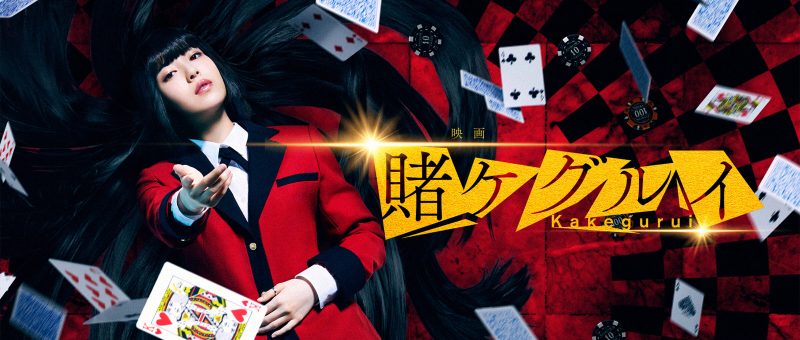
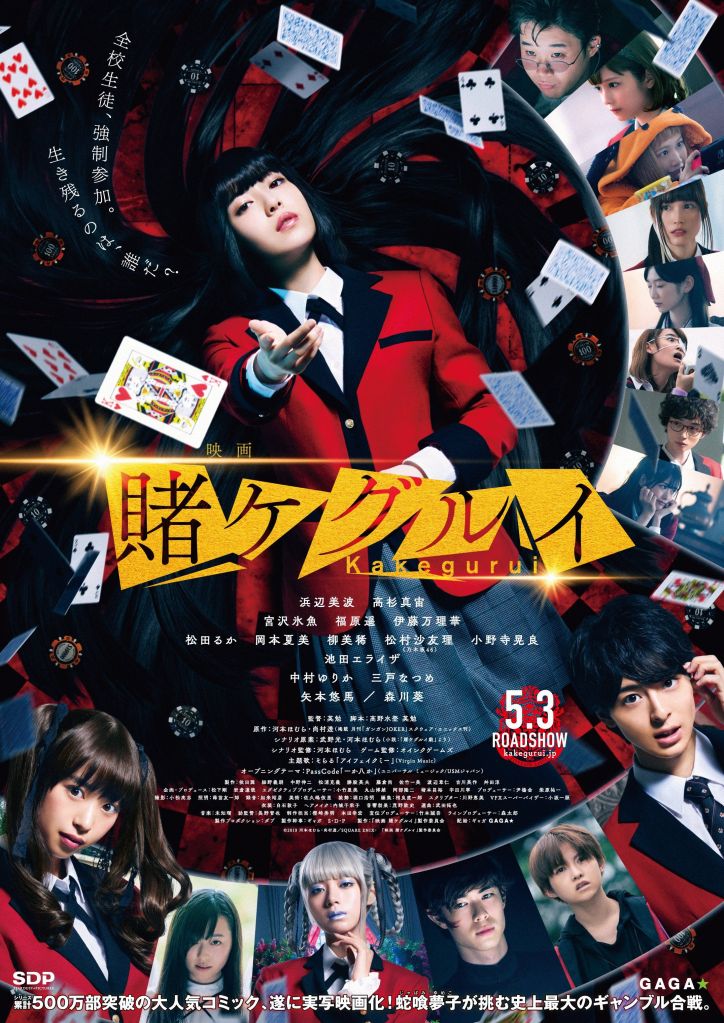
Kakegurui (映画 賭ケグルイ, Tsutomu Hanabusa, 2019)

Gambling, the ultimate act of faith or the height of anarchic genius? Based on the hit manga which has already been adapted as a popular TV anime, Kakegurui (映画 賭ケグルイ) is the sequel to two seasons of a live action TV drama set in a school where hierarchy is decided not by grades or by fists, but by prowess at the gaming tables. Those who lose so badly they bankrupt themselves become a kind of subhuman underclass, tied up like dogs and routinely humiliated, while the Student Council becomes a stand in for an oppressive social order ruling over all and enforcing the law with an iron hand. 

Into this high stress environment walks Yumeko Jabami (Minami Hamabe), a transfer student to the elite Hyakkaou Private Academy determined to bend its rules to her own advantage. Meanwhile, Student Council President Kirari Momobami (Elaiza Ikeda) is forced to deal with a new and unexpected threat – The Village, a small cult made up of students who have rejected the system, dropped out to live a hippy lifestyle in the grounds, and refuse to participate in “meaningless” games of chance. Their priest-like leader, Amane Murasame (Hio Miyazawa), once beat Kirari at cards becoming something like a god of gambling, but lost his zeal for the game after losing the only thing he ever cared about. 

Where he opposes the system passively yet pointedly, Yumeko rebels in her own, fiercely individualistic way by superficially conforming, becoming a top gambler, but only because she is exercising a free choice to do so. She plays for kicks alone, and generally wins because she isn’t stressed enough about losing to let it bother her. This individualist streak makes her a hidden threat against Kirari, but one that might in itself be an interesting gamble for the infinitely bored Student Council President. 

While Yumeko’s individualism threatens to unbalance the system, The Village presents a collectivist threat, agitating wholesale revolution and an end to the oppressive rule of the Student Council which renders losers inhuman. Yet there’s an essential irony in The Village’s creepy monotony that stands in stark contrast to Yumeko’s seeming conformity but insistence on her own freedom. Your life’s your own, she later explains, it’s annoying if people try to manipulate it. In this instance she’s talking not about the “life plans” handed out by the Student Council, but the egotistical desire to “save” the lives of others without considering if they want them saved or if you’re merely infringing on their personal freedom in attempting to make choices for them based entirely on your own value system. 

Murasame perhaps bet something he shouldn’t have and technically won, but ended up losing anyway which is what has made him turn against gambling. Yumeko, meanwhile, believes that the only way to be truly free to entrust yourself to luck and destiny. That is, however, somewhat disingenuous, because what Yumeko excels at is mind games, essentially manipulating those around her in order to win. Yumeko plays players, not cards, and is rarely played herself. Unlike Murasame’s righthand woman Arukibi (Haruka Fukuhara), she doesn’t care that much what people think. Arukibi, meanwhile, is desperate for approval and is playing her own game just to get someone’s attention which makes her a volatile, if easily manipulated, opponent.

Essentially, Murasame wants freedom outside of the system where Yumeko has found it within, but her philosophy is perhaps the more dangerous in that it proposes total freedom that has no regard for the systems of governance. Then again, maybe this is all a long con to get better cakes in the cafeteria, merely gaming the system rather than actively undermining it. Nevertheless, for Yumeko life is risk, rebelling against an oppressive social order through the anarchic individualism of living by “chance”. Living in a society as highly regimented as this is a high stakes game, but you can’t win if you don’t play, and you need to play smart. That’s the peculiar irony of life at Hyakkaou Private Academy where the Student Council literally owns your future but you can win it back by playing them at their own game. Bet your life, win your freedom Yumeko seems to say but she still makes sure to bring cake for everyone, not just the “winners” or the privileged few. 


Screened as part of the Japan Foundation Touring Film Programme 2020.

International trailer (English subtitles)