The Shock Labyrinth (戦慄迷宮3D, Takashi Shimizu, 2009)

Is it a good idea to advertise your haunted a house attraction by making a movie in which people get trapped inside haunted house? Whether or not Shock Labyrinth (戦慄迷宮3D, Senritsu Meikyu 3D) had the desired effect of luring more guests to Fuji-Q Highland’s Labyrinth of Horrors is probably lost to time, though Takashi Shimizu’s 2009 ghostly drama is also a strange curio produced during the short-lived resurgence of 3D in the late 2000s though this, of course, also means that it was shot with the flattened aesthetics of early digital technology.

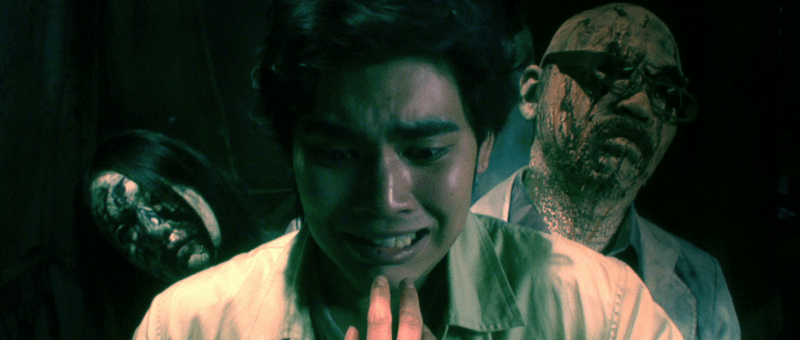
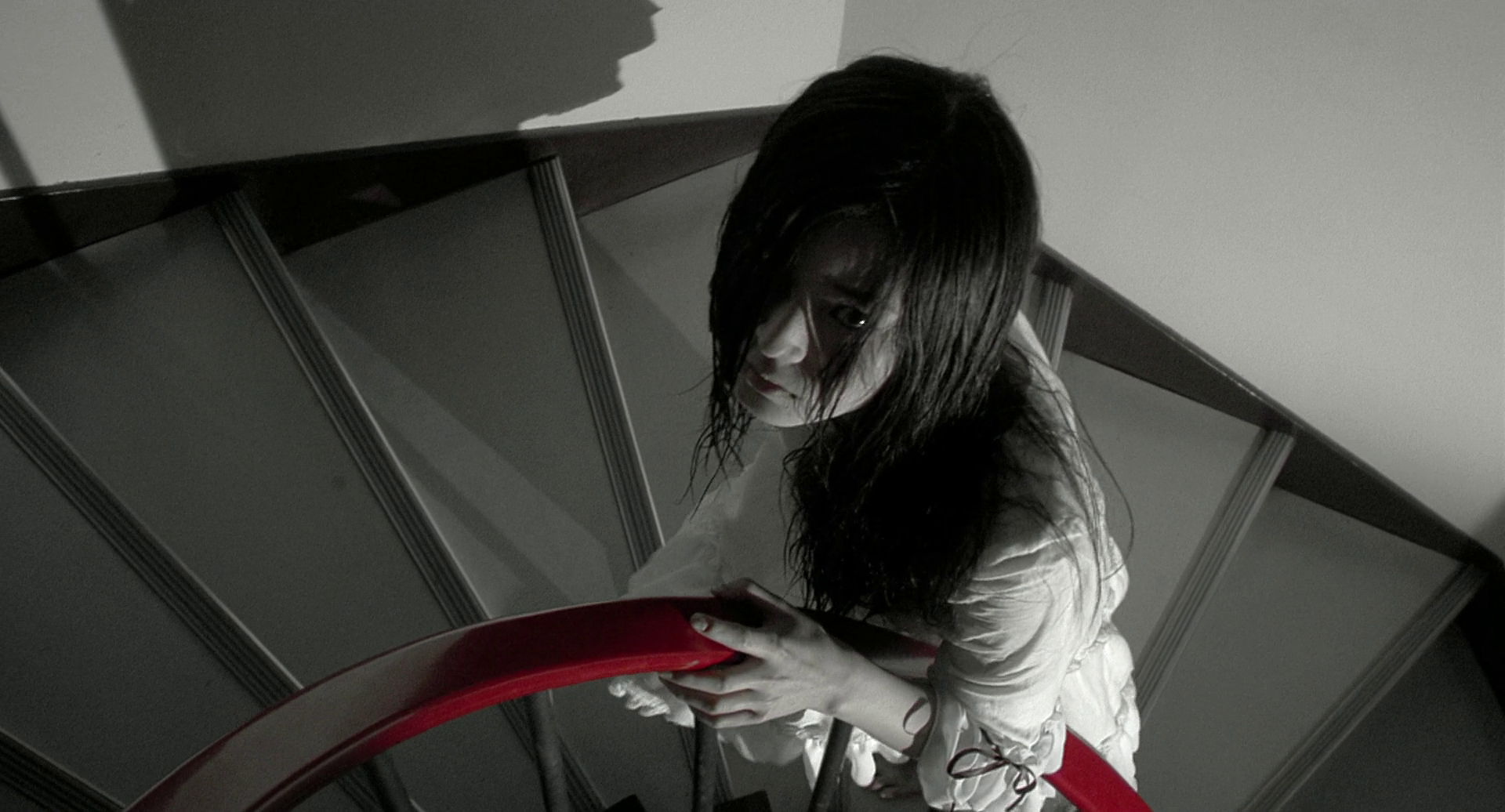
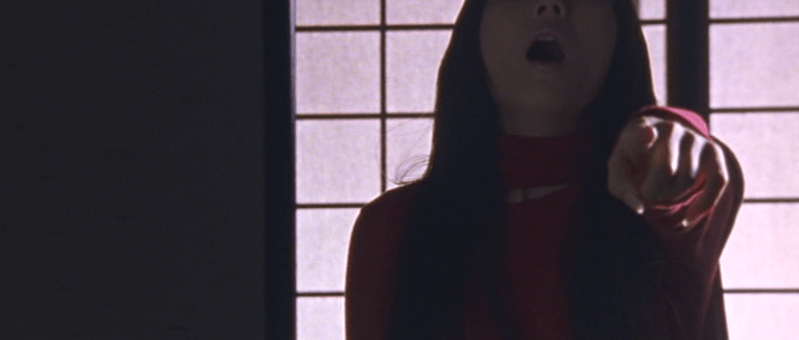
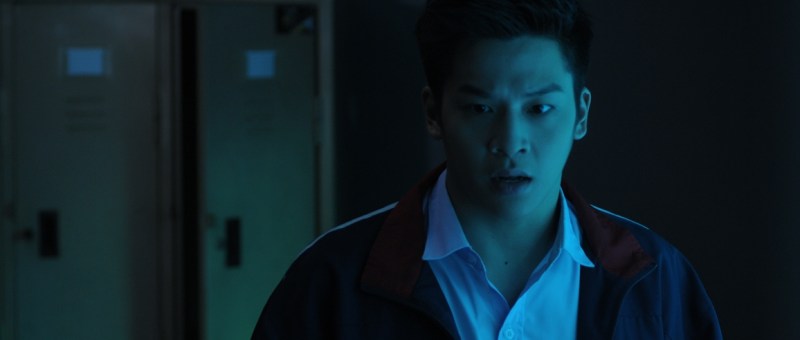
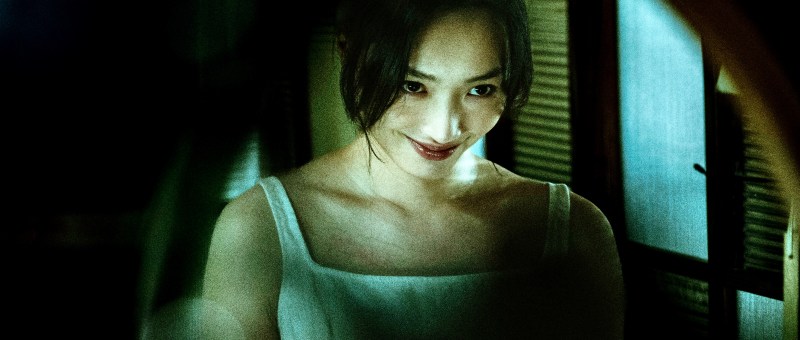
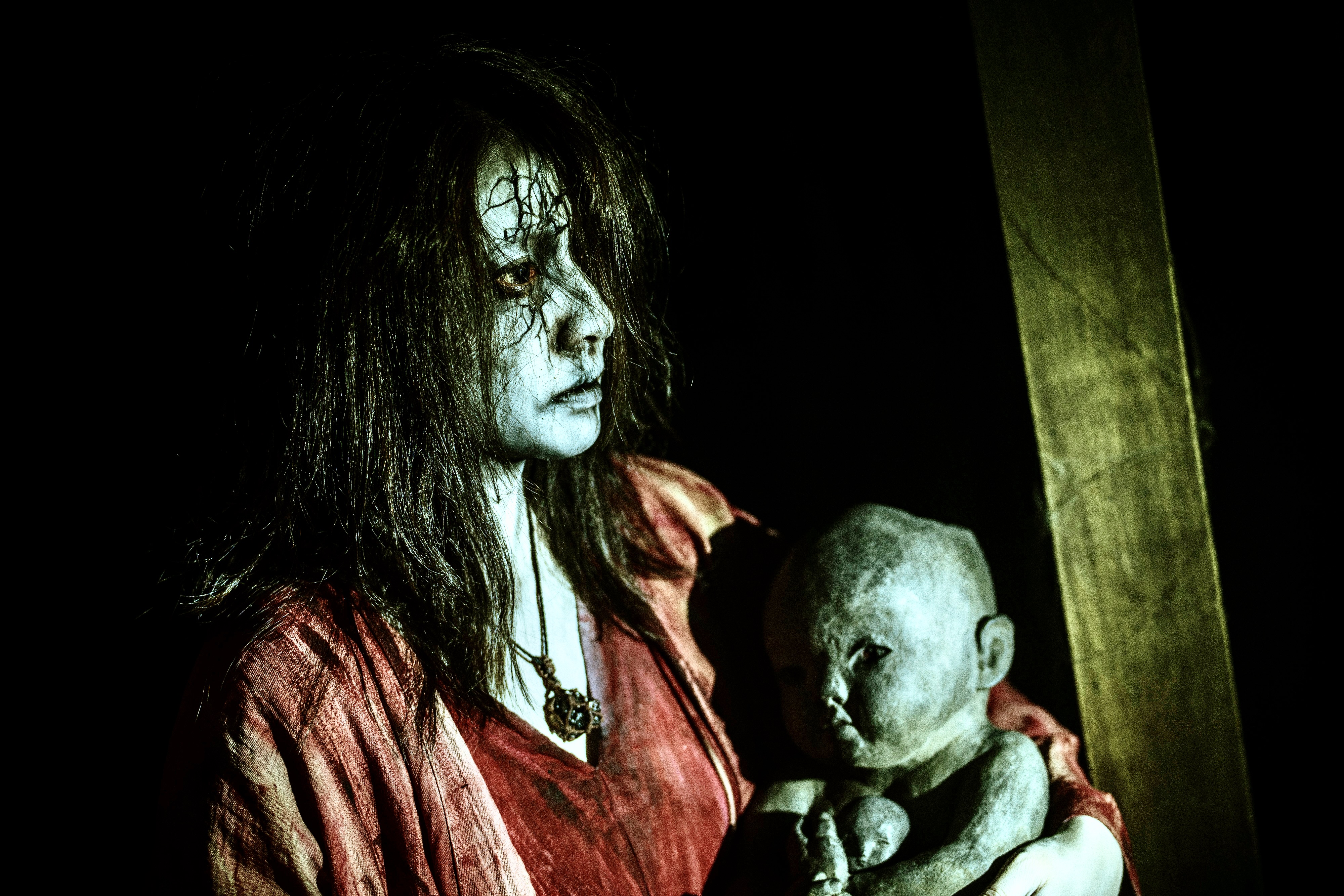
In essence, the film casts traumatic memory as a haunted space of the brain in which the protagonist is plagued by the disappearance of a friend inside the fairground attraction he and his friends snuck into as children. Yuki (Misako Renbutsu) makes a sudden reappearance when Ken returns to his hometown. She claims to have been trapped for a very long time, but has grown along with the others and her clothes have somehow grown with her so that she has the appearance of a ghostly adult woman who behaves like a child. When the gang try to take her to a hospital, they unwittingly end up back at the fake one from the fairground attraction and are forced to face their unresolved guilt and trauma.

Indeed, it seems most of them had completely forgotten about Yuki and got on with their lives. Gradually recovering his memories, Ken (Yuya Yagira) blames himself for Yuki’s death while Motoki, who denies all responsibility, becomes convinced that Yuki’s vengeful ghost brought them back here deliberately to get her revenge for them leaving her there. It’s true enough that the others all ran off after becoming frightened without thinking about Yuki and made no attempt to rescue her, and that they went into the haunted house while knowing they weren’t supposed to, but, on the other hand, they were all children and acted in ways children do. Then again, there were already ructions and petty jealousies dividing the group as it appears Ken was the more popular member liked by both Rin and Yuki, provoking a series of jealousies and resentment from Motoki who declares that he’s not going to bother save Rin because she didn’t love him anyway. Ironically, she’s just told Ken that Motoki was the only one who really cared about her when Ken only helped her out of a sense of pity because she is blind. Miyu, Yuki’s younger sister, had also been jealous of her for being so “perfect and nice” when she was always the “bad” one who got into trouble. 

This shock labyrinth is really the space of repressed memories that Ken talks about. What it seems Yuki wants, like many similar ghosts, is company and to trap her friends with her within this space, or at least as much as she’s a manifestation of Ken’s buried guilt, to prevent him from ever really forgetting her and going on with his life. Ken and the others desperately search for an exit, but are ultimately unable to overcome their traumatic memories. Yuki comes for them as soon as they remember what they did to her, as if they were really being stalked by their own repressed guilt and shame. Still never having dealt with the death of his mother, Ken dreams of her telling him not to go into the haunted hospital or Yuki will him as if she wanted to protect him from this harmful memory though repressing it is evidently as damaging as confronting the truth of the past.

The detectives meanwhile adopt the more rational view that Ken is responsible for everything having taken revenge on his friends for abandoning Yuki when they were children. Perhaps this is all really going on in the shock corridors of Ken’s mind as his traumatic memories have begun to leak out and distort his sense of reality. Then again, perhaps Yuki has found a way to come back for deadly game of hide and seek to keep her occupied in the between space of the fake haunted hospital with its creepy, decomposing mannequins and the unexpectedly gruesome plush rabbit backpack the young Yuki was forever carrying around and refused to let others touch. Either way, it seems Yuki will not let them go but will always be there in the dark corners of their minds to remind them what they’ve done.


Trailer (English subtitles)
Haunted Mountains: The Yellow Taboo (山忌 黃衣小飛俠, Tsai Chia-Ying, (2025) [Fantasia 2025]

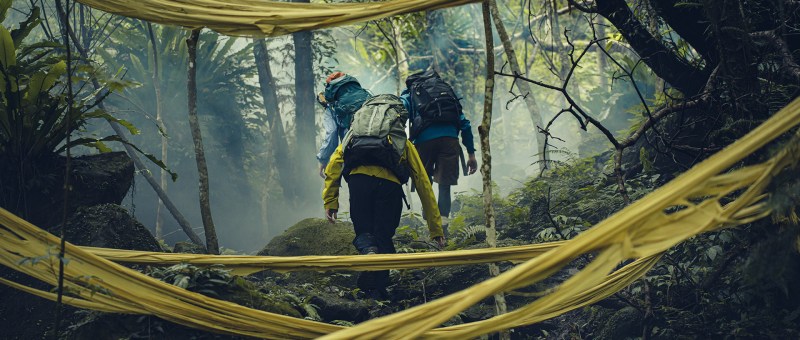
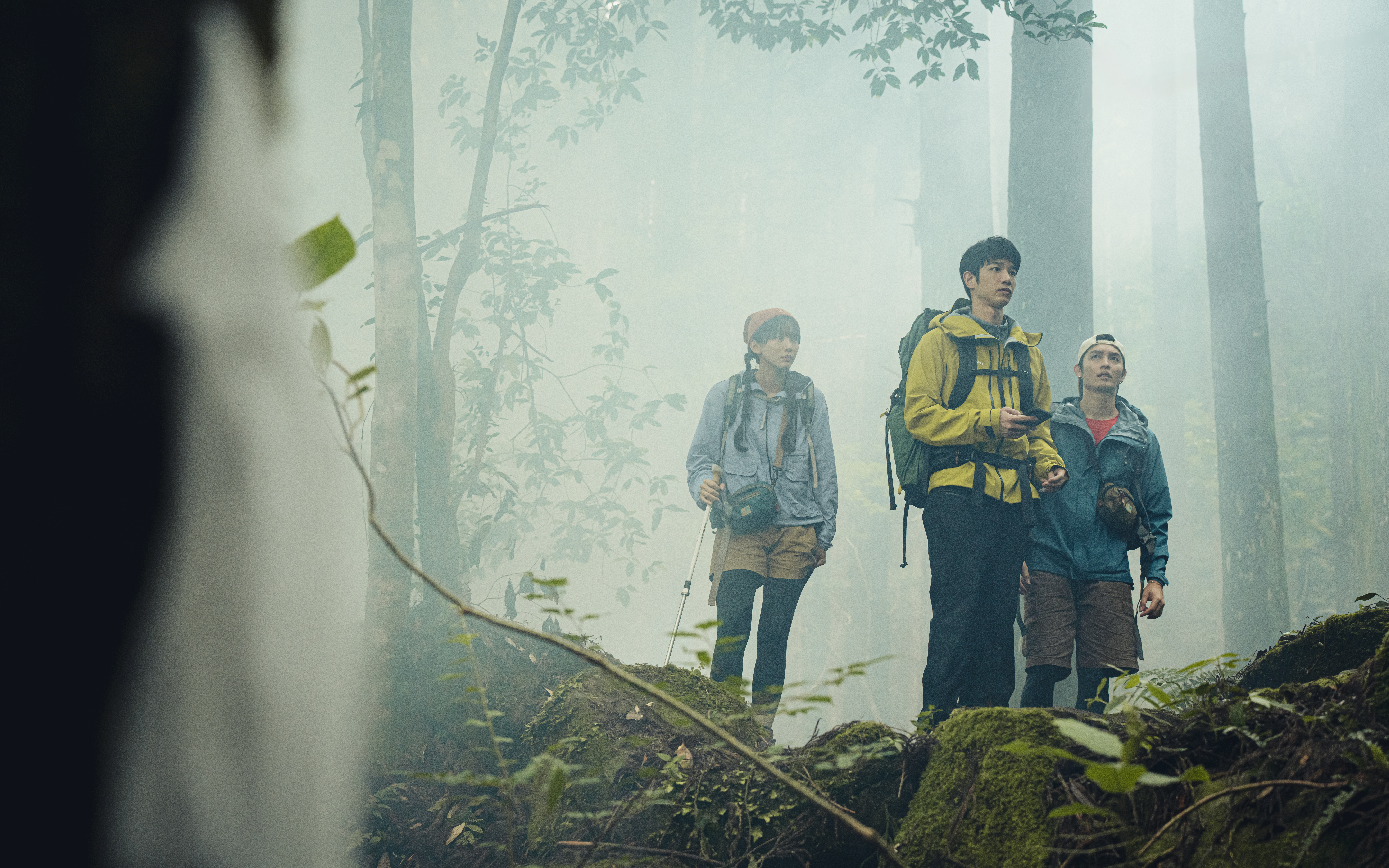
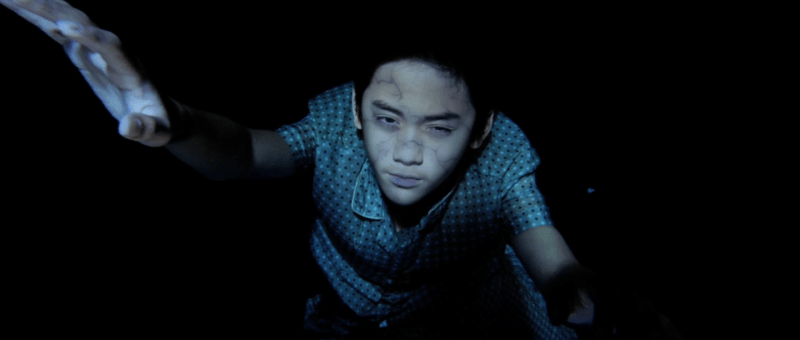
There are some things you aren’t meant to see. Or at least, should you come across them, you should think better of it and be quietly on your way minding your own business. But unfortunately, curiosity got the better of the three hikers at the centre of Tsai Chia-Ying’s timeloop horror, Haunted Mountains: The Yellow Taboo (山忌 黃衣小飛俠, shān jì huáng yì xiǎo fēi xiá) and now one of them’s trapped, forever living the same day over again and forced to watch his fiancée die in increasingly bizarre ways knowing he is unable to save her. 

To that extent, Tsai uses the time loop as a metaphor for grief in which the guilt-ridden Chia-ming (Jasper Liu) is psychologically unable to escape the mountain on which his friend, An-wei (Tsao Yu-ning), died. Five years later, he’s in a relationship with An-wei’s old girlfriend Yu-hsin (Angela Yuen)who was also on the mountain that day, but he can’t help feeling haunted by the spectre of An-wei and convinced that Yu-hsin would never have chosen him if An-wei were still alive. He worries that perhaps he didn’t try hard enough to save him knowing that he’d never have a shot at Yu-hsin with An-wei in the picture. He promised he’d get An-wei of the mountain, but in the end he left him there and in a way he’s still there too. 

This trip to the mountains seems to have been for closure. They’re still looking for An-wei’s body, but Chia-ming has a ring in his pocket and a question he’s too afraid to ask. He’s asked Yu-hsin to marry him before and she said no. He thinks it’s because she’s still hung up on An-wei, but in reality he’s the one who can’t let go and his insecurity is killing his current relationship. Repeatedly watching Yu-hsin die is a manifestation of his anxiety that she’ll never really be his, that he can’t keep or protect her, and that the only reason they’re together is because he betrayed An-wei. Yet the looping is also an expression of the way that his grief roots him in time. He literally can’t move forward and is forced to remember every day that his friend is gone. During his journey he eventually meets an older woman in a smilier position who says that she too finds each day repeating as she struggles to process the loss not only of her son who also went missing on the mountain, but of her husband, who was swallowed by his grief and ended up abandoning her in the same way that Chia-ming is unwittingly abandoning Yu-hsin.

But there are also ancient and arcane forces at work. All of this seems to have happened because An-wei broke a taboo and opened the door to the vengeful spirits of those who were killed by nature and claimed by the mountain. The mountain then becomes a place of death into which people disappear and leave those who love them lonely on the other side. The woman’s husband also felt that souls had become trapped here and wanted to free them while searching for his missing son, but as Chia-ming later discovers, though it may be possible to change the reality, it will come at a great cost and at least one sort of loss will have be to accepted before the mountain will release its grip.

Chia-ming makes his decision, but the outcome does rather have the effect of making his present life seem like a dream or thought experiment in which he imagined a future for himself in which his friend was no longer a romantic obstacle and then felt bad about it. He doesn’t really give Yu-hsin much of a say and makes (almost) all her decisions for her, never really knowing if one day she might have tired of An-wei and chosen him instead or if he could have resigned himself to loving her from afar. In the end, the only way he can free himself from this loop is to face the past with emotional honesty and reckon with his feelings along with his guilt and jealousy. The question is how much he really wants to leave the mountain or whether his obsession will eventually trap him there as just another “missing person” swallowed by grief and led astray by despair. 


Haunted Mountains: The Yellow Taboo screened as part of this year’s Fantasia International Film Festival.

Trailer (Traditional Chinese / English subtitles )

Kakashi (案山子, Norio Tsuruta, 2001)

There’s a village in Japan that’s mostly inhabited by scarecrows. One of the last remaining residents began creating them to replace something that had been lost, fashioning effigies of those who had passed away and immortalising them as if clinging to a distant past long before the shadows of rural depopulation were cast over the village. In a way, it’s an expression of grief or at least a lament for a loss of community and a sense of increasing loneliness and isolation. 

Adapted from Junji Ito’s manga, Norio Tsuruta’s Kakashi is also in its way about grief and the way in which it can consume those left behind so that they too have no more desire to live. Dr Miyamori (Kenzo Kawarasaki) later explains that in the village they co-exist with death and he returned to his home town in the hope that he could save his daughter, Izumi (Ko Shibasaki), through its peculiar magic of resurrecting the deceased as human scarecrows. As he freely admits, he could not accept his daughter’s death and so has chosen to stay here in the village though alive himself rather than attempt to remake his life without her.

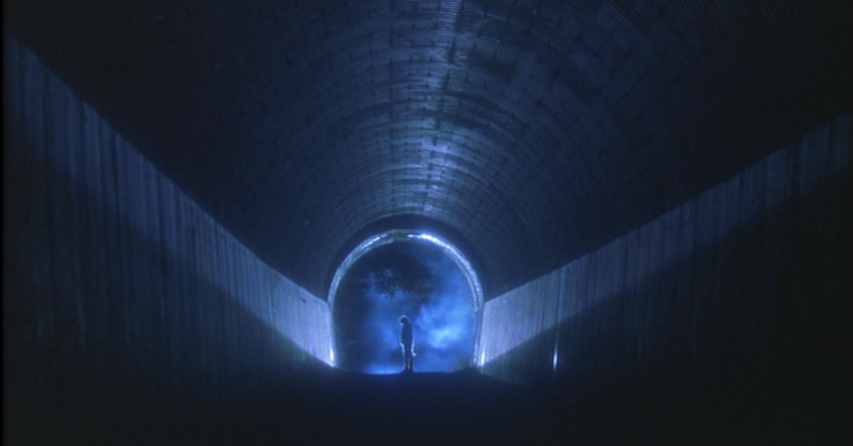
The village itself appears to exist slightly outside of the mortal realm as Kaoru (Maho Nonami) discovers on encountering the long tunnel that leads to its entrance. Her car breaks down half-way through signalling her liminal status as one who does not yet belong on either side. It’s not quite grief that’s brought her here but still a nagging sense of foreboding in that she’s come in search of her missing brother, Tsuyoshi, after discovering a letter from an old school friend, Izumi, next to his telephone. Kaoru appears confused as to why the letter should be there and travels to the village hoping for answers, assuming that Tsuyoshi (Shunsuke Matsuoka) may have travelled there in search of Izumi.

As the landlady lets her into his empty flat, Kaoru explains that she is his only family and there’s a suggestion that her attachment to him is unnatural, bordering on the incestuous. A policeman taking a look at the photo Kaoru hands him remarks that they look like a couple, which they do, leading her to stuff the photo back in her pocket as if she were embarrassed. To that extent, she’s come to reclaim Tsuyoshi, not just from death, loneliness, grief, and depression, but from Izumi or at least the spectre of her. In life, she feared that Izumi would take him away from her and at least in Izumi’s mind frustrated their romance out of romantic jealously. Dr Miyamori implies it was this sense of despair that contributed to her death and it’s clear that Izumi’s mother also blames Kaoru while Izumi accuses Kaoru of being forever in her way.

But then again, she did not bring Kaoru to the village and is not targeting her personally out of vengeance. Rather, she has moved beyond that as she finally’s about to become “herself” thanks to the village’s dark magic and the following day’s scarecrow festival, and therefore no longer needs to care about the resentments of her mortal life even if her father says that her evil spirit has empowered the town. There is definitely something quite creepy in this weird village with its shades of the Wicker Man in its strange ritual and humanoid effigies where improbable numbers of children softly blow pinwheels under a large windmill that seems to be moving time itself. Tsuruta even borrows a particularly eerie shot from Don’t Look Now and emphasises the liminal qualities of the village in Dr Miyamori’s advice that Kaoru leave as soon as her car is fixed otherwise she may no longer wish to.

The village is apparently full of those like him who are trapped but wilfully so because they no longer desire to leave. Kaoru attempts to help one of them, a young living woman from Hong Kong unable to let go of the memory of her late father whose scarecrow eventually tells her to go. It’s a place for those who have no other place to go to because they cannot let go of their grief and despair. Thus Kaoru is pulled towards the edge of the tunnel, not so much to free her brother as, in a way, herself by allowing her grief to consume her and consenting to live this empty life alongside death rather than allow herself to accept her loss.


Trailer (no subtitles)

Soul Reaper (Malam Pencabut Nyawa, AKA Respati, Sidharta Tata, 2024)

A young man finds himself haunted by the spectres of his trauma, but also, as it turns out, by a not so ancient evil in Sidharta Tata’s eerie horror film Soul Reaper (Malam Pencabut Nyawa AKA Respati). Plagued alternately by nightmares and insomnia, he discovers an ability to enter a hidden world of dreams while simultaneously noticing a connection with an ongoing spate of mysterious deaths along with that to a traditional village and its ancient beliefs. 

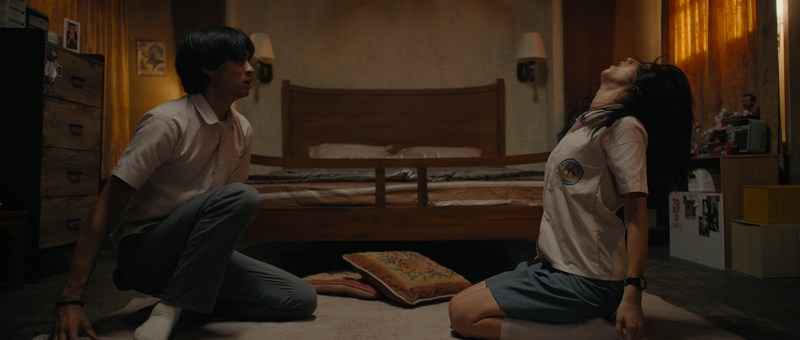
Suffering with a kind of survivor’s guilt, Respati (Devano Danendra) blames himself for the death of his parents and is haunted by visions of their vengeful ghosts. A new girl at his school, Wulan (Keisya Levronka), is ostracised by the others who hear that the reason she left her last school was that she has a tendency to get possessed by ghosts which upset the other students. Like Respati, she is also haunted by bad dreams and desperately misses an absent parent, in her case her mother. The fact that so many seem to be connected by violent robbery hints at a generalised anxiety within the wider community that is only exacerbated by the series of mysterious deaths hitting the news. 

What Respati eventually realises is that he’s witnessing real deaths in his dreams though taking place in the dream realm. Others who’ve suffered loss and trauma such as a man who recently lost his young daughter are led away towards a bright light where they think they see their loved ones but are actually consumed by a dark force. In the midst of his own grief, Respati is forced to face a secondary trauma that relates to his grandfather’s hometown where the villagers believe in the power of an ancient god. A powerful witch, Sikma, convinced herself that she was the inheritor of the witch’s power and in her zeal to learn more about the dream world began sacrificing her patients. The other villagers shunned her until she too ended up dying a mysterious death after which her body disappeared.

Sikma maybe feeding on grief, but she also had a child who viewed her as a mother and is now bereft in the same way as Respati and Wulan are having lost their parents. Respati refuses to talk about his trauma with the doctor his grandfather takes him to about his insomnia but discovers a new way to face it through the dream realm as if by overcoming his nightmares he could learn to sleep peacefully again while simultaneously ending the series of mysterious deaths by taking care of Sikma. In the dream realm, he is able to manifest his own desires by virtue of his lineage that makes him a descendent of the mountain goddess and imbued with her power which means that he is able to make peace with the past by envisioning a different outcome for a painful event which, though it cannot change what really happened, allows him to let go of his guilt while realising what’s really important. As a young man his grandfather brought from the country advises him, you never really know how much time you have left, so it’s important to cherish your loved ones while there’s still time.

The irony is that everyone wants the same thing and has been hurt in the same way, though they have different ways of dealing with their grief in their inability to let go of the past. The dream world appears as an eerie forest in which it is the grieving who are called towards the light as if like Respati they blame themselves for not going with those they loved, though it also echoes an ancient horror in the natural world. The grieving are pinned in the mortal realm by tree roots which seem to encircle and constrain them until they break free, called towards the light by a comforting lullaby which offers them one way to escape their grief, whereas Respati can only leave by violent means. Ejecting oneself from the dream realm involves physical pain rather than simply the emotional, but allows him to literally “wake up” from the inertia of his grief to find a new purpose in life and overcome his trauma. Bringing traditional folk horror with its witches and ancient gods together with a more overtly modern tale of psychological haunting lends an additional edge to Respati’s quest to solve the mysterious deaths but even if his own trauma has been exorcised it seems this particular strand of evil may not quite be done with him yet.


Soul Reaper is released Digitally in the US 17th June courtesy of Well Go USA

Trailer (English subtitles)
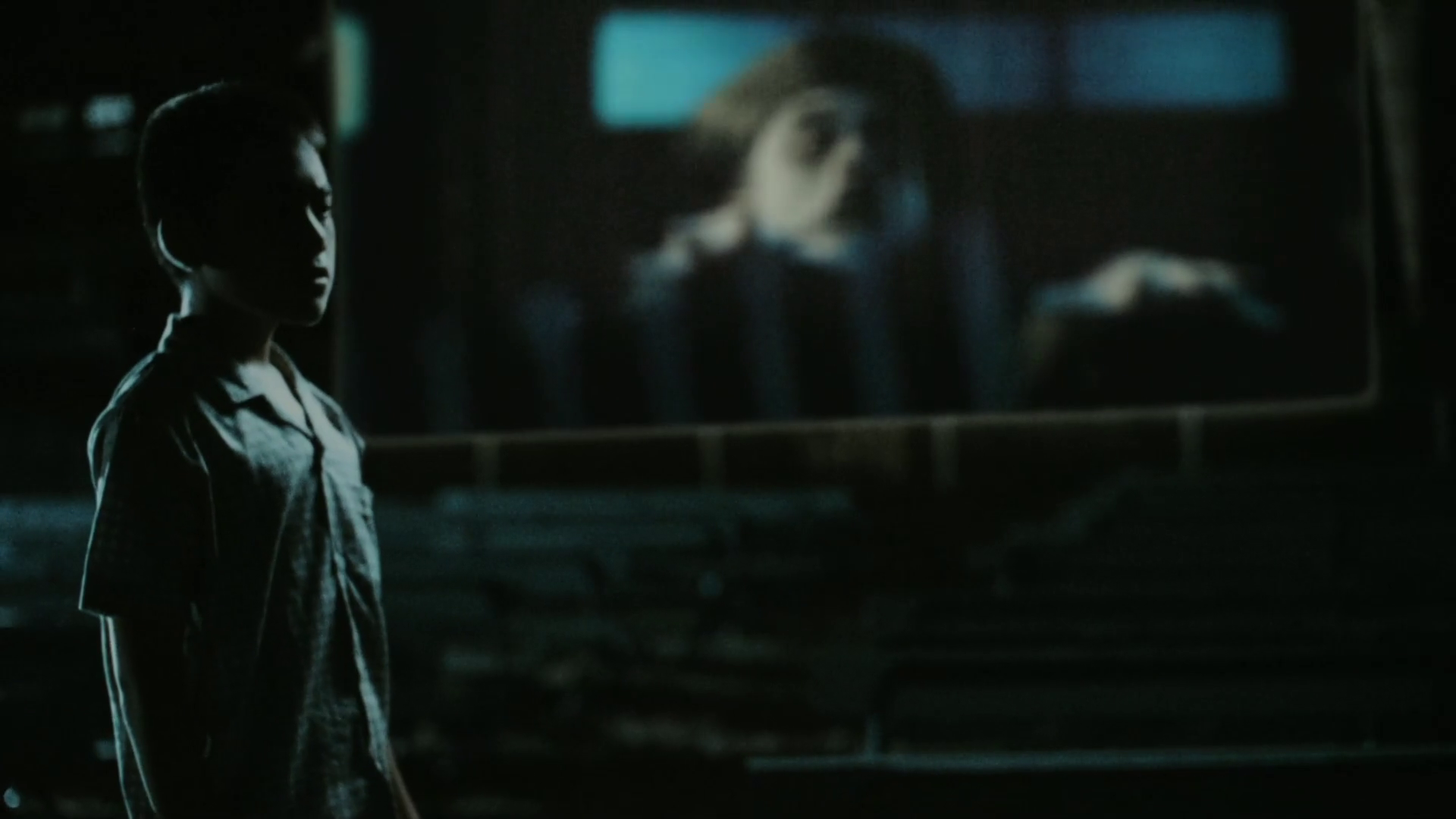
Forte (포르테, Kimbo Kim, 2025)

A worried policeman nervously asks Yeonji (Im Chae-young) if the rumours are true. They say that everyone who works at Studio Forte ends up going mad or dying, but Yeonji has only just started working there herself and it’s too early for her to say whether that really is the case, though it’s true enough that the building has an eerie energy. Even a visiting film director remarks that the atmosphere is unusual, though it doesn’t seem to have put him off returning. The director, Jeonghwa (Lee Jung-eun), is one of the best after all which is why Yeonji took this job in the first place.

On arriving at recording studio Forte, Yeonji remarks that it seems like a great place for inspiration but the building itself is anything but inspiring. A block of concrete and glass, it stands ominously and incongruously in the middle of nature as a defiantly manmade structure intent on disrupting the natural order. It feels oppressive, rigid, and constraining. Not the sort of environment that best serves creative impulses despite the well-appointed interior with its modern design and copious light from the large windows. 

Yeonji walks the surrounding forest in wonder, but at the same time there’s something odd about it in a bewitching sort of way. Her colleagues seem to be haunting her, seemingly standing around and staring while she’s otherwise disappointed by the lack of faith Jeonghwa seems to have in her. At the first team briefin,g she neglects to give Yeonji anything to do and then tells her to help her colleague Haejoon finish his section of the score for an upcoming film. Only Haejoon already seems to be having strangely. He looks ill, and sometimes doesn’t even turn up for their work sessions to the point that Yeonji ends up working with another colleague, Dojin (Cha Se-jin), to get everything finished on time. 

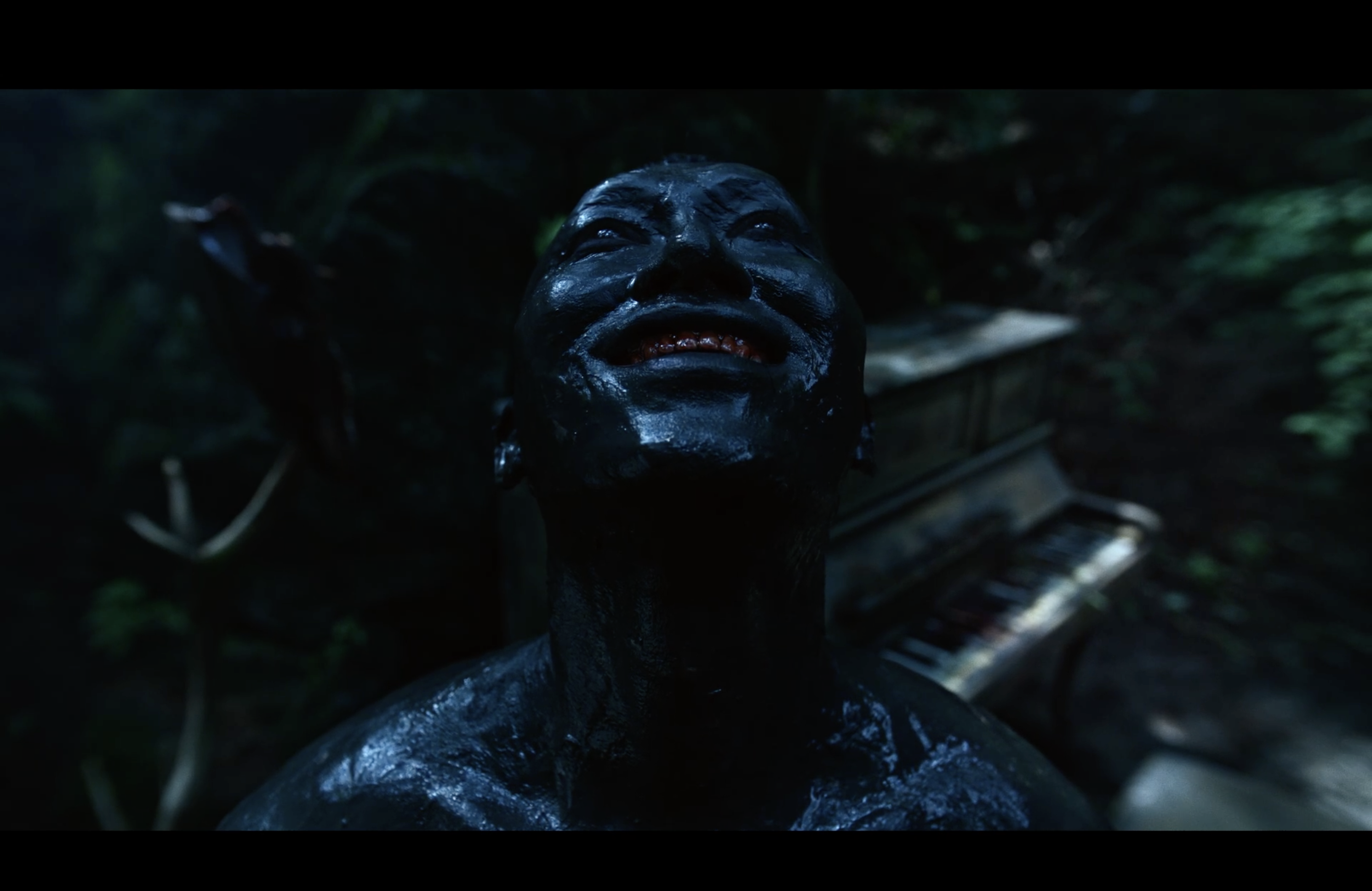
“Everything that happened here is real.” Haejoon later says cryptically after screaming that something is “here” and means him harm. Yeonji begins having visions of the forest and an oily, muddy figure along with images of death and fire. In any case, even without the existential dread of lingering supernatural threat, it’s easy to see why this place might drive someone mad. Yeonji tries asking Dojin what’s happening with credits on the movie and he brushes the question off, replying only that Jeonghwa will sort it out, which sort of implies only she will actually be credited. When the director arrives for a test screening, Jeonghwa treats Yeonji like the tea girl and explains that she’s “new”, but the director asks for her opinion anyway and she gives it, honestly, though it contradicts Jeonghwa’s. The producer (Cho Sueun) claims she could tell that Yeonji wrote the tail end of the music because it was “different”, which gives her the feeling that her work may be good after all and that Jeonghwa is playing it too safe with her conventional approach. 

Though she had been somewhat mousy and earnest on her arrival, dressed in an elegant if constraining outfit, Yeonji gradually becomes bolder and wilder. She lets her hair down and dresses in darker, looser clothing while often talking back to Jeonghwa and contributing her own contradictory opinions. But in the end none of it matters. She realises that Jeonghwa is basically exploiting her, getting her to ghostwrite the score while taking all the credit. The director makes a drunken pass at her, and while confused by her reaction explains that this is her big opportunity. Both Jeonghwa and himself only got to where they are by playing the game, which means submitting oneself to this kind of quid pro quo. 

It stands to reason that Yeonji’s barely suppressed desires would eventually burst through as they eventually do in the bloody climax building towards a crescendo of emotion in which Yeonji appears to become smaller and smaller behind the piano as the music overcomes her as if she were possessed. Only now has she released her creative freedom, playing Jeonghwa’s piano with a furious abandon that threatens to burn the whole edifice to the gound. Drawing on 1970s folk horror in it its aesthetic the film has an intriguingly eerie, surreal sensibility deepened by its own unsetting score as the evil haunting the studio begins to make its presence felt if only in Yeonji’s mounting resentment towards an industry that does indeed view her as little more than an inconvenient ghost in the machine.


Trailer (English subtitles)
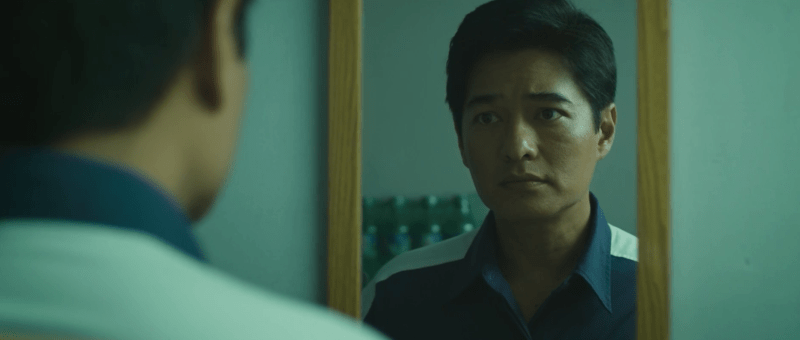
Dorm (เด็กหอ, Songyos Sugmakanan, 2006)

“Are you scared of ghosts?” one child asks another. Perhaps it’s an odd question. Ghosts are generally assumed to be frightening, but they can also in a way comfort though their presence may be painful. Songyos Sugmakanan’s poignant ghost story Dorm (เด็กหอ) casts the school at its centre as an infinitely haunted place, not just because of the associations it later takes on in the mind of the protagonist, but a prison-like space of emotional repression that nevertheless later becomes one of friendship and liberation.

It isn’t surprising that it feels like a prison to Chatree (Charlie Trairat) who has been abruptly sent there by his father (Suttipong Tudpitakkul) he feels as a kind of banishment for a very particular transgression. According to his father, however, it’s all because his school isn’t strict enough and Chatree spends too much time playing games and watching television. Intensely authoritarian, Chatree’s father soon alienates his son who bears intense resentment towards him not only for his severity and unwillingness to recognise his autonomy, but because of his failures as a father and eventually exiling of him because of the challenge he presents within this household. 

Further challenging notions of masculinity, Chatree’s father had told him that “a man must be able to live anywhere.” Though he had said the school had everything, the environment is grey and austere. Chatree is met by a rather cold woman, Pranee (Chintara Sukapatana), who takes him to the dorm where he will be sleeping which is in a large room with high ceilings and several rows of camp beds. Parnee cooly tells him that he’s expected to fend for himself, while his immediate neighbours proceed to haze him by telling him several ghost stories said to take place the school. Chatree’s school days continue in utter misery until he befriends Vichien (Sirachuch Chienthaworn), another lonely boy seemingly shunned by the others but as Chatree gradually realises actually a ghost unable to move on from the scene of his trauma just as Chatree is unable to move from his abandonment by his family. 

To that extent, the school is a kind of liminal place and it becomes clear that Pranee is also haunted by her own sense of guilt for something that turns out not to have been her fault after all but has, as the other boys say, turned her “weird”. The guilt that she feels has made her turn in on herself, become cold and repressed denying the boys the kind of maternal love and affection she appears to give them in flashbacks to her younger days. Chatree’s attempts to help Vichien are also attempts to liberate Pranee and himself from the limbo of the school and exorcise their traumas so that they may live again.

In Chatree’s case, his quest to help Vivhein is what allows him to make friends with the other boys, lifting the perpetual gloom of the school building and returning to him a sense of familial warmth that he felt that he had been denied in being exiled from his family. Though his resentment towards his father may in a sense ease, he does not seem to have forgiven him for his failures or transgressions but rather let his traditional family go in favour of friendship acknowledging that even the hardest times in life will soon pass if you have one close friend at your side. There are of course hints of queerness in the relationship between the two boys each of whom are in some way different and alike in their feelings of otherness and lack of belonging, while it may also in other ways explain Chatree’s father’s harshness towards him along with his preoccupation with traditional masculinity and obsession with academic success.

In that way unlike similarly themed nostalgia dramas, the school does not remain a purgatorial space and Chatree’s decision to remain within it is not an acceptance of limbo but of moving on in accepting himself and his identity and actively choosing a place to belong which is with his new friends rather than the repressive atmosphere of the traditional family as represented by his father. With shades of The Devil’s Backbone and Les Diaboliques, Songyos Sugmakanan conjures a gothic atmosphere of lingering dread but tempers it with humour and warmth in the genuine friendship between two lonely boys who in the end save each other and make what was once a prison a space of liberation.


Dorm is available as part of Umbrella Entertainment’s Thai Horror Boxset.

Trailer (no subtitles)

Laddaland (ลัดดาแลนด์, Sophon Sakdaphisit, 2011)

Laddaland (ลัดดาแลนด์) is a strangely haunted place. The people who live there are mainly ghosts, but also haunted by the spirits of financial anxiety and toxic masculinity amid the continual impossibility of an aspirational suburban existence and happy family life. In the opening scenes, a man patiently sets up the new home he’s bought for his family, painting a cherry blossom tree on his daughter’s wall and throwing a Ben 10 quit over his son’s bed. “I’m glad all four of us are finally together,” he sighs to an empty room while sitting alone at his dining table. 

But there are already cracks in the foundations of this family which probably can’t be repaired by simply moving into another life. They had already been separated by financial anxiety with eldest daughter Nan (Sutatta Udomsilp) living largely with her grandmother who seems to come from a much wealthier, class-conscious background. Her father Thee’s (Saharat Sangkapreecha) desire to reunite his family breaks that Nan had formed with her grandmother, to whom she is constantly on the phone, and it is unsurprising that she isn’t happy about being forced to leave her friends in Bangkok to live in this suburban paradise. Yet her attitude towards her father is in part motivated by his failure to give her this life, repeatedly reminding him that he essentially abandoned her and is incapable of doing what is expected of a man in providing for his family.

It’s this sense of toxic masculinity that may have prompted Thee to embark on this grand venture. The house he’s bought on an aspirational housing estate in a recently gentrified area is a large family home and as his wife Parn (Piyathida Woramusik) reminds him, the mortgage is bit of a stretch. But Thee is so focused on his dream that he can’t think of anything else. He’s given up his steady job and gone in with a friend on what is very obviously a dodgy pyramid scheme. The foundations of his new middle-class life are built on shaky ground, while every attempt at rapprochement with Nan seems destined to fail as he becomes an increasingly authoritarian father and she a resentful and contemptuous teen. 

But times are hard for everyone. The woman next door already lives like a ghost because her husband is violent and abusive. Parn tries to help her, but there isn’t much that can be done. We learn that the man is also, like Thee, under increasing strain from financial anxiety as his factory business flounders amid the turbulent Thai economy. He too is subject to the same sense of humiliation and insecurity as a man who is failing to live up to the codes of masculinity in being unable to provide his family with a comfortable life. Thee doesn’t exactly become violent, but he does later buy a gun after being burgled and fantasise about using it to free himself of his responsibility and the burden of this aspirational life that he can’t really afford.

In an odd way, the ultimate transgression may have been his attempt to hire a maid. A local Burmese woman, she is soon found dead in a house owned by a foreigner and thereafter becomes a more literal ghost haunting the local area and his family in particular due to their attempt to exploit her for cheap labour, perhaps hinting at Thailand’s relationship with Myanmar. Yet it’s also Thee who seems to have been possessed by a vengeful spirit, becoming increasingly cruel and irrational in his attempts to hold on to his home while simultaneously alienating Nan by refusing to listen to her or let her hang out with her new friends. Even Parn begins to turn against him, fed up with his financial fecklessness and pondering swallowing her pride and going back to her mother who loathes Thee for ruining Parn’s life by getting her pregnant in college. Parn suggests going back to work, but that doesn’t fit Thee’s old-fashioned vision of a patriarchal family while he also accuses her of having had an affair with her admittedly sleazy former boss and needles her about leaving him for someone with better financial means. Perhaps this the curse of Laddaland, a liminal space inhabited by hungry ghosts obsessed with fulfilling aspirational, if outdated, ideas of suburban bliss only to end up destroying the very house they were trying to build.


International trailer (English subtitles)
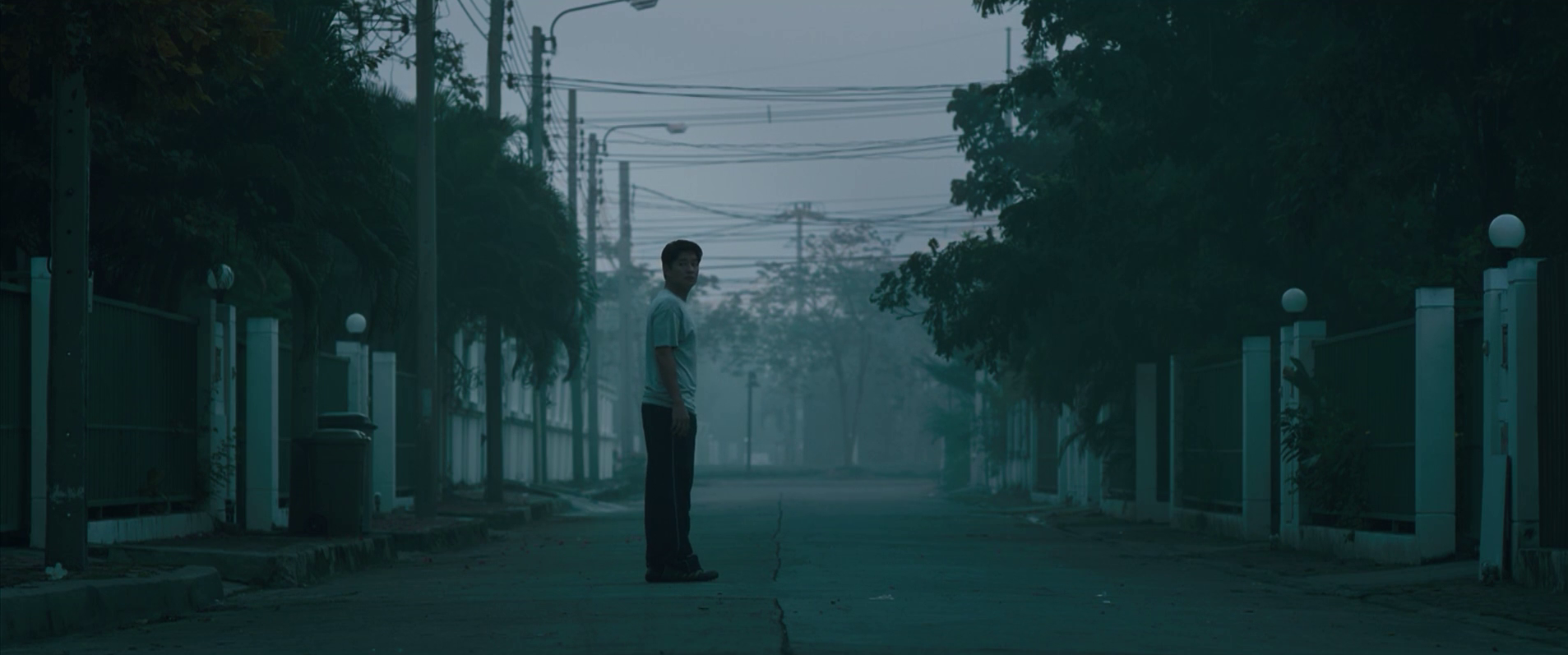
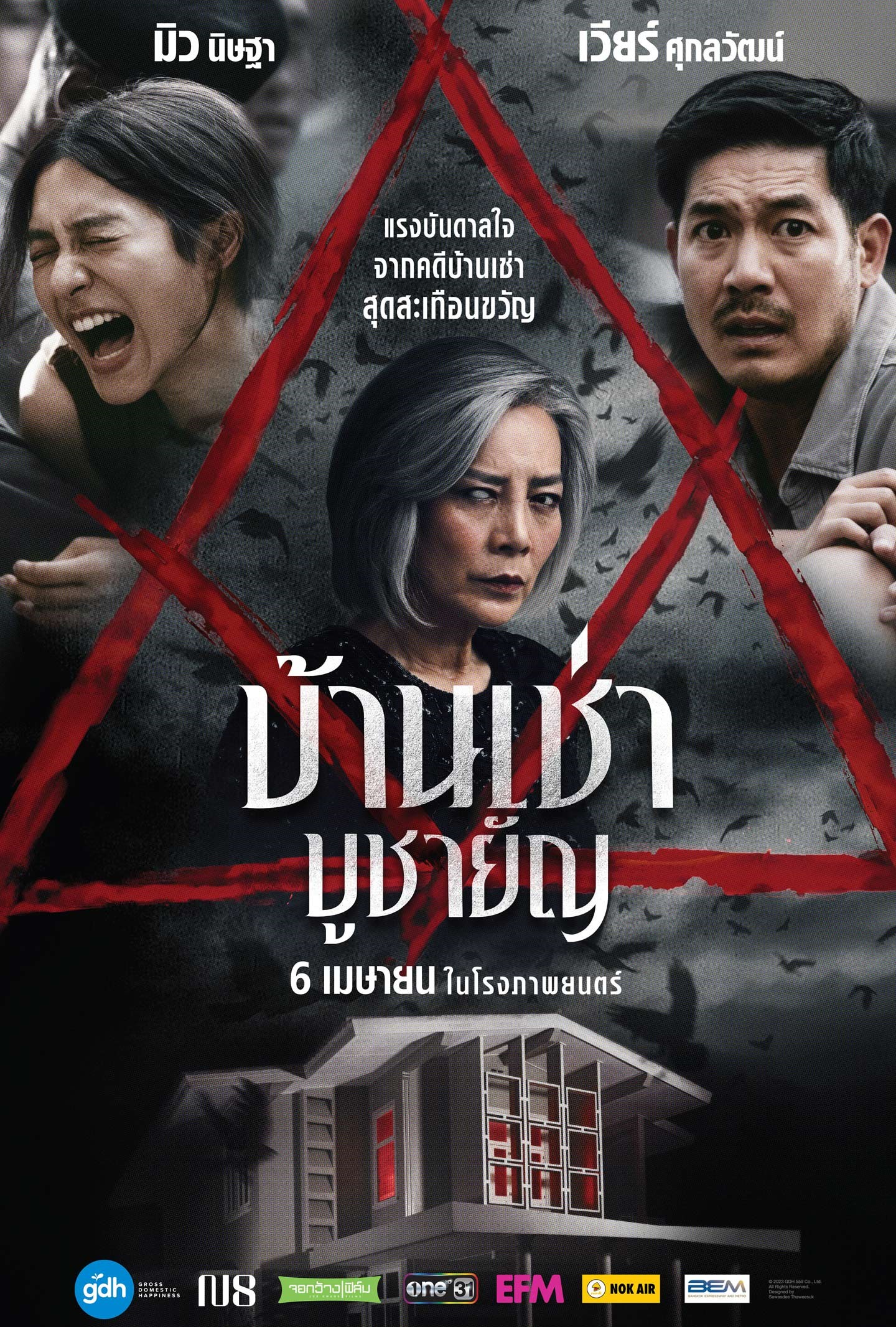
Home for Rent (บ้านเช่า..บูชายัญ, Sophon Sakdaphisit, 2023)

An inability to overcome the traumatic past leaves a family vulnerable to the dark machinations of a black magic cult in Sophon Sakdaphisit’s supernatural thriller, Home for Rent (บ้านเช่า..บูชายัญ). The film’s title is eventually revealed as a grim irony, the home in question a seat of the soul though like the director’s previous films it’s economic anxiety and social aspiration that open the door to damnation even if in this case there’s something more than fate in play.

All of Ning’s (Nittha Jirayungyurn) problems start when the flat she owns to let out is vandalised by a vacating talent. As she explains to the estate agent, Tom (Suphithak Chatsuriyawong), she can’t afford to refurbish it and the rent was covering the mortgage on the house she actually lives in which belongs to her husband, Kwin (Sukollawat Kanarot). Tom floats the idea of the family moving into the flat while they tidy it up and renting the house out instead, but Ning is worried Kwin won’t like the idea. She’s right, he doesn’t and suggests it would be easier to just sell the flat but Ning doesn’t want to do that either. The reasons for her attachment to it aren’t completely clear, but if she were keeping it as a safety net it might hint at a degree of insecurity in her marriage though as we later see she’s also job-hunting and not having much luck. Seeing the candidate next to her write down a much lower salary expectation she hastily changes hers too, fearing she’s pricing herself out of the market. 

As for Kwin’s reluctance to move, it may be a degree of snobbishness in not wanting to leave his large suburban house in a wealthy area for a small flat where he ends up sleeping on the sofa because the couple’s daughter Ing (Thanyaphat Mayuraleela) can’t seem to settle. As it turns out, Kwin has other reasons for remaining attached to the house and not wanting anyone else to live there but even as it stands it seems far too big for their small family and an obvious financial burden. Yet Kwin’s outward anxiety is to do with finding “high quality” tenants given what’s just happened with the flat. Ning is reassured by Tom’s confirmation that the prospective tenants are a retired doctor and her daughter though as Kwin points out, it’s mere snobbishness to assume a doctor will be a better tenant than anyone else. 

Nevertheless on meeting them, Kwin unexpectedly agrees only for Ning’s aunt and neighbour Phorn (Natniphaporm Ingamornrat) to report strange goings on at 4am such as ominous chanting and the sudden arrival of large numbers of crows. Strange things begin happening around Ning too, while Kwin’s behaviour has also become weird and irrational. Ning is however facing an uphill battle trying to get people to believe her that the couple renting her house are actually crazed cultists who may be targeting her daughter while others assume she’s going out of her mind because of the stress of maintaining it. 

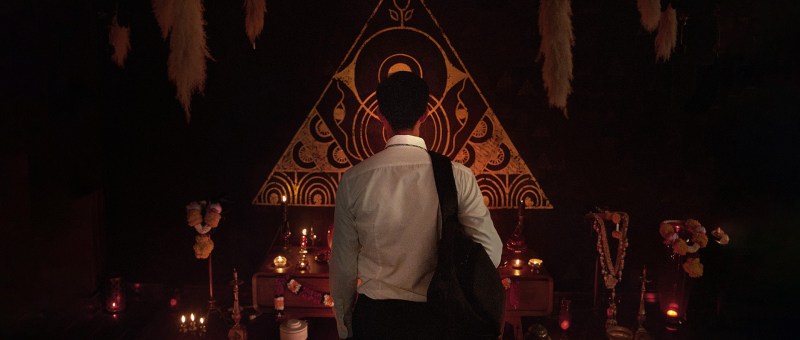
The space that’s for rent in fact seems to be the human body as it becomes clear what kind of home is being sought. Aside from financial worries, the curse essentially stems from the inability to accept loss, or perhaps also the attempt to escape it by assuming new identities rather than deal with a painful past. Only Ning remains in the dark in this triangular series of relationships with pyramids an often repeated motif mimicking the dark symbol of the cult. Sophon Sakdaphisit conjures a genuine sense of eeriness within the genial suburban environment that hints at a largely invisible but pervasive evil that has Ning and her family firmly in its sights. But in other and perhaps slightly uncomfortable ways, it may be the family that eventually repairs itself in what amounts to the complete integration of the once buried traumatic past which may have destroyed what once was but has birthed something new in its place that at last seems to be free of the gloominess that once overhung the family home having relocated to a much warmer and down to earth environment in the absence of both financial and aspirational anxiety but simply content to have found a place to call home.


International trailer (English subtitles)
The Swimmers (ฝากไว้..ในกายเธอ, Sophon Sakdaphisit, 2014)

Fragile masculinity and male failure bring about tragic consequences in Sophon Sakdaphisit’s possibly ironically named psychological horror, The Swimmers (ฝากไว้..ในกายเธอ). Though some might alternately claim that its final resolutions are overly moralising or else morally ambiguous, it’s also true that the film otherwise has a progressive quality in suggesting that it wasn’t sex itself that was the problem but the failure to use protection and a subsequent inability on the part father to accept any responsibility for an unplanned pregnancy. 

At least, though it is revealed only gradually, it seems obvious to us that high schooler Perth (Chutavuth Pattarakampol) must have fathered Ice’s (Supassra Thanachat) baby and has kept quiet about it amid rumours that she took her own life after becoming pregnant. In actuality, there’s a lot more to it than that, but it appears as if he does this mostly out of a sense of awkwardness because Ice had been the girlfriend of his best friend and rival, Tan (Thanapob Leeratanakachorn), who, though they had broken up, is now determined to enact revenge on the dirtbag who got Ice pregnant and then presumably left her to deal with it on her own at which point she decided to end her life.

We can see that Perth idolises Tan and feels inadequate in his presence. After Ice’s death, he hooks up with another girl, Mint (Violette Wautier), and asks her if she would have been interested in him if hadn’t just won a gold medal in the swimming tournament. There are others that say he only won because Tan was not able to compete. Though Ice asks him to tell Tan about their relationship himself, Perth can’t do it and continues to act sheepishly around his friend out of some kind of bro code or fear of disappointing him. But we might also wonder if his desire for Ice is only a way of mediating his desire for Tan in the context of the obviously homoerotic relationship between them though in another sense it’s perhaps more that he simply wishes to become Tan and would be glad if he were out of the way. If that were the case, however, he’d forever be haunted by the spectre of his own inadequacy with no way of knowing if he could ever really have beaten his rival and psychologically will always be in second place. 

His failure to measure up to Tan also impacts on Perth’s fragile masculinity as his coach, who has begun an affair with his mother, pressures him to eat raw eggs to improve his stamina. The fact it’s eggs he’s eating has a continual irony while Perth begins to exhibit a degree of gender confusion as he puts on weight and loses his athletic physique. He’d jokingly told Ice, after explaining he didn’t bring a condom, that he’d carry the child if they got pregnant and is now convinced that, like the seahorses they’re learning about in class, he is actually gestating his unborn baby. Perhaps as Ice would have to have done, he wears baggy jackets, binds his belly, and attempts to hide his physique at the swimming pool in the hope of concealing what he fully believes to be a pregnancy that is also the result of his latent guilt for his treatment of ice coupled with the awkwardness of Tan finding out it was him who fathered her child.

Perth’s secrecy and cowardliness are directly contrasted with the equally problematic masculinity exhibited by Tan in his obsession with revenge which sees him attempt to hack Ice’s phone and social media accounts before later beating up another boy Perth had set up as a scapegoat. One could argue much of this could have been avoided if Perth had only been honest with Tan from the beginning about his relationship with Ice, but he was incapable of doing so and is willing to go to extreme lengths to conceal the truths about himself. Sophon Sakdaphisit, however, reveals them to us patiently and exposes Perth as an unreliable narrator, a snivelling coward and insecure sociopath who will do anything and everything to avoid facing reality. Though the film may suggest that he will face no consequences for his treatment of Ice, it simultaneously implies that he will forever be haunted by the spectres of his inadequacy, male failure, and hopelessness no matter how he may otherwise prosper in life.


International trailer (English subtitles)
The Call (콜, Lee Chung-hyun, 2020)

The call is coming from inside the house. It’s a final revelation intended to chill, the idea that the source of threat is located in the very place where you ought to feel safe, protected, invulnerable. Of course, there are many reasons someone might not feel completely safe at home, those who perhaps live with hidden threat every day, a hidden darkness that lies at the centre of twisty Korean thriller The Call (콜). Another in a small series of time travelling communication, The Call makes connection through outdated technology, an almost literal ghosting in a voice from the past that, like an inverted Strangers on a Train, offers the tantalising promise of mutual salvation only to prove extremely unreliable. 

28-year-old Seo-yeon (Park Shin-hye) has just returned to her rundown country home because her mother, whom she intensely resents blaming her for the death of her father in a fire, is suffering with a brain tumour. Though her strawberry farmer uncle Sung-ho (Oh Jung-se) describes the place as the most desirable property in town, the home in which Seo-yeon finds herself is cold and austere, a creepy old mansion decorated in an outdated style and filled with gothic furniture. To make matters worse, Seo-yeon has left her phone on the train but unexpectedly assures Sung-ho that she’ll be fine with the landline, later calling herself and getting through to a woman who claims to have found it but asks for a reward and then hangs up presumably to assess her options. Then, the landline starts ringing with calls from a young woman trying to reach a friend and claiming that her mother is planning to set fire to her. Though obviously disturbing, Seo-yeon assumes the calls are a simple wrong number until she discovers a hidden room with what looks to be some sort of tiled experimentation area along with a box of memorabilia which lead her to think the phone is somehow connecting her to the girl who lived in her room at the turn of the millennium. 

Also 28 only born 20 years earlier, Young-sook (Jeon Jong-seo) claims to be at the mercy of a wicked shamaness step-mother convinced that she has a dark destiny. The two women engage in a strange act of intergenerational bonding between two people who are the same age, Seo-yeon mystified by the meaning of the word “Walkman” while Seo-yeon struggles with the concept of the multifunctional smartphone. The force which unites them is parental dissatisfaction as Seo-yeon claims a hatred for her mother she does not perhaps really feel and cannot in any case compare with that of Young-sook for the religiously abusive stepmother who fully believes she is possessed by the devil. In in this the time difference proves useful, Seo-yeon realising that Young-sook has the power to prevent her father’s death, but only latterly that she also even from the future has the ability to change her new friend’s fate. 

Essentilally a Strangers on a Train scenario, the two women agree to save each other, Young-sook dutifully restoring Seo-yeon’s imagined fairytale future, the creepy mansion transformed into an elegant modern dwelling, her mother and father now both healthy and happy. Seo-yeon, however, begins to neglect her promise, too busy enjoying her repaired family life to remember that Young-sook is imprisoned in the house suffering horrifying abuse. Young-sook is, in a sense, the embodiment of Seo-yeon’s familial trauma, the violent resurfacing of a long buried memory that threatens to tear to her life apart but also has the ability to repair it in revealing the truth that allows her to reconnect with her mother who, we learn, has repeatedly sacrificed herself for her daughter’s sake. Nevertheless, you begin to wonder if the shamaness had a point and the lid was best left on Young-sook as her hurt and resentment in being neglected by her new friend eventually take a turn for the dark. 

In essence, Seo-yeon’s decision to interfere with the past engineers a chain of disastrous events robbing her of her illusionary happiness while eventually landing her right back where she started if perhaps with a little more insight and having healed her relationship with her mother. Part tale of millennial anxiety, part gothic nightmare, The Call may not always be internally consistent but charts a dark tale of trauma and response as a haunted young woman finds herself stalked by the psychopathic embodiment of her buried guilt only to discover that a call from the past is always hard to ignore. 


Original trailer (English subtitles)