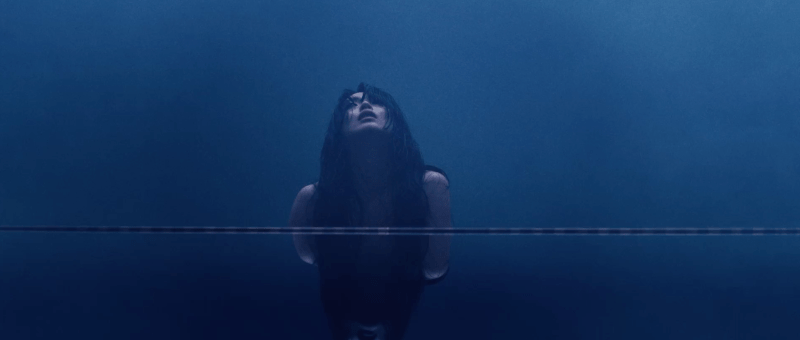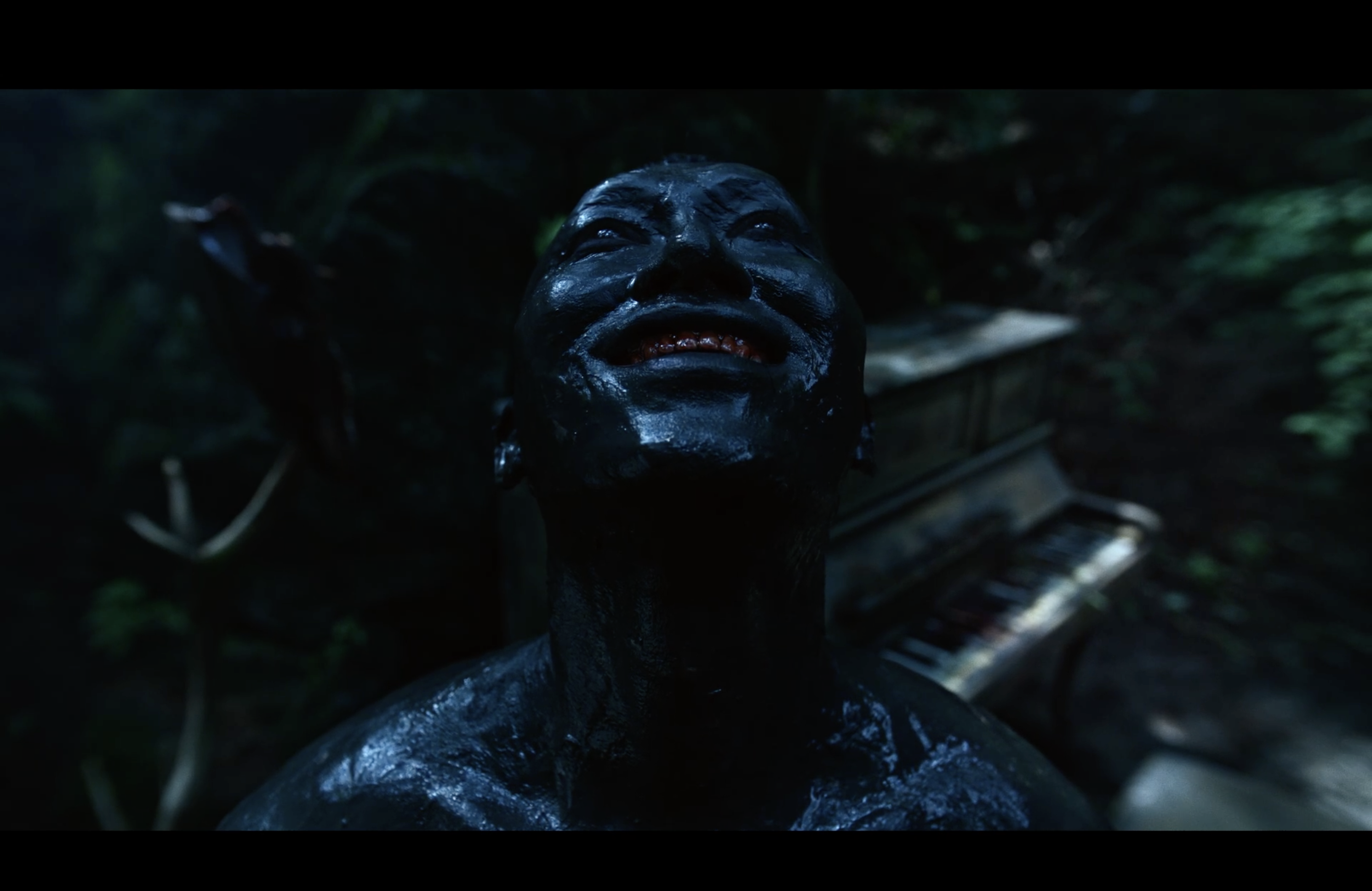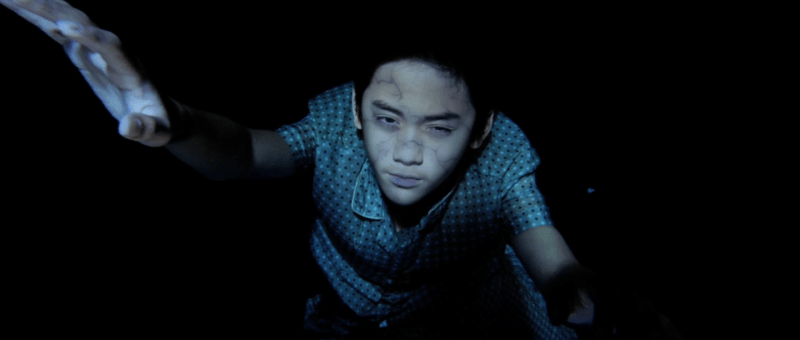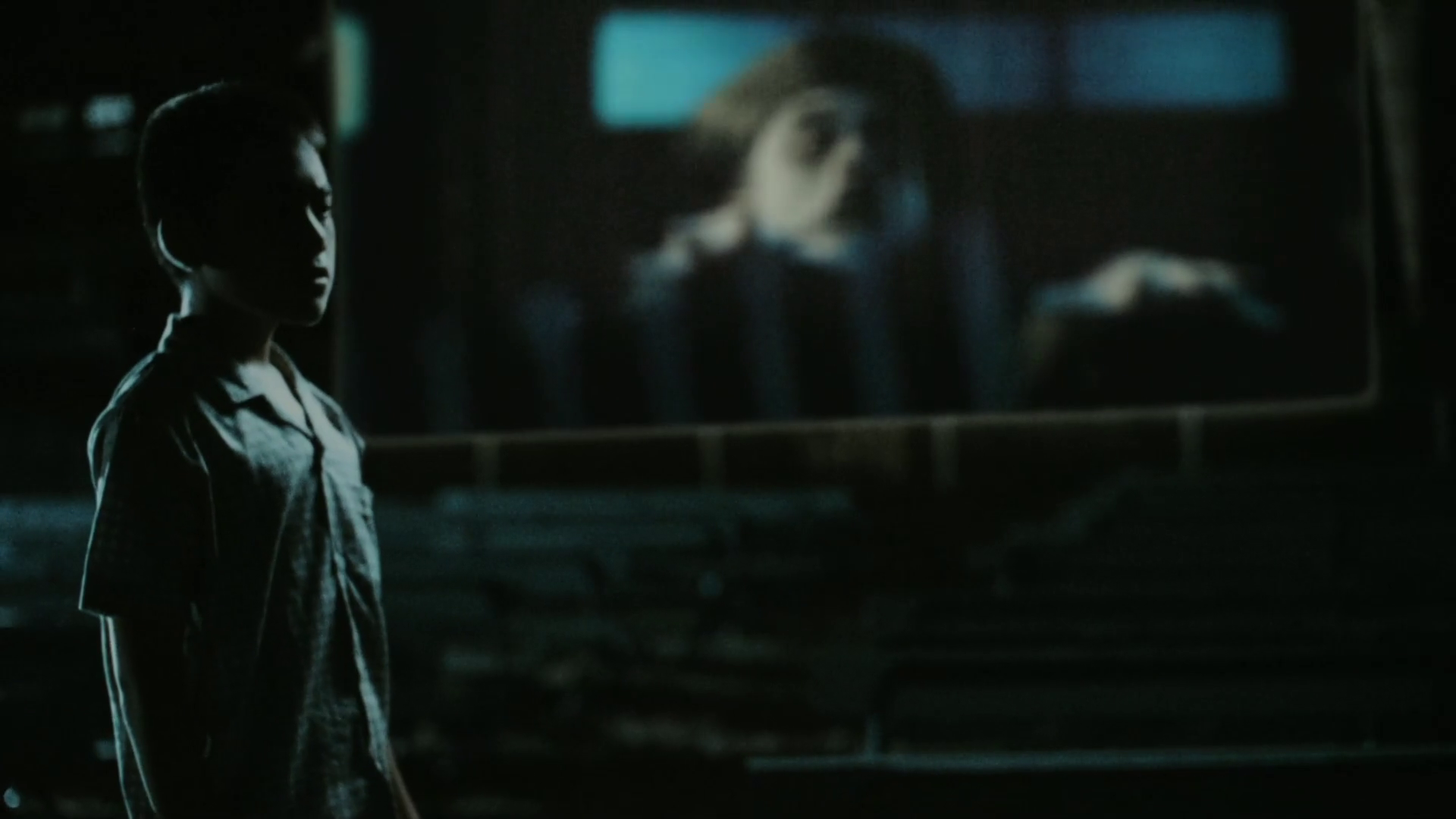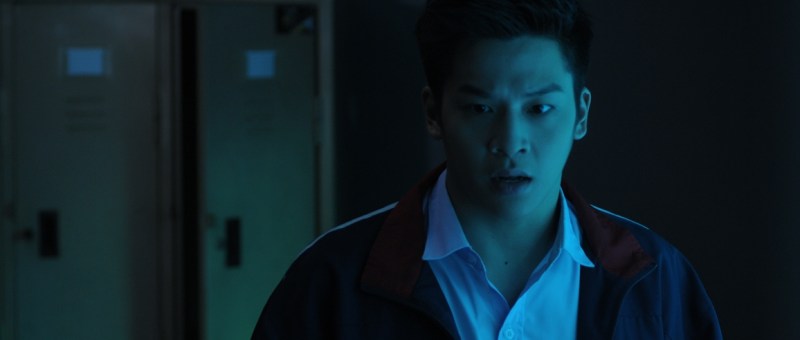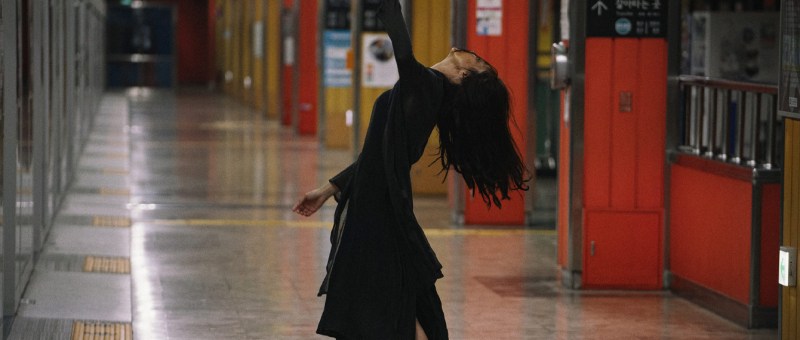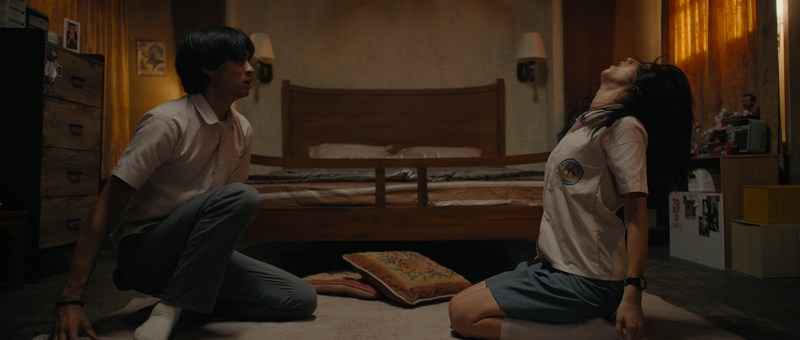

Forte (포르테, Kimbo Kim, 2025)

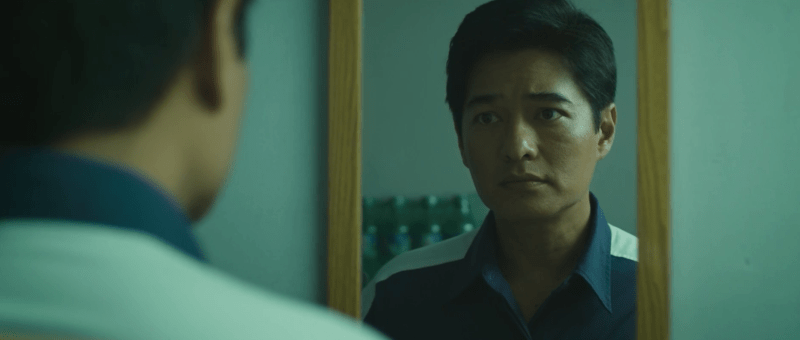
A worried policeman nervously asks Yeonji (Im Chae-young) if the rumours are true. They say that everyone who works at Studio Forte ends up going mad or dying, but Yeonji has only just started working there herself and it’s too early for her to say whether that really is the case, though it’s true enough that the building has an eerie energy. Even a visiting film director remarks that the atmosphere is unusual, though it doesn’t seem to have put him off returning. The director, Jeonghwa (Lee Jung-eun), is one of the best after all which is why Yeonji took this job in the first place.

On arriving at recording studio Forte, Yeonji remarks that it seems like a great place for inspiration but the building itself is anything but inspiring. A block of concrete and glass, it stands ominously and incongruously in the middle of nature as a defiantly manmade structure intent on disrupting the natural order. It feels oppressive, rigid, and constraining. Not the sort of environment that best serves creative impulses despite the well-appointed interior with its modern design and copious light from the large windows. 

Yeonji walks the surrounding forest in wonder, but at the same time there’s something odd about it in a bewitching sort of way. Her colleagues seem to be haunting her, seemingly standing around and staring while she’s otherwise disappointed by the lack of faith Jeonghwa seems to have in her. At the first team briefin,g she neglects to give Yeonji anything to do and then tells her to help her colleague Haejoon finish his section of the score for an upcoming film. Only Haejoon already seems to be having strangely. He looks ill, and sometimes doesn’t even turn up for their work sessions to the point that Yeonji ends up working with another colleague, Dojin (Cha Se-jin), to get everything finished on time. 

“Everything that happened here is real.” Haejoon later says cryptically after screaming that something is “here” and means him harm. Yeonji begins having visions of the forest and an oily, muddy figure along with images of death and fire. In any case, even without the existential dread of lingering supernatural threat, it’s easy to see why this place might drive someone mad. Yeonji tries asking Dojin what’s happening with credits on the movie and he brushes the question off, replying only that Jeonghwa will sort it out, which sort of implies only she will actually be credited. When the director arrives for a test screening, Jeonghwa treats Yeonji like the tea girl and explains that she’s “new”, but the director asks for her opinion anyway and she gives it, honestly, though it contradicts Jeonghwa’s. The producer (Cho Sueun) claims she could tell that Yeonji wrote the tail end of the music because it was “different”, which gives her the feeling that her work may be good after all and that Jeonghwa is playing it too safe with her conventional approach. 

Though she had been somewhat mousy and earnest on her arrival, dressed in an elegant if constraining outfit, Yeonji gradually becomes bolder and wilder. She lets her hair down and dresses in darker, looser clothing while often talking back to Jeonghwa and contributing her own contradictory opinions. But in the end none of it matters. She realises that Jeonghwa is basically exploiting her, getting her to ghostwrite the score while taking all the credit. The director makes a drunken pass at her, and while confused by her reaction explains that this is her big opportunity. Both Jeonghwa and himself only got to where they are by playing the game, which means submitting oneself to this kind of quid pro quo. 

It stands to reason that Yeonji’s barely suppressed desires would eventually burst through as they eventually do in the bloody climax building towards a crescendo of emotion in which Yeonji appears to become smaller and smaller behind the piano as the music overcomes her as if she were possessed. Only now has she released her creative freedom, playing Jeonghwa’s piano with a furious abandon that threatens to burn the whole edifice to the gound. Drawing on 1970s folk horror in it its aesthetic the film has an intriguingly eerie, surreal sensibility deepened by its own unsetting score as the evil haunting the studio begins to make its presence felt if only in Yeonji’s mounting resentment towards an industry that does indeed view her as little more than an inconvenient ghost in the machine.


Trailer (English subtitles)

Dorm (เด็กหอ, Songyos Sugmakanan, 2006)

“Are you scared of ghosts?” one child asks another. Perhaps it’s an odd question. Ghosts are generally assumed to be frightening, but they can also in a way comfort though their presence may be painful. Songyos Sugmakanan’s poignant ghost story Dorm (เด็กหอ) casts the school at its centre as an infinitely haunted place, not just because of the associations it later takes on in the mind of the protagonist, but a prison-like space of emotional repression that nevertheless later becomes one of friendship and liberation.

It isn’t surprising that it feels like a prison to Chatree (Charlie Trairat) who has been abruptly sent there by his father (Suttipong Tudpitakkul) he feels as a kind of banishment for a very particular transgression. According to his father, however, it’s all because his school isn’t strict enough and Chatree spends too much time playing games and watching television. Intensely authoritarian, Chatree’s father soon alienates his son who bears intense resentment towards him not only for his severity and unwillingness to recognise his autonomy, but because of his failures as a father and eventually exiling of him because of the challenge he presents within this household. 

Further challenging notions of masculinity, Chatree’s father had told him that “a man must be able to live anywhere.” Though he had said the school had everything, the environment is grey and austere. Chatree is met by a rather cold woman, Pranee (Chintara Sukapatana), who takes him to the dorm where he will be sleeping which is in a large room with high ceilings and several rows of camp beds. Parnee cooly tells him that he’s expected to fend for himself, while his immediate neighbours proceed to haze him by telling him several ghost stories said to take place the school. Chatree’s school days continue in utter misery until he befriends Vichien (Sirachuch Chienthaworn), another lonely boy seemingly shunned by the others but as Chatree gradually realises actually a ghost unable to move on from the scene of his trauma just as Chatree is unable to move from his abandonment by his family. 

To that extent, the school is a kind of liminal place and it becomes clear that Pranee is also haunted by her own sense of guilt for something that turns out not to have been her fault after all but has, as the other boys say, turned her “weird”. The guilt that she feels has made her turn in on herself, become cold and repressed denying the boys the kind of maternal love and affection she appears to give them in flashbacks to her younger days. Chatree’s attempts to help Vichien are also attempts to liberate Pranee and himself from the limbo of the school and exorcise their traumas so that they may live again.

In Chatree’s case, his quest to help Vivhein is what allows him to make friends with the other boys, lifting the perpetual gloom of the school building and returning to him a sense of familial warmth that he felt that he had been denied in being exiled from his family. Though his resentment towards his father may in a sense ease, he does not seem to have forgiven him for his failures or transgressions but rather let his traditional family go in favour of friendship acknowledging that even the hardest times in life will soon pass if you have one close friend at your side. There are of course hints of queerness in the relationship between the two boys each of whom are in some way different and alike in their feelings of otherness and lack of belonging, while it may also in other ways explain Chatree’s father’s harshness towards him along with his preoccupation with traditional masculinity and obsession with academic success.

In that way unlike similarly themed nostalgia dramas, the school does not remain a purgatorial space and Chatree’s decision to remain within it is not an acceptance of limbo but of moving on in accepting himself and his identity and actively choosing a place to belong which is with his new friends rather than the repressive atmosphere of the traditional family as represented by his father. With shades of The Devil’s Backbone and Les Diaboliques, Songyos Sugmakanan conjures a gothic atmosphere of lingering dread but tempers it with humour and warmth in the genuine friendship between two lonely boys who in the end save each other and make what was once a prison a space of liberation.


Dorm is available as part of Umbrella Entertainment’s Thai Horror Boxset.

Trailer (no subtitles)

Laddaland (ลัดดาแลนด์, Sophon Sakdaphisit, 2011)

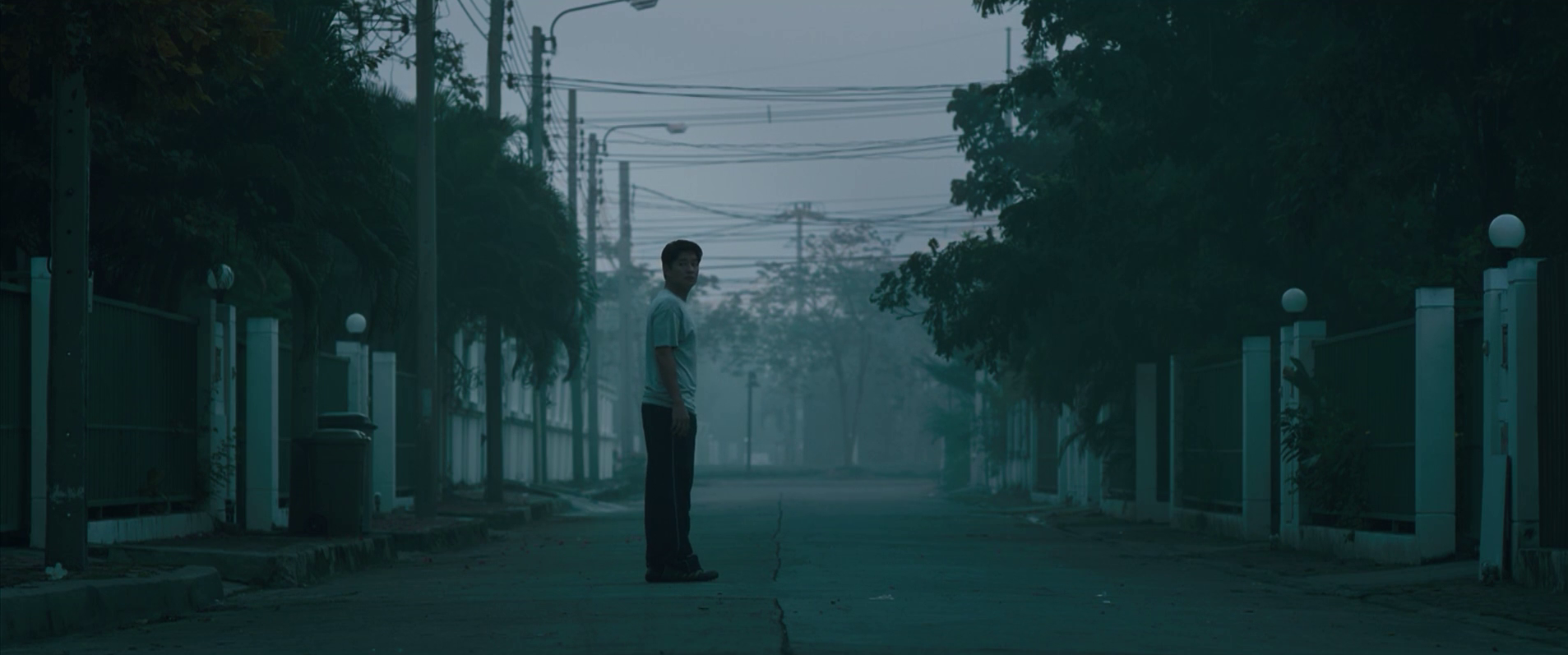
Laddaland (ลัดดาแลนด์) is a strangely haunted place. The people who live there are mainly ghosts, but also haunted by the spirits of financial anxiety and toxic masculinity amid the continual impossibility of an aspirational suburban existence and happy family life. In the opening scenes, a man patiently sets up the new home he’s bought for his family, painting a cherry blossom tree on his daughter’s wall and throwing a Ben 10 quit over his son’s bed. “I’m glad all four of us are finally together,” he sighs to an empty room while sitting alone at his dining table. 

But there are already cracks in the foundations of this family which probably can’t be repaired by simply moving into another life. They had already been separated by financial anxiety with eldest daughter Nan (Sutatta Udomsilp) living largely with her grandmother who seems to come from a much wealthier, class-conscious background. Her father Thee’s (Saharat Sangkapreecha) desire to reunite his family breaks that Nan had formed with her grandmother, to whom she is constantly on the phone, and it is unsurprising that she isn’t happy about being forced to leave her friends in Bangkok to live in this suburban paradise. Yet her attitude towards her father is in part motivated by his failure to give her this life, repeatedly reminding him that he essentially abandoned her and is incapable of doing what is expected of a man in providing for his family.

It’s this sense of toxic masculinity that may have prompted Thee to embark on this grand venture. The house he’s bought on an aspirational housing estate in a recently gentrified area is a large family home and as his wife Parn (Piyathida Woramusik) reminds him, the mortgage is bit of a stretch. But Thee is so focused on his dream that he can’t think of anything else. He’s given up his steady job and gone in with a friend on what is very obviously a dodgy pyramid scheme. The foundations of his new middle-class life are built on shaky ground, while every attempt at rapprochement with Nan seems destined to fail as he becomes an increasingly authoritarian father and she a resentful and contemptuous teen. 

But times are hard for everyone. The woman next door already lives like a ghost because her husband is violent and abusive. Parn tries to help her, but there isn’t much that can be done. We learn that the man is also, like Thee, under increasing strain from financial anxiety as his factory business flounders amid the turbulent Thai economy. He too is subject to the same sense of humiliation and insecurity as a man who is failing to live up to the codes of masculinity in being unable to provide his family with a comfortable life. Thee doesn’t exactly become violent, but he does later buy a gun after being burgled and fantasise about using it to free himself of his responsibility and the burden of this aspirational life that he can’t really afford.

In an odd way, the ultimate transgression may have been his attempt to hire a maid. A local Burmese woman, she is soon found dead in a house owned by a foreigner and thereafter becomes a more literal ghost haunting the local area and his family in particular due to their attempt to exploit her for cheap labour, perhaps hinting at Thailand’s relationship with Myanmar. Yet it’s also Thee who seems to have been possessed by a vengeful spirit, becoming increasingly cruel and irrational in his attempts to hold on to his home while simultaneously alienating Nan by refusing to listen to her or let her hang out with her new friends. Even Parn begins to turn against him, fed up with his financial fecklessness and pondering swallowing her pride and going back to her mother who loathes Thee for ruining Parn’s life by getting her pregnant in college. Parn suggests going back to work, but that doesn’t fit Thee’s old-fashioned vision of a patriarchal family while he also accuses her of having had an affair with her admittedly sleazy former boss and needles her about leaving him for someone with better financial means. Perhaps this the curse of Laddaland, a liminal space inhabited by hungry ghosts obsessed with fulfilling aspirational, if outdated, ideas of suburban bliss only to end up destroying the very house they were trying to build.


International trailer (English subtitles)
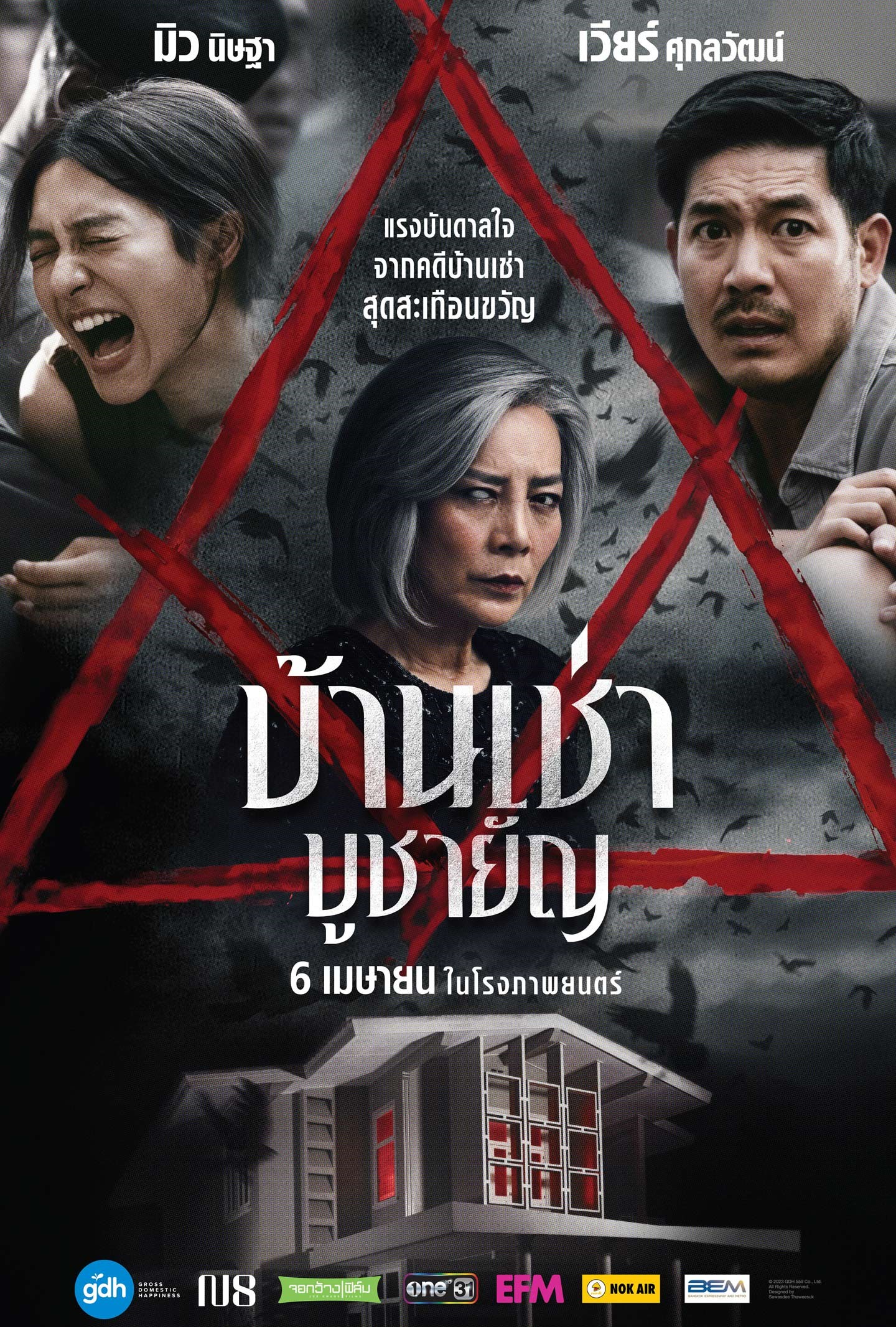
Home for Rent (บ้านเช่า..บูชายัญ, Sophon Sakdaphisit, 2023)

An inability to overcome the traumatic past leaves a family vulnerable to the dark machinations of a black magic cult in Sophon Sakdaphisit’s supernatural thriller, Home for Rent (บ้านเช่า..บูชายัญ). The film’s title is eventually revealed as a grim irony, the home in question a seat of the soul though like the director’s previous films it’s economic anxiety and social aspiration that open the door to damnation even if in this case there’s something more than fate in play.

All of Ning’s (Nittha Jirayungyurn) problems start when the flat she owns to let out is vandalised by a vacating talent. As she explains to the estate agent, Tom (Suphithak Chatsuriyawong), she can’t afford to refurbish it and the rent was covering the mortgage on the house she actually lives in which belongs to her husband, Kwin (Sukollawat Kanarot). Tom floats the idea of the family moving into the flat while they tidy it up and renting the house out instead, but Ning is worried Kwin won’t like the idea. She’s right, he doesn’t and suggests it would be easier to just sell the flat but Ning doesn’t want to do that either. The reasons for her attachment to it aren’t completely clear, but if she were keeping it as a safety net it might hint at a degree of insecurity in her marriage though as we later see she’s also job-hunting and not having much luck. Seeing the candidate next to her write down a much lower salary expectation she hastily changes hers too, fearing she’s pricing herself out of the market. 

As for Kwin’s reluctance to move, it may be a degree of snobbishness in not wanting to leave his large suburban house in a wealthy area for a small flat where he ends up sleeping on the sofa because the couple’s daughter Ing (Thanyaphat Mayuraleela) can’t seem to settle. As it turns out, Kwin has other reasons for remaining attached to the house and not wanting anyone else to live there but even as it stands it seems far too big for their small family and an obvious financial burden. Yet Kwin’s outward anxiety is to do with finding “high quality” tenants given what’s just happened with the flat. Ning is reassured by Tom’s confirmation that the prospective tenants are a retired doctor and her daughter though as Kwin points out, it’s mere snobbishness to assume a doctor will be a better tenant than anyone else. 

Nevertheless on meeting them, Kwin unexpectedly agrees only for Ning’s aunt and neighbour Phorn (Natniphaporm Ingamornrat) to report strange goings on at 4am such as ominous chanting and the sudden arrival of large numbers of crows. Strange things begin happening around Ning too, while Kwin’s behaviour has also become weird and irrational. Ning is however facing an uphill battle trying to get people to believe her that the couple renting her house are actually crazed cultists who may be targeting her daughter while others assume she’s going out of her mind because of the stress of maintaining it. 

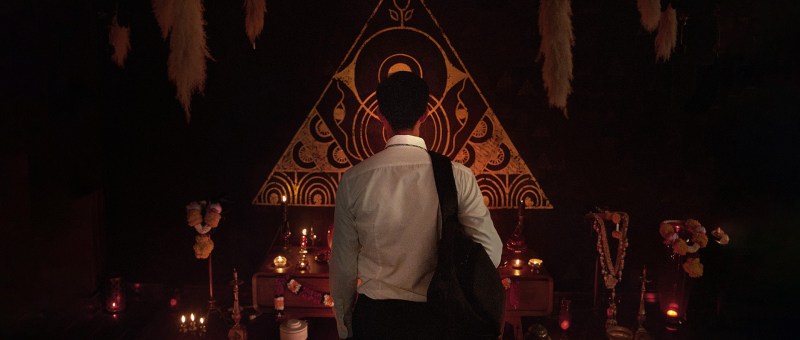
The space that’s for rent in fact seems to be the human body as it becomes clear what kind of home is being sought. Aside from financial worries, the curse essentially stems from the inability to accept loss, or perhaps also the attempt to escape it by assuming new identities rather than deal with a painful past. Only Ning remains in the dark in this triangular series of relationships with pyramids an often repeated motif mimicking the dark symbol of the cult. Sophon Sakdaphisit conjures a genuine sense of eeriness within the genial suburban environment that hints at a largely invisible but pervasive evil that has Ning and her family firmly in its sights. But in other and perhaps slightly uncomfortable ways, it may be the family that eventually repairs itself in what amounts to the complete integration of the once buried traumatic past which may have destroyed what once was but has birthed something new in its place that at last seems to be free of the gloominess that once overhung the family home having relocated to a much warmer and down to earth environment in the absence of both financial and aspirational anxiety but simply content to have found a place to call home.


International trailer (English subtitles)
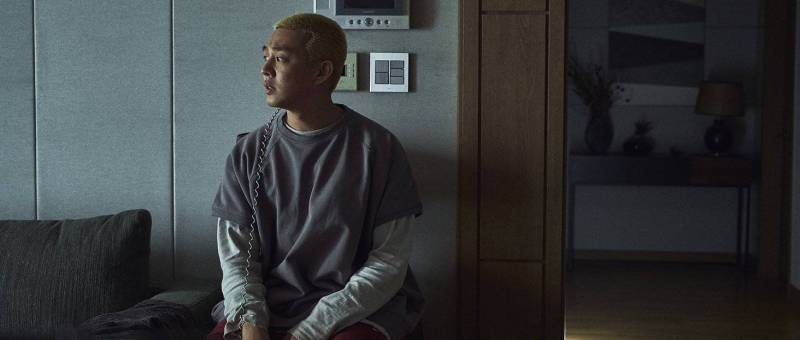
The Swimmers (ฝากไว้..ในกายเธอ, Sophon Sakdaphisit, 2014)

Fragile masculinity and male failure bring about tragic consequences in Sophon Sakdaphisit’s possibly ironically named psychological horror, The Swimmers (ฝากไว้..ในกายเธอ). Though some might alternately claim that its final resolutions are overly moralising or else morally ambiguous, it’s also true that the film otherwise has a progressive quality in suggesting that it wasn’t sex itself that was the problem but the failure to use protection and a subsequent inability on the part father to accept any responsibility for an unplanned pregnancy. 

At least, though it is revealed only gradually, it seems obvious to us that high schooler Perth (Chutavuth Pattarakampol) must have fathered Ice’s (Supassra Thanachat) baby and has kept quiet about it amid rumours that she took her own life after becoming pregnant. In actuality, there’s a lot more to it than that, but it appears as if he does this mostly out of a sense of awkwardness because Ice had been the girlfriend of his best friend and rival, Tan (Thanapob Leeratanakachorn), who, though they had broken up, is now determined to enact revenge on the dirtbag who got Ice pregnant and then presumably left her to deal with it on her own at which point she decided to end her life.

We can see that Perth idolises Tan and feels inadequate in his presence. After Ice’s death, he hooks up with another girl, Mint (Violette Wautier), and asks her if she would have been interested in him if hadn’t just won a gold medal in the swimming tournament. There are others that say he only won because Tan was not able to compete. Though Ice asks him to tell Tan about their relationship himself, Perth can’t do it and continues to act sheepishly around his friend out of some kind of bro code or fear of disappointing him. But we might also wonder if his desire for Ice is only a way of mediating his desire for Tan in the context of the obviously homoerotic relationship between them though in another sense it’s perhaps more that he simply wishes to become Tan and would be glad if he were out of the way. If that were the case, however, he’d forever be haunted by the spectre of his own inadequacy with no way of knowing if he could ever really have beaten his rival and psychologically will always be in second place. 

His failure to measure up to Tan also impacts on Perth’s fragile masculinity as his coach, who has begun an affair with his mother, pressures him to eat raw eggs to improve his stamina. The fact it’s eggs he’s eating has a continual irony while Perth begins to exhibit a degree of gender confusion as he puts on weight and loses his athletic physique. He’d jokingly told Ice, after explaining he didn’t bring a condom, that he’d carry the child if they got pregnant and is now convinced that, like the seahorses they’re learning about in class, he is actually gestating his unborn baby. Perhaps as Ice would have to have done, he wears baggy jackets, binds his belly, and attempts to hide his physique at the swimming pool in the hope of concealing what he fully believes to be a pregnancy that is also the result of his latent guilt for his treatment of ice coupled with the awkwardness of Tan finding out it was him who fathered her child.

Perth’s secrecy and cowardliness are directly contrasted with the equally problematic masculinity exhibited by Tan in his obsession with revenge which sees him attempt to hack Ice’s phone and social media accounts before later beating up another boy Perth had set up as a scapegoat. One could argue much of this could have been avoided if Perth had only been honest with Tan from the beginning about his relationship with Ice, but he was incapable of doing so and is willing to go to extreme lengths to conceal the truths about himself. Sophon Sakdaphisit, however, reveals them to us patiently and exposes Perth as an unreliable narrator, a snivelling coward and insecure sociopath who will do anything and everything to avoid facing reality. Though the film may suggest that he will face no consequences for his treatment of Ice, it simultaneously implies that he will forever be haunted by the spectres of his inadequacy, male failure, and hopelessness no matter how he may otherwise prosper in life.


International trailer (English subtitles)
The Call (콜, Lee Chung-hyun, 2020)

The call is coming from inside the house. It’s a final revelation intended to chill, the idea that the source of threat is located in the very place where you ought to feel safe, protected, invulnerable. Of course, there are many reasons someone might not feel completely safe at home, those who perhaps live with hidden threat every day, a hidden darkness that lies at the centre of twisty Korean thriller The Call (콜). Another in a small series of time travelling communication, The Call makes connection through outdated technology, an almost literal ghosting in a voice from the past that, like an inverted Strangers on a Train, offers the tantalising promise of mutual salvation only to prove extremely unreliable. 

28-year-old Seo-yeon (Park Shin-hye) has just returned to her rundown country home because her mother, whom she intensely resents blaming her for the death of her father in a fire, is suffering with a brain tumour. Though her strawberry farmer uncle Sung-ho (Oh Jung-se) describes the place as the most desirable property in town, the home in which Seo-yeon finds herself is cold and austere, a creepy old mansion decorated in an outdated style and filled with gothic furniture. To make matters worse, Seo-yeon has left her phone on the train but unexpectedly assures Sung-ho that she’ll be fine with the landline, later calling herself and getting through to a woman who claims to have found it but asks for a reward and then hangs up presumably to assess her options. Then, the landline starts ringing with calls from a young woman trying to reach a friend and claiming that her mother is planning to set fire to her. Though obviously disturbing, Seo-yeon assumes the calls are a simple wrong number until she discovers a hidden room with what looks to be some sort of tiled experimentation area along with a box of memorabilia which lead her to think the phone is somehow connecting her to the girl who lived in her room at the turn of the millennium. 

Also 28 only born 20 years earlier, Young-sook (Jeon Jong-seo) claims to be at the mercy of a wicked shamaness step-mother convinced that she has a dark destiny. The two women engage in a strange act of intergenerational bonding between two people who are the same age, Seo-yeon mystified by the meaning of the word “Walkman” while Seo-yeon struggles with the concept of the multifunctional smartphone. The force which unites them is parental dissatisfaction as Seo-yeon claims a hatred for her mother she does not perhaps really feel and cannot in any case compare with that of Young-sook for the religiously abusive stepmother who fully believes she is possessed by the devil. In in this the time difference proves useful, Seo-yeon realising that Young-sook has the power to prevent her father’s death, but only latterly that she also even from the future has the ability to change her new friend’s fate. 

Essentilally a Strangers on a Train scenario, the two women agree to save each other, Young-sook dutifully restoring Seo-yeon’s imagined fairytale future, the creepy mansion transformed into an elegant modern dwelling, her mother and father now both healthy and happy. Seo-yeon, however, begins to neglect her promise, too busy enjoying her repaired family life to remember that Young-sook is imprisoned in the house suffering horrifying abuse. Young-sook is, in a sense, the embodiment of Seo-yeon’s familial trauma, the violent resurfacing of a long buried memory that threatens to tear to her life apart but also has the ability to repair it in revealing the truth that allows her to reconnect with her mother who, we learn, has repeatedly sacrificed herself for her daughter’s sake. Nevertheless, you begin to wonder if the shamaness had a point and the lid was best left on Young-sook as her hurt and resentment in being neglected by her new friend eventually take a turn for the dark. 

In essence, Seo-yeon’s decision to interfere with the past engineers a chain of disastrous events robbing her of her illusionary happiness while eventually landing her right back where she started if perhaps with a little more insight and having healed her relationship with her mother. Part tale of millennial anxiety, part gothic nightmare, The Call may not always be internally consistent but charts a dark tale of trauma and response as a haunted young woman finds herself stalked by the psychopathic embodiment of her buried guilt only to discover that a call from the past is always hard to ignore. 


Original trailer (English subtitles)
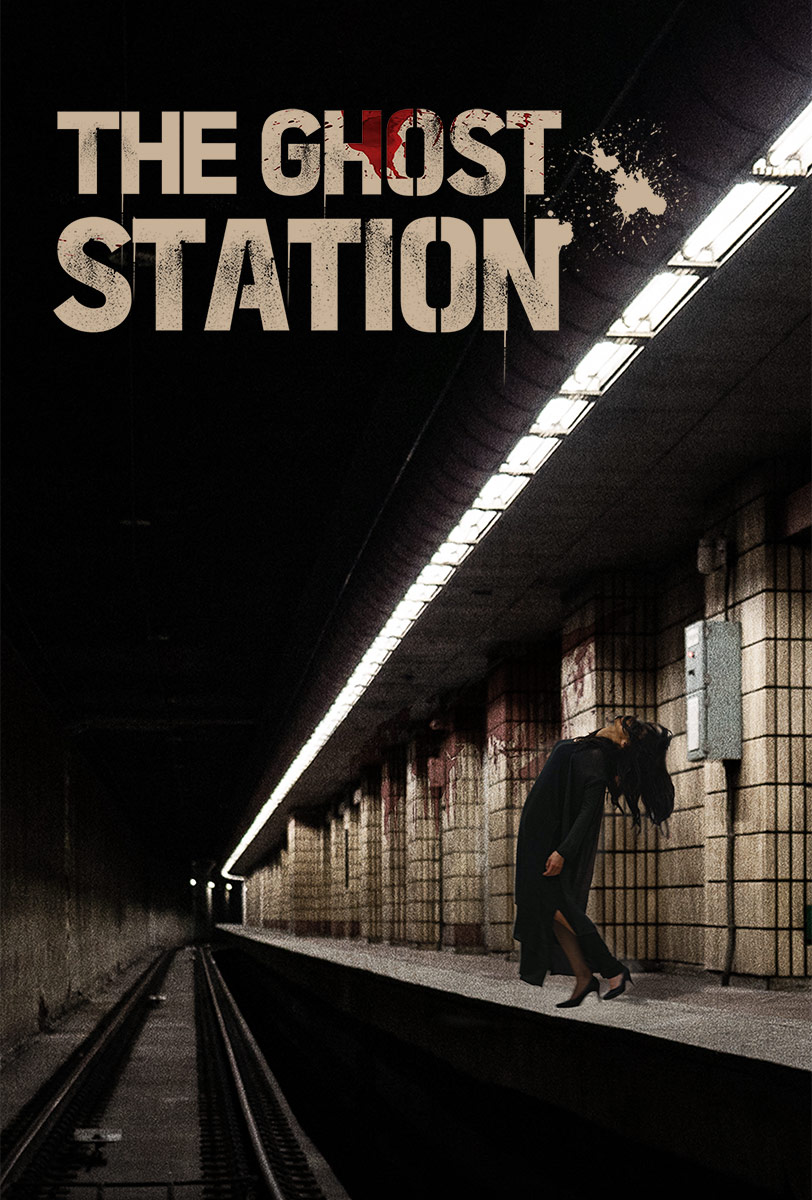
The Ghost Station (옥수역귀신, Jeong Yong-ki, 2022)

The biggest evil at the centre of Jeong Yong-ki’s homage to classic J-horror The Ghost Station (옥수역귀신, Ogsuyeog Gwisin) is perhaps capitalism or more simply modernity. At least, it stands to reason that those covering up a great evil for financial gain could be deemed even worse than the person who actually committed the crimes in turning a blind eye to injustice. It’s in the midst of this paradox that jaded rookie reporter Na-young (Kim Bo-ra) finds herself while beginning to uncover the dark secrets buried beneath a supposedly “haunted” station though mostly lured by the desire for easy clickbait to appease her hardline boss (Kim Su-jin). 

The reason that Na-young is in trouble, is that she was at the station snapping photos for social media without bothering to get a written release from her subjects. The person she took photos of turned out to be transgender and was accidentally outed by Na-young’s story for which she feels little remorse, mostly feeling sorry for herself on realising her job’s on the line and she’ll have to bring in some powerful scoops if she wants to make sure the paper has her back and will cover the compensation money if the woman sues her. 

It has to be said that, in the English subtitles at least, the film has a strongly transphobic vibe in which the photographed woman is constantly described as “a man” , using male pronouns and otherwise treated as a figure of fun, just another “weird” thing going on at the station. Even so, there’s clearly a mild rebuke intended against the contemporary trend of mocking strangers online with a young man falling victim to the station curse in the opening sequence after uploading a video of a woman he first assumes to be drunk or mentally distressed before noticing that in the video he can see a pair of bloody hands attacking her. 

Na-young has been doing pretty much the same kinds of things with her clickbait even while resentful of herself and the loss of her journalistic integrity working at a low level tabloid only interested in viral articles that will generate ad income. But she’s also slightly proud on spotting people reading her pieces on the station ghost as they ride, feeling like she’s doing real investigative journalism even if no one in the office really cares about the dark secrets lurking in the station. Even she later realises that she lost sight of the victim in the case and hadn’t even thought about contacting his family or trying to find out who he was and why he died. 

What she eventually discovers is that her paper may have been involved in a coverup operation which is why her boss becomes hostile as her reports become a little too “real”. It was in the interests of powerful people that the station be built, so anything that might delay its construction was quietly swept under the carpet. Na-young wants to drag it into the light, but finds herself frustrated and then at the centre of a supernatural curse while hoping to give voice to those who were denied any of their own. 

The quietly oppressive, haunting nature of these unseen forces is brought home by the ominous tapping of the ice blue fingernails of Na-young’s ever impatient boss perhaps embittered by her own decision to abandon journalistic integrity for the lure of easy money peddling gossip and distraction to an already apathetic readership. Though adapted from a web toon, the film is co-scripted by Hiroshi Takahashi and bears many of the hallmarks of classic J-horror including the presence of a well implying the contamination of the groundwater that feeds the contemporary society which the station itself in someways represents, along with the uncanny movement of living ghosts in the contemporary environment.

Like J-horror it finds otherworldly spirits trying to communicate through modern technology, in this case saying what first seem to be fragments of a phone number but turn out to have a different meaning indicating a desire to be heard and recognised, reprieved from the hell in which they’ve been placed by a cruel and heartless tormentor. Na-young thinks she can give them that but is perhaps naive, if already corrupted, overestimating the power of the press to offer corrective justice and end a curse by throwing the truth into the light. In the end, she too decides to pass the buck escaping the curse by passing it on as an ironic act of vengeance and liberation thrown like a bomb at an infinitely corrupt social system but more out of spite than retribution. A little shallow and cynical, the film never quite lands its punches or achieves the eeriness it’s looking for but does nevertheless point the finger at the literal skeletons in the closet of the contemporary society.


The Ghost Station is out now in the US on Digital, DVD, and blu-ray courtesy of Well Go USA.

US trailer (English subtitles)

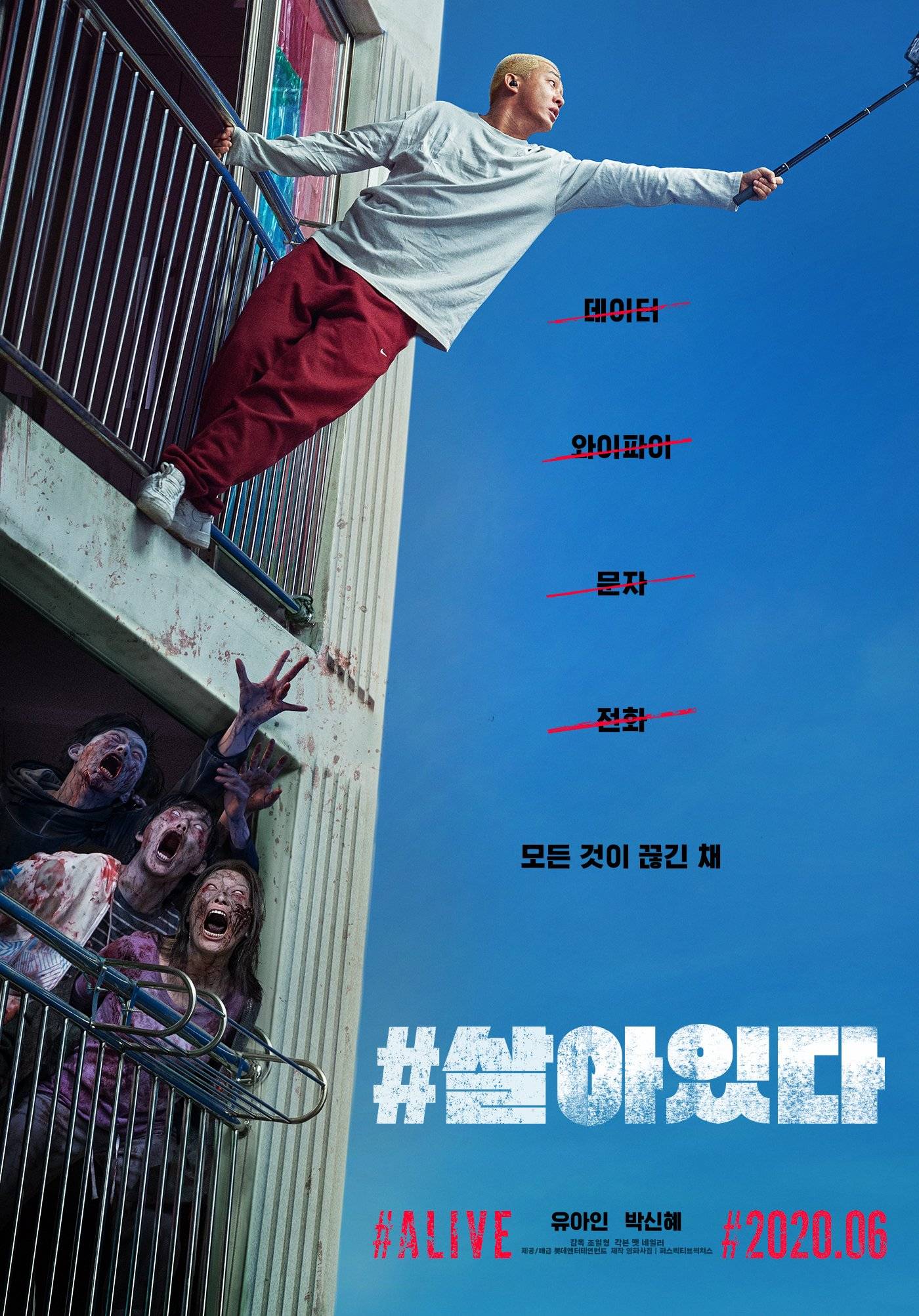
#Alive (#살아있다, Cho Il-hyung, 2020)

Is solidarity really the answer to alienation? The latest in a short line of zombie-related crisis movies, Cho Il-hyung’s oddly prescient #Alive (#살아있다, #Saraitda) presses directly into what it means to live in a time of isolation as its already introverted hero discovers the existential dread of true aloneness, orphaned by his society and quite literally surrounded by cannibalistic threat only to rediscover the desire for life in the company of others vowing to survive not out of obligation but individual will. 

A young man in his 20s, Jun-u (Yoo Ah-in) lives at home with his parents and seems to be a virtual shut-in not quite supporting himself as a pro-gamer/vlogger. He ought to be in his element when he turns on his television one day to discover that a violent riot has apparently erupted all over the city, apparently spreading like a virus which causes aggressive behaviour and cannibalistic frenzy. Unfortunately, Jun-u’s parents left early that morning and didn’t have time to prepare food, leaving him money to go out for groceries but obviously it’s too late for that now and it looks like they won’t be coming home. Jun-u is entirely alone, and all the more so when his usual lines of communication are cut. 

Like the thematically similar EXIT, with which #Alive shares its faith in mountaineering, #Alive concerns itself less with the zombie threat than with youthful alienation and a sense of hopeless despair. Jun-u ought to be in his element, but finds himself ill-equipped for surviving the apocalypse given that he lacks basic adult life skills and those he does possess are now ironically unhelpful. Resourceful as he is, he remembers a smartphone app that would help him communicate via FM radio and all he’d need would be a standard earphone jack only all his earphones are wireless. Making the most of his unstable connection he uploads a single photo of himself holding his address written on the side of a cardboard box with the hashtag #I_MUST_SURVIVE to his Instagram in the hope that someone will see him but becomes increasingly despondent as his food and resources dwindle and he receives a disturbing voicemail which suggests his family may not have escaped the disaster. 

Hitting rock bottom he considers taking his own life but is saved by a literal light in the darkness, a laser shone from an opposing apartment signalling another presence he had previously missed. Believing he was alone in the world, Jun-u lost the will to live and faced with the prospect of waiting to starve to death or venturing out among the zombie hoards chose the only agency available to him in deciding the time and manner of his death. Realising he is not alone restores his desire for life, yet Yu-bin (Park Shin-hye), though much more well prepared, is also dealing with her own trauma in the face of crisis in the memory of a climbing fall that leaves her additionally anxious and fearful of physical risk. Where Jun-u flounders, lamenting as so many of us has in recent years, that no one seems to know what’s going on, the news continually flashing the same info screen while telling viewers only to stay home, Yu-bin has constructed a mini fort complete with a series of booby traps perhaps content in her independence having resolved to live and glad to have discovered she is not entirely alone. 

In contrast to disaster movie tropes, the pair instantly bond in their shared bounce back from despair, developing unconventional means of communication while Yu-bin willingly shares her food stash which in turn gives Jun-u the courage to venture outside for supplies. Eventually reuniting they do their best to withstand the zombie hoards, standing in as they are for the various anxieties which otherwise surround and oppress them, only to find themselves betrayed, worried that perhaps they have after all been abandoned and that no one is there looking out for them. Their salvation lies in their connection, the derided social media proving a lifeline that both affirms their existence and restores a sense of community that returns their safety, airlifting them from the locus of despair finally #Alive and returned to the world secure in the knowledge that they are not alone.


Netflix trailer (English subtitles)

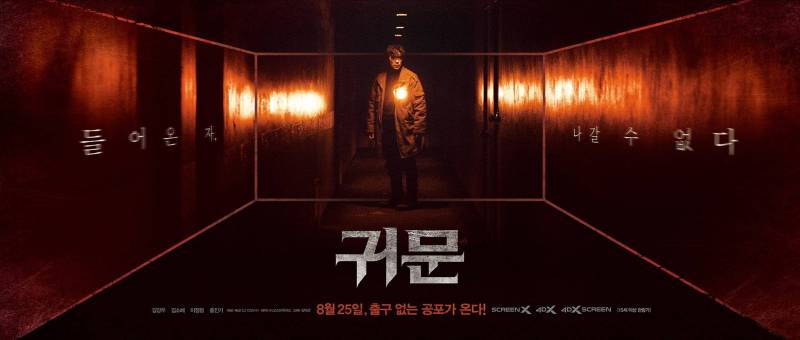
Guimoon: The Lightless Door (귀문, Sim Deok-geun, 2021)

A collection of lost souls find themselves trapped between this world and the next in Sim Deok-geun’s eerie haunted house horror, Guimoon: The Lightless Door (귀문, Guimoon). On a literal quest to exorcise his demons, the hero traverses an impossible and elliptical passage attempting to atone for his sins while freeing others from a similar burden yet finally finds himself becoming his quarry as kind of jailor or perhaps guardian spirit making sure that doors which should never be opened remain forever closed not least to the morbidly curious. 

Do-jin’s (Kim Kang-woo) troubles begin when he casts off his destiny as a shaman leaving his ageing mother to battle a powerful spirit said to belong to a mass killer who suddenly snapped one day and murdered all the guests at small community centre. When the building is torn down, workers discover a body bricked up in the walls which seems almost untouched. Do-jin’s mother is brought in to exorcise the evil spirits but is finally overpowered, a dark presence causing her to stab herself in the neck. Overcome with guilt and apparently “harassed” by his mother’s ghost, Do-jin resolves to atone by releasing each of the spirits killed by the murderous custodian and solving the mystery of the body in the walls in the hope of releasing his mother’s soul so that she can move on to the afterlife and stop nagging him from beyond the grave. 

The “Guimoon” is a kind of portal open on the turn of the year by the lunar calendar. Dojin intends to venture through it assuming it will be easy enough to nix a few ghosts and then come home but soon finds himself lost in a world of uncertain time and forever looping corridors. He meant to travel to the afterlife of 1990, but his world is soon disrupted by the arrival of three university students from 1996 who really shouldn’t be here. Armed with a video camera, they are dead set on crafting their own found footage horror in the hope of winning a competition so one of them won’t have to drop out of school. For the students, this world is “real”. They entered it voluntarily and as far as they are concerned are wandering round a derelict building, not really believing it to be “cursed” or haunted in any way. But for Do-jin it’s a liminal and unreal space he has entered for a specific purpose and from which he hopes to expel those who should have left long before. 

Yet even in trying to solve the mystery, Do-jin concentrates his efforts on Seok-ho (Jang Jae-ho), the shovel-wielding custodian, taking a kind of register of the other guests while knowing little about them. He soon discovers that Seok-ho may not quite be the boogeyman he first thought him to be, realising that his sudden descent into homicidal mania may not have been of his own volition. The solution he edges towards hints at the ironically named community centre as a nexus of trauma, a nightmare world created by an entity trying to escape its suffering and finding empowerment in taking control of its oppressors. 

“I was always here” one of the lonely souls proclaims, while Do-jin and the students find themselves locked in, prevented from leaving by a literal absence of exits. While the students eventually turn against each other, seeking escape by submitting themselves the malicious evil of the entity haunting the centre, Do-jin does his best to complete his quest of vanquishing the ghosts with his shaman’s dagger but is eventually brought to a cruel realisation in a maddening series of loops and repetitions which only lead towards a door which should never be opened. In some ways frustratingly oblique, Sim Deok-geun’s eerie meta horror is an exercise in found footage psychology in which the lost wander lonely corridors while searching for an elusive truth they may already know but have perhaps forgotten. On a night between two worlds lit by a blood red moon, Do-jin ventures into a labyrinth to save his mother’s soul but comes to realise that if you walk through the door between life and death you may discover that there is no exit from existential torment.


Guimoon: The Lightless Door screened as part of this year’s London Korean Film Festival.

International trailer (English subtitles)

The Vampire Moth (吸血蛾, Nobuo Nakagawa, 1956)

“You’ve become an evil beast that sucks blood!” intones ace detective Kindaichi, though just as his later The Lady Vampire featured no lady vampires, there is no literal bloodsucker involved in Noburu Nakagawa’s Vampire Moth (吸血蛾, Kyuketsuga). Inspired by one of Seishi Yokomizo’s mysteries featuring his iconic detective here played by the rather suave Ryo Ikebe cutting a very noirish figure in contrast to the famously disheveled eccentric from the original novels, the film is for a time at least a werewolf movie though as usual the villain turns out to be post-war greed and amorality. 

This is perhaps rammed home in the open sequence as the camera pans around the neon-lit nighttime city before entering a small cabaret bar where a fashion competition is currently in progress. A note of discord is immediately introduced by a white-haired grumpy old man (Eijiro Tono) sitting in the front row who appears to be in an incredibly bad mood, later exclaiming that the winning design by rising star Fumiyo Asaji (Asami Kuji) does not seem very original to him. Some of the models later complain about the strange spectator who’s evidently come to several other shows and has begun to creep them out. Meanwhile, an aloof, conservatively dressed woman brushes past them. Fumiyo’s assistant Toru (Ichiro Arishima) explains that she is Tazuko Kusakata (Chieko Nakakita) who had been the previous number one before Fumiyo returned to Japan after an extended stay in France. The real drama begins however with the arrival of a masked man with a box for Fumiyo who reveals his wolf-like face to Toru in an effort to convince him to deliver it. After opening the box and finding an apple with a few distinctive bite marks on the outside, Fumiyo promptly collapses.  

From the introduction of the three loose “suspects” an ominous atmosphere takes hold in the certainty that something untoward is about to happen. Soon enough some of the models start getting bumped off in quite bizarre and unpleasant ways. The first girl’s body is shipped back to the studio in a mannequin box which later leaks blood, while the gang are then delivered a cake with the next victim’s name on it in pretty icing with a butterfly moth motif above. There may not be any vampires, but there are certainly moths. The old creepy guy is revealed to be a moth specialist living a giant gothic mansion with a butterfly room in the middle full of specimens nailed to boards. His front door even has a moth motif above it like a coat of arms, while a butterfly mural lies behind it in the hallway. The killer places a decorative moth on each of his victims to cover their modesty which would seem to indicate the grumpy professor but, once he finally arrives, Kindaichi isn’t quite so sure. 

Though this is technically a Kindaichi mystery and he does finally get to unmask the criminal, he is not actually in it very much and as previously mentioned is nothing like later incarnations of the famous detective such as that of Kon Ichikawa’s series of Kindaichi movies released throughout the 1970s. In a common B-movie motif, the main detective work falls to a male and female team in dogged reporter Kawase (Minoru Chiaki) and intrepid model Yumiko (Kyoko Anzai) who eventually succeed in digging up clues at the creepy mansion while simultaneously stumbling across a subplot involving plagiarism in the world of fashion with Tazuko implying that Fumiyo stole her winning outfit from another designer and then passed it off as her own thereby robbing Tazuko of her rightful place as the best designer in Japan. Partly because of all this stress and the vast amounts of money apparently needed to sustain a career in the fashion industry, Fumiyo’s well-meaning boyfriend wants her to abandon the profession but also admits that asking her to give up fashion would be like asking her to give up her life. 

Nakagawa ramps up the tension with a series of elegantly presented reversals, making us think we’re witnessing the killer stalking Fumiyo before pulling back to reveal it’s someone else or presenting the same scene of a masked man ominously peering out from behind a tree. The presence of the “wolf man” links back to a Japanese traveller who supposedly fell victim to a supernatural curse in France described as being akin to possession by a fox in Japanese mythology causing the infected person to gain wolf-like characteristics, become violent, and eventually be consumed by an overwhelming desire for human flesh, but perhaps also hints at the sense of voracious greed that has overtaken the killer and caused them to abandon their sense of of humanity in favour of material riches. Filled with a sense of the gothic along with noirish dread in Nakagawa’s foggy, kilted angles eventually giving way to an atmospheric chase sequence strongly recalling that of The Third Man, The Vampire Moth presents a banal evil with palpable anxiety yet suggests justice will be done to those who however briefly stray from the path.