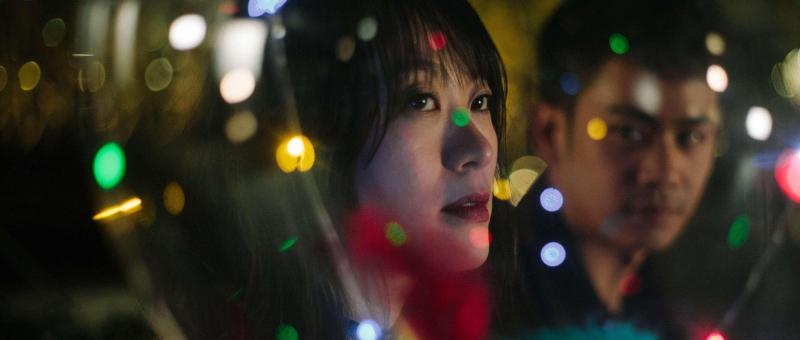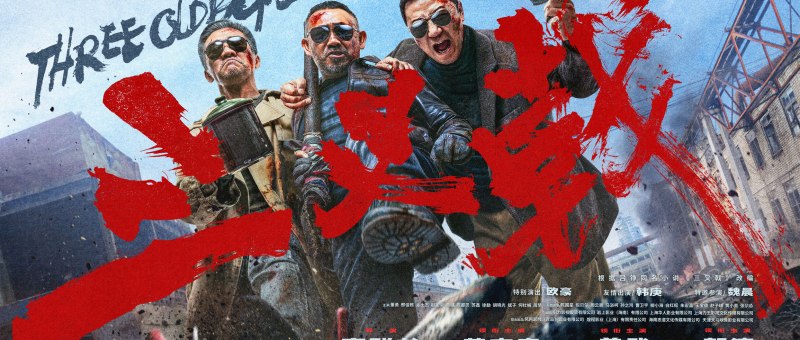
Three Old Boys (三叉戟, Gao Qunshu, 2024)

In a surprising development of Chinese propaganda cinema, the once untouchable subject of police corruption has become a prominent feature albeit often in tales of righteous cops who stand up for real justice against the few bad apples who’ve allowed themselves to be corrupted by contemporary capitalism. Then again, its subject matter might explain why TV police procedural veteran Gao Qunshu’s Three Old Boys (三叉戟, sānchājǐ) has been languishing on the shelf since at least 2020 if it were not also for the inevitable effects of the pandemic. 

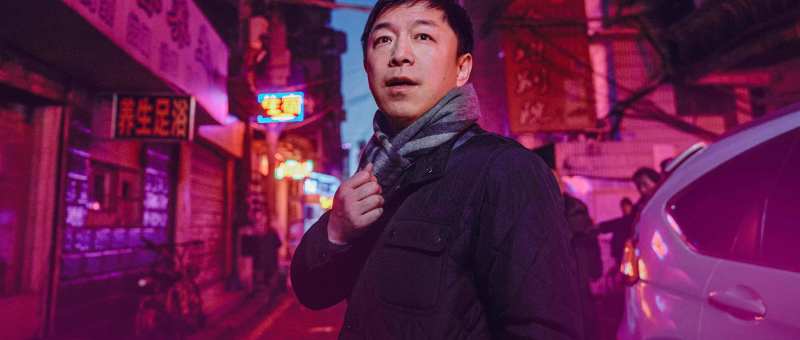
In any case, Gao’s film has a distinctly retro vibe with use of classic Chinese pop and very ‘70s soundtrack while its maverick cop heroes all dress in the fashions of 40 years previously. All born in the late 1960s, they are products of an even more authoritarian era and began their careers in the late 1980s. Like any other old cop movie, they bemoan the restrictions of the contemporary society and suggest modern notions of appropriate police behaviour prevent them from doing their jobs which has its degree of awkwardness on the one hand implying the modern police force is now not so hardline but also that it should be because that’s what gets the job done. 

As they contemplate retirement, the trio are offered positions as part of a new squad set up to tackle economic crimes and specifically international money laundering, the chief problem with being that the criminals had the effrontery to move the money out of China which is stealing from honest, hardworking, Chinese citizens aside from having already ripped them off with fraudulent investment schemes and good old-fashioned blackmail operations. Of course, as it turns out, the case has a connection to something that happened 20 years earlier and police officer Cui’s (Huang Zhizhong) desire for revenge on the gangster king pin, Huang Youfa (Jin Shijie), who caused the death of his younger brother murdered by gangster Donzgi who was then shot dead by fellow officer Big G (Jiang Wu). 

The convoluted narrative is heralded by a homeless man who takes the police chief hostage and mutters something about a sword of justice that sounds like something right out of a wuxia serial before being updated to the present day. The sword does actually make a reappearance and is wielded by Big G against a young whippersnapper out for revenge and to take care of what he sees as corruption in the earlier generation. When the trio are first put on the case, they are given a young rookie to help them because he’ll be able to do the tech stuff which the old guys probably can’t because their idea of policing was largely rooted in their fists and a capacity for intimidation. But this doesn’t really work with the youth of today who are for some reason fond of reminding them they aren’t their fathers so they don’t have to do what they say. This is particularly true of young thug Blondie who is caught between Ghost, the old gangster king, and Qing an upstart who is actually working for Huang but in pursuit of his own particular goals. 

Huang has his claws well and truly embedded in the modern society and has it seems manoeuvred favourable people into the police force ensuring that Cui and his team are neutered before they get the chance to do anything. Then again, Big G seems to have a very co-dependent relationship with Ghost who tells Blondie off for getting into a fight with him because cops are off limits. Nevertheless, the point is to dismantle Huang’s networks of influence to restore the integrity of the police force so they can enforce the law which exists for the protection of the people. It’s all rather confusing, but generally lightened by the intense action sequences designed by Yoo Sang-Seob which are also suitably retro but make good use of sword play along with a motorcycle chase. Perhaps ironically inspired by Hollywood hero cop dramas, the film ends with a regime change and a new photo being taken of the guys in their more modern uniforms receiving a commendation with the clear indication that something has been put to rest and the rebellion suggested by Qing’s attempt to steal power from the old quelled while the old boys seemingly decide that justice requires they put off their retirement just a little longer.


International trailer (English subtitles)

The Fallen Bridge (断.桥, Li Yu, 2022)

Li Yu’s mystery thriller The Fallen Bridge (断.桥. duàn.qiáo) finds itself at a series of contradictions in the modern China and its film industry. The film was an unexpected box office success, though largely because it falls into a new category of boy band film in starring TFBoys’ Karry Wang locking in an audience of ardent fans much as Jackson Yee’s presence in Better Days had though it also plays into ongoing anti-corruption theme in recent cinema while simultaneously adopting a mildly positive stance towards whistleblowers if specifically within the field of construction.

It is of course an unescapable fact that hypercapitalistic working practices and ingrained corruption have led to numerous public safety failures with bridge collapses unfortunately a fairly common occurrence. This one is particularly problematic as a skeleton is discovered encased in the concrete during the cleanup effort. From the way it’s posed, it appears the man may have been buried alive. A preserved piece of paper found in a bag accompanying the skeleton states his intention to take his concerns to the head of the construction project that the structure is unsafe and should be entirely rebuilt. Of course, that would be incredibly expensive, embarrassing, and disadvantageous to others who have used the bridge as a way of forging connections with important people.

The bridge’s collapse is therefore also symbolic in pointing to the fracturing instability of these relationships along with that between college friends Zhu Fengzheng (Fan Wei), the project manager, and Wen Liang (Mo Chunlin), the would-be-whistleblower. Fengzheng has also been raising Liang’s daughter Xiaoyu (Ma Sichun) who was 12 at the time her father disappeared after seemingly being disowned by her mother who was under the impression he had runaway with his mistress. Now in her 20s and an architecture student, Xiaoyu becomes determined to learn the truth even as she begins to suspect Fengzheng who has otherwise become a second father to her and does at least seem to care for her as a daughter while his own son is apparently living in Australia. Teaming up with a fugitive, Meng Chao (Karry Wang), on the run for killing the man who raped his sister, she begins plotting her revenge while a police investigation into the bridge collapse and an additional suspicious death otherwise seems to flounder.

Though it may not mean to (as it seems unlikely to please the censors) the film gives tacit approval to vigilante violence in subtly suggesting that “official” justice is rendered impossible because of the complex networks of corruption that exist within the soceity. Meng Chao says the man who raped his sister was a judge which is why he had to kill him, while Xiaoyu seems to desire individual vengeance believing the police aren’t investigating properly but refusing to go to them with key evidence because she wants to kill her father’s killer herself. While carrying out their investigation, the pair end up adopting the wily daughter of another casualty of the villain’s greed and form an unlikely family unit marking them all out as good people who have been betrayed by the system which is itself corrupted by the nation’s headlong slide into irresponsible capitalism. 

Even so, revealing the villain so early weakens the suspense while their own motivations are left unexplored, assumed to be merely greed if perhaps also a wish to remain connected to influential people and be thought of as important at the cost of the lives of the general public (along with those of often exploited labourers) endangered by shoddy construction practices. It isn’t entirely clear how they intended to deal with the fallout of their machinations to cover up their past misdeeds, especially as the sub-standard work on the bridge has already been exposed though obviously could be blamed on others no longer around to defend themselves, but perhaps it all amounts to crazed self-preservation pitched against the righteousness of Xiaoyu and Meng Chao who are after all wronged parties in China’s deeply entrenched judicial inequality. Nevertheless, we get the inevitable title card (left untranslated in the overseas release) explaining that justice was served and a censor-pleasing ending that still in its way suggests the police are incapable of solving these crimes and that the petty corruptions of small-town life are otherwise impossible to prosecute. 


The Fallen Bridge streamed as part of the 18th Season of Asian Pop-Up Cinema.

Original trailer (English subtitles)

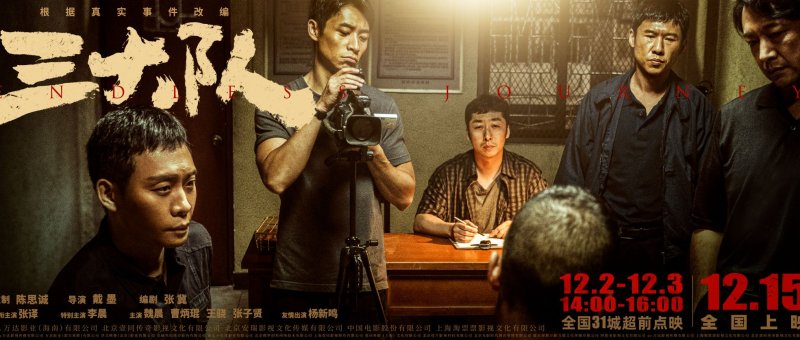
Endless Journey (三大队, Dai Mo, 2023)

The police officers at the centre of Dai Mo’s Endless Journey (三大队, Sān Dàduì) are soon stripped of their badges, accused of excessive force contravening laws existing since the medieval era to prevent vigilante justice. Yet in someways that’s essentially what they end up doing, extra-judicial investigators with a personal vendetta rather than a pure-hearted interest in justice even if the victim of the crime weighs heavily on their conscience. 

Though the film plays into the recent trend in Sino-noir and popularity of mystery thrillers at the Chinese box office, it is surprising that a film that is at least subtly critical of the justice system, featuring police who break the rules and are sent to prison, was approved by the censors board even if the central message is one of heroism as Captain Cheng (Zhang Yi) doggedly chases his suspect all over China for several years. Then again, the hero of this true life case turns out to be China itself as Cheng is reminded that his search is unnecessary given that the fugitive, Eryong (Zheng Benyu), is sure to be captured by the burgeoning surveillance network of CCTV cameras then being rolled out across the country. Years later, it’s the system that allows Cheng to identify Eryong as his DNA and fingerprints throw up positive matches within seconds of samples being taken thanks to the nation’s DNA database. 

Even so, as the veteran officer, Zhang (Yang Xinming), reminds the rookie behind every major case there’s a ruined family broken by their loss which is one reason why he doesn’t relish the prospect of investigating one so late in his career. This particular crime is so heinous that it’s become front page news which means that they’ve also got their boss breathing down their necks to get it solved as soon as possible with the existence of Division 3 itself on the line. Cheng pops home for a matter of minutes to check on his wife and daughter, shutting down his wife’s suggestion that they get a security system for their windows on the grounds that it would be an embarrassing thing for a detective’s home to have. The reason she wants one is that the victim in this case had been a little girl of around their daughter’s age unexpectedly home alone when thieves broke in by climbing over their aircon unit and smashing a window. Finding nothing of value they raped and killed the daughter. 

After a police officer dies as a result of the investigation, the squad take things too far questioning the first suspect leading to his death which is how they end up disgraced and sent to prison. After his release, Cheng has lost his family, his home, his job and identity as a protector of justice yet his determination to catch Eryong is born more of his desire to avenge a friend than it is to prevent further crime. His fellow officers join him in the beginning, but during the endless searching each make the decision to move on for easily understandable reasons such as their marriages, children, and illness but Cheng cannot let go even when prompted by an old friend from the force who tells him they have this in hand though there is perhaps a subtle implication that the police force isn’t really doing enough otherwise Cheng wouldn’t have to be chasing Eryong all over the country. 

But haunted by reflections of his own face, ageing, at times dishevelled and hopeless, Cheng is also searching for himself and a means to reclaim the self he once was by vindicating himself as a policeman along with Division 3 in finally completing their mission. The ominous score by Peng Fei with its stinging strings adds to the noirish feel as does the perpetual inevitability of Cheng’s forward motion in the dogged pursuit of his prey, unable to rest until Eryong has been brought to ground. His quest robs him of his life, but there is an undeniable poignancy to it in Cheng’s inability to find himself outside of the chase only to be left with a moment of uncertainty no longer sure who he is or where he goes now, left alone and with no sense of direction in the absence of his quarry.


Endless Journey is in UK cinemas now courtesy of CMC.

International trailer (English subtitles)

Gone with the Light (被光抓走的人, Dong Runnian, 2019)

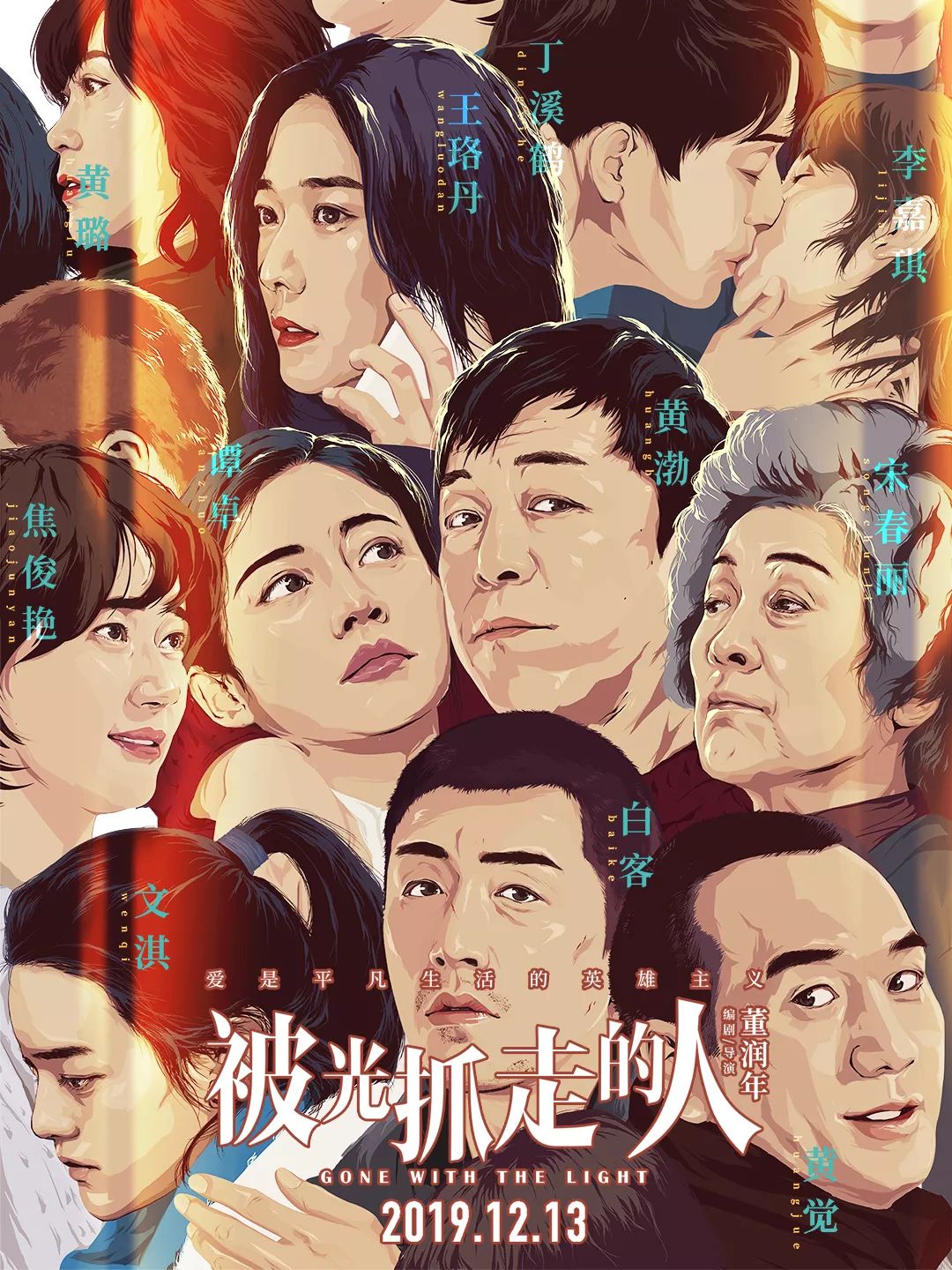
What is love, and in the end does it really matter? It’s a question the mostly middle-aged couples of Gone with the Light (被光抓走的人, Bèi Guāng Zhuāzǒu de Rén) who perhaps assumed they were past such existential questioning find themselves contemplating after an unprecedented event causes the disappearance of seemingly random people from all over the world giving rise to the rumour that those taken were those truly in love. But if that’s so, what does it mean for the overwhelming majority left behind, suddenly lonely and uncertain wondering if they’ve been spared or judged and found wanting for their lack of emotional fulfilment. 

At 10am one spring morning, a brief flash of light creates a slight temporal disturbance causing a small percentage of the population to simply vanish. No one knows what happened or where they’ve gone, but the connection is later made that many seem to have been taken in pairs giving rise to the theory that the disappeared are the only true lovers. This is a minor problem for some of the left behind who have lost spouses twice over, not only literally but emotionally in realising that their loved one was in real, deep love with someone else. Meanwhile, those not taken begin to wonder why, questioning the validity of their relationships, doubting that their loved ones really love them but not quite daring to ask the same question in reverse. 

Dong opens the film with a vox pop session questioning several people about the nature of love, some of whom we’ll get to know better and others not. Our hero, school teacher, Wenxue (Huang Bo), unconvincingly claims that he does not put any stock in the admittedly unscientific theory that only true lovers were taken and that the rumours have not affected him or his wife but as we later see they have profoundly unsettled his unexceptional, middle-class family life which was at least superficially happy or perhaps merely unhappy in the most ordinary of ways. Before the light, we see him annoy his wife by waking her up smoking in bed before they have perfunctory, routine sex over which they discuss Wenxue’s hopes for promotion and whether or not it’s appropriate to schmooze with the headmaster to smooth the path. The fact they weren’t chosen eventually becomes a kind of embarrassment, the promotion going to a man whose wife disappeared on him for the slightly strange reason that being betrayed in love somehow grants him the moral high ground. Wenxue, like many, goes to great lengths to excuse himself, getting a fixer to photoshop pictures of his wife along with train tickets to make out she was in another town when the light descended.

Meanwhile, Li Nan (Wang Luodan), a woman who was in the middle of trying to divorce her husband when the light struck finds herself accosted by his mistress (Huang Lu) demanding to know where he is seeing as he did not ascend with her. The obvious conclusion is that he had another woman, but the quest forces each of them to reassess their true feelings towards the missing man, the mistress desperate to prove she wasn’t just an “adulteress” but a woman in love, and the wife that she really is ready to let him go. A young woman (Li Jiaqi) who threatened to commit suicide by jumping off a roof when her parents tried to stop her marrying her boyfriend (Ding Xihe) suddenly doubts her feelings when her parents disappear together while she and the man she thought she loved are left behind. A petty thug (Bai-ke), in the only subtle implication of a same sex love, becomes obsessed with the idea that his friend has been murdered by a TV presenter who had been bothering him and his death has been covered up to look like one of the disappearances, perhaps again hoping to find evidence against a romantic rejection. 

Talking to another man in a similar situation Wenxue is given a dressing-down, reminded that he’s been extremely self-involved and that the problems he’s now able to see in his marriage thanks to the light were there all along, only now he’s refusing to face them in a much more direct way. He couldn’t or chose not to see that his wife was lonely and filled with despair while flirting with an equally lonely woman at work. His confrontation with her provokes his only real moment of emotional reckoning as they each reflect on the fantasy of romance and its capacity to dissipate when realised. Walking in on his teenage daughter getting dumped for the first time he’s perhaps in the best position to offer advice, even if it’s of the fairly prosaic kind to the effect that she’ll get over it in time. “Your lies make me ashamed” she’d fired back at her parents’ middle-aged hypocrisy, a very ordinary marriage in which perhaps the “love” has gone, in one sense, but equally might be succeeded by something else. “It’s alright, you will know it in the future” Wenxue tells his heartbroken daughter but might as well be talking to himself, beginning to feel the love after love in conceding that perhaps this is what “love” is rather than any kind of “rapture” literal or otherwise. A beautifully pitched meditation on the consequences of love, the madness, violence, and loss, Gone with the Light finds its release in stillness and a gentle contemplation of that which remains when everything else is burned away. 


Gone with the Light streamed as part of this year’s New York Asian Film Festival.

Original trailer (Simplified Chinese subtitles only)

Victim(s) (加害者、被害人, Layla Zhuqing Ji, 2020)

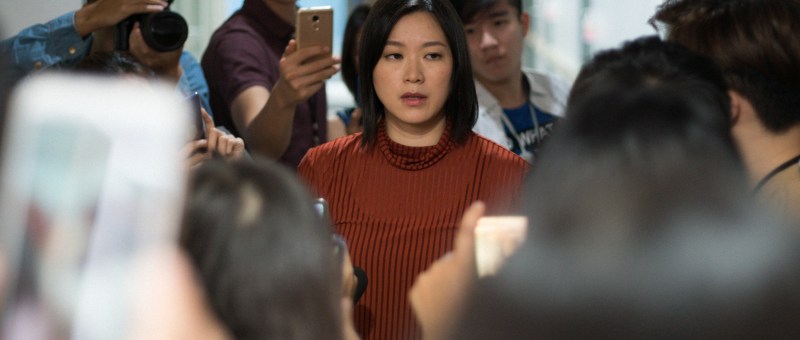
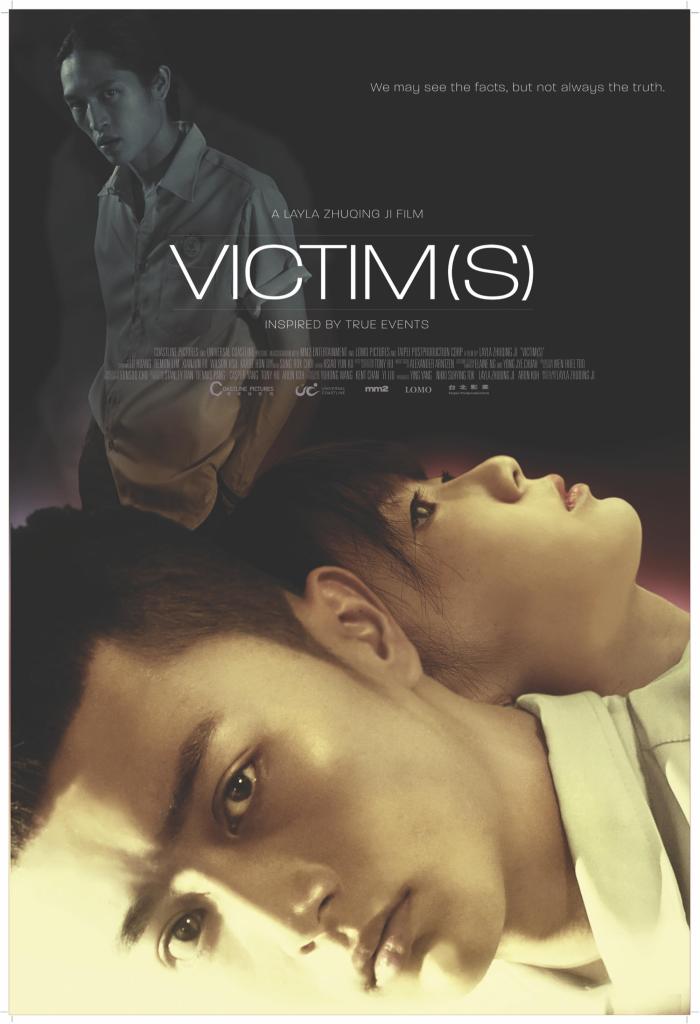
“People don’t care about the truth, they just need someone to blame because that’s the easy thing to do” according to a secondary victim caught up in the complicated events which led to the killing at the centre of Layla Zhuqing Ji’s empathetic debut feature, Victim(s) (加害者、被害人, Jiāhàizhě, Bèihàirén). A tale of two mothers, Victim(s) does its best not to apportion blame to any one individual but points the finger at a rigid and austere conformist society in which conservative social codes and a culture of victim blaming conspire to restrict freedom and breed unhappiness. 

Cast in the roles of victim and killer are high school students Gangzi (Kahoe Hon), the son of a poor masseuse (Remon Lim) stabbed to death beside an ATM, and Chen (Fu Xianjun) son of a wealthy single-mother (Huang Lu) who some say made her money in questionable ways. Students at the school speak of discord between the two boys, describing Chen as strange, a bit of a loner with an unpleasant superiority complex that, coupled with his status as top of the class, led him to look down on those around him. They say he viewed Gangzi with disdain because of his working class background and was upset because they both liked the same girl, transfer student Qianmo (Wilson Hsu), but she turned him down in favour of Gangzi. After a few days on the run, Chen turns himself in and confesses to the crime but has a slightly different story, claiming that, in fact, he was bullied by the other kids including Gangzi partly because he was wealthy, they were roughing him up for money, and partly because he was an outsider at school widely disliked as a swot. 

Of course, both mothers are convinced their sons are perfect angels but are eventually led to discover that perhaps they didn’t know their children as well as they thought they did. The technological divide between the generations trumps that of social class with the kids largely living in an online world where the traditional prejudices are only magnified through teenage gossip. Rather than swapping notes like in the old days, they group chat during in lessons and reinforce social hierarchy through shame and bullying. Transfer student Qianmo quickly finds this out to her cost, becoming a target for the ruling group of popular girls after she declines to join their dance troupe, while the boys are determined to hit on her despite her obvious lack of interest. 

Qianmo was forced to give up dancing and leave her previous school which specialised in the arts because, it’s implied, her dance teacher was molesting her, yet she’s already been branded a “teenage slut” online for supposedly seducing him. The other girls are remarkably unsympathetic, engaging in sexualised bullying they proudly film and share amongst themselves. The boys are doing something similar, yet even though the point of these videos is that the kids share them widely to humiliate each other, they are never a part of the official investigation and the adults have no idea they exist. Qianmo is too afraid to report her bullying because she fears they’ll ask why it is she’s being bullied and then say it’s her own fault, while Chen who finds himself scapegoated after a homoerotic porn magazine is discovered in the dorm, simply fears reprisals. Questioned by the police the other kids all toe the line, afraid that they’ll become targets too for speaking the truth, all too happy to let Chen take the blame while allowing the awful status quo to continue but resentful that he will most likely wield his privilege to escape justice. 

Chen meanwhile blames himself, repeatedly asking if he’s the the cause of others’ suffering while Gangzi works out his frustrations with his abusive father and repressed sexuality through delinquency. Both mothers desperately try to save their sons, but find themselves struggling to comprehend the gap between the image they had of the young men their children were becoming and the unpleasant truths they are beginning to discover. Meanwhile, external bullying from a media mob further obfuscates the truth, baying for blood and creating only more victims in the process as it insists its brand of socially conservative, compassionless justice be served at all costs. Yet against the odds, the women eventually come to a kind of understanding, choosing to accept the reality while protecting other victims, refusing the “easy” option of a prepackaged “truth” that neatly fits the needs the needs of a bullying society. Ji’s hard-hitting debut too refuses easy answers, finding that in the cycle of violence and abuse perpetrators and victims are often one and the same but each subject to the same petty oppressions contributing to an atmosphere of rigid social conformity which breeds nothing but misery.


Victim(s) streamed as part of this year’s Udine Far East Film Festival.

Original trailer (English subtitles)

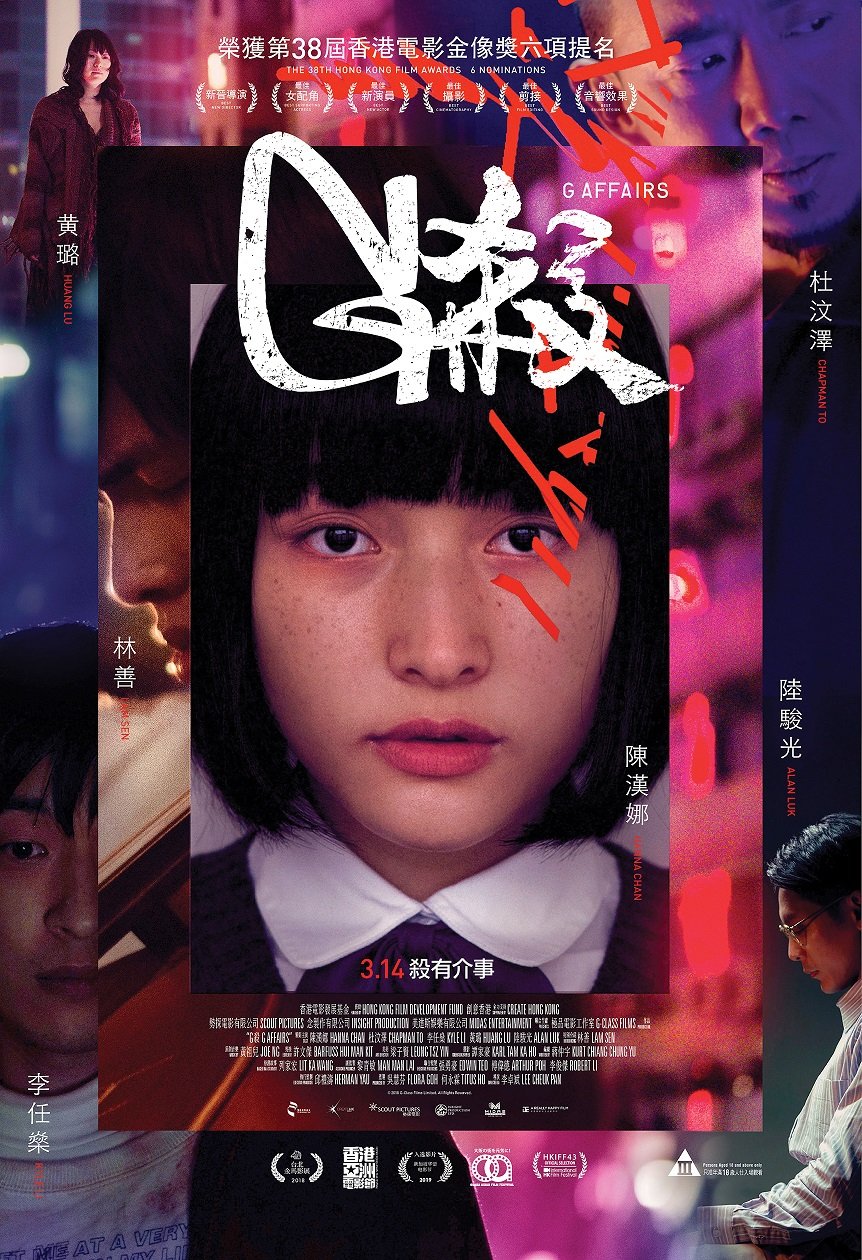
G Affairs (G殺, Lee Cheuk-pan, 2018)

G Affairs poster 1“Many think Hong Kong is getting better, but I can tell you for sure Hong Kong is getting worse” says the dejected hero of Lee Cheuk-pan’s striking debut, G Affairs (G殺). Reminiscent of Fruit Chan’s landmark chronicle of handover malaise Made in Hong, G Affairs finds itself in a city once again in crisis where the young struggle to see a future, abandoned or misused by the older generation who think only of themselves in an increasingly nihilistic world of violence and transaction.

Lee opens with an arresting scene shot in 4:3 in which a teenage boy practices his cello while a scantily clad woman opens the door only to be dragged back to the couch by a burly policeman who proceeds to have his way with her until a severed head suddenly bounces in through the French doors. The story of how the head came to land there brings together a disparate collection of people from all walks of life – teenage cello player Tai (Lam Sen), his classmate Yuting (Hanna Chan), her autistic friend Don (Kyle Li), her corrupt cop dad “Master Lung” (Chapman To Man-chak), former sex worker stepmother Mei (Huang Lu), and high school teacher Markus (Alan Luk Chun-kwong) with whom Yuting has been experimenting with oral sex.

Today’s lesson is brought to us by the letter G – chosen by Don as his favourite letter in the Western alphabet connected as it is to many of his beloved computer words, but reminiscent to Yuting of a human skull with its jaw hanging open. Above it all, Yuting resents her fellow students at the elite high school, especially the immature boys who nickname her “G” behind her back for a number of reasons ranging from an unflattering comparison to a busty classmate and the fact that her stepmother was a sex worker the slang word for which sounds like G in Chinese. Tai, meanwhile, is not well liked either and also considers himself superior to his surroundings, proclaiming that only losers need friends and frequently dobbing in his classmates for their bullying behaviour. Don, a few years older, is associated with another G word – “gay” which people seem to assume him to be for unclear reasons, and is an outcast because of his autism.

The three seem to be more or less abandoned by their parents. Tai lives alone, a melancholy musician who believes that “things of value cannot be found in the world” only in music, literature and art, while his parents have long since departed in search of riches. “A family that’s never home is not a family” he explains to mainlander Mei who hoped to find a new life for herself in Hong Kong but even with her present “family” feels even more alone than she ever had before. Her stepdaughter Yuting intensely resents her, regarding her father’s affair with Mei as the primary cause of her mother’s gastric cancer and subsequent death. Yuting also resents her father, ashamed of his embarrassing gangster antics and tendency to spout high minded quotes to mask his essential superficiality. Neglecting his daughter, Lung positions himself as a kind of father figure to Don to whose parents own an internet cafe which facilitates some of Lung’s dirty work.

Dirty work is something of a Lung speciality but as Tai says, he’s not even that bad a man merely someone trying to make a fast buck in the burgeoning Hong Kong underworld. Calling himself “Master Lung”, he thinks of himself as maintaining his own kind of order – “one country, two systems” as Yuting later ironically describes her complicated home life, but may actually be on the “better” side of law enforcement as we witness the legitimate police waterboard a terrified Don who is largely unable to answer their questions in the way they insist on asking them, and physically abuse a guilty Markus while threatening to expose his illicit relationship with Yuting and, it turns out, her stepmother Mei. Another middle-aged hypocrite, Markus confesses only to introducing Mei and her sex worker sister to his church group in the belief that they “deserved salvation”.

That may not be a view commonly held by most as Mei finds out during an impassioned conversation with Yuting’s headmistress who berates her for her “shameless” past. Speaking as a mainlander, a trafficked woman, and a sex worker, Mei hits back by asking what right Hong Kong people have to look down on her and why it is her background in sex work is so problematic that everyone seems to be telling her it would be inappropriate for her to be a mother which is only what she’s trying to be to Yuting despite her animosity. Lung might have married Mei, but he wastes no time denigrating other mainland women trafficked to the Hong Kong underworld and cooly brushes off complaints after shooting a man with the justification that no one cares about another dead mainlander. Mei does her best to be “happy”, but learning that her own mother has been executed by the Chinese state for opposing its oppression leaves her adrift, longing to go “home” but knowing there is no home to go to and no safe land even in Hong Kong.

Children are the adults of tomorrow, Yuting explains, but the adults of today have robbed them of any possible future. Lee’s depiction of contemporary Hong Kong is one of increasing chaos, a hopeless place that has lost its way. The older generation think only of money while the young want something more but struggle to find anything of meaning in the soulless modern world which seems to be imploding all around them. Strangely hopeful, yet infinitely nihilistic, Lee ends on the single word “Go” as his troubled protagonists find their own kind of peace in the abyss of the modern city.


G Affairs was screened as part of the 2019 London East Asia Film Festival.

International trailer (English subtitles)
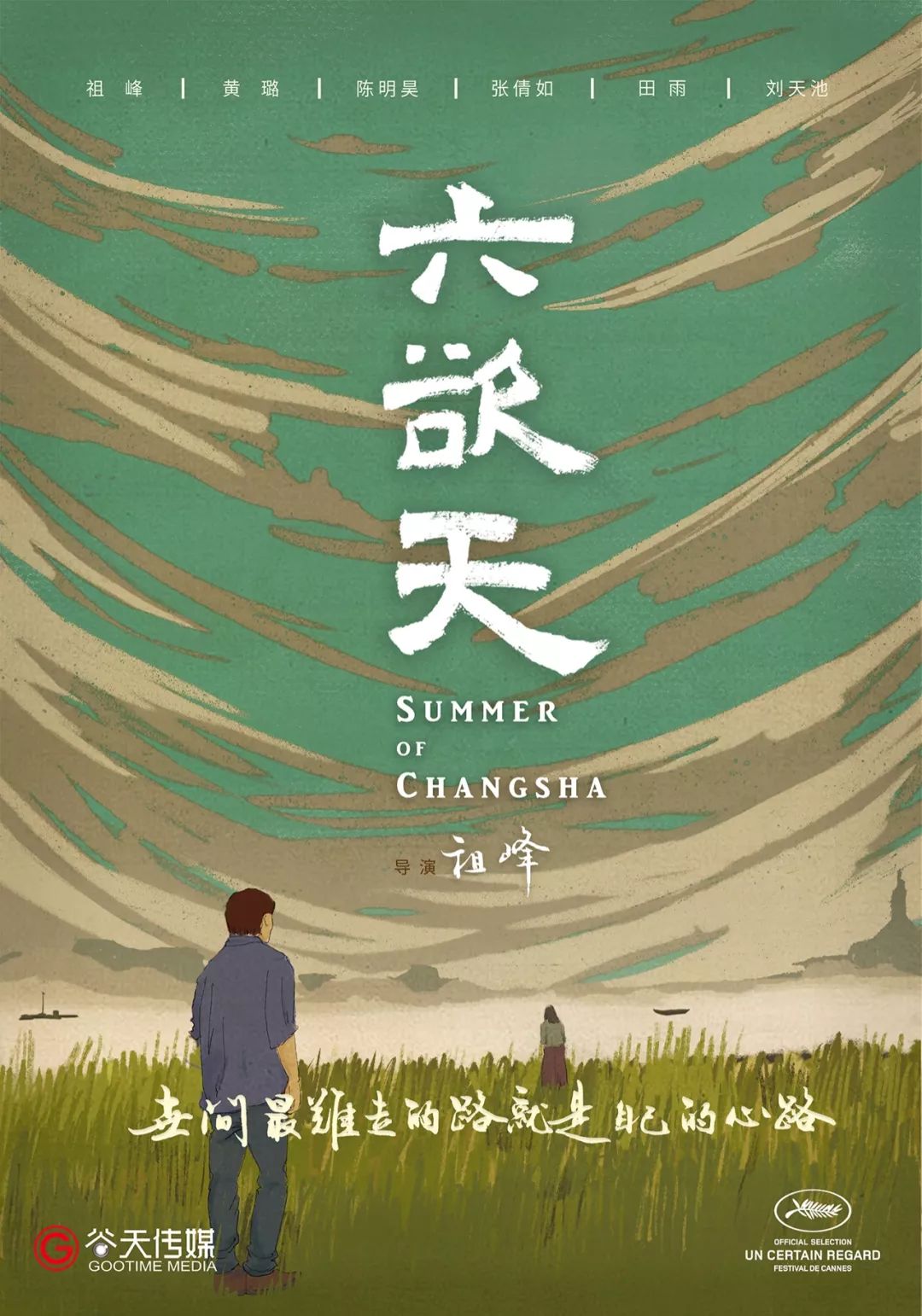
Summer of Changsha (六欲天, Zu Feng, 2019)

Summer of Changsha poster 1Escaping from the traumatic past is fast becoming a favourite theme of Chinese cinema, but Summer of Changsha (Liù Yù Tiān) swerves away from the neon-lit, rain-drenched streets of your average melancholy police procedural for the fetid air of sun-baked provincial China where death haunts the shadows. Each dealing (or failing to deal) with guilt and responsibility, a depressed detective and seemingly emotionless doctor bond through a shared sense of impossibility only to discover that there may be a way out after all only not of the kind they might have assumed.

Detective Bin (Zu Feng) has already handed in his resignation but has no real plans for his post-police life. Consumed by powerlessness and regret over failing to prevent the death by suicide of his girlfriend who had been living with longterm depression, he cannot seem to find a place for himself back in the world. When a severed arm is fished up from a local lake, he gets a new sense of purpose and eventually connects the lonely limb to a missing persons ad found after trawling the internet which mentions a prominent scar on the right hand.

The ad was placed by a doctor, Li Xue (Huang Lu), who emotionlessly confirms to Bin and his earthier partner Lei (Chen Minghao) that she believes the hand to be her brother’s, shocking them by correctly guessing where they might have found it. Xue tells them that her brother Yi appeared to her in a dream and showed her where the rest of his body parts are – something later confirmed to be true when the three drive out to a remote spot and dig up a suitcase buried under a tree.

Strangely, Bin takes the “dream” theory at face value with only Lei seemingly unconvinced. He never quite entertains the obvious conclusion that Xue knows where the body parts are because she put them there, even after discovering that the pair were seen to be arguing recently and that their relationship became strained after a tragic accident during which Xue’s daughter, who was suffering with a heart condition, sadly passed away.

What draws Bin to Xue is a shared sadness, a deepening gulf of introspection which, ironically, convinces them they exist outside of regular society and should not permit themselves genuine human connections. Xue’s animosity towards her brother, it seems, was less because of what happened to her daughter than because of his conversion to Buddhism which had, she felt, allowed him to move on and start to forget about their past. By contrast, Xue condemns herself to a life of suffering as atonement, wilfully carrying on an affair with a married surgeon (Tian Yu) she doesn’t seem to like very much solely because his research area was closely connected to her daughter’s condition and if she’d lived he might have saved her. Bin, meanwhile, criticises his partner Lei for trying to ghost a girlfriend, cute as a button Ting Ting (Zhang Qianru), because he thought she was annoying, but finds himself doing the same thing after he sleeps with her when she approaches him for comfort only for her to become emotionally attached.

Ting Ting wants to help him overcome his emotional pain, but Bin isn’t sure he can. Like Xue, his grief and guilt have made him selfish and self-involved. Reconnecting with his late girlfriend’s family, he has the urge to make some kind of confession in order to ease his burden only for her sister (Liu Tianchi) to rightly round him for the cruelty of what he’s about to do. She was just starting to move on with her life, and now Bin’s sudden chattiness seems primed to stir everything up again. His desire to ease his conscience is entirely for his own benefit whatever he might say about wanting the family to know the truth. Each conflicted by their awkward connection, neither Xue or Bin can see a way out of their suffering because they don’t believe they deserve one.

To stave off the inevitable, they continue investigating the mysteries behind Yi’s death but the answers they find turn out to be depressingly banal. While a mysterious collective of Buddhists release fish back into the rivers (perhaps not as responsible as it first sounds), the pair remain similarly trapped in a solipsistic world of suffering little realising the consequences of their (in)actions on those around them. Yet solving the case in its entirety does at least offer the opportunity of new beginnings, however far they choose to take them. A detached exploration of the entrenched effects of trauma, guilt, and regret, Summer of Changsha is not quite the film it first appears to be but an icy journey from the cold heat of summer into the unexpected warmth of winter snow as its dejected leads learn to look for new directions towards a less uncomfortable future.


Summer of Changsha was screened as part of the 2019 London East Asia Film Festival.

Original trailer (English subtitles)

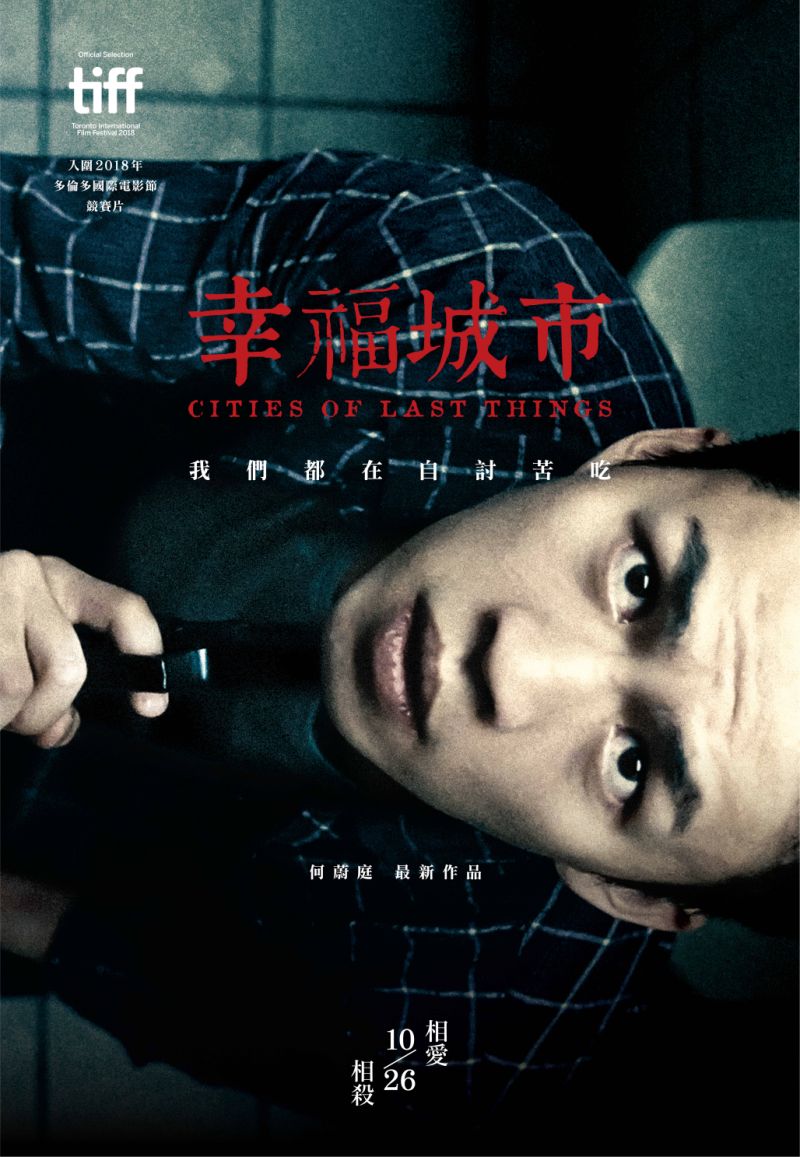
Cities of Last Things (幸福城市, Ho Wi Ding, 2018)

Cities of last things poster 1A sense of finality defines the appropriately titled Cities of Last Things (幸福城市, Xìngfú Chéngshì), even as it works itself backwards from the darkness towards the light. Still more ironic, the Chinese title hints at “Happiness City” (neatly subverting Hou Hsiao-hsien’s “City of Sadness”) but that, it seems, is somewhere its hero has never quite felt himself to be. Embittered by a series of abandonments, betrayals, and impossibilities, he grows resentful of the brave new world in which old age has marooned him. 

Ho opens with a bouncy, retro track advising that one should never be too generous with love only for a body to suddenly rain down from above. As we later discover, the body belongs to 60-something former policeman Dong-ling (Jack Kao) who has grown disillusioned with his futuristic, digital world, stubbornly smoking cigarettes and growing old gracefully while surrounded by vapers and ads for rejuvenating drugs. For reasons we don’t yet understand, he ventures into the red light district to buy a gun, punches his wife’s dance partner, and visits a hard-nosed sex worker who reminds him of a woman he loved and lost thirty years previously.

Love, guns, death and revenge become persistent themes for the older Dong-ling whose only bright spot seems to be a grownup daughter preparing to move abroad with her foreign boyfriend. Thirty years previously Dong-ling (Lee Hong-chi) too dreamed of running overseas. Consumed with rage on discovering his wife’s infidelity, he imagines himself killing her, her lover, and himself but settles only for a petty revenge against a colleague which exposes the entrenched police corruption he had refused to participate in, alienating his fellow officers. Bonding with a French kleptomaniac (Louise Grinberg) on the run from some kind of unresolved conflict with her father, he sees a way out only to have the door cruelly closed on him just as it was so many years before when he was just a teenager picked up for trying to steal a scooter.

In true film noir style, all women are perhaps one woman. Abruptly shifting tone in venturing into the recent past, we are introduced to Big Sister Wang (Ding Ning) – an embittered, disappointed femme fatale running out of road, hemmed in by the choices she has already made. She may already know there’s no way out for her, little needing the policeman’s warning that after her arrest everyone in gangland will assume she talked when they let her go, but she refuses to give in, repeatedly insisting on cigarettes and asserting her dominance while the unsympathetic policemen get on with their grim business.

Cornered, Ara, the shoplifting free spirit, decides to interrogate her interrogator, calling back to the later version of herself in asking why it is that prostitution is illegal. The policeman has no answer for her, save that he does not make the rules only follow them. Dong-ling too wanted to be a force of order, perhaps taking Big Sister Wang’s impassioned pleas to be a good person and not end up like her a little too much to heart. He follows the rules too closely for the comfort of his colleagues but finds himself dangerously exposed by an inability to regulate his feelings, a victim of toxic masculinity humiliated by his wife’s betrayal but unable to stand up to the corrupt superior who so casually closes down the only escape route he has been able to find.

The older Dong-ling is horrified by his daughter’s revelation that she lasered away a birthmark. How else can you recognise someone you lost long ago in the great wide world other than by a mark placed on them when they were born? His daughter rolls her eyes and reminds him that these days everyone is chipped, but there may be something in his rationale that everyone is marked at birth. Dong-ling is surrounded by handcuffs, self-driving vehicles, and locked doors. His fate is sealed, as we know, because we saw him fall, yet like Big Sister Wang he fought back only his resistance was violent and vengeful, abhorrent in its enraged pettiness. His is a tale of fatalistic resentment and of an existence consumed by a sense of hopeless abandonment, coloured only by a longing for lost love. Ho’s decision to end the film with its happiest moment, bright sunshine in place of rain soaked night, is ironic in the extreme but returns us to the grim serenity of the opening as the cheerful retro strains re-echo and Dong-ling catapults himself into a life of misery in the cities of last things where all hope is futile and all love loss. 


Screened as part of the 2019 London East Asia Film Festival, Cities of Last Things is also available to stream online via Netflix.

TIFF trailer (English subtitles)

Liu Wen-cheng – Don’t Be Too Generous About Love

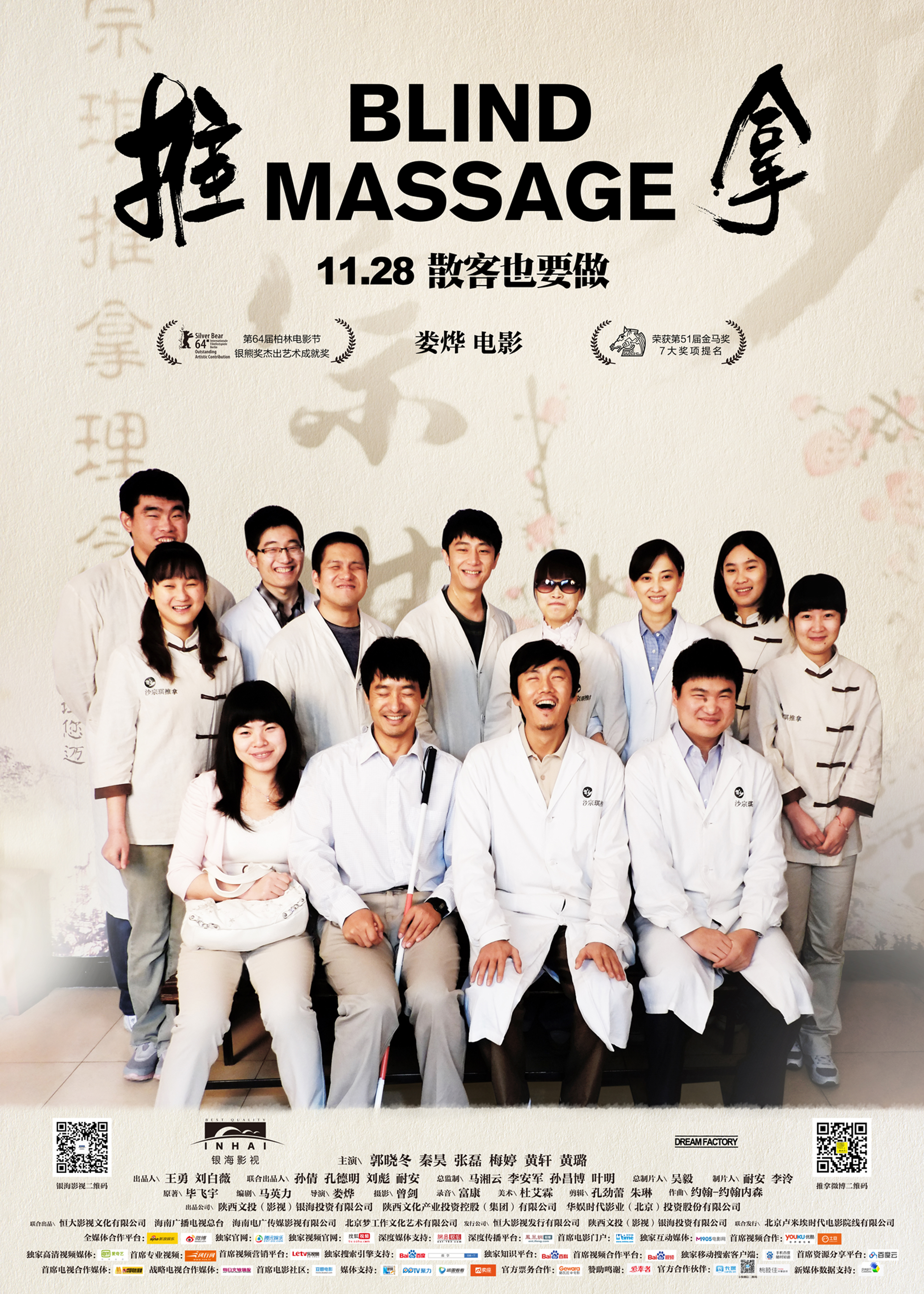
Blind Massage (推拿, Lou Ye, 2014)

Blind Massafe poster 1Lou Ye, defiantly controversial, has made those who cannot, for one reason or another, embrace their own desires the centre of his cinema. Seeking connection, his protagonists reel desperately from one traumatic event to the next but resist full commitment, no longer able to believe in the truth of their feelings in a society which has so often betrayed them. Blind Massage (推拿, T), a radical departure from the provocative politicisation that has hitherto marked his cinema, takes this one step further in setting itself inside what it sees as an entirely isolationist world – that of the blind who occupy a particular liminal space within modern Chinese society.

Lou begins with a voiceover and fractured vision of our most prominent protagonist, Xiao Ma (Huang Xuan), as he emerges from a childhood accident which killed his mother and cost him his sight. Though he is assured that his condition is only temporary and his eyes will eventually be healed, Xiao Ma later attempts suicide when he comes to understand that his doctors have been deceiving him and his sight will never return. Surviving, he learns to accept his blindness and attends a special school for those with disabilities where he learns to read braille and is trained as a masseuse – a traditional occupation for the blind in Chinese society. Once qualified he gets a job at the Sha Zongqi Massage Center which is staffed exclusively by those with visual impairments who live together on site and exist as a small and exclusive community.

The trouble begins when the two partners, Sha Fuming (Qin Hao) and Zhong Zongqi (Wang Zhihua), invite an old colleague, Dr. Wang (Guo Xiaodong), to join them. Wang brings with him his fiancée, Xiao Kong (Zhang Lei), with whom the young Xiao Ma eventually develops a fascination. Meanwhile, Fuming has also developed a fascination for another newcomer, Du Hong (Mei Ting), who, he has been told, is very “beautiful”. Du Hong, in turn, is attracted to the morose figure of Xiao Ma but perhaps understands that for one reason or another he is unable to “see” her (which might be one of the reasons she continues to pine for him).

As in his previous films, Lou centres himself in a question of haptic connection. The residents of the clinic feel themselves cut off from what they see as “mainstream society” which they believe belongs exclusively to the sighted. Mainstream society, unadaptable and perhaps unwelcoming, has seen fit to exile them to the extent that they are unable to survive outside of the specific career track it has laid down for them and without the support of their own community. Yet their occupation also depends on deep sensory perception on a level deemed inaccessible to the fully sighted and the ability to “see” the things which can’t be “seen”.

Fuming, outgoing and sociable, looks for outlets outside of his own community but is criticised by those within who worry that he is in someway attempting to deny his blindness by adhering to the conceptual world of the sighted which he is otherwise unable to comprehend on a sensory level. His “love” for Du Hong is rooted in ideas of “conventional” beauty which is, in fact, more an expression of his vanity as he longs to possess the “best” girl as Du Hong points out when she reminds him that he has no idea whether she is “beautiful” or not or even what visual “beauty” might be, and that in becoming obsessed with these incomprehensible ideas he has in fact missed all of the things which might be “beautiful” about her on another level than the visual.

Meanwhile, another resident at the clinic has become worried about Xiao Ma’s fixation on Kong and decided the best way to sort him out is to take him to a brothel (ironically, also a kind of “massage parlour”). Though originally reluctant Xiao Ma begins to develop a relationship with sex worker Mann (Huang Lu) which is forged through touch but occurs on a deeper level. A fight with one of Mann’s other clients has the ironic effect of restoring some of his vision, leaving him stumbling and confused but also excited and drunk on a kind of sensory euphoria as he tries to reconcile his differing kinds of perception to make his way home. Yet by this point in his life Xiao Ma’s entire identity and existence revolves around being a blind person – he cannot tell anyone at the clinic that his vision has begun to return for fear of losing his place in their community as well as his ability to support himself.

Eventually the community of the clinic becomes scattered as its residents begin to reassert themselves as individuals re-entering “mainstream society”. Casting visually impaired actors alongside familiar faces, Lou treats his subject with the utmost respect and demonstrates that many of the problems faced by those at the clinic are exactly the same as those faced by the protagonists of his previous films while also reflecting the various ways that society remains intolerant to those who have differing needs. Asking quite profound questions about the nature of “beauty” and “connection” when images have been absented from the frame Lou attempts to “visualise” what it might feel like to “see” without “seeing” in an exploration of defiant hidden realities which often go wilfully unseen in our own blinkered perceptions.


Original trailer (English subtitles)
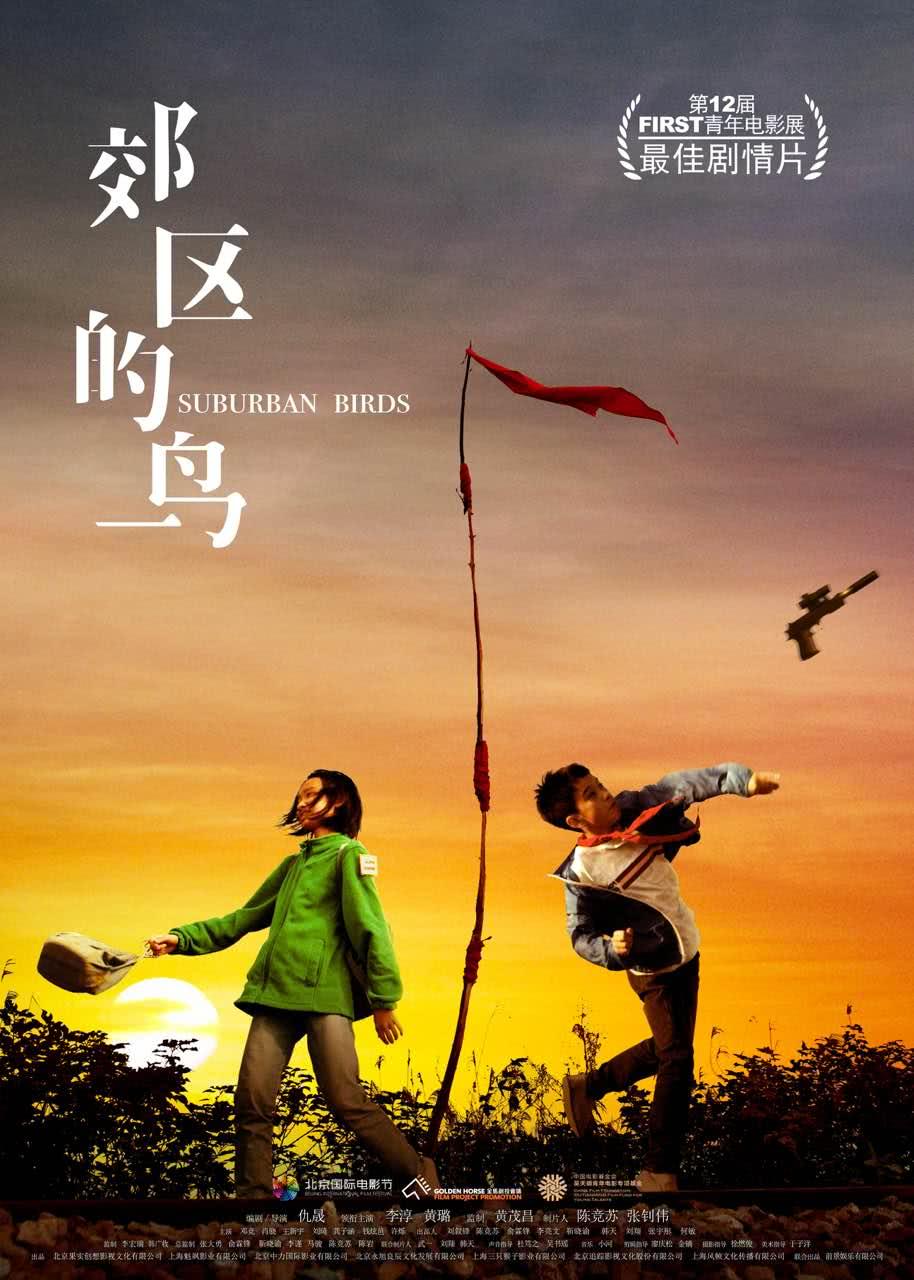
Suburban Birds (郊区的鸟, Qiu Sheng, 2018)

Suburban Birds poster 1Everything is collapsing in the strangely entropic world of Qiu Sheng’s Suburban Birds (郊区的鸟, Jiāo de Niǎo). Time and memory conspire to confuse and confound as man-made structures devour the natural pleasures of human existence, stepping in time with China’s rapid urban development in a hasty march towards a fractured future. Our hero dreams of finding rare avian life, but remains shackled to the earth as an agent of both destruction and creation – literally “engineering” the future while attempting to repair the mistakes of the past.

Xiahao (Mason Lee) is currently working for a government-backed team of surveyors trying to solve a massive subsidence problem which has rendered a brand new estate unfit for habitation. The subsidence problem, besides being dangerous and apparently unpredictable, is also expensive – the city is footing the bill for putting an entire neighbourhood up in a hotel while essential works on a new subway line needed to serve it are also on hold. The engineers are doing their best, but they seem ill equipped to investigate and feel both under resourced and under appreciated. The youngest member of the team, Ant (Deng Jing), is even thinking of quitting because he gets all the rubbish jobs and his girlfriend thinks there’s no future in his career seeing as there’s relatively little scope for advancement save becoming the “boss” which doesn’t actually pay very much. In between drinking, arguing, and investigating, Xiahao strikes up a relationship with one of the evictees – the pretty hairdresser “Swallow” (Huang Lu), to whom he eventually offers to show the elusive birds.

Meanwhile, a second tale takes over when Xiahao investigates an abandoned school and discovers a diary written by another Xiahao (Gong Zihan) which details the various adventures of a group of adolescent friends. Whether in reality or just in the older Xiahao’s imagination, the kids from the book echo people in his adult life from the members of his engineering team to the two female evictees he encounters at the hotel. The younger Xiahao could perhaps even be an echo of the older one’s real or imagined childhood – the aesthetics are distinctly ‘90s but the adventures are infinitely timeless. Little Xiahao and his friends communicate in person and go outside to play, fully existing in tune with their surroundings and as much part of the natural world as the “suburban birds” looking for a perch in a land under permanent construction.

Yet modern China somehow works its way into their idyllic world. The kids play in the ruins of broken broken buildings, are literally injured by the ruptured landscape, and finally begin to disappear one by one. Eventually the streams cross – the young Xiahao and the other boys come across the older Xiahao and his team dreaming away under greying skies while their optical level looks silently on at nothing. The kids stick a piece of chewing gum on the lens – an act which is both intensely irritating for the slumbering adults and a literal proof of their material existence within the same plane if not definitively the same time.

Xiahao’s dreams, as he recounts them to his bored coworkers, revolve around a terrible gushing of water as a powerful drill inexplicably turns to liquid. The loudmouth party man tagging along to chivvy the crew towards a completion of the paperwork even in the absence of a safe and workable solution, has an appropriately bawdy theory but the dream itself is later echoed by the boys who find themselves charged with carrying a large butt of water through their school until its weight gets the better of them. Xiahao is convinced that leakage lies at the heart of the subsidence problem, that shoddy workmanship and bad weather have conspired to ruin the ambitions of human engineering. Public safety is not such a concern as faith in local government. Not only has an all encompassing hunger for progress robbed the land of its beauty but has begun to erode itself from the underneath leaving only a perilous fall to the chasms below.

Xiahao dreams of a more innocent time. His ringtone alarm features bird song which is either so real you can’t tell the difference, or the ironically named Swallow has never actually heard it before outside of the movies. He wants to find the elusive “suburban birds” but turns to the internet to do so, eventually wading back into into a dream in which children play freely among the greenery while singing semi-ominous communist songs about how the future belongs to the young. A riddle besets them all – what is both long and short, fast and slow, and whole yet may be divided into many parts? The answer seems to be time, or perhaps memory, hinting at the way past haunts the future as a squatting tenant of the present which can neither speak nor stay silent. Forgetting, like the water pouring in through the inexpertly poured concrete of a half constructed subway tunnel, erodes the foundations of conscious thought. You can’t build a future on emptiness, and if there’s nowhere for the birds to sit what sort of future is it anyway?


Screened at the 2018 BFI London Film Festival.

Original trailer (English subtitles)

Interview with director Qiu Sheng from Locarno