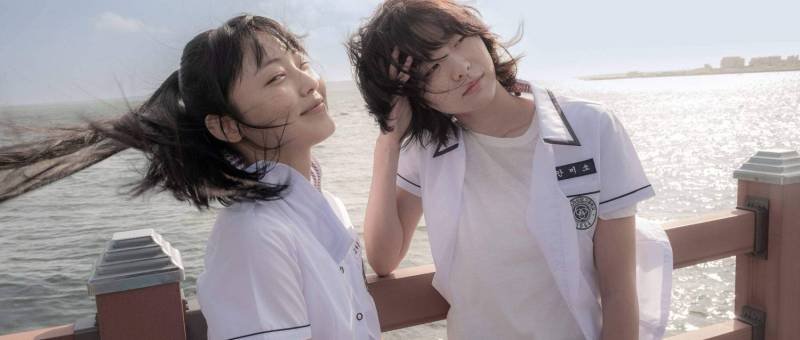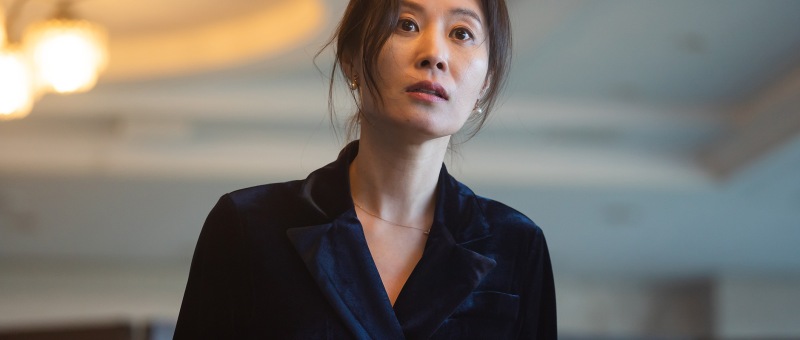
Hi-Five (하이파이브, Kang Hyoung-chul, 2025)

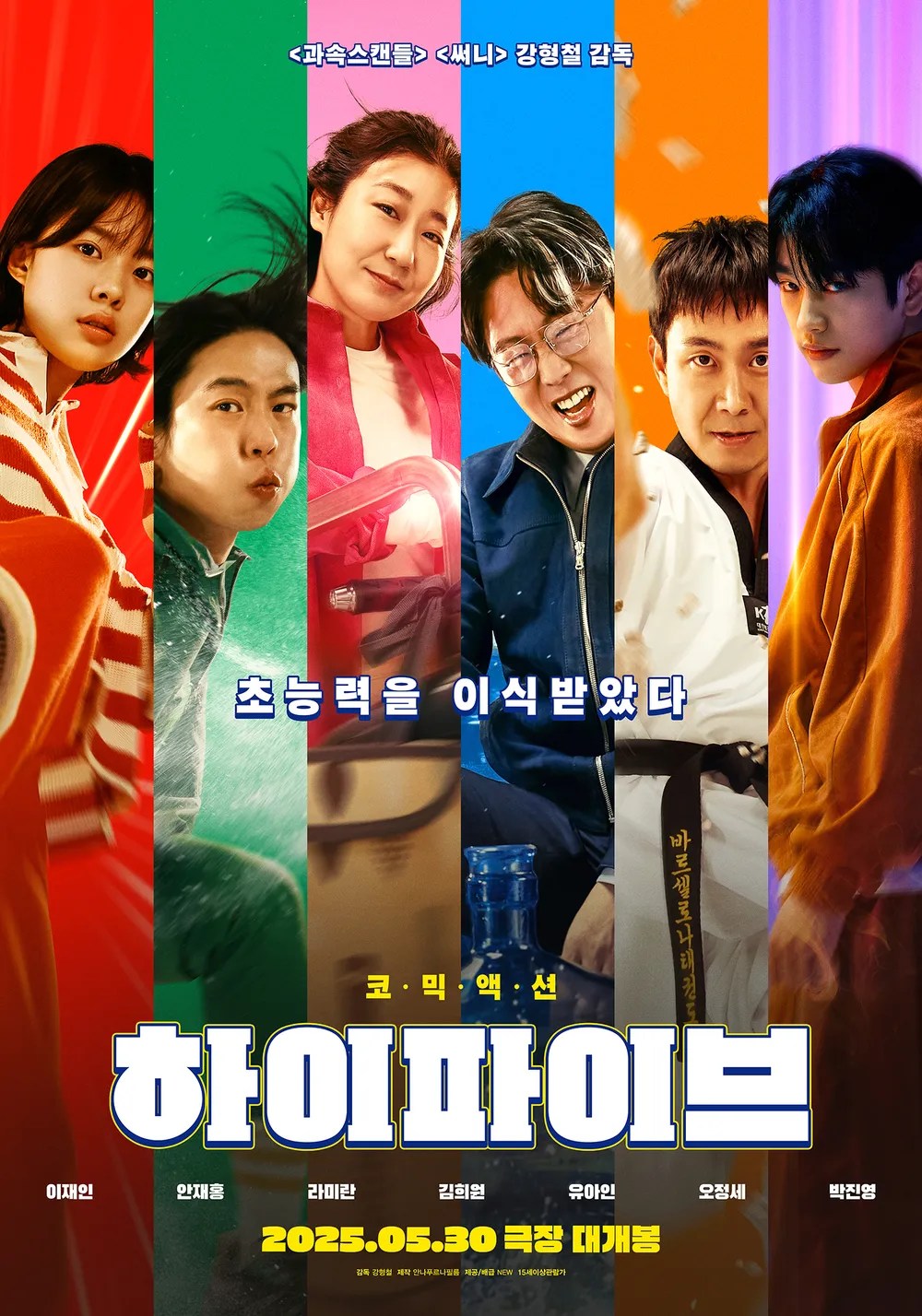
If you suddenly developed super powers, what would you do with them? Would you start using them for good to save the people around you, or would you become obsessed with the power itself and try to amass more of it while your using abilities only for your own ends? Those at the centre of Kang Hyoung-chul’s superhero comedy Hi-Five (하이파이브) are firmly in the helping others camp, but they’ve seen enough movies to know that every hero needs a villain and there’s someone else out there who wants their power for themselves.

That would be ageing cult leader Eternal Young-chun (Shin Goo), New God Resurrected. Young-chun is just ripping his followers off and doesn’t believe in anything he preaches but has, on the other hand, started to believe in his own divinity. He’s been keeping himself in good health through frequent organ donations from less fortunate people to the extent that his body’s a kind of Ship of Theseus. His daughter’s fed up with his longevity and hoping he’ll finally snuff it so she can take over, which is why she’s after the five in the hope of taking them out before Young-chun can steal all of their transplanted organs too. It turns out that the pancreas he was given was taken from a superhero who took his own life and has not only rejuvenated his body but given him the ability to suck the life force out of other people to empower himself in a more literal way than he’s already feeding off his followers by exploiting their devotion to convince them to give up all their money and assets or else work themselves to death for free.

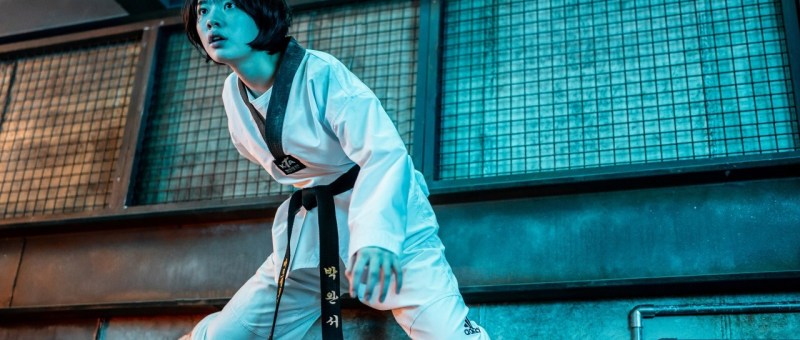
The other five commonly transplanted organs were given other people who are all marked with a tattoo and have been given powers of their own, though one of them hasn’t figured out what hers is yet. In contrast to Young-chun’s soullessness, each of the five seems to have had their own problems that are only impacted by their transplants rather than directly caused by them. Teenager Wan-seo (Lee Jae-in) received the heart and is frustrated by her overprotective father who constantly asks about her friends though she keeps saying she doesn’t have any because she was ill for so long and had to skip school for treatment which is why struggling to make any new ones. He won’t let her do taekwondo either, though that’s what she most wants to do and possibly why she ended up with the all powerful, super speedy fighter skills. Ji-sung (Ahn Jae-hong), meanwhile, is a struggling screenwriter with an interest in the superhero genre. He doesn’t have any friends either, which may be to do with a poor career decision that alienated him from his community. Though he’s the first one to want to get the group together, he’s soon consumed by cynicism. Ji-sung got the lungs and can blow things away, but struggles to convey his emotions with words and gets into an alpha male hissy fit with Ki-dong (Yoo Ah-in), a super-sharp guy who got the corneas and can manipulate electricity but is actually a bit of a loser with gambling issues and similar interpersonal issues to Ji-sung.

Middle-aged yogurt lady Seon-nyeo (Ra Mi-ran) got the kidneys and can’t figure out what her superpower is but becomes the force who holds the group together. Even so, she’s battling mental health issues and some guilt about something that happened in her past and caused unintended harm to another person. Factory foreman Heel-han (Kim Hee-won) is a devotee of the cult, but frustrated and conflicted by the obvious disregard for workers’ safety and wellbeing. He got the liver, and can heal minor wounds caused by recent accidents. The reason he has no friends is that he cut off all of his relationships when he joined the cult, which is one other reason he doesn’t want to make a fuss about the abuse of workers and is originally flattered by Young-chun’s attention.

Nevertheless, it’s becoming part of the group that allows them to save each other and themselves figuratively and literally in combining their strengths to battle Young-chun, who is after all also sort of a part of them and a member of their family as another recipient of organs from the same person. Kang imbues their somewhat clumsy heroism with a quirky humour, even giving the occasional use of CGI a comedic, comic book aesthetic to lean into what might otherwise be a minor liability though production design and values are top-notch. It’s a shame the film was held up for four years by Yoo Ah-in’s drug arrest which has severely hampered his career and led to most of his unreleased work being shelved at the time, otherwise this might have gone on to become a fun movie franchise with deepening lore led by a likeable cast of everypeople using their powers for good in small but important ways. Still, just this episode alone is plenty of warmhearted fun as the gang come together to expose Young-chun’s vain and selfish cult leader for the conman he is, saving themselves and freeing those like them who fell victim to his lies.


Hi-Five screened as part of this year’s London Korean Film Festival.

International trailer (English subtitles)
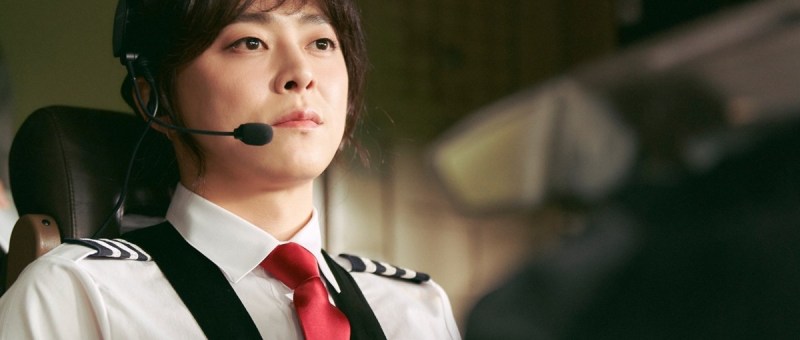
Pilot (파일럿, Kim Han-gyul, 2024)

“You can’t say things like that anymore,” the men of Pilot (파일럿) are fond of chuckling but still they think them and on a baseline level are unable to understand what’s wrong with what they see as merely offering a compliment. Adapted from the 2012 Swedish film Cockpit, Kim Han-gyul’s non-romcom takes its cues from films like Tootsie and Mrs Doubtfire to explore the inherent sexism and misogyny at the heart of contemporary Korean society if perhaps problematically doing so through the means of a male redemption story.

In any case, Han Jung-woo (Jo Jung-suk) is mindless more than anything else later claiming that sometimes it’s better “to say yes and go with the flow” than risk creating unpleasantness. Seemingly excelling at everything, he graduated top his class at the Korean Air Force Academy and was fought over by several large airlines becoming a minor celebrity and apparent pilot influencer. But behind the scenes, he’s somewhat false and self-involved as evidenced by his attempt to show off a video of himself tearfully paying tribute to his mother for raising him and his sister alone but refusing to answer a telephone call from her at the same time. His celebrity fame comes back to bite him when a video of team dinner in which he rejected his boss’ comment about the new intake of stewardesses not being pretty enough by referring to them as a beautiful bouquet is leaked online. The clip goes viral with his boss getting the brunt of the abuse and while he is not visible many are able to identify him by his voice. The airline soon goes bust and unsurprisingly no one else is willing to hire him. 

The issue is that neither his boss nor Jung-woo understand what was wrong with what they said. They just parrot back that what they said was nice so they can’t see the problem with it but fail to understand that their comments are demeaning because they belittle women’s talents and reduce them to objects for male appreciation. Hyun-seok (Shin Seung-ho), who attended the Air Force Academy with Jung-woo, gets him an interview at his airline but it’s run by a female CEO (Seo Jae-hee) who happens to be the sister of his old boss and is apparently on a mission to make her company more egalitarian by having at least 50% female pilots so she’s only hiring women. Nevertheless, she also asks sexist questions at the interview looking closely at a female candidate’s age and asking her if she is married or in a relationship, whether she intends to have children and when. The female candidate fires back a pre-prepared speech that she’s uninterested in marriage and is not planning to have her eggs frozen or anything like that so she can devote herself fully to the job. 

Hyun-seok expresses sympathy, echoing Jung-woo’s earlier comment that all that matters in flying is skill and people should be hired for their merits not their gender. But it’s impossible not to read into his words that he thinks women are inherently not as capable as men and wouldn’t be getting the job at all if it weren’t for this affirmative action, which is to say it’s all about gender after all and only men are suited to the job. He says as much later on when the plane he’s piloting runs into trouble while he’s unwittingly co-piloted by Jung-woo in his female persona Jung-mi, having posed as a woman in order to pass the interview. “Men should step up during times of emergency, not women,” he screams while losing the plot as the plane plunges and refusing to hand over the controls to his female co-pilot until Jung-woo takes them by force. 

Despite being slightly younger and believing himself to be a modern man, Hyun-seok is still incredibly sexist and openly flirts with Jung-mi to the point of sexual harassment even while she bluntly tells him that she isn’t interested. Jung-woo had been flattered and overjoyed the first time someone called him “miss” on the street and alluded to his unconventional, broad-shouldered beauty but quickly discovers that that gets old and becomes aware of how “annoying” or even scary some men can be in their entitled treatment of women, and by extension the various ways in which his own treatment of women may not have been appropriate. Becoming Jung-mi allows him to become himself, rediscovering his love of flying no longer so hung up on the external validation of internet fame and more interested in and considerate of those around him in the absence of the kind of toxic masculinity that infects men like Hyun-seok.

Though his wife divorces him when he loses his job if more because of his persistent emotional neglect than disappointment or financial worry, he becomes more aware of and sympathetic towards his son who, just as he had says yes and goes with the flow by saying a toy aeroplane was fine despite having been engrossed in the Barbie aisle seconds before but presumably afraid of disappointing his father if he told him he’d rather have a doll instead. Nevertheless, the film strangely refuses to engage with ideas of gender and sexuality and becoming Jung-mi does not really unlock Jung-woo’s femininity even if it evidently makes him a better and more considerate person, while his sometime love interest Seul-gi (Lee Ju-myoung) is more or less queer coded and her attempts to stand up for herself as a woman and an equal are not always well respected by the film. Even so the betrayal of CEO Noh who is revealed to be a ruthless businesswomen perfectly willing to exploit other women and throw them under the bus if necessary highlights the ways in which entrenched patriarchy pits women against each other. 

Thus the underlying misogyny of the present society is fully exposed, if ironically by a man experiencing what it is really like to live as a woman which is to be ignored and disrespected, judged by appealingness to men and obedient temperament while skills go undervalued or worse are viewed as a threat to often fragile masculinity. Though the film largely avoids making Jung-woo’s cross-dressing a joke in itself, it does find humour in the absurdity of the demands of performative femininity in a rigid and conformist society in which a woman is rarely permitted to sit in the cockpit of her own life.


International trailer (Simplified Chinese & English subtitles)

The Roundup: Punishment (범죄도시 4, Heo Myeong-haeng, 2024)

There’s a moment in the fourth instalment of the Roundup series when monster cop Seok-do’s boss asks him what good his fists are in the age of cyber crime. More so than in previous episodes, Punishment (범죄도시 4, Beomjoedosi 4) seems to lean hard into the idea that Seok-do iMa Dong-seok) is a dinosaur stuck in the 1970s and unable to understand the modern world. He’s a bruiser cop in an era of supposedly compassionate policing, a thug sent to catch a thug. Yet he’s also presented, as is actually said by his superior officer, as everything a good cop should be in his determination to nail the bad guys to keep a promise to a murder victim’s devastated mother.

But as in the previous films, the victim largely gets forgotten until the very end when Seok-do and his colleagues pay a visit to his grave. Set in 2018, the film is apparently inspired by a real life case and in an echo of the kinds of explanatory title cards seen at the end of Chinese films, ends with a reminder that the government began cracking down on cybercrime in that year. Reminiscent of anti-gambling drama No More Bets, the victim here is also a computer programmer effectively enslaved after being lured to the Philippines on a promising job offer only to be forced to work on casino websites by organised crime. Seok-do is mostly concerned with catching the bad guys rather than exposing this nefarious practice or its effects on those who fall victim to its addictive gambling scam. 

In any case, a running joke sees Seok-do once again cast as a dinosaur apparently unable to grasp simple concepts of modern technology. “Right, we’ll go get it before it closes, then,” he replies when informed the villains used “open source software”. He thinks syncing to the cloud means a crowd of people will come help you set up your phone and he never replaces his because it’s a bother to put in all those numbers into your contacts again. The team end up having to recruit a new team member from cybercrime, the only woman in the room which comes in handy when they need her to pose as the girlfriend of familiar comic foil Jang Yi-soo (Park Ji-hwan) who is tricked into thinking he’s been deputised with a shiny badge that looks like it fell out of a serial packet and has the telltale letters FDA at the top which Seok-do convinces him stands for Police Dark Army.

Despite all the thuggery, there’s something essentially childlike about Seok-do’s roguishness that sees him delight in playing a trick on Jang Yi-soo. After wrecking the first class cabin of a soon to depart plane, he walks off sheepishly like naughty little boy ignoring his boss’ frantic calls to come back and explain himself. In this instalment, we get less of the overt references to police brutality with one brief scene of Seok-do putting a motorbike helmet on a suspect and beating him over the head while his colleague keeps watch outside as we peek in through the widow. To remind us he’s still the good neighbourhood cop, we see several scenes of him visiting a restaurant run by the widow of a colleague killed in the line of duty and secretly slip his teenage daughter wads of cash to buy something nice for herself. 

What it all amounts to is a slightly awkward advocation for the police who are directly stated to be always there to protect the citizens and catch criminals who harm them even if they do It abroad. To this extent, Seok-do is a good cop literally smacking some sense into bad guys because it turns out his giant fists can fight “digital” crime after all and there’s no denying that it does feel good to see Ma Dong-seok smack bad guys. The action scenes this time around are visceral and surprisingly bloody not to mention loud with the sound of Ma’s thunderous fists flailing around. The film’s distinctly retro sensibility is echoed in the ‘70s score which seems to hark back to an era of maverick cop movies about men like Seok-do who keep order on the streets while Seok-do himself seems increasingly like a man out of time, a throwback to a bygone era perhaps uncomfortably romanticised in the quasi-authoritarian sensibility which seems to underpin it.


Festival trailer (English subtitles)

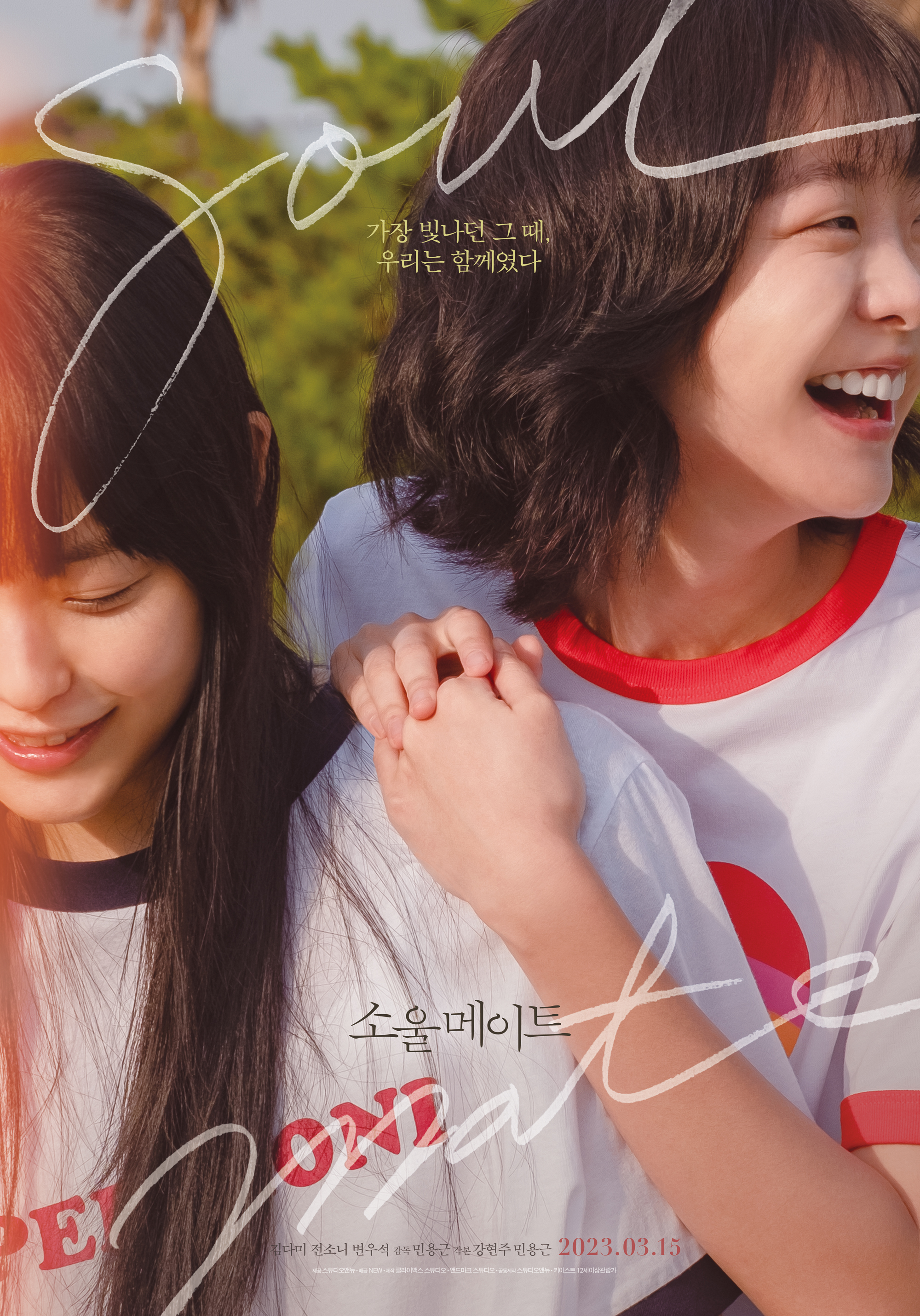
Soulmate (소울메이트, Min Yong-keun, 2023)

“Why should you step out for him?” one friend asks another, seemingly cutting to the quick of the fracture point in their relationship though ultimately unwilling to carry the conversation to its natural conclusion. A remake of Derek Tsang’s Soul Mate, Min Yong-keun’s frustrated love story is warmer and shorn of the icy angst which defined the original if also less certain in its implications and in the end profoundly melancholy in the missed opportunities and awkwardness of an unspoken affection. 

In the present day, a near 40-year-old Mi-so (Kim Da-mi) is called to a gallery to witness a giant and intricately drawn photorealistic portrait of herself attributed only to “Ha-eun.” The gallery owner has reason to believe the two women are friends and asks Mi-so to help her contact the reclusive artist, though she says that she knew only briefly in childhood and hasn’t been in contact with her for many years. This surprises the gallery owner as she’s uncovered a lengthy blog that outlines the entirety of their friendship in sometimes painful detail. 

The portrait staring back at her with her own gaze which is also the gaze of Ha-eun (Jeon So-nee) the artist confronts her with the painful realities of her past and the continuing absence of Ha-eun from her life. All we can know for the moment is that at some point they were separated and that Ha-eun has seemingly disappeared, though the Mi-so we see now seems so different from the one we encounter in childhood who is as Ha-eun describes her “free and also very delicate”. 

Inseparable for much of their youth, the relationship between the two women begins to fracture in adolescence as their paths begin to diverge. Ha-eun meets a boy, Jin-woo (Byeon Woo-seok), which necessarily disturbs their friendship by disrupting its dynamic. Unlike Tsang’s original in which it becomes clear that perhaps neither woman was in the end very interested in the boy who was himself a kind of proxy for the mutual attraction they could not articulate, Min presents him as a more conventional romantic rival albeit one who represents the sense of conventionality that the more conservative Ha-eun continues to cling to in contrast to the free spiritedness represented by Mi-so and her love of Janis Joplin. 

Ha-eun is confronted by the darker sides of Mi-so’s unconventionality during a trip in which she witnesses Mi-so get a bottle of wine out of a collection of drunk businessmen by offering to mix them drinks. An argument about money and power dynamics soon returns them to the fault line in their relationship, Jin-woo and their complex feelings for each other. Wilful misunderstandings lead to irresolvable resentments, each believing they are somehow in the way while equally hurt by the dissolution of their friendship and too proud to say so.

Min’s drama decreases the homoerotic undertones of Tsang’s original and opts instead for the defence of a deeply felt platonic friendship that may have developed into an unconventional family unit if given the opportunity. An exchange of earrings on two separate occasions seems much more convincing as an act of marriage than the more literal union between Ha-eun and Jin-woo. Yet maybe that’s the message the portrait was trying to deliver, a sign of an unspoken love that reunites Mi-so with the childhood self who knew it was possible to draw one’s feelings while seeing herself as Ha-eun saw her, Ha-eun’s own eyes reflected back at her. The two women in a sense switch places, becoming one while split in two and eternally connected if physically separated. 

The irony is that it’s the fear of losing it that erodes their relationship, and pride more than shame that divides them even if it’s ultimately the unwillingness to confront their feelings and the inability to articulate them that keeps them apart. Nevertheless, they eventually come to an acceptance of themselves as sun and moon, two halves one whole continually incomplete happiest only in each other’s company. Then again, there are some very unreliable narrators in play and perhaps we can’t be sure that everything we’ve been told is true yet even if not literally so still speaks of a deeper emotional truth and the deepening wound of lost love comforted only by memory and the act of recapturing it. 


Soulmate screened as part of this year’s London Korean Film Festival.

Trailer (English & Korean subtitles)

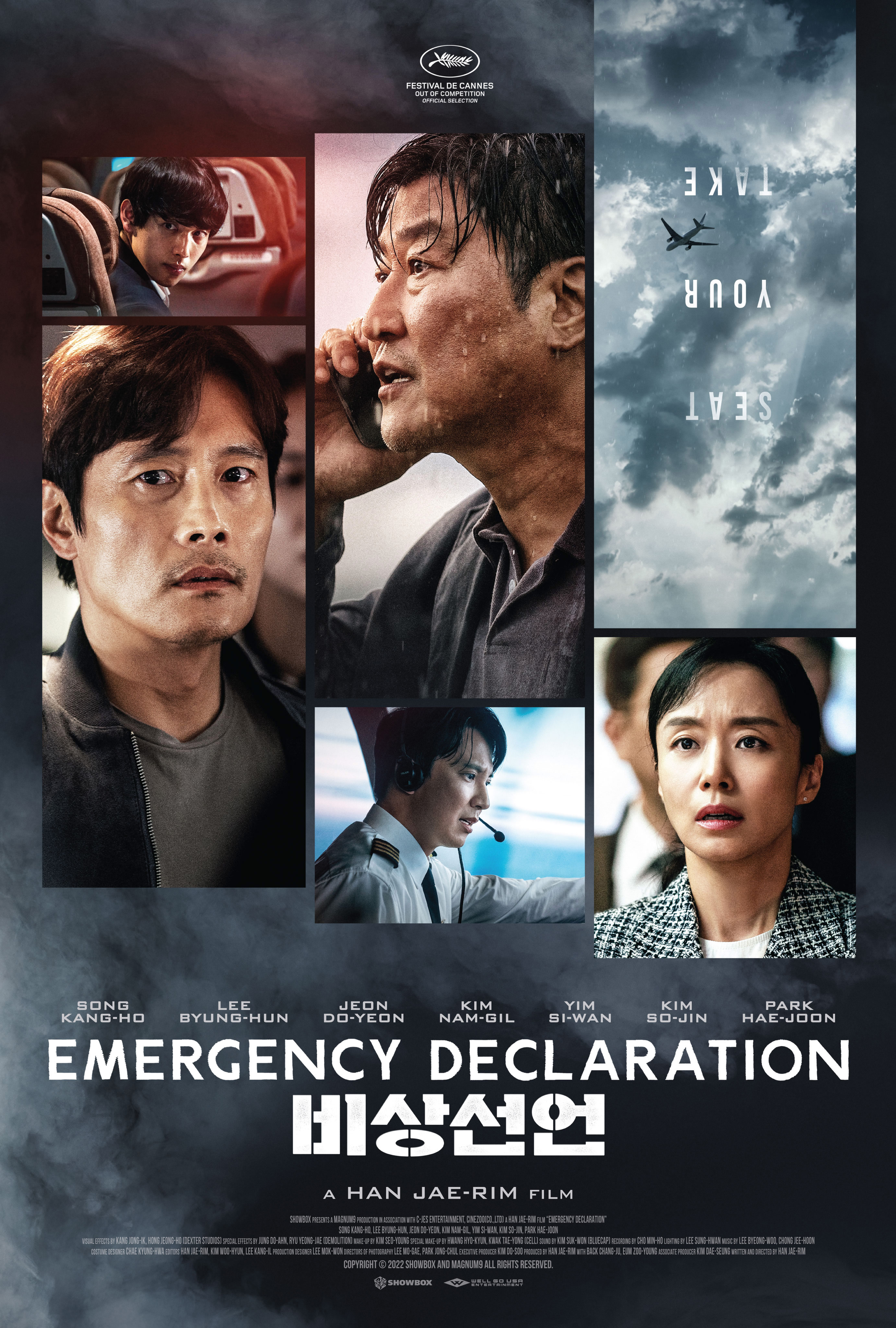
Emergency Declaration (비상선언, Han Jae-rim, 2021)

“Disasters are arbitrary” admits a pundit commenting on a potential air disaster, “people became victims for being in a certain place at a certain time”. “We were caught in a disaster that none of us wanted” the pilot later echoes while explaining that they have chosen to exercise what little control is left to them in making their own decision as to how they intend to deal with the hand that fate has dealt them. Han Jae-rim’s Emergency Declaration (비상선언, Bisang Seoneon) harks back to classic disaster pictures of the 1970s such as genre archetype Airport but also meditates on Korea’s place in the contemporary global order along with the rights and wrongs of exercising one’s own judgement when it goes against all practical advice. 

The disaster in this case begins with a mad scientist, Ryu (Im Si-wan), who decides to kill as many people as possible along with himself by releasing a deadly virus he tweaked to make even more lethal aboard a commercial airliner. Later it’s suggested that Ryu had some kind of breakdown after the death of his mother, also a microbiologist, who had a domineering influence on his life which does seem to play into an uncomfortable trope of blaming the mother for everything that goes wrong with a child though Ryu’s resentment is in part towards the pharmaceuticals company he claims fired him unfairly. As in many recent Korean films, a strong undercurrent of anti-Americanism runs throughout, the international pharmaceuticals company with an American CEO refusing to assist the Korean police’s inquires not wishing to admit that they illegally procured a deadly virus from the Middle East and then allowed Ryu to get hold of it illicitly. This also of course means that they are slow to grant access to a potential antidote/vaccine despite carrying both. Meanwhile, the plane is later turned back from Honolulu and prohibited from landing anywhere on US territory because of the uncertainty surrounding the infected on board. 

The plane in effect becomes a kind of plague ship that takes on additional significance during an era of pandemic. Having been rejected by the US, the plane tries to land in Japan but is also refused permission and later threatened by the Japanese Self Defence Forces who even open fire on it and threaten to shoot the plane down if it does not leave Japanese airspace. The official response is more nuanced than it had been with the Americans, a politician expressing his regret and sympathy with the people of Korea but also emphasising that their responsibility is towards the people of Japan and that as they cannot be sure the treatment will work on Ryu’s mutated variant, they cannot allow the plane to land. As the opening titles explain, an Emergency Declaration is a sacred aviation rule that means no one should be refusing them help, yet they do begging the question of what it really means if in the end the authorities can just choose to ignore it. 

But then again, it seems that not even Korea is fully onboard with accepting the plane back onto Korean soil. With news quickly spreading via social media, mass protests erupt from those who brand it a “biochemical missile” and would rather it be shot down than risk contaminating the wider population while counterprotests insist that there are many Korean people onboard and it’s only right that they be allowed to return home and be cared for by the authorities. The authorities are however torn, unwilling to admit they’re considering simply allowing 150 people to die for the greater good leaving only the Transport Minister (Jeon Do-yeon) to exercise her own judgement in arguing for the plane landing with quarantine procedures in place. 

Former pilot Jae-hyuk (Lee Byung-hun), a passenger on the flight with his little girl who suffers from eczema, is later tasked with exercising his own judgement in deciding whether to land the plane at a closer airport he feels is safer or try to hold out until the destination recommended by the authorities despite dwindling fuel supplies. The plane disaster is Jae-hyuk’s redemption arc allowing him to overcome past trauma in having made a similar decision before which led to the deaths of two cabin crew thanks to the selfishness of passengers who blocked exits trying to retrieve their luggage before escaping. One thing that wasn’t so much of an issue in the ’70s is that passengers are now able to receive information in real time via their phones thanks to onboard wireless, meaning that they learn all about the virus, the cure, and that the cure might not work independently giving rise to even more chaos and confusion and presenting a serious threat to traditional disaster management techniques. Nevertheless, they too eventually exercise their own judgement in coming to the conclusion that perhaps it is better if they choose not to land rather than risk infecting their friends and family.

The passengers on the plane do not blame those on the ground accepting that they are simply afraid. “You can’t just save yourselves” a particularly paranoid passenger is fond of saying completely oblivious to the fact that’s what he’s been trying to do with a pointless insistence in segregating the infected aboard a plane that exclusively uses recycled air only to completely reverse his thinking on hearing the plane may make an emergency landing in which case the rear of the plane, where the infected are, is safer. It is in the end a radical act of self-sacrifice by a policeman on the ground (Song Kang-ho) that paves the way to a happier solution for all but could just as easily have turned out differently. Disasters are arbitrary after all, at least as long as you aren’t the one causing them. Counterintuitively, the message may be that your government might not help you and others certainly won’t, but if you’re making your own emergency declaration you have the right to exercise your own judgement in the knowledge that either way you’ll have to answer for your decision.  


Emergency Declaration is released in the US on Digital, Blu-ray, and DVD on Nov. 29 courtesy of Well Go USA.

Clip (English subtitles)

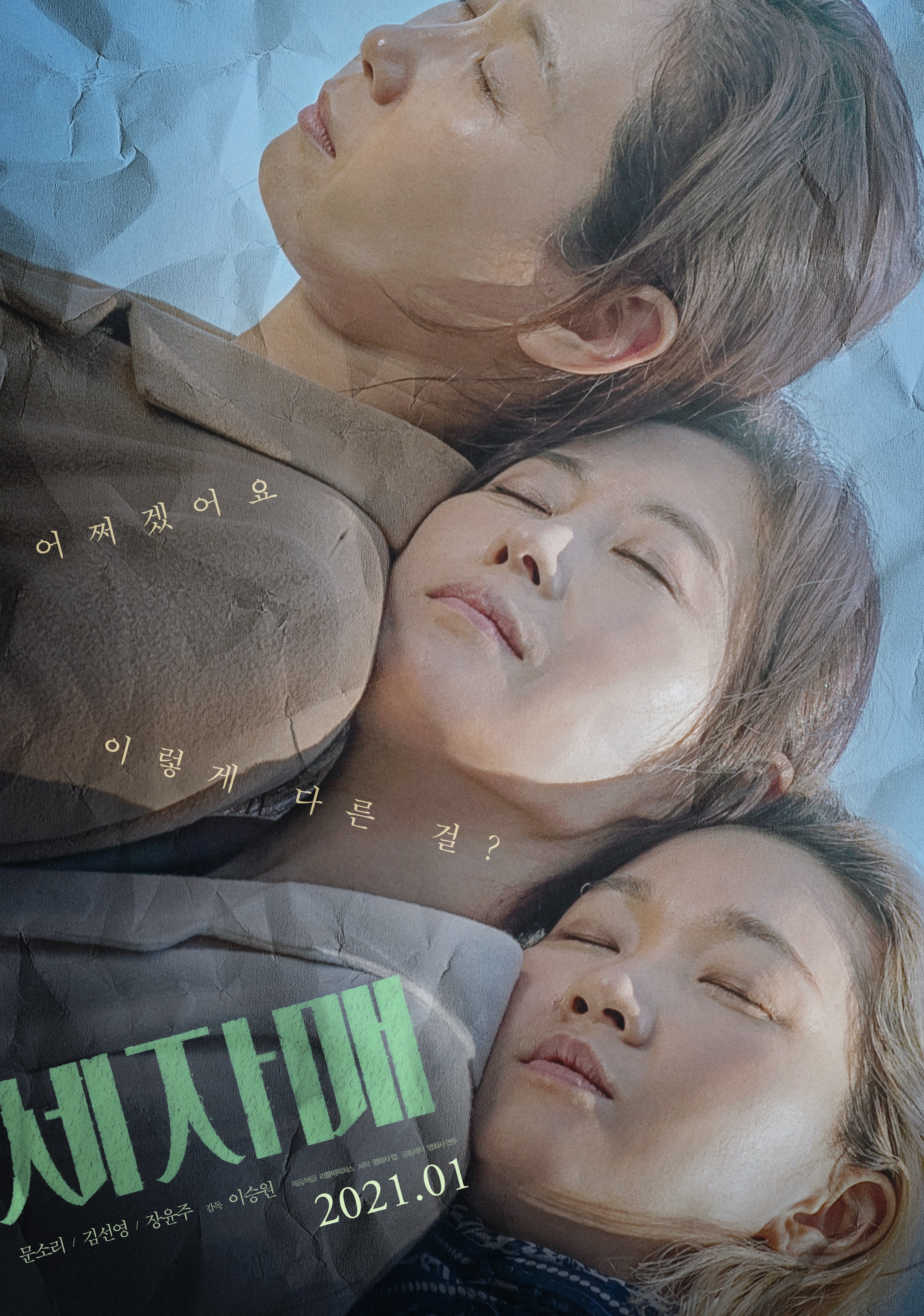
Three Sisters (세자매, Lee Seung-won, 2020)

Lee Seung-won’s lightly humorous family drama is not an adaptation of the Chekhov play, but like its namesake does find Three Sisters (세자매, Se Jamae) trapped in the past, their lives “messed up” by the demands of living in a patriarchal society. A showcase for the three actresses at its centre, Lee’s drama works towards a gradual sisterly solidarity brokered by an awkward confrontation with the source of all their trauma but also lays bare the radiating consequences of unchecked male failure as the three women struggle to lead successful adult lives in the shadow of their childhood suffering. 

Opening with a black and white sequence in which two young girls run hand in hand quite clearly away from something bad rather than just for the joy of it, Lee switches to the present day in which oldest sister Hee-sook (Kim Sun-young) is an anxious middle-aged woman perpetually making apology for her existence, while middle sister Mi-yeon (Moon So-ri) is a cooly controlled deaconess and mother of two, and little sister Mi-ok (Jang Yoon-ju) is an unstable drunk and struggling playwright married to a moderately wealthy greengrocer with a teenage son from a previous marriage. 

They have all quite obviously chosen different methods in effort to suppress the effects of their childhood trauma, raised as we later realise in a violent home abused by their drunken father but apparently expected to put up with it out of filial piety. A half-sister Hee-sook finds herself apologising for anything and everything, filled with intense shame for her very existence. Mi-yeon by contrast has chosen order, devoutly religious she maintains high standards for her family but is filled with barely repressed rage unable it seems to express any other emotion. On realising that her professor husband (Jo Han-chul) is having a highly inappropriate affair with a much younger student she reacts with both violence and cunning, unilaterally putting a stop to his philandering while subtly letting him know that she knows and has dealt with it. Further emasculated, he tries to get some kind of normal reaction from her, hoping she will shout or hit him but she continues in the same calm and controlled fashion as if nothing had happened. Meanwhile, in another echo of her father’s violence she finds herself taking out her frustrations on her young daughter, Ha-eun (Kyung Daeun), who rebels against her need for order by refusing to say grace. 

Mi-ok by contrast has in a sense chosen chaos, drinking herself into oblivion while often ringing Mi-yeon in intense confusion unable to recall a seemingly unimportant detail from their mutual past. Taking on the big sister role, Mi-yeon finds herself in a similar position with Hee-sook who apparently doesn’t remember an event that was important to her of their dining together in the same cafe they are currently visiting back when she first came to the city and Hee-sook worked in a nearby office. Later the three sisters will attempt to visit another cafe that Mi-ok had struggled to remember but will find it closed, their past perhaps locked to them but in a sense also pushing them towards a happier future as they reaffirm their sisterly bonds after living lives of highly individualised suffering. 

Failed by a feckless father, the three women find themselves at the mercy of problematic men Hee-sook apparently re-victimised as the wife of an abusive partner who returns periodically to extort money and undermine her self-esteem, while Mi-yeon attempts to evade subjugation by dominating her husband only to find him rebelling against her through an extra-marital affair. Only Mi-ok seems to have made a better marriage to a mild-mannered, patient and caring husband but is also accused of marrying him for his money while taken to task by others for her “failure” to play the part of the conventional wife and mother, her ability to do so perhaps corrupted by her traumatic childhood. “Just treat them with love” Mi-yeon ironically advises seconds after unfairly scolding her own daughter, simultaneously explaining that no one learns to be a mother, though of course in some senses they do, and that anyone can be one as long as they work at it. Nevertheless, after confronting the source of all their pain and suffering the three women manage to rediscover a sense of solidarity that perhaps allows them to reclaim their agency and live better, more fulfilling lives free of the shadow of the past. 


Three Sisters screened as part of the 2021 Osaka Asian Film Festival

Original trailer (English subtitles)

Idol (우상, Lee Su-jin, 2019) [Fantasia 2019]

Idol poster 1“Getting others to trust something is more important, not what they choose to believe” advises a cynical politician a little way into Lee Su-jin’s Idol (우상, Woosang). Image is indeed everything. Who are you more likely to believe – the slick, seemingly upstanding politician who’s done everything “right”, or an ageing, inarticulate aircon repairman with bleach blond hair? Two fathers go to bat for their sons, if in very different ways, but only one can emerge “victorious” in their strangely symmetrical endeavours.

Lee opens with a voice-over taken from a speech later in the film belonging to bereaved father Yoo (Sol Kyung-gu) in which he confesses that as his son Bu-nam (Lee Woo-hyun), who had severe learning difficulties, grew older, he found himself having to masturbate him to prevent him harming himself trying to calm his sexual urges. Yoo’s words play over his opposite number’s return home from a research trip to Japan. Koo (Han Suk-kyu) is a politician and former herbalist with a special interest in nuclear power. Ambitious, he spends much of his time travelling for business while his wife (Kang Mal-geum) cares for their wayward adolescent son, Johan (Jo Byung-gyu). A panicked text message warning that Johan has got himself into trouble again gets ignored, but when he arrives home Koo knows he has to act. Johan has knocked someone over and rather than take them to hospital, he’s brought the body back home.

A series of quick calculations tells him that the “best” option is for Johan to turn himself in, despite his wife’s insistence that they simply get rid of the body. He drives the corpse back to the scene and dumps it, gets rid of the original car, and then drives his son to the police station before expressing contrition in front of the cameras. That would have been that if it weren’t for Yoo’s dogged determination to find out what happened to his boy, and the fact that Bu-nam’s “wife” Ryeon-hwa (Chun Woo-hee), an undocumented former sex worker from China, managed to escape meaning there are loose ends Koo knows he needs to tie up.

“This rotting smell” Ryeon-hwa exclaims on putting a number of things together. There is something undoubtedly corrupt in Koo’s superficially smooth world of neatly pressed suits and sharp haircuts. Stagnant water swells around him, along with a murky swirl of blood, as he contemplates the best way out of his present predicament. Everything here is stained, marked, or scarred as if hinting at the darkness beneath gradually seeping through.

Yoo, meanwhile, perhaps knows he lives in a “dirty” world and though he never claims to be completely clean himself, is fully aware of the implications of his actions. A widowed father, he tried to do the best for his disabled son. He offered him relief in ways others would find perverse in a strange gesture of fatherly love, finally deciding to get him a wife in the hope of putting an end to such degradation for them both only to regret his decision when he realises Bu-nam may not have died if he’d just stayed home. Koo, meanwhile, tries less to protect his son than himself, weighing up that the boy will most likely get a slap on the wrist and he’ll come out of it looking better because he behaved “honestly” and in line with the law. To get elected he will stop at nothing to preserve the image of properness, even if it means he must get his hands “dirty”.

In that essential ruthlessness, he may have something in common with the jaded Ryeon-hwa whose sister warns Yoo not to trust her because “her nature is different”. Like Koo, she has done terrible things but done them to survive rather than to prosper. Her marriage to Bu-nam might seem like no prize, but it was better than the life she was leaving behind and, crucially, a guaranteed path to Korean citizenship assuming Yoo eventually filled in the marriage papers properly.

Yoo just wants “justice”, but ruthless men like Koo who care about little other than image are not about to let him get it, which is why he finds himself trotted out as a superficial ally to bolster Koo’s appearance at the polls in return for Ryeon-hwa’s “assured” safety. In the end, all Koo’s scheming blows up in his face, but, Lee seems to say, the image always survives and men like Koo know how to spin it to their advantage while men like Yoo will always be at the mercy of the system. A bleak, often confusing, noirish thriller, Idol plunges a knife deep into the heart of societal corruption but finds that truth often matters less than the semblance of it in a society which idolises the superficial.


Idol was screened as part of the 2019 Fantasia International Film Festival.

International trailer (English subtitles)

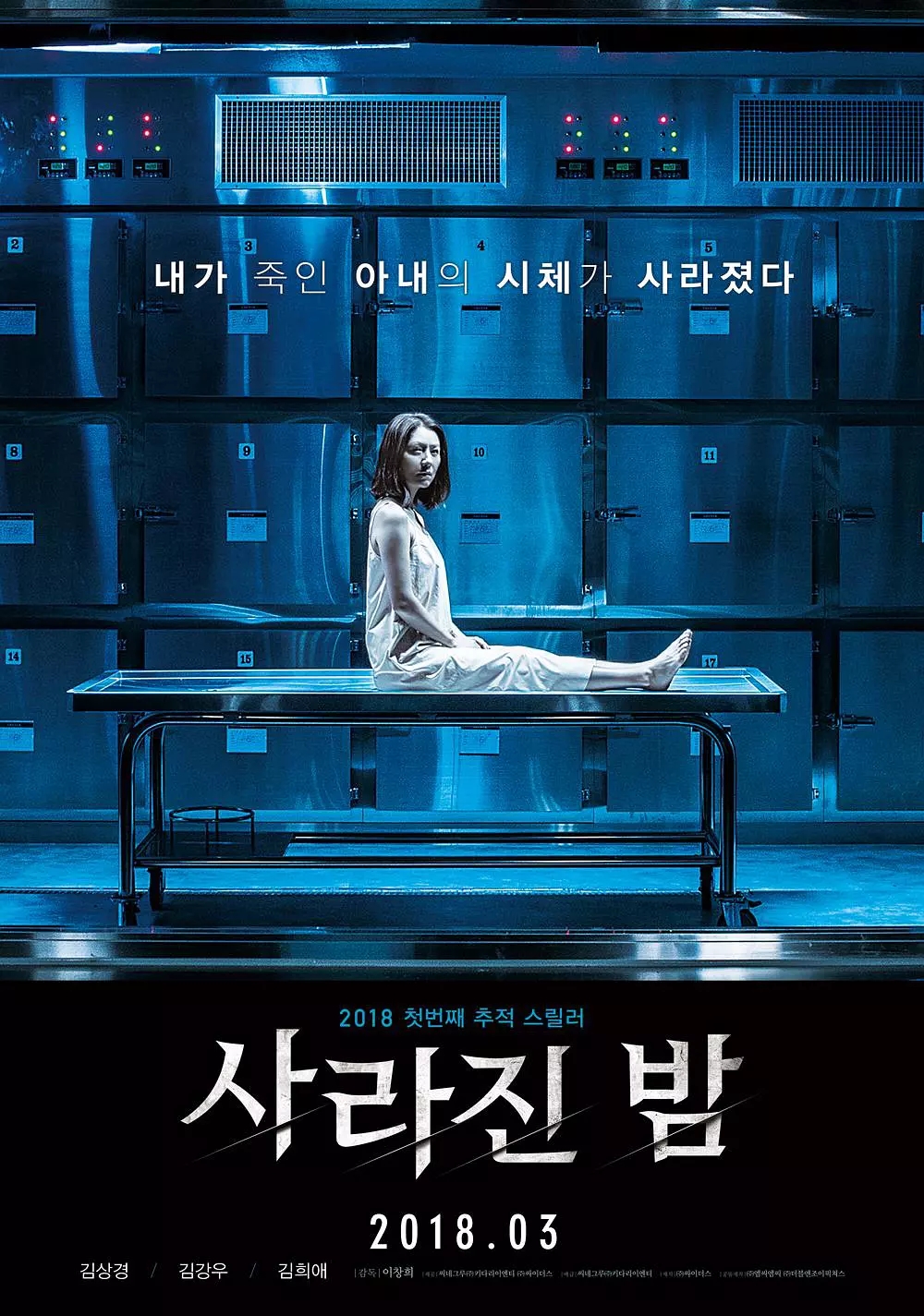
The Vanished (사라진 밤, Lee Chang-hee, 2018) [Fantasia 2018]

The Vanished posterThe past refuses to die in The Vanished (사라진 밤, Sarajin Bam) – Lee Chang-hee’s remake of the 2012 Spanish thriller, The Body. Ghosts, of one sort or another, torment both of our male leads – a dogged policeman and increasingly unhinged husband, as they try to solve the mystery of a disappearing corpse whilst each battling a degree of latent resentment towards various forces of social oppression. A tale of conflicting bids for vengeance, The Vanished pits an emasculated trophy husband against a controlling career woman wife while the forces of order look on in disapproval but then all is not quite as it seems and perhaps this is not the story we first assumed it to be.

The horror-inflected tale begins in a morgue on a rainy night as a disinterested security guard becomes unexpectedly spooked by his surroundings. Discovering one of the trays open and a body missing, the guard panics and feels himself stalked by something undead before being clubbed on the back of the head and knocked out. Maverick cop with a traumatic past Woo Joong-sik (Kim Sang-Kyung) arrives on the scene and discovers the missing cadaver belonged to prominent businesswoman Yoon Seol-hee (Kim Hee-Ae). The cause of death is thought to have been a heart attack brought on by her workaholic lifestyle but Joong-sik isn’t so sure. He hauls in the “trophy husband” – improbably good-looking university professor and sometime employee of Seol-hee’s pharmaceuticals company, Jin-han (Kim Kang-Woo). Jin-han has come straight from the flat of his pregnant mistress and is understandably on edge as every move he makes only further incriminates him in the “death” of his wife.

Increasingly unhinged, Jin-han is certain that Seol-hee is not really dead and has embarked on an elaborate plan of revenge for his affair with a student, Hye-jin (Han Ji-An). Lee wastes no time in confirming that Jin-han had at least intended to do away with his wife. Jin-han was apparently no longer interested in her money and would have wanted a divorce but believed his wife to be a ruthless woman who would never willingly let him go. Using an experimental anaesthesia drug, he hoped to get rid of her undetected but now fears that she has somehow woken up and wants her revenge. What Jin-han wanted, he claims, was his freedom – Seol-hee, an older career woman, bought him with trinkets, belittles his work, and refuses him all agency. He was tired of playing the toy boy and wanted his life back and so he chose to reassert his manhood through murder.

Of course, all is not quite as it seems. Through Joon-sik’s investigations, Jin-han comes to believe that perhaps Seol-hee planned the whole thing – anticipating that he would try to use the drug against her and engineering a situation in which she would fake her own death just to get back at him. Whether a ghost or not, Seol-hee haunts him, threatens his happy future with the sweet and innocent Hye-jin who calls him professor and respects him as a learned man, and seems set to achieve her goal if only by driving Jin-han out of his mind with worry and confusion.

Meanwhile, Joon-sik is battling another series of oppressive presences in the form a grudge against “the wealthy” possibly relating to a mysterious traumatic incident from his past, and a boss who wants him to find the missing body as quickly as possible and then forget the whole thing given the fact that Seol-hee and Jin-han had been a “celebrity couple” which makes all of this quite embarrassing for everyone. The two men end up engaged in a cat and mouse game as Jin-han becomes convinced that he’s the real victim in all this and is at the centre of an elaborate conspiracy leaving his pregnant girlfriend alone and vulnerable, while Joon-sik continues to push him towards confessing that he took the body and hid it possibly in some kind of fugue state.

“The body” is perhaps a better title as the concept itself comes in for constant reappraisal and we gradually understand that not everyone is talking about the same thing, leaving aside the complete erasure of Seol-hee as a woman with a name who may have been murdered by a vengeful husband (as unpleasant as she is later shown to be) in favour of viewing her simply as a nameless corpse or grudge bearing ghost. Twists pile on twists and history rewrites itself, but the buried past will someday be unearthed and justice served, if with a side order of irony.


The Vanished was screened as part of Fantasia International Film Festival 2018.

Original trailer (Korean subtitles only)

1987: When the Day Comes (1987, Jang Joon-hwan, 2017)

fullsizephoto931939The political history of Korea is long and complex and oftentimes sad. The events depicted in 1987: When the Day Comes (1987), pivotal as they were, occurred just 30 years ago. Yet the recent past has also been one marked by protest, public anger, and political scandal though this time around with far less fear or danger. The protests of 1987 were a different story. The rule of Chun Doo-hwan, a military dictator who had seized power following the assassination of the previous dictator, Park Chung-hee, was one of extreme oppression which had already seen a widespread massacre of peaceful protestors by the state in Gwangju in 1980. Chun’s term, under the constitution, was set at seven years after which many hoped for a path to modern democracy but those hopes were dashed when he announced an intention to appoint his successor rather than call a free and fair election.

In depicting the climactic events of that summer, Jang Joon-hwan begins with chaos as a doctor is summoned to a mysterious room where a young man lies unconscious in a pool of water. The police have gone too far, and boy has died during interrogation. Aware of the potential danger of the public finding out that the state has in effect murdered a suspect in an act of torture, the head of the ACIB, Park (Kim Yun-seok), orders the body to be quickly cremated. This, however, needs a certificate signed by a prosecutor and Prosecutor Choi (Ha Jung-woo) is fed up with the ACIB and unwilling to cooperate especially as he smells a rat with the cause of death for a healthy 22-year-old listed as a “heart attack”. Not wanting to be on the wrong side of it if it does get out, Choi refuses the cremation and orders an autopsy which in itself triggers a series of other events eventually bringing the government to its knees.

The state remains cruel and duplicitous. The death of Park Jong-chul (Yeo Jin-goo) would become a catalyst and a rallying call, not just for the injustice of it but for the injustice of covering it up. Park’s family are denied their basic rights, his mother and sister literally dragged away from the morgue screaming while his traumatised father looks on in silent agony. They say that Park was a communist, that he died of fear because he weak while claiming all along to have done no wrong. Only when the “truth” begins to emerge does the ACIB decide to hang a few of its guys out to dry, urging them to “patriotically” take one for the team and head to prison for a while with a hefty compensation package to help sweeten the deal.

The death in custody becomes just one event in a situation spiralling out of control. Paranoid in the extreme, the Chun regime is also working on bringing down a “North Korean Spy Network” controlled by a democracy activist on the run who, unbeknownst to them, is also working with the Catholic Church who will eventually prove pivotal in delivering the truth to the people. Meanwhile, the press has also decided to jump ship, ignoring the government’s carefully crafted guidelines in favour of running actual news. Chun’s iron grip is slipping.

Jang’s biggest takeaway is that corrupt regimes crumble when enough people find the strength to go on saying no. It begins with Choi refusing to stamp a certificate then travels to the reporter who won’t back down, passes on to the secret revolutionaries bravely carrying messages at great personal costs, the not so secret clergy who perhaps have more protection to speak their minds (up to a point) than most, and of course the students in the streets who risked their lives to build a better future. One of the few completely fictional characters, the niece (Kim Tae-ri) of a prison guard (Yu Hae-jin) charged with conveying messages to an activist in hiding, proves the most illuminating in her inward struggle towards the democratisation movement. Afraid of the consequences and preferring to remain politically apathetic, she is eventually radicalised through witnessing the brutality of the regime first hand and suffering personal loss because of it.

Playing out as a taut thriller, 1987: When the Day Comes has a lived in authenticity from the motif of being constantly deprived of one shoe by a cruel and absurd regime to the deadly serious ridiculousness of men like Park who hate “the enemy” enough to destroy the thing they claim to love in pursuit of it. Timely and filled with melancholy nostalgia, Jang’s depiction of the pivotal events of 30 years ago is also a rallying cry in itself and an important reminder that the fight for justice is never truly won.


Screened at the 20th Udine Far East Film Festival.

International trailer (English subtitles)

Steel Rain (강철비, Yang Woo-suk, 2017)

Steel Rain posterA little way in to Steel Rain (강철비, Gangchulbi), one of its heroes – a Blue House official, gives a pointed lecture on Korea’s past to some students of Geopolitical History. Fiercely critical of Korea’s previous subjugation by Japan, he laments that his nation was not able to free itself from the Japanese yoke and was awarded its freedom with the end of a wider political conflict which saw the Japanese “empire” collapse. According to Kwak Cheol-u, Korea has never quite lost its cultural admiration for its former colonisers which is why its most prominent corporations – Samsung, Haeundae etc, are all direct competitors with similar Japanese firms (and are only now pushing past them in terms of global market penetration and technological innovation).

Switching tack, he wonders why it is that Japan lost a war and Korea got cut in two by two new “colonising” forces. In his oft observed mantra, Kwak (Kwak Do-won) insists that the citizens of a divided nation suffer more from those who seek to manipulate the division for their own ends than they do from the division itself, which is where we find ourselves in the contemporary era of my button’s bigger than his button in which “capitalist pig dogs” face off against “dirty commies”. Adapting his own webcomic, Yang’s action thriller is among the most recent in a long line of North/South buddy movies and even if its cold-war paranoia feels distinctly old hat, it just goes to prove that everything old is new again.

Eom Cheol-u (Jung Woo-sung), a former North Korean special forces agent, is called back into the fold by his old commander for a very special mission. Tensions are about to boil over in the perpetually precarious state and the Dear Leader’s life is under threat from a suspected coup. Eom is to silence one of the conspirators in return for which he will be given elite status and his family will be well looked after. Unfortunately, the mission does not go to plan and Eom ends up witnessing a missile strike on a welcome meeting at a Chinese managed factory in which the (mostly young and female) employees are murdered in cold blood. Managing to escape with the Dear Leader himself who is seriously wounded, Eom travels over the border along with two young girls. From this point on he’s in conspiracy thriller territory trying to work out just what’s going on and who he can really trust.

The symbolism is rammed home by the fact that our two heroes, Kwak and Eom, have the same first name – Cheol-u, only one uses the characters for “strong friendship” and the other “bright world”. Taken together they paint a pretty picture, brothers in arms despite the political difficulties which place them on differing sides of an arbitrary line drawn up by a foreign power without much consideration for those divided by it. As in many North/South buddy movies of recent times, the North Korean agent displays the best qualities of his nation in his essential “goodness” – a caring husband and father, he executes his mission with maximum efficiency but bears no ill will towards those outside of it and is keen to protect the people of North Korea from almost certain doom should a nuclear war break out between the two peoples. Kwak, by contrast, is more of a schemer whose moral universe is much less black and white. A fluent Mandarin speaker he’s in tight with a North Korean official who keeps trying to talk him into taking a research post at a Chinese university while his family life is somewhat complicated thanks to a divorce from his plastic surgeon wife.

Meanwhile, the film is at pains to point out that Korea became the focus point of the first East/West proxy war and, in Kwak’s view at least, remains insufficiently important in the eyes of its “allies” to merit much direct consideration. Thus our boardroom squabbles are often reduced to the looming face of the American President “advising” the Korean officials on the best course of action while others worry about what Japan is going to think and wonder if the US secretly values the opinion of the Japanese more than the Koreans on the ground. The situation is further complicated by the fact that the government is in a transitionary phase in which a new president has been elected but not sworn in. The crisis may well play out entirely within the old president’s final hours which means that diplomatically he has little to lose and as he is a conservative, might as well milk the situation for all it’s worth. In short, he’s as keen to ruffle diplomatic feathers and bring the situation to a head as everyone else is and war looks more likely than not. The central message is that, as Kwak is fond of implying, governments care little for their people or that millions may die when idea of division is so easily manipulated, especially if it’s not “their” people who will be doing the dying.

Not for nothing is the new president seen reading copy of Willy Brandt’s book on successful reunification, even if he begs his outgoing predecessor to consider the economic impact of any possible change in relations with a Northern neighbour. The North Korean official also warns that China is not keen on the idea of a war seeing as that will necessarily mean an influx of North Korean refugees no one wants to take responsibility for. The cold war may be about to turn hot, but the heroics that cool it down turn out to be of a much less gung-ho nature than might be expected, relying on personal sacrifice and a perhaps outdated code of honour. Nevertheless, the crisis is averted not through macho posturing but through “diplomatic channels” and a careful balancing of powers. Perhaps not so farfetched after all.


Streaming worldwide via Netflix.

Steel Rain will also receive its international festival premiere as the opening night gala of the Udine Far East Film Festival on 20th April.

Far East Film Festival trailer (no subtitles)