Sincerity (まごころ, Mikio Naruse, 1939)

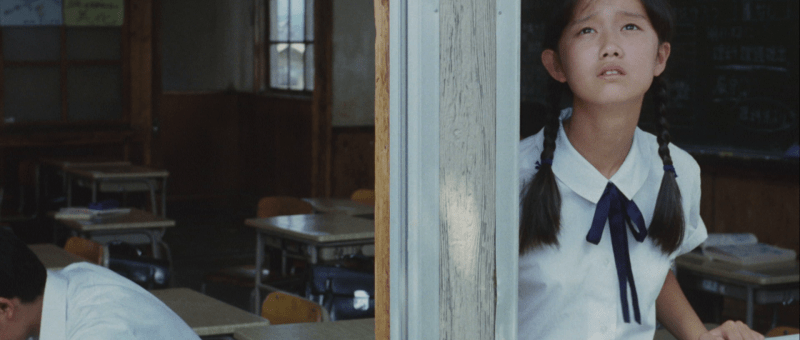
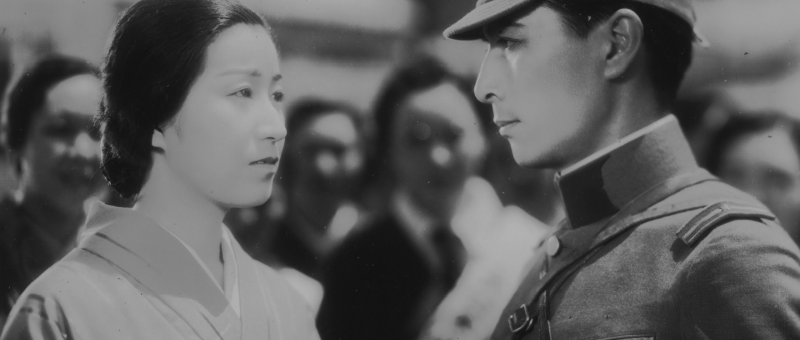
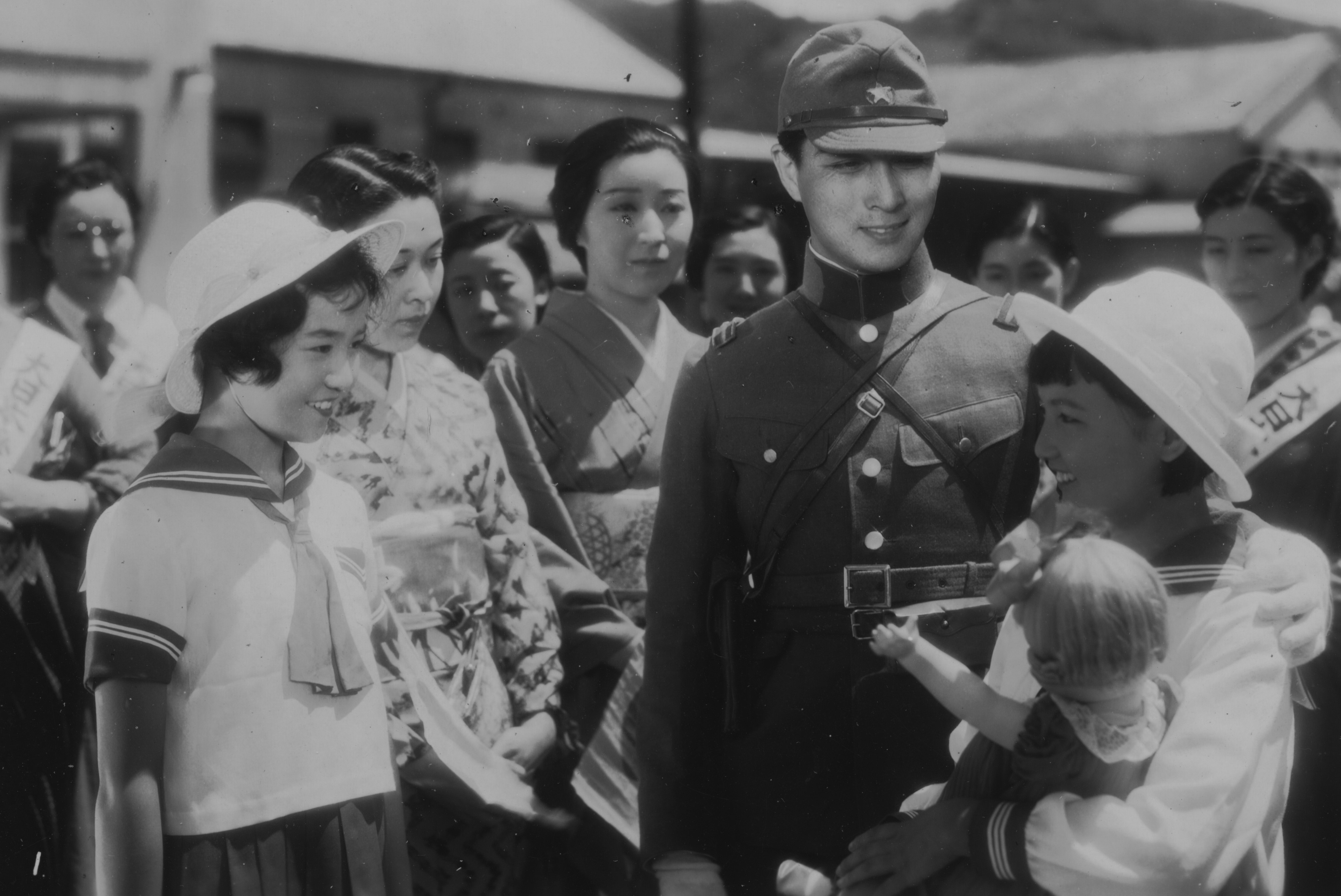
When the daughter of a poor family leapfrogs that of a rich one to be named top of the class, it exposes a series of hypocrisies and contradictions within the militarist order in Mikio Naruse’s 1939 drama, Sincerity (まごころ, Magokoro). The film opens, however, with a parade led by the Patriotic Women’s Association seeing young men off war. The group is led by Mrs Asada (Sachiko Murase), the mother of the rich girl, Nobuko (Etchan), who is busy giving orders to the other women regarding the air defence watch and sweet potato market which seems very forward thinking for the time period.

But in other ways it’s Mrs Asada who comes in for the greatest criticism as her bossiness and involvement with patriotic activity is depicted as a kind of displacement activity to mitigate her sense of uselessness and unhappiness in her marriage to arch militarist Kei (Minoru Takada) whom she fears is still hung up on his old girlfriend, Tsuta (Takako Irie), who is also the mother of Tomiko (Teruko Kato), the poor girl and apparent model student who has just displaced Nobuko as the cleverest girl in the class. Through Mrs Asada is rightly concerned that Nobuko has dropped a whole 10 places, Kei is not bothered by it at all because she is physically robust and healthy, which are the two most important qualities from a militarist perspective, leaving aside the fact that many wouldn’t regard a woman’s academic success as particularly important. Indeed, Kei is dismissive of his wife. Mrs Asada suggests that he finds her “stupid” and that their daughter is “stupid” by extension while Tsuta’s is clever and earnest because Tsuta is the same. He tells her that a child’s education is the mother’s responsibility and it’s probably her fault for busying herself outside of the home with her wartime activities with the implication that she’s been neglecting her child and that’s why her grades have fallen.

This point seems contradictory seeing that even at this stage, the nation expects women to serve their country in ways other than dedicating themselves to their families which is a responsibility secondary to that they owe to the emperor. Nevertheless, the implication remains that she’s doing it for the wrong reasons because what she enjoys is the status it gives her and the power of being in charge. Unlike Tsuta who has no husband, Mrs Asada’s family is wealthy with servants to take care of the domestic work so has nothing to do all day, while it’s also clear that the marriage is more or less dead and Kei does not particularly care for her, which he later admits, though partly because he has already rededicated himself to the nation in eagerly anticipating his call-up letter. When he’s first introduced, Kei is admiring a sword he’s having made ready for when he gets his papers to enlist as an officer. 

It’s a remark about Kei’s call-up that first sets alarm bells off in Tomiko in noticing the sadness it provokes in her mother, itself a little transgressive from a propaganda perspective. The grades situation doesn’t affect the girls’ friendship in the slightest, though this sudden reckoning with the past does begin to place a wedge between them not only in a growing awareness of their class differences but an awkwardness about the complicated situation between their parents which they are not well equipped to fully understand. Tsuta first tries to tell Nobuko the truth, but it upsets her so much that she lies instead and says that it’s true she knew Kei in the past but only as an acquaintance not a romantic partner. Nevertheless, the fact that she called him “Kei” rather than “Keikichi” or whatever his surname was before he married into Mrs Asada’s family suggests a great degree of intimacy which is something Tomiko seems to pick up on. 

There’s a persistent implication that Kei may be the father of both girls, which further reinforces the idea that their contrasting characters are a product of the way their mothers have raised them. Nobuko is described as self-involved and lazy, characteristics which reflect her privileged upbringing and sense of entitlement. Mrs Asada tries to talk to her new teacher, Mr Iwata, but his opinion is that Nobuko was most likely coasting and is struggling now because the work is more difficult and she hasn’t learned how to study or developed a consciousness that results are born of what you put into them. She, and her mother, simply expect to come top because it’s what a girl of her status deserves. Her displacement is a discomforting inversion of the social order. In this, the film both undercuts and reinforces militarist ideology in stressing the importance of hard work for all while doing so at the expense of a reverence for feudalistic ideas of class hierarchy. 

It’s this class divide that is transgressed when Kei sends the present of an expensive French doll to Tomiko after she and her mother come to Nobuko’s rescue when she cuts her foot on some sharp rocks while the girls’ are playing together at the river. The gift seems rather extravagant for the relatively minor act of kindness Tomiko and her mother performed which accidentally reunited Tsuta and Kei though neither of them say very much and while Tsuta seems to look at him longingly, Kei appears indifferent. Nevertheless, the grandmother suggests the doll reflects Kei’s sincere heart with the implication that it reflects his continuing attachment to Tsuta. Tsuta wants to refuse it, but realises she can’t because Mrs Asada likely doesn’t know and her finding out would just cause more trouble, though it’s a painful reminder of her romantic disappointment. 

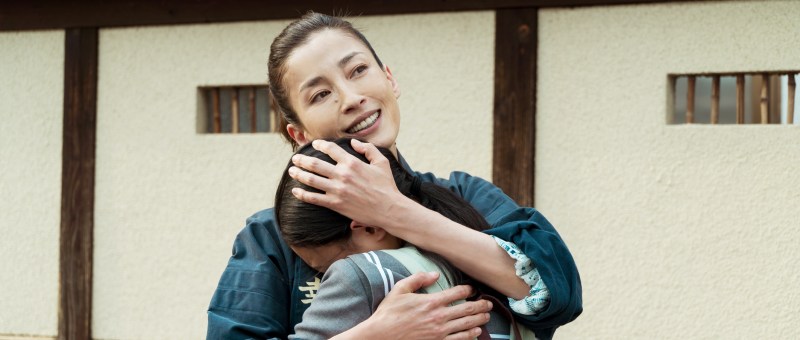
Tomiko ends up sending it back herself with a note for Nobuko explaining everything. Nobuko then limps off with her injured foot to return the doll to Tomiko and tell her none of that matters, she wants her to have the doll anyway. The doll then becomes a symbol of the sisterhood between the girls and the erasure of the class boundary between them. Tomiko can be seen holding the doll when they join the parade to send Kei off to war, while Tsuta and Mrs Asada also smooth out the misunderstandings between them to celebrate Kei’s mobilisation together. The message here is more that old differences must now be put aside so that everyone can serve the nation together rather than selfishly fixating on personal drama such as wounded pride or romantic heartbreak. Even so, Naruse slightly undercuts the patriotic conclusion with the hint of sadness on Tsuta’s face before she recomposes herself to smile at Mrs Asada and reinforce the sense of solidarity between them, while what we’re left with is the memories of the idyllic countryside setting and sense of pastoral serenity along with the sincerity of the relationship of the two girls which is rooted not in patriotism but genuine friendship that cares nothing for the divisions of social class or the rigidities of the adult world.


Sincerity screens at Japan Society New York May 10 as part of Mikio Naruse: The World Betrays Us – Part I.

Images: Collection of National Film Archive of Japan

The Trap (罠 THE TRAP, Kaizo Hayashi, 1996)

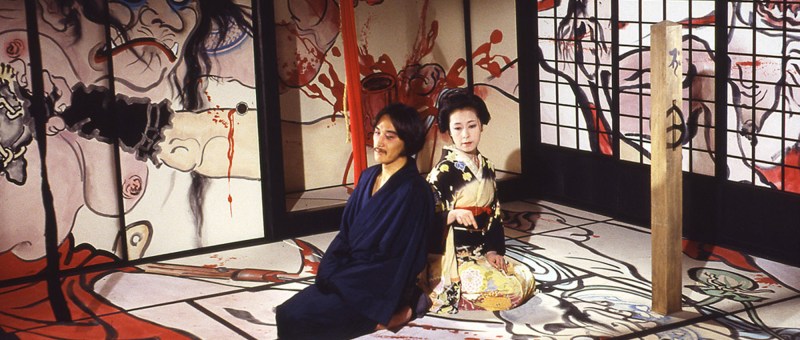
At the beginning of the final instalment of the Maiku Hama trilogy The Trap (罠, Wana), a strange-looking man dressed in a long overcoat and wearing a mask to hide a facial deformity tries to hire Maiku (Masatoshi Nagase) to look for himself. It’s a decidedly odd moment, and it seems that Maiku, who takes every job that comes, turns the man down because it’s just too weird though in a way his refusal to grant his request may contribute to the unfolding tragedy. If previous instalments saw Hayashi in Nikkatsu Noir and Fukasaku territory, this time around he seems to be channeling Seijun Suzuki in his intensifying surrealism and bold use of colour.

Indeed, in one sense, this is a tale of doppelgängers. We first see the strange man lurking outside the cinema standing so still that until he slowly turns his head we assume he is a statue. What we later realise is that he wanted Maiku to look for someone who was making use of his identity along with perhaps returning to him his own. Nagase too is playing a double role and Maiku is also searching for himself eventually confronted by the fact the man he’s been looking for has his own face. 

Nevertheless, as the film opens Maiku is riding high. He’s doing very well financially after making a name for himself saving a child from a burning building. His sister Akane has got into a prestigious college, and he’s fallen in love with a woman from the post office, Yuriko (Yui Natsukawa), who is mute but can hear. By contrast, box office lady Asa remarks that nothing good’s happened since Maiku got his police commendation for saving the child adding to the sense that things are going far too well for Maiku and probably quite likely to plunge the other way. There’s currently a serial killer on the loose who’s abducting young women, drugging them, and posing their bodies in public places. Unfortunately, Yuriko becomes a target for the killer(s) after a moment of kindness to someone who was being bullied in a park. 

An orphan raised in the church, Yuriko seems to be the embodiment of an otherwise absent purity. She tells Maiku off for gambling and generally tries to improve him as a person while he later acknowledges her willingness to sacrifice herself for others perhaps even at the cost of her own life. Her forgiving nature might help her overcome the fact that Maiku and the detectives effectively use her as bait on two separate occasions swooping in to save her only in the nick of time. This moral dichotomy reinforces a sense of tension in the city in which good and evil co-exist on different planes just as past and present had in the previous film and further transforms Yokohama into a mystical, haunted place of ever present dangers. 

The sense of surreality is further heightened by the casting of actor Tetta Sugimoto who starred in Stairway to the Distant Past as the man in red but here seems to be playing an idealistic rookie cop, again countering the cynicism of detective Nakayama (Akaji Maro) who just wants to cut corners and get the job done rather than get it done right. Thus when Maiku is framed as the killer, Nakayama indulges in his long standing grudge against him and is determined to nail Maiku despite rookie Kozu’s insistence that he couldn’t have done it because they were together at the time. When even fingerprints can be faked, there is no such thing as reliable evidence.

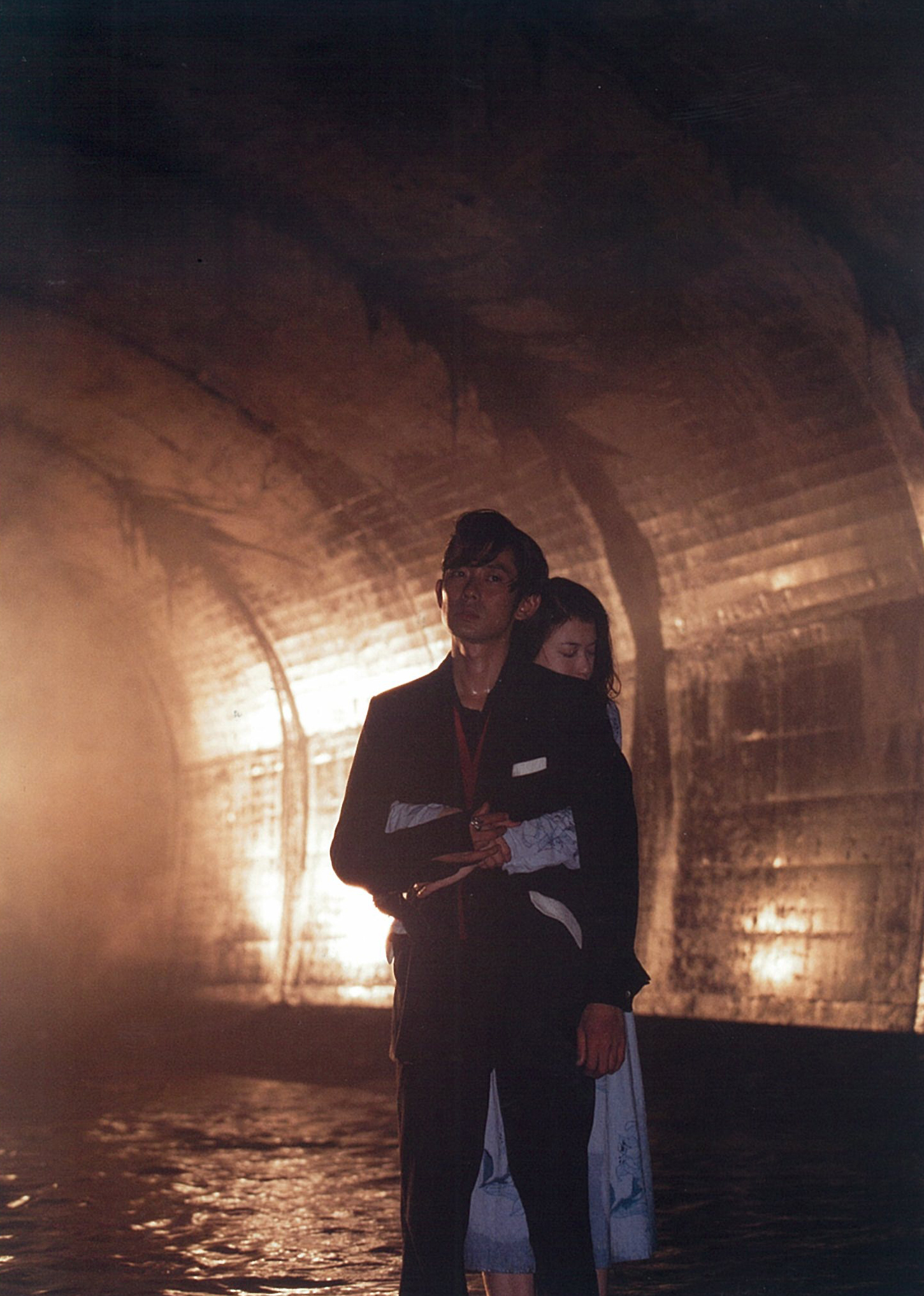
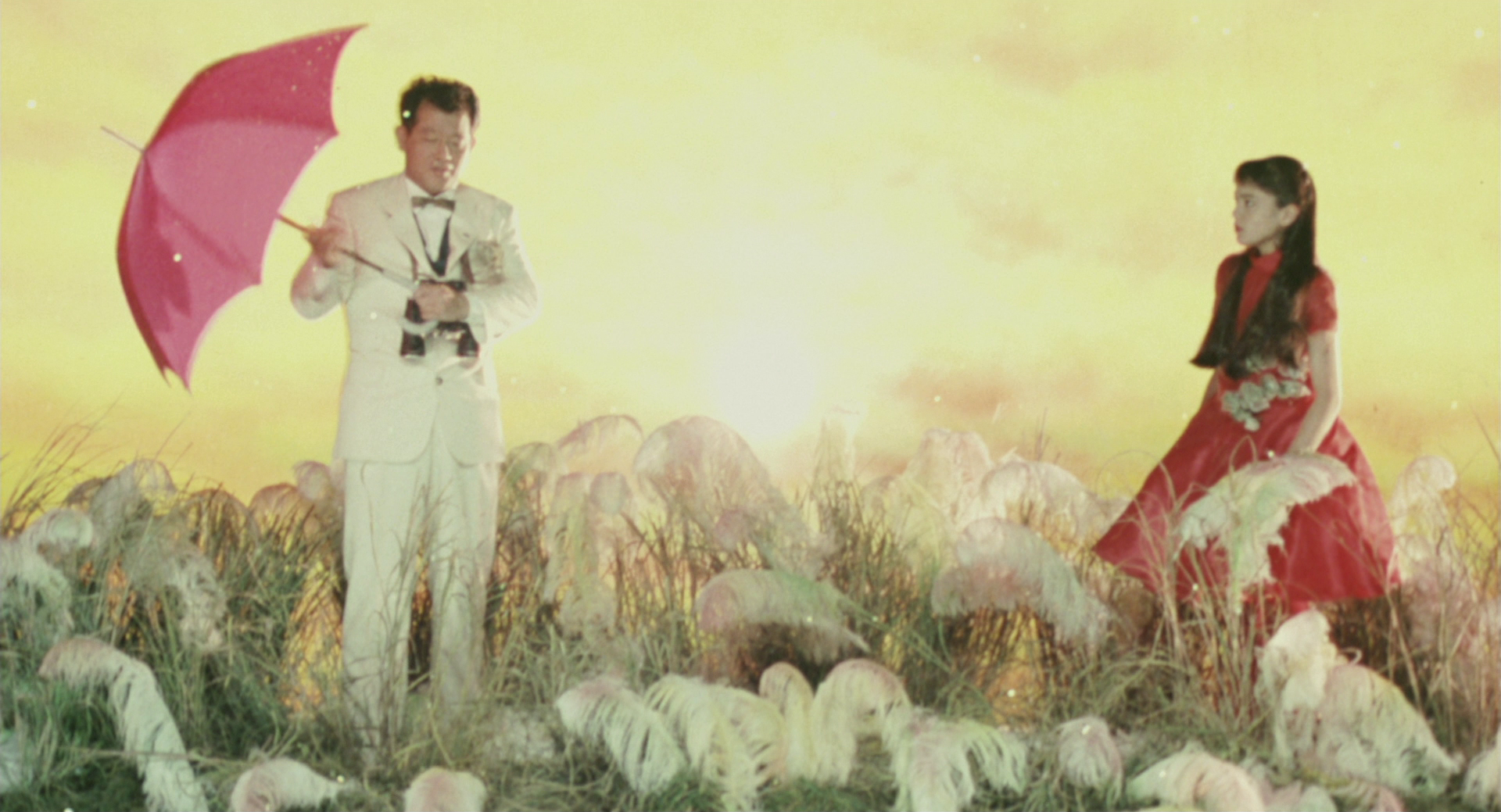
Hayashi once again makes fantastic use of colour from the expressionistic storm to the eerie, dreamlike closing sequence in which Maiku must face himself and battle his demons before being saved by the angelic Yuriko. Taking place in an atmospheric sewer tunnel, the climax has an oneiric atmosphere and surrealist edge as Miku confronts this man who has his own face only to lose the image of him at the critical moment and thereafter seemingly disappear himself. The moments after also have an unreal quality, a poster for the film we’re watching, The Trap, positioned behind Asa at the counter and Hai-Ping’s letter from the first film seemingly playing as part of the film screening in the cinema causing us to wonder if this too is a dream or fabricated future for one who will not return. Dark and disturbing in its implications, coloured by the real terror of living of Japan in the mid-90s which had just experienced a devastating earthquake and unprecedented terror attack, the film nevertheless displays the warmth of the Yokohama we’ve come to love with its cast of charming characters and cheerful atmosphere despite the eerie emanations at its centre.


The Trap screens 19th October at Japan Society New York.
Original trailer (no subtitles)

Circus Boys (二十世紀少年読本, Kaizo Hayashi, 1989)

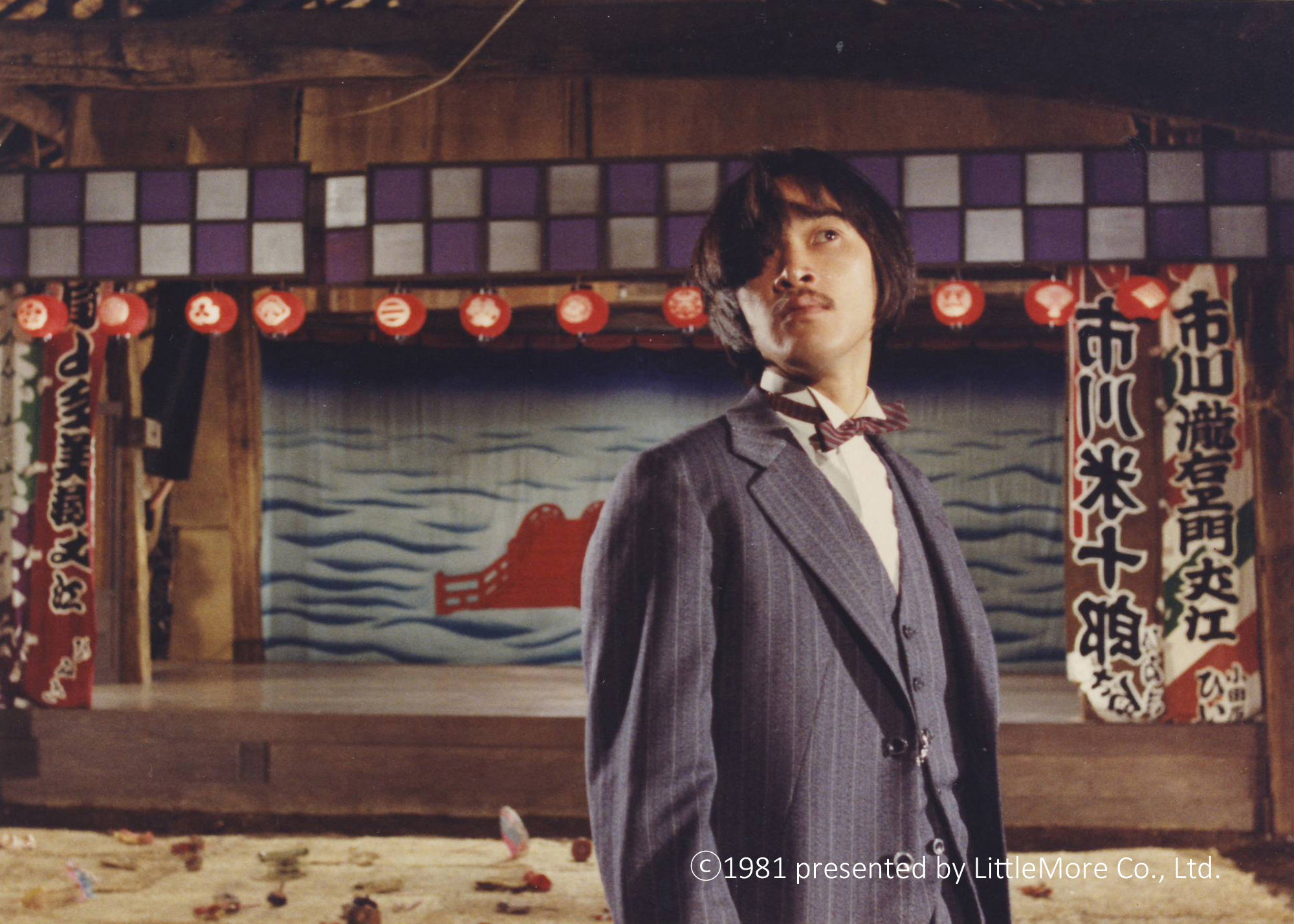
“There’s bad cheating and good cheating,” according to a little boy who will later become “a magician of words and juggler of lies,” in Kaizo Hayashi’s ethereal fable, Circus Boys (二十世紀少年読本, Nijisseiki shonen Dokuhon). Set in early showa, though the early showa of memory in which many other times intertwine, the film positions the transient site of a circus tent as a roving home for all who need it or are seeking escape from the increasingly heightened atmosphere of the early 1930s. Yet where one of the titular boys chooses to stay and earnestly protect this embattled utopia, his brother chooses to leave and seek his fortune in the outside world.

In fact, it’s Jinta (Hiroshi Mikami) who first becomes preoccupied with their precarious position realising that they’ve been hired to look cute riding the elephant, Hanako, but will soon age out of their allotted role and if they can’t master some other kind of circus trick there may no be a place for them in the big tent. For this reason he’s been training in secret with the idea that he can pass off the skills he’s perfected as innate “talent” so the circus will want to keep him on. Wataru (Jian Xiu), his brother, doesn’t quite approve of his plan. After all, aren’t they essentially tricking the people at the circus into thinking they’re something they’re not? But Jinta assures him it’s like “magic,” the kind that will allow them to stay in their circus home which later comes to seem a place of mysticism or perhaps make-believe on its own.

Thus Wataru walks a fine line. His name means “to cross over,” but he never does. He tries to walk the tightrope before he’s ready and is unbalanced by a storm. Jinta breaks his fall, but also in the process his own ankle. Along with it go his dreams. His foot never heals, and he’ll never fly the trapeze with Wataru like he planned though he keeps his injury a secret from his brother. While Wataru flies with new girl Maria (Michiru Akiyoshi), Jinta becomes a clown, a position he’d previously looked down on and later leaves the circus altogether using his talent for magic and performance to become a snake oil salesman tricking what appear largely to be poor farming communities into buying things like miracle soap and coal that burns for a whole month. This is clearly bad cheating, though he tries to convince himself it’s not while essentially remaking the world around him through his lies. 

But he retains his integrity in other ways. After being press-ganged into a yakuza-like guild of street pedlars, he gently excuses himself when invited to dine with a boss and confronted by an odd situation in which his wife has purchased another young woman to be his “plaything.” In a comment on contemporary patriarchal norms, the young woman is referred to as “Omocha,” which literally means “toy,” but also sounds a like a woman’s name because it begins with the character “O” which was used as a polite prefix for female names until the practice faded out after the war. The boss of course treats her like a doll, and even the wife refers to her as an “erotic instrument” she got as a way of managing her husband’s sexual appetites fearing he’d otherwise be seeing sex workers and bring a sexually transmitted disease into their home (and also possibly because she simply doesn’t want to sleep with herself any more than she has to). Referred to only as Omocha the woman has almost no agency and finds a kindred spirit in Jinta (whose name contains the character for “humanity”) because like him she also escapes the hardships of the world through lies and fantasy. “Can two lies make one big truth?” Jinta muses, breaking the codes of Guild as he prepares to rescue another man’s plaything, only it may be more like she rescues him. 

Meanwhile, Wataru tries to save the circus even after their ringmaster dies with visions of Jinta on his mind. They plan a wall of death to bring back the crowds, but Wataru’s plan backfires with tragic consequences and it becomes clear he can’t protect their circus family even if it brings back veteran trapeze artists Koji (Yukio Yamato) and Yoshiko (Maki Ishikawa) who agree there’s no other place for them out in the big wide world. The sense of the circus as a safe space was echoed on Maria’s arrival when Jinta had cruelly said she looked a little foreign with the ringmaster assuring her that in here they’re all artists and do not classify people in terms of their race, appearance or nationality. Its unreality, however, is reinforced by the constant backing of Wataru’s shadowplay which sometimes shows things the way people wish they were rather than the way they are. Omocha is later seen holding one of these puppets just as she and Jinta decide to die to free themselves of this hellish existence before Jinta’s surrogate brother figure Hiroshi (Shiro Sano) is forced to kill them for breaking the rules of the guild.

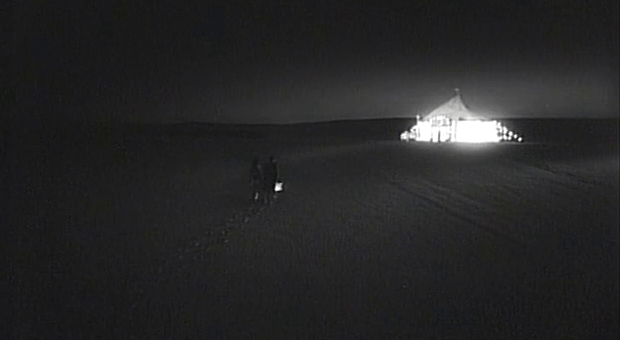
In the ambiguities of the final sequence, we might ask ourselves if they are actually dead and the glowing circus tent they see on the horizon is a path to the afterlife or a kind of heaven represented by the utopia to be found inside it. Then again, perhaps Jinta is merely rediscovering the way home, a prodigal son who now understands he already had a place to belong and there is a place to which he can return. The Great Crescent Circus is now the Sun & Crescent Circus, reflecting the way the two boys inhabit the world like and dark, idealism and cynicism, but comprise two parts of one complete whole. Hayashi waxes self-referential, playfully including a reference to his first film in that the movie playing at the cinema Jinta passes is The Eternal Mystery with Black Mask on his way to rescue Bellflower while indulging in an intense nostalgia for a lost world of travelling shows and hidden magic. Shooting in a beautifully balanced monochrome, he lights on scenes of heart-stopping beauty that are somehow poignant and filled with melancholy but ends with a moment of resolution in which, one way or another, Jinta reaches the promised land as he said with magic.


Circus Boys screens 12th October at Japan Society New York.
Japan Society NY & ACA Cinema Project Present Family Portrait: Japanese Family in Flux
Japan Society New York and ACA Cinema Project will present Family Portrait: Japanese Family in Flux from February 15 to 24, a series focussing on the changing nature of the family in Japanese society.

February 15, 7pm: Still Walking

Family divisions, secrets, and prejudices are brought to the surface as a family gathers for the memorial service for their eldest son who was killed trying to save a child from drowning in Koreeda’s classic family drama. Review.

February 16, 7pm: Tsugaru Lacquer Girl

A young woman’s desire to take over her family’s traditional lacquerware business is frustrated by outdated social codes and a narrow definition of the traditional all while the art of lacquerware itself faces extinction in Keiko Tsuruoka’s gentle drama. Review

February 18, 4pm: Hoyaman
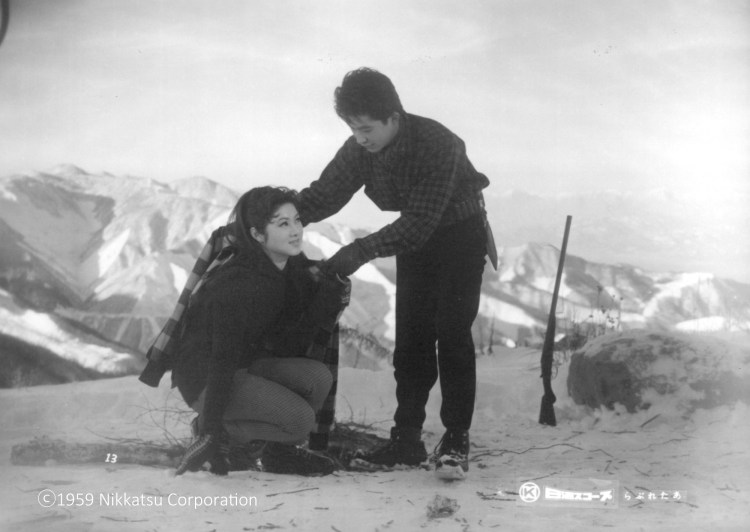
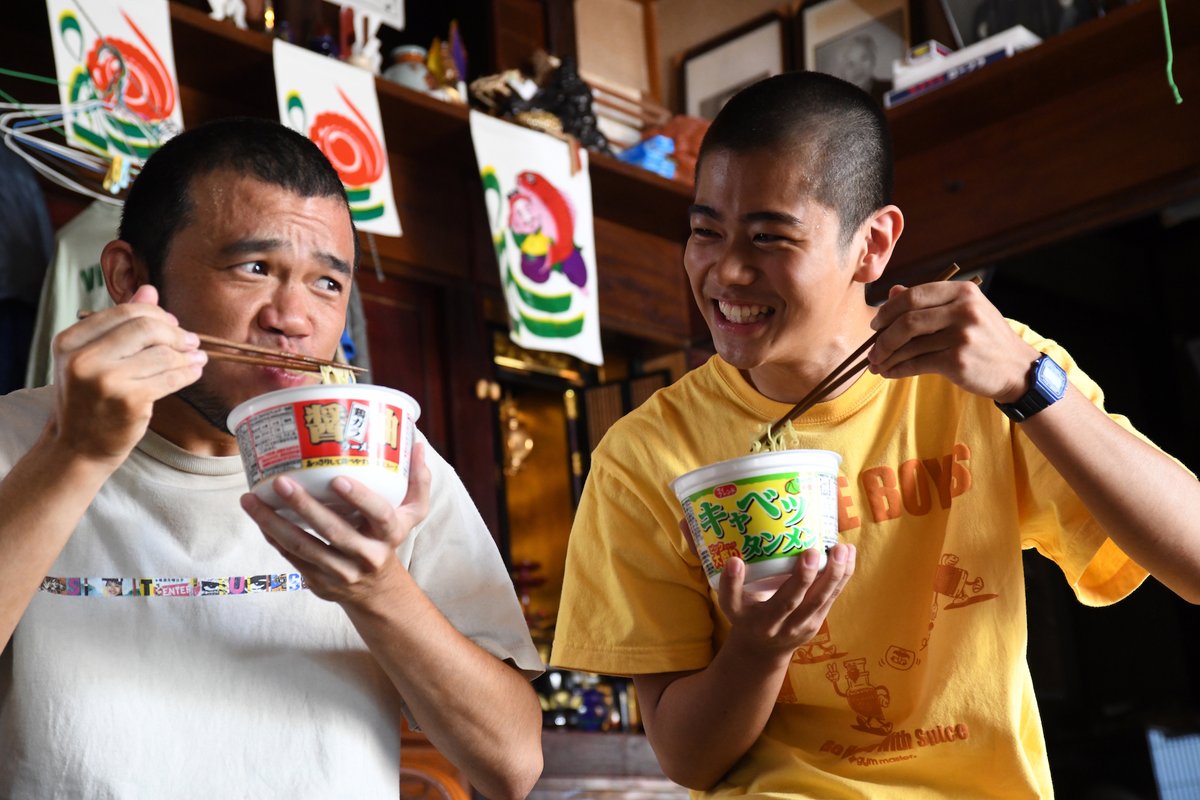
Island-set comedy featuring ramen, superheroes and tsunamis in which two brothers encounter a mysterious artist.
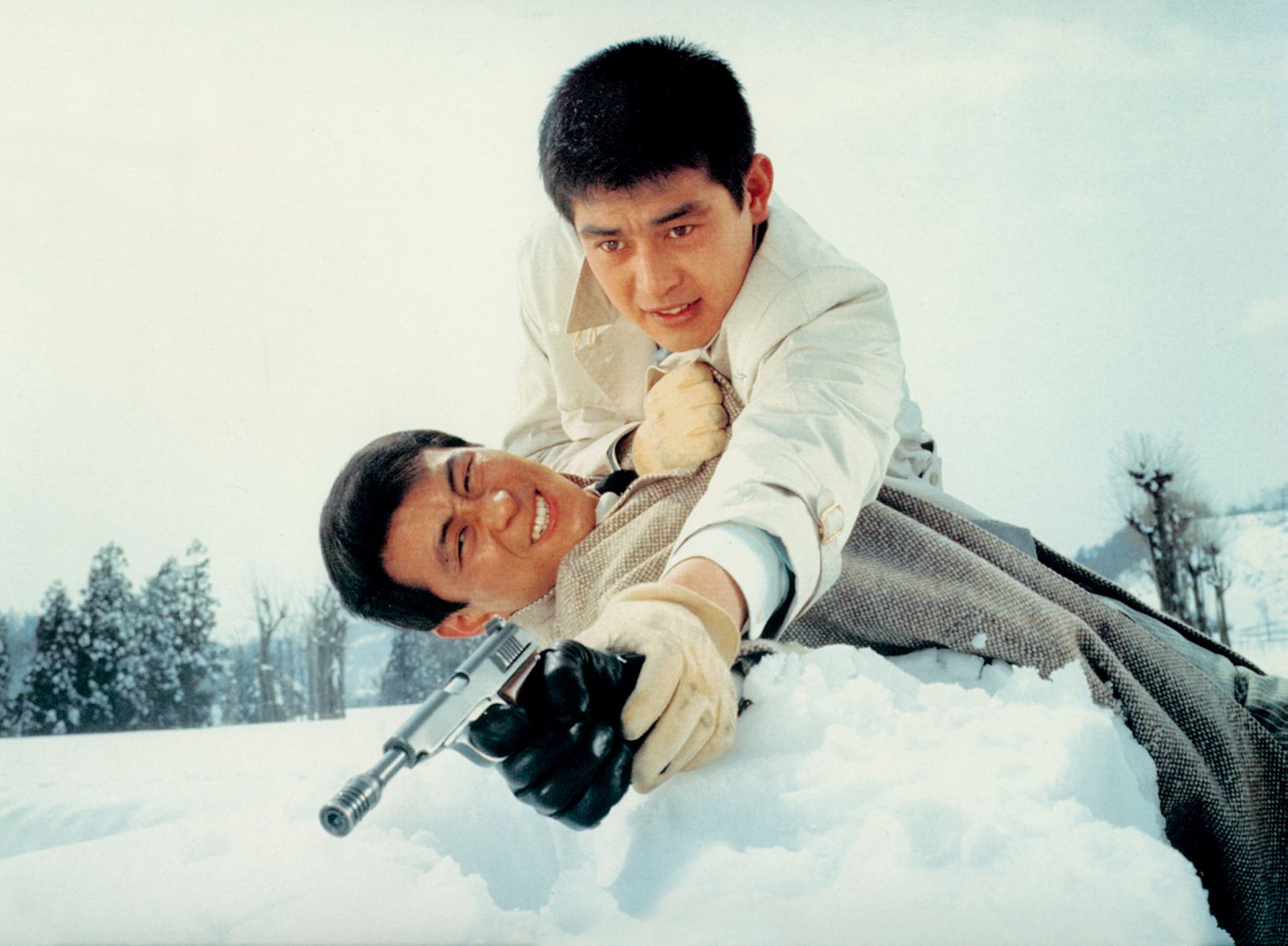
February 18, 7pm: Tokyo Sonata

Kiyoshi Kuroawa’s tale of urban hopelessness in which a family faces separate and parallel extential crises as a stereotypical salaryman is unceremoniously made redundant.

February 22, 7pm: Yoko (Screening at IFC Center)

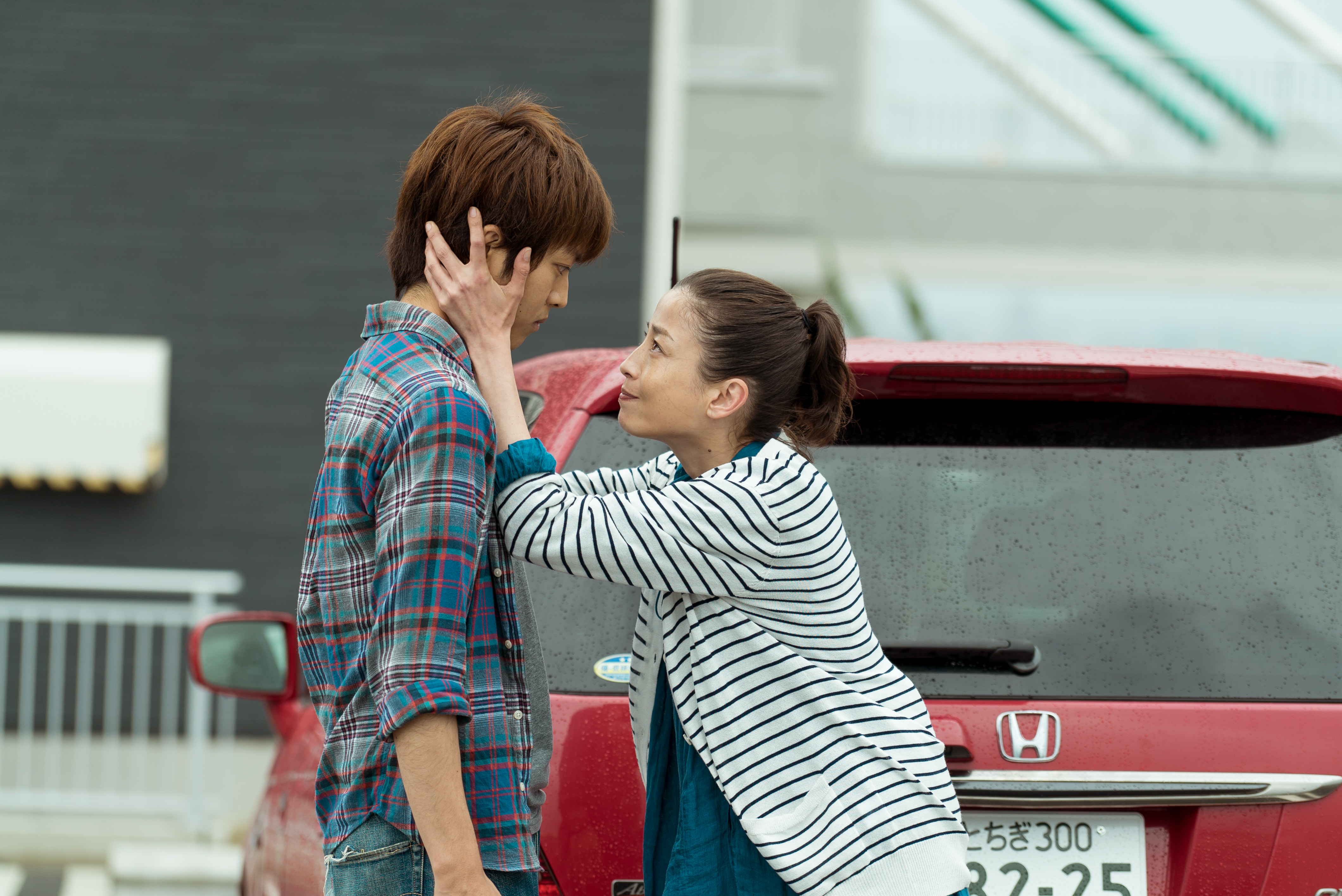
Moving roadtrip drama from Kazuyoshi Kumakiri starring Rinko Kikuchi as an isolated middle-aged woman who begins to rediscover herself while hitchhiking to her estranged father’s funeral.

February 23, 7pm: Her Love Boils Bathwater

Introduced by filmmaker Ryota Nakano and followed by a Q&A and reception

Poignant maternal drama in which a mother receives a terminal cancer diagnosis and secretly begins trying to repair her family and prepare it for a world without her all while saving the family bathhouse. Review.

February 24, 4pm: A Long Goodbye

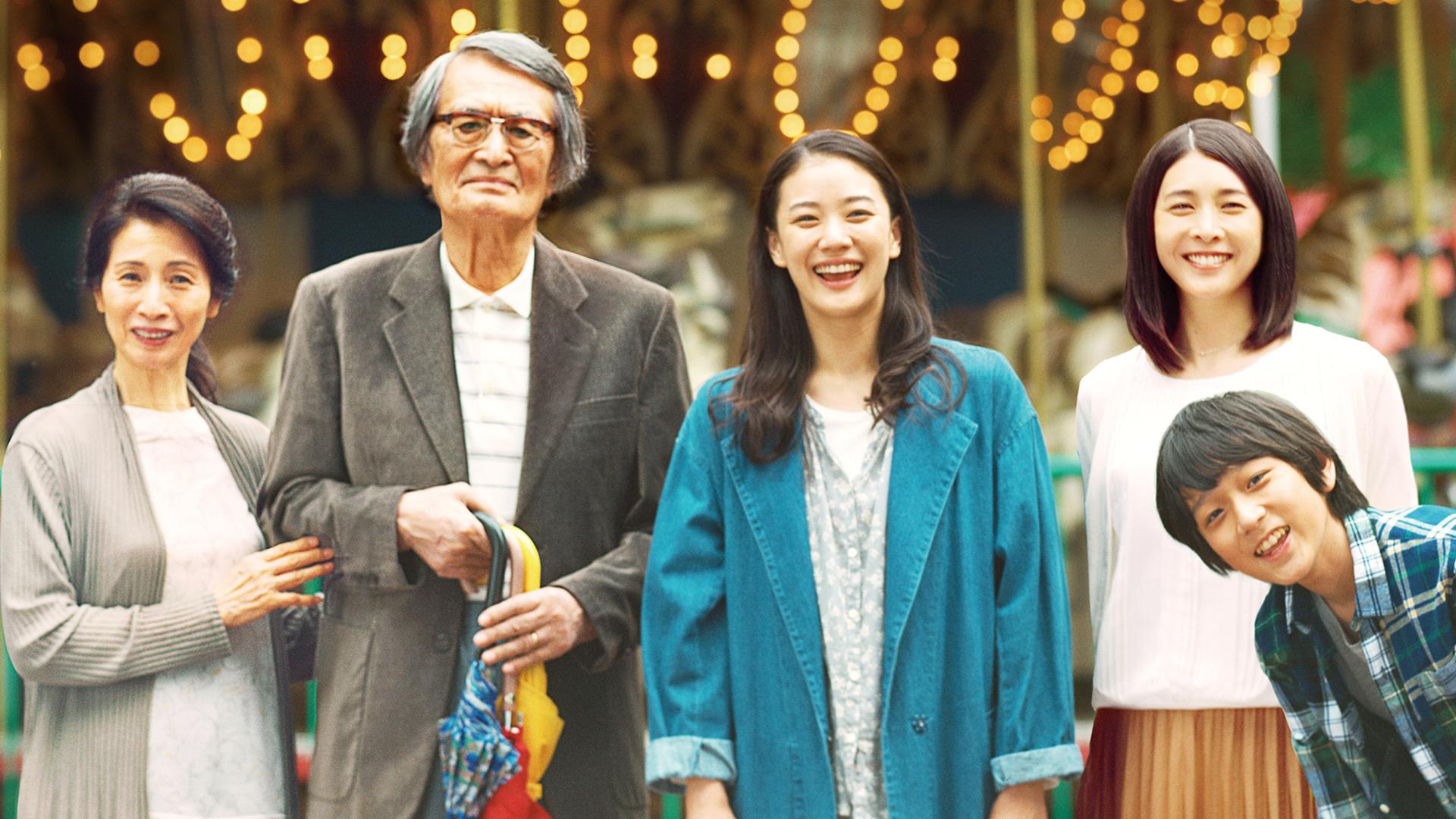
Touching drama in which a family attempt to cope with their father’s Alzheimer’s as he, a former headmaster, slowly loses the ability to read. Review.

February 24, 7pm: The Asadas

Introduced by filmmaker Ryota Nakano and followed by a Talk Session. 

Drama inspired by the life of photographer Masashi Asada who made a name for himself taking amusing photos of his family before getting involved with the relief effort after the 2011 earthquake and tsunami helping other families recover the photographs and precious memories they had lost.

Classics

February 17, 4pm: Muddy River

2K restoration

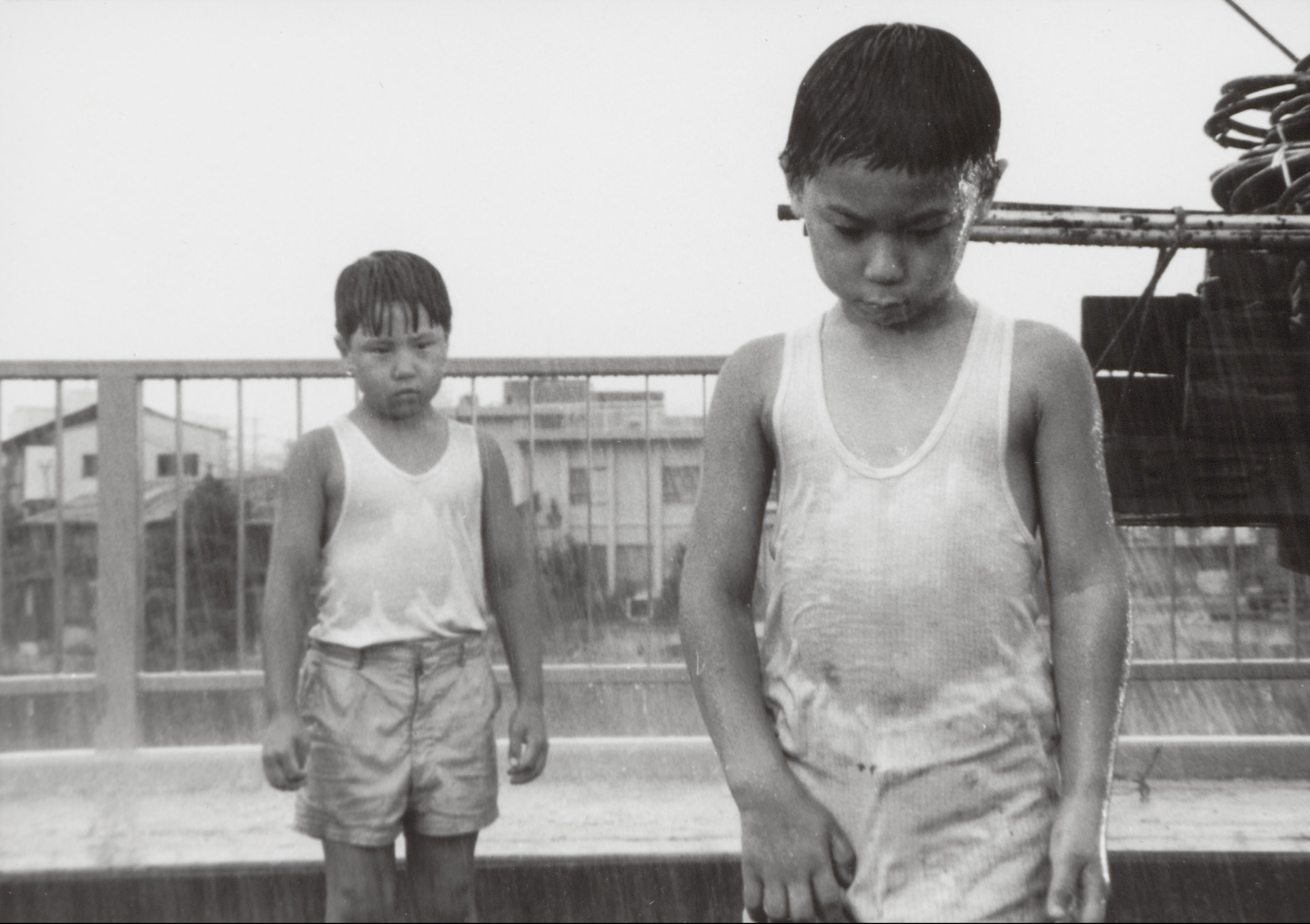
Quietly devastating coming-of-age tale set in the early 1950s in which a little boy befriends a pair of children living on a ramshackle barge. Review.

February 17, 7pm: Tokyo Twilight

35mm Presentation.

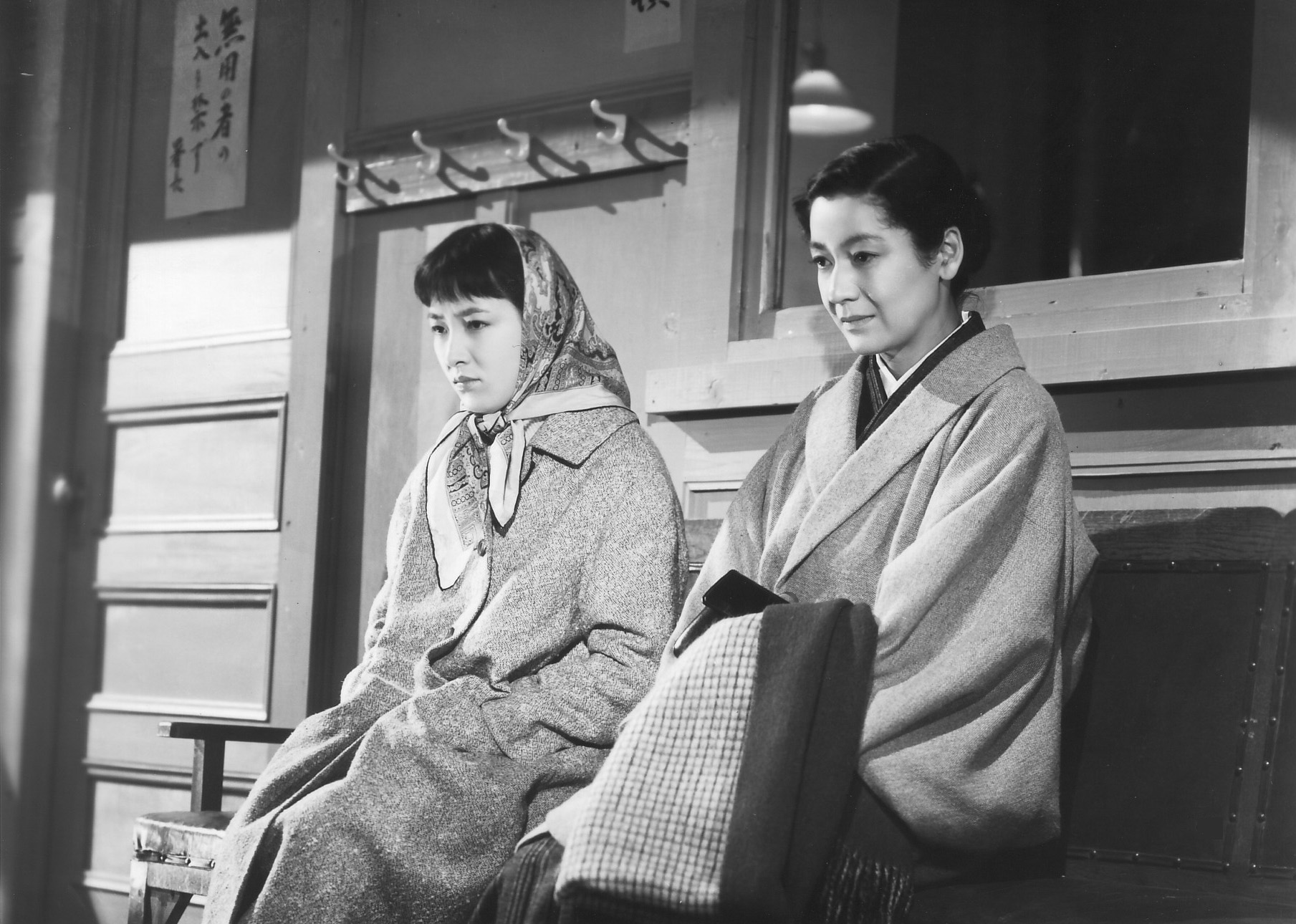
Ozu’s darkest drama follows the fortunes of a pair of sisters abandoned by their mother, one of whom contends with an abusive marriage while the other encounters an unexpected pregnancy. Review.

Family Portrait: Japanese Family in Flux runs Feb. 15 to 24 at Japan Society New York (with the exception of Yoko which screens at ICF Center). Full details for all the films along with ticketing links are available via the official website and you can also keep up with all the latest details by following the festival’s official Facebook page and X (formerly Twitter) account.

Typhoon Club (台風クラブ, Shinji Somai, 1985)

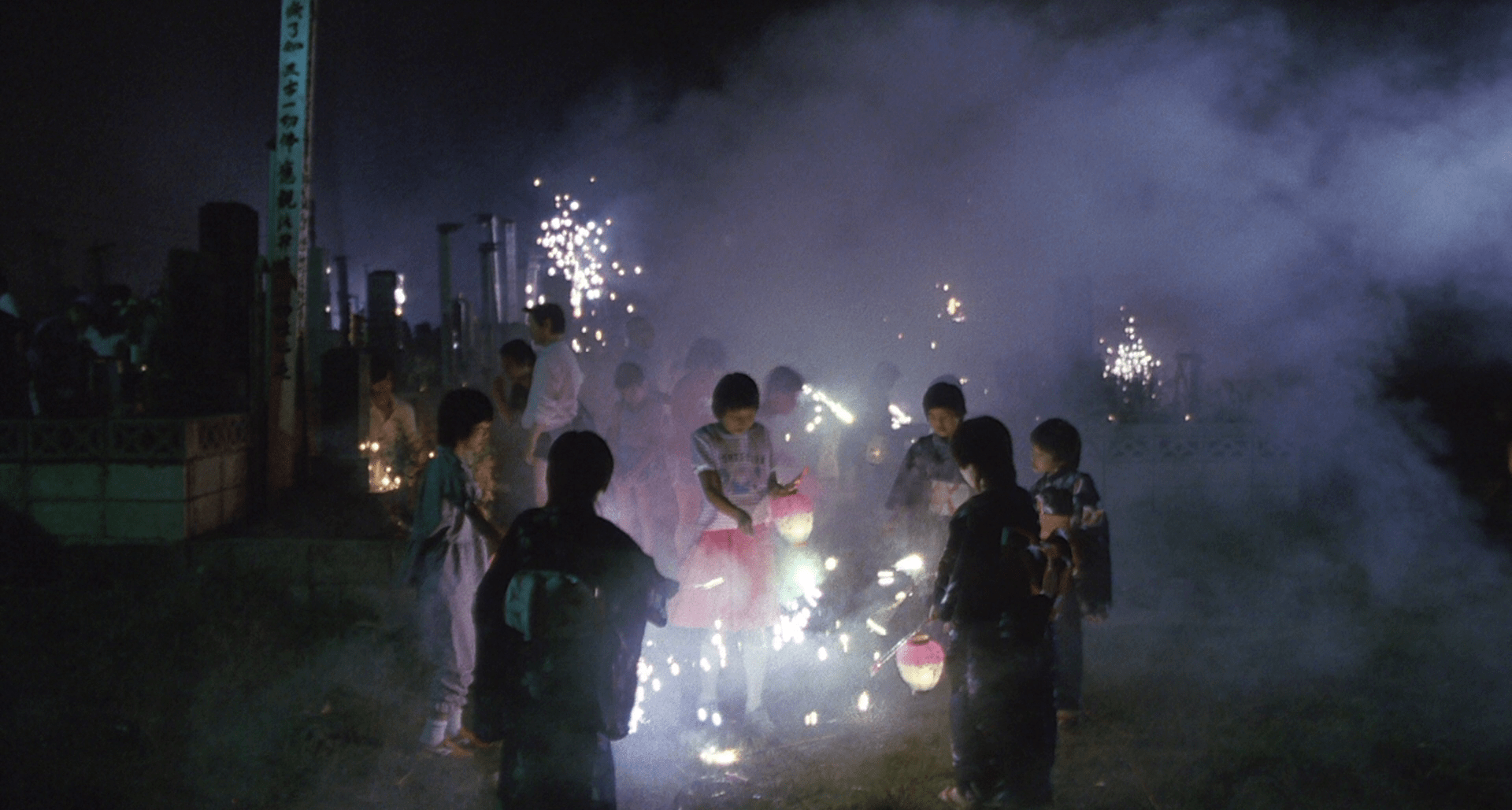
A collection of frustrated teens find themselves trapped within a literal storm of adolescence in Shinji Somai’s seminal youth drama Typhoon Club (台風クラブ, Taifu Club). “You’ve been acting weird lately” one character says to another, but he’s been “acting weird” too and so has everyone else as they attempt to reconcile themselves with an oncoming world of phoney adulthood, impending mortality, and the advent of desires they either are unable or afraid to understand, or perhaps understand all too well but worry they will not be understood. 

Most of the teens seem to look to the pensive Mikami (Yuichi Mikami) as a mentor figure. It’s Mikami they call when some of the girls end up half drowning male classmate Akira (Toshiyuki Matsunaga) after some “fun” in the pool gets out of hand. Luckily, Akira is not too badly affected either physically or emotionally, but presents something of a mirror to Mikami’s introspection. Slightly dim and etherial, he entertains his friends by seeing how many pencils he can stick up his nose at the same time, but he’s also as he later says the first to see the rain once it eventually arrives. Notably he leaves before it traps several of the others inside the school without adult supervision and otherwise misses out on the climactic events inside. Even so, Rie (Yuki Kudo), who also misses out by virtue of randomly stealing off to Tokyo for the day, later remarks that he too seems like he’s grown though her words may also be a kind of self projection. 

Mikami’s kind of girlfriend, perpetual spoon-bender Rie, finds herself at a literal crossroads after waking up late because her mother evidently did not return home the night before. Eventually she sets off for class running all the way, but then reaches a fork in the road and changes her mind heading to Tokyo instead. Mikami has been accepted into a prestigious high school there, and perhaps a part of her wanted to go too or at least to get closer to him through familiarity with an unfamiliar environment. Unfortunately she soon encounters a firearms enthusiast (Toshinori Omi) who buys her new clothes and takes her back to his flat which she thankfully manages to escape even if she’s stuck in the city because of a landslide caused by the typhoon.  

Mikami, however, continues to worry about her unable to understand why he’s the only one seemingly bothered about her whereabouts believing she’s “gone crazy”. Trapped in the school, the kids try to ring their teacher Umemiya (Tomokazu Miura) for help but he’s already drunk and can’t really be bothered. In any case he has problems of his own in that his girlfriend’s mother suddenly turned up during class to berate him for stringing her daughter along and also having borrowed a large amount of money which obviously ought to have some strings attached, only as it turns out Junko leant the money to another guy she was seeing though it’s not exactly clear whether she and Umemiya actually broke up or not. “In 15 years you’ll be exactly like me” Umemiya bitterly intones into the phone when Mikami directly states that he no longer respects him deepening Mikami’s adolescent sense of nihilistic despair. 

Of all the teens, he does seem to be the most preoccupied with death. “As long as she’s an egg, the hen can’t fly” he and his brother reflect on discussing if it’s possible for an individual to transcend its species and if it’s possible to transcend it though death all of which lends his eventual decision a note of poignant irony even if its absurd grimness seems to be a strange homage to The Inugami Family. As he points out to his somewhat disturbed friend Ken (Shigeru Benibayashi), “I am not like you” and indeed Ken isn’t quite like the other teens. Obsessed with fellow student Michiko (Yuka Ohnishi) but unable to articulate his feelings, Ken pours acid down her back and watches her squirm as it eats into her flesh. Repeating pleasantries to himself as a mantra, he later attempts to rape her after violently kicking in the dividing walls of the school only to be stopped in his tracks on noticing the scar again and being reminded that he is hurting her. 

The storm seems to provoke a kind of madness, the teens embracing an elusive freedom entirely at odds with the rigid educational environment. The other three girls trapped in the school are a lesbian couple who’d been hiding out in the drama department and their third wheel friend who might otherwise have been keen to hide their relationship from prying eyes having previously been caught out by a bemused and seemingly all seeing Akira. But in this temporary space of constraint and liberation, the teens are each free for a moment at least to be who they are with even Ken and Michiko seemingly setting aside what had just happened between them. They co-opt the stage for a dance party and then take it outside, throwing off their clothes to dance (almost) naked in the rain while a fully clothed Rie does something similar on the streets of the capital. In some ways, in that moment at least they begin to transcend themselves crossing a line into adulthood in a symbolic rebirth. In any case, Somai’s characteristically long takes add to the etherial atmosphere as do his occasional forays into the strange such as Rie’s encounter with a pair of ocarina-playing performance artists in an empty arcade. “We want to go home, but we can’t move” Mikami says looking for guidance his teacher is unwilling to give him neatly underlining the adolescent condition as the teens begin realise they’ll have to find their own way out of this particular storm. 


Typhoon Club screens at Japan Society New York on April 28 as part of Rites of Passage: The Films of Shinji Somai

Japan Society New York Announces Rites of Passage: The Films of Shinji Somai

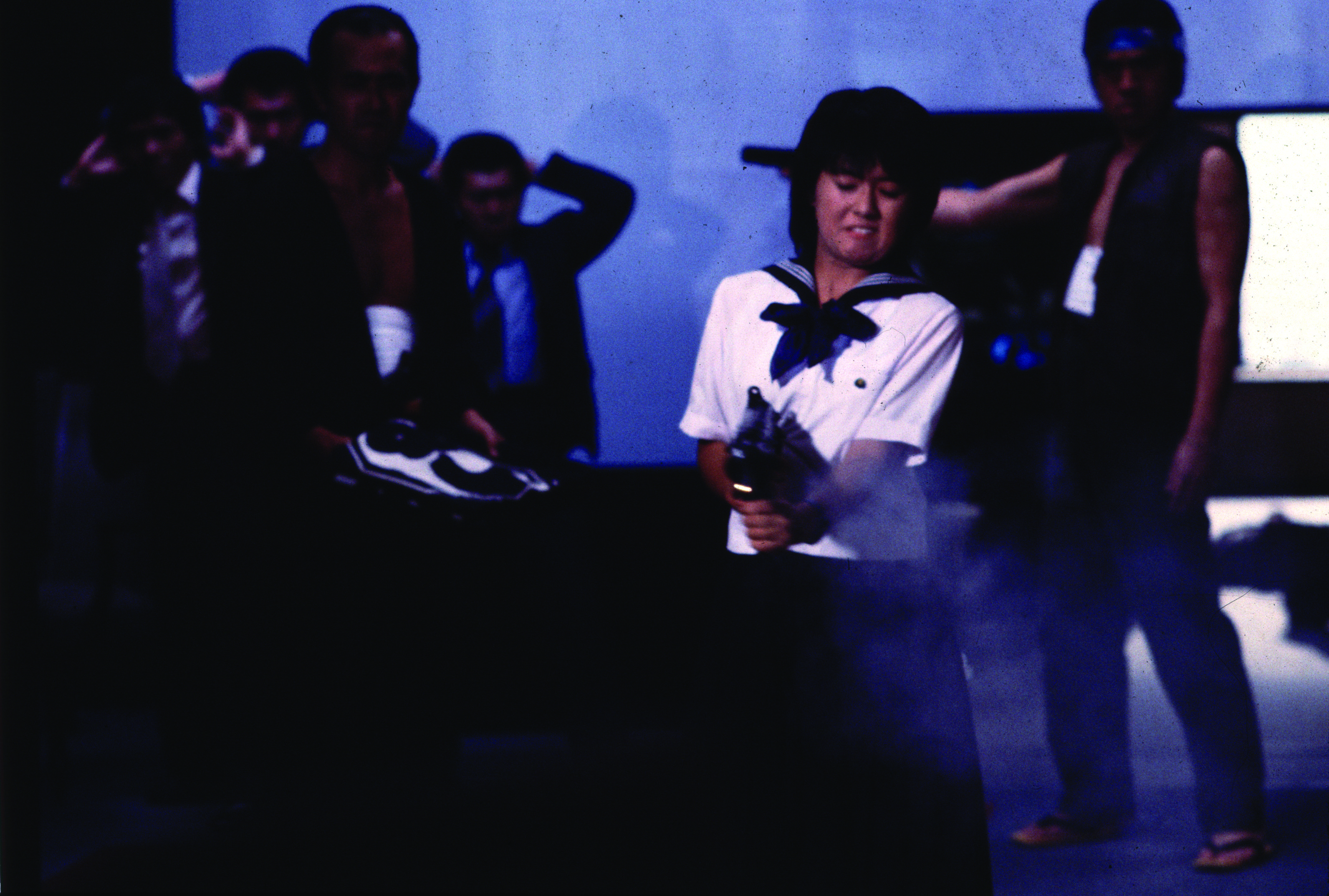
Lolita in Bloom film series Sailor Suit and Machine Gun © 1981 Kadokawa Herald Pictures, Inc.

Japan Society New York will celebrate the work of late director Shinji Somai who remains criminally neglected outside of his home nation with the first North American retrospective running April 28 to May 13. Featuring seven of the director’s features, the series showcases both the teen idol movies with which he may be most closely associated internationally, and gritty adult dramas such as The Catch and Love Hotel.

The Catch

Friday, May 12 at 7:00 PM

Shinji Somai’s 1983 opus of fishermen at home on the waves and at sea on land is a complex examination of masculinity but also of fatherhood in a rapidly declining world filled with arcane ritual and ancient thought. Review.

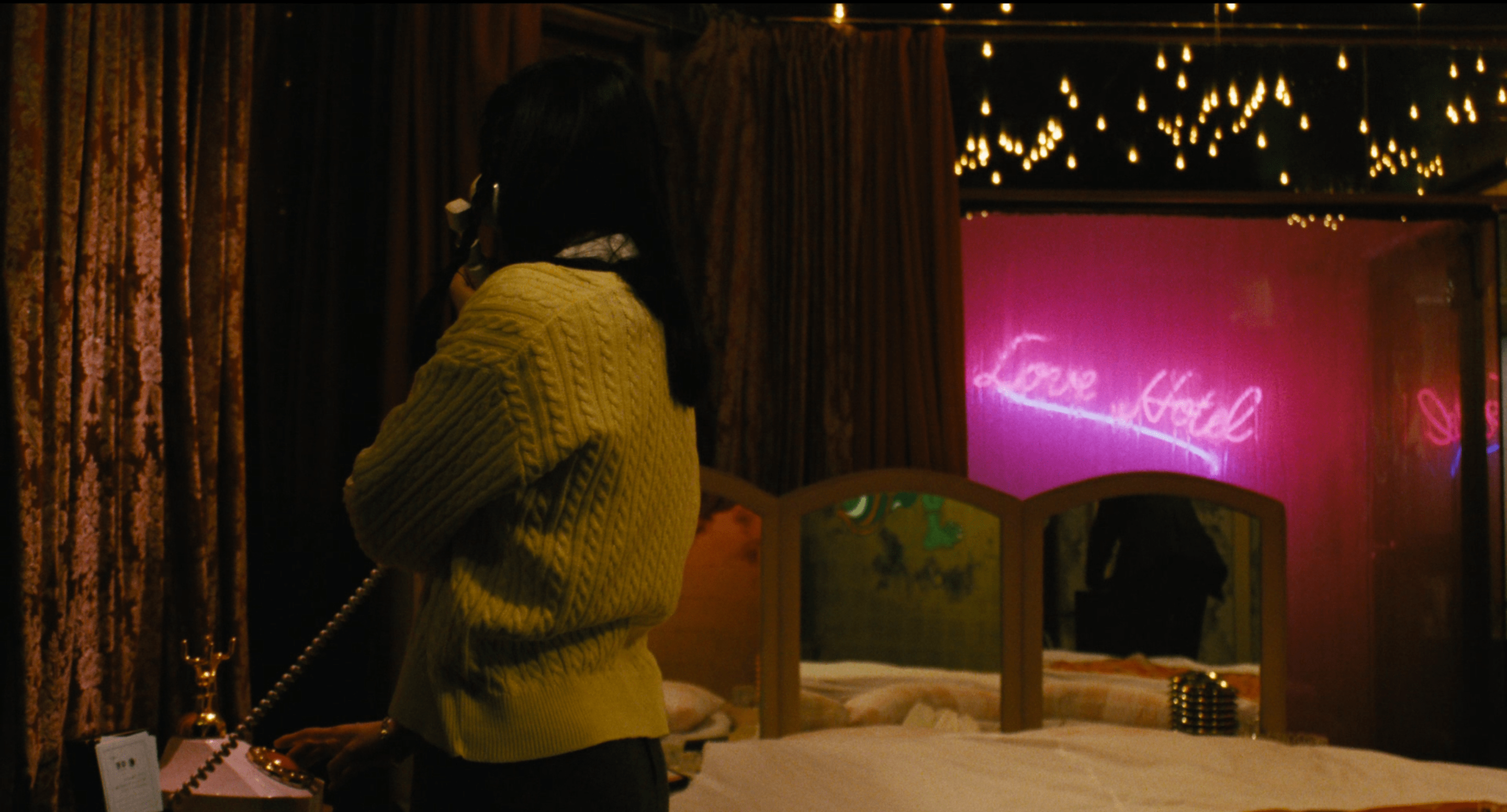
Love Hotel

Saturday, April 29 at 5:00 PM

Melancholy drama following the turbulent romantic relationship between a failed businessman pursued by yakuza and the former sex worker with whom he shared a traumatic night some years previously. Review.

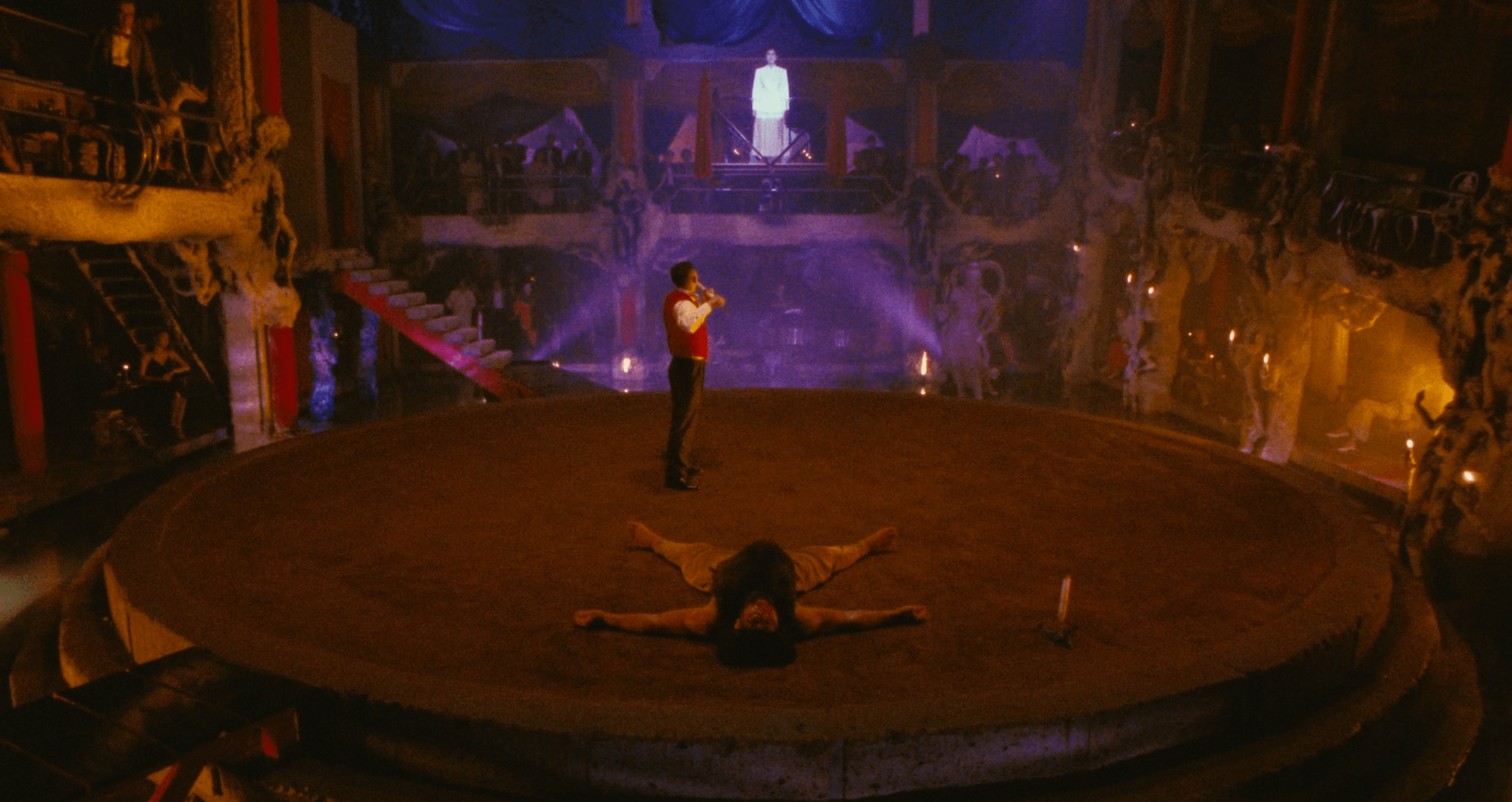
Luminous Woman

Friday, May 5 at 8:30 PM / Saturday, May 13 at 2:00 PM

Fable-like tale of a mountain man who comes to the city in search of the girlfriend who never came home after leaving to study accounting. Sucked into a bizarre underworld of gladiatorial floorshows and voiceless opera singers, he quickly finds himself lost in the soulless metropolis of Bubble-era Tokyo.

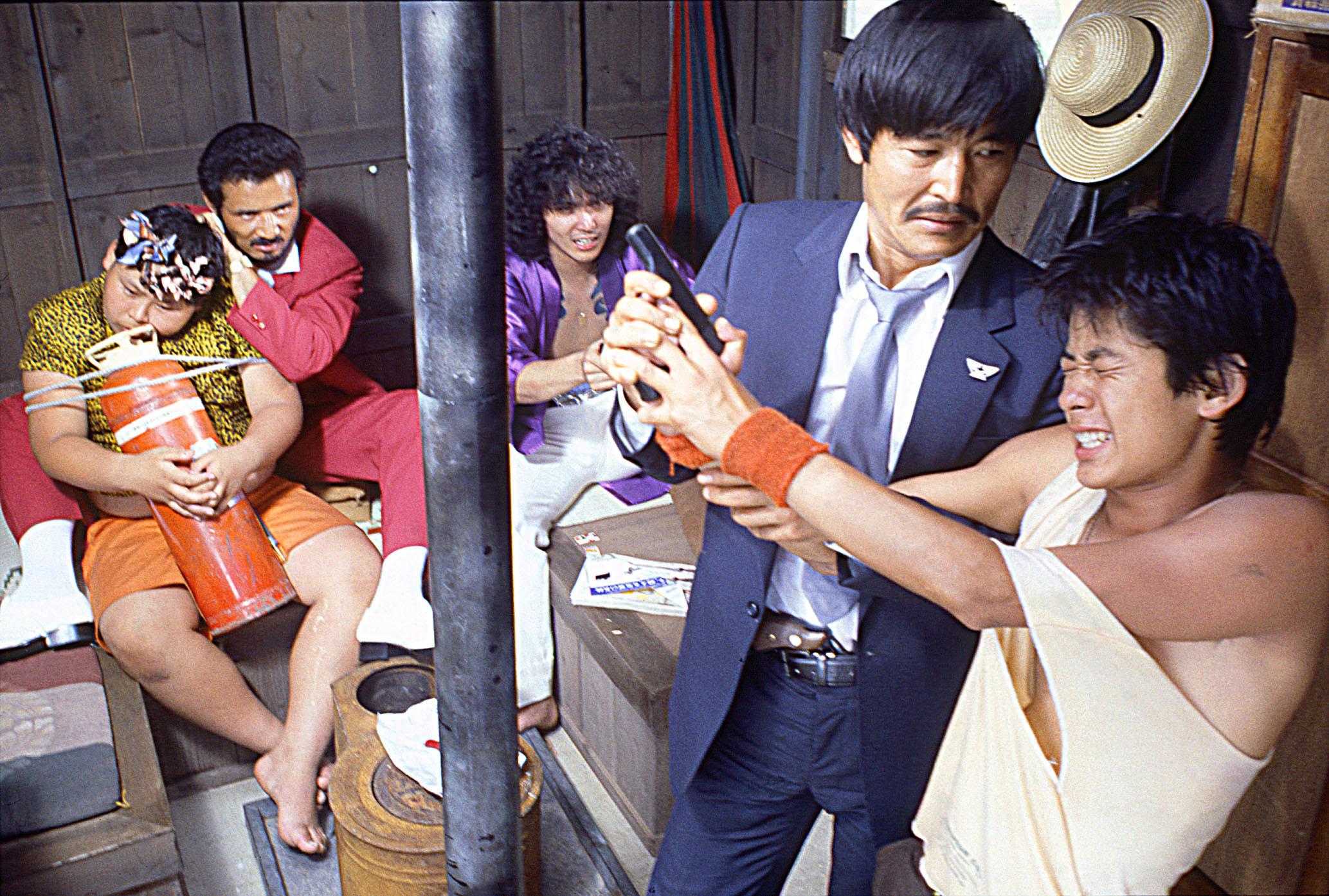
P.P. Rider

Saturday, April 29 at 2:00 PM / Saturday, May 13 at 5:00 PM

Classic teen movie in which a trio of school friends set off to rescue their school bully after he’s kidnapped by yakuza. Starring a young Masatoshi Nagase in his film debut. Review.

Sailor Suit and Machine Gun

1982 Complete Version on Saturday, April 29 at 7:00 PM; Theatrical Cut on Friday, May 5 at 6:00PM.

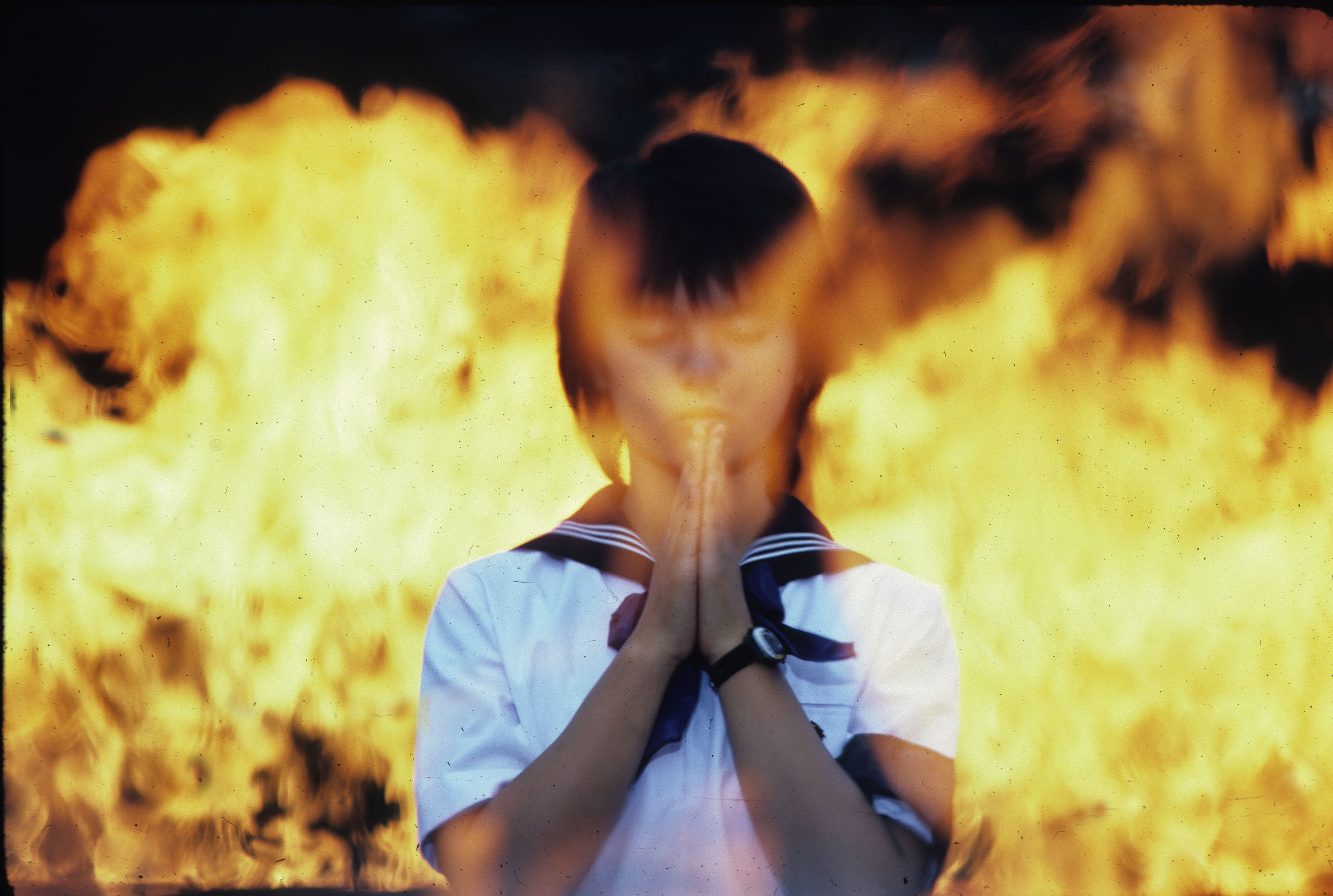
Iconic teen drama starring Hiroko Yakushimaru as a high school girl who unexpectedly inherits a yakuza clan when her father dies suddenly and finds herself trying to contend with adolescent angst and underworld intrigue. Review.

Tokyo Heaven

Saturday, May 13 at 7:30 PM

Somai’s Bubble-era exploration of idol exploitation has an almost prescient quality in its otherwise fantasy-driven tale of an aspiring model killed after diving out of a car to escape a lascivious exec but then given a second chance to live a “normal” life. Review.

Typhoon Club

Friday, April 28 at 7:00 PM

Seminal teen drama in which a collection of high school students experience a literal storm of adolescence while trapped in their school thanks to a severe typhoon.

Rites of Passage: The Films of Shinji Somai runs at Japan Society New York April 28 to May 13. Tickets priced at $15 / $12 students & seniors, and $10 Japan Society Members (Typhoon Club + Opening Night Party: $18/$15/$14) are on sale now via the official website while you can also keep up with all the year-round events by following Japan Society Film on FacebookInstagram, and Twitter.

A Tale of Sorrow and Sadness (悲愁物語, Seijun Suzuki, 1977)

Famously, Seijun Suzuki was let go by Nikkatsu in 1968 after studio bosses became fed up with his apparently “nonsensical” filmmaking. Exiled from the film world, Suzuki made do with TV work before making his comeback with, rather surprisingly, a media satire based on a manga by Ashita no Joe’s Ikki Kajiwara. A Tale of Sorrow and Sadness (悲愁物語, Hishu Monogatari) is at once a dissection of the fluctuating class and social systems of a nation entering an era of high prosperity and a condemnation of the consumerist corruptions of a society increasingly ruled by celebrity.

It is in the corporate that the corruption begins. With mild overtones of cold war paranoia, Nichei Fabrics is alarmed that a rival firm has brought on a top Russian gymnast as a brand ambassador and is convinced they need to find someone who can steal her thunder. Fashion co-ordinator Tadokoro (Masumi Okada) comes to the conclusion that they need a homegrown star and decides to make one by grooming a promising lady golfer to become both a champion and a minor celebrity after achieving an underdog victory in a prestigious tournament. 

One might ask weather society at large is likely to take much interest in who wins the Japanese Women’s Golf Tournament, but then everyone loves an underdog victory and Tadokoro seems to think he can make them care through carefully managed media manipulation. Golf is also, of course, thought of as an upperclass pursuit beloved by a new class of salaryman despite its origins, as sportswriter Miyake (Yoshio Harada) describes them, as a pastime invented by farmers to stave off boredom. Reiko (Yoko Shiraki), Miyake’s girlfriend whom he is in a way agreeing to sell to Tadokoro, is ostensibly a working class woman raising her orphaned little brother who discovered a natural talent for golf while working as a caddy for veteran male golfer, Takagi (Shuji Sano), now her mentor. She is not, however, a natural media star, something not helped by the brand’s decision to photograph her wearing wedge shoes and eventually a bikini on the green to showcase their leisurewear which she otherwise would not necessarily be wearing during a regular golfing tournament. 

The colour green ironically becomes a kind of harbinger of doom, caught in the reflection of psychotic stalker housewife Kayo (Kyoko Enami) and later that of Reiko herself while she is otherwise offered sickly green cocktails or projected against predominantly green backgrounds. The house that Nichiei build for her comes with a tiny putting green that more resembles the catwalk it eventually becomes in the crazed bacchanal organised by Kayo in which she orders the other neighbourhood housewives to strip a near catatonic Reiko of the few clothes she is still permitted to wear. The early photo shoot marked the beginning of a gradual erasure of her identity and its replacement by Reiko the star, to Tadokoro, and Reiko the champion golfer to Miyake. 

Much of Reiko’s golfing technique seems to centre on a kind of cosmic ordering, insisting that she is one with the ball which will land exactly where she envisages it while ignoring her competitor’s attempts to make conversation with her warning that a golfer’s career is long and it’s a bad idea to offend ones seniors. A moment with her stylist is chilling its similarity as she’s told to believe herself happy so that she can smile for the cameras with the otherwise vacant look of a manufactured celebrity. She repeats these mantras to herself constantly even as her own personality is overwritten in part by Nichei fabrics and in part by Kayo who jumps in front of her car while Miyake is driving and thereafter blackmails her into almost total servitude. 

The other housewives had objected to Reiko’s presence in describing her as “low-class” and suggesting that she must be some man’s mistress because it seems unlikely to them that a pro golfer could earn the kind of money to buy a house in their neighbourhood. Their opinion of her is confirmed in their complaints about her noisy garage door, though in truth Reiko doesn’t own the house it almost owns her given that it is provided for her by Nichiei so she can get to the studio to film the daytime show they’ve created for her which mainly seems to be about fashion rather than golf which she now has almost no time to practice despite Tadokoro’s plan for her to participate in a high profile contest against a top American golfer. A classic curtain twitcher, Kayo is taken with the idea of having a celerity living next door and, already ostracised by the other housewives for being a little odd, worms her way into her life eventually deriving a quasi-sexual thrill in being able to manipulate a famous face. “I’m the only one who knows her hair’s not real!” she squeals watching Reiko on TV with her new wig after hacking her hair off as a means of punishment for hitting her with the car. 

Kayo might be, in another way, the true victim of this system. Her life is obviously materially comfortable, but she’s trapped in the role of the conventional housewife while largely ignored by her salaryman husband and, as they have no children, left on her own all day with nothing to do. When she tells Reiko that she’s lonely and just wants a friend, it goes someway to explaining her otherwise bizarre behaviour as it also does for Reiko who later chuckles when Kayo randomly asks her to sleep with her husband as a favour replying that’s it’s fine “because we’re friends”. Reiko’s body, often caught by Suzuki naked in classical poses, is misused by just about everyone from Kayo to Nichei to Miyake, leaving her little more than a grinning mannequin completely hollowed out and devoid of all individuality. 

In some ways, Kayo’s decision to invite the neighbourhood women into Reiko’s home, letting them try on her clothes, drink her booze, and generally jump all over her nice new life, could be seen as an attack on everything she represents by these otherwise conservative women who resent her class transgression and independent success. Yet it’s also a very personal act of self-destruction in erasing this image of herself through that of Reiko which she has equally created. It’s another kind of self-destruction that ends the film and may be another kind of bid for freedom, an attempt to free Reiko from psychological disintegration at the hands of the consumerist society until it all quite literally goes up in smoke. A tale of sorrow and sadness indeed, Reiko is eventually consumed by the consumerist society, a little ball hit into its hole and unable to climb out, while the flames rise all around her.  


A Tale of Sorrow and Sadness Japan Society New York on Feb. 11 as part of the Seijun Suzuki Centennial.

Original trailer (no subtitles)

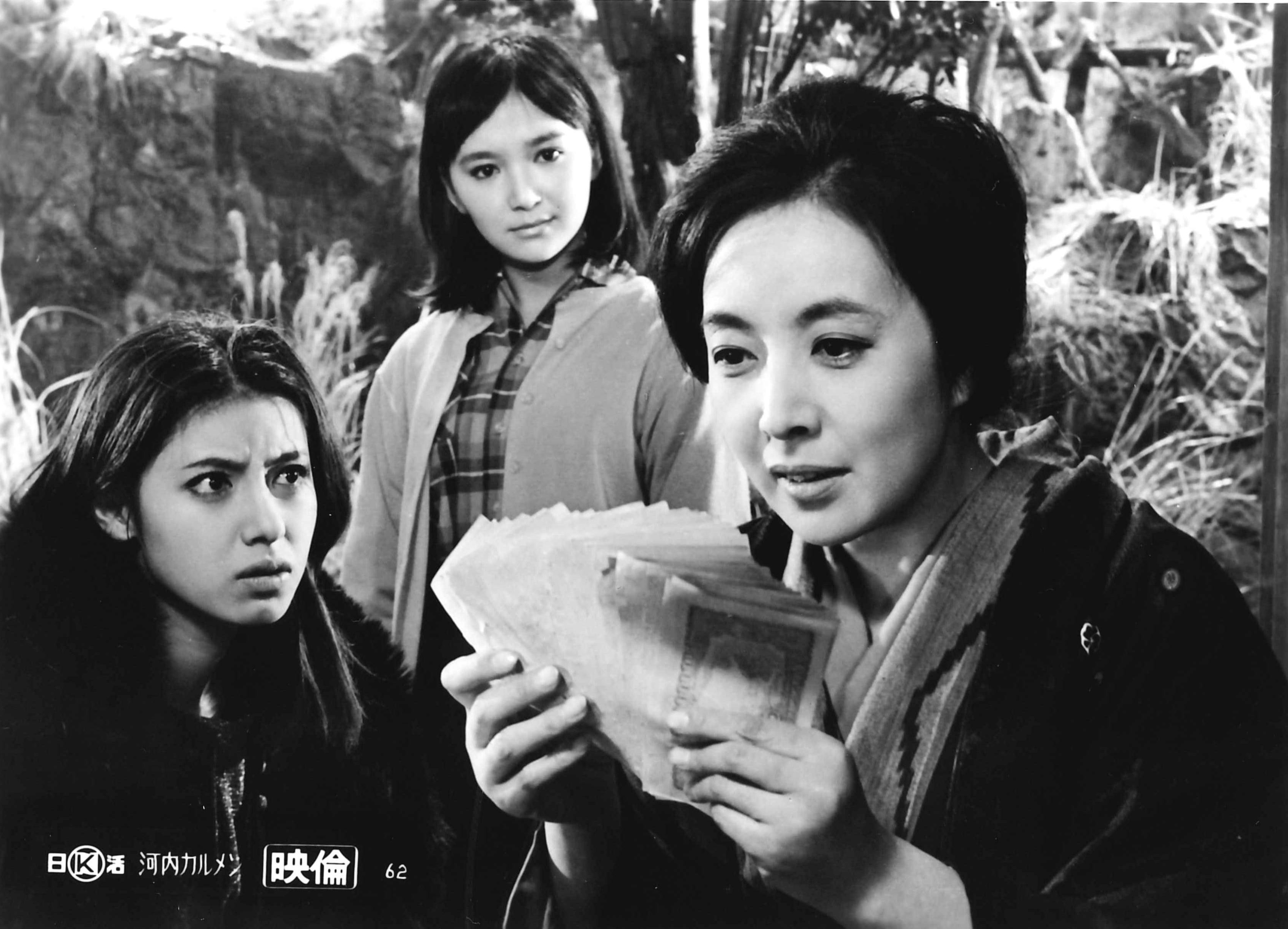
Carmen from Kawachi (河内カルメン, Seijun Suzuki, 1966)

(c)1966 Nikkatsu Corporation

A naive girl from the mountains finds herself chasing consumerist success and urban independence only to encounter further exploitation before eventually transcending her subjugation and returning to the source of her trauma in an ironic picaresque from the characteristically anarchic Seijun Suzuki. Adapted from a novel from Toko Kon whose book also provided the source material for The Incorrigible, Carmen from Kawachi (河内カルメン, Kawachi no Carmen) loosely adapts Bizet’s classic opera but ironically discovers a much positive outcome for its relentlessly plucky heroine. 

In Kawachi, meanwhile, a rural mountain backwater near Osaka, Tsuyuko (Yumiko Nogawa) is a rather innocent young woman with a crush on the son of the local factory owner, Bon (Koji Wada), who seems to like her too but is equally diffident if presumably mindful of the class difference which makes a relationship between them unlikely to succeed. Tsuyuko’s friend tells her of a girl from school who now works in a cabaret bar in the city and has all the mod cons in her fancy apartment including an electric fridge, washing, machine, and double bed but Tsuyuko doesn’t seem to be too impressed. However, when a pair of local reprobates overhear her romantic conversation with Bon, they begin to feel resentful and decide to rape her. As they approach Tsuyuko, they are seemingly joined by a small crowd of men from the local area each chasing after her. On her return home, she simply bursts into tears but is greeted by an even worse sight, catching her mother (Chikako Miyagi) in a passionate embrace with a lecherous monk whose disgusting fisheye face continues to haunt her, a spectre both of a world of patriarchal exploitation and her own prudishness which is also coloured by the trauma of her rape. 

Tsuyuko is indeed followed around by various men who are all in their way disappointing in their desire to possess her body. “When a woman sleeps with a man just one time, the man thinks she belongs to him”, her school friend explains after she begins working in the bar in Osaka thinking that as her honour’s already lost she might as well try cabaret. Yet there is a kind of power play involved in the hostess life, the men all running after Tsuyuko who only has to stand still and can in fact manipulate them in turn. Then again, as soon as she starts work she ends up having too much to drink and sleeping with a sad sack salaryman who lied that he was also from Kawachi in an attempt to win her sympathy. Like many in the bar he thinks of her as a bumpkin still smelling of mountain soil and is disappointed she’s not a virgin but then becomes obsessed with her to the point of ruination. Kanzo (Asao Sano) embezzles a humiliatingly small amount of money from the financial company where he works and is fired, hanging out in the rain outside the bar just to catch a glimpse of Tsuyuko. Tsuyuko isn’t interested in him but ends up feeling bad about her role in his downfall and letting him move into her apartment where he becomes something like her wife, taking care of all the domestic arrangements and even ironing her smalls.

For all that, Kanzo’s not that bad. He’s a sweet, if pathetic, guy who takes her sudden announcement that she’s moving on with good grace explaining rather sadly that these have been the happiest days of his life but he never expected them to last. Rather than a jealous lover, he willingly lets her go even agreeing to put on a show of anger so she won’t feel bad about abandoning him. In many mays, Kanzo is one of the best men she’s going to meet, save perhaps wealthy artist Seiji (Tamio Kawaji) who seem to have no romantic interest in her but becomes a valuable friend and confident. Then again, it’s not just men. After taking a job as a model to try and move on from the cabaret life, she’s sexually harassed by a predatory lesbian boss who takes her in as a maid and then tries to force her attentions on her, possibly lacking the language for seduction in this less enlightened age. When Seiji had tried to explain that her boss is a lesbian, Tsuyuko had simply laughed and been unable to believe such a thing could be true.

Suzuki pulls back from the fashion entrepreneur’s home to frame it as a dollhouse stage set, Tsuyuko now merely another plaything but also herself playing a role in the newly aspirant society. She does so again when Seiji gets her the gig as a mistress for a loanshark who sets her up in a fancy apartment but only asks her to wander around in the nude apparently interested in little other than voyeurism. Tsuyuko only agrees because she continues to chase the dream of pure love with Bon whom she has reencountered by chance. He is now brought low as his factory has gone bust and he’s broke which dissolves the class difference between them. But Bon is also chasing an elusive dream, in his case of success back in Kawachi by building an onsen at the site of a mysterious waterfall no one has been able to find for decades. Just as Tsuyuko is forced to prostitute herself for Bon, Bon prostitutes himself for his dream in that as she discovers he is her partner in a porn shoot directed by the sleazy loanshark who quite clearly also gets off on the romantic drama in play and the destruction of the “pure” love between Bon and Tsuyuko. 

Part of Tsuyuko’s disillusionment had been caused by the discovery that not only was her mother sleeping with the creepy priest but that she was doing it for money and her father knew. Her troubles have largely be precipitated by male failure, firstly her father’s in his inability to support his family, secondly in the fragile masculinity of the local boys who assaulted her, and then finally in the weakness of Bon who chose his fleeting dream of local success over his love for her. Having inherited the loanshark’s riches after he is randomly killed in a plane crash, Tsuyuko discovers she no longer wants them and tries to free her mother from male exploitation by giving her money in part for a decent funeral for her father. Only then does she learn that her mother has already substituted her younger sister Senko (Ruriko Ito), forcing her to sleep with the priest and blaming Tsuyuko for it for having run away. 

Tsuyuko takes dark and destructive action to rid herself of the troublesome priest as if exorcising the roots of her trauma, no longer afraid of men or of sex but firmly in charge of herself and her body. Her mother is not, however, particularly happy to be emancipated if ironically expressing the same sentiment in that she need have no fear of loneliness or penury for she can always find company if she desires it. Unlike Carmen, Tsuyuko is not undone by toxic masculinity and frustrated male pride but eventually transcends them even if as her mother says she may never be free of the priest’s “dark magic” while she takes to the streets of Tokyo with a rose in her teeth looking, if not quite perhaps for love, then at least satisfaction. Brimming with the joie de vivre and anarchy that would later make him famous from the raucous club scenes to the ironic framing of the porno shoot and dramatic freeze frames as Tsuyuko finally loses her faith in men, Suzuki’s Carmen allows its pure hearted heroine not only to triumph over the forces that oppress her be they men or merely consumerism but to subvert them to her advantage.


Carmen from Kawachi screens at Japan Society New York on Feb. 10 as part of the Seijun Suzuki Centennial.

Original trailer (no subtitles)

Images: (c)1966 Nikkatsu Corporation

Tokyo Drifter (東京流れ者, Seijun Suzuki, 1966)

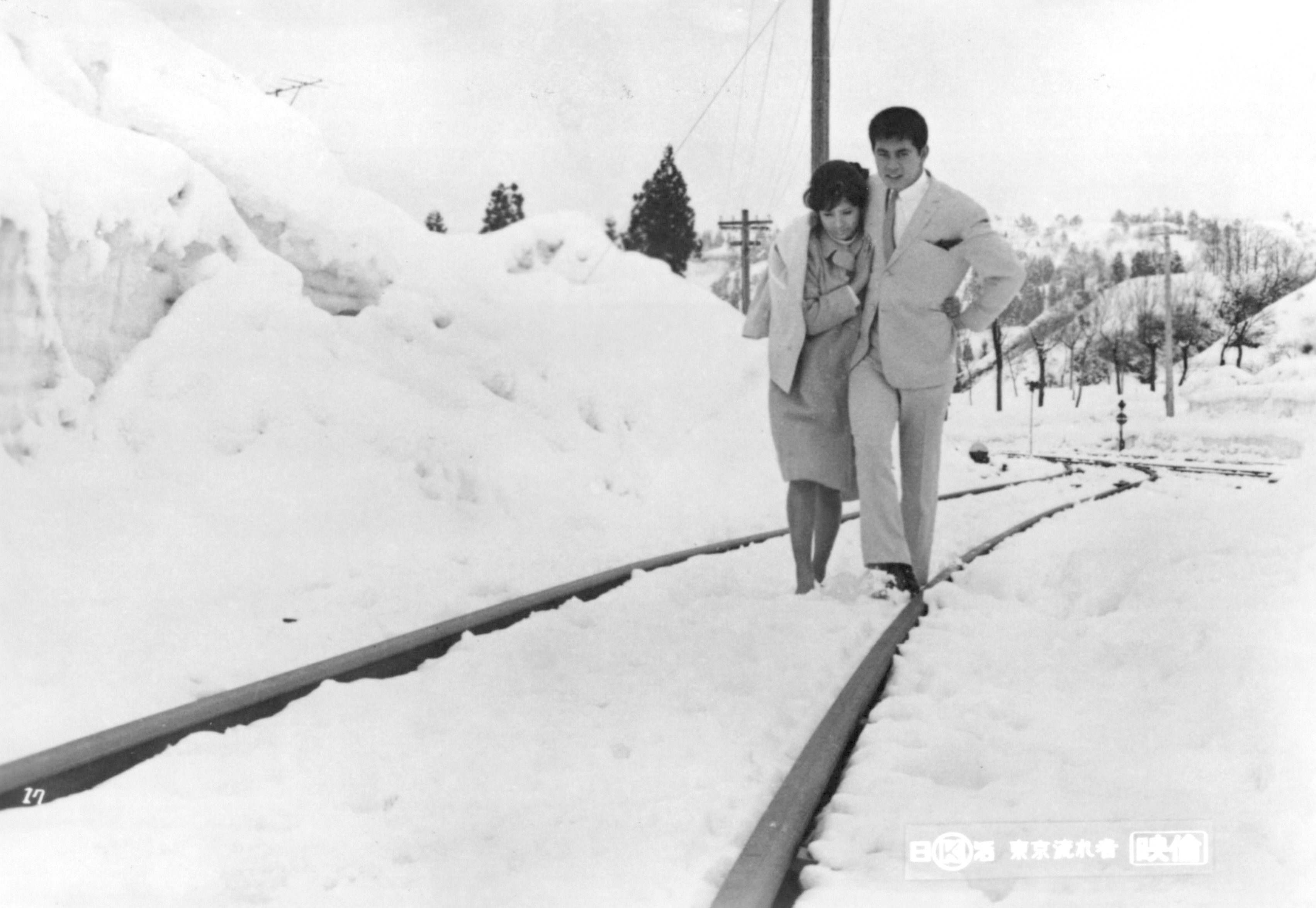
“Money and power rule now, honour means nothing” according to the new bread of upstarts gangsters in Seijun Suzuki’s Tokyo Drifter (東京流れ者, Tokyo Nagaremono). In many ways, what separates Nikkatsu’s youthful crime movies from Toei’s yakuza epics is that the nobility of Toei’s heroes is rarely questioned. In a Toei movie, it’s the world that’s wrong because the code is good and should be obeyed just as the hero obeys it, but in a Nikkatsu picture nihilism rules. The code isn’t right either, in fact it’s just another tool to manipulate and the hero, while noble, is wrong to follow it. 

That is in essence how Tetsu (Tetsuya Watari) will end up a Tokyo drifter, caught between the old world and a new consumerist Japan in which even the yakuza is attempting to corporatise and reform its image. His old boss, Kurata (Ryuji Kita), has done just that only he’s had to take out a sizeable loan from another former gangster turned real estate agent, Yoshii (Michio Hino), to do it. Realising his weakness, the upstart Otsuka gang sees an opportunity and stages an elaborate ruse that allows them to get their hands on Kurata’s valuable building and take out Yoshii at the same time though it results in Yoshii’s secretary (Tomoko Hamakawa), also the girlfriend of one of the Otsuka gang, getting caught in the crossfire. 

Tetsu describes his relationship with Kurata as like father and son and is sure he would never betray him. To preserve their new image, Tetsu does not fight back when ambushed by Otsuka goons and even puts himself on the hook for the secretary’s murder, but as much as Kurata insists he wouldn’t betray one of his “kids” to make things easier for himself perhaps he will if the situation calls for it. A defector from Otsuka’s gang, Shooting Star (Hideaki Nitani), tries to warn Tetsu that his faith in ideals like duty and loyalty is misplaced but Tetsu refuses to believe him. “Don’t shatter my dreams” Tetsu pleads, claiming that he cannot be around someone with “no sense of duty”.

Tetsu even feels sorry for Shooting Star, attributing his melancholy air to his having lost his sense of purpose in his disillusionment with post-war gangsterism. He might have a point in Shooting Star’s world weariness, but fails to realises that Shooting Star does in fact have a sense of duty and is in some ways the film’s only truly free man in forging it for himself from basic humanitarian values if tinged with a degree of cynicism. Though the pair clash, Shooting Star claims that he wants to save Tetsu from the pain of his inevitable betrayal and the disillusionment that will eventually come with it rendering him a perpetual wanderer and exile from mainstream society. 

Both men are in a sense lost amid the rapid social changes of their era, unable to move on from the post-war past into the new society even after breaking with the yakuza code in order to live by their own. In Suzuki’s complex colour scheme, Shooting Star is always clad in a forest-like green which echoes his freedom, while Otsuka is represented by a bloody red, and Tetsu dressed in an innocent powder blue suit until the final confrontation in which, along with his equally innocent love interest Chiharu (Chieko Matsubara) who had previously been associated with the colour yellow, is dressed in a pure white while all around him are now in black as representatives of those who have succumbed to the amoral capitalism of the the contemporary society. 

Suzuki even has Tetsu walk down an arched corridor reminiscent of a church into an abstract space expanding the stage at the club to lend this moment of existential struggle a little more theatricality. In a sense what Tetsu does is an act of suicide, severing his ties to the yakuza world by smashing Kurata’s glass and killing at least the image of him as a father figure to become a new man or perhaps a wandering ghost who no longer has a home and must even give up his romance with Chiharu in an acknowledgement of his exile. On Otsuka’s death, it’s almost like an alarm is switched off in the sudden shift from red to white in the giant statue standing behind Chiharu, the survivors united in white but rather than the wedding suggested by the colour of their clothes the atmosphere is funereal as Tetsu accepts he can no longer stay in this temporary space and must enter another sort of purgatory as lonely wander comforted only by his newfound freedom.


Tokyo Drifter screens at Japan Society New York on Feb. 4 as part of the Seijun Suzuki Centennial.

Original trailer (English subtitles)

Japan Society New York to Host Seijun Suzuki Centennial Feb. 3 – 11

In collaboration with The Japan Foundation, Japan Society New York will be marking the 100th anniversary of late director Seijun Suzuki’s birth with a mini retrospective featuring six of his films from across his career each screening from imported 35mm prints.

Feb. 3, 7pm: Kagero-za

Yusaku Matsuda stars as a confused playwright drawn to a woman who may be a ghost in Suzuki’s hallucinatory Taisho-era drama adapted from a story by Kyoka Izumi.

Feb. 4, 5pm: Satan’s Town / Love Letter

Early Nikkatsu crime feature Satan’s Town hints at the future direction of Suzuki’s career in its dark humour and anarchic use of freeze frame while charting a gang boss’ attempts to set up a new heist after getting out of prison only to find his scheme undermined by the competing desires of his gang of thieves. Satan’s Town screens with the short kayo or ballad film Love Letter starring singer Frank Nagai as a performer whose pianist makes a new discovery when she attempts to visit her lover with whom she has been corresponding by mail after he moved to the wilderness.

Feb. 4, 8pm: Tokyo Drifter

Avant-pop gangland drama starring Tetsuya Watari, who also performs the opening ballad, as a recently released yakuza trying to start again but immediately drawn back into underworld intrigue as his old associates attempt to knock him off.

Feb. 10, 7pm: Carmen from Kawachi

(c)1966 Nikkatsu Corporation

Surreal picaresque inspired by Bizet’s Carmen following a naive young woman’s flight to the city where she progresses through a series of exploitative jobs and disappointing relationships before regaining a sense of confidence and independence.

Feb. 11, 7pm: A Tale of Sorrow and Sadness

Suzuki’s comeback after being fired by Nikkatsu is a surreal media satire inspired by Ikki Kajiwara’s sports manga in which a fashion studio wanting to compete with a rival who’ve just made a top Russian gymnast their brand ambassador decide to create a homegrown star by grooming a promising golfer. Events take a darker turn when her newfound fame attracts the attentions of a psycho housewife stalker from the conservative upper middle class neighbourhood her bosses have chosen for her new home.

The Seijun Suzuki Centennial runs at Japan Society New York, Feb. 3 – 11. Tickets priced at $15 / $12 students & seniors, and $10 Japan Society Members are on sale now via the official website while you can also keep up with all the year-round events by following Japan Society Film on FacebookInstagram, and Twitter.