Before We Vanish (散歩する侵略者, Kiyoshi Kurosawa, 2017)

©2017 BEFORE WE VANISH FILM PARTNERS

before we vanish posterKiyoshi Kurosawa is getting sentimental in his old age. In Journey to the Shore and Real, brokenhearted, left behind spouses went on long and difficult journeys of grief and salvation. In Before We Vanish (散歩する侵略者, Sanpo Suru Shinryakusha) we receive a visitation that presages our doom but wishes to know us before we go. An alien invasion movie which takes its cues from Invasion of the Body Snatchers and They Live, Kurosawa’s quirky drama is less about the enemy within than the hidden existential threat of a failure to understand oneself. As the Japanese title suggests, these invaders are merely out for a stroll, making time to smell the flowers before the big lawnmower arrives to cut them all down.

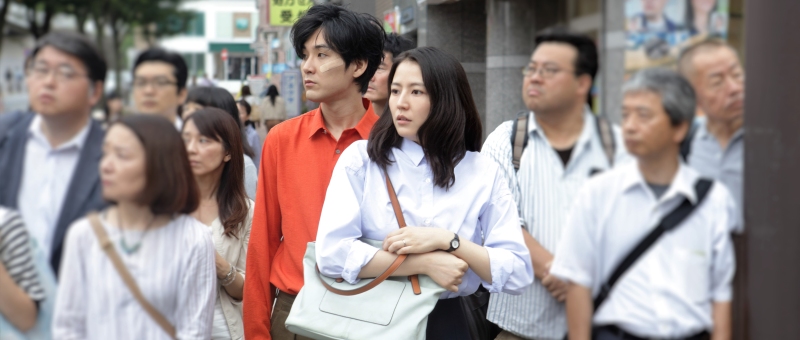
Strange events are afoot in Tokyo. A high school girl wanders home with a pair of goldfish in a plastic bag before brutally murdering her entire family, gazing at the scene of carnage with a beatific smile. Meanwhile, the estranged wife of Shinji Kase (Ryuhei Matsuda), Narumi (Masami Nagasawa), has been sent for to claim her presumably amnesiac husband from a medical facility. Shinji was brought in after wandering the streets cluelessly and seems to have lost certain sections of his memory. The doctor’s diagnosis is uncertain but leans towards some kind of temporary psychotic break or early onset Alzheimer’s. In any case, he is now Narumi’s responsibility, much to her consternation. Across town a down on his luck journalist (Hiroki Hasegawa) covering the brutal family murder finds himself the designated “guide” to another strange young man, Amano (Mahiro Takasugi), who seems to have done something very untoward to his parents.

These three “strangers” are really invaders from outer space – something which they freely confess to anyone who will listen, only everyone assumes they are joking. Exactly why they want to destroy the Earth is never revealed, nor is the the reason for the strange mission undertaken by the three researchers acting as the vanguard for the upcoming invasion. These three have been tasked with a thorough investigation of “humanity” in which they must learn and acquire certain “concepts”. They do this by requiring the subject to visualise their thinking behind a word or phrase and then tapping the head to pinch it causing that concept to be removed from the person’s interior cosmology.

The aliens learn as much from the effect of removing the concept as they do from its explanation. This being Japan, it’s not surprising that the first concept Shinji removes is that of “family” which he takes from Narumi’s younger sister, Asumi (Atsuko Maeda). Asumi had decamped to Narumi’s after an argument with her parents over their railroading her into a mainstream life she doesn’t really want. The removal of the concept of family means Asumi no longer needs to be bound by hollow obligation but her sudden coldness towards her sister immediately invites a series of other questions as to the true nature of their relationship. Similarly, Shinji removes a concept of “possession” from a young man. The young man does not immediately lose understanding of the word, but the concept ceases to be important to him. He is, in a sense, freed from the burden of materialism. Paying an unexpected visit to Narumi’s workplace and meeting her boss who, it seems, has just belittled her work on an important project after she rebuffed his attempt at sexual harassment, Shinji removes his concept of “work” leading him to play aeroplanes all around the office like an overexcited child.

There are positive effects of losing some of these centrally held ideas even if their loss seems tragic or painful on the surface. They are, however, what make us human whether that be attachment to family or an irrational desire to devote all to work and ceaseless acquisition. The final, most elusive concept is that of love – something alien and fascinating to the visitors which they find impossible to harvest due its essentially nebulous nature. Despite being part of a uniform hive mind, the invaders have each developed unique personality traits as a consequence of their “human” lives – the schoolgirl craves violence and destruction, Amano fatherly friendship, and Shinji something close to love with his own “guide” in the form of Narumi whose love for her husband apparently endured despite his betrayal.

Far from the gloomy nihilism of Pulse in which death is eternal loneliness, Before We Vanish suggests that what will survive of us is love. Salvation does, however, require a sacrifice which provokes the film’s romantic conclusion in which the absence of love becomes the “eternal loneliness” promised by Pulse but is tempered by patience and devotion. A gleefully absurdist exploration of the human soul, Before We Vanish finds Kurosawa at his most optimistic affirming the power of the human spirit at its most indestructible.


Screened at the London East Asia Film Festival 2017.

International trailer (English subtitles)
Women of the Night (夜の女たち, Kenji Mizoguchi, 1948)

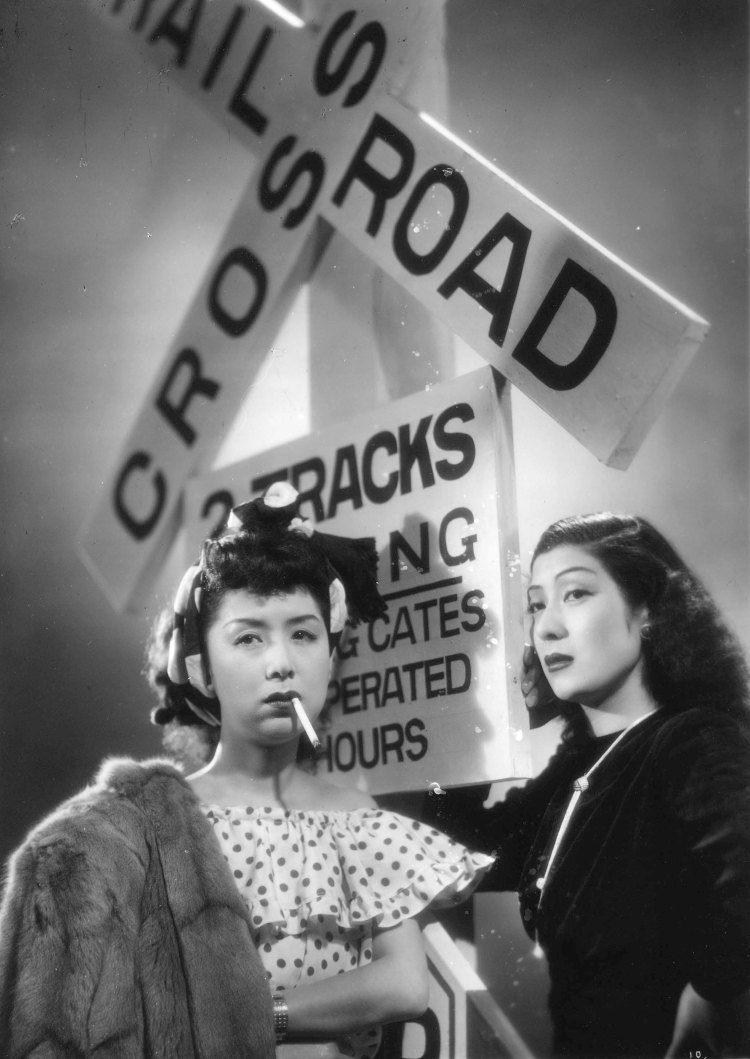
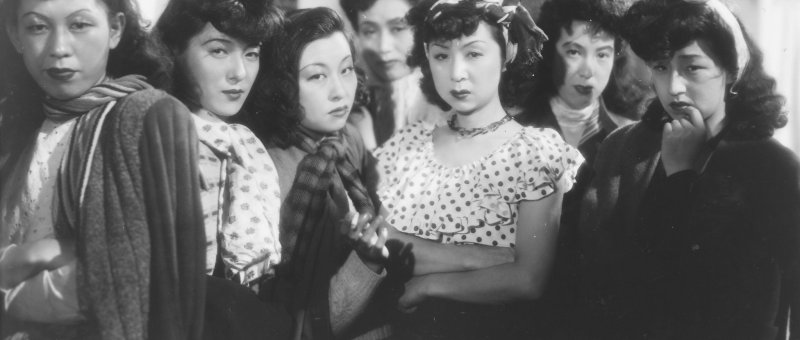
Women of the Night still 1Cinema of the immediate post-war period generally leaned towards upbeat positivity, insisting that, yes, the situation is painful and difficult but it wouldn’t always be this way, at least as long as ordinary people kept their chins up and worked hard to build a better future. Mizoguchi’s Women of the Night (夜の女たち, Yoru no Onnatachi) is very much not interested in this rosy vision of future success being sold by a new morale boosting propaganda machine, but in laying bare the harsh and unforgiving nature of a society that was fast preparing to leave a significant part of its population far behind. Women suffer in war, but they suffer after war too – particularly in a society as stratified as Japan’s had been in which those left without familial support found themselves entirely excluded from the mainstream world.

Fusako (Kinuyo Tanaka), a noble, naive woman still hasn’t heard from her presumably demobbed husband and is living with her in-laws. Her young son has tuberculosis and she is desperately short of money. Selling one of her kimonos, Fusako is excited to to hear of an “interesting proposition” but is repulsed when she realises the saleswoman is inciting her to an act of prostitution. After all, she says, everybody is doing it.

After undergoing a series of tragedies, Fusako thinks things are beginning to go right for her when she manages to get a secretarial job through the kindness of a connection, but it turns out that Mr. Kuriyama (Mitsuo Nagata) is not all he seems and his business may not be as legitimate as Fusako believed it to be. Another small miracle occurs on a street corner as Fusako runs into her long lost sister, Natsuko (Sanae Takasugi), formerly living in Korea and now repatriated to Japan, but a return to normal family life seems impossible in the still smouldering ruins of Osaka filled with black marketeering, desperation, and hopelessness.

Inspired by the Italian Neo Realist movement, Mizoguchi makes brief use of location shooting to emphasise the current state of the city, still strewn with rubble and the aftermath of destruction. Osaka, like Natsuko and Fusako, finds itself at a cross roads of modernity, paralysed by indecision in looking for a way forward. Fusako, the kinder, more innocent sister dresses in kimono, does not smoke, and is committed to working hard to build a new life for herself. Natsuko, by contrast, dresses exclusively in Western clothing, smokes, drinks, and works as a hostess at a dancehall with the implication that she is already involved in casual forms of prostitution.

Natsuko’s way of life, and later that of Fusako’s much younger sister-in-law Kumiko (Tomie Tsunoda), is painted as a direct consequence of an act of sexual violence. Having been raped during the evacuation from Korea, Natsuko feels herself to have been somehow defiled and rendered unfit for a “normal” life, relegated to the underground world of the sex trade as an already damaged woman. Fusako disapproves of her sister’s choices and is alarmed by the unfamiliar world of bars and dance halls but eventually ends up in the world of prostitution herself as a result of emotional violence in the form of cruel yet incidental betrayal. Fusako’s “descent” into prostitution is less survival than an act both of revenge and of intense self-harm as she vows to avenge herself on the world of men through spreading venereal disease.

Mizoguchi’s attitudes towards sex work were always complex – despite displaying sympathy for women who found themselves trapped within red light district as his own sister had been, he was also a man who spent much of his life in the company of geishas. Nevertheless Women of the Night veers between empathy and disdain for the hosts of post-war “pan pans” existing in codependent female gangs in which violence and hierarchy were as much an essential part as mutual support. The film opens with a sign which instructs women that they should not be seen out after dark lest they will be taken for prostitutes, respectable women should make a point of being home at the proper hour. Later, when Fusako is picked up by a police raid, she comes across a woman from the “purity board” who wants to hand out some pamphlets to help women “reform” from their “impure” ways and temper their presumably insatiable sexual desire. Fusako quite rightly tells the woman where to go while the others echo her in confirming no one has volunteered to live this way because they like it. Starving to death with a pure heart is one thing, but what are any of these women supposed to do in a world that refuses them regular work when they have already lost friends and family and are entirely alone with no hope of survival?

A third option exists in the form of a home for women which has been set up for the express purpose of “reforming” former prostitutes so that they can lead “normal” lives. The home provides ample meals, medical treatment and work though its attitude can be slightly patronising even in its well meaning attempt to re-educate. Again the home is working towards an ideal which is not evident in reality – there are no jobs for these women to go to, and no husbands waiting to support them. Incurring yet another tragedy, Fusako receives a well meaning lecture from a male employee at the home to the effect that it’s time for women to work together to build a better world for all womankind but Fusako has seen enough of the sisterhood realise that won’t save her either and leaves the man to his platitudes trailing a dense cloud of contempt behind her.

Yet Fusako does change her mind, finally reunited with the missing Kumiko who has also fallen into prostitution after running away from home and being tricked by a boy who pretended to be nice but only ever planned to rob and rape her. In a furious scene of maternal rage, Fusako rails against her plight, enraged by Kumiko’s degradation which ultimately forces her to see her own. Brutally beaten by the other women for the mere suggestion of leaving the gang, Fusako is held, Christ-like, while she pleads for an end to this existence, that there should be no more women like these. The storm breaks and the other women gradually come over to Fusako’s side, depressed and demoralised, left with no clear direction to turn for salvation. Mizoguchi ends on a bleak note of eternal suffering and continuing impossibility but he pauses briefly to pan up to an unbroken stained glass window featuring the Madonna and child. Fusako emerges unbroken, taking Kumiko under her maternal wing, but the future they walk out into is anything but certain and their journey far from over.   


Screened at BFI as part of the Women in Japanese Melodrama season. Screening again on 21st October, 17.10.

Osaka Elegy (浪華悲歌, Kenji Mizoguchi, 1936)

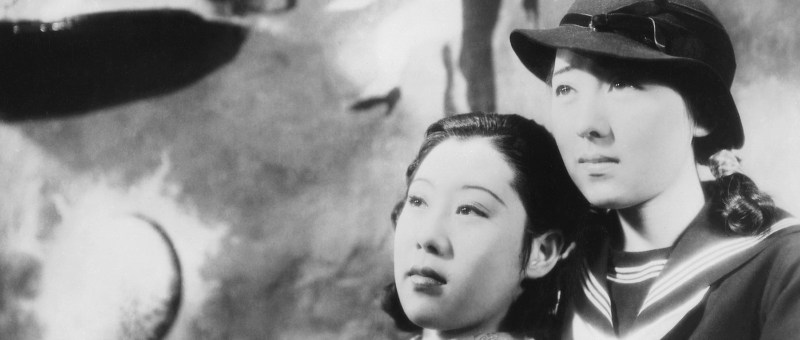
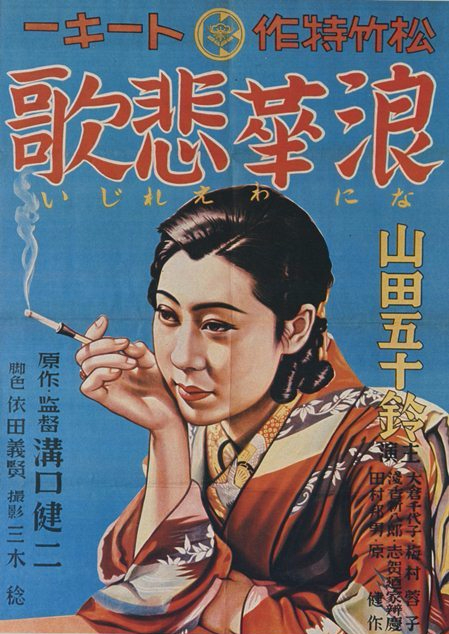
osaka elegy posterKenji Mizoguchi felt he was hitting his artistic stride with Osaka Elegy (浪華悲歌, Naniwa Elegy). Released in 1936 amid the tide of rising militarism, Mizoguchi’s tale of sacrifice and betrayal is strikingly modern in its depiction of female agency and the impossibility of escape from the confines of familial power and social oppression. Sexual harassment was not so much a problem as an accepted part of life in 1936, but as always it’s never the men who suffer. In depicting life as he saw it, Mizoguchi’s vision is bleak, leaving his forward striding heroine adrift in a changing, volatile world.

Beginning not with the protagonist, Mizoguchi first introduces the quasi-antagonist, lecherous boss Asai (Benkai Shiganoya), who feels trapped in an unhappy marriage to a bossy, shrewish woman. For Asai, the head of a family pharmaceuticals firm, work is an escape from family life and the same is also true for telephone switchboard operator Ayako (Isuzu Yamada) who lives with her feckless father whose gambling problem has left them all with serious debts. Asai, encouraged by Fujino (Eitaro Shindo), a colleague well known to be a womaniser, has developed a crush on the meek and innocent Ayako and continues to harass her at work, invading her personal space and pleading with her to have dinner with him. She declines and leaves distressed but when her father is discovered to have embezzled a large sum of money from his company which they will let go if he pays it back, Ayako is faced with a terrible dilemma.

In essence, Osaka Elegy is a hahamono which shifts focus to the self-sacrificing daughter of motherless family rather than a betrayed mother who gives all for her children and receives little in return. Ayako flits between resentment of her useless father’s poor parenting which has left her the sole figure of responsibility for a younger sister and older brother who already seem to hate her even before her present predicament. Yet however much she loathes her father for his weaknesses, she still feels a responsibility to help him and to avoid the social stigma should he fail to repay the money he stole and is arrested. Once she makes the difficult decision to become Asai’s mistress, her fate is sealed. She loses her future, her right to be happy, and the possibility of marriage to her equally meek boyfriend Nishimura (Kensaku Hara).

Being Asai’s mistress is perhaps not as bad as it sounds. Ayako is at least provided for – Asai pays her father’s debt and sets her up in an apartment they can use to conduct their affair but her status will always be uncertain. Asai’s wife (Yoko Umemura), ironically enough, is fond of Nishimura who may be something of a gigolo but their situation is unlikely to entail further consequences for either of them. In her relationship with Asai, Ayako begins meekly, playing the part-time wife which is exactly the figure Asai desires – someone to lovingly help with his coat and throw a scarf around his neck. When the affair is discovered by Mrs. Asai, Ayako’s character undergoes a shift. No longer meek and passive, she declares she will not see Asai again. Her physical presence and manner of speaking reverts to the repressed resentment previously seen only when dealing with her father.

If the failed affair allows a certain steel to rise within her, her neat kimono swapped for the latest flapper fashions, Ayako remains ill equipped to operate within the world she has just entered. About to renounce her “delinquent” life, Ayako fixes her hopes on reuniting with Nishimura and the normal, peaceful marriage to a kind and honest man that should have been hers if it were not for her father’s lack of care. Just when it looks as if she may triumph, a second familial crisis sends her right back into the world she was trying to escape but Ayako overplays her hand and suffers gravely for it.

Having sacrificed so much for her family, Ayako is rejected once again. Her feckless father and cruel siblings do not want to be associated with her “immoral” lifestyle which has made her a media sensation and continues to cause them embarrassment. She has lost everything – career, love, family, reputation and all possibility for a successful future. Yet rather than ending on the figure of a broken, desolate woman, Mizoguchi allows his heroine her pride. Ayako, far from collapsing, straightens her hat and walks towards the camera, facing an uncertain fate with resolute determination, defiantly walking away from the patriarchal forces which have done nothing other than conspired to ruin her.


Screened at BFI as part of the Women in Japanese Melodrama season. Screening again on 21st October, 17.10.

Also available on blu-ray as part of Artificial Eye’s Mizoguchi box set.

Opening scene (English subtitles)

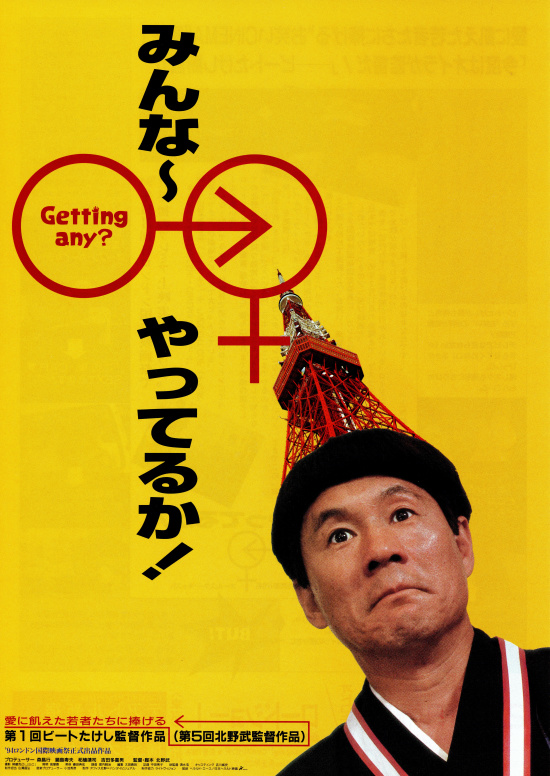
Getting Any? (みんな~やってるか!, Takeshi Kitano, 1995)

getting any? posterDespite his reputation for violent gangster dramas and melancholy arthouse pieces, Takeshi Kitano is one of Japan’s most successful comedians and began his career as half of an irreverent and anarchic “manzai” comedy double act. 1995’s Getting Any? (みんな~やってるか!Minna – yatteruka!) is his first big screen comedy and loosely takes the form of a series of variety-style skits in which a lonely, hapless middle-aged man tries on various different personas in the pursuit of his goal but remains an isolated bystander in the surreal events which eventually engulf him. Part bawdy, sleazy sex comedy and satire on the death of materialism in the post-bubble world, Getting Any? is a cineliterate journey through Showa era pop culture peppered with gratuitous nudity and absurd running jokes.

After watching a very 1980s “aspirational” movie in which a good looking, wealthy young salaryman type gives a young lady a lift in his flashy convertible in which they later end up having sex, Asao (Dankan), watching at home in his pants with his grandpa sitting behind him, decides the reason he hasn’t got any luck with women is that he doesn’t have a car. So, he goes and gets one from a very strange salesman but as he doesn’t have much money the car he gets is, well, it’s unlikely to get stolen, and he still isn’t getting anywhere. He tries a convertible too but that’s no good. Then he starts fantasising about air hostesses, decides to become an actor, gets mistaken for a top yakuza hitman, and comes into contact with a pair of mad scientists who want to turn him invisible.

Asao has only one goal – to have sex with a lady (preferably in a car), but he never stops to think of his potential partners as anything more than a receptacle for his desires. Consequently, he refuses to look at himself or consider the ways he might be getting in the way of his own needs, but constantly chases a quick fix thinking that the reason women don’t want him is because of something material that he lacks. He thinks the path to sexual success lies in cars, money, status, and finally technology, but none of these things really matter while Asao remains Asao.

As part of his journey, passive as it is, Asao does not always remain Asao, or at least the Asao he was for very long. Having failed to be the sort of man who can woo with car, he tries acting – literally playing a part, at which he seems quite good except for going “overboard”. An incident on an aeroplane sees him mistaken for a top yakuza which he is less good at but every mistake only ever works out in his favour. Thanks to his involvement with the mad scientists whom he allows to experiment on him so that he can go peeping in the women’s baths, Asao will finally become another kind of creature entirely, literally reduced to feeding off the excrement his nation has recently produced.

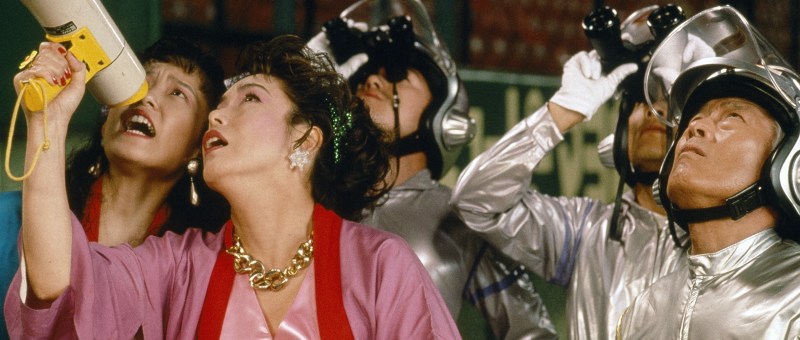
Kitano works in just about every element of almost “retro” pop-culture he can think of from the amusing soundtrack of Showa era hits and references to famous unsolved crimes to a hitman named “Joe Shishido” (star of Branded to Kill), the Zatoichi series, a Lone Wolf and Cub ventriloquist dummy duo, the Invisible Man, Ghostbusters, The Fly, and finally Toho’s tokusatsu classics culminating a lengthy skit inspired by Mothra including the iconic Mothra song given new lyrics and the same old dance performed by two full-sized ladies. Though most viewers will be able to spot the joke even without quite understanding it, some knowledge of Japanese pop-culture from the ‘70s and ‘80s will undoubtedly help.

The central joke revolves around Asao’s fecklessness as he repeatedly fails at each of his schemes, only occasionally succeeding and then by accident, and not for very long. A charmless literalist who lacks the imagination to achieve his goals in a more natural way, Asao fails to learn anything at all, engulfed by one surreal situation after another. It does however give Kitano the excuse to indulge Asao’s flights of fancy as his sexual frustration sends him off into a series of bizarre reveries involving topless women desperate to make love to the suave male stand-in Asao has imagined. Filled with silly slapstick humour and frequent nudity, Kitano’s subtle satire may get lost but even if the joke begins to wear thin just as “flyman” finally lands on his object of desire, there is plenty of amusement on offer for fans of lowbrow humour.


Getting Any? is released on blu-ray by Third Window Films on 16th October, 2017.

Original trailer (English subtitles)

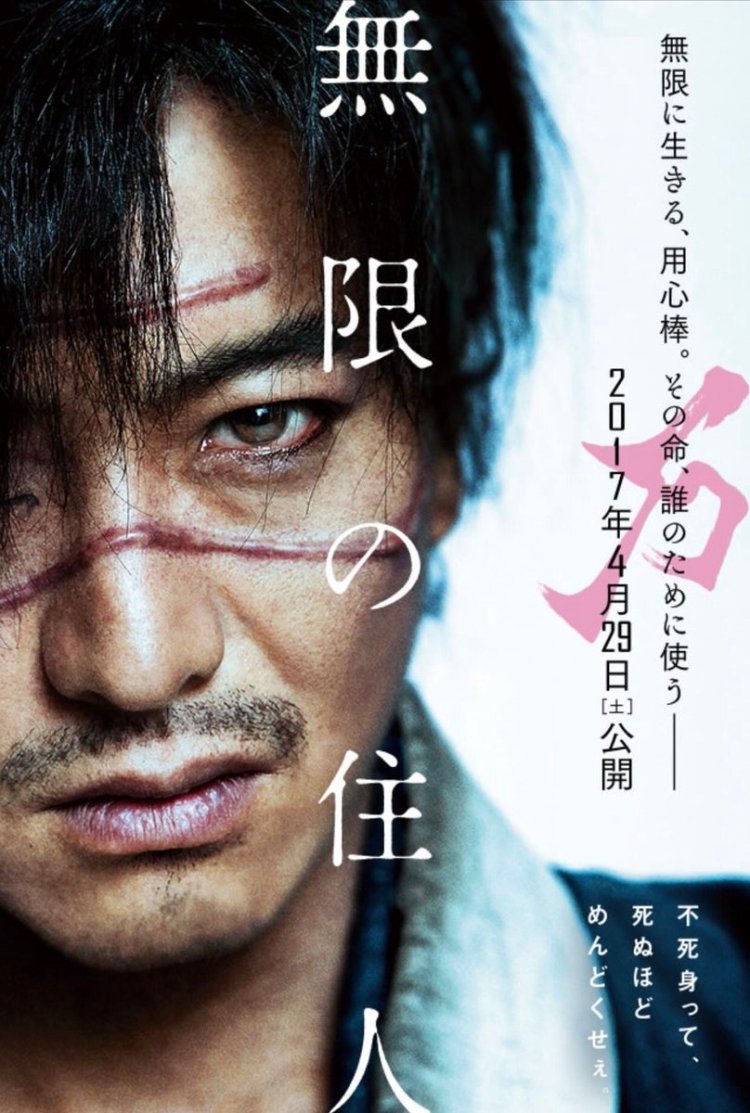
Blade of the Immortal (無限の住人, Takashi Miike, 2017)

blade of the immortal posterGenerally speaking, revenge tends not to go very well in Japanese cinema. It has the tendency to backfire. When you’re immortal, however, perhaps revenge is risk worth taking – then again, it’s not your life your weighing. Takashi Miike is no stranger to the jidaigeki world, though in adapting Hiroaki Samura’s manga Blade of the Immortal (無限の住人, Mugen no Junin) he harks back to the angry, arty samurai films of the late 1960s from Gosha’s Sword of the Beast with which the manga features some minor narrative similarities, to Kobayashi’s melancholy consideration of corrupted honour, and the frantic intensity of Okamoto’s Sword of Doom.

The film opens in black and white as a disgraced samurai, Manji (Takuya Kimura), tries to protect his younger sister, Machi (Hana Sugisaki), who has gone mad through grief only to see her murdered by a bounty hunter. Manji enters a state of furious, mindless killing which leaves the bounty hunter’s vast crowd of henchmen lying dead and Manji mortally wounded. Consumed by guilt and having lost the sister who was his sole reason for living, Manji longs for death but a mysterious old woman who calls herself Yaobikuni (Yoko Yamamoto) has other ideas and curses Manji to a life of eternal suffering by means of sacred bloodworms which give him the power of infinite, near instant healing.

Fifty years later, the land is at peace under the Tokugawa Shogunate but peaceful times are dull for warriors. The Itto-ryu school of swordsmanship has a mission – to take over all of the nation’s martial arts facilities and restore power to the sword. They have no honour or ideology save that of kill or be killed and are content to use any and all weapons which come to hand. A young girl, Rin (Yoko Yamamoto), is a daughter of one of these schools and has her eyes set on becoming a top swordswoman herself but when the Itto-ryu show up at her door, Rin’s father’s training proves worthless as he’s cut down with one blow while the gang kidnap Rin’s mother. The Itto-ryu’s sole concession to morality is in letting Rin alone, seeing as it’s “vulgar” to toy with children.

Rin vows revenge on the Itto-ryu’s leader, Anotsu (Sota Fukushi), at which point she runs into Yaobikuni who recommends she track down Manji and hire him as a bodyguard. Fifty years of immortality have turned Manji into an isolated, embittered wastrel with rusty swordskills but Rin’s uncanny resemblance to Machi eventually begins to move his heart. Despite generating a master/pupil, big brother/little sister relationship, Manji fails to teach Rin very much of consequence that might assist her in her plan to avenge her family, leaving her a vulnerable young woman beset by enemies and random thugs, and eventually caught up in a government conspiracy. The irony of Manji’s life is that he’s just not very good at the art of protection and all of his attempts to do something good usually provoke an even bigger crisis, in this case leaving his new little sister open to exactly the same fate as the one he failed to save for much the same reasons. Apparently, Manji has learned little during his extended lifetime except how to brood and glare resentfully at the world.

It turns out being immortal is kind of a drag. Manji wants to die because he can’t cope with the burden of his guilt, but another similarly cursed man he meets has lived much longer and lost far more, becoming tired of the business of of living. Manji’s existence has lost all meaning, but as he puts it to another world weary warrior who shares his brotherly grief, he’s not the only hero of a sad story. Rin’s need for vengeance gives him a purpose again – not just in the literal revenge, but in being the protector (though one could argue this is less positive than it sounds and might explain why he fails to teach Rin anything very useful, even if it doesn’t explain why she also forgets all her father’s teachings).

Rin remains conflicted over her mission of revenge, confessing to a similarly conflicted assassin that she agrees killing is wrong but that right and wrong no longer matter when it comes to people you love. A dangerous and dubious assertion, but it does bear out the more positive message that love, or at least learning to live for others, can be a transformative force for good as Manji allows himself to resume his role as the big brother despite his past failings. Violent and visceral, if also humorous, Blade of the Immortal is, oddly enough, a story of love but also of cyclical paths of violence and revenge, and of the general muddiness of assigning the moral high ground to those engaged in a quest for retribution.


Blade of the Immortal was screened as part of the BFI London Film Festival 2017 and will be released in UK cinemas courtesy of Arrow Entertainment on 8th December.

International trailer (English subtitles/captions)

The Night is Short, Walk on Girl (夜は短し歩けよ乙女, Masaaki Yuasa, 2017)

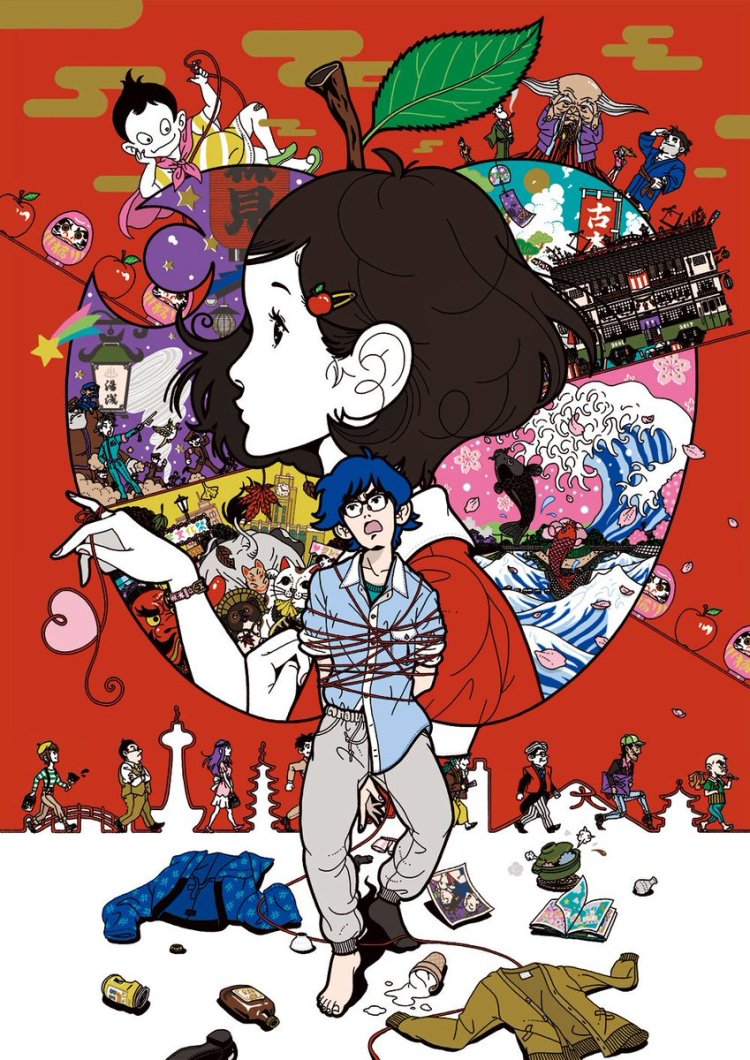
The Night is Short posterHave you ever had one of those incredibly long nights that seemed to pass in an instant? Masaaki Yuasa returns to the absurd world of Tomihiko Morimi with the charming one night odyssey, The Night is Short, Walk on Girl (夜は短し歩けよ乙女, Yoru wa Mijikashi Aruke yo Otome), which takes place in the same world as Yuasa’s TV anime adaptation of the author’s Tatami Galaxy. The Girl with Black Hair dreams her way through Kyoto, relentless as a steam train in her pursuit of new experiences, but perhaps the speed at which she travels leaves her horizons perpetually unclear.

Beginning where many stories end, The Night is Short, Walk on Girl, opens with a wedding. “Sempai” (Gen Hoshino) longs for the “Girl With Black Hair” (Kana Hanazawa). He doesn’t know her name or really very much about her at all other than she’s in the year below him and they belong to the same club, but this is a love for the ages fated to come true. To this end, Sempai has been engineering “coincidental” meetings with the Girl so that she knows he exists, in a “there’s that guy again!” sort of way, hoping to travel into her heart by means of osmosis. Until then he’ll just stare at her lovingly from three tables away at social events involving mutual friends…

The Girl, however, has her own plans. She’s determined to make her way into the world of adulthood this very night, travelling by the power of alcohol (for which she seems to have a seriously impressive tolerance). For the Girl, the night is filled with possibilities. She’s open to everything and everyone, ready to say yes to whatever strange adventure the gods have in store for her. Which is lucky, because this is going to be a very strange night indeed.

The Night is Short pivots around the idea of connection as its two poles – Sempai and The Girl, are perpetually kept apart, orbiting each other in an endless search for a home. The Girl drinks and claims she feels the interconnectedness of all things, at one with the world and everybody in it. The miserly, miserable local god she’s in the middle of a drinking contest with understands her reasoning but has lived too long to agree with it. After all, at some point you have to stop drinking and the world is cold and lonely. The old man tastes only life’s nothingness, for him life is fruitless and nearing its end but for the girl all the world is flowers and warmth, filled with promise and possibility.

If the old man is right and alcohol provides only a fleeting, essentially fake feeling of contentedness, then perhaps there are other routes to true connection – such as the universal circulation of books. Books carry ideas between people and take feelings with them yet there are those who try to staunch the flow – namely book collectors who try to stem the system by hoarding copies to push up the price. Sempai and the Girl each find themselves caught up in this act of anti-human profiteering as allies or enemies of the strange little creature who presides over the great book fair of life.

Even those, like the old man, who feel themselves to be excluded from human society prove themselves connected by one very special unifying factor – the passage of disease. The Girl is committed to spreading happiness wherever she goes, healing the sick and ministering to the lonely, but even those who feel they have nothing to give have still given away a part of themselves in the form of the common cold as it rips like wild fire through old Kyoto with the desperate force of a lifetime’s painful rejection. It’s kind of beautiful, in a way, as the old man’s life suddenly brightens in not feeling so alone anymore after casting himself as patient zero.

Yuasa’s drunken night in Kyoto is strange and surreal. Time runs inconsistently, revealing the uncomfortable truth that it speeds up as you grow older and night approaches dawn to the still young Girl, too full of life and possibility to think of looking at a clock. Sempai remains a cypher, his only clear personality trait being his certain love for the strange girl who’s always too busy chasing dreams to see him. His friends are also facing their own strange nights from the one who’s decided not to change his undies until he’s reunited with his one true love with whom he shared but one fateful encounter, and the other whose taste for female attire receives a slightly muddled reception, but they each find themselves caught up with three level pagoda trains, guerrilla theatre practitioners (or “school festival terrorists”) whose protest turns out to be romantic rather than political, not to mention the persistent threat of underwear thieves. Is this fate, or mere “coincidence”? In the end perhaps it doesn’t matter, but the night is short. Walk on Girl, just slow down a little, you have all the time you need.


The Night is Short, Walk on Girl is released in selected UK cinemas on Oct. 4 courtesy of Anime Ltd. Check the official website to see where it’s screening near you.

Original trailer (English subtitles)
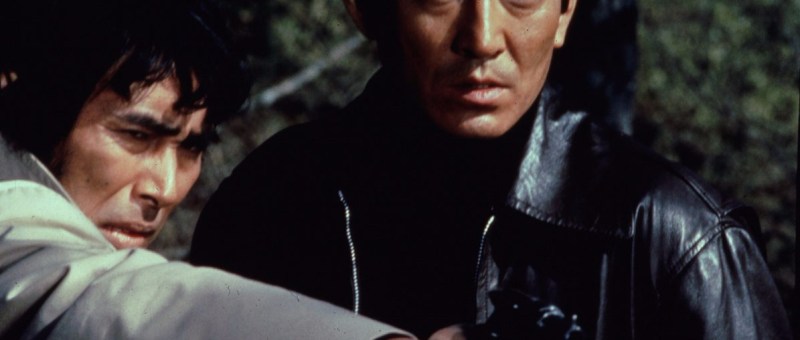
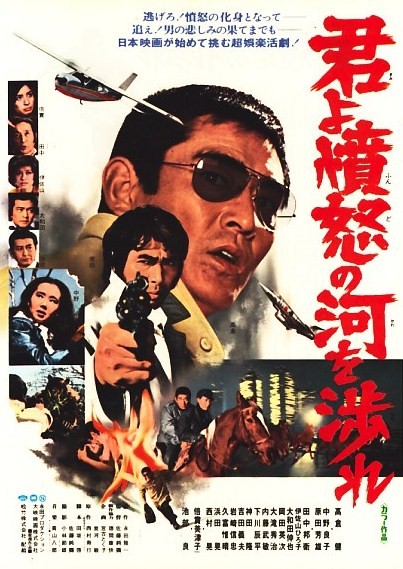
Manhunt (君よ憤怒の河を渉れ, Junya Sato, 1976)

manhunt 1976 posterMost people, when faced with being framed for a crime they did not commit, become indignant, loudly shouting their innocence to the rooftops and decrying injustice. Prosecutor Morioka (Ken Takakura) reacts differently – could he really be a master criminal and have forgotten all about it? Does he have an evil twin? Is he committing crimes in his sleep? The answer to all of these questions is “no”, but Morioka will have to go on a long, perilous journey in which he pilots his first solo aeroplane flight, fights bears, and escapes a citywide police net via horse, in order to find out. Junya Sato’s adaptation of the Juko Nishimura novel Manhunt (君よ憤怒の河を渉れ, Kimi yo Fundo no Kawa o Watare, AKA Dangerous Chase, Hot Pursuit) is a classic wrong man thriller though it has to be said thrills are a little thin on the ground.

Morioka’s very bad day begins with a woman (Hiroko Isayama) pointing at him and screaming, clutching the arm of a policeman and insisting that Morioka is the man who burgled her a few nights ago and stole her diamond engagement ring. Morioka is very confused but goes calmly to the police station before asking to see an officer he knows, Yamura (Yoshio Harada). Unfortunately, at the police station things only get worse as they dig up another witness (Kunie Tanaka) who says Morioka mugged him in the street for his camera. Beginning to doubt his sanity Morioka is sure things will be sorted out when they search his apartment, only when they get there they do indeed find a camera, the ring hidden in his fish tank, and a whole lot of dodgy money. Realising the game is up and that his prosecutor buddies aren’t interested in helping him, Morioka takes to the road to clear his name, finding himself increasingly compromised every step of the way.

This being Japan Morioka’s options for disappearing are limited – it’s not as if he can dye his hair or radically change his appearance, he’ll have to make do with sunshades and burying his face in the collar of his mac. Looking askance at policemen and trying to avoid people reading newspapers, he tries to investigate his case beginning with his accusers who, predictably, are not quite who they seemed to be. When one of them ends up dead Morioka can add murder suspect to his wanted card but at least he correctly figures out that this all goes back to one particular case his boss was very keen to rule suicide but Morioka was pretty sure wasn’t.

During his quest Morioka picks up an ally – Mayumi (Ryoko Nakano), the daughter of a wealthy horse trader with political ambitions whom he saves during a random bear attack. Mayumi falls instantly in love with him and despite the best efforts of one of her father’s underlings determines to help him clear his name. Morioka is an honest sort of guy but does also pick up another girl in the city (a cameo appearance by Mitsuko Baisho) who rescues him and takes him home to recuperate from an illness. Much to her disappointment he only has eyes for Mayumi who unexpectedly saves the day thanks to her herd of horses, not to mention her father’s “kind offer” of a light aircraft which Morioka will have to learn to pilot “on the fly”.

Eventually Morioka gets himself confined to a dodgy mental hospital to find the final clue during which time he uncovers a corporate conspiracy to manufacture drugs which turn people into living zombies, all their will power removed and compliance to authority upped. Rather than a dig at corporate cultism, enforced conformity, and conspiratorial manipulation, the Big Pharma angle is a just a plot device which provides the catalyst for Morioka’s final realisations – that having experienced life on the run he can never return to the side of authority. For him, the law is now an irrelevance which fails to protect its people and the “hunted” are in a much stronger position than the “hunters”. Accepting his own complicity in the adventure he’s just had, he willingly submits himself to “justice” for the rules he broke as a man on the run but it looks like those sunshades, the anonymous mac, and the beautiful and loyal Mayumi are about to become permanent fixtures in his impermanent life.


August in Tokyo (愛の小さな歴史, Ryutaro Nakagawa, 2015)

august in Tokyo posterFollowing on from the dark series of coming of age tales in Plastic Love Story, Ryutaro Nakagawa continues to examine his central themes of unusual connections, lingering effects of past trauma, and the dark side of familial dysfunction in the cheerfully titled August in Tokyo (愛の小さな歴史, Ai no Chiisana Rekishi). Beginning with a framing sequence involving suicide and depression, Nakagawa spins back for a no happier look at two very different people facing much the same problems as they attempt to reconnect with family members, pursue doomed romances, and generally fail to move forward even though they each strive to put the past behind them. Yet there is hope here as the framing sequence proves in its insistence that loss is an inevitable part of life but that the end of one relationship does not mean no others should start.

A young girl, Natusmi (Asaka Nakamura), receives a phone call from the police telling her that her best friend has committed suicide. Left reeling, Natsumi also attempts to kill herself but is saved by a young man with whom she later develops a friendship after bonding over their shared loss in each having lost someone close to them who died by their own hands.

Their story gives way to that of another man and woman who don’t know each other but are living very similar lives in close geographical proximity. Natuski (Eriko Nakamura), having left a job at a book shop following a failed affair, has a part-time job delivering bento. Approached one day by a young man (Sosuke Ikematsu) who tells her that her estranged father (Ken Mitsuishi) is in a bad way, Natsuki decides the best form of revenge might be to move in and look after him. Meanwhile, Natsuo (Takashi Okito) is a petty gangster becoming disillusioned with his life of senseless unpleasantness. Reencountering his younger sister Asuka (Manami Takahashi), Natsuo decides to reassume his familial responsibilities by “saving” her from her dead end life as a drug addicted casual sex worker.

Abandonment and familial breakdown are the threads which bind the stories of Natsuki and Natso together. Living out their eerily similar lives, they each reflect on why it was they were born if their parent(s) did not want them enough to bother looking after them. Natsuki’s memories of her father who left when she was small are not positive. She has a scar on her chest from where he burnt her with a cigarette and still resents him for the drunken beatings he inflicted on her mother who later died when Natsuki was only ten years old. She wonders if her life might have been different if she’d had a normal childhood. A failed a attraction to a middle-class pianist only serves to ram home her sense of insecurity and inadequacy, leaving her to wonder if she can ever escape the cycle of suffering to which her father’s failures seem to have condemned her.

Natsuo and his sister have it harder, each wondering why it was they were born, preferring to think it was all just an unhappy accident of a biological urge rather than the expression of a love they themselves have never felt. At some point Natsuo made the decision to abandon his family, leaving Asuka to deal with it alone. Attempting to care for their abusive father with senile dementia, Asuka’s life was destroyed, leaving her no way to support herself until an ill advised romance led her into the path of drugs and the sex trade. Natsuo wants to put things “right”, but he may be running out of time.

Natsuki and Natsuo struggle, each trying to do the “right” thing but finding themselves conflicted. Natsuki can’t forgive her father for everything he’s put her through. The young man who convinced her to help him, perhaps disconnected himself, describes Natsuki’s father as “like a father” to him – a figure of nobility who stood up for others and was the only man who took him for drinks and spent time with him as a father might. Natsuki says says her only purpose in life is hating her father, yet in the end she can’t. Natsuo’s worries are equally self focussed in his guilt over having abandoned his sister and her subsequent fall into dangerous drug dependency but his late in the day attempts to “save” her and their patronising paternalism often frustrate his essential goal.

Running in parallel these two sad stories are tragedies waiting to happen but, even in their darkness, they hold the potential for salvation. As in the framing sequence, such unexpected connections may be born from sadness but there is happiness to be found if you can find the strength to carry on. Maintaining his familiar aesthetic of naturalism mixed with expressionist dance sequences, Nakagawa’s latest examination of human relationships and contemporary society is bleak but also hopeful, insisting that patch work hearts are the path to a brighter future.


Available in most territories via iTunes, Amazon, YouTube, and Google Play.

Trailer (English subtitles/captions)

Tale of a Raindrop (雨粒の小さな歴史, Ryutaro Nakagawa, 2012)

tale of a raindop poster 2Leaving university is a stressful time in anyone’s life, but for the heroine of Ryutaro Nakagawa’s debut feature, Tale of a Raindrop (雨粒の小さな歴史, Amatsubu no Chiisana Rekishi), troubles seem to have arrived all at once. A young woman about to step out onto the adult stage, Michiru (Noa Sakakibayashi) is faced with a series of problems familial and personal as she learns to come to terms with abandonment by her estranged father through the strange repetition of her own adolescent life.

22 year old Michiru is about to graduate university, but her life has just taken a for the surreal. Her best friend dies, she finds out she has a younger sister only to lose her too, and then a strange guy with a Chaplin fixation thinks now is the best time to nervously declare his love. Receiving a letter from a mysterious young woman named Sayuri (Mio Minami), Michiru discovers her long lost father had another daughter and abandoned her too. Sayuri wants to get to know her father and asks Michiru for advice, but Michiru knows even less than she does. Raised by her mother alone, Michiru hasn’t thought of her father in years and knows nothing about him. The letter says he liked the song Ma Vie En Rose, the films of Charlie Chaplin, and foreign cigarettes, but precious little else.

From this point on Michiru’s life splits into a series of concentric circles. Somehow afraid to answer Sayuri’s letter, Michiru nevertheless wants to find out more about her familial relations, reading the book Sayuri suggested in her letter which her mother later confirms was among her father’s favourites and details the marriage of a snowflake and a raindrop which produces a child but then dissolves. It seems Michiru’s father was a nervous sort of man, a mumbler, who found it difficult to voice his feelings and had a tendency to leave his lovers after they had his child. Strangely enough, Michiru’s own suitor, a nervous cinephile who frequents the cinema where she works, is also a mumbler who loves Chaplin and can’t seem to make himself plain where it comes to emotional truths but this strange romantic circularity only seems to confuse Michiru further.

Meanwhile, Michiru’s close childhood friendship suddenly ends when she receives a call from her mother to say that Harumi has been killed by a train. There was no note, but it’s difficult not assume her death was a suicide, perhaps brought on by longterm abuse at the hands of her mentally ill father to whom Harumi had become the sole carer. Not having detected the extent of the sadness in her melancholy friend who often remarked that she wished Michiru was her sister, Michiru’s guilt and loneliness intensify as she contemplates the sudden revelation that she has a younger sister she never knew about.

Rather than answer the letter, Michiru opts to track Sayuri down, discovering that until very recently she had been living with a no good, drug addict boyfriend (Sosuke Ikematsu) intent on pimping her out for extra money. Hoping to get her new sister out of a dead end life on the fringes of the sex trade, she takes her in and the pair become firm friends but Sayuri’s life has been harder than Michiru could ever have imagined. Michiru’s upbringing was stable and loving whereas Sayuri’s was troubled and loveless. Sayuri’s only wish was to find the sister she hoped would be mired in the same misery and is disappointed to discover that another woman sharing her no good father’s genes has turned out fairly normal.

Looking for answers, Michiru eventually gets in touch with a friend of her father’s who, somewhat tactlessly, describes him as “like a father to me”. Oddly enough this nonbiological son is able to illuminate the latter part of her father’s life which seems to have been a sad and lonely one though she does find some evidence that perhaps she was always in his thoughts after all. Split into three chapters in which Michiru hears “the music pouring out from the world” and “the music pouring out from her”, before learning to embrace the “music pouring out from myself”, Michiru’s journey is a slow dance into adulthood as she learns to put the traumas of the past to one side, accepting their part in her formation but refusing to let them interfere with her future happiness. Elliptical and drenched in symbolism, Nakagawa’s feature debut is a beautifully restrained look at blossoming womanhood in which the past is neither friend nor enemy but a constant companion whose existence must be recognised but never dwelt on.


Available in most territories via iTunes, Amazon, YouTube, and Google Play.

Original trailer (no subtitles)

Ghostroads – a Japanese Rock’n’Roll Ghost Story (ゴーストロード, Enrico Ciccu, 2017)

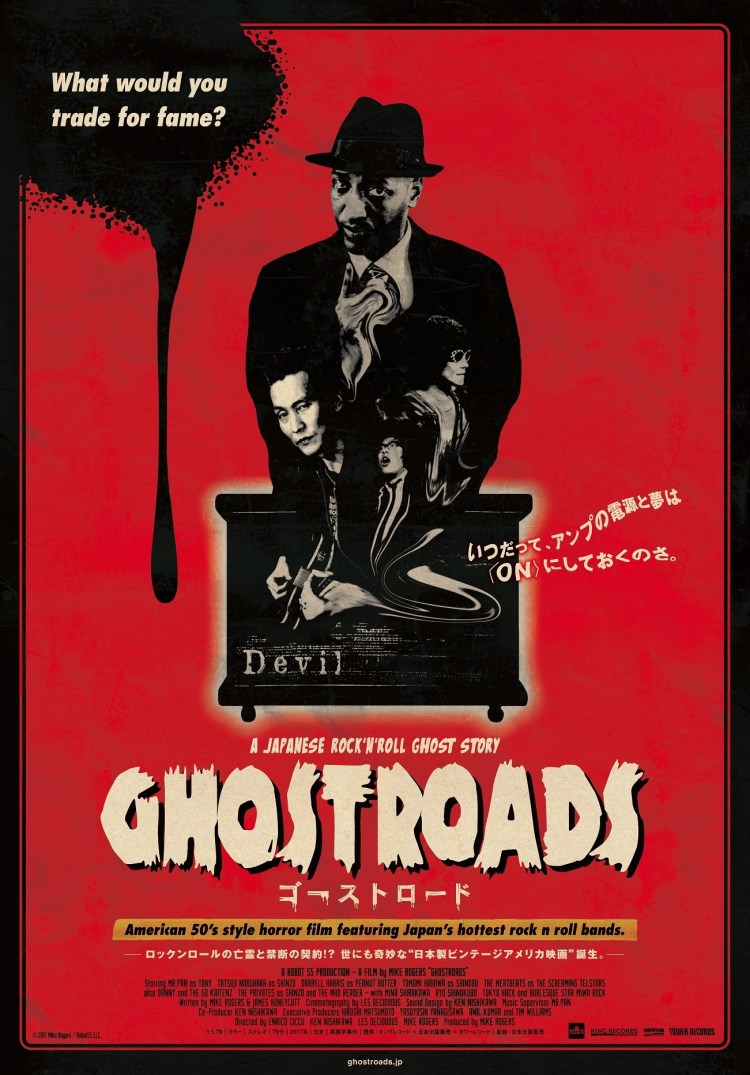
ghost roads posterWhat price would you pay for fame? A down on his luck rockabilly guitarist asks himself just this question when faced with the offer of fantastic success beyond all his wildest dreams at the small cost of sacrificing some friends to the musical gods. Rest assured, Ghostroads: A Japanese Rock’n’Roll Ghost Story (ゴーストロード) isn’t waxing metaphorical on the price of success or the pitfalls of the music business so much as it is riffing on B-movie rock and roll horror. Everything about Ghostroads is retro from the rockabilly scene setting to the shooting style and musical cues but it’s all done with such charm and good humour that it’s near impossible to resist the film’s old fashioned appeal.

The Screaming Telstars are, as the narrator tells us, a bit “crap” and their lead singer, Tony (Mr. Pan), is perhaps not as committed to the band as he once was. Fellow band members remain exasperated by Tony’s often hilariously late arrival at rehearsal sessions while the producer and tech guy cringe at his terrible, lazy playing. Nevertheless, Tony vows to pull it together in time for the gig and, to be fair, he usually does. This time, however, things take a turn for the worse when Tony’s absent minded guitar frenzy proves too much for his ancient amp. The venue they’re supposed to play the next day doesn’t have house amps so Tony will need to sort himself out with a new one or risk cancelling.

Tony also has no money so makes the decision to stop into a tiny old fashioned second hand musical equipment store in a back alley to look for a vintage amp to add to his collection. Despite the warnings of the shop assistant (Taka Shin-Okubo) who acts more like the wise monk in a kung fu film than a serious businessman, Tony is strangely drawn to one amp in particular. Seeing Tony won’t be dissuaded, the man behind the counter lets him have it for free on the condition that it’s his responsibility now and whatever happens with it, he can’t bring it back.

This is largely because the amp comes with a lodger or as he calls himself, an “amperition”. Peanut Butter (Darrell Harris) is a smooth American blues singer who has been imprisoned in his amp so long he’s quite desperate to impart some musical wisdom to a struggling rock star like Tony, but his advice comes at a price.

Tony’s playing improves under the tutelage of Peanut Butter, but Tony has another problem in the return of a longterm nemesis from his student days, Shinzo (Tatsuji Nobuhara) – lead singer of The Mad Reader, and the man who possibly stole Tony’s girl, Shinobu (Tomomi Hiraiwa). Thus Tony’s journey begins from useless loserdom to big time star, besting his rival and finally having a shot with the beautiful Shinobu, but all the while everyone is worrying about him. Peanut Butter is not a positive influence in Tony’s life, and the fact that he keeps talking to someone no one else can see is a definite cause for concern, but then again Peanut Butter says he can make Tony a star, if only he’ll ditch all his friends…

In short, Ghostroads is a vehicle for The Neatbeats – the kind of band movie they just don’t make anymore. Set firmly within the world of rockabilly subculture, the film also features a number of other underground bands including 50 Kaitenz and The Privates whose lead singer, Tatsuji Nobuhara, plays the part of Tony’s arch rival Shinzo. Peanut Butter assures Tony that all he needs is to find the one perfect song (something he can help him with, for a price), but every song featured is a hit with the soundtrack proving the film’s most essential asset.

Ghostroads commits absolutely to its retro aims, aping the classically kooky effects of the down and dirty silly rock horror movies of ages past. The effects are spot on with Peanut Butter permanently surrounded by a blueish haze which seems to intensify whenever he’s doing something not quite right. Peanut Butter also has a strange little hologram device featuring a tiny burlesque dancer (played by The Tassels’ Miwa Rock) which is never explained but adds to the increasingly surreal atmosphere. Surreal and quirky it most definitely is but Ghostroads has real love both for its subculture setting and for the long forgotten classics it’s trying to resurrect. Good, clean, unpretentious fun, Ghostroads is proof enough that the rock and roll spirit is alive and well and living in Japan.


Screened at Raindance 2017.

Original trailer (English subtitles)