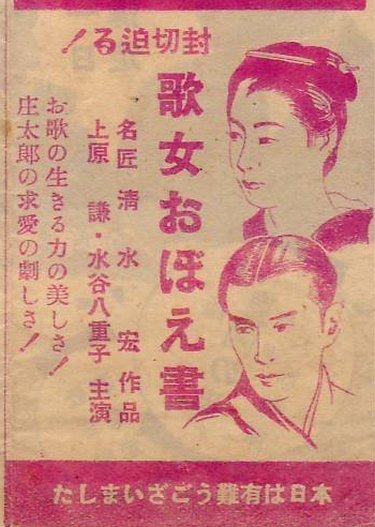
 Filmed in 1941, Notes of an Itinerant Performer (歌女おぼえ書, Utajo Oboegaki ) is among the least politicised of Shimizu’s output though its odd, domestic violence fuelled, finally romantic resolution points to a hardening of his otherwise progressive social ideals. Neatly avoiding contemporary issues by setting his tale in 1901 at the mid-point of the Meiji era as Japanese society was caught in a transitionary phase, Shimizu similarly casts his heroine adrift as she decides to make a break with the hand fate dealt her and try her luck in a more “civilised” world.
At 25 years old, Uta (Yaeko Mizutani) jumps ships from one acting company to another having been promised better work by a roguish fellow performer. Tired of the strenuous life of travelling from village to village, putting on folk plays and street performances, Uta is thinking of quitting the business and looking for a job as a maid or something similar which is at least in the same place everyday. In a stroke of luck, she comes into contact with a kindly tea merchant who takes pity on her and suggests she come to live with him where she can teach his teenage daughter how to dance.
Uta becomes a member of the Hiramatsu household but not all of the inhabitants are as generous of spirit as Mr. Hiramatsu (Hideo Fujino) himself. The oldest son is away at college but the daughter, Nuiko (Kyoko Asagiri), has no interest in learning to dance and resents her father’s “adoption” of such a “common” woman. Youngest son Jiro (Haruhiko Tsuda) is similarly unimpressed with Uta’s presence, making her new home less than welcoming. To make matters worse, Mr. Hiramatsu abruptly dies leaving his business and household in disarray. Oldest son Shotaro (Ken Uehara) returns and feels as if he ought to abandon his studies and take over the company, but as a student he has no experience of running a business and lacks his father’s knowledge of the tea industry. Uta encourages him to return to university and finish his studies if only so that the prestige of a degree might help him later if he decides to restart the business. She also volunteers to act as a guardian for Jiro and Nuiko though Shotaro is wary seeing as they know each other so little. He then makes a surprising suggestion – that he and Uta marry, making it perfectly natural that she take care of everything at home while he’s away studying in the city.
Like many a Shimizu hero, Mr. Hiramatsu is a good hearted man but perhaps lacking in practical skills. Though he seemed to be prosperous and successful, the business was on the rocks and he dies leaving a number of debts behind him and total admin chaos for Shotaro as there is no clear successor to keep the business running in Mr. Hiramatsu’s absence. Luckily for Uta, Shotaro is also a kindhearted man like his father (in contrast to his siblings) and has no desire to suddenly throw her out when his father promised to look after her. He is, however, at a loss as of how to take care of everyone with no money coming in.
Even before Mr. Hiramatsu died, not everyone was happy about his decision to take in a travelling performer and an old friend begins to warn him about the danger of rumours. Friend of the family Kajikawa feels he has a stake in this as he intends his daughter Ayako to marry Shotaro and thinks it’s a done deal (though Mr. Hiramatsu does not seem particularly wedded to the idea). Ayako and Nuiko are also good friends and Ayako does seem like the ideal bride for Shotaro as a member of his own social class and a business connection for the family. Shotaro, however, proposes to Uta without really thinking things through. It is, in one sense, a purely practical decision but one that is likely to meet with a degree of social opposition.
Uta left her life as a travelling performer because she wanted something more conventional. Her mother died when she was six and she never knew her father. Her only happy memory of family is the time spent with her grandmother who died when she was twelve. Uta resents her lack of status as a member of a lowly order of entertainers and longs for something grander but has also internalised a deep seated sense of inferiority. Hence when Jiro and his school friends refer to her as a “monster” living in the house, she half accepts their prejudiced view of her. Nevertheless, she wants to honour the kindness that Mr. Hiramatsu offered her and also deeply respects his son, Shotaro, possibly even developing romantic feelings for him. Despite continuing to feel herself unworthy, Uta does the unthinkable by almost singlehandedly resurrecting the tea business when presented with an opportunity from a foreign company. Even after becoming a formidable business woman and winning the respect of Nuiko and affection of Jiro, Uta still feels herself out of place in the mercantile world and ultimately opts to leave in order to pave the way for the “proper” union of Ayako and Shotaro.
When Shotaro and Uta meet again she tells him that she left because she found his middle class world of “decency” too rigid and full of dull formality. Her “housewife” life was a hard one – getting up early, no smoking, no drinking. At least as a travelling performer she can sleep in and have her share of fun. This produces a quite shocking and strange scene in which Shotaro strikes Uta violently, knocking her to the floor. He repeats his earlier promise to marry her and invites her to come home as his wife, a “decent” woman, and full member of his social class whatever anyone else might have to say about it. Shotaro is apparently a man of his word but there is real feeling implied in his actions as opposed to duty or obligation. Nevertheless, this quite surprising scene of domestic violence used as a tool of coercion does not speak to Shotaro’s otherwise kindly personality and undercuts the “romantic”, if melodramatic, quality of the scene. This may be another instance of Shimizu’s aversion to romantic resolutions or romance as a solution to crisis, but one expects better from a director generally so keen to underline the hardships faced by women in his society.
Despite being filmed well into the era of the talkies and long after Shimizu himself had made the jump to sound, Notes of an Itinerant Performer makes use of frequent intertitles setting the scene or providing explanatory background material. Conversely, it also anticipates a more recent trend by allowing the discussions between the “American” (actually heavily accented European) and his interpreter to take place in English with Japanese sidetitles for parts not subsequently translated in the dialogue. In fact, this broadly positive foreign presence seems an odd inclusion for the fraught political world of 1941 (the film was released in March, just nine months before outright hostilities would commence with the USA which had been effecting a series of trade sanctions with the expansionist nation since 1938) even if the deal itself is taking place in the comparatively more open society of 1901.
In many ways about transitionary periods both in terms of society and of the self, Notes of an Itinerant Perfomer seems conflicted right up until its “Reader, I married him” inspired intertitle. Uta crosses a class border, transcending her lowly origins through selfless sacrifice, pure heartedness, and perseverance yet finally she is dragged across by violence and condescension rather than self acceptance or personal transformation. Filled with ambiguity, Notes of an Itinerant Performer reflects the uncertainties of its times and is noticeably less forgiving than Shimizu’s general outlook as its problematic finale demonstrates.
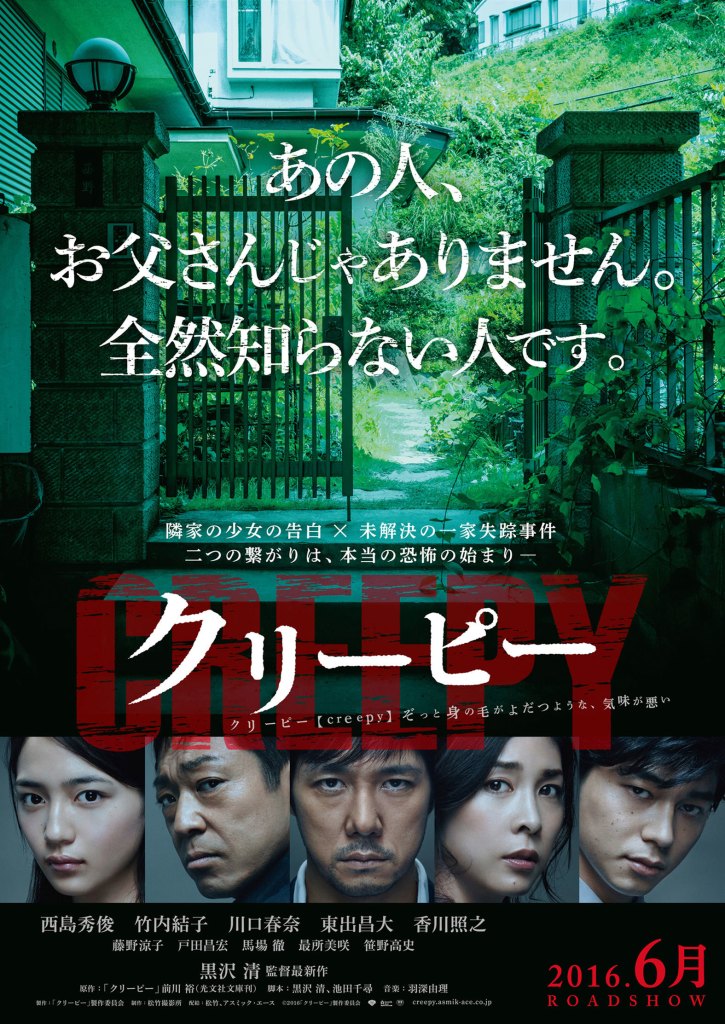 How well do you know your neighbours? Perhaps you have one that seems a little bit strange to you, “creepy”, even. Then again, everyone has their quirks, so you leave things at nodding at your “probably harmless” fellow suburbanites and walking away as quickly as possible. The central couple at the centre of Kiyoshi Kurosawa’s return to genre filmmaking Creepy (クリーピー 偽りの隣人, Creepy Itsuwari no Rinjin), based on the novel by Yutaka Maekawa, may have wished they’d better heeded their initial instincts when it comes to dealing with their decidedly odd new neighbours considering the extremely dark territory they’re about to move in to…

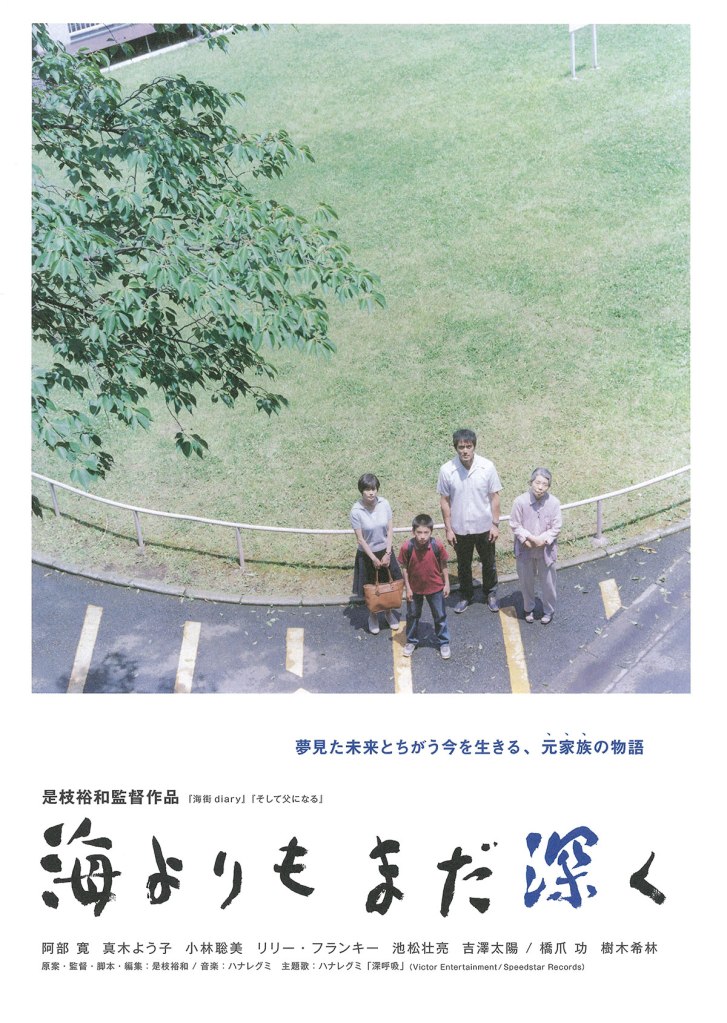 It’s never too late to be what you might have been – a statement attributed to George Eliot which may be as fake as one of the promises offered by the protagonist of Hirokazu Koreeda’s latest attempt to chart the course of his nation through its basic social unit, After the Storm (海よりもまだ深く, Umi yori mo Mada Fukaku). Reuniting Kirin Kiki and Hiroshi Abe as mother and son following their star turns in
 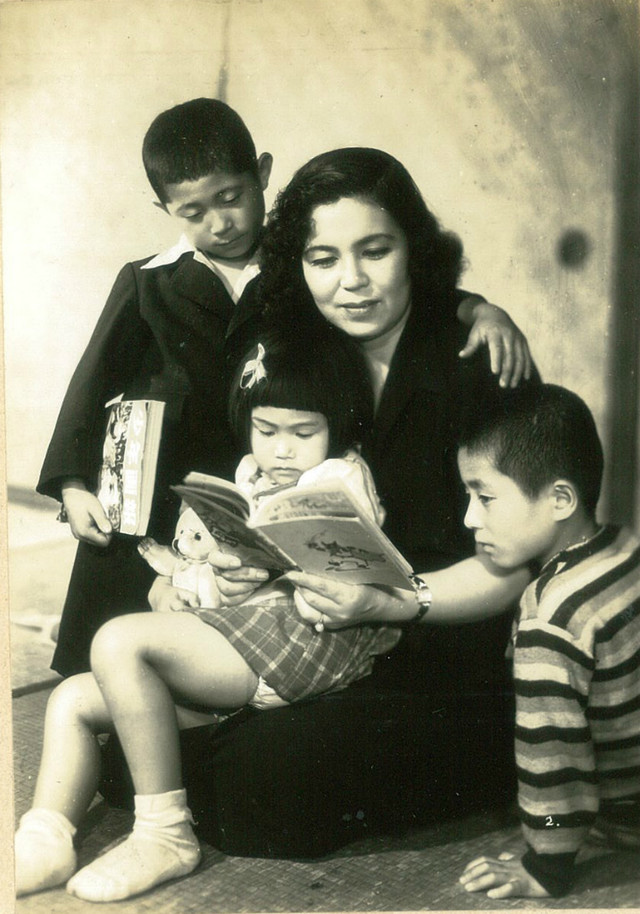 Shimizu’s depression era work was not lacking in down on their luck single mothers forced into difficult positions as they fiercely fought for their children’s future, but 1950’s A Mother’s Love (母情, Bojo) takes an entirely different approach to the problem. Once again Shimizu displays his customary sympathy for all but this particular mother, Toshiko, does not immediately seem to be the self sacrificing embodiment of maternal virtues that the genre usually favours.
 Nobuhiko Obayashi is no stranger to a ghost story whether literal or figural but never has his pre-occupation with being pre-occupied about the past been more delicately expressed than in his 1988 horror-tinged supernatural adventure, The Discarnates (異人たちとの夏, Ijintachi to no Natsu). Nostalgia is a central pillar of Obayashi’s world, as drenched in melancholy as it often is, but it can also be pernicious – an anchor which pins a person in a certain spot and forever impedes their progress.
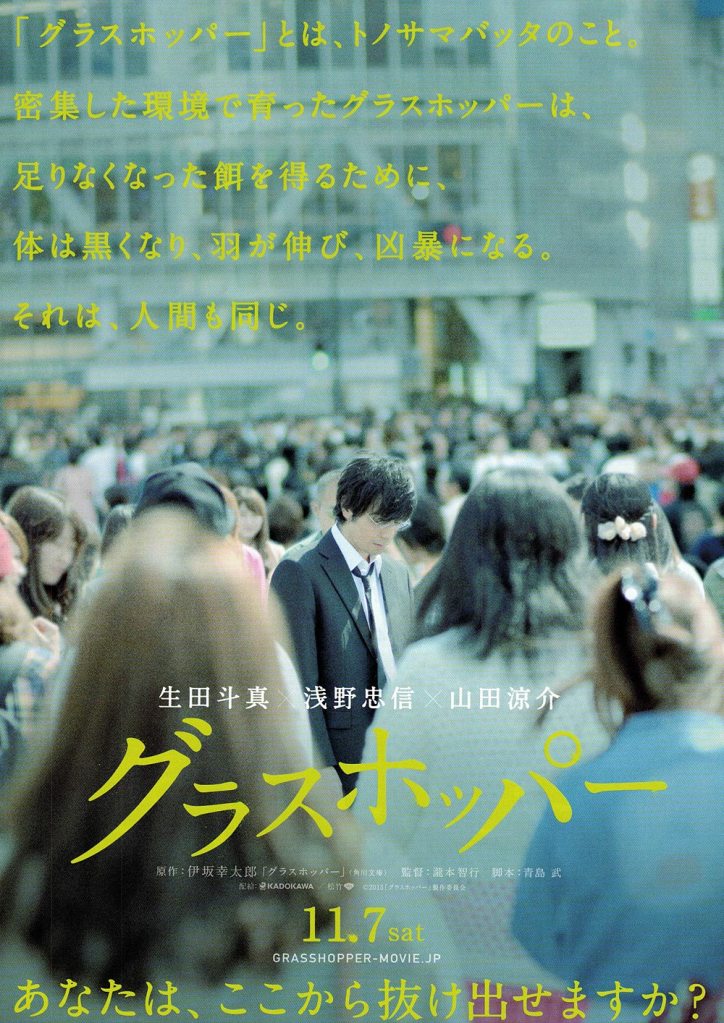 The best revenge is living well, but the three damaged individuals at the centre of Tomoyuki Takimoto’s Grasshopper (グラスホッパー) might need some space before they can figure that out. Reuniting with

 A Double Life (二重生活, Nijyuu Seikatsu ), the debut feature from director Yoshiyuki Kishi adapted from Mariko Koike’s novel, could easily be subtitled “a defence of stalking with indifference”. As a philosophical experiment in itself, it recasts us as the voyeur, watching her watching him, following our oblivious heroine as she becomes increasingly obsessed with the act of observance. Taking into account the constant watchfulness of modern society, A Double Life has some serious questions to ask not only of the nature of existence but of the increasing connectedness and its counterpart of isolation, the disconnect between the image and reality, and how much the hidden facets of people’s lives define their essential personality.
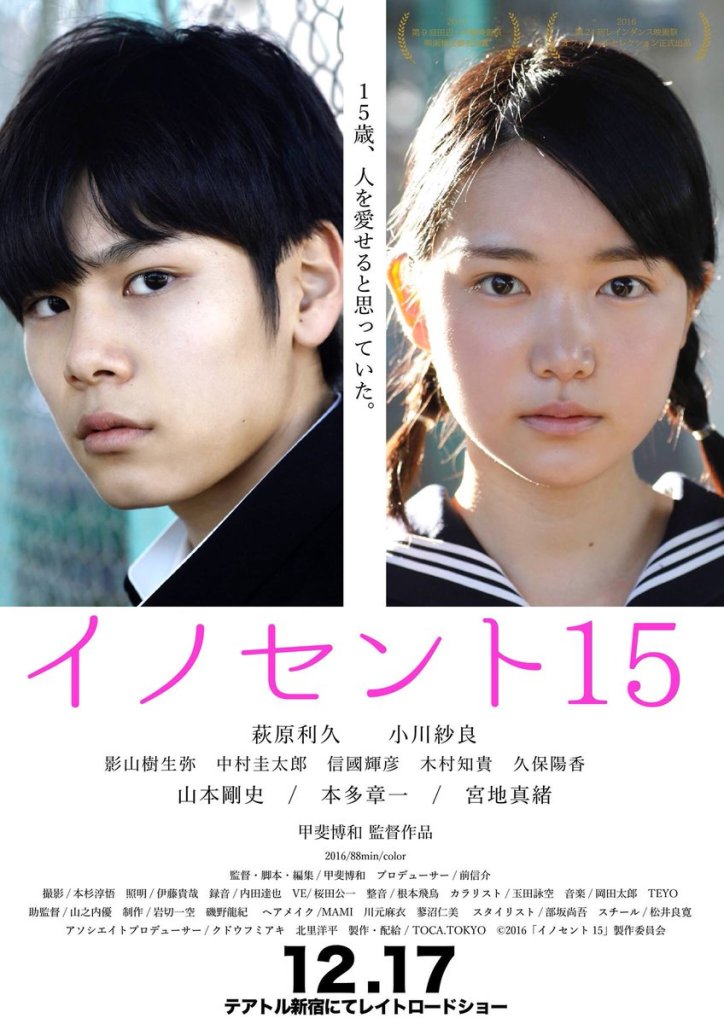 Innocence is a fairly nebulous concept and one often misused but if you were expecting an “innocent” tale of youthful romance, Hirokazu Kai’s Innocent15 (イノセント15) is out to wrong foot you from the get go. Kai does not shy away from the darker sides of human nature in examining abusive parenting and forced prostitution as well as the damage done when a secret is broken after long years of being unable to be honest about who you really are. This is a bleak tale, but one with with hope shining round the edges, even if uncertainly.
