
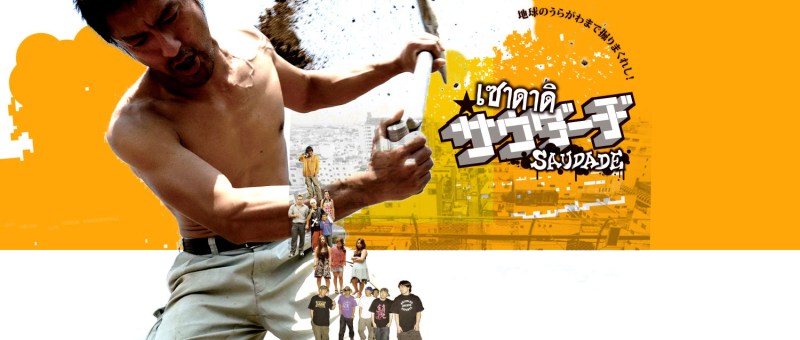
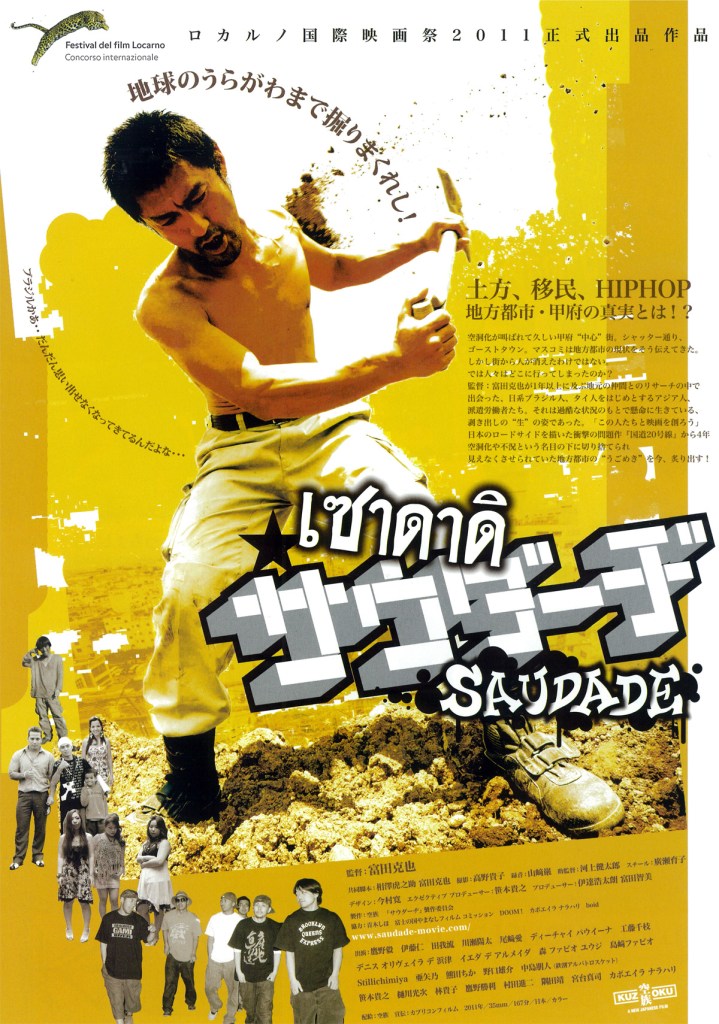
 “Asia is a paradise for men” though not for anyone else, if Bangkok Nites (バンコクナイツ) is anything to go by. In Tomita’s previous film, Saudade, he explored the intercultural exchange between Thailand and Japan with one character having tried to escape there and failed, and another idly dreaming of running away with his Thai mistress. Five years later he revisits the same idea but from the other side as he weaves a meandering trail through the Japan-centric element of Bangkok’s red light district which eventually leads him on to other neighbouring nations whose landscapes still bear the scars of war and colonialism decades into a supposedly enlightened age.
We begin with Luck (Subenja Pongkorn), caught in reflection against a swanky hotel window overlooking her city. Her client is a Japanese man, clingy in the extreme though it’s unclear if his desire to avoid paying is out of consideration to his wallet or a genuine case of affection. Nevertheless, his whining is too much for Luck who eventually manages to escape the room and get back to work. Employed by a bar on Thaniya Road, an area of Bangkok’s red light district popular with Japanese tourists, Luck’s job involves sitting on a shelf in a large stable area where she and her colleagues wear colour coded badges so the customer can see their rates and services offered at a single glance.
Good friends with a Japanese man who works as a kind of procurer for the club, Luck ends up at a party where she runs into Ozawa (Katsuya Tomita) – a quasi-customer with whom she’d developed a deeper relationship around five years previously but subsequently lost contact. A former Self Defence Force soldier, Ozawa first came to Asia on a peacekeeping mission to Cambodia and has been back and fore ever since. During this most recent stay he’s begun to strike up a friendship with fellow Japanese guys working around the edges of the sex industry and related businesses including the drugs trade. After getting to know each other again, Luck takes Ozawa to her peaceful, rural, hometown beginning a journey which is to have a profound impact on his view of the continent.
There’s something a little sad about the small, sleazy world of the red light district and its collection of melancholy ex-pats eking out a living by exploiting desperate local women. Ozawa hovers on the fringes of this group, obviously a visitor to the brothels of Thaniya Road, but not quite a devotee. The other guys repeatedly refer to Thailand and other surrounding countries as “paradise” or a “utopia” where the women are “easy” and can be had at will and with few strings. One visitor remarks that he can have twenty nights of debauchery in Bangkok for the cost of one fancy night out in Roppongi. Yet for every one like him just trying to blow in and blow out with no fuss, there are a handful who can’t separate a transaction from a romance, becoming overly attached to women merely providing a service who, naturally, are not particularly seeking a long-term relationship with the sort of man who thinks a woman can be bought wholesale.
Luck is the number one on Thaniya Road, though she’s aware her time is limited. The work pays well and she’s been able to acquire an elegant Bangkok apartment as well as a house for her mother and siblings back in the country, but her heart is set on saving enough money to open an upscale European restaurant when she finally leaves the sex trade behind. Taking Ozawa back to her hometown, she explains to him that her life in Bangkok is just what happens to girls from the country. Children are raised by aunts while mothers live in the city, sending money back home, until they swap places and the children head to the city while the women return to raise the children of relatives. Most of her friends are also involved in the local sex trade, catering to foreign travellers with less than romantic ideas about the country and its “exotic” women.
Tomita paints this as another ongoing echo of the colonial past as foreign men come to Thailand for purposes of discreet pleasure, giving little thought to the interior lives of the real breathing women in front of them. Taking Ozawa around her home town, Luck shows him the beautiful European style mansion she grew up in with her mother’s second husband (her step-father and the only positive male input she ever mentions) who was an American working at a local air base. The bases are a relic of the Vietnam war, the legacy of which also rears its head once Ozawa makes his way into Laos where giant bomb craters still scar the landscape like pock marks on the face of the Earth more than forty years later. Ultimately these colonial wars trace themselves back to the first waves of colonisation but when Luck tries to look forwards she only sees the past – her desires are for the European, fancy restaurants and urban sophistication.
Ozawa looks at Luck’s hometown and (thinks he) sees a “paradise”, a calm and peaceful place where people drink and smoke their lives away with no worries. He thinks this ought to be enough, and perhaps he’s right, but women like Luck and her friends are still left with no other choice than to enter the sex industry in order to feed their families while the men bum around smoking, drinking, and whoring with other women. It could be a paradise for Ozawa, but it would only be supported by the private hell of the women all around him.
Tomita shoots in a straightforward style but also adds epic sweeping pastoral shots thanks to drone camerawork and occasional touches of the surreal such as groups of shadowy figures in the forests who may be real or imagined, perhaps the ghostly spirits of past rebellions. Another figure encountered by Ozawa may also be a manifestation of these long-standing ghosts as he recites patriotic speeches and asks for money to help look after the refugees flooding into the forests thanks to the Vietnam war. Ozawa later meets the descendant groups of the guerrillas in Laos which includes disaffected Filipinos, Japanese, and Thais all looking for alternative ways of living.
Harnessing the power of popular song from classic ‘60s Thai pop to indie folk tunes about sold daughters and karaoke covers of The Carpenters, Tomita demonstrates how even music receives external influence but repurposes and exports it as a form of popular protest. Everyone is looking for an elusive form of paradise which does not exist, but their own actions and desires are often the very thing which prevents them from finding it. Tomita’s four years of research have been put to good use in creating a nuanced, thoughtful dissection of the ongoing effects of colonialism in a land still scarred by war and the painful wounds of the unexamined past.
Reviewed at the 2016 London East Asia Film Festival.
International trailer (dialogue free)
 Reworked from a review first published by
 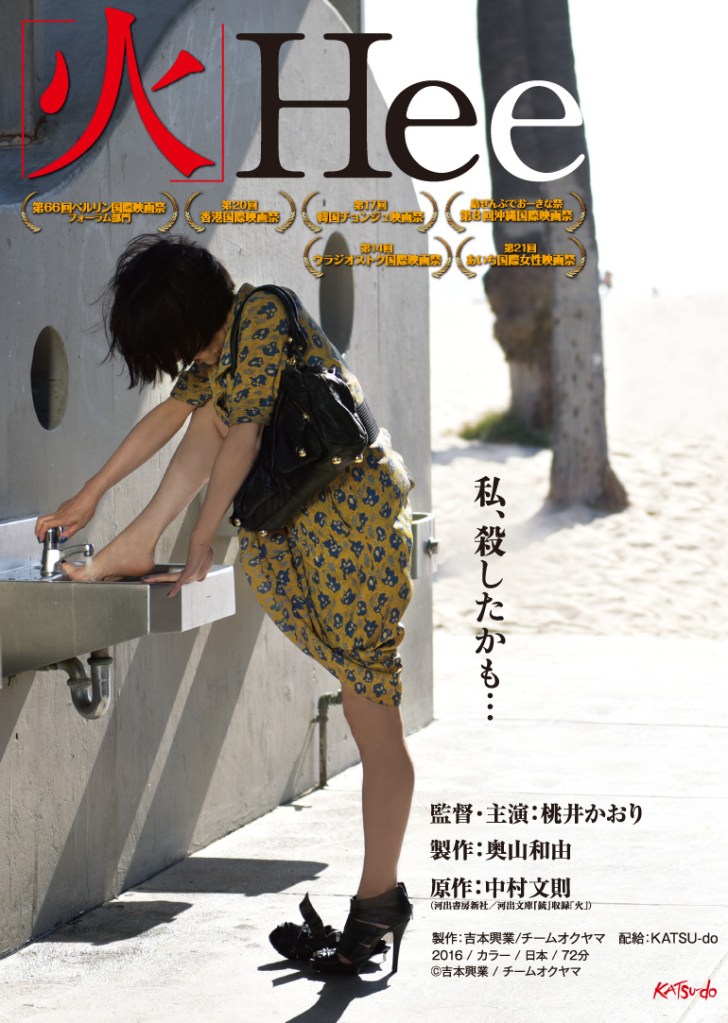 One of Japan’s best known actresses with a career spanning over forty years, Kaori Momoi is perhaps just as well known for her outspoken and refreshingly direct approach to interviews as she is for her work with such esteemed directors as Akira Kurosawa, Kon Ichikawa, Yoji Yamada, and Shohei Imamura. One of the few Japanese actors to have made a successful international career starring in Hollywood movies such as Rob Marshall’s Memoirs of a Geisha and international art house fare in Alexander Sukurov’s The Sun, Momoi currently lives in LA and is even reportedly preparing to play Scarlett Johansson’s mother in the upcoming US live action adaptation of Ghost in the Shell. It’s perhaps less surprising then that in choosing to adapt a short story by one of Japan’s best young writers, Fuminori Nakamura, Momoi has chosen to shift the story to LA whilst maintaining its Japanese characters.
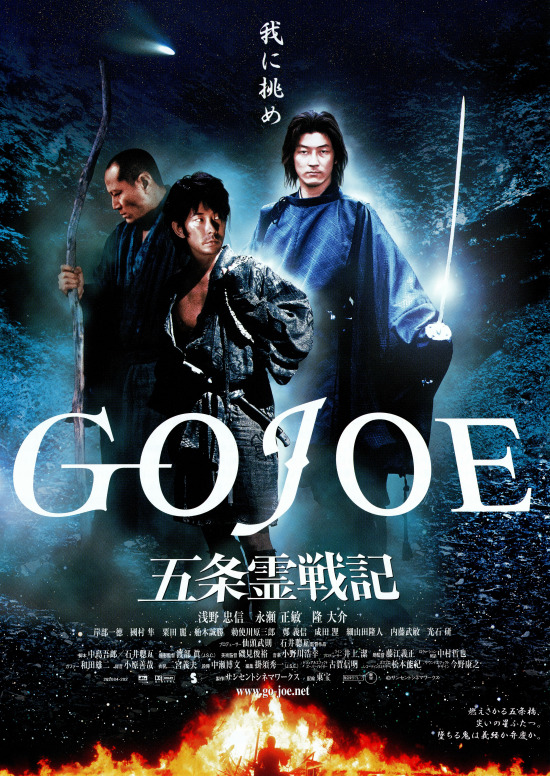 Not your mama’s jidaigeki – the punk messiah who brought us such landmarks of energetic, surreal filmmaking as Crazy Family and Burst City casts himself back to the Middle Ages for an experimental take on the samurai genre. In Gojoe (五条霊戦記, Gojo reisenki), Sogo Ishii remains a radical even within this often most conservative of genres through reinterpreting one of the best loved Japanese historical legends – the battle at Kyoto’s Gojoe Bridge . Far from the firm friends of the legends, this Benkei and this Shanao (Yoshitsune in waiting) are mortal enemies, bound to each other by cosmic fate but locked in combat.
 Koji Fukada first ventured into the family drama arena with the darkly comic satire
  Every story is a ghost story in a sense. In every photograph there’s a presence which cannot be seen but is always felt. The filmmaker is a phantom and an enigma, but can we understand the spirit from what we see? Whose viewpoint are seeing, and can we ever separate that subjective vision from the one we create for ourselves within our own minds? The Man Who Left his Will on Film (東京戰争戦後秘話, Tokyo Senso Sengo Hiwa) is an oblique examination of identity but more specifically how that identity is repurposed through cinema as cinema is repurposed as a political weapon.
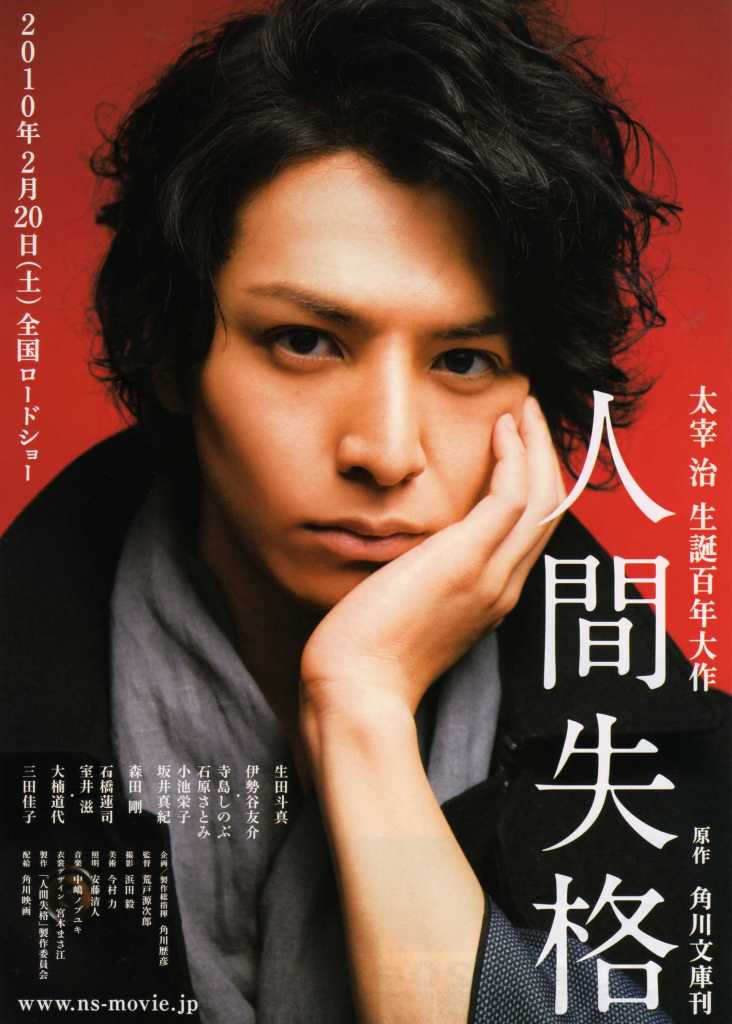 The Fallen Angel (人間失格, Ningen Shikkaku), based on one of the best known works of Japanese literary giant Osamu Dazai – No Longer Human, was the last in a series of commemorative film projects marking the 100th anniversary of the author’s birth in 2009. Like much of Dazai’s work, No Longer Human is semi-autobiographical, fixated on the idea of suicide, and charts the course of its protagonist as he becomes hopelessly lost in a life of dissipation, alcohol, drugs, and overwhelming depression.
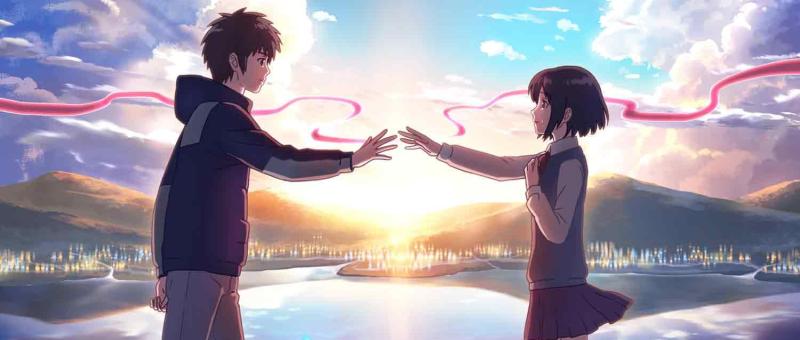
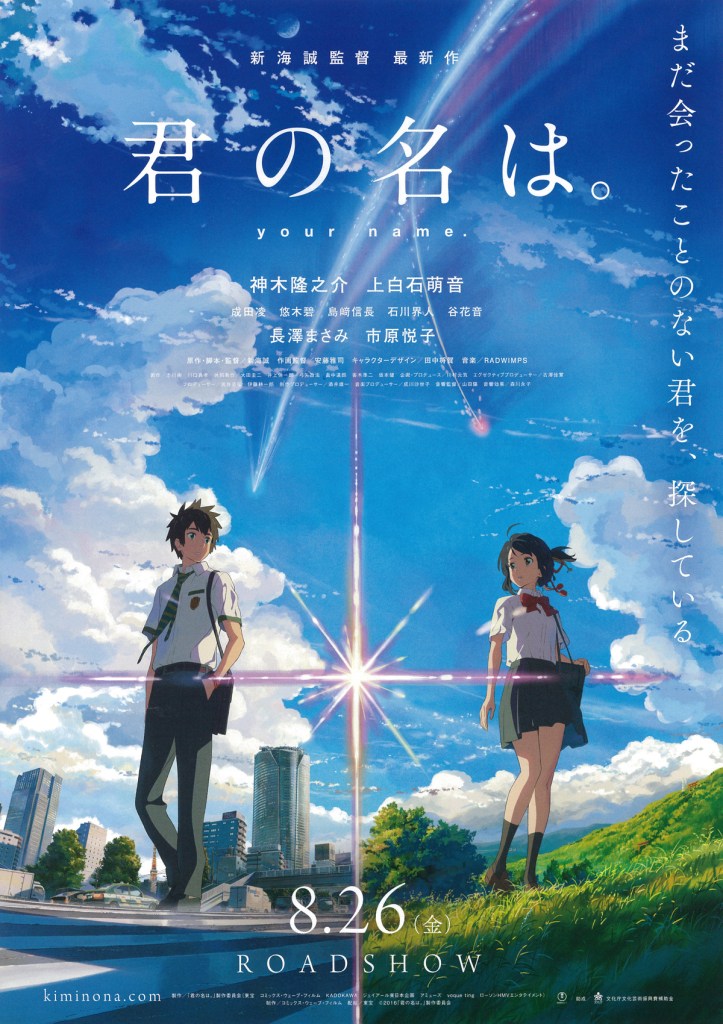 Indie animation talent Makoto Shinkai has been making an impact with his beautifully drawn tales of heartbreaking, unresolvable romance for well over a decade and now with Your Name (君の名は, Kimi no Na wa) he’s finally hit the mainstream with an increased budget and distribution from major Japanese studio Toho. Noticeably more upbeat than his previous work, Your Name takes on the star-crossed lovers motif as two teenagers from different worlds come to know each other intimately without ever meeting only to find their youthful romance frustrated by the vagaries of time and fate.
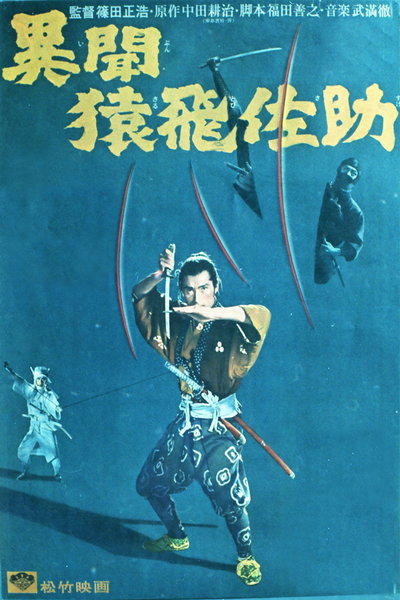 Nothing is certain these days, so say the protagonists at the centre of Masahiro Shinoda’s whirlwind of intrigue, Samurai Spy (異聞猿飛佐助, Ibun Sarutobi Sasuke). Set 14 years after the battle of Sekigahara which ushered in a long period of peace under the banner of the Tokugawa Shogunate, Samurai Spy effectively imports its contemporary cold war atmosphere to feudal Japan in which warring states continue to vie for power through the use of covert spy networks run from Edo and Osaka respectively. Sides are switched, friends are betrayed, innocents are murdered. The peace is fragile, but is it worth preserving even at such mounting cost?
