 There are two very distinct sides to the career of Tatsushi Omori. Brother of the well known actor, Nao, Omori may be best known to certain audiences for his hard hitting, often gloomy and pessimistic dramas of human misery such as festival favourite Ravine of Goodbye or the little seen The Whispering of the Gods which proved so controversial that his only option of screening the film involved erecting a tent where he could show it himself. However, a closer look at his filmography discovers a steady strain of laid-back comedy such as the Tada’s Do It All House series in which two brothers played by Eita and Ryuhei Matsuda act as bumbling handymen-cum-detectives-cum-whatever-you-need-them-to-be. It might be less surprising therefore that his latest effort is an adaptation of Kazuya Konomoto’s comedy manga Seto and Utsumi (セトウツミ, Setoutsumi) which revels in the everyday absurdity of teenage life in Southern Japan.
Seto (Masaki Suda) and Utsumi (Sosuke Ikematsu) are ordinary high school boys heading into their final year with the exam season and the end of their youthful, carefree days looming. Utsumi is a quiet, serious sort who generally doesn’t like a lot of company. Seto, by contrast, is a real live wire and not exactly a top student. Nevertheless, they found each other by a river one day and have been more or less inseparable ever since. Every day after school they meet and hang out in the same spot over looking the water where they shoot the breeze about various ordinary things from a non-argument over a girl to venus fly traps, Buddhist terminology, and ghosts.
Like many teenagers, Seto and Utsumi kill time doing nothing in particular and their conversations are generally inconsequential. Yet for all of their inherent randomness and absurdity, there’s a layer of poignancy underpinning each of them as the boys let slip various aspects of their private, interior lives. Seto’s big life drama involves the possible separation of his parents following the illness of the family cat which everyone in the family decided to indulge seeing as the poor thing didn’t have long left, but against expectation it’s two years later, the cat is still alive and Seto’s father is growing ever more resentful at spending so much money on luxury cat food. Seto’s family are a rowdy bunch, just as prone to drama as he is yet for all their complaining they seem fairly close – close enough for Seto to complain about the constant random text updates from his mother (a trait which Seto seems to have inherited himself).
Utsumi, by contrast, is much more aloof and keeps himself to himself. When Seto complains after his mother spots the boys at the river with bags full of shopping in her hands he remarks sadly that he rarely eats at home, implying it must be nice to have someone cook you a meal everyday. His approach to life is cerebral, calculating odds and planning angles, as he reveals to Seto in a piece of possibly not very helpful dating advice. Utsumi’s unseen parents are, presumably, just as aloof as he is, austere and religious. Nevertheless, in Seto he’s found a true sparring partner and someone he can waste time with amiably.
Utsumi’s parents are useful for one thing, they belong to the temple in which Seto’s crush, Kashimura (Ayami Nakajo), lives. Seto has been secretly trying to brush up on Buddhist terminology to impress her, but predictably she prefers the cool indifference of Utsumi to his friend’s energetic banter. Utsumi isn’t interested in Kashimura in any case, but not even this possible subject of conflict is big enough to seriously risk damaging the two boys’ friendship. As one character remarks towards the end of the film, it really is a once in a lifetime connection.
Omori keeps things simple, mostly sticking to static shots of the boys sitting on the steps near the river but he makes the stillness add to the sense of the absurd running through the quiet backwater town. After beginning with accordion music and ride through the canals, Seto and Utsumi’s first conversation takes place in front of an unintentional audience of a perfectly motionless older man, staring vacantly out at the river. The man turns out to have a valid (if sad) reason for being where he is, but the presence of the balloon animal vending clown from Eastern Europe (called Mr. Balloon) is a little harder to explain given that other than Seto, Utsumi, the aforementioned man, a high school bully, Seto’s mum, and a senile grandpa, no one else comes anywhere near this tranquil spot for the entire film. Using occasional dissolves and superimpositions to create a fleeting, dreamlike atmosphere with a handful of cutaways and flashbacks for comedic context, Seto and Utsumi is a truly charming ode to teenage friendship in all its pleasantly ridiculous absurdity.
Reviewed at Raindance 2016.
Original trailer (English subtitles)
There are also a few bonus web episodes of Seto and Utsumi enjoying even more pointless conversations:
No. 1 – Kendama (a kind of Japanese cup and ball game) (English subtitles)
No. 2: Timing (English subtitles)
3. Standing Ovation (no subtitles but you don’t really need them)
 It’s tough being young. The Boss’ Son At College (大学の若旦那, Daigaku no Wakadanna) is the first, and only surviving, film in a series which followed the adventures of the well to do son of a soy sauce manufacturer set in the contemporary era. Somewhat autobiographical, Shimizu’s film centres around the titular boss’ son as he struggles with conflicting influences – those of his father and the traditional past and those of his forward looking, hedonistic youth.
 Ohara Shousuke-san (小原庄助さん) is the name of a character from a popular folk song intended to teach children how not to live their lives. The Ohara Shosuke-san of Aizu Bandaisan has lost all his fortune but no one feels very sorry for him because it’s his own fault – he spent his days in idleness, drinking, sleeping in, and bathing in the morning. The central character of Hiroshi Shimizu’s 1937 film has earned this nickname for himself because he also enjoys a drink or too and doesn’t actually do very much else, but unlike the character in the song this a goodhearted man much loved by the community because he’s a soft touch and just can’t refuse when asked for a favour. An acknowledgement of the changing times, Shimizu’s Mr. Shousuke Ohara is a tribute to the soft hearted but also an argument for action over passivity.
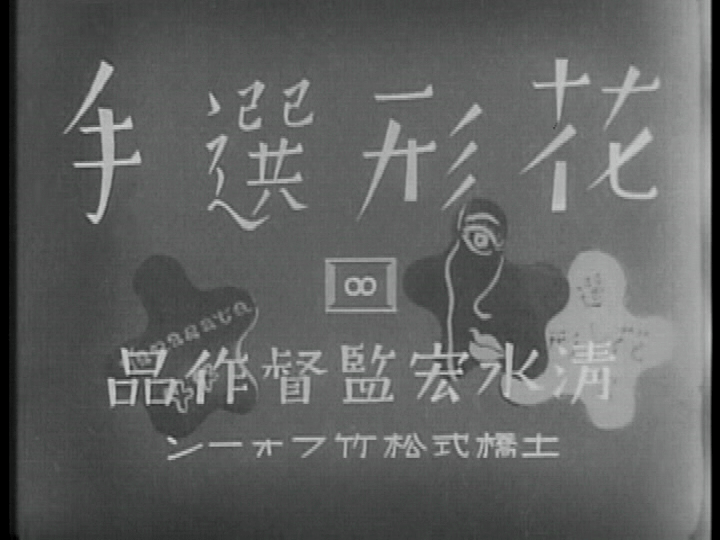 Japan in 1937 – film is propaganda, yet Hiroshi Shimizu once again does what he needs to do in managing to pay mere lip service to his studio’s aims. Star Athlete (花形選手, Hanagata senshu) is, ostensibly, a college comedy in which a group of university students debate the merits of physical vs cerebral strength and the place of the individual within the group yet it resolutely refuses to give in to the prevailing narrative of the day that those who cannot or will not conform must be left behind.
 Perhaps best known for his work with children, Hiroshi Shimizu changes tack for his 1937 adaptation of the oft filmed Ozaki Koyo short story The Golden Demon (金色夜叉, Konjiki Yasha) which is notable for featuring none at all – of the literal kind at least. A story of love and money, The Golden Demon has many questions to ask not least among them who is the most selfish when it comes to a frustrated romance.
 Sad stories of single mothers forced to work in the world of low entertainment are not exactly rare in pre-war Japanese cinema yet Hiroshi Shimizu’s 1937 entry, Forget Love For Now (Koi mo Wasurete) , puts his on own characteristic spin on things by looking at the situation through the eyes of the young son, Haru (Jun Yokoyama). Frustrated by both social and economic woes, little Haru’s life is blighted by loneliness and resentment culminating in tragedy for all.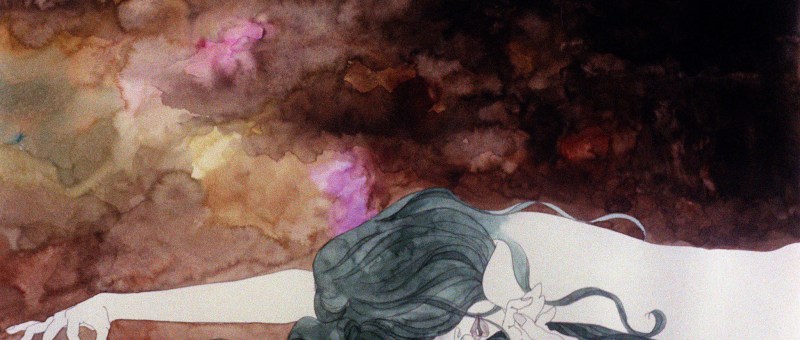
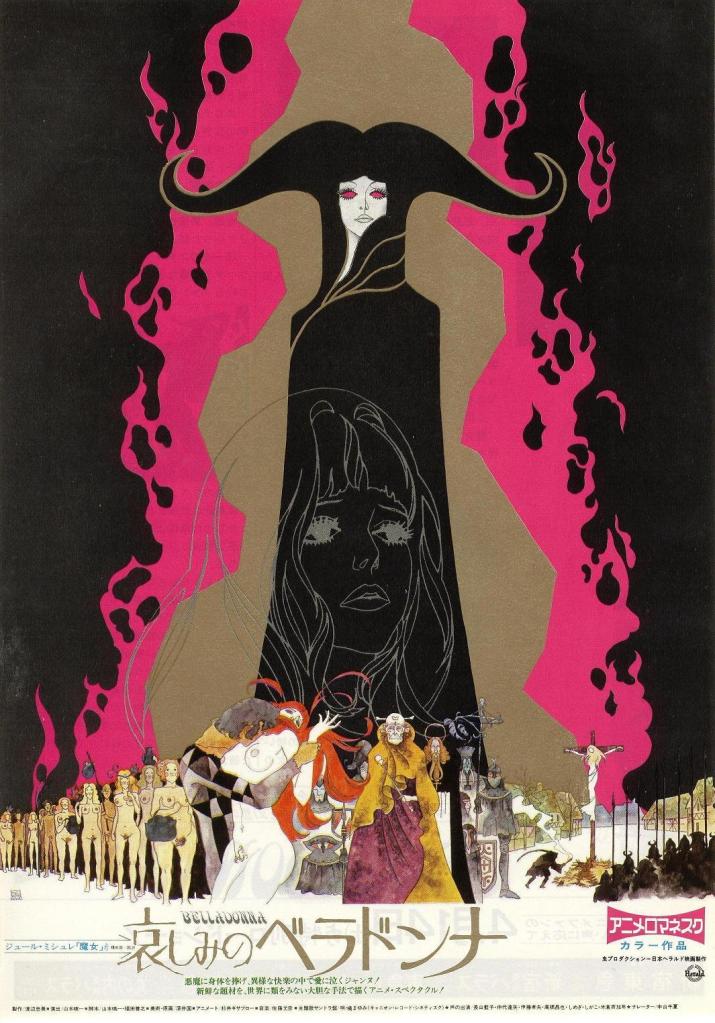 Loosely based on Jules Michelet’s La Sorcière (Satanism and Witchcraft) which reframed the idea of the witch as a revolutionary opposition to the oppression of the feudalistic system and the intense religiosity of the Catholic church, Belladonna of Sadness (哀しみのベラドンナ, Kanashimi no Belladonna) was, shall we say, under appreciated at the time of its original release even being credited with the eventual bankruptcy of its production studio. Begun as the third in the Animerama trilogy of adult orientated animations produced by legendary manga artist Osamu Tezuka’s Mushi Productions, Belladonna of Sadness is the only one of the three with which Tezuka was not directly involved owing to having left the company to return to manga. Consequently the animation sheds his characteristic character designs for something more akin to Art Nouveau elegance mixed with countercultural psychedelia and pink film compositions. Feminist rape revenge fairytale or an exploitative exploration of the “demonic” nature of female sexuality and empowerment, Belladonna of Sadness is not an easily forgettable experience.
 Those golden last few summers of high school have provided ample material for countless nostalgia filled Japanese comedies and 700 Days of Battle: Us vs. the Police (ぼくたちと駐在さんの700日戦争, Bokutachi to Chuzai-san no 700 Nichi Senso) is no exception. Set in a small rural town in 1979, this is an innocent story of bored teenagers letting off steam in an age before mass communications ruined everyone’s fun.
 Cities are often serendipitous places, prone to improbable coincidences no matter how large or densely populated they may be. Tokyo Serendipity (恋するマドリ, Koisuru Madori) takes this quality of its stereotypically “quirky” city to the limit as a young art student finds herself caught up in other people’s unfulfilled romance only to fall straight into the same trap herself. Its tale may be an unlikely one, but director Akiko Ohku neatly subverts genre norms whilst resolutely sticking to a mid-2000s indie movie blueprint.
 Below average student buckles down and makes it into a top university? You’ve heard this story before and Nobuhiro Doi’s Flying Colors (ビリギャル, Biri Gyaru) doesn’t offer a new spin on the idea or additional angles on educational policy but it does have heart. Heart, it argues is what you need to get ahead (if you’ll forgive the multilevel punning) as the highest barriers to academic success are the ones which are self imposed. Arguing for a more inclusive, tailor made approach to education which doesn’t instil false hope but does help young people develop self confidence alongside standardised skills, Flying Colors is the story of one popular girl’s journey from anti-intellectual teenage snobbery to the very top of the academic tree whilst healing her divided family in the process.
