Okinawa Santos (オキナワ サントス, Yoju Matsubayashi, 2020)

Brazil is home to the largest Japanese population outside of Japan, yet the fortunes and status of the Japanese migrants have been extremely variable since the first boat arrived in 1908. At the end of the Meiji era as the society attempted to transition from feudalism towards a modern economy, Japan was a poor country and with exclusionary acts often blocking migration to countries such as the United States many travelled to South America and in particular to Brazil, which was desperate to recruit cheap labour following the end of slavery, to seek their fortunes intending to return in a few years’ time having made enough to set themselves up at home. 

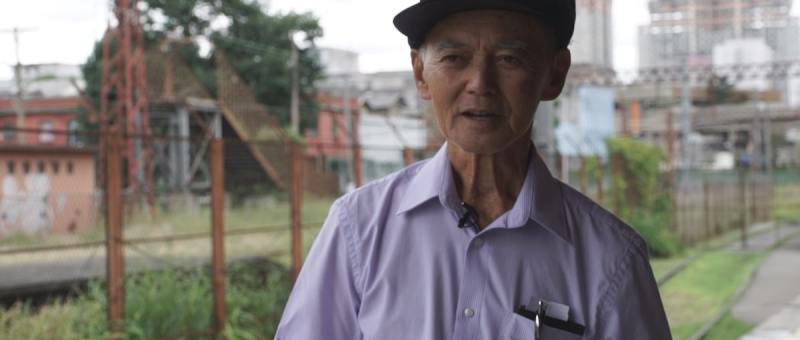
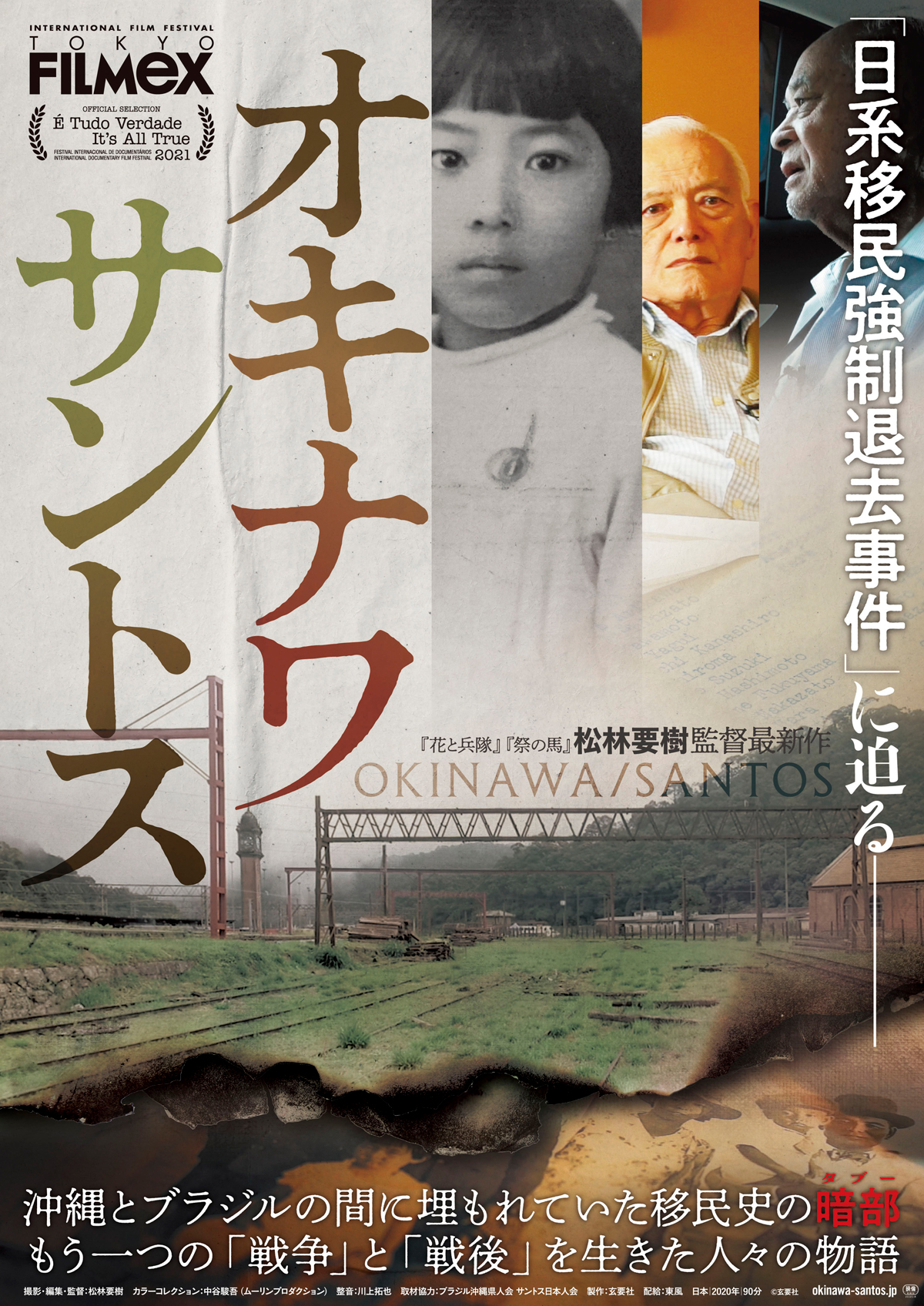
This is one reason given for why many settled in the harbour town of Santos, thinking it not worth their while to move further inland when they’d be going home soon enough. Yoju Matsubayashi’s documentary Okinawa Santos (オキナワ サントス), however, centres itself on a little known and traumatic episode of Brazilian-Japanese history, the forced relocation of the city’s Japanese community on July 8, 1943. Interviewing several of those who experienced the relocation first-hand many of whom were children at the time, Matsubayashi explores the position and legacy of the diaspora community the majority of whom hailed from the Okinawan islands rather the mainland. 

One of those interviewed explains that the rationale for the relocation was that Allied boats were sinking off the coast of Santos with alarming frequency and the authorities began to view the Japanese community, against whom there had already been a degree of prejudice, as potential spies. One now elderly gentleman recalls with sadness that his Brazilian friends abruptly stopped playing with him, calling him a “fifth columnist” in the streets. Japanese-language newspapers had already been shut down which is one reason few primary documents relating to the relocation exist, while speaking Japanese in public had also been banned. This might have seemed ironic to those who’d travelled from Okinawa where they also found themselves oppressed by the majority Japanese culture whose attempts at forced assimilation ran to banning the native Okinawan language, something they were comparatively free to preserve after relocating to Brazil

Midway through his documentary, Matsubayashi encounters this same divide even within the Japanese community receiving a phone call from a Brazilian-Japanese woman he’d interviewed who asks to be removed from the project apparently because of his interviewing so many from the Okinawan diaspora. An older man who later went into politics recalls the community having been largely segregated with the mainland Japanese often looking down on the Okinawans while each operated separate communal halls and intermarriage was frowned upon. Some hid their Okinawan heritage out of shame as Okinawans were regarded as not really “Japanese” but somehow other. This rift was apparently unhealed until the contemporary era though as the phone call implies may still to some extent survive. 

All were however subject to the relocation order as the now elderly children explain their fear and confusion in being cast out of their homes with little warning, having their farms looted while forced to leave most of their property and possessions behind. Crowded onto a train they were taken to an immigration centre in São Paulo before being moved on further into the interior but with little assistance or support dependent entirely on friends and relatives, other members of the diaspora, already living and farming inland. Many of the now elderly members of the community tearfully recount crushing poverty and discrimination, never having talked about their experiences even with their own children and describing them as unreal, like a sad dream from which they have never quite woken up. Meanwhile they continued to face prejudice after the war due to the presence of a minority group who couldn’t accept the Japanese defeat and apparently committed acts of terrorism against those who could, further harming the reputation of the Japanese community in mainstream Brazilian society to the extent that legislation was proposed to halt immigration from Japan which was finally defeated only on the grounds of democratic principle. Nevertheless, though many of those interviewed have been able to build happy, successful lives they are each affected by the traumatic legacy of forced displacement unable even to speak of their childhood suffering. 


Okinawa Santos screened as part of this year’s Camera Japan

Original trailer (no subtitles)

My Name is Yours (君が世界のはじまり, Momoko Fukuda, 2020)

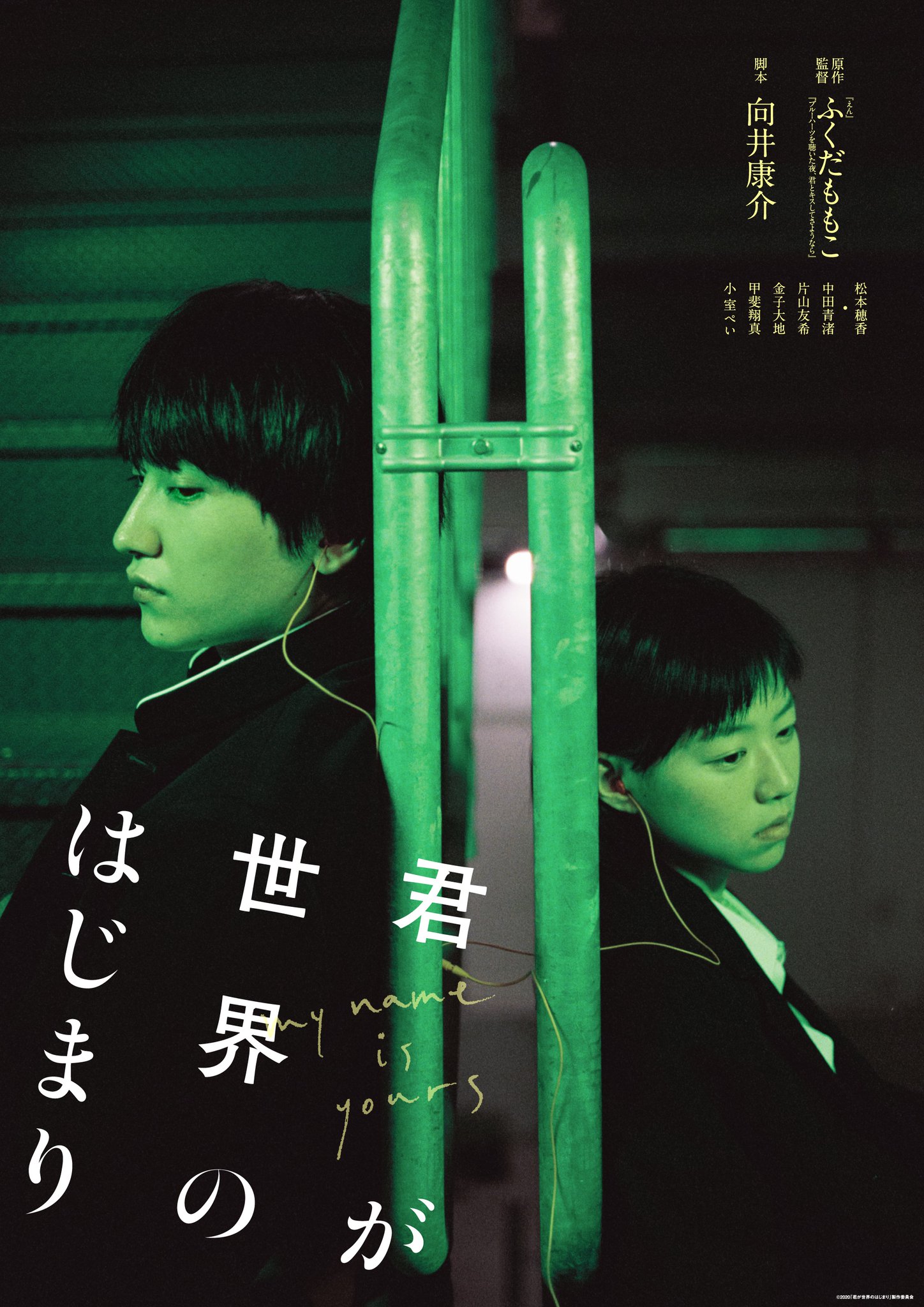
A collection of Osaka teens process adolescent angst and generational anxiety but in the end find a gentle solidarity in their shared suffering while resolving to be kind in Momoko Fukuda’s adaptation of her own novel, My Name is Yours (君が世界のはじまり, Kimi ga Sekai no Hajimari). “People are unknowable” they solemnly resolve, admitting that you never really know anyone but later making an effort to share their secrets, if only gently, bonding in a new sense of openness as they begin to move forward into a brighter future. 

Fukuda opens however with a scene of crime as a high school student is arrested for the murder of their father. As we discover, several of the teens could be potential suspects, each in someway resentful of their dads though for very different reasons. Recently transferred Tokyo boy Io (Daichi Kaneko), mocked for his accent, is involved in some kind of hugely inappropriate sexual relationship with his middle-aged step mother as accidentally witnessed by moody classmate Jun (Yuki Katayama) hanging round the shopping mall in order to avoid going home to her overly domesticated dad (Kanji Furutachi ) whom she blames for her mother’s decision to leave the family. Narihira (Pei Omuro), meanwhile, was abandoned by his mother soon after birth and is sole carer to his father who seems to be suffering with early onset dementia. 

Childhood best friends En/Yukari (Honoka Matsumoto) and Kotoko (Seina Nakata) first encounter Narihira in their secret hideout, a disused school library, having a private cry leading Kotoko to fall madly in love publicly dumping her current boyfriend with extreme prejudice seconds later. Meanwhile, En becomes an accidental confidant to nice guy Okada (Shouma Kai) who has received a mysterious love letter he doesn’t quite understand because it’s come in the form of a classical poem only for Okada too to fall for Kotoko while Narihira seems to prefer En. 

Love triangles aside, each of the teens has their private sorrows some more secret than others but nevertheless producing chain reactions of their own in their inability to express themselves fully. But as angry and frustrated as they are, they still want to be kind if more to others than themselves. “If I only think about my own freedom how can I be kind to others?” Narihira sadly reflects confessing his occasional resentment in trying to care for his father. Even Io, seemingly realising how inappropriate his relationship with his step mother is, resolves that he wants to be kind to her despite the harm she may be doing him. “Wanting to hurt other people is absurd” he claims, unable to understand the impulse to exorcise his frustration through violence. 

Narihira attributes his salvation to having met En, explaining that in a sense she opened up a new world in giving him the courage to talk about his father sharing the secret with Okada who told the coach on their sports team who told him about a facility that might be able to help. Yet Narihira also begins to disrupt the previously close relationship between En and Kotoko, leaving Kotoko feeling jealous and En confused it seems on more than on level as the unexpectedly perspicacious Okada seems to have figured out forcing her in turn to reckon with and accept her own unspoken feelings. 

Taking refuge in a darkened shopping mall overnight, the teens unexpectedly bond through a musical performance of the classic Blue Hearts track Hito ni Yasashiku with its melancholy yet cheerful chorus encouraging each other to hang in there, remaining kind in a world which often isn’t. “Well, I can’t say for sure. Nobody can.” an amused secretary guard honestly answers asked by one of the teens if the mall will be torn down, his refreshingly direct answer perhaps adding to their new sense of confidence even in the face of the world’s uncertainty. A gentle, quietly nostalgic coming-of-age tale, Fukuda’s Osaka-set lowkey yet stylishly moody drama begins with violent darkness but ends in bright sunlight, the teens each finding a sense of equilibrium having come to new understandings about themselves and those around them bolstered by a youthful solidarity. Some secrets it seems still cannot quite be shared, but friendships resolve themselves all the same if in unexpected ways allowing a melancholy intensity to dissipate into a sad if fervent hope for the future. 


My Name is Yours screened as part of this year’s Camera Japan

Original trailer (English subtitles)

Hito ni Yasashiku music video

The Blue Hearts – Hito ni Yasashiku

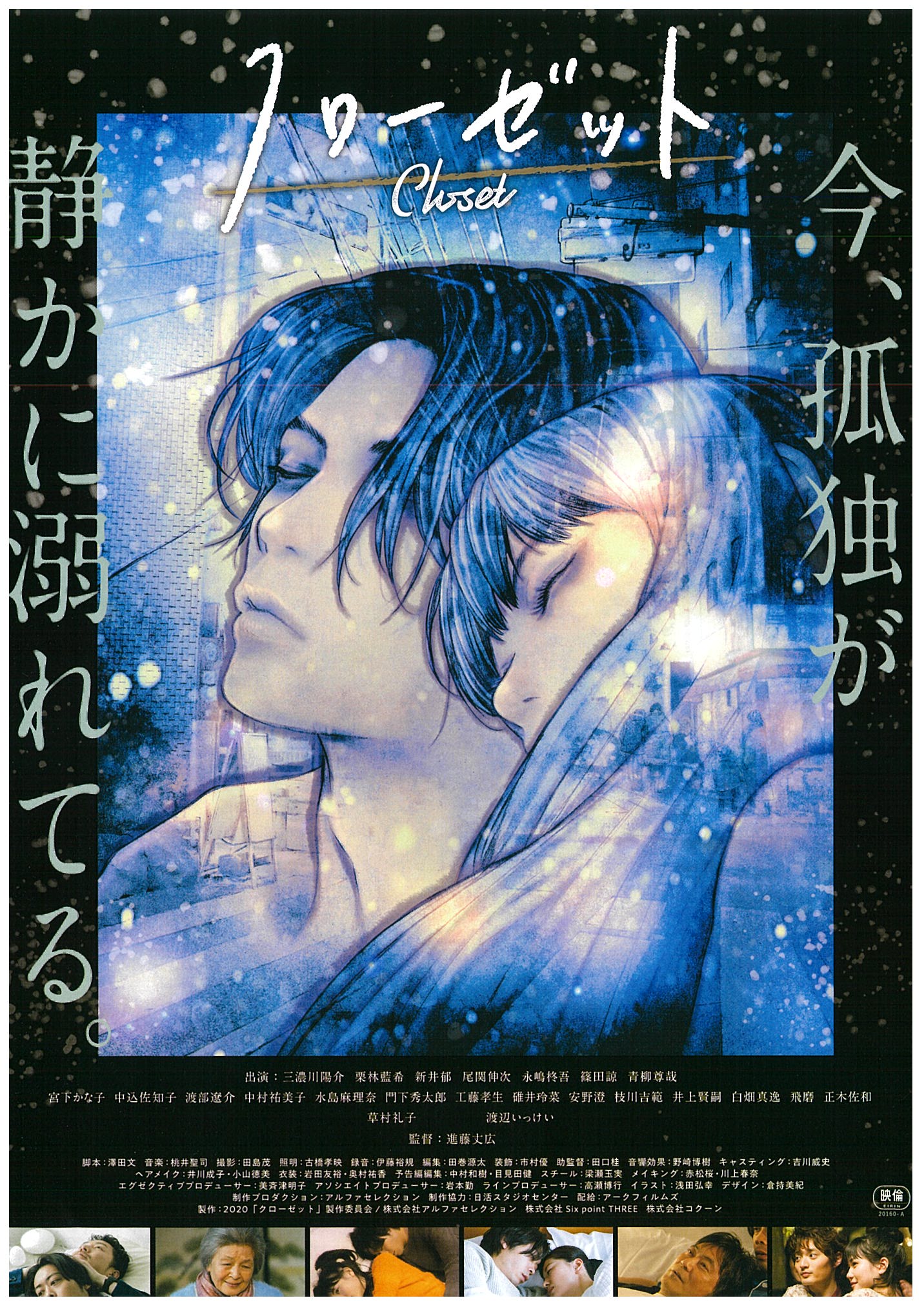
Closet (クローゼット, Takehiro Shindo, 2020)

“Everyone has their own closet” according to a bereaved older man sympathetically reflecting on a life half lived. The wounded hero of Takehiro Shindo’s Closet (クローゼット) is about to discover he may have a point as he works through his own issues, finally coming to an understanding of the true nature of intimacy before learning to open himself up to living life true to himself realising that perhaps his very ordinary dream is not as hopeless as he thought it was if only he can bring himself to put his male pride aside. 

Returning to Tokyo following a failed engagement, Jin (Yosuke Minogawa) finds himself taking on an unusual line of work on the invitation of an old friend, embarking on a career as a sleep companion. Essentially, he’s there to lie beside a lonely person offering a safe and supportive space where they can relax and be their authentic selves free from the judgement they may otherwise receive from a friend or a lover. Ironically enough, Jin is a man of few words, his fiancée once asking him to be a little more sociable when her parents visit, which means he’s a good listener but slow to adapt to the true purpose of his work. His first client, a harried hospital worker, seemingly just wants to destress but mostly through having someone listen to her rant about workplace concerns and nod along sympathetically rather than offer earnest advice. As his boss Takagi (Shinji Ozeki) reminds him, it’s all about empathy, or at least telling them what they want to hear which may sound insincere but in another sense may not be. 

As the old man says, everyone has something they don’t really want to let out but the presence of the sleep companion is intended to ease the burden and provide temporary relief. Jo Shimoda (Ikkei Watanabe), is grieving for his late partner who remained in the closet for the entirety of their relationship leaving him now with nothing but intangible memories. He asks Jin to put on the other man’s pajamas, experiencing the warmth and comfort he misses from his absent lover and gaining through it the ability to begin moving on. Kaori (Iku Arai), meanwhile, is a harried executive, or at least she claims, apparently in love with a slightly younger colleague but unsure if her crush is appropriate while worrying that she’s in danger of missing the boat both in love and in her career. 

A young student from the country, Nanami (Aino Kuribayashi), on the other hand, is in search of the kind of comfort she does not receive from her no good boyfriend, realising only too late that his treatment of her is abusive and their relationship is built on exploitation. Jin had in a sense experienced something similar, ruining his relationship in a crisis of masculinity. It is of course he who also receives warmth and support through his role as a companion, but the job also allows him to reconfigure his idea of what it is to be a man in providing a sense of safety, protection, and comfort while engaging in a true intimacy that is not defined by sexuality.

Through their shared experiences, both Jin and the sleepless companions begin to grow in confidence, accepting themselves for who they are and preparing to move on into a more authentic future even if for some the path turns darker before it reaches the light. Stepping out of their individual closets, they no longer feel so insecure finally gaining the courage to live as their true selves no matter what anyone else might have to say about it in the knowledge that others too are also suffering and might be led out of it by their example. A gentle tale of the simple power of human intimacy to overcome a sense of existential loneliness and individual despair, Closet allows its reticent hero to find new meaning in the ability to accept from and give to others comfort while coming to terms with his own traumatic past in realising that he is not and never was defined by conventional ideas of masculinity and that he is not worthless solely because he is no longer able to fulfil them. Perhaps that small yet infinitely ordinary dream is not so out of reach after all. 


Closet screened as part of this year’s Camera Japan

Original trailer (no subtitles)
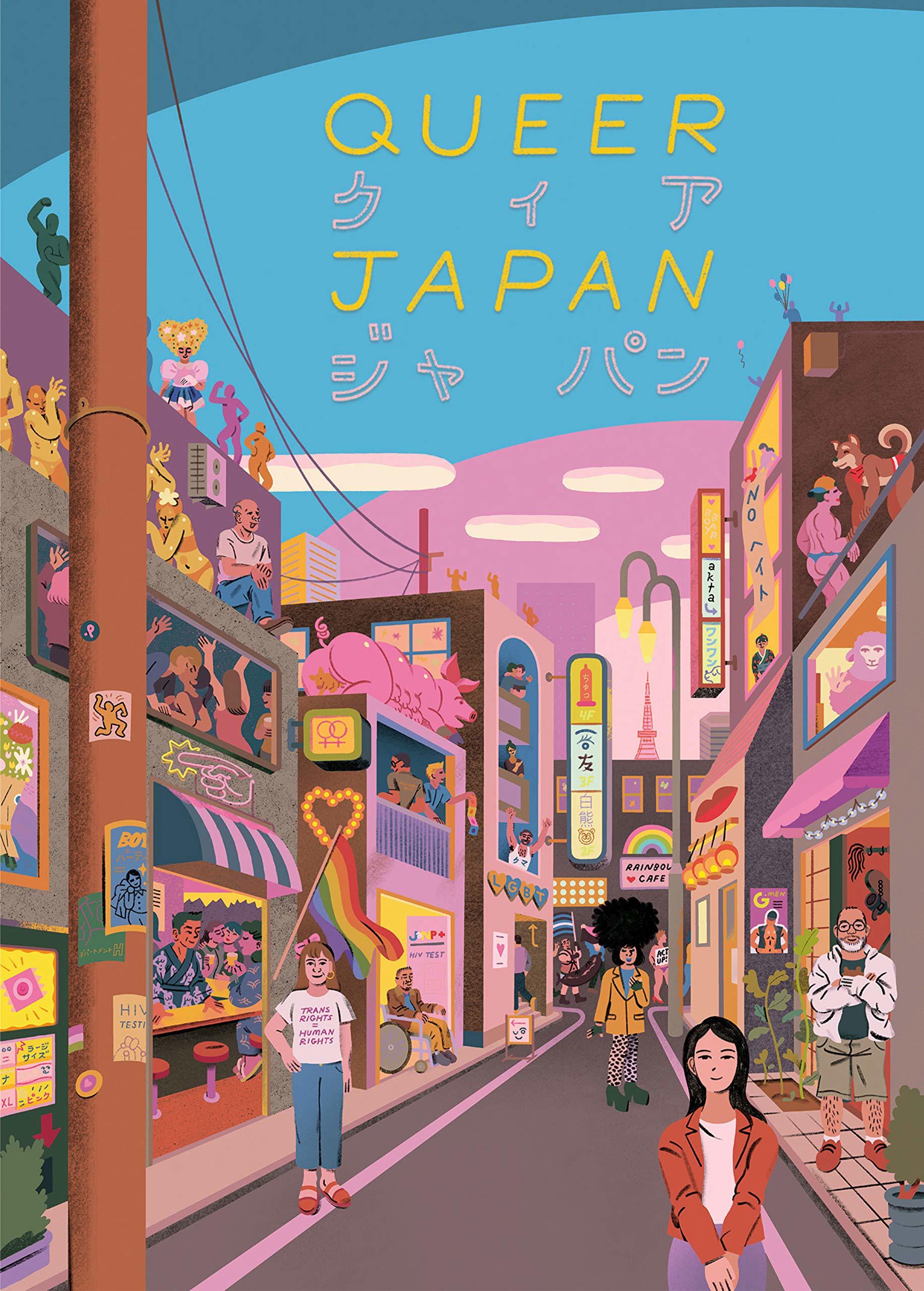
Queer Japan (クィア・ジャパン, Graham Kolbeins, 2019)

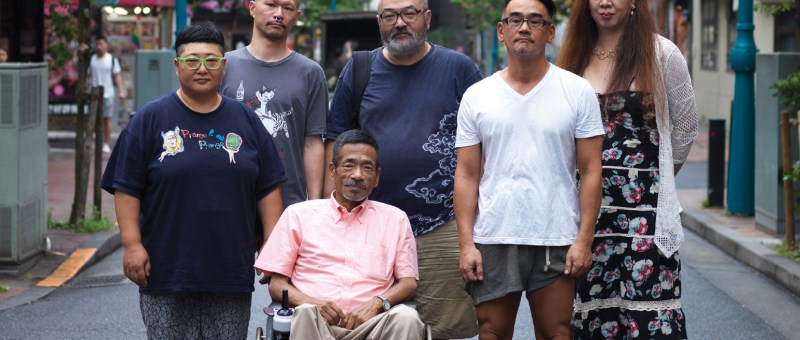
Japan has in recent years become a much more progressive place in which LGBTQ+ rights continue to advance though hopes that hosting the Olympics would finally provoke a shift in the political reality ultimately came to nothing with anti-discrimination and national equal marriage legislation still pending. Released in 2019, Graham Kolbeins’ comprehensive documentary Queer Japan (クィア・ジャパン) as its name suggests explores the lives of ordinary people across the spectrum of the LGBTQ+ community yet cannot perhaps avoid falling victim to, as one interviewee points out, a certain degree of exoticisation even while demonstrating the diversity present with the community itself.

Nevertheless, Kolbeins is keen to stress the warmth and solidarity found with the various subcultures he explores such as that surrounding Department H, a costume fetish ball at which all are welcome from gay furries and puppy play enthusiasts to avantgarde artists such as a young woman whose multi-person rubber pig giving birth is notable inclusion. As the club’s hostess, drag queen Margarette, points out the fetish scene often transcends ideas of gender, the club providing a totally safe, inclusive, and relaxed place where anyone can come to be themselves and find acceptance. 

That has not always been true when it comes to other aspects of the community as evidenced by the controversy surrounding lesbian bar Gold Finger which came under fire some years ago for refusing admittance to transwomen under its longstanding women only policy. Interviewed here Chika Ogawa outlines her original reluctance to admit transmen who had previously been frequent customers prior to transition but eventually reconsidered to team up with another group to host an evening geared towards transmen and masculine women as a place where the community can come together. 

As explained by activist Fumino Sugiyama, it is legally possible to change one’s gender in Japan though the conditions are somewhat draconian and require the surgical removal of reproductive organs which some have viewed as a breach of fundamental human rights. The change in the law was largely due to Japan’s first transgender lawmaker Aya Kamikawa who outlines how difficult her life had been unable to change her gender on her family register creating problems when trying to rent an apartment, access healthcare, or gain employment. She admits that the law passed was very strict, but laments the limits of what is possible under the current LDP administration and its ultraconservative outlook as evidenced by gaffe-prone politician Mio Sugita’s characterisation of the LGBTQ+ community as “unproductive” and therefore not deserving of social benefits. 

Pioneer of gay manga and G-Men co-creator Hiroshi Hasegawa remarks that the oppression faced by the community in Japan is often less direct than it might be elsewhere operating largely through societal shaming and a conformist social culture. Kolbeins discovers this to be true on visiting other cities such as Naha, Okinawa, where a cheerful dentist reveals that he only embraced his love of dancing at the age of 33 and spoke to no one for two years after receiving a bad reaction to coming out during university. Nevertheless, in the face of this indirect oppression the community has developed a sense of comprehensive, intersectional solidarity often coming out to counterprotest racist prejudice against ethnically Korean citizens and discovering that the anti-racist straight community often comes to Pride to support them in return. Bearing out this spirit of intersectionality, Queer Japan is fully subtitled in Japanese throughout while a deaf LGBTQ+ activist highlights the importance of proper sign language interpretation which is familiar with the community.

Even so, Japan’s LGBTQ+ community is subject to the same concerns as many others from around the world one Pride goer criticising the increasing commercialisation of the event, sympathetic that some degree of sponsorship is necessary to hold a celebration on this scale but also that you need to be accountable. Meanwhile a young trans person objects to the celebratory atmosphere insisting that all they want is to feel safe using the bathroom, love can wait. There is clearly work to do, but also much already accomplished one vox popper enthusiastically listing all of his various fetishes with thinly concealed glee while making a serious point about normalising condom usage. Featuring internationally well-known figures such as gay erotic manga pioneer Gengoroh Tagame alongside activists and ordinary members of the LGBTQ+ community, Kolbeins’ handsomely lensed doc showcases the diversity of queer life in Japan while never losing sight of the battles still to be won. 


Queer Japan screened as part of this year’s Queer East.

Original trailer (English subtitles)

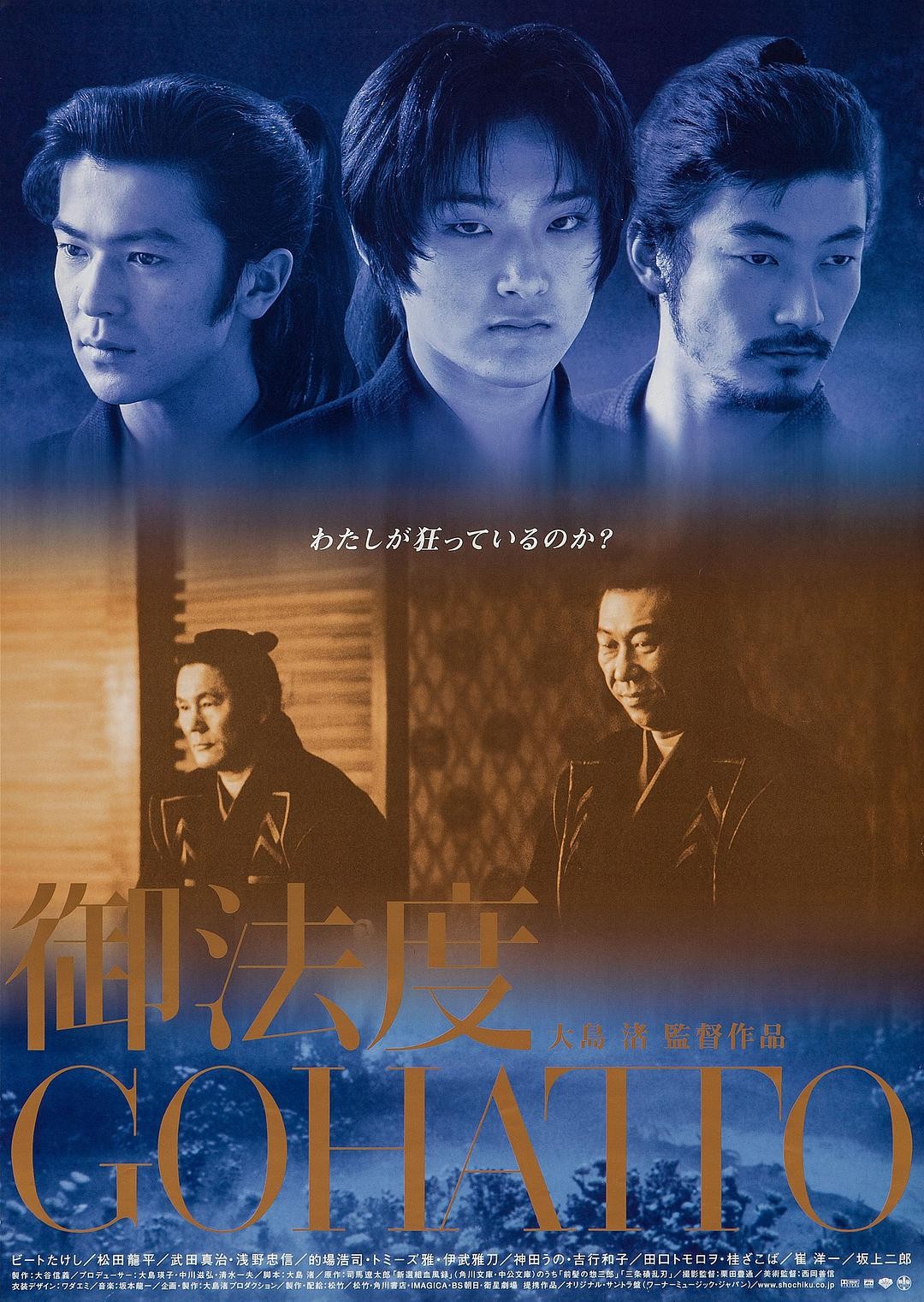
Gohatto (御法度, Nagisa Oshima, 1999)

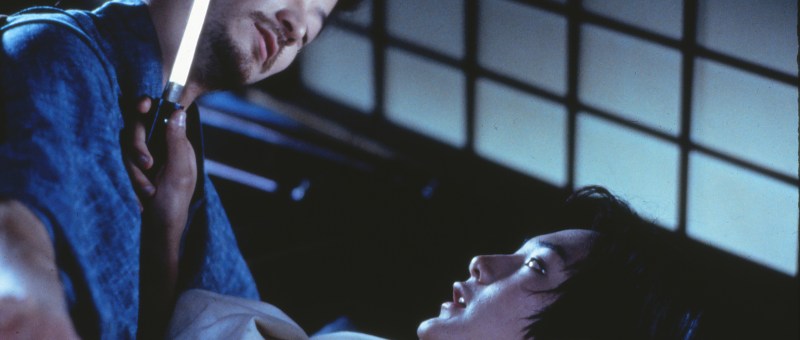
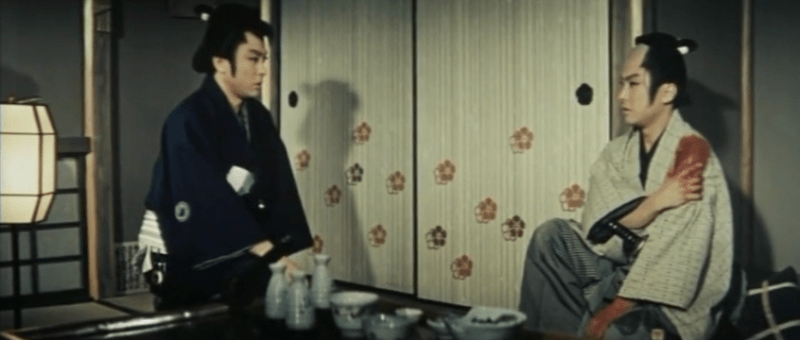
Nagisa Oshima once said that his hatred of Japanese cinema extended to absolutely all of it, decrying the hackneyed nativism of “foggy beauty and stupid gardens”, yet his final film is filled with Mizoguchian mist and almost a paen to Japanese aesthetics which ends with a cherry blossom tree in full bloom cut down in its prime. Burdened by the slightly more salacious title “Taboo”, Gohatto is less about love between men in an intensely homosocial world even as it asks what it might mean by “forbidden” or “against the law” than it is about idealism and aesthetics as its band of contradictory conservatives unknowingly approach the end of their world in a coming modernity ushered in by dangerous beauty. 

Set in the Kyoto of 1865, a scant three years prior to the Meiji Restoration, the film opens with an audition of sorts as the Shinsengumi search for promising new recruits among talented swordsmen. Already a mess of contradictions, the Shinsengumi is, loosely, a kind of official police force dedicated to defending the Shogunate against the revolutionary forces set on restoring power to the emperor. Nevertheless, in an odd way and in contrast to the elite Mimawarigumi which was staffed only by direct retainers to the Shogun, the Shinsengumi was noted for its lowkey egalitarianism in that it made a point of admitting those of ordinary birth as well as lower level samurai and ronin. Of course, the notions of equality only went so far and perhaps only fuelled its reputation for merciless savagery, but also make it a strangely progressive force fighting against progress in defence of the feudal status quo. 

Only two of the hopefuls are thought to be any good, one a young ronin, Tashiro (Tadanobu Asano), and the other a beautiful boy, Kano Sozaburo (Ryuhei Matsuda), the third son of a wealthy merchant whose line were once samurai but are no longer counted among the noble retainers. A talented swordsman, Sozaburo’s dangerous beauty presents an existential threat to the Shinsengumi order, the steely Hijikata (Takeshi Kitano) looking on conflicted in witnessing the way his commander, Kondo (Yoichi Sai), looks at this vision of androgynous beauty remarking that he had not known him to be “that way inclined”.

Being that way inclined does not seem to be a particular issue within the Shinsengumi, it is not against their draconian rules and in fact appears to be tolerated at least as long as it causes no further problems. Kondo is however mindful of the chaos caused by a similar wave of homoerotic lust which took hold shortly before a climactic battle which would prove to be their last success. What Sozaburo seems to arouse in them is something more dangerous than the accepted patterns of love between military men which is in a sense sublimated as a mentor/student relationship, loyalty more than romance. Tashiro, who is of a similar age to the apparently 18-year-old Sozaburo, lets his desire be known, vowing to sleep with him before he dies ironically acknowledging Sozaburo for what he is, an angel of death. 

For his part, Sozaburo remains curiously passive in each of his encounters, aroused only it seems by the act of killing. Yet Hijikata discerns that he has indeed become Tashiro’s lover on witnessing them fight, Sozaburo losing clumsily despite being the more skilled in a dynamic that mimics their relationship in which Tashiro is the dominant partner. Aware of the danger in Sozaburo’s allure, Kondo suggests having a superior take him to the red light district to show him the delights of woman hoping to guide him back towards a less dangerous path, only the attempt backfires on several levels. Firstly, Sozaburo has no interest in women and continues to decline believing his commander is also hitting on him (like everyone else), thereafter determined to seduce him after all. Another retainer does indeed succeed in seducing Sozaburo, developing a mild obsession, but later ends up dead, Tashiro a main suspect in his murder with the motive of sexual jealousy though all of this additional violence is perhaps only an expression of Sozaburo’s dangerous beauty. 

As so often, sex if not love becomes the force which destabilises the social order only here it’s equated both with death and with an alternative mediation of male violence. Perhaps reflecting the way they look to the 18-year-old Sozaburo who makes a faux pas in accidentally suggesting at least one of them is of pensionable age, the ranking members of the Shinsengumi are played by actors already well into their golden years as if relics of a bygone era though in reality most were in their 30s. As Soji (Shinji Takeda), a filial figure like Sozaburo wearing long hair, puts it, there are no old men in their unit which is in essence an anti-revolutionary force. Nevertheless, the Shinsengumi is on the wrong side of history and already living in its end times, perhaps ushered towards its doom by the figure of the beautiful boy. “You were too beautiful”, Hijikata eventually laments as he finally perhaps understands the nature of the revolution he is witnessing. Perverse to the last, Oshima sets his ethereal finale in a stygian fog and pays an ironic tribute to the Mizoguchian classicism he so railed against in his youth, taking a sword to the cherry blossoms as he like Hijikata severs his own legacy in a moment of destructive beauty. 


Gohatto screens at Genesis Cinema on 25th September as part of this year’s Queer East

International trailer (English subtitles)

461 Days of Bento: A Promise Between Father and Son (461個のおべんとう, Atsushi Kaneshige, 2020)

“This is a story about my lunch every day. Nothing more, nothing less” the hero of Atsushi Kaneshige’s slice of comfort cinema, 461 Days of Bento: A Promise Between Father and Son (461個のおべんとう, 461ko no Obento), claims though it is of course something more than that. Based on an essay by musician Toshimi Watanabe who himself starred in Dad’s Lunch Box, Kaneshige’s gentle drama is another in the recent series inspired by the “papaben” phenomenon of fathers suddenly taking an interest in domestic matters by preparing tasty, nutritious and elegantly prepared packed lunches for their school-aged children. 

Obviously inspired by Watanabe’s real life, 461 Bento opens with cheerful home video footage of the early years of hero Kouki (Shunsuke Michieda) before shifting darker as the relationship between his parents begins to sour eventually ending in divorce. Kouki is given a choice whether to live with mum or dad, remaining behind in the family home with musician Kazuki (Yoshihiko Inohara) while his mum Shuko (Emi Kurara) moves out taking the tree they planted together with her. With the stress of the divorce, young Kouki ends up failing his high school entrance exams and is set back a year, eventually getting in the following spring. Hoping to encourage him, Kazuki offers to make a bento lunch every day for the next three years on the condition that Kouki pledges to not to skip school. 

In true papaben tradition, Kazuki ends up getting far too into the art of bento filling the kitchen with new gadgets while sometimes coming into conflict with his bandmates through investing all of his creative energies in innovative lunch recipes. Yet Kouki isn’t quite convinced by his father’s newfound passion, assuming it’s merely a new hobby he’ll soon get tired of rather than something he’s actively doing out of love for his son. Consequently, he’s originally a little embarrassed when his classmates appear unduly impressed by the quality of his dad’s work though it later helps him make a few friends which had otherwise been a little difficult seeing as he is a year older than everyone else. 

Being a year older continually weighs on Kouki’s mind, adding to the already onerous pressures of high school life his sense of anxiety intensifying as graduation nears. He complains he feels creepy hanging out with younger kids, and insists he can’t afford to fail and risk being held back again even older than everyone else at the beginning of college. Meanwhile he’s lowkey resentful towards his father blaming him for the end of his parents’ marriage while also seemingly ambivalent towards his mother for giving him the choice of where to live unfairly blaming her for leaving him even though it was his own choice to stay with his father. He rebels passive aggressively against his parents’ gentle support as they refuse to pressure him insisting he be free to do and be what he wants, while floundering in confusion over the next steps in his life. 

Kazuki is fond of telling him that everything will work out in the end, life’s not a race after all, only for Kouki to fire back that everything always works out for him because he just does whatever he wants and forces everyone else to go along with it which is why his mum left. Harsh words, but not without truth as new girlfriend Maka (Junko Abe) expresses something similar confessing that being with Kazuki makes her feel lonely and as he lives so defiantly in the moment it’s difficult to believe in the future of their relationship. Kouki cruelly tells Shuko he can choose a father for himself suggesting he might move in with his mother and her new boyfriend, but contrary to expectation Kazuki is serious about fatherhood giving his son the space for his adolescent angst while trying to be quietly supportive through his bento endeavours. 

The papaben phenomenon may be in itself a little sexist in exoticising a perfectly ordinary task just because it’s being done by a man thereby ironically reinforcing the idea that children’s lunches are a woman’s responsibility, but it does undoubtedly broker a reconciliation between father and son as the young Kouki begins to come to an understanding of his father’s love for him, overcoming the trauma of his parents’ divorce and gaining the courage to step forward into an independent future. A heartwarming coming-of-age tale, 461 Bento is about more than a boy’s lunch but also of the quiet power of unconditional love as mediated through the most ordinary act of care.


461 Days of Bento: A Promise Between Father and Son screened as part of this year’s Camera Japan

Original trailer (no subtitles)

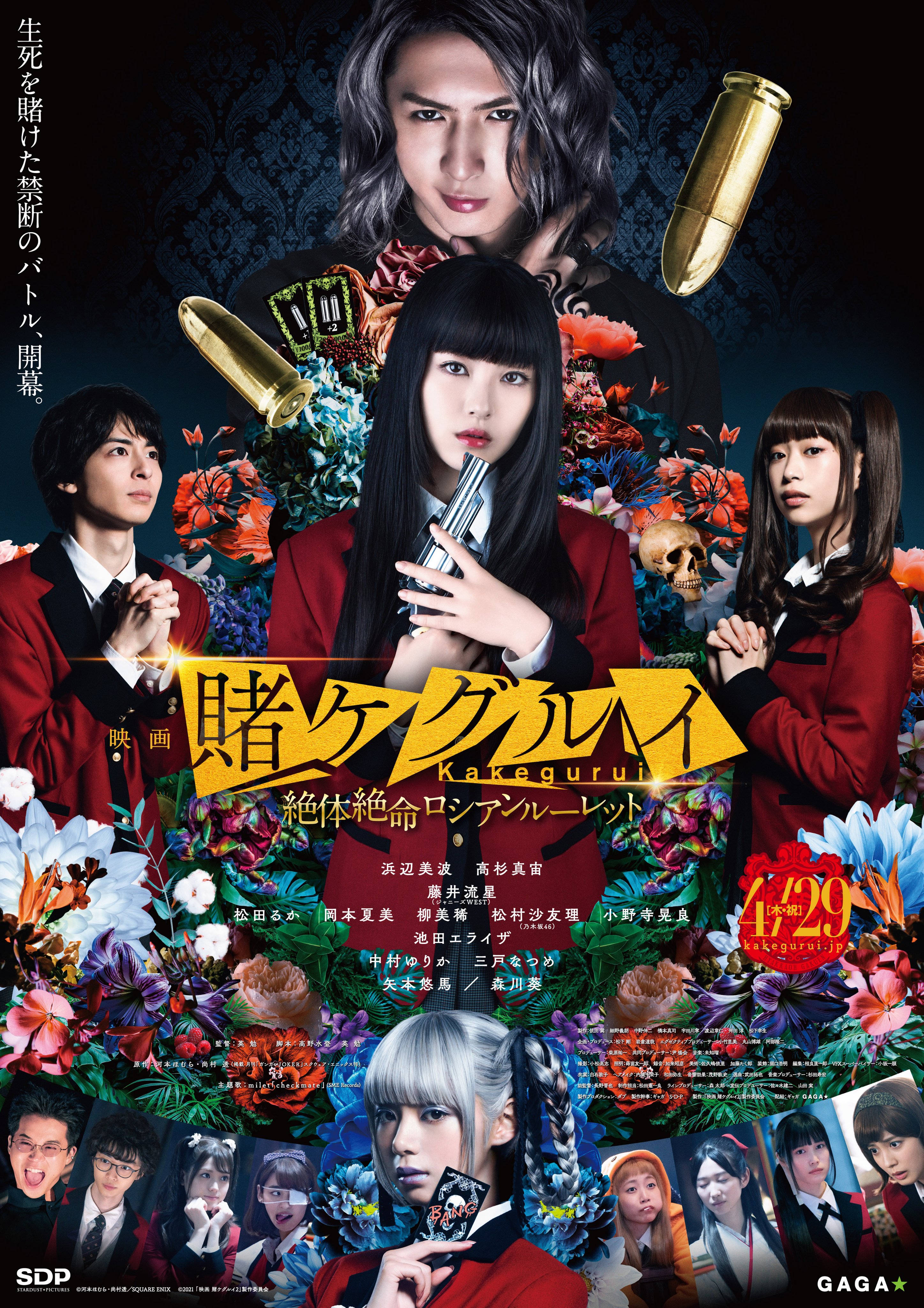
Kakegurui 2: Ultimate Russian Roulette (映画 賭ケグルイ 絶体絶命ロシアンルーレット, Tsutomu Hanabusa, 2021) [Fantasia 2021]

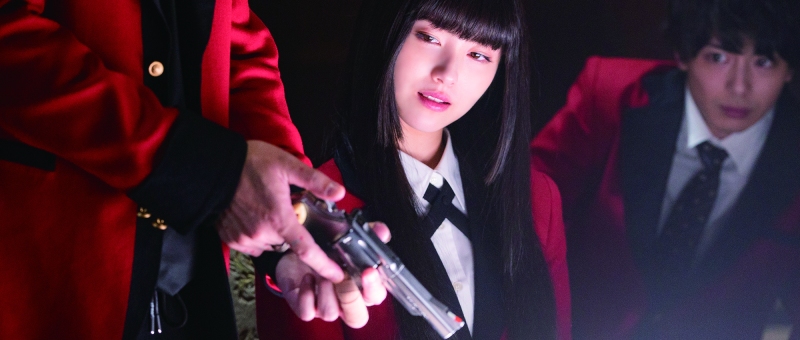
Closet revolutionary or compulsive gambler, Yumeko Jabami (Minami Hamabe) continues to be a thorn in the side of the Student Council in the sequel to hit movie Kakegurui, itself a sequel to a two-series live action drama adapted from the manga by Homura Kawamoto. Set as the opening expositionary narration explains at school for the elite Hyakkaoh Academy where social hierarchy is determined by skill in gambling, Ultimate Russian Roulette (映画 賭ケグルイ 絶体絶命ロシアンルーレット, Eiga Kakegurui: Zettai Zetsumei Russian Roulette) sees the rattled Student Council making a counterproductive and potentially ruinous decision in bringing back a previously exiled player in the hope of permanently neutralising Yumeko. 

Makuro Shikigami (Ryusei Fujii) was suspended some years ago for his part in the “House Pets’ Curse” which led to most of the school being demoted to its lowest, near untouchable ranks. At Hyakkaoh Academy, students are required to pay a tithe to the Council and those who can’t pay end up as “House Pets”, humiliatingly treated as cats and dogs. Yumeko’s friend Meari (Aoi Morikawa) fears she may have fallen foul of the curse herself having hit a lengthy losing streak, but it’s not until Shikigami begins twisting the situation to his advantage that Yumeko is snared by his manipulative trap. 

Yumeko, meanwhile, is in the middle of a depressive episode largely down to her reluctance to take part in the school’s upcoming sports’ day. Just as in the previous film her long game was better cakes in the cafeteria, her end goal here is trying to get the event cancelled by whatever means possible. In any case, we also witness another dark side to the oppressive rule of the Student Council as a demoted Maeri finds herself in a literal chain gang forced into hard labour building the facilities for the sports festival in what seems to be a minor dig at preparations for the Olympics. Yumeko and Meari are, however, responsible gamblers in that they refuse to bet on other people’s safety or at least refuse to be complicit in games which are designed to inflict harm or cruelty on others. 

As Shikigami explains in his opening monologue, the skills needed for gambling are strategy, ability to read your opponents, and a killer instinct. This is something Yumeko knows well, she plays players not games and sees straight through Shikigami realising that his crazed psychopathy is an act to mask the meticulous quality of his external manipulations. Nevertheless she is also caught out by her unwillingness to put her friends in danger, willingly sacrificing herself instead. The Student Council too are seemingly caught off guard little realising that Shikigami presents just as much of a threat to their authority as Yumeko and is equally uncontrollable with far fewer principles. Still as Student Council President Kirari (Elaiza Ikeda) ominously reflects, “there must be chaos before order”. 

In any case, they find themselves awkward allies in facing off against Shikigami in the promised game of Russian roulette mediated through a card game but played for real. The Student Council leaves itself surprisingly vulnerable in a loophole which allows House Pets to challenge them directly overruling all of the other school regulations, while Shikigami too falls victim to his own arrogance never quite expecting to be challenged having achieved his primary goals of seizing control of the school via the Council. The only way to beat him is to play him at his own game, disrupting his self-serving plotting and tendency to cheat in an insult to the art of gambling while undermining his confidence in his own intellectual superiority. “Only a twisted mind could beat you” he says of Yumeko believing himself to be a twisted mind though as it turns out perhaps not quite twisted enough. 

Temporarily siding with authority in order to put a stop to Shikigami’s authoritarian potential, Yumeko does not so much challenge the system as work around it while protecting herself and her friends from Shikigami’s machinations. What she defends is in a sense gambling itself, rejecting Shikigami’s intention to subvert it to his own advantage. Maintaining the same absurdist, manga-esque aesthetic as the first film complete with cartoonish CGI pupil shrinking, slick onscreen graphics, and even this time a random musical number, Hanabusa significantly ups the ante with bomb threats and unexpected Satanism while leaving the door open for the next instalment with Yumeko’s final instruction to “Bring on the Madness”. 


Kakegurui 2: Ultimate Russian Roulette streamed as part of this year’s Fantasia International Film Festival

International trailer (English subtitles)

No Smoking (Taketoshi Sado, 2019)

Celebrating the 50th anniversary of his musical debut in 2019, Haruomi Hosono has undoubtedly had a long and varied career shifting from countercultural folk rock to avant-garde electronica and bubble-era pop music. In later years, he’s become known internationally primarily for his film scores and particularly that of Hirokazu Koreeda’s Palme d’Or winning Shoplifters. Capturing footage from Hosono’s 2019 anniversary world tour, Taketoshi Sado’s documentary is equally meandering struggling perhaps to find a clear through line in regards to Hosono’s works. 

As such, it rockets through his early days with interesting family trivia such as his grandfather having been the sole Japanese Titanic survivor, his father’s secret dancing dreams, and his mother’s love of music. Picking up with his time at university, Sado more or less charts Hosono’s musical evolutions in chronological order though with little cultural context outside of a brief evocation of post-war devastation at the time of the musician’s birth. Accordingly he begins with Hosono’s uni folk rock band Apryl Fool which broke up after one album onto the hugely influential Happy End, various side projects, the avant-garde Yellow Magic Orchestra days, writing bubble era pop songs for idol stars such as Seiko Matsuda’s Tengoku no Kiss, and finally music for film composing the title track “Kaze no Tani no Naushika” for Hayao Miyazaki’s Nausicaä. 

Meanwhile, Sado shuttles between direct to camera monologues from Hosoda himself intercut with concert footage from the 2019 tour, legendary gigs, and rather a lot of Hosoda doing his famous silly walks. Sado does not include direct interviews with Hosoda’s collaborators or fellow artists, mainly allowing him to speak for himself, but does include footage of him with some who have been influenced by his music such as singer-song writer and actor Gen Hoshino who is apparently such a fan that he first met the artist while cosplaying his Harry Hosoda outfit from his famous Yokohama China gig, and LA musician Mac DeMarco who also appears onstage singing in Japanese at Hosoda’s LA concert. Actress Kiko Mizuhara and sister Yuka meanwhile also spend some time travelling with Hosoda in the UK appearing on stage in Brighton, while London’s Barbican Hall concert was also notable for the unexpected onstage appearance of Ryuichi Sakamoto briefly reuniting the Yellow Music Orchestra. 

The brief backstage footage from the event is among the more interesting in the slightly awkward interactions of the three band members despite Hosono’s claim that musicians can pick up where they left off with each other even after many years through the universal language of music. The 2019 tour however leaned heavily into Hosono’s boogie boogie covers rather than original tracks, while Sado seems content to mix and match between various concerts and adding vox pop comments from excited fans waiting to get in long after the first footage of the evening appears. Despite building towards the brief YMO reunion, he offers little commentary on relations between the former band members or why such an event is so viewed as so momentous. Rather he suggests that Hosono’s various musical projects existed more or less concurrently serving particular purposes in reflecting his specific creative desires. 

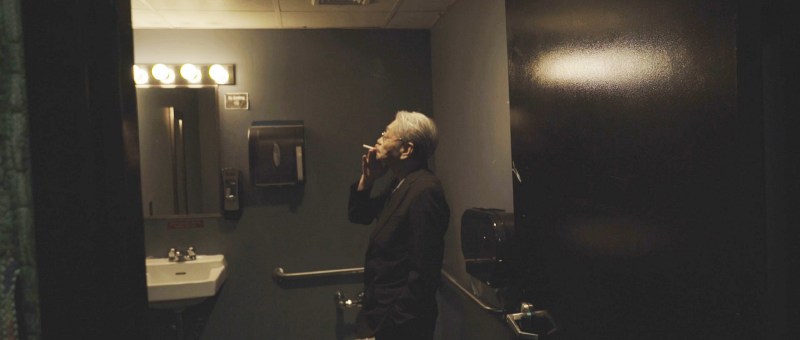
“The keyword is free, when when I touch what’s free my heart dances” Hosoda explains in one of his monologues, hinting at this process of continual meandering between musical genres that culminates perhaps paradoxically with revisiting the music of his childhood in American boogiewoogie. The film’s ironic title is apparently inspired by Hosono’s love of smoking, as he explains he needs cigarettes to create and there is music in a puff of smoke. Hosoda does indeed nip off for a puff rather a lot, often seen with a tobacco or electronic cigarette in his hand or else doing some of his silly walks. Footage from Hosoda’s diaries and early illustrations fill in the blanks of Sado’s rough chronology, though he does begin to rely on footage from other interviews particularly towards the documentary’s end. Despite offering a comprehensive if whistle-stop tour of Hosono’s varied discography, there’s no denying that No Smoking remains somewhat superficial offering, only an unannotated overview, but does undoubtedly offer insight in following the man himself as he celebrates such a significant career milestone. 


No Smoking streamed as part of this year’s Japan Cuts.

International trailer (English subtitles)

Seiko Matsuda – Tengoku no Kiss

The Phantom Goblin (まぼろし天狗, Nobuo Nakagawa, 1962)

“Everything is money these days” as a pirate king cheerfully proclaims in Nobuo Nakagawa’s tale of Edo-era corruption, Phantom Goblin (まぼろし天狗, Maboroshi Tengu). Perhaps named to capitalise on Nakagawa’s reputation for spookiness, Phantom Goblin features no real ghosts and only metaphorical goblins in the bright red tengu masks sported by the hero’s mysterious clan while otherwise conforming to the Toei programmer house style and starring jidaigeki superstar Hashizo Okawa in a double role as brothers separated at birth and reunited by their resistance towards the inherently corrupt authority of Edo society. 

Drawing parallels with the present day, the film opens at a bawdy banquet at which corrupt councillor Tanuma (Isao Yamagata) is being entertained by a pair of local social climbers with a floor show of dancing girls. Shortly after the performance begins, however, one of the women collapses writhing in agony and loudly crying out for drugs. Embarrassed, the lords would rather this not get out deciding to finish the woman off and dump her body in a nearby well. Unfortunately for them, the plan is interrupted by local policeman Shuma Moriya (Hashizo Okawa) who arrives in time to hear the woman exclaim the words “drugs” and “mastermind” before she passes away. Determined to figure out the truth, Moriya heads to the not so secret hideout of a local gang but is shot in the arm and has to take refuge in an inn where he encounters a man who looks just like himself, Kyonosuke Asakawa (also Hashizo Okawa) of the Goblin clan, who eventually sends him to his estate to recover and assumes his position as policeman in order to root out the truth. 

A former hatamoto who apparently resigned his position after finding himself unable to support corrupt lords, Kyonosuke declares himself “frustrated with how things are run”, realising that the system is rotten beyond repair on hearing that Moriya has been fired by a corrupt magistrate apparently in league with the conspirators. While comparatively rare in Edo-era dramas, drugs are a controversial subject in any age but in keeping with the sensibilities of the early ‘60s Phantom Goblin eventually slips into the Sinophobia then rampant in contemporary crime dramas as it becomes clear the drugs trade in the feudal economy is being driven by Chinese pirates trafficking it in from overseas while weak willed lords enable their rise to power. 

There is however a touch of conservatism in Kyonosuke’s desire to see justice served in that he fears a world in which “if you can buy power and position with money, then one day we will have a chief counsellor who is a pirate”. While he’s undoubtedly got a point, it’s also true that he is in a sense protecting his own privilege conveyed by birth rather than worth in addition to rejecting the influence of the “foreign” as he raises his sword against a Chinese pirate in order to target the corrupt lords who’ve been collaborating with him in order to bolster their own power and position. Kyonosuke wanted to “clean out evil in Edo”, but eventually succeeds rather ironically in simply becoming a part of the system himself after having supposedly cleaned it out by getting rid of the “obviously” corrupt elites. 

Recovering from his shoulder injury and flirting with the adopted sister of Kyonosuke, Moriya is largely relegated to a secondary role though the secret brotherhood of the two never develops into much of a plot point even as they bond as men too honest for the world in which they live. Nor do the respective romantic dilemmas ever materialise even as the conflicted figure of a female bandit in love with the noble policeman is forced to pay for her crimes with her life, unable to progress into the purified world the brothers are about to create. Working in the Toei house style, Nakagawa abandons his taste for the strange or otherworldly contenting himself only with a few ironic tengu masks and the literal shadows surrounding the shady mastermind while indulging in genre staples such as the comic relief provided by Kyonosuke’s bumbling retainers and the double casting of Hashizo Okawa as two brothers alike in both appearance and sensibility who find themselves unable to accept the increasing corruption of their society and determine to oppose it. 


Hiruko the Goblin (ヒルコ/妖怪ハンター, Shinya Tsukamoto, 1991)

Shinya Tsukamoto burst onto the scene with indie cyberpunk classic Tetsuo: The Iron Man, an avant-garde body horror exploration of dehumanising industrialisation. After performing as a virtual one man band, however, Tsukamoto’s second film, Hiruko the Goblin (ヒルコ/妖怪ハンター, Hiruko / Yokai Hunter), was his studio first accepting the opportunity to direct a feature adaptation of Daijiro Morohoshi’s Yokai Hunter manga. Some have seen this as a huge stylistic departure, shifting from the punk aesthetics of Tetsuo towards warmly nostalgic summer adventure, but it is in fact perfectly in keeping with Tsukamoto’s earlier 8mm work such as Adventures of Electric Rodboy while also reminiscent of the kind of wistful teen adventures Nobuhiko Obayashi among others had been making throughout the Bubble era. 

Nevertheless, Hiruko’s main lessons seem to relate to the dangers of buried history and its corrupted parental legacy. The franchise protagonist, Reijiro Hieda (Kenji Sawada), is a once promising archeologist ostracised by his peers for his determination to prove the existence of yokai or “goblins”. Still grieving the death of his wife Akane (Chika Asamoto), Reijiro is summoned to her hometown by his brother-in-law, high school teacher Mr. Yabe (Naoto Takenaka), who informs him that he’s found something in a burial mound which he believes was built “by the ancients to appease evil spirts”. Yabe insists that he doesn’t believe in yokai, but thinks it might be a good opportunity for Reijiro to further investigate his theory. By the time Reijiro arrives, however, Yabe has already disappeared along with high school girl Tsukishima (Megumi Ueno) after exploring the tomb alone. 

Though set in the present day, Tsukamoto plays with horror serial gothic motifs such as the creepy tombs, suspicious janitor, and the continually befuddled Reijiro dressed in his old-fashioned white suit while armed with an arsenal of yokai fighting gadgets all contained in the Mary Poppins-like suitcase he continually carries around though at one point he seems to try catching escaped yokai with fly paper and is generally found wielding bug spray. Despite constantly working with dirt, an early joke sees him undone by spotting a creepy crawly in his room. This does not bode well for him, because Hiruko’s end game is convincing its victims to decapitate themselves before attaching their severed heads to weird, spider-like bodies. 

It does this seemingly by locating a pleasant, poignant memory and promising to prolong it forever. Reijiro’s nephew Masao (Masaki Kudou) is almost seduced on seeing an idyllic scene of missing high school girl Tsukishima dressed in white and enjoying a picnic on a summer’s day only to be suddenly brought back by his uncle. The inheritor of a curse, Masao is often struck by fits of furious burning in which his clothes seem to steam while he later displays strange scars on his back which take on the appearance of human faces. His predicament is largely his grandfather’s fault in having kept from his father the truth about the mound, leading him towards an over curious investigation during which it appears he accidentally released a bunch of demons from their eternal imprisonment. Now all Hiruko wants is to find the spell to open the door so they can all escape for good. 

Having been in a sense betrayed by a corrupted parental legacy, Masao nevertheless finds salvation in his history by way of his uncle who has of course memorised the entirety of the “Kojiki”, an ancient chronicle of myth and folklore, and recognises the two passages necessary for opening and closing the stone enclosure one found on a broken stele and the other hidden inside an ancient helmet appropriated by Yabe. Masao can only save himself and lift the curse by learning the truth which had been hidden from him, ironically putting on the helmet while others lose their heads. 

Yet Hiruko itself is also perhaps a manifestation of grief, something which cannot be eliminated but must in a sense be contained. Reijiro is almost tricked by Hiruko on being shown a vision of his late wife, unwittingly revealing the opening spell in return for being able to remain within the memory. Masao is similarly seduced by his vision of Tsukishima, but must then deal with the loss of his father who sacrificed himself trying to save others having realised his mistake in unearthing truths intended to stay buried. The fault lies however with Yabe’s own father whose attempt to keep him safe only endangered him. 

In keeping with much of Tsukamoto’s work, Hiruko’s threat lies in the loss of bodily autonomy and corporeal destruction forcing the victim into an act of mortal self-harm and thereafter repurposing and remaking the physical form in its own image. Tsukamoto’s characteristically elaborate practical effects and use of creepy stop motion add to the sense of the uncanny, horror lurking in dark corners everywhere waiting for the opportunity to strike. Even so, Hiruko is not without its sense of silliness, Tsukamoto playing gleefully with genre archetypes while conforming fully to the summer adventure movie necessarily filled with a sense of wistful nostalgia. Having contained their demons, Masao and Reijiro emerge at summer’s end, but are greeted with another hazy goodbye if each a little more secure in having learned to accommodate their corrupted legacies. 


Hiruko the Goblin streamed as part of this year’s Japan Cuts.

Original trailer (English subtitles)