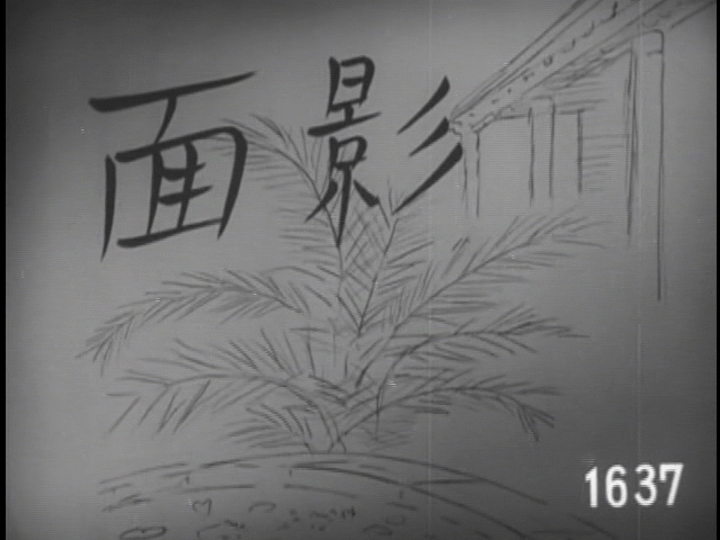
 Master of the shomingeki, Heinosuke Gosho goes upscale for the post-war romantic melodrama, Vestige (面影, omokage), even if he goes out of his way to add a layer of expressionistic imagery. Inspired by Gosho’s own experiences, Vestige has an air of melancholy and of frustrated dreams but also of resignation as the two not quite lovers at the centre agree to quell their romantic yearnings and preserve their conventional, bourgeois lives at the expense of greater happiness.
When Kawasaki goes to stay at the seaside retreat of his former professor and mentor Inagaki, he is immediately struck by the professor’s much younger wife, Sachiko, who is the spitting image of his own whom he lost in the war three years previously. Inagaki more or less lives at his spacious seaside villa along with Sachiko, her older sister Fukuko, and Fukuko’s two children. Having married late, Inagaki is a happy man and his home life seems settled and pleasant if conventional.
The couple quickly realise that there’s something deeply sad about Kawasaki, but they attribute it to having lost his wife in such an abrupt manner. Kawasaki is indeed in mourning and nursing feelings of guilt over not having appreciated his wife enough while she was alive – the marriage was an arranged one with a grain of resentment at its core, but still Kawasaki came to be fond of his wife even if his feelings only cemented themselves after she died. Kawasaki keeps his growing feelings for Sachiko to himself though their growing intensity eventually begins to pain him.
Sachiko mainly remains unaware of Kawasaki’s emotional turmoil and she and the professor are secretly hatching a plan to suggest a semi-arranged marriage between Kawasaki and the couple’s niece, Kaoru. Not only insensitive in the extreme, the idea leaves Kawasaki feeling hoodwinked and confused. Kaoru may be approaching marriageable age by the standards of the time but she’s very much a little girl, running around in shorts and pigtails with girlish glee. Even if they don’t intend the marriage right away, Sachiko and Inagaki have almost tried to foist a child bride on a man still eaten up by guilt at not having been a good husband to a woman he only realised he loved after she died. Unsurprisingly, Kawasaki feels even more awkward and begins to make noises about going home.
Like many romantic melodrama players, the relationship between Sachiko and Kawasaki is prefigured by a musical bonding in which Sachiko sings the lyrics to the only song Kawasaki can play on the piano which was taught to him by his pianist wife. Though Sachiko had been happy enough in her marriage, her surfacing feelings for Kawasaki who is, to put it bluntly a more age appropriate partner, are a surprise and a problem. As in Brief Encounter, Sachiko may not have known such violent emotions could happen to ordinary people and now they have arrived there is little she can do about them.
Keeping her true feelings well under-wraps, Sachiko only breaks briefly after Kawasaki has opened the floodgates by confessing his love when she finds the photo of his late wife and realises that she looks just like her. Hurt and confused, Sachiko is upset by an odd kind of jealousy as she is forced to wonder how much of Kawasaki’s feelings for her are really those for his late wife. Kawasaki seems uncertain, dreaming of Akiko but seeing Sachiko, unable to separate the two women in his mind.
Inagaki, a magnanimous if wounded husband, begins to see a side of his much younger wife that he had not seen before. Fukuko is the first to spot the innocent bond developing between Kawasaki and her sister but trusts Sachiko to do the right thing whilst feeling sorry for lonely piano playing widower. Inagaki truly loves his wife. Proclaiming that if she isn’t happy than he can’t be either, he comforts and protects Sachiko rather than trying to keep her through violence or anger. Despite his original happiness there’s a part of him which feels guilt towards Sachiko for marrying her at such a late age, as if he’s robbed her of her youth. An odd conversation with Kaoru in which he delicately tries to talk to her about the idea of Kawasaki as a husband backfires when he’s forced to realise she’s far too young to talk about this and also that Kawasaki is a much better fit for his wife than his niece. His solution is a painful but pragmatic one, asking Kawasaki to leave he hopes that all of these unwelcome, destabilising feelings can be put back in the box and forgotten about once the intrusive presence of the outsider has been eliminated.
This is, indeed, the conventional wisdom but as in many of his later films Gosho undercuts it through suggesting that it’s never just as simple as sealing off one’s feelings and living happily in the way society dictates. Inagaki might have made the point that “happy” marriages are not always happy – his own was one of ordinary pleasantness which might have grown into a deep love rather than a great romance, but Sachiko’s heart has been opened and being forced to close it so definitively cannot have any other result than breaking it permanently. Resentfully snapping at the menfolk as they agree to shake hands and forget all about all of this love stuff, Sachiko turns her back on her husband weeping at her sister’s confirmation that Kawasaki will never return, only later returning to his side to light his cigarette as he picks up the book titled “A Theory of Happiness” which now seems like a very ironic gift from the sensitive Kawasaki.
Carried along by the lush romantic theme of the folk song which brings together Kawasaki, Akiko, and Sachiko, Vestige is a romantic melodrama of the highest order but Gosho attempts to elevate it by frequent use of expressionist imagery from super imposition and cuts to crashing waves on silent beaches. The war is barely mentioned and little seen – it does not seem to have touched Inagaki’s upperclass life in his idyllic beachside paradise, but the spectre is always there as it haunts Kawasaki with the cruel randomness of his wife’s death mixed with his guilt both about being unable to save her and not having treated her well enough when she was alive. The conventional life wins out, sanctioned bonds are maintained, holding strong against the forces of “irrational” emotion but Gosho imbues the final scenes with a heavier sadness than just that of people sacrificing themselves in service of a social code. These are people already trying to live life along a “theory” of happiness and failing, pretending to find fulfilment in embracing conventionalty but finding only pain and suffering in being unable to acknowledge their true feelings.
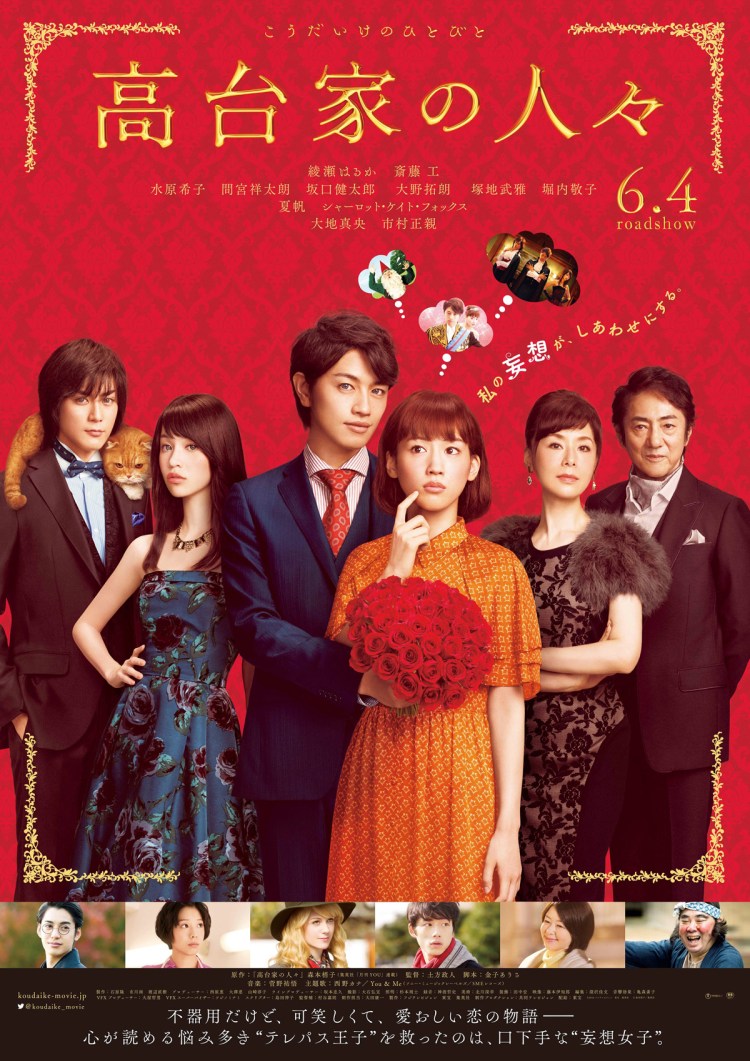 Fear of “broadcasting” is a classic symptom of psychosis, but supposing there really was someone who could hear all your thoughts as clearly as if you’d spoken them aloud, how would that make you feel? The shy daydreamer at the centre of The Kodai Family (高台家の人々, Kodaike no Hitobito) is about to find out as she becomes embroiled in a very real fairytale with a handsome prince whose lifelong ability to read minds has made him wary of trying to form genuine connections with ordinary people. Walls come down only to jump back up again when the full implications become apparent but there are taller walls to climb than that of discomfort with intimacy including snobby mothers and class based insecurities.
 All things considered, a live pig is a rather insensitive gift to present to your local police station, though any gift at all might be considered in appropriate even if offered by a well meaning colleague keen to help out when a horrific murder may be connected to his missing person case. By 1977 Kinji Fukasaku had made a name for himself through the wildly successful “jitsuroku” or “true record” genre of yakuza movies kickstarted by his own
 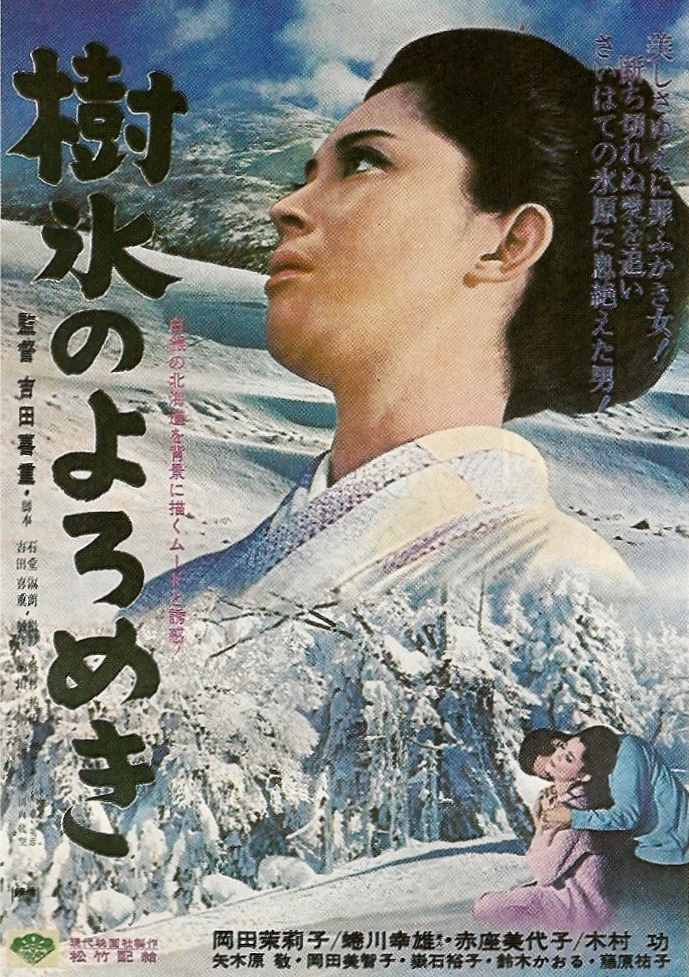 Kiju (Yoshishige) Yoshida, along with his wife – the actress Mariko Okada, was responsible for some of the most arresting films of the late ’60s avant-garde art scene. So called “anti-melodramas”, many of Yoshida’s films from this era took what could have been a typical melodrama narrative and filmed it in an alienated, almost emotionless manner somehow reaching a deeper level of an often superficial and overwrought genre. Affair in the Snow (樹氷のよろめき, Juhyo no Yoromeki) is, in essence, the familiar story of an unreasonable love triangle but in Yoshida’s hands it becomes a melancholy yet penetrating examination of love, sex, and transience as the central trio attempt to resolve their ongoing romantic difficulties.
 After leaving Shochiku and forming an independent production company with his actress wife Mariko Okada, Kiju (Yoshishige) Yoshida continued in the Shochiku vein, after a fashion, through crafting what came to be known as “anti-melodramas”. Taking the familiar melodrama a studio like Shochiku was well known for, Yoshida transformed the material through radical cinematography designed to alienate and drain the overwrought drama of its empty emotion in order to drive to something deeper. The Affair (情炎, Jouen), released in 1967, is just such an experiment as it paints the cold and repressed world of its heroine in steely black and white, imprisoning her within its widescreen frame, and setting her at odds with the younger, more liberated generation who get their kicks through groovy beatnik jazz and an eternal party.
 In
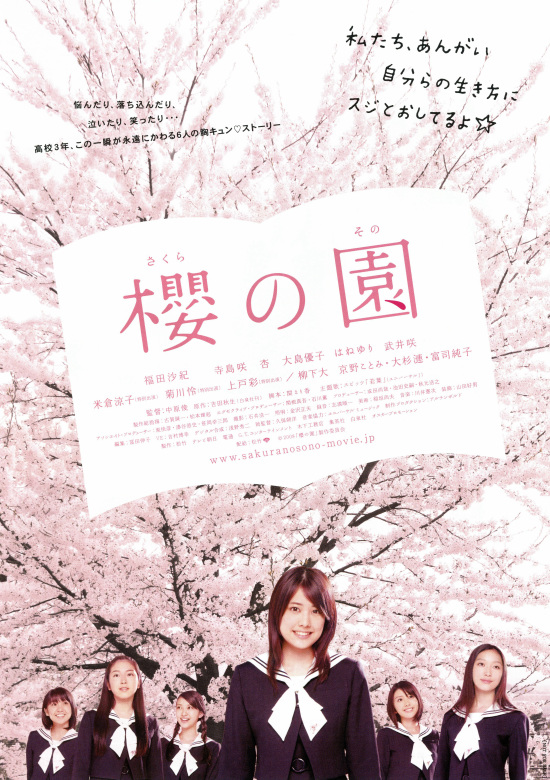
In  Chekhov’s The Cherry Orchard is more about the passing of an era and the fates of those who fail to swim the tides of history than it is about transience and the ever-present tragedy of the death of every moment, but still there is a commonality in the symbolism. Shun Nakahara’s The Cherry Orchard (櫻の園, Sakura no Sono) is not an adaptation of Chekhov’s play but of Akimi Yoshida’s popular 1980s shojo manga which centres on a drama group at an all girls high school. Alarm bells may be ringing, but Nakahara sidesteps the usual teen angst drama for a sensitively done coming of age tale as the girls face up to their liminal status and prepare to step forward into their own new era.
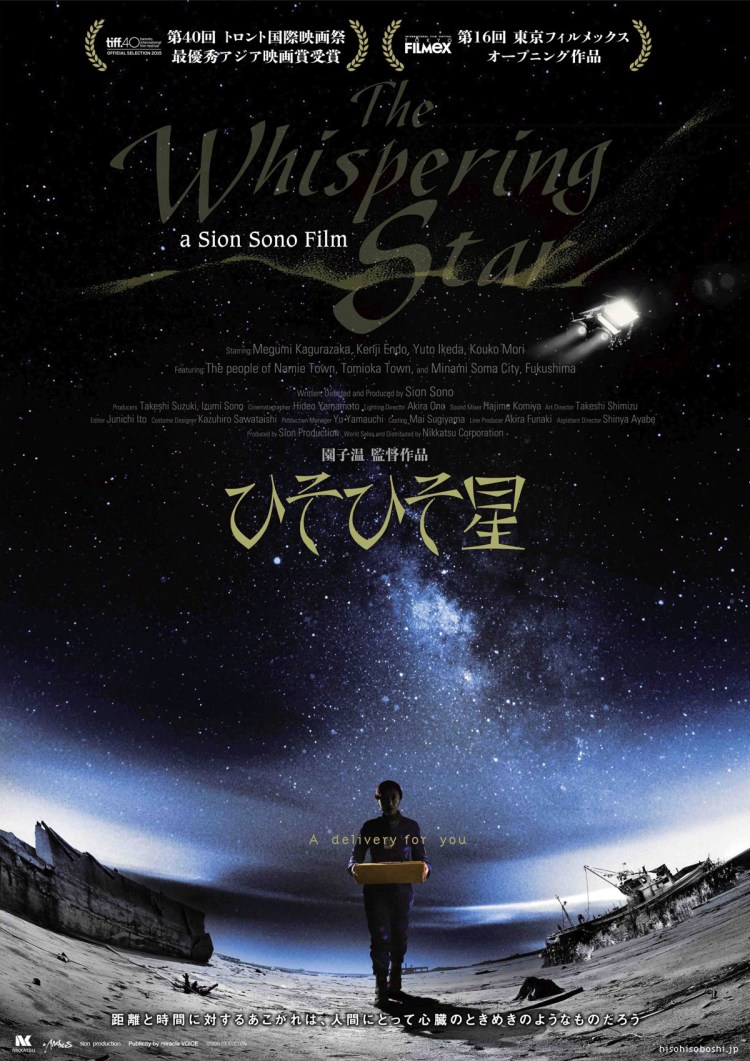 Sion Sono has been especially prolific of late, though much of his recent output has leant towards the populist rather than the art house. Having garnered a reputation for vulgar excess over the last twenty years or so, Sono returns to his Tarkovskian roots with The Whispering Star (ひそひそ星, Hiso Hiso Boshi) – a contemplative exercise in stillness which has more in common with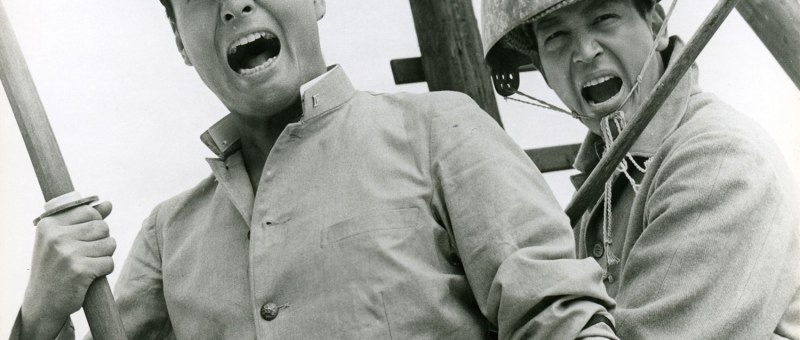
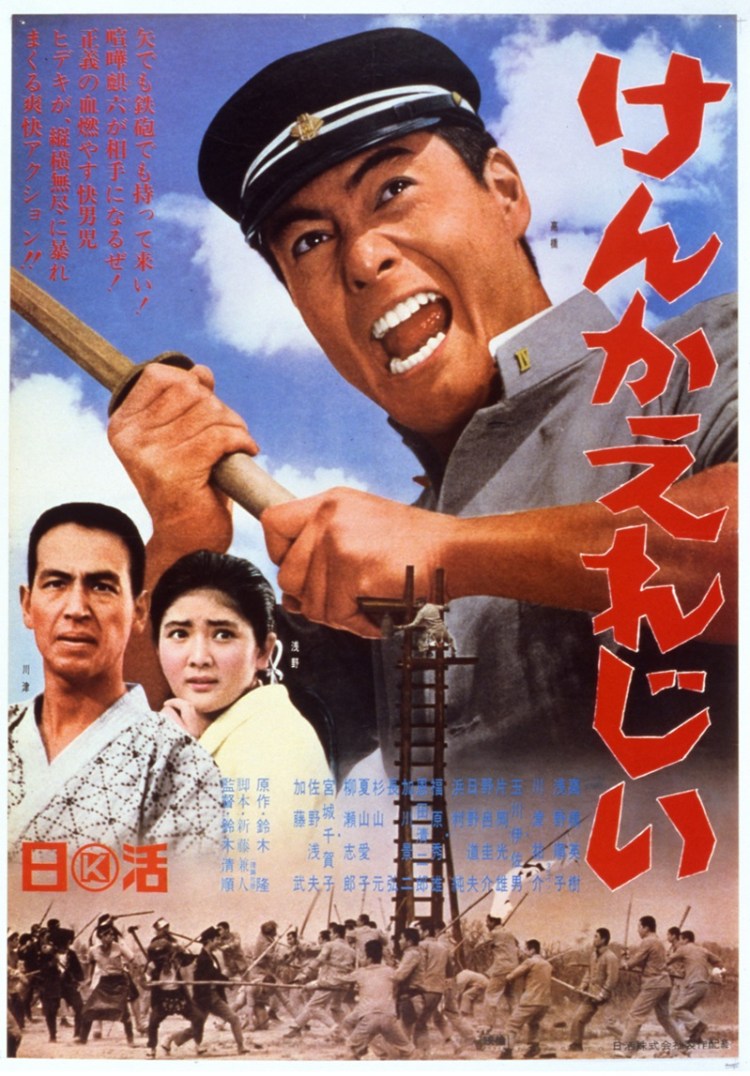 Ah, youth. It explains so many things though, sadly, only long after it’s passed. For the young men who had the misfortune to come of age in the 1930s, their glory days are filled with bittersweet memories as their personal development occurred against a backdrop of increasing political division. Seijun Suzuki was not exactly apolitical in his filmmaking despite his reputation for “nonsense”, but in Fighting Elegy (けんかえれじい, Kenka Elegy) he turns a wry eye back to his contemporaries for a rueful exploration of militarism’s appeal to the angry young man. When emotion must be sublimated and desire repressed, all that youthful energy has to go somewhere and so the unresolved tensions of the young men of Japan brought about an unwelcome revolution in a misguided attempt at mastery over the self.
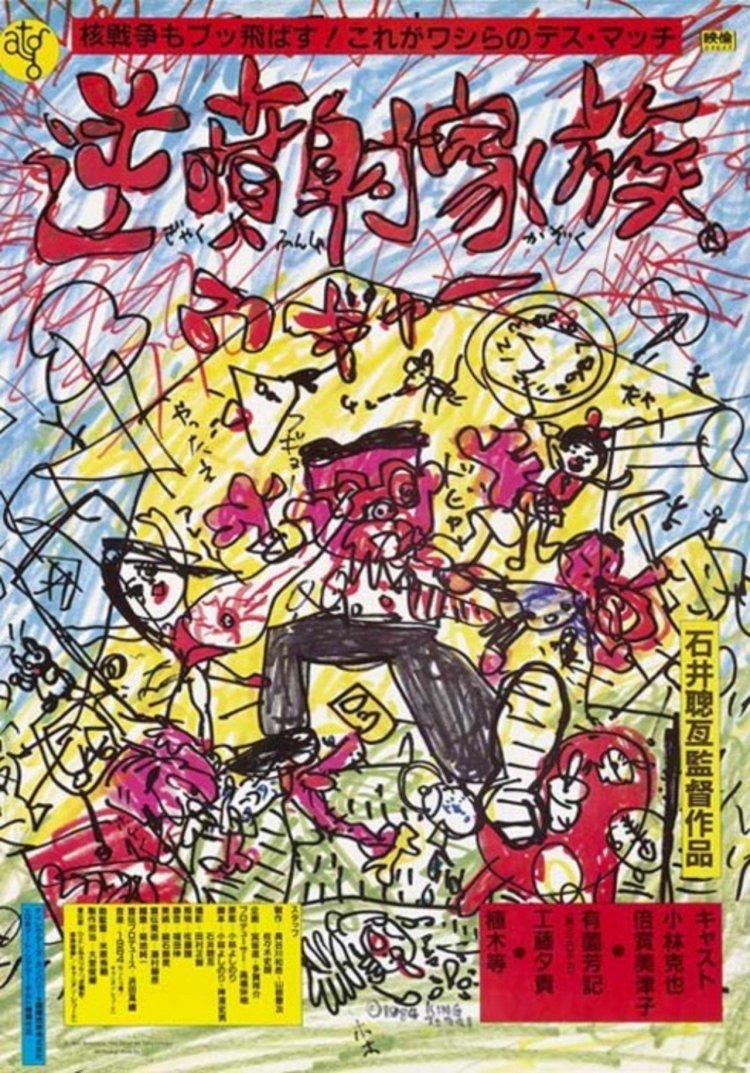 The family drama went through something of a transformation at the beginning of the 1980s. Gone are the picturesque, sometimes melancholy evocations of the transience of family life, these families are fake, dysfunctional, or unreliable even if trying their best. Morita’s
  Windows on Worlds