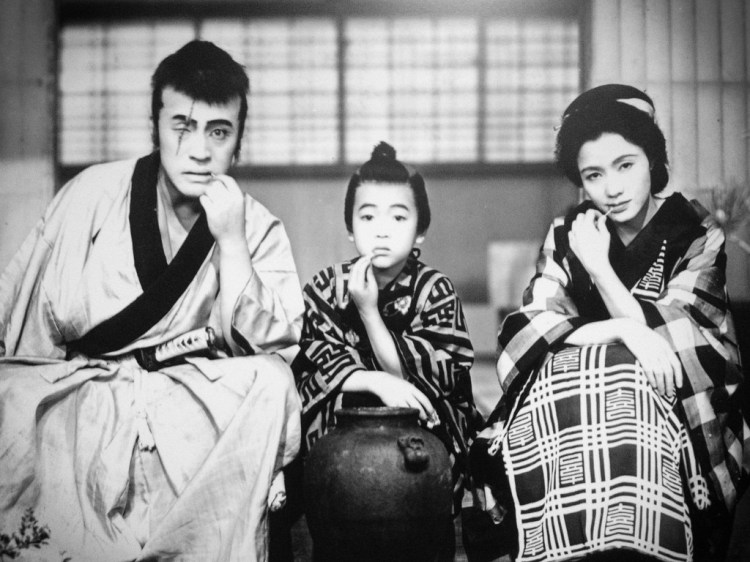
 Sadao Yamanaka had a meteoric rise in the film industry completing 26 films between 1932 and 1938 after joining the Makino company at only 20 years old. Alongside such masters to be as Ozu, Naruse, and Mizoguchi, Yamanaka became one of the shining lights of the early Japanese cinematic world. Unfortunately, this light went out when Yamanaka was drafted into the army and sent on the Manchurian campaign where he unfortunately died in a field hospital at only 28 years old. Despite the vast respect of his peers, only three of Yamanaka’s 26 films have survived. Tange Sazen: The Million Ryo Pot (丹下左膳余話 百萬両の壺, Tange Sazen Yowa: Hyakuman Ryo no Tsubo) is the earliest of these and though a light hearted effort displays his trademark down to earth humanity.
The plot turns on the titular one million ryo pot when the local feudal lord inconveniently discovers that an ugly vase with a weird monkey pattern is actually a hidden treasure map just after he’s palmed it off on his younger brother as a kind of family heirloom. The brother, Genzaburo, is both angry and insulted that his vastly wealthy brother has given him such a worthless gift rather than the money which he feels he is owed. An underling is dispatched to try and get the pot back but Genzaburo is so annoyed about it that the pot gets sold before he finds out its value. The peddlers who buy it don’t know either so they give it to a little boy to keep his pet goldfish in. Eventually the boy comes into contact with Tange Sazen who is a popular character of the time known for the scar across his eye and lack of one arm. Round and round the pot goes but where it stops, no one knows – though in the end, it’s not the pot or even the treasure that really matters.
There’s something quite amusing about the central irony that this whole mess started with a stingy rich old man accidentally cheating himself out of a vast amount of money that he really didn’t need in the first place. Genzaburo does seem more like the impoverished and subjugated kind of samurai, but still he’s not exactly starving and has a large staff to support him. His concern is more with the humiliation he feels in the way he is treated by his brother. Truth be told, Genzaburo is a feckless and clumsy man who knows he has little talent or ability and continues to sulk about it. He’s even subjugated by his wife at one point after she discovers how much time he’s been spending at the local geisha house leading to another embarrassment when he tries to sneak back in late at night and is beaten up by his own servants who assumed he was a thief.
Indeed, Genzaburo repeatedly utters that finding the pot could take ten or twenty years – like a noble quest for justice! The truth being that he loses interest in the idea of actually finding it because it would mean an end to his life of “looking for the pot” which allows him to spend all his time shooting arrows with the ladies at the bar. In essence, Genzaburo is the harmless, childish kind of second tier samurai who complains about harsh treatment and lack of status but at the same time enjoys a life of leisure, indulging his personal whims and ignoring his feudal responsibilities as well as his family home.
Tange Sazen, by contrast, is well known from various other kinds of media as a loose cannon swordsman and wandering ronin gambler but here he’s more of a gruff but goodhearted ne’er do well. He seems to be in a fairly solid but perhaps unofficial relationship with the no nonsense owner of the archery-parlour-cum-geisha-palace, Ofuji, and together (more or less, after a lot of arguing and refusing) they take in the orphaned little boy, Yasu, who, unbeknownst to all, is keeping his prized goldfish inside the very pot which everyone is looking for. In fact, Genzaburo and Tange Sazen have been sitting next to it all along but entirely failed to notice.
This is just one strand of the film’s deeply felt humour as everyone fails to see what is staring them right in the face. Yamanaka proves far ahead of his time employing comedic techniques including frequent uses of what would later become know as a “bicycle joke” in which a character swears they’ll absolutely never do something only for the film to cut to them doing exactly that. Tange Sazen and Ofuji bicker endlessly – particularly about Yasu whom they’ve both become quite attached to despite their claims to the contrary. In addition to the frequent wipes and dissolves, Yamanaka’s direction is resolutely forward looking and inventive which, coupled with a more naturalistic acting style, lend it an oddly modern air for a film completed in 1935. Humorous and heartwarming with a little social commentary thrown in, Tange Sazen: The Million Ryo Pot is a wonderfully put together ensemble comedy which still proves hugely entertaining eighty years later.
Unsubtitled clip:
 Considering how well known sumo wrestling is around the world, it’s surprising that it doesn’t make its way onto cinema screens more often. That said, Masayuki Suo’s Sumo Do, Sumo Don’t (シコふんじゃった, Shiko Funjatta) displays an ambivalent attitude to this ancient sport in that it’s definitely uncool, ridiculous, and prone to the obsessive fan effect, yet it’s also noble – not only a game of size and brute force but of strategy and comradeship. Not unlike Suo’s later film for which he remains most well known, Shall We Dance, Sumo Do, Sumo Don’t uses the presumed unpopularity of its central activity as a magnet which draws in and then binds together a disparate, originally reluctant collection of central characters.
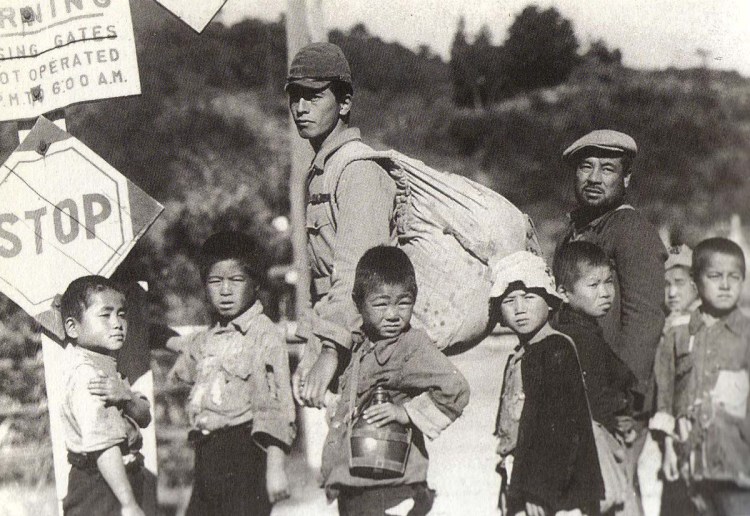 Hiroshi Shimizu is often remembered for his talent as a director of children, something which he brings to the fore with his melancholy meditation on the immediate post-war world in Children of the Beehive (蜂の巣の子供たち, Hachi no Su no Kodmotachi). This is a destroyed society, but one trying to make the best of things, surviving in any way possible. It’s fairly clear from Shimizu’s pre-war work that he did not entirely approve of the way his country was heading. Children of the Beehive seeks not to apportion blame, but merely to make plain that no one can get along alone here, in the post-war world there are only orphans and ruined cities but that itself is an opportunity to rebuild better and kinder than before.
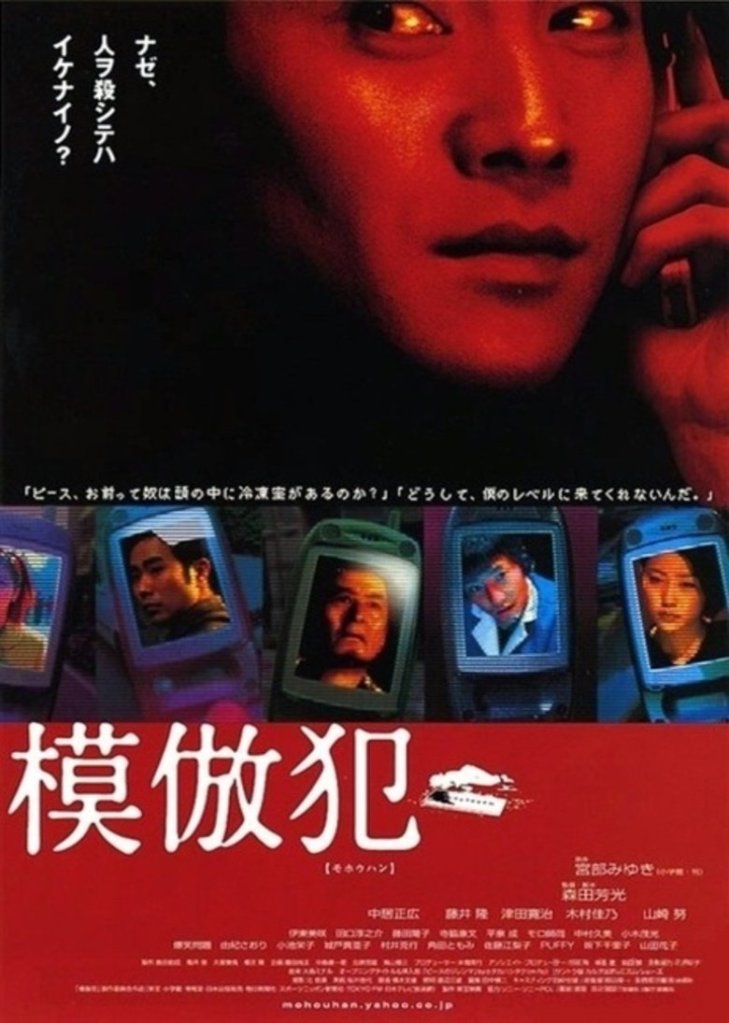 Yoshimitsu Morita had a long standing commitment to creating “populist” mainstream cinema but, perversely, he liked to spice it with a layer of arthouse inspired style. 2002’s Copycat Killer(模倣犯, Mohouhan) finds him back in the realm of literary adaptations with a crime thriller inspired by Miyuki Miyabe’s book in which the media becomes an accessory in the crazed culprit’s elaborate bid for eternal fame through fear driven notoriety.
 1973 is the year the ninkyo eiga died. Or that is to say, staggered off into an alleyway clutching its stomach and vowing revenge whilst simultaneously seeking forgiveness from its beloved oyabun after being cruelly betrayed by the changing times! You might think it was Kinji Fukasaku who turned traitor and hammered the final nail into the coffin of Toei’s most popular genre, but Sadao Nakajima helped ram it home with the riotous explosion of proto-punk youth movie and jitsuroku-style naturalistic look at the pettiness and squalor inherent in the yakuza life – Aesthetics of a Bullet (鉄砲玉の美学, Teppodama no Bigaku). This tale of a small time loser playing the supercool big shot with no clue that he’s a sacrificial pawn in a much larger power struggle is one that has universal resonance despite the unpleasantness of its “hero”.
 Yusuke Iseya is a rather unusual presence in the Japanese movie scene. After studying filmmaking in New York and finishing a Master’s in Fine Arts in Tokyo, he first worked as model before breaking into the acting world with several high profile roles for internationally renowned auteur Hirokazu Koreeda. Since then he’s gone on to work with many of Japan’s most prominent directors before making his own directorial debut with 2002’s Kakuto. Fish on Land (セイジ -陸の魚-, Seiji – Riku no Sakana), his second feature, is a more wistful effort which belongs to the cinema of memory as an older man looks back on a youthful summer which he claimed to have forgotten yet obviously left quite a deep mark on his still adolescent soul.
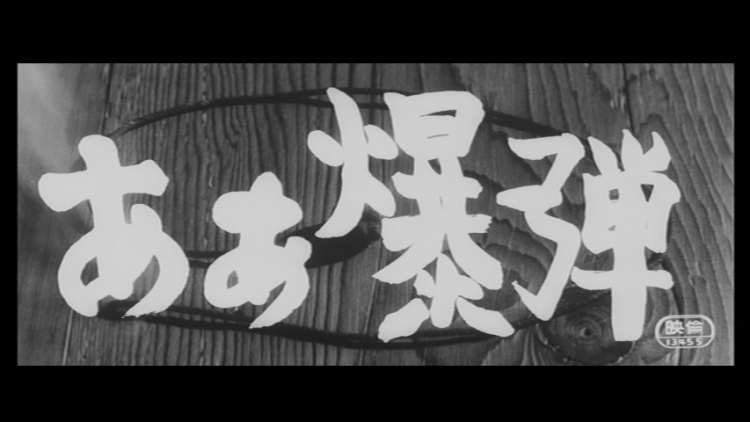 Being stood up is a painful experience at the best of times, but when you’ve been in prison for three whole years and no one comes to meet you, it is more than usually upsetting. Sixth generation Oyabun of the Ona clan, Daisaku, has made a new friend whilst inside – Taro is a younger man, slightly geeky and obsessed with bombs. Actually, he’s a bit wimpy and was in for public urination (he also threw a firecracker at the policeman who took issue with his call of nature) but will do as a henchman in a pinch. Daisaku wanted him to see all of his yakuza guys showering him with praise but only his son actually turns up and even that might have been an accident.
 The somewhat salaciously titled Black Kiss (ブラックキス) comes appropriately steeped in giallo-esque nastiness but its ambitions lean towards the classic Hollywood crime thriller as much as they do to gothic European horror. Directed by the son of the legendary father of manga Osamu Tezuka (not immune to a little strange violence of his own) Macoto Tezuka, Black Kiss is a noir inspired tale of Tokyo after dark where a series of bizarre staged murders are continuing to puzzle the police.
 Hiroshi Shimizu is well known as one of the best directors of children in the history of Japanese cinema, equalled only by the contemporary director Hirokazu Koreeda. The Shiinomi School (しいのみ学園, Shiinomi Gakuen) is one of the primary examples of his genius as it takes on the controversial themes of the place of the disabled in society and especially how children and their parents can come to terms with the many difficulties they now face.
 Windows on Worlds