To Trap a Kidnapper (誘拐報道, Shunya Ito, 1982)

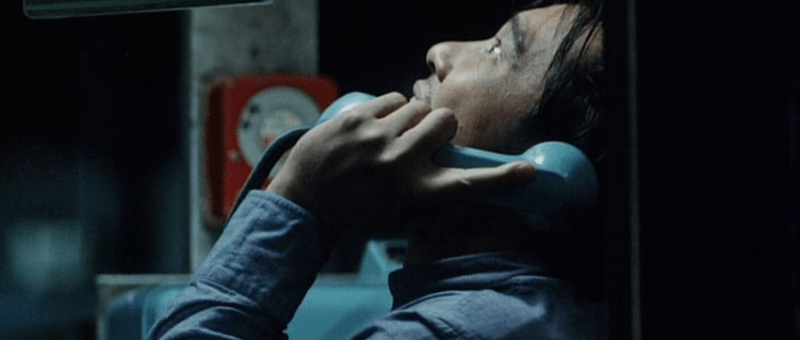
One of a number of films released in the early ’80s critical of the police force, To Trap a Kidnapper (誘拐報道, Yukai Hodo) draws inspiration from a real life case of child abduction but suggests that the police largely just get in the way and are only interested in apprehending the culprit rather than ensuring the boy’s safety. In any case, unlike the similarly themed High and Low, the film devotes most of its focus to the kidnapper’s desperation as a man apparently left behind by the rapidly rising tides of prosperity. 

Yet somewhat perversely the film opens with a scene of children playing and seven-year-old Hideyuki (Motoyoshi Wada) getting into trouble for flicking toy discs at his friend and deskmate Kaori (Kaori Takahashi). Hideyuki is then made to stand on his own in the playground as a punishment, though quickly makes things up to Kaori by gifting her the plastic discs he was playing with. Neither of them know it, but the children share a grim connection for it’s Kaori’s father Kazuo (Kenichi Hagiwara) who is responsible for kidnapping Hideyuki on his way home from school in the next town over.

Both Hideyuki and Kaori attend a prestigious private institution but are being raised in very different circumstances. Kazuo was once a successful cafe owner but was swindled out of his business and is now in massive debt to a shady loanshark named Moriyasu who’s sold his promissory note on to a third party debt collector. Hideyuki’s father, Noboru Mitamura (Fujita Okamoto), is a doctor though there’s nothing that suggests the family is anything more than financially comfortable and they aren’t immediately able to get the money together for the ransom. Noboru has to ring round all his friends, family, and random acquaintances begging for emergency loans but without really being able to explain why he needs the money. Just having seen it noted on a school register that Hideyuki’s dad was medical professional Kazuo assumed they’d be a good target for a kidnapping and is in any case resentful of their nice middle class life. 

His wife, Yoshie (Rumiko Koyanagi), is in turn resentful of Kazuo for their reduced circumstances later lamenting that they moved house, swapped their big car for a smaller one and are even going to rehome their dog but if Kazuo is really so deeply in debt, something he had kept from her, then nothing they do really matters because their lives will never improve. What she can’t understand is why Kazuo was so keen on keeping Kaori in a private school that he’d get himself into financial hell rather than make a more pragmatic decision to let her go somewhere else. The obsession perhaps hints at his class anxiety, wanting his daughter to stay in a more resolutely middle class environment otherwise in strong contrast to the hometown he later visits where his elderly mother operates a loom in a moribund fishing village which the youngsters are slowly leaving for jobs in factories in neighbouring towns. 

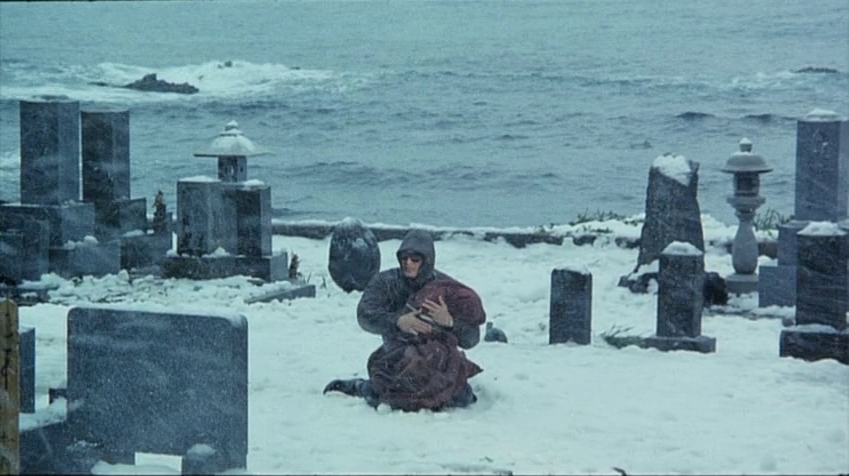
Perhaps in over his head, it at one point looks like Kazuo is about to dump Hideyuki’s body in the sea only to realise police divers are already searching the area. Despite himself, he begins to care for the boy though doesn’t really know what to do with him. He feeds him bread from convenience stores and keeps him tied up in the boot of his car wrapped in several blankets without really considering the possibility that he may die of cold or hypothermia left outside in the freezing winter. Realising the distraught parents have called in the police despite his warnings not to, he is too afraid to accept the ransom and is therefore at something of an impasse given he can’t very well give up the boy without getting the money.

Meanwhile, as the Japanese title implies the tale is alternately told from the perspective of the reporters at Yomiuri Shinbun who are originally quite annoyed by the police’s request for a news blackout to avoid panicking the kidnapper, suggesting it’s an infringement on their free speech if coming around in the acceptance that a child’s life is at stake. A rookie reporter, Kotaro (Shin Takuma) is involved in a dispute with his fiancée Tomo (Miwako Fujitani) who is having second thoughts because he’s always working while her parents are pressuring her to consider an arranged marriage. Kotaro refuses to write one of the dummy articles they’re putting together in the event that Hideyuki is killed describing it as morbid and irresponsible, but is very involved with the ongoing press investigation which simultaneously seems more rigorous than that of the police and accidentally gets in its way. A “suspicious car” that’s noticed outside a drop sport turns out to belong not to the kidnapper but a reporter on a stakeout wasting the police’s time.

Even they are eventually conflicted, the officer in charge on the ground later letting the Mitamuras leave on their own for the final drop empathising with them as a fellow parent and acknowledging the reason everything keeps going wrong is because the police got involved. Yet his boss orders him to follow them anyway, reminding him that the only job of the police is to catch the culprit seemingly indifferent to whether or not they rescue the hostage unharmed. Their tactics are quite naive, not considering that Kazuo will obviously realise that the Mitamuras are surrounded by undercover officers because they keep using the same ones and it’s odd to keep seeing that couple from the coffee shop everywhere they go. The big break in the case happens by accident just because a couple of traffic cops decide to ask a random car a few questions.

In any case, it’s Kaori who ends up suffering. She and her mother are also victims, unfairly hounded by the press and left with nowhere to go and no-one to turn to having had their lives turned upside down by her father’s desperate decision. He didn’t even know the kids were friends or the effect his actions would have on his daughter. Kazuo hadn’t really thought any of this through but acted only in jealousy and resentment, wanting payback against the Mitamuras for their nice middle class life and his own slice of the pie that he felt had been denied to him. In the end, the only winners are the press who can rejoice in selling their newspapers even if a remorseful Kotaro resents himself for taking a paparazzo photo of Yoshie and Kaori trying to leave town quietly. On seeing his article pasted on pillars at the station, even Tomo starts to change her mind reflecting that if he’s working on a story like this then perhaps working too much isn’t such a dealbreaker after all even if everyone seems to have forgotten about little Hideyuki in the headlong rush to dominate the newsstands by trying to lure a kidnapper into their trap.


Original trailer (no subtitles)
Mayhem Girls (メイヘムガールズ, Shinichi Fujita, 2022)

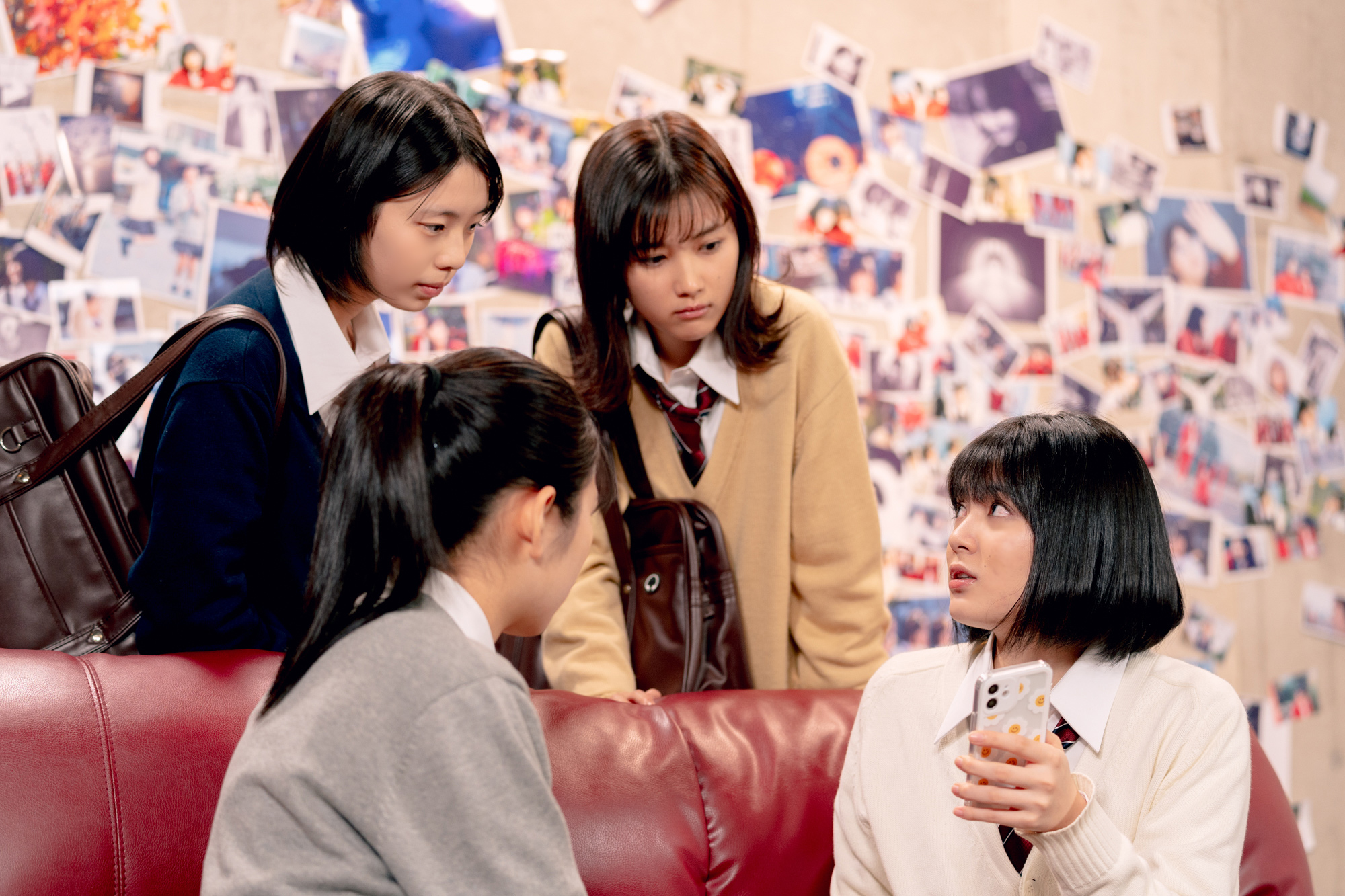
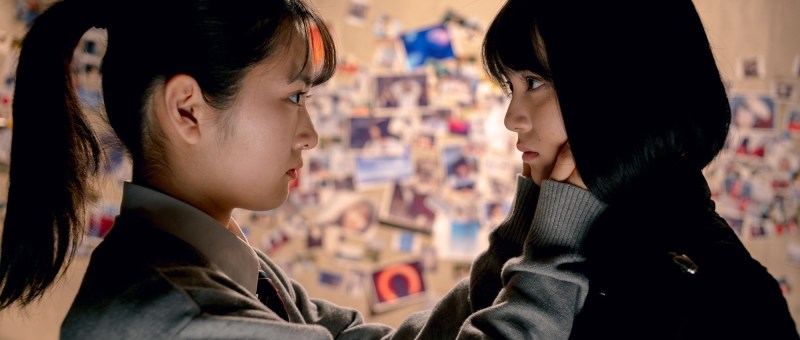
Four teenage girls unexpectedly find themselves with superpowers during the Covid-19 pandemic, but largely struggle with just the same problems as everyone else in Shinichi Fujita’s sci-fi-inflected high school dramedy Mayhem Girls (メイヘムガールズ). Despite the implications of the title, mayhem is not exactly the girls’ vibe though they each in their own way challenge the oppressive social norms of those around them later depressed by the realisation that they’ll soon have to go back to being “normal” and lose this brief respite they’ve been given from the rigours of high school life. 

The girls are already close to boiling point with the pressures of the pandemic as the teachers (ironically) yell at them to use hand sanitiser and social distance. The final straw seems to be the announcement that the Cultural Festival will be going online. That might be one reason why popular girl Mizuho (Mizuki Yoshida) suddenly snaps when her teacher catches her reading Twitter on her phone rather than studying. Miss Sawaguchi (Maako Miwa) is young and somewhat timid, unable to exert her authority over the class which is largely uninterested in her attempt to read out articles from English-language magazines. What’s the point, Mizuho wonders, in learning English if you can’t go abroad anyway? Sawaguchi takes this opportunity to reprimand Mizuho as a means of asserting her control but it backfires as something strange happens when she confiscates the phone. Sawaguchi’s hand stops mid-air allowing Mizuho to simply reclaim it while she runs out of the room as if in pain. 

This is only the first inkling that Mizuho has gained unexpected powers of telekinesis though she struggles to understand what happened, certain that she didn’t touch Miss Sawaguchi and confused that she seems to be talking about “violence” and displaying bruises on her wrists. In any case, the event loses her her phone which is akin to a kind of social death for a teenage girl. Her powers have, however, brought her to the attention of Tamaki (Amane Kamiya) who is a telepath, or more accurately given her an excuse to make contact for as it turns out Tamaki has long been carrying a torch for the oblivious Mizuho who is hung up on the student who was her tutor in middle school, Yusuke (Taisei Kido). Soon they are joined by two more girls, Akane (Manami Igashira) who can teleport, and Kei (Hina Kikuchi) who can read the minds of machines, in a kind of after school superpower club. 

Though they eventually become good friends, the relationship between the girls is strained by their differing views on their powers and by Mizuho’s concurrent obsession with Yusuke who is now a part-time delivery rider struggling to find a full time job in the middle of the pandemic. Using Kei’s powers to track him down she waits outside his house for him to come back and inserts herself into his life. Though he seems as if he’s about to remind her that her behaviour is inappropriate, Yusuke eventually goes all in on Mizuho after learning of her powers and asks her to use them to rob a bank so he can forget about his employment woes. 

There are many things you shouldn’t do for a boy and robbing a bank is very high on the list, though perhaps merely a more extreme version of a lesson typically learned in adolescence. In any case, this is far as Mizuho is pushed to the dark side. Other than that, none of the girls really consider using their powers for evil ends with even Tamaki admitting that she has thought about poking around in Mizuho’s head but feels it would be wrong to do so. It’s Tamaki who draws the short straw in being largely unable to articulate herself even by using her powers before eventually trying to communicate in images only to be robbed of the power to do so at the very last second when she’s reduced to being “normal” once again. 

“Normality” does seem to resume for them, each of the girls heading back to their own individual cliques having seemingly learned little from their experiences save Tamaki who is left with a lingering sadness. Perhaps what they’ve been through is a kind of mayhem, a period of chaos provoked by the pressures of the pandemic along with oppressive teachers and the regular teenage issues of unrequited love and romantic disappointment but they’ve returned to “normal” all too quickly leaving precious little time to meditate on the results of their flirtation with superpowers and psychic abilities in a world in which normality itself is both somewhat illusionary and infinitely oppressive.


Mayhem Girls screened as part of this year’s New York Asian Film Festival.

Original trailer (no subtitles)
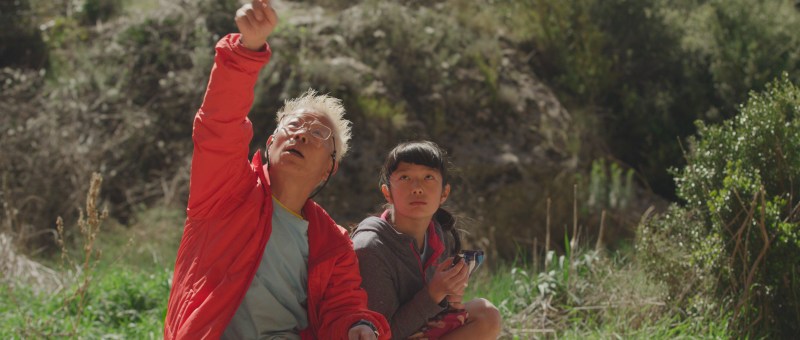
Invasion of the Neptune Men (宇宙快速船, Koji Ota, 1961)

Japan was well on the way to economic recovery by 1961, but the newly prosperous society also gave rise to other anxieties and most particularly in the light of the Cold War and space race with the nation fearful of falling behind in scientific development. Or at least, that’s something that particularly bothers the young heroes of Koji Ota’s kids tokusatsu, Invasion of the Neptune Men (宇宙快速船, Uchu Kaisokusen), in which the nation’s failure to build a space rocket is conflated with its traditional visions of masculinity. 

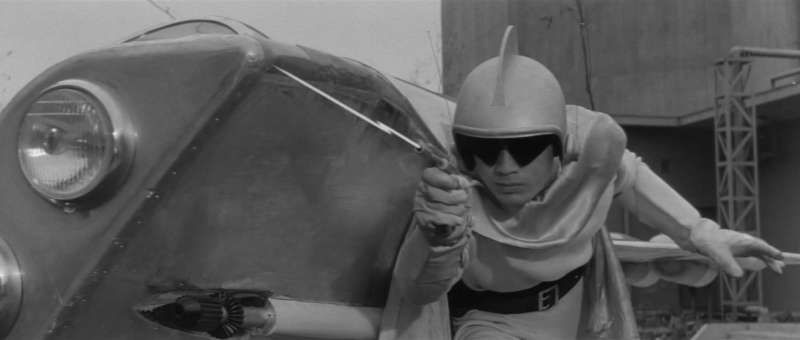
At least, the boys all agree that Tachibana (Shinichi Chiba), a young scientist who runs a kind of club with them at the research facility where he works, is pretty great but also a bit of a wimp who failed to stand up to some bullies who were hassling him at a local cinema. They think it would be better if he were cool, re-imagining him as a kind of tokusatsu hero named “Iron Sharp” for whom they even come up with a theme song. As part of their club activities watching satellites, the kids accidentally stumble across a spaceship belonging to Neptune men who are planning to invade though obviously as they are children no one really believes them until the Neptune men start causing other forms of destruction. 

Attacked, the kids are saved by the hero they themselves made up flying in on a car/plane/spaceship though he too doesn’t really have a lot time for them and the kids don’t even really notice he looks a lot like Tachibana who is noticeably absent from the lab whenever he’s around. Even so, this being a kids film the major the problem is that no one else takes the boys very seriously, save Tachibana himself, leaving them to save the day on their own while the grown-ups argue amongst themselves. 

Getting people to argue amongst themselves turns out to be part of the aliens’ mission in exploiting Cold War paranoia to start world war three. The first attack results in a mushroom cloud which must have been fairly painful symbolism though the Americans immediately blame Russia who blame the US in return asking if they’re really intent on starting a nuclear war. The kids wonder why grownups are always so suspicious of other countries, hinting at a desire for a less xenophobic society eventually echoed in the calls for worldwide unity to defeat the Neptune men while otherwise repeatedly emphasising that Japan can’t be left behind by the US and Russia in the space race. 

Then again, there is something quite troubling in the fact that the invading Neptune men who’ve taken on human form appear as soldiers but wearing prominent feminine makeup, re-echoing the boys’ concerns regarding science and masculinity while introducing a seemingly unintentional dose of homophobia into the threat posed by the aliens who otherwise wield destructive nuclear powers echoing the atomic bomb in using their ray guns to vaporise their targets who then leave shadow imprints of themselves where they disappeared. The main weapon used to combat them is science, Tachibana and his boss, the father of one of the boys, coming up with an ingenious electric shield and then a series of magnetic rockets which allow them to shoot down the Neptunian’s ship. 

In this case, science is the “good” force that combats the “bad” use of nuclear weapons this time rendered alien rather than manmade therefore neutering the debate surrounding their use and the responsibilities involved with their discovery. Tachibana, the thinly disguised Iron Sharp, then becomes a hero of science racing round in his custom car and largely defeating the Neptunians through a more primal kind of hand to hand violence while embodying the kind of cool masculinity the boys the otherwise feared he lacked which is to say that unlike his real life guise, Iron Sharp is perfectly capable of standing up to “bullies” like extraterrestrial invaders. Reusing some of the effects footage from The Last War, the film emphasises the need for world unity and the end of the Cold War, but also sells a slightly contradictory, mildly nationalist message insisting that Japan can’t fall far behind technologically or will essentially be at the mercy of Russia and America, Tachibana having travelled to Moscow to assist with the creation of a new spaceship. Spurred on by their adventures, the kids all vow to become great inventors protecting Japan through their innovations, going on to explore Mars and Venus hinting at a new sense of possibility in the post-war society but also mindful of its geopolitical realities.


Village of Eight Gravestones (八つ墓村, Yoshitaro Nomura, 1977)

Can a curse end up being “real” just because people believe in it? Unlike many of his other crime films which were adapted from the novels of Seicho Matsumoto, Yoshitaro Nomura’s The Village of the Eight Gravestones (八つ墓村, Yatsuhaka-mura) edges towards the idea that the curse at its centre is real in a more literal sense with grimly grinning samurai standing on their hilltop and rejoicing in the fulfilment of the 400-year campaign of vengeance, but also hints at a toxic legacy of enmity and warfare along with a karmic sensibility found in many of Seishi Yokomizo’s other mysteries in which a noble family must account for the way it gained its riches. 

In this case, the Tajimi family which now owns most of the village became prosperous after betraying a band of eight displaced samurai during the Sengoku era. Fleeing the battlefield in defeat, the samurai had originally frightened the villagers when they came down off the mountain but were in actuality non-threatening, simply settling down to a life of farming and peaceful co-existence. But some members of the community became greedy and accepted the promises of riches from a rival clan for the service of eliminating the eight samurai. Cruelly inviting them to the local festival in what seemed like a moment of acceptance as members of the village, they betrayed them killing some by poison and others by the sword. 

Now, hundreds of years later, the Tajimi family is on the verge of extinction with the eldest daughter unable to bear children and the oldest son bedridden and soon to die which explains why they’re keen to track down long lost grandson Tatsuya Terada (Kenichi Hagiwara) who was presumably adopted by his stepfather and bears his name after his now deceased mother Teruko left the family to escape her abusive relationship with half-mad husband Yozo (Tsutomu Yamazaki). Surprisingly, it’s his maternal grandfather Ushimatsu Igawa (Yoshi Kato), who comes looking for him only to drop dead as soon as they meet of apparently strychnine poisoning in the first of several murders that all echo the ancestral curse placed upon the Tajimi family by samurai leader Yoshitaka Amako (Isao Natsuyagi) as he died. 

Like many of Nomura’s films this too features a journey only this one is in a sense into the past as Tatsuya ventures to the rural heart of Japan hoping to see his mother’s birthplace and satiate his curiosity about his birth father. What he discovers there is obviously a lot of what seems like unfounded local superstition along with a degree of unpleasant stigmatisation as he’s immediately accosted by a shamaness who calls him a murderer to his face for his connections with the Tajimis to whom he feels himself a stranger, and then is later blamed for all the weird goings on which only began after he arrived. The film uproots itself from the original 1948 setting to the present day which perhaps lessens the impact of its central theme about the legacy of violence and betrayal that is stoked by war and enmity along with the destructive capacity of human greed that encourages some to betray others for their own advancement only to discover that success founded on human sacrifice will never get you very far. 

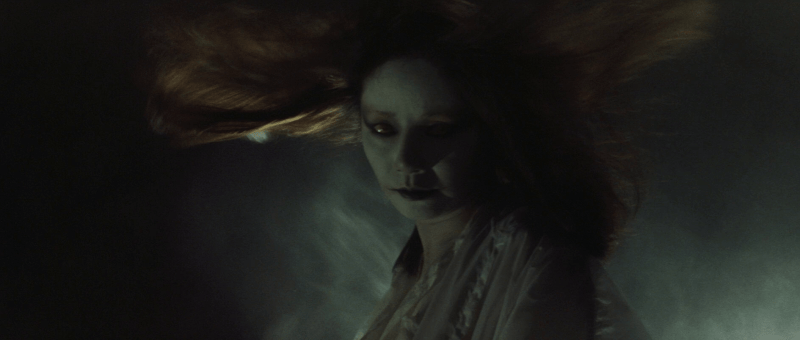
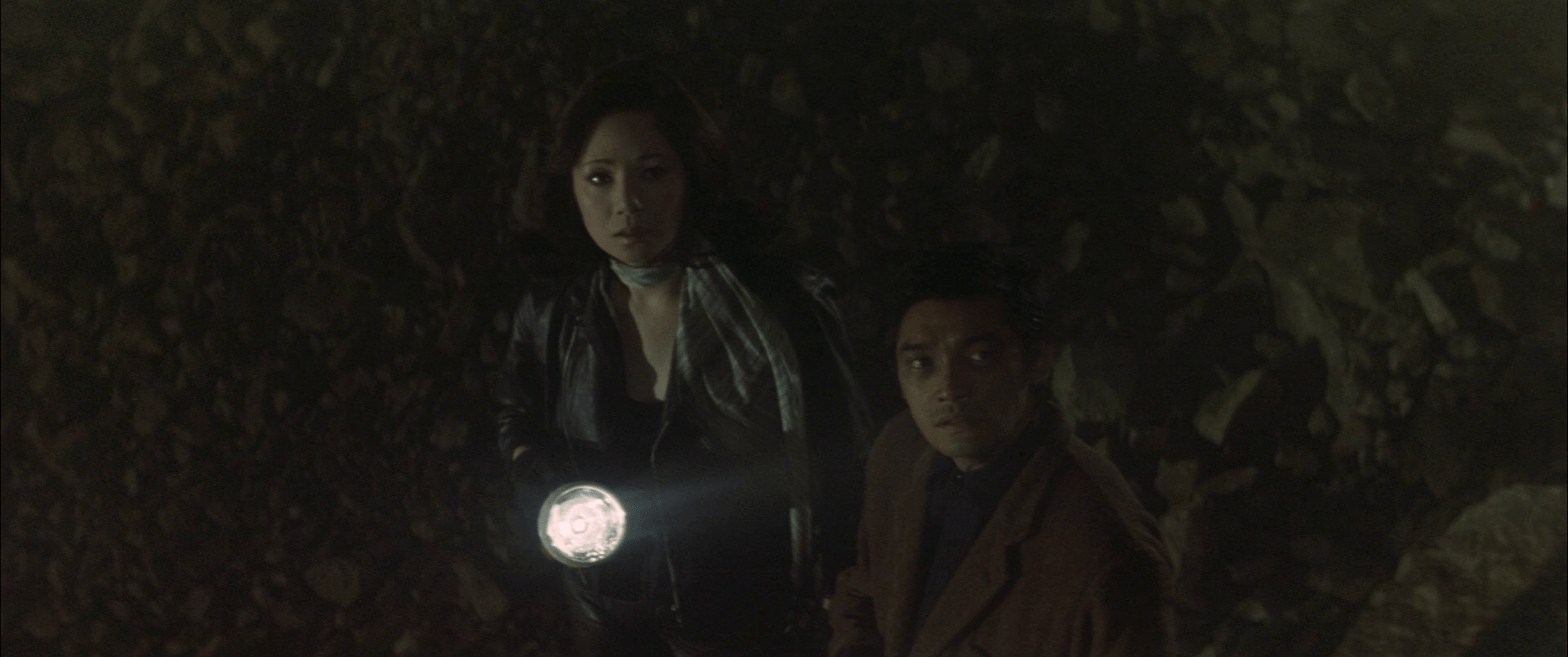
Ironically in a more real world sense, it turns out to be greed that motivates these present crimes with the villain hoping to usurp the Tajimi family fortune and utilising the curse as a means to do so. Much of the action takes place in a network of underground caves filled with glowing green lakes where the villain eventually takes on demonic proportions, face ghostly white with yellowish eyes and a crazed expression that echoes those of the samurai as they died. Nomura hints at the sense of ancient dread in this very old place while also surprisingly bloody in his flashbacks which feature scenes of shocking violence including severed heads one of which seems to lick its lips and stare intently even while on display. This being a Kindaichi (Kiyoshi Atsumi) mystery, the famous detective does indeed appear though remains a background presence quietly solving the crime behind the scenes while Tatsuya searches for the key to his own history and an escape from this legacy of violence and destruction in reclaiming his own identity.


Original trailer (no subtitles)

Ashima (Kenji Tsukamoto, 2023)

A teenage rock climber wrestles with the pressures of parental expectation and early fame in Kenji Tsukamoto’s probing documentary, Ashima. A champion of bouldering, the titular Ashima is climbing prodigy who has her eyes set on being the youngest person to complete a V14 climb, a feat only one woman has ever completed before and even veterans take years to conquer. But then she herself and the documentary seem to ask at what cost her victories may be coming when she’s so busy looking up she doesn’t have much time for what’s around her.

As Ashima sadly points out, at times it feels as if her father, Poppo, a retired butoh dancer now living in New York, is her only friend. Her love of climbing leaves her little time to interact with children her own age and she can’t really make friends with other climbers either given the competitiveness of the environment. It’s also an unavoidable fact that at her level most of the competitors are adult men with whom she obviously can’t have a lot of meaningful conversation. At one point, we see her paint her nails like any other teenage girl though they’ll be chipped soon enough when she needs them again for climbing and she seemingly has little social outlet outside of sports. Her parents reassure her that friends can be fickle and family is forever but however well-meaning there’s no denying that the phrase has uncomfortably possessive overtones.

That maybe something further echoed in her relationship with Poppo who acts as her climbing coach and mentor admitting that his teaching methods are rooted in his experiences as a butoh dancer and necessarily strict. Even Ashima later reflects that having her father as a coach can be frustrating as she feels as if he doesn’t listen to her or make an effort to see things from her point of view. He often gives her harsh advice about mental toughness and fortitude insisting that if she feels cold it’s only proof that she isn’t sufficiently focussed while allowing a sense of failure to mess with her head after repeatedly falling while trying to plan a difficult climb. Ashima reflects that sometimes it’s like he’s her best friend, but also a worst enemy who knows how to push her buttons and has no qualms about doing so. 

Ashima seems to feel her responsibility to her parents keenly, not least as Poppo has encouraged to her meditate on the disappointment her mother and sponsors would feel if she did not complete her climb. Her mother meanwhile recalls that she wanted her to be a person who inspires the world which is quite a heavy burden for young girl to bear adding to the sense of pressure and isolation Ashima seems to feel even while adding that climbing is also her dream too. Ashima is an only child of older parents who underwent infertility treatment for several years before she was born and is obviously a deeply treasured daughter though one who also knows that and feels acutely guilty while reaching the age which she might wish to have more independence. 

In any case, a journey to South Africa with her father develops into a spiritual confrontation both with herself and with him as she contemplates the V-14 climb and is forced to face her self-consciousness and insecurity in order to literally climb the mountain. Tsukamoto intercuts footage of her seemingly easy victories at indoor competitions with her lowest moments as her wounded confidence begins to eat away at her quite literally preventing her from getting a purchase on the rock. In an ironic touch, the chalk covering her hands echoes the white makeup worn by butoh dancers, the strange chanting and yelling rituals apparently aiding a breakthrough that allows Ashima to rediscover her self-confidence and complete the climb. Speaking at a Ted Talk, she reflects that climbing is mostly finding an accommodation with failure and falling is a normal part of the climb not something to be feared or ashamed of. As Poppo later concedes, it’s Ashima’s life to explore even if she rolls her eyes slightly to hear her parents cheerfully discussing the possibility of attempting a V15 having discovered at least a path that’s her own as much as it is anyone else’s.


Ashima screened as part of this year’s DOC NYC.

The Contestant (Clair Titley, 2023)

“All humans are entertaining,” or perhaps “interesting” at least to the producer of a variety TV programme who later admits that he may have a kind of detachment that allows him to bypass normal ethical concerns or responsibilities towards others. His words may at first seem egalitarian or humanistic, but they also point to a commodification of the human spirit in which the everyman is merely a figure liable for exploitation by a puppet master like the later remorseful Tsuchiya. 

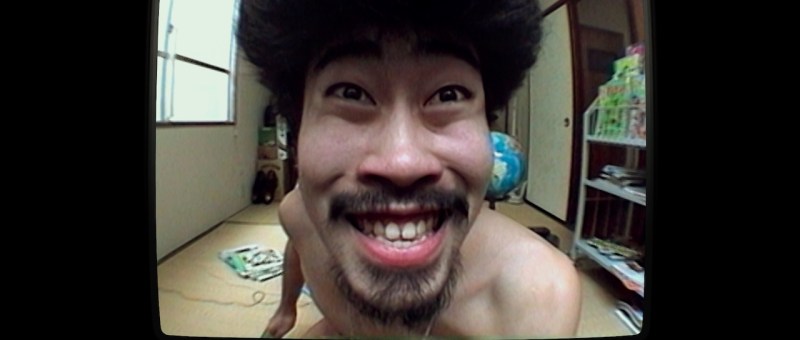
Clair Titley’s documentary character study The Contestant explores the birth of reality television in a Japan still mired in malaise following the collapse of the bubble economy asking both why someone would put themself through so much degradation and indeed why others would find their humiliation entertaining. From an audience perspective, there may be an assumption that Nasubi, the titular contestant, conceived this idea himself and is entirely consenting to the way he’s being treated but as he explains Nasubi had simply attended an audition to appear on popular variety programme Denpa Shonen and had no idea what was going on. Selected by lottery, he was led away by Tsuchiya and installed in a studio apartment where he was told to strip and that he was now taking part in a skit to see if someone could live solely on prizes won from magazine giveaways. He knew that he was being filmed, but was given the impression the footage would not air on television and was presumably intended for another purpose once the project was over. His ordeal would last more than a year.

As is repeatedly stated, Nasubi was never a prisoner. The door was always open and he could have chosen to leave at any time but did not do so. Asked why this is, why despite malnutrition and the possibility of starvation, the humiliation of being forced to eat dog food, the loneliness and isolation, an older Nasubi reflects that when you become so mentally and physically broken leaving no longer occurs to you. He considered suicide many times, but never simply walking out the door. 

The irony is that audience satisfaction is largely derived from Nasubi’s “happiness” in his overjoyed reactions to finally winning something. Edited down to a weekly digest, the programme includes only such happy moments rather than the crushing sense of futility and loneliness Nasubi recounts in his diaries which also become, unbeknownst to him, best sellers. A British BBC correspondent explains that the show was popular with younger people and less so with the older generation who remembered post-war privation and simply did not find the idea of a man facing starvation alone, naked, in a tiny apartment very funny nor did those who were suffering economically themselves.

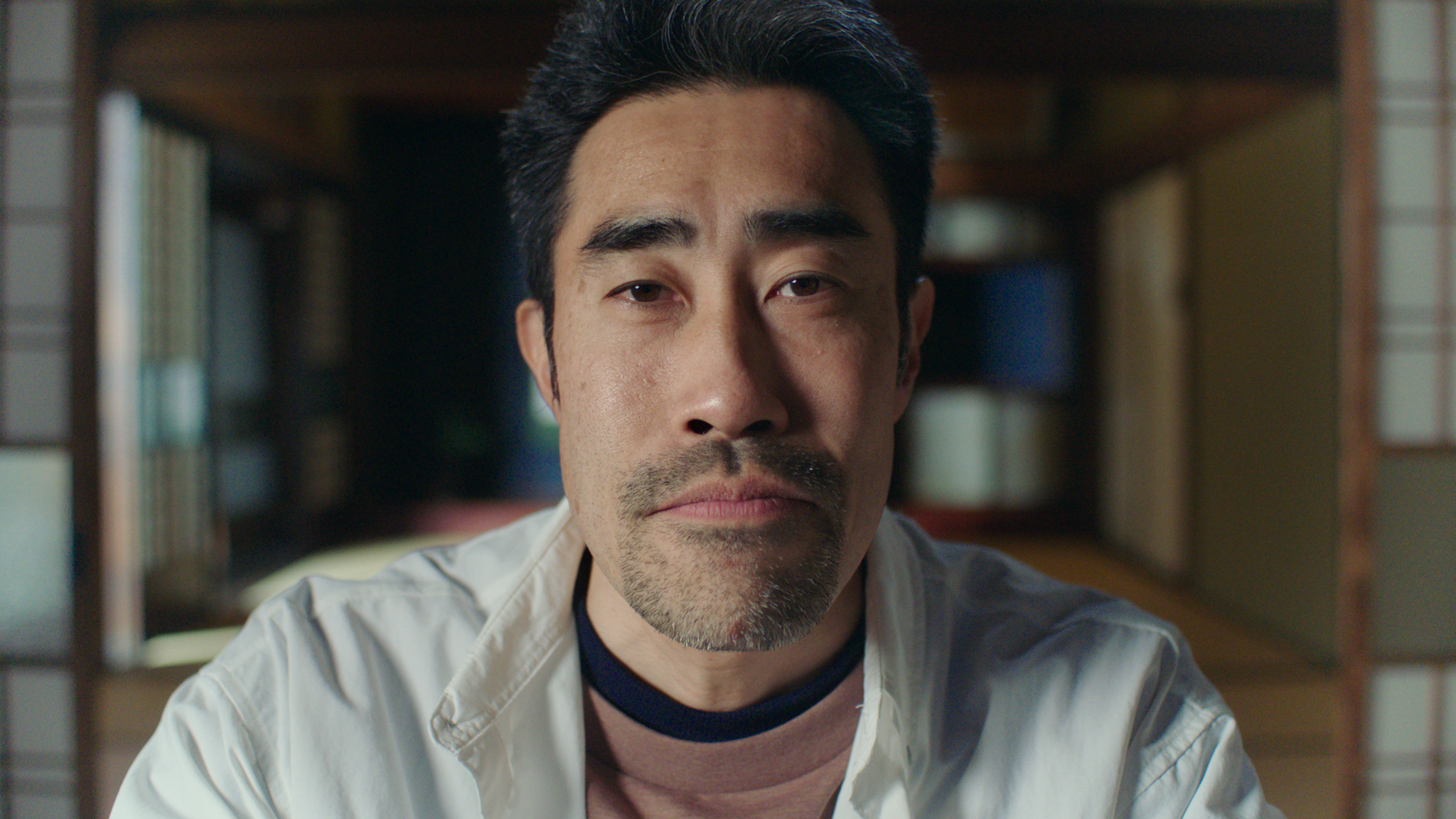
Equally, some perhaps feel that as it’s only a TV show it isn’t really “real” and so it can’t really be affecting Nasubi in a negative or long-lasting way even if what’s really happening is more like torture at the hands of an out of control media puppet master who admits he didn’t really know what he was doing and was simply trying to push things as far as they would go without actually killing their subject. The film presents Tsuchiya and Nasubi as two sides of the same coin, both sons of policemen who were forced to move around a lot as children because of a common practice in Japan to rotate law enforcement officials and other civil servants to different areas every few years as a means of preventing corruption. Nasubi reveals that he got his nickname, “aubergine”, from the kids who bullied him at every new school objecting to his long face. Gradually, he developed the defence mechanism of making people laugh so they wouldn’t bully him. This might explain why he responds to what extends to sustained harassment from Tsuchiya by increased mugging for the camera, while Tsuchiya by contrast agrees that his childhood experiences have left him “detached” and unable to make deeper connections with other people. 

In some senses, it’s possible to think of reality television as frustrated bid for connection and that like his childhood self Nasubi is trying to gain control by owning the joke only to later feel damaged and traumatised by his experiences, insisting that the way Tsuchiya in particular treated him caused him to lose faith in humanity and left an unfillable void in his heart. The surprising thing is that unlike Tsuchiya, who later seems to accept that his actions were unethical and exploitative, Nasubi does not become cruel or embittered but finally finds a way to heal himself in helping others especially the people of his hometown, Fukushima, after the devastating earthquake in 2011. Though he admits it would be impossible not to harbour resentment towards Tsuchiya for everything he put him through, he also believes that the experience gave him something very special in showing him that no one can survive alone and granting him a better understanding of the importance of humanity and the spirit of supporting each other. 

Titley captures the sense of anarchism in late ‘90s variety with brief clips of the extreme onscreen graphics which have informed modern meme culture, even suggesting ironic use of an aubergine to cover Nasubi’s modesty may have given rise to the current use of the emoji. To dampen the sense of overstimulation which can often occur with these kinds of programmes, she dubs some of the original voiceover and replaces text with English in the same kinds of crazy fonts often employed in variety shows but is always very careful not to exoticise the content or imply these are things that only happen in “wacky Japan” but instead sensitively explores how Nasubi was able to find something positive in the midst of an incredibly traumatising situation and use that to lead a more fulfilling life despite those who may still try to mock or belittle him.


The Contestant screened as part of this year’s DOC NYC.

Darkness in the Light (日本の黒い夏ー冤罪, Kei Kumai, 2001)

The summer before the sarin gas attack on the Tokyo subway in 1995, a similar incident had taken place in the small town of Matsumoto, Nagano. A panicked provincial police force quickly homed in on the man who had first reported that something was wrong as the likely culprit, though he was later proved innocent when, following the subway attack, Aum Shinrikyo claimed responsibility for the trial run in Matsumoto revealing that they intended to test out the gas while killing a series of local prosecutors they assumed were about to rule against them in a land dispute raised by townspeople who objected to the cult’s intention to set up a new branch in the area. 

Kei Kumai’s films had often dealt with difficult subjects and particularly with those who suffered under a false accusation, but Darkness in the Light (日本の黒い夏ー冤罪, Nippon no Kuroi Natsu – Enzai) was also personal to him as he knew the man concerned, Kono renamed for the film as Kanbe (Akira Terao), and found it absurd that such an ordinary person could have planned and carried out a deadly chemical attack literally in his own back yard. Essentially putting both mass media and the police force on trial, he frames the tale through the eyes of two earnest high school students who are making a documentary about the way Kanbe was treated for their high school film club. 

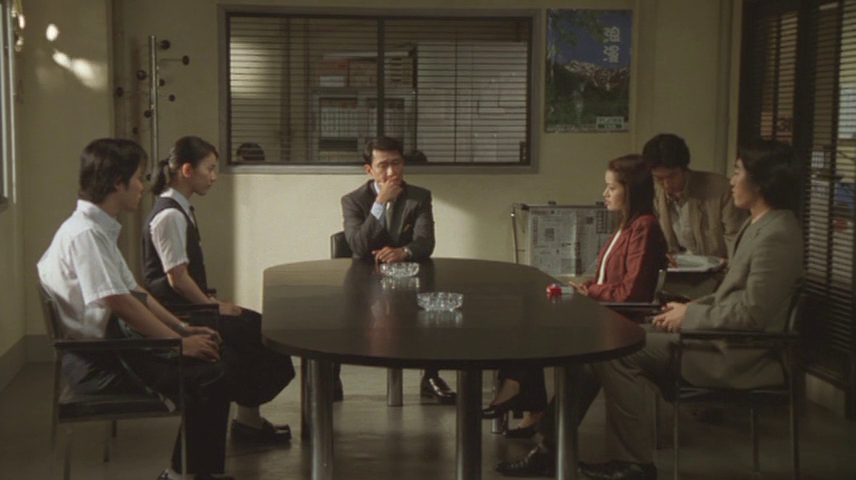
The obvious point is that if the Matsumoto police force, which the film claims had become aware that Aum possessed sarin gas, had conducted a better investigation then there is the possibility that the subway attack might have been prevented. The teens want to know what went wrong and how an ordinary citizen can suddenly be made public enemy number one overnight with no physical evidence linking him to the crime. What they discover through interviewing the only local TV news outlet that did attempt to conduct an investigation and contradict the reports being issued by the police, is a dangerous collusion between police and media that is supported by the business interests that underpin the news industry. Most outlets simply print press releases or unofficial leaks from the police without fact checking them. Sasano (Kiichi Nakai), the TV station editor, no longer does this because a previous false report implicating a teenage boy in a murder he had not committed had resulted in his suicide.

Nevertheless, his junior associate, Koji (Yukiya Kitamura), has his mind less on the truth than the scoop. He thinks they should publish the information they get as quickly as possible otherwise other outlets will publish first. Koji is also the most certain that Kanbe is guilty, believing they are being overcautious in their reporting and will pay for it later. The station’s managers and sponsor committee feel much the same, directly telling Sasano that he should refrain from creating his own news and instead publish what everyone else publishes. They also imply that public opinion has now in a sense become “the truth” and his reporting should be in line with it, rather than the other way around with responsible media as an arbitrator of objective facts which have been thoroughly researched and confirmed. 

Sasano airs an alternative view but admits he does so more in the interest of ratings than he does for truth or justice realising that there is some currency in going against the grain and that if Kanbe turns out to be innocent after all they will come out of it much better than everyone else who published the police press releases unquestioningly. Even so, they too become subjects of harassment with relentless calls from locals decrying their irresponsible attempt to undermine the police and let a mass killer go free. Despite the care they had taken in investigating the information presented to them, they too had broadcast falsehoods such as the “expert” testimony that any old fool could make sarin gas by chucking some stuff in a bucket and standing back, only learning later from a university professor that it requires a high level of chemical knowledge, specialist equipment, and professional protective gear not available to a man like Kanbe who did have various chemicals in his home but only the kind easy to buy for use in harmless hobbies such as photography and ceramics. 

Even they have cultivated close relationships with people in the police who feed them information on investigations, Sasano having a personal connection with the officer in charge of the case, Yoshida (Renji Ishibashi). Appearing somewhat conflicted, Yoshida faces pressure from his superiors to pin the case on Kanbe despite beginning to believe he is likely innocent not least because he does not give in to their pressure tactics and confess. Kanbe asks to be allowed to speak to witnesses who have supposedly given the police information on him, as if aware the police may simply be making things up to prod him into confessing while they otherwise break an agreement to restrict interviews to two hours given that Kanbe was also injured in the gas attack and is in poor health. His original reluctance to talk to the police because he was seriously ill and incapable of answering their questions seems to have annoyed Yoshida and given him the impression he must be hiding something as does his sensible decision to consult a lawyer. As Kanbe is interviewed as a “witness” rather than a “suspect” his lawyer is not present in the room allowing police to get away with what is quite clearly an abuse of their power. 

Sasano points out that an Olympic ski event was also taking place nearby so the police were keen to keep the investigation under wraps, while their later reluctance to change tack when Kanbe refused to confess is nothing more than an attempt to protect their reputation fearing that they would look foolish in the press for having painted Kanbe as the villain when he wasn’t. Their plan was to arrest Kanbe anyway and suggest that he was involved with the cult while acknowledging that they had planned the attack to end the land dispute. Kanbe becomes a hapless victim of circumstance, an everyman misused by an authoritarian institution trying to maintain its own grip on power rather than fulfilling its responsibility to keep the people safe by ensuring the real culprits were prevented from committing further crimes. 

Kumai comes in hard for mass media, exposing the network that sees local information bounced back through Tokyo head offices, the collusion between police and the press that leaves reporters unwilling to rock the boat for fear of losing access, and a general indifference for the welfare of individuals caught up in the real events they report on. Despite the youthful eyes of his protagonists whose untainted idealism gives the newspaper men pause for thought, a slightly dated approach displays little of the intensity or visual flair present in some of Kumai’s earlier work while falling back on sentimental cherry blossom imagery if offering a poignant opportunity for reflection on a system in urgent need of repair as Kanbe prepares to go on with his life leaving the past far behind him. 


The Desperate (どろ犬, Takaharu Saeki, 1964)

A bruiser cop railing against the system is pulled towards the dark side in Takaharu Saeki’s icy noir, The Desperate (どろ犬, Doro Inu). Adapted from a novel by Shoji Yuki, the film is one of only two Saeki directed in an otherwise lengthy career mainly spent in television and captures an eerie sense of existential dread as its detective hero sinks to even greater depths in a quest for self preservation while kicking back against the hypocrisies of the post-war society. 

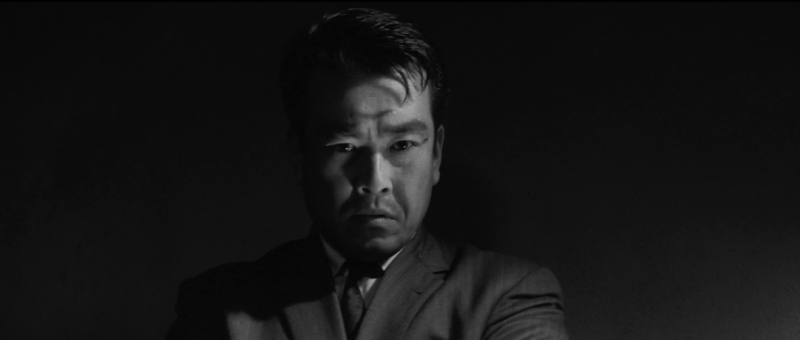
As one officer puts it, Sugai (Minoru Oki) is one of many veteran officers who can’t adjust to new codes of justice in the democratic era. In the film’s opening sequence, he’s pulled aside and warned about using excessive force on a suspect only to counter that he knows the guy’s guilty so he doesn’t see what the problem is. Sugai had been particularly motivated about this case as the victim was an 18-year-old girl raped after accepting a lift from a stranger. She was so traumatised that she could hardly speak but did remember the registration plate of the car. She’d only been working because her father lost his factory job though he appears to have begun drinking and is abusive towards his daughter for her silence, later coming to the station to drop the charges after being paid off by the suspect’s lawyer. The legal definition of rape in this era is founded not on an idea of consent but whether violence was involved and the victim can be proved to have resisted physically. The guilty party, Tomita (Hideo Murota) claims that nothing illegal transpired in his car and then walks away with a smirk when his lawyer gets him off the hook. It’s all too much for Sugai to bear, resentful that the rich and powerful are now effectively above the law thanks to legislation he feels ties his hands as a police officer. 

It’s at this point he runs into petty yakuza Yamaguchi (Ko Nishimura) whom he’s been trying to turn as an informant, unwisely mouthing off about his dissatisfaction with contemporary law enforcement only for Yamaguchi to turn the tables and effectively blackmail him having discovered that Sugai has begun a relationship with the estranged wife of an imprisoned gangster. In an act of petty revenge and desperation, Sugai leaks info on “guilty” suspects who weren’t charged to Yamaguchi who exacts financial justice by extorting them for money while threatening to expose their immorality. 

Disappointed in him, the gangster’s wife, Chiyo (Chisako Hara), exclaims that Sugai’s no different from her husband and in truth he isn’t. Part of Sugai’s resentment lies in the fact his wife left him for another man while he was on a stakeout, frightened by his violence and insisting that she hated detectives. His old-fashioned police tactics include taking suspects to the dojo where beats the living daylights out of them. Later he tells another, more earnest officer, he reminds him of himself when he was younger implying that he has become corrupted by the times and the impossibility of justice, particularly for young women whom he feels an urge to protect, in a world ruled by money and status. He may feel some pangs of guilt for a rookie who is unfairly fingered as the mole on the grounds that he and Yamaguchi were originally from the same area and had a past acquaintance, but in the end is happy enough to scapegoat him for his wrongdoing while he continues trying to dig himself out a hole but falling still further into the abyss. 

Sugai is merely trying to save his own skin, but those around him are desperate too. His opposite number, Toku (Hisashi Igawa) is desperate to clear his name, while Chiyo is desperate for what she describes as a proper marriage to a proper man while seemingly kept captive in the apartment Sugai rents for her on his meagre police salary but does not live in himself. She wants to work and has an innocent desire to buy him some better shoes that he otherwise resents in its implied challenge to his masculinity that he evidently cannot afford all this additional expense coupled with the strain of keeping his problematic relationship with a gangster’s wife secret from his employers. In the end he claims that the problem was he couldn’t escape from being a detective, pushed into desperate acts of destruction as a man now exiled from his times unable to move on from post-war chaos into a newly democratic, consumerist Japan. Saeki ends his fatalistic vision with an image of a train reeling backwards, echoing the degree to which Sugai has lost control of his life and himself no longer a detective but only a man without a moral compass whose path can only lead in one direction. 


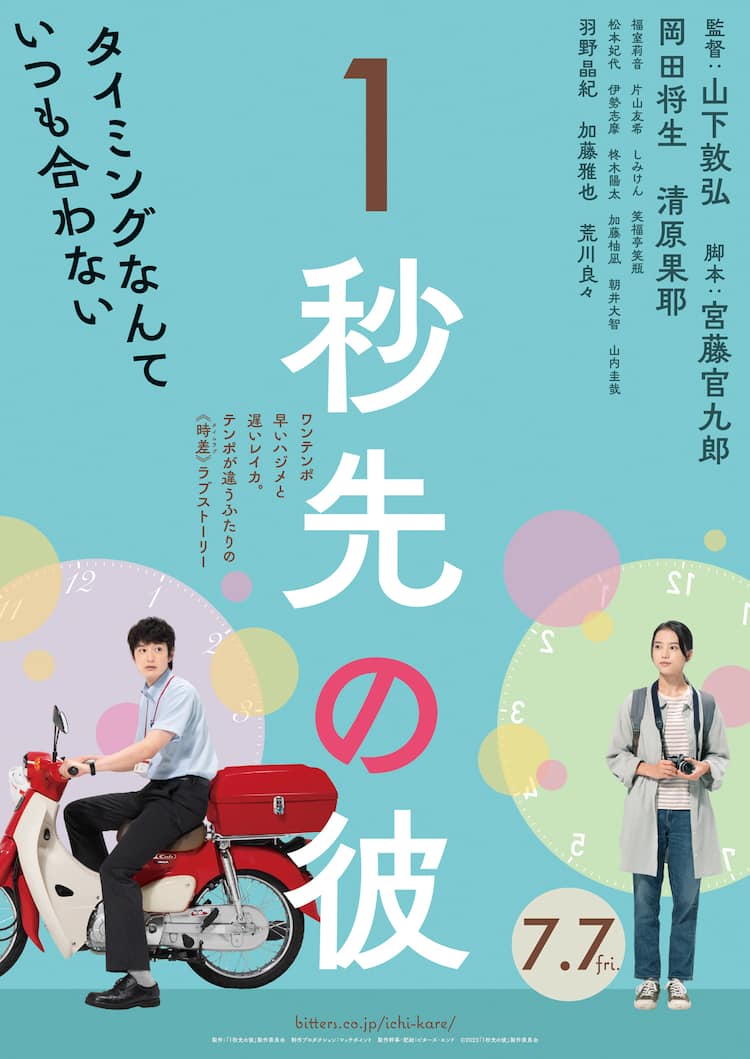
One Second Ahead, One Second Behind (1秒先の彼, Nobuhiro Yamashita, 2023)

If you’re a step ahead and someone else is a step behind, then the gap between you ought to be twice as big but in an odd kind of way it can bring you closer. At least, that’s how it is for the protagonists of Nobuhiro Yamashita’s One Second Behind, One Second Ahead (1秒先の彼, Ichibyo Saki no Kare), a remake of the Taiwanese rom-com My Missing Valentine scripted by Kankuro Kudo. 

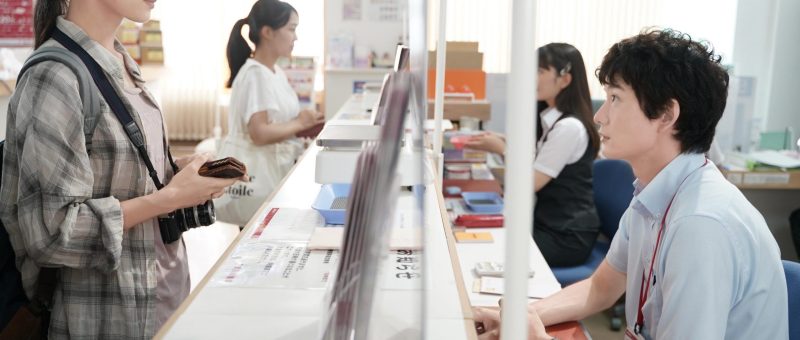
Kudo wisely avoids some of the awkwardness of the original by reversing the genders of the misaligned romantics so that it’s now male post office worker Hajime (Masaki Okada) who wakes up to realise that he’s lost an entire day while having no recollection of how he got sunburnt or why there’s sand in his trousers. The host of a radio show he’s fond of listening to asks him about something he’s lost, causing him to remember his father who went out one evening for ginger and then never came back. Hajime’s problem is that he’s always a little ahead of himself, in too much of a hurry to fully grasp the situation around him. That might be one reason that he falls so hard for singer-songwriter Sakura (Rion Fukumuro) and becomes far more invested in the relationship than might be wise for someone you’ve only just met. 

Reika (Kaya Kiyohara), meanwhile, is always a little bit behind. Shy and somewhat reserved she struggles to get her words out and while Hajime has often left before the end of a conversation she is usually left hanging by an inattentive or impatient partner. Out of sync with the world around them, they have each lost something precious besides the obvious and are looking for a way to get it back. Kudo’s script largely drops the magical realism of the Taiwanese original with its strange world of talking lizards and opts for something a little less surreal if just as sweet while maintaining the borrowed time motif that suggests the universe is fair and willingly adjusts itself so that those who find themselves missing out will get that time back though there’s not a lot they can do with it other than reflect. 

Even so within this miraculous dream space regrets can in a sense be cured and anxieties worked out. Those awake to stopped time have the opportunity to set things right, or at least to say their piece even if no one else can hear. There’s something more than time that they can recover, though it may be only small comfort and offer little more than one-sided closure. Rather than the Valentine’s Day setting of the Taiwanese original Kudo and Yamashita shift the action to the summer which with its many fireworks displays has a rather poignant quality focussed more on the loss than the rediscovery while emphasising the short-lived quality of human relationships which can nevertheless leave a warm afterglow even if the memory itself has been lost. 

Setting the film in the historical city of Kyoto also adds to the magical feel, the emerging sunlight at one point appearing almost like a halo around the head of a frozen Hajime while he perhaps comes to accept his mother’s rationale that his father did not leave him but ran away from reality and ironically a world he felt he could not keep up with. In a repeated gag, Hajime calls up a requests show and pours his heart out to the host only for his mother to dial in and dispute everything he’s says especially reminding him that he’s not a loser but should slow down a bit and at least listen to the end of the conversation. Reika meanwhile might have to work herself up to speedier means of communication than the good old fashioned letter but can at least see that she gets there in the end even if it might take a little longer than for others. 

Despite the differences between them, they are in fact perfectly in sync and just waiting for the times to align to bring them back together. Kudo and Yamashita lend their quirky romance a melancholy and heartwarming quality, steering clear of the awkwardness of the otherwise sweet and wholesome Taiwanese original in suggesting that the “date” at the film’s centre is the fulfilment of long forgotten promise rather than the momentary whim of a lovelorn romantic. Suggesting that the things you lose cycle back to you and that the universe itself is fair and kind, the film’s pure-hearted romanticism offers a hopeful reassurance that in the end it all really will work out for the best if only you give it time.


One Second Ahead, One Second Behind screens Nov. 4/5 as part of this year’s San Diego Asian Film Festival.

Original trailer (no subtitles)
Terror in the Streets (悪魔が呼んでいる, Michio Yamamoto, 1970)

How much bad luck can one person have before they start thinking someone’s out to get them? Released as part of double bill with The Vampire Doll and based on a novel by Kikuo Tsunoda, Terror in the Streets (悪魔が呼んでいる, Akuma ga Yondeiru) draws inspiration from contemporary folk horror and the paranoia thriller as one young woman finds herself in the crosshairs of mysterious forces seemingly hellbent on derailing her otherwise very ordinary and aspirational existence. 

Yuri (Wakako Sakai) worries that her status as an orphan has set her back in life, attributing her inability to find permanent employment after managing to put herself through university by working as tutor to a societal stigma against people with no families. Up to now, things had been going pretty well. Though she was only a temp, she had a good gig as office admin staff at big company in the city, lived in a modest but homely flat complete with a small television, and was dating her college sweetheart. But then one day her boss looks at her with an odd expression and then abruptly drops the bombshell that he’s terminating her contract without offering a reason why. When Yuri calls her boyfriend he gives her the same look and says he’s breaking up with her, also refusing to give any kind of explanation aside from not wanting to see her anymore. If all that weren’t enough, her landlady then explains that someone else is very interested in her flat and will pay double for it so she wants Yuri out by the end of the month. 

It’s undoubtedly been quite a bad day, but Yuri tries to stay upbeat reflecting that she didn’t particularly like the job anyway and intends to apply for a position as an editor on literary magazine which would suit her better. But after that nothing quite goes to plan and everything she tries to improve her situation backfires until she finally considers taking her own life at railway crossing only to be rescued by a mysterious man, Fujimura (Takashi Fujiki), who appears as her saviour but then convinces her to take some kind of pill to calm her nerves which predictably leaves her dazed and confused. He then takes her back to her apartment and claims they’re legally married, but when Yuri wakes up the following morning he’s dead with a knife in his chest. 

It’s not the first time that Yuri has experienced an apparent gap in her memory which causes her re-evaluate her sense of reality. She’s beginning to feel as if something or someone is out to get her, realising that Fujimura was the same sinister man she’d caught sight of before staring into her window. Meanwhile, she often hears a strange tune played on an ocarina that sounds like a medieval fugue. The film’s Japanese title is “the Devil calls” and it’s not a huge stretch to assume that Yuri’s been caught up in some kind of dark magic or supernatural curse, yet it’s also the collision of outdated and feudalistic notions of class and patriarchy that have her in their clutches. All of these weird men seemingly want to marry her or at least make her theirs with less than romantic overtures while chief among her aggressors Katagiri (Hideji Otaki) describes himself as an Earl and insists that noble blood is the most valuable thing in the world.

But far as she knows Yuri has no noble blood and is alone and friendless as an orphan with only a “distant relative” she mentions in passing who does not live in Tokyo. She has in effect been made a pawn in a cruel and ironic game played by a distant aristocracy which makes sport of the innocent and powerless by wielding the privileges of wealth and class. The only way she can escape is by renouncing her claim on its legacy, declaring herself uninterested in their games or rewards while ceding the prize to another woman who seems to have been driven out of her mind by a similar series of torments that may have lasted her entire adult life. Yamamoto films the contemporary city in an eerie light, a place of greed and darkness inhabited by sinister and shady forces that prey on the innocent and earnest like Yuri but then there is something to be said for the idea that in the end you can’t con an honest man and Yuri’s pure hearted rejection of unearned wealth just might be her salvation.


Original trailer (no subtitles)