Ghost Man (幽霊男, Motoyoshi Oda, 1954)

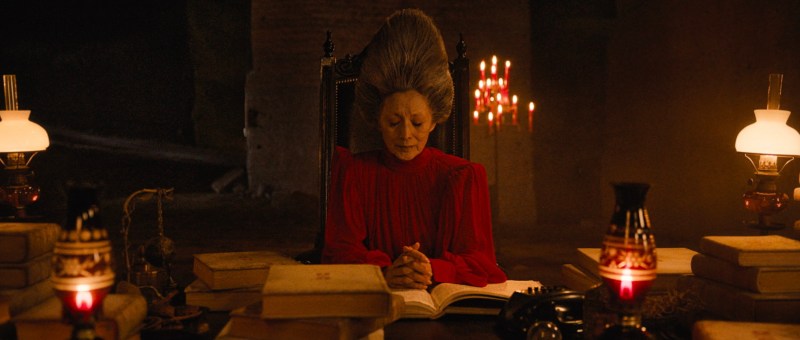
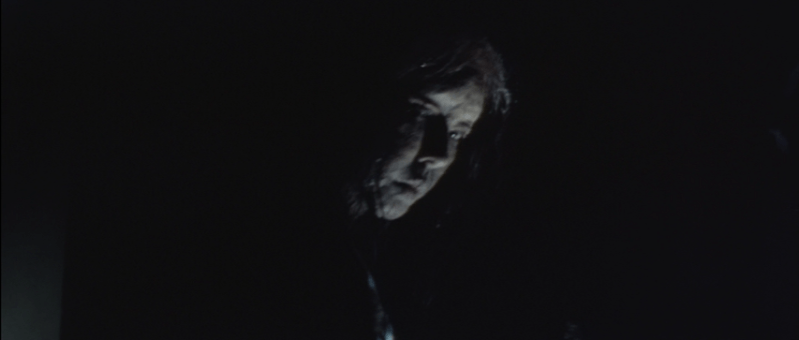
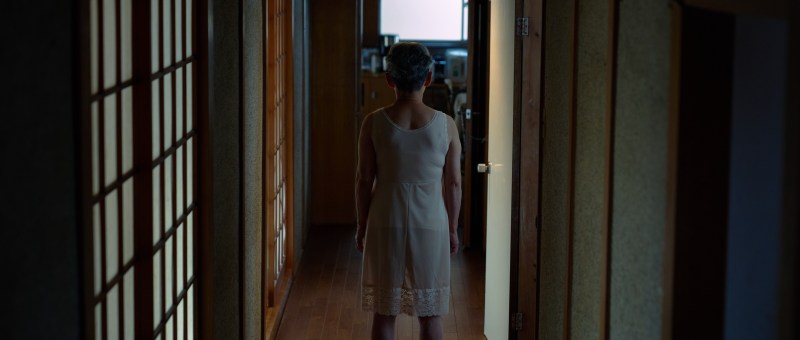
Employees at a small nude modelling agency find themselves in the firing line when a “bloodsucking painter” escapes from a psychiatric institution in Motoyoshi Oda’s adaptation of Seishi Yokomizo’s Ghost Man (幽霊男, Yurei Otoko). Though produced by Toho and helmed by the director of The Invisible Man, the film does not particularly make use of special effects and as it turns out, Ghost Man is just a creepy name for a weird villain rather than an accurate description of a supernatural threat. 

Even so, you’d expect someone who runs a modelling agency to be on high alert after hearing that a crazed painter who is a danger to women is on the loose, but the manager of the Mutual Art Club simply assumes it must be an eccentric artist thing when he’s presented with a business card from “Ghost Man” Sugawa. Ghost Man is dressed in an unsettling outfit and is immediately rough with the model he picks out, Keiko, all of which you would think would have the manager thinking twice about allowing her to go with him. Some of the other girls urge her to turn the job down, but Keiko is the breadwinner for her family and work has been thin on the ground so she agrees to take it only to realise Ghost Man does indeed intend to kill her on arrival at an abandoned house way out in the country. 

“What a single woman has to do to earn a living, it’s both thrilling…and terrifying,” one of the other women, Ayuko, tells her boyfriend Ken (Yu Fujiki) after she quits the agency to become a stripper and decides to take to the stage despite knowing that Ghost Man may try to kill her during the show. Her words hint at a transgressive frisson of danger which she at least has chosen to embrace, an icy glint in her eye as she encourages Ken to pay close attention to her performance which she claims will be “wonderful”. Nevertheless, it also makes clear that the work the women do at the agency is necessarily unsafe given that it involves travelling to the home of a man they don’t know where they will be expected to undress. 

For reasons the film doesn’t quite explain, the models are also members of the “Bizarro Enthusiast Club” led by Dr. Kano (Joji Oka) who is the head doctor at the psychiatric hospital from which the bloodsucking painter, Tsumura (Ren Yamamoto), escaped. Meanwhile, Dr. Kano also seems to have a sideline in taking the girls to remote locations for nude photoshoot parties. In all honesty, he’s quite suspicious especially seeing as he seems to instinctively know how to open the tricky door at the abandoned house where Keiko’s body is found. Then again, we’re also told that Tsumura was once a member of the club with at least some suggesting that he ended up getting too into the bizarre and going out of his mind to the extent that he began committing weird acts of crime of his own. 

The lesson might be that getting overly obsessed with the occult and esoteric is unhealthy, only it turns there’s something else going on entirely that isn’t really about anything “weird” but caused by completely banal negative human emotions resulting from spurned romantic interest and the fear of parental disappointment. This being a Kindaichi mystery, the famous detective soon makes his appearance (played by a hardboiled Seizaburo Kawazu) only in a less eccentric guise and accompanied by a more efficient Todoroki who assists him as he begins to put the pieces together to solve the mystery. 

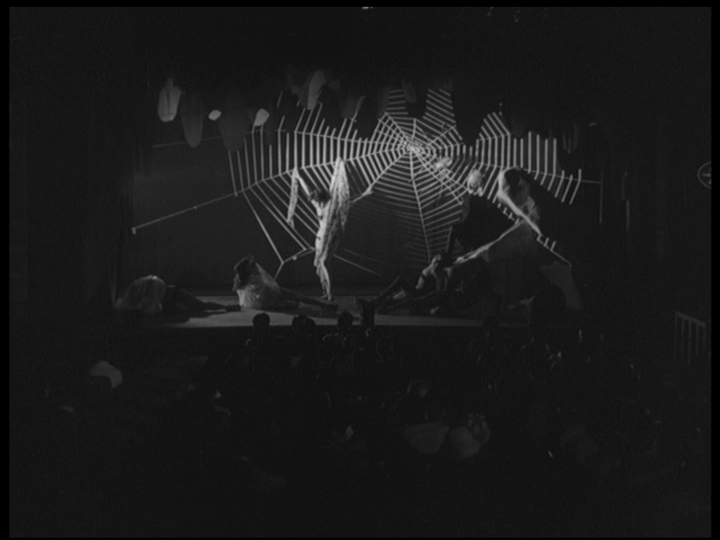
The villain may be taking advantage of a historical moment in allowing others to think his face is bandaged to disguise a disfigurement like those of many men wounded in the war, as was the case in another Kindaichi case The Inugami Family, but is also harking back to the Invisible Man while his accomplice adopts a much more “monstrous” appearance with buck teeth and the two missing fingers on his hand along with the insectile movements that play into the spider-themed finale. Oda has a lot of fun with the villain’s Phantom of the Opera-esque antics which include recording a tape to taunt the police along with a public announcement of “Act 3” of his ongoing drama to be staged at the “Reijin Theatre” which literally means “the beautiful lady show” but is also a minor pun that makes it sound a little “Ghost Man Theatre” in true B-movie villain fashion. Even so, there’s an underlying darkness in the serial killer drama most particularly in the scrapbook the villain makes with photos of the dead women posed and titled as works of art as if they were never any more alive than the mannequins he often substitutes for them. Striking in its set pieces and unsettling design, Oda’s strange drama is surprisingly nasty and actually quite cynical even as it unmasks its villain as little more than a ghost of man who hid behind the spectre of unease to mask his cowardice and insecurity.


The Three Sisters of Tenmasou Inn (天間荘の三姉妹, Ryuhei Kitamura, 2022)

Caught in a space of existential limbo, a young woman struggles with the uncertain nature of life. What’s the point of living in a world that might end, she asks herself, seemingly not having realised that it’s as it always was, the world is always ending and may blink out at any given second. Ryuhei Kitamura’s adaptation of the manga by Tsutomu Takahashi The Three Sisters of Tenmasou Inn (天間荘の三姉妹, Tenma so no San Shimai) plays out a little like a mashup of Hirokazu Korea’s Afterlife and Our Little Sister, but ultimately meditates on how to live on in the shadow of loss.

After all, as the relentlessly cheerful heroine Tamae (Non) later says, life is hard but the world is not so bad and everyone has their part to play. That’s something she discovers for herself after falling into a coma following a traffic accident and arriving at Tenmasou Inn in the picturesque seaside town of Mitsuse. As is explained to her, the inn exists in a liminal space between Heaven and Earth where those caught between life and death are expected to make a choice on their direction of travel. 

But Tamae begins to enjoy her time at Tenmasou in part after learning that the owner’s daughters, Nozomi (Yuko Oshima) and Kanae (Mugi Kadowaki), are her half-sisters. They are fully aware of their liminal status and that unlike Tamae they can never return to the mortal world or make any kind of life for themselves in Mitsuse where time stands still. Nevertheless, Tamae’s relentless cheerfulness and knack for human empathy prove key assets, beginning to return an energy and warmth that has those around her giving new thought to their cosmic inertia and if it’s really possible to go on living in a constant state of timelessness. 

Tamae might want to stay, experiencing for the first time the sense of family that she’s searched for all her life. She considers giving up the rest of her time to stay with them, but is reminded that no one can stay in this transient place forever while this version of Mitsuse which seems to hang over the “real life” town may soon disappear. Those who live there describe it as like living in a dream, a confusing simulacrum of life in which no time passes. There are those who make the eventual decision to pass on towards rebirth while others opt to stay, still having unfinished business or perhaps just not quite yet ready. 

Recalling the 2011 tsunami, the film touches on the difficult subject of survivor’s guilt and how to come to terms with loss on a mass scale while Tamae tries to process what it means to live and to not to. She resolves that “people don’t end when they die” but live on in the memories of those who remember them, though her conviction that she must live on as a kind of conduit for the souls of others may also rob her of a degree of her selfhood in her own right to live simply as herself.

Even so as she admits life is hard. An old woman suffering with liver cancer who had been blind for many years looks for beauty in the afterlife only to be reminded that there are beautiful things everywhere if you take the time to look. She too has had a life of sadness, but discovers that it might not be too late to make up for lost time, while a very young woman who felt herself to be alone learns that she has a friend and there are those who care for her even she did nearly burn the inn down in a fit of temper. Unabashedly sentimental, the film is as much about moving on as it is about learning to live in the present as the various guests contemplate whether to return to the world of the living with all of its pain and loneliness, or proceed to that of the dead knowing that there’s no guarantee the next life will be any better. Melancholy but also in its way uplifting, Kitamura’s empathetic drama eventually settles on a note of poignancy in which the act of living becomes its own memorial and defiant act of remembrance in the face of constant and unexpected loss.


The Three Sisters of Tenmasou Inn screens in New York Aug. 6 as part of this year’s JAPAN CUTS.

Original trailer (English subtitles)

Mad Cats (Reiki Tsuno, 2023) [Fantasia 2023]

The captive felines of Japan are mad as hell and they aren’t going to take it anymore in Reiki Tsuno’s absurd action comedy, Mad Cats. Sick of mistreatment and exploitation at the hands of humans who breed them for sale, these cats have transformed into a cult-like band of vigilantes thanks to a forbidden ancient Egyptian catnip that grants superpowers unearthed by a cat-loving Egyptologist who has been missing for the previous two years.

Mune (So Yamanaka) had been the responsible brother and in his extended absence, Taka (Sho Mineo) has become an irresponsible layabout behind on his rent and surrounded by old food cartons. A cassette tape delivered in a letter addressed only with his first name alerts him to the fact his brother is being held captive in a place where they once found a black cat and needs rescuing while he should also make sure to pick up a small wooden box on his way. Taka jumps straight on his bike, but unfortunately is not the sharpest knife in the drawer and finds himself ill-equipped to face off against the Mad Cats who are only more annoyed when he makes off with the their secret stash of forbidden Egyptian catnip.

Despite becoming anthropomorphised the cat women (they are all female cats) still behave in noticeably feline ways with their strange grins and vacant eyes not mention to weird head tilts and cat-like gestures such as pawing the air or slapping an opponent when otherwise not armed with axes or nunchucks. Later Taka is joined by another mysterious woman, Ayane, who apparently once belonged to the same cat lady cult but is somehow immune to the catnip aside from having become human and is determined to stop the others from going too far on their quest for revenge against human cruelty. 

Perhaps you can’t really blame them for that, though their vengeance does take on a rather ironic quality as they keep Mune tied up in a cage and force him to eat like a cat hunched over on his knees with his hands bound. Meanwhile, Taka teams up with a homeless man who is also enjoys cat food and is forever complaining that he’s not supposed to be here he just got swept up in some bizarre events while minding his own business. Takezo (Yuya Matsuura) also seems to be somewhat displaced, estranged from his wife and family and like Taka is looking for a way to go home even if he didn’t have running away from mad cats on his bingo card. 

The pair of them go through a training bootcamp thanks to Ayane but otherwise continue to flounder, forgetting everything they’ve learnt and cowering cartoonishly when faced with a marauding cat hoping Ayane will arrive to save them after all. Then again, they aren’t particularly bothered about trying to save the corrupt pet shop owners who callously breed cats for sale in poor conditions to possibly unsuitable people, perhaps sympathising with their concerns as genuine cat lovers reevaluating their thinking around pet “ownership”. 

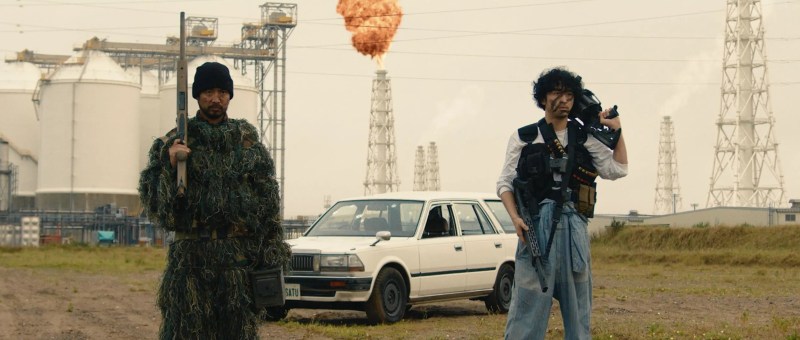
Rounding out the absurdity, Tsuno adds in a series of action set pieces featuring cat-like choreography as Ayane squares off against the rest of the Mad Cats who are otherwise dressed in eerie white gowns like the members of a bizarre cult living an isolated existence in the mountains. From the cassette tape to the roller diner where Taka and Takezo are first attacked, the film has a quirky, retro sensibility that is perfectly in tune with its absurdity even as the guys drive around a borrowed car that has a registration plate reading “killer blow” while tracked by the seemingly unstoppable Mad Cats who, as we later realise, really do have nine lives. There is something quite touching underneath the strange allusions to Egyptian cat gods, superpowered catnip, and vengeful felines in the strength of the relationships not just between the brothers but between cats and their guardians despite the vengeful mission of the Mad Cats who reject their captivity by ridding themselves of irresponsible cat traffickers. Deadpan and surreal, the film has an infectious sense of fun in its boundless inventiveness and quirky composition while also carrying a more serious message about animal cruelty and responsible pet guardianship in a world in which even the lives of living creatures have been commodified.


Mad Cats screened as part of this year’s Fantasia International Film Festival.

Teaser trailer (dialogue free)

From the End of the World (世界の終わりから, Kazuaki Kiriya, 2023)

Charged with the responsibility of saving the world, a teenage girl wonders if she should in Kazuaki Kiriya’s pre-apocalyptic drama, From the End of the World (世界の終わりから, Sekai no Owari kara). After all, the suffering will continue. People will continue to be cruel and selfish. Maybe it’s better to let humanity fizzle out and least save the planet. But really whether any of this is “real” or not, what’s she’s looking for is an escape from her grief and loneliness and a world that is a little kinder and less self-destructive. 

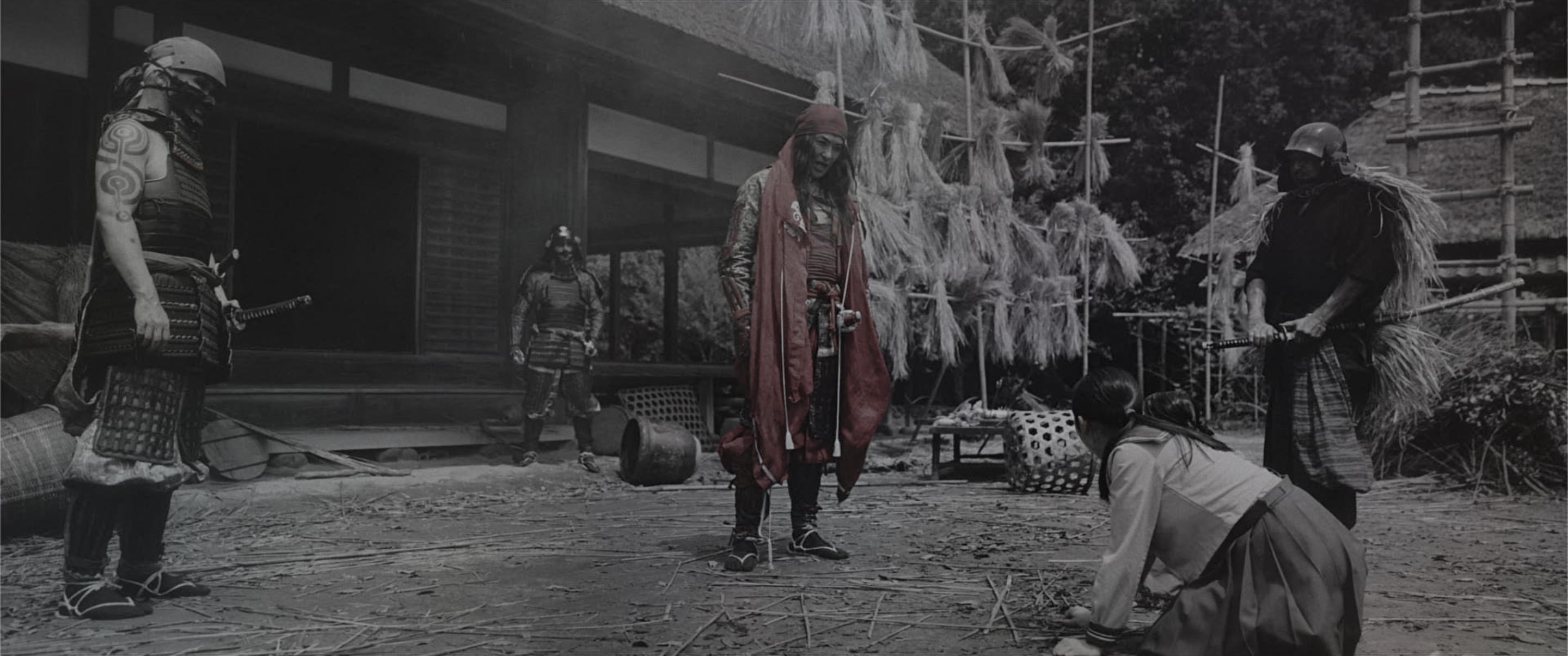
Shortly after losing her grandmother, who had been raising her after her parents were killed in a car accident, Hana (Aoi Ito) begins having strange dreams where she’s cast back to what seems to be feudal Japan where she meets a young indigenous girl whose family have been wiped out by marauding samurai. The girl’s guardian, an older woman (Mari Natsuki), explains to her that her arrival in this place has been foretold by some kind of scripture painted on the ceiling of a cave and that her duty is to deliver a letter to a shrine. Not too long later, she’s accosted by some kind of mysterious authority which seems very interested in her dreams, eventually taking her to a strange base in another cave where she meets an old woman (also Mari Natsuki) who looks exactly like the one saw in her dream. The world will apparently end in two week’s time, though she alone has the ability to alter what has been written through the power of her dreams which allows her to change people’s thoughts and thereby rewrite their destiny. 

She does not do this deliberately, but reacts instinctively to the events she encounters which the old woman claims exist in the “Sea of Sentiment”, a great confluence of human thought on which the world is built. “Understanding things is overrated. Everything’s an illusion. What’s important is your feelings,” another mysterious presence (Kazuki Kitamura) tells her, a man who exists between dream and reality and would rather the world end because as long as it exists he cannot die. In some respects, he may represent Hana’s depression suggesting that to continue to live is only to prolong her suffering and that it’s better for everyone to simply give in and let fate take its course while she weighs up kindness and vengeance using her newfound powers for “selfish” reasons to end the torment she’s been suffering at the hands of a bullying classmate who’s long been blackmailing her in taking advantage of her precarious position as a financially disadvantaged orphan. 

The quest that the old woman sends her on is really into the depths of her own heart which is wounded not only by a medical issue she seems to have forgotten but a pair of childhood traumas buried behind a door she did not want to open. The real message that she’s supposed to deliver has its own paradoxical sense of poignancy, “from the end of the world to you in the future”, which signals her nihilism and despair but also a desire for some kind of continuation or rebirth in a better, kinder world less marked by suffering or selfishness. Then again, the way of achieving that world is still rooted in violence only of a more knowing kind that heads off one particular kind of disaster and allows Hana to save “herself” in all her incarnations, but perhaps doesn’t do very much to change the human “foolishness” to which the old woman ascribes humanity’s destruction.  

Logically, it doesn’t quite hang together and not all of it makes sense (understanding things is overrated), but it has its own kind of internal consistency even if at times somewhat incoherent as it well might be if it were all the dream of a lonely teenage girl who’s given up on the idea of a future for herself because her life has been too full of suffering and unfairness. It’s no coincide the date of the end of the world is set for the same day as her high school graduation ceremony. Her world really is ending if in a less literal way leaving her all alone and forced into a more concrete adulthood while her peers get to chase their dreams a little longer by moving on to higher education while she’ll have to look for work to support herself. She may feel that nothing she does makes any difference and that she is powerless to change her fate, but also realises that she is not as alone as she thought. Featuring top notch production values and some striking production design, Kiriya’s sci-fi action drama is quietly touching in its final resolution that despite everything Hana still wants to love the world even if it’s making it very difficult. 


From the End of the World screens in New York Aug. 5 as part of this year’s JAPAN CUTS.

Teaser trailer (no subtitles)

Under the Turquoise Sky (ターコイズの空の下で, KENTARO, 2021)

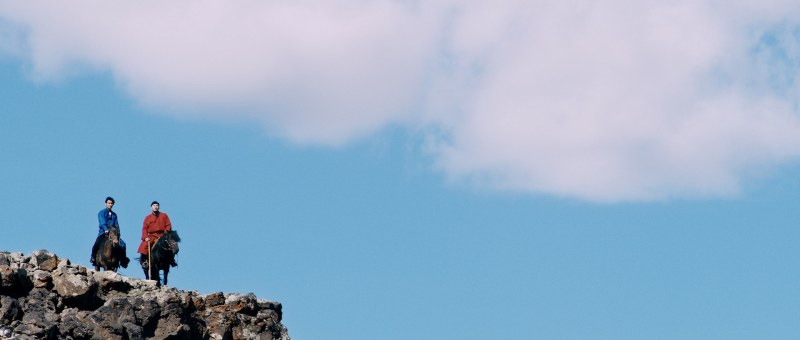
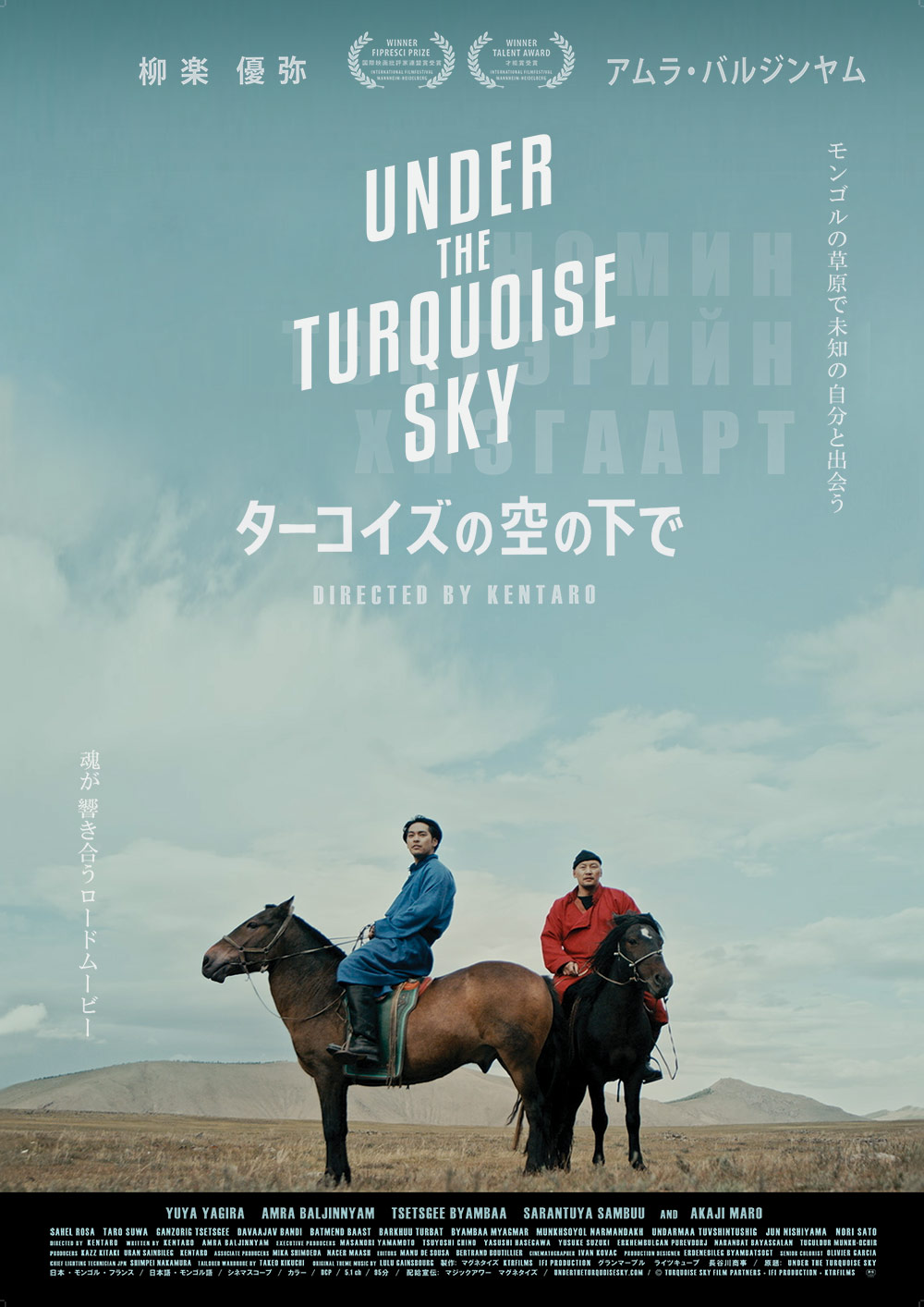
An aimless young man unexpectedly embarks on a spiritual journey after being sent to Mongolia to look for the daughter his grandfather left behind 70 years previously when he was a prisoner of war in the dreamlike debut feature from actor KENTARO, Under the Turquoise Sky (ターコイズの空の下で, Turquoise no Sora no Shita de). A circular tale of longing and abandonment, the film is both a charmingly surreal road movie and a poetic meditation on time and memory amid the infinite expanses of the Mongolian Steppe. 

Our guide is “horse thief” Amaraa (Amarsaikhan Baljinnyam) who cheerfully rides off on a stallion owned by the ageing Saburo (Akaji Maro) only to be chased down by police officers in much the same way he will be again on his return to Mongolia. Saburo jokingly asks him if he meant to ride all the way home and perhaps he did, in a way. Falling asleep in the van he later shares with Saburo’s grandson Takeshi (Yuya Yagira) he dreams of stealing an old lover away from her wedding to another man replying only that he’s been “busy” when she asks why he made no attempt to contact her during the previous three years. One might also ask why Saburo never returned to Mongolia and the woman and child he left behind, but perhaps there is no real reason save life and then it was too late. Now close to the end of his days, Saburo charges Amaraa with the mission of tracking his now 70-year-old daughter down taking the spoilt and selfish Takeshi with him in the hope that he will spontaneously discover purpose in his life. 

There is something quite poignant in the melancholy strains of My Dear Companion accompanying the van’s passage along a lonely Mongolian road, a song that at least in its more modern version is a lament for lost love and a yearning for one who seems to have disappeared to a distant land no longer caring for those they once loved. The other frequent refrain is that of Beautiful Dreamer which similarly hints at the impossibility of romantic resolution particularly as it plays over Amaraa’s fantasy of reclaiming a love he once left behind. On arrival in Mongolia, Amaraa quickly reverts to traditional dress, dismissing the driver Saburo has hired for them along with his fancy car to take off in a much more ordinary van stopping every so often to ask everyone they run into if they’ve ever heard of a woman named “Japanese Tsermaa” until getting some helpful directions from a traditional shaman with a surprisingly familiar face. 

Unable to speak the language, Takeshi mostly looks on amused but soon discovers that words are often superfluous. Amaraa even at one point has a totally wordless negotiation with a fellow nomad over borrowing his motorbike and sidecar when the van inevitably breaks down. Suddenly left alone in the expanses of the Mongolian Steppe, Takeshi enters a kind of dreamscape and almost lives his grandfather’s life over again after being taken in by a pregnant woman who gives him Mongolian clothing and shares with him the local food, but the outside world soon comes calling and just like his grandfather he leaves behind a woman and child along with the sea and the sky having experienced some kind of enlightenment that shakes him out of his hedonistic aimlessness. 

But then it’s almost as if it never happened at all. He simply takes his grandfather’s place while the wheel keeps on turning. Workers in his grey office block shuttle about like ants in an ant farm even if, as we gradually realise, united under the turquoise sky that stretches from Mongolia though fading as if goes. Unexpectedly moving in its moments of reunion, the film makes the most of the beautiful Mongolian landscape shot a stunning 8K while exploring the warmth and hospitality of the local people who share their culture with a bemused stranger who finally gives himself over to their dance. “What’s important is that we’re together now” Amaraa tells the woman in his dream, hinting at the impossibility of his circular journey and the poetic yearning that underlies these various stories of lost love some eventually recovered at least in part but others left to echo on the breeze as faint memories of other lives painfully unlived.


Under the Turquoise Sky screens in New York Aug. 4 as part of this year’s JAPAN CUTS.

International trailer (dialogue free)

The Possessed (妖婆, Tadashi Imai, 1976)

Shinto priests, black magic, and demonic possession. As the opening voiceover of Tadashi Imai’s The Possessed (妖婆, Yoba) remarks, you can hardly believe that such things could happen in the modern world alongside cars, trains, and telephones yet the tale we’re about to be told begins in 1919. Based on a story by Akutagawa, the film is however less a contemplation of ancient superstition amid rising modernity than the destructive patterns of class and patriarchy which conspire against the lives of two women who had once been good friends. 

In 1919, Shima (Machiko Kyo) marries Shinzo (Shinjiro Ehara) who has taken her name and become the presumptive heir of her family. Everyone at the wedding remarks on what a good catch he is, adding almost as an after thought that Shima seems happy about it too. The problem is that Shinzo is repeatedly unable to consummate the marriage. Part of this seems to be down to his wounded masculinity in having married into the family. He resents being under the thumb of his father-in-law along with the rumours that he only married Shima for her money even though this appears to be exactly what he has done. Perhaps further humiliated by his inability to perform, Shinzo tells Shima that it’s her fault because there is something wrong with her body that prevents him from becoming sufficiently aroused. Being a sheltered woman of the Taisho era, Shima wonders if her husband has a point and visits a doctor to find out but as expected he tells her there’s nothing at all wrong with her and it’s most likely Shinzo’s performance anxiety that is to blame. 

However, when her cousin Sawa’s (Kazuko Ineno) comb is found inside Shinzo’s kimono sleeve, the family begin to realise that the problem is he prefers her. He later admits as much and reveals that he’s planning to move closer to the family’s goldmine in Hokkaido and install Sawa in a house there as his common law wife with Shima left behind as a spouse of symbolic value. Shima has already felt herself haunted, but it’s at this point that the family brings in a Shinto priest who explains that Shinzo is possessed by an evil spirit though also giving the more rational advice that she should probably divorce him. Shima is forced to endure a strange ritual including purification by waterfall, but is also sexually assaulted by the randy priest though it it’s not completely clear that she fully realises what has happened to her. 

The implication is that the family treated Sawa as a kind of poor relation they trotted out to keep Shima company because she was an only child. Having grown resentful of Shima’s class privilege, Sawa’s jealousy manifested as covetousness that made her intent on taking whatever Shima had. She too later resorts to shamanistic black magic, fearful that Shima bears her a grudge for ruining her life and hoping to neuter any dark energy that she might be emanating in order to protect her teenage daughter Toshi (Miki Jinbo) who, ironically, has been betrothed to the son of a kimono shop named Shinzo (Taro Shigaki). 

Sawa never married and bore her child out of wedlock. She implies that she depended on men for financial support but never elaborates further. Shima, meanwhile, has been able to build an independent life for herself as a well-respected tailor. “It’s not normal for someone to suffer this much” a shamanically-inclined midwife later tells her when she too becomes pregnant out of wedlock but loses both the child and the man. The boot is perhaps on the other foot, Shima envies the life Sawa has with the one thing that will always be denied her, a child of her own. The midwife had once again told her that she was possessed, this time by the vengeful spirit of her lover’s daughter with his legal wife she fears may have been drowned deliberately by her mother out of jealousy. 

Shima is given a talisman of beads from the goddess of mercy, Kanon, and told that she can have what she wants if she prays hard enough, but Sawa is told the same thing and ends up going too far with the help of a shamaness praying to Basara Okami who later affirms that Sawa’s request comes with a price for the god wants Shima as a human sacrifice which is not really what Sawa had in mind. There is perhaps something symbolic in Shima’s gradual wasting away, becoming old before her time in her loneliness and sorrow (she is only supposed to be 33 at the film’s conclusion, actress Machiko Kyo was 52 at the time) even if she were not having the life force sucked out of her by a supernatural entity, though both women eventually pay a heavy price for their jealousy set against each other by a fiercely patriarchal and classist society which forces them to compete for husbands and standing. 

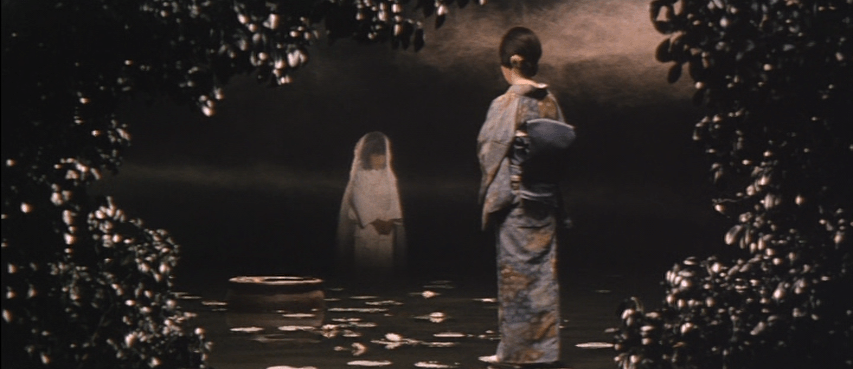
Imai’s photography is noticeably eerie if occasionally surreal as in the frequent and increasing sight of frogs, usually sign of good fortune or fertility but here ominous harbingers of supernatural dread in league with dark shamanistic forces. As the voiceover admits, it’s difficult to believe that these primitive ideas can exist side by side with the motor car but then again jealousy is as old as time itself and unlikely to disappear from the human psyche anytime soon even if in this case it could have been avoided if only the world were a little more equal. The film’s conclusion suggests it may now be, in a way, with a love match in the younger generation bringing the cycle of envy and resentment to a close even if the vengeful ghost of Shima may still be lurking somewhere in the shadows. 


Winny (Yusaku Matsumoto, 2023)

Can a creator be held legally responsible for what other people might decide to do with their creation? For some, that is the essential question of the trial at the centre of Yusaku Matsumoto’s legal drama Winny, but in speaking more to the present day than the early 2000s in which the real life events took place the film is more concerned with freedom of speech in a society in which established authorities may seek to resist the democratisation of information. 

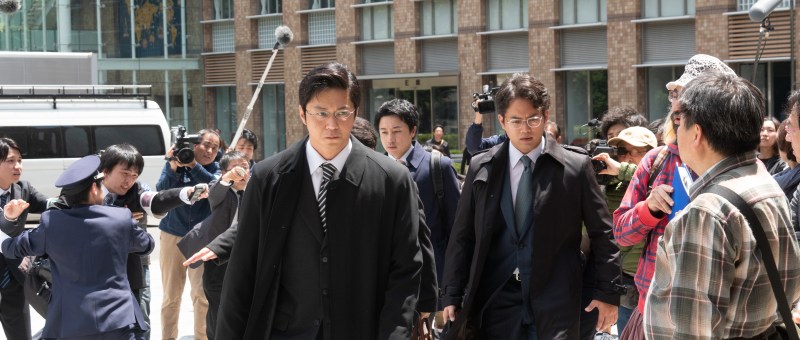
A talking head seen on television at one point suggests that peer-to-peer file sharing programme Winny disrupts the democratic copyright regime, but according to its creator Isamu Kaneko (Masahiro Higashide) the appeal of peer-to-peer is that it is by nature democratic in forging a network of machines on an equal footing. Nevertheless, in November 2003 two people were arrested for using Winny to share copyrighted material and Isamu’s home was searched by the Kyoto police who arrested him for aiding and abetting copyright infringement. He and his lawyers argue that to charge the developer is wrongheaded and irresponsible in that it will necessarily stifle technological advance if developers are worried about prosecution if their work is misused by others while his intention in any case had not been to undermine copyright laws but essentially for technological innovation in and of itself. 

Meanwhile, the film devotes much of its running time to a concurrent police corruption scandal in which a lone honest cop is trying to blow a whistle on a secret slush fund founded on fraudulently produced expense receipts. The implication is that the reason the police decided to go after Isamu is that they feared Winny’s potential to expose their own wrongdoing. A member of the police force had apparently used Winny and introduced a vulnerability to the police computer system that allowed confidential data to be leaked, and Winny is indeed later used to publicly disseminate evidence which proves the claims of the whistleblower, Semba (Hidetaka Yoshioka), are true. Semba had previously tried to take his concerns to the press privately but was ignored, the editor simply printed a police press release without investigation unwilling to rock the boat. But a programme like Winny exists outside of the establishment’s control which is why, the film suggests, the police in particular resent it. 

A younger officer Semba reproaches at his station gives the excuse that everybody does it and refusing to fill in the false receipts would make it difficult for him to operate in an atmosphere in which corruption has become normalised. Even the police use Winny, a prison guard confiding in Isamu that he’s used the programme to download uncensored pornography while prosecution lawyers conversely attempt to embarrass Isamu by leaking pictures of his porn collection to the press and bringing it up on the stand. “Everybody does it” is not a good defence at the best times aside from being a tacit admission of guilt but reinforces a sense that the police operates from a position of being above the law. A particularly smug officer thinks nothing of perjuring himself on the stand, spluttering and becoming defensive when Isamu’s lawyers expose him in a lie. 

Isamu is depicted as a rather naive man whose social awkwardness and childlike innocence leave him vulnerable to manipulation. He’s told to sign documents by the police so he signs them thinking it’s better to be cooperative, taking the advice he’s given when he questions a particular sentence that he can correct it later at face value while assuming that he’ll be able to straighten it all out in court by telling them the truth and that he signed the documents because the police told him to. Meanwhile, he’s almost totally isolated, prevented from talking to friends and family out of a concern that he may use them to conceal evidence. 

The film seems to suggest that the stress of his ordeal which lasted several years may have led to his early death at the age of 42 soon after his eventual acquittal. In any case he finds a kindred spirit in his intellectually curious lawyer (Takahiro Miura) who defends him mostly on the basis that the right to innovate must be protected and a developer can not be responsible for the actions of an end user any more than a man who makes knives can be held accountable for a stabbing. Matsumoto captures the sense of wonder Isamu seems to feel for the digital world and has a great deal of sympathy for him as an innocent caught up in a game he doesn’t quite understand while fiercely defending his right to express himself, along with all of our own, without fear no matter what the implications may be.


Winny screens in New York Aug. 2 as part of this year’s JAPAN CUTS.

Original trailer (no subtitles)

Insomniacs After School (君は放課後インソムニア, Chihiro Ikeda, 2023) [Fantasia 2023]

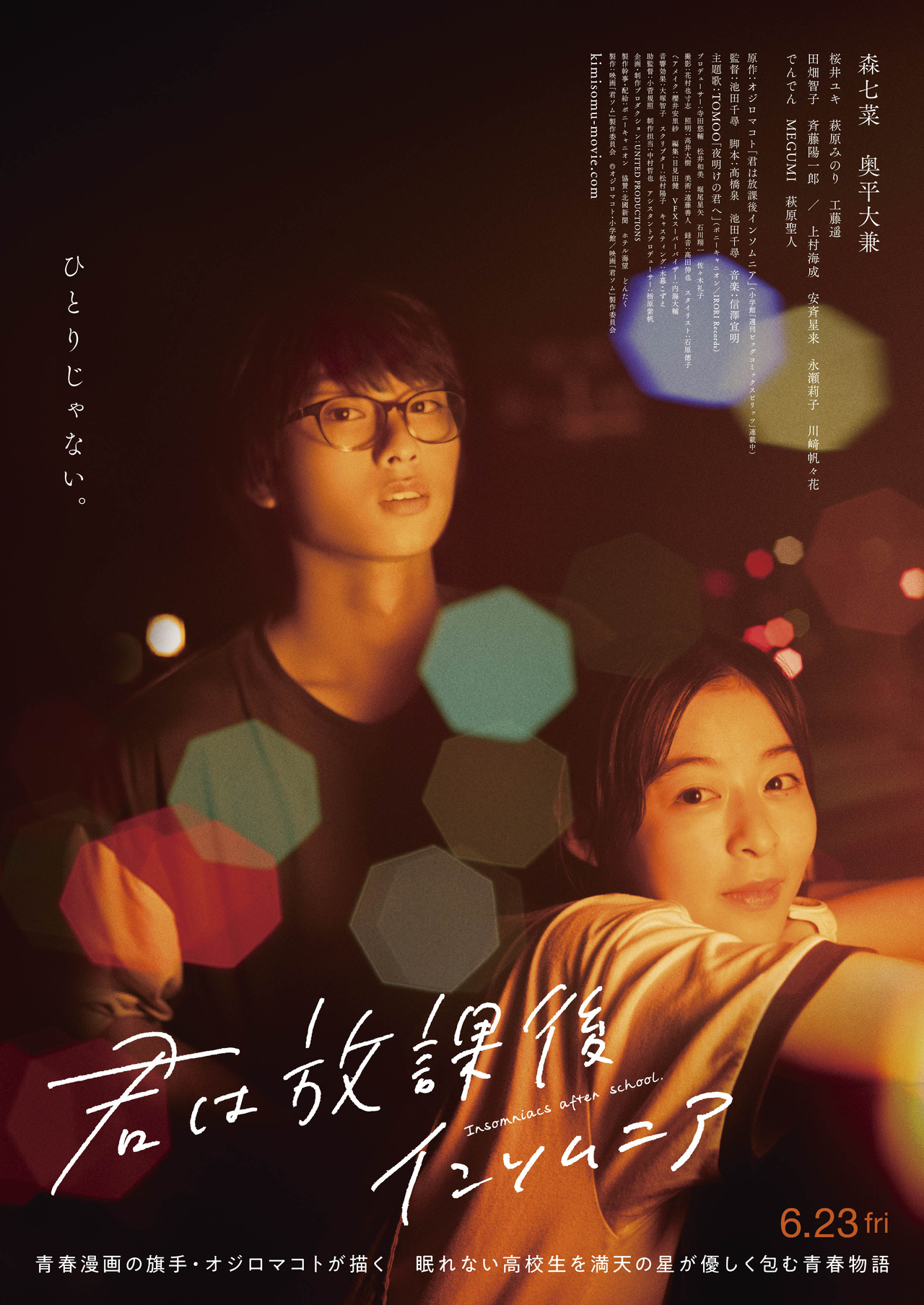
Two teens begin to overcome their fears and anxieties after bonding over their shared insomnia in Chihiro Ikeda’s adaptation of the Makoto Ojiro manga, Insomniacs After School (君は放課後インソムニア, Kimi wa Hokago Insomnia). It may seem strange in some ways that the pair find their inability to sleep so embarrassing that they keep it a secret from those around them, but then it’s difficult to tell people you’re having trouble sleeping without explaining why which is admittedly to enter the place of emotional vulnerability that each of them is otherwise avoiding. 

Namiki (Daiken Okudaira) describes himself as being overwhelmed by negative thoughts while his days are filled with despair. Unable to sleep at home he struggles to keep his eyes open at school and is otherwise reserved, rejected by many of his peers for being gloomy and aloof with only one real friend to whom he has disclosed his persistent insomnia. When he ventures into a part of the school others avoid thinking it is haunted, he discovers another “ghost” in classmate Isaki (Nana Mori) who also suffers from insomnia and had carved out this small corner of the disused astronomy club as a private lunchtime nap space. Luckily for him, Isaki, who is cheerful and outgoing, is willing to share and soon they become firm friends who decide that their empty nights of dark despair could otherwise be filled with fun and adventure. 

Neither of them really discuss why they aren’t able to sleep until their friendship is more deeply established and the facts emerge somewhat naturally but instead draw strength from their new connection while laying claim to their “sanctuary” in the school’s disused observatory as a place where they can find peace. Discovered by a teacher they have to keep up the pretence of restarting the astronomy club which means deciding on some sort of goal activity as proof that they have a right to the space all of which leads them down a secondary path that distracts them from their sleeplessness as they determine to put on stargazing events and enter a photography competition which requires a short sojourn in the country as well as making entreaties to their classmates for additional help and support. 

Then again, that might be contrary to their original wishes given that what they wanted from the observatory was a private place to sleep free from the stresses of their home lives which are in themselves fairly wholesome problems running from health anxiety to abandonment issues. Parallel scenes remind us that their struggles are largely the same, each has come to blame themselves for things which weren’t their fault and has developed a need to be seen as “good” which has led to chronic people pleasing and low self-esteem. But what their stargazing mission begins to teach them is that some things in life are beyond your control so there’s no point worrying about them, while the sense of eternity they discover watching the movement in the skies helps them overcome an adolescent fear of mortality in realising that “human existence doesn’t disappear so easily” and those who are gone still live on in the hearts of minds of others in the great confluence of humanity. 

Where night had been something to endure, they now find new ways to appreciate their lives in a world that seems more full of possibility than fear. Ikeda’s adaptation revels in its wholesomeness with even its slow-burn romantic subplot relatively innocent in its earnestness as the pair monologue over a voice notes app and quite literally lean on each other for support even if it’s not clear whether their insomnia actually improves or they just find better ways of living with it thanks to the new community they’ve found in the re-formed astronomy club which like most clubs is more about just hanging out than it is about serious study of the stars. Making the most of its picturesque small-town setting, the film discovers a quiet sense of serenity in the beauty of the landscape along with its ever expanding vistas in which the teens learn to overcome their mutual anxieties and embrace the infinite possibilities of life thanks to a true friendship founded on empathy and compassion.


Insomniacs After School screened as part of this year’s Fantasia International Film Festival.

Original trailer (English subtitles)

Best Wishes to All (みなに幸あれ, Yuta Shimotsu, 2023)

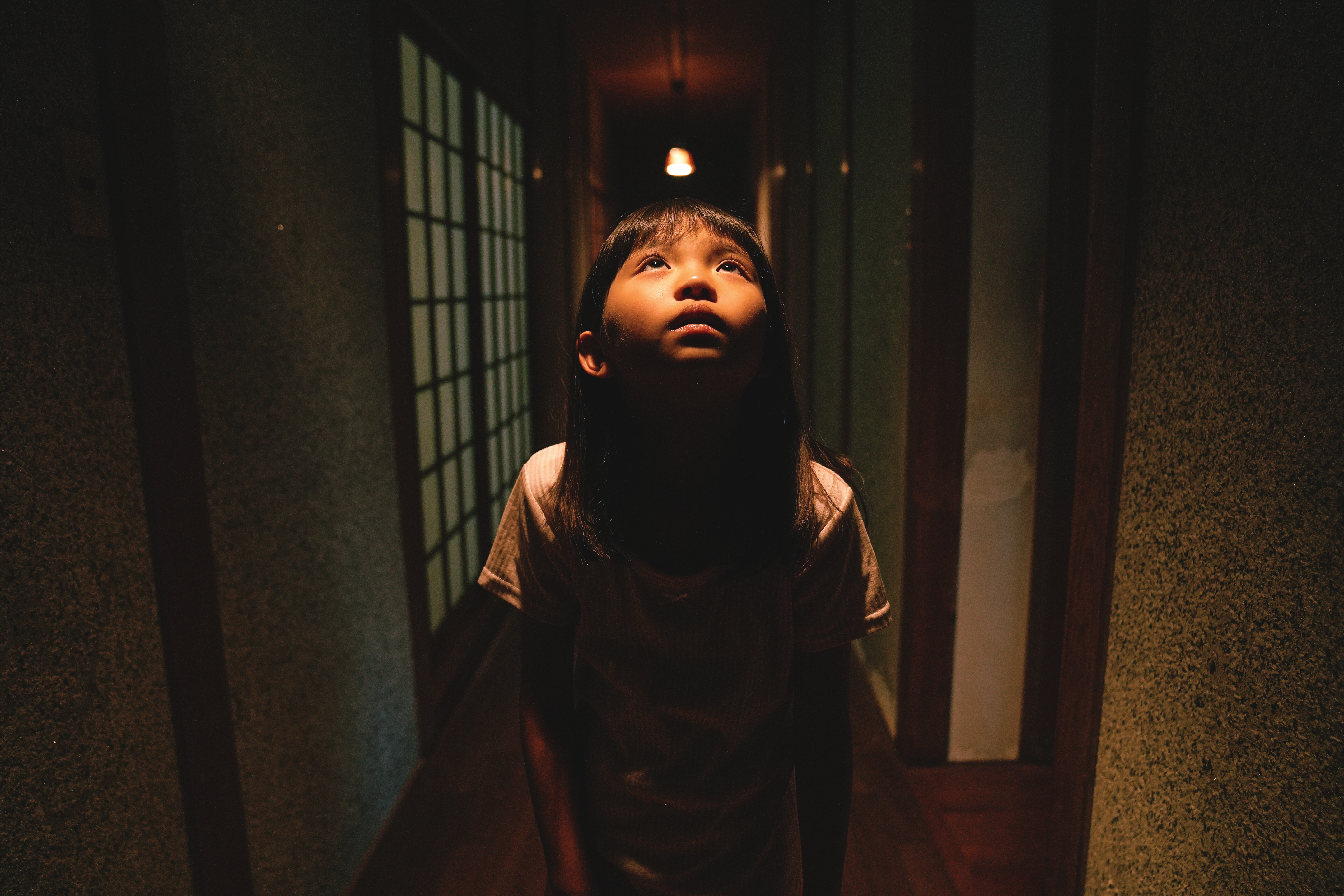
A young woman is confronted with an uncomfortable truth on return to her old hometown in Yuta Shimotsu’s eerie horror satire, Best Wishes to All (みなに幸あれ, Mina ni Sachi Are). Is there really a finite amount of happiness in the world or would there be plenty to go around if only we weren’t all so selfish? The unnamed heroine (Kotone Furukawa) claimed she wanted to become a nurse to “save people” but in the end starts to wonder if the only way to be happy in a cynical world is to meet it on its own terms. 

Even so, there’s something decidedly strange about her reunion with her grandparents. She notices them behaving oddly but isn’t sure whether to chalk it up to their age and not having seen them for a long time, only there’s something a little creepy in their overt “happiness” as they cryptically look up at the ceiling as if gazing at a higher power or suddenly start making pig noises before remarking that they should be happy as they eat their bacon that the animal has achieved its purpose in life. Meanwhile, for unclear reasons they forbid her from hanging out with a childhood friend who stayed in town to take over his father’s farm despite showing promise as an artist.

He too cryptically adds that he thinks there’s enough happiness in the world for everyone to have some without needing to hoard it, adding to the heroine’s unease as she tries to investigate the strange noises coming from behind a locked door in her grandparents’ home. Soon, she begins to discover what it is that makes them “happy” and is confused and appalled, unsure whether she should believe her eyes or has actually gone out of her mind in this already quite weird place. 

On leaving the city, she’d paused on a pedestrian crossing to help an old lady with her bags while a salaryman had knocked hers out of her hands by walking into her. She was the sort of person that thought it was important to help others or at least to be considerate, but is confronted with an uncomfortable truth in being asked if she can go on pretending that her happiness isn’t bought with the suffering of someone else somewhere in the world even if they aren’t exactly “visible” to her. She tries to revolt and reject the strange goings on at her grandparents’ but is told that it’s the way of the world, that it’s happening everywhere, and that really she knows but has chosen not to see because when it comes right down to it she’s as selfish as everyone else and isn’t willing to sacrifice her own happiness to “save” someone else from suffering.

Meanwhile, she realises that some families are being shunned in the village for resisting and these families largely are “unhappy”, though undoubtedly some of that at least must be down to their stigmatisation. She and her friend save a high school boy who was being bullied, but even he later relates to her that he’s decided to “live smart” by going along with the local practice even if it doesn’t seem right to him because it’s pointless to resist when everyone is doing it. Another rejectee also tells her that the village philosophy is a fallacy because even if someone “should” be miserable there’s no way to know how they really feel and if you’re only basing your idea of “happiness” on external validation then of course you’ll always be miserable. 

Confronted with a bizarre series of events, she begins to wonder if she’s going out of her mind and none of this is really happening even while pressured to submit herself to the ways of the village. In effect, she’s being asked to choose her level of comfort with complicity, acknowledging directly that her “happiness” is based on a quite literal exploitation, drained out of those less fortunate than herself. Her friend remained convinced that there is plenty of happiness to go around without needing to extract it from others, but the lessons she learns are more cynical, no longer stopping to help old ladies with their shopping and suspicious of those who do while proudly declaring herself “happy” with her new “reality”. Shimotsu excels in finding the eeriness of the every day in which an ordinary jar of miso or a workman’s tool box can seem to radiate evil while the grandparents’ ordinary house has an incredibly ominous atmosphere that raises a note of uncanniness in their “happy home” suggesting that their quasi-beatific state is more akin to curse than blessing. 


Best Wishes to All screens in New York July 27 as part of this year’s JAPAN CUTS.

Trailer (no subtitles)

THE FIRST SLAM DUNK (Takehiko Inoue, 2022)

Takehiko Inoue’s basketball-themed manga Slam Dunk is a ‘90s landmark that also spawned a hugely popular TV anime adaptation. A few attempts had been made over the years to produce a feature-length film, but Inoue had turned them all down until, that is, the production team were able to come up a unique look that matched the author’s vision and truly made it seem as if the characters were “alive”. Finally impressed, Inoue then agreed to script and direct the anime himself even going so far as to retouch scenes in both 3DCG and 2D to ensure they fulfilled his high expectations. 

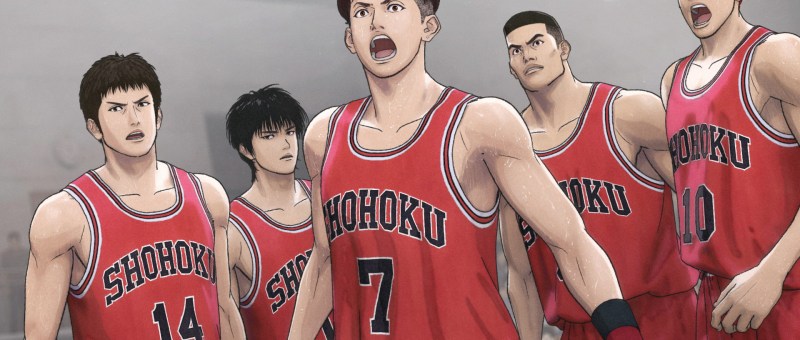
Titled The First Slam Dunk, the film takes place entirely over a single game but switches its focus from the protagonist of the manga, red-haired former delinquent Sakuragi (Subaru Kimura), to “Speedster” Ryota Miyagi who makes up for his short stature with nimble manoeuvres. Inoue cuts between the championship match with rivals Sanno and the players’ private lives as they battle their demons and insecurities on the court and off. 

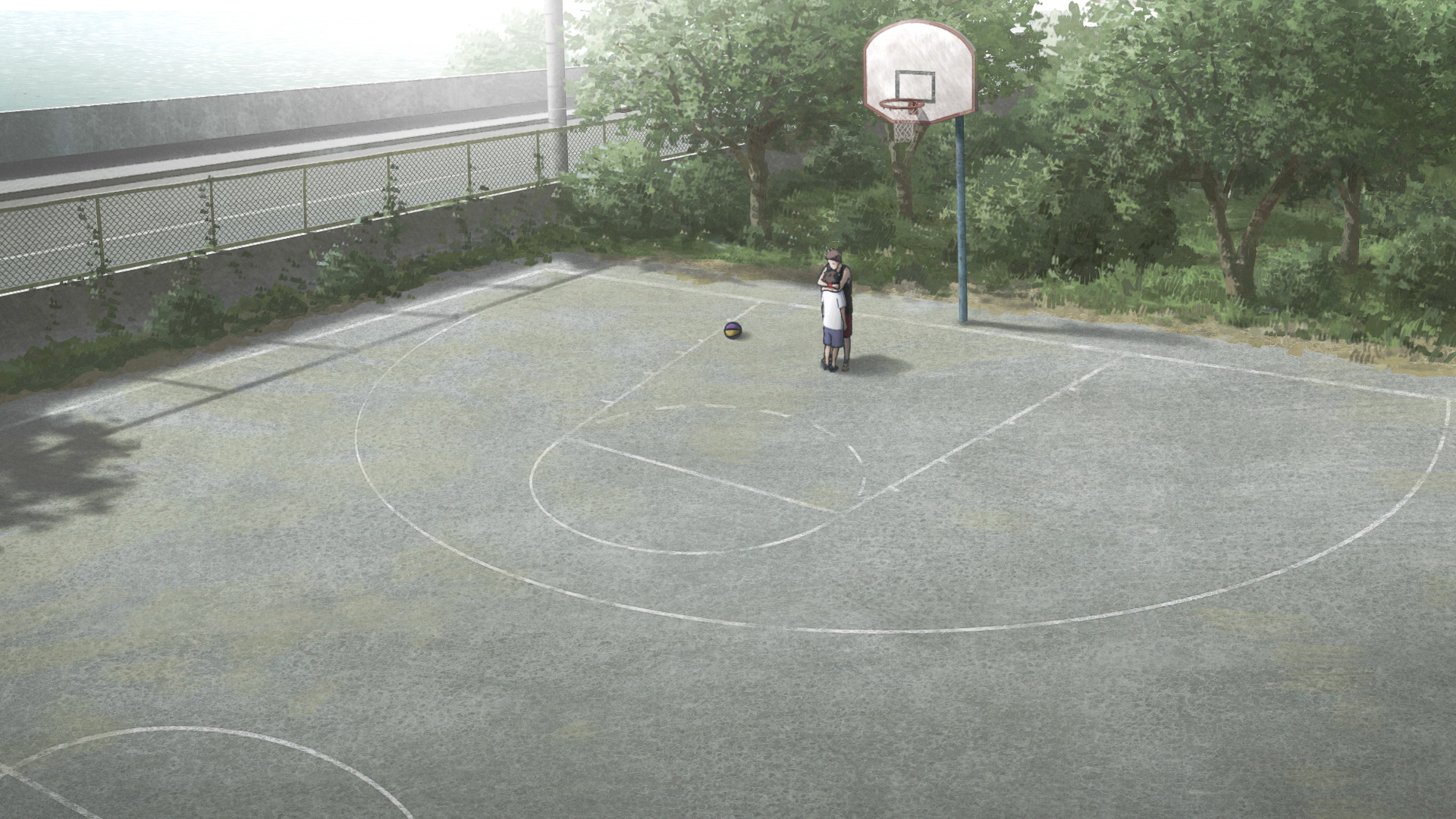
Originally from Okinawa, Ryota lost his father and brother in quick succession. Sota had been something of a mentor figure, getting him into basketball and encouraging him to keep playing even if others said there was no point because he was simply too small. When Sota chose to cut their practice short to go fishing with some friends, Ryota was of course upset and angry saying a few things he came to regret when Sota was lost at sea and never came back. “Cocky” as someone later describes him, Ryota uses bravado to mask his insecurity and struggles to redefine his relationships with his grief-stricken mother and younger sister while also competing with the shadow of his absent brother whose number he continues to wear even after moving to the mainland and joining a new high school team, Shohoku. 

As he later says, basketball was a means of dealing with his grief though it was difficult for his mother to support him because its associations with Sota. Showcasing the stories not otherwise told in the manga, Inoue taps into an adolescent sense of existential crisis and individual anxiety as filtered through the basketball game in which, as their quietly supportive middle-aged coach tells them, it’s only over when you decide to give up. Meanwhile, the guys from Sanno are experiencing something similar and most particularly Ryota’s opposing number, Kawata, even if the team is also given an edge of uncanny invincibility in the sometimes suspicious aura of their coach. 

Only by facing their individual anxieties can the guys begin to play a full role on the team, each of them as the coach says bringing their own unique talents and learning to play to each other’s strengths. In the end it comes down to willpower and self belief, continuing to play even when victory seems impossible and pressing for the final slam dunk even as the seconds tick down to zero. Inoue captures a real sense of tension in the game scenes, the dynamism of the 3DCG and the use of motion capture paying off along with some innovative creative decisions that really allow the game to come “alive” in the way Inoue seems to have envisioned with victory hardly assured as the guys go all out utilising not only their physicality but strategy and psychology in trying to claw their way back from 20 points behind with time fast running out. 

Very different stylistically from the average anime sports movie and particularly one following a previous TV adaptation, Inoue displays a truly remarkable sense of cinematic composition while he largely steers away from the kind of high school cliches common to the genre concentrating instead on strong characterisation and an otherwise poignant story of learning to live with grief as Ryota begins to become his own man while honouring his brother’s legacy. Often dazzling in its dexterity, Inoue’s directorial debut excels both on the court and off finding the small moments of doubt and confusion among each of its heroes and witnessing them achieve a psychological slam dunk that allows them to keep moving forward despite their fears and anxieties in refusing to give up even when it might seem hopeless. 


THE FIRST SLAM DUNK screens July 26 as the opening night gala of this year’s JAPAN CUTS and opens in cinemas in the US & Canada July 28 courtesy of GKIDS.