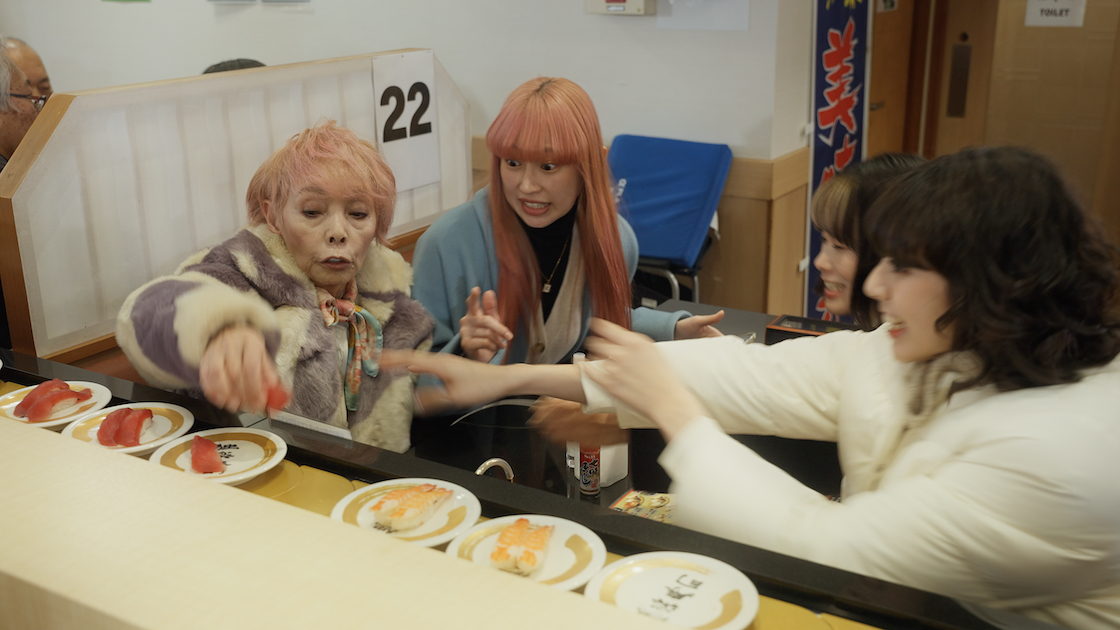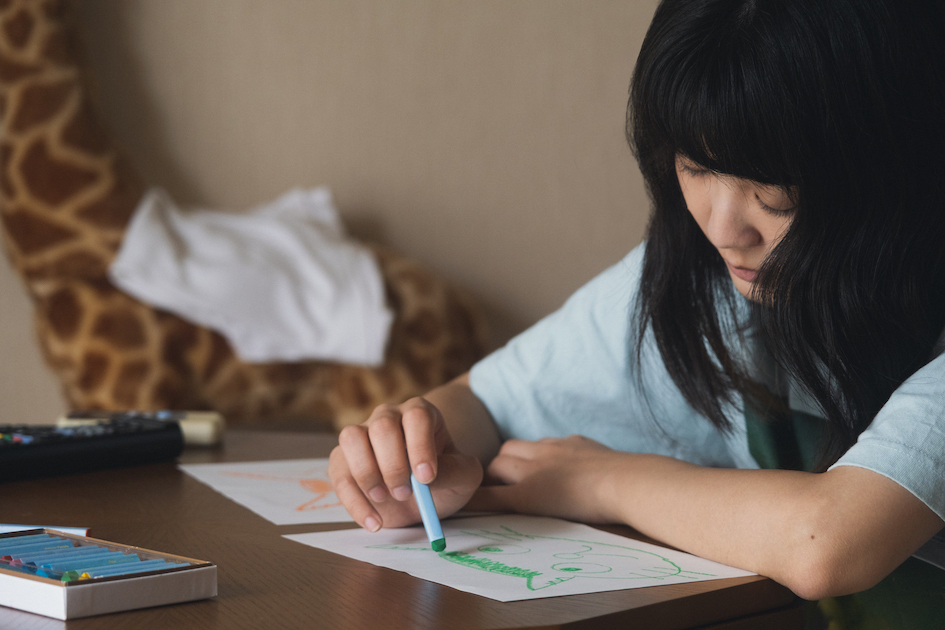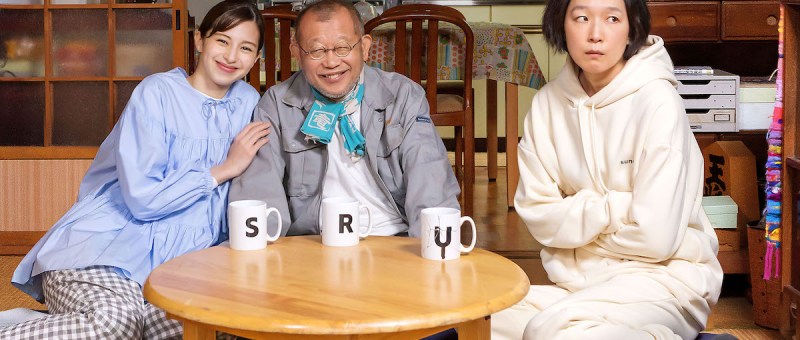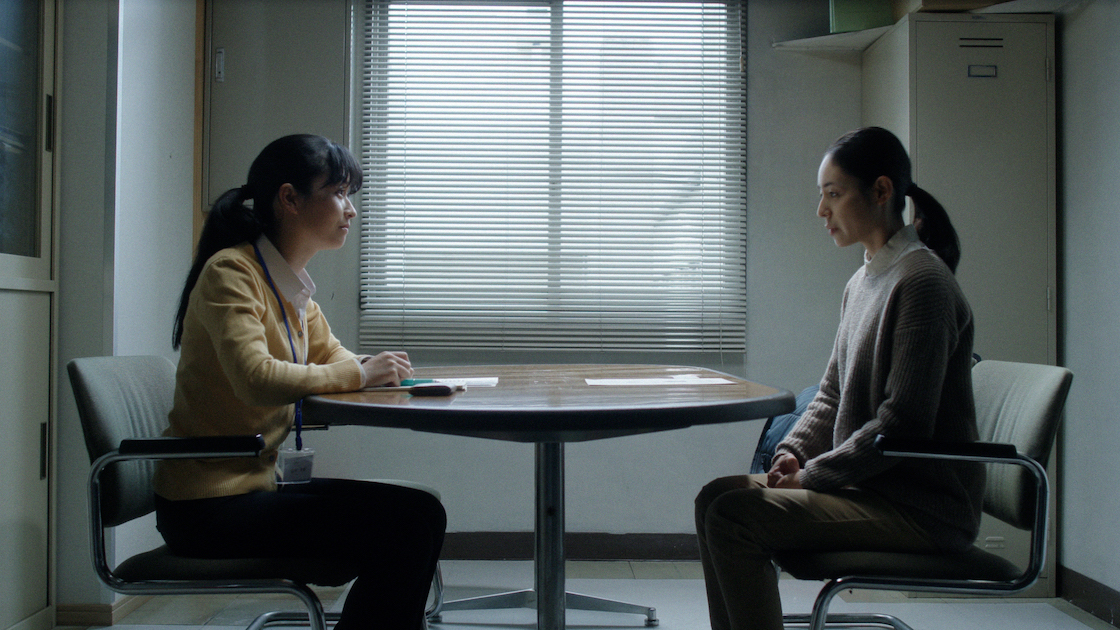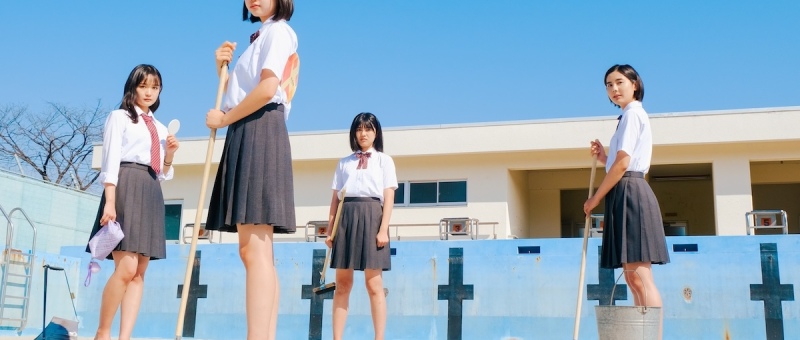
Saga Saga (緑のざわめき-Saga Saga-, Aimi Natsuto, 2023)

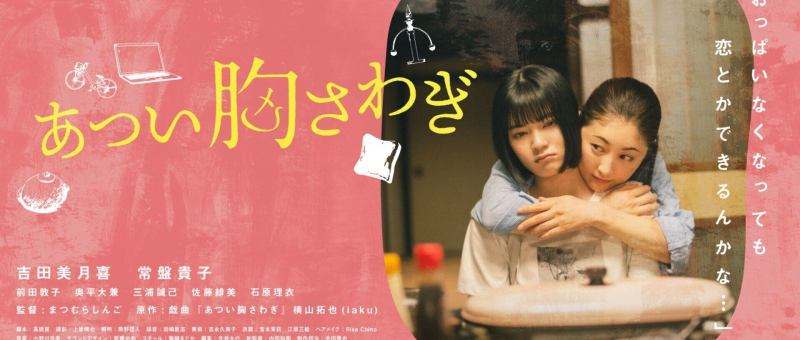
Three women contending with a legacy of patriarchal failure and male violence circle around each other in the picturesque hot springs resort of Ureshino in Aimi Natsuto’s etherial drama, Saga Saga (緑のざわめき, Midori no Zawameki – Saga Saga –). Less playful than Natsuto’s previous film Jeux de plage, the oscillating action takes on a poetic, mystical direction as the forces which bind the three women together eventually become clear while each in their own way tries to overcome a lingering sense of displacement and loneliness. 

The first of them, Kyoko (Rena Matsui), left Ureshino to become an actress in Tokyo but has given up performing and resettled in nearby Fukuoka where she runs into an old hometown boyfriend, Sotaro, who is currently sort of dating Eri, a woman he met on a dating app. Despite telling Kyoko he can’t stay long after reconnecting because he has a date with someone who is “not quite” his girlfriend, Sotaro ends up going to a love hotel with another woman, Naoko (Sae Okazaki), who frequents the bookstore where he works. Though it originally appears that Naoko is jealous of Kyoko and fears she’s missed her chance with Sotaro, we soon realise that she is in fact semi-stalking her for unclear reasons but actually wants to get in touch with someone else and eventually forms a telephone connection with Anna (Sara Kurashima), a high school girl currently living in Ureshino with her aunt, Fumiko (Asuka Kurosawa). 

In a way, they are all looking for something that seems to be missing in their lives. For Kyoko it seems to be something like the concept of home as she struggles with a series of sudden changes from the death of her mother two years previously to a brush with cancer in the form of an ovarian tumour she has recently had removed. Fumiko, who was a friend of her mother’s, tells her that she’s on a journey of self-reconciliation and there is indeed something in that as she works over the mysteries of her past while looking for new directions in her future. 

Meanwhile, she is plagued by strange dreams of being lost in a forest later telling a friend that she was once sexually assaulted in the woods when she was in high school and has the feeling the person who is chasing in her in her dream may be her father who left the family when she was a child. When she was receiving treatment for the tumour on her ovary, she began to ask herself why she had been born a woman forever subject to threat and patriarchal oppression. On her return to Fukuoka, she undergoes a very strange job interview in which she’s repeatedly assured that “being a woman” she won’t be asked to do anything “difficult” while it seems that being “attractive” is enough to get by in the beginning. Also they warn her that they don’t offer “great maternity leave or anything like that”. 

The lives of each of the women have been in one way or another overshadowed by male violence, but it’s Anna’s would-be-boyfriend Toru who is eventually victimised when he’s assaulted by a woman who wanted to bring back a problematic local festival cancelled because of a sexual assault. Toru had been in the forest to consult with some kind of mystic man trying to get him to conduct a ritual to get Anna to like him only to be told it doesn’t really work like that and you wouldn’t want it to anyway. After the assault it’s Toru’s life which spirals out of control when he’s blackmailed into acts of petty crime by the witch-like woman who forced herself on him, while Fumiko too is later forced to pay the price for having kept her secrets and for compassionate reasons attempted to hide the truth from those who most wanted to know.

Finally brought together on solving their individual mysteries, the three women settle on creating a home they can each return to, anchoring themselves as a family as a means of finding stability in a world which is so often in flux in defiance of the destructive forces which connect them. Even Eri admits that in reality she may have been looking for self-affirmation in her desire to find a dating app soulmate as her friends reflect on their terrible romantic experiences which, ironically, include being stalked. In the depths of its mysticism and eeriness, the film nevertheless ends on a note of serenity and the promise of moving forward if paradoxically by making a return. 


Saga Saga screened as part of this year’s JAPAN CUTS.

Original trailer (no subtitles)
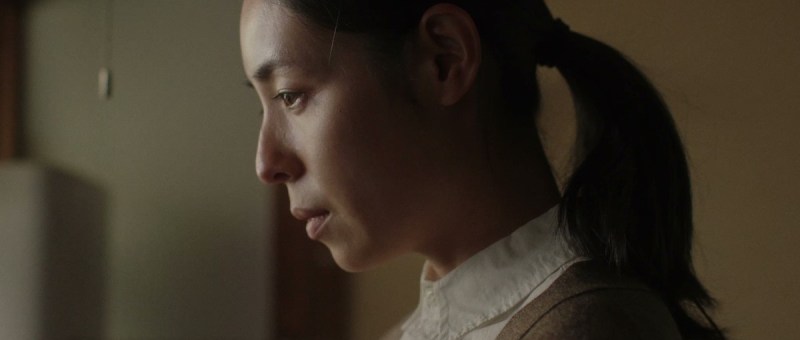
River (リバー、流れないでよ, Junta Yamaguchi, 2023) [Fantasia 2023]

Some might say time stands still in the “peaceful” hot springs town of Kibune, but on this particular day it’s more than usually true in Junta Yamaguchi’s followup to the cult hit Beyond the Infinite Two Minutes, River (リバー、流れないでよ, River, Nagarenai de yo). This time around, the staff of a hotel along with its guests find themselves trapped in an infinite two minute loop in which they retain all their memories but are constantly returned to where they were two minutes previously no matter what they do. 

Depending on the situation, two minutes can be an eternity or an instant (or perhaps it’s always both) and in this case there isn’t much you can do in such a short time. The hotel staff find themselves constantly running up stairs and through corridors trying to coordinate their actions while accepting that nothing is permanent and any changes they try to make to their situation will be wiped out in the next loop. A chef who is also apparently a science enthusiast cautions them against taking any rash actions seeing as they can’t know when time will start flowing normally again, though for some the opportunity to embrace guilty pleasures such as poking a hole in the shoji is too good to pass up. 

As for what’s causing it, no one really knows but as it turns out everyone has a reason they might want to stop time. For maid Mikoto (Riko Fujitani) it’s that she fears her boyfriend plans to move abroad to study French cooking while another pair of guests secretly wanted to ask each other favours but are having trouble plucking up the courage and a blocked writer consumed with guilt for having killed off a key character is glad he can finally take some time out only to be slowly bored out of his mind when faced with an eternity of nothingness. The irony is that people come to places like these precisely because they’re “boring”, free from the chaos and stress of their ordinary lives. Mikoto says as much while wondering if that’s why her boyfriend wants to leave, that he feels as if he’s stagnating in a place where nothing changes and time doesn’t flow and that while he could be “happy” here with her living an ordinary life there’d always be a part of him wanting more.

Still, having this additional time helps each of them find clarity and begin to resolve some of their worries and anxieties. Even if they had “more time” in the more conventional sense, they may never have been able to speak plainly but given the enforced constraints of the time loop in which they quickly run out of other things to do and are more or less forced to talk to each other, they are all able to come to some kind of accommodation with what’s been bothering them. The two male guests are able to clear the air after an argument, the writer comes to a new appreciation of his characters thanks to his own sense of despair being trapped in the loop, and Mikoto realises she’ll have to let her boyfriend go in the hope that he’ll circle back around to her in time. 

The complexities involved are unlike those in Beyond the Infinite Two Minutes given that time constantly resets so the only point of consistency is the initial position of each person though the infinite quality of the looping provokes an additional layer of existential questioning as each of the various protagonists is forced to ask if they’re really moving on with their lives or even notice that time is indeed flowing. The clue that something is continuing to move lies in the differing levels of snowfall in each of the loops hinting at the increasing depths of their despair as they realise that not even death might free them from the maddening cycle of repetition while accepting they’ll have to work together to figure out what’s going on and how to escape the loop. The farcical humour soon gives way to a more poignant sense of reflection but also to a renewed joy and excitement that the future might actually be fun too and maybe it’s less scary to go there than be quite literally stuck in the present for all of eternity.


River screened as part of this year’s Fantasia International Film Festival.

Original trailer (English subtitles)

The Cold-Blooded Trap (冷血の罠, Takahisa Zeze, 1998)

“This place is full of people like me” a violent criminal jeers, admitting that he’s killed “plenty” of women but not necessarily the one he’s being questioned about. There is indeed something eerie that seems to have taken over this small corner of Shibuya in Takahisa Zeze’s dark millennial thriller The Cold-Blooded Trap (冷血の罠, Reiketsu no Wana). “Strange things are happening here” another investigator notes, “someone’s malice has infected this whole place.” Yet the sense of haunting may be closer to home than it first seems as two men attempt to come to terms with a traumatic past by solving present mystery. 

Even the police seem to concede that the strange goings on are a “continuation” of something else. As we first meet him private detective Fujiwara (Sho Aikawa) appears to be following a young woman home from the station only as we later discover she hired him herself to watch over her because she had the feeling she was being watched. Fujiwara watches her enter her apartment building and then calls her to say everything looks clear on the ground, but a short time later a body wrapped in sheets is dropped from the roof onto the street below. The weird thing is that it’s the same building Fujiwara’s sister Noriko used to live in, only she took her own life and that of her child by jumping off the roof five years previously. 

Not only does Fujiwara feel as if he failed in his duty to protect his client, but he’s forced into a similar contemplation in his latent guilt surrounding his sister’s death. The most obvious reason for Noriko to have considered suicide was that her salaryman husband Hanazono (Hidetoshi Nishijima) had been having an affair with a work colleague, Yoko (Asuka Kurosawa), yet Hanazono refuses to accept responsibility and is convinced that Noriko was murdered by a mysterious serial killer stalking the streets of Shibuya. 

The irony is that we first think Hanazono is the faceless killer after watching him enter the woman’s apartment building, only to learn that he may have been investigating Noriko’s death. Later these assumptions are overturned again, but even he concedes that he seems suspicious. Wandering around the city at night, he runs into women alone who immediately see him as a threat and assume he may be a dangerous criminal who means them harm. The realisation first shocks him, but then gives way to a physical high in the adrenaline rush of fleeing the scene. He comes to the conclusion that he must get into the killer’s mindset in order to catch him and begins actively stalking people around the city, following them home and checking mailboxes to find out names. 

Fujiwara doesn’t trust Hanazono for obvious and understandable reasons, but even so he begins following him as Hanazono continues to follow the killer. Zeze opens the film with fuzzy 90s camcorder footage trained on the forecourt of a station from a balcony opposite. The camera follows a woman as she leaves, and Fujiwara behind her with eerie intent evoking the mild paranoia of millennial surveillance. Later Hanazono films his own POV walking through the midnight city, once again lending the streets a sense of lurking malevolence and dread-fuelled fatalism even before he arrives at his shocking destination. 

Yet we wonder if Hanazono is just a paranoid obsessive with his giant map of crime insisting that seemingly isolated incidents of violence are somehow linked. Before Fujiwara hears about the woman’s death on the news they were reporting on insolvent banks hinting at a financial anxiety in the contemporary society, and as the suspect Fujiwara later tracks down suggests there are lot of distressed or perhaps disturbed people around. The crimes may really be random, but they are also connected by virtue of being provoked by an anxious society even if as Hanazono admits there are several criminals behind them. Whether or not he gets the answer he seeks, Fujiwara will have to accept that he too bears some responsibility as Hanazono has perhaps already done even if desperate to deny it. “I’ve always been responsible” he admits while taking control over his life, only the elliptical structure of the film may imply otherwise. Dark and eerie, Zeze captures a sense of millennial dread in the streets of the capital filled as they are with “random” crimes and lurking killers in the haunting anxiety of constant threat.


Clip (English subtitles)

Hand (手, Daigo Matsui, 2022)

A young woman unwittingly meditates on emotional distance and the impossibility of intimacy while fixating on older men in an attempt to overcome her loneliness in feeling rejected by her father in Daigo Matsui’s contemporary Roman Porno, Hand (手, Te). Partly a critique of a misogynistic society, the film is as much interested in why old men like young girls as it is why Sawako (Akari Fukunaga) likes old men along with her general disdain for the various roles she’s expected to play. 

Sawako largely describes these as “life skills”, a brief flashback to the 20-year-old her wondering why weird old men suddenly took an interest in her when she left high school. The old guys make inappropriate banter with the woman behind bar that shocks Sawako in its crassness and leaves her wondering if she’ll be expected to “eco-exist” with men like these for the rest of her life. She decides if that’s the way it is she’ll need to equip herself which at 25 mainly involves adopting an ultra feminine persona, pretending to be stupid laughing at men’s rubbish jokes and giggling sweetly at every opportunity. Co-worker Mori (Daichi Kaneko) has, however, seen through her act especially as she doesn’t bother to put it on for him and is rather frank in her cynicism which gives her an air of authenticity that might in other ways be misleading. 

Meanwhile, she spends her time taking photos of middle-aged men and putting them in her scrapbook while sometimes going on “dates” with older guys. What soon becomes apparent is that she resents her family, with whom she still lives, and feels a little pushed out as if no one really cared about her only her younger sister Rika who in stark contrast to her is cheerful and outgoing. When she offers to make her father dinner, he doesn’t respond but apparently does when her sister asks. Sawako feels like her father thinks of her as “dark and boring” and assumes that he ignores her deliberately because he has no interest in her yet she ironically also ignores him, refusing her mother’s request that she accompany him to a hospital appointment petulantly suggesting he’d probably prefer it if Rika went. The truth is that they simply don’t know how to talk to each other, sitting far apart at the back of a bus like a couple that’s had an argument. 

A more age appropriate relationship with co-worker Mori seems as if it’s breaking down some barriers towards intimacy but finally leaves her additionally vulnerable as he too turns out to be a fairly weak, emotionally dishonest man despite his outward consideration for her. In contrast with the older men, his courtship had been coy, shyly asking to hold her hand and for permission before he kissed her while otherwise leaving her to take the lead though in the end he may not have been much different. One of the older gentlemen ironically describes her as “insecure” yet misreads her insecurity as sexual rather than emotional only for her to let the mask slip and bite back, frankly telling him that it can be “rude” to treat a woman like a girl and that his dismissiveness is offensive. If all he sees in her is “youth” then he should just date a naive teenager instead.

“Youth” may be the answer to her question about why old men like young women, something confirmed by her date’s sighing that he finds dating her “nostalgic” as if he were young again too. But what she was looking for was warmth, the closing of an emotional gap of the kind that Mori proposed when he asked to hold her hand but never really followed through on. Then again, as another said she does indeed have a habit of running away, rolling her eyes at the idea of seriousness in an attempt to mask her fear of intimacy and treating everything as a cynical joke to avoid facing reality. “Whatever you do you have to engage with people” her similarly reticent father tells while beginning to break the ice, slowly closing the gap in extending a hand across it that provokes an emotional breakthrough. Quietly poignant in the slow motion of its heroine’s gradual liberation, Matsui’s otherwise biting take on contemporary patriarchy and follies of old men nevertheless allows her to reclaim herself in opening up to others.


Hand screened as part of this year’s JAPAN CUTS.

International trailer (English subtitles)

Ghost Man (幽霊男, Motoyoshi Oda, 1954)

Employees at a small nude modelling agency find themselves in the firing line when a “bloodsucking painter” escapes from a psychiatric institution in Motoyoshi Oda’s adaptation of Seishi Yokomizo’s Ghost Man (幽霊男, Yurei Otoko). Though produced by Toho and helmed by the director of The Invisible Man, the film does not particularly make use of special effects and as it turns out, Ghost Man is just a creepy name for a weird villain rather than an accurate description of a supernatural threat. 

Even so, you’d expect someone who runs a modelling agency to be on high alert after hearing that a crazed painter who is a danger to women is on the loose, but the manager of the Mutual Art Club simply assumes it must be an eccentric artist thing when he’s presented with a business card from “Ghost Man” Sugawa. Ghost Man is dressed in an unsettling outfit and is immediately rough with the model he picks out, Keiko, all of which you would think would have the manager thinking twice about allowing her to go with him. Some of the other girls urge her to turn the job down, but Keiko is the breadwinner for her family and work has been thin on the ground so she agrees to take it only to realise Ghost Man does indeed intend to kill her on arrival at an abandoned house way out in the country. 

“What a single woman has to do to earn a living, it’s both thrilling…and terrifying,” one of the other women, Ayuko, tells her boyfriend Ken (Yu Fujiki) after she quits the agency to become a stripper and decides to take to the stage despite knowing that Ghost Man may try to kill her during the show. Her words hint at a transgressive frisson of danger which she at least has chosen to embrace, an icy glint in her eye as she encourages Ken to pay close attention to her performance which she claims will be “wonderful”. Nevertheless, it also makes clear that the work the women do at the agency is necessarily unsafe given that it involves travelling to the home of a man they don’t know where they will be expected to undress. 

For reasons the film doesn’t quite explain, the models are also members of the “Bizarro Enthusiast Club” led by Dr. Kano (Joji Oka) who is the head doctor at the psychiatric hospital from which the bloodsucking painter, Tsumura (Ren Yamamoto), escaped. Meanwhile, Dr. Kano also seems to have a sideline in taking the girls to remote locations for nude photoshoot parties. In all honesty, he’s quite suspicious especially seeing as he seems to instinctively know how to open the tricky door at the abandoned house where Keiko’s body is found. Then again, we’re also told that Tsumura was once a member of the club with at least some suggesting that he ended up getting too into the bizarre and going out of his mind to the extent that he began committing weird acts of crime of his own. 

The lesson might be that getting overly obsessed with the occult and esoteric is unhealthy, only it turns there’s something else going on entirely that isn’t really about anything “weird” but caused by completely banal negative human emotions resulting from spurned romantic interest and the fear of parental disappointment. This being a Kindaichi mystery, the famous detective soon makes his appearance (played by a hardboiled Seizaburo Kawazu) only in a less eccentric guise and accompanied by a more efficient Todoroki who assists him as he begins to put the pieces together to solve the mystery. 

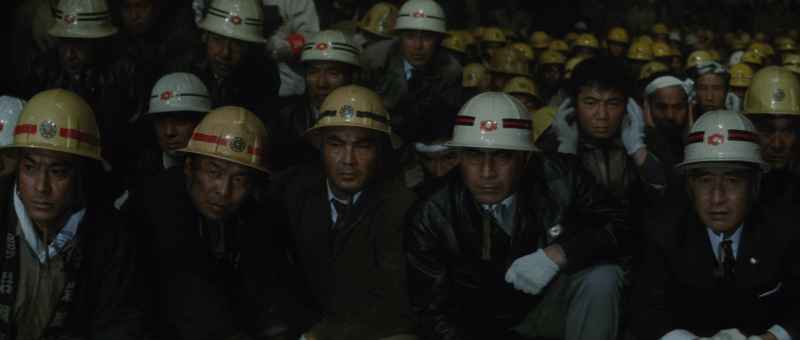
The villain may be taking advantage of a historical moment in allowing others to think his face is bandaged to disguise a disfigurement like those of many men wounded in the war, as was the case in another Kindaichi case The Inugami Family, but is also harking back to the Invisible Man while his accomplice adopts a much more “monstrous” appearance with buck teeth and the two missing fingers on his hand along with the insectile movements that play into the spider-themed finale. Oda has a lot of fun with the villain’s Phantom of the Opera-esque antics which include recording a tape to taunt the police along with a public announcement of “Act 3” of his ongoing drama to be staged at the “Reijin Theatre” which literally means “the beautiful lady show” but is also a minor pun that makes it sound a little “Ghost Man Theatre” in true B-movie villain fashion. Even so, there’s an underlying darkness in the serial killer drama most particularly in the scrapbook the villain makes with photos of the dead women posed and titled as works of art as if they were never any more alive than the mannequins he often substitutes for them. Striking in its set pieces and unsettling design, Oda’s strange drama is surprisingly nasty and actually quite cynical even as it unmasks its villain as little more than a ghost of man who hid behind the spectre of unease to mask his cowardice and insecurity.


The Three Sisters of Tenmasou Inn (天間荘の三姉妹, Ryuhei Kitamura, 2022)

Caught in a space of existential limbo, a young woman struggles with the uncertain nature of life. What’s the point of living in a world that might end, she asks herself, seemingly not having realised that it’s as it always was, the world is always ending and may blink out at any given second. Ryuhei Kitamura’s adaptation of the manga by Tsutomu Takahashi The Three Sisters of Tenmasou Inn (天間荘の三姉妹, Tenma so no San Shimai) plays out a little like a mashup of Hirokazu Korea’s Afterlife and Our Little Sister, but ultimately meditates on how to live on in the shadow of loss.

After all, as the relentlessly cheerful heroine Tamae (Non) later says, life is hard but the world is not so bad and everyone has their part to play. That’s something she discovers for herself after falling into a coma following a traffic accident and arriving at Tenmasou Inn in the picturesque seaside town of Mitsuse. As is explained to her, the inn exists in a liminal space between Heaven and Earth where those caught between life and death are expected to make a choice on their direction of travel. 

But Tamae begins to enjoy her time at Tenmasou in part after learning that the owner’s daughters, Nozomi (Yuko Oshima) and Kanae (Mugi Kadowaki), are her half-sisters. They are fully aware of their liminal status and that unlike Tamae they can never return to the mortal world or make any kind of life for themselves in Mitsuse where time stands still. Nevertheless, Tamae’s relentless cheerfulness and knack for human empathy prove key assets, beginning to return an energy and warmth that has those around her giving new thought to their cosmic inertia and if it’s really possible to go on living in a constant state of timelessness. 

Tamae might want to stay, experiencing for the first time the sense of family that she’s searched for all her life. She considers giving up the rest of her time to stay with them, but is reminded that no one can stay in this transient place forever while this version of Mitsuse which seems to hang over the “real life” town may soon disappear. Those who live there describe it as like living in a dream, a confusing simulacrum of life in which no time passes. There are those who make the eventual decision to pass on towards rebirth while others opt to stay, still having unfinished business or perhaps just not quite yet ready. 

Recalling the 2011 tsunami, the film touches on the difficult subject of survivor’s guilt and how to come to terms with loss on a mass scale while Tamae tries to process what it means to live and to not to. She resolves that “people don’t end when they die” but live on in the memories of those who remember them, though her conviction that she must live on as a kind of conduit for the souls of others may also rob her of a degree of her selfhood in her own right to live simply as herself.

Even so as she admits life is hard. An old woman suffering with liver cancer who had been blind for many years looks for beauty in the afterlife only to be reminded that there are beautiful things everywhere if you take the time to look. She too has had a life of sadness, but discovers that it might not be too late to make up for lost time, while a very young woman who felt herself to be alone learns that she has a friend and there are those who care for her even she did nearly burn the inn down in a fit of temper. Unabashedly sentimental, the film is as much about moving on as it is about learning to live in the present as the various guests contemplate whether to return to the world of the living with all of its pain and loneliness, or proceed to that of the dead knowing that there’s no guarantee the next life will be any better. Melancholy but also in its way uplifting, Kitamura’s empathetic drama eventually settles on a note of poignancy in which the act of living becomes its own memorial and defiant act of remembrance in the face of constant and unexpected loss.


The Three Sisters of Tenmasou Inn screens in New York Aug. 6 as part of this year’s JAPAN CUTS.

Original trailer (English subtitles)

Mad Cats (Reiki Tsuno, 2023) [Fantasia 2023]

The captive felines of Japan are mad as hell and they aren’t going to take it anymore in Reiki Tsuno’s absurd action comedy, Mad Cats. Sick of mistreatment and exploitation at the hands of humans who breed them for sale, these cats have transformed into a cult-like band of vigilantes thanks to a forbidden ancient Egyptian catnip that grants superpowers unearthed by a cat-loving Egyptologist who has been missing for the previous two years.

Mune (So Yamanaka) had been the responsible brother and in his extended absence, Taka (Sho Mineo) has become an irresponsible layabout behind on his rent and surrounded by old food cartons. A cassette tape delivered in a letter addressed only with his first name alerts him to the fact his brother is being held captive in a place where they once found a black cat and needs rescuing while he should also make sure to pick up a small wooden box on his way. Taka jumps straight on his bike, but unfortunately is not the sharpest knife in the drawer and finds himself ill-equipped to face off against the Mad Cats who are only more annoyed when he makes off with the their secret stash of forbidden Egyptian catnip.

Despite becoming anthropomorphised the cat women (they are all female cats) still behave in noticeably feline ways with their strange grins and vacant eyes not mention to weird head tilts and cat-like gestures such as pawing the air or slapping an opponent when otherwise not armed with axes or nunchucks. Later Taka is joined by another mysterious woman, Ayane, who apparently once belonged to the same cat lady cult but is somehow immune to the catnip aside from having become human and is determined to stop the others from going too far on their quest for revenge against human cruelty. 

Perhaps you can’t really blame them for that, though their vengeance does take on a rather ironic quality as they keep Mune tied up in a cage and force him to eat like a cat hunched over on his knees with his hands bound. Meanwhile, Taka teams up with a homeless man who is also enjoys cat food and is forever complaining that he’s not supposed to be here he just got swept up in some bizarre events while minding his own business. Takezo (Yuya Matsuura) also seems to be somewhat displaced, estranged from his wife and family and like Taka is looking for a way to go home even if he didn’t have running away from mad cats on his bingo card. 

The pair of them go through a training bootcamp thanks to Ayane but otherwise continue to flounder, forgetting everything they’ve learnt and cowering cartoonishly when faced with a marauding cat hoping Ayane will arrive to save them after all. Then again, they aren’t particularly bothered about trying to save the corrupt pet shop owners who callously breed cats for sale in poor conditions to possibly unsuitable people, perhaps sympathising with their concerns as genuine cat lovers reevaluating their thinking around pet “ownership”. 

Rounding out the absurdity, Tsuno adds in a series of action set pieces featuring cat-like choreography as Ayane squares off against the rest of the Mad Cats who are otherwise dressed in eerie white gowns like the members of a bizarre cult living an isolated existence in the mountains. From the cassette tape to the roller diner where Taka and Takezo are first attacked, the film has a quirky, retro sensibility that is perfectly in tune with its absurdity even as the guys drive around a borrowed car that has a registration plate reading “killer blow” while tracked by the seemingly unstoppable Mad Cats who, as we later realise, really do have nine lives. There is something quite touching underneath the strange allusions to Egyptian cat gods, superpowered catnip, and vengeful felines in the strength of the relationships not just between the brothers but between cats and their guardians despite the vengeful mission of the Mad Cats who reject their captivity by ridding themselves of irresponsible cat traffickers. Deadpan and surreal, the film has an infectious sense of fun in its boundless inventiveness and quirky composition while also carrying a more serious message about animal cruelty and responsible pet guardianship in a world in which even the lives of living creatures have been commodified.


Mad Cats screened as part of this year’s Fantasia International Film Festival.

Teaser trailer (dialogue free)

From the End of the World (世界の終わりから, Kazuaki Kiriya, 2023)

Charged with the responsibility of saving the world, a teenage girl wonders if she should in Kazuaki Kiriya’s pre-apocalyptic drama, From the End of the World (世界の終わりから, Sekai no Owari kara). After all, the suffering will continue. People will continue to be cruel and selfish. Maybe it’s better to let humanity fizzle out and least save the planet. But really whether any of this is “real” or not, what’s she’s looking for is an escape from her grief and loneliness and a world that is a little kinder and less self-destructive. 

Shortly after losing her grandmother, who had been raising her after her parents were killed in a car accident, Hana (Aoi Ito) begins having strange dreams where she’s cast back to what seems to be feudal Japan where she meets a young indigenous girl whose family have been wiped out by marauding samurai. The girl’s guardian, an older woman (Mari Natsuki), explains to her that her arrival in this place has been foretold by some kind of scripture painted on the ceiling of a cave and that her duty is to deliver a letter to a shrine. Not too long later, she’s accosted by some kind of mysterious authority which seems very interested in her dreams, eventually taking her to a strange base in another cave where she meets an old woman (also Mari Natsuki) who looks exactly like the one saw in her dream. The world will apparently end in two week’s time, though she alone has the ability to alter what has been written through the power of her dreams which allows her to change people’s thoughts and thereby rewrite their destiny. 

She does not do this deliberately, but reacts instinctively to the events she encounters which the old woman claims exist in the “Sea of Sentiment”, a great confluence of human thought on which the world is built. “Understanding things is overrated. Everything’s an illusion. What’s important is your feelings,” another mysterious presence (Kazuki Kitamura) tells her, a man who exists between dream and reality and would rather the world end because as long as it exists he cannot die. In some respects, he may represent Hana’s depression suggesting that to continue to live is only to prolong her suffering and that it’s better for everyone to simply give in and let fate take its course while she weighs up kindness and vengeance using her newfound powers for “selfish” reasons to end the torment she’s been suffering at the hands of a bullying classmate who’s long been blackmailing her in taking advantage of her precarious position as a financially disadvantaged orphan. 

The quest that the old woman sends her on is really into the depths of her own heart which is wounded not only by a medical issue she seems to have forgotten but a pair of childhood traumas buried behind a door she did not want to open. The real message that she’s supposed to deliver has its own paradoxical sense of poignancy, “from the end of the world to you in the future”, which signals her nihilism and despair but also a desire for some kind of continuation or rebirth in a better, kinder world less marked by suffering or selfishness. Then again, the way of achieving that world is still rooted in violence only of a more knowing kind that heads off one particular kind of disaster and allows Hana to save “herself” in all her incarnations, but perhaps doesn’t do very much to change the human “foolishness” to which the old woman ascribes humanity’s destruction.  

Logically, it doesn’t quite hang together and not all of it makes sense (understanding things is overrated), but it has its own kind of internal consistency even if at times somewhat incoherent as it well might be if it were all the dream of a lonely teenage girl who’s given up on the idea of a future for herself because her life has been too full of suffering and unfairness. It’s no coincide the date of the end of the world is set for the same day as her high school graduation ceremony. Her world really is ending if in a less literal way leaving her all alone and forced into a more concrete adulthood while her peers get to chase their dreams a little longer by moving on to higher education while she’ll have to look for work to support herself. She may feel that nothing she does makes any difference and that she is powerless to change her fate, but also realises that she is not as alone as she thought. Featuring top notch production values and some striking production design, Kiriya’s sci-fi action drama is quietly touching in its final resolution that despite everything Hana still wants to love the world even if it’s making it very difficult. 


From the End of the World screens in New York Aug. 5 as part of this year’s JAPAN CUTS.

Teaser trailer (no subtitles)

Under the Turquoise Sky (ターコイズの空の下で, KENTARO, 2021)

An aimless young man unexpectedly embarks on a spiritual journey after being sent to Mongolia to look for the daughter his grandfather left behind 70 years previously when he was a prisoner of war in the dreamlike debut feature from actor KENTARO, Under the Turquoise Sky (ターコイズの空の下で, Turquoise no Sora no Shita de). A circular tale of longing and abandonment, the film is both a charmingly surreal road movie and a poetic meditation on time and memory amid the infinite expanses of the Mongolian Steppe. 

Our guide is “horse thief” Amaraa (Amarsaikhan Baljinnyam) who cheerfully rides off on a stallion owned by the ageing Saburo (Akaji Maro) only to be chased down by police officers in much the same way he will be again on his return to Mongolia. Saburo jokingly asks him if he meant to ride all the way home and perhaps he did, in a way. Falling asleep in the van he later shares with Saburo’s grandson Takeshi (Yuya Yagira) he dreams of stealing an old lover away from her wedding to another man replying only that he’s been “busy” when she asks why he made no attempt to contact her during the previous three years. One might also ask why Saburo never returned to Mongolia and the woman and child he left behind, but perhaps there is no real reason save life and then it was too late. Now close to the end of his days, Saburo charges Amaraa with the mission of tracking his now 70-year-old daughter down taking the spoilt and selfish Takeshi with him in the hope that he will spontaneously discover purpose in his life. 

There is something quite poignant in the melancholy strains of My Dear Companion accompanying the van’s passage along a lonely Mongolian road, a song that at least in its more modern version is a lament for lost love and a yearning for one who seems to have disappeared to a distant land no longer caring for those they once loved. The other frequent refrain is that of Beautiful Dreamer which similarly hints at the impossibility of romantic resolution particularly as it plays over Amaraa’s fantasy of reclaiming a love he once left behind. On arrival in Mongolia, Amaraa quickly reverts to traditional dress, dismissing the driver Saburo has hired for them along with his fancy car to take off in a much more ordinary van stopping every so often to ask everyone they run into if they’ve ever heard of a woman named “Japanese Tsermaa” until getting some helpful directions from a traditional shaman with a surprisingly familiar face. 

Unable to speak the language, Takeshi mostly looks on amused but soon discovers that words are often superfluous. Amaraa even at one point has a totally wordless negotiation with a fellow nomad over borrowing his motorbike and sidecar when the van inevitably breaks down. Suddenly left alone in the expanses of the Mongolian Steppe, Takeshi enters a kind of dreamscape and almost lives his grandfather’s life over again after being taken in by a pregnant woman who gives him Mongolian clothing and shares with him the local food, but the outside world soon comes calling and just like his grandfather he leaves behind a woman and child along with the sea and the sky having experienced some kind of enlightenment that shakes him out of his hedonistic aimlessness. 

But then it’s almost as if it never happened at all. He simply takes his grandfather’s place while the wheel keeps on turning. Workers in his grey office block shuttle about like ants in an ant farm even if, as we gradually realise, united under the turquoise sky that stretches from Mongolia though fading as if goes. Unexpectedly moving in its moments of reunion, the film makes the most of the beautiful Mongolian landscape shot a stunning 8K while exploring the warmth and hospitality of the local people who share their culture with a bemused stranger who finally gives himself over to their dance. “What’s important is that we’re together now” Amaraa tells the woman in his dream, hinting at the impossibility of his circular journey and the poetic yearning that underlies these various stories of lost love some eventually recovered at least in part but others left to echo on the breeze as faint memories of other lives painfully unlived.


Under the Turquoise Sky screens in New York Aug. 4 as part of this year’s JAPAN CUTS.

International trailer (dialogue free)

The Possessed (妖婆, Tadashi Imai, 1976)

Shinto priests, black magic, and demonic possession. As the opening voiceover of Tadashi Imai’s The Possessed (妖婆, Yoba) remarks, you can hardly believe that such things could happen in the modern world alongside cars, trains, and telephones yet the tale we’re about to be told begins in 1919. Based on a story by Akutagawa, the film is however less a contemplation of ancient superstition amid rising modernity than the destructive patterns of class and patriarchy which conspire against the lives of two women who had once been good friends. 

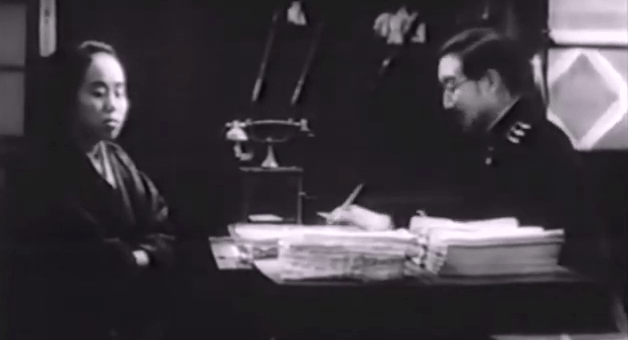
In 1919, Shima (Machiko Kyo) marries Shinzo (Shinjiro Ehara) who has taken her name and become the presumptive heir of her family. Everyone at the wedding remarks on what a good catch he is, adding almost as an after thought that Shima seems happy about it too. The problem is that Shinzo is repeatedly unable to consummate the marriage. Part of this seems to be down to his wounded masculinity in having married into the family. He resents being under the thumb of his father-in-law along with the rumours that he only married Shima for her money even though this appears to be exactly what he has done. Perhaps further humiliated by his inability to perform, Shinzo tells Shima that it’s her fault because there is something wrong with her body that prevents him from becoming sufficiently aroused. Being a sheltered woman of the Taisho era, Shima wonders if her husband has a point and visits a doctor to find out but as expected he tells her there’s nothing at all wrong with her and it’s most likely Shinzo’s performance anxiety that is to blame. 

However, when her cousin Sawa’s (Kazuko Ineno) comb is found inside Shinzo’s kimono sleeve, the family begin to realise that the problem is he prefers her. He later admits as much and reveals that he’s planning to move closer to the family’s goldmine in Hokkaido and install Sawa in a house there as his common law wife with Shima left behind as a spouse of symbolic value. Shima has already felt herself haunted, but it’s at this point that the family brings in a Shinto priest who explains that Shinzo is possessed by an evil spirit though also giving the more rational advice that she should probably divorce him. Shima is forced to endure a strange ritual including purification by waterfall, but is also sexually assaulted by the randy priest though it it’s not completely clear that she fully realises what has happened to her. 

The implication is that the family treated Sawa as a kind of poor relation they trotted out to keep Shima company because she was an only child. Having grown resentful of Shima’s class privilege, Sawa’s jealousy manifested as covetousness that made her intent on taking whatever Shima had. She too later resorts to shamanistic black magic, fearful that Shima bears her a grudge for ruining her life and hoping to neuter any dark energy that she might be emanating in order to protect her teenage daughter Toshi (Miki Jinbo) who, ironically, has been betrothed to the son of a kimono shop named Shinzo (Taro Shigaki). 

Sawa never married and bore her child out of wedlock. She implies that she depended on men for financial support but never elaborates further. Shima, meanwhile, has been able to build an independent life for herself as a well-respected tailor. “It’s not normal for someone to suffer this much” a shamanically-inclined midwife later tells her when she too becomes pregnant out of wedlock but loses both the child and the man. The boot is perhaps on the other foot, Shima envies the life Sawa has with the one thing that will always be denied her, a child of her own. The midwife had once again told her that she was possessed, this time by the vengeful spirit of her lover’s daughter with his legal wife she fears may have been drowned deliberately by her mother out of jealousy. 

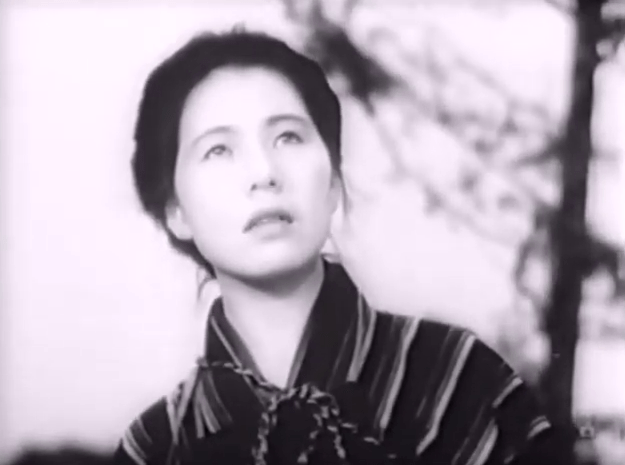
Shima is given a talisman of beads from the goddess of mercy, Kanon, and told that she can have what she wants if she prays hard enough, but Sawa is told the same thing and ends up going too far with the help of a shamaness praying to Basara Okami who later affirms that Sawa’s request comes with a price for the god wants Shima as a human sacrifice which is not really what Sawa had in mind. There is perhaps something symbolic in Shima’s gradual wasting away, becoming old before her time in her loneliness and sorrow (she is only supposed to be 33 at the film’s conclusion, actress Machiko Kyo was 52 at the time) even if she were not having the life force sucked out of her by a supernatural entity, though both women eventually pay a heavy price for their jealousy set against each other by a fiercely patriarchal and classist society which forces them to compete for husbands and standing. 

Imai’s photography is noticeably eerie if occasionally surreal as in the frequent and increasing sight of frogs, usually sign of good fortune or fertility but here ominous harbingers of supernatural dread in league with dark shamanistic forces. As the voiceover admits, it’s difficult to believe that these primitive ideas can exist side by side with the motor car but then again jealousy is as old as time itself and unlikely to disappear from the human psyche anytime soon even if in this case it could have been avoided if only the world were a little more equal. The film’s conclusion suggests it may now be, in a way, with a love match in the younger generation bringing the cycle of envy and resentment to a close even if the vengeful ghost of Shima may still be lurking somewhere in the shadows.