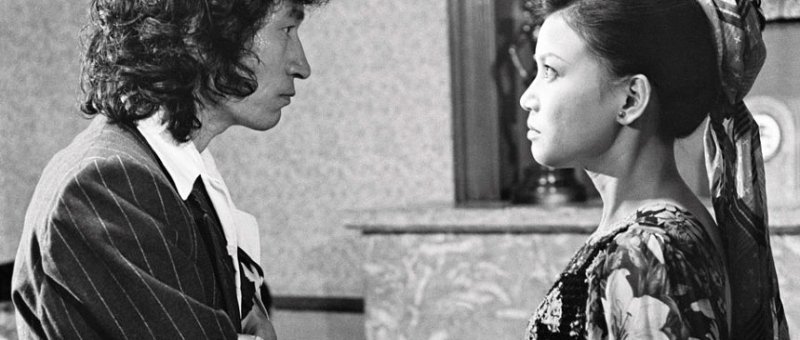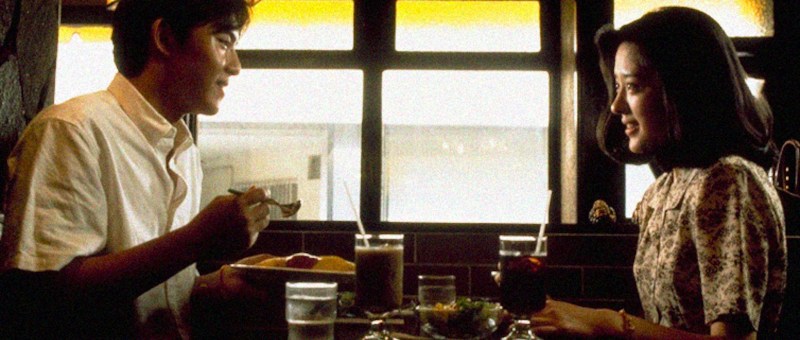
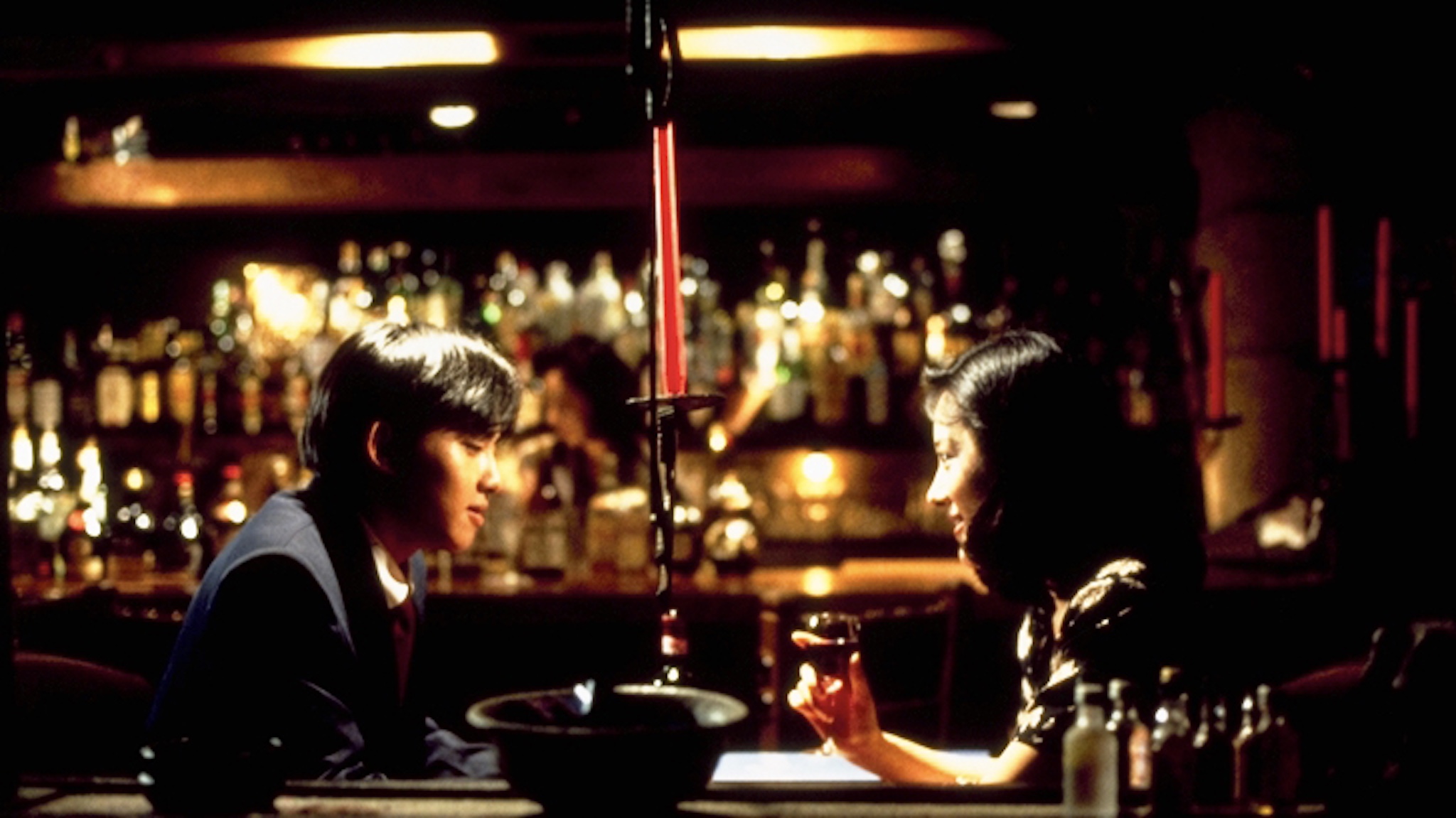
Female Prisoner Scorpion: Death Threat (女囚さそり 殺人予告, Toshiharu Ikeda, 1991)

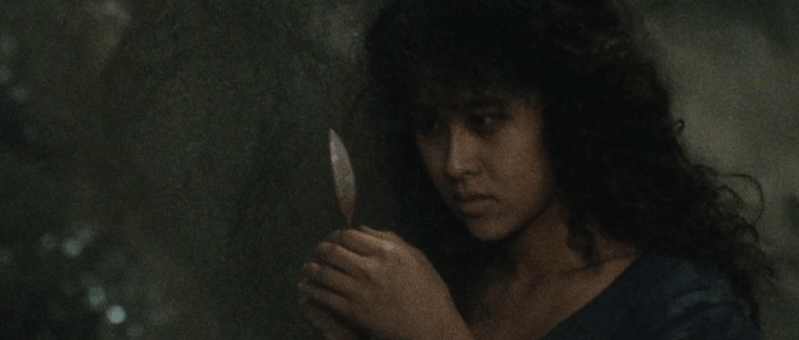
It had been 14 years since the conclusion of the rebooted Female Prisoner Scorpion series and 18 since the iconic Meiko Kaji had stepped away from the role when Toshiharu Ikeda decided to resurrect the iconic Nami Matsushima for Toei’s V-Cinema line. Ikeda was reportedly a fan of the original series and put his name forward to direct with the intention of getting Kaji to return as a now middle-aged Sasori but she turned him down flat so they instead embarked on a quasi sequel in which the original Nami has died and another woman slowly takes her place to become the next incarnation of the legend.

Consequently, Scorpion is not the protagonist of this film that otherwise bears her name. Cast in the lead role of a nameless hit woman, Natsuki Okamoto was then a popular pinup model known as “High Leg Queen”. The film opens with her emerging from a barrel of concrete after being dumped by a group of men who had gang raped and then left her for dead. She’s then rescued by a yakuza, Kaizu (Minori Terada), who teaches her how to kill and is effectively her handler. After posing as a bigger to knock off an obnoxious businessman, he’s recruited by Goda (Kenji Imai), the former warden prison stabbed in the eye (though not by Nami as he claims here) in the original trilogy but now a local councillor with aspirations of being elected to parliament. The prison is about to be redeveloped and Goda claims he’s been keeping Nami a prisoner in the dungeon for the last 20 years so he needs her knocked off before anyone bothers to have a look down there.

Of course, there are a few things that don’t make sense with this scenario and are out of continuity with the events of the original trilogy. In any case, now called 701 the assassin infiltrates the prison and knocks off a woman she’s been led to believe is the original scorpion but may not actually be. It seems Scorpion has already passed into legend and the woman has become less important than the idea or the inspiration she provides to the other inmates who are then minded to rebel against authority. By hiding Scorpion away, the authorities have made a rod for their own back in allowing her apotheosis into a goddess of vengeance of all women kind.

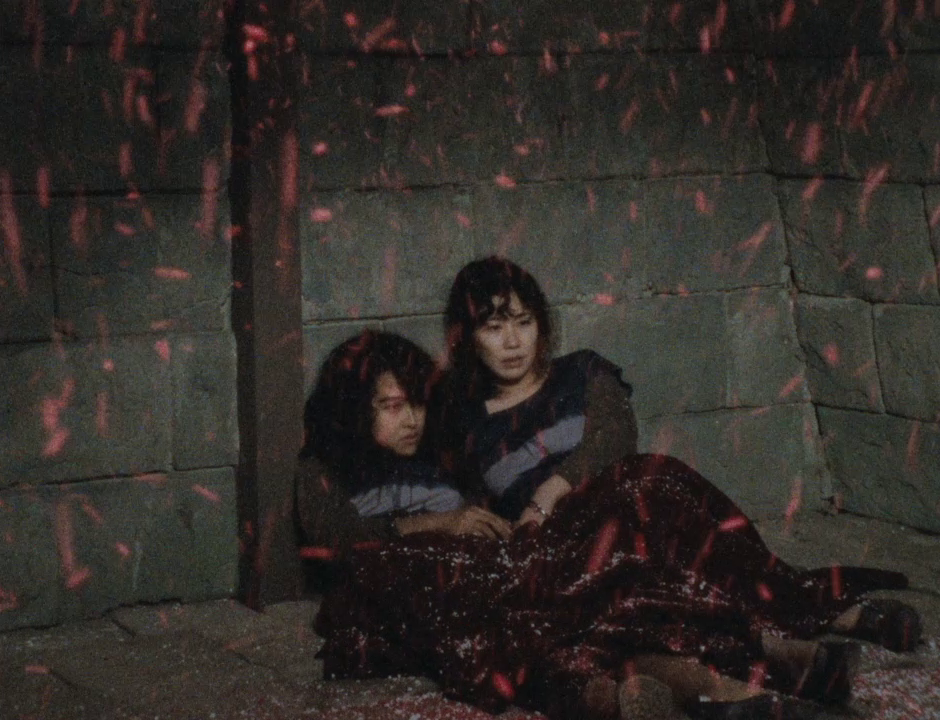
701 is in a way reborn as Sasori. Betrayed by the people who hired her, she’s crucified in the courtyard until rescued by fellow inmate and Sasori fan Shindo (Mineko Nishikawa) who helps her try to escape from the prison in an attempt to find out what happened to the “real” Nami. It’s she who first likens the fire in 701’s eyes to that of the Scorpion and begins to give her permission to take on her name and mission. A line is drawn between the two in Nami’s incasement in concrete and 701’s breaking out of it in the opening sequence. Though it would be wrong to call this horror film, Ikeda makes frequent use of ghostly techniques to imply Nami’s apotheosis such as the sound of her spoon scraping the concrete which she later bequeaths to 701 who then becomes the “new” Scorpion. 

The film was in fact a big hit for Toei video and theatrical sequel was planned as a co-production with Golden Harvest in Hong Kong though the project fell through when Okamoto took a break from show business ostensibly for health reasons though there were rumours she had objected to the requirements for nudity. Contrary to expectations for a straight to video release, there is not actually a lot of sexual content in the film which is mainly restricted to a single sequence in which two prisoners pretend to get it on in order to distract a guard to facilitate an escape attempt. Unlike other instalments in the series, the film doesn’t have a lot of women in prison elements either, though it does make space for Dump Matsumoto, a popular villain character from women’s wrestling, as a sadistic guard with a crush on another warden who is she says the only one who treated her like a woman. Instead, it focuses on 701’s passage towards becoming Scorpion and the fulfilment of her twin missions as an avenger of wronged women breaking free from the concrete dungeon of patriarchal oppression to take bloody revenge on the forces of corruption.


Trailer (English subtitles)

Alone in the Night (夜がまた来る, Takashi Ishii, 1994)

A woman enters the homosocial world of the yakuza in search of revenge for her murdered husband, but discovers only more degradation and hopelessness in Takashi Ishii’s rain-soaked noir, Alone in the Night (夜がまた来る, Yoru ga mata Kuru). Then again, perhaps it’s not really revenge Nami (Yui Natsukawa) is after so much as death itself, her relentless fall one of self-harm born of her sense of futility in world ruled by irony in which there is no such thing as truth or justice.

Indeed, one of the things that propels Nami on her mission is the injustice that her husband Mitsuru (Toshiyuki Nagashima), killed while working undercover investigating a gang dealing drugs, is then accused of taking the drugs he seized and selling them on himself. After her husband dies, she’s hounded by the press who paint him as a corrupt cop while she’s also denied his police pension because he died in disgrace. What she wants is to clear his name and thereby drag her husband back from the netherworld in an affirmation of their love for each other. 

But she too becomes corrupted by the darkness of the criminal underworld. Soon after the funeral, yakuza thugs break into her home and rape her while looking for the drugs they assume Mitsuru stashed somewhere. Amid the chaos, she attempts to take her own life by slashing her wrist with one of Mitsuru’s bones but is unexpectedly saved by a mysterious man. Reborn after her brush with death, she reinvents herself as bar hostess “Mitsuru” as a means of getting close to the gang boss, Ikejima (Minori Terada), she believes to be responsible for her husband’s death. Her attempts to kill him, however, prove unsuccessful. She’s once again raped, this time by Ikejima, and thereafter becomes his mistress until another opportunity arises which she then botches by stabbing him in a non-lethal way which only gets her beaten and tortured by his underling Shibata (Kippei Shiina) and eventually sold to a brothel in Chiba where they get her hooked on drugs to make her easy to control. 

In fact, she’s only spared death once again thanks to the intervention of the mysterious man, Muraki (Jinpachi Nezu), a middle-aged yakuza seemingly weary of life and perhaps drawn to Nami as to death. He seems uncomfortable and out of place in this world of brutal masculinity while his modernity is singled by his association with the gun to counter Shibata’s with the sword. He has other reasons for his duality, but is charged with rooting out moles in the yakuza of which there seem to be an inordinately large number. Despite warning her off, he does what he can to help Nami, in part of out of guilt and a need for atonement, but also a kind of escape from his own entrapment within the purgatorial space of the yakuza underworld. 

Permanently raining and shot in an eerie blue, the world around Nami and Muraki takes on an etherial, dream-like quality as if taking place somewhere between sleeping and waking. After rescuing her from an attempt to drown herself, Muraki remarks that Nami slept like the dead or perhaps as if someone was calling to her from the other side. Death seems to be beckoning each of them, even as Muraki desperately tries to keep Nami alive by tenderly nursing her back to health and helping her beat drugs so she can finally free them both by achieving their mutual revenge.

But the film’s irony is that Nami cannot achieve her vengeance on her own. She’s constantly rescued by Muraki who achieves some if for her while each of her attempts only plunge her further down the cycle of degradation and in danger of losing herself entirely. She is and remains an ordinary woman venturing into hell in search of justice, but discovering only cruel ironies and futility. Muraki too is unable to transcend himself and meets a personal apocalypse in embracing his authentic identity. Nami has been chasing a ghost all along, though in some ways it may be her own as she tries to make her way back into the world of the living by reclaiming a vision of the world she had before in which her husband was a good and honest man and there was justice in the world even she declared herself largely disinterested in world outside of their romance and their private paradise just for two.


Alone in the Night is available as part of Third Window Films’ Takashi Ishii: 4 Tales of Nami boxset.

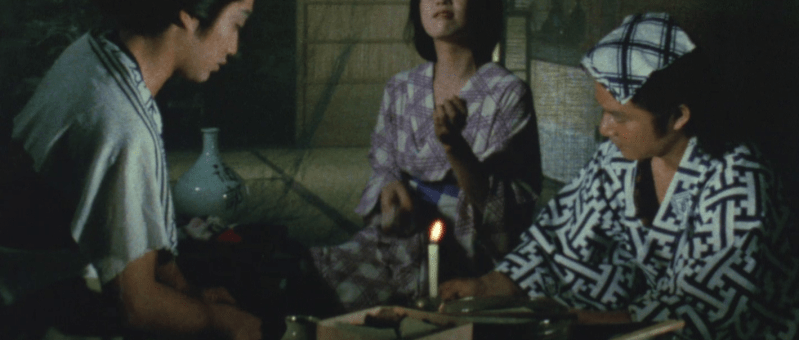
The Living Koheiji (怪異談 生きてゐる小平次, Nobuo Nakagawa, 1982)

“This play will never end,” says one of a pair of actors, in love with the same woman near the conclusion of Nobuo Nakagawa’s haunting final feature, The Living Koheiji (怪異談 生きてゐる小平次, Kaiidan: Ikiteiru Koheiji). Based on a 1924 play by Senzaburo Suzuki which had not originally been a kaidan or ghost story, what originally seems seems to be a conventional love triangle drama develops into something darker and stranger as its trio of protagonists find themselves trapped in an escapable loop of obsession, violence, love and misogyny.

At heart, this is a story of a woman trapped between two men, an abusive husband she cannot leave and a childhood friend who says he loves her she may want not want either. We’re told that Ochika (Junko Miyashita) was once the daughter of a wealthy landlord and entered into an arranged marriage with wealthy man but was eventually sent back and married Taku (Shoji Ishibashi), the son of a teacher the landlord may otherwise have regarded as beneath them. A childhood friend of each of them, Koheiji (Fumihiko Fujima) was the son of an itinerant actor and loved Ochika too but bit his tongue. However, he can do so no longer. At breaking point, he must make his feelings known. Ochika does not accept them, but neither does she fully reject him. At an impasse, Koheiji states that he will kill Taku so that Ochika will then be free to marry him. On a fishing trip with Taku he directly asks him to surrender Ochika, but he refuses and becomes angry. Knocking him into the water and hitting him with an oar, Taku believes he has killed Koheiji, dissolves the acting troupe to which they all belong, and returns home. Koheiji soon turns up there but relief turns to rage when he repeats his request for Ochika’s hand and Taku kills him again.

We can never really be sure if “the living Koheiji” as he takes to calling himself is alive or dead, an actual ghost or a man with a talent for surviving living only for his obsessive love. He continues to haunt the couple, or more directly Taku whose guilt he may be manifesting. From what we can tell of Taku, he is a monstrously insecure figure who attempts to assert dominance through violence. Of the three, he is the only one outwardly frustrated by his lowly socio-economic position as an itinerant actor and only the troupe’s drum player at that. He has been writing his own play, a love suicide drama, in an attempt to bump himself up to the intellectual position of playwright but the manager rejects his work or else Taku lacks the economic power to bribe him. 

It’s possible in one sense that what we’re watching is the love suicide drama that Taku is writing. He does indeed later invite Chika to die with him while haunted by the living Koheiji. The dialogue between the three is ostensibly theatrical and delivered in the rhythms of kabuki theatre as if they were constantly rehearsing a play, yet Koheiji in particular often slips into a rhythm that mimics that of the Akita Ondo, a bawdy folk chant that is part nonsense song and part improvised diatribe against the state of the nation. Koheiji may also have been professionally frustrated in his desires to become another Danjuro, his lack of success another barrier to romantic fulfilment, but ultimately feels that Ochika should be his and Taku should consent to give her up. 

He points out that Taku is violent towards her. When Ochika asks him about his play, she says that women shouldn’t pry into men’s work and beats her. She asks him for a divorce which he refuses to grant, but later tells Koheiji that his violence is only a sign of his love for her though it’s clearly an expression of his wounded masculinity. In many ways, Ochika is a woman haunted by two men neither of whom she can fully escape. We can’t even be sure she isn’t dead too, or else a figment of Taku’s fevered imagination furiously writing out this love tragedy in real time. In any case, she continues to follow him and is continually disillusioned. On discovering that she engineered a miscarriage, he questions the parentage of the child and is resentful that she chose not to tell him about the pregnancy because it trapped her in an abusive relationship from which she wanted escape. She may have been willing to use Koheiji to help her, but does not appear to return his feelings and is in any case denied any agency. Just as she was traded away by her father, Koheiji simply demands her of Taku as if she had no right to refuse.

The living Koheiji becomes more grotesque each time he resurrects himself, eventually disguised as a leper and as pale as a ghost whether or not he actually is one. Wracked with guilt, Taku begins to experience ghostly nightmares featuring scenes from classic tales of horror such as Koheiji tied to a board and floating in a lake much as Oiwa and the servant in Nakagawa’s own Yotsuya Kaidan. A master of the genre, the eeriness that Nakagawa conjures here is of a different order. An ancient, unending haunting that as Koheiji says will never end destined to be repeated by the trio in an eternal and irresolvable cycle of suffering. The final scene takes place at Sai-no-kawara, the shore of the river of life and death to which the souls of deceased children go to be watched over by the crowds of jizo at the cave, echoing the faces of the dolls that once watched Taku and Ochika. What happens there may represent escape or merely damnation, Ochika perhaps freed or only to repeat this cycle for all eternity. 


Trailer (English subtitles)

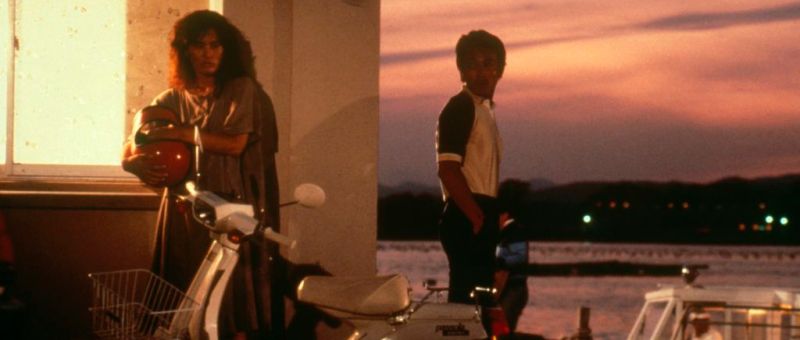
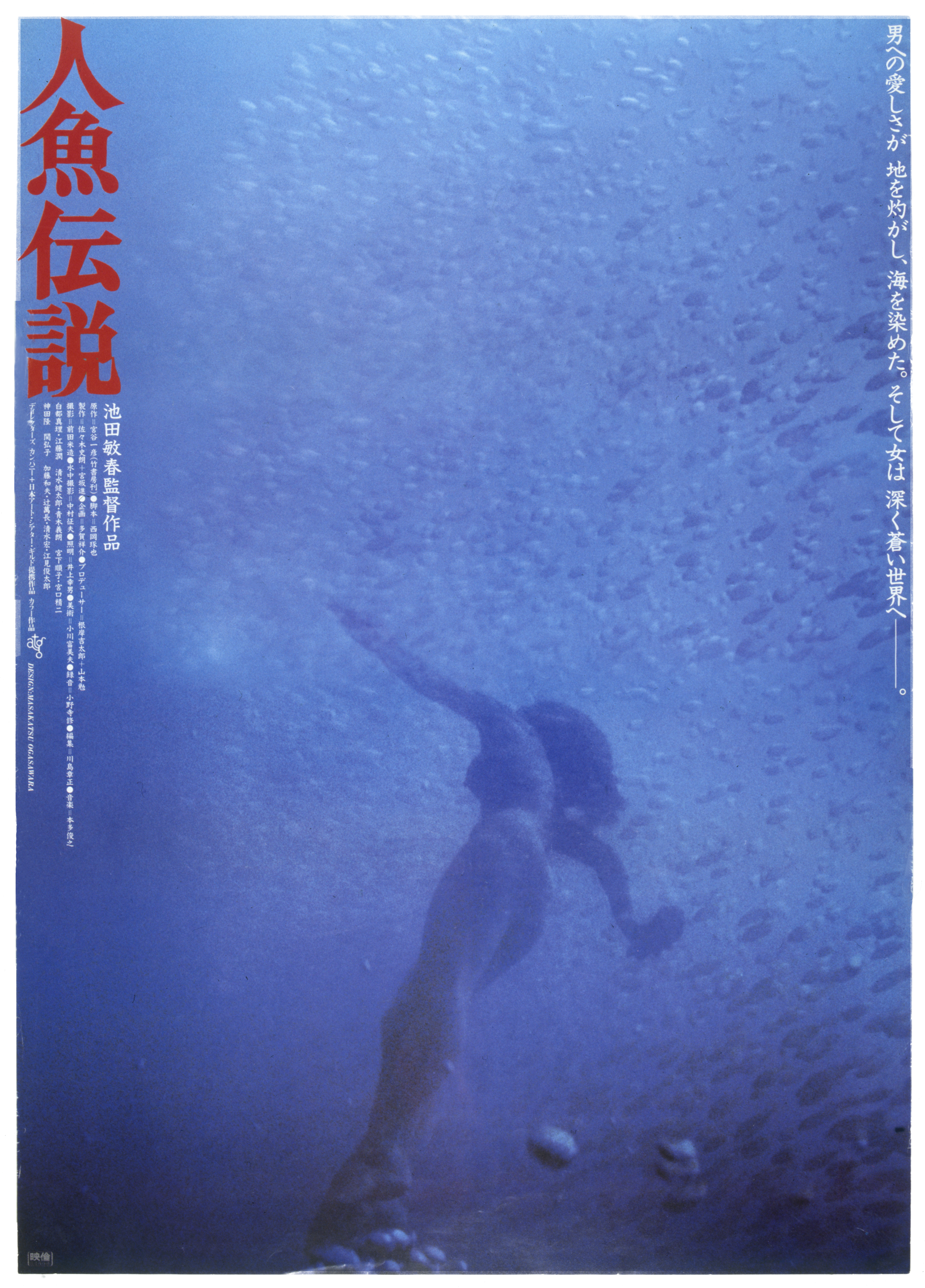
Mermaid Legend (人魚伝説, Toshiharu Ikeda, 1984)

“Even if someone kills you, you wouldn’t die,” a drunken husband somewhat sarcastically replies having pledged to come back and haunt his wife if he died and she married a man who didn’t drink. His words take on a prophetic quality given that the heroine of Toshiharu Ikeda’s Mermaid Legend (人魚伝説, Ningyo Densetsu) takes on a quasi-supernatural quality as an embodiment of nature’s revenge after someone tries, and fails, to kill her having already killed her husband for witnessing their murder of another man who’d tried to resist their plans of buying up half the town to build a nuclear plant. 

By the mid-1980s, Japan’s economy had fully recovered from post-war privation and was heading into an era of unprecedented prosperity which is to say that the coming of a power plant was not welcomed with the same degree of hope and excitement as it may have been in the 1950s when it was sold not only as a new source of employment for moribund small towns but an engine that would fuel the new post-war society. Several industrial scandals such as the Minamata disease had indeed left those in rural areas fearful of the consequences of entering a faustian pact with big business, which is one reason why the guys from Kinki Electric Power sell it as an amusement park project though even this has the locals wary not just of the disruption it will bring to their lives and potential ruin of their livelihoods which are dependent on the protection of the natural environment but that what is promised simply won’t be delivered. Fisherman Keisuke (Jun Eto) says as much when lamenting a previous aquaculture programme which didn’t pan out and caused lasting damage to marine life. 

In any case, as others say there’s no money in going out to sea anymore and its clear that the old-fashioned, traditional way of life practiced by Keisuke and his newlywed wife Migiwa (Mari Shirato) is no longer sustainable. Migiwa is an abalone diver working without modern equipment but using heavy weights to dive deep enough to reach the shells. As such she’s dependent on her husband to pull her back up to the boat when she tugs the rope. She must put her life entirely in his hands though in truth, he does not seem to take his responsibility all that seriously. The couple bicker relentlessly and not even she really believes him when he says he witnessed a murder which might be understandable given the extent of his drinking. All of which is further evidence against her when she manages to escape from the assassination plot and runs straight to the nearest policeman who thanks her for turning herself in implying he believes she is responsible for Keisuke’s death. 

The possible collusion of the policeman hints as a further sense of distrust in authority which has become far too close to corporate interests. Shady industrialist Miyamoto (Yoshiro Aoki) ropes in both the mayor and the head of the fishing association in his talks with Kinki Electric Power along with Shimogawa from the local tourist board who evidently opposes the plans as he is the man Keisuke witnesses being murdered. As Miyamoto says “sometimes your hands get a little dirty” though he never “directly” involves himself matters such as these. The situation is complicated by an unresolved love triangle between Miyamoto’s spineless son Shohei (Kentaro Shimizu), a sometime photographer, who is resentful of Keisuke and in love with Migiwa complaining that Keisuke always outdrinks him and gets the girl too hinting at his sense of wounded masculinity. Isolated by his class difference, he appears not to approve of his father’s actions but later does little to stop them and eventually sides with corporate interest over his feelings for Migiwa who in any case seems to have become more attached to Keisuke following his death which she vows to avenge. 

There is there is something quite strange in the prophetical quality of Keisuke’s words also predicting the “black sweat” of the Jizo on the beach and the mystical storm which does eventually sweep everything clean destroying the signs for the new nuclear power plant already installed on the beach. In this way, Migiwa becomes a vengeful force of nature taking up arms against those who wilfully ravage and pollute the natural environment while damaging the lives of those who lived on its shores such as herself and Keisuke. She takes revenge not only for the murder of her husband by corrupt capitalists but against that corruption itself even as she laments that “no matter how many I kill, they just keep coming.” “Don’t worry, maybe all this was just a dream,” Keisuke once again prophetically intones though it’s difficult to know if it’s defeating the capitalist order that is a fantasy or the maintenance of the idealised rural life to which Migiwa seemingly finds her way back swimming into an unpolluted sea surrounded by the floating barrels of ama divers and clear blue skies, a creature of nature once again.


Mermaid Legend screened as part of this year’s JAPAN CUTS.

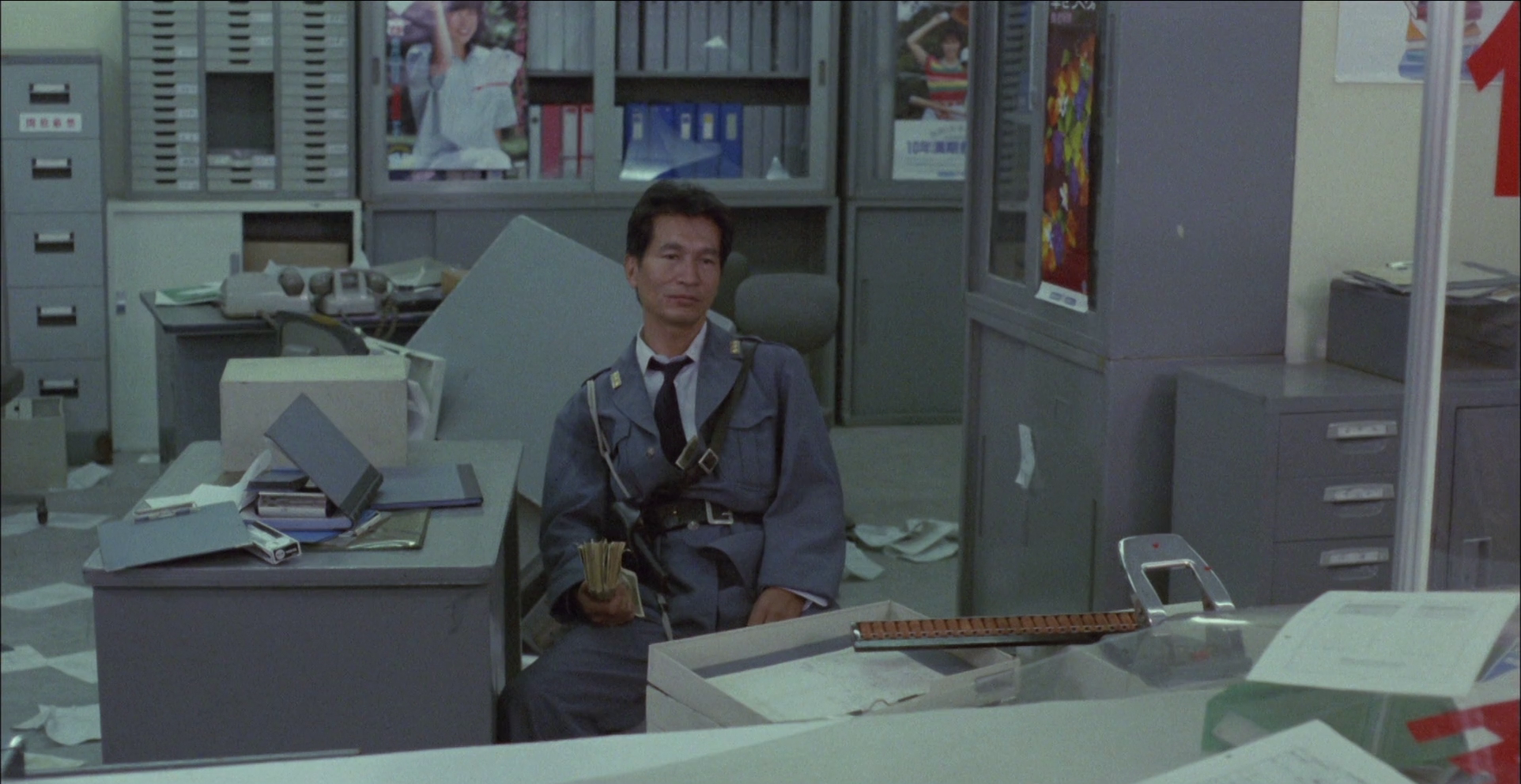
The Mosquito on the Tenth Floor (十階のモスキート, Yoichi Sai, 1983)

A beaten-down beat cop’s existential crisis progressively deepens after he throws himself into financial ruin to buy a computer in Yoichi Sai’s debut The Mosquito on the Tenth Floor (十階のモスキート, Jikkai no Mosquito). Like Pool Without Water, star Yuya Uchida conceived and co-scripted the film as a vehicle for himself and was apparently inspired by the sight of some blood, his own, on a wall where he’d squashed a mosquito though he also claimed the the 10 in the title is intended to reference the 10 commandments in addition to simply where the unnamed protagonist lives.

The fact that he lives on the 10th and top floor in a building with no lift is symbolic of his dismal circumstances. On the one hand he can rise no higher but on the other is stuck with an inconvenient living situation precisely because of his inability to rise socially. As it transpires the hero, a policeman, joined the force right out of high school with aspirations of rising to the rank of captain but has spent the entirety of his 20-year career manning a police box. He’s repeatedly failed the exam for promotion to lieutenant and realistically speaking is now simply too old to make much further progress. A man of few words, he listens as the other officers who took the exam with him outline the hierarchal structure of the police force while meditating that as a man on the wrong side of 40 his possibilities have decreased and it’s more than likely he’ll be stuck in the police box until he retires. 

His boss later says as much, sympathising with him but also pointing out that a policeman is also a public servant with a role to serve within the community. He is supposed to make people feel safe and contribute to the progress towards a crime-free society, but it’s clear that his life has spiralled out of control precisely because he cannot ally his career goals with the kind of life he wished to lead. His wife divorced him two years ago seemingly because she wanted a greater degree of material comfort and became resentful that he failed to progress in his career and could not move on from the low-salaried position of an ordinary street cop. She now makes a living selling golf club memberships, looking ahead to the oncoming Bubble-era and a society of affluent salarymen which is very much what her new boyfriend seems to be. Meanwhile, she lives in a very nice townhouse with their teenage daughter and constantly hassles the policeman for falling behind with his child support and alimony payments. He’s also racked up a healthy tab at a karaoke bar where he regularly hangs out and has a serious gambling problem with betting on boat races seemingly his only other form of social outlet.

As his daughter and others keep reminding him, the world is changing and his decision to buy a computer after unwisely taking out a payday loan is in part a symbol of his desire to progress into the modern society even if, somewhat ironically, others chastise him for spending what is then a huge amount of money on something they think of a child’s toy. Otherwise an upstanding policeman who irritatedly deflects a colleague’s joke about bribing someone to pass the exam, the policeman finds himself taking out one payday loan to pay another with loansharks constantly ringing him at the police box to remind him he’s behind on his payments. To overcome his sense of powerlessness, he begins by abusing his authority in catching a punk woman shoplifting and arresting her but then taking her back to his flat to play computer bowling and take advantage of her sexually. He later does something similar with a bar hostess, Keiko (Reiko Nakamura), who took him home when he was drunk. Though the encounter begins as rape, Keiko soon gives in and even comes back for more claiming that she’d never done it with a policeman before and it exceeded her expectations which is in many ways reflective social attitudes at the time. Emboldened, he invites danger by raping a female traffic cop, tearing her clothes as she fights back, screams, and cries though she presumably does not report him given the professional and social consequences that may adversely affect her life and career if she chose to. 

His ex-wife Toshie (Kazuko Yoshiyuki) says she’s not even sure if he’s human anymore, and his failed attempt to rape her after his boss reminds him that he advised against getting a divorce in the first place because it would negatively affect his chance of promotion may be a perverse way to prove he is though it obviously backfires. Having failed in every area of his life and with no prospect of ever getting back on track or starting again, he begins to go quietly insane typing rude words into his computer while the constant calls from loansharks take on a mosquito-like buzzing as does his own final wail of despair and powerlessness as he’s brought down by same authority he once served. His aloneness and confusion are palpable when he ventures into the city and discovers his teenage daughter Rie (Kyoko Koizumi) dancing in Harajuku staring at her intently but then walking away having invaded this space reserved for the young. “Police yourself!” one of the Rockabilly guys ironically instructs him on noticing that he’s dropped his ice cream cone, explaining that the police might shut them down if they’re discovered to be using the space irresponsibly by littering. Rie and her friends tell him to get a life, explaining that the world is changing while tapping him for cash he doesn’t have but is too embarrassed to refuse, laying bare the extent to which he and those like him have been left behind by the economic miracle, buzzing around maddeningly in mid-air with safe nowhere safe to land. 


Original trailer (no subtitles)

Fire Festival (火まつり, Mitsuo Yanagimachi, 1985)

By 1985 the Japanese economy was approaching its zenith yet along with increasing economic prosperity had come social change of which small-town Japan was either casualty or sacrificial victim. “Nigishima will stay as it is” declares the last holdout of an increasingly obsolete way of life in Mitsuo Yanagimachi’s intense modernity drama, Fire Festival (火まつり, Himatsuri), a manly mountain man and animalistic force of nature by several metrics unsuited to life in the contemporary society into which he is ultimately unable to progress. 

There are many things which it seems have not changed in Nigishima for generations, one being the animosity between the cohorts of its bifurcated community, those who live by land and those who live by sea. Rural depopulation may have forced them to come closer but it has also increased their sense of mistrust while both industries continue to suffer in an economy which no longer prizes their humble rural output. Despite being catapulted into a promised modernity by the advent of the railway to great fanfare in 1959, it now seems that Nigishima cannot survive without a new road which could be paid for by the development of a marine park only mountain man Tatsuo (Kinya Kitaoji) owns the property right in the middle of the earmarked area and has hitherto refused to sell further increasing the tension between the two communities. 

Tatsuo is thought of, and thinks of himself, as a big man in the area quite literally it seems as part of the reason he enjoys this status is down to his being unusually well-endowed. He believes himself to have a special relationship with the mountain goddess, often joking to the other men about having a sexual relationship with her while sometimes describing her as his girlfriend. Several times he is mistaken for an animal, firstly by the boatman bringing his childhood sweetheart and sometime mistress Kimiko (Kiwako Taichi) back to the island who assumed he was a monkey crawling along the cliff edge thoughtlessly throwing rocks at them, while he often gambols through the forest whooping like some kind of Tarzan. Entirely unreconstructed, his worldview is patriarchal and misogynistic. All of his banter with the other men is sexual, constantly referring to his penis while greeting his friends with lewd hand gestures thrusting his fist into his pocket as if waving with an erection. The cure for offending the goddess he tells his young protege Ryota (Ryota Nakamoto) is to drop his trousers and display his manhood, Tatsuo strangely believing this would appease her for taking wood from a sacred tree or killing without permission. 

Smearing the blood of a sacrificial animal over his chest and forearms he dedicates the death to the goddess, a gesture he will repeat in the film’s violent and tragic conclusion yet there is also arrogance in his conduct as if he believes himself above natural law, protected as the goddess’ favourite even as he describes himself as “suffocated” by the women in his life from his mother and five older sisters all of whom indulge him to his wife, kids, and mistresses. He has trained his dogs to hunt wild boar without the use of guns in a method he admits even other hunters describe as “cruel” while breaking a local taboo shooting monkeys in the forest well aware of nature red in tooth and claw. As such, there is little nobility to be seen in his determination to preserve this already obsolete way of life. His virility maybe contrasted with that of the ageing land broker Yamakawa (Norihei Miki) and his failed attempts to bed sex worker Kimiko who tricks him into paying off her debts, but he at least knows the way the wind is blowing explaining to her that towns such as Nigishima survive only through things like marine parks or hotels or even nuclear power plants. Without the road, the town will die. 

Yet in 1959 they were told the railway would save them and it seems it did not. Tatsuo’s love making with Kimiko in a boat borrowed from a treacherous fisherman who later agrees to sail it transgressively into sacred waters is intercut with memories of the rail line’s opening ceremony, two teenagers who might have been them or at least of around the same age ride an elephant on the jetty while the townspeople arrange themselves into the formation of the character for “celebration” captured by the aerial photographer above. For Tatsuo as a boy, was this a rebirth of Nigishima or the beginning of its demise as the coming modernity began to eat away at its foundations? 

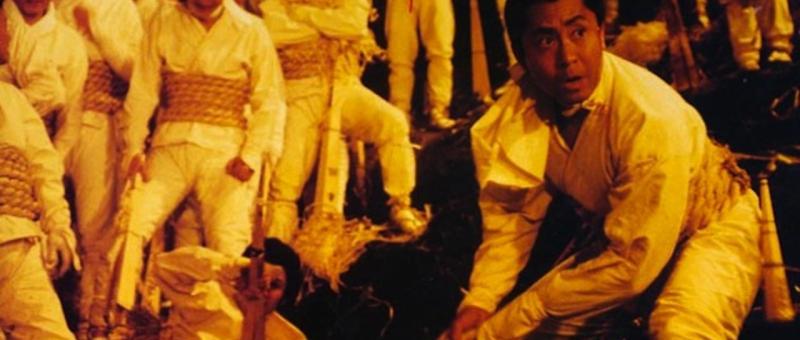
The fire festival is “for men”, according to Tatsuo, “to drive out evil spirits”, his manliness getting the better of him as he disrupts the proceedings to attack a man he accuses of having brought “false fire”. These are the lessons he teaches to surrogate son Ryota whose devotion to him borders on the homoerotic, Tatsuo cradling him during the climactic rain storm and he seeming to develop a fascination for Kimiko as a kind of indirect fixation. Ryota has learned Tatsuo’s chauvinism mimicking his lewd hand gestures and swaggering walk, his cruelty in sacrificing 1000 yen to trick Yamakawa into injuring his hand in a bear trap, and his arrogance ensuring that his problematic masculinity will survive into another generation presumably no more capable of halting the march of modernity than he has been. Tatsuo poisons the waters with fuel oil which as one of the greek chorus of fish wives points out does not catch fire, Tatsuo himself smouldering until an inevitable explosion. Receiving some kind of epiphany during a mystical congress with the goddess in the middle of a storm, he knows what he must do and accepts that he cannot progress into the modern society. Smoulderingly intense in its small-town animosity and primeval sensibilities, Yanagimachi’s poetic tragedy of futility and the broken promises of a badly distributed modernity may accept the the sacrifice but mourns it all the same. 


Fire Festival screens at the BFI on 20/27 December as part of BFI Japan.

Clip (English subtitles)

Call from Darkness (真夜中の招待状, Yoshitaro Nomura, 1981)

“In today’s society, everyone is warped in some way” according to the investigative psychologist at the centre of Yoshitaro Nomura’s Call From Darkness (真夜中の招待状, Mayonaka no Shotaijo, AKA Midnight Invitation). Adapted from the novel by Shusaku Endo, Nomura’s late career psychological mystery places the dark past at the centre of familial implosion as increasingly estranged brothers find themselves falling victim to the same “curse”, called to destruction by the extreme resentment of one who feels himself wronged both personally and on a familial level. 

The film opens, however, with the heroine, Keiko (Asami Kobayashi), visiting a psychiatrist and visibly perturbed by the strange, twitching figures which surround her in the waiting room. The patient immediately before her is irritated by the psychiatrist’s “childish games”, eventually leaving the room in exasperation with the medical staff who refuse to take his symptoms seriously, convincing him that his pain is all in his mind and his lame leg is merely a manifestation of repressed trauma. Nevertheless, Keiko has not come for herself but for her fiancé, Tamura (Kaoru Kobayashi), who has suffered a nervous breakdown after all three of his brothers mysteriously disappeared leaving him feeling as if he must be next. As Dr. Aizawa (Etsushi Takahashi) points out, disappearances are a matter for the police but he does agree to help treat Tamura’s paranoia in the belief that his family circumstances are a series of unfortunate and improbable coincidences rather than a concerted effort to wipe out his bloodline. 

As it turns out, that is not quite true and Tamura perhaps has reason to worry but then there is no one targeting him, in fact no one very interested in him at all, but still he will be sucked into a vortex of guilt and pain despite having, as it turns out, a different name and minimal connection to those who are his brothers by blood. The youngest of the four boys, Tamura was adopted into another family who had no children of their own at eight years old. His mother had already passed away and after his father too died not long after his adoption he never returned to his ancestral home in Kumamoto and had little contact with either of his brothers besides Kazuo (Tsunehiko Watase) with whom he had remained close and who would often visit him when he came to Tokyo on business. The fact of his brothers’ disappearances does not perhaps concern him emotionally, at least until Kazuo too goes missing, as much as its strangeness threatens his ordinary, conventional life not to mention his engagement to Keiko whose parents do, as expected, urge her to reconsider in light of the dark shadows around Tamura’s family history. 

That’s perhaps one reason Keiko is so keen to delve to the bottom of the mystery, not only to cure Tamura’s depression but to defend her choice of husband and therefore the future direction of her life. Aizawa, meanwhile, proves a strange and slightly dubious guide despite his presentation as a figure of infinite authority. He persuades the pair that the answer lies in dreams, intrigued by a recurring nightmare Kazuo had apparently been having about travelling through tunnels and valleys towards a mysterious castle, a dream that Tamura eventually begins dreaming too. Aizawa and Keiko find themselves making a bizarre visit to a spirit medium, while Aizawa later recommends experimental hypnotherapy treatments, diagnoses based on glanced body language, and describes the oldest brother, Junkichi (Makoto Fujita), as a probable misanthropic sadist based on a series of drawings he made of a man with serious deformities. He later walks back some of these statements as strategy in his quest to help Tamura, but you have to admit that his practice is esoteric to say the least. 

Central to events, the deformed man turns out not to be an invention of Junkichi but a very real “victim” and perhaps symbol of the “warped” society Aizawa alludes to at the film’s conclusion. We learn that the young man suffered from rheumatism and was recommended experimental treatment which led to his deformity and apparently left him brain damaged, unable to look after himself. The mysterious calls the brothers receive late in the night are reminders of the harm they have caused, beckoning them towards a spiritual retribution though there is of course no real way to atone, the young man can never be restored. It’s this sense of dread that leads Aizawa and others to describe what’s happened to the brothers as a “curse” though it’s one largely self-imposed if perhaps precipitated by the intense resentment of the wounded parties which sends itself through the air, and the telephone lines, to convince the brothers they must pay though, in real terms, the young man’s fate is not really their fault only that of the doctors who developed the drug and administered it if, as Aizawa implies, they were aware of what could happen if they went too far. 

Nevertheless, it seems that responsibility must be taken though the extents of that responsibility, rather than the secrecy or the events themselves, eventually corrupt the previously pure and strong relationship between Keiko and Tamura. He wants to end it with money, she is disappointed in his cynical conservatism and lack of compassion. Aizawa meanwhile, believes that the brothers were drawn to death, tired of the business of living and perhaps looking for an exit and an excuse to give in to despair. Nomura slips into painful negative for his explanatory flashbacks, while undercutting a sense of reality through the dissolves and superimpositions of his ethereal dream sequences, but finally returns us to the “warped” society of the present day as the survivors look for new ways of living with a newfound darkness. 


Let Him Rest in Peace (友よ、静かに瞑れ, Yoichi Sai, 1985)

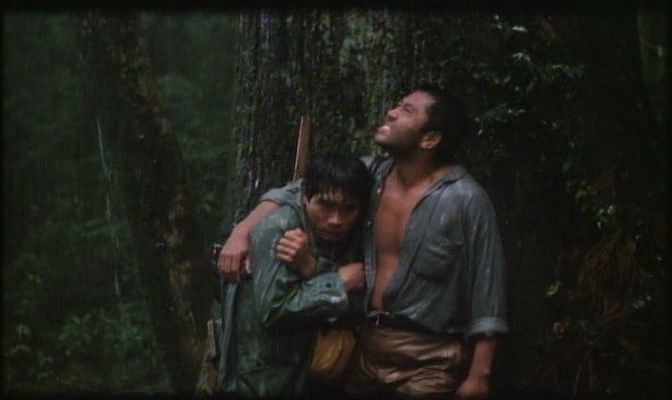
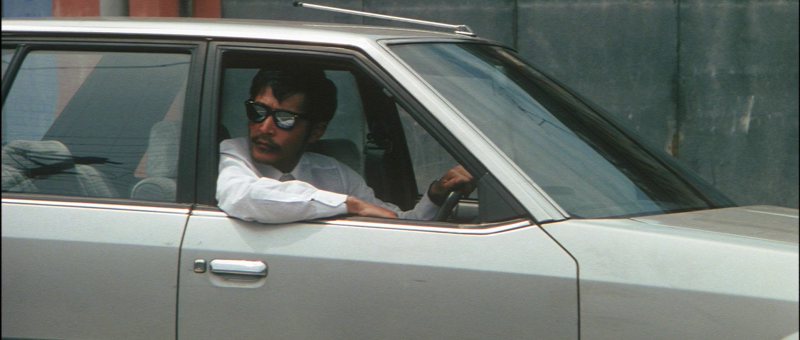
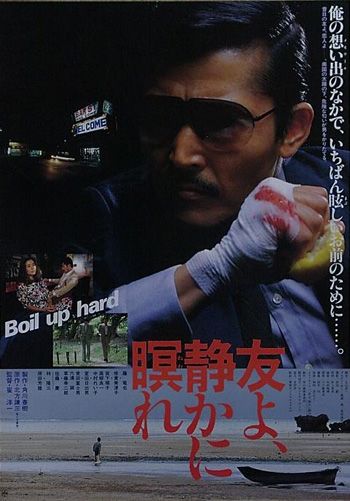
“There are times when you need to stand for something” according to an ultra masculine avenger giving a few lessons in manliness to the already defeated teenage son of a friend. A noirish, stranger in town affair, Yoichi Sai’s Let Him Rest in Peace (友よ、静かに瞑れ, Tomo yo, Shizukani Nemure) locates itself in an awkward frontier landscape, moribund small-town Okinawa seemingly devoid of life now that the Americans have pulled out and moved on. The Americans have, however, been “replaced” by beefed up corporate thugs backed by yakuza muscle and corrupt police. Sometimes you have to take a stand, if only to show them that you won’t be pushed around because if you give in once you’ll never be free. 

Disgraced doctor Shindo (Tatsuya Fuji) has come to Okinawa in search of the Freein, but every time he tries to ask someone for directions, he is met with intense hostility, the last man even telling him “You shouldn’t go there, that place is no good”. This is not because the Freein is mostly home to a collection of brassy sex workers, but because its owner and Shindo’s old friend whom he has come to help has become a local pariah. Sakaguchi (Ryuzo Hayashi) is currently in jail because he apparently went crazy and started waving a knife around at construction magnate Shimoyama (Kei Sato). As Shindo quickly finds out, Shimoyama is in the process of buying up the whole town and Sakaguchi is the last remaining hold out. As such, he is hated by most of the other residents and the subject of persistent harassment by Shimoyama goons who have not only thrown bricks through the windows but gone so far as to kill his son’s dog, later kidnapping the boy to put pressure on the pair of them. 

What’s not lost on Shindo is the extent to which Shimoyama’s corruption has already seeped into the town. Meeting Sakaguchi’s son Ryuta (Makoto Mutsuura) by chance, Shindo takes the boy to see his dad but is again met with hostility by the local bobby, Tokuda (Hideo Murota), who tells him that “Shimoyama Construction is the savour of this town”. “There’s no other company that is so giving”, he goes on, “to have the employees of a company like that working here, I can’t have a wild man like Sakaguchi running about”. According to Tokuda, Sakaguchi is the odd man out, an inconvenience to all those around him who believe in Shimoyama and are trying to save the town. Tokuda looks sheepish when Shindo asks him why he’s so into Shimoyama, confirming the mild suspicion aroused by his improbably fancy watch. 

Tokuda’s warning is however borne out by the townspeople who continue to shun and ignore Shindo while the other kids mercilessly bully Ryuta, calling him the “craziest kid in Japan” and calling for his dad to get the death penalty despite the fact that all he seems to have done is aggressively wave a fruit knife at the wrong person. The local cafe owner describes him as an embarrassment and accuses him of holding out to get more money. After all there’s no future in this tinpot town which seems to exist in the ruins of the post-war era and Shimoyama is already offering triple the going rate so Sakaguchi is only being greedy and selfish. Komiya (Ryoichi Takayanagi), the bellboy, if you could call him that, at Freein, spins it slightly differently, explaining that no one supported Shimoyama in the beginning but they’ve all been harassed themselves and have long since given in. Shindo convinces Ryuta to talk about his kidnapping, but Ryuta tells him that on his return he told his father they should leave, that it was pointless to resist. Shindo asks him if he’s ever been in a fight, but the boy asks what the point is if you know you’re going to lose, “the strong are always strong”. 

That kind of defeatist thinking is anathema to Shindo’s conception of manhood. Despite his father’s incarceration, Ryuta is too afraid of being kidnapped again to go to school. Trying to be nice about it, Shindo calls him a coward for telling his father to leave even though he wants to stay because he allowed himself to be threatened into sumbmission. He tells him that he has to stand up for himself, report his kidnapping to the police. Ryuta tells him he’s crazy, the police are in on it, but Shindo counters that it’s worth trying to get his father out of jail because if they don’t they’ll never know. Ryuta snaps back that he knows already, and indeed bottles his chance when Shindo manipulates Tokuda into “helping” him oppose Shimoyama’s cult-like hold over the town.  

Shindo might not be that much better, he’s prepared to fight dirty, getting hard evidence of Tokuda’s corruption and trying to use it against him but even these methods prove ineffective against such a vast and entrenched mechanism of control. Shindo also realises that Shimoyama’s minion Takahata (Yoshio Harada) is another old university classmate, a member of the boxing club, bringing this widening drama down to the level of three men who went to the same prestigious university but all ended up here, pretty much at rock bottom. Though ironically enough Shindo’s broody silence and dedication to his friend have a few of the women wondering if he might be gay, his preoccupation is with a failure of masculinity. He doesn’t think Shindo was actually capable of threatening anyone, and knows that he had reasons that he might have wanted to try and sort this out sooner rather than later. His son’s words pushed him over the edge. He used his body as a weapon, tried to make Shimoyama damn himself, but his efforts were frustrated. Shindo acknowledges that “saving” his friend might look quite different than one might think, inadvertently teaching young Ryuta a few problematic lessons about what it means to be a man. Still, the town might have been “saved” in one sense at least in being freed of this particular oppressor. A stand has been taken, and a man’s self worth restored, but as Sakaguchi’s wife (Mitsuko Baisho) points out even while fully understanding the codes by which the men around her live, what is to become of those left behind?


TV spots (no subtitles)

Case of the Disjointed Murder (不連続殺人事件, Chusei Sone, 1977)

Case of the disjointed murders posterJapanese cinema of the 1970s fell hard for the prestige murder mystery. Following the success of The Inugami Family, an early and unexpected hit thanks to Kadokawa’s “innovative” marketing strategy, multi-cast detective dramas dominated the box office for the rest of the decade. Meanwhile, ATG had been known for serious and high-minded avant-garde cinema throughout the 1960s but its brand of left-leaning, politically conscious, arthouse-fare was tantamount to box office poison in the increasingly consumerist post-Asama-Sanso world. ATG’s Kindaichi-centric Death at an Old Mansion, updated to the present day, pre-dated Ichikawa’s series for Toho by a whole year and perhaps signalled their resignation to shifting into the mainstream. By 1977, that transition was perhaps complete with former Nikkatsu Roman Porno director Chusei Sone’s adaptation of a classic serial penned by Ango Sakaguchi, an author of the “Buraiha“ school well known for chronicling post-war aimlessness.

Set in the summer of 1947, Case of the Disjointed Murder (不連続殺人事件, Furenzoku Satsujin Jiken, AKA Unrelated Murder Cases) is a classic country house mystery in which a series of high profile writers are invited to a mansion owned by a wealthy family, the Utagawas. Only, as it turns out, many of the letters of invitation are forgeries or have been doctored so that several unexpected guests have arrived including dissolute artist Doi (Yuya Uchida) whose presence is particularly awkward because he is the former husband of the host Kazuma’s (Tetsuro Sagawa) new wife Ayaka (Junko Natsu). Soon enough, one of the guests is murdered, and then another, and still more, seemingly for no real reason. Amateur detective Kose (Kazuya Kosaka), one of the “unexpected” guests, tries to piece the crime together to prevent its expansion but finds himself outflanked by a lack of material evidence.

Sakaguchi’s original tale ran as a newspaper serial which promised a cash prize for anyone clever enough to identify the murderer(s) before the truth was revealed as it eventually is in true country house mystery fashion with the detective explaining everything in a lengthy monologue while all the interested parties sit around a dinner table. The gamified nature of the serial is perhaps the reason for the large cast of characters comprising of Utagawa family members, the literary house guests, and staff all of whom become mixed up in the ongoing crime drama which Kose comes increasingly to believe is engineered rather than random as it might originally seem.

The “supposed” random chaos of the the “unconnected” murders is a key part of Sakaguchi’s interrogation of post-war anxiety. For a time it seems as if these mostly quite unpleasant people have taken the opportunity of being trapped within a claustrophobic environment to air out their own grievances with each other in an atmosphere already tainted with violence and resentment. Meanwhile, the moral corruption of the Utagawa household continues to come back to haunt them in the sexual transgressions of the late grandfather who apparently fathered several illegitimate children in addition to those from multiple marriages. The half-siblings bring additional strife into the Utagawa home in Kazuma’s incestuous desire for his half-sister Kayoko (Hitomi Fukuhara) who returns his affections and even hopes to marry her brother, while he has also transgressed by “buying” Ayaka from her venal first husband Doi.

As in most Japanese mysteries, however, the motives for murder turn out to be banal – simply monetary greed and seemingly nothing more even if backed up by a peculiar kind of romanticism. Such unbound desire for riches is perhaps another symptom of the precariousness of the post-war world in which individual survival is all in a chaotic environment where financial security is more or less impossible for those not already born into wealth. Kose begins to solve the crimes through the “psychological traces” the killer(s) leave behind, the various ways in which “scenes” are calculated and contrived but fail to entirely mask the truth which lies behind them.

Which is to say that the mechanics behind the killings ultimately become secondary to their psychological import in which Kose analyses superficial relationships to uncover the depths which underpin them and their implications for a conspiracy of crime. This persistent amorality in which human relationships and connections are subverted for personal gain is yet another example of post-war inhumanity in which the corruption of the war has destroyed the “innocence” of pre-modern Japan and provoked nothing more than a moral decline born of a confused anxiety and a generation struggling to adjust itself to a new reality.

Death at an Old Mansion aside, the ‘70s mystery boom had a peculiar obsession with post-war crime in the comparative comfort of the economic miracle. 30 years on, society was perhaps ready to ask more questions about an intensely traumatic moment in time but equally keen to ask what they might say about another anxious moment of social change only opposite in nature. No longer quite so burdened by post-war regret or confusion, some began to wonder if consumerism was as dangerous as poverty for the health of the national soul, but nevertheless seem content to bask in the essential cosiness of a country house mystery in which the detective will always return at the end to offer a full and frank explanation to a roomful of compromised suspects. If only real life were so easy to explain.


Original trailer (no subtitles)

Panic High School (高校大パニック, Sogo Ishii, 1978)

Panic High SchoolSogo (now Gakyruu) Ishii was only 20 years old when Nikkatsu commissioned him to turn his smash hit 8mm short into a full scale studio picture. Perhaps that’s why they partnered him with one of their steadiest hands in Yukihiro Sawada as a co-director though the youthful punk attitude that would become Ishii’s signature is very much in evidence here despite the otherwise mainstream studio production. That said, Nikkatsu in this period was a far less sophisticated operation than it had been a decade before and, surprisingly, Panic High School (高校大パニック, Koukou Dai Panic) neatly avoids the kind of exploitative schlock that its title might suggest.

Back in 1977, though sadly little has changed in the intervening 40 years, schools are little more than pressure cookers slowly squeezing out every inch of individuality from the young people trapped within them as they cram for tests in subjects they might not actually understand. When a pupil commits suicide, the head master offers a few words of condolence over the tannoy system which the form tutor later backs up by emphasising that no one knows why the boy did this and that it probably has nothing at all to do with the school, exam pressure, or his performance in the recent mock exams. The school expect a line to be drawn here and for everyone to forget about it and get back to work.

However, when the teacher, Ihara, starts going on about the league tables suffering if the kids don’t buckle down some of them have had enough. One young man, Jono, looses it completely and takes a swing at the teacher only to miss and run out of the school in a panic. Whilst wandering around town he passes a gun shop and swipes a rifle before returning to the classroom and assassinating the maths tyrant. Not knowing what to do next, Jono hides out in the school building taking some of his friends hostage and then all hell breaks loose.

At its core, Panic High School is satire laying bare the crisis in Japan’s educational system which places undue emphasis on one particular set of exams which will determine the entirety of a person’s life. The teachers are cruel and heartless, little more than cogs in a machine. They don’t care about the kids, they only care about the statistics and the prestige associated with being the top high school in the area. All of these kids are bright, they already passed the stressful middle school entrance exams to get here, and the school just expects them to succeed but offers no support if they can’t.

Indeed, Ihara isn’t even teaching them anything. At the beginning of the film he asks a female student to solve an equation on the board. When she can’t, not only does he not explain the solution to her, he sends her outside adding to her original humiliation in front of the entire class and preventing her from actually learning how to solve the problem. When the next boy can’t solve it either he simply berates him for not studying, saying a “student at this high school should be able to solve this problem”. When the boy points out he did study but just doesn’t understand all he gets is abuse, no actual teaching at all.

Even when the police have been called, all anyone cares about is the reputation of the school. The headmaster keeps harping on about their status as the top school in the area and how “unfortunate” it would be if a student is killed inside the school – which is completely ignoring the fact that a teacher has already been murdered by a shotgun toting teenager right in the classroom. The police bungle the entire affair, starting by tearing apart Jono’s desk for clues including going right through his lunchbox and pointlessly cutting a hole in the bottom of his schoolbag. Bringing even more guns and riot police into the school to deal with one frightened boy who doesn’t want to shoot anyone else but is only trying to effect his escape (so he can take his entrance exams next year) is far from a good idea.

The kids are mad as hell and they aren’t going to take this anymore. The pressure is extreme and in the face of adult hypocrisy, it’s unsurprising that Jono and the other young people like him find themselves lashing out in extreme ways. Their teachers see them only as products, or even as components in the building of a “future” but never as people. Even if some of them start out wanting to help Jono, by the end even a teacher is trying to grab a gun screaming “That kid! I hate him now – I’ll kill him, he’s abandoned the most important thing – his education! He should never have come here in the first place!” putting the blame firmly on the boy and not on the system. In fact, the other teachers are busy in a huddle talking about how this is going to raise questions about the educational establishment and how they intend to mitigate that (they do not intend to address the “problems” in themselves).

While not as loud or as dynamic as some of Ishii’s later work, Panic High School displays much of his punkish sensibility even if it takes a form closer to ‘70s youth drama complete with all the zooms, whips and pans associated with the exploitation era. However, perhaps because Ishii’s own age is so close that of his protagonists the film is firmly on the side of youth. Far from a “youth in crisis” film, Panic High School places the blame firmly at the feet of the system which forces its young people into extreme and absurd situations. Notably different from Ishii’s later work in terms of tone and style, Panic High School is nevertheless an impressive studio debut feature and a strong indicator of the director’s continuing preoccupations.


Climatic scene from towards the beginning of the film (unsubtitled)

http://www.youtube.com/watch?v=jyEIw85HBbI