The Call (콜, Lee Chung-hyun, 2020)

The call is coming from inside the house. It’s a final revelation intended to chill, the idea that the source of threat is located in the very place where you ought to feel safe, protected, invulnerable. Of course, there are many reasons someone might not feel completely safe at home, those who perhaps live with hidden threat every day, a hidden darkness that lies at the centre of twisty Korean thriller The Call (콜). Another in a small series of time travelling communication, The Call makes connection through outdated technology, an almost literal ghosting in a voice from the past that, like an inverted Strangers on a Train, offers the tantalising promise of mutual salvation only to prove extremely unreliable. 

28-year-old Seo-yeon (Park Shin-hye) has just returned to her rundown country home because her mother, whom she intensely resents blaming her for the death of her father in a fire, is suffering with a brain tumour. Though her strawberry farmer uncle Sung-ho (Oh Jung-se) describes the place as the most desirable property in town, the home in which Seo-yeon finds herself is cold and austere, a creepy old mansion decorated in an outdated style and filled with gothic furniture. To make matters worse, Seo-yeon has left her phone on the train but unexpectedly assures Sung-ho that she’ll be fine with the landline, later calling herself and getting through to a woman who claims to have found it but asks for a reward and then hangs up presumably to assess her options. Then, the landline starts ringing with calls from a young woman trying to reach a friend and claiming that her mother is planning to set fire to her. Though obviously disturbing, Seo-yeon assumes the calls are a simple wrong number until she discovers a hidden room with what looks to be some sort of tiled experimentation area along with a box of memorabilia which lead her to think the phone is somehow connecting her to the girl who lived in her room at the turn of the millennium. 

Also 28 only born 20 years earlier, Young-sook (Jeon Jong-seo) claims to be at the mercy of a wicked shamaness step-mother convinced that she has a dark destiny. The two women engage in a strange act of intergenerational bonding between two people who are the same age, Seo-yeon mystified by the meaning of the word “Walkman” while Seo-yeon struggles with the concept of the multifunctional smartphone. The force which unites them is parental dissatisfaction as Seo-yeon claims a hatred for her mother she does not perhaps really feel and cannot in any case compare with that of Young-sook for the religiously abusive stepmother who fully believes she is possessed by the devil. In in this the time difference proves useful, Seo-yeon realising that Young-sook has the power to prevent her father’s death, but only latterly that she also even from the future has the ability to change her new friend’s fate. 

Essentilally a Strangers on a Train scenario, the two women agree to save each other, Young-sook dutifully restoring Seo-yeon’s imagined fairytale future, the creepy mansion transformed into an elegant modern dwelling, her mother and father now both healthy and happy. Seo-yeon, however, begins to neglect her promise, too busy enjoying her repaired family life to remember that Young-sook is imprisoned in the house suffering horrifying abuse. Young-sook is, in a sense, the embodiment of Seo-yeon’s familial trauma, the violent resurfacing of a long buried memory that threatens to tear to her life apart but also has the ability to repair it in revealing the truth that allows her to reconnect with her mother who, we learn, has repeatedly sacrificed herself for her daughter’s sake. Nevertheless, you begin to wonder if the shamaness had a point and the lid was best left on Young-sook as her hurt and resentment in being neglected by her new friend eventually take a turn for the dark. 

In essence, Seo-yeon’s decision to interfere with the past engineers a chain of disastrous events robbing her of her illusionary happiness while eventually landing her right back where she started if perhaps with a little more insight and having healed her relationship with her mother. Part tale of millennial anxiety, part gothic nightmare, The Call may not always be internally consistent but charts a dark tale of trauma and response as a haunted young woman finds herself stalked by the psychopathic embodiment of her buried guilt only to discover that a call from the past is always hard to ignore. 


Original trailer (English subtitles)
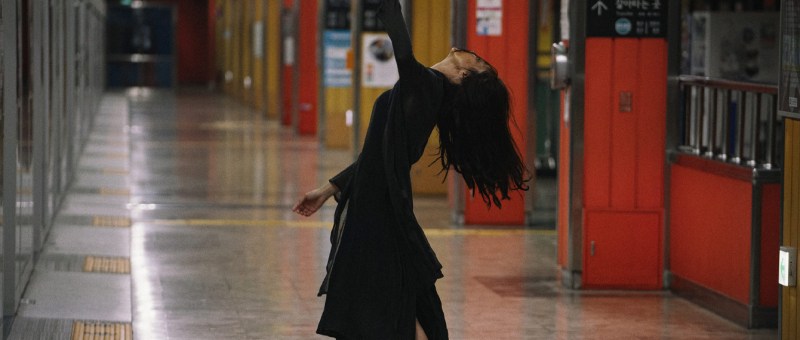
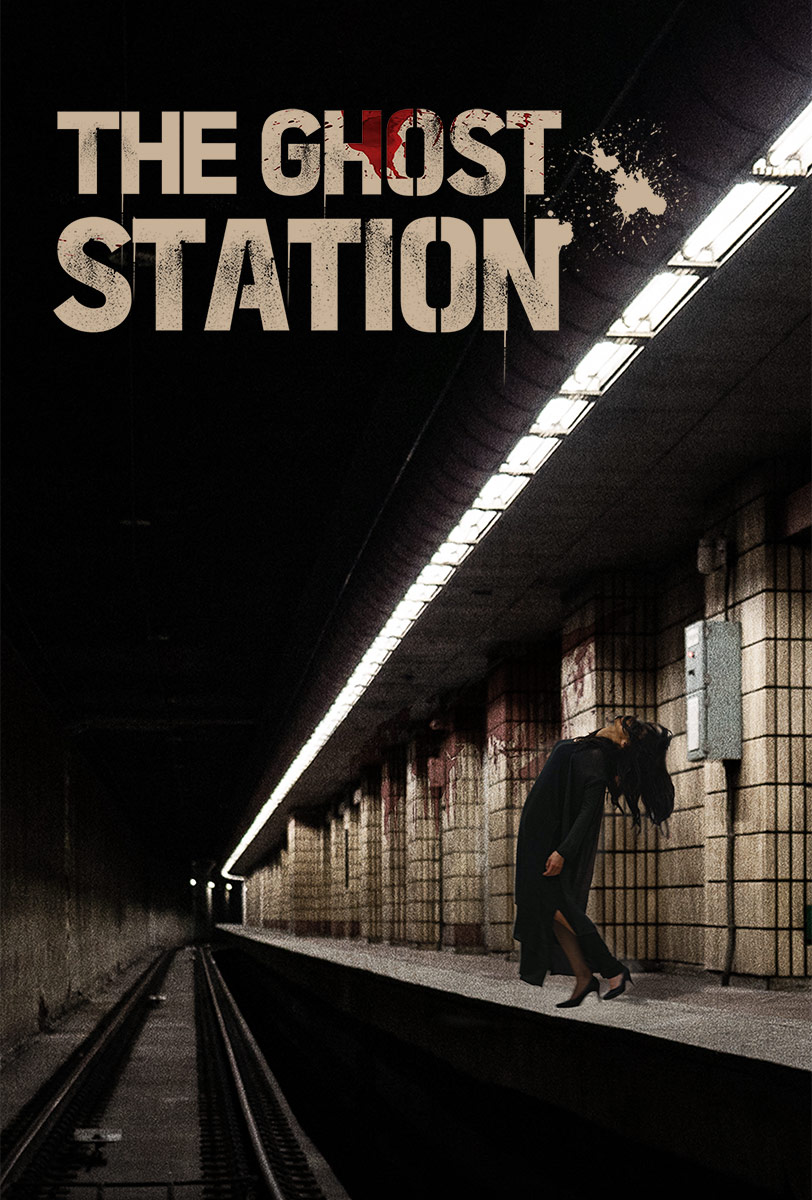
The Ghost Station (옥수역귀신, Jeong Yong-ki, 2022)

The biggest evil at the centre of Jeong Yong-ki’s homage to classic J-horror The Ghost Station (옥수역귀신, Ogsuyeog Gwisin) is perhaps capitalism or more simply modernity. At least, it stands to reason that those covering up a great evil for financial gain could be deemed even worse than the person who actually committed the crimes in turning a blind eye to injustice. It’s in the midst of this paradox that jaded rookie reporter Na-young (Kim Bo-ra) finds herself while beginning to uncover the dark secrets buried beneath a supposedly “haunted” station though mostly lured by the desire for easy clickbait to appease her hardline boss (Kim Su-jin). 

The reason that Na-young is in trouble, is that she was at the station snapping photos for social media without bothering to get a written release from her subjects. The person she took photos of turned out to be transgender and was accidentally outed by Na-young’s story for which she feels little remorse, mostly feeling sorry for herself on realising her job’s on the line and she’ll have to bring in some powerful scoops if she wants to make sure the paper has her back and will cover the compensation money if the woman sues her. 

It has to be said that, in the English subtitles at least, the film has a strongly transphobic vibe in which the photographed woman is constantly described as “a man” , using male pronouns and otherwise treated as a figure of fun, just another “weird” thing going on at the station. Even so, there’s clearly a mild rebuke intended against the contemporary trend of mocking strangers online with a young man falling victim to the station curse in the opening sequence after uploading a video of a woman he first assumes to be drunk or mentally distressed before noticing that in the video he can see a pair of bloody hands attacking her. 

Na-young has been doing pretty much the same kinds of things with her clickbait even while resentful of herself and the loss of her journalistic integrity working at a low level tabloid only interested in viral articles that will generate ad income. But she’s also slightly proud on spotting people reading her pieces on the station ghost as they ride, feeling like she’s doing real investigative journalism even if no one in the office really cares about the dark secrets lurking in the station. Even she later realises that she lost sight of the victim in the case and hadn’t even thought about contacting his family or trying to find out who he was and why he died. 

What she eventually discovers is that her paper may have been involved in a coverup operation which is why her boss becomes hostile as her reports become a little too “real”. It was in the interests of powerful people that the station be built, so anything that might delay its construction was quietly swept under the carpet. Na-young wants to drag it into the light, but finds herself frustrated and then at the centre of a supernatural curse while hoping to give voice to those who were denied any of their own. 

The quietly oppressive, haunting nature of these unseen forces is brought home by the ominous tapping of the ice blue fingernails of Na-young’s ever impatient boss perhaps embittered by her own decision to abandon journalistic integrity for the lure of easy money peddling gossip and distraction to an already apathetic readership. Though adapted from a web toon, the film is co-scripted by Hiroshi Takahashi and bears many of the hallmarks of classic J-horror including the presence of a well implying the contamination of the groundwater that feeds the contemporary society which the station itself in someways represents, along with the uncanny movement of living ghosts in the contemporary environment.

Like J-horror it finds otherworldly spirits trying to communicate through modern technology, in this case saying what first seem to be fragments of a phone number but turn out to have a different meaning indicating a desire to be heard and recognised, reprieved from the hell in which they’ve been placed by a cruel and heartless tormentor. Na-young thinks she can give them that but is perhaps naive, if already corrupted, overestimating the power of the press to offer corrective justice and end a curse by throwing the truth into the light. In the end, she too decides to pass the buck escaping the curse by passing it on as an ironic act of vengeance and liberation thrown like a bomb at an infinitely corrupt social system but more out of spite than retribution. A little shallow and cynical, the film never quite lands its punches or achieves the eeriness it’s looking for but does nevertheless point the finger at the literal skeletons in the closet of the contemporary society.


The Ghost Station is out now in the US on Digital, DVD, and blu-ray courtesy of Well Go USA.

US trailer (English subtitles)

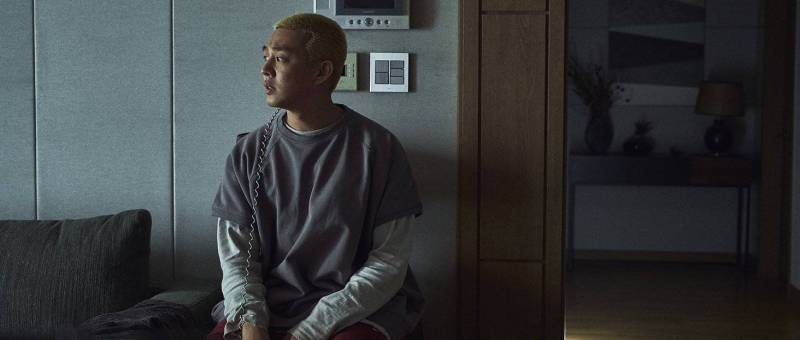
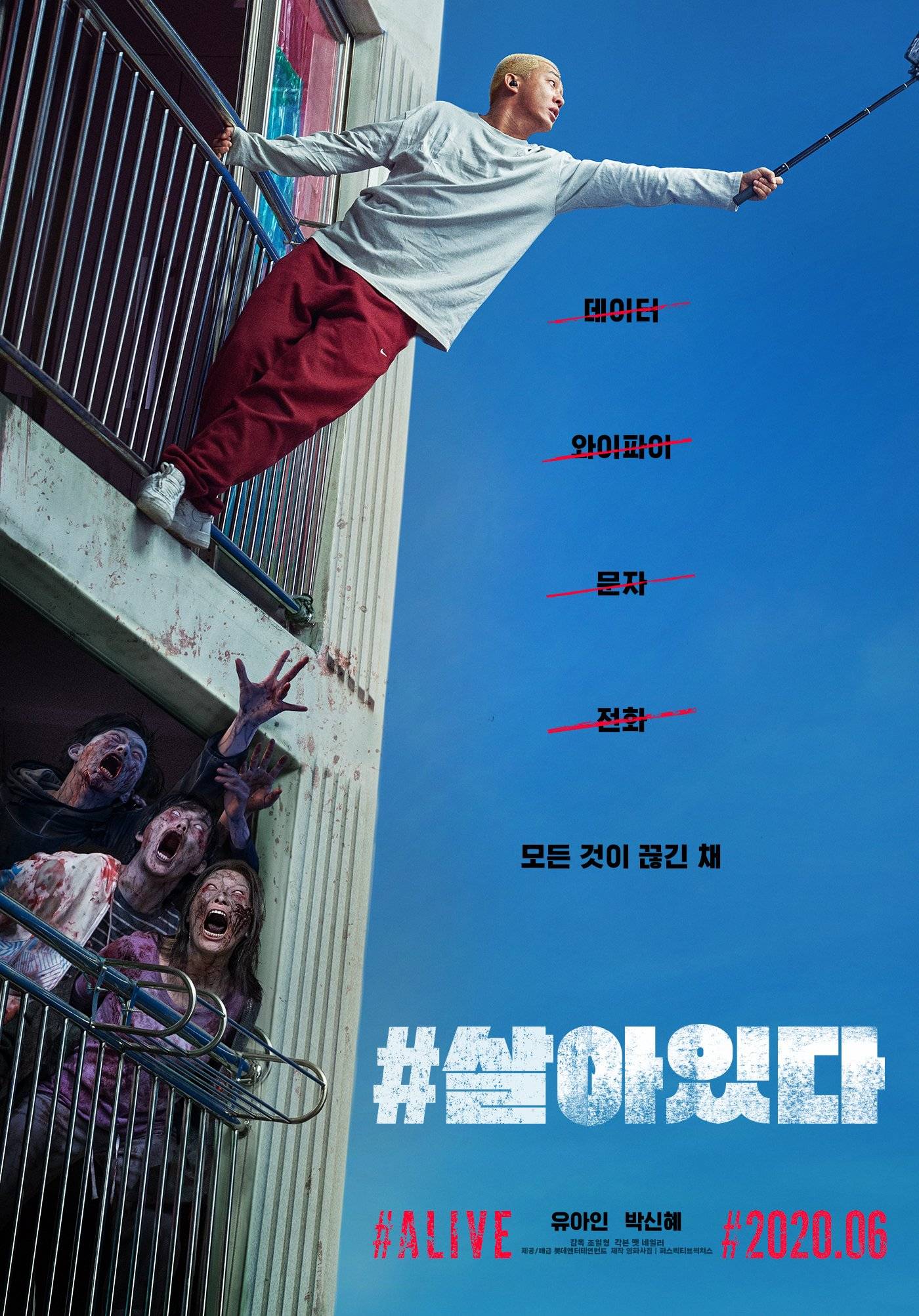
#Alive (#살아있다, Cho Il-hyung, 2020)

Is solidarity really the answer to alienation? The latest in a short line of zombie-related crisis movies, Cho Il-hyung’s oddly prescient #Alive (#살아있다, #Saraitda) presses directly into what it means to live in a time of isolation as its already introverted hero discovers the existential dread of true aloneness, orphaned by his society and quite literally surrounded by cannibalistic threat only to rediscover the desire for life in the company of others vowing to survive not out of obligation but individual will. 

A young man in his 20s, Jun-u (Yoo Ah-in) lives at home with his parents and seems to be a virtual shut-in not quite supporting himself as a pro-gamer/vlogger. He ought to be in his element when he turns on his television one day to discover that a violent riot has apparently erupted all over the city, apparently spreading like a virus which causes aggressive behaviour and cannibalistic frenzy. Unfortunately, Jun-u’s parents left early that morning and didn’t have time to prepare food, leaving him money to go out for groceries but obviously it’s too late for that now and it looks like they won’t be coming home. Jun-u is entirely alone, and all the more so when his usual lines of communication are cut. 

Like the thematically similar EXIT, with which #Alive shares its faith in mountaineering, #Alive concerns itself less with the zombie threat than with youthful alienation and a sense of hopeless despair. Jun-u ought to be in his element, but finds himself ill-equipped for surviving the apocalypse given that he lacks basic adult life skills and those he does possess are now ironically unhelpful. Resourceful as he is, he remembers a smartphone app that would help him communicate via FM radio and all he’d need would be a standard earphone jack only all his earphones are wireless. Making the most of his unstable connection he uploads a single photo of himself holding his address written on the side of a cardboard box with the hashtag #I_MUST_SURVIVE to his Instagram in the hope that someone will see him but becomes increasingly despondent as his food and resources dwindle and he receives a disturbing voicemail which suggests his family may not have escaped the disaster. 

Hitting rock bottom he considers taking his own life but is saved by a literal light in the darkness, a laser shone from an opposing apartment signalling another presence he had previously missed. Believing he was alone in the world, Jun-u lost the will to live and faced with the prospect of waiting to starve to death or venturing out among the zombie hoards chose the only agency available to him in deciding the time and manner of his death. Realising he is not alone restores his desire for life, yet Yu-bin (Park Shin-hye), though much more well prepared, is also dealing with her own trauma in the face of crisis in the memory of a climbing fall that leaves her additionally anxious and fearful of physical risk. Where Jun-u flounders, lamenting as so many of us has in recent years, that no one seems to know what’s going on, the news continually flashing the same info screen while telling viewers only to stay home, Yu-bin has constructed a mini fort complete with a series of booby traps perhaps content in her independence having resolved to live and glad to have discovered she is not entirely alone. 

In contrast to disaster movie tropes, the pair instantly bond in their shared bounce back from despair, developing unconventional means of communication while Yu-bin willingly shares her food stash which in turn gives Jun-u the courage to venture outside for supplies. Eventually reuniting they do their best to withstand the zombie hoards, standing in as they are for the various anxieties which otherwise surround and oppress them, only to find themselves betrayed, worried that perhaps they have after all been abandoned and that no one is there looking out for them. Their salvation lies in their connection, the derided social media proving a lifeline that both affirms their existence and restores a sense of community that returns their safety, airlifting them from the locus of despair finally #Alive and returned to the world secure in the knowledge that they are not alone.


Netflix trailer (English subtitles)

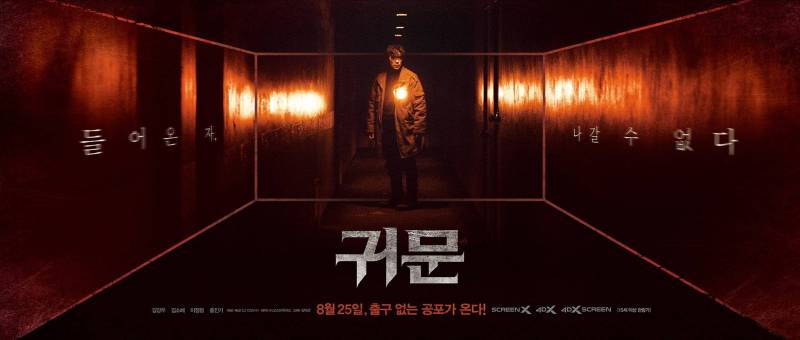
Guimoon: The Lightless Door (귀문, Sim Deok-geun, 2021)

A collection of lost souls find themselves trapped between this world and the next in Sim Deok-geun’s eerie haunted house horror, Guimoon: The Lightless Door (귀문, Guimoon). On a literal quest to exorcise his demons, the hero traverses an impossible and elliptical passage attempting to atone for his sins while freeing others from a similar burden yet finally finds himself becoming his quarry as kind of jailor or perhaps guardian spirit making sure that doors which should never be opened remain forever closed not least to the morbidly curious. 

Do-jin’s (Kim Kang-woo) troubles begin when he casts off his destiny as a shaman leaving his ageing mother to battle a powerful spirit said to belong to a mass killer who suddenly snapped one day and murdered all the guests at small community centre. When the building is torn down, workers discover a body bricked up in the walls which seems almost untouched. Do-jin’s mother is brought in to exorcise the evil spirits but is finally overpowered, a dark presence causing her to stab herself in the neck. Overcome with guilt and apparently “harassed” by his mother’s ghost, Do-jin resolves to atone by releasing each of the spirits killed by the murderous custodian and solving the mystery of the body in the walls in the hope of releasing his mother’s soul so that she can move on to the afterlife and stop nagging him from beyond the grave. 

The “Guimoon” is a kind of portal open on the turn of the year by the lunar calendar. Dojin intends to venture through it assuming it will be easy enough to nix a few ghosts and then come home but soon finds himself lost in a world of uncertain time and forever looping corridors. He meant to travel to the afterlife of 1990, but his world is soon disrupted by the arrival of three university students from 1996 who really shouldn’t be here. Armed with a video camera, they are dead set on crafting their own found footage horror in the hope of winning a competition so one of them won’t have to drop out of school. For the students, this world is “real”. They entered it voluntarily and as far as they are concerned are wandering round a derelict building, not really believing it to be “cursed” or haunted in any way. But for Do-jin it’s a liminal and unreal space he has entered for a specific purpose and from which he hopes to expel those who should have left long before. 

Yet even in trying to solve the mystery, Do-jin concentrates his efforts on Seok-ho (Jang Jae-ho), the shovel-wielding custodian, taking a kind of register of the other guests while knowing little about them. He soon discovers that Seok-ho may not quite be the boogeyman he first thought him to be, realising that his sudden descent into homicidal mania may not have been of his own volition. The solution he edges towards hints at the ironically named community centre as a nexus of trauma, a nightmare world created by an entity trying to escape its suffering and finding empowerment in taking control of its oppressors. 

“I was always here” one of the lonely souls proclaims, while Do-jin and the students find themselves locked in, prevented from leaving by a literal absence of exits. While the students eventually turn against each other, seeking escape by submitting themselves the malicious evil of the entity haunting the centre, Do-jin does his best to complete his quest of vanquishing the ghosts with his shaman’s dagger but is eventually brought to a cruel realisation in a maddening series of loops and repetitions which only lead towards a door which should never be opened. In some ways frustratingly oblique, Sim Deok-geun’s eerie meta horror is an exercise in found footage psychology in which the lost wander lonely corridors while searching for an elusive truth they may already know but have perhaps forgotten. On a night between two worlds lit by a blood red moon, Do-jin ventures into a labyrinth to save his mother’s soul but comes to realise that if you walk through the door between life and death you may discover that there is no exit from existential torment.


Guimoon: The Lightless Door screened as part of this year’s London Korean Film Festival.

International trailer (English subtitles)
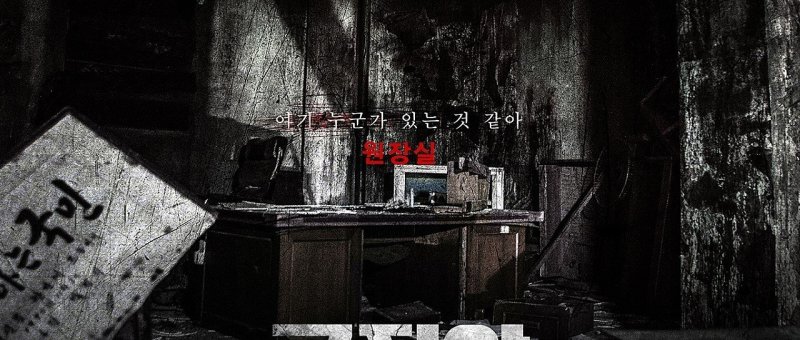
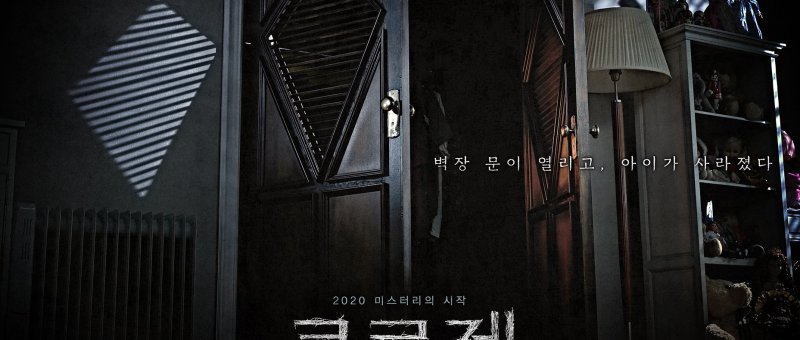
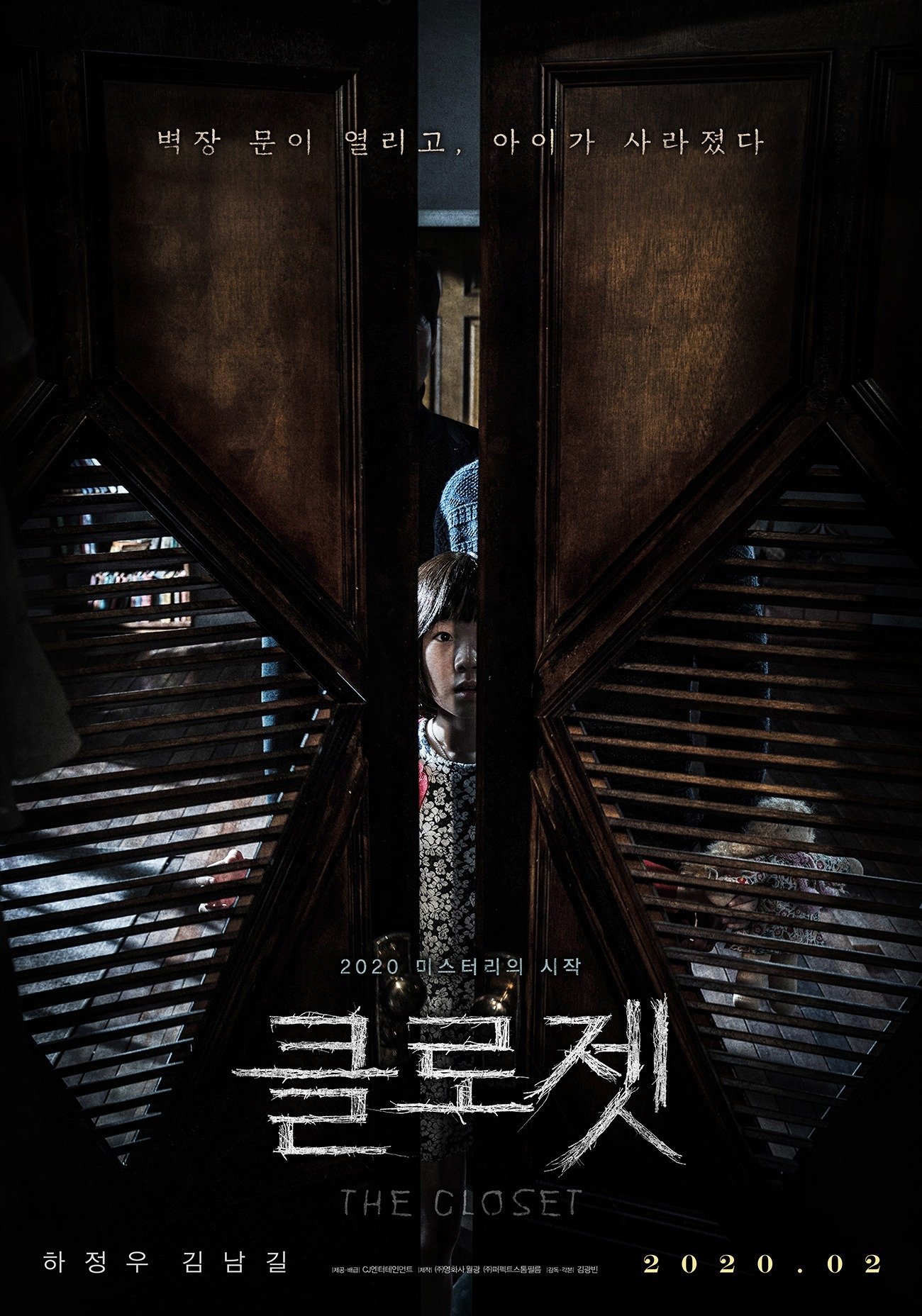
The Closet (클로젯, Kim Kwang-bin, 2020)

Parents in Korean horror films are often uniquely flawed but go to great lengths to redeem themselves through saving their children from supernatural peril. This much is true for the narcissistic hero of Kim Kwang-bin’s grief-stricken ghost story, The Closet (클로젯). The title, perhaps in contrast to its first implications, has a poignant quality as it represents in one sense a place of safety for children trying to protect themselves from the things that frighten them but of course it is no safe place and only leaves them trapped, vulnerable, and traumatised by a world of adult cruelty they are far too innocent to understand. 

Architect Sang-won (Ha Jung-woo) lost his wife in a car accident in which he was driving. He has just bought a large house in the country where it’s quiet and the air is clean to help his young daughter Ina (Heo Yool) recover from her trauma, but his decision is causing trouble in his professional life because his firm prefer their architects to be onsite during in builds and Sang-won obviously needs to be with Ina until he can find a nanny. Ina is generally avoidant around her father, something which probably isn’t helped by her overhearing him blame all his problems on her while arguing with work on the phone, but her personality undergoes an abrupt change after she opens the closet door in her new bedroom, rendering her suddenly cheerful while carrying around a strange doll. 

Sang-won’s first concern is the manky old toy which irritates him because he’d gone to trouble to buy Ina a fancy limited edition doll as a present which she hasn’t played with. Ina is probably ageing out of dolls, and doubtless not that impressed with the supposed pedigree of her father’s gift seeing as neither is she old enough to appreciate a purely decorative present, but in any case Sang-won’s gesture was largely for himself as he proves flagging up how much trouble he went to to get it without, it seems, thinking about what Ina might actually like. When the accident happened, Sang-won was having a minor argument with his wife because he hadn’t made it to Ina’s school concert. He was faintly dismissive, superficially apologetic but clearly unrepentant in choosing his career over his family. Still traumatised over his role in the accident, Sang-won fails to connect with his daughter out of a mix of emotional unavailability, guilt, and intense resentment.

Facing potential humiliation at work on learning he’s been “paired” with a younger architect, Sang-won gets a random local woman to watch Ina, telling her he’ll be away for two months but will visit at weekends. With all of the craziness in the house the “nanny” quits and Ina goes mysteriously missing soon after. Sang-won goes to the police and then the media, but once they catch sight of his medication and mental health profile, he all but becomes a suspect in his daughter’s disappearance, some thinking he killed her and is covering it up and others pitying him as a madman who simply doesn’t remember having harmed his child. An exorcist (Kim Nam-gil), however, has another explanation and Sang-won, though originally sceptical, is forced to trust him because he is the only one who doesn’t think him guilty of murdering his little girl. 

As might be expected, Sang-won’s paternal failures are the root of all his problems. Not only did he neglect his family before the accident, but continues to reject his paternity while rendered a single parent, hoping to palm his daughter off on a nanny so he can go back to concentrating on his career. Questioned by the well-meaning but insensitive exorcist, Sang-won is forced to realise he knows nothing about his little girl. He has no idea if she likes K-pop or if she has any friends. Faced with her continued indifference, he was planning to send her away to an art therapy camp, throwing his hands up in the air and declaring fatherhood too difficult. As the exorcist points out, kids are smart and they know when they aren’t wanted. It’s precisely this feeling of insecurity which has invited in the supernatural. Sang-won will have to prove his paternal love if he truly wants to bring his daughter home. 

The grudge-bearing ghost, it seems, is trying to provide a refuge for all those other children bullied, mistreated, or neglected by the adults who were supposed to protect them, but all Sang-won can do is apologise on behalf of failed fathers everywhere which is, it has to be said, not much of a victory even if refocuses our attention on the true villainy which is sadly much more societal than it is supernatural. In any case, Sang-won doesn’t seem to have changed very much even if he’s had something of a humbling and been superficially restored as a “good” father rededicating himself to raising his daughter. The final sting, however, is perhaps a little on the flippant side even as it reminds us of the evils still lurking in the dark corners of our societies. 


International trailer (English subtitles)

Gonjiam: Haunted Asylum (곤지암, Jung Bum-sik, 2018)

Gonjiam Haunted Asylum posterBack in 1992, all of the UK was scandalised by a strangely realistic “drama” starring three well respected TV personalities “investigating” poltergeist activity in an ordinary house. Screened as part of an ongoing anthology drama series, the show was presented as if it were live complete with a telephone number for viewers to ring in. Many were tricked into believing the events they were witnessing were “real” and that a genial children’s TV presenter they knew and loved had been dragged off by a malevolent supernatural entity. Fast forward 10 years and the nation was once again gripped by a “live” ghost hunting show presented by a dubious psychic and a (former) children’s television presenter but this time at least keeping up a pretence of “reality” even if the show’s appeal lay more in its exaggerated seriousness than it did a genuine interest in the paranormal.

The world may have been a more innocent place back in 1992, but ghost shows are still big business even in this comparatively more cynical age. Reality TV ghosthunters Horror Times decide the best way to pick up their flagging views is to go viral by going live inside a notorious disused sanatorium listed as one of CNN’s seven freakiest places on Earth. Rumour has it that Gonjiam Mental Hospital (a place all too real though here given a fictionalised history) was built by the Japanese over the top of a mass grave for resistance fighters though, according to our guides, it was also accounted one of the best psychiatric facilities in the country. Its director received numerous awards from the government of Park Chung-hee (which ought to tell you she was probably up to no good), but the hospital fell into disrepute after an incident in which all the patients mysteriously died and the director herself “disappeared”. Ever since then teenagers have been breaking in to try their luck, but anyone who’s tried to open the door to room 402 has met a sticky end.

Gonjiam: Haunted Asylum (곤지암, Gonjiam) is a found footage horror movie in the modern mould and like most, the crime our “heroes” are about to commit is one of extreme hubris. Cynical in the extreme, the Horror Times crew have absolute certainty in the non-existence of the supernatural and actively mock it through their exploitation of engineered “scares”. In an odd way, if you really thought about it, Horror Times would be quite an exploitative show if it involved “real” ghosts – perhaps you should let malevolent spirits lie rather than bullying them to fight you for the entertainment of others. Nevertheless, the Horror Times crew are about to find out just how wrong they are. While they bicker amongst themselves, hatching plans to wind up the most “expressive” of the team members, setting up bizarre “rituals”, and faking being “scared” to get more money, the Captain keeps a firm eye on the numbers from the safety of the editing tent and the horrors of Gonjiam begin to bubble quietly below the surface.

The thing is, there is clearly horror in spades in this version of Gonjiam where we are told the directoress excelled at treating not only the “distressed” but also “political prisoners”. The lab holds its share of bizarre discoveries including some kind of weird chicken in preserving fluid while the “collective treatment room” is filled with individual confessional boxes which are completely closed save one opening at the chest level. The spectres we later see have large scars running down their torsos and we can only image the true horror of whatever it was that was done here and to whom and on what grounds, but Horror Times aren’t interested in any of that despite their rather superficial “investigations” of the directoress’ office and her many photos of that time she got a prize off a dictator. By the time everyone starts speaking in tongues and getting trapped in strange underwater realms, it becomes clear the “truth” is going to remain buried. 

Maybe the other lesson the Horror Times guys should have learned is that the traumatic past is not your playground and it’s probably fair enough if those unable to pass on begin to feel upset about their personal pain being exploited for ghoulish thrills. Perhaps there’s a mild lesson in the unhappy fates of those who’d rather poke the ghosts than cure them, revelling in the darkness of another era rather than trying to expose it, but Gonjiam isn’t so much about lessons as good old fashioned scares. The abandoned hospital itself is atmospheric, as are the distant banging and doors opening of their own accord but there’s a glibness in its unease that undercuts the sense of dread and inevitability so essential to the genre. The biggest irony of all is that Horror Times’ viewers lost interest when the “real” ghosts showed up – reality TV never really was about “reality” anyway.


Screened as a teaser for the upcoming London Korean Film Festival. The next and final teaser screening will be A Tiger in Winter on 17th September at Regent Street Cinema at which the full programme for this year’s festival will be revealed.

International trailer (English subtitles)
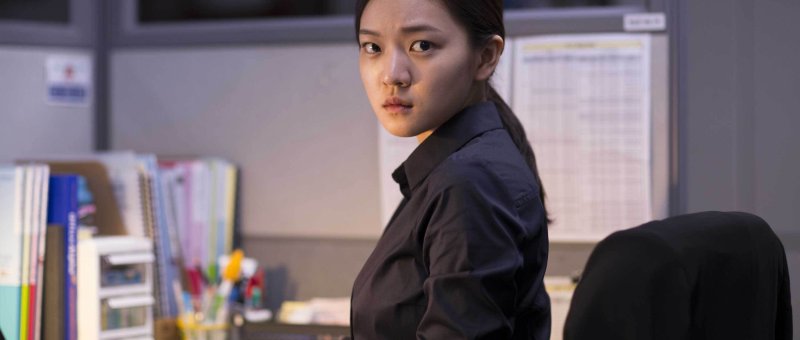
For the curious, a clip from Ghostwatch (1992)

Office (오피스, Hong Won-chan, 2015)

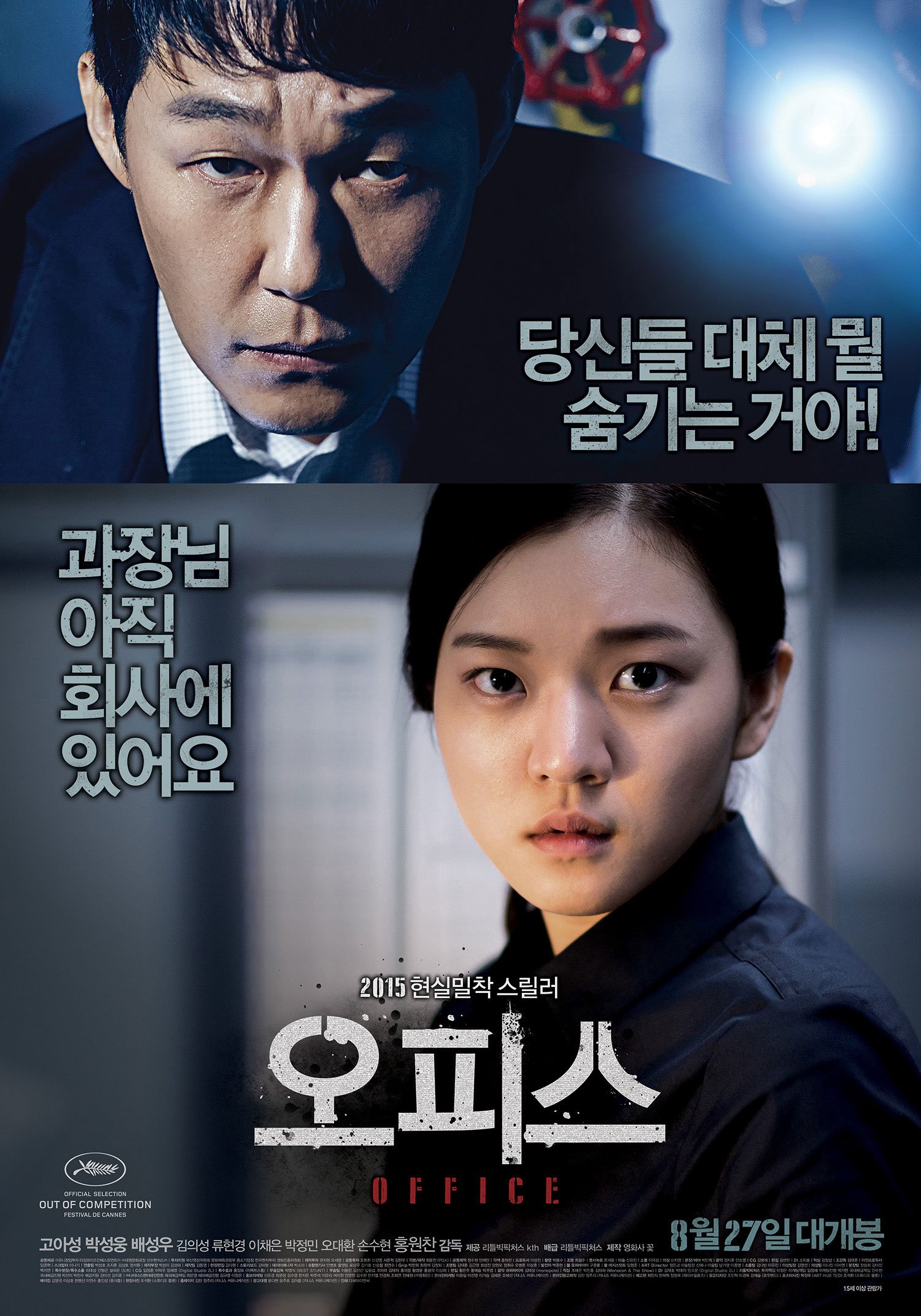
office posterThe pressure cooker society threatens to explode in Hong Won-chan’s Office (오피스). The writer of recent genre hits The Chaser and The Yellow Sea, Hong has long experience of examining those living on the edge but in his directorial debut he takes things one step further in depicting an entire society running to keep up with itself, furiously chasing its own tail with barely suppressed rage. Not so much survival of the fittest as survival of the least scrupulous, the world of Office is the one in which the mad become the most sane, escaping the constraints of corporate oppression through social revenge but taking the innocent along with them.

Salaryman Byun-guk (Bae Seong-woo) has the soulless eyes of one whose dreams have already died. Dejectedly he sits alone at a coffee shop before cramming himself into the commuter train home where he sits, silently, among his busy family. They wonder why he hasn’t changed out of his suit, shed his corporate persona for his familial one, but when Byung-guk gets up he returns brandishing a hammer which he then, as if in a trance, uses to bludgeon to death his loving wife, disabled son, and senile mother.

Byun-guk flees the scene of crime and is loose somewhere in the city. The police search his office for clues but his colleagues have already come up with their unified version of events, keeping the company out of it by claiming that they all loved Byun-guk and are shocked that he could have done something so horrifying. Meanwhile, intern Mi-rae (Go Ah-sung), who regarded Byun-guk as her only friend in the office, is upset but perhaps not quite so shocked. Excluded from the interoffice cliquery, no one has thought to brief Mi-rae on the party line leaving her a prime target for police inspector Choi (Park Sung-woong).

Byun-guk and Mi-rae are two of a piece – members of the upright and hardworking lower classes who have done everything right but somehow have never been accepted by their peers. Mi-rae, an ordinary girl from Gwangju who worked to lose her accent in her teens dreaming of the high life in Seoul, is shy and mousy but works hard – harder than anyone, to prove herself worthy of Seoul’s unrealistic demands. Her colleagues, privileged, confident, and also harried, do not forgive her for this. They find her earnestness “creepy”, her desire to succeed “suspicious”. Cruelly taken down a peg or two by a colleague taking out her own frustrations on the office nobody, another tries to comfort her with some advice – don’t try so hard, you make us all look bad and we wonder what your need is hiding. Mi-rae isn’t really hiding anything save her slowly fragmenting mental state and the overwhelming need to be accepted to a club that, in truth, is not open to people like her who value their integrity and still believe deep down that working hard and being honest are the only paths to true success.

Korean society, it seems, has become a giant chain of screaming. Byun-guk has been repeatedly passed over for promotion despite being the most reliable employee in the office but his ineffectual boss is overly wedded to the shouting school of business management. Faced with results he doesn’t like, Byun-guk’s boss picks someone to shout at to make them better but offers no further guidance. Railing at the police for not doing their job as if screaming will some how provoke major results even outside of the office, the boss can’t know that police also have their own chain of screaming and Choi has his own boss already taking care of that side of things, demanding results rather than truth or justice.

The meek are taking their inheritance ahead of schedule, but their revenge is born both of societal corruption and rejection. People like Byun-guk and Mi-rae, who are quiet, honest, kind but perhaps not good with people, become the bugs in a system which simultaneously holds them up as essential cogs. Those who cannot just pretend, grease the wheels with superficial social niceties, and accepted their place in the chain of screaming in order to climb further up it are condemned to wander idly around its lower levels going quietly mad until, perhaps, the system crushes them or else collapses.


International trailer (English subtitles)
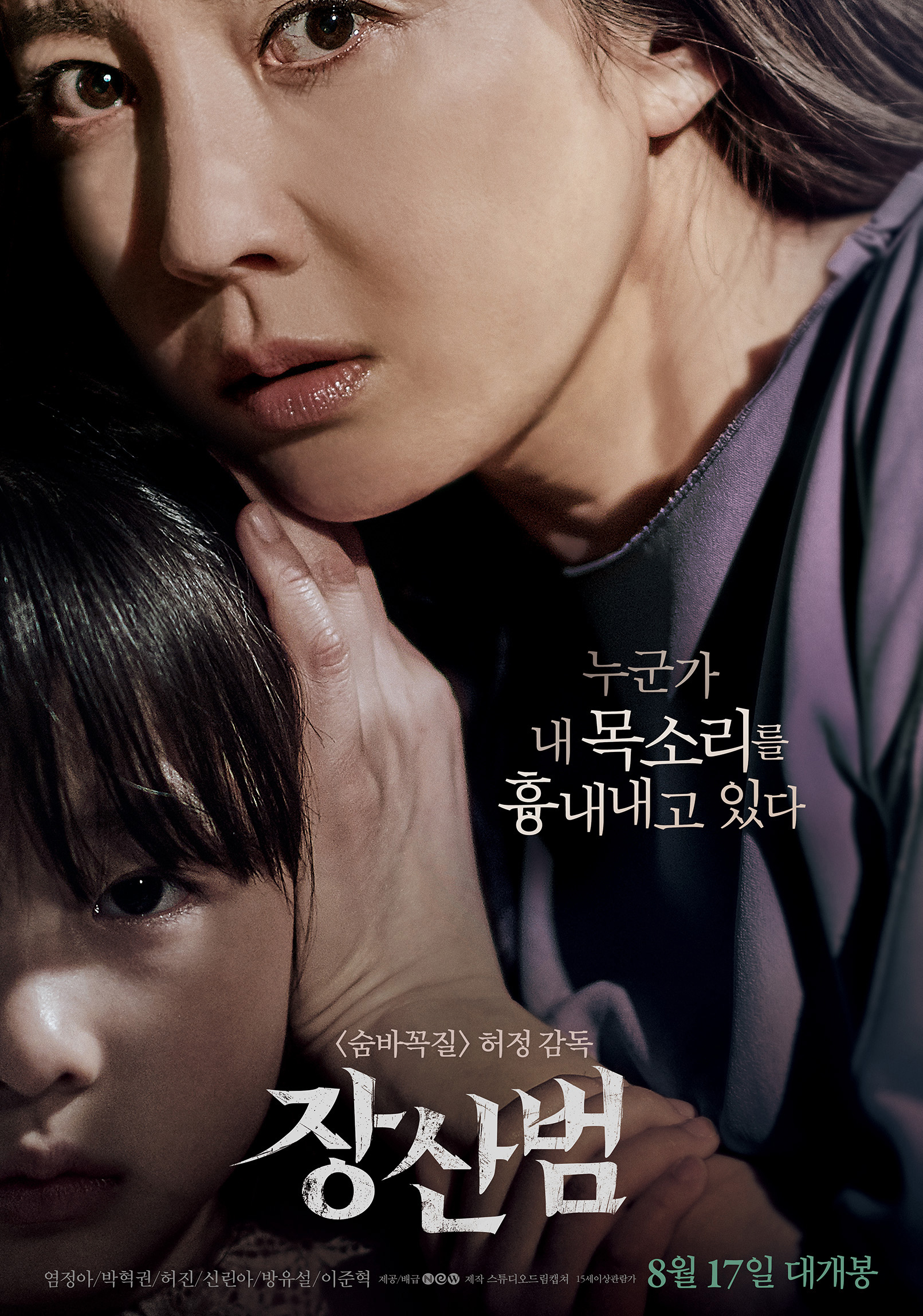
The Mimic (장산범, Huh Jung, 2017)

The mimic posterFears of changeling children and their propensity to become cuckoos in the nest is a mainstay of folklore horror, but in recent times the creepy kid has crept his way in from the cold as the current monster of choice. The Mimic (장산범, Jangsanbum), though apparently completed some time earlier, has a few superficial similarities to Na’s The Wailing in its use of powerful, ancient myths and shamanic lore to conjure its particular brand of evil. If Na’s film was sometimes criticised for its obtuse ambiguity Huh has the opposite problem in failing to properly support his internal mythology with an appropriate level of consistency.

Hee-yeon (Yum Jung-ah) packs up her life including husband (Park Hyuk-kwon), mother-in-law (Heo Jin) suffering with dementia, little girl Jun-hee (Jang Liu) and a box of painful memories and moves to Mount Jang – her mother-in-law’s hometown. The move is intended to help the family put the past behind them and move on after Hee-yeon’s son disappeared without trace five years previously, but it’s not long before Hee-yeon is catching sight of small boys in ragged clothes on the streets around Mount Jang and convincing herself she’s seen her little boy despite the distance from the place where he disappeared and that he’d now be five years older than the version she has stored in her memory.

With Hee-yeon’s mental state already strained, she runs into trouble when a pair of earnest children arrive hoping one of the dogs in the kennel facility the family are running might be their missing puppy. It isn’t but their search leads them to a creepy walled up cave where they’re attacked by a malevolent entity. While her husband is helping the children and investigating the cave, Hee-yeon comes across a strange little girl (Shin Rin-ah), apparently lost, and dressed in an old fashioned velvet dress with a lace collar. The girl disappears while the Hee-yeon and her husband are busy with the police but later turns up at the couple’s home and worms her way inside, eventually claiming that her name is Jun-hee too, just like Hee-yeon’s daughter.

The central conceit is that the malevolent entity existing around Mount Jang mimics the voices of (usually dead) loved ones in order to convince its victims to surrender themselves voluntarily. Huh sets up Hee-yeon’s mental instability early on as she nervously guzzles pills to help her regain her grip on reality, but there after abandons it, never questioning the real existence of threat or Hee-yong’s relationship to the little girl whom she at times strangely believes to be her son. The little girl remains a typically creepy kid, originally mute and then mimicking Jun-hee but apparently unthreatening in and of herself. The cuts and bruises across the little girl’s back might explain her silence with her immediate adoption of a Jun-hee persona a kind of rejection of her original personality, but the film has already lost interest in rational explanations.

Hee-yeon, despite a degree of distance towards her daughter, immediately takes to the little girl, bringing her into the house with an intention to keep her despite her husband’s reservations. The desire to save this lost little girl is, of course, a kind of reaction to the loss of her son whom she seems to see in the little girl even without her supernatural gift of mimicry. Hee-yeon blames herself for the unknown fate of her little boy who disappeared after she left him with her mother-in-law (already suffering with dementia) in a busy foodcourt. Granny may have more clues, but if she has they’re irretrievably locked inside her fracturing mind. Having grown up in the surrounding area and being aware of the legends since childhood, granny is also a good person to ask about the strange goings on – only no one does because they assume she is not mentally stable. Hence when she alone knows to cover up mirrors and is suspicious of the little girl, everyone thinks it’s the dementia talking.

Symbolically the choice which is presented is between past and future, life and death, in the knowledge that the two are mutually exclusive. The liminal space of the cave becomes its own purgatorial courtroom in which Hee-yeon, and the other victims, must decide for themselves who or what they believe and which sort of existence they wish to embrace. For Hee-yeon her trial involves the abandonment of another child as a final goodbye to her long absent son, pulling at her fragile maternity and testing each and every aspect of it (though not, perhaps, that related to her remaining daughter who seems to have been temporarily forgotten). Huh makes fantastic use of soundscapes and intriguing use of mirrors, but even the high quality photography and committed performances can’t quite overcome the hollowness of his mythology, robbing his dark fairytale of its essential power.


Screened at London Korean Film Festival 2017. Also screening at Showroom Cinema, Sheffield, 15 November 2017, 8.30 pm

International trailer (English subtitles)

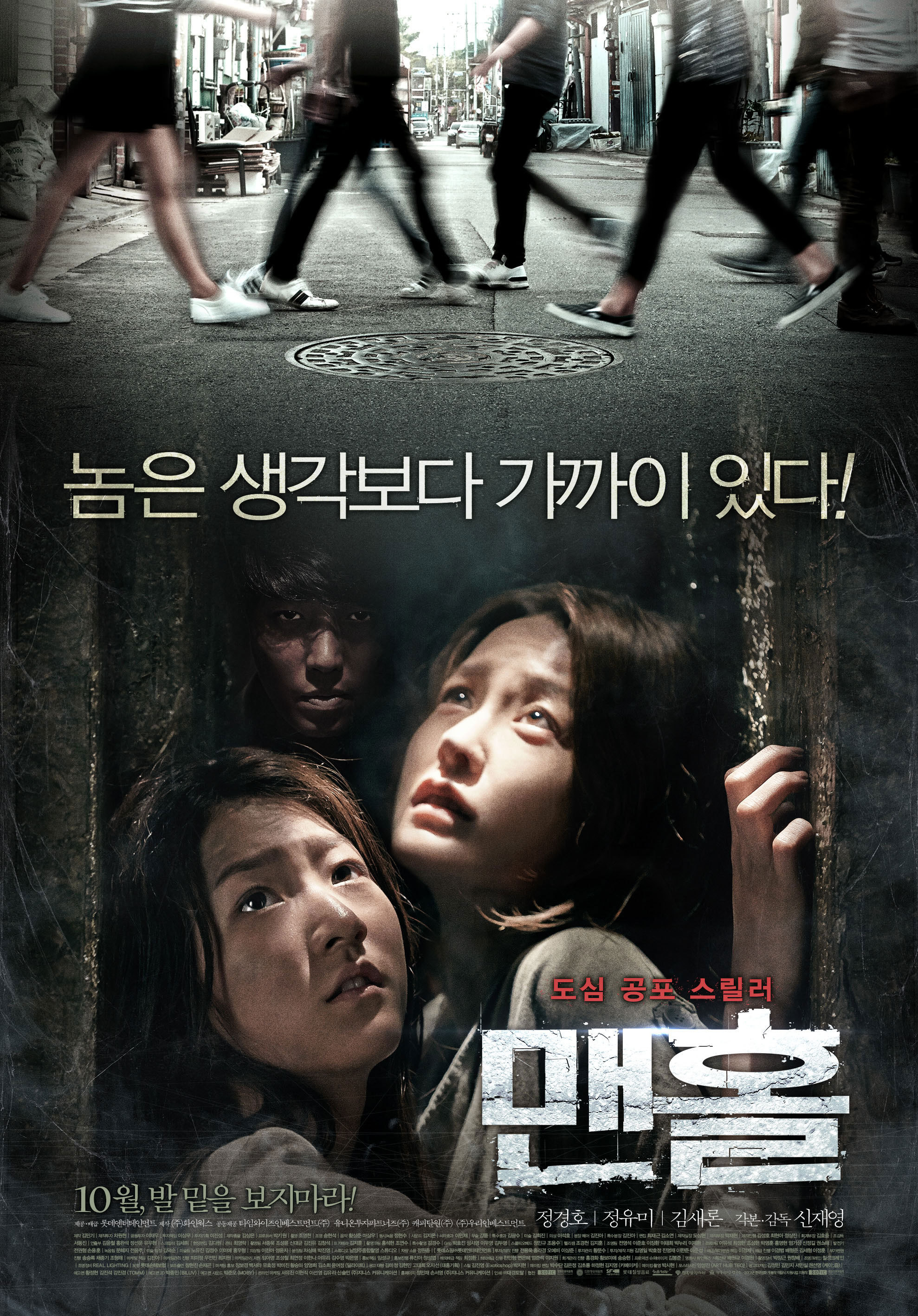
Manhole (맨홀, Shin Jae-young, 2014)

manhole posterFinding the sinister in the commonplace is the key to creating a chilling horror experience, but “finding” it is the key. Attempting to graft something untoward onto a place it can’t take hold is more likely to raise eyebrows than hair or goosebumps. The creators of Korean horror exercise Manhole (맨홀) have decided to make those ubiquitous round discs the subject of their enquiries. They are kind of worrying really aren’t they? Where do they go, what are they for? Only the municipal authorities really know. In this case they go to the lair of a weird serial killer who lives in the shadows and occasionally pulls in pretty girls from above like one of those itazura bank cats after your loose change.

Of course, it’s sort of our first victim’s fault because she’s dared to go out late at night on her own and committed the cardinal sin of shouting at her over protective father on the phone shortly before realising she’s wandered into a horror movie by mistake. The lights start flickering, everything goes wavy and then you’re being pulled down a manhole. Not cool.

Anyway, the real story is about two sisters. Yeon-seo (Jung Yu-Mi) is now the sole guardian of Soo-jeong (Kim Sae-Ron) following the death of their parents and also seems to be harbouring some kind of guilt over an accident that left Soo-jeong permanently deaf. Perhaps a little over protective as a consequence, Yeon-seo instructs Soo-jeong to stay in their apartment and wait for her to get back. Soo-jeong, however, is old enough to push the boundaries and ventures out alone to meet her sister on her way home with an umbrella. Unfortunately, she catches sight of the killer along the way and is soon trapped in the sewer like everyone else, apparently. Yeon-soo tries to call the police but they aren’t interested so she has little choice but to track her sister’s phone and journey underground herself. She’s joined (well, they’re there at the same time) by the father of the first victim (Choi Duk-Moon) who happens to be a former policeman, now in possession of a gun stolen from a friend also set to make a fateful descent at a later point.

Manhole is a very confused film. Unable to decide who its protagonist(s) is (are), it meanders freely between its disparate plot strands without ever managing to build coherent connections between them. Though the sisters are posited as the main element of the story, they take quite a long time to arrive and are then frequently sidelined in favour of other ongoing developments. Their story is undoubtedly the most interesting as it presents an unusual plot device in which they remain unable to communicate verbally during their attempts to escape from the sewers and it’s nice to see sign language used so ordinarily in a genre film, yet even their meagre backstory is painted in broad strokes and through flashbacks once again making it difficult to fully connect with them as they battle the threat in the shadows.

The role of the killer, Soo-chul (Jung Kyoung-Ho), is also a difficult one as he is neither protagonist nor generic threat but given a small amount of flashback backstory delivered in monologue to his victims which only serves to make him a frustrating presence. Manhole seems as if it has a point to make about families in that Soo-chul is a damaged child of a broken home, both trying to avenge himself and regain what he’s lost by, in a sense, “recreating” a family through his kidnappings. Frequent glances towards the prominently displayed portrait of the ideal family contrast with the other relationships in the film – Jong-ho and his hunt for his missing daughter, and the bond between the two sisters. Both of these family units are also missing elements – the sisters who’ve lost their parents and Jong-ho as a lone father. Neither of the parental figures in the film is fully able to protect their charges despite appearing controlling and over protective prior to the incident though no particular reason seems to be offered for this other than praising parental sacrifice in allowing both to fight all out to protect those closest to them.

What Manhole tries to be is a chase film, confining itself to the sewer environment as its crazed killer crawls around it like the literal beast in the shadows, cocooning victims in clingfilm and wearing bug-like bright red night vision goggles. Though exciting enough the frequent cutaways and over reliance on shaky cam disrupt the claustrophobic atmosphere as do the stereotypical jump scares and framing which feel as predictable as the final sequence of a video game in which the idea is to dodge the falling axes. Muddled and inexpertly photographed, Manhole is a disappointing genre exercise which even the generally strong performances of its cast can’t mask. Still, hardcore genre fans may find more to admire in the gore stained darkness of the oddly accessible sewer network and its lizard-like psycho killer.


International trailer (English subtitles)
https://www.youtube.com/watch?v=F-OqZSyZ6i8

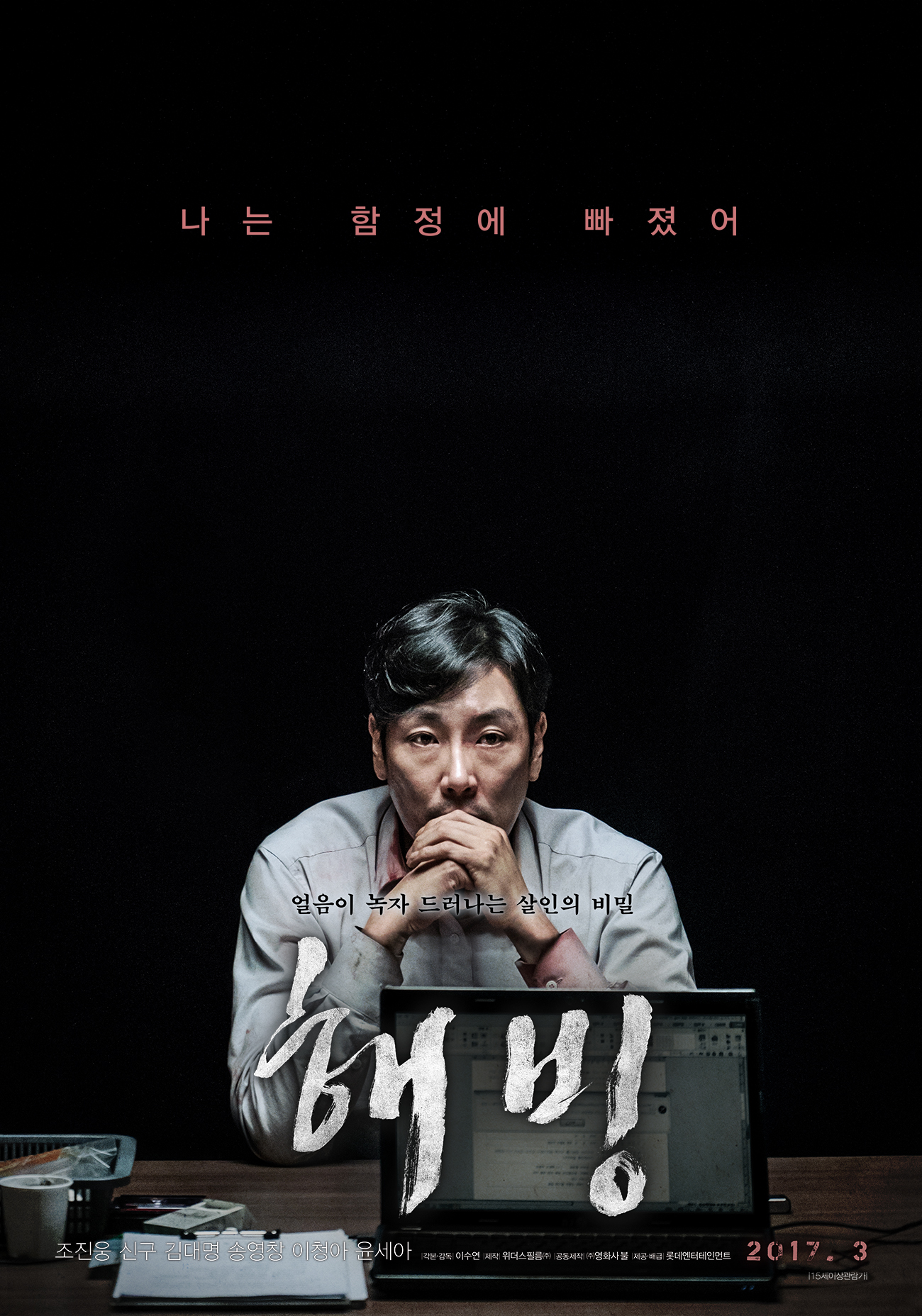
Bluebeard (해빙, Lee Soo-youn, 2017)

bluebeardIf you think you might have moved in above a modern-day Sweeney Todd, what should you do? Lee Soo-youn’s follow-up to 2003’s The Uninvited, Bluebeard (해빙, Haebing), provides a few easy lessons in the wrong way to cope with such an extreme situation as its increasingly confused and incriminated hero becomes convinced that his butcher landlord’s senile father is responsible for a still unsolved spate of serial killings. Rather than move, go to the police, or pretend not to have noticed, self-absorbed doctor Seung-hoon (Cho Jin-woong) drives himself half mad with fear and worry, certain that the strange father and son duo from downstairs have begun to suspect that he suspects.

Seung-hoon has only just moved into this very modest apartment after a recent setback in his career and personal life. Once the owner of an upscale practice in Seoul’s trendy Gangnam (not usually known for its doctor’s surgeries), Seung-hoon is bankrupt, divorced, and working as a colonoscopy specialist in a local clinic which just happens to be situated in a run down industrial town that everyone knows the name of because it’s that place where all those murders happened.

Used to better things, Seung-hoon finds his new job boring and annoying. Though members of staff at the clinic including pretty nurse Mi-yeon (Lee Chung-ah) do their best to make him feel at home, Seung-hoon spends all his time alone staring into space and eating snacks in the treatment room rather than enjoying proper meals with the others in a nearby cafe. Despite being a bookish looking guy, Seung-hoon hasn’t much taste for literature but loves his mystery novels. When his landlord’s family use him as a connection to get the elderly patriarch in for a scan, it sparks a crisis in Seung-hoon’s already strained mind. Midway through the treatment, the old guy starts muttering about dumping body parts in a lake. Is he just senile and dragging something up from the news or a movie, is Seung-hoon’s overactive imagination coupled with a steady stream of grisly police procedurals playing tricks on him, or is this diminished yet creepy old duffer really responsible for a series of brutal killings?

The original Korean title means something like “ice melting” which gives a better indication of Lee’s intentions as long-buried evidence is unearthed by changing weather both mental and physical. Bluebeard, for those who don’t know, is a creepy horror story told to children in which a horrible old man imprisons and then murders all his wives. Seung-hoon’s suspicions are further aroused by the fact that all of the women associated with the guys downstairs seem to disappear. Then again, they are quite strange, so perhaps their wives really did just leave without warning.

Seung-hoon’s wife appears to have left him high and dry preferring to stay behind in the city rather than accompany him to this grim one horse murder town. The couple’s son wants to go to summer camp in Canada but Seung-hoon can’t quite afford it in his present difficulties. Now afraid to go home because of his creepy neighbours, Seung-hoon spends his nights curled up in the office where he accidentally discovers another employee’s morphine pilfering habit. Pushed to the edge, Seung-hoon’s mind starts to crack. Less concerned with the murderer than Seung-hoon’s fracturing mental state, Bluebeard neatly frames its hero whilst blithely wondering if he’s accidentally framing himself. Presented with a series of alternate histories, Seung-hoon’s memories seem increasingly unreliable and his paranoid, irrational behaviour less justifiable. When the ice melts the truth will be exposed, but it looks like it might be a long, cold winter for Seung-hoon.

Lee takes her time but builds an eerie, dread filled atmosphere where everything seems strange, suspect, and frightening. Seung-hoon has already hit rock bottom and may not have been such a great guy in the first place, but his descent into psychotic desperation and terrified paranoia is at the heart of the story which hinges on whether his suspicions are correct or if he’s simply read too many detective novels and has too much time on his hands now that he’s all alone. Anchored by a stand out performance from Cho, Bluebeard is an intricately designed, fascinatingly complex psychological thriller which carries its grimly ironic sense of the absurd right through to the cynical closing coda.


Bluebeard was screened at the 19th Udine Far East Film Festival.

International trailer (English subtitles)