
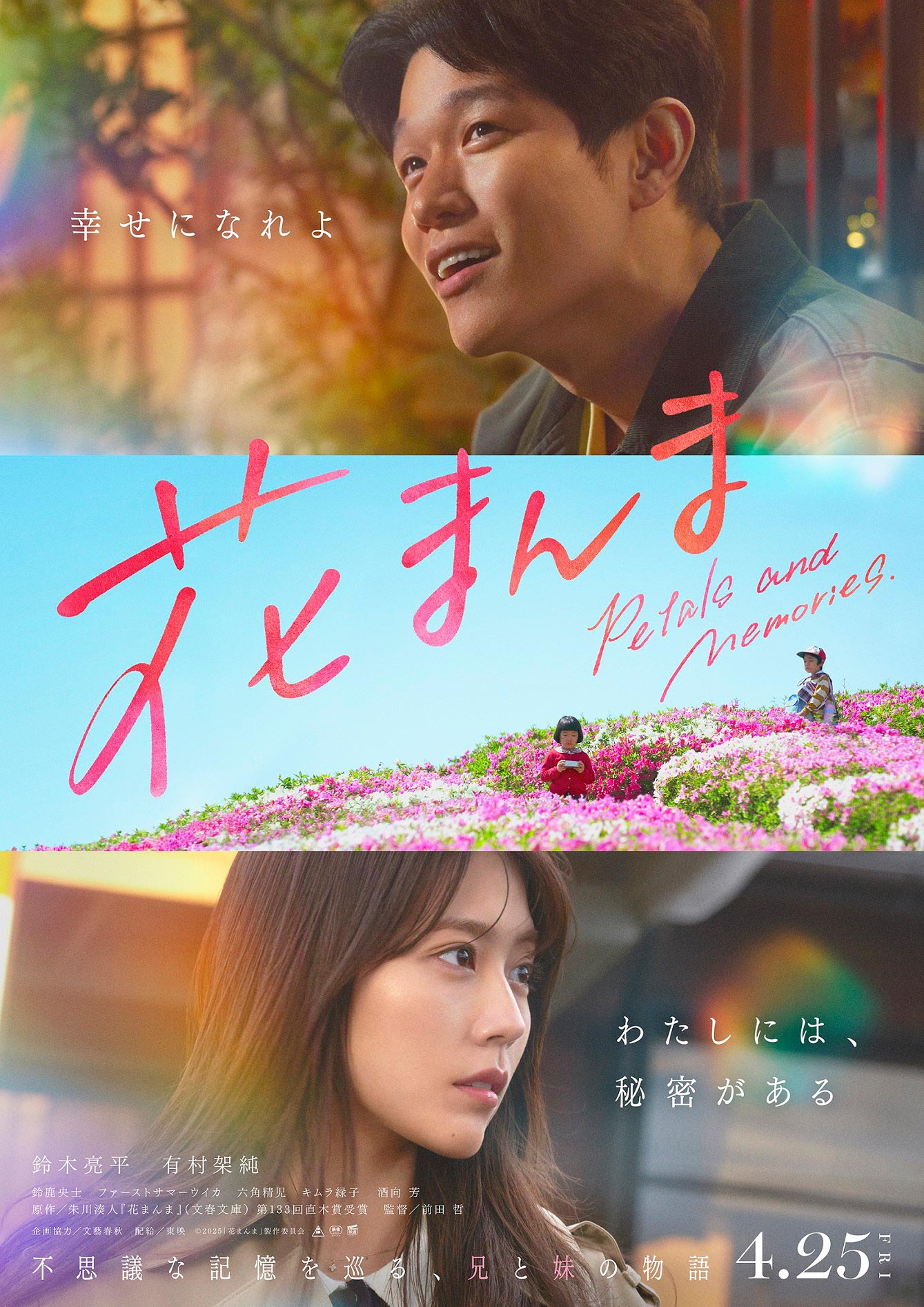
In many Japanese family dramas, there is an inherent sense of impending tragedy born of the notion that one family must necessarily be broken for another to be formed. Cultural sensibilities might insist that someone can only be part of one family at any time and any attempt to play a part in another is an act of betrayal. But reality is not so clean-cut and just because a woman gets married, it doesn’t really mean that she becomes a stranger to the people who raised her nor that they must completely sever ties with her even as they wish her well as she transitions to a new stage of life.
This is though what older brother Toshiki (Ryohei Suzuki) fears in Tetsu Maeda’s supernaturally tinged familial drama Petals and Memories (花まんま, Hanamanma). Adapted from a short story by Minato Shukawa, the story has an old-fashioned quality in which it could easily have been set back in the Showa era were it not for the fact that Kiyomi, the spirit that his sister Fumiko (Kasumi Arimura) claims to carry, was killed in the climatic year of 1995 which saw both the Kobe earthquake and sarin gas attack on the Tokyo subway. In any case, Toshiki has a distinctly Showa-era vision of masculinity and remains incredibly protective of his sister even if Fumiko has moved up in the world with her job in a university and engagement to a young professor who has the ability to converse with crows.
After their truck driver father was killed in an accident and their mother passed away in Toshiki’s teens, he’s essentially been forced into a parental position. Toshiki left school early and got a job in the factory where he still works in order to fulfil his father’s dreams of sending Fumiko to university. As such, he occasionally paints himself as a martyr and is keen to remind people how difficult it was for his mother to raise them on her own and that he’s sacrificed his future to provide for Fumiko. Her upcoming marriage is then to him a minor betrayal even if it’s also, culturally speaking, the fulfilment of his parents’ hopes for their daughter and thereby the end of his obligation.
The problem with that is Toshiki himself doesn’t have much of an identity outside of “big brother,” and is unable to see Fumiko as anything other than his little sister. When she tells him that she has memories of a previous life, he rejects them and says that he can’t bear to see his sister as “someone else”, repeatedly reasserting that she’s the daughter of his parents rather than those of Kiyomi. But Fumiko is also fiancée to Taro (Oji Suzuka) and friend to Komako (First Summer Uika). As she tries to counter him, more than anything she is simply herself which is something else Toshiki rejects in his categorisation of her only as his sister. Nevertheless, when she tells him that interacting with Kiyomi’s grieving father Mr Shigeto taught her what it was like to have a father seeing that she has no memory of her own is insensitive given that Toshiki has essentially been a father to her for most of her life.
In clinging to his identity as a big brother, Toshiki may really be attempting to stave off his own fear of orphanhood as a man with no other family, but what he’s forced to reckon with is that his sister is “someone else” after all and not merely an extension of himself. In coming to terms with Kiyomi’s presence and extending compassion to her bereaved family rather than reacting in fear that they were trying to take his sister away from him, Toshiki begins to realise both that he didn’t actually raise Fumiko all alone but benefitted from the extended family of a community and that in her marriage his world is actually expanding rather than contracting. As the old adage goes, he’s not losing a sister so much as gaining a brother. In the “hanamanma” flower bento of the Japanese title, it becomes clear that Kiyomi’s love for her family transcended death and that she is not really lost to them even this most final parting but remains with them in spirit and memory.
Petals and Memories screens as part of this year’s Japan Foundation Touring Film Programme.
Trailer (English subtitles)





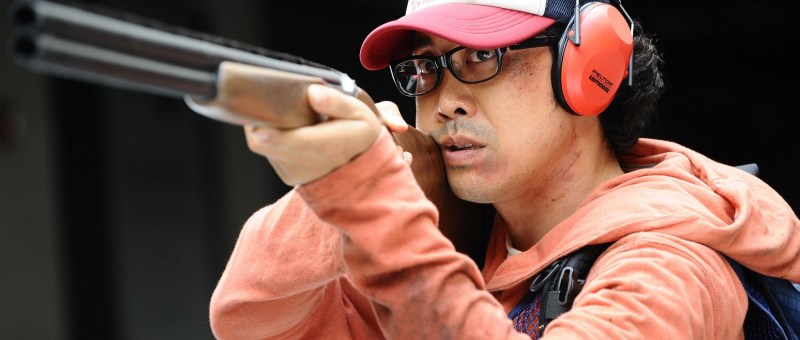
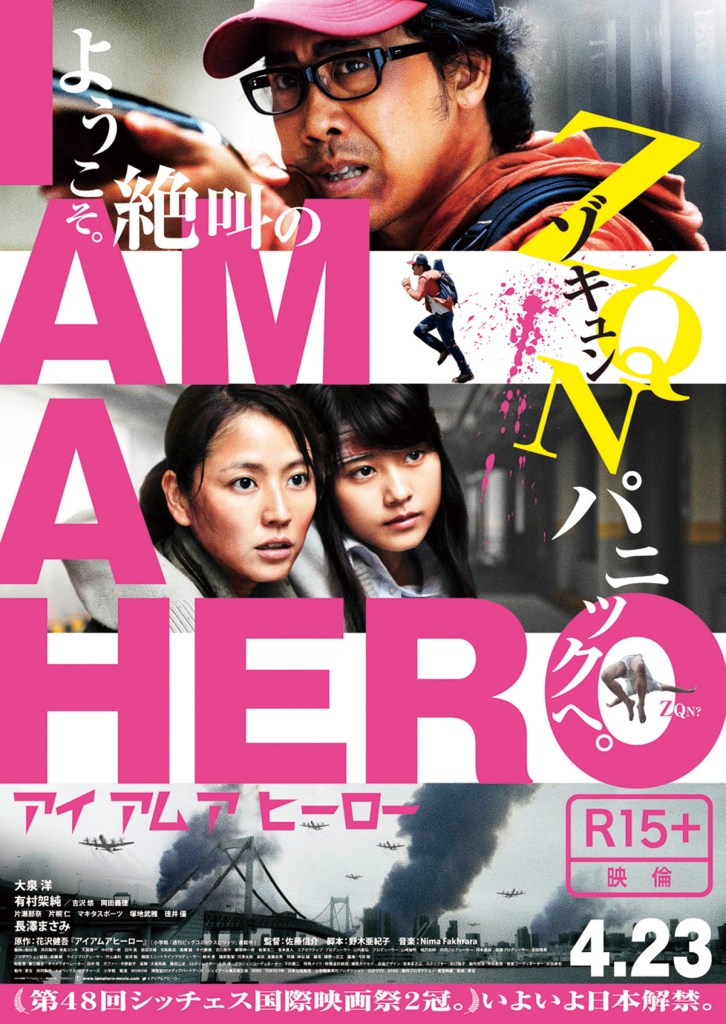 Japan has never quite got the zombie movie. That’s not to say they haven’t tried, from the arty Miss Zombie to the splatter leaning exploitation fare of Helldriver, zombies have never been far from the scene even if they looked and behaved a littler differently than their American cousins. Shinsuke Sato’s adaptation of Kengo Hanazawa’s manga I Am a Hero (アイアムアヒーロー) is unapologetically married to the Romero universe even if filtered through 28 Days Later and, perhaps more importantly, Shaun of the Dead. These “ZQN” jerk and scuttle like the monsters you always feared were in the darkness, but as much as the undead threat lingers with outstretched hands of dread, Sato mines the situation for all the humour on offer creating that rarest of beasts – a horror comedy that’s both scary and funny but crucially also weighty enough to prove emotionally effective.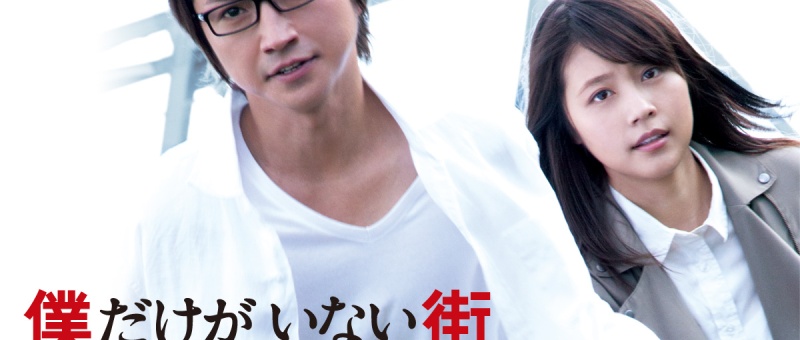
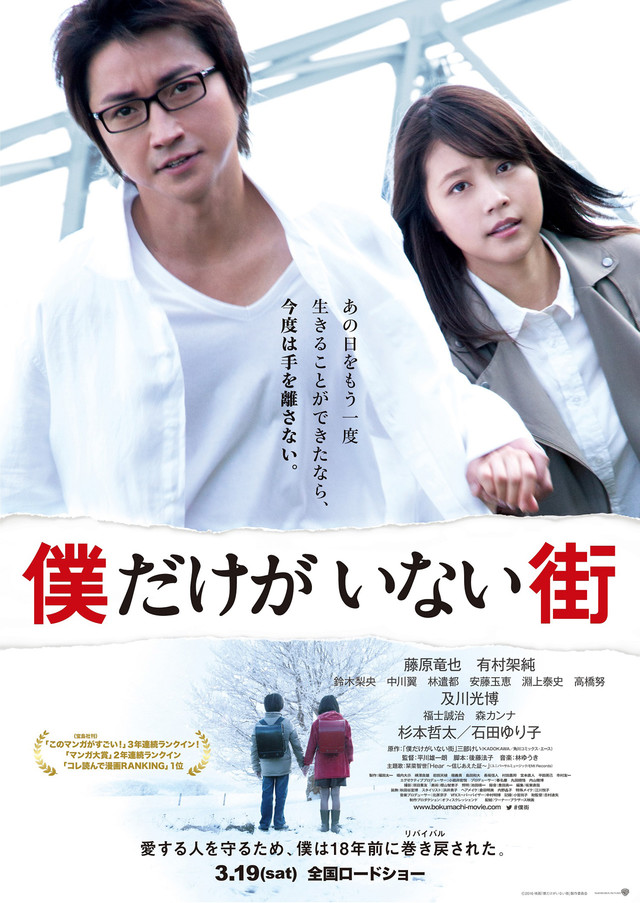 Erased (僕だけがいない街, Boku Dake ga Inai Machi), a best selling manga by Kai Sanbe, has become this year’s big media spectacle with a 12 episode TV anime adaptation and spin-off novel series all preceding the release of this big budget blockbuster movie. Directed by TV drama stalwart Yuichiro Hirakawa, the live action iteration of the admittedly complicated yet ultimately affecting story of a man who decides to sacrifice himself to ensure his friends’ happiness, acquits itself well enough for the most part but changes two crucial details in its concluding section which unwisely undermine its internal logic and make for an unsatisfying conclusion to the ongoing puzzle.
 Windows on Worlds