The Greatest Challenge of All (喜劇 一発勝負, Yoji Yamada, 1967)

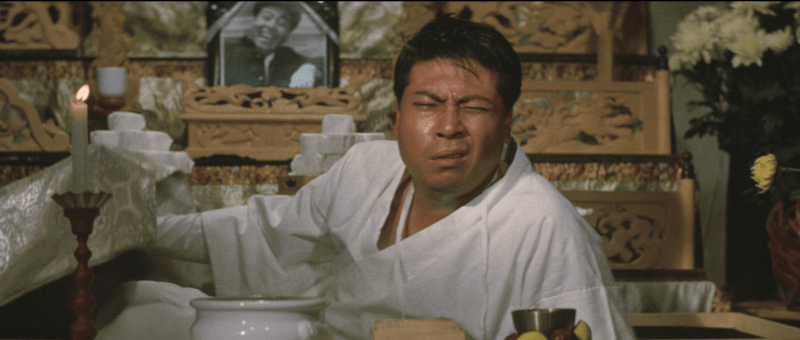
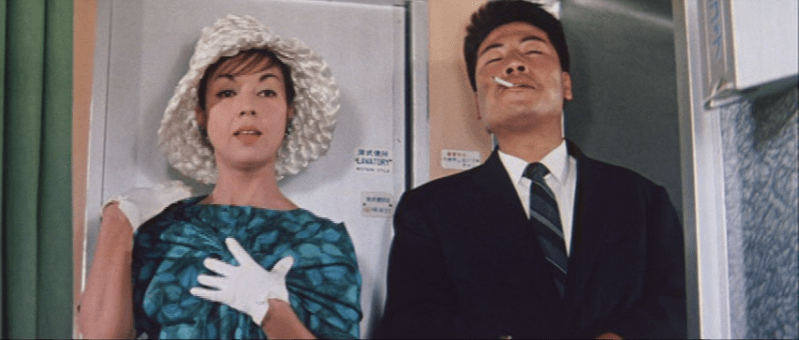
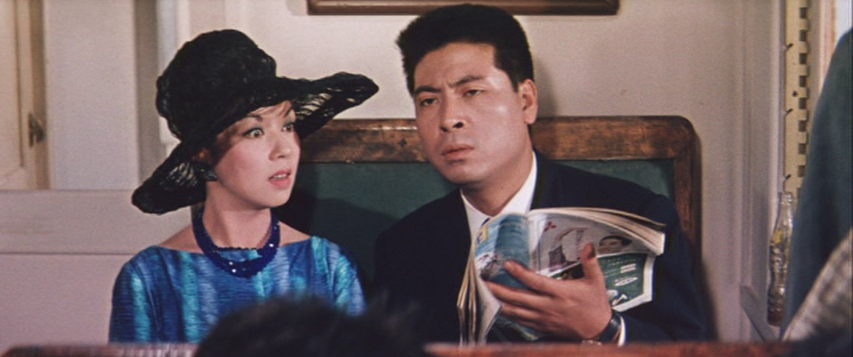
A prodigal son rocks the social order in Yoji Yamada’s anarchic nonsense comedy, The Greatest Challenge of All (喜劇 一発勝負, Kigeki: Ippatsu Shobu). The greatest challenge may be trying to manage Kokichi (Hajime Hana), a roguish Del Boy-like figure with an impossible dream of striking it rich. While in some senses he anticipates the equally  anarchic yet basically goodhearted Tora-san, he also represents a modernising and aspirant Japan determined to leave behind dusty old tradition for a new “deluxe” future.

Having taken to the road after being disowned by his conservative father (Daisuke Kato), Kokichi returns 15 years  later a middle-aged man with seemingly nothing to show for his many years of wandering. He has no idea that he has a daughter, Mariko, by a local woman that his parents took in and raised as if she were theirs which was not an especially uncommon solution to the problem of illegitimate birth in the post-war era. Nor did he know his mother had passed away before walking in on her annual memorial service. This sense of parental disconnection one level reflects a lack of filiality that marks him out as a “modern” man uninterested in these familial obligations or a sense of duty towards his family, but it’s also true that it’s to family that he’s returned having mellowed in middle-aged and in a way looking to settle down.

In any case, his life seems to have been a series of crazy episodes from briefly becoming a sumo wrestler to meeting a mysterious woman on a bridge who gets him a job as a snake charmer. When two yakuza types kick up a fuss about not being able to have their usual room at the inn during his mother’s memorial service, Kokichi manages to frighten them off just with bluster, hinting at the way he may have lived for the last 15 years. He also has two friends who turn up to see him, one of whom is a former yakuza who refers to Kokichi as if were his boss and they were a little trio of crime-adjacent buddies.

But it does appear that Kokichi has come with a business plan in mind, convinced that he can find the source of a hot spring in the town and build a resort hotel on top of it. To do this, he tries to convince his father to sell him his land and the inn the family run so he can knock it down and build a “deluxe” modern, Western-style hotel in its place. Kokichi’s father obviously isn’t keen. This inn has been in the family for generations, he really wouldn’t want to ruin that and especially not for one of Kokichi’s harebrained schemes. Yet again this brings us back to the battle between the conservatism of Koikichi’s father, and Kokichi’s own consumerist modernism that is more individualistic and no longer sees beauty in the past, only backwardness and stagnation. When he finally does find his hot spring, he builds a vast modernist complex with a botanical water park housed in a giant Hawaiian-themed conservatory complete with dancing hula girls. 

His corrupting presence is most discernible in the changing role of Fumi (Tanie Kitabayashi), the family’s housekeeper who generally dressed in kimono but on moving to Kokichi’s mansion she begins wearing Western dress. Fumi had at one time left the family because Kokichi had unwittingly forced her to betray it in helping him get his hands on a precious family heirloom to pawn as capital for his new business venture. Having done so brings her to a confrontation with the contradictions of her role within the family, both a surrogate mother to Kokichi and also a servant who is expected to abide by a certain code with not stealing from your employers a key tenet. She feels she can no longer look Kokichi’s father in the eye and must now return to her home in the country even though she has likely not seen it since she was a young woman. Having undergone this change, she can no longer return to the inn but is brought back to Kokichi’s modernist home once he strikes it rich. 

But Kokichi too is later confronted by hypocrisies of his own position as a free-spirited man and finally a father on learning the truth about Mariko. Hanging out at the hot spring, the 16-year-old Mariko has attracted the attentions of a couple of fashionable young men and wants to leave with them to visit Tokyo. Despite the intrusion of the modern in the hot springs resort, Mariko doesn’t want to stay in this “deadbeat” town and longs for the bright lights of the big city. Kokichi’s father understandably says no, but Kokichi is originally all for it, perhaps seeing his own desire to be free of his father’s oppressive authority. However, he soon changes his tune on assuming his paternity. He too tells Mariko she can’t go and strikes her for talking back. But just as he had, she leaves anyway. His modernity is no longer modern enough, and the young will always walk towards the future.

One exception might be Kokichi’s painter sister Nobuko (Chieko Baisho) who appears to be happy enough living at the inn and with seemingly no intention of marrying which might be her own kind of rebellion against traditional mores. While other similarly themed films may have emphasised the importance of hard work and the reality of the salaryman dream, this one suggests that it really is possible to bumble along and then strike it lucky but also that you never really travel as far from home as you might think. The desire for patriarchal control rises in Kokichi, but is now ineffectual. Though he didn’t raise her, Mariko is a child of the world he’s created and simply chooses to leave with a final sock in the eye to traditional filiality. 


Trailer (no subtitles)

After Life (ワンダフルライフ, Hirokazu Koreeda, 1998)

Afterlife posterAt the end of your life, if someone asks you what it all meant, what will you say? It’s a question that can’t be answered until after you’ve turned the final page, but there is an idea at least that death brings clarity, rendering all things simple from a strange perspective of subjective objectivity. This is the central idea behind Hirokazu Koreeda’s meta existential fantasy After Life (ワンダフルライフ, Wonderful Life) in which the recently deceased are given seven days’ grace in order to decide on their most precious memory so that a small collection of clerks working in an old-fashioned government building can “recreate” it through the medium of cinema, allowing a departing soul to take refuge in a single memory preserved in eternity.

Heaven’s waiting room, as it turns out, is apparently located inside the ghost of the Japanese studio system. The recently deceased give their names at the door and patiently wait for their turn with their allotted case manager whose job it is to offer after life counselling designed to bring them to the point of boiling their existence down to the single moment which defines it within the arbitrary three day time limit which gives the crew the time to put their memories into pre-production complete with old-fashioned stage sets and studio-era special effects.

The purpose of all of this is not is exactly clear, though a clue is perhaps offered when we discover that the clerks are able to order VHS tapes of the entirety of their subjects’ lives in the event that they are struggling to think of relevant moments in an existence which seems to have disappointed them. The point is not so much the literal truth of the memory, be it accurate or not, but its sensation and the transience of feeling which is then re-experienced through the medium of cinema, captured in celluloid as momentary permanence.

Consequently, the chosen moments are necessarily often ones of stillness which promise the kind of peace and serenity one is supposed to find in death. The moments are ones of silent togetherness, of natural beauty, of childish innocence, or unbridled joy but is each is perhaps the key to unlocking the enigma of a life and as such is a solution which points towards a question. One older gentleman, Watanabe (Taketoshi Naito), finds himself unable to choose. He views his life as the epitome of mediocrity and can find nothing in it that seems worthy of “eternity”. Watching the videotapes of his life, he sees himself as a young man vowing to make a mark and is desperate to find some evidence that he lived but like many does not find it. His life was happy by virtue of being not unhappy for all that it was perhaps unfulfilled but only through communing with himself after death is he able to reclaim the memory of his late wife (Kyoko Kagawa) with whom he never quite bonded in mild jealousy of her lingering attachment to her first love who fell in war.

This being a film from 1998 and mostly featuring those in their 70s and above, the war looms large from painful battlefield memories of fear and starvation to unexpected reunions and the joy of simple pleasures found even in the midst of hardship. The clerks who died young may look on in envy of Watanabe’s “ordinary” life in the knowledge of all they were denied, while others mourn for a future they will never see. Yet there are shorter sad stories here too from a high school girl (Sayaka Yoshino) whose original choice of a day out at Disneyland is deemed too prosaic, to a middle-aged bar hostess (Kazuko Shirakawa) reminiscing about an old lover who let her down, and a rebellious young punk (Yusuke Iseya) who flat out refuses to choose because he feels that is the best way to accept responsibility. Forced into a reconsideration of his own life, even a clerk is eventually moved by the realisation that even if he had previously believed his existence devoid of meaningful moments he has achieved something by featuring in those of others and is therefore also a meaningful part of a considered whole.

Making the most of his documentary background, interspersing “genuine” memories among the imagined, Koreeda’s heavenly fantasy is one firmly tied to the ground where seasons still pass, time still flows, and the relentlessly efficient march of bureaucracy continues on apace undaunted by the presence of death. Death may give life meaning, but it’s living that’s the prize in all of its glorious complexity filled with both beauty and sadness but always with light even in the darkest corners.


After Life screened as part of an ongoing Koreeda retrospective currently running at BFI Southbank.

Original trailer (no subtitles)

Kaisha Monogatari: Memories of You (会社物語 MEMORIES OF YOU, Jun Ichikawa, 1988)

Kaisha monogatari dvd coverJapanese corporate life is a strange thing – sometimes more cult than job, the company demands absolute dedication from its devotees though it promises them little more than a guaranteed life of toil. Being cast out from one’s company is akin to being robbed of one’s identity. Retirement is therefore not quite so much of a reward as an excommunication – especially to those who have given so much of themselves to an employer that they don’t quite know who they are when the suit comes off. This is especially true of the hero of Jun Ichikawa’s 1988 existential drama, Kaisha Monogatari: Memories of You (会社物語 MEMORIES OF YOU). The title is deceptively romantic – in fact there was an identically titled idol starring melodrama released the same year, but it is in a way a love story of an old man who finally gets a chance to reunite with the dreams he abandoned in youth while coming to terms with his old age and the various ways the world has moved past him.

Very early one morning, veteran salary man Hanaoka (Hajime Hana) stares into the empty screen of his television set from the comfort of his kotatsu, examining his own tearful face before his wife gets up to prepare breakfast. Hanaoka is set to retire soon, after 34 years of corporate life. His career has been unremarkable and he has few friends at the office – he feels he most likely will not be missed when he goes. Home life is not too successful either. Hanaoka’s grown-up daughter has come home with a daughter of her own after a divorce, and Hanaoka’s son is currently a NEET would-be-student supposedly studying to retake entrance exams though his mother is convinced he’s just messing around and avoiding getting a job.

Though Hanaoka is a section head, it’s clear he’s not rated by his colleagues who gossip about him behind his back while his mild and timid nature sees him sitting quietly forgotten in the back of meetings. He does however have admirers including one of the older ladies in the admin staff who has always been comforted by Hanaoka’s gleeful laughter, suddenly feeling the world expand as she watched him beavering away earnestly. Despite this, nobody is very excited about his leaving party. Discussing things among themselves, the office ladies lament that planning farewell parties is either too depressing to just too much hassle, while gossiping guys in the men’s room complain that Hanaoka was never very good at his job anyway and his leaving do will be a “pitiful” affair. All of this proves too much for the kind hearted, shy, Hanaoka who eventually decides to have a goodbye note distributed around the office in which he tells everyone that there’s no need to bother with yet another office party in the overly festive December to the relief (and consternation) of all.

Hanaoka does, however, have to write his official goodbye for the company newsletter (1000 characters due by Dec. 15). Struggling to find the words, he writes a first draft in which he declares the deep sorrow he feels on having to leave his corporate family behind – after all these are people he’s dined and gone drinking with for 34 years, through good times and bad, company picnics, and away days. He’s spent longer with the office ladies than his wife, had more conversations with his subordinates than with his son. The company has been his life, and leaving it is a kind of death. Embarrassed he screws up the draft and throws it away, only to encounter another salaryman returning late (and more than a little the worse for wear) who lets him have a go on the very high tech laser guns he’s just won at bingo.

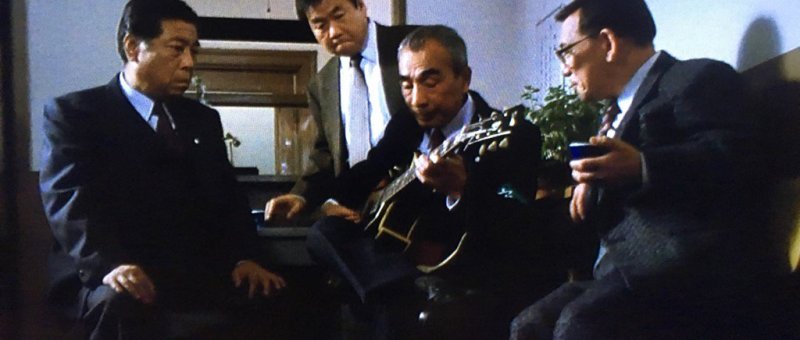
Yet Hanaoka does manage to find a solution in reconnecting with his younger self and makes a few new friends in the process. In his youth, Hanaoka was a jazz drummer – sophisticated as it is, jazz was the music of his glory days and so he finds many of the other men in his position share his love of music and were also forced to abandon their musical dreams for corporate careers. Now freed of the burdens of the salaryman, they decide to form a band of their own and even to give a special concert in place of Hanaoka’s leaving do.

Meanwhile, Yumi (Yumi Nishiyama), the office lady who reminds Hanaoka of his younger self, is undergoing something of a crisis when she realises that her boyfriend is not as serious about the relationship as she is and has been seeing someone else behind her back – the CEO’s daughter whom he intends to marry to further his career. Kaisha Monogatari is, in many ways, the passing of a baton from the post-war generation to the bubble era though getting ahead through advantageous arranged marriage is apparently still a viable option. Those of Hanaoka’s age had to work hard, rebuilding the nation after crushing wartime defeat from bombed out ruins to the economic miracle of the East. Their children, by contrast had things easy – they hardly have to worry at all. Hanaoka’s son, apparently a delinquent lost and confused by the comparative freedom of economic stability, has no need to submit himself to the insane demands of life as a company man but millions like him will, because that’s just what you do.

Hanaoka finds a way to break out of the corporate straightjacket through re-embracing his love of jazz, proving there is something left inside him when you strip the company man away but there is nevertheless something sad in having wasted so much time slaving away for a organisation that is ultimately so ungrateful for the sacrifice. A gloomy picture of bubble era Japan in which families are fragmenting, young men choose career over love, and old men are made to feel worthless once their economic function is spent, Kaisha Monogatari: Memories of You does offer the faintest glimmer of hope in the goodness of men like Hanaoka, no matter how they may have failed those around them, whose lives may be brighter when finally allowed to be themselves again.


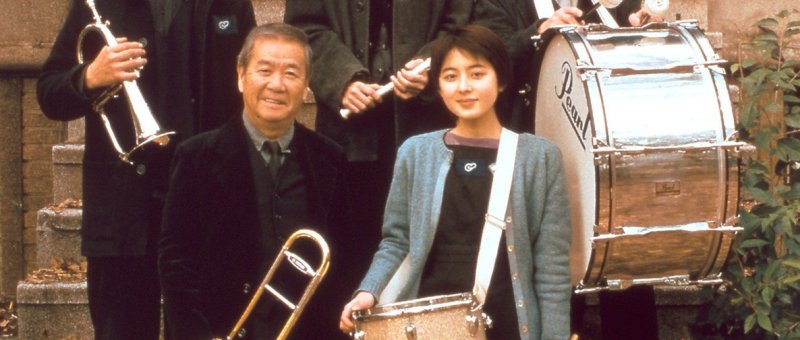
Swing Girls (スウィングガールズ, Shinobu Yaguchi, 2004)

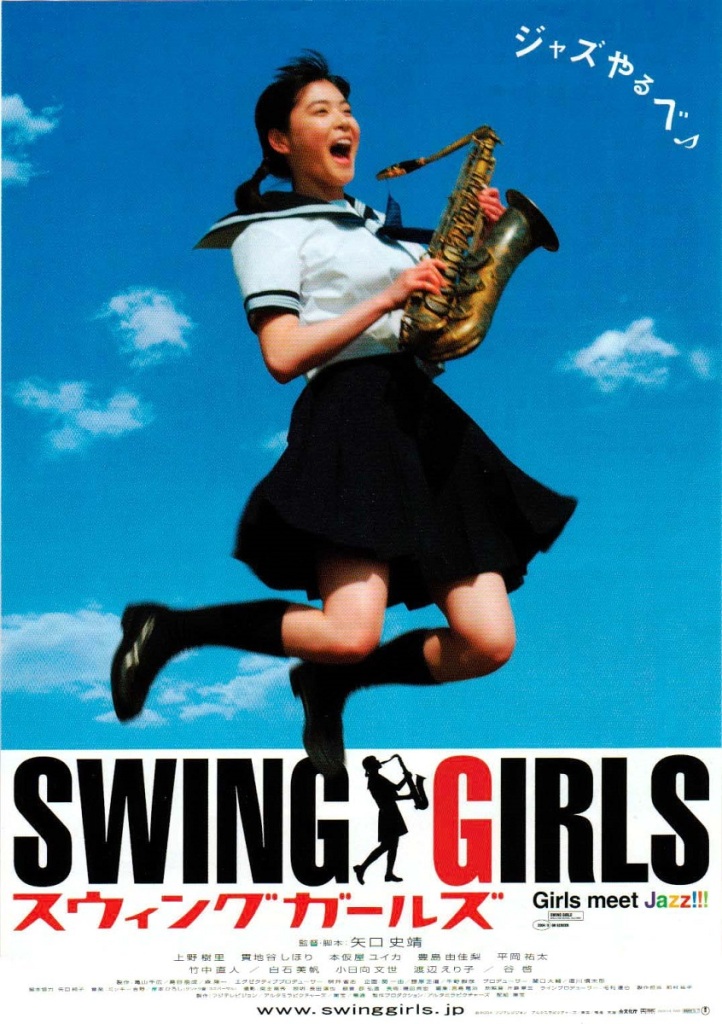
There are two kinds of people in the world, those who swing and those who…don’t – a metaphor which works just as well for baseball and, by implication, facing life’s challenges as it does for music. Shinobu Yaguchi returns after 2001’s Waterboys with a film that’s…almost exactly the same only with girls instead of boys and concert halls instead of swimming pools, but it’s all so warm and charming that it hardly matters. Taking the classic sports movie formula of eager underdogs triumphing against the odds but giving it a teen comedy drama spin, Yaguchi’s Swing Girls (スウィングガールズ) is a fitting addition to the small but much loved high school girls vs music genre which manages to bring warmth and humour to its admittedly familiar narrative.

It’s summer and it’s hot and sunny but the school is filled with yankis and dreamers, forced to spend this lovely day indoors. While one group is busy ignoring their maths teacher, the school band is getting ready to accompany the baseball team on an important match. Unfortunately, the bus leaves before the bento boxes they’ve ordered are delivered so enterprising high school girl Tomoko (Juri Ueno) suggests they blow off the maths class and show solidarity with those representing the school by making sure their fellow students are well fed. Unfortunately, they fall asleep and miss their stop on the train meaning by the time they get there it’s a very late lunch and these bento boxes containing fish and eggs etc have all been in the hot sun for a fair few hours. After nearly killing all their friends, the girls are forced to join the band in their stead, despite having almost no musical experience between them.

As might be expected, the girls start to get into their new activity even if they originally dismiss sole boy Takuo’s (Yuta Hiraoka) interest in big band jazz as the uncool hobby of pretentious old men. However, this is where Yaguchi throws in his first spanner to the works as the original band recover far sooner than expected leaving our girls oddly heartbroken. This allows us to go off on a tangent as the girls decide they want to carry on with their musical endeavours and form their own band but lack the necessary funds to do so. Being a madcap gang of wilful, if strange, people the schemes they come up with do not go well for them including their stint as supermarket assistants which they get fired from after nearly setting the place on fire, and a mushroom picking trip which leads to an encounter with a wild boar but eventually holds its own rewards.

The girls’ embittered maths teacher, Ozawa (Naoto Takenaka), who just happens to be a jazz aficionado offers some key advice in that it’s not so much hitting the notes that matters as getting into the swing of things. It might take a while for the Swing Girls (and a boy) to master their instruments, but the important thing is learning to find their common rhythm and ride the waves of communal connection. Tomoko quickly takes centre stage with her largely self centred tricks which involve pinching her little sister’s games system to pawn to buy a saxophone, and almost messing up the all important finale through absentmindedness and cowardice. Other characters have a tendency to fade into the background with only single characteristics such as “worried about her weight”, or “hopelessly awkward”, or even with “folk duo in love with punk rockers”. Other than the one girl lusting after the baseball star and the two punk rockers annoyed by their earnest suitors, Yaguchi avoids the usual high school plot devices of romantic drama, fallings out, and misunderstandings whilst cleverly making use of our expectation for them to provide additional comedy.

What Swing Girls lacks in originality it makes up for with warmth and good humour as the band bond through their recently acquired love of music, coming together to create a unified sound in perfect harmony. Ending somewhat abruptly as the gang win over their fellow musicians after having overcome several obstacles to be allowed to play, the finale does not prove quite as satisfying as might be hoped but is certainly impressive especially considering the music really is being provided by the cast who have each learned to play their intstruments throughout the course of the film just as their characters have been doing. Warm, funny and never less than entertaining, Swing Girls lacks the necessary depth for a truly moving experience but does provide enough lighthearted fun to linger in the memory.


Original trailer (English subtitles)

https://www.youtube.com/watch?v=9yAJbIdoVcU

Waterboys (ウォーターボーイズ, Shinobu Yaguchi, 2001)

Japan has really taken the underdog triumphs genre of sports comedy to its heart but there can be few better examples than Shinobu Yaguchi’s 2001 teenage boys x synchronised swimming drama Waterboys (ウォーターボーイズ). Where the conventional sports movie may rely on the idea of individual triumph(s), Waterboys, like many similarly themed Japanese movies, has group unity at its core as our group of disparate and previously downtrodden high school boys must find their common rhythm in order to truly be themselves. Setting high school antics to one side and attempting to subvert the normal formula as much as possible, Yaguchi presents a celebration of acceptance and assimilation as difference is never elided but allowed to add to a growing harmony as the boys discover all new sides of themselves in their quest for water borne success.
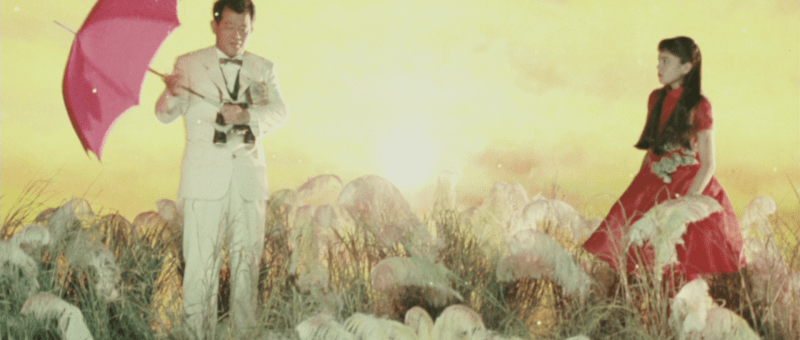
Dreamy high school boy Suzuki (Satoshi Tsumabuki) is currently the only member of his high school’s swimming team, and unfortunately he’s not a particularly good swimmer. His interest is piqued when he spots a synchronised swim meet, but he forgets all about it until a new teacher arrives and pledges to revive the school’s fortunes in the pool. Seeing as their new teacher is a pretty young woman with an interest in swimming, the team suddenly becomes much more popular but when she reveals her synchronised swimmer past numbers dwindle once again. Unfortunately, the hot new teacher suddenly has to leave the school so the boys are left to fend for themselves in their new and possibly embarrassing career in a generally feminine sport.

Being teenage boys who only started this whole thing because of the pretty teacher, most of the other guys are are looking for a way out but they also don’t like to be called quitters and so they become determined to make a success of themselves. Suzuki, who secretly wanted to become a synchronised swimmer anyway, is the most committed but also, perhaps, the least confident in his choice of sport as he embarks on a tentative romance with a girl from another school – herself an enthusiast of the more masculine karate. Terrified that she will find out and laugh at him, Suzuki goes to great lengths to avoid telling her what it he really does in his club activities, possibly putting the growing romance at risk in the process.

This mild challenge to masculinity is the main joke of the film but Yaguchi neatly subverts as the guys become cool again thanks to mastering a difficult skill and creating an impressive spectacle through hard work and group mentality. The boys gain an unlikely mentor in the form of a dolphin trainer at Sea World who they hope will be able to train them in the same way he trains his marine creatures but quickly sets them off on some Karate Kid style practical training which involves a lot of menial tasks around the park before dumping them at the local arcade to play dance dance revolution until they learn the art of synchronicity through the power of idol pop. Waterboys is, essentially, a hymn to the harmonious society as the boys eventually find their common rhythm and the power that comes from many acting as one.

Unusually, this does not requite a loss of individuality or for any erasure of essential personality traits but rather a greater need for acceptance as difference merely adds to the strength of the whole. Though there are a fair few gay jokes in what is essentially a movie about high school boys in skimpy trunks, the joke is not homosexuality but reactions to it as Yaguchi adopts a “get over it” attitude and so when one of the boys does confess his love for another it’s treated with no particular reaction other than lack of surprise. Similarly the cross dressing mama-san from the local gay club (a surprising turn from Akira Emoto) becomes one of their greatest supporters and may provide comic relief but is never a figure of fun. In order to succeed the boys will need to be in tune with each other, but that in tune sounds better when it allows for harmony rather than insisting on dull monotony.

Visually inventive and often hilarious, Waterboys lacks the heart of Yaguchi’s similarly plotted Swing Girls but nevertheless succeeds in its tale of inexperienced young guys working hard and achieving the impossible, growing up and discovering new things about themselves as they do. Waterboys may be lighthearted, crowd pleasing fun, but its good natured message that great things are possible when determined people work hard at them together, and that group harmony does not necessarily require social conformity, only add to its warm and gentle tone.


Korean trailer (Korean captions/subtitles only)

Tokyo Heaven (東京上空いらっしゃいませ, Shinji Somai, 1990)

title-752

In Japan, Shinji Somai is a well known and highly regarded director yet few of his films have ever made it overseas and he remains almost unknown in the West. Even by these standards, Tokyo Heaven (東京上空いらっしゃいませ, Tokyo Joukuu Irasshaimase) seems to be something of a forgotten episode in Somai’s career and is difficult to find even on unsubtitled DVD.

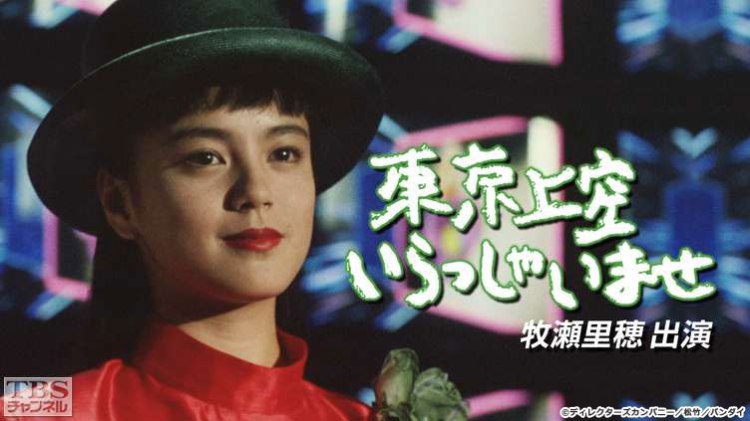
Set in 1990, the film begins with spoilt brat, up-and-coming idol star, and soon to be campaign girl Yu (Riho Makise) at a glitzy launch party. It’s time for 16-year-old Yu to be heading home, but sleazy producer Shirayuki (Tsurube Shofukutei) has other plans and instructs his underlings to set her up with him which they, guiltily, do. However, during the cab ride home Yu eventually escapes his molestations by jumping out into the middle of the road where she’s immediately mown down by an oncoming car. Waking up in a pastoral vision of heaven, Yu meets her guide, “Cricket”, who looks exactly like Shirayuki, the last face she had in her mind before she died. Given the opportunity to return to Earth but not as her old self, Yu tells Cricket to make her the girl on her campaign posters. Waking up in the room of one of the advertising executives working on her account, Fumio (Kiichi Nakai), she discovers resurrection isn’t all it’s cracked up to be.

Taking its queue from A Matter of Life and Death, Tokyo Heaven is first and foremost a fantasy romance (in the broadest sense) though leaning more towards bittersweet comedy than heartrending tragedy or profound human truths. Yu has returned to Earth but is unable to make contact with her family or let her presence be known to anyone other than Fumio. She no longer appears in photographs or mirrors and gradually comes to the realisation that her life really has ended and this small reprieve is only temporary. Many of Somai’s films focus on the emotions of younger people and the irony here is that Yu only grows up once she’s technically dead. Having had the chance to experience a “normal” adolescence with a part-time job at a fast food restaurant and a tentative romance Yu eventually feels ready to move on.

At only 16 years old, Yu was about to become a the face of a large scale advertising campaign. Her image haunts the streets of Tokyo and the loathsome Shirayuki is desperately trying to spin the tragic events into some kind of narrative that will both cover-up his entirely inappropriate behaviour with a school girl in the back of his chauffeur driven car and save some of the hard work already in place on the campaign itself. Hence, no one other than the girl’s parents is being told that Yu is dead and all previous commitments are being cancelled due to “poor health” or “taking a break” etc. Even after death, Yu’s image is being exploited and her soul ignored.

The conflicted trombone player, Fumio, comes to appreciate Yu for who she really is during their brief time together, resents Shirayuki’s treatment of her and wants the campaign to go ahead in an attempt to prolong her “presence” even if in image only. Through his contact with the increasingly vivacious Yu, Fumio who has previously been berated by his brother for not wanting to join their family bathroom fittings business and labeled as someone with an impenetrable shell who prefers his own company by his sometime girlfriend from downstairs, also comes to appreciate the joys of being alive a little more and reconsider some of his previous life choices.

Bearing Somai’s trademark long yet dynamic takes, Tokyo Heaven is a colourful tribute to Tokyo right before the bubble burst. Almost a prescient warning about the dangers of praising image over reality, the film becomes a poignant tale of learning to appreciate the sheer pleasure of being alive. Its slightly strange and perhaps abrupt ending has the potential to be misread, but the general message about the transience of life and the importance of living the way you want to live is one that cannot be overstated.


Screened from film as part of the London Japanese Embassy Filmshow programme on 19th November 2015.

There isn’t even a trailer available for this but if you can understand Japanese there’s a talkshow event with star and comedian Tsurube Shofukutei recorded at the recent Tokyo Filmex Somai retrospective in 2011.

And a musical scene from the film featuring Yosui Inoue’s Kaeranai Futari

http://www.youtube.com/watch?v=ardfYunlDRk