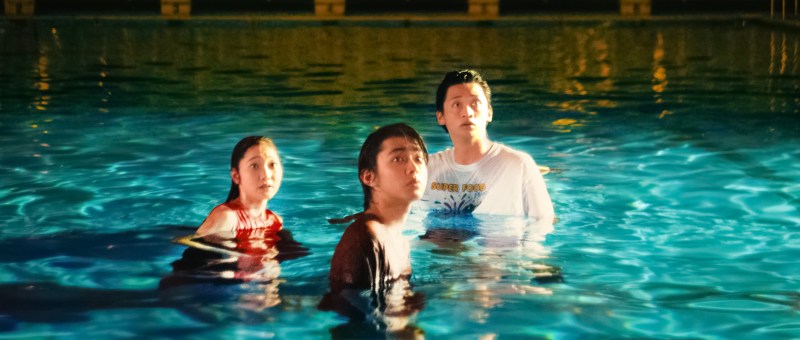

Rainy Blue (レイニー ブルー, Asuna Yanagi, 2025)

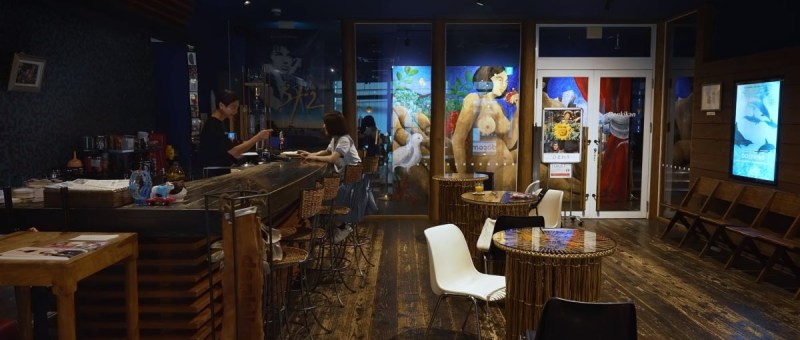
“You never know when it will end,” Aoi mutters to a concerned teacher. “The streaming period, and my life.” Asuna Yanagi’s Rainy Blue (レイニー ブルー) is a semi-autobiographical tale of a young woman figuring out how to live in the world while immersed in cinema. Her father may insist that she look at the reality, but Aoi’s world is already quite surreal even as she pours all her efforts into writing screenplays and watching films but otherwise floundering for direction.

To begin with, Aoi isn’t interested in cinema She just gets sent to see a film as punishment after getting caught setting off fireworks on the school roof because a local cinema has a special retrospective dedicated to actor Chishu Ryu who attended the same high school though probably 100 years previously. Despite scoffing at the idea and chuckling that everyone in the cinema is “old” while even the usher double checks to make sure she’s in the right place, Aoi is captivated by Ozu’s filmmaking and becomes a true convert to cinema to the extent that it completely takes over her life. She becomes the only member of the school’s film club, or as she’s find of reminding people “society”, and regularly turns up late after staying up all night watching movies. 

To that extent, Aoi’s film obsession may not quite be healthy in that it leads her to make some questionable decisions with unintended consequences, such as getting arrested for “stalking” people after following them around as research for her screenplays. She also finds out that one of her old friends, who is also her father’s favourite example of a “good” daughter, is into compensated dating and in reality perhaps just as lost as she is. Aoi’s father no longer understands her and has become authoritarian and unforgiving. He regularly berates and shouts at her while making no real attempt at communication. He simply asks why she can’t be “normal” and concentrate on going to uni like the other girls while complaining about how “embarrassed” he would be if she doesn’t go because it would reflect badly on him as a parent. 

Perhaps it’s not surprising that Aoi retreats into cinema to escape, but it’s also true that she finds a more supportive paternal presence in the guy at the cinema who turns out to have been a classmate of her mother’s. There’s a kind of poignancy in Aoi and her sister’s moment of confusion on realising that their mother was interested in films but they rarely watch them at home because her father doesn’t like them, while her mother rarely has time to go alone. Aoi’s love of cinemas as mediated by an old script she finds in the club room is also a way of connecting with her mother as a potentially more supportive parental figure in contrast to her father’s hardline authoritarianism.

But then, in her love of cinema Aoi is absolutely certain and she’s no reason why she should hide it from anyone else. Her best friend at school is rather bafflingly played by 43-year-old film director Hirobume Watanabe who dresses in a pre-war school uniform complete with student’s cap and little round glasses that make him look strangely like a Studio Ghibli character. Usami is an otaku with a love of anime he thinks he’s kept hidden despite having several anime badges on his backpack and is too afraid to be out and proud about it because he knows he’ll be bullied, which he eventually is when Aoi enters a deeper moment of crisis and more or less abandons him and the school. Watanabe also appears as a weirdly inspirational film director who has a go at an audience member at a q&a who asks him why his film is so nihilistic only for him to turn the question back on her and angrily insist that film can illuminate the way forward for those like Aoi who feel themselves to be lost. 

Thanks to all these strange adventures, her various friendships, and even her father’s animosity, Aoi eventually figures out what she wants to do with her life and gains the courage to go after it no matter what anyone else might say. Set in the picturesque environment of rural Kumamoto, the film’s gentle, laid-back aesthetic belies the storm at its centre and the rainy blue that surrounds the heroine until she too finally finds her way through the labyrinths of cinema.


Rainy Blue (レイニー ブルー, Asuna Yanagi, 2025) screened as part of this year’s Osaka Asian Film Festival.

Original trailer (no subtitles)

Sin and Evil (罪と悪, Yuki Saito, 2024)

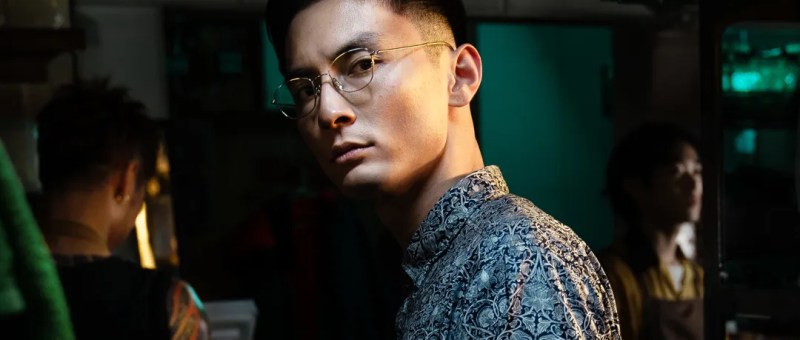
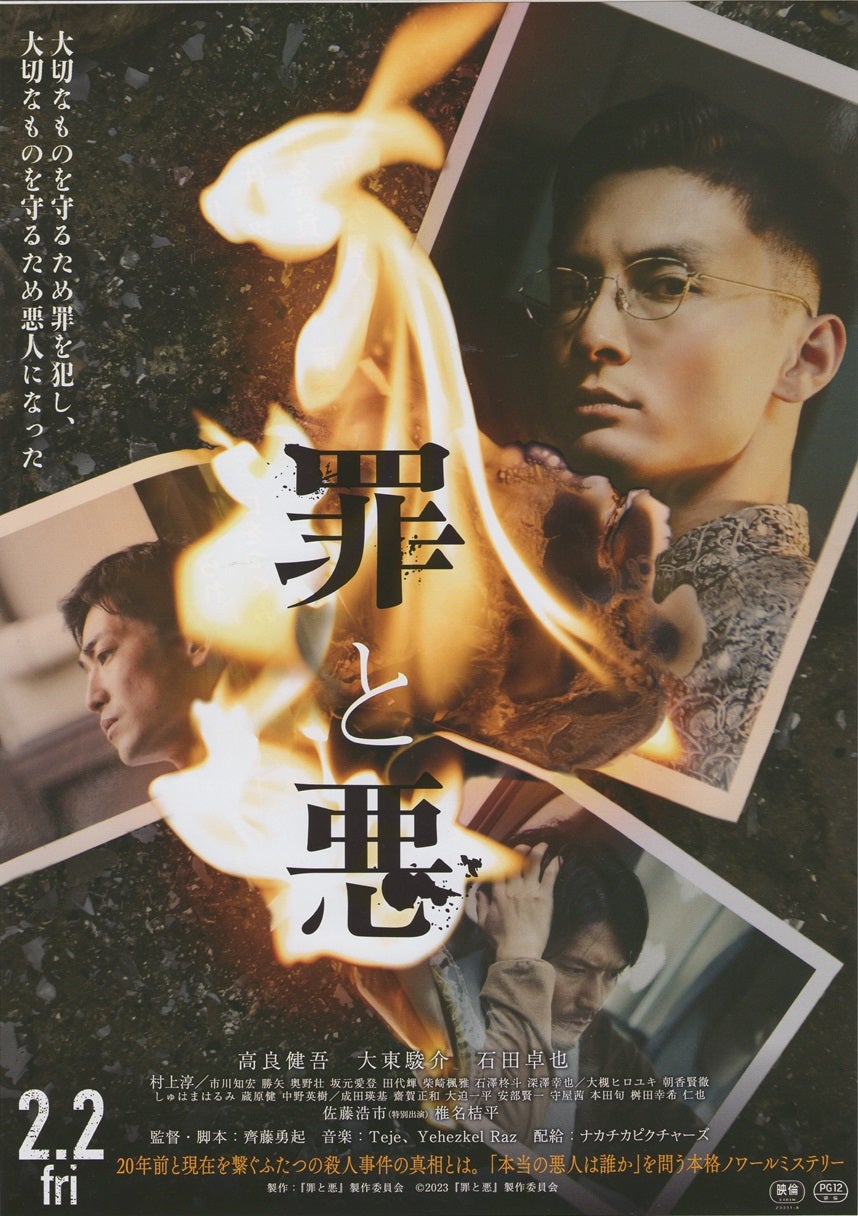
A man not quite a yakuza and perhaps even what might be termed an ethical gangster tells one of his underlings that it isn’t a sin unless you believe it it is, which might in a sense be true in same way as Socrates says that no one does wrong willingly. Yet the heroes of Sin and Evil (罪と悪, Tsumi to Aku), Yuki Saito’s small-town crime drama, are marked by their guilt while trying to come to terms with traumatic events of 20 years earlier and their mutual decision to cover them up.

Echoing similarly themed films such as Stand By Me, Saito opens with idyllic scenes of the boys riding their bikes with the only hint of darkness offered by a disturbing conversation about an elderly man who is rumoured to be abusing children. However, it seems that Haru is living in a difficult domestic situation following the death of his sister with an abusive father and apparently neglectful mother. His best friend, Akira, is the son of a local policeman while the boys are also friends with a pair of twins, Saku and Naoya, whose family operate a tomato farm. Rounding up the group is Masaki who also seems to be living in difficult circumstances though his backstory is never fully fleshed out as he’s eventually found dead in a local river. Saku jumps to the conclusion that the old man must have abused Masaki, who was known to be friendly with him, and then killed him to keep him quiet. He drags Haru and Akira to the old man’s shack where he attacks and eventually kills him with a shovel. Haru decides to take the blame and torches the place, telling the other two boys to flee the scene.

20 years later, it’s clear that each of them are still marked by what happened that day though Haru (Kengo Kora) appears to have built a good life for himself after serving time in juvenile detention even if the construction company he runs is friendly with local yakuza and gets its contracts through small-town corruption. He also operates a cafe where he employs delinquent boys while secretly using them as thieves but also in a more genuine sense looking after them and concerned for their welfare. His machinations are seen to be key in keeping order, working in tandem with police Inspector Sato (Kippei Shiina) who explains to a more idealistic Akira (Shunsuke Daito) how things are done around here which is essentially keeping ordinary people safe by managing crime rather than punishing or preventing it. The balance is only disrupted by some of Haru’s boys who stupidly steal far too much money from the local yakuza. Haru attempts to protect the young man concerned, but his body soon ends up in the river in exactly the same place as Masaki raising a series of questions about the nature of the earlier crime. 

What the film is trying to do is paint the world in shades of grey while looking for the parts where it’s darkest. It seems it’s not in doubt that the old man abused local children, though Haru and Akira now doubt he killed Masaki raising further questions about their killing of him. As the yakuza underling had said, it’s not a sin unless you think it is and Haru feels that he deserved to die for what he did to other kids so doesn’t feel any remorse for his actions even if he didn’t kill Masaki. But for Akira, the trauma lingers in other ways and he’s disturbed on learning his father may have been involved in covering up their crime and at least complicit in police corruption essentially teaching Sato how things are done in small-town policing. The conclusion Haru comes to is that they are all victims of the town itself, unable to break free of its provincial mores and petty prejudices.

Those would largely be a lingering homophobia and deep shame stemming from suffering sexual abuse as a child. As usual with these kinds of mysteries, the solution lies in the desire to prevent the truth being exposed though in this case the resolution is not entirely convincing when using one killing to cover up another couldn’t help but expose the truth anyway even when attempting to pin it on someone else who can no longer defend themselves. It also sidesteps the themes of small-town corruption and the dark heart of suburbia even as Haru points out that someone should have stepped in to support both himself and Masaki when they could see their families were struggling rather than just closing their curtains and pretending not to notice. The disruption of the friendship, which ought to be the heart of the drama, therefore lacks poignancy muddied by the various overlapping plot lines from the present day yakuza drama to the lost paradise that Haru longs to reclaim despite the otherwise apparently happy life he seems to be living now. Sin, the film seems to say, is in the eye of the beholder along with justice and retribution, and evil maybe just the same or merely invisible to those who choose not to see it.


Sin and Evil screened as part of this year’s Camera Japan.


International trailer (English subtitles)

In Her Room (ひとりぼっちじゃない, Chihiro Ito, 2022)

The hero of Chihiro Ito’s debut feature In Her Room ( ひとりぼっちじゃない, Hitori Bocchi ja nai) is so pathologically shy that he has become almost invisible, a ghost-like presence not fully of this world. Colleagues ignore him, taxis never stop, and restaurant staff continue their conversations as if he wasn’t even there. At one point he’s run over by a car and tells the police that the person probably didn’t see him or realise they’d hit someone. Only a mysterious woman he later describes as showing him a side of himself that even to him was unfamiliar pays him any attention but then there’s something a little bit sinister in her otherworldliness that causes us to wonder what it is she wants from him. 

Dr. Susume (Satoru Iguchi) is so awkward that he’s taken to practicing small talk with the skull he uses as a training tool at the dentist surgery where he works. He seems almost abstracted from himself, unable to relate to others because his emotions are distant from him. His mother keeps calling and asking him to come visit her because there’s something she wants to talk to him about but he brushes her off, telling her she should do whatever she likes as if disinterested in whatever it might be that she wants to say. In fact, she is the only person who seems to be able to see him, calling out to him from a car to offer him some homemade bread, but he still doesn’t really engage with her. We start to wonder if he has a problem with the other person in the car, Tomoko, a middle-aged woman who may be his mother’s partner though she too greets him warmly and is understanding of his reluctance to spend time with them.

Miyako (Fumika Baba), the mysterious woman who lives in a fantastic flat entirely covered in indoor greenery, asks Susume if he loves his mother but he deflects her question and simply says that he wants her to be happy for the rest of her life. For a time, we can’t be sure if Miyako and her wonderful apartment actually exist or are simply the manifestation of Susume’s headspace as he tries to talk through his loneliness and lack of self, only it later seems that other people see her too and in fact frequent her home much in the same way Susume does which causes him a degree of obsessive jealousy. He is particularly bothered by the presence of Yuko (Yuumi Kawai), a woman who works in a nearby grocery store and is also friendly with Miyako and similarly possessive. He later tells her that Miyako is guiding him towards the person he’s supposed to be, though Yuko isn’t so sure and suggests her existence is a little more sinister. Apparently she keeps a giant ball of hair taken from everyone she’s ever known in a hidden drawer, and then a man apparently took his own life in her apartment though Yuko refuses to share the contents of his note with him. 

Yuko’s words contribute to a growing sense of unease exacerbated by a video Susume watches from a man who sounds like a cult leader who suggests that misfortune may be caused by magic or sorcery, leading credence to the idea that Miyako is some kind of forest-dwelling witch gently luring Susume into her trap. Soon after their relationship becomes physical, a praying mantis is seen climbing on her plants. Susume’s uncertainty is reflected in the carving he is making of Miyako’s face which gradually starts to take shape though is also in its way a self-reflection in much the same way he said that Miyako was showing him a side of himself that only she could see. When he finally delivers it to her, it’s just as blank as her expression, a smooth sphere with a vague outline of personality. She places it quietly in a shed where her various friends sometimes hide to spy on each other. 

The trio attend a weird play together in which a giraffe-man allows his community to eat him because he is a terminal people pleaser of the kind we might assume Susume to be only the play seems to arouse a flash of resentment. He tells Miyako that he thought the giraffe-man’s actions were duplicitous, that he must have been secretly confident that he would taste good and was in a sense showing off. He isn’t sure who he’s most angry with, the people that decided to satiate not their hunger but their curiosity by eating him or the giraffe-man himself for letting them do it. But Miyako replies that to her it’s quite the opposite. The giraffe-man simply wanted to be of use to those around him. A grim image of the dismembered giraffe is later echoed in that of a squashed bug, suggesting that this is what Miyako is doing to her various callers, feeding on their insecurities and leaving nothing more than a bloody carcass behind. 

Even so, Susume begins to realise that he’s being presented with a choice and decides on change, finally facing his mother and embracing her happiness along with Tomoko while expressing a desire to uproot himself to see if he’s capable of change in a different place. Adapting her own novel, Ito allows an eerie sense of mystery to remain never quite explaining the true nature of Miyako or the surreal nightmare sequence in which Susume is chased by a glowing orange entity, but instead ends on an ambivalent note at once hopeful and maybe not as Miyako carefully stores her effigy perhaps just one more trophy in a treasure trove of lost souls. 


In Her Room screened as part of this year’s New York Asian Film Festival.

Original trailer (no subtitles)

The Three Sisters of Tenmasou Inn (天間荘の三姉妹, Ryuhei Kitamura, 2022)

Caught in a space of existential limbo, a young woman struggles with the uncertain nature of life. What’s the point of living in a world that might end, she asks herself, seemingly not having realised that it’s as it always was, the world is always ending and may blink out at any given second. Ryuhei Kitamura’s adaptation of the manga by Tsutomu Takahashi The Three Sisters of Tenmasou Inn (天間荘の三姉妹, Tenma so no San Shimai) plays out a little like a mashup of Hirokazu Korea’s Afterlife and Our Little Sister, but ultimately meditates on how to live on in the shadow of loss.

After all, as the relentlessly cheerful heroine Tamae (Non) later says, life is hard but the world is not so bad and everyone has their part to play. That’s something she discovers for herself after falling into a coma following a traffic accident and arriving at Tenmasou Inn in the picturesque seaside town of Mitsuse. As is explained to her, the inn exists in a liminal space between Heaven and Earth where those caught between life and death are expected to make a choice on their direction of travel. 

But Tamae begins to enjoy her time at Tenmasou in part after learning that the owner’s daughters, Nozomi (Yuko Oshima) and Kanae (Mugi Kadowaki), are her half-sisters. They are fully aware of their liminal status and that unlike Tamae they can never return to the mortal world or make any kind of life for themselves in Mitsuse where time stands still. Nevertheless, Tamae’s relentless cheerfulness and knack for human empathy prove key assets, beginning to return an energy and warmth that has those around her giving new thought to their cosmic inertia and if it’s really possible to go on living in a constant state of timelessness. 

Tamae might want to stay, experiencing for the first time the sense of family that she’s searched for all her life. She considers giving up the rest of her time to stay with them, but is reminded that no one can stay in this transient place forever while this version of Mitsuse which seems to hang over the “real life” town may soon disappear. Those who live there describe it as like living in a dream, a confusing simulacrum of life in which no time passes. There are those who make the eventual decision to pass on towards rebirth while others opt to stay, still having unfinished business or perhaps just not quite yet ready. 

Recalling the 2011 tsunami, the film touches on the difficult subject of survivor’s guilt and how to come to terms with loss on a mass scale while Tamae tries to process what it means to live and to not to. She resolves that “people don’t end when they die” but live on in the memories of those who remember them, though her conviction that she must live on as a kind of conduit for the souls of others may also rob her of a degree of her selfhood in her own right to live simply as herself.

Even so as she admits life is hard. An old woman suffering with liver cancer who had been blind for many years looks for beauty in the afterlife only to be reminded that there are beautiful things everywhere if you take the time to look. She too has had a life of sadness, but discovers that it might not be too late to make up for lost time, while a very young woman who felt herself to be alone learns that she has a friend and there are those who care for her even she did nearly burn the inn down in a fit of temper. Unabashedly sentimental, the film is as much about moving on as it is about learning to live in the present as the various guests contemplate whether to return to the world of the living with all of its pain and loneliness, or proceed to that of the dead knowing that there’s no guarantee the next life will be any better. Melancholy but also in its way uplifting, Kitamura’s empathetic drama eventually settles on a note of poignancy in which the act of living becomes its own memorial and defiant act of remembrance in the face of constant and unexpected loss.


The Three Sisters of Tenmasou Inn screens in New York Aug. 6 as part of this year’s JAPAN CUTS.

Original trailer (English subtitles)

Under the Stars (星の子, Tatsushi Omori, 2020)

“The time of realisation comes and then that person changes” according to the words of a new religion guru. The sentiment is true enough, even if the meaning is slightly different from that which she’d intended. Young Chihiro, however, the heroine of Tatsushi Omori’s adaptation of the novel by Natsuko Imamura Under the Stars (星の子, Hoshi no Ko), is indeed approaching a moment of realisation as she begins to question everything about the world around her as it had been presented throughout the course of her life. 

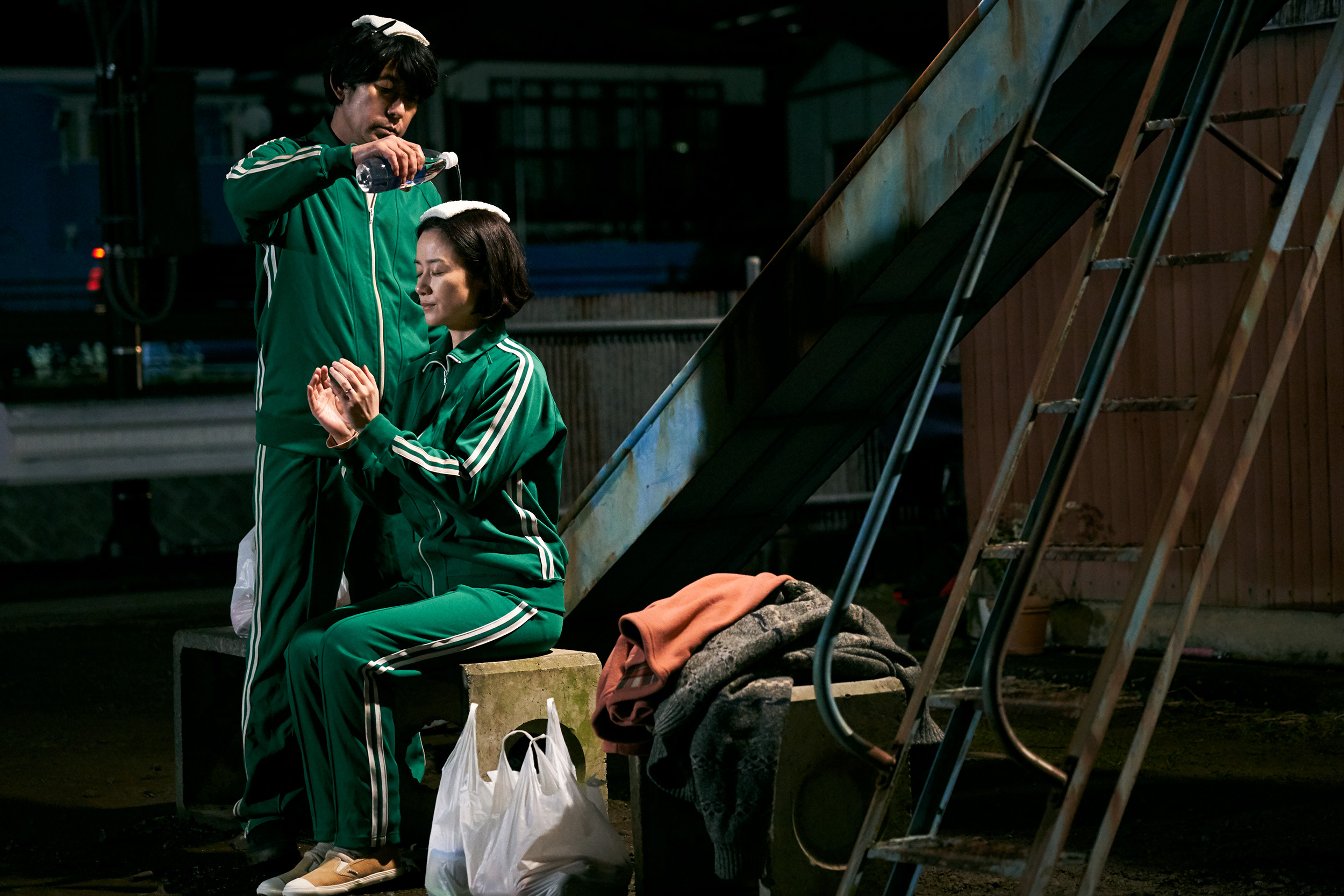
As a baby, Chichiro (Mana Ashida) had suffered from severe eczema which had left her in terrible pain and her parents suffering with her in witnessing her distress. On the advice of a colleague, Chichiro’s father (Masatoshi Nagase) decides to try using “Venus Blessed Water” which is apparently full of cosmic energy that can cure all ills. Chihiro begins to recover and her parents become devotees of the cult which produces it eventually alienating her older sister, Ma (Aju Makita), who is unable to reconcile herself with the outlandish beliefs they advance and rituals they conduct. 

For Chihiro, however, the cult is all she’s ever known so it is in that way “normal” and it’s never really occurred to her to question it even after her sister’s mysterious “disappearance”. But as she approaches the end of middle-school, a few well placed questions from her classmates give her pause for thought wondering if her parents’ claims about the miracle water could possibly be true or if, as her best friend Watanabe (Ninon) wonders, they are simply being scammed. After all, if water could solve all the world’s problems it would either be ridiculously expensive or completely free and if you could stay healthy by placing a damp towel on your head then everyone would be doing it. Her parents claim they don’t get colds because the water boosts their immune system, but perhaps they’re just lucky enough to be the kind of people who don’t often get that kind of sick or the fact that they obviously spend almost all their time in the bubble of the cult reduces their exposure. 

Her crunch point comes when her handsome maths teacher (Masaki Okada) on whom she has a crush spots her parents doing the ritual in a park and exasperatedly points them out as complete nutcases. When she eventually tells him who they are, he inappropriately calls her out in front of the entire class by telling her to get rid of her “weird” water while subtly undermining her religious beliefs with advice about how to avoid getting colds or other potentially dangerous seasonal viruses. Omori presents the cult neutrally, hinting that the discrimination Chihiro is facing as a member of a “new religion” may be unfair while the beliefs of traditional religions may seem no stranger to the unfamiliar and to criticise them so directly would be deemed unacceptable in any liberal society. In a sense perhaps we all grow up in a kind of cult only latterly questioning the things our parents taught us to be true. Chihiro’s uncle Yuzo meanwhile had once tried to use science and experience to undermine her parents’ beliefs, he and Ma swapping out their holy water for the tap variety to prove to them that they are being duped only for them to double down and refuse to accept the “truth”. 

Uncle Yuzo and his family eventually offer Chihiro a place to stay in the hope of getting her out of the cult but are also of course asking her to betray her parents by leaving them. She remains preoccupied by the fate of her sister, particularly hearing rumours about the cult supposedly disappearing those who turn against them, but is torn between her growing doubts and love for her parents while privately suspicious about the fate of a child much like herself kept locked up by his mum and dad who say he’s terribly ill and unable to speak (which doesn’t exactly support the cult’s claims of universal healing), but who knows what might actually be true.

Shoko (Haru Kuroki), the wife of the guru Kairo (Kengo Kora), is fond of reminding the younger members that they are not there of their own free will which is of course true whatever the implications for fate and determinism because they are children whose parents have forced them to attend which might explain their sense of resentment or what she implies is “resistance” to their spiritual messaging in urging them to make an active choice to accept the cult’s teachings. Chihiro is coming to a realisation that she may be on a different path than her parents but delaying her exit while they too are possibly preparing her for more independent life. Lighter than much of Omori’s previous work despite its weighty themes, Under the Stars is also in its way about the end of childhood and the bittersweet compromises that accompany it. 


Under The Stars streamed as part of this year’s Nippon Connection.

Original trailer (no subtitles)

Images: (c) 2020 “Under the Stars” Production Committee

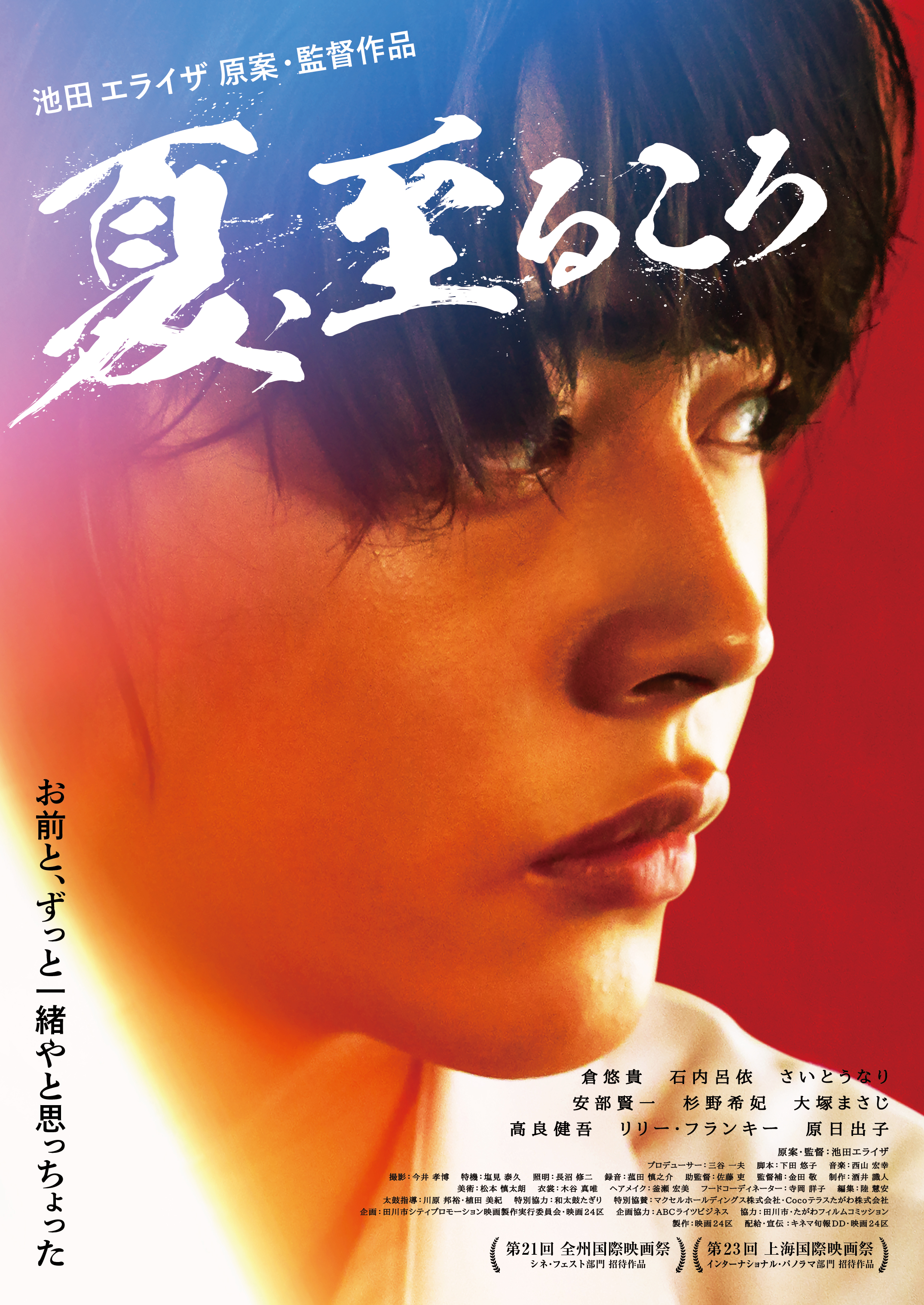
Town Without Sea (夏、至るころ, Elaiza Ikeda, 2020)

“Happiness is something you don’t notice even if it’s right next to you” the hero of actress Elaiza Ikeda’s directorial debut Town Without Sea (夏、至るころ, Natsu, Itaru Koro) is told by a strangely perceptive small child. The nature of happiness is something that seems to be bothering him while he contends with adolescent anxiety little knowing what to do with the further course of his life while fearful in the knowledge that his relationship with his childhood best friend must necessarily change. 

Approaching the final year of high school, taiko-enthusiast Sho (Yuki Kura) has no dreams or aspirations and has been avoiding thinking about what to do after graduation. Pressed by his teacher, all he can offer is that he’d like to become “air”, which is in its own way slightly alarming though it hints at his sense of emptiness and despair. His childhood best friend, Taiga (Roi Ishiuchi), meanwhile has a clearly defined, extremely sensible life plan which is why he’s abruptly giving up taiko so he can attend cram school and get into uni with the aim of becoming a civil servant. As we discover, Sho has been something of a follower making most of his existing decisions based on whatever Taiga was going to do, but he can’t merely follow him this time and will have to come to some sort of decision about his individual future. 

“I can’t walk alone. I don’t know what to do” he confesses to a surprisingly sympathetic teacher (Kengo Kora), while as it transpires Taiga is having similar thoughts. The two boys are much more co-dependent that they assumed, but that very co-dependency begins to drive them apart when coupled with their adolescent anxiety. Taiga fears that he is simply too “boring”, giving up taiko because his carefully honed technique cannot measure up to Sho’s anarchic power. According to him he took up taiko after spotting Sho playing at a festival thinking he looked so “free and cool”, yet Sho equally thinks he’s not as a good a drummer and cannot match Taiga’s meticulous training. Taiga is shifting away from their friendship because he secretly feels inferior and wants to leave before being around Sho makes him feels miserable, a logic Sho is not fully equipped to understand. 

“Why does everybody quit?” he asks in exasperation, meeting a strange young woman who like them wants to pull away from something before she ends up hating both it and herself. Likened by Taiga to the kind of manic pixie dream girl who frequently turns up during the last summer of high school in manga, Miyako (Nari Saito) does not quite come between the two boys in the expected way but does bring out their contradictory qualities before abruptly disappearing from the narrative, ahead of the pair in suddenly deciding that she’ll figure something out on her own. Having decided all he wants is a future of ordinary happiness, Taiga can’t help resenting his friend feeling that whatever decision he makes, getting a job or going to uni, he’ll wind up happy whereas he presumably will not with his unexciting yet sensible life as a civil servant. 

There is an undeniably homoerotic quality to the boys’ friendship, their brief falling out almost like a lovers’ tiff in its melancholy intensity. Sho necessarily fears the loss of his friend, perhaps instinctively knowing he’s chosen a path he likely cannot follow and feeling rejected because of it. He obsessively meditates on the meaning of “happiness” unable to settle on a means of achieving it while unsure of what exactly it means. He asks his friends and family but discovers that happiness means different things to different people, may change over time or not quite be what you first thought it was, or be as simple as a sunny day in your hometown. He does however begin to accept that even if separated, his relationship with Taiga will not necessarily change they will still be “together” if more in spirit than body. Recalling something Taiga had said about the sea which he has never seen, he makes his choice defiant in its independence. Hailing from Fukuoka herself, Elaiza Ikeda’s remarkably assured directorial debut crafts a warm, empathetic coming-of-age tale centring on the intense friendship between two men but discovering a sense of wonder and contentment in the everyday as its conflicted hero finds a sense of rootedness in the strength of his relationships that grants him the freedom to roam. 


Town Without Sea streamed as part of this year’s Japan Cuts.

Original trailer (English subtitles)

Remain In Twilight (くれなずめ, Daigo Matsui, 2021) [Fantasia 2021]

“So what? We just live on.” remarks a bereaved young man learning to let go of his grief in Daigo Matsui’s melancholy ensemble drama Remain in Twilight (くれなずめ, Kurenazume). Matsui sets the scene at a wedding which is also in some ways a funeral during which the ghost at the feast will eventually be laid to rest but his study in loss is also a reflection of its eternal arrest as a group of high school friends learn to accept a sense of absence where their friend used to stand while processing the various ways their lives have and will continue to diverge where as his obviously will not. 

As the film opens a group of six men is surveying a wedding hall where they intend to recreate a dance they first performed at a high school culture festival. The wedding co-ordinator comes out to confirm that everything is in order and seating has been arranged for the five of them only to be reminded that actually they are six. Factory worker Nej (Rikki Metsugi) wants to hang out longer, but most of the other guys have other commitments from work to family but at a rambunctious karaoke session the next day during which they regress to their high school selves it becomes clear that one of their number, Yoshio (Ryo Narita), passed away five years previously but is quite literally there in spirit. 

In addition to Yoshio’s absence, it’s clear that the group has become distant since their high school days the wedding reunion highlighting the class differences between them with some going on to regular salaryman jobs, others working in fringe theatre, and Nej at the factory the uniform of which he is ubiquitously wearing at every occasion other than the wedding during which the guys’ black suits are identical to those they wore for the funeral save the substitution of a jauntier bow tie. The previously nicknamed “Sauce” is now Mr. Sogawa (Kenta Hamano) and a married father of one. They aren’t 17 anymore. 

Nevertheless, the guys can’t let go of the memory of Yoshio who remains among them as if he were still alive. Triggered by a seemingly trivial act such as eating a biscuit or hearing a particular turn of phrase each of the men is called back into the past towards a private memory of Yoshio some directly related to the performance at the cultural festival which seems to have marked their lives and others from later. They collectively meditate on the last time they saw each other, reliving the event, trying to prevent Yoshio from leaving but of course failing. Actor Akashi (Ryuya Wakaba) regrets not picking up his phone, little knowing it would be the last time he would see his friend because you can’t get away from the fact every time might be the last you just can’t know. 

“You’re only dead when it’s convenient” Yoshio’s high school crush Mikie (Atsuko Maeda) barks, seemingly unperturbed to see him in the flesh but also angry and resentful asking him to finally cancel his social media accounts so she won’t keep getting birthday reminders or see something about him popup on her feed, remember, and be sad. But softening she shows him a picture of her daughter, signalling that she’s moved on while he obviously cannot though he wishes her only happiness glad perhaps to have shared something he lacked the courage to confess while alive. 

So corporeal does Yoshio seem to be that he even receives a goodie bag from the wedding, again signalling his absence as the guys find themselves literally carrying extra baggage which they eventually decide to try burying leading to a rather surreal incident which confronts them directly with Yoshio’s liminal status and survival in their hearts. Travelling to the other side they begin to learn to let him go, poignantly once again considering calling a taxi though this time for five. Adapting stage play, Matsui’s sweeping handheld camera shifts effortlessly from one time period to another and finally into another realm with a giddy ethereality as the men, now approaching middle-age, meditate on the sense of loss in grieving teenage friendship along with its unlived future. It’s less the ghost than those who are left behind who must finally learn to “move on”, rewriting the past as they see fit in order to walk into a freer future. 


Remain In Twilight streams in Canada until Aug. 25 as part of this year’s Fantasia International Film Festival.

International trailer (English subtitles)

Aristocrats (あのこは貴族, Yukiko Sode, 2021)

“Is that still a thing?” a young boy asks incredulously of his rather severe grandmother as she quite insensitively sets up new marriage meetings for her granddaughter seconds after being told that her fiancé has unilaterally ended their engagement earlier that day. The “aristocracy” might seem like something from a bygone age, yet as those of us living in highly stratified societies can attest it continues to place a near invisible stranglehold over the mechanisms which govern our lives. Even so, the system traps all as Yukiko Sode’s sensitive drama Aristocrats (あのこは貴族, Ano Ko wa Kizoku), adapted from the novel by Mariko Yamauchi, makes plain as two women involved with the same man, as dejected and unhappy as either of them, eventually find common ground in attempting to seize their own agency from within a fiercely patriarchal society. 

At 27, Hanako (Mugi Kadowaki) is beginning to feel as if her life is slipping away from her. As we first meet her, she’s on her way to a posh New Year meal at a fancy Tokyo hotel. The taxi driver envies her, lamenting that he drives people here all the time but has never set foot inside. The reason she’s running late, however, is a mild sense of embarrassment as evidenced by the empty chair at her side intended for the fiancé who won’t be coming. Explaining that he broke off the engagement because the timing was bad, Hanako attempts to put a brave face on the apparent shame she seems to be feeling while her sisters and mother suggest it might be for the best, he was a little too “flamboyant” and in any case they’re ideally looking for someone suitable to take over the family medical practice. While everyone is busy proposing alternative matches, only Hanako’s brother-in-law (Takashi Yamanaka) bothers to ask her what it is she really wants but all she can muster is that she’d be fine with someone “normal”. 

After a few miserable omiai meetings with dreadful men from an awkward doctor with a photo fetish to a sleazy playboy salaryman who thinks women only say they like jazz because at some point a guy liked it, Hanako begins to lose the will to live thinking perhaps that looking for the “right guy” might be aiming too high and she should just take the best offer on the table. When she meets Koichiro (Kengo Kora), however, it’s love at first sight. Showing up like Prince Charming he’s handsome, poised, softly spoken, and even posher than she is. Hanako is the perfect choice to be his wife essentially because of her innate blandness. She’s everything the society wife is supposed to be, quiet, reserved, and unassuming in her total obedience to the tenets of her “upbringing”.  

Meanwhile, Koichiro has also been in a longterm non-relationship with another woman, Miki (Kiko Mizuhara), a bar hostess from a small town who has had to struggle the whole way to make a life for herself. The pair first met at Keio University, but Miki was forced to drop out before graduating when her father lost his job despite having studied her socks off just to get a place. A member of the “in-crowd”, Koichiro’s acceptance was guaranteed because he attended an affiliated school filled with the children of the rich and powerful. Mirroring Hanako’s lunch date with her society ladies, we see Miki and her friend invited by a couple of upperclass classmates to a fancy afternoon tea only to gorp at the menu and its exorbitant price list at which the “in-crowd” do not even glance. When they meet again 10 years later and Miki explains she didn’t exactly choose her line of work, Koichiro laments it’s exactly the same for him, which it of course isn’t, but he is in a similar way trapped. 

“I just want my family to continue” he later explains to Hanako, “it’s just how I was brought up. The same reason you married me”. In a certain way, Koichiro was no more free than Miki, ironically feminised reduced to his capacity to perpetuate the family line while aware that his whole life has been mapped out for him since the day he was born. He went to Keio, married a suitable woman, and is expected to run for political office. Hanako married him because she was expected to marry someone and it was undoubtedly a good match, yet she’s unhappy because the relationship is devoid of intimacy while her in-laws ironically pressure her about the lack of an heir. She suggests getting a job for something to do, but asking her brother-in-law for advice is reminded she’d need to talk to her husband and family first. 

Hanako’s friend, fellow aristocrat and concert violinist Itsuko (Shizuka Ishibashi), meanwhile has remained quite defiantly single explaining to Miki whom she’d met by chance that she believes a woman should be financially independent partly because her mother had wanted to leave her father who had several affairs and numerous illegitimate children but couldn’t because she had no way to support herself, upperclass women largely being brought up to be the wives of important men. As she tells Miki, she hates society’s tendency to pit women against each other and isn’t here to judge her about her relationship with Koichiro but merely to talk. Rather than a bitter love triangle what arises between the women is a sense of solidarity, each finding common ground in being victims of a patriarchal society even if their “upbringings” and social status are currently very different. While Miki perhaps admires from afar but does not particularly resent the “in-crowd”, Hanako begins to see the various ways her “upbringing” has trapped her, attracted by Miki’s sense of confidence and independence remarking that her life seems “lived in”, struck by the warmth of the photos she has on her wall of various trips with friends. 

Her mother had told her to “close her eyes to some things and try to get along” hearing the sad tale of a woman who managed to escape the golden prison of the aristocracy but only at the cost of her child, a cruelty Hanako had been too naive to consider. As Itsuko had told her, Tokyo is a compartmentalised city where you only meet members of your own social class, yet through her accidental contact with Miki she begins to realise another life is possible even if not quite shaking off her privilege as she rejects the tenets of her upbringing to seize her own agency while Koichiro remains trapped within the feudal legacy unable to free himself of the outdated notions of filial responsibility. A tale of cross-class, female solidarity, Aristocrats takes aim at the ironic equality of a system which damages all, even if some remain wilfully complicit, while affording the ability to its protagonists to sidestep the forces which constrain them to claim their own freedom brokered by mutual support and the aspiration towards a freer society. 


Aristocrats streams in Germany until 6th June as part of this year’s Nippon Connection.

International trailer (English subtitles)

Talking the Pictures (カツベン!, Masayuki Suo, 2019)

Famously, silent cinema was never really “silent” in Japan. As the quote from director Hiroshi Inagaki which appears after the end credits of Masayuki Suo’s ode to the early days of the movies Talking the Pictures (カツベン!, Katsuben!) reminds us, audiences always had the benshi to guide them. These narrators of film were often more of a draw than the pictures themselves, cinemagoers keener to see their favourite storyteller perform than the story up on screen. A relic of a bygone age, the benshi has often been blamed for holding Japanese cinema back as studios continued to craft their films around audience appetites for live performance, but as we’ll see even the benshi themselves could sense their obsolescence lingering on the horizon. 

Beginning in 1915, the film opens with a retro mockup of a Toei logo from the silent era though the studio was only founded in 1938 and therefore produced only sound movies. Shot as a silent picture the opening sequence follows a gang of kids as they make their way towards an active film set where a classic jidaigeki is in production, confused on passing what appears to be a woman peeing standing up against a tree, a reminder that early cinema was largely inspired by kabuki and therefore featured male actors playing female roles. This is a disappointment to young Umeko, the daughter of an itinerant sex worker, who dreams of becoming an actress. Shuntaro, a little boy obsessed with the movies and dreaming of becoming a benshi like his idol the marquee draw Shusei Yamaoka (Masatoshi Nagase), reassures her that plenty of films from other countries feature female actors as the pair bond sneaking into the local picture house together but as in any good melodrama they are separated by time and circumstance only to be reunited 10 years later when neither of them is quite living their best life. 

While Umeko (Yuina Kuroshima) is a struggling actress trying to make it in motion pictures, Shuntaro (Ryo Narita) is living as a “fake benshi” impersonating Yamaoka and others for clueless provincial audiences while the gang he’s running with rob local houses using the movies as a cover. Escaping with some of the loot, he rebrands himself as “Kunisada” after a favourite character from the silver screen and fetches up in his old stomping ground, getting a backstage job at the troubled picture house which finds itself at the mercy of the new outfit in town, a purpose built modern cinema run by local yakuza Tachibana (Fumiyo Kohinata) and his movie-loving modern gal daughter Kotoe (Mao Inoue). Like the film itself, the town is at the nexus of changing times. The Aoki cinema is housed in a former kabuki theatre with the staff dressing in kimono even if Shuntaro and his divaish rival Mogi (Kengo Kora) don suits to talk the pictures. The palatial Tachibana meanwhile boasts modern seating and has the habit of poaching the Aoki’s staff partly because they pay more and partly because no one wants to work with Mogi who is, in his own way, an exemplification of the ways the benshi can interfere with cinematic development in that he forces the projectionist to undercrank the movies to ensure they follow the rhythm of his narration and not vice versa. 

The handsome Mogi is still pulling in the crowds, but the ageing Yamaoka has become a melancholy drunk now convinced that his own art is an act of destruction, actively unhelpful in becoming a barrier between the audience and the movies rather than a bridge. After all, cinema is a visual medium, it shouldn’t need “explaining” in words. He’s actively standing in the way, imposing his own narrative over someone else’s vision just as Shuntaro is a “fake” benshi in that he merely copies the routines of others, adopting a “fake” persona while hiding out in the movie house from the gang he ran away from and the movie-loving cop (Yutaka Takenouchi) who’s chasing them. Yamaoka may have a point, the days of the benshi are numbered though there were those who argued the advent of the talkies was also a regression, the advances of the silent era squandered on the spectacle of sound. Nevertheless, filled as it is with silent-era slapstick, silly farce, melodrama, and romance, Talking the Pictures is a warm and nostalgic tribute to a bygone age of cinema and the men and women who guided us through it. 


Original trailer (no subtitles)

No Longer Human (人間失格 太宰治と3人の女たち, Mika Ninagawa, 2019)

Like a character from one of his novels, Osamu Dazai is remembered as a figure of intense romanticism, an image fuelled by his love suicide with a woman who was neither his wife nor the mistress with whom he had conceived a child. A proponent of the “I novel”, Dazai lived as he wrote, but crucially gives the hero of his final book, No Longer Human, a less destructive ending than he eventually gave himself in that he finally accepts his toxicity and chooses self-exile in the belief that he has fallen so far as to lose the right to regard himself as “human”. Mika Ninagawa’s biographical treatment of Dazai borrows the title from his most famous novel (人間失格 太宰治と3人の女たち, Ningen Shikkaku: Dazai Osamu to 3-nin no Onnatachi), but gives it a subtitle which pulls focus from the author himself towards the three women who each in their own way made him what he was. 

Yet what he was, in Ninagawa’s characterisation at least, was hollow. Late into the film, she includes a famous literary anecdote in which a young Yukio Mishima (Kengo Kora) turns up to a party where Dazai (Shun Oguri) is holding court following the publication of The Setting Sun and accuses him of being a poseur, a coward who writes endlessly about death but has no real intention of following through. That’s something of which he was often accused, having already failed to die as we see in the film’s opening in a love suicide in which the woman died calling out another man’s name. Intensely insecure, he carps on about being disrespected by the literary establishment, in fact using his final days and one of his last chances to pen an embittered screed against the famous authors who read but apparently did not care for his work. His editor despairs of him, resenting him not only for the debauched lifestyle which interferes with his writing but his essential caddishness that sees him both mistreat his loyal wife and use countless women as fuel for his art never quite caring about what happens to them afterwards. 

Dazai claims that Michiko (Rie Miyazawa), his legal wife and mother of his children, is OK with his affairs because it is “love in the service of art”. There is some truth in that, though as Michiko points out, Dazai himself would have no interest in a woman so passively self-sacrificing as that of Villon’s Wife. When the children catch sight of their father embracing another woman at a festival, she calmly tells them that he is “working” before pulling them on in embarrassment, putting up with it perhaps more because she has no other option than in respect for Dazai the great artist. 

Yet as his new lover Shizuko (Erika Sawajiri) claims, beautiful art comes from broken people, an idea which perhaps enables Dazai’s grandiose vision of himself as an unjustly dismissed literary genius. Just as Villon’s Wife was “inspired” by his relationship with Michiko, The Setting Sun is about Shizuko, only this time Shizuko is more collaborator than muse. He plunders her diaries and the most famous line from his novel, “Men are made for love and revolution” was in fact not written by him but stolen from her (she eventually asks for a co-writing credit but evidently did not get one, penning her own book instead). What she asks him for in return is a child, a strangely common request also made of him by Tomie (Fumi Nikaido), the woman with whom he eventually dies largely, the film suggests, because despite the longing for life that birth represents she pulled him towards death and he was too indifferent to resist. Dazai’s resistance, if you can call it that, is listlessness in which he has no desire to live but equally perhaps no real desire to die. 

Despite the foregrounding of the title, the three women are perhaps three paths he could take – the conventional as a husband and father, the radical as man standing equal with a woman who is not a wife with whom he births “a new art”, and finally the nihilistic “death” which is the route he eventually takes. With or perhaps for Tomie he writes the work he knows will destroy him in which he excoriates himself rather than her but, unlike in life, receives the gift of self-awareness and then lets himself (partially) off the hook. In Ninagawa’s visual complexity he is perhaps to an extent already dead, collapsing in the snow after haemorrhaging blood in the later stages of TB next to a red circle looking oddly like the flag of Japan only for white petals to begin raining down on him as if he were already in his coffin. We see repeated shots of shimmering water reminding us of his death by drowning, and for all of Ninagawa’s characteristically colourful compositions it’s the women who are surrounded by the vibrancy of flowers in full bloom never Dazai himself. On her husband’s death, Michiko can exclaim only (and ironically) that the sun has finally come out as she gets on with her life putting out the washing. Shizuko affirms that Dazai was the love of her life while asserting her own artistic identity in pushing her book which is an inversion of his. Meanwhile, Dazai has consumed himself, a cad to the last, overdosing on romanticism as an artist who fears he has nothing else to say.


Hong Kong trailer (English/Traditional Chinese subtitles)