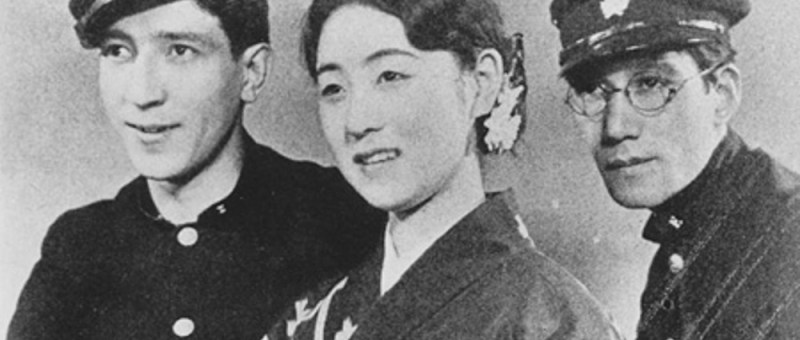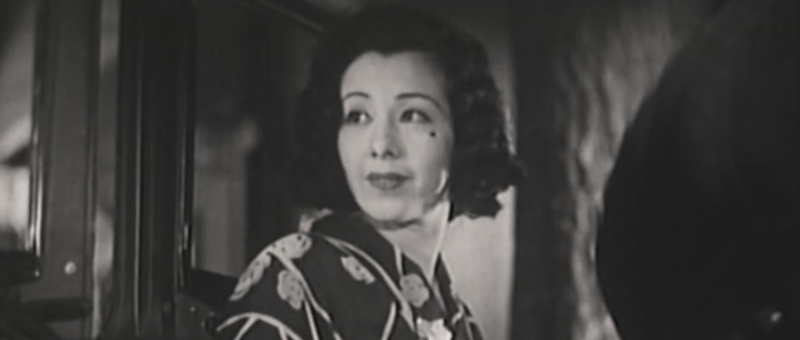
The Pit of Death (怪談おとし穴, Koji Shima, 1968)

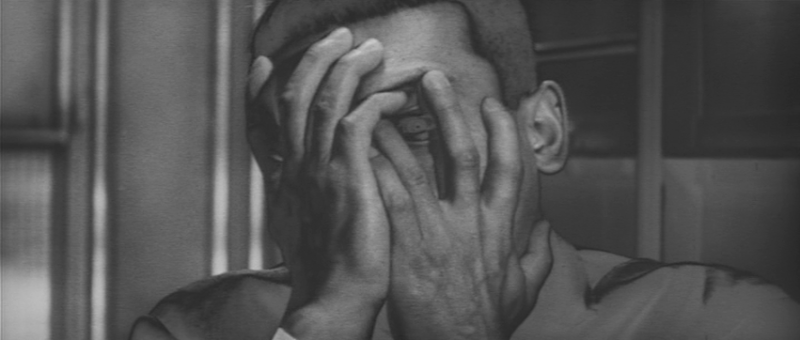
The building at the centre of Koji Shima’s dread-fuelled horror noir Pit of Death (怪談おとし穴, Kaidan Otoshi Ana) is said to be haunted by the spirits of the many people who died during its construction. In his opening voiceover, anti-hero Kuramoto (Mikio Narita) likens the city to a hornet’s nest, the salaryman drones mindlessly buzzing around the business district as if driven by some supernatural force. In that sense, the office building itself becomes an eerie place, the nexus of the salaryman dream which in the end drags all to hell. 

Largely a retelling of Yotsuya Kaidan for the mid-20th century with a little A Place in the Sun thrown in, the film finds Kuramoto an ambitious man deluded by consumerism and resentful of the classism and snobbishness which limit his prospects as a man who has otherwise been able to pull himself out of poverty. His boss pointedly speaks of his talents which include the ability to speak several languages despite only having attended night school rather than university while it’s unusual for a man of his background to hold this kind of position even if he’s only a secretary and not yet an executive. Nevertheless, his boss clearly sees him as a potential successor and plans to marry him to his daughter (Mako Sanjo) who has in some ways inexplicably developed a crush on him.

But Kuramoto is already in a relationship with typist Etsuko (Mayumi Nagisa). In fact, the reason the boss is so pleased with him is largely down to her in that he asked Etsuko to sleep with their foreign client, Mr Hancock, to seal the deal which she duly did. Kuramoto plans to throw her over in order to pursue his dream of taking over the company so he can look down on those who once looked down on him. He tells Etsuko that the marriage will be in name only, that he isn’t attracted to the boss’ daughter Midori, and their relationship will continue as before only to be confused when Etsuko is not totally on board with the plan. She tells him she’s pregnant with his child though he callously points out it could be Hancock’s and insists on an abortion thereafter determining he must kill her so that he can fulfil his destiny by joining the executive class. 

His desires are obvious when he steps into Midori’s home and gazes at a painting crassly asking how much it’s worth, admitting that he’s the kind of poor person who has a fascination with luxury. His forward propulsion is driven by a fear of poverty, the trauma of the hard life he’s had and the futility he felt in his inability to escape it. Yet it’s also a kind of class rebellion motivated by resentment for the prejudice held against him as a man without means in a highly stratified society. Paradoxically, he will do anything and everything to be accepted as a member of the elite class including murdering Etsuko, the symbol of the working class past he fears will drag him down.

Etsuko does indeed drag him down eventually in her own revenge against his callousness and the double standards of a patriarchal society. Her relationship with Kuramoto seems to be a secret in the office while he uses and discards her when no longer useful to him. She too is trapped within this building of a newly corporatised society but can rise no further alone and is in a fairly bleak position without Kuramoto for she has already thrown away her only bargaining chip by entering a sexual relationship with him. Should she attempt to raise his child alone as a never married single mother, her life would be very difficult indeed if not actually impossible. Nevertheless, she does have real power over Kuramoto in her ability to expose the affair and ruin his chances of career advancement through dynastic marriage destroying any possibility of his future success. 

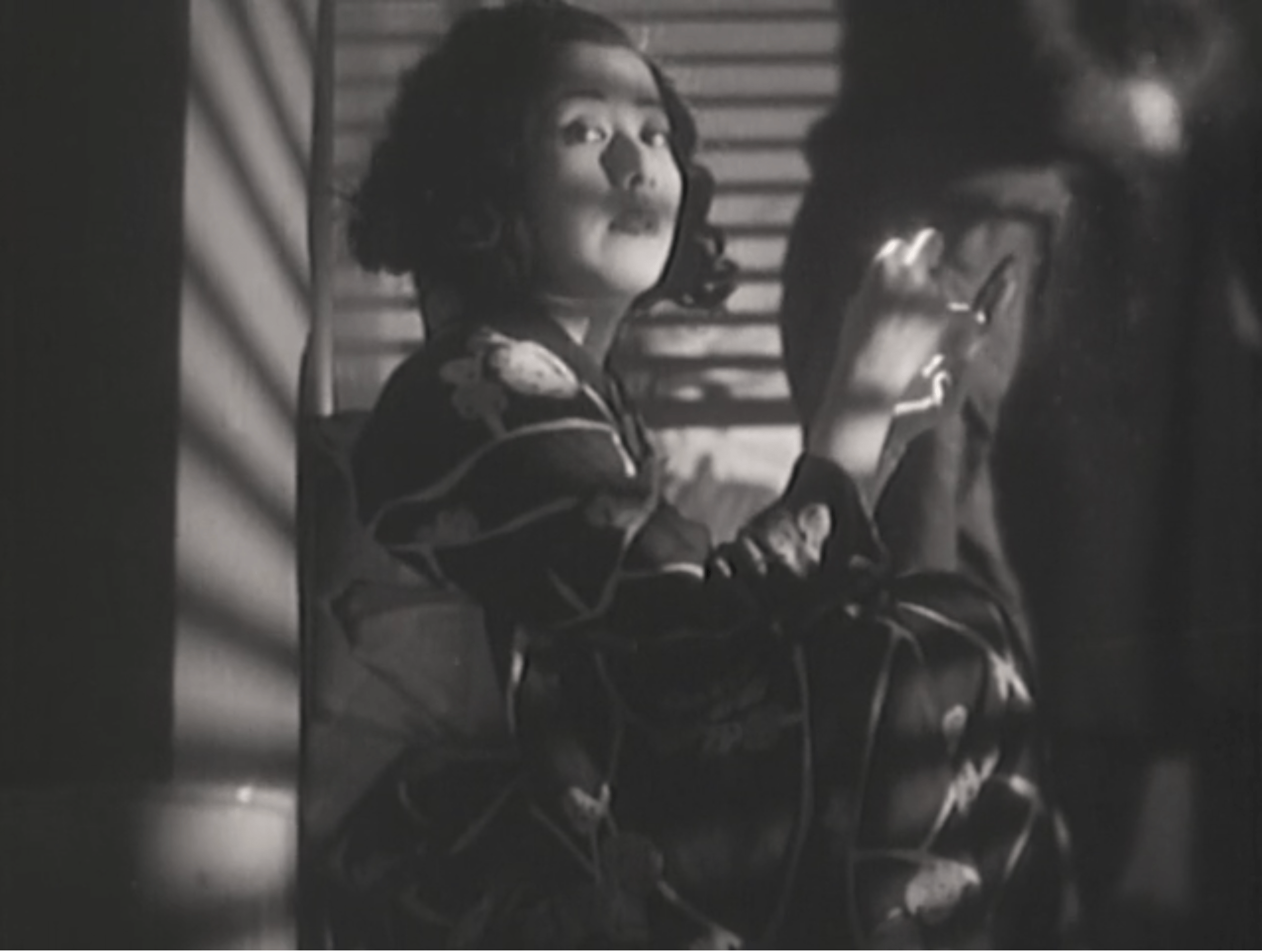
In Kuramoto’s mind, Etsuko cackles like a witch or evil spirit. Her hair billows out into the wind like a vengeful ghost, though the first few times Kuramoto only imagines her death. He sees himself push her off a roof, only to be surprised to see her still standing over him. Etsuko haunts Kuramoto while alive as an image of his destruction all while he silently plots hers. He plans to use the building against her, hiding her body inside it where he assumes no one will see. In the end, it’s as if this building, an edifice of soulless corporatising capitalism, consumes them both, drawing them in with their unfulfilled desires until they fall into the bottomless pit of post-war ambition. Shima makes frequent use of solarisation and film noir lighting to destabilise Kuramoto’s world as his mental state starts to fracture along with innovative use of split screens to lend the space a sense of eerie continuity but ultimately posits the salaryman society as a kind of death trap beckoning greedy souls towards their demise with an inexorable fatalism.
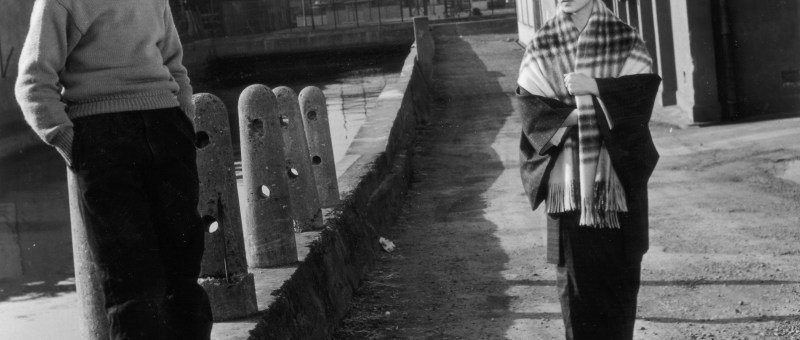

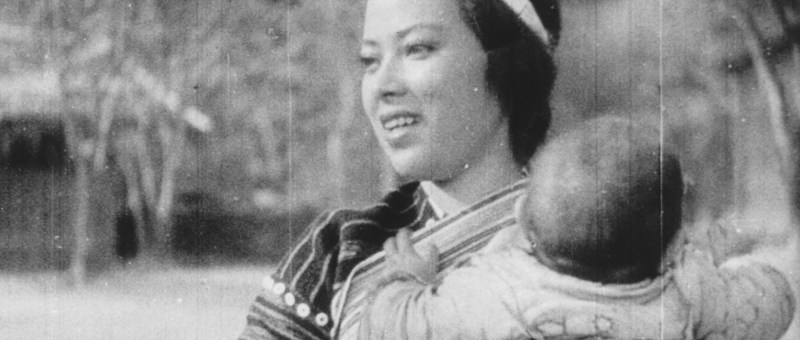
Image of a Mother (母のおもかげ, Hiroshi Shimizu, 1959)

“Does happiness even exist nowadays?” replies a still youngish widow pushed towards the prospect of remarriage but for her own reasons reluctant. The final film from Hiroshi Shimizu, Image of a Mother (母のおもかげ, Haha no Omokage) examines the changing nature of family dynamics through the experiences of a blended family and a little boy whose grief and loneliness in the wake of his mother’s death are little acknowledged by those around him who are unable to understand why he cannot simply just move on.

This may partly be down a practical mindset having not so long ago experienced a time in which there was so much death it would not have been possible to grieve it all, but there is something nevertheless quite insensitive in the way little Michio (Michihiro Mori) is more or less told he must forget his late mother. Though it appears she only passed away less than year previously, Michio’s father Sadao (Jun Negami) is under immense pressure from his uncle to remarry so that Michio will have a mother. The latest prospect in what seems to be a long running series of possible matches is a widow Sadao’s own age with a young daughter. Sonoko (Chikage Awashima) works in the canteen at the local hospital where Sadao’s uncle delivers the tofu from his shop but is originally quite resistant to his attempts at matchmaking before finally giving in. Neither of them really wanted to marry again and the meeting itself is quite awkward but against the odds they do actually get on and eventually decide to get married. 

Sonoko is a very nice woman and kind to Michio, determined care for him as if he were her own son but hurt by his continuing distance towards her. Aside from the emotional distress, it’s also true that Sonoko is under a lot of pressure to present herself as the perfect image of motherhood especially having joined a larger extended family from whom she may fear judgement though are actually very fond of her and glad they found someone so nice. The extended family in particular are quite put out that Michio has yet to call Sonoko “mum,” and are cross with him for not doing so while Sonoko too is forced to feel as if it’s a slight on her character, that she’s not living up to her new role and the otherwise happy family they’ve begun to build may fall apart if she can’t completely win Michio over. 

The family don’t seem to understand at all that Michio is still attached to his late mother’s memory, and the insensitive attitude of Sadao’s younger cousin Keiko (Satoko Minami) does much to fuel the fire in her insistence that Michio hide the photograph of his mother to which he is still saying goodbye when he leaves each morning for school. They tell him that because he has a new mother now he must forget the old, but to him it seems like a betrayal. He likes Sonoko, and he likes being mothered, but he can’t bring himself accept her in the place of the mother he’s lost. It’s not Sonoko who tells him he must do any of this, and in fact she is the one who tries to suggest that there’s room for more than one mother even if the idea is immediately rejected by her daughter Emiko (Sachiyo Yasumoto). But it’s many ways this attempt to hide the past, to avoid dealing with it that prevents the new family from cementing itself. Only once the adults have listened to and fully accepted Michio’s feelings does he finally feel comfortable enough to call Sonoko his mother. 

Even so, Michio’s bullying at the hands of his classmates who keep feeding him stories about evil stepmothers points to a lingering stigma towards remarriage and families that might differ from the norm. In this he finds himself doubly conflicted, defending Sonoko to his obnoxious classmates while unable to accept her at home. Maintaining the lateral tracking shots that become increasingly prevalent in his later career, Shimizu makes the most of the scope frame to capture Michio’s loneliness and isolation if also that of Sonoko who finds herself in an awkward situation trying to adjust to this new family life in what was another woman’s home knowing she can’t ever take her place but must try to find her own within it. Yet what he gives them in the end is a kind of mutual salvation that promises new futures for both and that even nowadays happiness may still exist.


Image of a Mother screens at Japan Society New York on May 23/30 as part of Hiroshi Shimizu Part 2: The Postwar and Independent Years.

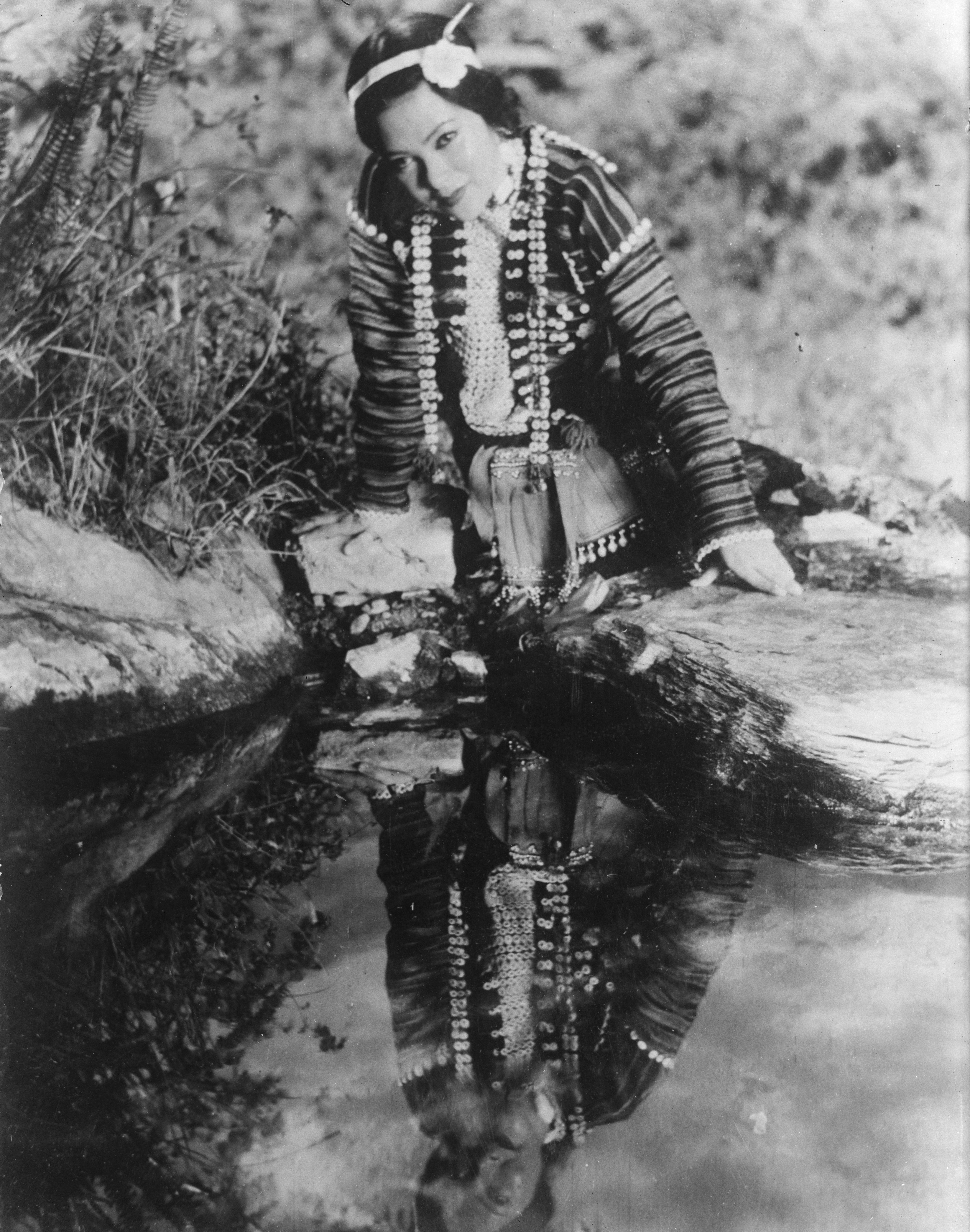
Sayon’s Bell (サヨンの鐘, Hiroshi Shimizu, 1943)

Like all directors of his era, Hiroshi Shimizu made a series of National Policy propaganda films though he was often able to circumvent their requirements by focussing on themes that interested him more directly such as teamwork or childhood. Sayon’s Bell (サヨンの鐘, Sayon no Kane) is however an unavoidably propagandist film filled with praise for the Japanese empire and to modern eyes incredibly problematic in its depictions of the indigenous peoples of Taiwan many of whom did “volunteer” to serve in the Japanese imperial army a notable example being that of Li Kuang-hui who was the last Japanese soldier to be discovered hiding in the Indonesian jungle in 1974 having been recruited from the Amis people.

The film opens with a lengthy series of title cards explaining that the film is dedicated to the Takasago Volunteers, “Takasago” being, aside from the title of a famous noh play, the name Japanese gave to the indigenous people of Taiwan believing them to have been “civilised” by Japanese rule. Thus in the opening sequences, we see the role of the Japanese military personnel as essentially paternal. They are policemen, doctors, teachers, instructors, and directors of construction who are dedicated to raising the aboriginal people to level of Japanese citizens through forced assimilation. 

Inspired by a real life incident that also inspired a popular song of an indigenous woman who drowned in a river while carrying the belongings of a Japanese policeman, the film uses the titular Sayon as an arbiter of Japaneseness enhanced by the casting of Li Koran, later known as Shirley Yamaguchi/Yamaguchi Yoshiko, who was actually Japanese but presented as Chinese in the propaganda cinema of the time having been born in Machuria and fluent in Mandarin. Somewhat awkwardly given that Sayon is supposed to be an indigenous woman herself, she is the one schooling the local children in how to be Japanese reminding them that they should “use Japanese properly” rather than their indigenous language and praising one young boy for abandoning his indigenous name and adopting that of “Taro” instead. Japanese rule in Taiwan was not as oppressive as it was in the other parts of the empire and they did have some local support thanks to their investments in infrastructure and modernisation. Nevertheless, they did attempt to enforce the use of the Japanese language and the taking of Japanese names though it should also be noted that the KMT government did exactly the same thing only with Mandarin when it gained control of the island. 

That aside the indigenous people were often treated poorly in comparison to the rest of the of the population and we can see that the framing of them is often racist and derogatory such as when an abandoned baby is taken to the police and they remark that the indigenous community have too many children and they all look alike. The eligible men from the village, including Sayon’s love interest Saburo (Hatsu Shimazaki), have been sent to Japan for a kind of militarist re-education and are eagerly awaiting their opportunity to serve the emperor in the army. Though this may seem surprising, it apparently reflects a real fervour among indigenous men who were convinced to enlist by the money on offer and a campaign of rumours that suggested men who did not do so were unmanly and therefore unattractive to the local women. When the first round of volunteers is selected, a great amount of time is given to consoling the men who were not chosen many of whom protest and plead to volunteer their services. 

In an effort to inject some drama the film includes a love triangle between Sayon, Saburo, and Mona (Kenzo Nakagawa) who is said to be moody out of jealousy and unrequited love for Sayon but later reveals he was only jealous of Saburo in respect of playing second fiddle to him as a worthy man of the village again eager to serve the Japanese emperor. Led by Li Koran, there are several renditions of a patriotic war song singing the praises of the Taiwanese army that read that like a call to arms, though the audience for this film is certainly domestic and it seems unlikely that it would be screened in these mountain villages in Taiwan.

The first part of the film is basically ethnography featuring picturesque scenes of the local scenery and footage of the indigenous people living the “simple, peaceful life” patronisingly described in the opening titles while there is some exoticisation of the aboriginal culture in the elaborate costumes and scenes of indigenous rituals. Perhaps the most shocking aspect is that Sayon is encouraged to break a traditional taboo by entering a sacred lake where women are forbidden to go lest they anger the god Uttofu. With her new cultural re-education, Sayon thinks Uttofu is a myth and goes to the lake to help Saburo assess it because the Japanese are planning to drain it to create a rice paddy. For this she is expected to drown herself in the water to placate Uttofu and is urged to do so by the tribal elders with the Japanese basically agreeing with them deciding that they should catch an animal to sacrifice and if that doesn’t work, while it’s “unfortunate”, Sayon should indeed hurl herself into the lake if the for the good of the empire rather than Uttofu. 

It is quite odd to think that the Japanese military personnel would go along with human sacrifice rather than clamp down on a practice they would otherwise term backward, though in that light it’s impossible not to see her later death by drowning as a rejection of the “modernity” the colonial authorities represent and a re-assertion of indigenous culture. The bell referenced in the title refers to one given to the village to commemorate the incident bearing an inscription of Sayon’s name. When the KMT gained control of Taiwan, they erased the inscription on the bell and removed it as a symbol of Japanese rule though it was later restored after the end of martial law and the monument re-erected beside the bridge which was also named “Sayon’s Bridge” in a evocation of the complicated relationships between the three nations. The film is however rather uncomplicated in its themes which to modern eyes prove extremely unpalatable despite the often beautiful cinematography capturing the idyllic Taiwanese countryside.


Sayon’s Bell screens at the Museum of the Moving Image May 11 as part of Hiroshi Shimizu Part I: The Shochiku Years.

My Elder Brother (私の兄さん, Yasujiro Shimazu, 1934)

A wastrel son and runaway daughter get a few lessons in filiality in Yasujiro Shimazu’s genial ‘30s comedy, My Elder Brother (私の兄さん, Watashi no Niisan). Reflecting the changing the times, the film is in many ways about navigating the sometimes fraught relationships among a blended family though like many hahamono, it’s the stepson who is most devoted to his mother while the birth son is consumed by a sense of guilt and inadequacy in his accidentally awkward positioning within the family hierarchy.

The filial piety of eldest son Shige (Reikichi Kawamura) is established early on by the fact he’s not at work because his mother is ill and he’s off visiting her. He does in fact return late at night, though there’s a question mark over his qualities as a boss as the drivers at the taxi firm he runs remark that he’s been ignoring their attempts to negotiate with him for better conditions not least the provision of assistants which has been given additional weight by one driver’s experience with a disturbed fare who attempted to strange him with his belt.

The strange and violent opening sequence in which a cabbie is attacked by a crazed passenger is never referenced again and out of keeping with the otherwise lighthearted tone of the film though does add to a sense of danger later echoed in the appearance of two guys who first seem like yakuza but are actually just two grumpy old men trying to retrieve a young woman who’s run away in defiance of an arranged marriage. In any case, tearaway brother Fumio (Kazuo Hasegawa), who arrives drunk in the back of a cab, has indeed fallen into bad company with yakuza whom he describes as his friends though Shige warns him they’re probably just after his money.

Fumio has returned because he’s learned his mother is ill, though he’s reluctant to see her given his present condition. When he does actually meet her, she says that she hates him and calls him a good-for-nothing, worthless man. It seems her animosity is partly motivated by a sense of guilt and embarrassment that her biological son has brought shame to the family she married into and especially to Shige. For his part, Shige acknowledges that he also felt resentful when Fumio and his mother moved in but explains that he was still a child clinging to the memory of his late birth mother. Fumio explains to the young woman he picks up, Sumako (Kinuyo Tanaka), who is on the run from her uncle and the man her stepmother wants her to marry, that he left home because of his precarious status and sense of inadequacy but liked the sense of freedom his independence gave him even if he is ashamed of the kind of life he’s lived on the fringes of the underworld. 

Sumako is experiencing a similar dilemma as she feels herself unable to bond with her stepmother to the extent that she has not been able to articulate that she objects to the arranged marriage her relatives have set up for her. She laments that if it were her birthmother she should be able to tell her everything, but Fumio counters that Shige had been jealous of him because he could exchange harsh words with his mother because of their closeness in a way he never could because he is not her biological son. Reinforcing a sense of obligation between parents and children might have been an important message in the mid-1930s, but the film is perhaps unexpectedly progressive in its openness and desire to embrace these then considered less usual family arrangements born of second marriages in emphasising the brotherly bond between the two men and Sumako’s successful escape from an unwanted marriage simply by speaking her true feelings to her mother not to mention the suggestion of a cross class romance between rich girl Sumako and the middle-class Fumio.

Meanwhile, the film also has an international bent in the prominent signs for Chevrolet and Hollywood-esque aesthetics, drawing inspiration from American and European crime films for the violent opening sequence and underworld setting. Shimazu hints at the shadiness of Fumio’s backstreets life, but equally of Sumako’s uncle and his moustachioed friend lending an undertone of darkness to the mid-30s society but otherwise keeps things light in the innocent courtship between Fumio and Sumako who can mediate their attraction only by remarking on the beauty of a sunset. 


Song of the Flower Basket (花籠の歌, Heinosuke Gosho, 1937)

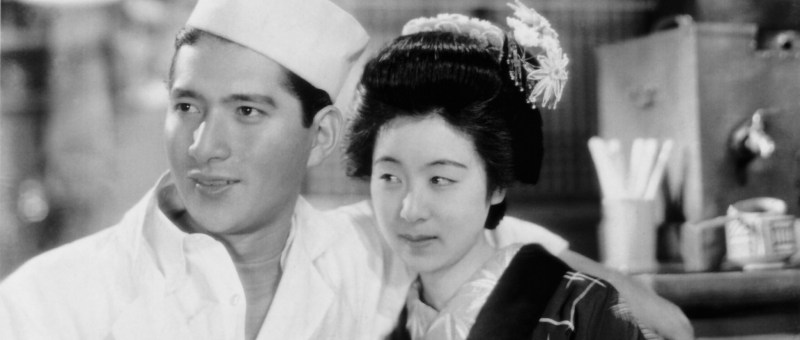
The daughter of a tonkatsu shop finds herself with an overabundance of suitors in Heinosuke Gosho’s generally cheerful yet occasionally dark melodrama Song of the Flower Basket (花籠の歌, Hanakago no Uta). Adapted from a novel by Fumitaka Iwasaki and scripted by Kogo Noda, the film finds its heroine caught at a moment of social change as she battles her snooty aunt for the right to decide her romantic future while her impoverished student boyfriend does something much the same in defying his family’s attempts to micromanage his life dreaming of the bright lights of Ginza. 

Yoko (Kinuyo Tanaka) is the “kanban musume” of her father Keizo’s (Reikichi Kawamura) pork cutlet restaurant, attracting customers with her charm and beauty while the Chinese chef her father brought back with him from Shanghai, Lee (Shin Tokudaiji), is the culinary star. Lee is secretly in love with Yoko whom he continues to refer to largely as “the young lady” and has long been writing an ode in her honour. Yoko meanwhile is in love with a penniless student, Ono (Shuji Sano), who at the beginning of the film has just returned home after visiting his family whom he has alienated by declaring that he doesn’t want to work in an office in the country while refusing an offer to marry into another family as an adopted son-in-law. The reason for this is less his pride than his desire to stay in Tokyo amid the bright lights of Ginza, sighing as he looks out into the neon-lit night gazing at adverts for Club Hamigaki toothpaste and Meiji Chocolate. The second reason may also be that he’s fallen for Yoko but given his precarious financial situation and lack of prospects does not quite dare to imagine a future with her. 

He must however be serious as we later learn he’s given up going to hostess bars with his friends, a bar girl greeting him in the restaurant evidently not having seen him in ages asking where he’s been much to Yoko’s embarrassment. The encounter places a seed of doubt in her mind in a minor role reversal as she begins to resent Ono’s past irrationally annoyed by the idea he has dated other women. Meanwhile, at the memorial event marking 11 years since her mother passed away while working as a steward on a boat in Singapore, Yoko’s snooty aunt tries to set her up with an arranged marriage to an Osakan doctor who may or may not marry depending on the “negotiations” but has also been promised his own clinic by his wealthy parents if the marriage is confirmed. Okamoto (Toshiaki Konoe) has visited the restaurant to get a better look at Yoko making him the third suitor to encircle her even though the chief concern of the family is that Yoko is almost 24 and therefore ageing out of top tier matches.  

To his credit, Yoko’s father is fully in her corner trying to stand up to the domineering aunt who is definitely overreaching in trying to micromanage the romantic lives of her nieces in the absence of her sister. He determines to find out if Yoko has her eye on someone already to get the aunt off their backs, but the situation develops in an unexpected direction when Lee mistakenly assumes that she likes him back. Too shy to say himself, he advises Keizo to ask frequent customer and best friend of Ono, Hotta (Chishu Ryu), who is on track to become a Buddhist priest and take over the family temple, only Hotta obviously tells him, correctly, that Yoko is in love with Ono having completely forgotten that Lee had once confessed his feelings to him. 

The film does its best to present a more positive vision an internationalist Japan even in 1937 despite the Aunt’s obvious disapproval of the family’s wandering past and is largely sympathetic of the lovelorn Lee yet implies that a romance between he and Yoko is so unthinkable that no one really considered the possibility that he may be in love with her himself even though it is incredibly obvious given his ongoing attempts to write a love song while he’s even torn out a picture of Yoko which appeared in a magazine and hung it on his wall. Yoko is oblivious to his feelings, believing that he is in love with their waitress, Oteru (Yaeko Izumo), who is indeed in love with him, and perhaps doesn’t appreciate the effect moving Ono in as a trainee chef will have on him both professionally and emotionally. The message that is emerges accidentally or otherwise is that Lee’s place at the cafe is insecure despite his skill being a large part of its success as he falls into a deep depression and eventually decides it’s too painful for him to stay. 

The revelations surrounding Lee further destabilise Yoko’s confidence in her choice of Ono whom she constantly doubts even suspecting he may have committed a violent crime when carted off by the police after newspaper reports stating the bar hostess he introduced her to earlier has been murdered in her apartment. Perhaps it’s normal enough to be uncertain if you’ve made the right choice in the early days of a marriage, but believing your spouse capable of murder is a significant stumbling block as is her final admission that she doesn’t really trust him and isn’t ready to accept his past with other women in a further reversal of their roles given he has now married into her family and taken her name. Nevertheless, the crisis seems to be repaired by her father’s simple act of ordering a round of beers making clear that he plans to celebrate and obviously still has confidence in Ono while preparing to adapt their restaurant to their new circumstances by branching out into sukiyaki. Expressing some of the anxieties of the 1930s from the precarious economy and uncertainty of the future to changing social mores as young people reject the traditional to craft their own romantic futures, Song of the Flower Basket nevertheless ends on a note of melancholy in the wandering Lee’s ode to loneliness and heartbreak under the neon lights of Ginza.


Where Now Are the Dreams of Youth? (靑春の夢いまいづこ, Yasujiro Ozu, 1932)

It’s lonely at the top. Perhaps surprisingly, Japan’s depression-era cinema had considerable space for lamenting the complicated position of the young master and, as Hiroshi Shimizu’s The Boss’ Son at College would do the following year, Ozu’s Where Now are the Dreams of Youth (靑春の夢いまいづこ, Seishun no Yume Ima Izuko) follows a young man of privilege realising that inequality is bad for friendship and no matter how much you try to manipulate an inherently unfair system for the good of those you love it is the system itself which will always stand between you. 

Ozu begins, however, in familiar territory continuing in the vein of student comedy which was proving such a big hit for home studio Shochiku and in fact reusing a few gags from his previous films in the genre such as the guys’ persistent attempts to cheat on their exams. The opening sequence in which three of the four friends goof off rehearsing a cheerleading routine neatly sets up the already existing divisions between them as Saiki (Tatsuo Saito), the gang’s outlier, hovers on the sidelines attempting to study explaining to a young woman the guys know from the bakery, Shige (Kinuyo Tanaka), that he has only his mother and cannot afford to spend his time messing around. Despite that, however, we’re also told that Saiki is a hopeless case forever falling his exams and regarded as essentially feckless. 

The hero, Tetsuo (Ureo Egawa), is the son of a company president and even if he doesn’t notice it the guys are already deferring to him as a kind of leader though they are all, in one sense, still “equals” as students at the same university taking the same classes. They all wear the same universal student uniform and drink in the same cafe, though they perhaps have different fears and anxieties for their futures at this difficult economic moment. The friendship is suddenly disrupted by the unexpected death of Tetsuo’s father which necessitates his leaving university to take over the family firm, though it’s also clear that he is not quite in charge and his conservative uncle is in fact running the show. 

Tetsuo’s new status as a company president, now dressed in an expensive tailored business suit, forever sets him apart from his friends who eventually come to him for help on being unable to find jobs in the midst of an economic depression. He decides to use his privilege to help them but in an underhanded way, insisting they sit the company exam but giving them the answer sheet beforehand just like in their school days helping each other to cheat. Nevertheless, he fails to realise that you can’t be both friend and boss and it hurts him that they are now polite and deferent in his presence. Gone is their old camaraderie and foolishness, fear and dependency gradually erode their friendship. 

Meanwhile, Tetsuo has continued to carry a torch for Shige but again has failed to realise that they now live in different worlds. His uncle keeps trying to arrange suitable marriages for him which he delights in frustrating with childish pranks. Now settled in his professional life he tries to abide by a college era bro code in asking for the guys’ permission to ask for Shige’s hand, knowing that they had all taken a liking to her. He places himself on their level but only superficially, acting with a degree of self-confident entitlement which assumes firstly that the others will defer to him and back off, and that Shige is his for the asking. What hurts him most is that none of the guys, who must all know, were brave enough to tell him that Saiki and Shige are already engaged. Fearful for his job, Saiki would have sacrificed the woman he loves, essentially traded her for economic stability. Finding out from Saiki’s mother (Choko Iida), Tetsuo confronts Shige who tells him that she agreed to marry Saiki out of pity and despair after growing weary of waiting for him believing that a company president would never marry a woman like her. 

Tetsuo surrenders his love on the altar of friendship. Despite confirming their love for each other, he and Shige are separated by the great wall of social class in a hierarchal society along with the economic pressures of an ongoing depression. What Tetsuo chooses to save is his male friendship, striking Saiki, who does not fight back, for his moral cowardice in debasing himself by allowing those with power and privilege to rob him of his rights and freedoms. The guys sort things out with a fist fight, restoring an artificial “equality” that provokes a “happy” ending despite the fact that nothing has really changed. Tetsuo has to say goodbye to the dreams of youth in acceptance of the disappointments of adulthood but tries to salvage something as he moves forward in preserving what he can of cross-class friendship as bulwark against the inequalities of his age.


Currently streaming in the UK via BFI Player as part of Japan 2020. Also available to stream in the US via Criterion Channel.

Woman of Tokyo (東京の女, Yasujiro Ozu, 1933)

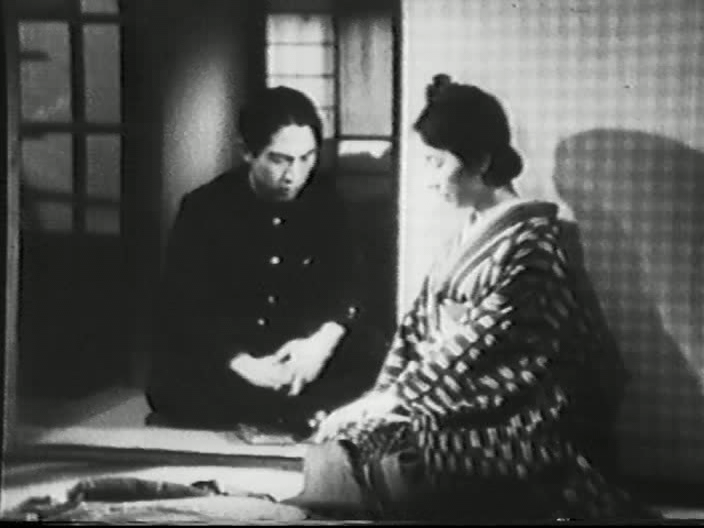
Most closely associated with his family dramas, the films of Yasujiro Ozu while often deeply moving are generally safe spaces filled with warmth and love. He was never, however, afraid to explore the darkness of his society as the uncharacteristically bleak silent Woman of Tokyo (東京の女, Tokyo no Onna) makes plain. A tale of disintegrating families, Ozu substitutes a loyal sister for a self sacrificing mother but once again places her at the mercy of a conservative society which refuses to accept the nature of the sacrifice she has chosen to make on its behalf. 

The heroine, Chikako (Yoshiko Okada), is better off than most during these years of depression in that she has a steady full-time job as a typist with which she is able to support her younger brother, Ryoichi (Ureo Egawa), who is a student. Somewhat unusually, Ozu shows us a fairly progressive working environment in which Chikako is one of many women working alongside men in an open plan office which is arranged in a far less stressful manner than the one we later observe in the American film which Ryoichi and his girlfriend Harue (Kinuyo Tanaka) see at the cinema (If I Had a Million, 1932, the segment directed by Ernst Lubitsch, “The Clerk”) in which the desks are laid out in regimented style and staffed entirely by identically dressed men.  

In any case, the job apparently does not quite pay enough to cover Ryoichi’s fees and so Chikako has taken on a part-time gig assisting a professor with translation at his home in the evenings, or so she said. Unbeknownst to her, a policeman turns up at her office and asks to see her attendance records. Again surprisingly, Chikako’s boss is calm and supportive, telling the policeman she’s a model employee of four years’ standing and obviously confused as to how she could be the subject of any criminal investigation. The policeman does not explain, shutting the interview down as soon as the boss motions to ask Chikako about the mysterious professor presumably not wanting her to know she is under investigation. 

Rumours, however, will start and it is those rumours more than the truth of them which will prove the most fatal. Harue’s brother (Shinyo Nara) is a policeman and he’s heard that Chikako has been moonlighting as a bar girl and engaging in sex work. Harue decides to put the matter to her boyfriend, but he is immediately offended, brought to tears by anger, and throws Harue out for slandering his sister. The issue is that, as a woman and most particularly as a sister in place of a mother, Chikako is expected to sacrifice herself on her brother’s behalf. Her career, and implicitly the reason she is not yet married, is not for her personal fulfilment or financial security but only for her brother’s future. She has given up everything for him, and now apparently has also surrendered her body yet he rejects and shames her for it. He does not thank her, nor does he feel guilt for being the cause of her supposed degradation but again foregrounds his own suffering as the brother of a fallen woman. 

Harue, by contrast, is presented as a the soul of properness, not unkind but disapproving. In a difficult conversation with Chikako, she admits it’s not the right thing to say but immediately pities Ryoichi rather than sympathising with another woman who has found herself making difficult choices solely on his behalf. Ryoichi rejects her suffering and sees only the shame. Yet Chikako is not ashamed. She does not seem unhappy with her choices and is defiant in the face of censure. She hoped that Ryoichi would one day understand, but the decision he makes is cruel and selfish, ruining all her hope and rendering her long years of suffering void. She resents his cowardice in being unable to face and accept the truth in the depth of her love for him. 

In this instance, the family fails but only because of an oppressive social structure that is inherently unequal and refuses to accept either female agency or sacrifice. Chikako lives in a world of film noir despair, haunted by ominous shadows – policemen’s swords, gloves against the shoji, nooses in shadows on the walls, a boiling kettle giving way to a pillow shot of smoke pouring from a chimney in funereal foreshadowing that forever traps her in impossibility. Frustrated, Ryoichi tries to reassert his manhood through physical violence but remains impotent, dependent on his sister but resenting her for shaming him in transgressing against an oppressive society. Meanwhile, Chikako is one of many women of Tokyo enduring the same old tragedies, her suffering barely registers. Reporters leave her door giggling after concluding there’s nothing to see here before taking to the streets in search of greater scandal in a readily devolving city filled with only emptiness and despair. 


Currently streaming in the UK via BFI Player as part of Japan 2020. Also available to stream in the US via Criterion Channel.

What Did the Lady Forget? (淑女は何を忘れたか, Yasujiro Ozu, 1937)

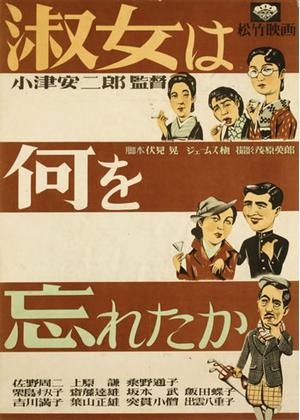
Japan was in a precarious position in 1937. Ozu’s What Did the Lady Forget? (淑女は何を忘れたか, Shukujo wa Nani wo Wasureta ka) was released in March of that year but by July the Second Sino-Japanese War would be in full swing and on the home front increasing censorship would render this kind of inconsequential comedy a much less easy sell. True enough, the film includes no “patriotic” content though it does eventually reinforce a set of patriarchal values in the remasculinisation of a henpecked husband while quietly sniggering at a new bourgeois social class.

The drama unfolds in the home of a medical professor, Komiya (Tatsuo Saito), and his austere wife Tokiko (Sumiko Kurishima). The couple have no children and mostly lead separate lives. Tokiko spends her days with two close friends, widowed single-mother Mitsuko (Mitsuko Yoshikawa), and wealthy older woman Chiyoko (Choko Iida) who is married to her husband’s friend, Sugiyama (Takeshi Sakamoto). The three women gossip about the usual things from fancy department store kimonos to new ways to laugh so you don’t get wrinkles along with the bizarrely difficult maths problems Mitsuko’s son has been studying in preparation for middle-school that none of them can answer. To help with the embarrassingly taxing homework, Tokiko offers to find a tutor, press-ganging her husband’s best student, Okada (Shuji Sano), into spending time with Mitsuko’s son Fujio (Masao Hayama) though it turns out that he too, a college graduate, is unable to solve these middle-school level problems. 

The real drama occurs when the couple’s neice, Setsuko (Michiko Kuwano), whom Tokiko had described as “proper” and “wholesome” rocks up from Osaka having become the epitome of a modern girl. Setsuko’s arrival further strains the Komiyas’ already fraying relationship as her surprising habits which include driving, smoking, drinking, and hanging out with geisha, continue to exasperate her aunt whose main objection to all of those things is that they aren’t appropriate because Setsuko is not yet married. To get away from his nagging wife who forces him to go golfing as usual when he doesn’t really want to, Komiya stashes his clubs with Okada and goes to a bar in Ginza where he meets Sugiyama who has also been forced outside by his wife. Sugiyama really does go golfing, promising to mail a previously written postcard to Tokiko on Komiya’s behalf, while he is eventually joined by Setsuko who has tracked him down to the bar despite being told to stay home and mind the house (the Komiyas have two live-in maids so the instruction seems unnecessary at best).  

As a “modern gal” Setsuko has some strangely old fashioned ideas even as she behaves like a 1930s ladette, striding around like man while drinking, smoking, and generally being almost as intimidating as Tokiko just in a more likeable fashion. Setsuko finds Komiya’s deferral to his wife embarrassing, encouraging him to be more masculine and stand up for himself even advising that he use violence to reassert his position as the man of the house. He seems uncomfortable with the idea but eventually does just that after a climactic argument once his lying about the golf and Setsuko’s nighttime adventures have been exposed. Caught in a moment of frustration, he slaps Tokiko across the face, leaving her to retreat in shock apparently “beaten”. The thing is, however, Tokiko likes it. She sees his slapping her as a sign of his love, as if she’s been needling him all this time in hope of a reaction while frustrated that perhaps he doesn’t care for her. Once he hits her, the marriage is rebalanced and repaired with traditional gender dynamics restored. She becomes more cheerful and deferent to his male authority, he acknowledges that he enabled her “arrogance” with his weakness as a man.  

Setsuko however, continues to shout at her uncle, disappointed that he apologised for his reaction and accusing him of giving away the victory he’d just won. He tells her that he’s simply using reverse psychology because wives like to believe they’re in charge and in the main it’s best to let them. Setsuko seems satisfied, but jokes with her new love interest Okada that he better not use reverse psychology on her. Or, he can, but she’ll just use reverse reverse psychology to get the upper hand, which perhaps undercuts the central message in praise of traditional gender roles. Nevertheless, What Did the Lady Forget? is full of Lubitschy late-30s charms from an unexpected sighting of real life star Ken Uehara at the Kabuki to Setsuko’s movie magazines featuring Marlene Dietrich and repeated references to Frederich March and William Powell proving that Ginza is open even in 1937, while the Komiya household descends into an oddly peaceful harmony of delayed marital bliss. 


Currently streaming in the UK via BFI Player as part of Japan 2020. Also available to stream in the US via Criterion Channel.

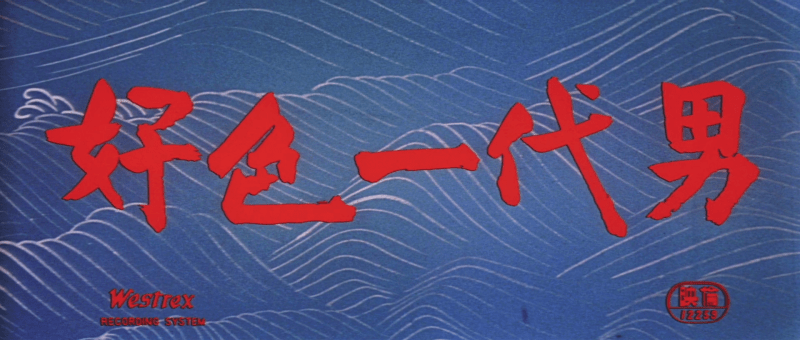
A Lustful Man (好色一代男, Yasuzo Masumura, 1961)

“Why are women in Japan so unhappy?” the carefree Casanova at the centre of Yasuzo Masumura’s 1961 sex romp A Lustful Man (好色一代男, Koshoku Ichidai Otoko) laments, never quite grasping the essential inequalities of the world in which he lives. Masumura is best known for extremity, a wilful iconoclast who flew in the face of golden age cinema’s genial classism, but shock was not his only weapon and he could also be surprisingly playful. Adapted from a well known novel by creator of the “floating world” Ihara Saikaku, A Lustful Man finds him indulging in ironic satire as his hero sets out to “make all the women in Japan happy” chiefly by satisfying their unfulfilled sexual desire while resolutely ignoring all of the entrenched patriarchal social codes which ensure that their lives will be miserable. 

Set in the Edo era, the film opens not with the hero Yonosuke (Raizo Ichikawa) but with his miserly father who berates a servant after discovering a single grain of rice on the hall floor. According to him, the central virtues necessary to become rich are endurance, diligence, and vitality. You must treasure each and every grain of rice in order to accumulate. A cruel and austere man who only thinks of money, Yonosuke’s father keeps his wife in earnest poverty despite their wealth, angrily grabbing an obviously worn kimono out of her hands and insisting that it’s still good for another year, apparently caring nothing for appearances in the otherwise class conscious Kyoto society. It’s this meanness that Yonosuke can’t seem to stand. He hates the way his father disrespects his mother, and her misery is a primary motivator in his lifelong quest to cheer up Japan’s melancholy women though the weapon he has chosen is sex, a convenient excuse to live as a genial libertine to whom money means essentially nothing. 

Yonosuke’s father has set him up with an arranged marriage into a much wealthier family, which is not something he’s very interested in despite the fact she seems to be quite pretty but on learning that she has transgressively found love with the family butler he determines to help her instead, ending the marriage meeting by chasing her round the garden like a dog in heat. Several similar stunts eventually get him sent away from his native Kyoto to Edo but he takes the opportunity to escape, travelling all over Japan making women “happy” as he goes. 

As the first example proves, Yonosuke genuinely hates to see women suffer. His own pleasure, though perhaps not far from his mind, is secondary and he never seeks to take advantage of a woman’s vulnerability only to ease her loneliness. Despite that, however, he remains essentially superficial opting for the transience of postcoital bliss while ignoring the very real societal factors which make an escape from misery all but impossible. During an early adventure, he spends all of the money he conned out of his new employer on redeeming a geisha (at more than three times the asking price) so that she can be with the man she loves, but he continues to visit sex workers without interrogating their existence as indentured servants, “merchandise” which is bought and sold, traded between men and entirely deprived of freedom. In fact, he proudly collects hair cuttings from the various geishas he has known as a kind of trophy only to later discover the grim truth, that the hair likely doesn’t belong to the geisha herself but is sold to them by middlemen who get it by digging up dead bodies. 

Yonosuke remains seemingly oblivious to the duplicitous hypocrisy of the yoshiwara, but is repeatedly confronted by the evils of Edo-era feudalism with its proto-capitalist cruelty where everything is status and transaction. He is often told that as he is not a samurai he would not understand, but seems to understand pretty well that “samurai are idiots” and that their heartless elitism is the leading cause of all the world’s misery. To some a feckless fool, Yonosuke refuses to give in to the false allure of worldly riches. As soon as he gets money he spends it, and does so in ways he believes enrich the lives of women (even if that only extends to paying them for sex), eventually getting himself into trouble once again reneging on his taxes after trying to prove a geisha is worth her weight in gold. 

Yogiri (Ayako Wakao) complains that women are but “merchandise”, valued only as toys for men. “Japan is not a good country for women” Yonosuke agrees, suggesting they run away together to find a place where women are respected, indifferent to Yogiri’s rebuttal “no, wherever you go, no one can change women’s sad fate”. Yonosuke’s naive attempts to rescue women from their misery often end in disaster, a runaway mistress is dragged back and hanged, the woman he was set to marry goes mad after her father and lover are beheaded for having the temerity to speak out about corrupt lords, Yogiri is killed by a samurai intent on arresting him for tax evasion, and his own mother dies seconds after his father only to be immediately praised as “the epitome of a Japanese wife”. Yet he remains undaunted, wandering around like an Edo-era Candide, setting off into exile to look for a supposed female paradise without ever really engaging with the systems which propagate misery or with his own accidental complicity with them. Nevertheless, he does perhaps enact his own resistance in refusing to conform to the rules of a society he knows to be cruel and unfair even if his resistance is essentially superficial, self-involved, and usually counterproductive which is, in its own way, perfectly in keeping with Masumura’s central philosophies on the impossibilities of individual freedom within an inherently oppressive social order.


Woman of the Mist (朧夜の女, Heinosuke Gosho, 1936)

vlcsnap-2019-01-21-00h29m30s692The 1930s are often thought of as an era of social rigidity and implacable conservatism, yet even before the war things were changing. The young wanted something different than their parents often had and dared to dream of getting it even if their hopes were often dashed by the times in which they lived. Heinosuke Gosho’s Woman of the Mist (朧夜の女, Oboroyo no Onna) is the story of two youngsters who find themselves in a difficult situation and are offered a solution by elders acting kindness which they are persuaded to take only to find themselves progressively more miserable, burdened by the weight of the sacrifice their society has asked them to make.

Set in the jovial working class world of Shitamachi, Woman of the Mist opens with the hero of the tale, Fumikichi (Takeshi Sakamoto), enjoying a historical lecture regarding Edo era sacrifice for the common good during which his wife, Okiyo (Mitsuko Yoshikawa), comes to fetch him. Members of a local association he belongs to have come looking for him, it turns out for a favour. They want him to assist with some fundraising for a stone lantern to mark the association’s anniversary. Much to his wife’s exasperation, Fumikichi is only too happy to comply. It might seem that Fumikichi is a much respected pillar of the community only it is also true enough that he basks in the flattery of being regarded as someone to be depended upon and is therefore a soft touch (something undoubtedly well known to all around him).

Nevertheless, despite his slight tendency towards narcissistic attention seeking, Fumikichi is a salt of the earth type and willing to help those who need it for largely altruistic reasons. He therefore finds himself a surrogate father (though childless himself) to the son of his widowed sister Otoku (Choko Iida) who enlists him to talk some sense into his law student nephew, Seiichi (Shin Tokudaiji), who has apparently been “disrespecting” his mother and neglecting his studies by reading too many novels. Fumikichi has a word but counsels Seiichi that there’s nothing wrong with reading novels save that it obviously upsets his mum who has worked herself to the bone for the last 20 years dreaming of the day Seiichi becomes a fully fledged lawyer, which is to say a member of the middle classes.

Fumikichi, as he often will, becomes the conciliatory voice at the centre of generational conflict. Seiichi is a young man at the crossroads of life and finds himself torn between youthful idealism and a duty towards his family. He has become disillusioned with the law and would rather transfer to literature, secure in the knowledge that only in novels can you find the truly humane. Fumikichi is careful not to patronise but gives him a knowing look, realising that his confusion is partly born of resentment towards his well meaning yet accidentally possessive mother who has railroaded him into a career he doesn’t want to buy him a future which is her only dream. What he wants is control over his life, but when it comes to it he is still a boy and woefully unprepared for the demands of adulthood.

This becomes obvious when he falls in love and gets his girlfriend into trouble. Teruko (Toshiko Iizuka), a former geisha apparently known to Fumikichi in his younger days now working as a bar hostess, is not exactly the kind of wife his mother might have had in mind. The pair are careful to keep their relationship a secret for just this reason as Seiichi remains conflicted – one moment declaring that he no longer cares if everyone finds out and lying to his mother about her the next. Pregnancy forces the issue. Teruko, mindful of Seiichi’s bright future, declares that she can raise the child alone, glancing sadly at a picture of herself in her former life as a sex worker as if accepting what future sacrifices might be expected of her while half hoping Seiichi will rush forward to save her from such a fate. Seiichi doesn’t exactly rush but does tentatively accept his responsibility in reassuring her that he will soon come of age and is ready to become a father with all of the joys and obligations that entails.

Lost he turns to Fumikichi who hatches a plan which might be accounted a neat solution but is also another instance of the older generation making decisions on behalf of the young without really asking them. Despite being a rather feckless old man, Fumikichi tells his wife the child is his and asks for her forgiveness while also suggesting that they adopt the baby as their own. As expected, Okiyo is not exactly enthused but as Fumikichi calculated she would eventually comes around, ironically enough after a conversation with Otoku who has no idea the baby is really her grandchild. Once the decision is made, everyone rallies round to look after Teruko who finally becomes a (temporary) member of Seiichi’s family even whilst barred from ever becoming his wife and in fact of ever seeing him again as a result of the bargain which has been struck by Fumikichi. Nevertheless, Seiichi vacillates and attempts to change his mind by asking Teruko to marry him only for her to urge him to study hard and live well, sacrificing her happiness for his future.

Uncomfortably enough, it is Teruko who must pay for a series of transgressions against the norms of her society – for being a young woman with a past who seduced a nervous young man and dared to dream of a happier future with a person of her own choosing, though the very fact of her suffering is in itself an attack on these rigid and unfair social codes which do their best to destroy the happiness of ordinary, basically good people who have done nothing wrong other than attempt to live their lives. Fumikichi and his wife are doing their best and they too are good, compassionate people who have made good compassionate choices hoping for the best in a difficult situation even if their choices are defined by the prevailing conservative morality which places Seiichi’s future above a young woman’s life and love.

Then again, Fumikichi’s objections are largely practical – it’s hard to keep a family with no money coming in and Seiichi is still a student with no prospect of immediate employment that would pay enough for a wife and child. Could they be happy after a shotgun wedding and years of penury? Seiichi’s diffidence hints at no, but Teruko’s “purity” hints at yes as she vows to make the kind of sacrifice that proves her “goodness”. The youngsters find themselves beholden to the demands of their elders, torn between their personal desires and duties to those they love. Whatever they do, they lose and are destined to remain unhappy, unable to seize their individual chance of happiness in an oppressive, conformist society. Gosho may leave them at the mercy of such a system, but he does so with immense sympathy and not a little anger as we watch these good people making the best of things while asking ourselves if all of this is really for the best.