
 On 16th April 2014, a ferry carrying mostly teenagers on a school trip sank taking 304 passengers and crew down with it. The Sewol Ferry tragedy was to have profound ramifications, asking a series of questions as to corporate and political corruption in the society which had permitted such an accident to happen and then failed to mount an effective rescue. In the five years since, many films have probed the causes and implications of the tragedy, but Lee Jong-un’s Birthday (생일, Saengil) is not so much interested in the incident itself as in the nature of grief and all the more so when it takes place across a national canvas.
Lee picks up three years after the sinking as husband and father Jung-il (Sol Kyung-gu) returns to Korea after five years of working away in Vietnam. So disconnected is he from his family, that he was only vaguely aware that they had moved and has trouble finding the new apartment. When he gets there, his wife Soon-nam (Jeon Do-yeon) pretends to be out, sending Jung-il back to stay with his understanding sister who tries to fill him in on the various reasons he might not be welcome at his own door.
The loss of the couple’s oldest child, Su-ho (Yoon Chan-young), in the ferry tragedy is only gradually revealed though it’s clear that there is an absence in the family home. Soon-nam has kept Su-ho’s room exactly as he left it – school uniform hanging on the wardrobe door, unfinished school work on the desk, post-its seemingly everywhere. Meanwhile, youngest daughter Ye-sol (Kim Bo-min) is often left to her own devices while Soon-nam buries herself in work and shuts out everything that reminds her that her son is never coming home.
While some of the other parents have formed a tightly bonded community forged by shared grief and anger, Soon-nam wants no part of it. Invited to a gathering after bumping into other parents at the memorial site, she lasts barely a few minutes before accusing them of turning their suffering into an excuse for frivolity. It’s not as if she could ever forget what happened to her son, but when the ferry tragedy is on every street corner, on the radio, on the news, it becomes impossible to ignore. Soon-nam wants her grief to herself. Her son and her loss. She isn’t interested in sharing him with anyone else, be that an increasingly angry society or her little girl who is now terrified of water and worried about her mum.
Jung-il, burdened with guilt for having abandoned his family, tries to address his grief in a more positive sense by re-embracing his role as a father to Ye-sol who was so small when he left that she doesn’t really remember him. Though Lee is not particularly interested in the political ramifications of the tragedy, she does subtly point the finger at the effects of economic pressure on the ordinary family which have seen Jung-il exile himself abroad and Soon-nam working so hard just to keep her head above water that Ye-sol is caught in the middle. Jung-il wasn’t there when his family needed him, and there’s precious little he can do for them now other than try to be around.
The other members of the support group have been holding birthday parties for some of the kids who passed away, turning the solemnity of a memorial service into a celebration of life. Soon-nam is against the idea – she would rather save the day for herself in private commemoration, but Jung-il is broadly in favour. Probed, he has to admit he barely knew the young man his son was becoming and that this party might be the only way to reconnect with the boy he lost. A passport that will never be stamped, colleges that will never be applied to, weddings that will never take place – the finality of the loss is crippling, but in holding the birthday parties those left behind are able to find a kind of acceptance in shared remembrance and a confirmation that their loved ones were loved and will continue to be loved even in their absence. A sensitive yet uncompromising exploration of the sometimes forgotten personal dimension to a national tragedy, Birthday is a beautifully complex evocation of learning to live with loss and a strangely uplifting, cathartic experience.
Birthday was screened as the opening night gala of the 2019 Udine Far East Film Festival.
Original trailer (English subtitles)



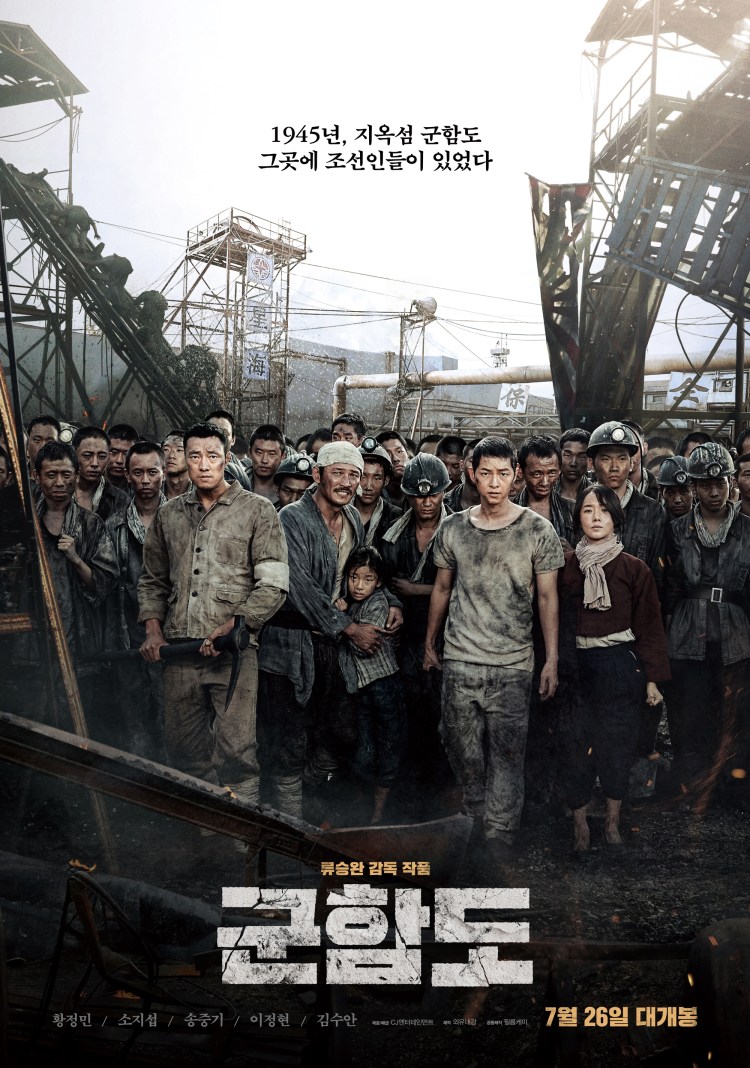
 North Koreans have become the go to bad guys recently, and so North Korean spies have become the instigators of fear and paranoia in many a contemporary political thriller. The Suspect (용의자, Yonguija), however, is quick to point the finger at a larger evil – personal greed, dodgy morals, and the all powerful reach of global corporations. Opting for a high octane action fest rather than a convoluted plot structure, Won’s approach is (mostly) an uncomplicated one as a wronged man pursues his revenge or redemption with no thought for his own future, only to be presented with the unexpected offering of one anyway alongside the equally unexpected bonus of exposing an international conspiracy.
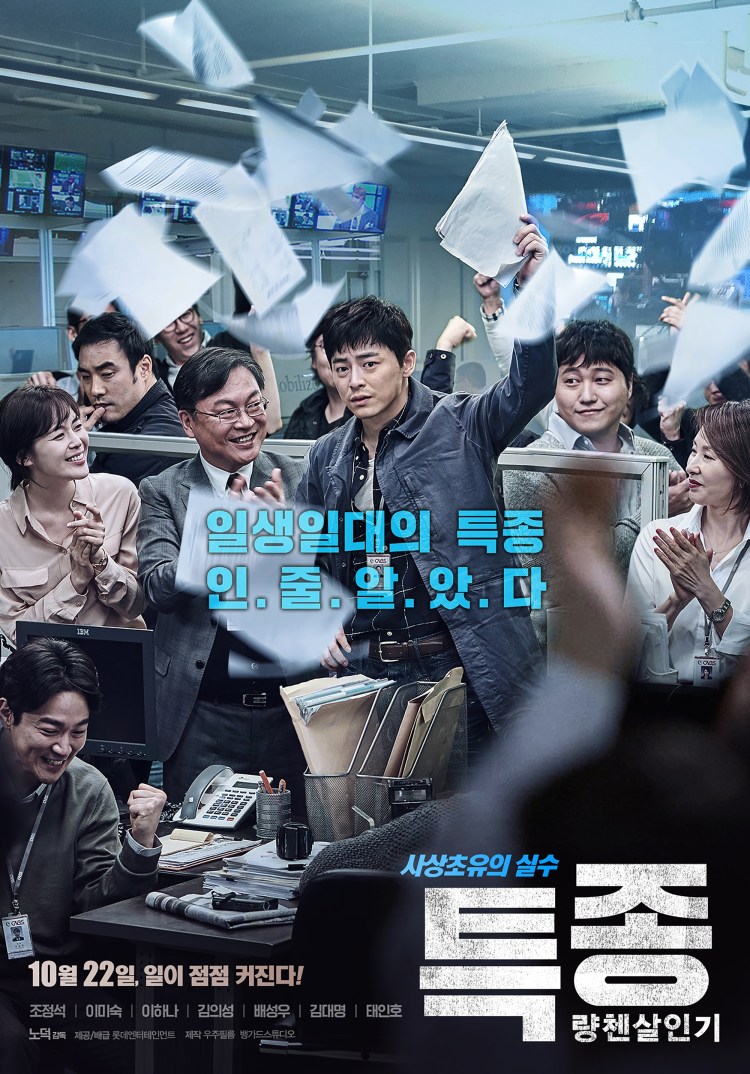 Some people just can’t keep themselves out of trouble. The down on his luck reporter at the centre of Roh Deok’s The Exclusive: Beat the Devil’s Tattoo (특종: 량첸살인기, Teukjong: Ryangchensalingi) is something of a trouble magnet as he makes mistake after mistake, requiring lie after lie to try and put him back on the straight and narrow. Unfortunately for him the deeper he gets the closer he turns out to be to the “real” truth. Only by that stage everyone has lost interest in “the truth” anyway – who cares about little things like facts against the overwhelming power of a constructed narrative.
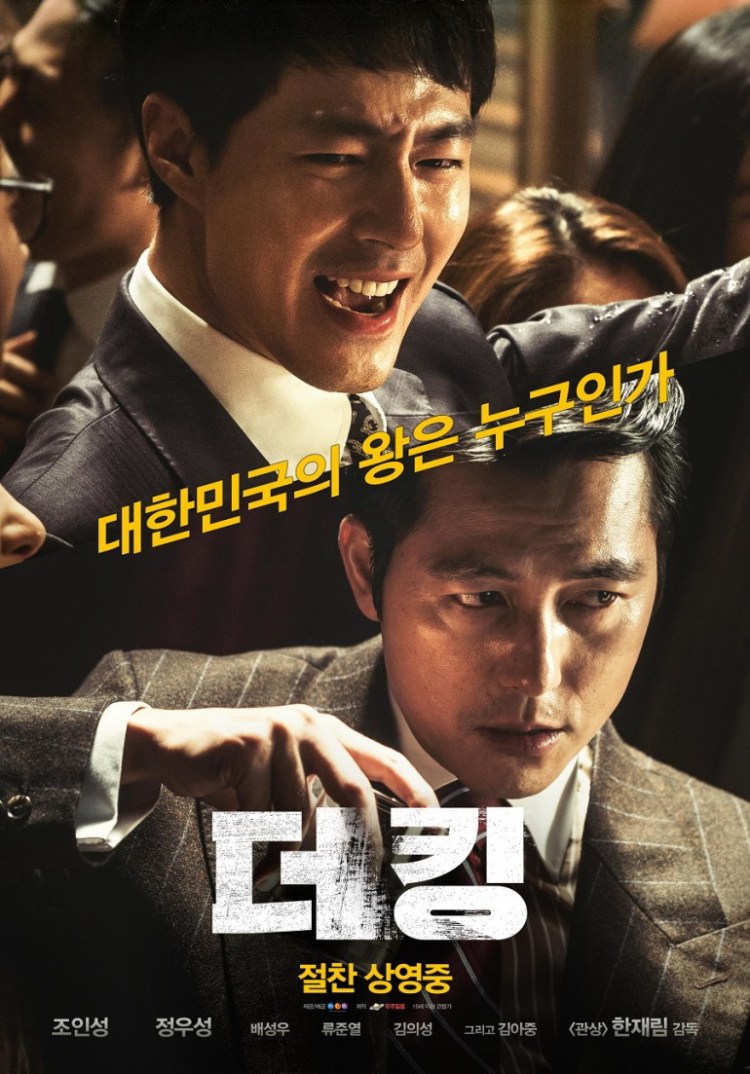 Absolute power corrupts absolutely, but such power is often a matter more of faith than actuality. Coming at an interesting point in time, Han Jae-rim’s The King (더 킹) charts twenty years of Korean history, stopping just short of its present in which a president was deposed by peaceful, democratic means following accusations of corruption. The legal system, as depicted in Korean cinema, is rarely fair or just but The King seems to hint at a broader root cause which transcends personal greed or ambition in an essential brotherhood of dishonour between men, bound by shared treacheries but forever divided by looming betrayal.
 Review of Byun Young-joo’s Helpless (화차, Hwacha) first published by
  Windows on Worlds