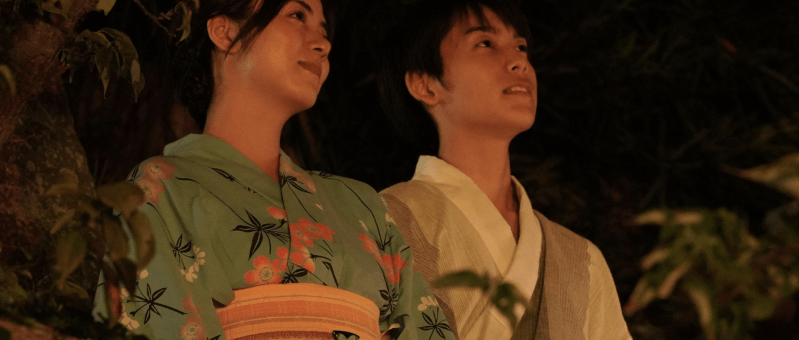
Rewrite (リライト, Daigo Matsui, 2025) [Fantasia 2025]

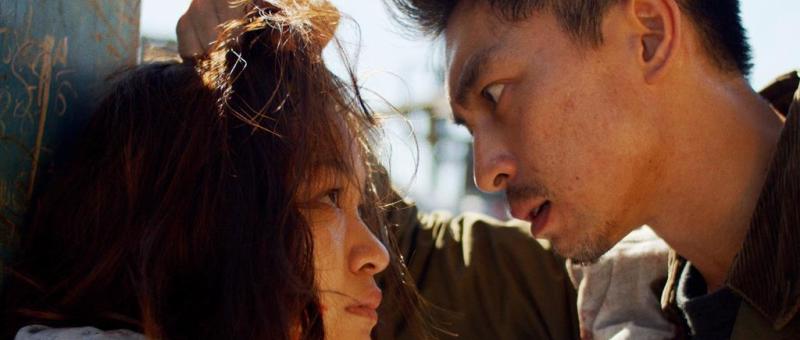
A mysterious transfer student arrives from the future. You have 20 wonderful days with him, but then he must return to his own time. He tells you that he came back to meet you and experience your time because of a book you will write, and your future self also shows you the book, tells you you did indeed write it, and that everything’s going to be okay. But in 10 years’ time, when you’re your “future self”, you from the past does not show up to get any of this information. Did something go wrong? Is the timeline crumbling? Or did you just imagine all this as a manifestation of “youth”?

When this happened to her, Miyuki (Elaiza Ikeda) believed that she was “the heroine of that summer,” but the truth is of course that she was always the heroine of her own life and had the right and power to make her own choices. Adapted from the novel by Haruka Honjo, Daigo Matsui’s Rewrite (リライト) is, like Obayashi’s The Little Girl Who Conquered Time, about the dangers of nostalgia and the over romanticisation of youth. What Miyuki gradually comes to realise is that one of the formative experiences of her teenage years may not have been unique or special but happened to literally everyone and changed them too in ways that were not always good. Because she met Yasuhiko (Kei Adachi) from 300 years in the future, she became a writer. But it remains true that her first few books weren’t about him at all. She always had the talent and the inclination. The impetus of destiny was only what gave her the confidence to pursue it. She knew she could, because she already had.

Yet, she’s in her hometown to close a loop on this unresolved romance of her youth despite having built a good life for herself as a successful author with a nice husband she met during the course of her work who is caring and supportive of her career. At the high school reunion she’s cajoled into going to, her former classmates sing the song they were practising for choir, “Cherry” by Spitz, which is also about “rediscovering each other, some day, same place,” echoing Yasuhiko’s cryptic claim that they’d meet again “in the future” (whose he doesn’t say) hinting at the way these feelings have been left hanging with only a yearning for the past and a painful nostalgia in their place. What Miyuki really has to ask herself is if she’s the person she wants to be in the present and is who she is because of the choices she made independently rather than solely because she was trying to fulfil the destiny given to her Yasuhiko.

To do so, she must face the fallacy of the “chosen one” mentality. The film rams this home in the parallel story of one of Miyuki’s classmates who tells her that she wasn’t chosen but actively chose to accept a kind of destiny rather than simply going along with it and that Miyuki too could “rewrite” the past if she wanted. In effect, this is what she’s already done as her husband implies when he repeatedly asks her if the book is “fiction”. Of course, it is, though she believed it not to be because it’s rooted in nostalgia and the personal myth making of the idealised romance of her youth. Matsui too plays with this sense of nostalgia in moving the setting of the story to Onomichi to mimic that of Obayashi’s The Little Girl Who Conquered Time and making frequent visual references to the 1983 film along with casting Toshinori Omi, the original boy who leapt through time, as the class teacher at the 10 years later reunion.

But the truth remains that Miyuki must learn to let go of the past, or else take mastery over it by rewriting her own story to accept that, as her husband says, the past and present are all hers. She can write anything and can finally leave her own time loop by writing her way out of youthful nostalgia and accepting something more like an objective reality along with the life she has now which appears to be happy and successful. Scripted by Makoto Ueda who has a long history of time-travel themed movies from Summer Time Machine Blues to River, Matsui’s poignant drama is shot through with irony and in constant dialogue with pop culture touchstones from the Obayashi film to Shunji Iwai’s Love Letter, while at the same time insisting that while you are the main character in your own life, you’re not the only one and a hundred stories are going on at the same time as yours. What really matters is not hanging on to the memories of an idealised past, but to live the life you want in the present for as long as this particular loop lasts.


Rewrite screened as part of this year’s Fantasia International Film Festival.

Original trailer (English subtitles)
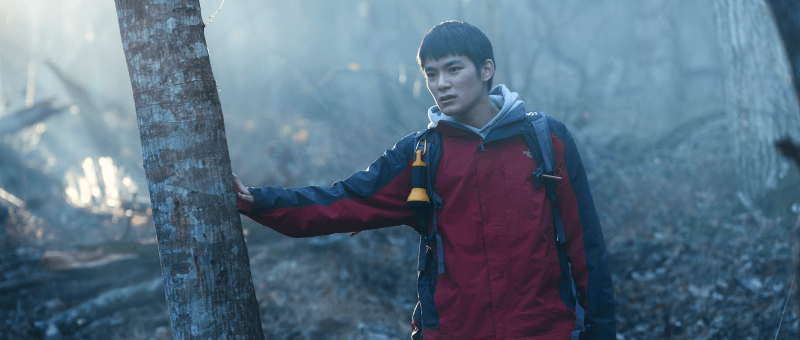
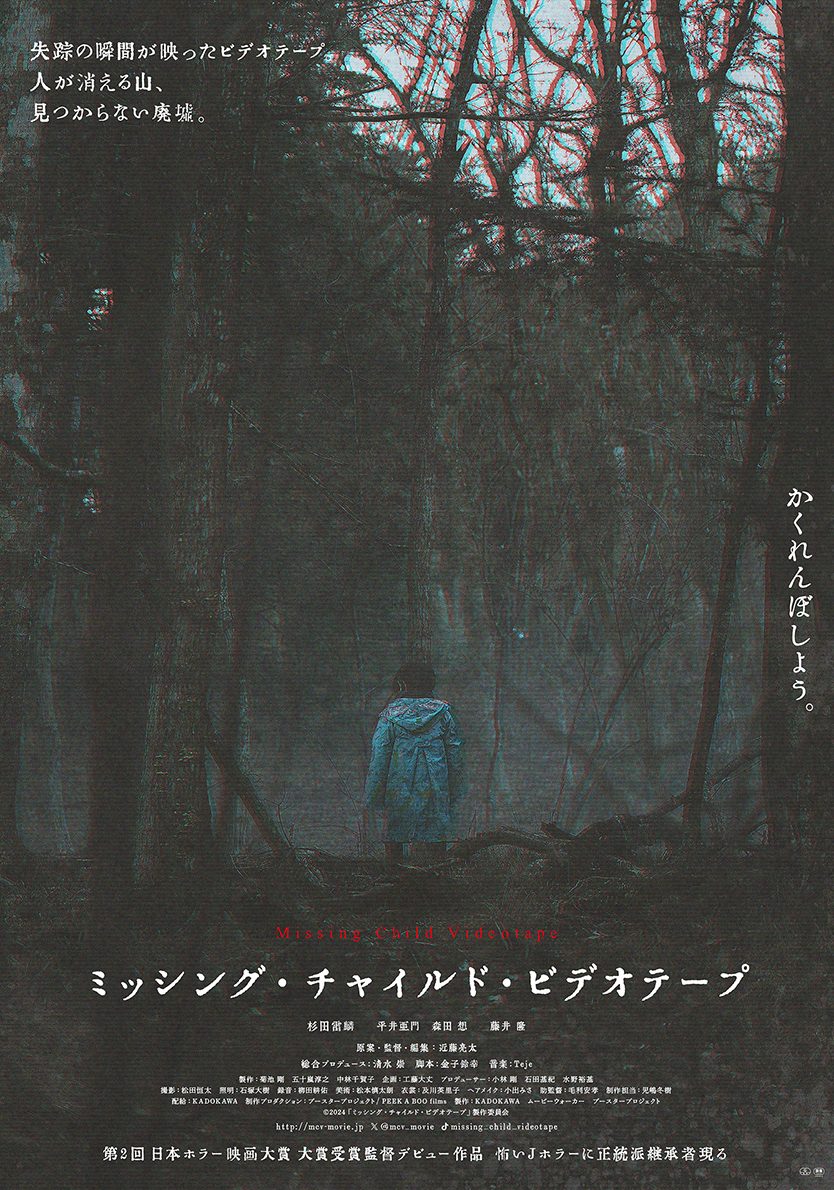
Missing Child Videotape (ミッシング・チャイルド・ビデオテープ, Ryota Kondo, 2024)

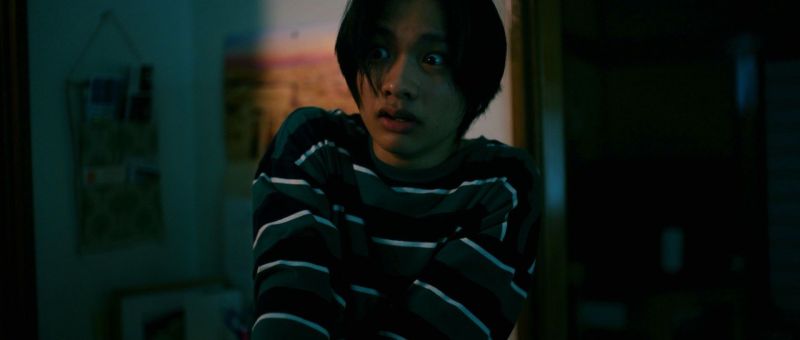
“Now you’re it,” a little boy says, but in a game of hide and seek it can be difficult to tell the seeker from the sought. Inspired by classic J-horror, Ryota Kondo’s eerie debut feature Missing Child Videotape (ミッシング・チャイルド・ビデオテープ) takes the innate fear we have of things that are so old they surpass our understanding and couples it with a more psychological dread in which the heroes are quite literally haunted by their personal traumas.

The irony is that we first meet Keita saving a little boy lost in the forest, though he’s haunted by his failure to do the same for his younger brother Hinata who disappeared 13 years previously when they were both children. Keita’s mother regularly sends him VHS tapes of the day Hintanta went missing he shot while playing with his father’s camera. Keita had been rude to his mother and seemingly resented his little brother tagging along behind him. He tells Hinata to go away, which he of course then does, never to be seen again. The boys somehow wander into a disused building where Keita suggests they play hide and seek, mostly so Hinata will go hide and stop bothering him. Catching sight of Hinata in a corridor, Keita tells him that he’s now “it” so it’s time to come look for him instead, but now he can’t find his brother anywhere. His rising panic is palpable from the terror in his voice to the increasing shakiness of the camera, even as it transitions into the mental state of the adult Keita as if the tape itself were on a constant loop in his mind. 

There is a suggestion that the boys are still playing hide and seek and that Hinata has also been trying to find his way back to his brother all this time. As for the now grown-up Keita, he’s fairly detached and on a surface level a little indifferent, still resenting his brother for seizing an eternal spotlight. He’s sick of everyone talking about it all the time and equally of the ambivalence of being the brother of the boy who disappeared, alternately pitied and suspected. He thinks his parents actually thought he probably killed Hinata but did nothing about it, while he always resented them anyway. Even as a child, it seemed apparent to him that they were only playing the roles of a family and none of it was “real”. In any case, he did not want to be forced into the role of big brother with all the responsibility that entails. 

To that extent, Keita is also a “missing child” and a man who is still a boy lost in a disused building that apparently never existed. His search for his brother is also a way of reclaiming himself and opening up to more complete human connections. The film is curiously ambiguous in its depiction of the relationship between Keita and Tsukasa, the man with whom he lives who has psychic abilities and is able to see ghosts and supernatural entities. Tsukasa tells the equally haunted reporter Mikoto that he’s “the person who lives with him,” but the pair otherwise behave more like a couple if one that seems content to let their secrets breathe.  

Nevertheless, Tsukasa comes to the conclusion that Keita is “under the influence of the mountain,” which as it turns out, has taken several more victims before and since Hinata’s disappearance. Another strange young man tries to warn Keita not to go back there, telling him a weird story about how his grandmother cannot really be his grandmother because of the ironic results of her sacrifice to the mountain gods. Indeed, this curse may reflect the lack of respect we’ve shown to the natural world as the mountain has become a dumping ground for unwanted things from bits of temples to a collection of funerary urns. Perhaps “unwanted” people are being thrown away there too, spirited away by the mountain and placed in some other realm. 

Kondo includes two kinds of tape each of which is imprinted with the psychic echoes of a traumatic event as Mikoto comes across a cassette recorded by students who also found the building that doesn’t exist, reflecting both the technological anxiety of classic J-horror along with the way that trauma replays and imprints itself on the present. Keita still appears to be haunted, and not least by himself as well as whatever did or didn’t happen the day his brother disappeared and the latent guilt he feels because of it. Playing hide and seek with himself, it seems that Hinata, and those he’s lost, may indeed have been with him all along, though both seeker and sought are apparently both trapped within this infinite loop of fear and loneliness. 


Missing Child Videotape screens 28th May as part of this year’s Nippon Connection.

Original trailer (English subtitles)
Images: ©2024 “Missing Child Videotape” Film Partners

SAKURA (朽ちないサクラ, Hiroto Hara, 2024)

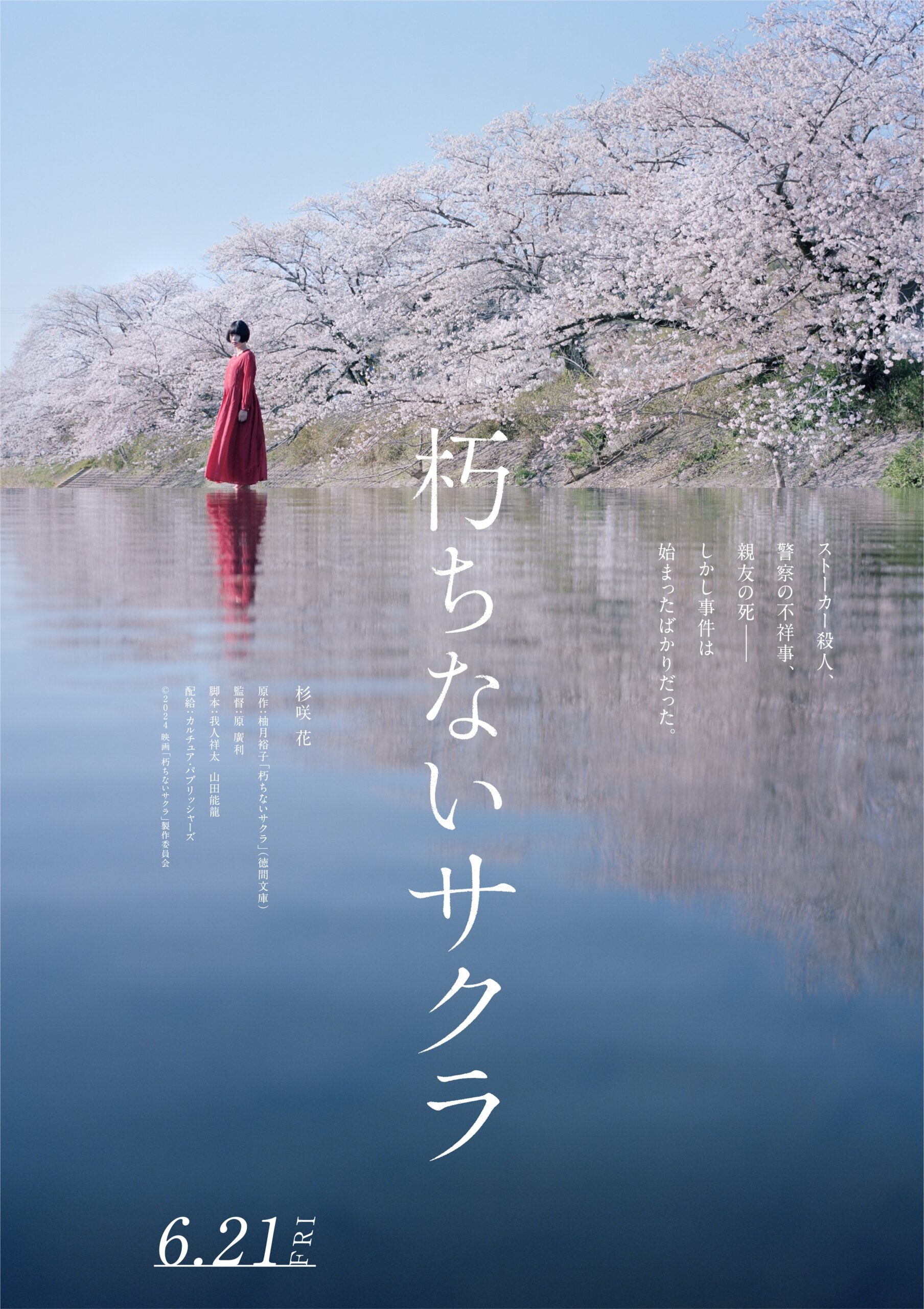
Sakura, or cherry blossoms, are often seen as emblematic of “Japan”. A potent poetic symbol, they blossom only for a short time and then slowly fade away. In the case of Hiroto Hara’s conspiracy drama SAKURA (朽ちないサクラ, Kuchinai Sakura), however, the title refers to a nickname for the security services. In fact, the title could be read either as the “sakura never decays,” or perhaps “will never be tarnished”, “will never die,” echoing the frequent messages that you can never really escape your past for like sakura it will always blossom again while the security services themselves will never fall.

In this case, the event that reverberates is a nerve gas attack on a station that is clearly an allegory for that conducted by Aum Shinrikyo in 1995. Like Aum which is now known as Aleph, the cult in the movie simply changed its name and carried on. Now the head of the police PR department for which the heroine works, former security agent Togashi (Ken Yasuda), is haunted by a mistake he made as a rookie cop and blames himself for not being able to stop the disaster. As fate would have it, the case they’re currently investigating ties back to the cult suggesting a much wider conspiracy in play than the simple intention to cover up a murder.

But there are also two killings here that are likely connected, the first being that of a woman whose allegation of stalking was ignored by the police who, rather than investigate, went off to enjoy themselves on some kind of outing The press is having a field day with the implication the police are both lacking in compassion and negligent in their work. Predictably, the PR division’s main intention is to uncover the source of the leak with Togashi seemingly already suspecting a woman in his department, Izumi (Hana Sugisaki), whose boyfriend, Isokawa (Riku Hagiwara), was himself on that outing. Izumi had accidentally let slip about the police’s activities to her best friend Chika (Kokoro Morita), a reporter who works at the local paper that broke the story. Chika insisted it wasn’t her who wrote the article, but Izumi didn’t believe her. Chika is then found dead after vowing to investigate more fully and prove Izumi wrong with an original hypothesis that she took her own life in guilt over betraying her friend.

Obviously, there’s more to it than that and it soon becomes clear she was murdered probably because she got too close to the truth. Izumi isn’t a detective, but finds herself trying to investigate out of a sense that she contributed to Chika’s death by not believing her when she said she never broke the promise she made not to tell anyone else about the police outing. One might legitimately ask why she is allowed to do this, and the lead detective is not originally happy about it, but as they’re grateful for the leads she turns up, Izumi effectively gets a sort of promotion to investigator. Later events might lead us to wonder if she isn’t being manipulated as part of a wider conspiracy, but then the central intention remains unclear as does the reason the shady forces in play would allow her to investigate Chika’s death knowing the possibility that she may stumble on the “real” truth in the process.

It could be that they simply don’t need to stop her because they know there’s nothing she can do. She has no evidence for her final conclusions and no one would believe her if she spoke out, but it seems odd that conspiracists who’ve already bumped off several other people would allow her to simply walk away knowing what she knows if there were not some grander plan in motion. The question is, is it justified to cause the deaths of a small number of people in order to save the lives of hundreds more who might otherwise die if the cult carries out another terrorist attack before they can be stopped? Sakura apparently have spies and informants everywhere and will do everything they can to protect them in order to facilitate their goal of protecting the nation. Thus the famed cherry blossoms now become another symbol of constant threat and oppression in the spectre of the security services who watch and oversee everything but remain in the shadows themselves. Hara homes in on this sense of paranoia and injustice but in the end cannot resist indulging Izumi’s plucky rookie investigator spirit. Her final decision may not make an awful lot of sense while essentially pitting one authority figure against another. Nevertheless, the tension remains high as Izumi presses forward towards the truth no matter what the danger while like her policeman boyfriend determined to pursue justice wherever it may lie.


SAKURA screens as part of this year’s Japan Foundation Touring Film Programme.

Trailer (English subtitles)

Images: ©2024 SAKURA Film Partners

A Muse Never Drowns (ミューズは溺れない, Nozomi Asao, 2022)

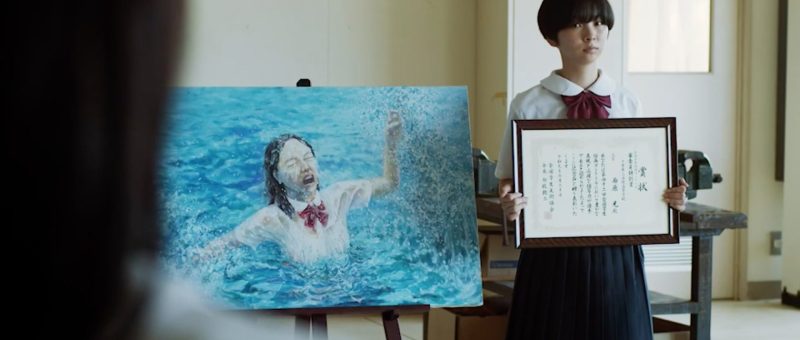
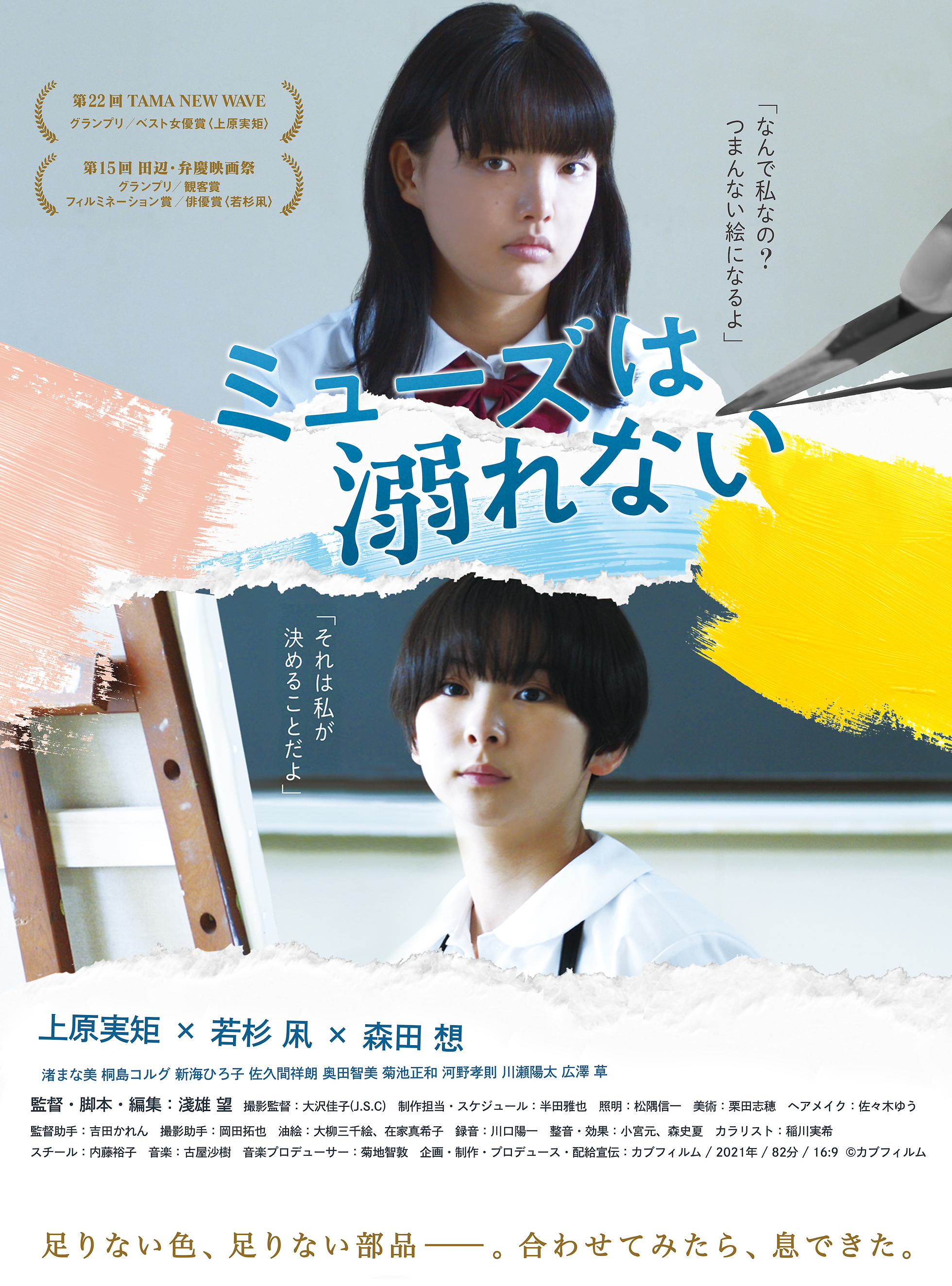
A teenage girl flounders amid a series of changes in her life while questioning her future and identity in Nozomi Asao’s empathetic coming-of-age film, A Muse Never Drowns (ミューズは溺れない, Muse wa Oborenai). Saku (Miku Uehara) is however drowning, a fact brought home to her by the relentlessly aloof Saibara (Mimori Wakasugi) who captures a sense of her panic and despair in a painting of her falling into the local harbour. Yet through their rather tumultuous friendship the pair eventually discover that they aren’t so different after all.

Saibara’s perfectly executed painting destabilises Saku on more than only level, firstly in her discomfort in having been seen and secondly in the insecurity it causes her in her own talent as an artist. Saku had wanted to go to art college, but a teacher harshly corrects her drawing style as if trying to push her towards a more authentic form of expression that’s less worried about getting it right than capturing a sense of what she sees and feels. Lacking confidence that she’ll get in, Saku is thinking about quitting the club in embarrassment but is persuaded to try making something else for the cultural festival while simultaneously receiving an unexpected entreaty from Saibara who wants her to pose for her next painting.

Most of the other students seem to resent Saibara for what they see as her superiority complex, believing she is aloof because she thinks she’s better than them. Because of her blunt manner, Saku too had thought her to be ultra confident and is surprised to realise that Saibara too is filled with doubts and anxieties even if she makes a point of pushing through them. Echoing her teacher’s words, Saibara admits that the lines don’t always come out the way she wants them either but all she can do is try to connect the dots. The reason for her aloofness is a vicious circle of deep-seated loneliness that convinces her she will ultimately be rejected, mirroring Saku’s conviction that she is a “boring” person, and therefore it is easier to remain alone from the start. 

Part of Saibara’s self-rejection is borne of internalised homophobia uncertain if others will accept her sexuality while harbouring a crush on Saku she doesn’t know how to articulate other than through her art while Saku too struggles with her feelings and is confused by the attention she receives from Saibara. Saku’s feelings of insecurity are informed by a sense of embarrassment that she has never experienced a romantic crush like her friend Emi (Kokoro Morita) who likes baseball player Endo despite knowing that likes he Saku, though Emi has also picked up on the way she looks at Saibara and is drawing conclusions about her lack interest in boys. Emi tells her that she accepts her whatever her sexuality is, but is hurt and confused when Saku remains silent and declines the opportunity to open up to her though perhaps partly because she does not really know the answer herself. 

Other than Saibara, Saku is the only one who hasn’t yet returned her careers survey still uncertain of the future direction of her life. Her father has recently remarried and he and her step mother Satomi (So Hirosawa) are expecting a baby all of which has Saku feeling somewhat adrift, displaced within her family and soon to lose her home which has been bought out for a new development project meaning they’ll soon be moving to a new house shorn of the memories of her birth mother and primed for her father’s new start. 

Yet through all her experiences, slowly bonding with Saibara and repairing her friendship with Emi, Saku begins to discover a path towards a more authentic art born of the desire to take things apart and put them back together again while quite literally feeling her way forward with her hands. Coming to terms with her new family circumstances, she builds herself a boat and is no longer drowning but drawing strength from her new found friendships with a renowned sense of possibility for the future while her friends do much the same in the knowledge that they are all scared and uncertain but doing their best to join the dots towards a happier future. 


Trailer (English subtitles)

Lonely Glory (わたしの見ている世界が全て, Keitaro Sakon, 2023)

A thoroughly unpleasant young woman gradually begins to realise that other people have feelings too and she has no idea what she’s doing with her life in Keitaro Sakon’s indie drama Lonely Glory (わたしの見ている世界が全て, Watashi no Mite Iru Sekai ga Subete). Haruka currently runs a startup geared towards helping people maintain good mental health which is ironic in the extreme because she has no understanding of or regard for the feelings of others. Yet as she says during a role play with an employee, the basic principle of their business is helping people identify their problems which she ironically does on returning home to her estranged family if not entirely for altruistic reasons. 

Before that, however, we see her be unnecessarily harsh during a staff evaluation later justifying herself to the boss that they needed to clear out those who are of no use. To her, the staff member’s feelings were irrelevant, she just informed them of their subpar performance. Her boss isn’t buying it. He tells her that her management techniques are counterproductive and that with multiple accusations of bullying behaviour she herself says she is unwilling to work on (because she doesn’t understand she’s done anything wrong) he has no option other than to ask for her resignation. Unfazed, Haruka decides to start her own startup, but is soon confronted with another crisis on learning that her mother has passed away. 

On arrival at the hospital and despite being the youngest sibling Haruka immediately takes over, seemingly unmoved, and opts for the cheapest funeral plan available. She didn’t come to her father’s funeral and her siblings didn’t expect to see her for this one either, but now she has an ulterior motive in that she wants to sell the family home and business to finance her new business venture despite the fact all three siblings still live there and two of them are financially dependent on the cafe/greengrocers for their living. Haruka is incredibly judgemental about her small-town siblings’ life choices branding them as delusional and generally carrying on with an air of superiority but it’s also true enough that they are all to a degree trapped, unable to move on with their lives while afraid to leave the safety of their childhood home. 

As she says, sometimes people just need a little push which is something that she can give them but it’s never quite clear if she genuinely cares or is motivated solely by the desire to manipulate her siblings into agreeing to sell the house. Divorced sister Miwako is fairly unfussed either way but oldest son Keisuke is consumed with shame in the idea of giving up the family business while Takuji has self-esteem issues and thinks everyone looks down on him for never managing to get a job since he finished university four years previously. Challenged by Keisuke’s much younger farm girl girlfriend Asuka on the nature of success, Haruka replies that it’s having everyone around you admit you were right which lays bare her own insecurity and need to dominate every situation that she’s in. But then ironically enough she does help each of her siblings identify their problems and then gain the courage to begin moving forward. 

The dissolution of the family business and the erasure of the family home becomes in its way liberating, less the glue that bound them together than that trapped them in a perpetual adolescence. Haruka begins to realise she’s not much better than the life coach scammer who sold her vulnerable brother false promises of easy success, and that the way she treats others can have unintended consequences but in the end she’s the one left rootless and bereft of direction after closing the shop. Perhaps that’s her lonely glory, the knowledge that she helped each of her siblings do what she now can’t (or maybe just that she got what she wanted and doesn’t know what to do with it). Told with a down to earth naturalism, Sakon’s indie drama is also a lament for the changing nature of small-town life and a loss of community as the closure of the store robs the locals of another neighbourhood hub ironically leaving Haruka all alone in the now empty space of her family home with a newfound sense of loneliness still searching for the right words and a new direction. 


Original trailer (English subtitles)

Tatsumi (辰巳, Hiroshi Shoji, 2023)

The titular Tatsumi (辰巳) laments that there used to be a line. They used to be better than this. But his incredibly duplicitous boss just laughs at him and says they can’t live on honour and humanity anymore. In any case, there didn’t seem to be much honour or humanity in Tatsumi’s decidedly unglamorous life of petty gangsterdom even before everything went to hell but despite his cynicism and seeming indifference he is the last holdout for some kind of gangster nobility.

Though he has a cover job as a fisherman, Tatsumi’s (Yuya Endo) main hustle is as a cleanup agent getting rid of inconvenient bodies for various gangs. He finds himself mixed up in local drama when a pair of crazed, sadistic gangsters become aware someone’s been skimming their meth supply. They torture and kill a suspect who leads them to another, garage owner Yamaoka (Ryuhei Watabe) who is married to an old flame of Tatsumi’s, Kyoko (Nanami Kameda), while her younger sister, Aoi (Kokoro Morita), is also in trouble with another rival ganger, Goto (Takenori Goto), on the suspicion of having pinched some of his meth supply. Tatsumi ends up agreeing to mediate for Aoi, gets much more than he bargained for when the crazed Ryuji (Tomoyuki Kuramoto) murders Yamaoka and Kyoko and Aoi becomes a secondary target after catching him in the act.

Ryuji doesn’t seem to care about tying up loose ends, but just wants Aoi dead for reasons of total vengeance. It’s his uncontrolled violence that has disrupted the equilibrium of the local gangster society though the proposed solution is simply more violence in allowing him to kill the people he wanted to kill in the hope he’ll then calm down and stop which seems unlikely. Like many similarly themed yakuza dramas, Ryuji’s violence appears to have a sexually charged quality and there is also a hint of a potential relationship between Ryuji and Tatsumi’s boss whom he calls “Skipper.” 

Ryuji also has a slightly less crazy sibling in an echo of the relationship Tatsumi once had with his own brother who died of a drugs overdose having become involved in petty crime. The implication is that Tatsumi gave up on his brother and was relieved when he died but also that he harbours a degree of guilt for preventing him ending up the way he did and not trying harder to save him. That may partly be why he decides to help Aoi, seeing echoes of the brother he couldn’t save while she is also friendless alone having unwisely made enemies of almost everyone because of her outrageous behaviour and reckless disregard for authority. Aoi has an unpleasant habit of spitting at people who upset her while otherwise adopting a devil-may-care attitude with those minded to kill her. If she did skim from Goto’s stash, it cost the life of another falsely accused underling. 

Despite himself, Tatsumi becomes increasingly determined to help Aoi even though or perhaps because he assumes neither of them is likely to survive this crisis. Desperately trying to stay one step ahead he plays one side against the other and tries to find the best angle for escape while knowing there probably isn’t one. Shoji sets the tale across a series of moribund jetties and shacks laying bare the busy emptiness of this world with only the sea beyond. “Emotion will make you fail,” Tatsumi tells Aoi while describing dead bodies as just things and trying to keep his cool when needled by Ryuji or another dangerous and violent gangster. 

Death and life by extension appear to be meaningless and of little value. Tatsumi does perhaps close a circle, or maybe more than one, as the last principled gangster who thought there ought to be a line between what they do and greedy thuggery only to find there never was one and his determination not to cross it is the kind of sentimentality that can get a man killed. Making good use of slow dissolves, Shoji revels in a retro aesthetic in a tale of moral compromise and redemption as Tatsumi determines to safeguard Aoi not only from her own reckless impulses but the meaningless emptiness of the gangster life but the toxic legacy of violence and fallacy of vengeance as a salve for the wounds of the soul.


Tatsumi screened as part of this year’s Camera Japan.

International trailer (English subtitles)

House of Sayuri (サユリ, Koji Shiraishi, 2024) [Fantasia 2024]

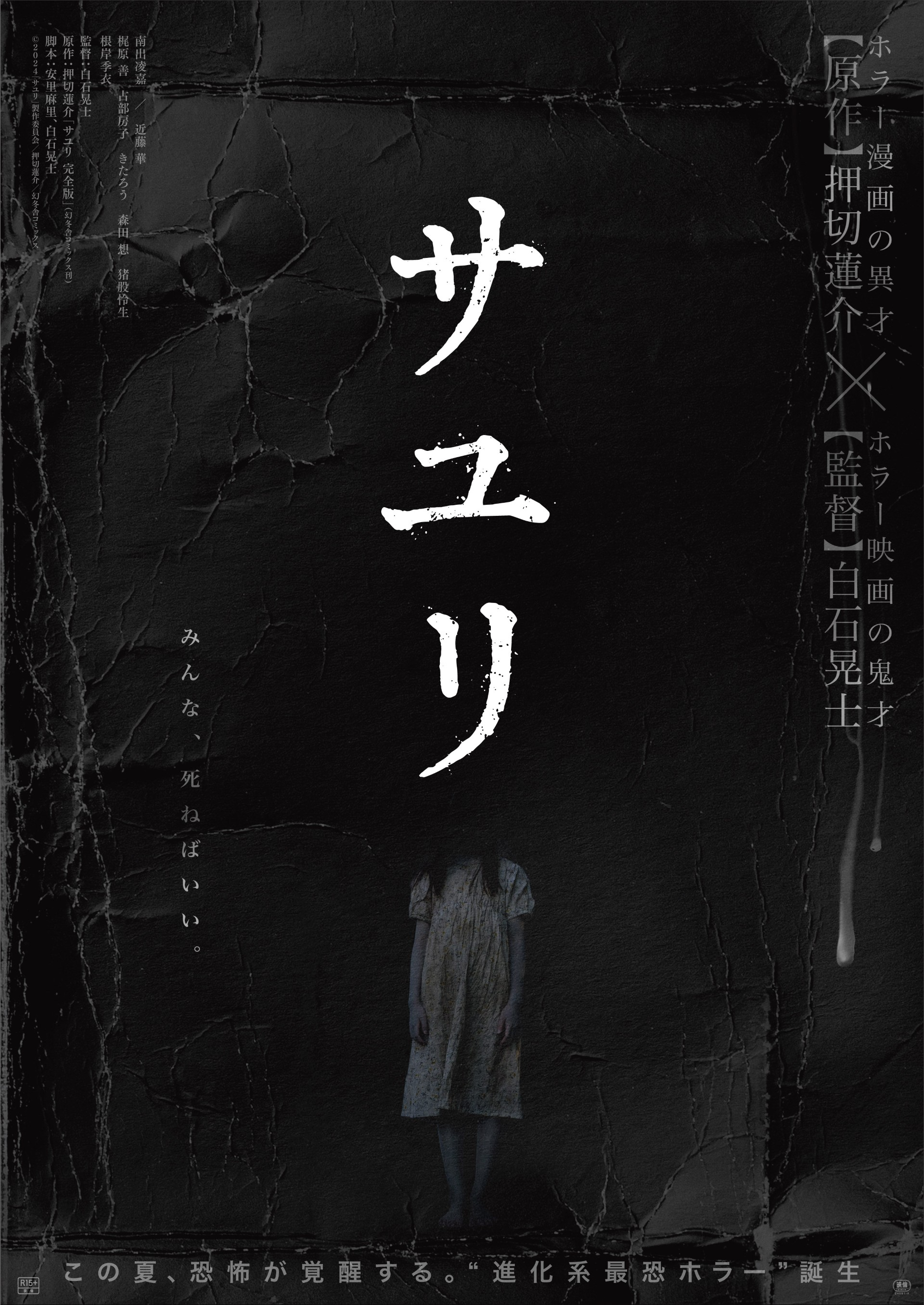
An excited family discover the perils of buying a “used” home in Koji Shiraishi anarchic haunted house horror House of Sayuri (サユリ, Sayuri). Unlike many other nations, Japan does not really have a comparable housing market as, given changing building regulations etc, it’s common to demolish the original structure and build a bespoke home in its place rather than move into one someone else has vacated. That obviously means that opting for an existing property can be a little bit cheaper, which is presumably how the Kakimis have finally managed to move into what they describe as the dream home, escaping a cramped city apartment for a spacious rural mansion with room enough for grandma and grandpa too.

Of course, this particular home is probably cheaper because something untoward once happened there, though the Kamikis probably don’t know that, and everyone who’s lived there since has moved out a short time later. In a way referencing Shiraishi’s previous work, we can’t really tell whether the malevolent spirit wants the family out or is merely trapped in a loop of revenge on the family that badly betrayed them. In any case, it makes its way through the Kamiki family unit starting with daughter Keiko and causing all manner of strange events in the house. Sensibly, older son Norio begins to ask why they don’t just move but the parents are so committed to their dream of homeownership that they can’t bear the thought and remain determined to hang on to it at whatever cost. 

In any case, some wise words from grandma advance a more positive way of battling the ghost, that they should fight it with the force of their lives. They laugh in its face and shout vulgar phrases that send it scuttling away in outrage. The best way to fight the darkness, grandma says, is to live well. Like the house itself, it seems grandma has a well hidden secret that makes her the film’s key asset, a hilarious force of nature and eternal wise woman otherwise ignored because her dementia undermines her credibility. Meanwhile, Norio makes an unexpected friend at school who just happens to be a psychic and is keen to warn that a little girl ghost has latched on to him and it would obviously be better if he could just move out on account of all the evil emanations that appear to be coming from his home.

But as grandma says, it’s the grudges of the living they ought to be afraid of. The house of course holds its secrets and its labyrinthine, multilevel structure is perfect for concealing them. Unfortunately the Kamikis have bought into this poisoned legacy and slowly start seeing their familial bonds fracturing while the ghost takes advantage of their vulnerabilities, their negative emotions and insecurities. In a sense it becomes a question of whether they can endure a place of trauma to maintain their dreams of homeownership or are prepared to make the more sensible decision of ceding ground and moving somewhere less toxic while Norio tries to reclaim his place in his family and protect what remains of it. 

Truly heading in some unexpected directions particularly in its unpredictable send half, the film takes on an absurdist quality but also returns to classic genre tropes of the legacy of child abuse and the betrayal of a parent who saw and did nothing perhaps because, like the Kamikis, they were prepared to accept this this kind of toxicity to maintain a happy family home and be seen as a model upper-middle class family living in a country mansion. It turns out, the only way to exorcise this much more literal ghost is by directly confronting the traumatic past and attempting to find accommodation with it be that through violence or forgiveness. But as grandma had said, the best weapon is love and life, throwing back at the ghost what it no longer has in a defiant expression of being alive and that joy contains which is also of course as grandpa had said a way of honouring the dead resolving to make the most of one’s remaining time in their memory. In any case, Norio discovers that you do not have to continue living in a haunted house but unlike a ghost are in fact free to leave the scene of trauma and seek new happiness in a less upsetting place.


House of Sayuri screened as part of this year’s Fantasia International Film Festival.

International trailer (English subtitles)

The Legend & Butterfly (レジェンド&バタフライ, Keishi Otomo, 2023)

“What was everything for?” an ageing Nobunaga (Takuya Kimura) asks his attendant Ranmaru (Somegoro Ichikawa) towards the conclusion of Keishi Otomo’s historical epic, The Legend & Butterfly (レジェンド&バタフライ, Legend & Butterfly) produced in celebration of Toei’s 70th anniversary. Oda Nobunaga is such a prominent historical figure that his story has been told countless times to the extent that his legend eclipses the reality, but rarely has been he depicted so sympathetically as in Otomo’s history retold as romantic melodrama in which he and his wife, Lady No (Haruka Ayase), are mere puppets of the times in which they live dreaming only of a place beyond the waves where they might be free of name or family. 

Tellingly, Otomo opens in the spring of 1549 in which the dynastic marriage was arranged to broker peace between unstable neighbouring nations Owari and Mino. Nobunaga’s father’s health is failing and he fears in the chaos of his death Mino may attack, while No’s father fears that her brother will soon revolt against him plunging the fiefdom into disarray and therefore vulnerable to an attack by Owari. At this point, Nobunaga is known as “the biggest idiot in Owari,” a foppish dandy who cares only about appearances. As he prepares to meet No, his courtiers apply his makeup and do his hair while dressing him in a rather outlandish outfit No immediately insults as “foolish”. He treats her with chauvinistic disdain, barely speaking save to order her to pour the drinks and give him a massage only for her to point out that she’s been travelling all day and a “thoughtful” considerate husband would be giving her a massage instead. “I detest women who do not know their place,” he snaps. “I detest men who are ignorant,” she counters. The wedding night ends in humiliating failure as No demonstrates her martial arts skills and Nobunaga is forced to call his guards to rescue him. 

Little is known of Lady No in historical record, but here she is bold and defiant, as her father had said too free with her opinions for a woman of the feudal era. She claims to have been married twice before and assassinated both husbands on her father’s orders, implying that she is essentially sleeper agent more than hostage and will kill Nobunaga without a moment’s thought as soon as the word is given. Yet she also begins to guide her husband towards his destiny, mocking him as a fool but giving him useful strategic advice that wins him glory on the battlefield along with the political advancement that led him to become the first great unifier of Japan. For all that they “hate” each other, they are well matched and have a similar sensibility that allows them first to become allies and then friends before frustrated lovers.

But their love is enabled only when they escape the feudal world, shaking off their retainers to go on a “normal” date in Kyoto where they dance to Western musicians and taste foreign candy only to end up accidentally massacring some peasants when No’s martial arts training kicks in trying to stop a man beating his son. Even so, they are forever linked by their time in Kyoto in the romantic talisman’s of a carved wooden frog and a European lute even if the blood-spattered jizo and buddhist statue watching their eventual connection imply there will be a reckoning for all the blood that is spent. Jumping on a few years, the film does not elaborate on what caused Nobunaga to become a man without a heart and lose the love of his most trusted ally but positions his transformation into the “Demon King” as the kernel of his undoing just as his dream of unifying Japan and bringing about an age of peace (if one ruled by fear) is about to become a reality. 

In any case, the one thing that everybody knows about Nobunaga is how he died though then again his remains were never recovered giving rise to a happier ending in which he and Lady No were finally able to escape the feudal world to chase a freer future beyond the sea which is perhaps what they do in the film’s poetic final sequence in which they might in a sense share a dream connected by frog and lute. It might not be very historically accurate, but that is perhaps the point in hinting at the lives they might have led if the world had been different. Otomo films with a painterly eye that lends an air of poignant gravitas to a tale of romantic tragedy in which love is both salvation and destruction amid the flames of a collapsing temple. 


The Legend & Butterfly screened as part of this year’s JAPAN CUTS.

Original trailer (English subtitles)
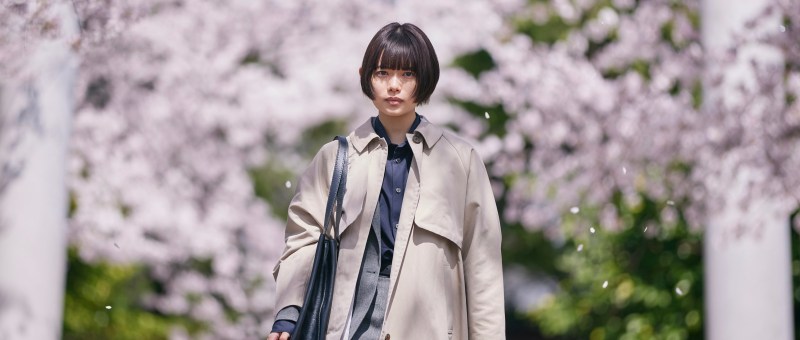
Eternally Younger Than Those Idiots (君は永遠にそいつらより若い, Ryuhei Yoshino, 2021)

An insecure young woman struggles to assume her place in the world while preparing to leave the aimless security of college life for an uncertain adulthood in Ryuhei Yoshino’s empathetic social drama, Eternally Younger Than Those Idiots (君は永遠にそいつらより若い, Kimi wa Eien ni Soitsura yori Wakai). Adapted from the novel by Kikuko Tsumura, Yoshino’s film has its share of quirky humour but seems to be overshadowed by a lingering darkness in which there is only constant suffering tempered by a longing for recognition which often goes unanswered.

Horigai (Yui Sakuma) is one of the lucky ones in that she’s already locked in a job for after graduation as a children’s social worker back in her hometown. After making a speech at a uni party, however, she’s challenged by a rude fellow student who calls her out for her arrogance in thinking she has the right to interfere in people’s lives. He has perhaps touched a nerve. Though it’s a job she’s always wanted, Horigai is worried that she isn’t up to it and won’t be able to help anyone in part because she feels herself to be somehow different from those around her and lacking the skills to see what everybody else just naturally sees. 

Her sense of inadequacy is thrown into relief by a chance meeting at a party with a soulful fellow student who has just been released after getting arrested for suspected kidnapping having allowed a little boy neglected by his parents to stay in his apartment. Though she bonds with him, he soon leaves her life in unexpected fashion leaving her with an unspoken story hanging in the air. At her part-time job doing quality control at a factory she befriends another young man, Yasuda (Yo Aoi), who eventually confides in her about a very personal problem which she had originally not taken very seriously only to feel bad that she didn’t notice how much pain it was causing and had in a sense even made it a little worse by unwittingly teasing him. She didn’t see it because, in this case understandably, she did not want to look but without fully realising did perhaps make a difference a life just by listening. 

Most of all, she berates herself for picking up on her new friend Inogi’s (Nao) buried trauma as manifested in a physical wound to her body. Horigai’s uni thesis is on the link between childhood environment and visions of success, exploring whether or not there’s a difference in the way people dream based on the way they were raised. Some of the answers are, if taken at face value, a little surprising, Inogi wishing for a beautiful daughter-in-law to take care of her in her old age perhaps hinting at her desire for the security of a conventional family, but also somewhat poignant in their seeming simplicity. When Horigai relates a traumatic childhood memory Inogai is brought nearly to tears, despite having just met her, in guilt and sorrow that she wasn’t there to help, a sentiment which is later returned when Horigai learns of her trauma while also reflecting on the fact that she survived it if only by force of will and the gentle kindness of someone who was simply there. 

Simply being there is as Horigai learns a big part of it, finally stepping into herself by daring to look at the things she didn’t want see and making a difference in someone’s life who might not have survived if she had simply gone about her business. Having believed herself a “defect”, unfit for human society and unable to make lasting connections with others she gains strength through mutual acceptance that gives her the confidence to be there for those who need her still uncertain if she is really up to the job but doing her best anyway. Death seems to overshadow her, haunted as she is by missing children and the spectres of those whose suffering she could not see, but she is finally able to rise above it in overcoming some of her own childhood trauma. Almost everyone is burdened with something be it guilt, loss, or the legacy of pain and abuse but it helps to have someone to help carry the load. “The world is full of scary shit. Want to try Mario Kart?” Inogai asks, and it might be as good a suggestion as any. 


Eternally Younger Than Those Idiots screened as part of this year’s Camera Japan

Original trailer (no subtitles)

Grown-ups (わたし達はおとな, Takuya Kato, 2022)

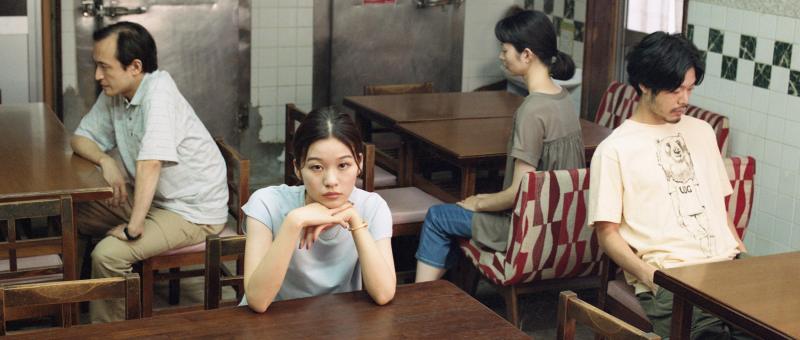
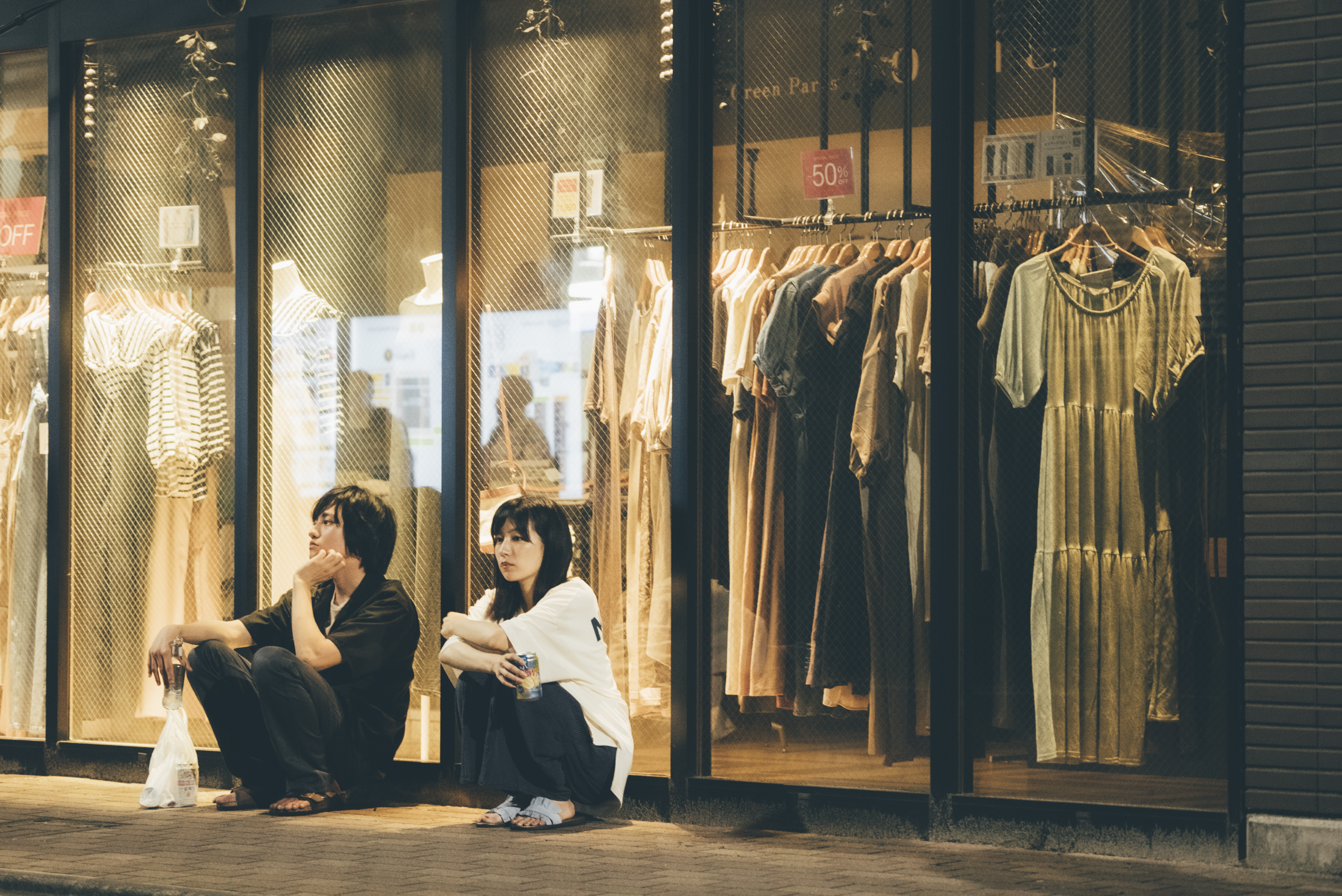
“You’re a grown-up. If something’s wrong you gotta handle it” the passive aggressively condescending hero of Takuya Kato’s Grown-ups (わたし達はおとな, Watashitachi wa Otona) chastises, but what even really is being “grown-up” when you find yourself in a situation which is emotionally difficult and will define the future course of your life. Shot in a claustrophobic 4:3 and told in a non-linear fashion, Kato’s intense drama lays bare the inequalities of a patriarchal society in which in a sense there are no real grown-ups because no one is ever comfortable enough with anyone else to be able to speak their real feelings honestly. 

This becomes a particular problem for college student Yumi (Mai Kiryu) who discovers that she is pregnant but is uncertain as to who the father might be having had a one night stand during the time her live-in boyfriend Naoya (Kisetsu Fujiwara) had broken up with her. Yumi immediately tells Naoya that there’s a chance the baby isn’t his, but remains otherwise reticent unwilling to talk about what might have happened while filled with an internal panic. Naoya thinks he’s being grown-up about the situation by deciding to accept responsibility given the probability that he is the father but despite pledging that he would accept the baby even if it turned out he wasn’t can’t stop trying to pressure Yumi into a DNA test for peace of mind. 

The irony is that even Naoya, who was Yumi’s first sexual partner, refused to wear a condom and joked about contraception before making her go on the pill when he moved in with her. Later we learn that the one night stand violated her consent by again refusing to wear a condom and ignoring her objections, later joking about it that the chances of conception are incredibly small while making it clear that men in general don’t consider pregnancy as something that happens to them and because, as one of Yumi’s friends puts it, they only chase “innocent” girls they don’t seem to worry about the possibility of contracting an STI. Meanwhile, Yumi is constantly stalked by a fellow student she briefly dated who presents her with a memory book of their relationship and is always creepily hanging around waiting to give her gifts, but all her friends can seem to talk about is boyfriends implying that a bad boyfriend might be better than none. 

Yet Yumi seems to have intimacy issues that run even deeper, for some reason not even telling Naoya that her mother has passed away leaving him to think she has run away from their problems by returning home just when he’s ready to tell her his decision about their future. When her father asks about boyfriends she brushes the question off though perhaps partly because she’s not quite sure about her relationship status with Naoya or what she’s going to do about the baby. She calls her friend to hear a friendly voice after hearing her mother has died but gets little sympathy, the same friend later abruptly hanging up on her after getting a boyfriend of her own while knowing of Yumi’s romantic troubles. 

Then again, it’s hard to know whether Naoya was really interested in her or in her lovely duplex apartment. When they started dating he was still living with his ex and it’s obvious that Yumi fully conforms to the feminine ideal taking care of all the domestic tasks while it isn’t even clear if Naoya is contributing in any way to the household. The film both begins and ends with Yumi making breakfast, firstly toasting the last slice of bread for Naoya while suffering with what turns out to be morning sickness, and finally making herself something to eat in the early light of dawn. Naoya says he’s give up on his dreams of working in theatre to get a regular job, again conforming to an outdated patriarchal ideal, but of course resents it particularly because he doubts the child is his while Yumi isn’t really sure she wants to go through with it either for some of the same reasons but is swayed by Naoya’s determination to make all their decisions for them unable to say out loud that she might not be ready to become a mother. 

Naoya is always trying to be grown-up about everything, but more often than not his understanding approach is partway towards passive aggressive control in insisting that Yumi is being childish in her anxiety and confusion while simultaneously avoiding having to admit that he isn’t really ready either. Early in their relationship he breaks up with her by simply returning her apartment key and refusing to elaborate, failing to treat her with respect or maturity and once again leaving her to deal with the fallout of their relationship all alone. Then again, Yumi’s determination to convince him that green peas are good may signal that the relationship was always doomed when they couldn’t even reach a grown-up understanding over something as trivial as taste in veg. A raw examination of what it is to be young and faced with a decision that will define the rest of your life, Kato’s naturalistic drama perhaps suggests that it never really gets any easier to say how you really feel when you feel that someone is judging you all the way. 


Grown-ups screens at Lincoln Center 23d July as part of this year’s New York Asian Film Festival.

Original trailer (no subtitles)

Images: ©2022“Grown-ups” Production Committee