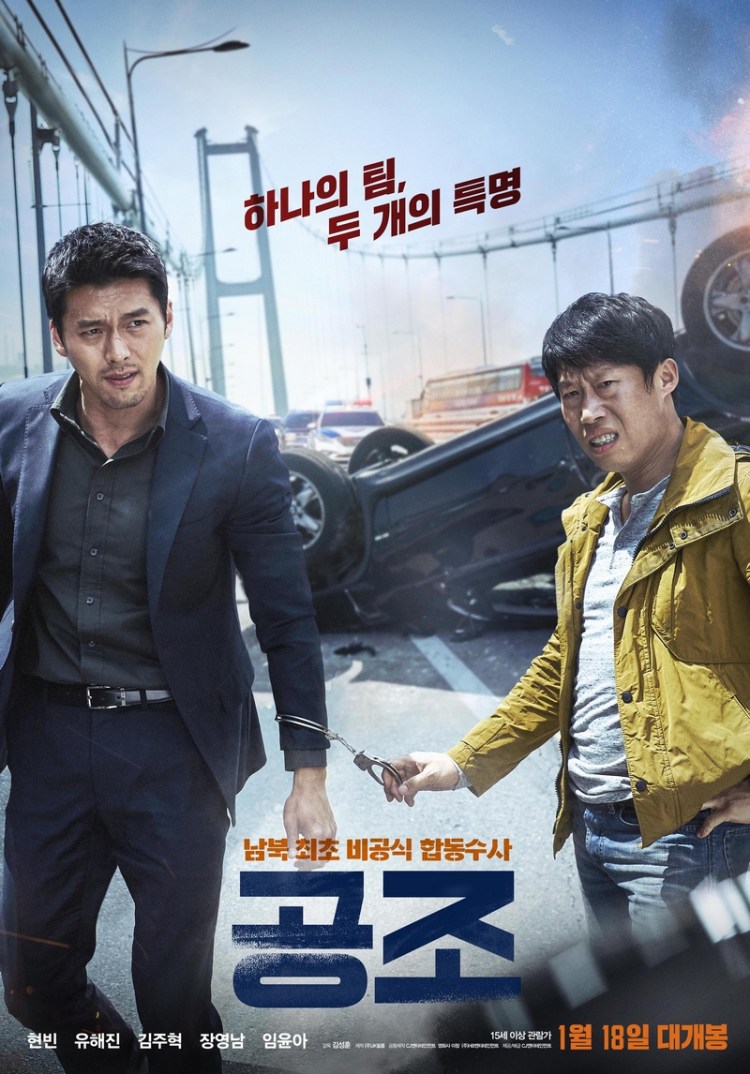
 South Korean cinema has a fairly ambivalent attitude to its policemen. Most often, detectives are a bumbling bunch who couldn’t find the killer even if he danced around in front of them shouting “it was me!” whereas street cops are incompetent, lazy, and cowardly. That’s aside from their tendency towards violence and corruption but rarely has there been a policeman who gets himself into trouble solely for being too nice and too focussed on his family. Confidential Assignment (공조, Gongjo), though very much a mainstream action/buddy cop movie, is somewhat unusual in this respect as it pairs a goofy if skilled and well-meaning South Korean police officer, with an outwardly impassive yet inwardly raging North Korean special forces operative.
In the South, Gang (Yu Hae-jin) is hot on the trail of a suspect he’s been chasing for quite some time but just as he’s finally about to catch him, his phone starts ringing. The cute ringtone featuring a little girl’s voice saying “daddy, pick up – don’t pretend to be working” is impossible to ignore and so Gang answers, chats to his daughter, and lets the suspect get away. In the dog house at work, Gang winds up with all the rubbish jobs before finally being saddled with a “special assignment” – babysitting a North Korean policeman as part of a collaborative detail chasing a possible defector/dangerous criminal the North are keen to drag back home for possibly inhumane treatment.
The Northerner, Lim (Hyun Bin), has his own reasons for chasing the criminal in that he is the only surviving member of a squad wiped out when a superior officer decided to go rogue and run off with a set of plates for printing counterfeit money. The North need the plates back, but Lim’s motives are personal more than merely patriotic and what he wants is vengeance for the death of someone close to him rather than protecting the embarrassing secret of North Korea’s counterfeit currency conspiracy.
For obvious reasons neither of the two men is able to trust the other but the confusion and suspicion is only increased by Gang’s total lack of knowledge about the case. All he knows is that they’re looking for a defector – no more, no less. Lim isn’t happy about having a South Korean cop getting in his way and quickly ditches him as soon as possible only for Gang to turn on his ace detective abilities and eventually end up at the same place through policeman’s instinct. Gradually a sort of grudging camaraderie builds up between the two as they’re forced to spend more time together and their odd couple buddy cop antics become the film’s main draw.
Lim, knowing nothing of life in the South yet suspicious of Gang, goes along with some of Gang’s goofier attempts to rein him in such as extended gag in which he gets him to put on an ankle bracelet by telling him that it’s a secret detective’s badge, reassuring him that his is in the cleaners, only for him to meet another suspicious type out on the road. So that he can keep track of him better, Gang’s superiors order him to take Lim home so he can watch him day and night much to the consternation of his wife but delight of his slightly younger sister-in-law who is instantly smitten by Lim’s chiseled features. Lim reacts to all of this with obvious vigilance but comes to like and respect Gang’s family who eventually welcome him into their home without reservation, even taking pains to try cooking North Korean food when he appears reluctant to join them at mealtimes.
Never quite engaging with the political subtext, Confidential Assignment is less about North/South co-operation than it is about complementary skills and the creation of an unexpectedly complete buddy cop unit. Gang is instantly impressed (and a little scared) by Lim’s obvious physical capabilities as he leaps from high balconies and fights off a whole room of bad guys armed only with soggy toilet roll, but Lim also comes to respect Gang’s bravery, kindness, and dedication to his family. Confidential Assignment might not be the most nuanced cinematic portrayal of North/South relations but its good-natured warmth, silly comedy, and impressively staged action scenes make it one of the most entertaining.
Confidential Assignment was screened as part of the 19th Udine Far East Film Festival.
Original trailer (English subtitles)
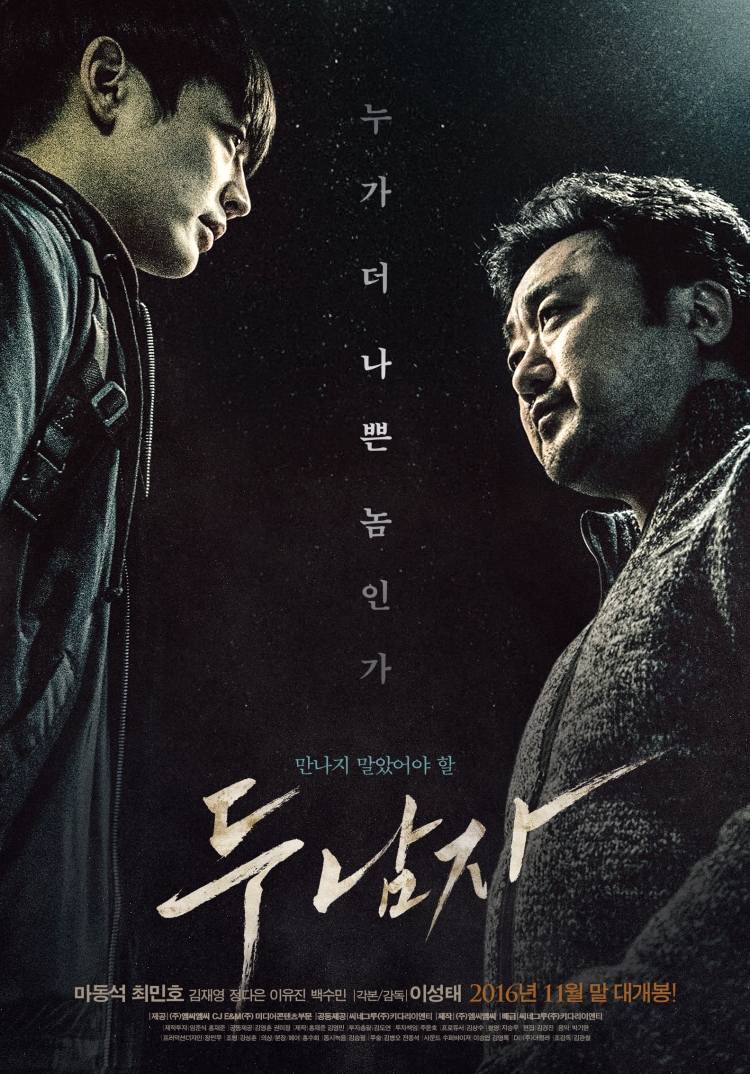 The best laid plans of mice and men often go awry, as the old saying goes, but for four down at heels street kids even their meagre attempts to evade a desperate situation land them in even more trouble than they’ve ever been in before. The debut feature from director Lee Sung-tae, Derailed (두 남자, Doo Namja) is bleak and gritty though underpinned by an ironic sense of love and connection which is itself often “derailed” or subverted as genuine feeling becomes a tool to be exploited in the ongoing war between those fighting amongst themselves to get a hand on the bottom rung of the ladder.
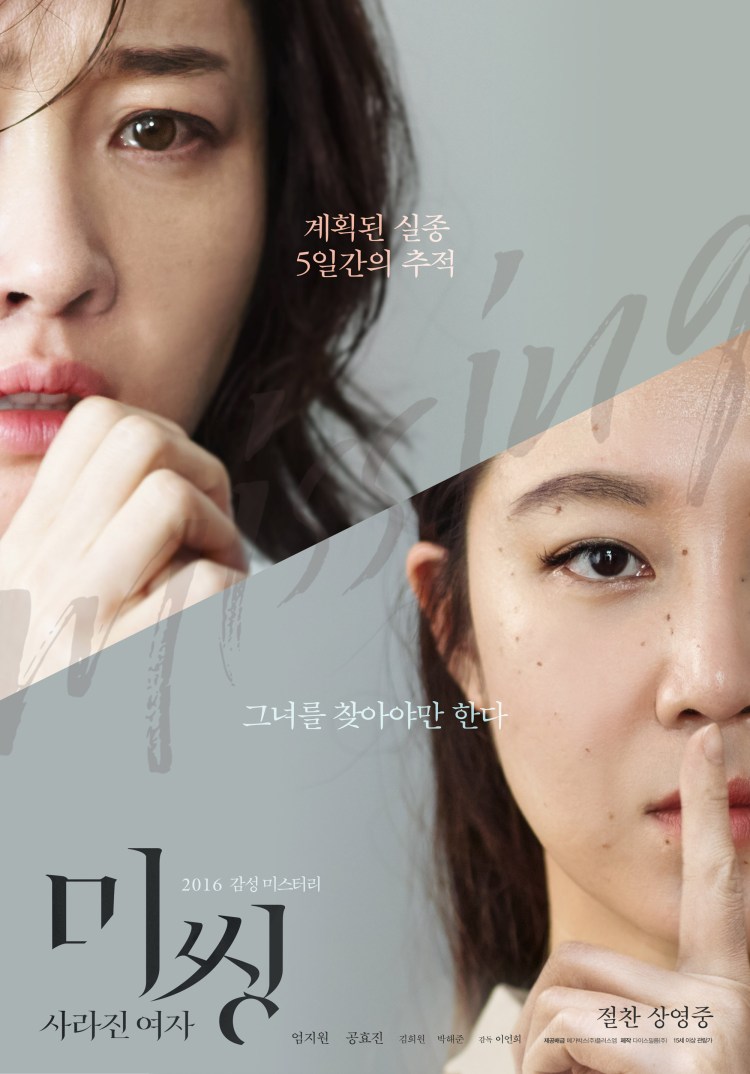 Since ancient times drama has had a preoccupation with motherhood and a need to point fingers at those who aren’t measuring up to social expectation. E Oni’s Missing plays out like a Caucasian Chalk Circle for our times as a privileged woman finds herself in difficult circumstances only to have her precious daughter swept away from her just as it looked as if she would be lost through a series of social disadvantages. Missing is partly a story of motherhood, but also of women and the various ways they find themselves consistently misused, disbelieved, and betrayed. The two women at the centre of the storm, desperate mother Ji-sun (Uhm Ji-won) and her mysterious Chinese nanny Han-mae (Gong Hyo-jin) are both in their own ways tragic figures caught in one frantic moment as a choice is made on each of their behalves which will have terrible, unforeseen and irreversible consequences.
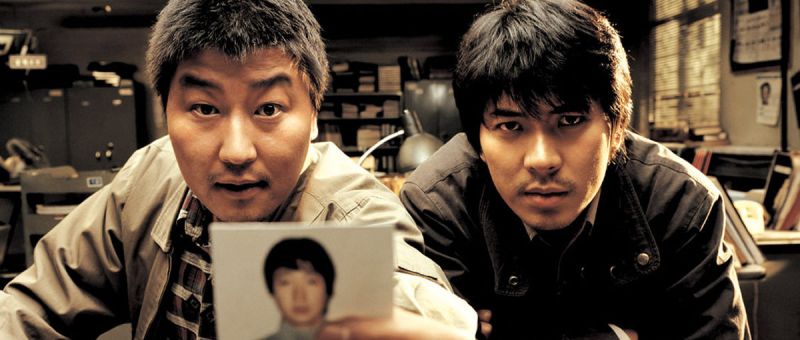
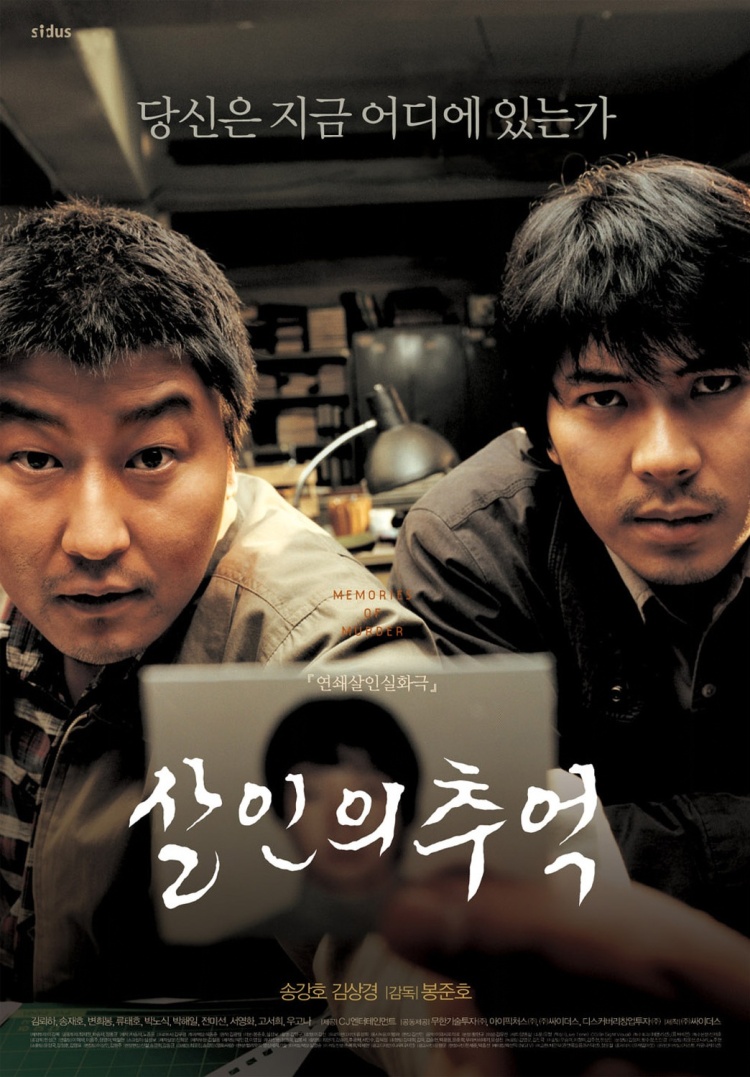 The Korea of the mid-1980s was a society in flux though you might not know it looking at the sleepy small town about to be rocked by the country’s very first publicised spate of serial killings. Between 1986 and 1991, at least ten women ranging in age from schoolgirls to grandmothers were murdered while the killer seemingly got away with his crimes, either dying, fleeing or perhaps getting arrested on other charges explaining the abrupt end to his crime spree. Bong Joon-ho’s fictionalised take on the case, Memories of Murder (살인의 추억, Salinui Chueok), is not so much interested in the killer’s identity, but wants to ask a few hard questions about why the crimes took place and why they were never solved.
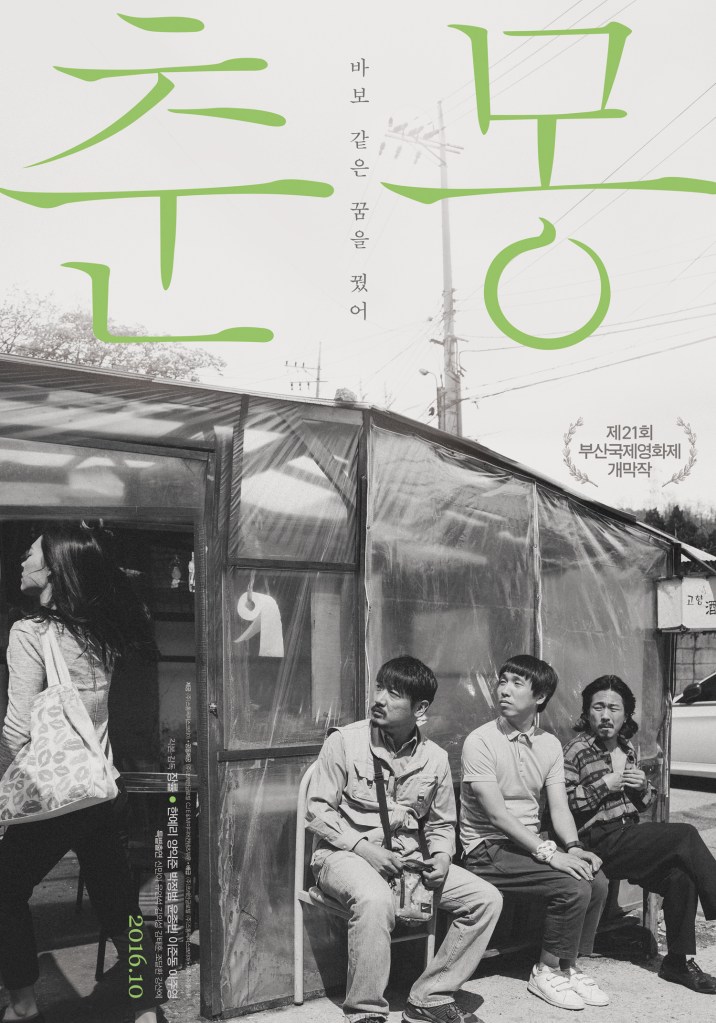 Review of Zhang Lu’s A Quiet Dream (춘몽, Chun-mong) first published by
 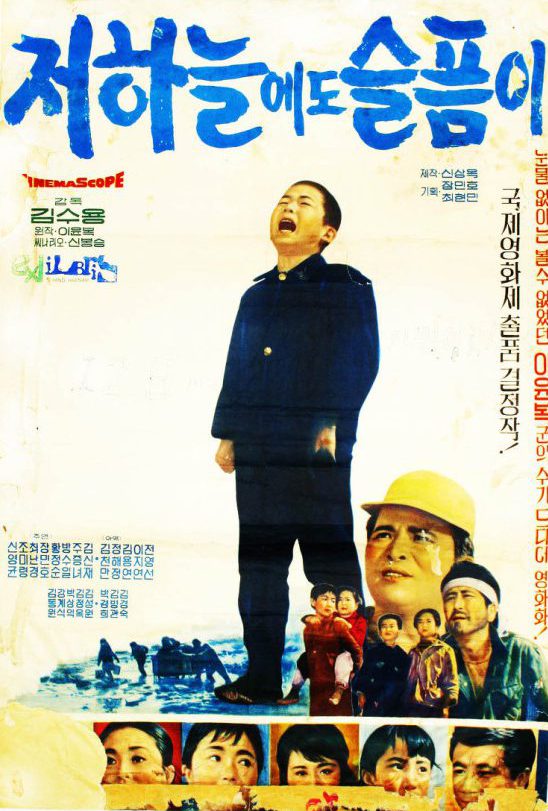 It’s a sorry enough tale to hear that many silent classics no longer exist, regarded only as disposable entertainment and only latterly collected into archives and preserved as valuable film history, but in the case of South Korea even mid and late 20th century films are unavailable thanks to the country’s turbulent political history. Though often listed among the greats of 1960s Korean cinema, Sorrow Even Up in Heaven (저 하늘에도 슬픔이, Jeo Haneuledo Seulpeumi) was presumed lost until a Mandarin subtitled print was discovered in an archive in Taiwan. Now given a full restoration by the Korean Film Archive, Kim’s tale of societal indifference to childhood poverty has finally been returned to its rightful place in cinema history but, as Kim’s own attempt to remake the film 20 years later bears out, how much has really changed?
 Post-war cinema took many forms. In Korea there was initial cause for celebration but, shortly after the end of the Japanese colonial era, Korea went back to war, with itself. While neighbouring countries and much of the world were engaged in rebuilding or reforming their societies, Korea found itself under the corrupt and authoritarian rule of Syngman Rhee who oversaw the traumatic conflict which is technically still ongoing if on an eternal hiatus. Yu Hyun-mok’s masterwork Aimless Bullet (오발탄, Obaltan) takes place eight years after the truce was signed, shortly after mass student demonstrations led to Rhee’s unseating which was followed by a short period of parliamentary democracy under Yun Posun ending with the military coup led by Park Chung-hee and a quarter century of military dictatorship. Of course, Yu could not know what would come but his vision is anything but hopeful. Aimless Bullets all, this is an entire nation left reeling with no signposts to guide the way and no possible destination to hope for. All there is here is tragedy, misery, and inevitable suffering with no possibility of respite.
 Korea is quite good at rom-coms. Consequently they make quite a lot of them and as the standard is comparatively high you have to admire the versatility on offer. Korean romantic comedies are, however, also a little more conservative, coy even, than those from outside of Asia which makes Petty Romance (쩨쩨한 로맨스, Jjae Jjae Han Romaenseu) something of an exception in its desire to veer in a more risqué direction. He’s too introverted, she’s too aggressive – they need each other to take the edges off, it’s a familiar story but one that works quite well. Petty Romance does not attempt to bring anything new to the usual formula but does make the most of its leads’ well honed chemistry whilst keeping the melodrama to a minimum.
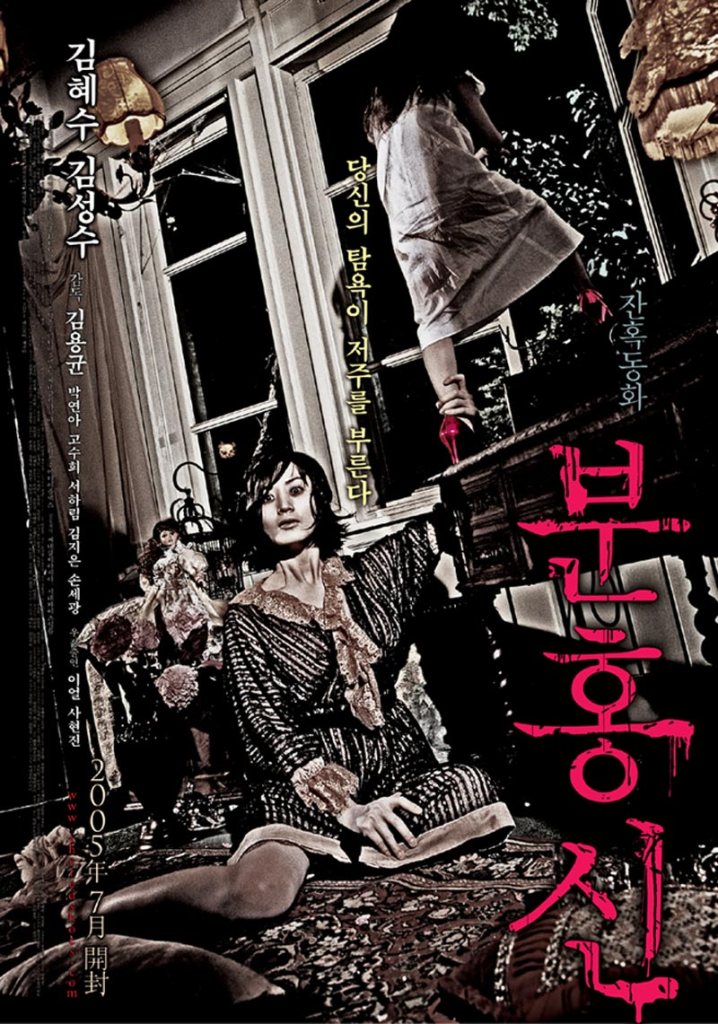 Walk a mile in a man’s shoes, they say, if you really want to understand him. If Kim Yong-gyun’s The Red Shoes (분홍신, Bunhongsin, 2005) is anything to go by, you’d better make sure you ask first and return them to their rightful owner afterwards without fear or covetousness. Loosely based on the classic Hans Christian Andersen tale this Korean take replaces dancing with murder and also mixes in elements from other popular Asian horror movies of the day, most notably
  Windows on Worlds