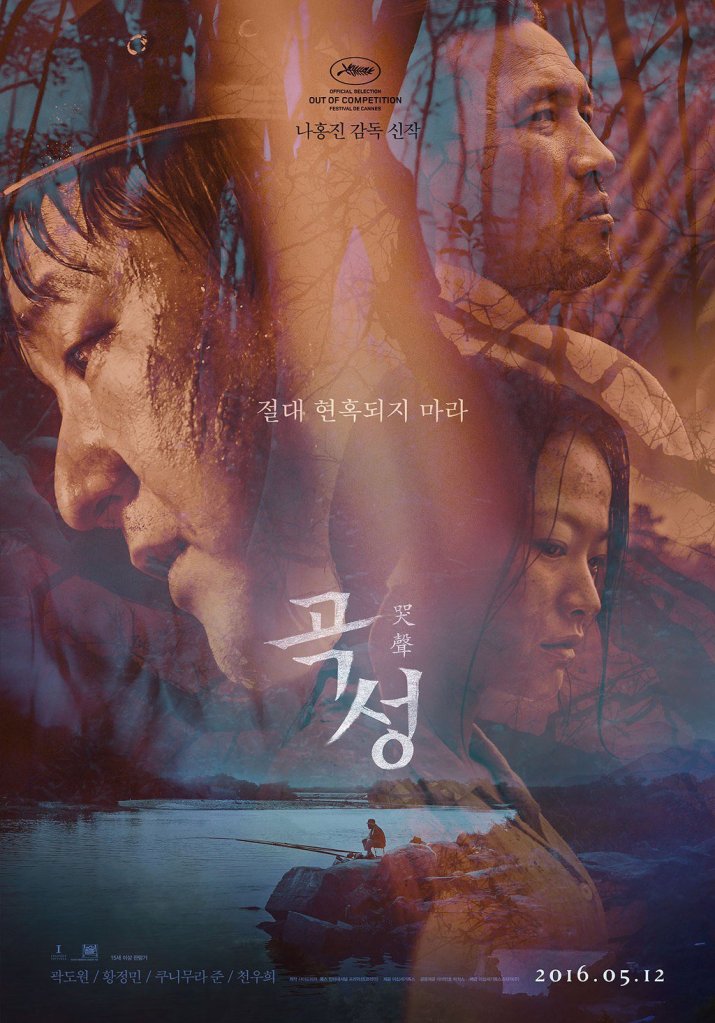
 For the world’s more full of weeping than you can understand – the residents of Goksung, the setting for Na Hong-jin’s nihilistic horror movie The Wailing (곡성, Goksung), might be inclined to agree with Yeats if only because the name of their town is also a homonym for the “sound of weeping”. There is plenty to weep over, and in places Na’s film begins to feel like one long plaintive cry reaching far back to the dawn of time but the main wounds are comparatively more recent – colonisation, not only of a landscape but of a soul. When it comes to gods, should you trust one over another simply because of its country of origin or is your faith to be bestowed in something with more universal application?
Goksung is a sleepy little rural town way up in the mountains. This is the kind of place where nothing much ever happens but today all of that is about to change as a local man has committed a series of bloody murders and is now in a dissociative state. Bumbling policeman Jong-goo (Kwak Do-won) arrives late to the crime scene but quickly finds himself pulled in to the ongoing investigations as bodies begin piling up in the previously quiet town.
The rational explanation for the spate of violent killings is blamed on a tonic containing some funny mushrooms but others have another idea. All of this started happening after a Japanese guy (Jun Kunimura) moved to the town. Some say he’s a professor, some say he’s a Buddhist monk, but there also those who hold him responsible for the rape of a local woman, and there are even reports of him running about the forest dressed only in a loincloth and feasting on the remains of fallen animals.
Eventually, Jung-goo’s young daughter Hyo-jin (Kim Hwan-hee) falls under the curse, giving him an unavoidable impetus to find the truth. As well as the “suspicious” Japanese visitor, Jung-goo also comes into contact with a mysterious young woman dressed in white (Chun Woo-hee) who may be either friend or foe, whilst shamans and the Catholic Church are each approached for their advice on this singularly supernatural phenomenon.
This being quite a sleepy town, Jung-goo’s days most likely involved a lot of napping, eating, and card playing, broken up with chatting to old ladies. So unaccustomed to crime are they, they didn’t quite remember to put their gloves on before investigating a crime scene. Jung-goo and his partner are constantly branded “morons” by their boss and if the night they end up guarding the police station during a thunderstorm is anything to go by, they aren’t exactly the bravest of souls either. Not the best pair to be investigating a complex, supernatural mystery they decide to heed the rumours and pay a visit to the Japanese guy living way out in the woods.
Known only by the derogatory term “the Jap”, the new addition to the village quickly falls under suspicion thanks to the old fashioned crime of not being from around here. Whether out of resentment for historical crimes or simply because of being an outsider, everyone decides the Japanese visitor must, in some way, be responsible. Suspicions are compounded when Jung-goo, his partner, and his partner’s nephew who happens to be a Catholic priest in training with a solid command of Japanese, discover some very odd things whilst snooping around the man’s home. Is the mysterious visitor really, literally, a “Japanese devil” or just the victim of an ongoing campaign of intense xenophobia and the supernatural elements attributed to him a manifestation of that extremely offensive term?
Na keeps us guessing. Meanwhile, ancient remedies are sought when ancient ones are awakened, hence Jung-goo’s mother-in-law turns to shamanism to try and cure her granddaughter of her increasingly serious illness. The shaman (Hwang Jung-Min) arrives more like a TV evangelist than a witch doctor – smart suit and turtleneck, topped of with long hair tied into a bun. The exorcism scene itself is a furious battle between light and darkness (or so we presume) as the shaman dances wildly to the pulsating drum beats of his orchestra, sacrificing a chicken here and a goat there, all while Hyo-jin writhes in agony in the next room and his enemy performs a counter ritual from his recently refurbished lair.
“Believe in me and you shall be saved” is a message Jung-goo receives from just about everyone during the course of the film. The Catholic Church, however, is resolutely opposed to the idea of this demonic threat and informs Jung-goo that this is not a religious matter – he ought to take his daughter back to the hospital and instil his “faith” in modern medicine. Faith appears to be the central question, in what or whom should one believe? Can Jung-goo trust his shaman, is the Japanese guy an ally, threat, or just a neutral, ordinary man, and what of the oddly intense woman dressed in white? In the end, Jung-goo’s faith is questioned but he pays dearly for his final decision. Had he placed more faith in the old gods, his fate might have been very different but Jung-goo chose real world logic (not his strongest suit) over spiritual intuition and failed to heed the warnings.
Jung-goo, though presented as a broadly sympathetic presence, is partly responsible for his own downfall through his willingness to embrace the baser elements of his nature. In contrast to his otherwise laid-back character which sees him late to work because of family meals, Jung-goo has a violent streak first seen when he takes defending himself from an angry dog far further than he needed to. Later he rounds a group of friends to help him take out the Japanese man in a worrying stab at mob justice. Neither quality is very endearing but Jung-goo’s position as a slightly dim bruiser who mistakenly thinks he can smash his way out of a spiritual conundrum makes him an unlikely choice of saviour.
Na offers nothing in the way of hope, the forces of darkness are set to conquer the world helped only by humanity’s propensity towards doubt, its selfishness, and its fear. The dark humour fades as the pace increases until the film approaches its bleaker than bleak finale. This is a land of ghosts, both fleshy and otherwise but in order to bid them goodbye you must first accept their presence. In the end it’s all a question of faith but those most worthy of it may be among the most difficult to believe.
Reviewed at 2016 BFI London Film Festival
Original trailer (English subtitles)
 Rather than a Maenad in a divine frenzy driven by drunkenness, lust, and hedonistic fury, a “Bacchus Lady” is a humorous nickname used for the older women who solicit men in Korean parks by euphemistically offering to sell them a bottle of Bacchus energy drink. E J-yong reteams with veteran Korean actress Youn Yuh-jung to tell the tragic story of Youn So-young, hooker with a heart of gold and now a member of the older generation permitted to slip through the cracks in the absence of familial connections.
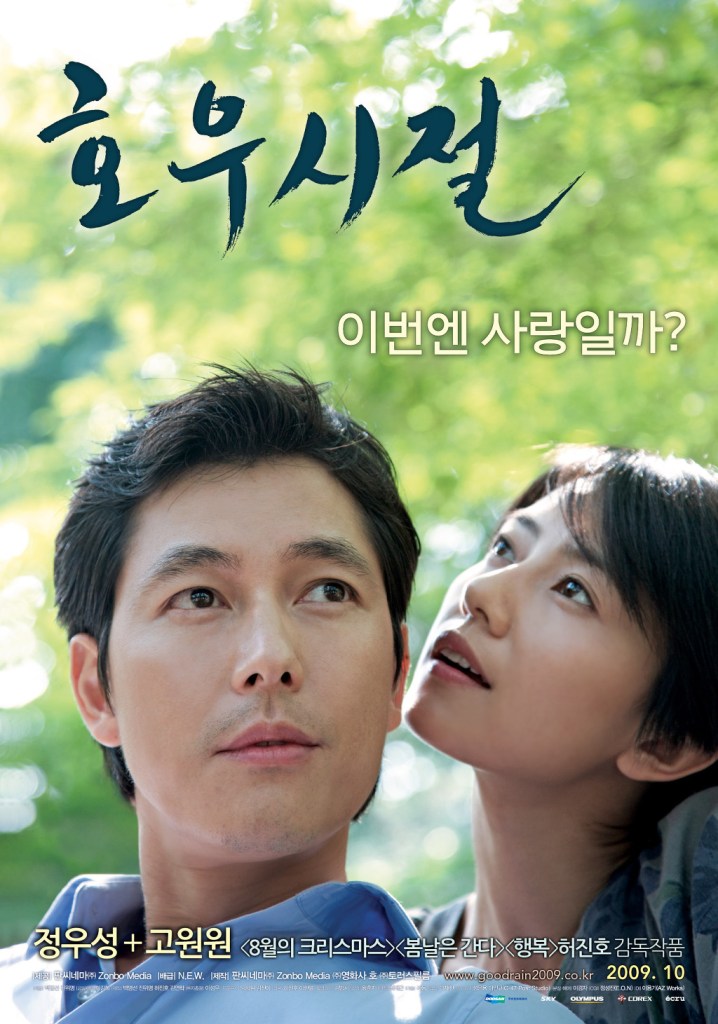 Hur Jin-ho’s A Good Rain Knows (호우시절, Howoosijeol) was originally developed as a short intended to form part of the China/Korea collaborative omnibus film Chengdu, I Love You which was created as a tribute to the area following the devastating 2008 earthquake. However, Hur came to the conclusion that his tale of modern day cross cultural romance required more scope than the tripartite omnibus structure would allow and decided to go solo (Chengdu, I Love You was later released with just Fruit Chan and Cui Jian’s efforts alone). Very much Korean in terms of tone and structure, Hur uses his central love story to explore the effects time, memory, culture, and personal trauma on the lives of everyday people.
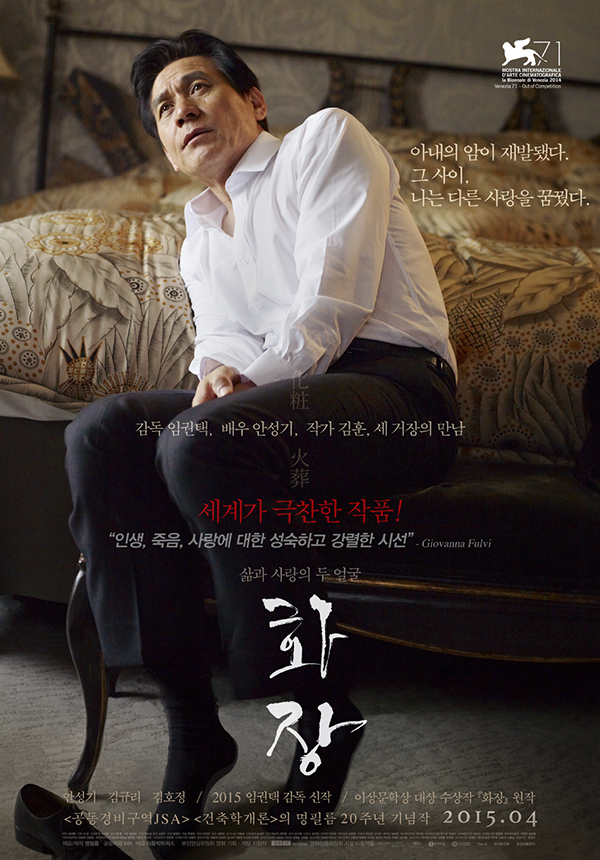 The 102nd film from veteran Korean film director Im Kwon-taek may appear close to the bone in its depictions death, suffering, and the long look back on a life filled with the quiet kind of love but Revivre (화장, Hwajang) is anything but afraid to ask the questions most would not want to hear as the light dwindles. The inner journey is just too hazy, as one man puts it, unknowingly commenting on the human condition, yet Im does manage bring us nicely into focus, if only for a moment.
 In 1925 an avid cave explorer, Floyd Collins, became trapped in a narrow crawl space. Though he was discovered and help came with food and water, a cave in left him sealed off down there and fourteen days later he died of thirst and exposure. As tragic as this obviously is, Floyd Collins is remembered for another reason – his rescue became one of the earliest mass media crazes. The surrounding media furore also inspired the 1951 Billy Wilder classic Ace in the Hole in which a grizzled reporter attempts to manipulate the fate of a man trapped in a cave for the maximum media coverage with the consequence that his delays cost the man his life. Jung-soo, a father on his way home with a birthday cake for his young daughter is about to join the marooned underground club when a shoddily built tunnel collapses sealing him inside. Unfortunately for Jung-soo, he finds that times have not changed all that much.
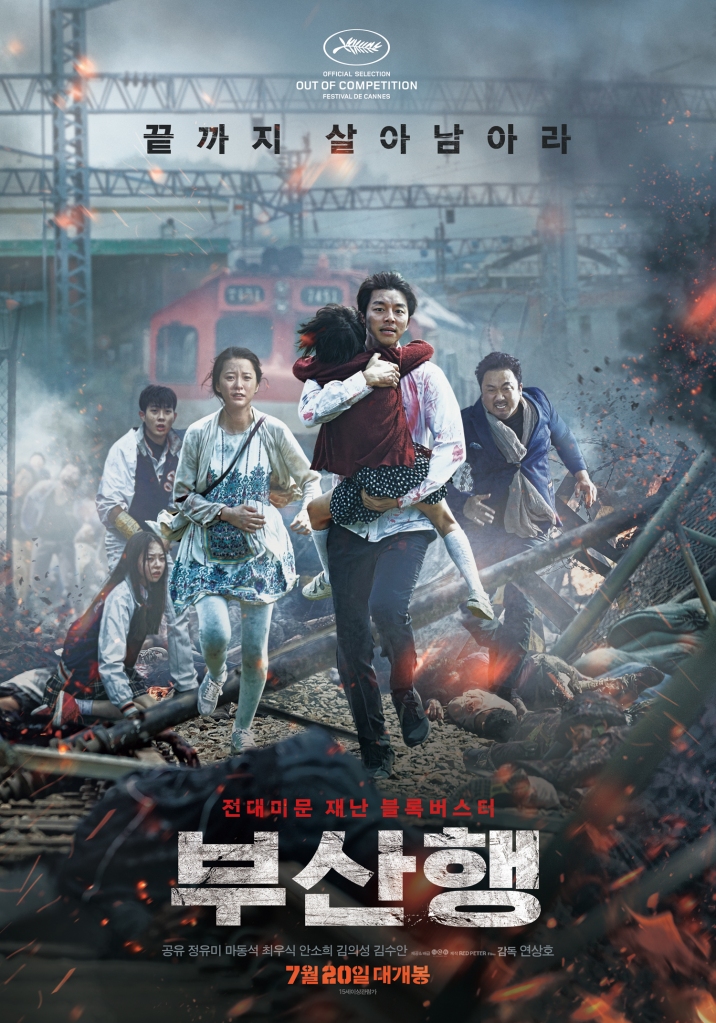 Many people all over the world find themselves on the zombie express each day, ready for arrival at drone central, but at least their fellow passengers are of the slack jawed and sleep deprived kind, soon be revived at their chosen destination with the magic elixir known as coffee. The unfortunate passengers on an early morning train to Busan have something much more serious to deal with. The live action debut from one of the leading lights of Korean animation Yeon Sang-ho, Train to Busan (부산행, Busanhaeng) pays homage to the best of the zombie genre providing both high octane action from its fast zombie monsters and subtle political commentary as a humanity’s best and worst qualities battle it out for survival in the most extreme of situations.
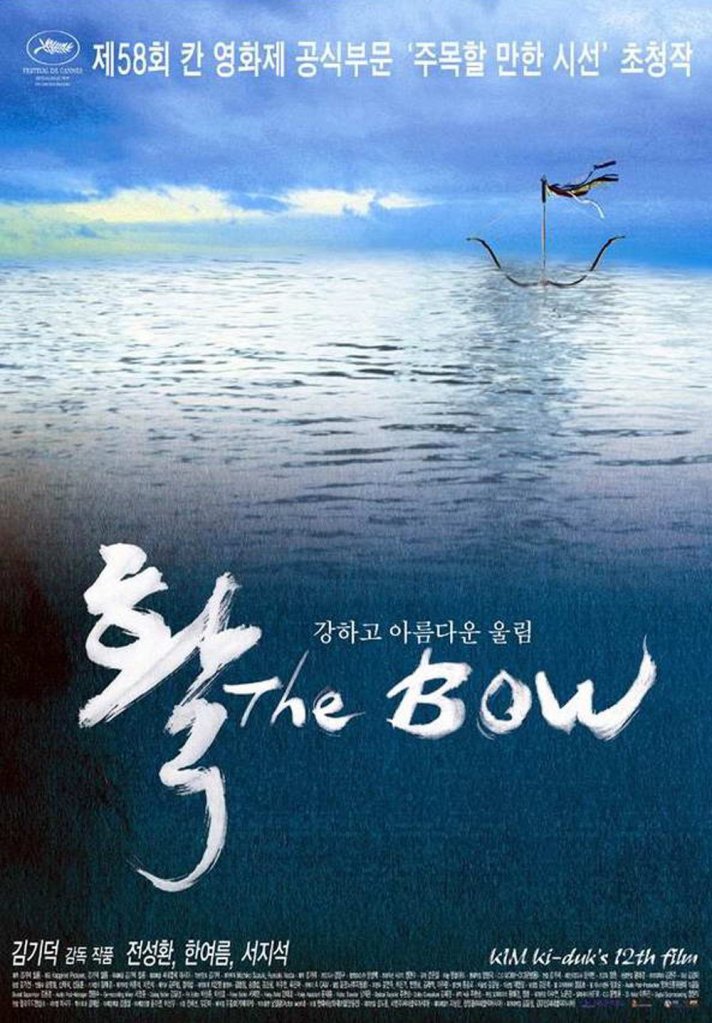 Kim Ki-duk is not known for his conventional approach to morality but even so his 12th feature, The Bow (활, Hwal), takes things to a whole new level of uncomfortable complexity. While nowhere near as extreme as some of Kim’s other work, The Bow takes the form of a fable as an old man and a young girl remain locked inside a mutually dependent relationship which, one way to another, is about to change forever.
 Because it’s there. As good a reason as any for doing anything but these were the only three words of explanation offered by George Mallory in answer to the question “Why climb Everest?”. In Powell & Pressburger’s The Red Shoes, the heroine reacts in a similarly philosophical fashion when asked “Why do you want to dance?” replying with the question “Why do you want to live?”. What makes some people prepared to dance until their feet bleed and their toes break, and sends others to the peaks of snowcapped mountains staring death in the face as they go, is something which cannot be fully explained in words but cannot be denied by those who hear its calling.
 Poor old Hyuk-jin is about to have the worst “holiday” of his life in Noh Young-seok’s ultra low budget debut, Daytime Drinking (낮술, Natsul). Currently heartbroken and lovesick as his girlfriend has just broken up with him, Hyuk-jin is trying to cheer himself up with an evening out drinking with old university friends. Truth be told, they aren’t terribly sympathetic to his pain though one of them suddenly suggests they all take a trip together just like they did when they were students. Hyuk-jin plays the party pooper by saying he can’t go because he’s meant to be looking after the family dog but after some gentle ribbing he relents and says he’ll come if he can get someone to look in on the puppy for him while he’s gone. He will regret this.
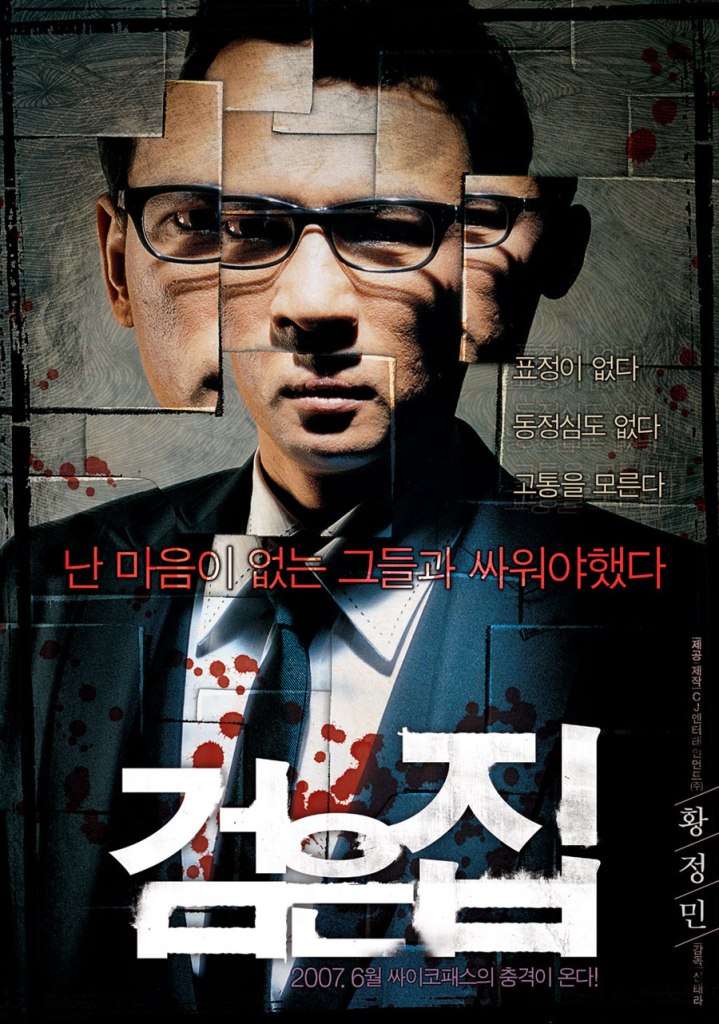 Yusuke Kishi’s Black House source novel was
  Windows on Worlds