Maru (まる, Naoko Ogigami, 2024)

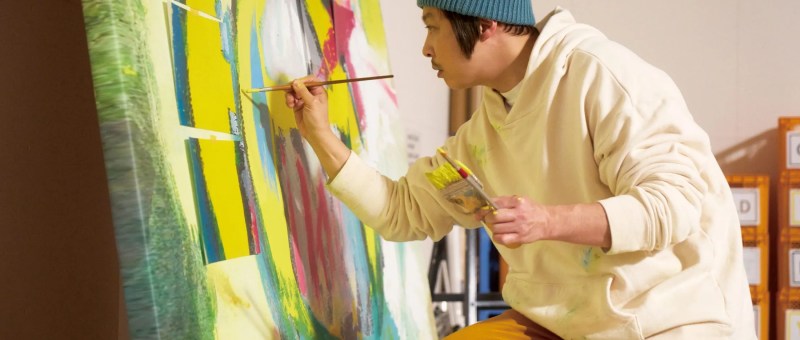
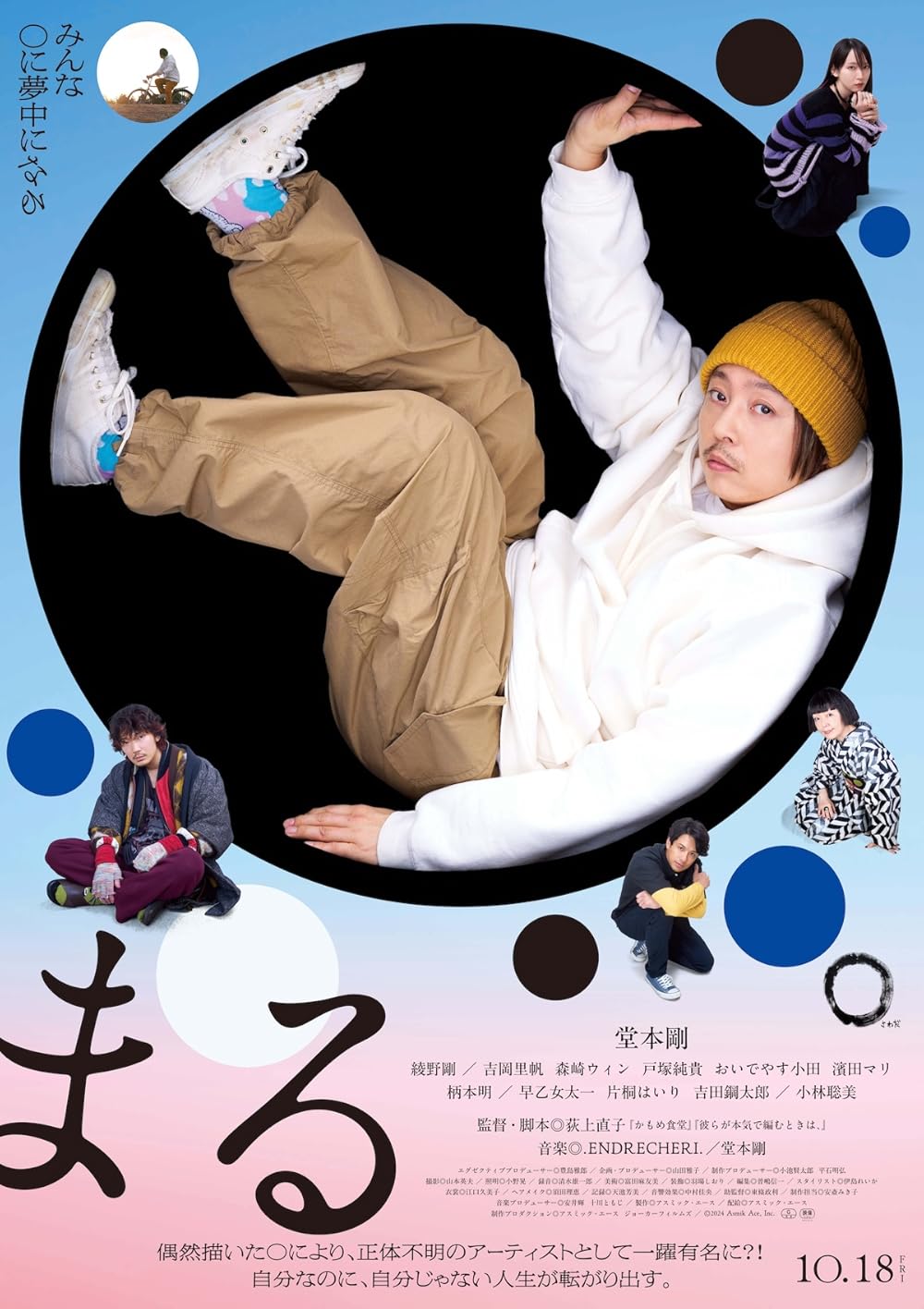
Taken to task by a coworker (Riho Yoshioka) for allowing himself to be exploited as an assistant to an internationally famous artist who views them as little more than tools and takes all the credit for their work, Sawada (Tsuyoshi Domoto) asks if she knows who built Horyu Temple. He has to supply the answer himself, Prince Shotoku. But of course, he didn’t. It wasn’t  as If he drew up the plans or cut the wood with his own hands. 1300 carpenters built it, but no one thinks about them. Only about Prince Shotoku, because he commissioned the work and paid for it. Sawada doesn’t think what he’s doing is all that different, and that times haven’t really changed all that much. Not many people get to make a living doing what they love, so perhaps that’s enough for him. 

But his colleague asks if he sees himself more as a worker than an artist, as if she were unintentionally making a value judgement on the nature of art. The line between artist and artisan maybe so thin as to not exist, but why is it that we think of art which is perceived to have a practical application differently from that which we assume is intended only as a means of self-expression? “What about your own art?” she asks Sawada, but he doesn’t really have a notion of it because he’s been so focussed on earning a living as part of a wider capitalist superstructure in which art too is a commodity. Akimoto (Kotaro Yoshida) is basically running an art sweatshop mass-producing pieces for an international market and operating it like a brand in which everything is released under his own name. When Sawada falls off his bike and breaks his dominant arm, Akimoto simply fires him.

But then, things begin to get strange. Sawada draws some circles with his left hand and includes them with a few things he plans to sell to a second-hand shop where they’re picked up by a strange man who describes himself as a “magician who can’t do magic” and offers him fantastic amounts of money for his work even though all he did was draw a circle. Sawada discovers what he drew is called an “enso” and represents “serene emptiness”, but at the same time others seem to project whatever they want to see in the hole inside while Sawada himself is uncertain what should be there. The magician tells him that his follow-up work is no good because his enso are full of desire in his newfound lust for fame and riches, but at the same time he and his art have also become a commodity and like Akimoto he’s locked into producing more of what people want rather than expressing himself or finding artistic fulfilment. 

His colleague returns to attack him again. Now she criticises him for exploiting art to make money. “Art that’s expensive and just for a few wealthy people isn’t real art,” she says. She sticks to her message that the labour of those like her is being exploited and the world is set up for a few wealthy elites. Their chant of “we want sushi too” might seem flippant, but it represents the world that they’re locked out of. Sawada’s incredibly intense, struggling mangaka neighbour is obsessed with getting sushi too, though there’s plenty of it on the buffet at Sawada’s show which Sawada eyes hungrily. Eventually he’s reduced to grabbing some to eat on his own in a stairwell, signalling his liminal presence within this space. He’s the artist and it’s his show, but he isn’t really part of this world and no one’s really interested in him except when he’s giving mystical quotes as part of his marketing brand. 

The conclusion that he comes to that his art at least should exist for art’s sake. That all he ever wanted to do was paint as a means of being true to himself, only that simple desire has got lost amid the complications of modern life. It’s very hard to draw circles of serenity when you’re living in a rundown apartment block with a worrying subsidence problem and your neighbour screams all night in despair before punching a hole in your wall which you’ll probably have to pay to have fixed. Nevertheless, through Ogigami’s elliptical tale, Sawada does perhaps begin to find a path back to his own art or at least what art means to him which is after all what’s in the middle circle even if all anyone looks at is the edges. 


Maru screened as part of this year’s Camera Japan.

Trailer (no subtitles)

We’re Millennials. Got a Problem? International (ゆとりですがなにか インターナショナル, Nobuo Mizuta, 2023)

Seven years on from the hit TV series, the guys find themselves dealing with the problems of early middle age along with increasing internationalisation as members of the so-called Yutori generation in Nobuo Mizuta’s We’re Millennials Got a Problem? (ゆとりですがなにか インターナショナル, Yutori desu ga, naninka Internationa). Now they’re in a different place and increasingly confused by the youth of the day while reconsidering their own life choices and facing a series of impromptu crises.

Among them would be that both the yakiniku restaurant where the guys worked in the TV series and the company that used to distribute the sake produced by Masakazu’s (Masaki Okada) family brewery have been taken over by Korean conglomerates. To make matters worse, the company tells Masakazu at an online meeting he’s embarrassingly turned up to in person because no one thought to tell him it was remote that they’re shifting production entirely to makgeolli because no one drinks sake anymore and his takings are about to fall off a cliff. The only way he can keep the contract is by agreeing to introduce a new product, either makgeolli or alcohol free sake. 

Meanwhile, his friend Maribu (Yuya Yagira) has returned after seven years in China with a Chinese wife and three children but apparently no job prospects. Masakazu offers him a job at the brewery, forgetting that it’s a bit awkward because he used to date his sister, Yutori (Haruka Shimazaki), who has quit her corporate job to start a business selling nordic knickknacks. It’s Maribu’s live streaming of the moribund brewery that unwittingly exposes the cracks in Masakazu’s marriage when Chinese netizens starts sending aphrodisiacs through the post to help him overcome the problems of his sexless life with wife Akane (Sakura Ando) who is herself struggling with the demands of looking after two small children and taking care of all the domestic chores with no help.

Later Akane tells mutual friend Yamaji (Tori Matsuzaka) that she’s worried she has post-natal depression and is fed up with her home life. We see can how stressful it is in the opening sequence in which Masakazu (ironically) tries to become a YouTube sake star but is repeatedly heckled by offscreen calls from Akane asking him to bathe the children and otherwise help out before she finally has no choice but to bring the kids to him. When they go to city hall to apply for a place in childcare they’re immediately dismissed, Akane somehow told that she doesn’t have as many “points” as her husband even though they’re both self-employed and there are many more needy candidates before the (probably well-meaning) civil servant not so subtly checks their daughter’s arm for signs of abuse or neglect. It’s not that surprising therefore that when the aphrodisiacs start piling up at home she wonders if Masakzau’s having an affair placing further strain on the relationship. 

Shin-hye (Haruka Kinami), the Korean-Japanese-American CEO of the company that bought out their old distributor (for whom Akane was once a regional manager) also a expresses a similar anxiety about the place of women in the workplace on the one hand coming from Korean corporate culture and finding that Japan might not as be “as bad” at least in its every increasing list of harassment which at least admit there’s problem with workplace bullying, sexist culture, and unwanted sexual advances from men in positions of power. Yamaji, meanwhile, finds his well-meaning attempts to foster diversity in the classroom floundering when the kids declare themselves unable to understand the intricacies of LGTBQ issues explaining that at their age “dating” just means hanging out though they’re unexpectedly accepting of the Thai transfer student with an inexplicable crush on the incredibly obnoxious American boy who transferred in the same time as him. 

In other ways, however, Yamaji is the same as ever. On his first appearance he’s on an awkward date with a woman from a dating app which he largely spends talking to his mentor on an iPad and making sexist remarks. They are all struggling with the demands of a more concrete adulthood in which much is already decided while their settled lives are undermined by unexpected crisis from the fallout from the conravirus pandemic and ongoing economic malaise to marital discord, the demands of caring for small children, and a friend a they had no idea was a top star live-streaming star in China. A recurring gag sees people undertake zoom meetings dressed in a suit jacked with sweatpants underneath. Yutori eventually exclaims that there’s no point even having dream while her family have a lot of sensible questions about her new business like where all the stock is whether it was worth the risk leaving her stable job that was presumably subject to all the harassment and otherwise oppressive corporate culture of contemporary Japan. Nevertheless, the millennials eventually come to a kind to acceptance and understanding of where they are in their lives along with a re-appreciation of everything they already have.


We’re Millennials. Got a Problem? International screened as part of this year’s Nippon Connection

Original trailer (English subtitles)

From Today, It’s My Turn!! (今日から俺は!! 劇場版, Yuichi Fukuda, 2020)

The high school fighting manga has long been a genre mainstay but perhaps hit peak popularity in terms of the big and small screen during the Bubble era with such well known hits as Sukeban Deka and Beb-Bop High School. More recent treatments have frequently bought into the genre’s inherent absurdity such as the contemplative and melancholy Blue Spring, or the anarchic Crows Zero series helmed by Takashi Miike to which Blue Spring’s Toshiaki Toyoda later added a sequel. Which is all to say, that a genre so deliberately puffed up and obsessed with macho posturing is near impossible to parody. Leave it Yuichi Fukuda to try with the retro nostalgia fest From Today, It’s My Turn!! (今日から俺は!! 劇場版, Kyo kara ore wa! Gekijoban), a theatrical sequel to the TV drama series adapted from the manga by Hiroyuki Nishimori. 

Set in the genre’s heyday of the 1980s, the action takes place in a small town in Chiba with an improbably large number of high schools. Nerdy high schooler Satoru (Yuki Izumisawa) floats the idea of transferring somewhere else, fed up with all the delinquents at his school disrupting his studies with their constant violence but then it seems like everywhere else is the same. The big problem is that their two top guys have recently been deposed during a conflict with rival school Nanyo leaving a power vacuum while their school is temporarily merging with Hokunei from the next town over seeing as they’ve already burnt their school building down. 

While many high school fighting manga focus on the hierarchy within one particular institution, From Today, It’s My Turn!! is much more concerned with the battle between rival schools even if some of the more antagonistic fighters are in fact secretly friends. The first fight that breaks out is between bleach blond Mitsuhashi (Kento Kaku) and blue-suited Imai (Taiga Nakano) over a juice carton he bought for Mitsuhashi’s aikido-trained girlfriend Riko (Nana Seino) which Mitsuhashi sees as an affront to his masculinity, though in truth the two guys seem to get along well enough in the long run. Most of this fighting is in essence performative posturing, something made plain by the unexpected cowardice of supposed top guy Mitsuhashi who it turns out frequently runs away when challenged even relying on Riko to get him out of trouble. 

Though there are female gangs and female lone fighters, this is largely a male affair as the women, excepting Satoru’s cousin Ryoko (Maika Yamamoto), are expected to perform their femininity as the boys perform their masculinity through fighting. The supposedly evil head of the girl gang from Seiran High, Kyoko (Kanna Hashimoto), turns into a walking embodiment of kawaii when encountering crush Ito (Kentaro Ito) who begins acting in an equally lovey-dovey fashion, but breaks right back into her delinquent tough girl persona as soon as he’s off the scene. Aikido expert Riko meanwhile is largely reduced to trying to keep Mitsuhashi out of trouble while adopting an air of nice girl refinement. Only Ryoko who determines to take revenge on behalf of the bullied Satoru with the aid of a bamboo sword is allowed to stay firmly within the confines of the sukeban

Nevertheless, despite their treatment of each other most of the gang members can’t abide bullying which is why they eventually turn on Hokunei realising that they’re the sort of guys that befriend vulnerable people only to betray them later. Yet like Mitsuhashi, Hokunei boss Yanagi (Yuya Yagira) is also an under-confident coward so insecure in his fighting prowess that he has to cheat by taping throwing knives to the inside of his blazer. Legitimate authority is it seems largely absent, parents either unseen or oblivious while the teachers are unable to offer much in the way of help, wandering round the town with a toy police car and a loudspeaker trying to fool the guys into dispersing. 

Fukuda’s brand of humour is nothing if not idiosyncratic and largely inspired by TV variety show sketch comedy which explains the random nature of many of the gags along with the absurdist manga to the max production design. He further amps up the incongruity by casting prominent actors clearly far too old for high school and then saddling them with ridiculous costumes to the extent that Taiga Nakano looks oddly like Frankenstein’s monster with his too broad shoulders and overly bouffant quiff. While action choreography leaves much to be desired, fans of Fukuda’s previous work will most likely have a ball though others it has to be said may struggle. 


From Today, It’s My Turn!! streamed as part of this year’s New York Asian Film Festival.

Original trailer (no subtitles)

Last of the Wolves (孤狼の血 LEVEL2, Kazuya Shiraishi, 2021)

“The Showa era’s over. We don’t use guns now, business is our battlefield.” a recently released foot soldier is told, finding himself in a whole new world emerging from a not so distant past of turf wars and street scuffles into a late bubble wonderland of besuited corporatised gangsters. Set in 1988, Kazuya Shiraishi’s Blood of Wolves had been about the twilight of post-war gangsterdom forever associated with an era that was literally about to pass. Set three years later in the twilight of the bubble economy and an already established Heisei, Last of the Wolves (孤狼の血 LEVEL2, Koro no chi: Level 2) finds no longer rookie cop Hioka (Tori Matsuzaka) taking on the mantle of his late mentor Ogami, attempting to broker peace by getting uncomfortably close to yakuza. 

At the end of the previous film, Hioka had managed to engineer a truce between rival gangs Odani (with whom he is affiliated), and Irako through pushing top Odani guy Ichinose to take out boss Irako. Three years later, the peace has held and in any case Heisei yakuza no longer take violence to the streets. The release of crazed Irako foot soldier Uebayashi (Ryohei Suzuki), however, threatens to destabilise the local balance of power. Despite mournfully declaring that he doesn’t intend to wind up back in prison, Uebayashi’s first call on release is to the sister of one of his guards whom he rapes and kills in quite gruesome fashion. Hioka is put on the case and partnered with a genial veteran, Seshima (Yoshiko Miyazaki), weirdly excited about investigating a murder at this late stage of his career, but quickly realises that Uebayashi’s recklessness is primed to destroy everything he’s built. 

Having started out a straightlaced rookie, Hioka has fully incorporated the Ogami persona dressing in sharp suits and sunshades, driving a sports car, and hanging out with the Odani guys, while also using his girlfriend’s little brother Chinta (Nijiro Murakami) as a mole in rival gangs. As a cynical reporter points out, however, Ogami was essentially “undercover” in that he understood hobnobbing with yakuza was part of his job and something he did solely to keep civilians safe by preventing another street war. Hioka has started to lose his way, enjoying himself a little too much and already way out of his depth as the fragile peace he’d brokered by less than ethical means begins to crumble beneath his feet. 

Having been in prison, Uebayashi is unaware of the various ways in which the world has changed seeking to return to old school rules of gangsterdom, ironically lecturing his superiors on the absence of jingi (honour and humanity) in their new corporate existence. He’s a monster and a sadist, but his violence is also a result of the horrific abuse he suffered as a child which led to an equally heinous act of revenge while as a member of the ethnic Korean Zainichi community, like Chinta and his siblings, he continually faces discrimination and social oppression. His first act on release is of revenge against the guards who relentlessly tortured him in prison, the murdered woman’s brother confessing that they wrote him up as a model prisoner in the hope he’d be released early so they wouldn’t have to deal with him anymore.  

Yet what Hioka and Uebayashi have in common is that they’re both pawns in a game they were unaware was being played. As it turns out the police corruption Hioka discovered during the previous film did not go away, and in certain senses they liked things the way they were before. Hioka’s truce is very bad for business for a certain subset at least. They might be minded to let a dangerous killer go loose if it disrupts Hioka’s attempt to suppress the criminal underworld to manageable levels. Mimicking the classic jitsuroku, Shiraishi throws in occasional voiceover from an anonymous narrator along with freeze frame and montage while skewing still darker in the levels of depravity among these desperate men fighting over the scraps of a world already in terminal decline even as the bubble seems fit to burst. Shiraishi ends on a note of change with the institution of the organised crime laws which have contributed to the ongoing decline of the yakuza, a relic of the Showa era unfit and unwelcome in the modern society, but also discovers that for good or ill there may yet be wolves in Japan.


Last of the Wolves screened as part of this year’s New York Asian Film Festival.

Teaser trailer (English subtitles)

The Lies She Loved (嘘を愛する女, Kazuhito Nakae, 2018)

lies she loved posterHow well do you really know the people with whom you share your life? Or, perhaps, how honest have you really been with those closest you? Inspired by a notorious newspaper article, The Lies She Loved (嘘を愛する女, Uso wo Aisuru Onna) has a few hard questions to ask about the nature of modern relationships and the secrets which often lie at their hearts. Yet the message is perhaps that there are different kinds of truths and the literal may be among the least important of them. The salient message is that consideration for the feelings of others and a willingness to share the burden of being alive are the only real paths towards a fulfilling existence.
30-something Yukari (Masami Nagasawa) is a workaholic career woman currently at the top of her corporate game. Unmarried, she’s been living with impoverished medical researcher Kippei (Issey Takahashi) for the last five years and is happy enough with him (save the occasional one night stand) but also feels as if there’s something missing. She’s angry when he doesn’t show up to a pre-arranged dinner where he’s supposed to meet her mum, leaving her to deal with her mother’s disapproving scorn all alone, but chastened when it’s revealed he was found collapsed in a local park and is currently in the hospital after suffering a brain haemorrhage. If that weren’t enough chaos for the hyper organised Yukari, the police tell her Kippei’s ID is fake. He doesn’t work where he said he said worked and no one seems to have heard of him. Remembering a conversation about cheating spouses, Yukari turns to the detective uncle (Daigo) of one of her work friends for help but starts to wonder what sort of answers it is that she’s really looking for.

An intriguing mystery, The Lies She Loved begins in worrying fashion as if it wants to punish Yukari for her obsessive workaholic lifestyle and avoidance of the traditionally feminine roles of wife and mother. The couple aren’t married, but Kippei is for all intents and purposes a kept man and house husband. He doesn’t earn enough to contribute to the household economy, but makes up for it by handling the domestic tasks usually the domain of a “wife”, i.e. cooking and cleaning. Meanwhile, Yukari works insane hours and often stays out drinking with colleagues, claiming this valuable out of hours time as part of the job but sometimes spending it with other men. We see her “lie” to Kippei, telling him a large bouquet of snacks won from an amusement stand was a gift from a female friend when it came from a “date”, while he reproves her with coldness for her excessive drinking and the tendency it provokes in her for unsolicited cruelty.

Yet moving on we see that a woman’s career, or man’s lack of one, is not the issue at all. The issue is neglect, a taking for granted of other people’s feelings and their willingness to provide support and affection while getting nothing in return. Rather than going to work, Kippei had been spending time in a coffeeshop writing something that’s somewhere between novel and therapy about a happy family living on an idyllic island. We discover that he too once took something for granted, became wrapped up in his career, and overburdened someone else by allowing them to take on the entirety of their mutual responsibility with tragic consequences. Filled with remorse, he ran away from his crime and tried to forget.

The crime is not a woman working, but people in general working too much and knowing each other too little. Humiliated, Yukari wants answers about her immediate past, wanting to know if she was tricked by a conman in order to avoid facing the fact that she never really bothered to ask many questions about the man she invited into her home. Indeed, her decision to “invite” him in the first place is not altogether altruistic and cannot help giving off the scent of mild desperation as she tries to make the arrangement seem convenient while ensuring she retains the upper-hand in the power dynamics without giving too much away. What she really wants to know, without really wanting to admit it, is if her lover really loved her despite his “lies”, but to know that she’ll have to deal with her own longstanding intimacy issues and accept that a loving home is a balanced one in which both partners are equal and agree to share their burdens with openness and generosity. A progressive, nuanced look at modern romance The Lies She Loved is a surprisingly effective defence of love and a mild rebuke of the society which does its best to undermine it.


Original trailer (no subtitles)

The Third Murder (三度目の殺人, Hirokazu Koreeda, 2017)

Third Murder posterJapanese cinema has often put the justice and legal system on trial and found it wanting. From Yoji Yamada’s Flag in the Mist in which a “selfish” lawyer contributes to the death of an innocent man, to Yoshitaro Nomura’s spiralling, feverish The Incident, Yoshimitsu Morita’s Kafka-esque Keiho, Gen Takahashi’s pointed Court of Zeus, and Masayuki Suo’s comparatively more straightforward I Just Didn’t Do It, the entire justice system takes on an almost spiritual quality of absurdity, tormenting the accused for the sake of a pantomime of justice, little caring for his or her guilt or innocence and intent only on propping up its own sense of absolute authority.

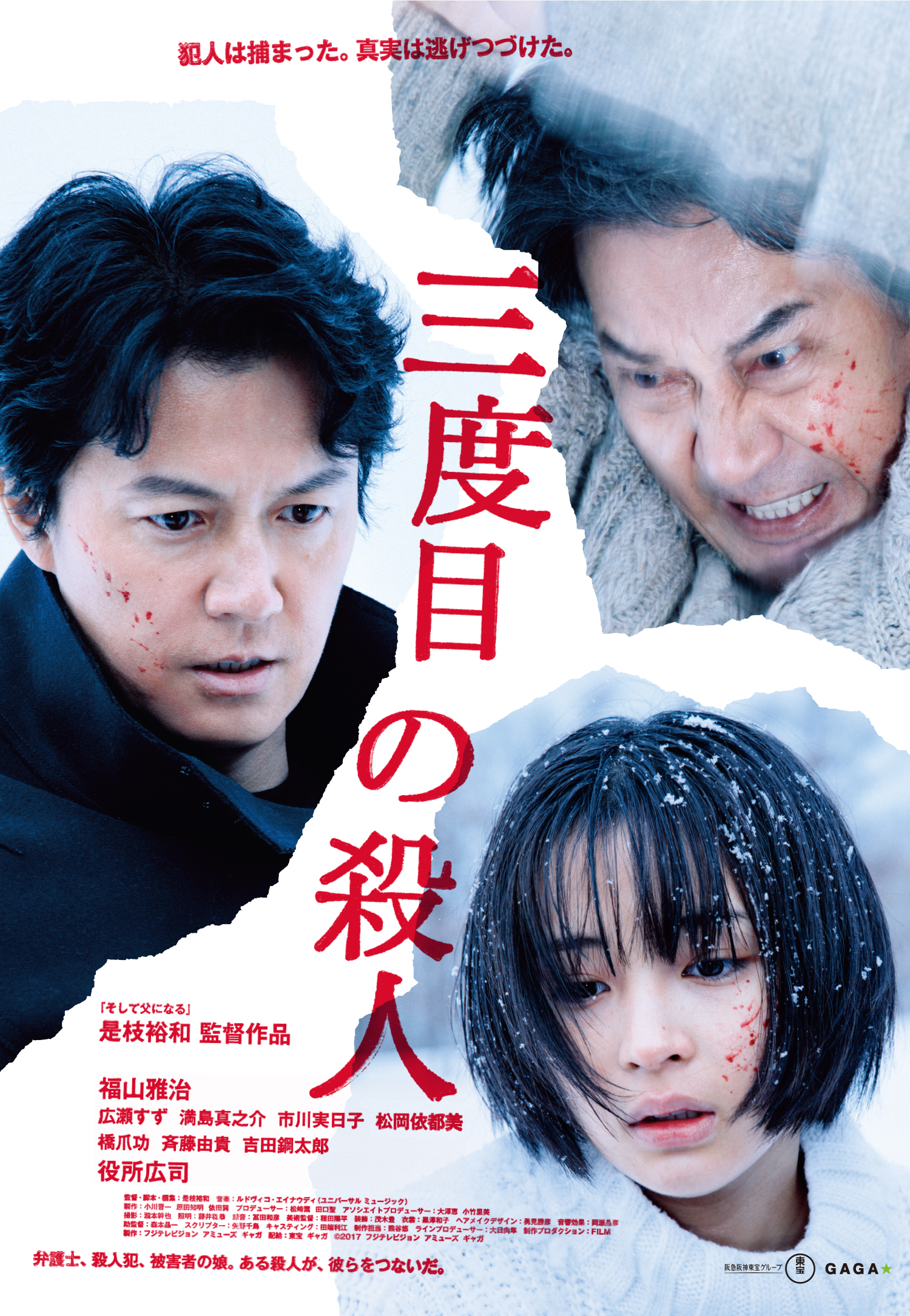
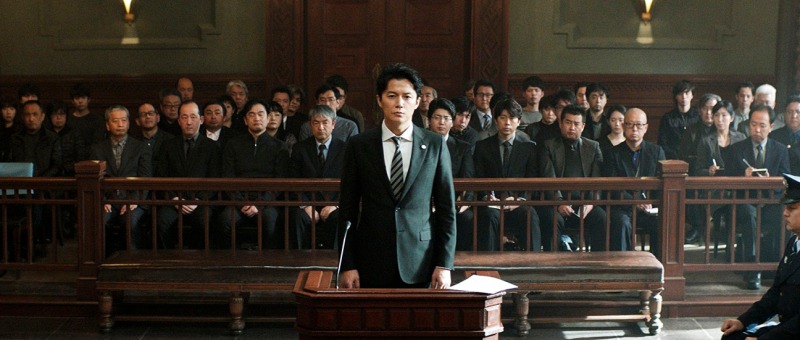
Like Yoji Yamada in Flag in the Mist, The Third Murder (三度目の殺人, Sandome no Satsujin) finds director Hirokazu Koreeda in unfamiliar territory though, at heart, it all comes back to family. A top lawyer, Shigemori (Masaharu Fukuyama), currently in the middle of a divorce, is asked to represent a man who has freely confessed to murder. As the son of the original judge who sentenced the accused, Misumi (Koji Yakusho), to the 30 year sentence he had not long been released from before (allegedly) committing the crime, Shigemori feels a responsibility to act but is frustrated by his client’s constantly shifting story. Nothing he says adds up, and every new angle Shigemori uncovers provokes only more doubt as to the true nature of the case at hand.

Shigemori, somewhat condescendingly, criticises the junior lawyer in the office for his naivety in wanting to to investigate the crime. Understanding and empathy are “unnecessary” in defending a client. The business of a lawyer, on either side, is to assess the evidence at hand, create an argument that withstands scrutiny, and eventually triumph in debating one’s opponent. In the face of the law, the “truth” is an irrelevance.

Shigemori’s cynicism is however rocked by the eerie presence of Misumi who seems to carry with him a kind of deepening emptiness. Misumi has already served 30 years in prison for the murder of two loansharks, the theft of their money, and an act of arson committed on their property to disguise the crime. Shigemori’s father, now a much older man, laments his youthful naivety in handing down a compassionate judgement which took into account the mitigating circumstances – Misumi’s troubled childhood, his poverty, the dire economic situation in which the closure of the local mines had led to mass unemployment and provided fertile ground for unscrupulous money lenders, and a series of personal tragedies which may have unbalanced his mind, but now he thinks some people are just bad and Misumi’s third murder is, in a sense, also his responsibility in allowing him the freedom to commit it.

Yet, there is also a doubt that Misumi’s first crimes are even his. We are told that, like the current case, Misumi couldn’t stick to one story – a common phenomenon with those who confess under duress, saying yes to everything in order to make the questioning stop but later forgetting what exactly they confessed to. Misumi later says he confessed only because he was told that confessing was the only way to avoid the death penalty which, ironically enough, is what he now faces. He also claims he was intimidated by the (admittedly stern) prosecutors, and when it looks as if a new trial may be necessary, the judge opts for the most “judicially economical” solution to incorporate the new demands into the current trial for reasons which the lawyers attribute to his personal need to get the case off his docket in good time so as not to muddy his own reputation. Japan’s 99% conviction rate is less an endorsement of judicial efficiency than a worrying indictment of the legal process in which trials are mere formalities held for show, a pantomime intended to reinforce an idea of “justice” which does not quite exist.

The weight of justice itself is called into question. We learn that the victim was guilty of several crimes, some of them more forgivable than others. Yet is his death “justice” or “murder”, was he “killed” or was the act one of “salvation” for his victims? There are no easy answers and the uncomfortable fact remains that one kind of justice may not necessarily be any different from another. Misumi remains a cypher, his motives for committing the crime(s) (if he even did commit them at all) unclear yet there is also something in him that suggests he is merely a reflection of ourselves, a projection of our own primal need to see justice done that our civil selves have tried and failed to codify into a universally recognised system of fairness known as law. Then again perhaps all we really want is a story we can understand and empathise with, perhaps we don’t want justice at all – we want narrative, a strategy for defence against the cruel and arbitrary charges of an unforgiving world. Shigemori stands at a crossroads, cleansed of his cynicism but unsure what to replace it with, as, perhaps, as we.


Currently on limited release in UK cinemas courtesy of Arrow Academy.

International trailer (English subtitles)

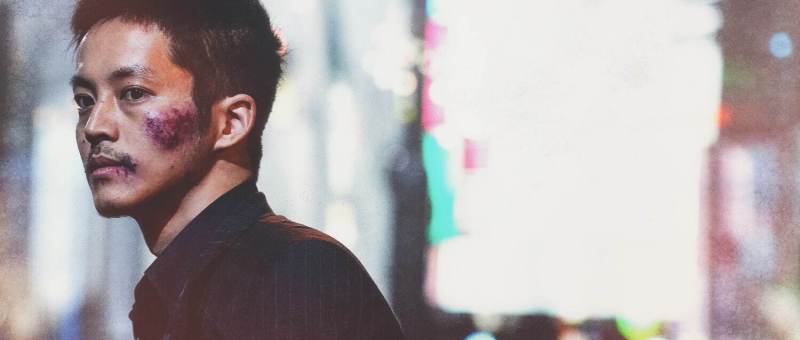
Teiichi: Battle of Supreme High (帝一の國, Akira Nagai, 2017)

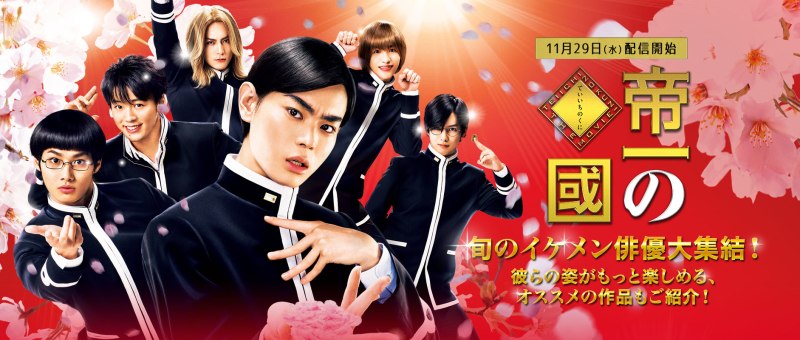
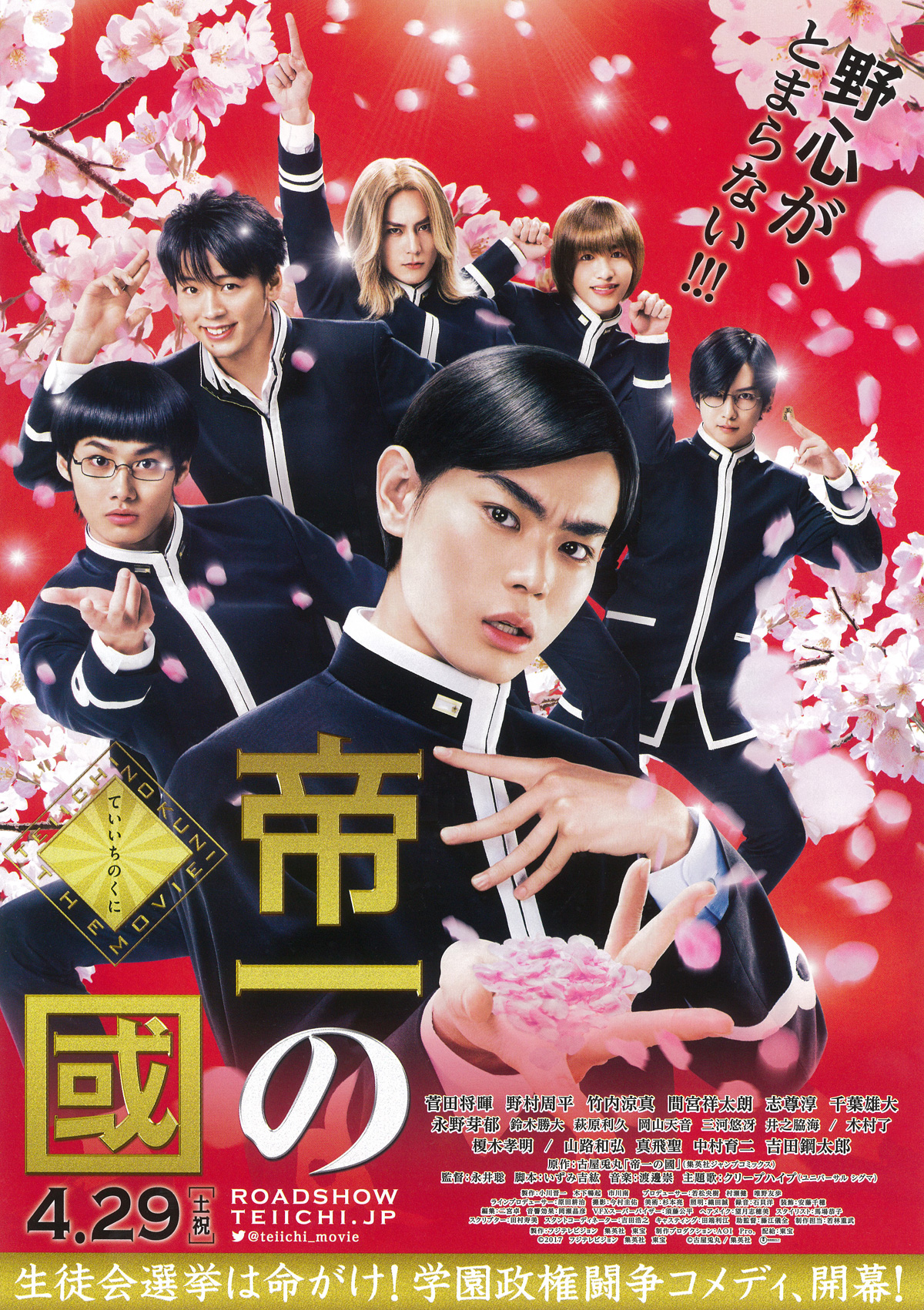
teiichiBack in the real world, politics has never felt so unfunny. This latest slice of unlikely political satire from Japan may feel a little close to home, at least to those of us who hail from nations where it seems perfectly normal that the older men who make up the political elite all attended the same school and fully expected to grow up and walk directly into high office, never needing to worry about anything so ordinary as a career. Taking this idea to its extreme, elite teenager Teiichi is not only determined to take over Japan by becoming its Prime Minister, but to start his very own nation. In Teiichi: Battle of Supreme High (帝一の國, Teiichi no Kuni) teenage flirtations with fascism, homoeroticism, factionalism, extremism – in fact just about every “ism” you can think of (aside from altruism) vie for the top spot among the boys at Supreme High but who, or what, will finally win out in Teiichi’s fledging, mental little nation?
Taking after his mother rather than his austere father, little Teiichi (Masaki Suda) wanted nothing more than to become a top concert pianist. Sadly, his father finds music frivolous and forces his son towards the path he failed to follow in becoming a member of the country’s political elite. Thus Teiichi has found himself at Supreme High where attendance is more or less a guaranteed path to Japan’s political centre. If one wants to be the PM, one needs to become student council president at Supreme High and Teiichi is forging his path early by building alliances with the most likely candidates for this year’s top spot. The contest is evenly split between left and right. Okuto Morizono (Yudai Chiba) – a nerdy, bespectacled shogi champ proposes democratic reforms to the school’s political system which will benefit all but those currently enjoying an unfair advantage. Rorando Himuro (Shotaro Mamiya), by contrast, is the classically alluring hero of the right with his good looks, long blond hair and descent from a long line of previous winners.

Teiichi follows his “natual” inclinations and sides with Rorando but a new challenger threatens to change everything. Dan Otaka (Ryoma Takeuchi) is not your usual Supreme High student. A scholarship boy, Dan comes from a single parent family where he helps out at home taking care of his numerous younger siblings. From another world entirely, Dan is a good natured sort who isn’t particularly interested in politics or in the increasingly tribal atmosphere of Supreme High. What he cares about is his friends and family. Principled, he will do what seems right and just at the expense of the most politically useful.

For all of its posturing and petty fascist satire, there’s something quite refreshing about the way Battle of Supreme High posits genuine niceness as an unlikely victor. Teiichi, a politician through and through, has few real principles and is willing to do or say whatever it takes to play each and every situation for its maximum gain. Finding Morizono’s old fashioned socialism naive and wishy washy, he gravitates towards Rorando’s obviously charismatic cult of personality but Dan’s straightforward goodness eventually starts to scratch away at Teiichi’s attempt to put up a front of amorality.

The fascist overtones, however, run deep from the naval school uniforms to the enthusiastic singing of the school song and highly militarised atmosphere. Played for laughs as it is, the school’s defining characteristic is one of intense homoerotism as pretty boys in shiny uniforms flirt with each other in increasingly over the top ways. Teiichi does have a girlfriend (of sorts) who protects, defends, and comforts him even while able to see through his megalomaniacal posturing to the little boy who just wanted to play piano but he’s not above exploiting the obvious attraction his underling, Komei (Jun Shison), feels for him as part of his grand plan.

Teiichi has its silliness, but its satire is all too convincing as these posh boys vie for the top spots, reliving the petty conflicts of their fathers and grandfathers as they do so. No one one has much of a plan or desire to change the world, this is all a grand game where the winner gets to sit on the throne feeling smug, but then Teiichi’s nimble machinations hopping from one front runner to the next rarely pay off even if he generally manages to keep himself out of the line of fire. Rather than cold and calculating politics, the force most likely to succeed becomes simple sincerity and the unexpected warmth of a “natural” leader.


Teiichi: Battle of Supreme High was screened at the 19th Udine Far East Film Festival.

Original trailer (no subtitles)

Kids Return (キッズ リタ-ン, Takeshi Kitano, 1996)

kids-returnReview of Kitano’s Kids Return first published by UK Anime Network.


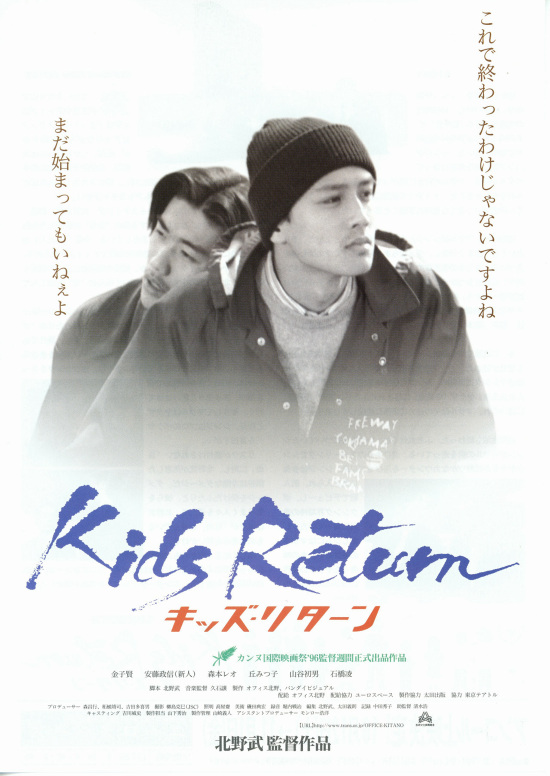
Kids Return (キッズ リタ-ン), completed in 1996, marks Kitano’s return to filmmaking after the serious motorcycle accident which almost claimed his life and has continued to have long term effects both personally and in terms of his career. Once again he remains firmly behind the camera but displays a more contemplative, nostalgic approach than had been present in much of his previous work. The tale of two delinquent slackers in small town Japan, Kids Return has an obvious autobiographical quality and even if the future looks bleak, Shinji (Masanobu Ando) and Masaru (Ken Kaneko), like Kitano himself, are not beaten yet.

Beginning with a sequence of the older Shinji delivering rice and sharing a melancholy reunion with school friend Masaru, Kitano then hops back to their carefree school days of slacking off and intermittently trolling the entire institution. Masaru is the leader of the pair, loud mouthed and violent, always trying to big himself up, while Shinji is the classic sidekick – always following dutifully behind and lost without his friend’s leadership. Their paths diverge when Masaru decides to join a boxing club after someone he’d bullied and extorted money from hires a boxer to get revenge on him. Masaru is hopeless in the ring and lacks the dedication it would take to become a serious althete but Shinji shows promise, eventually knocking Masaru out after being forced into a humiliating duel. Masaru ends up joining the yakuza gang which hangs out in his favourite ramen joint and quickly rises through the ranks. Though both boys look to be going somewhere along their chosen paths, they each squander their given advantages through a series of poor decisions and eventually find themselves right back where they started.

Shinji and Masaru are typical of many young men of their generation and social class. They “go to school” but rarely attend lessons and are often to be found riding their bike around the playground or pranking the other students such as in a particularly elaborate plot where they dangle a stick figure of a teacher down from the roof to the classroom window below, joyfully erecting the “penis” they’ve given it by attaching a torch to the middle section complete with wire brush hair and cotton balls. Such tricks may seem like innocent, juvenile behaviour but a more serious side emerges when an obnoxious teacher’s car is set on fire.

The teachers at the school have already written the boys off as not worth saving. Always referring to them as “the morons”, the school seems reluctant to actually expel the pair and has come to view them as amusing inconveniences more than anything else. None of the teachers is interested in reaching out to Shinji or Masaru and, in fact, they appear to be a cynical bunch with no real interest in the children in their care. At the end of the school year the teachers begin discussing their progress and reveal that only a handful of students will be going to university (and only one to a public, rather than private institution) and that those who are have largely achieved it through their own steam. The education system has nothing to offer these students who have already been judged unworthy of advancement and is in no way interested in providing any kind of pastoral care or social support.

Shinji and Masaru are expected to find their own paths, but the film posits that this idea of total, individual freedom of the modern era is at the root of their problems because it leaves them with too many choices and no clear direction. Failed by education, the pair must find new ways to move forward but the opportunities on offer are not exactly appealing. Masaru, the loud mouth of the pair, ends up on the obvious path of the disaffected young man by joining a gang and finding for himself the familial comradeship of the criminal brotherhood rather than that of a traditional family.

Shinji’s path looks more solid as he begins to train as a serious athlete, honing his skills and perfecting his physique. He is, however, still unable to take control of his own life and repeatedly looks for more dominant male role models to follow. This might have worked out OK for him if he’d stuck with the paternal influence of the coaches, but Shinji is easily led and falls under the influence of an embittered older boxer, Hayashi, who is full of bad advice. Under Hayashi’s tutelage, Shinji learns illegal moves and that he can still drink and eat what he likes because you can just throw it all up again afterwards. When even that doesn’t work, Hayashi begins giving him diet pills which exemplify the quick fix approach he’s taking with his life. Needless to say, his training suffers and his previously promising career is soon on the rocks.

It’s not just the two guys either. Their shy friend with crush on the cafe girl leaves school and gets a good job as a salesman but the aggressive boss makes his working life a misery leading him to take a stand with a colleague and quit to become a taxi driver. No good at that either, he experiences exactly the same treatment and is now unable to earn enough money to support both himself and his wife. In fact, the only success story is the manzai standup comedy duo which Masaru mocked in the beginning. Knowing exactly what they wanted to do and working hard to get there, the pair have built a career and an audience through steadfastly sticking to their guns and refusing to listen to the naysayers. If you have direction, progress is possible, but for Shinji and Masaru who have no strong calling the future is a maze of uncertainties.

The kids have returned, not quite as men but in the first flush of failure, ready to start again. When Shinji asks Masaru if it’s really all over for them already, he tells him not to be silly – it hasn’t even started yet. The town goes on as normal, unchanging, kids goof off lessons and melancholy people waste time over coffee. Perhaps nothing will change for Masaru and Shinji and their aimless days of drifting from one thing to the next, looking for guidance and finding none, will continue but there’s fight in them yet and the possibility remains for them to find their way, as difficult as it may prove to be.


Out now on blu-ray (in the UK) from Third Window Films.

Original trailer (no subtitles)

Shinjuku Swan (新宿スワン, Sion Sono, 2015)

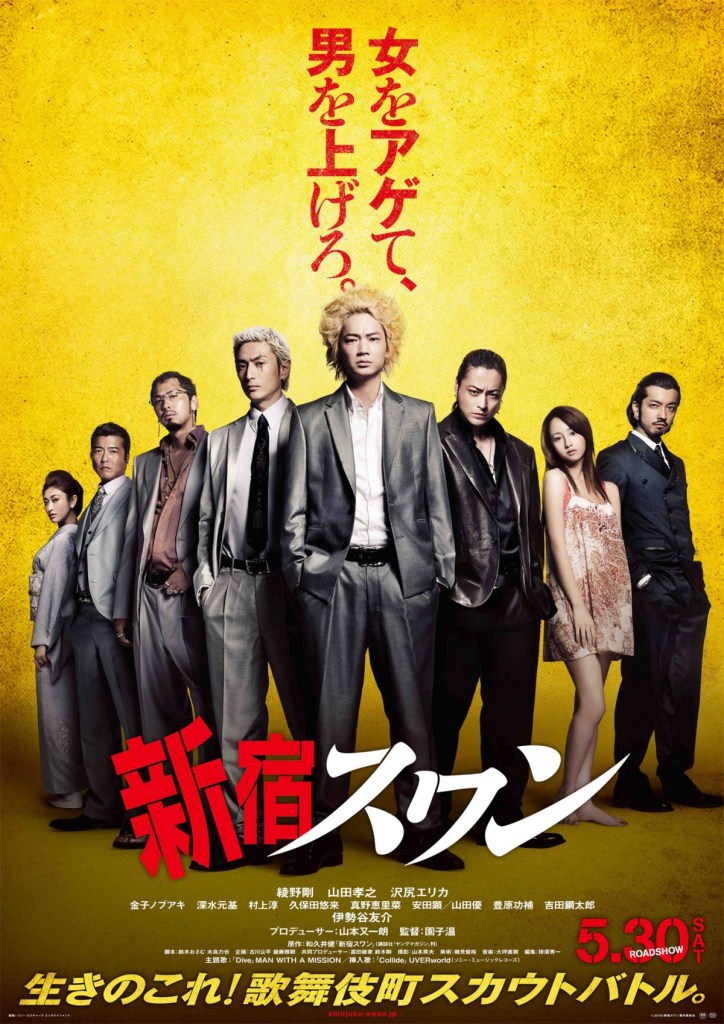
Shinjuku SwanEnfant terrible of the Japanese film industry Sion Sono has always been prolific but recent times have seen him pushing the limits of the possible and giving even Takashi Miike a run for his money in the release stakes. Indeed, Takashi Miike is a handy reference point for Sono’s take on Shinjuku Swan (新宿スワン) – an adaptation of a manga which has previously been brought to the small screen and is also scripted by an independent screenwriter rather than self penned in keeping with the majority of Sono’s directing credits. Oddly, the film shares several cast members with Miike’s Crows Zero movies and even lifts a key aesthetic directly from them. In fact, there are times when Shinjuku Swan feels like an unofficial spin-off to the Crows Zero world with its macho high school era tussling relocated to the seedy underbelly of Kabukicho. Unfortunately, this is somewhat  symptomatic of Sono’s failure, or lack of will, to add anything particularly original to this, it has to be said, unpleasant tale.

Our “hero” is down on his luck loser Tatsuhiko (Go Ayano) who’s come to Shinjuku to make it big. He’s here because it’s the sort of place you can make it happen with no plan and no resources. “Luckily” for him, he runs into low-level gangster Mako (Yusuke Iseya) who spots some kind of potential in him and recruits him as a “scout” for his organisation, Burst. Now dressed in a fancy suit, Tatsuhiko’s new job is stopping pretty girls in the street and trying to talk them into working in the sex industry….

Tatsuhiko is not the brightest and doesn’t quite understand what the implications of his work are. When he finally gets it, he feels conflicted but Mako convinces him that’s it’s OK really with a set of flimsy moral justifications. Before long, Tatsuhiko comes into conflict with a lieutenant, Hideyoshi (Takayuki Yamada), from the rival gang in town, Harlem, and a yakuza style territorial dispute begins to unfold destabilising the entire area.

Sono has often been criticised for latent misogyny and an exploitative approach to his material and Shinjuku Swan is yet more evidence for those who find his output “problematic”. Though based on a manga and scripted by a third party, Shinjuku Swan has an extremely ill-defined take on the sex industry and the people involved with it. After figuring out what happens to the girls he takes to Mako, Tatsuhiko has second thoughts but Mako tells him that the girls are happy and are in this line of work because they enjoy it (leaving out all the stuff about debts, drugs, and violence). So Tatsuhiko vows to make even more girls live happy lives inside the “massage parlours” of Kabukicho.

Noble heart or not, Tatsuhiko is a pimp. Not even that, he’s a middle man pimp. He’s earning his money from the suffering of the women that’s he conned, coerced, and finally exploited. Leaving aside the idea that, yes, some of these women may be perfectly happy with the arrangement, at least one of Tatsuhiko’s recruits displays evidence of previous self harm and is unable to cope with the demands of her new way of life. Another woman, Ageha (Erika Sawajiri), who becomes Tatsuhiko’s primary damsel in distress, escapes into a children’s fairytale picture book in which a prince with crazy hair just like Tatsuhiko’s comes to rescue the heroine from her life of slavery and takes her to a place of love and safety. Tatsuhiko “rescues” her by taking her to a “nicer” brothel…

Tatsuhiko may have convinced himself that he’s somehow a force for good, “helping” these women into employment and providing “protection” for them unlike the other guys from rival gangs who use drugs and violence to keep their girls in line, but his continued belief in his own goodness becomes increasingly hard to swallow as he learns more about how this industry really works. It’s difficult to believe in a “hero” who is so deluded about his own place in the grand scheme of things – he’s not stupid enough to be this oblivious, but not clever enough to be continually unseeing all of the darkness that surrounds the way he makes his living.

All of this is merely background to the central yakuza gang war which later ensues. Tatsuhiko ends up as a pawn in the tussle for territory between Burst and Harlem as double crosses become triple crosses and no one is to be trusted. Predictably, Tatsuhiko and Hideyoshi turn out to have a long standing connection though this revelation never achieves the dramatic weight it’s looking for and the gang war itself is, at best, underwhelming. Notable scenes including a classic battle in the rain could have been spliced in from Crows Zero and no one would have noticed. The main dramatic thread remains Tatsuhiko’s journey as he travels from clueless loser to, admittedly still clueless, assured petty gangster and smooth talking lady killer.

If there’s an overall feeling which imbues Shinjuku Swan, it’s lack of commitment. Though often beautifully photographed and featuring some interestingly composed sequences (including a few Carax-esque musical set pieces) the final effect is one of workman-like competence. Not bad by any means, but this feels like the work of a director for hire and lacks the sense of the personal that a would-be-auteur would usually seek to provide. Moral ambiguity can often be a film’s strong point, inviting comment and debate rather than pushing a pre-defined agenda but Shinjuku Swan takes too many incompatible approaches to the already unpalatable series of questions that it stops short of asking. Distinctly uneven, Shinjuku Swan ends on a note of anti-climax and though a perfectly serviceable, mainstream, commercial effort proves something of a disappointment from a director who has often managed to bring out a sense of mischievous irony in similarly themed work to date.


Unsubtitled trailer: