Undercurrent (夜の河, Kozaburo Yoshimura, 1956)

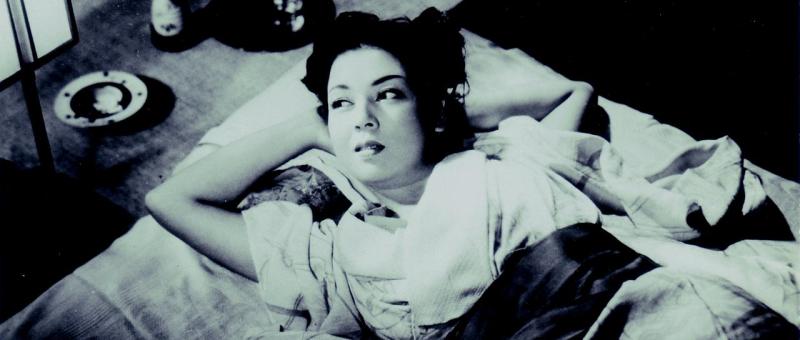
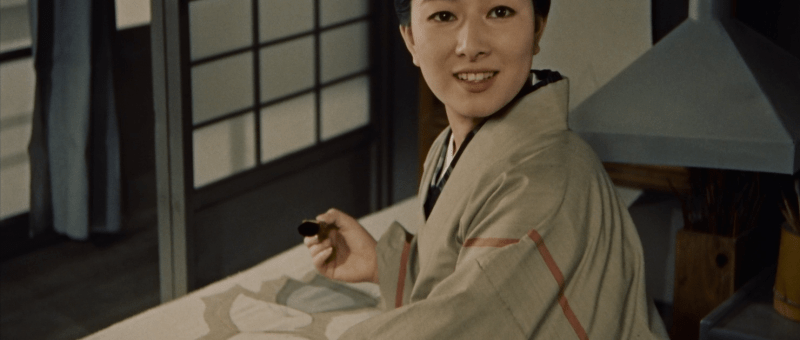
Is it possible to be both married and personally and artistically fulfilled? Marriage hangs over Kiwa (Fujiko Yamamoto) like a looming cage in Kozaburo Yoshimura’s sensuous melodrama Undercurrent (夜の河, Yoru no Kawa, AKA Night River). Scripted not by his regular writer Kaneto Shindo but frequent Mikio Naruse collaborator Sumie Tanaka adapting a novel by Hisao Sawano, the film finds its heroine caught between tradition and modernity while struggling to maintain her position as an independent woman and rightful heir to her father’s kimono dyeing business.

Everyone also keeps telling her that kimono itself is dying out, a relic of a bygone past now that everyone wears Western dress. Even Kiwa’s younger sister Miyoko (Michiko Ono) dresses exclusively in Western fashions and moves to Tokyo on her marriage. An ancient capital, Kyoto is the centre of historical elegance and the last bastion of these “outdated ideals”, yet several shops in their area have closed recently and people do things differently now. A wealthy woman comes to the shop with some fabric directly, cutting out the middlemen and haggling for a discount while cheerfully asking for her cab fare to be covered when Kiwa refuses the job. The young man they’ve taken in as an apprentice, Toshio, leaves to work in an electric factory complaining that “master” and “apprentice” are outdated concepts and that it’s against the Labour Law to force him to work overtime. Kiwa’s father Yujiro (Eijiro Tono), meanwhile, thinks this is just an expression of Toshio’s lack of commitment and that it’s only right that an apprentice should be applying himself to learning his craft every waking moment of the day. 

He was after all once an apprentice himself, but is both proud that his daughter has surpassed him in skill and guilty, fearful that Kiwa has sacrificed her own life and happiness to devote herself to kimono dyeing which is why she has never married. On one level, he’s happy if she’s happy and willing to leave marriage up to her, but also wary of the social censure of the neighbours including his kimono dyeing mentor who gives him a telling-off for his failure as a father to find a match for his daughter. When rumours arise that Kiwa has entered an affair with a married professor, the lady who helped Yujiro get started in business more or less tells him he should get her married to keep her in line. If hadn’t been for the war, she says, Kiwa would have been safely married off long ago and would probably have a gaggle of children to look after which would obviously prevent her from pursuing her art as a kimono dyer though the lady herself has obviously gone on working. 

Kiwa is drawn Takemura (Ken Uehara ) firstly because he’s wearing a tie that features one of her signature dyes which implies some kind of affinity between them. That the fact that he was touring a Nara temple alone with his daughter may have suggested he was a widower, though in truth Kiwa always knew he was married and that may have been a key part of what attracted her to him. She is after all, as Yujiro’s mentor said, a woman and experiences romantic desire even if the mentor is wrong to say that Kiwa sublimates her loneliness through art when in reality the reverse is true. After meeting Takemura even Yujiro remarks that she seems more like a woman, implying that her industry and forthrightness lend her a masculine quality as does her determination to get on in business. She first strikes up a business relationship with the sleazy Omiya (Eitaro Ozawa) whose wife is always watching him like a hawk though she manages to rebuff his attentions while establishing herself as business woman and in demand kimono designer. In pursuit of Takemura she is the one bringing him gifts and inviting him out for walks while Takemura remains somewhat conflicted and pulled along her wake.

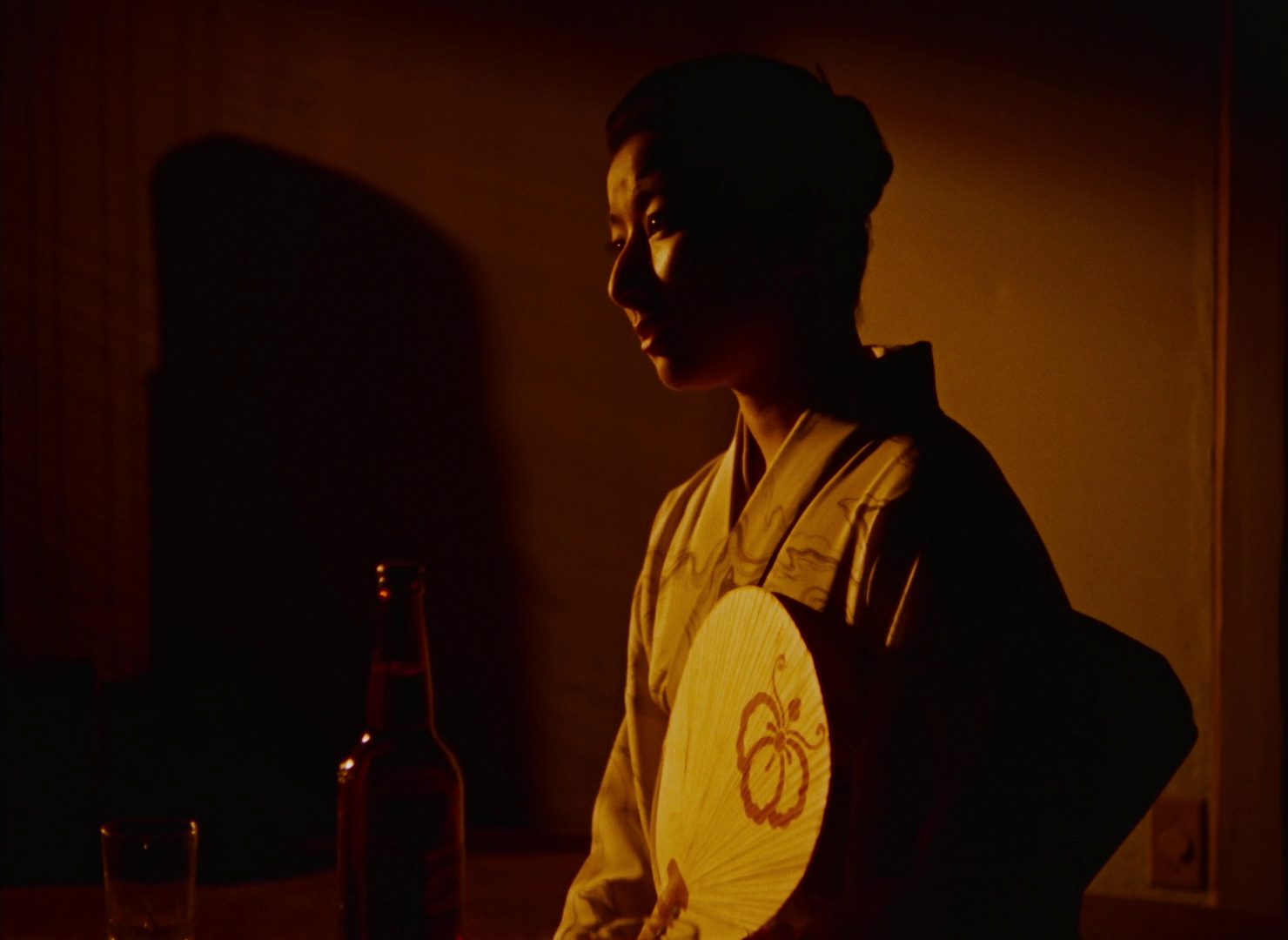
Yet for all that, none of her family members really question the fact that she’s been carrying on with a married man and rather seem slightly relieved that she’s discovered an interest in romance or perhaps just anything outside of kimono dyeing. Even Takemura’s daughter suspects they’re romantically involved and doesn’t seem to mind. Yujiro remarks on Kiwa suddenly using the colour red which she never previously liked and it does seem to echo her reawakening passion. Takemura is also researching red fruit flies, which is less romantic, but also hints his barely suppressed longing. The film seems to align him with yellow flowers and Kiwa with pink. When they’re caught in a rainstorm and refuge in an inn owned by Kiwa’s childhood friend, the entire room in bathed in the glow of the Daimonji fire festival as their passions finally, and perhaps unwisely, overtake them as Takemura announces he’s thinking of moving far away perhaps to avoid this forbidden romance or otherwise for the health of his ailing wife who has been a Kyoto hospital for the last two years.

It’s finding out about Mrs Takemura’s likely terminal illness that seems to implode Kiwa’s romantic fantasy. After they’d made love for the first time, she had told Takemura that if she became pregnant she’d raise the child alone without intruding on his family life, which is to say she wasn’t really envisaging one with him. Her horror is on one level framed as guilt, that she now sees she’s committed an act of betrayal and resents Takemura when he tells her “it won’t be much longer” as if he were counting down the days until his wife passed away. Or worse, that he or others suspected that Kiwa willed her dead. But in reality the reverse is true. Mrs Takemura’s death is an existential threat to Kiwa’s independence. She doesn’t want to get married, even if loves Takemura, because if she did she wouldn’t be able to maintain her independence or career as a kimono dyer. She really does mean it when she says that likes it best when it’s just she and her father in their “cramped” old-fashioned dyeing shop without even an apprentice. 

A tortured art student who seems to pine for her tells her as much, disappointed in her for her relationship with Takemura not out of moral censure but because he fears she’s betraying her art. Okamoto is much younger than her and she’s not interested in him romantically even if he’s painting slightly lewd interpretations of his mental image of her. At one point he appears with a bandage around his neck that implies he may have tried to take his own life and eventually announces he’s leaving Kyoto because he can’t secure his identity there. Ironically he’s happy that Kiwa and Takemura are now free to love each other when the opposite is now true. Now that he’s no longer a married man, Kiwa can no longer love him and is denied the possibility of having both romantic and artistic fulfilment. She is perhaps free in another way, backed by a deep red cloth hanging up to dry as she watches the May Day parade pass by with all of its waving red flags having embarked on a life that is defiantly of her choosing and fulfilled by the passion of art.


Trailer (no subtitles)
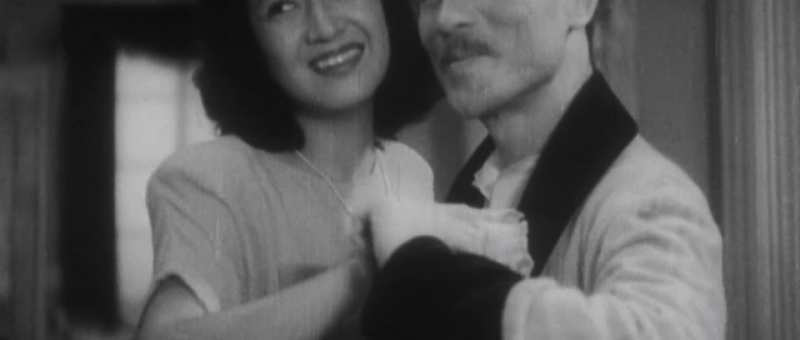
The Ball at the Anjo House (安城家の舞踏会, Kozaburo Yoshimura, 1947)

“Old things die out so new things can be born,” according to the ruined patriarch of a once noble house in Kozaburo Yoshimura’s Chekhovian drama Ball at the Anjo House (安城家の舞踏会, Anjo-ke no butokai), though he might as well be speaking to the post-war society. The Anjos are like the declining aristocracy of the earlier 20th century mourning the disappearance of their world of privilege and gaiety and reflecting that they too must now, as younger daughter Atsuko (Setsuko Hara) says, learn to serve others.

Atsuko is really the only one who accepts the age of the aristocracy has passed and that it is only right and proper that they should join this newly egalitarian, democratic society. Her sister Akiko (Yumeko Aizome) has recently returned home after 12 years having left her husband because of his adultery, but cannot now face it that she no longer has a place here. Approached by their former chauffeur Toyama (Takashi Kanda) who has long carried a torch for her, Akiko snaps that she will always be a noblewoman in heart, unable to let go of outdated customs of class and propriety. She seems to have feelings for the chauffeur too, but won’t let herself embrace them, calling him “dirty” and resenting herself for her attraction to a man who is not her social equal. 

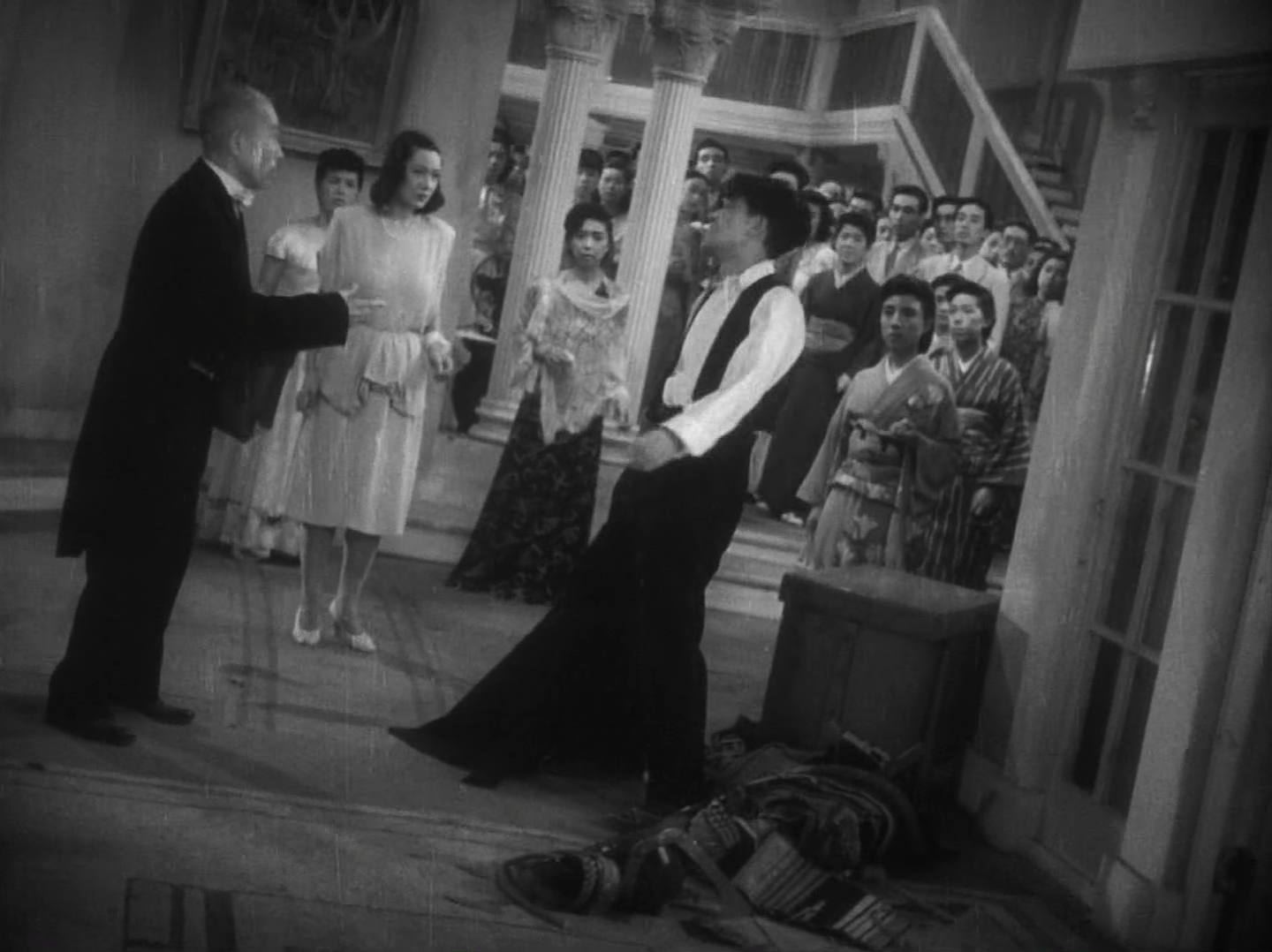
But times are very different now and the aristocracy has been abolished which has in all other senses dissolved the class barrier between them. The tables have turned and Toyama is now a wealthy man having done well for himself in business through honest hard work. Akiko asks him for help as a kind of symbolic gesture as if she were making recompense by handing the house to its rightful owner in their former servant. He insensitively tells patriarch Tadahiko (Osamu Takizawa) that he can easily spare a few thousand to throw away on the house as a sentimental gesture, but does so largely without malice. Only after Akiko has turned him down at the ball and he begins to drink does he start to crow, if a little sadly, that now this base and ugly servant has bought the master’s house. On his way out, he knocks over the suit of armour that had stood in the hall as if literally bringing down the feudalistic military legacy of this once great family and sending it crashing to the floor. The camera suddenly tilts to emphasise that this world is now out of kilter and has been destabilised beyond repair. It’s only this action that frees Akiko from her self-imposed repression as she skips over the armour and chases Toyama out the door. Tumbling down a sand dune she literally descends to his level leaving her pearls and shoes behind. 

The class barrier has been fully dissolved, and Tadahiko too permits himself to marry his long-term mistress, the geisha Chiyo (Chieko Murata), who declares that she doesn’t care about his loss of status and invites him to live with her if he has to sell his house. But it seems as if Tadahiko can’t let go of his ancestral legacy nor his childhood home. In truth, this Western-style country house by the sea can only have been built after the Meiji Restoration which means it’s under a hundred years old and most likely built by Tadahiko’s father, the gentleman in European-style military dress in the portrait. As such, it was likely constructed to look forward to a new era as the samurai class rebranded itself into a European-style aristocracy. Tadahiko’s older sister, married to a lord who’s faring better in this new world, tells an enraptured collection of younger women of the time she danced with a prince a year after the Russo-Japanese war when she was only 19. But this will be the last ball at the Anjo House, in memory of a “beautiful way of life” that has been now been eclipsed.  

Tadahiko had faith that they would be saved essentially through the good chap system in his relationship with a nouveau riche upstart named Shinkawa (Masao Shimizu). Shinkawa holds the mortgage on the house, and there are all sorts of rumours about his shady business. He made most of his money on the black market. Shinkawa had arranged a marriage between his daughter Yoko (Keiko Tsushima) and Tadahiko’s son Masahiko, which gave him even more confidence. But as Atsuko says, Shinkawa was only friendly with him because of his aristocratic title and now it’s gone he has nothing to offer. In marrying Yoko to Masahiko (Masayuki Mori), Shinkawa would have gained the legitimacy of a connection with nobility while Tadahiko would have gained an injection of cash that would save his social status. But none of that matters any more now that the aristocracy has been abolished under the post-war reforms that have also seen Tadahiko’s lands confiscated and estate broken up. It seems that Tadahiko let Shinkawa use his name for a munitions factory during the war, which might not play so well now, just as Akiko’s decision to part with her adulterous husband may also have been influenced by the fact that he was a general who is presumably little in demand in the wake of defeat. Still, Tadahiko prefers Shinkawa to letting the house go to a former servant like Toyama who must himself be enamoured enough with that old world to want to become master of it rather than tear it down.

For Masahiko’s part, he has little interest in marrying Yoko but on learning the engagement has been unilaterally called off and Shinkawa is little more than crook decides to rape Yoko to get back at him. His cruelty is a symptom of post-war nihilism, and we soon discover he’s been sleeping with a maid, Kiku (Akemi Sora), to whom he made promises of marriage he had no intention of keeping. But Like Akiko it seems as if he does care for her after all, only he won’t let himself feel anything in the numbness of his loss of privilege preferring instead to laugh too loudly with his boorish friends. Only on seeing the class barrier dissolve when his father marries Chiyo and his sister Akiko takes off after Toyama does he allow himself to embrace Kiku and express genuine emotion.

Masahiko is played by a young Masayuki Mori who was the son of the novelist Takeo Arishima. Arishima was also a member of the aristocracy but one who became a socialist and dissolved his estate which was something of a fashion in the 1920s. The situation is however complicated by the fact that the Anjos’ servants remain loyal and don’t want to leave them. After all, this is as much their home too and they don’t have anywhere to go either because a world with no masters has no need for servants. We too are encouraged to mourn this world, but its end is also presented as a kind of liberation in which the family are finally permitted to embrace their own desires only after casting off the shackles of the aristocracy and preparing to forge new futures in a changing world leaving the feudal past behind and waltzing into a new and brighter future.


An Osaka Story (大阪物語, Kozaburo Yoshimura, 1957)

A man who tries to escape his poverty ends up imprisoning himself in Kozaburo Yoshimura’s tragicomedy An Osaka Story (大阪物語, Osaka Monogatari). Inspired by the work of Saikaku Ihara, Kenji Mizoguchi had intended to direct but sadly passed away before shooting started with Yoshimura appointed to take over. The broadly comic overtones may be at odds with Mizoguchi’s signature style but ultimately lend weight to the film’s ironic conclusion in which the hero finds himself essentially oppressed by his own wealth in being entirely unable to relate to other people or see the world in ways undefined by money. 

It may be possible to understand Omiya’s (Ganjiro Nakamura) mania as a reflection of his intense fear of poverty, that he is so terrified of possible destitution that he can never really have enough or allow himself to enjoy what he has in case there is no more to come in the future. Even as so his daughter later says, wealth changes him. As the film opens, Omiya is a peasant farmer with a bad harvest who can’t pay the onerous taxes demanded by his exploitative lord. He decides to flee to Osaka with his family but is soon rebuffed by the man he’s gone to see who has just become a samurai and wants nothing to do with him. Wandering around the city, the kids eventually discover a thin layer of discarded rice at a storage area they manage to sweep up giving Omiya a new idea of how to save their family. 

In some ways, his fate is foreshadowed when he alone is unable to slip through the fence while his wife and children mop up grains from the floor. The image of him on one side of the bars is repeated in the closing scene, while his loyalty to the family he tried so hard to save is weakened by the influence of money. Yoshimura shows us a world founded on exploitation. “Those who worked so hard to grow it won’t see a single grain,” Omiya bitterly laments watching workmen unload vast quantities of rice while the peasants starve. When the rest of the family have finished sweeping up what others so casually discarded, Omiya does not use the rice to feed them but sells it to a broker and gives them millet instead. His life is then ruled by the doctrine of good enough, living in painful, penny-pinching austerity even after becoming wealthy as a dodgy tea merchant/loan shark. 

Omiya is one of those people who know the price of everything but the value of nothing. Back at their farm, he’d firmly rejected his wife’s offer to sell herself into sex work to save the family, asking “How could I carry on happily knowing you were suffering for it?”, but this is exactly what he proceeds to do. Omiya no longer cares about his family’s feelings and thinks only abut money but simultaneously refuses to spend any of it. One has to wonder what the point of the money is when he’s living a life not all that different from a peasant farmer save being free of the anxiety of immediate starvation. The only person he has any kind of respect for is a widow much like himself who is equally obsessed with penny-pinching and maximising profits. 

The pair bond in their parsimonious natures, but the mutual desire to get a good deal necessarily comes between them especially when Omiya decides to marry off his daughter (Kyoko Kagawa) to Mrs. Abumiya’s foppish playboy son Ichinosuke (Shintaro Katsu) who has been secretly spending money in the red light district without her knowledge. He too is being exploited, in his case by a geisha who manipulates him into getting the money to buy out her contract by threatening suicide. Meanwhile, Omiya’s meanness means he’s never actually taught his son much about handling money. His invitation to the pleasure quarters by Innosuke eventually provokes his rebellion as he starts to question his father’s philosophy and what money is for if you still can’t live a comfortable life. 

HIs daughter Onatsu asks him something similar, pleading with him to learn to understand other people’s feelings before leaving the shop to be with a kindhearted clerk, Chunzaburo (Raizo Ichikawa), with whom she has fallen in love. So little does he care for people that Omiya doesn’t even bother to live up to the image of a wealthy man. The man who turned him away after becoming a samurai eventually racks up large debts and loses his title allowing Omiya to buy his house as an act of revenge despite his wife and daughter’s protestations that they already have “enough” and did not need more. He refuses contracts the previous owners had set up, throws out a hairdresser who comes to give the ladies a more class-appropriate haircut, and refuses a loan to the daimyo in incredibly rude fashion not to mention embarrassing just about everyone by refusing to serve any food at a wake. 

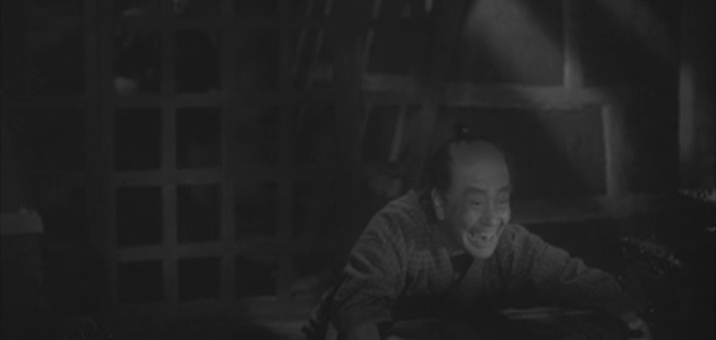
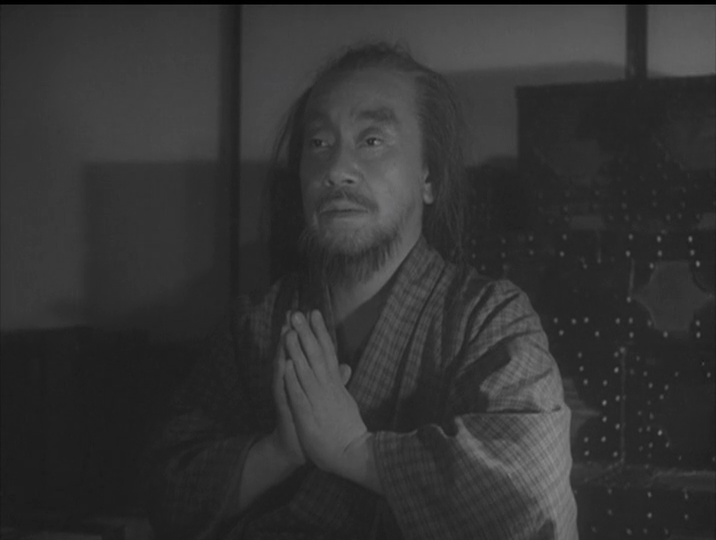
After ruining all of his personal relationships (except that with Mrs. Abumiya), Omiya experiences a kind of mental breakdown throwing himself over the chests of money in his vault and locking himself inside raving that everyone’s out to get their hands on his wealth. He’s just as much of a prisoner of this system as he was as a peasant farmer and has now imprisoned himself within a destructive delusion of capitalistic wealth. “Do what you have to do for a comfortable life,” Omiya’s son Kichitaro (Narutoshi Hayashi) had advised his sister, but this is what Omiya was trying to do too only for it massively backfire no matter what your personal definition of a “comfortable life” may be. Mrs. Abumiya tearfully wonders who’s going to inherit her money if not for her feckless son, but all Omiya can do is cackle wildly one like one possessed insisting that the money is his and his alone and not even death shall part him from it. In part a humorous take down of the contemporary society’s economic obsessions in a bid for ceaseless acquisition, the film is also a tragic tale of a man laid low by his addiction to money and the illusionary sense of comfort it provides him. 


The Beauty and the Dragon (美女と怪龍, Kozaburo Yoshimura, 1955)

A clever princess takes advantage of a courtly crisis to save the kingdom and arrange her own marriage in Kozaburo Yoshimura’s adaptation of the well-known kabuki play Narukami, The Beauty and the Dragon (美女と怪龍, Kabuki Juhachiban: Narukami – Bijo to Kairyu), produced in celebration of the 25th anniversary of the Zenshinza kabuki troupe and starring many of its actors. Scripted by Kaneto Shindo, the film mines a deep seam of irony in the classic tale while allowing its heroine to take centre stage outwitting most of the feckless men from the palace with some clever manoeuvring and utilising the key asset of her femininity.

In a meta touch, Yoshimura opens in a kabuki hall where young lord Toyohide (Chiyonosuke Azuma) is called to perform a dance for the regent, Mototsune, only the show is soon interrupted by a procession of peasants who’ve come to protest the ongoing drought. The earth is cracked and the rivers run dry, but still they are told that they will be informed about the outcome of their petition at a later date. The peasants clearly believe that the emperor really is a god and expect him to fix this problem as soon as possible but in private Motosune is irritated if perhaps accurate in stating that the weather is not their responsibility and they can’t seriously be expected to deal with it. Annoyed by the noise of the protests around the palace, he orders that the peasants be sent away though his courtiers are more sympathetic and know that the peasants simply have no one else to turn to for help. If something isn’t done they will have no choice but to escalate their rebellion.

But as it turns out, the problem actually is their responsibility and is rooted in the misogynicistc patriarchy of the feudal world along with a dose of courtly intrigue. When shinto priest Narukami (Chojuro Kawarasaki) was consulted about the birth of a royal child and prophesied that it would be female, he was hired to alter its destiny and miraculously changed its sex to male through the power of prayer. In return, he was promised that a shrine would be built for him but now it’s 30 years later and he’s sick of waiting. Accordingly, he’s taken the Dragon God who brings the rains hostage and refuses to release him so the rain can return until he gets what he was promised. 

It seems that Mototsune has a very bad habit of promising people whatever their heart desires but conveniently forgetting about it once the job is done. This time though the problem is that disgraced prince Hayakumo (Kunitaro Kawarazaki) stopped the building of the shrine in fear of offending a rival temple, Ezian, which contains a large number of very intimidating bandit monks. Hayakumo is intent on using the courtly chaos to improve his own position, hoping that other lords will fall from favour leaving a space for him to fill. He’s also been obsessively courting princess Taema (Nobuko Otowa) who refuses him because he’s so obviously oily, and in any case she’s in love with Toyohide but can’t marry him seeing as he is already betrothed to another woman whom he does not care for. In a bizarre twist of fate, a scholar insists that the only way to break Narukami’s magic is by learning to read a scroll that once belonged to Taema’s grandfather so they charge her with deciphering it offering to give her whatever her heart desires if she ends the drought which is of course Toyohide’s hand in marriage. 

The ironic thing is that Taema doesn’t for a second believe that reading the scroll will make any difference to anything and quite clearly thinks the scholar they brought in who said it would is a charlatan who actively looks down on her. Yet she, like everyone else, does in fact believe that the cause of the drought is the Dragon God’s imprisonment and Narukami’s dark magic. Advised by her trusty maid, she learns to see opportunity in what could otherwise be a dangerous situation and ably out manoeuvres the foolish men at the court. She wields her femininity, the reason they discount her, as a weapon against the repressed masculinity of Narukami who is said to have been a monk since childhood and has never touched a woman. 

After getting her maid to do a sexy dance for his underlings so that they get drunk and pass out, she then sells Narukami a tragic love story pretending that she simply wants to wash some clothes that belonged to her late husband. Essentially she seduces him, but also targets his weakness in his repressed desires as a monk causing him to transgress his vows and in effect break his own magic by destroying his powers. On seeing her bared ankles he faints, and then ends up telling her how to break the curse after becoming drunk and randomly assuming they are now married. 

As she’d somewhat dangerously told Toyohide, the real problem is that the Regent is weak. Indifferent to the fates of his people and in any case an ineffective leader, he invites intrigue in the court. Yet court itself is weak precisely because it is rooted in patriarchy and defined by male weakness. Even Taema’s beloved Toyohide is preening and jealous, suddenly irritated to discover that Hayakumo had been courting her while later suspicious that she will be alone with Narukami. He was also denied romantic freedom in an inability to escape the marriage arranged for him by his father at three and reliant on Taema finding a way for them subvert the feudal order and be together. The play in fact ends with the rage of a scorned man as the aptly named Narukami is transformed into the god of thunder and vows vengeance against the woman who humiliated him. 

Taema, by contrast, is able to seize control ridding herself of Hayakumo while securing her marriage to a man she choses (the betrothed bride is herself similarly freed and appears not to mind the dissolution of her engagement having had no particular feelings for Toyohide, a man she barely knew) in addition to saving the kingdom along with the lives of peasants by unleashing the Dragon God. Having begun in the theatre, Yoshimura soon moves out to the court and then the country but eventually cycles back for the climactic dance of anger with which the film closes as if echoing a howl of pain from the wounded feudal era circumvented, if not ended, by a clever woman leveraging her only sources of power in a world defined by corrupted male authority. 


The Fellows Who Ate the Elephant (象を喰つた連中, Kozaburo Yoshimura, 1947)

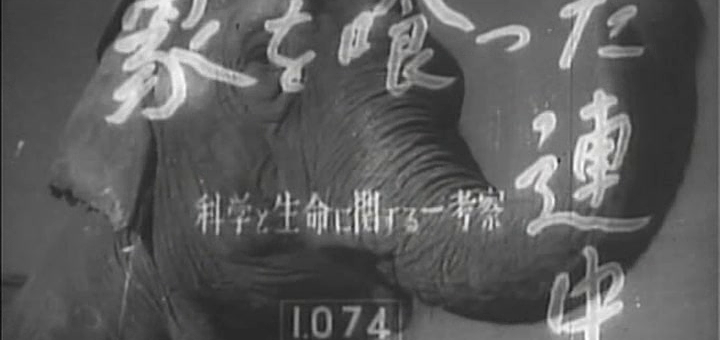
The Japan of 1947 was one still very much caught up in post-war chaos. In the cities, most particularly, hunger was a major problem. The Fellows Who Ate the Elephant (象を喰つた連中, Zo wo Kutta Renchu) may have a title that strongly recalls the screwball comedies of the ’30s, but is less slapstick comedy than dark satire in its central premise that a bunch of idiot mad scientists might actually eat a deceased elephant in extreme dedication to “mottainai” waste not want not philosophy coupled with the justification that all is permissible in the name of science. 

The elephant is, apparently, the last in Japan and was the childhood friend of zookeeper Yamashita (Chishu Ryu) who brought him all the way over the mountains from Thailand after the war. “Shiro-chan” is very ill with some kind of elephant cold but for some reason the doctors the zoo uses aren’t vets specialising in large, exotic animals but virologists. While they stand around apparently mystified, Yamashita enquires after the professor he usually deals with but is told that, despite being over 60 years of age, he’s currently away on honeymoon after marrying a very young and extremely beautiful woman. Sadly, Shiro doesn’t make it. The professor is saddened to learn of the death from the paper and wonders if it might have been a virus similar to one which attacks hoofed animals like donkeys and horses but is not usually found in Japan (Shiro is Thai after all). 

This is relevant because the disease is fatal and contagious but does not usually pass to humans and is only a risk if you come into direct contact with it, like say if you eat meat from an infected animal. No one would eat an elephant though so there’s nothing to worry about. Enter extremely unpleasant mad scientist Wada (Shinichi Himori) who decides that science dictates they must find out if it’s sanitary to eat elephant meat. Though Wada ropes in fellow scientist Baba (Yasumi Hara) with his scientific justifications, he tricks the other two into eating some without telling them what it is. Unforgivably, he even gives some to Yamashita and seems to get a kick out of feeding him his own childhood friend when Yamashita had only come on instruction from his boss to apologise for being over emotional the day before. Yamashita leaves feeling sick after Wada tells him what he was eating for additional effect, but his wife (Chiyoko Fumiya) later remembers a story he told her about fellow elephant drivers in Thailand who ate some elephant meat from an infected animal and were dead within 30 hours. 

After hearing Yamashita’s concerns, the scientists begin investigating and indeed find cases of people dying after eating contaminated meat. The only cure is the serum they use to treat the horse infection the professor mentioned, but it seems nowhere has any in stock (the disease is rare in Japan after all). The idiot scientists come to the conclusion they will die in exactly 30 hours’ time and decide to put their affairs in order rather than consult an actual doctor who might be able to help them. This mostly involves trying to explain their foolishness to their wives. Watanabe (Takashi Kanda) is a father of three with another child on the way. He regrets that he hasn’t been present enough in his family life and has failed to adequately provide for his wife who he will shortly be leaving to raise four children alone. Nomura (Toru Abe) meanwhile is an uxorious newlywed constantly worried that his wife (Kyoko Asagiri), who already dislikes Wada for being a bad influence on her husband, will not be able to bear the anxiety of knowing he may soon die. Baba who has only his parents retreats back to his old country home to apologise for not being a better son. 

Wada, meanwhile, moans about everyone else’s understandable desires to comfort their wives and families. He criticises Yamashita for trying to excuse himself because he’d rather go home and have dinner with his wife, while mocking Nomura for being a henpecked husband. This might partly be because he has no wife or family of his own and is currently chasing after Tomie (Akemi Sora), a maid at his boarding house, who seems pretty indifferent or even hostile to his attentions, joking that she’d celebrate on hearing of his demise. She eventually agrees to go out with him, but only if he really dies. Other than the wives, no-one quite believes the guys’ bizarre story. Baba’s parents even try to stop him going back to Tokyo when a potential cure is located in case he goes “even more mad”. 

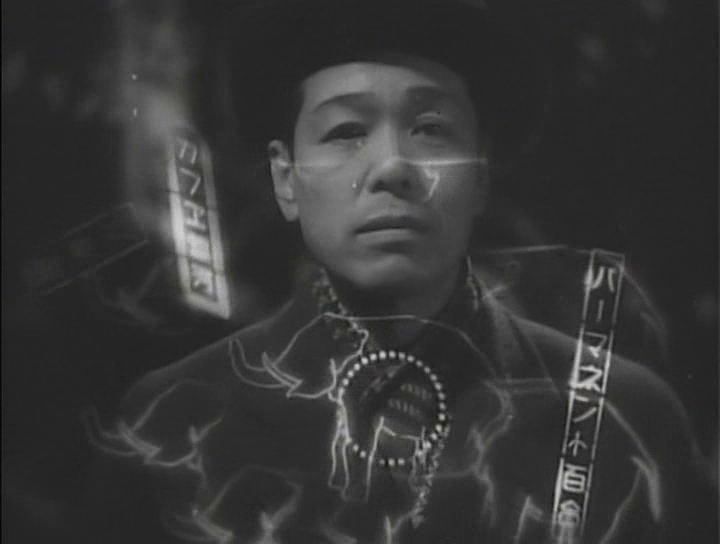
In these trying times, the idea that someone might try to eat a dead elephant is perhaps not quite as ridiculous as it might first seem. The act of trying it, however, also plays into the constant critiques of bad or irresponsible science which are a mainstay of films in the immediate post-war era. Wada knows that he can and so he doesn’t bother to think about if he should, spinning tales of Jenner and Koch as if they’re about to make some grand lifesaving discovery. His brush with death does at least begin to humble him as he finally accepts responsibility for the unexpected consequences of his cruel prank, realising that as a man with no wife or family it should perhaps be him if anyone is going to have to make a sacrifice. Finally someone manages to get through to the professor on the phone who tells them they’re all very stupid and haven’t thought of something perfectly obvious that makes all their panicking completely pointless, but at least the surreal 30-hour near death experience has brought out a warmer side of Wada and given a few irresponsible scientists a quick lesson in social responsibility. 


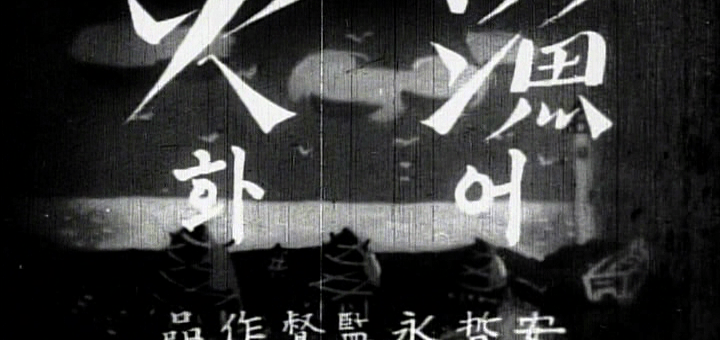
Fisherman’s Fire (漁火 / 어화, Ahn Cheol-young, 1939)

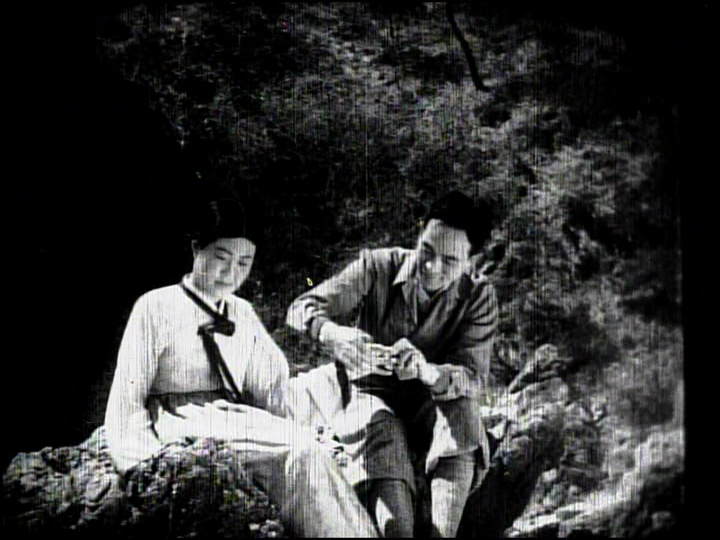
vlcsnap-2019-02-18-01h49m56s589Late into the colonial era, Korean Cinema became heavily invested in selling the “one nation” idea. Signs of “Koreanness” such as language, dress, and customs were actively discouraged if not directly suppressed while censorship regulations prevented any negative comment on the Japanese empire. Back in Japan, however, there was an appetite for an exoticised view of the colonial landscape which in part played into the idea of Korea as a “backward” land in need of Japanese sophistication. 1939’s Fisherman’s Fire (漁火 / 어화, Eohwa) was directed in Korea by Ahn Cheol-young as a collaborative project between the studio he had co-founded, Keuk-gang Film Company, and the well established Japanese studio Shochiku where it is was “supervised” by Yasujiro Shimazu who prepared the film for Japanese audiences.

Like many Japanese films of the 1930s, Fisherman’s Fire revolves round a young woman from the country who is mis-sold dreams of freedom and urban sophistication only to be misused and betrayed by unscrupulous men. In-soon (Park Rho-kyeong), a fisherman’s daughter, is in love with local boy Chun-seok (Park Hak) but her family is poor and her father has taken on a huge debt from the local lord, Mr. Jang. In-soon longs to follow her friend Ok-boon (Jeon Hyo-bong) to Seoul where she might be able to earn money to help repay the debt but her family aren’t keen for her to go and even though Ok-boon has apparently been able to make an honest life for herself other girls gossip about those who went to the city with big dreams but ended up pressed into sex work.

When her father is lost at sea in a storm, Mr. Jang pressures In-soon’s mother to give him In-soon as a concubine in exchange for the debt. Horrified, In-soon doesn’t know what to do but is unexpectedly saved by Jang’s son Cheol-soo (Na Woong) who gives her mother the money to cancel the arrangement. In-soon ends up going to Seoul, where she has arranged to meet Ok-boon, with Cheol-soo but when she gets there discovers that he has ulterior motives. He traps her in his apartment for 10 days while claiming he has been unable to contact Ok-boon, eventually taking advantage of her before she is able to (temporarily) escape.

In-soon’s sorry tale is one familiar from Japanese cinema of the 1930s – that of a young woman who has been betrayed by an inconsistent level of modernity from which she receives only the dangers and none of the benefits. Then again, her village home was not so innocent – she was after all about to be sold as a concubine to a lecherous old man, meaning that this isn’t simply tale of the pastoral innocence versus urban sophistication. As we discover, Ok-boon found herself in a similar situation to In-soon but was able to escape it and not only that, she has also become “financially independent” which is what she encourages In-soon to become as the only way of freeing herself from the clutches of cads like Cheol-soo who press their patriarchal privileges in order to take advantage of naive girls like In-soon who haven’t been made aware they have the power to refuse.

Unlike the heroine of Sweet Dream whose desires of leading a more fulfilling life eventually lead to nothing but a dead end, In-soon is in a sense allowed to leave her disappointments behind in the city and, as Ok-boon surprisingly advises her, forget about what happened with Cheol-soo and live her life. Traumatised and shamed by her experience, In-soon eventually ends up in sex work, attempting suicide when confronted by a leering Cheol-soo, but discovers that her friends and family have not changed their opinion of her and though she may be looking at it with new eyes, her village is still as beautiful as it has always been.

The village’s visual beauty is, in a sense, the point in that the film was quite obviously made to showcase the idyllic country landscapes of the colonial territories along with the charming local customs which is perhaps why the film is bookended with documentary-style scenes of the fishing community singing and dancing to folksongs as well as including minor details like a shrine visit. Indeed, some Japanese critics felt the film had “failed” in its aims precisely because of In-soon’s eventual journey to the city which loses the feeling of local flavour they regarded as its selling point. What the Japanese audience craved was an exoticised vision of ultra-Koreanness that was in fact entirely created in Japan – something many felt the film did not sufficiently offer which is why it did not prove popular with audiences or critics. Supervised and prepared in Japan for Japanese audiences by Shochiku’s Yasujiro Shimazu, edited by Kozaburo Yoshimura, featuring music by the Ofuna Orchestra (repurposing a traditional Korean tune), and utilising a narrative familiar from domestic films, Fisherman’s Fire is an attempt to sell a manufactured vision of Korea as charmingly unsophisticated and rooted within the romantic pastoral past.

Nevertheless, it has its surprising elements such as the startlingly progressive Ok-boon whose independent city life is praised rather than criticised even if In-soon eventually retreats back to her idyllic village home. Cheol-soo, the feckless landlord’s son, gets a comeuppance for his wicked ways in being fired from his job for unreliability and incompetence which stands in for a kind of karmic punishment for his cavalier misuse of In-soon and other women like her in his attempt to assert his feudal entitlement in the improper environment of the modern city. Unlike the conservative Sweet Dream, Fisherman’s Fire finds scope and possibility for the young women of a new society and is prepared to be forgiving of them even when they fail.


Fisherman’s Fire was screened as part of the Early Korean Cinema: Lost Films from the Japanese Colonial Period season currently running at BFI Southbank. It is also available as part of the Korean Film Archive’s The Past Unearthed: the Second Encounter Collection of Chosun Films in the 1930s box set. Not currently available to stream online.

Clothes of Deception (偽れる盛装, Kozaburo Yoshimura, 1951)

「偽れる盛装」(C)KADOKAWA1951

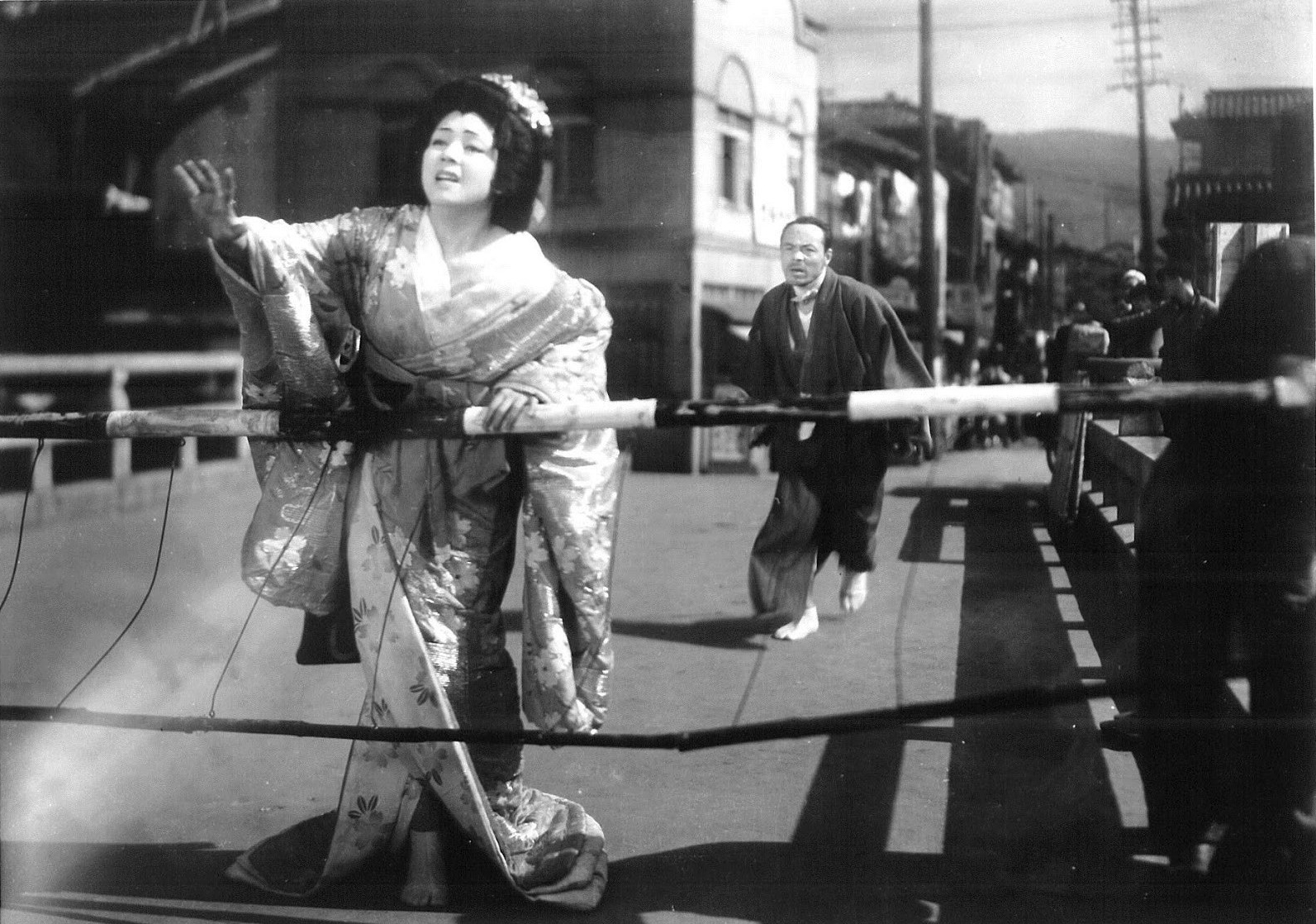
「偽れる盛装」(C)KADOKAWA1951Japan at a crossroads. East/West, past/future becomes a conflict between Kyoto and Tokyo in Yoshimura’s exploration of two women pulled in surprisingly contradictory directions in the new post-war world, Clothes of Deception (偽れる盛装, Itsuwareru Seiso). Working from a script by Kaneto Shindo, Yoshimura frames his tale as one of progress and resistance but the divisions are not as simple as they first seem. Machiko Kyo turns in another wonderfully nuanced performance as a Kyoto geisha trapped by the unchanging nature of her city yet yearning for an end to its slavish devotion to tradition.

Kumicho (Machiko Kyo) is the daughter of a longstanding geisha house currently operated by her mother. Though working as a geisha, Kumicho is not universally popular with the older generation thanks to her money first attitude which sees her prioritise earnings potential through having an unlimited number of clients rather than relying on a single patron. Kumicho is tough where geishas are generally soft and accommodating. She doesn’t take orders or nonsense from anyone, not least her push over of a mother.

Kumicho’s sister, Taeko (Yasuko Fujita), is not involved in the geisha trade and has a regular office job in the local tourist office. Unlike Kumicho, Taeko is mild mannered and reserved, dressing in regular Western fashions and travelling everywhere by bicycle. Taeko is engaged to a colleague, Koji (Keiju Kobayashi), who just happens to be the adopted son of another geisha house run by a woman with a long standing grudge against her mother.

Kyoto, a former capital, is famous for its historical qualities – a living museum to old-time Japan, but as a friend visiting from Tokyo points out perhaps that’s not altogether a good thing. Unlike Tokyo, Kyoto escaped much of the wartime destruction allowing it to be seen as a symbol of cultural resilience but lack of destruction also robs of it the chance for rebirth. History has survived, but so have lots of “tired old ideas”, according to Taeko’s friend Yukiko who urges her to forget the stagnant city and head for pastures new in Tokyo where the exciting post-war future is already underway.

Those old fashioned ideas are embodied within the rigid codes of the geisha world which Kumicho, on the surface the more traditional of the sisters but in actuality less so, has been breaking. Kumicho cares about money and she cares about survival which has made her unsentimental. Despite being involved in the “traditional” Kyoto occupation with all of its elegance and complicated ritual, Kumicho is a modernist who secretly hates the trade and holds each of her customers in deep contempt. Thus she thinks her mother, Kiku (Hisako Takihana), is a soft touch for continuing to bankroll the feckless son of her former lover, but is as heartbroken as anyone when one of the geishas becomes gravely ill. Kumicho’s manner maybe brash and brassy but her heart is as warm as her mother’s who continues to visit the widow of her former patron and makes sure the sickly geisha is cared for properly without resenting either the costs involved or the loss of earnings.

Taeko’s engagement to Koji opens up old wounds and exposes the less genial side of geishadom in the grudge bearing rivalry of Kiku and Koji’s mother Chiyo (Chieko Murata). Chiyo tries to put the kibosh on Taeko’s marriage as a way of getting back at Kiku, claiming that Taeko simply isn’t good enough for her son, but her authority is also dependent on those tired old ideas of hierarchy and filial piety. Koji, an adopted child, feels himself beholden to his mother’s needs in having been raised exclusively to fulfil them and vacillates in indecision regarding his marriage. Spineless and cowardly, Koji cannot find the strength to tell his mother no but also refuses to definitively break things off with Taeko.

Younger than Kumicho and a part of the “modern” world thanks to her regular office job in the tourist office, Taeko is comparatively more socially conservative reacting with horror when the increasingly strained Koji makes desperate, aggressive advances towards her whilst refusing to confirm his intention to marry against his mother’s wishes. Taeko and Koji have imprisoned themselves within Kyoto’s oppressive system of social codes in refusing to seize their chance of individual happiness and stride forward into the bright future being offered everywhere else except in the unchanging city.

Kumicho’s machinations eventually land her in hot water when an obsessed client ruins himself and then turns violent, demonstrating the less publicised dangerous side of life in the geisha trade. Kyoto, with all of its elegant refinement, can still be a place of rancour and regret where decades old grudges and more recent resentments threaten to disturb the peace. Kumicho’s innovations have shown up the geisha trade for what it is through her thoroughly unsentimental seduce and discard philosophy but she is, if nothing else, essentially truthful in her “modern” desire to call a spade a spade. The old ways are changing, though perhaps not fast enough. Kyoto, with its rigidity and stagnation is eventually rejected as Kumicho, unable to extricate herself, makes sure that her sister is first in line for all the opportunities the new world has to offer – by sending her to Tokyo, the capital of the future.


Screened at BFI as part of the Women in Japanese Melodrama season.

Temptation (誘惑, Kozaburo Yoshimura, 1948)

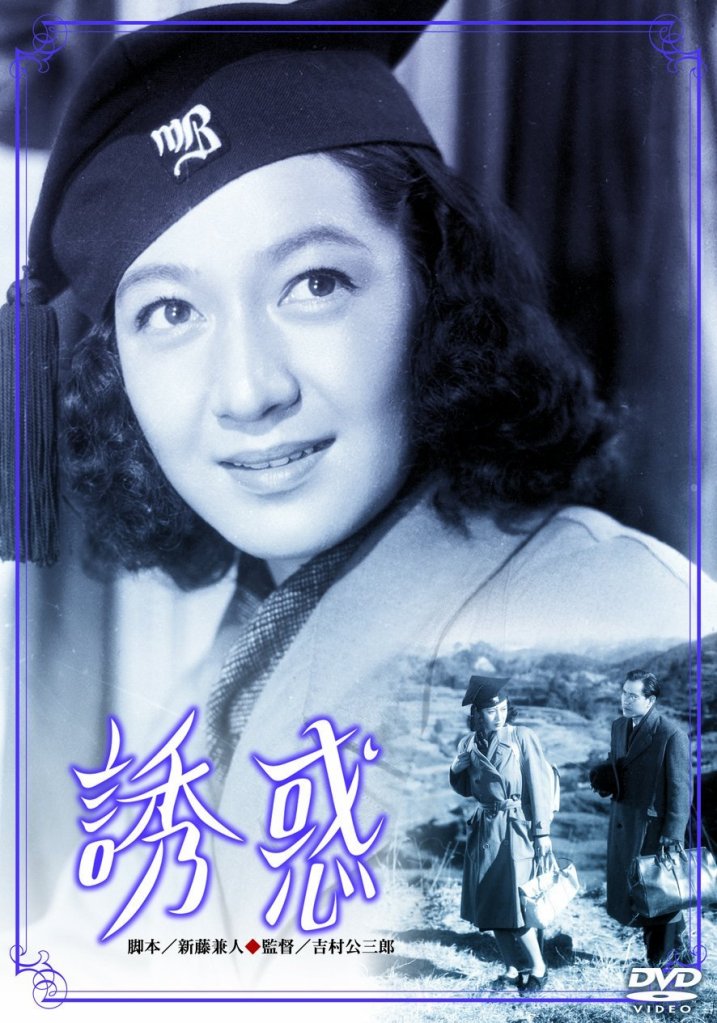
TemptationFeelings can creep up just like that, to quote another movie. Like Wong Kar-Wai’s In the Mood for Love, Temptation (誘惑, Yuwaku) also echoes Lean’s Brief Encounter with its strains of accidental romance between unavailable people even if only one of the pair is already married. However, this time there’s much less deliberate moralising though the environment itself is a fertile breeding ground for the judgemental.

The film begins with Takako (Setsuko Hara) paying her respects at the grave of her recently deceased father only to run into an old pupil of  his arriving for the same reason. Takako and Ryukichi (Shin Saburi) are both making the arduous trip back to the city and decide to travel together. Stopping over in Gifu, they find difficulty in getting a hotel room because of a big horse race due to take place the next day and rather awkwardly end up sharing a bed. After Takako becomes upset and ponders what she’s going to do now her father is gone, Ryukichi offers to let her move in with him and the children. Discussing this with his wife who is an invalid living away from the family, he talks paternally of Takako and of a wish to look after her as a way of honouring the memory of his former teacher. However, it isn’t long before the inevitable happens and the pair begin to fall in love.

Ryukichi first met Takako as a little girl when he was her father’s student but she’s 21 years old now – a grown woman by any standard, and plenty old enough to know what she’s doing. He describes her as still “silly”, like a child, and indeed Setsuko Hara breaks out some of her most radiant (if occasionally pained) smiles and almost mocking laughter to play a complex mix of putting a brave face on grief and genuine happiness at being back in a family home. Though feeling the crippling loss of her only family member has left her feeling devoid of a purpose in life, Takako is an essentially good and kind person who sees the best in people and is only too happy to help Ryukichi with the children while his wife is ill as well as continuing with her medical studies.

After leaving academia, Ryukichi has become left leaning politician committed to creating a better, fairer nation. Like Takako he is also an honest and decent person with a high sense of personal integrity. His motives for bringing Takako into the house were innocent, yet gradually his feelings for her begin to shift from the paternal to the romantic causing him a considerable amount of stress as he battles the need to remain faithful to his wife even in her absence while his attraction to Takako continues to grow.

The impending threat of illicit action stalks the screen almost like the stealthy figure of the killer in a slasher movie. At one point where the feelings threaten to overwhelm the couple despite their best efforts to suppress them, Tokie (Haruko Sugimura) – the sickly wife, unexpectedly turns up in true melodrama fashion as if summoned by the lovers’ guilty consciences and accompanied a chorus of stinging strings.

Tokie herself played by veteran actress Hariko Sugimura, is every inch the wounded wife though her plight is played with a little less vindictiveness than in a similarly themed gothic novel where the bedridden spouse suddenly rises as if from the grave itself to haunt the new lovers while still alive. Originally approving of Ryukichi’s desire to help Takako, Tokie’s fears are awaked when seeing her playing with the children on the beach – all long legs and youthful skin, moving in a way she fears she never will again. “Everything inside my chest is ruined” she tells Ryukichi before returning sadly inside, alone, prematurely exiling herself from her own family.

That said, Temptation refuses to follow the established pattern in that it suddenly reverts to a standard romance with no feeling of judgement inflicted on the couple whose love story has occurred in an illicit fashion. Tokie has a late in the game change of heart and the guilty spectre that haunts the couples of European melodrama fails to arise meaning that neither party is left feeling a need to reject their true feelings out of a desire to atone in some way for their inappropriate emotions and putative (if not actualised) betrayal.

This is surprising in some ways as the films also wants to offer a mildly left wing narrative represented by the poor boy fellow student of Takako who is arrested near the beginning of the film for selling flour masquerading as sweetener. He is of peasant stock and ultimately opts to return to simple and honest country life. Offering to take Takako with him, he gives her an opportunity to escape the temptation which is plaguing her and live quietly and naturally in an honest and humble way. In another film, this would be the solution – an abandonment of bourgeois emotion by giving up on her married, middle class politician who, for all his fine talk of open plan houses and rejection of “feudal” ideas, is still a reactionary and part of the system. However, strangely, emotion wins out and the audience gets a “happy ending” (of sorts) which feels a little bit out of place.

Temptation plays with many forms during its running time most notably romantic melodrama but often feels more like a thriller with its various twists and turns which always threaten to disrupt the narrative in unexpected ways. Consequently the film has something of an uneven tone and begins to drag a little even given its fairly short running time. This becomes a particular problem approaching the finale which lacks weight despite its obvious potential for melodrama. Still, even if Temptation is often more interesting than it is engaging it does offer a series of striking visual motifs as well at the superb performances of its leading players.


No trailer for this one, but here’s a picture of Setsuko Hara on the cover of Shin Eiga magazine in 1949 (which is a publication I can’t seem to find out much about). Btw, this is another one with a Kaneto Shindo script!

setsuko hara