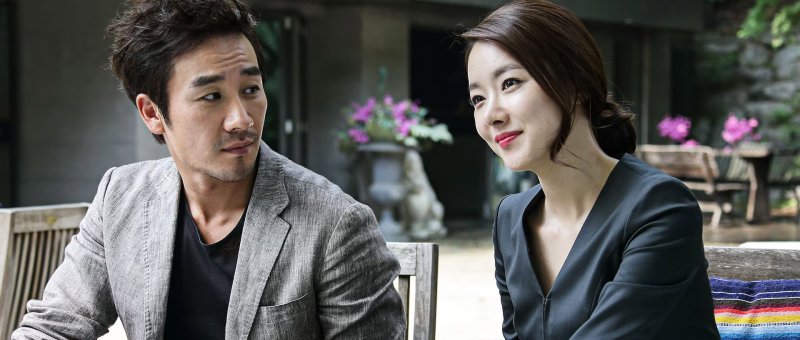

Top Star (톱스타, Park Joong-hoon, 2013)

Fame is good, but can turn you into a monster, according to entertainment industry veteran Won-joon (Kim Min-jun) in the directorial debut from actor Park Hoon-jung, Top Star (톱스타). Apparently inspired by the time park was caught smoking marijuana, the film explores the cutthroat nature of Korea’s entertainment industry in which stars are often held to unfairly high standards, but equally the pressures of success and the lengths some people will go to to maintain it.

Tae-sik’s (Uhm Tae-woong) problem is that he started out as Won-joon’s manager, or really more like a personal assistant in which he was responsible for all of Won-joon’s life including covering for his various indiscretions which Tae-sik did without a second thought. For his part, Won-joon tries to be a cool boss, but when he gives Tae-sik the night off for his birthday it backfires for both of them. Tae-sik is refused entry to a posh club he goes to all the time because he’s not with Won-joon, ramming home to him how insignificant he really is. Won-joon, meanwhile, irresponsibly gets behind the wheel of his sports car after a few drinks. He ends up knocking a delivery driver off his bike, but in consideration of his position, just drives off. Though he later considers turning himself in, his management team won’t allow it. Tae-sik ends up taking the blame, though in return Won-joon promises to make his dreams of becoming an actor come true by getting him a part in his latest TV drama.

It’s not really explained why the drunken hit-and-run would end Won-joon’s career but is apparently not a barrier to Tae-sik starting one. His star soon starts to rise to point that he begins to rival Won-joon by pinching some of his advertising gigs. Won-joon can’t help but see this as a kind of betrayal, feeling professionally threatened and also a little resentful that Tae-sik does not appear to value their friendship. There is a curiously homoerotic tension between them, but part of the problem is that despite what Won-joon says they can’t really be friends because of the power differential and the fact that they have now become rivals. Won-joon has almost become a target to hit for Tae-sik, while Won-joon continues to look down on him, making constant cracks about how he used to be his dogsbody to put him back in his place.

At the same time, others in the industry regard Tae-sik as “tasteless” and “low class”, a vulgar upstart who is too overt in his ambition and too crass to fit into the pseudo-upper-class world of show business given his working-class background. A subplot sees him wrestling with the expectation that he will take care of a father that abandoned him and has since developed dementia. In some ways, he’ll always be the driver who was turned away from the club. A film director keen enough to work with him to wait hours sitting in a park even point blank tells him that he’s not a good actor and that all he has going for him is “energy”, so he shouldn’t be so picky about his projects. Yet these kinds of comments only seem to spur Tae-sik on to prove himself by living a superstar lifestyle.

Nevertheless, he disapproves of the way Won-joon behaves with women and particularly his treatment of secret girlfriend Mi-na (So Yi-hyun), a producer, on whom Tae-sik also has a crush. His relationship with Won-joon may have begun as a kind of hero worship that Won-joon wilfully used to his advantage, but soon descends into toxic rivalry while Tae-sik’s own insecurities lead him to ruin what he has in always seeking more. He begins to treat those around him badly. Having made his own best friend his manager, what began as a friendship between equals is soon disrupted by the same power imbalance that marred his relationship with Won-joon. Betraying his management company, he strikes out on his own producing a project he pinched from the veteran actor but becomes an on-set tyrant demanding endless retakes in search of a perfection that doesn’t exist because of his own insecurities. He will stop at nothing to maintain his position as “top star”, but eventually suffers an ironic fate that nevertheless humbles him and finally reminds Tae-sik what it was he really wanted as a lowly manager dreaming of showbiz success. Won-joon was right, fame really does turn you into a monster one way or another, and even in Tae-sik’s desire to start over there’s a kernel of desperation that suggests once it’s got its claws into you, it’ll never really let go.
Black Republic (그들도 우리처럼, Park Kwang-su, 1990)

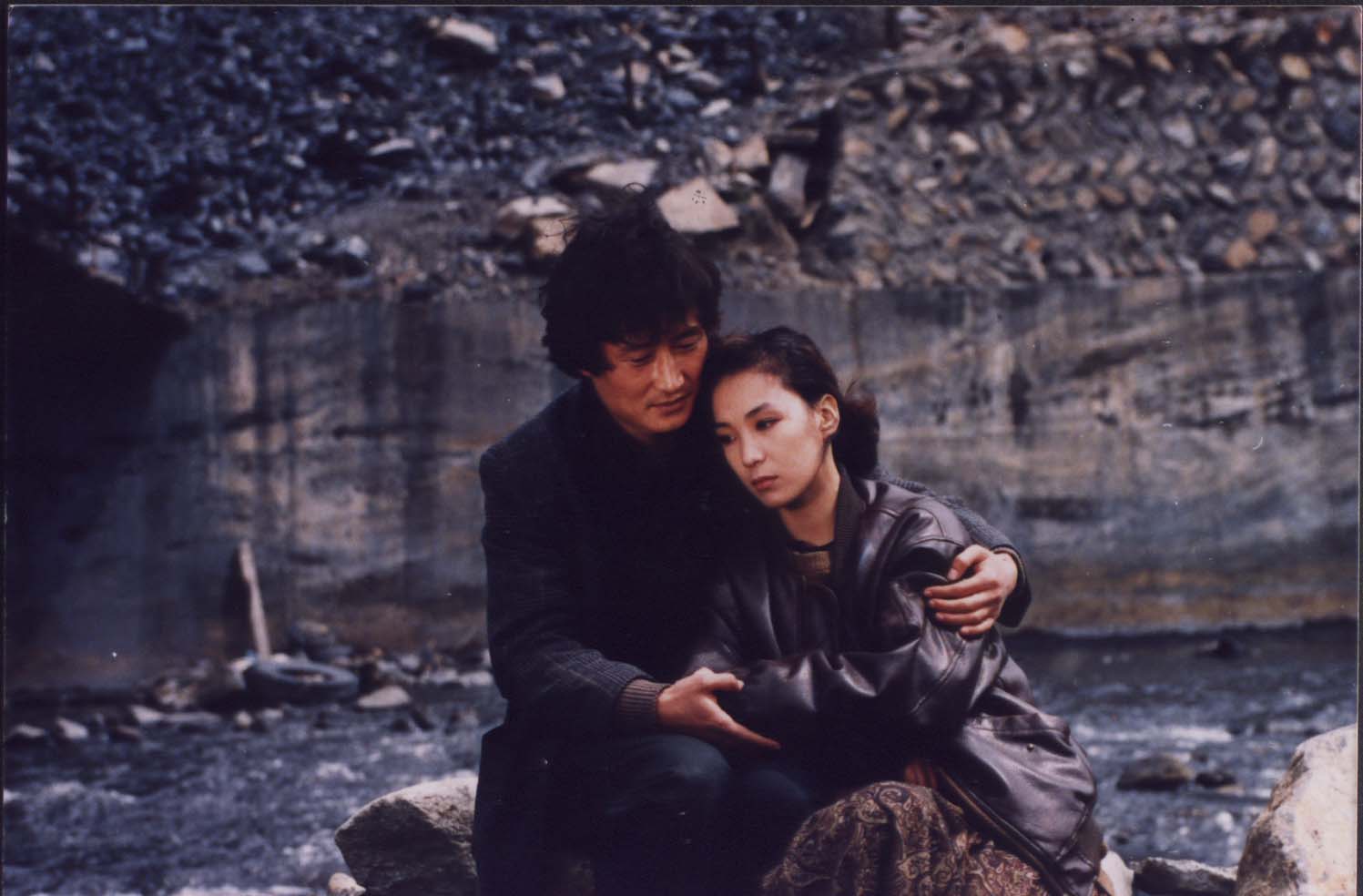
Black Republic still 1In the Korea of 1990, a revolution had been fought, won, and then betrayed by its people. Successfully petitioning for democracy, the newly minted Korean electorate went ahead and voted for the chosen successor of the dictator they’d just spent so long trying to oust. Change comes slow, but it comes even if not quite the way you wanted it. Park Kwang-su’s first film Chilsu and Mansu, released in 1988 and set in the contemporary Seoul running to catch up to its Olympic aspirations, had made its own quiet protest about a hypocritical society’s rising social inequality. His follow up, Black Republic (그들도 우리처럼, Keduldo Urichurum), takes a journey back in time while keeping one foot in the present to show us a nation engulfed by a darkness that crushes love, dreams, and possibility all while dangling the shining hope of a better future that seems impossibly far away.

Tae-hun (Moon Sung-keun), a student protestor wanted by the police, heads into the mountains under an assumed name hoping to get a job in a mine. However, this is a period of intense economic volatility and the mining industry is collapsing. When his attempts to find work as a miner fail, Tae-hun (going under the name Gi-yeong) overhears a conversation in a cafe and manages to get a job in a local briquette factory.

Park opens in darkness as Tae-hun makes a phone call to his mother in which he never speaks and she reassures him that everything will be OK while the sound of a train gradually gathers in the background. When Tae-hun arrives at his destination, he finds himself in a barren, blackened land where everything is quite literally falling apart. The mines are closing and the landscape, desolate as it is, is peppered with derelict buildings and the modest, makeshift homes of the rural poor at the constant mercy of their greedy masters. As a newcomer, Tae-hun is not privy to the town’s secrets, but quickly comes to understand that though he may have escaped Seoul, the struggle is inescapable, because the struggle is Korea. The owner of the briquette factory is also some kind of loanshark involved in a suspiciously close arrangement with the local mine owner who is in the middle of a labour dispute with the miners who are petitioning for fair pay and better conditions. Haunted by the memories of his protest days, Tae-hun finds himself looking on at another candlelight procession calling for workers rights but rendered impotent, forced to remain silent or risk attracting the attention of the police.

Meanwhile, Tae-hun’s silence sees him unwittingly pulled into the orbit of those he would usually oppose. Seong-cheol (Park Joong-hoon), the illegitimate son of the factory boss, takes his own sense of crushing impossibility out on the entire town. Technically the “vice-president” of the factory, Seong-cheol is a sometime enforcer for his father’s greedy loan sharking business and thinks nothing of striding in and helping himself to the petty cash to spend on women and booze while gazing at the photo of his long absent mother. An invitation to dine with Seong-cheol and pals brings Tae-hun into contact with melancholy sex worker Yeong-sook (Shim Hye-Jin) who begins to fall for him when he skips out on her after Seong-cheol has pulled one of his usual tricks in giving her away in an attempt to buy friendship through influence.

Like Tae-hun, Yeong-sook is also trapped, running, and living under an assumed identity. Through her exposure to Tae-hun who is, after all, so different from the other men in the mountains, she begins to rediscover a sense of hope and possibility. Yeong-sook quits the illegal part of her job as a “coffee girl” and deepens her bond with Tae-hun through nursing him after he is arrested and beaten by the police who seem to harbour an innate suspicion towards him despite little evidence, but their love will require another act of faith and flight and the world in which they live may not let them to escape.

Everyone here is trapped, lying to themselves or others, wishing things were different than they are but has long since given up the hope they ever could be. While Tae-hun attempts to ride out the storm by burying his head in the coal dust, feeling it fill his lungs, struggling to breathe, Seong-cheol opposes his order with chaos, laying waste to half the town in a self destructive venting of his rage and resentment towards his selfish, unfeeling father, and a society he feels has already rejected him. Impossibility and hopelessness are the defining qualities of this world of corruption and exploitation in which there can be no escape or salvation, only crushing futility. Park closes with an ironic coda of swapped fates and tragic promise which places Tae-hun right where he was when we first met him, defeated by hope but still in motion, if for an uncertain direction.


Black Republic was screened as part of the Korean Cultural Centre’s Korean Film Nights 2018: Rebels With a Cause screening series. It is also available to stream online via the Korean Film Archive’s YouTube Channel.