Autumn Tempest (落山風, Huang Yu-Shan, 1988)

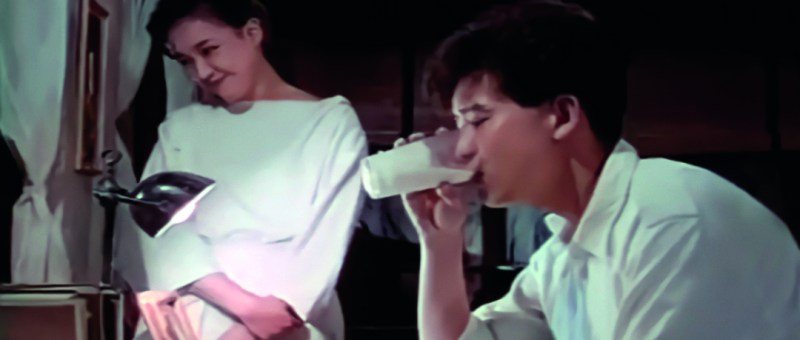
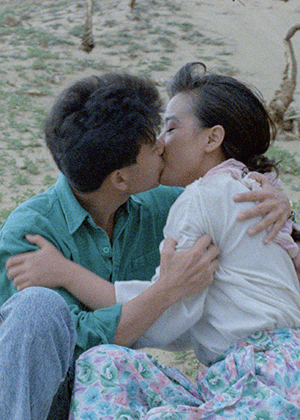
When the autumn tempest comes, it can launch a buffalo into the air, according to a middle-aged woman working at a remote mountain temple. Wen-Hsiang (Yang Ching-huang) is in the spring of his life, but the tempest is coming for him too as he finds himself consumed by the desires he’s supposed to be shaking off after becoming fixated on a lonely, young-ish novice at the temple in flight from a failed marriage.

Su-pi’s (Kang Soo-yeon) decision to become a nun is reflective of the repressive patriarchal social codes under which she was living. We’re told that she’s essentially been rejected because she was unable to produce a male heir. Her husband has since got his mistress pregnant, or so he thinks, and the mother-in-law, who is really the one in charge, has decided to move her in, telling Su-pi she can like it or lump it. Unsurprisingly, Su-pi chose to leave but the temple hasn’t really accepted her either. Su-pi wants to shave her head and be admitted as a nun, but the abbess says she’s not ready. 

Su-pi does indeed have lingering attachments to this world and they seem to lead in two directions, firstly her unfilled and at the time taboo sexual desires, and her resentment towards her husband couple with the sense of righteous anger over her unfair dismissal. This desire to be desired is what draws her to Wen-Hsiang who is probably not all that much younger than her but is also a “kid” too young to know anything of real love. She asks him if she’s still young and pretty and if he loves her to which Wen-Hsiang readily agrees though it’s more that he becomes obsessed with her, drunk on his desire and his own need to be needed.

Wen-Hsiang’s parents’ marriage collapsed some years previously though they’ve never divorced because of the social stigma and now Wen-Hsiang’s mother has taken his sister to the US leaving him behind. Not getting along with his father, his doting grandmother sends him to the temple to help him study so he can fulfil his familial obligations, get into medical school, and follow in his father’s footsteps. No one seems to want Wen-Hsiang, not even the old girlfriend who wouldn’t stop calling when he first went to the temple but has since moved on. But even on decamping to the mountains, Wen-Hsiang can’t leave the city behind. He packs a series of coffee-related accoutrements as well as tapes of Western and Japanese pop music he listens to while he studies. When he finds the Buddha’s eyes intrusive, he simply throws his jacket over them.

But the transgressive sexual relationship they enter into also nearly kills the abbess who is struck down by some kind of psychic force that seems to emanate from it. Though the couple think they’ve kept it quiet, everyone appears to know, the abbess warning Su-pi that young men are impulsive, like bulls who can’t be tamed, and should be avoided. Struck by the weight of this spiritual transgression, Su-pi tries to end it but is both drawn by her own desire and by Wen-Hsiang’s obsession. The realisation that she is pregnant forces her hand, though we might also wonder if in the end her greatest desire was always for revenge or just to avenge herself by forcing her husband to realise the fault lies with him. She is fully capable of fulfilling the role society has forced on her though she may also reject it symbolically by becoming a nun while fulfilling her own desires by telling her husband where to go when he comes crawling back.

Though the film sets out to punish Wen-Hsiang for his transgressions, it cannot help but implicate Su-pi for his downfall, implying it’s is her fault rather than resolutely his own in his inability to overcome his desires. She meanwhile is equally punished by the film’s ambiguous ending in which she may have to live with the unintended consequences of embracing her sexuality as opposed to abandoning it by joining the temple. Even so, there’s something so classical about her features that they almost resemble the face of Buddha, not unlike that Wen-Hsiang’s grandmother prays to in the hope he’ll get into medical school. Huang frequently uses natural imagery to express the tumultuous emotions of the pair of lovers in contrast to the ordered and tranquil environment of the temple but also perhaps suggests that not even here can they really free themselves of the authoritarian oppressions of the city.


Autumn Tempest screened as part of the BFI’s Myriad Voices: Reframing Taiwan New Cinema.
Out of the Blue (小爸爸的天空, Chen Kun-Hou, 1984)

A young man begins to dream after discovering he has become a father in Chen Kun-Hou’s poignant coming of age drama Out of the Blue (小爸爸的天空, xiǎo bàba de tiānkōng). Though it could perhaps be argued that the heroine suffers unduly, the film is remarkably unjudgemental about unplanned teenage pregnancy and at heart is rooting for the young couple. But the real world is not so kind, and it seems impossible that their love could survive in the liberalising but still oppressive late martial law society.

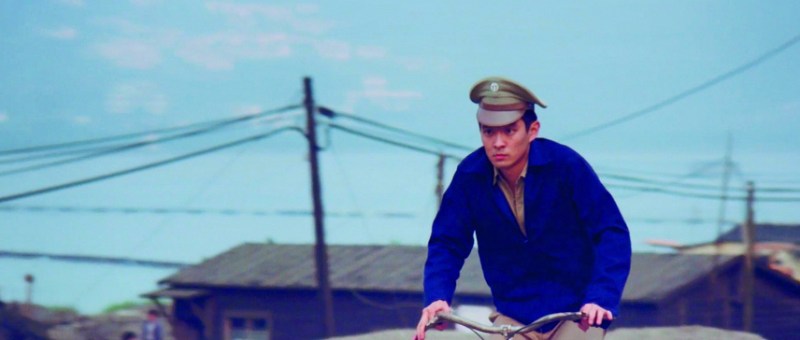
Long is a boy from an ordinary family with a crush on a wealthy young who goes to his school, Mi. Mi gets picked up by a chauffeured car every day, while Long watches her afar from his bicycle. Eventually, the pair get together and bond over their shared sense of dissatisfaction with their families by whom they are each trapped in opposing ways. Long complains that his former policeman father beats and berates him for not living up to his expectations, while Mi alternately implies her parents don’t really care about her because they’re always working and let her do as she pleases, and that she has no free will because she’s duty-bound by the expectations of filiality.

Perhaps bearing this out, Mi rarely speaks during her courtship with Long and only later is able to talk plainly to her mother, though her mother doesn’t listen. When she becomes pregnant after sleeping with Long when he stays out all night after a beating from his father, Mi can’t bring herself to tell anyone but stays at home alone while her parents head to LA. For unstated reasons, she can’t bring herself to tell Long, either. She ignores his calls and drops out of school, instructing the servants not to answer the phone when he calls. But when her mother finally finds out, she’s unexpectedly supportive. At least, she doesn’t disown her, force her to give up the child, to marry someone else or to stop seeing Long (though she does so anyway), all of which adds an additional layer to Mi’s sense of filial obligation feeling as if she cannot disobey her mother because she has been so kind and understanding of her “scandalous” behaviour.

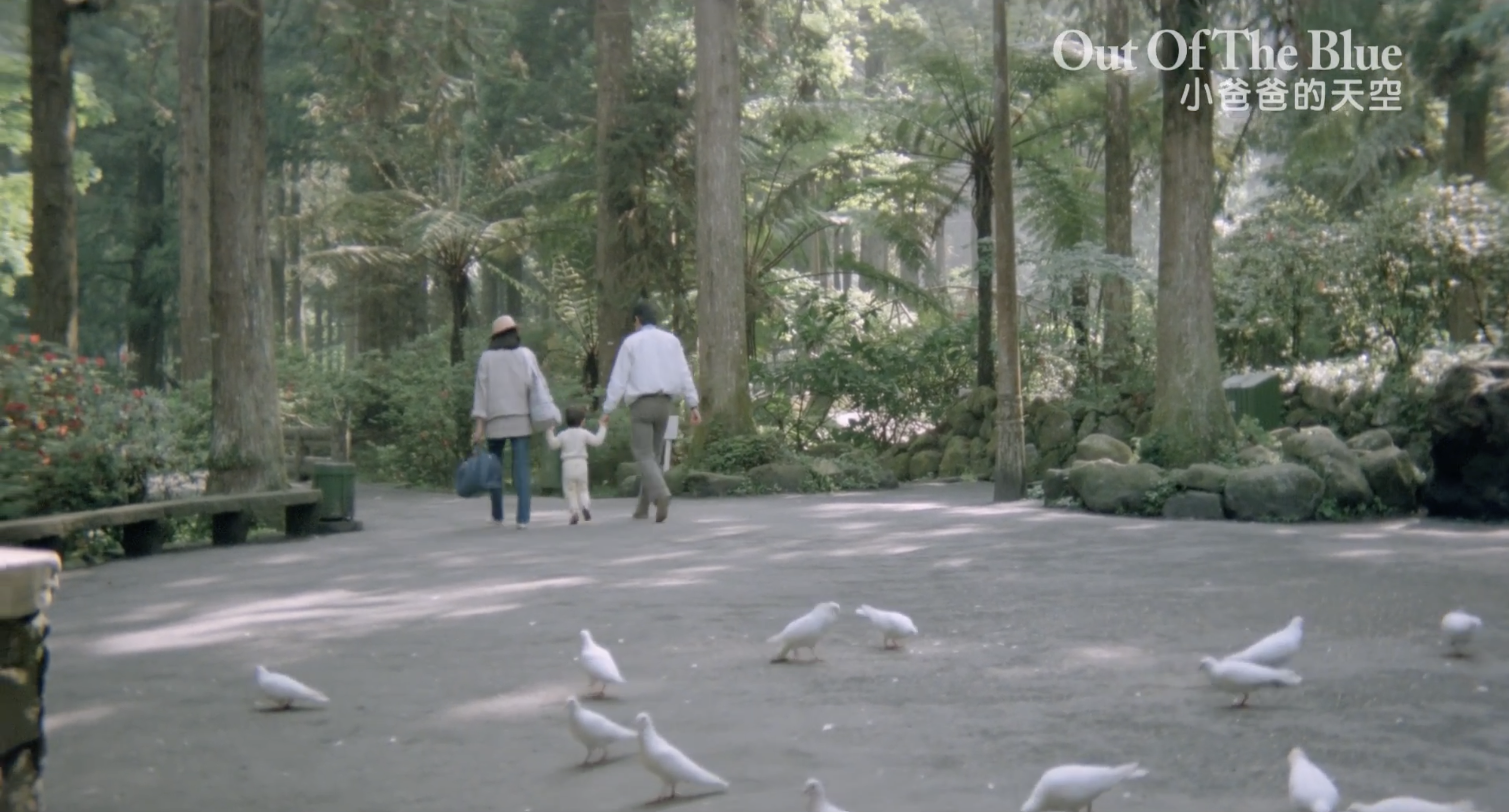
When Mi abruptly disappears and he’s told she’s gone abroad, Long tries to talk to his father but in the end he doesn’t say anything. He simply refills his father’s ink pot while he continues to practice calligraphy. The only really time that Long’s father actually speaks to him is on hearing that he’s got the grades to get into his chosen university. It’s at this point that his father considers him “a man,” having his first drink with him and treating him as an adult rather than a naughty boy he can beat with a belt. In a sense, Long has conformed with his father’s authoritarianism in following the conventional path and is no longer trying to resist it, but on being unexpectedly reunited with his own son, Weiwei, is a more compassionate and empathetic presence, in love with the idea of having a family, though it is currently out of his reach. When he runs into Mi and realises the toddler she’s got in a pushchair is his, he’s still a student financially unable to support a wife and child let alone keep them in comfort.

As such, Long might be the unexpectedly good man who would have married and taken care of Mi if he knew but as they each say several times, everything’s different now. After their separation, both describe themselves as having grown up. Though he didn’t know he had become a father, Long feels as if he’s now older than his friends. He’s no longer interested in playing pool with them and is bored by their teenage pastimes. It’s ironically this sense of growing up that sets him on a more conventional path by knuckling down to study. But Mi perhaps feels trapped. Her parents have accepted her, but they have also more or less adopted Weiwei as their own and refuse to see her as a grown woman. When she tries to stand up to her mother about going to LA, her mother refuses to allow her to stay behind with Weiwei because she doesn’t believe she can look after herself let alone a child. Mi snaps back that could marry Long, but her mother doesn’t take it seriously. In the end, Mi is unable to break free of her filial obligations and defy her mother by leaving to make a new family with Long.

Mi’s mother stands in the way of progress, though she is in other ways a good and compassionate person who never tries to punish her daughter for her sexual transgression and only wanted to care for her and the baby. The baby has, however, now become part of her family to which Mi is merely an accessory, so he cannot now form a new family with Long. Long is unable to assume his paternity because of his financial status, but is otherwise good with the boy and in some ways better than Mi who becomes frustrated when he fails to settle in an unfamiliar environment. She admits that her mother usually tucks him in and is otherwise lost for what to do, leaving Long quite literally holding the baby.

But on the other hand, perhaps he’s only experiencing an idealised vision of fatherhood while spared the really difficult things like the anxiety of keeping food on the table and roof over his head. His friend at university is married with a child and is constantly late because of childcare issues. He recounts having to stay up all night because his son got enteritis from eating something he shouldn’t have when he wasn’t looking and now has a serious case of the runs. Long appears to want all of this too, but is prevented from having it as the older generation won’t surrender it to him or give Mi and Long the chance to figure it out. The closing scenes have a genuine sense of tragedy as Long watches his family ride away from him while Mi looks back with sadness and an expression that suggests she knows she will likely never see Long again. With minimal dialogue and elegant, expressive composition, Chen charts the course of a love too innocent to survive in a world of oppression and conformity but has only infinite sympathy for the young couple whose simple dreams are denied by generational authoritarianism.


Out of the Blue screened as part of the BFI’s Myriad Voices: Reframing Taiwan New Cinema.
Trailer (Traditional Chinese / English subtitles)

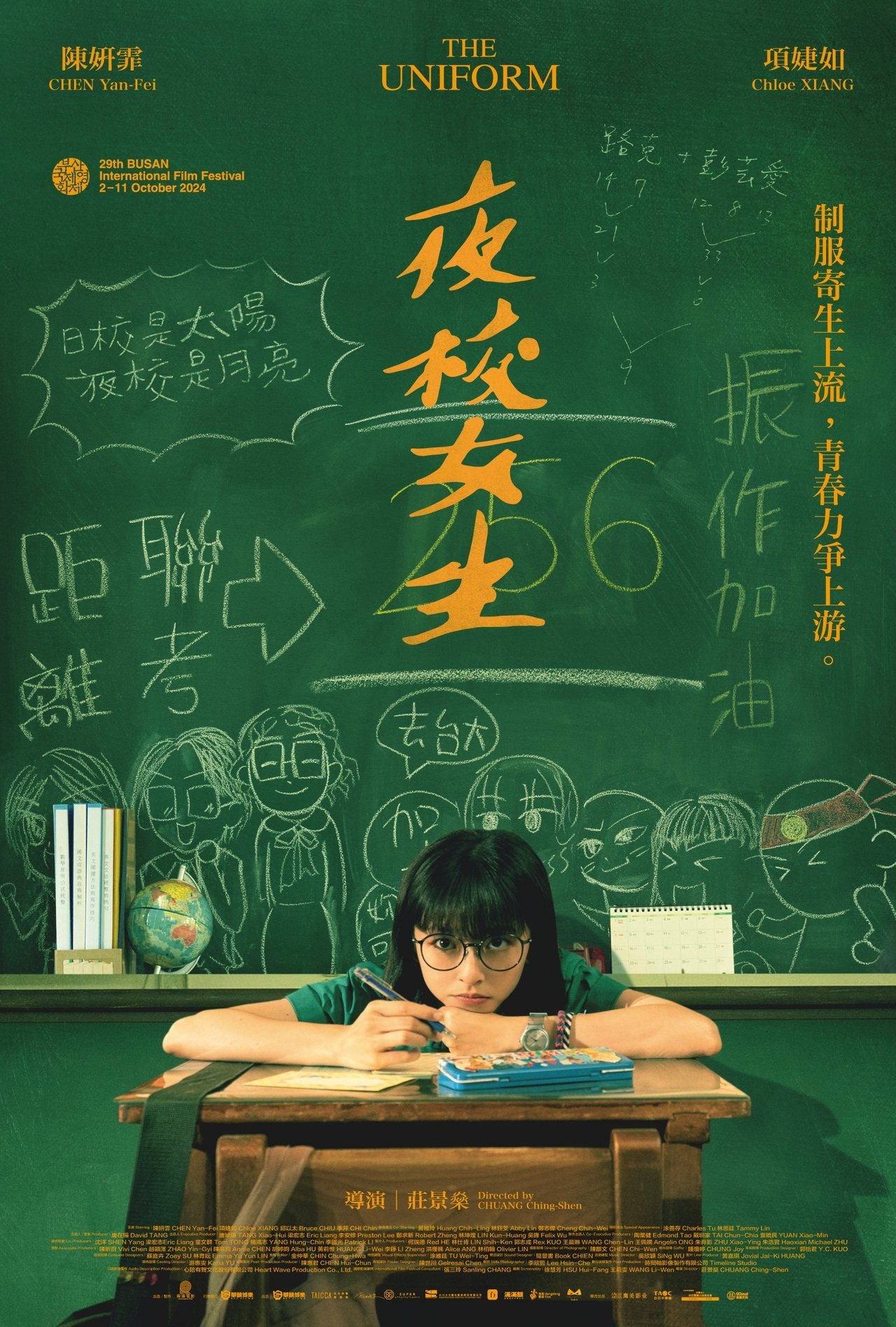
The Uniform (夜校女生, Chuang Ching-Shen, 2024)

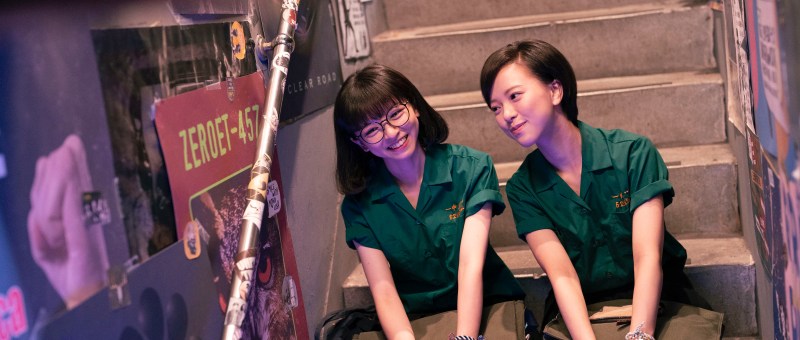
The problem for Ai (Buffy Chen Yan-fei) is that a minor difference in her uniform causes her to be treated differently. Set in the late ‘90s, Chuang Ching-Shen’s The Uniform (夜校女生, yèxiào nǚshēng) uses the school to examine the stratified nature of the contemporary Taiwanese society and the elitism that governs it. Having failed the main exam, Ai has won a place at a prestigious girls academy but been relegated to the “night school”. To maximise its efficiency, the school operates on a shift system with day pupils attending classes until 4.30pm and the night students taking over until 9. Though there isn’t supposed to be any difference between the two, the night students are treated as a kind of overflow intake and looked down on by the day pupils while some complain that they’re unfairly using up resources which should be theirs by right. 

Despite the differences between them, Ai strikes up an unexpected friendship with a day student with whom she shares a desk, Min (Chloe Xiang Jie-ru). Shy and somewhat timid, Ai is taken by Min’s free spiritedness and often skips out on her classes to do fun things with her like going to a club to see Mayday before they were famous. Min, obviously, never misses out on her education and though she later reveals her own sense of insecurity in not feeling that she fits in at the school nor really deserves to be there, does not really understand Ai’s situation nor her own feelings of frustration and futility. Ai, meanwhile, is attracted by the upper-middle class atmosphere of the day pupils and increasingly embarrassed by her own more humble home life.

Ai’s father died in an accident and her mother runs a cram school out of their home. Ai’s mother (Chi Chin) is always trying to save money and picking up mismatched furniture for free, much to Ai’s annoyance, while Ai also does a series of part-time jobs including working at a ping pong club at the weekend though her mother doesn’t really want her doing sports because they’re unladylike and not all that useful for landing a place at a top university. The reason she sent her to the academy was to give her a leg up into what she sees as a conventionally successful life by getting a degree and finding a man with a professional job to marry. Ai’s resentment is partly provoked by this sense of being railroaded towards a future she might not want while at the same time facing tremendous pressure and afraid that in the end she won’t be able to measure up to her mother’s expectations. 

It’s at the ping pong club that she first meets Luke (Chiu Yi-tai), a handsome student from the elite boys’ school, and begins to strike up a relationship with him before Min tells her she likes him too. This ordinary teenage love triangle is coloured be class conflict in which Ai doubts she has the right to go after Luke because he is from a wealthy family, lying to him to cover up the fact that she and Min skip school by swapping their shirts which are embroidered in different colours for day and night students by claiming to be a pupil in the elite advanced class while hiding from him that she’s actually a night pupil. After beginning to suspect that Luke might actually like Ai, Min too begins to look down on her as if she thought that Ai were forgetting her place and has no right to date him because, unlike her, she is not his social equal. 

As for Luke himself, he’s actually rather bland and in part because his own life seems so easy because of his family’s wealth though he too later lets slip that he feels embarrassed by his parent’s apparently secret divorce and has only just begun to let go of the idea of them getting back together. For much of the film, it seems like he’s merely in the way of the relationship between the two girls which more successfully overcomes the barrier of class. After vicariously enjoying living Min’s lifestyle, Ai eventually comes to realisation that she and Luke are “not the same” and come from different worlds. He doesn’t really care about that, and seems to have become aware of his privilege abandoning a plan to get into university by competing in the maths olympiad and take the exam instead in the interests of “equality,” which is a well-meaning gesture but not really the bold act of egalitarianism he thinks it is even if also emphases his commitment to Ai in his willingness to break down class barriers that might otherwise work to his advantage.

As a means of denying her reality, Ai escapes through writing letters to Nicole Kidman with the help of a young man who speaks English and works in her aunt’s video store but is eventually jolted into adulthood by a more literal earthquake that reminds her how precious each of her relationships is and fragile the world around her. Through her various friendships, Ai comes to understand that almost everyone she knows also suffers with feelings of inferiority or a lack of confidence, weighed down by the pressure to achieve social success which might not be what they want anyway, but that they can overcome them together through understanding and mutual support that crosses class boundaries. Charmingly nostalgic, the film has a sense of hope for the future that it is indeed possible to achieve success on your own terms while prioritising your friendships and taking care of those around you.


The Uniform screens in Chicago 12th April as part of the 19th edition of Asian Pop-Up Cinema.

Trailer (English subtitles)

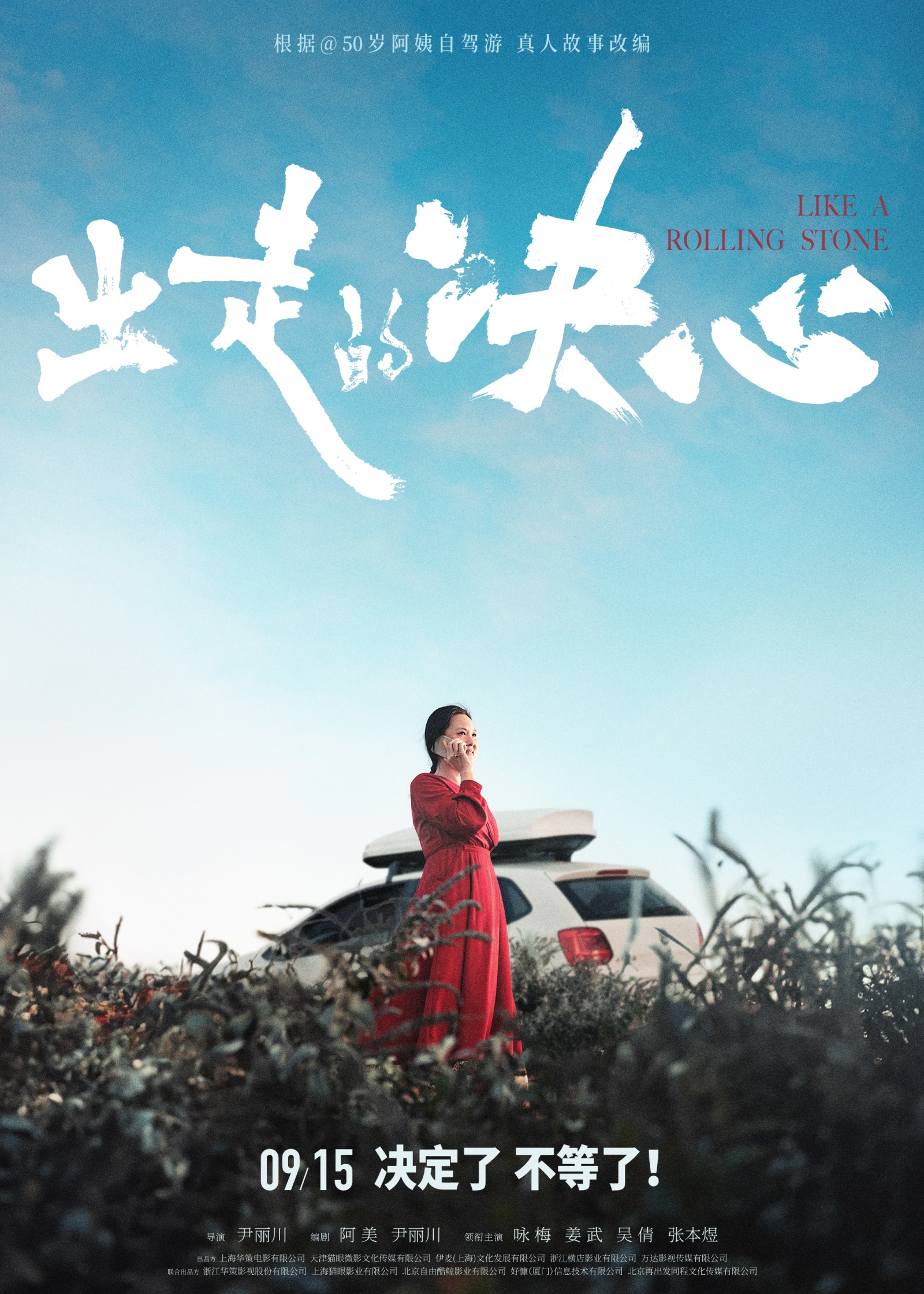
Like A Rolling Stone (出走的决心, Yin Lichuan, 2024)

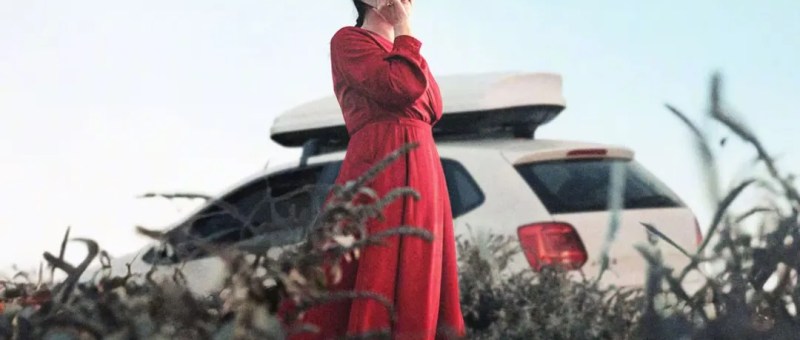
A middle-aged woman’s decision to walk out on her abusive marriage and pursue a life of ultimate freedom on the road went viral in 2022 making her an accidental feminist icon in an overwhelmingly traditionalist and patriarchal culture. Yin Lichuan’s dramatisation of Su Min’s life, Like a Rolling Stone (出走的决心, chūzǒu de juéxīn), makes plain the various ways in which her life has been shaped by patriarchal forces that also continue to shape that of her daughter who is sympathetic to her mother’s plight but also perhaps still feeling herself entitled to her mother’s sacrifice while wary of making such a sacrifice herself.

As she says, Hong (Yong Mei) has been waiting a long time. A flashback to 1982 finds her as a fresh-faced teenager with hopes and dreams who wanted to go to university and travel the world. But her father pulls her out of school and forces her to work in a factory to support the family while devoting all their resources to her brother. She marries Dayong (Jiang Wu) to get away from her father’s oppression, chasing another kind of freedom but soon finding herself disappointed. In the present day we can see that Dayong is cruel and abusive. He continually runs Hong down, calls her stupid and lazy, and becomes violent when challenged. 

Hong has long wanted to leave but is prevented firstly by a sense of shame in going against conventional wisdom. When she’d tried to leave him before, her family refused to help her and in fact encouraged her to return to Dayong and put up with her mistreatment. Dayong had also frustrated her attempts to work so that she would have nowhere to go and no way of supporting herself if she left him while simultaneously taking advantage of her financially. The couple had separate finances since early in their marriage, but while Dayong doesn’t like Hong spending on things that make her happy, he often helps himself to her possessions declaring that everything belongs to the family. 

But Hong bites her tongue and does as she’s told because that’s what she’s been taught she’s supposed to do. She’s sacrificed all of herself for her family and has even been working unpaid for her brother for over three years only to see him become surly when she eventually asks for her backpay. Her daughter, Xiaoxue (Wu Qian) resents her father for the way he’s treated Hong and is supportive of her liberation but at the same time she also over relies on her asking her to cancel a trip to see her old friends to be around during her pregnancy and then again when first loses and then gains a better job but is afraid to ask for time off in case it ruins her chances of being kept on.

Hong asks her own mother why she treats her the way she does and continues to prioritise her brother while telling her must allow herself to be exploited to serve the family but she doesn’t have an answer for her. There’s certainly a greater understanding between Hong and Xiaoxue about the patriarchal structures in which they are both trapped. When she loses her job, Xiaoxue’s husband encourages her to stay home with the children just as Dayong had discouraged Hong from looking for work. Xiaoxue wants a job to avoid her mother’s fate of becoming trapped within the domestic environment with no time for herself. While her husband seems nicer and treats her better than Dayong has treated Hong, he is not necessarily that much better and still operates on a patriarchal mindset. He praises women for being superhuman, but in doing so suggests that the domestic sphere is a woman’s concern alone. It does not seem to occur to him that he could do his fair share or that the division of their labour could be more equal. 

Things may be better for Xiaoxue which was all that Hong wanted, but they are far from perfect and when push comes to shove she too just expects that her mother will sacrifice her own desires to suit Xiaoxue’s needs. Everyone keeps telling her to wait, but Hong waited to escape her father, to meet a “decent” man, for Xiaoxue to grow up, get married, and have children of her own, then for the children to start kindergarten. If she doesn’t leave now, there’ll be another reason why shouldn’t. There is something quite empowering about Hong’s gentle progression towards achieving her freedom beginning with getting her driving license in her 50s despite the misogynistic banter of the instructors. When she gets her car, Dayong immediately gets into the driver’s seat and it takes a little longer for her to assume her space, but as she says no one can stop her now. She won’t be bullied or belittled anymore, nor will she allow herself to be taken for granted or guilted into sacrificing herself for others who rarely sacrifice anything for her. One of a recent series of films addressing ongoing patriarchal oppression, Lin’s film is itself a way of fighting back against the idea that unhappiness is something you just have to accept as a woman as Hong begins living her best life out on the road, finally free and very much in the driving seat of her own life.


Like A Rolling Stone screened as part of the 19th edition of Asian Pop-Up Cinema.

Trailer (English subtitles)

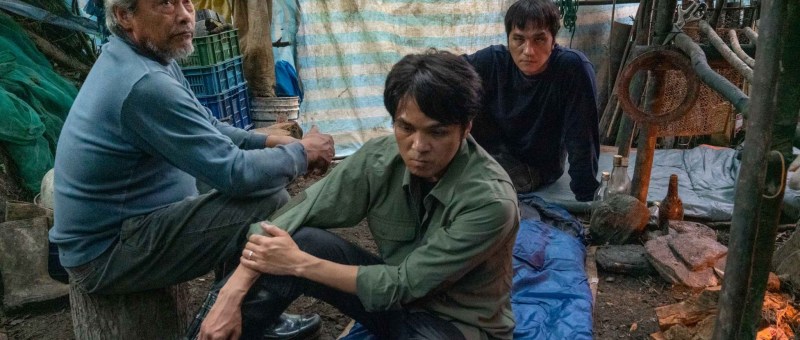
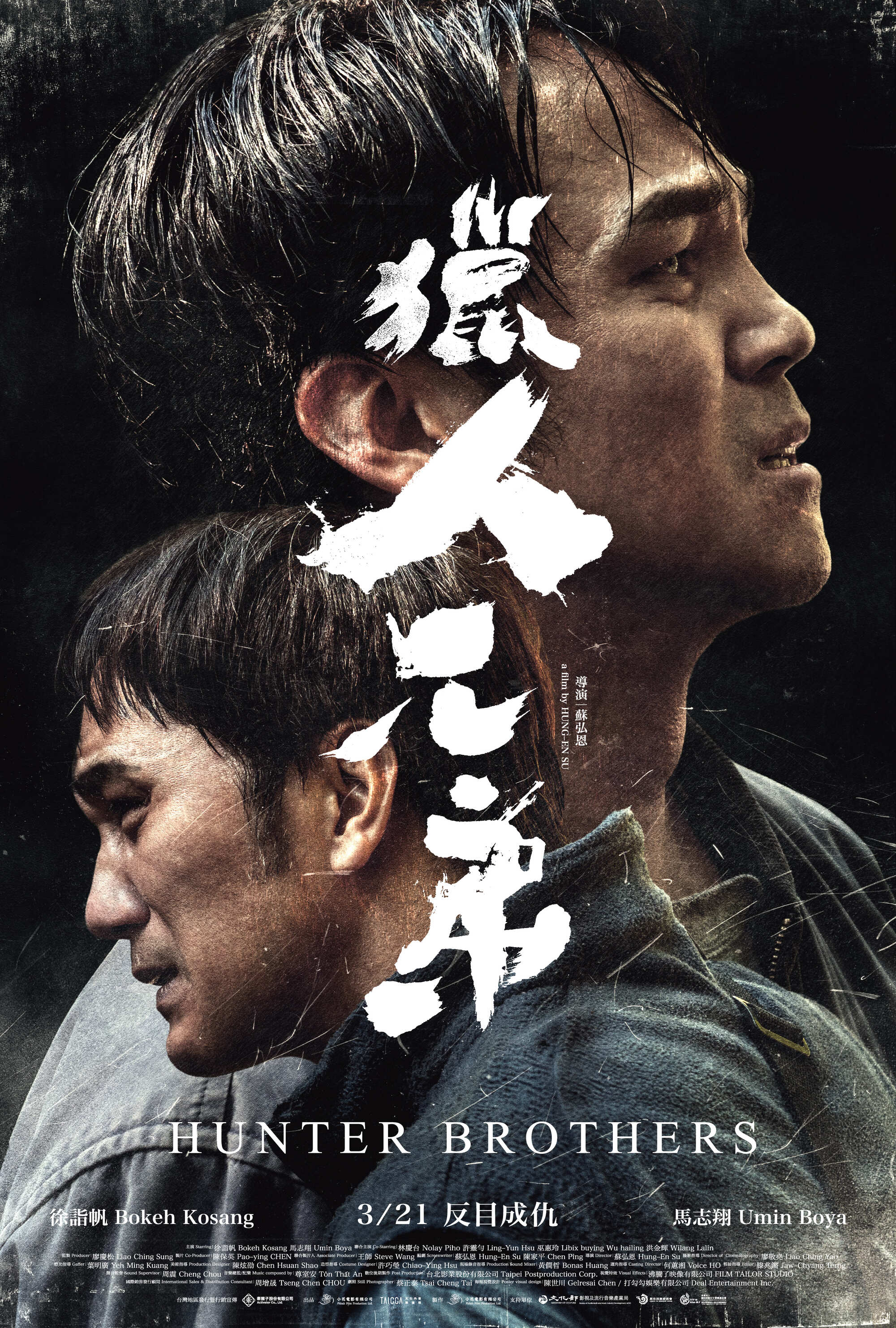
Hunter Brothers (獵人兄弟, Su Hung-en, 2024)

Two brothers find themselves on opposite sides of tradition and modernity as they descend into a state of warfare over the future of the ancestral hunting grounds in Su Hung-en’s familial drama, Hunter Brothers (獵人兄弟). Exploring the complicated position of the indigenous community marginalised by an increasingly capitalistic urbanity the film also critiques contemporary visions of masculinity in the wider society as the brothers each try to find new ways of defining themselves amid changing notions of manly success.

In the opening scenes of the film, Teymu celebrates the fact that his son, Yuci, has become a doctor because now he will never have to do manual labour and will have a more comfortable standard of living. But in private, Teymu seems upset. He feels as if he has failed the ancestors because in the eyes of their community, Yuci is not a proper man. Many people tell him that he is “not cut out to be a hunter,” and he has no desire to be one anyway, but still suffers from a serious inferiority complex and wounded male pride. To find some kind of answer, Teymu forces Yuci against the wishes of his mother to accompany him to the mountains for one last hunting trip to prove himself by killing a wild boar and finally validating Teymu’s own fractured sense of masculinity that his son is indeed a “proper man.”

It’s during this trip that Teymu is killed in mysterious circumstances. Yuci’s brother Siring ends up going to prison for the crime, but unlike him had been more of the son his father wanted. Yuci had been clever and studious, but Siring is more of a traditional mountain man who lives for the hunt and has a very unreconstructed sense of masculinity. But he also loved and understood his brother, knowing this life wasn’t for him and trying to protect him from their father who was in other ways a failure. Teymu drank and was violent, objecting to his wife’s attempts to stop him taking Yuci to the mountain by threatening her and using incredibly offensive language. Yuci’s reaction against this traditional society is also towards his father and everything he represented. But this traditional world is the only one a man like Siring can live in. He has no real qualifications or other skills and cannot survive outside of their community. On his release from prison, Yuci is keen for him to get a job and against his return to hunting, but it soon becomes clear that isn’t a way that Siring can live.

In that respect, they represent opposing polls. Yuci is the modern man of science, a doctor, while Siring is a man of the forests and mountains, Then again, Yuci is a devout Christian and his religion also seemingly a challenge to traditional indigenous practices though also alien to the mainstream society. The boys’ mother is living with dementia and those around them tell Siring that she has most likely been cursed by the ancestors who are angry with them for doing something “dishonest” which might be why she starts insisting Yuci go to the police and that they made a bad decision that should be put right. Yuci, for his part, does not appear to feel guilt for the role he may have played but is anxious that the life he’s built for himself in which is accorded a man by his career success, marriage, and fathering a son, may now crumble if Siring will not fall into line.

Tensions come to a head when Yuci decides to sell their ancestral hunting grounds which are earmarked for a development that would destroy the mountain altogether. Siring obviously objects, this world is the only one he can live in, but can do little about it. He resists his brother’s modernity and becomes estranged from him, but they are both in their way exiles and neither of them can fully live in this society. The natural affection they hold for each other as brothers is not enough to bridge this divide and merely leaves each of them lonely and alone, mired in futility and unable to move forward in any meaningful way. The ebb and flow of their lives is reflected in the way they are alternately called by their indigenous names and Mandarin equivalents, each of them living in two worlds but never really at home in either while fever divided from themselves.


Hunter Brothers screens in Chicago 29th March as part of the 19th edition of Asian Pop-Up Cinema.

Trailer (Traditional Chinese / English subtitles)

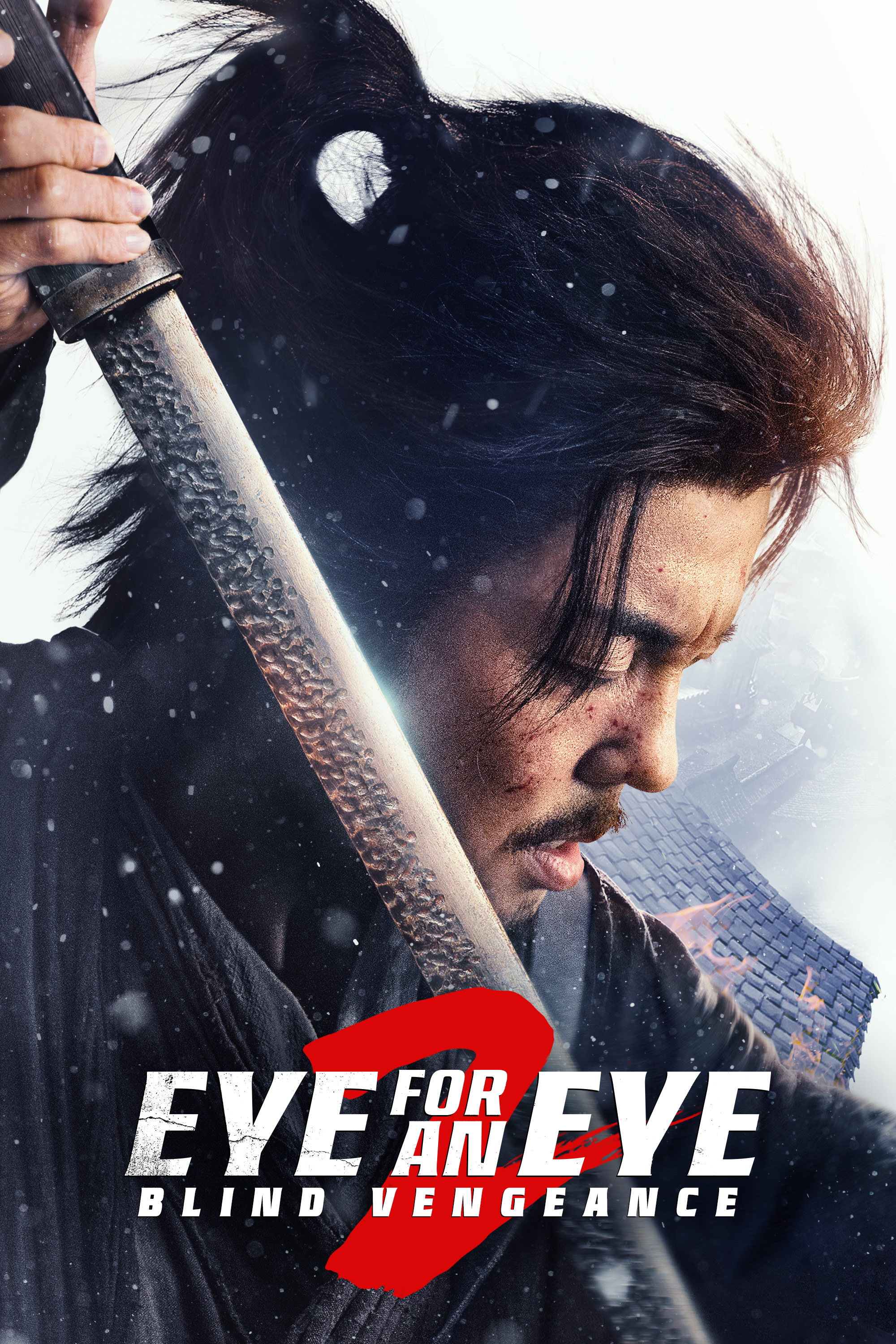
Eye for an Eye 2: Blind Vengeance (目中无人2, Yang Bingjia, 2024)

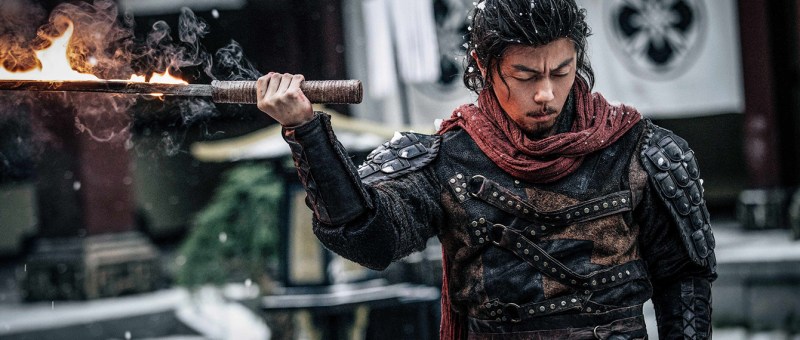
The wandering swordsman returns but this time to a world much more in disarray than when we last left it in the sequel to the surprise hit streaming movie An Eye for an Eye: The Blind Swordsman, An Eye for an Eye 2: Blind Vengeance (目中无人2, mùzhōngwúrén 2). Less origin story than endgame, the film finds bounty hunter Cheng Yi living in another dusty town and working for Youzhou Prefecture to bring in wanted criminals dead or alive but finally forced into the role of protector for a little girl dead set on vengeance against this world.

Richer in scope and ambition, this time around we’re given a little more backstory about the former lieutenant who is now using his martial skills to enact justice in an otherwise lawless society if only when he’s paid to do so. One of his targets turns out to be a man who served under him in the war and is disillusioned about its aftermath. “What did we gain in the end?” he asks, justifying himself that he may have killed a few people and taken some money but he was only claiming what he was owed. The argument doesn’t wash with Cheng Yi, but the war also took his sight from him and he too is a disillusioned exile from his home in Chang’an living a nihilistic life of drink of killing on the behalf of a distant and compromised authority. 

His wilful isolation may be why he is not originally motivated to help the orphan little girl Xiaoyu (Yang Enyou) who says her mother starved to death during their escape. Xiaoyu had tried to protect her little brother who seemed to be mute only to see him trampled beneath the hooves of a debauched nobleman who had just murdered an entire family because they had dared to tell on him to his father. The family had been planning to flee at dawn but Li Jiulang (Huang Tao) got there first. Xiaoyu witnessed his crime after sneaking in to steal the bread they were baking and was then freely given to her by a young woman Li later killed, further stirring her desire for revenge. Cheng Yi ends up saving her from Li on two separate occasions, though the second time it isn’t overly clear whether it was intentional or a drunken coincidence. Nevertheless, he continues to counsel her against pursuing her revenge, especially towards a man like Li who is wealthy and connected and has no compunctions about killing children. 

Li is also seen to abuse drugs and have a sadistic streak though no real explanation is given for his cruelty save that he is evil and has enough money and power to do as he pleases. No one except the little girl is going to put a bounty out on him, as she naively tries to do by selling her brother’s silver whistle to get a poster mocked up though Li simply offers a double bounty on her and it seems plenty are desperate enough to consider killing a defenceless girl to get their hands on it. Perhaps it’s this that eventually moves Cheng Yi’s heart as she continues to insist on an impossible justice even at the cost of her own life. Like him, she no longer has any family nor any place to call home and is displaced within the chaos of late Tang. Through bonding with her, he begins to rediscover his humanity and considers leaving the world of the bounty hunter behind to become an “ordinary person” in Chang’an to raise her away from this nihilistic way of life.

Building on the success of the first film, Yang Bingjia makes the most of an increased production budget to fully recreate the atmosphere of a bustling frontier town while continuing the Western influence as Cheng Yi hunts down wrongdoers in an otherwise lawless place. The connection between the cynical swordsman and his tiny charge has genuine poignancy as he continues to caution her against the path of revenge, reminding her that it is a continuous cycle and one act of vengeance merely sets another in motion, yet finally deciding that he must teach her what he knows anyway because like him she has no other way to live. Still, what he envisions for her is a peaceful life in Chang’an, far away from the chaos of the frontiers in a world that may not quite exist anymore but may yet come again if not, perhaps, for all.


Eye for an Eye 2: Blind Vengeance is released in the US on Digital, Blu-ray & DVD March 4 courtesy of Well Go USA.

Trailer (English subtitles)

Chang’an (长安三万里, Xie Junwei & Zou Jing, 2023)

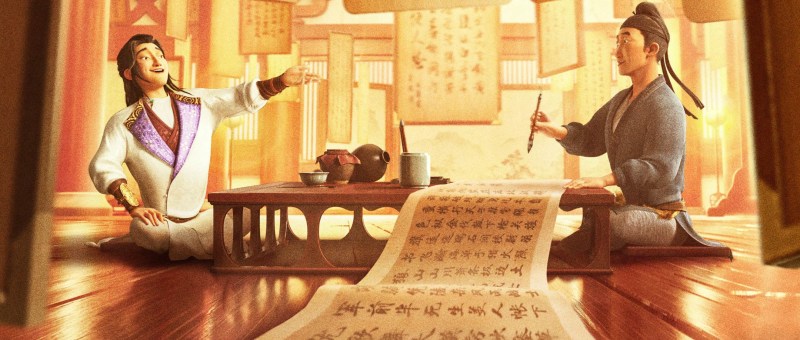
It’s a strange thought, in a way, that poetry could save a nation. In reality, it didn’t quite. The An Lushan rebellion significantly weakened the Tang dynasty and contributed to its rapid decline. Nevertheless, Tang was an era in which art, culture, and freedom of thought all flourished. Animated feature Chang’an (长安三万里, Cháng’ān Sānwànlǐ), named for the imperial capital of that time, attempts dramatise the era through the lives of its poets and the eyes of Gao Shi (Yang Tianxiang) reflecting on his youthful and often distant friendship with the legendary Li Bai (Ling Zhenhe) whose poems are still recited by the school children of today.

As the film opens, Gao Shi is an old man and embattled general staring down inevitable defeat at the hands of the invading Tubos emboldened by the weakening of borders following the failed An Lushan rebellion. But that’s not the reason he’s being visited by an imperial inspector who is far more interested in his relationship with Li Bai and the political importance it may have gained. Through this framing sequence, Geo Shi narrates the previous 40 years of history as he and Li Bai each age and take different paths in life while maintaining a distant if deeply felt friendship.

To that extent, Guo Shi is the earnest and practical son of a once noble house attempting to resurrect his family legacy, while Li Bai is a free spirited libertine attempting to overcome his lowly birth as the son of a wealthy merchant to gain government office through his skill as a poet. Then again, as future great poet Du Fu (Liu Jiaoyu / Sun Lulu) remarks, in this age poetry is something anyone can do and distinguishing oneself through it is no mean feat. It is however the only option for a man like Li Bai and the film in part seems to be an advocation for meritocracy in which those of ability would be free to prosper without needing to rely on social standing or personal connections. Despite the supposedly classless society of the modern day, this world may not yet have emerged. Another hopeful laments that she alone of her brothers inherited military skill yet as a woman there’s no door that is open to her to serve her country. 

Serving one’s country is the virtue that Gao Shi praises most highly and in effect his life’s purpose while Li Bai’s is more personal advancement and the perfection of his art. His poems are often melancholy and reflect on a sense of loneliness and longing for home, or else raucous celebrations of the art of drinking. Gao Shi does not approve of Li Bai’s party lifestyle and his debauchery later places a strain on their friendship. The film tacitly implies that this decadent behaviour is behind the decline of Tang, but also the reason that art and culture flourished amid a sense of destruction and despair. Having learned a few lessons in underhandedness from Li Bai, Geo Shi in effect restores order, albeit temporarily, through strategy and courage, while Li Bai first chooses isolation and then in its opposite after being pardoned for an apparently accidental and entirely thoughtless act of treason.

But what the film is keen to emphasise is the deep-seated friendship, or perhaps more, between the two men that makes the victory possible suggesting that a society needs both practicality and art to survive, not that Gao Shi was not a great poet himself if one well aware that Li Bai surpassed him in skill and keen support his success. Even so, as Gao Shi points out, a poet is not always an easy thing to be and in his old age those who once drank with Li Bai are either dead, one beaten to death at the age of 70, exiled or imprisoned. In a sense, both men achieve their aims if perhaps not in the way they intended. Gao restores his family name, and Li Bai finds a kind of immortality in his work that he otherwise failed to find spiritually in devoting himself to Taoism. The often beautifully rendered backgrounds capture a sense of a society on the brink of eclipse, such as the striking beauty of Gao Shi’s first entry to Yongzhou with its blossoming cherry trees lit by the warm light of lanterns under a full moon, only to turn to darkness on his return amid the twilight of the Tang dynasty. 


Dazzler Media presents Chang’an in UK and Irish cinemas from 28th February.

UK trailer (Mandarin with English subtitles)

The Love in Okinawa (琉球之戀, Lin Fu-Ti, 1968)

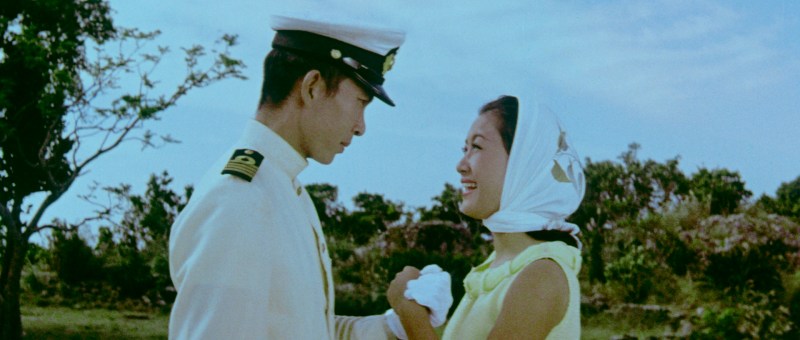
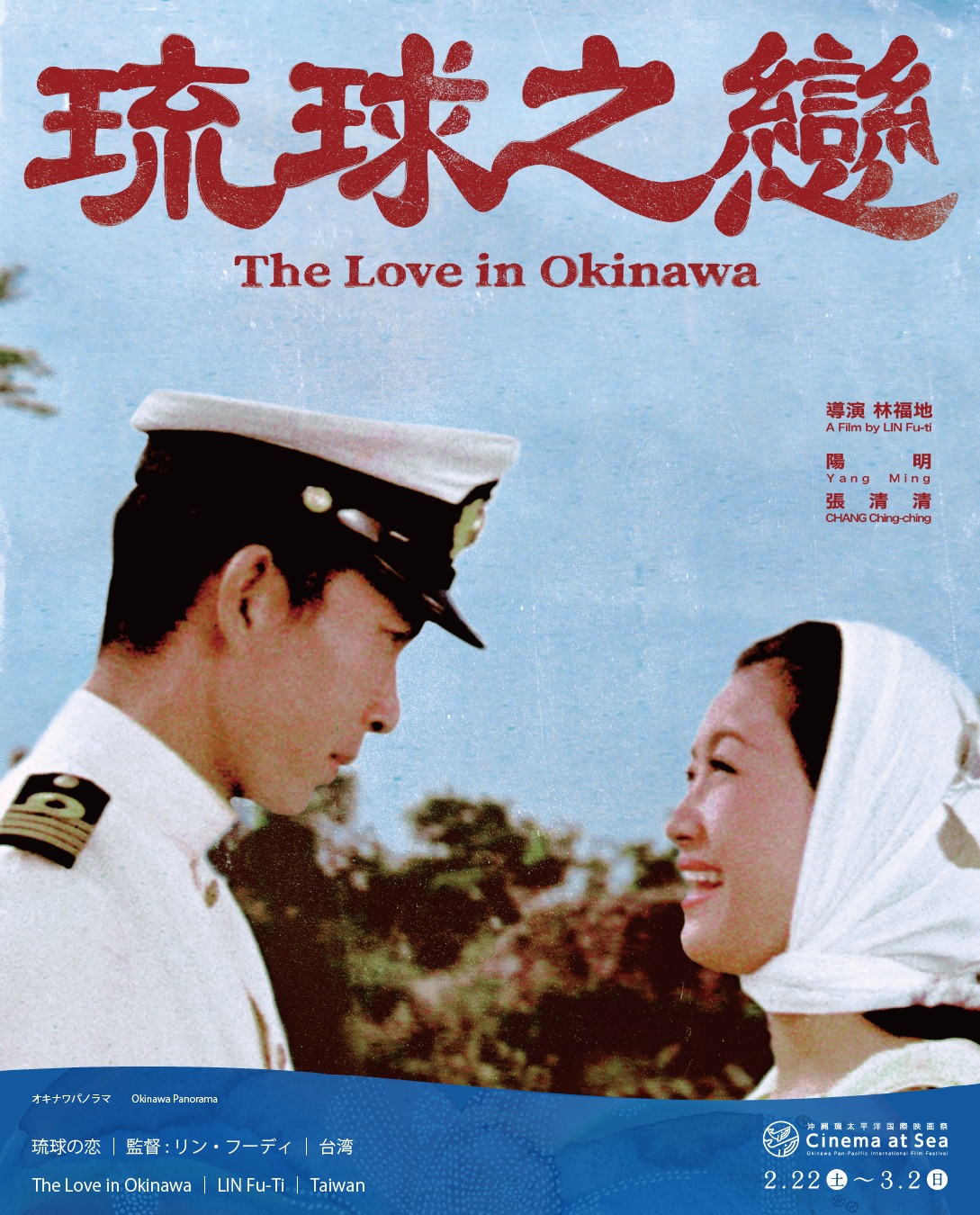
Though he may be captain of his own boat, a young man finds himself powerless in the matters of love in Lin Fu-Ti’s Taiyupian romance, The Love in Okinawa (琉球之戀). Long thought lost and recently restored from a Mandarin-dubbed print discovered in San Francisco’s Chinatown, the film was a collaboration between Taiwan and locally based film companies completed shortly before the islands’ return to Japanese sovereignty after an extended period of American occupation. Though the two nations share a degree of common ground in their experience of Japanese colonialism, the film seems to suggest that nothing really good comes of trying to do business here and events might have progressed differently if the family had not delayed its return to Taiwan.

Nevertheless, the real problem is that Hung-hai is a boat captain who in theory possesses the total freedom of the wide open seas yet he is unable to defy his father and marry the woman he loves out of a sense of filial piety. Hung-hai and Hsui-ling were childhood friends and their fathers were once like brothers only to be forced apart by a business dispute ending in a court case which Hung-hai’s father lost. Hsiu-ling’s father’s business later went bust anyway and he has been dead for several years but Hung-hai’s father still harbours fierce resentment towards him. The family went through a period of financial hardship following the court case during which Hung-hai’s mother worked herself to the bone gathering money for their new start. Hung-hai’s father blames his former friend for hastening his wife’s early death which is why he can’t accept Hsiu-ling, to whom he was once like an uncle, as his daughter-in-law.

But on the other hand he also has his own plans for his son’s life which include marrying Yoshiko. Yoshiko is the current “Miss Okinawa” and a minor celebrity who appears on television singing Japanese songs such as Mari Sono’s 1966 hit Yume wa Yoru Hiraku. She is always dressed in kimono, while Hsui-ling wears more westernised contemporary fashions but is later seen in more recognisably Chinese-style after her return to Taiwan. To that extent, Yoshiko represents a closer union with the growing economic powerhouse of Japan as mediated through Okinawa, while Hsui-ling represents an unsullied Taiwan yet one still restrained by increasingly outdated notions of filiality.

Eventually, after a series of ironies, Hung-hai’s father is forced to admit that his authoritarianism and refusal to allow his son to chart his own destiny has destroyed his family’s future. Unable to marry Hsui-ling who thinks that he has married Yoshiko after seeing her announce their engangement on television while he was away on his boat, Hung-hai falls into depression and takes to drink. Though he had long favoured Hung-hai to take over the business over his older son Ah-qin who has a physical disability and was therefore left behind in Taiwan to babysit the domestic business, Hung-hai’s father begins to realise the mistakes he has made and that in this ruined state Hung-hai will never amount to anything nor prove a worthy heir for his business empire.

Ah-qin, meanwhile, is oblivious to all this and the soul of kindness and decency. In some ways, he might play into a stereotypical vision of disabled people as saintly and innocent, yet is unwittingly drawn into his brother’s romantic drama knowing nothing of his father’s animosity towards Hsui-ling and her family nor of his brother’s love for her which is the cause of his depression. He wants only for everyone in his family to be happy, and in the end is willing to sacrifice his own happiness to facilitate it (which is a paradoxical expression of “positive” filiality). Hung-hai had suggested simply running away and eloping to Taiwan but Hsui-ling’s mother was on her deathbed and neither of them really had the stomach to abandon their parents in a “foreign” land. Thus this kind of filiality that divides the lovers is nothing but destructive. Not only does it ruin the family entirely, disrupting the relationship between the brothers as well as between father and sons, but leads only to futility and heartbreak in which true freedom is found only in death.


The Love in Okinawa screens as part of this year’s Cinema at Sea.

Trailer (Traditional Chinese / English subtitles)

Panda Plan (熊猫计划, Zhang Luan, 2024)

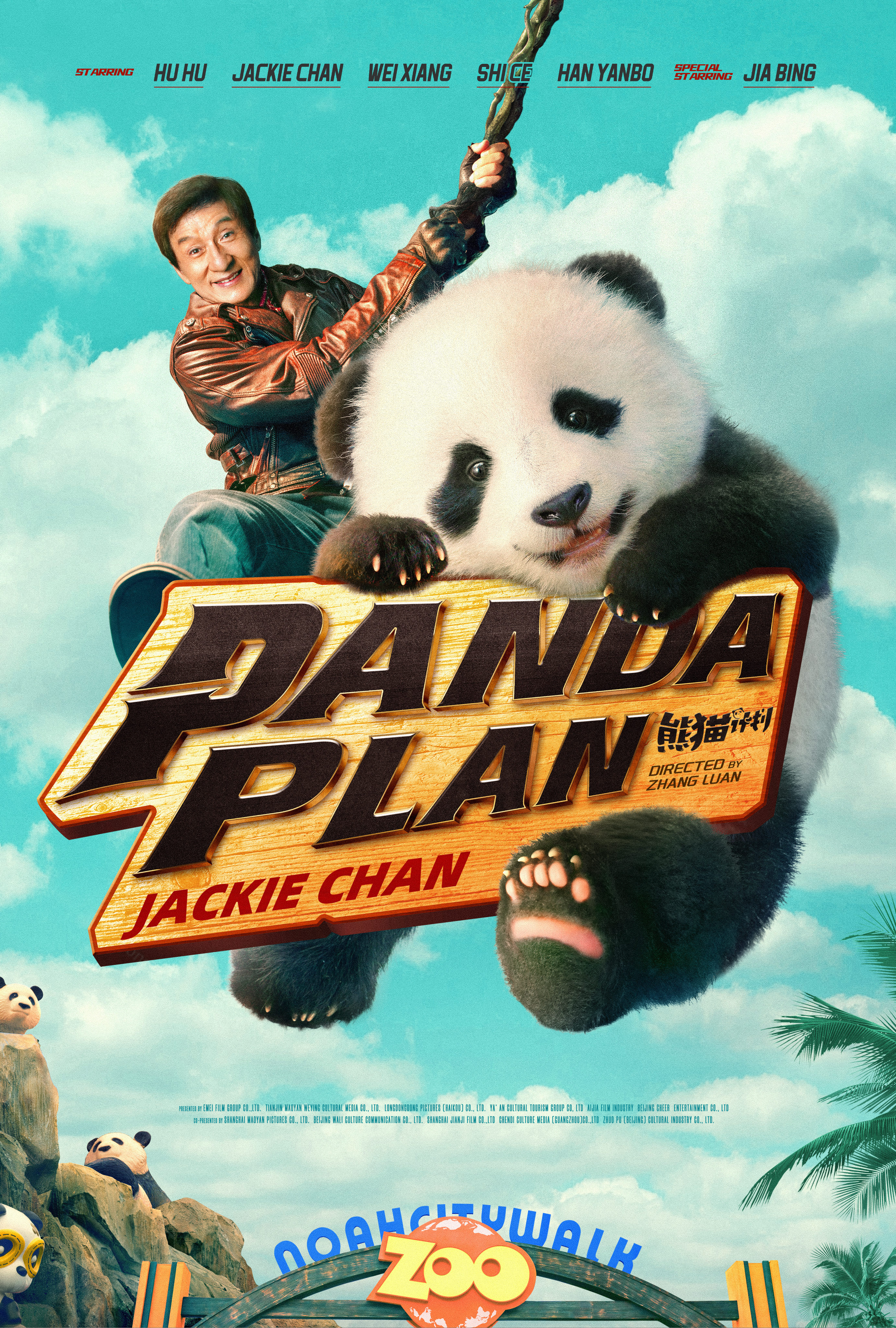
Now 70 years old, Jackie Chan’s later career has mostly seen him trying to find ways to mitigate his age. Often he’s played the role of a mentor figure taking part in a limited number of action scenes while a younger actor does the heavy lifting and takes care of any romantic subplots. Rest assured, there’s no romance in Panda Plan (熊猫计划, xióngmāo jìhuà) but it does otherwise see Chan trying to recapture past glory in seemingly appearing in lengthier action scenes while playing a version of himself.

As the film’s Jackie, he tells young panda nanny Zhuzhu (Shi Ce) that the reason he can’t bring himself to retire is that as soon as someone shouts “action” he can be an all powerful hero rather than a flawed human being that gets sad or tired or beaten down. He even pokes fun at himself with an early scene of Jackie shooting a movie and challenging the director that it’s unrealistic for him to take out all these bad guys all on his own. Though he is apparently sick of doing action, all of the directors future ideas for him sound like they will once again involve quite a lot of fighting. 

It is then a bit ironic that Panda Plan’s action scenes are often choppily edited because it’s obvious that they’re cutting back and fore between Chan and a stunt double with quite a lot of CGI filling in the blanks. You can even clearly see the heavy duty knee pads Chan is wearing under his suit, not that he shouldn’t have them, only that more care wasn’t taken to make them less visible considering there’s no situational explanation for why he’d be wearing knee pads to attend this ceremony marking his decision to “adopt” a baby panda at a random zoo in a fictional country where almost everyone speaks Mandarin. 

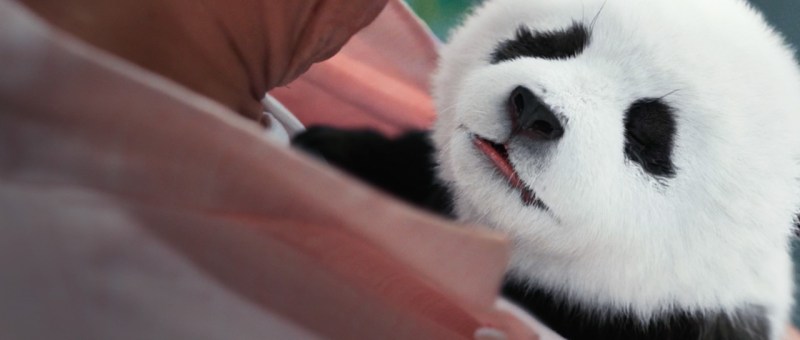
The baby panda has become a viral star because of its “unique” look with one eye patch smaller than the other. A sheik apparently decides he must have this panda and hires a bunch of mercenaries to kidnap it when his attempts to buy it fail. Of course, Jackie can’t let this happen and is determined to protect the baby panda from the international kidnappers. A panda is after all a symbol of China itself which can’t simply be bought by outside powers or the super rich while many of the mercenaries, who it’s implied are probably Eastern European, speak with American accents though in a stroke of luck, the main two turn out to be huge Jackie Chan fans and decide to help him so they aren’t that bad really while the leader actually seems to be Chinese anyway. That said, the guards at the zoo are both American and are shown to be slacking off at their job, eating donuts while remarking that they have an easy day ahead of them. It turns out the sheik had a heartrending reason for wanting the panda which wasn’t about the excesses of the super rich and Jackie’s decision to help him out paints China as generous and compassionate rather than coldhearted and possessive over its pandas.

In any case, despite the mild violence of the action scenes the film appears to be aimed at a family audience and has plenty of farcical humour as Jackie and Zhuzhu try to outsmart the kidnappers and save the panda who is eventually deposited at a panda park in China proper which is to say brought home again, where it belongs. The panda is rendered in unconvincing CGI but as using an actual panda would not be appropriate perhaps that really is the best solution and at least it’s a pretty cute CGI panda even if it’s obvious that it was added afterwards. The panda rescue being so successful, Jackie also gets asked to rescue the late Queen’s kidnapped corgis though it’s quite clear that he already has a very busy social calendar and is really getting fed up with doing action. Even so it has to be said that there’s already a Panda Plan 2 scheduled for release later this year, so he’ll presumably have to do some rescuing again.


Panda Plan is released in the US on Digital, Blu-ray & DVD February 18 courtesy of Well Go USA.

Trailer (English subtitles)

100 Yards (门前宝地, Xu Junfeng, Xu Haofeng, 2023)

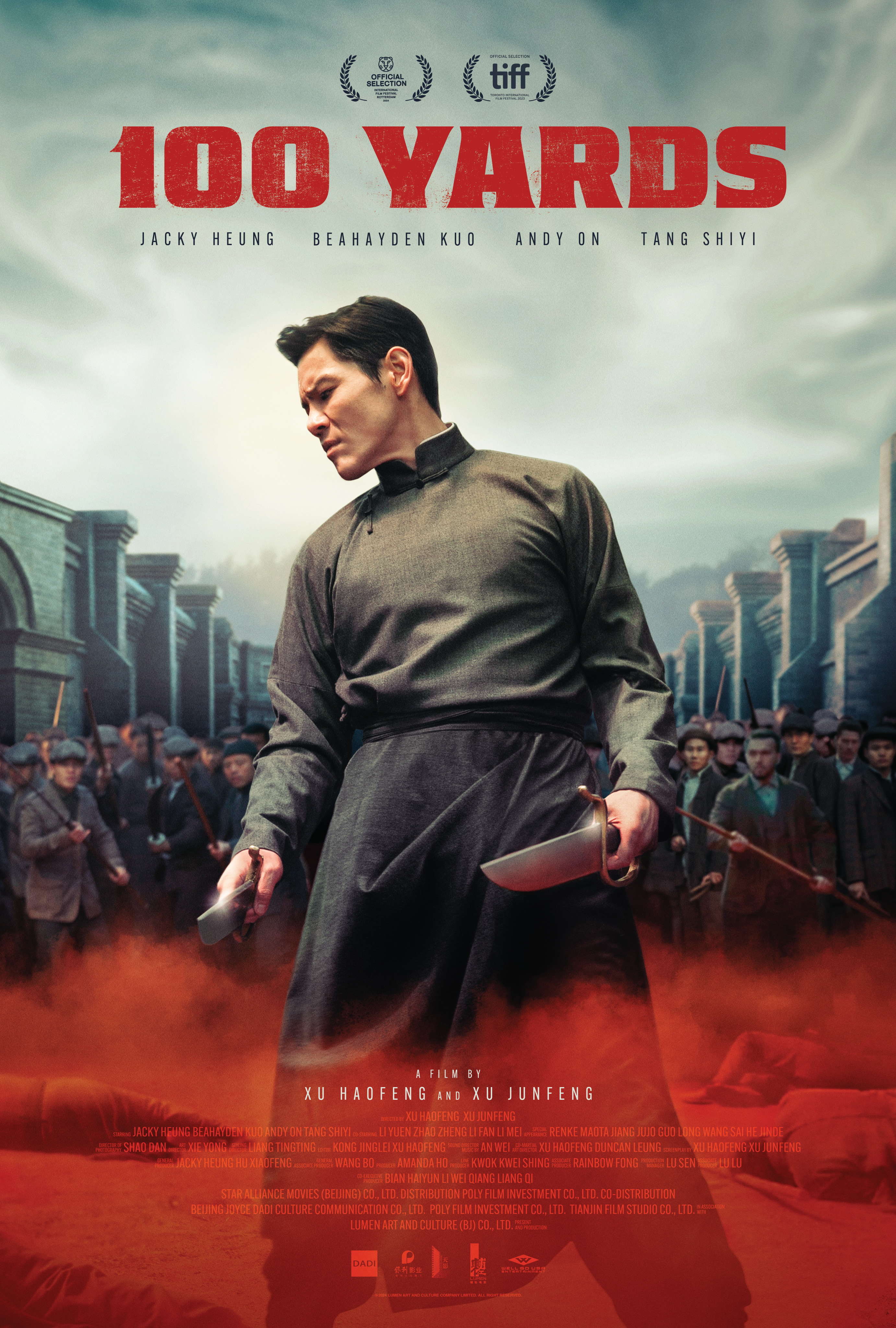
“When my father went to the market, I always thought he was a threat to you. I’ve only learned now that you were a threat to him.” Set in martial arts hotspot Tianjin in 1920, nothing is ever quite as it seems in Xu Haofeng & Xu Junfeng’s 100 Yards (门前宝地, ménqián bǎodì). As a young man replies, everyone has their part to play in keeping the peace, or at least some sort of balance that allows the city to function while otherwise caught between declining colonial interests, warlords, crooks and the old world represented by Shen’s house of kung fu.

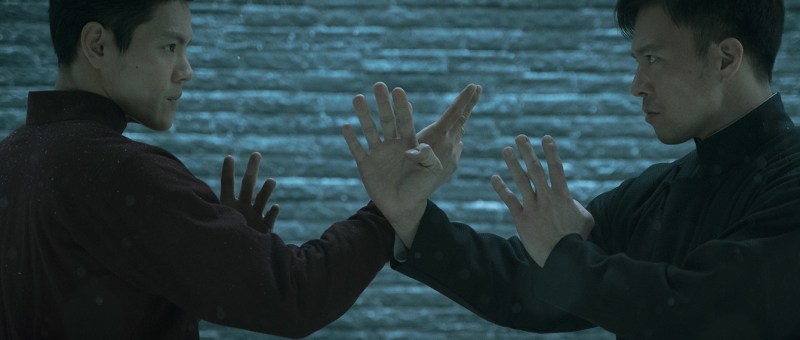
The struggle is in essence one of which way to lean. Old master Shen is dying. He must choose a successor and is stuck between his only son, An (Jacky Heung Cho), thought to be of insufficient skill, and his best apprentice, Quan (Andy On). Shen orders the two men to fight while he watches from his deathbed and admonishes each of them for holding back. Finally he tells Quan to beat An decisively or he’ll never learn and will simply be beaten by better masters later on. Quan knocks An out with a neck blow and inherits the school, but his management style immediately rankles former right-hand woman Chairmen Meng (Li Yuan).

Part of old Shen’s job had been to patrol the marketplace discouraging hoodlums from extorting the traders, but what An comes to realise is that it’s more like he cut a deal with them in which they permitted the illusion he controlled the gangs while he in turn turned a blind eye and allowed them to practice their art while wasn’t around. Everyone has their part to play, and like the 100-yard boundary around the martial arts school, it has clearly defined yet unspoken borders. Quan threatens these by recruiting hoodlums and Westerners into the martial arts society blurring what should be a hard barrier between martial artist and thug. He paints this as modernisation and egalitarianism, that he’s deliberately recruiting people from all walks of life so that they might all walk towards the future together. But in reality, Quan is merely a dictator in waiting quietly building up a personal power base that would make him unassailable in the martial arts world or otherwise.

An, meanwhile, has the desire to reclaim this space as one of greater nobility that keeps violence off the streets and settles disputes in gentlemanly fashion behind closed doors. Those who are defeated in a fair fight accept the results and consequences of their trial by combat with grace and honour. An signals his desire to leave the mainstream world and return to that of the Martial Arts Circle by breaking up with his longterm girlfriend Xia (Kuo Bea-ting) to pursue martial artist Gui Ying (Tang Shiyi) who is then also pursued by Quan in the belief she may know of the rumoured Fourth Fist Style of Shen’s family taught to her as a kind of safeguard against his eventual betrayal of the martial society. 

Xia is also caught between two worlds in that she is the illegitimate daughter of the Frenchman who runs the bank where Shen got An a job hoping that he would leave the martial arts world to live a “normal” life. Beaten by Quan, he takes the job and begins dressing in Western-style suits but is outraged when Xia’s father forces him to fight his bodyguards for the amusement of his guests. Tearing off his tie, he quits the job and goes back to wearing traditional Chinese dress while Quan, now essentially behaving like a mob boss, starts wearing colourful suits and sunglasses while taking violence to the streets and leading An to fight henchmen one by one until finally reaching him for their final confrontation. He forces An to fight with two short sabres with which he is unfamiliar in revenge for their previous duel in which Quan elected to use them falsely believing that this was Shen’s rumoured Fourth Fist technique which may not actually have existed.

In any case, An’s is then a battle of adjustment and acclimatisation in which he must learn to use these new tools on the go just as each of the men must learn to find an accommodation with rapidly changing 1920s society. The Xus’ action choreography is precise and complex, thrilling in its unpredictability while certain in its intent. The aim of the Martial Arts Circle is to minimise violence and so blows are often bated, we don’t need to see the connection because the winner is obvious. But there’s also a rawness and poignancy to the battle between An and Quan over a paternal legacy, the abandoned son yearning for acceptance and the talented apprentice nevertheless insecure in his master’s approval. The martial arts world is over, the conclusion seems to say, or in another way, perhaps it has only just begun as An begins his new life as a defender of a 100-yard fiefdom in a reclaimed post office just shy of its borders.


100 Yards is released Feb. 18 in the US on blu-ray and DVD courtesy of Well Go USA.

Trailer (English subtitles)